In short
The episode of The Intelligence from The Economist covers three main topics. First, Gaza ceasefire talks: Israel and Hamas are negotiating via mediators in Qatar, with no deal after day one. A key meeting is planned between Israeli PM Benjamin Netanyahu and Donald Trump, who wants an announcement and may use pressure to bridge gaps in a two-stage proposal (60-day truce with hostage releases for Palestinian prisoners, then a path to ending the war). Key claims include that the biggest sticking points are Gaza’s post-phase-one control, humanitarian distribution hubs, and whether Trump will sustain attention; Netanyahu may trade Gaza concessions for US backing against Iran.
Notable examples
the Iran-Israel ceasefire reportedly followed Trump’s statements; Gaza aid distribution hubs have seen killings. Second, China alcohol: a crackdown on officials’ drinking, COVID-era venue closures, weak consumer confidence, and younger “drier” habits are reducing Baijiu and beer demand; firms respond with Baijiu-flavored ice cream/coffee and lower-alcohol plum wine. Third, obituary: John Robbins, raised in Baskin-Robbins, became a vegan/animal-rights advocate and wrote Diet for a New America.
Guests/backgrounds
Anshul Pfeffer (Israel correspondent, reports on Gaza talks); Gabriel Crossley (China correspondent in Beijing, explains China’s alcohol decline); Anne Rowe (obituaries editor, discusses John Robbins).
Written by AI. May contain mistakes. Listen to the episode to check what was said.
Chapters
Tap a time to open that second in VOGaza Ceasefire Negotiations
0:00 to 0:10
Discussion on the ongoing negotiations for a ceasefire in Gaza.
“Taxes aren't something you can only think about once a year.”
Gaza Ceasefire Negotiations
1:22 to 2:26
Discussion on the ongoing negotiations for a ceasefire in Gaza.
“In part, it's a story we see elsewhere, with the younger generation being much drier.”
Trump's Role in the Ceasefire
2:26 to 3:18
Exploring Trump's involvement and potential impact on the ceasefire.
“The US president is keen to see a resolution.”
Gaps in Negotiation
3:18 to 4:16
Analyzing the significant gaps between Israel and Hamas regarding terms.
“Well, we know the gaps between Israel and Hamas around the ceasefire agreement.”
Israel's Military and Political Calculations
4:16 to 6:28
Examining Israel's military strategy and political motivations.
“Will they continue occupying large parts of Gaza?”
Humanitarian Crisis in Gaza
6:28 to 9:10
Discussing the ongoing humanitarian crisis and food scarcity in Gaza.
“So if it's a now is to get some kind of American backing for future strikes on Iran, he needs to give in other areas, and that is Gaza.”
China's Changing Drinking Culture
9:10 to 14:01
A look at how China's alcohol consumption patterns are shifting.
“What has changed is that these distribution hubs that Israel's operating together with American mercenary companies have opened up.”
Trends in Alcohol Consumption in China
14:01 to 15:38
Explore how brewers are adapting to changing alcohol consumption trends in China.
“This is definitely a problem if you're a brewer or a distiller.”
The Life of John Robbins
17:03 to 22:29
Uncover the story of John Robbins, heir to Baskin-Robbins who chose a different path.
“John Robbins was brought up in a place that might seem like paradise to most children.”
Transcript
Automatic transcript. May contain errors.0:00This message comes from Jackson. Taxes aren't something you can only think about once a year. With investments, planning for tax days year-round. Fortunately, Jackson offers tax-efficient products. Visit jackson.com for more information on how our products can make your tax bill a little bit less painful. Jackson is short for Jackson Financial Incorporated, Jackson National Life Insurance Company, Lansing, Michigan, and Jackson National Life Insurance Company of New York. Purchase New York. Meet Amazon Ads rising star Daryl Spencer, who set out to redefine men's self-care with his brand Crown Skin.
0:31Amazon Ads helped him grow. I walked away from big tech to build a luxury brand in a category that no one was paying attention to. With the help of Amazon Ads, I'm reaching relevant audiences and competing with the biggest names in men's grooming. We've scaled to over$500 ,000 in monthly revenue. Watch Crown Skin's story at advertising.amazon.com slash rising-stars.
1:00The Economist
1:07Hello and welcome to The Intelligence from The Economist. I'm Jason Palmer. And I'm Rosie Bloor. Every weekday we provide a fresh perspective on the events shaping your world.
1:21China's purveyors of booze are falling on harder times as sales keep slipping. In part, it's a story we see elsewhere, with the younger generation being much drier. But there's more to it. The Chinese Communist Party wants its members to sober up too. And John Robbins was born into the Baskin-Robbins family and invited to try new ice cream flavors for breakfast. His response? To spurn dairy and meat, and spent his life campaigning for healthier lifestyles. Our obituaries editor remembers him.
2:00But first...
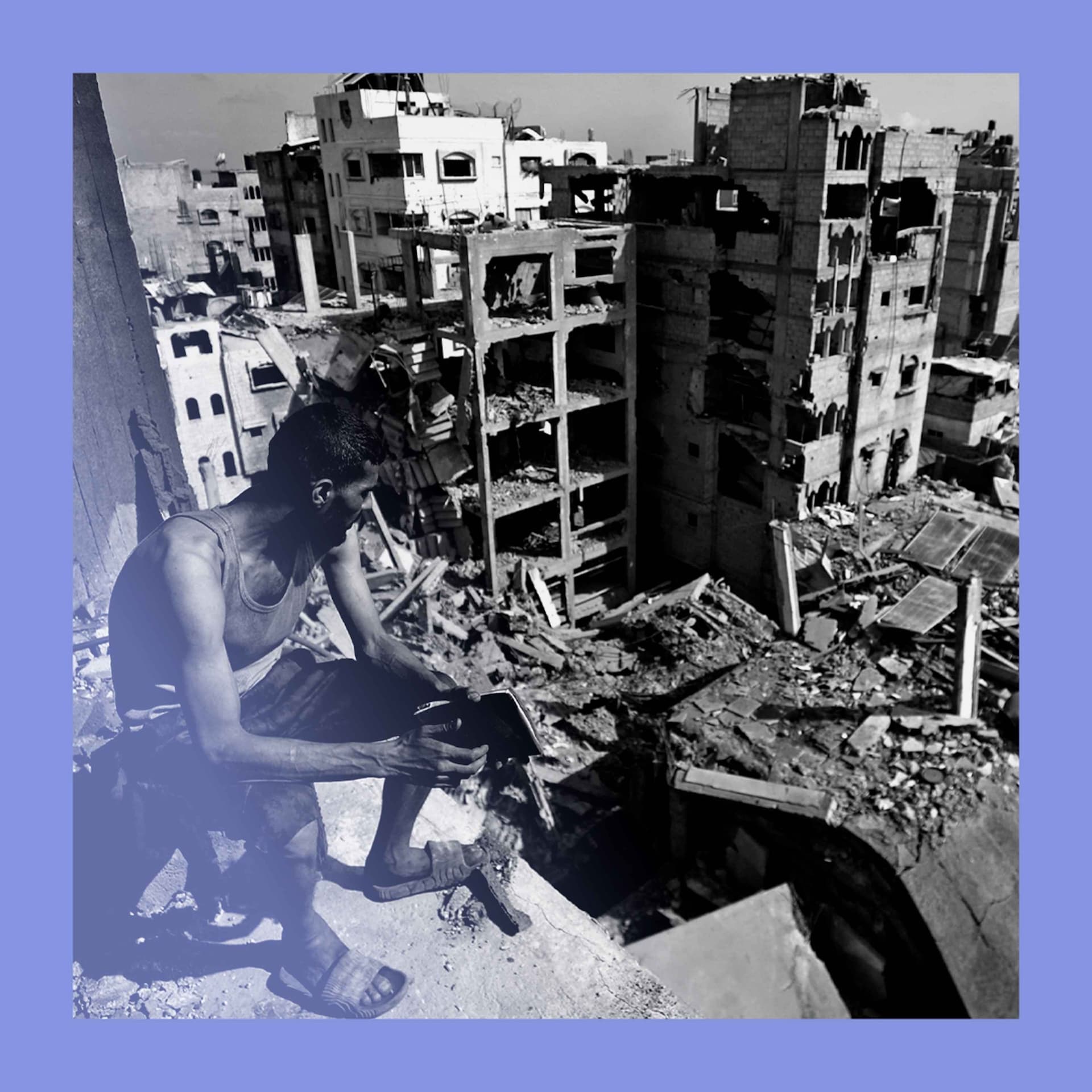
2:07Representatives from Israel and Hamas are currently trying to negotiate a new ceasefire deal for Gaza. The first day of talks via mediators in Qatar yesterday did not end in a deal. But today there will be a key meeting between Israel's Prime Minister Benjamin Netanyahu and Donald Trump. The US president is keen to see a resolution. The question is whether, after months of impasse and the failure of the last ceasefire to stick, Donald Trump can really force an agreement through. The latest ceasefire proposal, which is actually the ceasefire proposal, which has been on the table for months now, is another two-stage agreement.
2:50Anshul Pfeffer is our Israel correspondent. First of all, a truce for a limited period of time, in this case 60 days, in which some of the Israeli hostages will be released in return for Palestinian prisoners. And during this period, the hope is that further talks will be held towards ending the war. And so we've already had several hours of talks and they reportedly broke up without a breakthrough. What do you make of that? Well, we know the gaps between Israel and Hamas around the ceasefire agreement. We also know that Donald Trump will be hosting the Teniel this evening, Washington time, in the White House.
3:32So I think that this does seem to be an attempt to try and achieve some kind of breakthrough in the talks in Doha. Basically, we're looking simultaneously at Washington and we're looking at Doha. the Qatari capital, where Israeli and Hamas teams are negotiating, not directly, but through Qatari and American brokers. And there seems to be a race against time to try and achieve something that Donald Trump can announce this evening in the White House. So you say this deal has been on the table for some months. How big is the remaining gap now between what both sides want? Well, there are a number of significant gaps.
4:10The first is what is going to happen in the duration of the first phase? Where will the Israeli forces fall back to? Will they continue occupying large parts of Gaza? Will they just be holding various positions on the edges of the Gaza Strip? What will happen with the humanitarian efforts in Gaza? Will they return to what had been before the war with international organizations, organizing and facilitating supplies to Gaza? Will they're very controversial and deadly the distribution hubs that Israel and American contractors have set up in the last month or so, will they continue during the ceasefire?
4:49But really the biggest issue is what will happen beyond this first phase. Will there be a path towards ending the war and having some kind of arrangements for Gaza on the day after? And that remains the biggest question, Mark, looming over this. Netanyahu's meeting Trump later. So presumably that'll be pivotal in terms of whether an agreement can actually be reached. Well, Donald Trump has a very unique type of diplomacy. He thinks that just by making a couple of statements to the media or posting something on social networks, he can achieve through that a ceasefire just by saying so. Now, it actually worked to a degree a couple of weeks ago when he ended in that way the 12-day war between Iran and Israel, just by saying so and imposing a ceasefire on both sides.
5:41With Gaza, it's been a lot more complex. And we know there are people on Netanyahu's side who don't want to end this war. So what's in it for him to agree? Well, Netanyahu has more than just Gaza on his agenda when he's arriving in the White House to meet Donald Trump. Netanyahu's biggest concern is Iran. Now, the war with Iran ended after 12 days, but there are still, according to Israeli intelligence, attempts by the Iranian regime to restart its nuclear program and its ballistic missile project. These are things that Israel wants to continue striking at when it sees an opportunity and thinks that there is the need to do so.
6:19But it needs American backing, I think, for those kind of strikes, especially as Donald Trump seems so invested now in the ceasefire and trying to reach an agreement with the Iranians. So if it's a now is to get some kind of American backing for future strikes on Iran, he needs to give in other areas, and that is Gaza. So what's your sense, Anshul? Do you think we are going to get another ceasefire agreement? I really don't want to predict. We've been here so many times, Rosie, and we've talked about what are the chances for a ceasefire in Gaza. I think that certainly this does seem a moment where there's a good chance that they will reach another temporary ceasefire agreement, whether this will lead to the end of the war.
7:02It's much harder to say at this point. And even though you've just told me it's harder to say, what would you say? Is it likely that if this ceasefire deal sticks, that it will then be leading to a lasting peace? Well, I think it very much depends less on what's happening on the ground in Gaza and more on the political situations, both in Jerusalem and in Washington. We're talking about a process that has to take place over 60 days, taking us into probably mid-September. Will Donald Trump, who is not known for having a very long attention span, keep up the pressure on Israel and also through other intermediaries on Hamas?
7:40What will Netanyahu's political calculations be two months from now? He may already be in an early election campaign or contemplating that. Israel has to hold elections anyway by October next year. So he could reckon that he may as well try and use what he hopes will be a boost to his public standing from the war with Iran and take that as momentum into an early election campaign. In that case, he may accept that the war is ended, even though that will break his coalition and the far-right parties will attack him for squandering this opportunity to obliterate Hamas. Or he may decide that he doesn't want to give up the coalition quite yet and find yet another way to try and prolong the war, as he did back in February and March.
8:30This year, when we were in a very similar situation, where Israel had signed a ceasefire agreement, went through the first phase, and then bailed on the agreement before reaching the second phase. And Anshu, you've already mentioned the humanitarian situation. When we last spoke to you, people in Gaza were starving, and Israel was trying to control that flow of food and aid. So how serious is that situation now? The situation is very serious. We're seeing still a high degree of food scarcity, fuel running out. Very much the same situation where hundreds of thousands of people are on daily subsistence levels, barely.
9:10What has changed is that these distribution hubs that Israel's operating together with American mercenary companies have opened up. They do deliver these food rations, but at the same time, hundreds of Palestinians trying to get to those distribution homes or leaving them have been killed, mainly from Israeli fire, also from Hamas and perhaps also criminal gangs are shooting at them. But that really hasn't changed the overall situation. There still is a very chaotic humanitarian situation in Gaza and dozens of people dying every day in Israeli airstrikes. strikes. We seem to be locked into that situation now for months.
9:51And I think only even a temporary ceasefire at this point will be welcome to try and break that pattern, at least for a period. The question is, is there a more long term way out of this? Anshol, thank you so much for talking to me. Thank you for having me, Rosie.
10:20If you want to listen to The Intelligence or any of our other shows without ads, you can do so on The Economist app, where you can also download episodes to play later and listen to our long and glorious archive.
10:42China used to drink a lot of alcohol and the Communist Party was no exception. Gabriel Crossley is a China correspondent for The Economist and is based in Beijing. So back in the early 2010s, you had Communist Party officials meeting up with businessmen and drinking huge amounts to cement business deals. You had lots of middle class Chinese giving each other fancy foreign wines. And all over China you had karaoke bars, which were filled with pyramids of beer bottles and all sorts of other spirits. But now there's a big government crackdown on officials drinking alcohol. And that's only one of the things which is making China become a drier country.
11:26But let's start with the party's view here. Why is it sort of turning its back on booze? I mean, generally speaking, the Communist Party has never really approved of party members getting too drunk. It's not good for its reputation. And there's been a series of scandals which have really reinforced this disapproval. So one in March, there was 10 officials who attended a training session on why they shouldn't drink so much. And then they drank a lot of liquor called Baijiu, which is the favorite liquor in China. and one man unfortunately died. So all of this is very embarrassing for the party. And since then, it has launched a big crackdown to stamp out excessive drinking amongst officials.
12:10So promoting sobriety and removing alcohol from official events. But you said that's just one of the things at play here in how much China consumes booze. Yeah, the parties, it's a lot of people. So it matters if party members are drinking less. But China's broad economic slowdown over the last few years is also causing boozing to reduce a little bit, especially we saw during the strict COVID controls of 2020 to 2023, a lot of karaoke bars, restaurants just shut down and never opened up again. And these are the traditional places where a lot of China's drinking happens. And then since then, China's consumer confidence has been pretty weak.
12:53Lots of restaurants are closing down the rooms, which used to host their booziest business lunches. And people are looking for cheaper beer if they're still drinking. So the more expensive premium beers demand for those has shrunk quite a lot. And I'm going to guess that another factor here is something we've talked on the show about before, which is that younger generations just are a little drier than the older ones. Yeah, Chinese young people are no different from Europeans or Americans in this respect. I think in China, drinking culture was always maybe a little more unpleasant than it was in other countries.
13:26You got pressure to drink in the workplace. You got pressure to drink at family affairs. And these days, a lot of young people are trying to push back on that kind of thing. So they suggest that young people find all this pressure to drink really quite unpleasant. So is all of this adding up to kind of a dent to China's alcohol industry or is it like an existential crisis? We're not at an existential crisis yet, but it's a problem. So China's still the world's biggest market for alcohol, but people are drinking a lot less Baijiu. Baijiu basically tastes like alcohol with maybe a touch of kind of cleaning fluid, and people are drinking a lot less beer.
14:03This is definitely a problem if you're a brewer or a distiller. And what are the brewers and distillers doing to get out of the hole? They're trying all sorts of things. So a Baijiu company called Guizhou Maotai, which is actually the world's most valuable spirits company, This Baijiu company has tried to come up with other Baijiu-related products, which aren't just drinking it straight as is traditionally done. So you've got Baijiu-flavored ice cream, Baijiu-flavored coffee. Gross. Yep, it's gross. I tried it. It is gross, but people are buying it. Baijiu-flavored chocolates, I haven't tried those, but they're probably a bit more manageable.
14:39And then other companies are trying to get young Chinese people into alcohols which aren't beer or baijo. So alcohol pops, a lot more bottled cocktails. And recently there's a kind of plum wine, which is relatively low alcohol content marketed young Chinese women. And that's doing really well. So taking all of that in, do you think this is just a blip of the market adjusting to new market conditions? or is this just the start of a longer, deeper slide? I think it's a slide. I mean, there are still opportunities if you want to sell alcohol, but it's a lot harder to do it, which is good news on the public health front at least.
15:17And maybe another silver lining is that in the past, a lot of China's drinkers were not really doing it because they enjoyed it so much as they felt pressured to. And now I think the people that are drinking are largely the ones that want to do it. So that's surely a good thing. Gabriel, thanks very much for your time. Thank you so much for having me.
15:47This intelligence podcast is sponsored by Zurich Insurance. Helping businesses meet new opportunities prepared. Meet change prepared. Meet growth prepared. Because with experienced professionals who understand your industry, decades of risk engineering expertise, and one of the world's largest commercial insurance networks, Zurich Insurance helps businesses understand risk, build resilience, and move forward with confidence. Meet tomorrow prepared with Zurich Insurance. Investing with Schwab is like spending a Saturday at a great farmer's market. You can fill your reusable tote with a bit of everything.
16:26Maybe you go for some free-range, self-directed investing, or perhaps you pick up a few farm-fresh trades while you peruse. You can even get help from a dedicated advisor. That's full-service wealth management. Mix, match, and change your mind whenever you want. Because at Schwab, you can invest your way. No matter your goals or appetite for investing, Schwab has everything you need, all in one place. Visit schwab.com to learn more.
17:03John Robbins was brought up in a place that might seem like paradise to most children. It was a world of ice cream. Anne Rowe is The Economist's obituaries editor. In 1945, two years before he was born, his father, Irv Robbins, had co-founded the Baskin-Robbins ice cream chain with his brother-in-law. And the two of them set about making ice cream even more fun than it naturally is. The Baskin-Robbins outlets had pink and brown polka dots over the walls. They had clowns and they had little tasting spoons so that you could go in and sample anything you liked. And there were 31 flavours so that you could, in theory, have a different one for every day of the month.
17:47And all this joy and fun spread too to the house where the family lived.
17:56family dinners tended to turn into testing times and everybody had to sample the latest flavor ice cream was served at every meal so little john often had ice cream for breakfast and he could go into the laboratories too he was responsible all by himself for inventing jamuja almond fudge He knew, too, that he was supposed to be taking over the firm eventually, and this began to weigh heavily on him. John had to consider that he was going to be an ice cream maker all his life, and this was not something he wanted to do. His uncle Bert, the co-founder of the company, had dropped dead at the age of 54, and he began to revolt against the way they ate and the materialism of the whole enterprise.
18:44John decided, like many hippies at the time, that he would just refuse to take up his fortune. He fled away after graduation with the woman he had just married, and they went to a place called Salt Spring Island off the coast of British Columbia. There he built a wooden cabin, and they lived there for 10 years, living on$500 a year, just growing and eating vegetables, and making a little money by teaching yoga and meditation. So he went in completely the reverse direction to his father, who thought he was completely insane. When he returned to California, John became a psychotherapist. And then in 1987, he produced a book called Diet for a New America.
19:33The word diet was a command. It really meant everyone should give up the huge quantities of meat and dairy that they were eating and they should turn to a vegetable and grains diet. John sent an autographed copy of his book to his father, but his father never opened it and was still not speaking to him for several years. In this campaign that he was waging, John found himself in complete opposition to two extremely powerful forces, the meat lobby and the dairy lobby. And a huge part of his campaign to make Americans think again and live in accord with nature was to do with animal rights. He was interested in environmentalism and against the expansion of grazing in America for cattle because he felt this was reducing the forests.
20:28As these missions grew, so too Baskin-Robbins was growing to become, as it still remains, the world's biggest ice cream company. Rather than 31 flavors, there were now hundreds. There seemed to be no diminishing the human appetite for ice cream, no matter how much John advocated veganism instead. In fact, he did admit to occasionally enjoying a vegan ice cream. Baskin-Robbins labored very hard for years to produce vegan ice creams itself and does now produce them in several flavors. John's father and he had not spoken for a long time. Irv Robbins didn't control the company anymore. He'd sold it in 1967 to the United Fruit Company, but he still had quite a bit to do with it.
21:18However, he was becoming sicker and sicker as the years passed. He had heart disease and diabetes, and his son would have predicted that part of the cause of that was all the ice cream he'd eaten over the years. One day, Irv went to the doctor and was told there was nothing more that could be done for him. But the doctor handed him a book that happened to be lying on his table, and it was Diet for a New America, John's book. So his father took it, and this time he actually read it. And two years later, he called John and said, It turns out you were right. He actually lived for another 20 years.
22:01So as John's joys in life went, ice cream had certainly been one of them. And if he could have persuaded America to follow his diet and to live in harmony with all creation, that would have been an even greater joy. But there was a lot of happiness too in hearing his father say that these ideas of his sons were not mad after all, but in fact had saved his life. Anne Rowe on John Robbins, who has died aged 77.
22:51That's all for this episode of The Intelligence. We'll see you back here tomorrow. Thank you.
23:27you peruse. You can even get help from a dedicated advisor. That's full-service wealth management. Mix, match, and change your mind whenever you want. Because at Schwab, you can invest your way. No matter your goals or appetite for investing, Schwab has everything you need, all in one place. Visit schwab.com to learn more. Hey, everyone. It's Adam, host of Ted's podcast, Rethinking with Adam Grant. And this episode is powered by AT &T Business. When you're building a business, momentum is everything. There's nothing worse than hitting your stride only to have a spinning loading icon bring everything to a halt.
24:02When navigating competing priorities, reliability isn't a luxury. It's a foundation. AT &T Business is built to work so you can spend less time troubleshooting and more time focusing on what actually matters. Powered by AT &T Business. Built to work. Get today at business.att.com.
From the publisher
While Israel and Hamas officials discuss a ceasefire via mediators in Qatar, a key meeting will take place at the White House today, when Israel’s prime minister talks to the US president. Why the Chinese Communist Party is removing alcohol from official events. And remembering John Robbins, who spurned his family’s ice-cream business to be a health campaigner.
Listen to what matters most, from global politics and business to science and technology—Subscribe to Economist Podcasts+
For more information about how to access Economist Podcasts+, please visit our FAQs page or watch our video explaining how to link your account.
Hosted on Acast. See acast.com/privacy for more information.