In short
This episode of The Intelligence from The Economist is a multi-part show. Main topic: life in Gaza after a fragile Israel-Hamas ceasefire. Guests/testimonies: Dima Bassam Saeed (23, displaced from near Israel’s border; lost relatives, including an uncle to cancer and her grandmother), Rami Alian (23, from Rafah; former barber; now lives in tents west of Khan Yunis), Omar Mahmoud (28, owned a gym with ~500 members; now malnourished and displaced), plus reporting by audio correspondent Sarah Lanyuk.
Key claims
ceasefire celebrations have “soured” because housing, electricity, cooking gas, privacy, and food remain scarce; aid increases haven’t met demand; Rafa border crossing stays closed; trauma and grief are ongoing. Examples: Dima’s family dancing in a grandfather’s home that now houses ~70 people; Omar eating one meal/day with no protein; Rami unable to return to Rafah and “no joy” in tents.
Written by AI. May contain mistakes. Listen to the episode to check what was said.
Chapters
Tap a time to open that second in VOContext of Gaza Ceasefire
0:54 to 1:55
Discussion about the fragile ceasefire between Israel and Hamas and its implications.
“Hello and welcome to The Intelligence from The Economist.”
Personal Stories from Gaza
1:55 to 2:53
Hearing the experiences of individuals living in Gaza during the conflict.
“It's really not easy for someone who lived through these terrible and tough times to remember life before it.”
Life Under Ceasefire
2:53 to 4:40
The challenges Gazans face even after the ceasefire declaration.
“We were so close to the tanks and also to random shooting.”
The Reality of Aid and Recovery
4:40 to 6:39
An exploration of the aid situation in Gaza and the ongoing hardships.
“So, of course, a ceasefire doesn't undo any of the trauma she's experienced.”
Personal Loss and Grief
6:39 to 8:39
Discussing the deep personal losses experienced by individuals in Gaza.
“The Rafa border crossing remains closed, which was such a critical point for aid delivery before the war.”
Future of Gaza
8:39 to 13:42
Insights into the future of Gaza and the needs for rebuilding and hope.
“Sarah, it's really hard to listen to those testimonies.”
Cycling in Montreal: A Growing Trend
14:50 to 19:05
Exploration of Montreal's cycling culture and infrastructure improvements.
“rue Saint-Denis in Montreal or Saint-Denis Street is probably one of the hippest places in North America.”
The Debate Over Bike Lanes
19:06 to 21:59
Discussion about the political and social implications of bike lanes.
“As long as you have a network of them so that you can get from A to B, then they'll work.”
E-Bikes and Their Impact
22:00 to 27:40
Analysis of the rise of e-bikes and the associated safety concerns.
“I think between the rise of e-bikes and the growth of bike lanes, the ease of using a bicycle is only growing.”
Transcript
Automatic transcript. May contain errors.0:00You want to get your backyard summer ready, but you don't want to break the bank? Wayfair gets it. Planning on dining al fresco or relaxing poolside? Wayfair has everything you need to prep your space. Shop now and save up to 70 % off during Wayfair's 4th of July clearance. Score huge deals on outdoor furniture, area rugs, and more. We're talking thousands of products for every style and budget. Plus, surprise flash deals July 6th. Don't wait. Shop Wayfair's 4th of July clearance now through July 6th at Wayfair.com. Wayfair, every style, every home. I thought, what if I've scaled businesses? What if I scaled my philanthropy?
0:34What if I did as much in one year as I've done in my whole life? See how your wealth could have even greater meaning at creativeplanning.com slash impact.
0:47The Economist
0:54Hello and welcome to The Intelligence from The Economist. I'm Rosie Bloor. And I'm Jason Palmer. Every weekday, we provide a fresh perspective on the events shaping your world.
1:09Are you ready for a transport revolution? And no, for once, I'm not talking about driverless anything. What comes around goes around, almost literally in the case of this item. Get ready for the return of, yup, the bicycle. And in most sports, it doesn't much matter if you're left-handed or right-handed. But at the elite end of a few of them, it really does seem to make a difference. Stay tuned for the sports you should be practicing if you're an ambitious lefty.
1:46But first...
1:55It's really not easy for someone who lived through these terrible and tough times to remember life before it. It's been 10 days since a ceasefire came into effect between Israel and Hamas, brokering a fragile truce in Gaza. Even yesterday, Israel conducted airstrikes on the southern city of Rafa after accusing Hamas of attacking Israeli troops there. It temporarily stopped the flow of aid too. Though Israel said it will now resume the ceasefire, there's also been violence between Hamas and other groups in the Strip. Peace remains extremely tenuous. Today, we wanted to focus not on the high-level negotiators, but on the lives of ordinary Gazans.
2:41Last year, we spoke to a young woman called Dima about life in the shadow of bombs. Now we're hearing from her again. I used to live in a small village close to the east, near to the border of Israel. We were so close to the tanks and also to random shooting. We were forced to leave our homes from the very first day without even anyone telling us like, you're in a red zone, you should get out. We just had to run. And since then, it's been more than two years without a real home. Two years without privacy. From the rubble and ruins, what future can the people of Gaza hope for? Over the past week, our audio correspondent Sarah Lanyuk has been speaking to Dima and others in Gaza.
3:33What I'm hearing from those people who have lived through the last two years of this horrific war is that, yes, there was celebration for the arrival of the ceasefire, of course. But that feeling has now soured with the understanding that life doesn't immediately change, that nothing is immediately getting better. And two years is a really long time and people have really lost so much. It's just impossible, Sarah, to imagine the situation that they're really in. Did they say there'd been any change at all since the ceasefire? So Dima Bassam Saeed, who you heard from just a moment ago, she's 23.
4:13And on October 10th, when the ceasefire began, she said she was able to enjoy music for the first time in two years. She sent me this video of her family dancing in her grandfather's home. But that feeling, as she said, soon passed. At present, there are 70 people living in that house because it's the last home standing that's in her extended family's possession. Every time someone asks me about how I feel, I say, when you used to live in your comfort zone, your country, your village, your room, and suddenly you forced to leave all of this behind you, something inside you disappears. I lost a part of my character.
5:01A part of myself. So, of course, a ceasefire doesn't undo any of the trauma she's experienced. Not to mention, speaking to her last night, she said she could hear explosions in the distance again. But materially, she spoke about continuing to miss the basics. Privacy, electricity, gas to cook with. And she specifically mentioned missing chicken because she hasn't had it in eight months.
5:33I also spoke with a 23-year-old man named Rami Alian, and he was originally from Rafah and worked as a barber before the war. Now he lives with his family in tents just west of Kanyunas. He talked about the celebrations and the mood following the ceasefire as well, but he spoke about it in more stark terms. He said, quote, Yes, there was spontaneous celebrations, but how can we be happy when our houses are completely demolished? There is no joy when we are living in tents. Rami talks about how he still cannot return to Rafah because Israel defense forces remain on the ground there. And even though the ceasefire has come, he said the problem is, quote, we still do not know our fate.
6:21We know that more aid is now flowing into Gaza. How is it changing things for those you spoke to? So everyone I spoke to on the ground said that materially for them, nothing has changed. The demand for aid is just so much greater than the increase in what has come in so far. The Rafa border crossing remains closed, which was such a critical point for aid delivery before the war. And over the weekend where there was contestation over whether the ceasefire had been breached, Israel again paused aid. But one of the individuals I spoke with was particularly good in putting this all in context for me.
7:04Because before the war, he was a bodybuilder type. He's a 28-year-old man named Omar Mahmoud. Life was beautiful before this war.
7:20And like he said there, he owned a gym before the war. It had some 500 members. I was working at a job that I love very much and I had a house and everything, but everything is gone now. Everything is gone. And when he sent a picture of what he looked like before, he was big, he was bulky. And then he sent me another photo of what he looks like now and his clothes are just hanging off of his body. Some days we eat one meal a day. And this meal, no nutrition in it. No protein, no vitamin. And so Omar echoed a lot of what I also heard from Dima and Rami, that thinking about food and water that remains difficult to come by is still less difficult than not understanding what comes next.
8:21The worst thing is thinking about the future. From his perspective, he said there is no difference between when there was war versus now that there's a ceasefire, because there's a clear feeling of having very little else to lose. Sarah, it's really hard to listen to those testimonies. And it makes sense, doesn't it? that when you've suffered so much, you've lost so much, that the war might end or at least the bombs might stop. But your suffering doesn't stop. Right. And I think a big part of the pain has to do with the fact that all of these people are missing people who have been lost in the last two years, people who they've not had a chance to grieve properly yet.
9:11My two brothers killed in war. And one of them killed with his wife and his children. In Omar's case, both of his brothers died, one in May 2024, he said, and the other two months later. The brother who he lost, who had two children, one who was two and one who was three years old at the time. Omar's family doesn't even have photos of the kids that survived everything because even their phones were destroyed.
9:46Speaking with Rami, he said moving on without all of these people, and the official death toll is nearing 70 ,000 people, he says it has just taken all of the joy. For Dima, her uncle died during the war, but not from an attack. He had cancer and was unable to get treatment. And she then lost her grandmother. She died not long after because of what Dima says was a broken heart. She died from sadness. I really loved her so much. This will take care of me. And I can't forget the moment that I knew that she was gone. I can't forget those moments at all. and to be honest, my friends, those who left the country.
10:38And I can't also stop thinking about what if I might die before seeing them again. So, of course, I miss them all. I really miss them all. Moving on from a war is incredibly difficult when these are the things that they need to start processing if they're not immediately worried about their own safety. What did you glean from these conversations about what might happen in Gaza next? So I explicitly asked each of these individuals about Hamas. This seems really critical because there have been reports over the weekend, especially, but really for the duration of the ceasefire, that there have been fights between IDF troops that remain in Gaza and Hamas, as well as between Hamas and other Palestinian groups in the Strip.
11:27and Hamas has even been reportedly executing some of those Gazans they believe to have collaborated with Israel. So where Hamas fits into the future of the strip is really important. But no one wanted to comment on this, likely because they are worried about their own safety, the safety of their families. But that doesn't mean that these individuals weren't really useful in understanding what comes next because they gave me a lot of insights about what is important as rebuilding potentially comes into focus if this ceasefire holds. Dima is tentatively scheduled, for example, to be evacuated from Gaza this week so that she can begin university studies in London.
12:09She is trying to find a scholarship to then help her brother do the same thing. He's had to wait three years to receive his final test results from his secondary school because of the war, and he just received them late last week. And then Omar, he said he wanted to stay in Gaza and rebuild his gym. But that photo he sent me of him and what he looks like now, he was standing on a rubble pile that was the building where he once ran his business. And now there's nothing there. It's the worst feeling. There's no future in Gaza. Everything is destroyed. Everything is gone. No home, no work, no life.
13:00And when I spoke with Rami, he said he would leave if he could get permission to eventually travel. Because, like he said, much like Omar, he simply doesn't see a future there. When we talk about reconstruction in Gaza, we are thinking about the buildings. But I think what is more important, if this fragile peace holds, is to provide meaningful employment opportunities for Gazans so that they can have some purpose and focus in their life. And for the young people, they need education. And what I took away from this most of all is that these people need some means of processing all they've lost and all they've been through over the last two years.
13:43Because a future cannot be pursued if there is no hope. And right now, even with a ceasefire, hope is still in short supply. Sarah, thank you so much. Thanks, Rosie. And you can hear more on what's next for Israel and Gaza on the most recent episode of Checks and Balance, our weekly U.S. politics show. You'll need to be a subscriber to listen.
14:16Wayfair gets it. Planning on dining al fresco or relaxing poolside? Wayfair has everything you need to prep your space. Shop now and save up to 70 % off during Wayfair's 4th of July clearance. Score huge deals on outdoor furniture, area rugs, and more. We're talking thousands of products for every style and budget. Plus, surprise flash deals July 6th. Don't wait. Shop Wayfair's 4th of July clearance now through July 6th at Wayfair.com. Wayfair, every style, every home.
14:50rue Saint-Denis in Montreal or Saint-Denis Street is probably one of the hippest places in North America. There are lots of nice restaurants and cafes and tattoo parlours and fancy vintage clothes shops. It's also one of the places in North America where you are most likely to come on a bicycle.
15:14Daniel Knowles is our Midwest correspondent. I stood there this summer just gone and watched the bike lane and counted the vehicles coming past it. And in 10 minutes, I saw 132 bicycles come past. That bike lane was used in June by more than 14 ,000 cyclists on a single day. And in Montreal, more than a third of the population cycles at least once a week now. The city has become probably North America's most cycle-friendly city. And it's also an example of how this form of transport is changing cities all over the rich world. Daniel, you've painted an idyllic picture of Montreal, but just how popular is cycling really?
15:59Well, it's getting a lot more popular quickly. if you go to the city of London now, the financial district, bikes, you'll see hundreds and hundreds of them every morning, and they now outnumber cars quite significantly. If you go to Paris, people are using bikes more than cars now across the entire city. And if you go to Copenhagen, you know, which has been cycle-friendly for a long time, but now half of journeys are done by bicycle, half of journeys to work and to school. But you can see it in parts of the developing world. If you go to Beijing, the cyclists are back 30 years after they stopped dominating the streets.
16:38And in places like Dakar, you have electric rickshaws that are really taking off and getting rid of the petrol-powered ones. Or in Africa, electric motorbikes are really taking off as well. So cycling and variants of cycling are really booming at the moment. And why is that? One of the big causes seems to have been the COVID pandemic. While people were unable to go outside, while they're trying to avoid public transport, you have this huge surge in people buying bicycles to get around or just enjoy themselves on and then using them more. In America, a huge number of people bought bicycles. In Tokyo, a quarter of business and switched the cycling to work.
17:20And the other thing that's really come along is e-bikes. You can now get these battery-powered bikes that go up hills really easily, that you can carry large loads on without breaking a huge sweat. And they're opening up cycling to a lot of people who probably would have found it quite hard work before. So those are the two big things. And the other thing is that you just have a lot more bike lanes being built by cities, so it no longer feels as scary as it used to. Bike lanes are one of those things that cities have been talking about for decades. So does this mean that cities have finally got their acts together and taking seriously this need to have more bikes?
17:58Some more than others. Montreal's a good example. They've built enough bike lanes now, enough protective bike lanes, that you can kind of get around most places you need to be without having to go into a sort of very fast, car-filled road. I spoke to one woman, Maddy, in Montreal, who explained well how this has worked for her. And then when I moved into my house here in 2017, that's when they kind of started building all the bike lanes in Montreal. And we downsized to one car. We had two cars and we downsized to one car. And as we, I mean, obviously with the first kid, second kid, third kid, and we just kept adding different bike contraptions for all the different children.
18:39There's a lot of people like her in Montreal. This issue's changed in recent years. One of the reasons why is that under the mayor, Valerie Plank, Montreal has not only built bike lanes, It's also had this project of closing popular streets over the summer to cars so they become open to pedestrians. And what all this does is it slows down drivers. And when drivers aren't speeding, it makes everything feel a bit nicer for pedestrians and people on bikes. And that's what really matters with bike lanes. As long as you have a network of them so that you can get from A to B, then they'll work. A lot of cities are getting to that point now.
19:14Paris has done a phenomenal job. You know, where I live, Chicago has improved vastly in the last few years. Slowing down car drivers doesn't sound like a recipe for motorists' happiness. How have they responded? You know, you're exactly right. And people who come in from the suburbs, people who are very used to driving, are not fans of this new sort of bicycle-driven world. And they tend to butt up with cyclists. In Montreal, bike lanes only take up 2 % of road space, but they have a mayoral election coming next month and they're already a huge topic of conversation and if you look at the UK Nigel Farage calls bike lanes evidence of an anti-car fanaticism the conservative shadow transport secretary says that the government's waging war on motorists in Berlin the conservative christian democrat union came in in 2023 and they got rid of some bike lanes.
20:08In New York City, the mayoral candidate, Zoran Mandami, the socialist, he cycles everywhere. And if you look at where he won, it was almost everywhere in New York where people don't drive. So it's this huge kind of culture war topic now, and not just bikes, but car drivers against other ways of getting around. And what about the rise of e-bikes? We've talked on the show before about them actually being quite dangerous in some ways. this i think is one of the big worries with e-bikes and you have what is certainly true they are faster and they are heavier and that means that if you fall off one you are more likely to be injured or if you crash on somebody else to injure them and there's been a big surge in injuries amsterdam for example has had some of the highest number of bike deaths in recent years partly that's people using them more but they do have higher rates and injury in london line bikes which are ubiquitous of being blamed by doctors for a huge rise in people coming in with broken legs.
21:12So that's a concern. And I think one of the much bigger concerns as well is you've had this huge surge in illegal e-bikes, which are basically electric motorbikes, things at 40, 50 miles an hour that people are using as though they are normal bicycles in the bike lanes. And that's incredibly dangerous. These very fast illegal e-bikes are causing a huge amount of controversy in places like London and New York. You know, in New York, the mayor, Eric Adams, has had police arresting them. Cyclists facing criminal charges. That's also very controversial, but these very, very fast e-bikes, people don't like them.
21:49Daniel, as we've been talking, I've been listening to the trains going past your window. How far is it sustainable to see bikes really making up for other forms of transport and actually replacing them? I think between the rise of e-bikes and the growth of bike lanes, the ease of using a bicycle is only growing. And so I think more and more people will be cycling. The question, I guess, will be who wins the Copcha Award? Daniel, thank you so much for talking to me. Thank you ever so much, Rosie.
22:41Hello, listeners. I'm Henry Kerr, the economics editor at The Economist, and I want to tell you about our new video show. Welcome to Inside Economics. Hi, Rachna. I'm delighted to have our smart new mics this week. I know, we're adapting to the new set. Business affairs editor Rachna Schambog and I will dissect the biggest questions around the global economy. Today we're going to be talking about the economics of immigration. Today we're going to talk about the Federal Reserve. Today we want to ask, will AI ruin your job? We'll have Money Talks host Mike Bird calling in from New York. Hey, Rijlan.
23:14Hey, Mike. I'm just happy to be here. Great. Now, I'll let you... In our first show tomorrow, we'll be asking if and how the world's advanced economies can work their way out of precipitous government debts. full subscribers can watch us in our brand new studio on the economist website or app at 6 p.m london time thank you and see you there
23:43left-handed people are rare they only make up one in ten in the population and yet they seem to be present in large numbers in sports like fencing and tennis. Matt Kaplan is a science correspondent for The Economist. Why that is has remained a mystery. Some people have speculated that it's due to the fact that, for example, a right-handed sword fencer being unfamiliar with a left-handed sword fencer because fighting someone who's left-handed is so different from fighting someone who's right-handed. But no one's been really clear on whether or not that's true. So a team of researchers went in to investigate.
24:19So these researchers were asking whether it was just simply a question of familiarity or otherwise. Yeah, the researchers at University of Trento, led by Tim Simon, said if familiarity is really the issue here, then as you move into the upper echelons of fencing, for example, the righties are going to start becoming familiar with the lefties and the lefties should not enjoy any kind of benefit anymore. The idea being that when you get to the top of a sport, you've played really quite a lot of people, and by that point, even quite a lot of lefties, even that's only 1 in 10. Yeah, exactly. And so if you're fighting lefties 1 in 10 a lot over many years, and you get to be the top 200, 250 foil fencers in the world, you would expect that those top 250 were all pretty familiar with lefties by then, right?
25:07This is not what they found. What they found was exactly the reverse. Rather than right-handed people starting to become more dominant in fencing, the higher up in the echelons of fencing that you go, what they found was that lefties actually started to dominate. Dominate's a strong word, but if you look at foil fencers who are lefties in the top 100 athletes, it's like 28 to 30 % of them. That's way above chance because it should just be, if it's a sample of the population, it should be 10%. But lefties seem to really excel in very specific sword sports and also, oddly, in table tennis. What is it about lefties that would make them good at, in particular, those sports?
Read the full transcript
25:52The researchers found that it was true in foil fencing and epee fencing, which are both very pokey-type swords. Very fast reflexes, small reflexes, small movements. Ping pong, similarly very small movements. They didn't find it so much in sports like badminton, tennis, and saber fencing, which has broader movements overall. So the researchers speculate that it has something to do with the right hemisphere of the brain, which is where the visual spatial processing is done by the human body. The right hemisphere of the brain connects directly to the left hand. And therefore, if you're left-handed, you're making use of that visuospatial processing without the signal having to travel to the other hemisphere in your brain and go to your right hand.
26:40So when it gets to really, really fast movements, it looks like the fact that the processing is occurring on the right hemisphere and it can go straight to the left hand rather than having to go across the corpus callosum in your brain to your right hand gives these lefties an actual advantage in sport. So if you were a left-handed school kid, you know which sports you want to aim for. Yeah, there is the real possibility that it actually extends a lot further than just foil fencing and epee fencing and table tennis, because the numbers are pretty close on things like saber fencing, for example.
27:16In saber fencing with women, lefties still gained a significant advantage, whereas lefties in the men's competitions just statistically missed out. It is possible that even in some of these other sports like tennis and badminton and saber fencing, that being a lefty does grant an advantage. We just haven't really seen it yet. Thanks very much for joining us, Matt. My pleasure, Jason.
27:54That's it for this episode of The Intelligence. If you want to listen to the show ad-free, don't forget you can do so on the Economist app. We'll see you back here tomorrow.
28:17This podcast is brought to you by Thomson Reuters. The best don't just do their work. They change what's possible. Cases won, audits completed, jobs saved. Behind every one of those moments is a professional who needed to get it right and did. Thomson Reuters builds the technology that sharpens insights, speeds up decision making, and powers the outcomes that matter. So when professionals act, the impact is felt by everyone. Be a changemaker. Visit tr.com forward slash changemakers. You want to get your backyard summer ready, but you don't want to break the bank? Wayfair gets it. Planning on dining alfresco or relaxing poolside?
28:54Wayfair has everything you need to prep your space. Shop now and save up to 70 % off during Wayfair's 4th of July clearance. Score huge deals on outdoor furniture, area rugs, and more. We're talking thousands of products for every style and budget. Plus, surprise flash deals July 6th. Don't wait. Shop Wayfair's 4th of July clearance now through July 6th at Wayfair.com. Wayfair, every style, every home
From the publisher
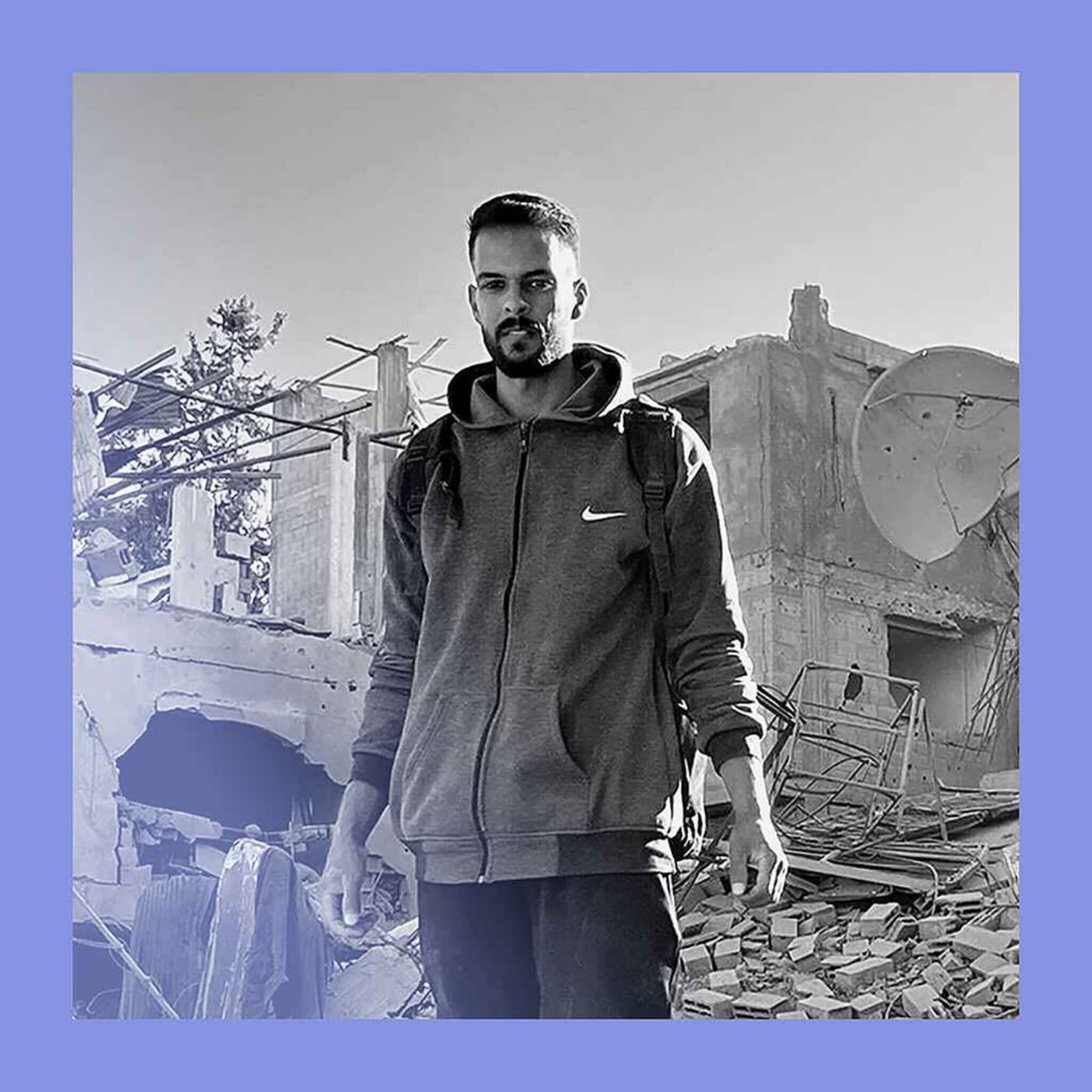
Ten days into the ceasefire between Israel and Hamas, the truce remains tenuous. Today our correspondent speaks to people on the ground in Gaza about what they expect from the future. Why global cities are coming round to bikes again. And being left-handed may give you an advantage in certain sports. Photo courtesy of Omar Mahmood.
Listen to what matters most, from global politics and business to science and technology—Subscribe to Economist Podcasts+
For more information about how to access Economist Podcasts+, please visit our FAQs page or watch our video explaining how to link your account.
Hosted on Acast. See acast.com/privacy for more information.