In short
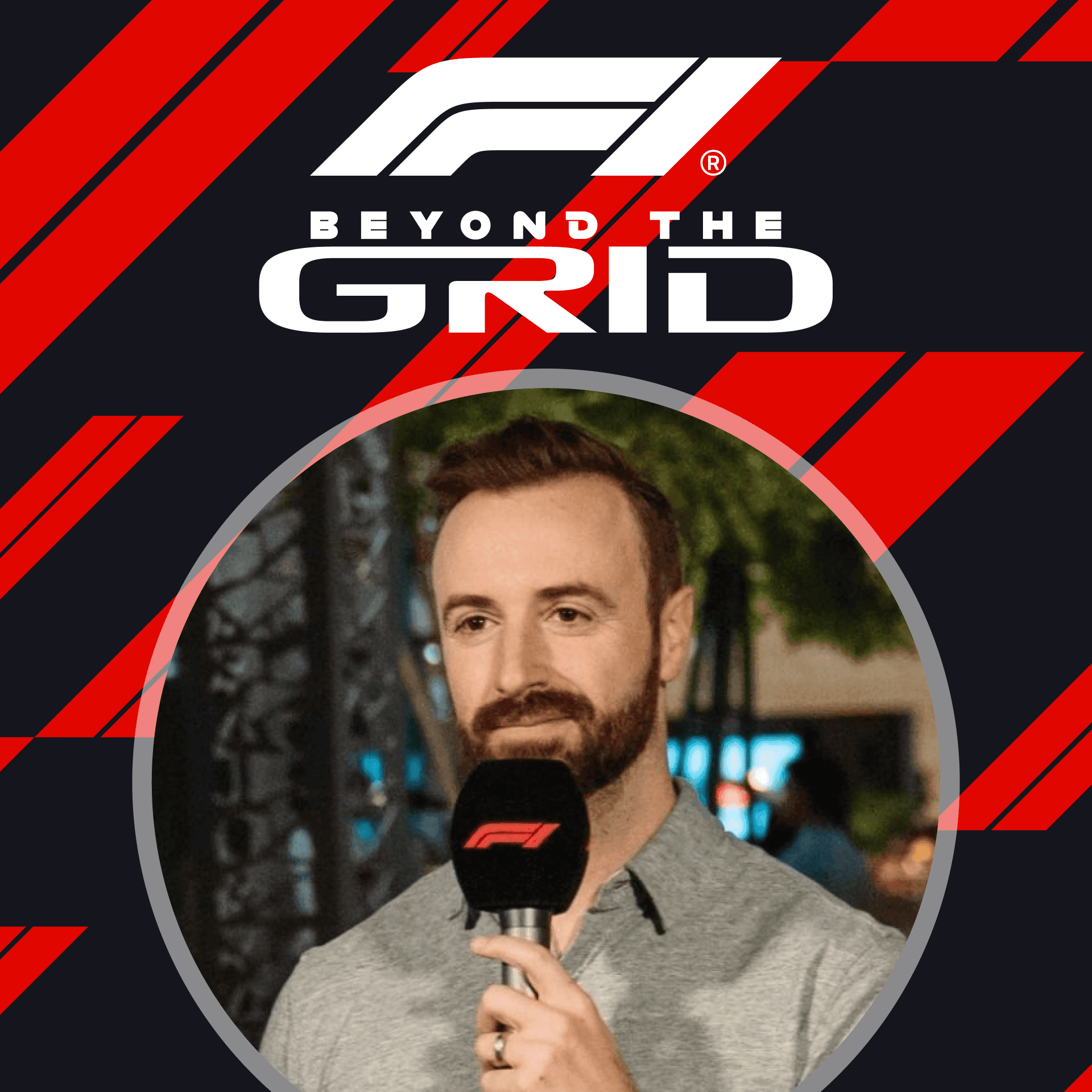
James Hinchcliffe discusses his IndyCar-to-broadcasting journey, surviving the 2015 Indianapolis 500 crash, and his current F1 TV pundit perspective. He also analyzes the 2025 title fight between Oscar Piastri and Lando Norris, Max Verstappen’s role in Red Bull’s 2026 rebuild, and whether the US needs an American F1 winner.
Guest background
James Hinchcliffe is a former IndyCar driver (six wins, 18 podiums) and Indy 500 pole sitter. He later became an F1 TV pundit (since 2022). He survived a near-fatal 2015 Indy 500 practice crash that involved a suspension piece piercing the tub and hitting his femoral artery.
Key claims
Greatness comes from work ethic and support systems; fear of failure can drive obsession. Oval racing requires recalibrated senses and is a different skill set. Piastri’s strength is mental consistency; Norris’s is learning what motivates him and being openly self-critical. An American driver isn’t required, but an American winner would boost US pride.
Notable examples
2015 crash recovery leading to Indy 500 pole in 2016; Verstappen’s “mouse settings” for ovals; Colton Hurta as a US prospect; Jacques Villeneuve winning 1997 as a favorite F1 memory.
Written by AI. May contain mistakes. Listen to the episode to check what was said.
Chapters
Tap a time to open that second in VOJames Hinchcliffe's Racing Journey
0:45 to 2:49
Learn about James Hinchcliffe's experiences in racing, including his near-fatal crash and return to the track.
“The fear of failure, the fear of never winning again was almost more of a motivator than feeling the winning feeling, if that makes sense.”
Returning to F1: Insights and Emotions
2:49 to 3:40
Explore Hinchcliffe's insights on returning to F1 and his experiences working with the F1 TV team.
“We're here at a racetrack, so life's good.”
Development in Formula One
3:40 to 5:06
Discuss the rapid development and competitive nature of F1, focusing on team upgrades and technology.
“One of the things I'm very lucky to get to do in this job is I get to go stay on trackside, right?”
The 2025 Championship Battle
5:06 to 7:37
Analyze the championship dynamics between Oscar Piastri and Lando Norris, and their strengths and weaknesses.
“I mean, you hear him on the radio, good, bad or indifferent.”
Mental Approach and Work Ethic in Racing
7:37 to 12:29
Examine the mental strategies and work ethic of successful drivers like Verstappen and Hamilton.
“because it's not easy to stand up in front of a global audience like Formula One and say, Yeah, that's on me.”
Talent vs. Nurture in Racing
12:29 to 14:01
Delve into the debate of natural talent versus training in the success of drivers like Max Verstappen.
“But I think there's a lot of truth in it for a lot of other people.”
Max Verstappen and Red Bull's Future
14:01 to 19:04
Discusses Max Verstappen's unique driving talent and the implications of Red Bull's transition for the 2026 season.
“And I think he had to have been born a certain way, wired a certain way to be able to kind of receive that type of coaching.”
Hinchcliffe's IndyCar Journey
19:21 to 22:37
Reflects on Hinchcliffe's career in IndyCar, his successes, and his decision-making process regarding Formula 1.
“and maybe try this side of things was after my season in Formula BMW.”
The Risks of Racing on Ovals
22:37 to 27:44
Hinchcliffe explores the inherent dangers of racing on ovals and his personal justifications for participating.
“I think, again, this is a bit of a cliche line, but I've said it for a very long time.”
Overcoming Adversity: Hinchcliffe's Comeback
28:21 to 34:28
James Hinchcliffe discusses his experience recovering from a serious crash and qualifying for the Indianapolis 500.
“Did you consider only doing road courses and street tracks?”
Show all 16 chapters
The Skills of Oval Racing vs. Road Racing
34:29 to 39:07
Hinchcliffe explains the differences in skill sets between racing on ovals and road courses.
“you look fine physically, but maybe you're just putting a smile on it.”
The Need for American Drivers in Formula One
39:08 to 42:01
Discussion on whether Formula One needs an American driver and the impact of an American winner.
“It's kind of like Max in the sense that there's no element of the game that he is lacking in.”
American Drivers and Racing Pride
42:01 to 44:46
Discussion on the potential impact of an American driver winning in F1.
“That said, it's a very proud place and it's not about needing an American driver, but I do think an American winner would kick it up to a whole nother level.”
Broadcasting While Racing
44:47 to 47:18
James Hinchcliffe shares his experiences of broadcasting during his racing career.
“How difficult was it to one weekend be putting a microphone in someone's face and then the next weekend be wanting to beat them?”
F1 Championship Predictions
47:19 to 49:49
Predictions and thoughts on the ongoing F1 championship and its drivers.
“I'm asking everyone on the pod this year.”
Closing Thoughts and Future Insights
49:53 to 51:05
Reflections on the conversation and anticipation for future races.
“So much at stake and so much drama on track.”
Transcript
Automatic transcript. May contain errors.0:00Cadillac has entered Formula One, deepening the racing pedigree behind every V-Series on the road. Discover a line-up that delivers pure adrenaline in the form of modern luxury. Experience the quickest Cadillac ever, the all-electric Lyric V, the peak performance of the CT5V Blackwing, the nimble agility of the Optic V and the legendary roar of the Escalade V, all engineered to thrill find out more about Cadillac's performance story in Formula One and our race-tested v-series lineup at cadillac.com
0:45James Hinchcliffe:the joy of winning is is a very tough thing to explain to people it's a very tough emotion to really kind of verbalize but racing is such a fickle business you know all the cliches you're only as good as your last race, whatever, whatever. The fear of failure, the fear of never winning again was almost more of a motivator than feeling the winning feeling, if that makes sense. Motivated by that fear of never winning again, James Hinchcliffe took six wins and 18 podiums in IndyCar. But perhaps his biggest challenge was returning to the racetrack after a near fatal crash. I woke up from the accident.
1:24James Hinchcliffe:You know, I couldn't even speak. I had to write on pen and paper. My third question was, when can I get back in the car? You're so fearful of losing this thing you've worked so hard for. You sacrificed so much for your entire life. And so you immediately are like, I can get back in a car, right? When can that happen?
1:47It's 10 years since James's freak accident during practice for the 2015 Indy 500. Here on F1 Beyond the Grid with me, Tom Clarkson. He tells us how he miraculously survived that crash, why he lied to himself about what happened and the emotions he felt when he took pole at the very same racetrack one year later. A huge fan of F1 from a young age and now offering his expert insight as a pundit on F1 TV, James also tells us why he didn't try to become an F1 driver himself and whether he thinks the United States needs an American on the grid. Hinch is very articulate and interesting and his take on this year's world title fight between Oscar Piastri and Lando Norris is fascinating.
2:35As are his thoughts on the role that Max Verstappen will play in Red Bull's rebuild into world title contenders. I hope you enjoy it.
2:48James, great to have you on the show. Thanks for your time. How are things? Of course.
2:51James Hinchcliffe:Thanks so much for having me. Things are well. Things are well. We're here at a racetrack, so life's good. Well, you haven't been to an F1 racetrack for a while. What do you most look forward to seeing when you come back to F1? Oh, that's a great question. I mean, it sounds corny. The people, you know, the people that I get to work with on the F1 TV side are a great group. And, you know, I started working with them back in 2022. And in all honesty, I came into this feeling like a little bit of an outsider, a little bit of imposter syndrome. I never raced an F1. I haven't even driven an F1 car.
3:26James Hinchcliffe:What business do I have, you know, talking about Formula One to anyone? But it quite quickly became something I really enjoyed doing because everybody, you know, welcomed me so much in the whole paddock. And it's been great getting to know some of these people. And I don't get to see them all year. So it's kind of nice every time I come back. What about the cars, the machinery? One of the things I'm very lucky to get to do in this job is I get to go stay on trackside, right? You know, when you're walking in and out of the paddock, you don't see the cars. You can do weekends where if you're in the comms box, maybe instead of doing some of the remote stuff, you won't see a car in person.
4:00James Hinchcliffe:You know, you're watching it on TV, even though it's happening right beside you. So in this role, I get the opportunity to go stay on trackside, you know, most practice sessions. And that is phenomenal. I mean, in Japan, at Suzuka, standing kind of in between turns one and two, even as somebody that's done this my whole life, I mean, watching these things come through at pace in some of the quick corners, absolutely breathtaking. And the development rate, I'm still astounded by. I mean, the last dry qualifying we had at Spa-Francorchamps was full dry qualifying, was in 2022. And Max Verstappen's pole time, three years later in 2025, would have been one second slower than Lance Stroll, who was last this year.
4:42James Hinchcliffe:it's unbelievable yeah there's really no other form of motorsport that does it quite at that rate and uh you know it's one of the fun things every weekend is you you look through the f1 the fia bulletins on who's brought what upgrades and it's it's it's amazing the pace at which these teams develop we get to kind of see it all over again now in in 2026 because the rate of development when a new regulation set comes in is just going to be you know even exponentially higher than kind of what we've seen the last year or two what about drivers i know you've been uh full-on you know at indie for the last couple of months but you've been keeping a really close eye what has stood out for you about 2025 who's stood out well i mean you know this this ebb and flow between oscar and lando is is incredible isn't it i mean it's it's the kind of championship battle if you're going to have one team dominating you at least want both drivers you know competitive enough to push each other and fight for wins and we've been lucky enough to have that this year so kind of seeing the ebb and flow the uh the change in momentum from one side of the garage to the other trying to keep tabs on inter-team relations a little bit and you know how much are they starting to really understand that we're getting to crunch time in the championship it's by no means a guarantee that they'll be in this position next year or potentially ever again that's what's so crazy about Formula One and so for both of these drivers this could be a once in a lifetime opportunity as corny as that sounds it's quite literally could be a once in a lifetime opportunity to fight for a driver's championship and what do you see as each of their strengths I think, you know, Oscar's mental consistency, his emotional consistency, I think, is a massive strength.
6:15James Hinchcliffe:He's unflappable, right? He's almost, you know, Kimmy Jr. in the Iceman moniker, right? I mean, you hear him on the radio, good, bad or indifferent. He sort of lives right here. And I know that outside of the car, away from the track, I'm sure he has a full range of emotions, just like every other person does. But I think it's so important as an athlete to be able to kind of kind of harness that compartmentalize and stay in that zone. What I love about Lando is he's learned what works for him and people are different. Not everybody is set off by the same things. Not everybody is motivated by the same things.
6:50James Hinchcliffe:And learning what makes you tick and what makes you perform at your best, I think, is a very important thing for an athlete to be able to achieve. I think too often we look at some of the greats in any sport and think that, okay, we have to replicate that. How did they do it? How did they approach it? How did they execute it? To be a great at that level, you must do the same. I don't think that's necessarily true. In some ways, yes. certainly maybe in some procedural stuff and specific stuff on the racetrack, but from a mental approach, everybody is different. And Lando has seemingly discovered that being this open, honest, publicly self-critical person actually helps him get the best out of himself.
7:32James Hinchcliffe:And so for the people that think it's not the right approach or it shows weakness, I actually disagree. I think it shows quite a bit of strength because it's not easy to stand up in front of a global audience like Formula One and say, Yeah, that's on me. Put your helmet on. Imagine you are one of those drivers. As we get to crunch time, the business end of the season, is part of your remit to work on the weakness of your rival? Do you think they each know what the weakness is? And just even when they're in a debrief, might they just be sort of prodding on the shoulder a bit? I would be very surprised if that isn't the way it goes, if it hasn't started already.
8:10James Hinchcliffe:For me, I always think back to 2016. the relationship, the friendship that Lewis and Nico had at one point in their life and how in the heat of a championship battle, all bets were off, you know, no more Mr. Nice Guy. And it was even these small little things they could do to each other to try to get that, you know, that mental advantage, that psychological advantage. I can't help but think that that is going to come into play again at some point if it hasn't already. And as the senior guy, Lando, seventh here in Formula One. Do you think he's feeling more pressure? I think both drivers are acutely aware of just how rare this opportunity is.
8:51James Hinchcliffe:Yes, it took Lando seven years to be in a position where he was in a car that could do what it's doing now. It's only taken Oscar a few, but both realize I think that this is potentially a fleeting opportunity. And so I don't think there's more pressure on one than the other. I think they're both very aware of how important these next few months are. Hinch, it's so interesting to get your perspective because in a way yours is unique. Okay, you've been there and done it in IndyCar, you've won six races, you've won in Atlantic, you've won in Indy Lights, and you've spent a lot of time since you retired from IndyCar observing all sorts of championships around the world.
9:30When you look at the winners, the serial winners, the Verstappens, the Hamiltons, even the Scott Dixons, right, in IndyCar, What do they all have that the others don't?
9:41James Hinchcliffe:I mean, I don't think it's any one thing, certainly. I think right off the bat, what you have to say is they've got a tremendous support system, right? I mean, no driver does this on their own. The teams play such a huge part in this. And when you look at a lot of those periods of dominance, it's rare that you have the situation that we have now where kind of both drivers on the team or multiple drivers on a team in, say, an IndyCar sense, are performing at that level. Any sort of team dominance is usually accompanied by one driver really standing out within that team. But when you look at some of those names, the number one thing I honestly think is work ethic.
10:24James Hinchcliffe:You hear stories, you watch documentaries, you read books about great athletes. Pick your sport. Football, basketball, baseball, golf, tennis, whatever. There is always this unrelenting work ethic behind the greats. You know, if you watch the Michael Jordan documentary and you just you see how obsessed he is with winning, how obsessed he is with his craft. And Verstappen is the perfect example of that. Right. I mean, this guy lives and breathes motorsports to a degree that I don't think anyone else on the grid does. And you're talking about 20 of the most competitive and successful drivers in the world.
11:01James Hinchcliffe:I do think it takes an obsession to really reach those levels and what causes the obsession is it a fear of failure I think that's different for every driver that's what it was for me it was a failure for you it was it was a fear of losing the joy of winning is is a very tough thing to explain to people it's a very tough emotion to really kind of verbalize but racing is such a fickle business you know all the cliches you're only as good as your last race whatever whatever the fear of failure the fear of never winning again was almost more of a motivator than feeling the winning feeling if that makes sense this makes me think of scotty scheffler the golfer just before the british open he came out with you know he said it's not a fulfilling life you know we're talking about the world's number one golfer not a fulfilling life and he finds himself asking what's the point And if that is his attitude, you talk about work ethic.
11:58I'm sure he's out on the driving range before anyone else, right? But if you're asking yourself what's the point, that must be hard to find the motivation. Absolutely. Which almost makes it even more impressive.
12:09James Hinchcliffe:Maybe. You know, because you think, again, to stick on the golf reference, Tiger Woods had that unrelenting work ethic, but he loved it. You could tell. I mean, he did it up until the point his body failed him and then kept going for a few more years. What Scheffler's doing is very, very unique in sport. The way he's sort of viewing his success is very unique. But I think there's a lot of truth in it for a lot of other people. I think there's a lot of people that if you really strip them down and ask them that question, that have been massively successful in whatever it is, sport, business, you know, whatever your vocation.
12:46James Hinchcliffe:I think a lot of people will tell you that it's it's lonely at the top and it's not everything they thought it would be Let's extrapolate this further then and talk about talent. What is your take on talent? Do you think for example that Max Verstappen's factory settings when he was born Were just more In line with what you need to be a brilliant racing driver than 99.9 % of other people or do you think it was? nurture and the fact that joss verstappen put him on the on a go-kart at the age of four and just worked and worked and worked at it i think in that sort of case is probably a combination of both right i think max is obviously born with a certain amount of the required you know physical acumen that someone needs the i make the joke all the time that racing drivers are kind of wired differently right we lack the self-preservation gene that most people have and max obviously has to have that.
13:39James Hinchcliffe:Any racing driver has to have that to strap yourself into one of these things and go risk your life every weekend. But then, no, I think Yoss played a huge part in it. But Max's natural disposition had to be willing to accept that kind of coaching, right? That kind of approach could crush somebody, especially at a young age, especially a young kid. And it didn't crush Max. It created Max. And I think he had to have been born a certain way, wired a certain way to be able to kind of receive that type of coaching. So it's a very unique scenario, which is why you have this very unique driver that is, I mean, I think if you pulled the grid and said, hey, other than yourself, who's the best driver on the grid?
14:20James Hinchcliffe:I think 19 people would say Max. While we're on Max, just what are your thoughts on him staying at Red Bull for 26? It makes sense. 26 is a risk anywhere you go. And so at least staying at Red Bull, he knows his surroundings very well. He's got a lot of faith and a lot of trust in the people that he works with. I think it's worth kind of getting through 26, assessing where things are, and then going from there. Can I put this to you? Red Bull is a team in transition now, right? They've just had a change of management at the top. They've had a whole bunch of really talented people leave. They've got powertrains coming on in 26.
14:55Christian Horner said a few races back, if we're better than Mercedes, it's going to be embarrassing for them. So it feels like a team that is going to take a step back in 26 while it rebuilds. Max is a born winner, a once-in-a-generational talent, but a born winner who might, do you think, get frustrated in that environment? Do you actually think Max is the right driver for Red Bull in 26, or should he actually be in a Mercedes winning races and leaving Red Bull to rebuild?
15:26James Hinchcliffe:Well, it's an interesting point. I mean, if I'm Red Bull, I want somebody that is as motivated as Max is to win, helping push that team forward. You know, if you are a team that's kind of rebuilding structurally and, you know, you're entering this kind of new world, you know, doing the power unit side of things as well, Max's feedback is obviously very good. He knows how to develop a car. He knows how to get the most out of a car. If I'm a team manager, if I'm an engineer, that's the driver that I want, one that knows exactly what he needs in a race car. You know that every time he drives it, he is getting every possible hundredth and thousandth out of it in any scenario and whose hatred of losing is again maybe more powerful than his joy of winning because i think that just motivates the whole group but does that hatred of losing put too much pressure on a team that is rebuilding like i'm thinking of sort of center at mclaren in 93 that that kind of thing i think it depends how it manifests in max and how he displays that to the team and you know Look, he's obviously matured a lot as a Formula One driver.
16:32James Hinchcliffe:He got into the sport very young. He was a kid. Now he's, you know, four-time champion. He's a new father. He's all these things. He's grown and matured in a lot of ways. I think the important thing is, yeah, is how you display that frustration and how you actually kind of turn that into something positive rather than just focusing on the negatives. Cadillac has entered Formula One, deepening the racing pedigree behind every V-Series on the road. Discover a line-up that delivers pure adrenaline in the form of modern luxury. Experience the quickest Cadillac ever, the all-electric Lyric V, the peak performance of the CT5V Blackwing, the nimble agility of the Optic V, and the legendary roar of the Escalade V, all engineered to thrill.
17:24Find out more about Cadillac's performance story in Formula One and our race-tested V-Series line-up at Cadillac.com.
17:40Hinch, we've talked a lot about other drivers. Can we talk about you and your single-seater career now? Those six IndyCar wins, what was it, 18 podiums, the pole at Indy.
17:52James Hinchcliffe:how do you look back on that decade or a bit more in indycar very fondly you know um indycar was always my dream and i grew up a kid in toronto the indycar race was kind of in our backyard starting the year i was born so i've been to basically every version of that race and fell in love with motorsports chasing mario andretti you know around the paddock for an autograph and emerson fittipaldi and things like that um and i mean look anybody that's that's in this sport at any level knows how difficult it is to, you know, to be a professional, to be a paid racing driver at any level of the sport is so, so difficult to have managed to achieve the goal I set out, which was to be an IndyCar driver, to do it for, you know, a little over a decade.
18:36James Hinchcliffe:You can't be upset about that. Yes, you can lament races that you lost. You can look back at decisions that you made, career moves that maybe if you could do over, you'd have done differently. but what's the point? You know, the past is the past. You can't change it. I prefer to just kind of look back and think about how lucky I was to have got to do it. Was F1 ever on your radar? In all honesty, not really. Again, I just, I grew up with this IndyCar influence even though my dad was from England so he was a big F1 fan and we grew up, I mean, I watched every Grand Prix, you know, Sunday mornings was F1, Sunday afternoons was IndyCar and that's just how, you know, my dad and I did our weekends but I think the proximity I had to IndyCar made it just more appealing to me.
19:18James Hinchcliffe:My one sort of opportunity to come over to Europe and maybe try this side of things was after my season in Formula BMW. I performed well. BMW offered me a ride in the British Championship, which was kind of the benchmark for that series at the time. And this is where Hulkenberg came through and Rossberg came through and Vettel came through, all sort of the same era. And it was kind of a decision, you know, my family and I had to make. Was it worth dropping out of school, moving to Europe and kind of chasing this dream. And we decided at the time that it wasn't, you know, at the Formula BMW level, you're still very, very far away from making a living in motorsports.
19:55James Hinchcliffe:And education was very important to my parents. They didn't want me to drop out of school yet. And that was kind of, it wasn't even really an argument. I got the logic. And so I didn't really fight them on it. Do you regret that now? No, not at all. Because one of the things as my career progressed and, you know, got to IndyCar and had some success, I would look at contemporaries who had gone the other way. And breaking into Formula One was always very challenging. You know, it still is, and it will always be as it should be. As a North American, I think it's additionally tough. I think not coming over to Europe, really from the karting age, or certainly the first level of junior formula cars at 14, 15, 16 makes it another step more difficult.
20:37James Hinchcliffe:And I would look at guys that I raced against that were incredibly talented that never got that opportunity or even guys that did. And this, this is the part where it gets a little bit, a little bit difficult. And I might, I might cop a bit of hate for this, but I looked at drivers that got to formula one and, you know, pre cost cap era, any pre cost cap era, the disparity between the has and the have nots was massive. The good cars and the bad cars were seconds apart, not tens apart. and I would watch drivers have entire careers not even having a sniff of a top five. Actually zero chance to win any race all year long.
21:14James Hinchcliffe:And as a driver, I couldn't find the motivation in that. I get that it's you hope you do well enough that you get picked up by one of the teams that can fight for wins in championships, but to spend eight years driving around, waking up every Sunday thinking that like 12th is a good day, I don't think I could have done that. That's not what motivated me as a driver. So what is your take on the likes of Checo Perez, who moved from Mexico to Germany at the age of 15? He had no plan B. I remember he was sleeping on the couch of my friend in Oxford when we were doing A1GP together. I knew Checo, he was the reserve driver for A1D Mexico.
21:53James Hinchcliffe:No, but I have nothing but admiration for those kids and those families. You hear a lot of the Australian, New Zealanders coming over from Europe and doing the same thing. They've got to give up everything, move over and commit. And I give them nothing but credit. And we love talking about the success stories. We very rarely focus on how many drivers did the same thing. And they're, you know, back in New Zealand selling Holdens. You know, it's a cruel sport. It's an unfair sport. Timing is so much of it. And so for me, when I was coming out, when the era that I was growing up, the timing just didn't make sense for me to try to make a path towards F1.
22:29Your most successful seasons in IndyCar were with Andretti. What did you have around you then that allowed you to get that success that you didn't have at other times?
22:40James Hinchcliffe:I think, again, this is a bit of a cliche line, but I've said it for a very long time. Racing is not about cars or tires or engines. Racing is about people. And if you get the right group of people together in this sport, you can achieve some incredible things together. You don't always need the biggest budget. You don't always need the, you know, the fanciest factory or whatever. It really is about the people. And, you know, my time with with Andretti, we had just an incredible group, engineers, mechanics, my teammates. It was a really fun time. And the results came, I think, as a result of this this group of people just really being on the same wavelength.
23:20how much of a setback was the crash at indianapolis in fact can you take us through what happened during practice for indy in 2015 yeah so post-qualifying practice day at indy
23:33James Hinchcliffe:normal day at the speedway and um during a run uh following montoya had a mechanical failure in the middle of one of the turns launched the car into the wall about 220 miles an hour and that's a bad day on a good day. But in a really freak set of circumstances, a piece of the suspension actually pierced the tub and went straight through me and essentially shish kebabed me inside the race car. I'd been impaled and in that process, it hit my femoral artery in my left leg. And when the car came to a stop, I was essentially bleeding to death in the race car. I would not be here today without the work of the men and women of the safety team who got me out of the car, started to attempt to stop the bleeding.
Read the full transcript
24:16James Hinchcliffe:I was bleeding quite a bit. Got me to hospital. Obviously everything worked out fine. But yeah, it took me out for the rest of the season as I was recovering. Were you immediately aware of the severity of your injuries? Mercifully, I was so concussed in the accident. I have no recollection of that. You know, I was driving, everything was fine. As far as my memory goes, I blinked and I wake up on a table staring up at bright lights in a collar strapped to a board tube down my throat a lot of concerned people looking down and you know even then i mean it at that point i realized something's gone wrong here but uh it took it took a few days for me to understand how complicated the injury was and the severity of it and you know ultimately what the what the rehab time was going to be hinch you're you're a bright guy how did you justify how did you square away in your mind the risks of racing on ovals?
25:11James Hinchcliffe:Before or after? Okay. Or both. Give us both, yeah. Well, before it's simple. You know, I think any driver acknowledges racing's inherently dangerous. And when you're presented with an opportunity, you find ways to justify it. I think it's as simple as that. How do you justify it? It'll never happen to me because I'm really good? No, I think it was more the sport's much safer than it was. You know, I'm not racing on ovals in the 70s with, you know, aluminum fuel cells sitting in the side pods. I'm not racing in an era where the driver's feet are in front of the front axle. And so I think you justify it by saying the safety's come so far, it's unlikely to happen to anyone.
25:55James Hinchcliffe:You don't even make it personal. It's, oh, that's not going to happen. and I was very ignorant you know when I got to IndyCar by that point you're racing on ovals you've done Indy Lights you've kind of learned to appreciate them for what they are and they are amazing when when you do learn to appreciate them and I think I very ignorantly thought that I was racing in an era where we had passed the point of losing drivers and then my rookie year we lost Dan Weldon and that was a that was a bit of a wake-up call but when you are young and you are naive and uh you're hungry for success you you justify in your head by thinking it's it's probably not gonna happen what are the chance landing strikes twice you know am i right in thinking that greg moore was an inspiration for you as well he was very much so who tragically we lost on an oval as well and when i was young greg died in 99 and he was my hero he was my guy that day i was i think 12 years old maybe racing go-karts and that was the day i started hating oval racing.
26:56James Hinchcliffe:And I hated oval racing up until the day I was forced to do it if I was going to continue a career in IndyCar. You know, for a time there during the split in American Open Wheel, you had the champ car side, which really didn't run on ovals, and then the IRL, the Indy Racing League, which was in its inception exclusively ovals. Well, I don't like that series. I was on this side of the war. For a long time, I didn't really think it was something I was going to have to face. 08 happens, the merge happens, and it becomes a much more kind of balanced schedule, and the reality is, yeah, you're going to have to start doing this, and you just had to face it.
27:33Cadillac has entered Formula One, deepening the racing pedigree behind every V-Series on the road. Discover a lineup that delivers pure adrenaline in the form of modern luxury. Experience the The quickest Cadillac ever, the all-electric Lyric V, the peak performance of the CT5V Blackwing, the nimble agility of the Optic V, and the legendary roar of the Escalade V. All engineered to thrill. Find out more about Cadillac's performance story in Formula One and our race-tested V-Series lineup at Cadillac.com.
28:21Back to the crash. You're out for the rest of 2015. Did you consider not racing again? No. Did you consider only doing road courses and street tracks? No. Because it is extraordinary that the very next year, you go and put the car on pole for the Indianapolis 500. Phenomenal. How difficult was that?
28:47James Hinchcliffe:Um, it was difficult in the sense that qualifying pole at Indy is always difficult because you've got 32 other teams and drivers trying to beat you. But Hinch, you must have had so much going on in your head just getting into the car. No, you're giving me too much credit. You take the chip out. A little bit, a little bit. You know, I woke up from the accident, understood, you know, what had happened. I was out for the year, fine. My third question when I woke up, you know, I couldn't even speak. I had to write it on pen and paper because I had a tube down my throat. My third question was, when can I get back in the car?
29:21James Hinchcliffe:And that's not an inspirational story. That's not an uncommon story. I think most drivers, when they are faced with an injury, you're so fearful of losing this thing you've worked so hard for. You've sacrificed so much for your entire life. And so you immediately are like, I can get back in a car, right? When can that happen? How I sort of reconciled the whole situation, there was two elements, I think, that really helped make getting back in the car not an issue for me at all. The first was I had no memory of the impact, of the extraction, of the pain that I would have been feeling on the day.
30:01James Hinchcliffe:I think that's important. I don't have flashbacks of a crash. And then the other thing was I made a very conscious effort very early in my recovery to not associate anything that I was going through with the race car. I told myself I had a car accident because in my head, I didn't know any different. I had no memory of it. So I told myself it was a car accident. I watched the video like I knew it wasn't a car accident, but I just I managed to just push it out of my head that the race car had done this to me. It was something unrelated. and it was never a question about getting back in the car.
30:38James Hinchcliffe:Did it help that it was a mechanical and that it wasn't a driver error? I have thought about that as well, and I do think that's an element of it because it's not like you think, hey, in that same scenario, would I make the same decision that led to this outcome or will I not take that same risk because I'm afraid of what could happen? It was dumb luck. It was bad luck. And I do think that makes it easier too. Right. So you put it on the pole. Can you remember now, 10 years on almost, the emotions? Yes, I can. And it's funny, man. I think back about that day every once in a while, and I'm a little disappointed in myself because I didn't allow myself to enjoy it enough in the moment.
31:24James Hinchcliffe:I think the overwhelming feeling was relief. So relief that you can still do it? Yeah, basically, because I came into that month and there were a lot of talks about would he still be able to, you know, run well at the 500 because I had a decent track record at Indy. I'd qualified in the front row a couple of times and we'd had a we had a pre month test. There's always an April test at Indy and they had made some fairly significant regulation changes to the aerodynamics of the cars for 2016. And we went there for that test. So my first time back at the track and it was a disaster. I didn't do a single lap flat.
32:04James Hinchcliffe:The car felt like it was trying to kill me and it was very concerning. I had no conscious issue with being at the track, being in the car, trying to go fast. But at that point, I'm thinking, is there something subconscious now? So I don't remember the accident, but maybe my subconscious remembers the accident and thinks, oh, I've been here. We're not doing that again. And of course, everyone on the team, everyone in the paddock, everyone in the media has that same thought. And I was like, guys, I'm telling you, there's something wrong with the car. Typical racing driver, right? It's not me, it's the car.
32:40James Hinchcliffe:and but i mean we left that day and you know i've subsequently found out there were crisis calls between my agent and the team and you know like oh is he like is he done is this it and i just said nope take it back to the shop we'll come back in may and we'll see what happens and we took it back to the shop they claim they found nothing we go back in may and second lap first practice flat out. No problem. What changed in me? Nothing. They'll tell you the car. Nothing. I don't know. It gave you two weeks of just pure terror that maybe there was something wrong. So I told all my crew, I said, look, for 11 months now, I've been telling this story.
33:19James Hinchcliffe:We're going to leave this month with a new story to tell. And that was kind of our, that was our motivation going into that month. And I think qualifying on pole, pole at Indy is so unique. It's such a cool thing. qualifying days in a lot of ways it's the coolest day of the year for an indycar driver and uh and it means so much to the teams to know that they built the fastest car and the differences you know you're looking for the the smallest amounts you have to perfect everything on the car everything on the run and so there's a lot of pride for teams and for drivers in that day and i think uh yeah that relief kind of came that we'd built up this sort of storybook you know this fairy tale story of this comeback and if we had qualified third it would be like oh yeah that was good but like it wasn't going to be as cool and so i think getting pole it was relief but then my my mind immediately switched way too quickly i let it switch to the race and be like okay well now we're starting first now we have to win and so there was immediately this new pressure of okay how do we continue this next week were there any lasting effects from the crash the previous year were Wait, did you have a limp?
34:27Did you? I mean, when I was watching Dancing with the Stars,
34:32James Hinchcliffe:you look fine physically, but maybe you're just putting a smile on it. No, no. I mean, if there were a hundred things that had to happen just wrong for that accident to happen and that injury to happen, it's a very bizarre freak sort of thing that happened with the suspension coming through the car and through me. A hundred things had to go just wrong for that to happen. A thousand things had to go just right for me to have not only survived that accident, but leave with no lasting side effects. I've got some cool scars, but no, physically it, it, it didn't hold me back in any way. Do you view life differently now?
35:12James Hinchcliffe:Yeah, very much so. One of the questions afterwards very often was, you know, has it changed you? And the answer was professionally, no. Like I was happy to strap back into the car. I would take the same risks. I would, accept the same outcomes. But personally, yeah, in a huge way. Can you describe a pole lap on an oval like that? How different is it to a road course? I'm thinking of Alonzo when he went there in 2017. I think he qualified fifth. Is it a completely different skill set? And you'll understand in a minute why I'm asking you about this. But just do you get oval specialists or can you do both?
35:50James Hinchcliffe:You absolutely get oval specialists. And you nailed it. The description there was perfect. It is a different skill set. You know, it's the same car, the same engine, the same tires for the most part, but it is a completely different skill set. And essentially what it is, is on a road course or street course, the inputs you're getting from the car are very big. An oversteer moment is very dramatic. An understeer moment is very dramatic. A lockup is very obvious, right? On an oval at those speeds, everything is so much smaller, you have to recalibrate your senses. Like the first time I went out on an oval and a test, and I drove around like, how's the car?
36:29James Hinchcliffe:Fine. I'm flat, I'm turning left, I don't know what to tell you. My brain could not comprehend how much understeer that car actually had, or if it was on the edge of adhesion in the back. I mean, you have to just fine tune all of your senses to a completely different level. The speed you're going, obviously, you're having to predict things so much further ahead. The way you've got to read traffic is different. Yeah, specifically in a qualifying setup, you know, you are trying to balance this thing on the absolute limit. You know, the old saying, loose is fast, right? So you've got to have the car fairly free, you're pulling as much downforce as you dare off the car.
37:05James Hinchcliffe:But knowing that if you get it a little wrong, there's usually no coming back. There's very rarely a good save in a qualifying lap on an oval. So it's daunting. How do you know how much to trim the car before it's too late? It's a bit of roulette, to be honest. You know, the old saying goes, there's two types of drivers on ovals, those that have hit the wall and those that will. Essentially, you've just got to learn to feel it. And it does come from just experience. You've got to build up to it gradually. And it's a good thing about indie is you have you know five days of practice six hours a day um to kind of slowly work up to that feeling do you think the great drivers can do both max verstappen on an oval yeah i think he'd figure it out i really do i i think of a description that alex albon gave recently where he said max is so set you know that the mouse settings the mouse settings on maximum that to me seems absolutely perfect very well suited for ovals absolutely and that's why i do think he would be he would be a very quick study on ovals yeah the reason we're talking about this is i wanted to ask you about american drivers i mean alex palau is is dominating this year in indycar he won the indianapolis 500 this year could he make it here and that sounds such an arrogant thing to say but when you look at his junior career he ran out of steam in europe he to go to Japan.
38:27It kind of, it was difficult to get a read on him over here in Europe. Right. Do you think he's got it?
38:33James Hinchcliffe:Yes. Yeah. He's the max of IndyCar. Like I said, if you pulled the other 19 drivers here, who's the best on the grid, you probably get a pretty close to unanimous answer. It would be the same in IndyCar right now. And look, obviously that changes, that fluctuates, right? There's a cycle to that. But Pillow has done some very, very impressive things behind the wheel of an IndyCar in the last, you know, 36 months. What he's doing this year is just, it's outrageous. You don't see that kind of domination in a, I hate to use this word, but a relatively spec series, right? I mean, there's no element.
39:09James Hinchcliffe:It's kind of like Max in the sense that there's no element of the game that he is lacking in. You cannot say there's a driver that's better over a single lap, better over a stint on hearts, better over a stint on sauce, better at restarts, better in laps, better at outlaps. There's nothing that he's missing. Again, drivers don't do this in isolation. His team right now is also just absolutely on fire. And it is that combination. It has to be that combination. But I do think, and I mean, Alex did an FP1 at Austin back in 22, I want to say. He did some TPC testing with McLaren and the feedback was remarkable.
39:46James Hinchcliffe:I remember watching that first practice that he did. First time driving that car because everything that he'd been driving was two years old. And I think he was two tenths off Lando at Coda, which is a long lap, difficult circuit. And that's an impressive display from a driver. So he's, yeah, I think he's the real deal. Cadillac has entered Formula One, deepening the racing pedigree behind every V-Series on the road. Discover a lineup that delivers pure adrenaline in the form of modern luxury. Experience the quickest Cadillac ever, the all-electric Lyric V, the peak performance of the CT5V Blackwing, the nimble agility of the Optic V and the legendary roar of the Escalade V, all engineered to thrill.
40:38Find out more about Cadillac's performance story in Formula One and our race-tested V-Series line-up at cadillac.com.
40:56There's more to come from Hintz shortly. I just wanted to let you know about the other official F1 podcasts you can listen to this week. F1 Nation's preview of the Dutch Grand Prix is out now. I'm joined by Jolien Palmer and Alex Jakes. And this week's F1 Explains is all about pit crews with Haas. That's out on Friday. Just search for F1 Nation and F1 Explains on your podcast app.
41:28can we talk specifically about american drivers first do you think formula one in america needs an american driver because there was this belief i mean i've been doing this for 30 years hinch right and when i back in the bernie era there was this belief we need an american driver Scott Speed, etc. It feels to me that the sport has broken through now and it doesn't need that. Do you agree? I do.
41:56James Hinchcliffe:I do agree that it doesn't need it. Obviously, Formula One in the US is quite healthy at the moment. That said, it's a very proud place and it's not about needing an American driver, but I do think an American winner would kick it up to a whole nother level. You look at how that country celebrates, you know, their, their Olympians, for example, right? That's a, it's a very big deal, that point of pride. And when you look at a global sport, like Formula One, between Cadillac coming in and really embracing the American identity, I think that's going to bring a little bit of pride, but being there isn't good enough.
42:38James Hinchcliffe:good enough isn't good enough. If there's an American that's winning races in Formula One, I really think that would be a huge, huge thing back in the States. Who's the most likely then? Let me throw a name at you. Colton Hurta, right? So he's P1, I think, because he has been in the car. Alpha Tauri were kind of actively pursuing him at one point a few years ago. So they've clearly seen something in him. His McLaren test went incredibly well. Andrea Stella had nothing but good things to say about him there. He's had some European experience. You know, he did some of his junior career over in Europe.
43:11James Hinchcliffe:Lando's teammate. Lando's teammate. And actually, Lando does say he was really brave, quick through the fast corners. There you go. From Lando, that's as he is. So it's so, so different, right? The biggest thing is the tires. The way the tires work in Europe right now compared to how they do in the U.S. is so different that even a driver with some European experience would need to come over here and really do their homework, really put the time in. There'd have to be a lot of prep to get a driver up to speed. But yeah, I mean, Colton is definitely, I think, P1 on the list of prospects. And is he hungry?
43:45James Hinchcliffe:If he got the opportunity, got the super license, would he do it? Yeah, oh yeah, I believe so. Colton's a little bit like Max in his passion of racing. Colton's not a flashy guy. You know, he's a pretty simple guy. He likes waking up and driving race cars. And he's starting to golf a little bit now, which is concerning but other than that you know he so i think any opportunity to drive anything he will do i think he's been pretty successful in anything that he's driven um be a massive undertaking you'd be walking away from a pretty comfortable gig in indycar where he's running a gig he could walk back into at any time in theory but you never know there's no guarantees in the sport right so he would have to do it with the understanding that that's a possibility but there's a small chance that for whatever reason a good seat's not available on the year he decides to come back if he decides to come back so you know are you willing to go drive for a back of the grid team when you're return your triumphant return to indigo so there's a lot of things to consider but yeah i think ultimately if if the opportunity was presented he would take it hinch it's been such a pleasure talking to you thank you for your time you've obviously taken to broadcasting like a duck to water um i did want to ask you one thing about that because you started broadcasting while you were racing.
45:03How difficult was it to one weekend be putting a microphone in someone's face and then the next weekend be wanting to beat them? Very tough, very tough.
45:12James Hinchcliffe:You know, in 2020, I did a partial season in IndyCar and curtailed it with, or dovetailed it, sorry, with some TV work on the races that I wasn't doing. And that was very difficult. That was a challenging year. How did the drivers react to you with a microphone? The drivers were great. I mean, they're all friends, right? Your colleagues, yes, your enemy's on the racetrack, but the camaraderie, I think, in the U.S. is a little bit different. I think the IndyCar paddock's a little bit different than certainly some of the European paddocks when you talk to guys that have come over. Why do you think that is?
45:45James Hinchcliffe:I don't know. I don't know why that is. Because I remember when we ran A1GP, it had very much a North American feel, and all the drivers made that comment. I didn't know any different, but all the all the european guys all the guys that were running you know i guess it was gp2 at the time or whatever we're saying like oh yeah this is just fun we're having more fun here and i don't know why because it's not like the racing's any less serious it's not like we're not you know putting the same kind of pressure on your on ourselves when we're in the cars but yeah something about the off track quality of life's a little bit different is it because the indy car season is so intense you're back to back to back to back to back until it's done and that you guys are just a traveling circus?
46:29James Hinchcliffe:I think the traveling circus part is accurate. And, you know, a lot of drivers, you have motorhomes, you stay at the racetrack. So you're essentially living in a little community together. You, you know, know each other's families. You watch each other's children grow up. I mean, so it is kind of like a big family. Like a family, you have family members you like more than others. You fight like family and eventually you get over it and you move on because they're going to be there tomorrow and they're going to be there next week. So holding grudges is really a pointless endeavor. But no, yeah, the drivers were always really supportive and they were great.
47:03James Hinchcliffe:It was all the internal stuff that you're battling in that sense. Hinch, two more things. Can I get a prediction out of you for the championship in Formula One? No points for saying McLaren are going to win the Constructors' championship. That's literally what I was going to say. Oh, it's such a tough one. It is such a tough one. Do you think it'll go down to the wire and what do you think could you see one of them lando or oscar getting a bit of bit of a distance at this point we know where we are now round 14 when we're having this chat 10 races to go i think there is still enough time for one of them to when the pressure really starts to mount separate themselves but it still does seem like there are tracks that are going to suit one better than the other and they are so close that your you know advantage track is probably going to fall your way barring some issue or or whatever and i haven't done enough analysis of the remaining 10 races to really pick and choose who i think's got more tracks coming up that suit them so honestly at this point it's it's it's so hard to to tell is it gonna be track suitability or is it going to be who deals with the pressure best yes so is it going to be the mental side that wins this more than car setup and feel and i think it's all of it yeah true i really do think it's all of it um they are so closely matched though that yeah at the end of the day i think the the driver that is able to execute the most consistently as the pressure mounts will likely be the one that's, you know, holding a trophy at the end.
48:43James Hinchcliffe:Brilliant. Hinch, look, final one. I'm asking everyone on the pod this year. F1 is 75 years old. Do you have a favorite moment or a favorite memory from the 75 years of Formula One? Jacques Jerez, 97. Okay. Jacques taking the championship, the outrage that I felt against Michael Schumacher on the day. It was a really powerful day for a young Canadian kid who had followed, you know, Jacques IndyCar career, followed his transition over Formula One, thought he should have won the championship in his rookie year. This was going to be the year. And then the way it all went down in that final race, I mean, pure drama, you couldn't write a better script.
49:25James Hinchcliffe:And yeah, I'll never forget that day. I remember exactly where I was when the race was going on. And it was, you know, a very proud moment as a Canadian, you know, wannabe hopeful racing driver to see Canada get their first F1 world champion. And it was crazy close, wasn't it? Do you remember in qualifying, we had three drivers in the exact same lap time. Both Williams and Michael. It's a three decimal place. Yeah, yeah. To peak Formula One. Yeah, absolutely. Hinch, thank you so much for your time. Of course, thanks for having me on.
50:00Who can forget Hareth 97? So much at stake and so much drama on track. Imagine for a second if we had a similar final race showdown between Norris and Piastri this year. Now, I love this chat with Hinch. He just knows racing and he understands its idiosyncrasies, which makes him such an interesting guest. I loved his take on Oscar and Lando and on Max. I want to see Max have a go on an oval just for a test to see how he gets on. And as Hinch says, I'm sure he'd be quick from the get-go. Hinch, thanks for your time. I love that. And I look forward to seeing you again soon when you're back with the F1 Circus in a few weeks' time.
50:41Well, that's almost it for this episode. Thank you very much for listening. And I will, of course, be back next week with another great guest from the world of Formula One. F1 Beyond the Grid is produced by Formula One and Audioboom Studios. Until next time, keep it flat out.
51:04Cadillac has entered Formula One, deepening the racing pedigree behind every V-Series on the road. Discover a line-up that delivers pure adrenaline in the form of modern luxury. Experience the quickest Cadillac ever, the all-electric Lyric V, the peak performance of the CT5V Blackwing, the nimble agility of the Optic V, and the legendary roar of the Escalade V, all engineered to thrill. Find out more about Cadillac's performance story in Formula One and our race-tested V-Series line-up at cadillac.com.
From the publisher
A year later, he scored a sensational pole position at the very same racetrack.
Speaking to Tom Clarkson, James talks through the freak injury he suffered and how he made such a miraculous recovery.
A six-time IndyCar race winner, James also explains what it takes to be quick on high-speed ovals, whether the likes of Max Verstappen would be competitive on them and whether Indy stars like new four-time champion Alex Palou could succeed in Formula 1.
Tom asks James why, despite being such a huge fan of F1 growing up, he didn’t pursue a career in the pinnacle of motorsport, and whether he thinks the United States needs an American on the grid.
Now a regular pundit and commentator on F1TV, James also shares his thoughts on the thrilling battle between McLaren teammates Oscar Piastri and Lando Norris to become World Champion in 2025.
It's All To Drive For in 2025. Be there!
Book your seat for a Grand Prix this season at tickets.formula1.com
Listen to more official F1 podcasts
Every race analysed on F1 Nation
Expert answers to your questions on F1 Explains
THIS EPISODE IS SPONSORED BY:
CalderaLab: Head to calderaLab.com/grid and use GRID at checkout for 20% off your first order.
Shopify: Sign up for your one-dollar-per-month trial and start selling today at shopify.com/beyondthegrid
Babbel: Get up to 55% off at babbel.com/grid
Vanta: Visit vanta.com/grid to sign up for a free demo today!