In short
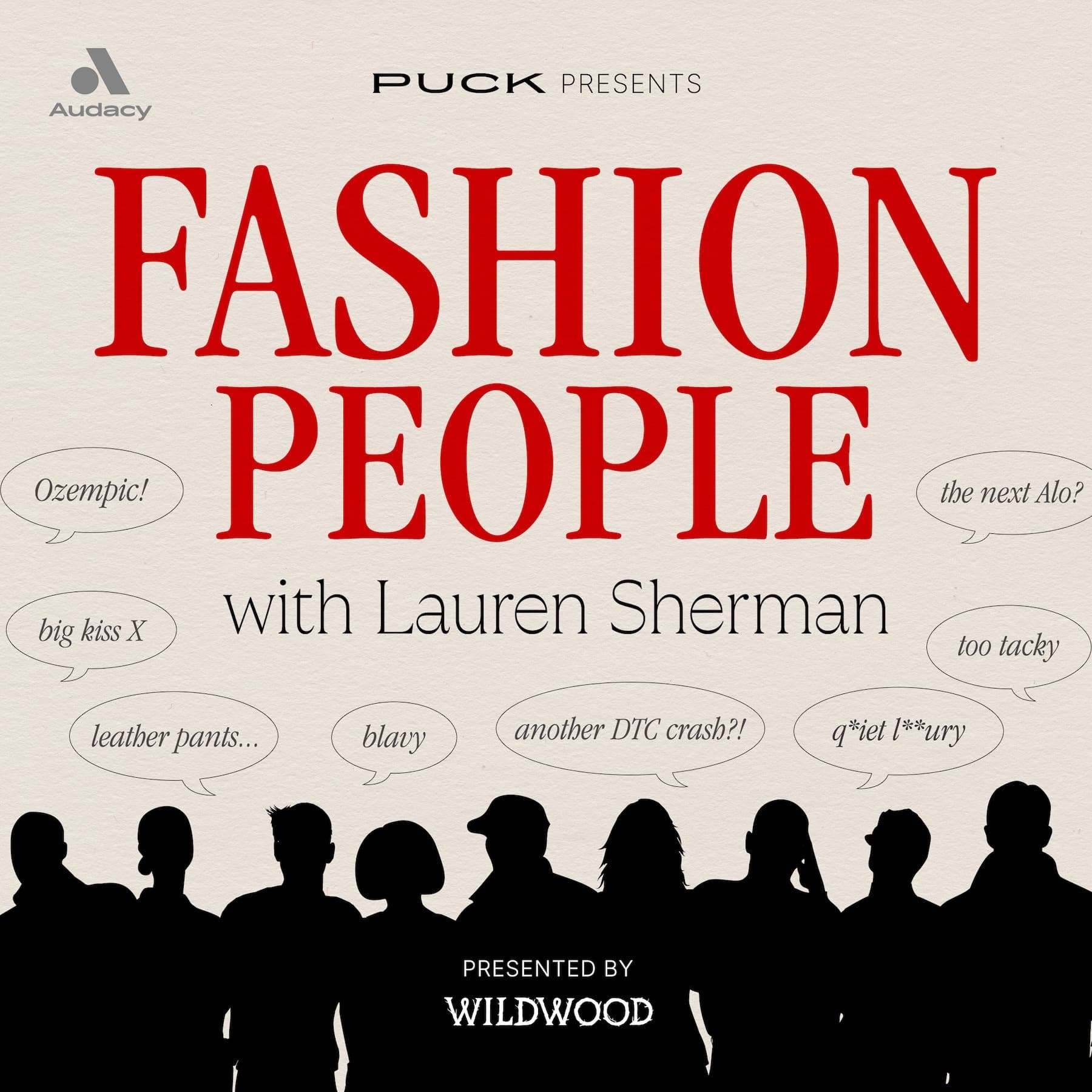
Podcast Notes: Fashion People
Episode Title
Ozempic Society and The Row’s Winning Streak
Hosts & Guests
- Host: Lauren Sherman, fashion and beauty correspondent for Puck.
- Guest: Ana Andjelic, fashion marketer and author of *Hitmakers: How Brands Influence Culture*.
Episode Overview In this episode, Lauren and Ana explore the impact of GLP-1 drugs on societal beauty standards and the current success of fashion brands like The Row and Abercrombie & Fitch. They also discuss the ongoing developments in the luxury fashion sector, including the Chanel-Matthieu Blazy situation and noteworthy news about Bernard Arnault.
---
Key Topics Discussed
- Impact of GLP-1 Drugs
- Discussion around how GLP-1 drugs are contributing to the "thin is in" narrative.
- Social Contagion: The idea that societal norms around eating and body image are shifting due to increased visibility of those using these drugs.
- Success of Fashion Brands
- The Row: Examined as a case study of success in the current trading environment.
- Key Points:
- High pricing strategy that has remained stable.
- Extensive SKU offerings that provide a complete wardrobe.
- Luxurious aesthetic that aligns with cultural expectations.
- Abercrombie & Fitch: Noted for its strategic pivot away from nostalgia, focusing instead on current trends and a better understanding of its consumer base.
- Challenges: Lack of heritage appeal compared to competitors who leverage their history.
- Chanel and Matthieu Blazy
- Insights into the speculation surrounding Matthieu Blazy’s appointment at Chanel and its implications for the brand's direction.
- Bernard Arnault News
- Noteworthy developments regarding Bernard Arnault’s standing and influence in the industry.
---
Key Takeaways
- Cultural Shifts in Beauty Standards:
- The use of GLP-1 drugs has redefined beauty standards, making being thin more acceptable again after years of promoting body positivity.
- Merchandising Strategies:
- Effective merchandising and a strong product foundation are critical for brands like Abercrombie to compete in the mass market.
- Brands need to revisit their core offerings and heritage to stay relevant, especially in the luxury segment.
- Consumer Behavior:
- The current consumer landscape shows a blend of luxury with practicality, where consumers seek quality but are also price-conscious.
- Future of Luxury Brands:
- Luxury brands need to balance growth strategies with cultural relevance to avoid becoming disconnected from their consumer base.
- Emerging Trends:
- The rise of the "middle" brand, which offers quality without the luxury price tag, is becoming increasingly significant in the marketplace.
---
Closing Thoughts The episode wrapped up with a conversation about the future of luxury fashion, emphasizing the need for brands to adapt to shifting consumer perceptions and the economic landscape. Both Lauren and Ana shared their insights on navigating these changes, reflecting on their experiences in the industry.
Additional Content
- For listeners interested in a deeper dive into these topics, Lauren encourages subscribing to Puck for exclusive insights and reports on the fashion industry.
Episode Release
- Frequency: New episodes of *Fashion People* are published twice a week, every Tuesday and Friday.
Links & Resources
- [Puck Privacy Policy](https://www.audacyinc.com/privacy-policy)
- [Join Puck for a discount](https://puck.news/fashion-people)
---
This detailed note captures the essence of the podcast episode, highlighting critical discussions and insights shared by the hosts and guest.
Written by AI. May contain mistakes. Listen to the episode to check what was said.
Transcript
Automatic transcript. May contain errors.0:03Hello and welcome to Fashion People. I'm Lauren Sherman, writer of Puck's fashion and beauty memo, Line Sheet. And today with me on the show is writer and fashion marketing guru, Anna Angelic. We're discussing her new book, Pitmakers, How Brands Influence Culture. Before we get going, I wanted to remind you that if you like this podcast, you'll definitely love Puck, where I send an email three times a week called Line Sheet. If you're a fashion person, you get that reference. It's an original look at what's really going on inside the fashion and beauty industries. Line She is scoopy, analytical, and above all, fun.
0:43Along with me, a subscription to Puck gains you access to an unmatched roster of experts reporting on powerful people and companies in entertainment, media, sports, politics, finance, the art world, and much more. If you're interested, listeners of Fashion People get a discount. Just go to puck.news slash fashion people to join Puck or start a free trial. Now let's get started with the show. Happy Friday. Happy holidays. It was a big week at Line Sheet this week. Thursday, I dug into Metu Blazy. We'll find out soon. His appointment at Chanel and all the speculation around that and what it could mean for caring.
1:27Sounds like they may already have a successor lined up at Bottega Veneta, or at least they are close. You can go on Line Sheet to find out who the names are. Uh, also Rachel Shrugatz, our beauty correspondent looked at the state of beauty M &A. Uh, we thought there was going to be a very big exit this year. Uh, instead we've had some nice exits. It's still, you know, does that December's not over? People love doing deals over the holidays. So that might still happen. But, uh, I guess the, the big takeaway from that story and you should read it because, because Rachel has all the reporting and details, but big congrats to Sarah Gibson Tuttle.
2:07who sold her nail polish and nail care brand all of in June to Helen of Troy for a bunch of money. What a story. It started out as some cool salons and she got into product really quickly, closed the salons during the pandemic, never reopened them. And now, you know, she sold this thing for hundreds of millions of dollars. And I'm very excited. I've known Sarah for a really long time and I'm very excited for her and excited for the people who had equity in that biz. There weren't that many. So I think they all did pretty well. Like love, love to see it. Uh, I also have news on the Condé layoffs or as they are calling it a reorganization connected to restructuring on the business side.
2:54Sure. Uh, there's also some funny stuff about people really mad because apparently Roger Lynch, the CEO sent out an email saying you have to be in the office four days a week, which, look, I agree with Roger. You should all be in the office four days a week. Sorry. I don't know what you all are doing at home. Why would you want to be at home, especially if you live in New York City? It's cramped. Go to the office. Anyway, I also had a little news on changes at Paris Vogue. And then I also covered this Mr. Bernard Arnault's induction into this prestigious learned society in France, which is very interesting and I think is actually quite a charming story.
3:33A little funny, but mostly charming. Oh, and I did my guide to gift guides. That was really fun. I hope you enjoyed that or enjoyed if you haven't looked at it yet. And our new correspondent, Sarah Shapiro, starts next week. So if you have any retail or shopping stories or investigations you want her to do, just send her a note on social and she'll be shapiro at puck.news. So you can email her there too. And I hope you enjoy this interview with Anna, who is nothing if not unfiltered. and shares her opinions about all the brands, high and low, what they're doing right, what they're doing wrong.
4:07And it was super fun. I hope you have a restful weekend. Ana Angelic, welcome to Fashion People. Thanks for having me, Lauren. Pleasure to be here. What did you have for breakfast this morning? I didn't have breakfast yet. Me neither. I know, but it's like 9 o 'clock your time. Yeah, what time is it your time? It's almost 1. I'm going to be hangry on this podcast. No, I'm kidding. I'm not. Did you have a late dinner? No, it's just that I can like, I just eat once a day. But yeah, like don't like just that one big thing in the day, like Bruce Springsteen. Like this is this is the key. This is the key.
4:49This is why all those people who are on GLP ones are thin because they eat one meal a day. Are you applying the time? No, No, you're definitely not. It's very clear. You're naturally thin slash take care of yourself. But it is a thing that I think a lot more people have started to do because of GLP ones. And they just eat or they see these people. They're like, well, the key is like eating. I think, look, like those also make you produce more insulin and there's a lot more science. And if you are overweight, it makes it easier to lose weight no matter what. But the key, I think there are a lot of people who do get questioned about it and who are like, oh, I just stopped eating as much, which is an interesting like, oh, you could also just do that instead of going on a drug.
5:44I think it's social contagion, but I will say I was never a greatest person. And because I'm European, we have big lunch and we don't have small dinners. And so that is, I'm just kind of like I'll just do my thing. Sorry, Brian, my husband, like I'm not going to eat in a video because I just don't, I'm not hungry. You know, why would I eat it? But definitely social contagion. But honestly, Lauren, I don't know if you like, I go to Tracy Anderson and the amount of bad Ozempic bodies. I know it's, it's, I don't know. Like do those people really think they look good? I don't know. I haven't really, when I think about it, the people that I've observed on Ozempic, because I don't really go to a lot of boutique classes.
6:26I do go to some, but they're in like Pasadena with 20 year olds who are definitely not on Ozempic and make me feel really bad about myself. But, um, but I, I tend to go to like in Hollywood to with like a lot of young girls. So I'm not, are you at, at the Tracy Anderson and Tribeca with all the Tribeca moms? uh i'm 59th oh okay i mean the upper east side but it's younger girls who look worse than older ones yeah yeah i think the thing that it does it's funny a friend of mine was like did you end up doing it because i during my book tour i was like thinner than i normally am by i would say five pounds and i said no like sometimes i think i should just do that would be a lot easier yes but i have not done it because i am one of these people who wants to like take care of myself myself and be healthy and all that stuff but then she said well i didn't think you had because your face is still full like it's not like i guess it really gets you in the cheek area and also the butt area, which is like, and arms, like the bones, it's that is the off.
7:45So you basically have like fake boobs hanging, like it's not a good look. And also the arms are really skeletal. So it's the neck that gets me. Oh man. Everyone has their own thing. Yeah. Look like I am very pro people feeling good and being healthy. And if you have to do that, go for it. And if you want to get work done to supplant, like whatever, everybody has their thing, but it's, it is very interesting to observe and you are a cultural anthropologist. So to see it is, is fascinating. And I think the thing you said, like, it's just, it's made it okay to be thin again. Like it's made it okay to not eat a lot.
8:30Whereas for, I'd say the last 15 years, you go to a dinner and you don't eat, you don't take a piece of bread. People are like fully judging you. Like very much you have to eat, eat, eat, eat, eat. And so there is, I mean, this is all balance. And I'm just curious to see what happens to these people physically in 15 years. You know what? That's the thing. And like, we can get off the topic but for me aesthetically it's like there's so many people like I like I'm not young anymore so I don't see well so when I look on Instagram I think everyone is a Kardashian and they're not because that's the same like as like everyone looks like you know the same and I wonder if it's like this is not new but I just think aesthetically it's you know how there was again like aesthetic and ethics so it was a value judgment if you didn't eat bread yeah it was body positivity and so on so but now because aesthetic change also like oh but you don't have self-discipline you're not you know like again i feel like fashion is going now like you know pendulum you know swings i think it's confusing to be honest it is and it's also So I remember I spent, I think it was like five and a half months in Paris in 2019.
9:54And I didn't go back to the US at all during that time. And I actually maybe went to the UK once or twice, but was really only in Europe during that period. And really noticed like the way people take care of their faces in France. and you just spend more time with French people and women in particular and also their bodies and working out and all that stuff. And then I remember going to the UK for like two weeks right after I left and it was a culture shock because Kardashian body was like at its peak and I had forgotten about it because in France, everybody was still just like, I don't eat. I eat when I'm hungry.
10:37I'm not going to eat that much. And I want to be thin. Whereas in, in the UK and in the US, it was really about like, how can I get like a really big butt? And, and so they totally changed physical aesthetics. And now, yeah, it's like, there are still people who look like that, but then there are also these people who are, are trying to look really small. And then obviously there is also this trend with a lot of weightlifting and a lot of protein, like eating so much protein that I'm like, I don't think it's physically possible for me to eat this. And I don't understand how I would ingest all this food.
11:19If it was going to make me thinner, maybe I'll try, but like, I don't think I can. And then the weightlifting like that, I think, you know, over 40 is important, but it is crazy. Like the amount of stuff I get fed on Instagram. I don't really do TikTok, but like about macro, macro, macro, lift, weight, lift, weight, deadlifts, deadlifts, deadlifts. And suddenly it's just all. So it's just an interesting, there are so many parallels between like physical activity and wellness and fashion and like the clothes that people are wearing and how they connect back to this. I don't know when you are consulting or when you're advising or working at a brand, like how much are you looking at like the changes in physicality to inform like what items you're buying and all of that that's i mean i love the pivot and just one more thing like i saw the substance last night oh yeah and i got traumatized and i was thinking funny you mentioned french women because i was thinking about french actresses that are 60 or so isabelle isabelle jani you know like yeah fantastic and And they look like, you know, so it's kind of definitely like a lifestyle.
12:33So I would say that brands that I worked with at Banana, it was pretty, especially at Gap brands, it's more of a, like, I don't want to sound cynical or something, but it's kind of like that body positivity and those plus sizes were almost like, not political statement, but, But the statement of, and at Esprit as well, not just YAP, I would say at big mass apparel brands, let's say like that, it's almost you want to do that because you have to. to go up. And which I think also, if you consider US market, obviously there are differences. If you are, say, like it's pre-European sizing, you'll have to adjust to US sizing.
13:30Or if you are a brand like Gap, which has a mass market, you do want to be aware of what is the average size and adjust to that. So these are obviously good merchandising decisions, good product decisions. yeah but they're also box checking yeah it's box checking and then it feels when they should be doing it because they found a really cool beautiful model and it doesn't matter which size she is they're doing it because they're like we need a certain size model and we need models of these five different ethnicities and we need like and that's when it starts to feel really. But you also have to do that, Lauren.
14:10You really do. Like I say, have to do that because at the same time, you're kind of righting the wrong in a way. And they're beautiful people, diverse and you sort of, even if you're not a mass brand right now, I've been working for the past six months with the footwear brand and it's a default. It's a default. We live in a diverse world and you do need to represent that in your campaign. So tell me a little bit, let's rewind on how you became so knowledgeable on this topic. Like, let's talk about your background. And and you are we met years ago. You you're a writer. You've written two books.
14:59Your new book, Hitmakers, How Brands Influence Culture is coming out imminently. And you have also been a CMO at a lot of different companies. It's great. and mostly in the fashion industry. But how did you kind of end up doing that as your gig? Well, 10 years ago or 11 years ago, I went to create a group from Droga 5 and create a group at the time was building websites for luxury fashion, beauty, lifestyle brands, hospitality brands, but in luxury space. And that's 11 years ago. And you have to, like, brands were not very comfortable selling$10 ,000 wedding dress or, you know, $50 ,000 jewelry online.
15:46Yeah. Well, at that time. So that was the. Well, create the group. I remember it. James. Oh my God. James, he's doing well. He's in Tulum. Good for him. Yeah. Shout out to James. Oh my God. Love him. We love you. We love you to this day. Like Cafe Gitan is doing really well. Oh, nice. That's fabulous. So yeah, he found his calling after, you know, Create Group. So that, so, you know, it was, it was, so it was a good place to be because I wanted to work with brands who have outsized cultural influence without necessarily understanding the business, the audience, the technology of the modern consumer and the business models that came out of it.
16:32So after that, there was Spring Studios when they expanded in the US. It was a global role, and that was super fun because like Milk Studios, there is like a studio is attached. And then, again, very discerning clients. And then it was a global senior vice president position at Havas Lux Hub. And that's where it was part of Havas Network. LVMH entire portfolio, Sotheby's the biggest client. And Havas is a big advertising agency, essentially, right? top five holding companies owned by Vivendi, which has Canal Plus and Universal as well. So they have media and creative part. And their Paris counterpart, BTC, works with a lot of luxury brands.
17:17It's the go-to creative agency. So I was always mostly in luxury. But then in the sense, in order to learn how to manage large teams, how to lead large teams, I had to go to mass retail or premium, if you will. So hence, Esprit Banana Republic, when you go in and you have 150 people and then 50 people in design. And that was that bigger canvas that I felt I needed to do my career before going back to luxury. And so what are you working on now? You said you're consulting for a footwear brand. For a footwear brand. And I have a couple of other clients, a furniture client and a jewelry client. So, you know, there is always fun things to do, always.
18:06And there is this book to promote now, which is exciting, Paris, December 9th. If you're in Paris, you'll provide the link, I hope, Lauren. Yeah, of course. For people who can register. Thank you. and then in London hosted by Liszt at the end of January and then Sydney and Melbourne and then New York as well. So that. And then just to also answer a question in a sense, what is next? Luxury space is next. And very, very, very, very considered about my next move. Yeah. Because I sort of feel like check the boxes and now let's, you know, let's do this for real. Got it. Let's get kids.
19:19News business analyst, certified financial planner, and the host of the Jill on Money podcast. With the new year upon us, there's no better time to take control of your financial life. And the Jill on Money podcast is here to help. It's your questions that make it possible for me to provide unconventional and I hope entertaining insights on your money, more importantly, on your life. Follow and listen to Jill on Money wherever you get your podcasts.
19:49so you during your time at these these bigger companies you you wrote another book so tell me about your first book and how it informed the topic of this book and and when you had time to do this because writing a book is not it's not easy uh covid so that was the first book and i started my newsletter the sociology of business is a way to force myself to write every week so So that was the motivation, actually, January, February 2020. And because everything was shut down, there was nothing but time. And I always find in my career, it's always good to have a time out in between and reassess and reset and see.
20:33So that book, The Business of Inspiration, the first one was actually my learnings from the previous period, working with agencies at and at smaller fashion premium luxury brands as a chief brand officer to say hey but like what do we know about how people spend their money what they want how they spend their time and what is aspirational for them how they sign up their status above all because luxury is all about status signaling so that first book was really about the new areas of aspiration in culture, like taste, curation, knowledge, experiences, information, memberships, and how does that influence brand strategy?
21:19So it was a wider sweep that had proven to be useful in terms of specific tools that I kind of developed throughout my work so what is important to mention here is that everything i write about is first done it's first it's based on my experience it's first practice and then and you know when you like maybe uh you don't know because you work for a news agency but at brands you actually the most important thing is to to move always move move move you don't have time to think. You think on your feet. So you do a lot of things either instinctively or strategies are made on the go. So it's important to have time to kind of reassess what worked, what didn't work, how decisions were made, what strategies worked.
22:08So that's what my second book is about. It's my work, our work at Banana Republic and Esprit, what the teams have done, merchandising product design marketing teams and how we influence culture not through devising brand campaigns not through brand marketing but through cultural influence strategy so the book has basically three parts the importance of storytelling overall i'm not saying anything new but i'm setting the stage to say that the story is told through cultural products not through mass advertising and then that media planning has become amplification of cultural moments which changes how media is bought and and and sold so again very practical book yeah contextualized so give me an example of a cultural moment that a brand has made that is then amplified through through the marketing absolutely i mean i can give you banana example and i can give you external examples yeah but then it was when three months four months in the in in the tenure uh we we relaunched the archive for example and now it's easy to say that but it was like four years ago you know like whatever three years ago and i'm mentioning that because we got a lot of press for that yes and people were like oh my god you know now everyone is doing that but it in a sense was like, what if?
23:40And you know why more people are not doing it? It's not that people don't have ideas. It's that it's operationally hard to execute. So I'm nothing but thankful to amazing supply and production people at Banana Republic and merchandising people who quickly figured out how to assign SKUs to those vintage. Honestly, it does come to that. It does when you have ideas. And then other examples are, for example, LL Bean, just their hero product, their tote bag, was literally just released with TB with a belt. Super simple idea, super impactful. Yeah. That is an example of how do you create something. Stone Island is killing it in the past year with not only their amazing content and advertising, but also what they did.
24:32It was like, oh, let's look back at the archives. it's a simple idea again but it's so much better than what you see i don't have a magazine now but like you know in in in fashion magazines well let me ask you this when you look at something like and i remember when you did that banana republic reissuing and and had all these vintage pieces available to buy online that felt like it felt like some a bunch of people really hunted for those pieces, refreshed, like dry clean them or whatever to make sure that they didn't smell bad and sold them at a premium through banana, which I think is a great way to get people interested in the brand again and remember why they know what the brand is.
25:13But, um, when, when you look at something like Abercrombie and Fitch, which has completely like they have an amazing, they could do, I mean, you can buy Abercrombie sweaters that probably cost$45 at retail for like$250 at vintage stores now, like everything, it would be the cargo pants, everything from like the late eighties and up to the mid two thousands would probably be really coveted if someone had sort of freshened it up. But instead Abercrombie has taken a totally different strategy where they don't have, there's no sense of its past at all. And they are just making super trendy clothes that like, when you look at the building blocks, it's jeans and shirts and all that, like the kind of same kind of stuff they sold, but there's no heritage whatsoever.
26:04I went in the other day and they did have some rugby shirts, but like at nothing else looked like anything that would have been sold at Abercrombie when we were growing up. So what do you think about that strategy and how does it connect back to what you're talking about? Well, it does help when the CEO is not accused of sexual trafficking. Yeah, true. I mean, that helps. Well, that helps. And also when, have you seen that advertising from the 90s? Yeah. Oh, yeah. It's like orges. Yes. I mean, I was a teenager in Pittsburgh, Pennsylvania during that period. I was very familiar with the advertising and the catalog.
26:47and all but when you look at them now you're actually it's cringe not you know you know like it's kind of like whoa yeah you know it's it's it's it's kind of like you're uncomfortable for those people but like anyway that's bruce weber fantasy yeah that said that said that is a very very very considered aesthetically considered brand world that yes they moved away from let's leave this all aside is that I've said it once, I've said retail is a product business. Retail is a merchandising business. Yes, marketing and brand, that's nice. If you have a strong brand and so on, that matters in luxury.
27:28In the space that Abercrombie plays in, and a lot of mass premium brands play in product, product, product, product, merchandising, merchandising, merchandising. So they fix their product it fits better the quality is better the sizing is better and they have that chase model that they're like hey we know that women or girls they want dresses during summer we're gonna have a lot of dresses to choose from so in a sense it's brand doesn't matter and aesthetically they are gonna go what is popular so now the question that always is yes at what at a certain scale you can definitely compete like that but if you then want to grow you're never going to outperform shien or zara or h &m or yeah so you know what i mean it's a matter of strategy at some point you're going to need a brand again and the brand is for sort of the hero products that are sold year after year after year and evolved essentially it's it's the is the product pyramid it's hero products is your foundational products for llb in hero product is a tot bag it's a boat shoe is the famous boot so they have that so they all they have to do is riff they can play with that it's that product lab branding and then what are foundational pieces a really good jacket a really good pair of pants a really good uh knitwear so that is what nos never out of stock that's what you repeat and then you have collection that's what your interpretation of seasonal trends that's how we revive this pre for a minute through kind of like seeing what were the iconic products from the 80s but then having a very um flexible foundation yeah and then very considered collection yeah and so a company like Abercrombie at some point if they want to keep growing will need to figure out what their foundation and their hero products are because right now it does they don't really have them they have what they mean they have jeans and the jeans are jeans they have t-shirts they have you know the basics i guess that people still go there because they fit well they're made of better quality than zara for example so i think that is i think i like if i were any of those brands i would be afraid of uniqlo because you need to survive thanks to their very strong asian business especially in japan so they were not profitable in the u.s but they had such a massive company that they could they had a buffer but now they're making money in the u.s and now they have clarite keller and so now like they're known for basics quality basics people wear uniqlo and their mens yeah for 100 you know so i think that is and they are very smart in their collaborations yeah so that's a good model if you want a kind of uh not bizarre not be shen and still have scale so looking at something like uniqlo which my assumption has always been because they did start to turn things around in the u.s and things have they performed well but they like recalibrated their store their store footprint and all that.
30:52My feeling about them has always been like they have everything but the advertising. Like the collaborations are good. So that's good marketing. But and the product is good. And it's such a word of mouth product. Like people in the fashion industry have been wearing heat tech for 10 years. And if you want something, you go to Uniqlo. It's such a I remember the first time I took my mom to a Uniqlo. She was like, oh, my God, this is amazing. Like she had she didn't know about it because she did live i don't they may have one in pittsburgh now but they didn't have one where she was going shopping and she was like this is like it reminded her of old gap which is what she wanted but how much do you think it matters that their advertising's weird does it though because do you think it matters no i always say there are two things discoverability and desirability so advertising builds desire and your product needs to be discoverable so you have two jobs make it desirable and maybe make it easy to discover if you do that without advertising you know it doesn't matter you just you know what i mean it's like because i think what they do have is the range of ages my mom loves uniclo she buys cashmere there she was like oh i love this jw anderson bag or you know yeah so it's kind of you don't need a reason to tell people go to Uniqlo.
32:16Every time I go like buy that store in Soho, it's always packed and most of them are not. Yeah. So advertising comes in when you need to push product, when you're rebranding, when you have like, it needs to be deployed strategically. If it's working without it, like why? Yeah. It's almost like not having advertising is as big of a statement. It is because they almost should just not bother doing it. Correct. It's like best kept secret that everyone knows about like if a person who wears hermes was like oh i just have uniqlo and hermes or uniqlo and dior yeah that is the best advertising you're gonna get you almost have luxury advertising yeah essentially what you're saying is the product is the marketing and the product is the marketing if you figure out that what they call product-led branding put the product the center of your brand universe and people who wear it like look at levi's doc martins ll bean and birkenstocks come on crocs these are all core yeah products and then build a brand around it which means collaborate build merch tell a story around it build a content even stone island yeah even north face look at their schemes collaboration yeah yeah know what your hear who products are and just builds a world around it.
33:38So most of the brands you're mentioning are bigger brands, like not all mass brands, but bigger brands. You also work with luxury brands and have been doing more in that space and have dipped in and out of it. The luxury industry right now is sort of in this weird situation where a lot of the mega luxury brands, people are still buying tons of stuff, but they feel they don't feel like as connected to the culture as they had for the last 15 years. What do you think is happening in that space and what needs to change? I mean, OK, so I understand what has been I'll start from what has been happening was exactly what should have been happening if you want to grow, which is get into new markets, open new stores, maximize your market presence.
34:34So that is a fashion strategy. It's not necessarily a luxury strategy. But then again, if you don't pursue as a luxury brand that strategy, then you're going to end up like in the 90s with incompetent heirs or elderly founders or bankrupt brands. Because luxury, by definition, is something that very few people can have. It's limited availability. Yeah. So that is, but we can talk about modern luxury and the modern soft power, which brings a new product strategy and a new merchandising strategy, which is all about if luxury is having something that not a lot of other people have, then in terms of your merchandising, that clearly you distribute per channel your products differently.
35:28I remember Miu Miu is killing it. Although they increased their prices manifold as Prada did, as others did, they have one size per year for shoes so i've been chasing around europe that pair and you know why because it was not available that is what luxury is that's what that soft power is from milan to paris to can and back to milan you know yeah and i'm not saying i'm not unique by far so if you have that illusion of scarcity through your portfolio merchandising and through your distribution and through your product design so it's almost like what supreme used to do when it was hot 20 years ago it's like such a limited drops of things so everyone has this everyone is wearing the same brand but not two not two people have the same thing yeah i think that needs to happen now i'm not saying anything is right and wrong luxury brands did what they had to do to reach the scale they wanted in terms of business growth but to grow further they need to start diversifying internally.
36:38Well, it's interesting because Prada, the last runway show, and who knows the real reason they did this. They had a great sort of story that they told about every single model had a different pair of shoes and they were all archival. And they said it was about like tricking the algorithm and you don't know what's going to come next. A great story. The reality is it was a greatest hit of like basically every shoe they've ever made. And now they can produce all of them. It was a very clever and who knows why, but that is a case of it. I was talking about this with someone the other day where Prada is really one of the few MUMU few brands where the runway actually matters for commercial because the runway is so inspiring and people are so into it that they want to buy the stuff on the runway.
Read the full transcript
37:33There are so few brands that I think about that like that people want to buy the stuff on the runway. It's just so rare. And they are able to, it was very clever because in, and I just thought of it as like a total commercial play. But when you talk about it being about having a lot of different options, I think it's a good point. You need that. And you need to be there the same with the the same with Kate, the same with Hermes, the same. So what I would say, again, going back to product, Prada and Miu Miu have had the product innovation. Like luxury brands or fashion luxury brands of the old, they changed how people dressed.
38:14From Chanel to Saint Laurent suit to Bottega to Balenciaga, they have their signature shapes. I feel that Prada is probably the only one who is doing that right now. with a micro skirt and oversized. And you know what I mean? They are setting, they're changing how people dress. They're setting trends. And that's product innovation. And then, of course, smart merchandising comes in because they have their best sellers, what you say, the foundation, and then Hero, and so on. So what they have Hero is what is on the runaway. Yeah. What do you think of the Phoebe Philo rollout and product strategy?
38:56Because she was, for a really long time, the one who was changing the way people... She kind of set the tone for how people still dress 15 years ago. I think her clothes are still unbelievably covetable. I would say that I don't think that her rollout is... I do appreciate the sort of drops. Yeah. in a sense that she probably produce it helps her it helps a small company production so that's it there is a business reason for that and i do think that people appreciate because there's so few of those items that are made so that's true luxury in a sense and but then at the same time like i didn't understand the bergdorf for example and i just think that she has such a cloud, such a soft power, she can literally, she can, she can do one boutique, physical boutique in Paris and still be like, make it like a cathedral pilgrimage.
39:56She doesn't even need. So I don't, almost don't, don't think that her rollout matters because as long as her products are good, people are going to be buying. Yeah. I think that it, it's taking longer. You can feel the effect of that first collection on other products and other designers already, but it's different from when she was at LVMH where the example I always use is I worked right around the corner from, I believe the store, the Celine strong green or I think it's green street. I worked right around the corner from there for years on, I think it was like broom and green or something like that somewhere down, down there.
40:38And I would go in probably three days a week and just do a kind of spin. And then I would buy something. Usually I, I mostly, I, well, you know, can I afford it or do I buy it? Um, is a question, but, um, are you on sale? Like I would wait, their sale was after Christmas. So I would buy one thing after Christmas. I have a blazer that I bought that I still wear from one of the last collections. And I have like, I bought one of the chunky sweaters I bought. I have some pants that I got from Nordstrom, like a lot of pants for 200 bucks, really deeply on sale. But the thing is, when the collector, when her first collection came out, I immediately bought something.
41:28I wanted to have one thing. I haven't bought any. I bought a bag. I ended up selling it to a friend, not for a profit, but just like because it wasn't right for me. And the shirt is great. It's very not right for LA. So I don't wear it a ton, but I did buy it because the stuff that I bought from her previously, I still wear 10, 12 years later. Uh, but the thing was there was that opportunity to go there and look again and again and again and again and again. And I think what was challenged and look, she, they had investment from LVMH, but this was, she owns the majority of the company with her husband.
42:10It was on their terms and they wanted to do it their way. I think when you look back, would it have made sense for them to buy, like rent a really cheap store in London, Paris? That's what I, I think she's like, definitely. I think she would make bigger if it's something when you go, when you make a pilgrimage to where you look and look and look like, okay. So this is gonna like when you go to Paris you certainly have certain stores that you visit and look and so on because their design so I think I agree with you 100 % I mean that's that is better than the but I would say her site is beautiful it's beautifully photographed model model selection is amazing styling is amazing lighting everything art direction fantastic so yes have but I absolutely I still have a lot of faith that they can work it out and or a lot of hope that they can work it out because it is there are so few designers doing really original things.
43:09Speaking of people who are not doing super original stuff but have a lot of impact, what do you think of how The Row manages all of this stuff? They are obviously very profitable, very well-considered company that women in America in particular, I'd say in Europe, it's a little different, but are really drawn, attracted to their product, buy things for full price all the time. Everything is very expensive. What do you think about their pricing strategy, their merchandising strategy, they have so many SKUs. Why do you think they've been so successful, especially coming out of the pandemic, which was really tough for them because they were a big Barneys client, so they lost a lot of money when Barneys closed.
43:56And then they were just really challenged in the first year or two of the pandemic. And then it blew up. But why do you think they've been so successful from the like cultural impact perspective you know what i think i think that first of all they're like in all like if you go to la garçon half of the store is drees half of the store is totem like third third third is the role yeah and the shoes like but they play they have so many skews as you said and i do think what and they're in the over street market and so on so even if Varnish has gone, they have a loyal customer. And I think that retailers underestimate, like depending where you play, you underestimate the importance of existing customers and increasing average order value and purchase frequency for those customers.
44:54And I think that average order value increase if you add categories, bags, pants, and like that's why they have those SKUs. So it's a complete closet of row. So that's one. And then their pricing point, I don't think it changed that much. They hit the ground running with extremely high prices. And I think it's overall, look at their Instagram. That's going to give you a hint. They don't create fashion. They create works of art. That's their positioning because their entire Instagram, they never show their stuff. They show their curation. They have art in their stores, expensive art in their stores.
45:28they're you know so and they're very invisible they're not front and center they're not their brand ambassadors here and there you have jennifer lawrence had to you know like they know their audience jennifer lawrence is married for the art yeah yeah you know what i mean you're playing a different space so i don't think a price matters at all for their clients what matters is that they know what they're going to find there repeatedly that's how they make money i don't know their financials, but I suspect that 80 % is existing clients, 20 is new ones. Yeah. Yeah. That's interesting. So, and, and probably 80 % of sales come from the top 2 % clients or something.
46:12Then you, exactly. And I would say like, maybe we were talking about Phoebe Philo and not having a store. Maybe we were just not invited. She probably has a studio when she has invitation. She definitely has a studio, but I don't think it has been, And I think they've gotten much better at it. But she has events in New York, L.A., Paris. I don't know about Milan, London, where she has people. And before she launched, she invited Celine clients to come in and buy. But and that's fine for like for. But but we both know that another reason the row is so successful is because a lot of people buy it secondhand on the real, real.
46:57Oh, you know, you can, from a cultural perspective, TJ Maxx and do the role. Seriously. There's some, there is some genes there because I don't know who their sellers are at that marketplace, but thousand percent, I mean, thousand percent, like you have like the, the amount of discounting and that is the crazy thing. And by the way, congratulations on hiring Sarah Shapiro. And that's the other thing that they kind of, I, I look forward to reading. Thanks. She's great. Yeah. Why I'm saying that is that there is that fashion sub stack that is actually bringing back the middle. Yeah. That doesn't like middle middle is a middle because they don't have this massive marketing budgets, but they may have amazing product.
47:40They're just small and they're just local 10 million, 200 million. And you have those curators, not just Sarah, but magazine, Amelia Petrarca and others who are basically in the job of affiliate links and curation. So they bring that forth. I would say that retail should pay attention to middle is back. Yeah. In a sense that once you have perplexity shop, once your algorithm gets a hang of me saying, hey, I want to pair Miu Miu loafers in black in size 37 and a half. Give me more, give me more, give me more. That is going to be a window before all of that gets monetized like Google did. When like a lot of meat brands are going to get a chance to be discovered.
48:27So and why am I bringing that up with the luxury is the amount of sales. Do you know that you can literally, I bought a Dries Van Nauten bag for 450. It's 750 at Lagerson. So you know what I mean? I'm not, I want to pay a full price, but if I Google it and Google gives me those options, I'm also an economic creature. Yeah, of course. And no one's going to pay more when you can pay less for the same thing. So that's what I'm saying. I'm not surprised, but I don't think it's unique for the role. I don't think it's unique. I think it's across the board that you have satire, italist, you have a lot of those that help you find for less and even just google it and you're going to have price comparison which is the what i i think the platforms flatten everything so as we move into this next phase where you're saying that the mega brands really need to start diversifying to feel original again and there's still going to be like price comparison and discounting and all those things none of that's going away and then on top of that, just like all the economic stuff that's going to happen this year with potentially with tariffs, but also people sort of waiting on China to get back.
49:43What are your predictions for how the luxury market in particular, but also just fashion brands generally are going to move in terms of how they communicate with their customers, what they offer their customers? Like where is the industry at large moving towards the u.s believe it or not because with the china i mean it's not surprising it's kind of with the china sort of slowing down they're like you know who has money americans do let's see what but like traditionally those brands like lvmh and carings their headquartered in paris and they always looked at the u.s market as provinces yeah you know in and uh and also Americans don't, they're going to buy LL Bean Booth, but they're not necessarily buy Lueve or something if they're not super familiar.
50:31They're spending money differently. And also Americans don't think they're rich even there, maybe 1 % or 0, 0, 1%. There is always. So it's kind of different perception, different consumption of luxury. But I do think now that with growth of luxury brands that happened, say, in past 10 years, global growth, this is actually a fertile market. The problem is the discounting in the U S versus Europe, because it's much deeper here than anywhere else. So you said Americans don't think they're rich. I think like, that's interesting, but I would, we'll wrap up soon, but dig into that because I agree with you, but tell me, explain what you mean by that.
51:09They have three homes. They're going to consider themselves upper middle class. They have like incredible inheritance to live to their, it's just the consumption habits. And then perception is always, there is someone who is richer than you. So I saw that firsthand with my in-laws. Yeah. Yes. I see this a lot when people I know sell a company and they have a lot of money and they're like, I'm still not rich. They're still saying, they're like, Oh no, no. And I'm like, that's fine. I mean, I think of myself as being rich. I'm definitely not like definitely can't afford full price. but, but like, I think I'm feel very lucky that like, I am able to have a mortgage and a Volvo, like that's good for me, but I see it a lot with people I know who grew up upper middle class and now are, have a lot more.
52:04And they're like, it's not that much. And it's, you know, it is, it's all relative, right? Yeah. That's that's that not that you're saying like keeping up with the Joneses, but they're just, I guess, like relatively. And then the other thing is when I was skiing in Vail, like, I don't know, 10 years ago or something on those lifts, like in Europe, you would see in Courchevel all branded stuff. Here, no, you would see like local brands that are really warm. It doesn't really matter. So it's kind of like the status signaling is, oh, I have a wood brick or pizza oven in my backyard. My house is like this size.
52:41I have five cars or whatnot. It's not how many Chanel bags I have. Yeah. Yeah. And so do you think that's going to change or do you think that means that the luxury brands have to tweak the way they operate in order to get more people interested here? Well, I think it's changing with the new generation of wealthy, with the younger ones, they are looking more at how they're count look at the china for example it doesn't have a lot of like but i do think there is i've seen it among my friends who are more affluent than i am they are buying luxury bands but i'm not seeing with older generation boomers maybe gen x as much who are equally more affluent but they just don't there's not the way they spend no how embarrassing how embarrassing to buy a luxury how insecure how insecure do you have to be to have five yes you know yes i actually heard that from someone i believe oh oh yeah i have one vintage i have one schnell bag that i bought um in 2010 when i was making 67 000 a year look at you hey dress for success how you want to be you know all i want all i wanted anna when i grew up was to move to New York city and work at a fashion magazine and own a Chanel bag.
54:07And I remember envisioning an apartment that was empty with no furniture, but that I would have the Chanel bag. You know, it wasn't that far off. Tell me what's your next inspiration. What's your, I just bought an, a second hand bag from it's, it's my second true luxury bag. I have a bag from the row that I bought in 2017 or so, or I was a gift, uh, that was not expensive and that I still own and wear, but I just bought my second luxury bag. It was secondhand. It was cheaper than anything that is on the market now. Um, but yeah, I don't, I don't really have any more aspirations for products. I just want some, um, I just want to renovate my house.
54:57there you go see so now that's your next you have a newsletter you're building an empire there and articles as we can see and you have a book and you have a house in california that's due to be renovated yeah thanks for the pep talk anna this was great and congratulations on the book i can't wait to dig i don't have a copy of it i need to to get yes i'm gonna send it to you please do yeah please do and um everyone who's going to be in paris should on monday should go to ana's party and then also there's going to be with our friends at list something in january and then you're going to do something in new york too right yes i am i hope i'm in there i would love to have you there it was great to chat thanks for your words of wisdom and uh I hope that you get a cool job and that I get the scoop on it.
55:52Oh my God. I'll find, I always find out. We'll talk soon. And thanks for having me. Always. It's great. Thank you. Fashion people is a presentation of Odyssey in partnership with puck hosted by Lauren Sherman. That's me. Our executive producers are John Kelly, co-founder of puck, Ben Landy, executive editor of puck, Gabi Grossman, Director of Editorial Operations at Puck and Bob Tabador, Executive Producer at Odyssey. Edited, mixed and mastered by Molly Nugent. Special thanks to the team at Odyssey, including J.D. Crowley, Jenna Weiss-Berman, Maddie Sprung-Kaiser, Josephina Francis, Hilary Schopf and Kurt Courtney.
56:44For you, until the 28th of February, you open up and we will take your first order provision to 500€. FlatEx. Better right hand. Investing will be a loss of risk. The conditions are considered external costs.
From the publisher
Lauren is joined by fashion marketer Ana Andjelic, author of the new book, Hitmakers: How Brands Influence Culture. They discuss how the use of GLP-1 drugs has spurred a brand new “thin is in” narrative. Then they break down what it means to be successful in the current trading environment, and exactly why brands like The Row and Abercrombie & Fitch are succeeding while others are failing. Finally, Lauren checks in on the Chanel-Matthieu Blazy situation and shares some Bernard Arnault news.
To learn more about listener data and our privacy practices visit: https://www.audacyinc.com/privacy-policy
Learn more about your ad choices. Visit https://podcastchoices.com/adchoices