
In short
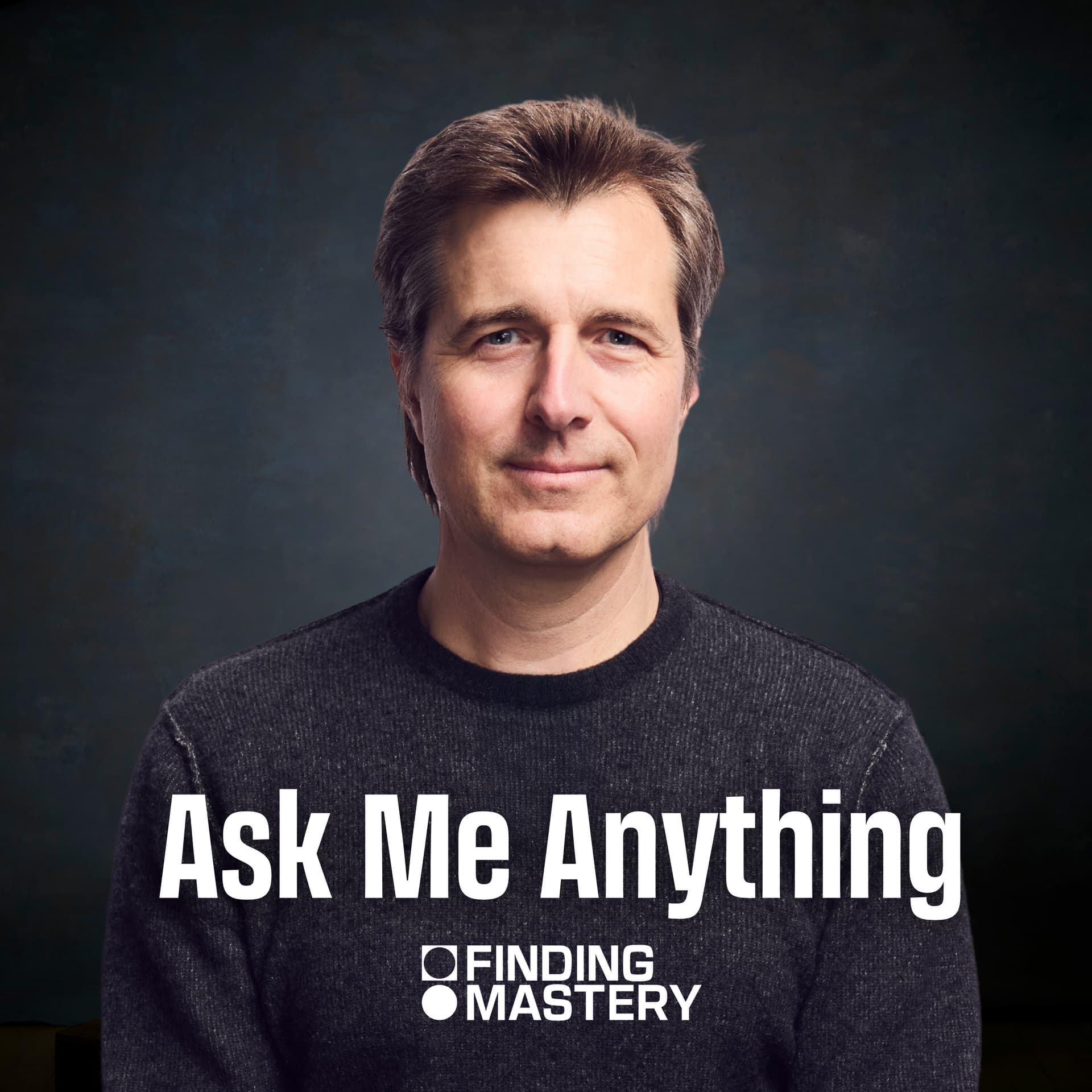
An Ask Me Anything with Dr. Michael Gervais and guest Yogi Roth on purpose, mindset, resilience for kids, fear of others’ opinions, workplace politics, and managing performance pressure.
Guest
Yogi Roth—author, documentarian, podcaster, and football analyst; described as a longtime “renaissance” media figure and friend to the Finding Mastery community.
Key claims
- Purpose doesn’t have to be grand; it must matter to you, be bigger than you, and be future-oriented. Build it from values/first principles and commit to making it real.
- Workplace politics: don’t “play the game”; anchor decisions in core values, know your value, and decide whether to address credit-stealing publicly or privately based on risk.
- Parenting resilience: build self-efficacy by letting kids figure things out, experience appropriately sized adversity, celebrate effort/attitude, and validate emotions.
- Fear of others’ opinions: you can’t fully detach because belonging is wired for safety; aim to tune to your own experience while acknowledging interconnectedness.
- Internal work vs performance: do self-discovery when timing allows (e.g., off-season/injury) and use pre-performance routines in the moment.
Notable examples
- “Land grab” credit disputes in leadership; “wolves dressed like sheep” and “sheep dogs.”
- Parenting example: surfing was too big/adversity mismatch; skiing worked.
- Learning example: guided discovery vs formal instruction (climbing/rolls).
- “Hungry ghost” dissatisfaction after achievements; counter with connection to something bigger.
Written by AI. May contain mistakes. Listen to the episode to check what was said.
Chapters
Tap a time to open that second in VONavigating Leadership Challenges
1:39 to 2:29
Discussion on balancing collaboration with protecting team expertise.
“In some kind of odd world here, you know, is that one of the great treats of the AMAs is to learn from our community and then to sit with my friends.”
Handling Workplace Politics
2:29 to 6:05
Exploring strategies for dealing with Machiavellian colleagues and protecting one's work.
“As a leader overseeing a department that drives the most strategic initiatives and holds the majority of the company's know-how, how do you navigate the balance between collaboration and protecting your team's expertise?”
Defining Your Purpose
6:05 to 10:46
Understanding the elements that contribute to personal purpose in life.
“of time, which one feels like a greater risk would be important.”
Defining Your Purpose
10:51 to 12:03
Understanding the elements that contribute to personal purpose in life.
“It's in the meeting, it's in the one-on-one connection, it's the moment someone shares an idea that could shift the direction of everything.”
Defining Your Purpose
12:21 to 13:28
Understanding the elements that contribute to personal purpose in life.
“If you've ever hired for a small business, you know the real cost isn't just the salary.”
Finding Your Purpose Through Reflection
13:28 to 14:01
Strategies for articulating personal purpose through quiet reflection and discussion.
“You know, it can feel kind of overly academic.”
Discovering Personal Purpose Through Calibration
14:01 to 18:22
Learn how to find your purpose by calibrating your thoughts and feelings during conversations.
“conversation with 80 % of it worked out, and you're very clear about why you're sharing it with another person before you've got it locked in, you're going to have this wonderful moment for calibration.”
Navigating the Tension of Personal Purpose
18:22 to 20:32
Explore the challenges of articulating your purpose and the societal pressures surrounding it.
“And then when you say that, I say, well, what shape does that take?”
The Journey to Authentic Purpose
20:32 to 24:10
Understand the gradual journey towards recognizing and embracing your true purpose in life.
“Are you skilled at bringing that purpose forward, or are you sucked into the narrative of having to perform or to be great for other reasons?”
The Journey to Authentic Purpose
25:25 to 26:26
Understand the gradual journey towards recognizing and embracing your true purpose in life.
“And sometimes travel makes it tricky to eat well.”
Show all 24 chapters
Building Self-Efficacy in Children
26:38 to 28:00
Find strategies to help children develop resilience and a strong sense of self-efficacy.
“As a father of a seven-year-old, okay, so think about Grayson, seven years old.”
Parenting Through Adversity
28:00 to 30:12
Learn how to appropriately introduce children to challenges and failures.
“I think the divots in the ice is really important.”
The Importance of Effort and Emotion
30:12 to 32:24
Discover the value of acknowledging children's emotions and celebrating their efforts.
“see them create as much safety in them struggling as possible.”
Navigating the Dangers of Modern Parenting
32:24 to 34:18
Explore the balance between allowing children freedom and ensuring their safety.
“And then the last thing, the fourth thing I'll say is, um, acknowledge all of their feeling, all of it.”
The Role of Positive Psychology in Parenting
34:18 to 37:16
Understand how positive psychology principles can enhance children's self-efficacy.
“The idea that we feel like we're living in a more dangerous environment that we did 20 or 30 years ago is a real feeling.”
Emotional Connection and Individuation
37:16 to 42:00
Learn about the balance between connection and individuation in parenting.
“aspirational goals of what could be and what's amazing for the kids that sports where they have to figure it out on their own, like climbing, they get some instruction.”
The Importance of Separation in Parenting
42:00 to 44:24
Learn how parental constraints can impact children's individuation and separation.
“And that's kind of what kids are supposed to do.”
Identifying Problems vs. Building Resilience
45:34 to 50:41
Explore the balance between understanding the source of issues and focusing on solutions.
“Okay, Alexis, how important is it to identify the source of a problem you have versus building the capacity to move through it?”
Navigating Achievement and Dissatisfaction
50:41 to 54:41
Examine the feelings of dissatisfaction that can follow achievements and how to cope with them.
“Andy, every time I achieve something that I've been working on achieving, I have a moment of satisfaction.”
Processing Praise and Critique
54:41 to 56:00
Learn how to handle external validation and maintain focus on personal goals.
“Even if it's, hey, you just finished your new course, it's available, findingmastery.com.”
Understanding FOPO and Its Impact
56:00 to 59:24
Learn about the concept of FOPO and how it affects individuals' performance.
“And that writing process rested on us being subject number one in this experiment on how to be free of FOPO.”
Coping with Fear of Other People's Opinions
59:24 to 1:01:44
Explore how high-performing individuals manage the fear of others' opinions.
“Particularly the idea that we can overcome FOPO, as you coined, fear of other people's opinions.”
The Balance of Connection and Independence
1:01:44 to 1:04:40
Discuss the importance of balancing caring for others' opinions with self-worth.
“Self-talk from a motivational, self-talk from a skill standpoint.”
Celebrating Achievements without Guilt
1:04:40 to 1:07:43
Learn about the importance of celebrating achievements instead of self-criticism.
“It's just abundance of joy, I would imagine.”
Transcript
Automatic transcript. May contain errors.0:00Do you have any tips to change mindset and maximize the little free time I get to recharge?
0:06Dr. Michael Gervais:Isn't this the question of all questions? What questions are tugging at you right now? And how might exploring the answers to those questions help you unlock your potential? Welcome back, or welcome to a special edition of the Finding Mastery podcast. I'm your host, Dr. Michael Gervais, by trade and training a high-performance psychologist. And this week, we're turning the microphone around again. And instead of diving into the mastery through the minds of our remarkable guests, we're going straight to you for another Ask Me Anything episode. What is my ultimate purpose in life? Is it truly possible to detach ourselves from the fear of what others think?
0:46Dr. Michael Gervais:You've submitted deep and thoughtful, vulnerable questions about life, performance, relationships, and navigating the complexities of the human experience. And in this episode, I am joined once again by author, documentarian, podcaster, football analyst, and all around Renaissance man and my friend, a friend to the Finding Mastery community, Yogi Roth. I'll be offering insights and perspectives that are designed to help us all think a little differently. I'm trying to figure out what is my ultimate purpose in life. That is a cool question. Know your value. keep doing the work that feeds you, that you're fueled by.
1:27I know that after this, we're going to be better human beings because these questions, Mike, today are absolute fire.
1:32Dr. Michael Gervais:So let's jump right into your questions, my reflections, and an exploration of what matters most. Right here on Finding Mystery.
1:48What a treat.
1:50Dr. Michael Gervais:We get to do this again. We're settling in, settling in. In some kind of odd world here, you know, is that one of the great treats of the AMAs is to learn from our community and then to sit with my friends. So, Yogi, thank you for doing this again. Yes, back again. This is great. This time I'm going to hold you to it because you did say we were going to paddle out when we're done. So I'm counting on that when we're done with these AMAs because I know that after this we're going to be better human beings because these questions, Mike, today are absolute fire. Your community, again, shows up. So let's dive into Emma, because this one landed on me.
2:27I think it's going to land on you pretty hard. Okay. As a leader overseeing a department that drives the most strategic initiatives and holds the majority of the company's know-how, how do you navigate the balance between collaboration and protecting your team's expertise? So sit in there. This is a land grab type question. Follow up. Specifically, how do you engage with other department leaders who may attempt to expand their scope or take credit for your department's ideas while also ensuring effective cross-departmental collaboration for the company? So how do I kill it while I know some people might be trying to take credit for what I am doing?
3:09Dr. Michael Gervais:yeah i mean working with folks like that that are a bit machiavellian or backhanded or untrustworthy it's tricky it's really tricky uh i i think the the first principle here is to not play that game you know to i don't know was it michelle obama when they go low you stay high something along those lines. So that's my first impulse is like, there are, um, there's wolves, there's wolves that are dressed like sheeps. There's sheep dogs that are trying to bully your way through that. Like there's a lot of different behind the scenes, slippery. How do we do it? Um, operate from your core values. And I'm going to say that so often, there's a reason that some of the greatest thinkers of our times have pointed to first principles and values.
4:00Dr. Michael Gervais:Keep coming back to anchoring your decisions, your thoughts, and your words from those values. If fear and protection, let's do fear. If fear is a first principle, well, you're in good hands. Most people, their first principle is not fear. Define first principles for us. First principle is when you reduce all of the ideas that you could work from? What are the ones that are the kingpins that help everything else move? You know, it's an engineering term. First principle is also a philosophical term. What are the foundational principles that your psychology, your life perspective is running from or is working from, to be more precise?
4:47Dr. Michael Gervais:The first principle is a love of good work. a first principle is it all kind of sifts out in the end anyway if a first principle is the cream rises to the top like you don't you won't get you won't get bullied if you will by other people's land grabs when it does happen you have a choice do you call it out or do you back door it and there's a risk to both so if somebody is in a public place and they're calling out work that you clearly you know were a significant part of and they're taking the credit for it if you stand up in that moment and they have let's call it um more seniority or they have more political capital than you do in the organization i'd be careful they'd be really careful about that um however if you're ready to kind of put a flag in the ground and be like hold on if say it's you and me and you're kind of taking a land grab of something i contributed to two in a meaningful way.
5:47Dr. Michael Gervais:And I felt slighted by it. The risk of me not saying anything is that I just got stepped on and a lot of people know it. The risk of me saying something is now I've just challenged, you know, the, the, who's ever kind of the, the, has the seniority. And that could be really dangerous. So either way, I think there's a cost knowing which one feels well ahead of time, which one feels like a greater risk would be important. So I, I would say, um, know your value keep doing the work that is that feeds you that you're fueled by and um i would be the one pointing to other people and so now i'm doing great work i feel really good about who i am and i'm helping other people shine and if i am uncommonly consistent with those three i just became inherently more valuable than anybody that's trying to slipperly take a grab a land so i would work from those principles first and foremost yeah i like that that is uh that's real because i think politics are everywhere right they're part of so many different environments so i love the idea of like get back to who you are and just pour that part of you out and then you have to make a decision you've got to make some decisions because if you get stepped on you it's not cool for you and for your teammates if you do say something publicly get ready for a bit of a dogfight there as well this there's a lot of cool questions that come through this one is beautiful this comes from sandra i'm trying to figure out what is my ultimate purpose in life how do i find it or how do i see it that is a cool question i think that this is one of the biggest rocks to get in the container for a good life and there's one i'm in the midst of building a course to try to get all of my ideas out around this and i think it'll be available in the public soon so here's here's kind of the beginnings of the thinking.
8:00Dr. Michael Gervais:Your purpose does not need to be this grand thing, this unifying singular purpose that's going to change the world or, you know, like wells in Africa or trees in the rainforest. It does not need to be this grand singular thing that other people would be like, oh, that's amazing. It can be super subtle, but matter uniquely to you. My purpose is very clear. It's to help unlock the potential that lies dormant in people. And that gives me a place and a reason to show up in everywhere I'm at. I know when I'm with you or when I'm anywhere, that's my purpose here. It doesn't mean that I'm trying all the time to be a coach.
8:46Dr. Michael Gervais:That would be Silly. According to research, there's three tenets to purpose. The first is that it matters to you. Nobody can give you your purpose. It has to uniquely resonate with you. The second is it needs to be bigger than you. So it's not just about your needs getting met in some way. So it's bigger than you. It means it involves other people or mother nature in some kind of way. And the third is that there's a future orientation. Okay. So those are the elements that purpose rests on. When you're trying to figure out your purpose, according to science, it's got all three of those variables.
9:22Dr. Michael Gervais:I want to come back and make sure that I'm saying this one more time. It does not need to be this grand thing that, you know, is approved by others, that it's magnificent in your life purpose. It can be really small, like being a great parent. My wife's purpose is to be a great contributor to her family. And it's amazing. That's what her life right now, for her purpose in life, is to be a great contributor to her family, to make a difference in my life, in my son's life, her parents' life, her sister's life, our extended family. That's what she wants to do. Amazing. Some people are like, yeah, mine is Wells in Africa.
10:02Dr. Michael Gervais:Whatever it might be, your job is to get so clear that you can begin to articulate why you are here. What are you doing here? Now that rests on your values, your first principles, your vision of a compelling future, and then making a fundamental commitment to make it true. And that's what I'm helping people do right now. So if you want to know what your purpose is, we'll give you a methodology, but you need a couple other pieces to go with it to make it exponentially more powerful. Purpose, vision, first principles that rest on your values, and then making a fundamental commitment to make it so.
10:44Dr. Michael Gervais:And when you get those in place, it's pretty special. Finding Master is brought to you by granola.ai. Some of the most important work we do happens in conversation. It's in the meeting, it's in the one-on-one connection, it's the moment someone shares an idea that could shift the direction of everything. And the greatest gift you can offer in those moments is your full attention. That's exactly why I love Granola. Granola is an AI notepad. You take down the notes that matter to you and Granola transcribes the entire conversation right beside them. So what does that mean for me? It means that I get to be fully present, to listen deeply, to give real attention to the details and the nuances, the thing behind the thing, knowing that Granola is there taking notes from me behind the scenes.
11:26Dr. Michael Gervais:And the best part, it works right through your device's audio, which means it integrate seamlessly into your video conferencing tools that you already use. No big setup, no awkward bots. All I do is let folks know that Granola is transcribing in the background. Happy days. We're off and running. I use it every day. And what's remarkable is how it helps turn a conversation into something useful. When we're done, I've got a clear, organized recap of what's said, along with a clean list of action items and clear next steps. Nothing slips through the cracks. That is the gift of Granola. I think you're really going to like what they're doing.
11:58Dr. Michael Gervais:If meetings are eating up your day, granola is a no-brainer. You can try it totally free. Just head to granola.ai slash mastery. That's G-R-A-N-O-L-A dot A-I, granola.ai slash mastery to get your time back. Try it for free at granola.ai slash mastery. Body Master is brought to you by LinkedIn Jobs. If you've ever hired for a small business, you know the real cost isn't just the salary. It's the time that you lose when the fit is off, the momentum that stalls when that fit doesn't work. And that's the pressure of having to get it right while you're still running everything else. That's why I'm paying attention to LinkedIn Hiring Pro.
12:37Dr. Michael Gervais:It's built for the reality of hiring when you're operating lean. You describe the role in playing language and then Hiring Pro helps you draft the job post, surface the right candidates, and then narrow to a short list without turning hiring into another full-time job. And when applications start coming in, it doesn't leave you buried in resumes. It streamlines screening, including AI-powered interviews for initial conversations. How about that? So that you can spend less time searching and then more time connecting with the people who match what you need. With Hiring Pro, you can hire with confidence knowing you're getting the best talent for your business.
13:09Dr. Michael Gervais:In fact, those hiring with LinkedIn are 24 % less likely to need to reopen a role within 12 months when compared to their leading competitor. Join the 2.7 million small businesses using LinkedIn to hire. Get started by posting your job for free at linkedin.com slash mastery. Again, that's linkedin.com slash mastery. Terms and conditions apply. Last bit here. How do you do that? You got to get quiet. I think you need to write it down. Not everybody wants to write. You know, it can feel kind of overly academic. Getting quiet, writing it down, and talking it out with other people. But I would caution folks to talk out your purpose before you've got some semblance of what you think it is.
13:51Dr. Michael Gervais:Because once you bring it forward and out, then there's another variable at play, which is another person's approval or disapproval of it. And if you can go into a conversation with 80 % of it worked out, and you're very clear about why you're sharing it with another person before you've got it locked in, you're going to have this wonderful moment for calibration. But let the calibration be your signal, not what they do with their eyes or if they agree or disagree, but as you say the words, which ones are resonating. And when you do this right, one or two or three of the words, as you say your purpose out loud, will have a unique resonance to them.
14:36Dr. Michael Gervais:Your heart will jump just a little bit. You'll feel it in your throat. There'll be some sort of emotionality around it, that's when you know you're on it. And the first time I did this work, I said it out loud, it was, my dad was nowhere around me, but I knew as I said it, it was for his approval. He wasn't even in the room. He was hundreds of miles away. And so that I want to caution against the approval or disapproval from other people as you're working out your purpose even when you're doing it i did it with by myself with a piece of paper i was challenged by a mentor of mine to write my purpose down no real instructions and then when asked what it was and i said it i knew it wasn't honest yeah so here's the cool thing about this is that amazing yeah oh you know you know is the version my understanding in psychology is the reason that you say it out loud is to be held accountable by the people that you trust that accurate There's a version of that.
15:38Dr. Michael Gervais:I like that science as well. It kind of backs you into a little bit of a credibility corner when you say it out loud. There's some research around publicly stating goals that it can diffuse its intensity. So it's actually a mistake to do that. I don't personally vibe with that bit of research. The other thing, but what I'm pointing to is when you say it out loud, is for you to be the calibrator of truth. Is this real and honest for me or do I need to take some more turns at it? Am I cultivating this thing so other people say, Mike, that's so amazing. Oh, wow. That's a problem. It'll never be big enough.
16:15The question is really cool. And again, I reiterate it from Sandra. I'm trying to figure out what is my ultimate purpose in life. How do I find it? How do I see it? is there something to putting a mirror up to Sandra or any of our lives are ready to be like this is what your actions are showing you because I think oh purpose versus like what do you do every day what do you do in your free time like what are you reading like is there a world like that that can help somebody at least go down the road of like these are your habits right now
16:47Dr. Michael Gervais:maybe maybe not I think I like where you're going because how are you naturally spending or gravitating your free time? Like, what are you gravitating toward? I'm not sure that's the great beacon for if you're on it or not. It could be for somebody that's already kind of intentional. But if somebody feels ragged in the world that they're living in and then because the pace and speed of business and they're just trying to keep their head above water, they might just be trying to get sleep or they're doing things to kind of numb their anxiety. So that might be a little messy to consider. but I do like where you're going.
17:21I don't have, I don't know another way
17:24Dr. Michael Gervais:other than to say, you gotta get quiet. I hold a pen or a pencil with paper and I start being honest with myself. That eventually gets me to a place. And then when I do bring it forward, I'm using that as an external calibration. I'm sorry, an internal. I think the judgment thing is real. Like I think about in, at least in entertainment, right? And maybe you've dealt with this too. okay mike is the high performance psychologist like you have a lot of disciplines within your background right whether it's family relationships like you you have a ton of skills in your regard but you can be put in a bucket by other people's right go to read the book right first role mastery right there fear of people's opinions right behind me i can remember being in early on in hollywood to be like well he's this guy i'm like well i like to write i like to talk i like to perform i like to act i like to improv i love sport like don't put me in a bucket and i could it probably took 15 years, Mike, to get to the place of what I want to do in life.
18:22I want to live a full life.
18:25Dr. Michael Gervais:That's it. And then when you say that, I say, well, what shape does that take? And whatever that shape is, is likely going to get down into your purpose. 100%. You know, like, again, it could be wells in Africa. It could be trees in the Amazon. or it could be something. Let me not put any thoughts in your mind. What is your purpose? Do you know your purpose? And I'm not asking you about your philosophy of life. That's something separate, which I know you've done a bunch of work around, but do you know your purpose? To me right now in my life is really clear. It's to show up and crush it as a husband and a father.
19:07Dr. Michael Gervais:Yeah, that's purpose. That's it. You and Lisa, my wife, it's the same tonality of purpose. And I think that in the world of that question, I think there's a tension that exists for all of us that none of us create, that we just feel like, well, that's it. You know, like what else do you want to do? Because we see worlds that I think have purpose that inspires us, maybe is aspirational. Like there's a lot of cool things going on on the planet. it's like i'd love to do a little of that try a little that try a little there try a little this and i feel like when asked that question at times you can feel like is my answer good enough i'm whispering that you know like you don't want to say is my answer good enough too loud yeah um but that's why i'm saying that the internal calibration only you can know if it's hitting the note of truth or not yeah and if that's it if that is it great and it's more it's more powerful to have the knowing even if the words aren't quite exactly the way or and if no one else sees it no no problems at all there's some there's some rite of passage for adulthood that you down regulate what people are thinking about you when did it happen for you um it's been probably a slow burn i wish it would have happened like in this kind of lightning bolt moment um it's why i wrote the first rule of mastery is because i need to get down on paper how it worked for me and what were the core principles it's not like i'm completely immune to it but i do think that when you get in touch with your own suffering and you invest in understanding the sufferings of others all the other bullshit fades away and so i've spent the last 25 years needing to create the container for other people to be radically honest with who they are the struggles they have and the aspirations of who they want to be and to create that container you get down into the truth and you stop talking about goals goals are fine i'm not going to butcher them they're fine but you go far deeper than that and you start realizing like you know these these other things that i once thought were important um those are kind of childish i just put those down yeah you could talk about this one all day long we'll move on though to David.
21:29Dr. Michael Gervais:Wait, wait, before we go further, I do want to ask you, with your purpose, when you walk into a room, and let's say it's a business engagement, how does your purpose mindset, how does your purpose influence how you show up? Are you skilled at bringing that purpose forward, or are you sucked into the narrative of having to perform or to be great for other reasons? What I feel is that I've done a ton of work on a pre-performance routine. Like I have a very specific pre-performance routine in terms of I go into a room by myself and I say a version of the following of, Yogi, the goal right now is to go do it better than it's never been done before.
22:15Make sure you be where your feet are. Earn the right to compete freely. So focus and trust all of your preparation. And I looked myself in the mirror and I said, all right, man, you've earned it. Go compete freely. Let it freaking rip. Boom, high five, and I'm out. And it's on. So I think there's something, like if you looked at my call sheet as a broadcaster, it's a big piece of paper that has a bunch of names on it and stats on it, whatever. The bottom, it says, celebrate the game, coach the viewer. So I think in the world of performance, the performers of the world, in TV at least, we can easily make it about us.
22:50I'm sure I have. you're called upon stages many times, Dr. Mike, all the time you're asked to go. And at times early on in performative careers, I think you can make it about you because you're either anxious, you're nervous, maybe you're arrogant, like whatever you're feeling. Then at some point you make the turn. And I was lucky early in my broadcasting career, I was like, what am I about? I'm gonna celebrate the game and I'm gonna coach my mom watching it. I'm gonna coach the viewer. So that is my lens. When I'm giving a corporate talk, okay, I'm not celebrating the game of football, but I'm celebrating an ideology, which, you know, whatever.
23:26I always talk about chasing what matters, clarity, confidence, and discipline within business, within sport, within your family, within your craft. And I'll go to town on that. And I like something you said in our last AMA and on my recent podcast of how are you serving others? And, you know, I used to think that servant leadership was like a religious term because I think it'd be coined sometimes in that regard. We talk about it with quarterbacks all the time, but I don't think it is like I anymore. I think it's more of like, how can I just serve my offensive line by standing in the pocket properly?
23:58How can I serve the audience by bringing something to list a conversation? How can I serve my family by killing it so I can get paid? Like that element is really resonated over the last couple of years.
24:07Dr. Michael Gervais:That's cool. Well done. Finding Mastery is brought to you by Athena. Time is one of our most valuable resources. I know you know that we can't make more of it. We can't get it once it's gone. Once it's gone, it's gone. But what we can do is be thoughtful about using it wisely, focusing our attention on what matters most. That is what the best in the world do. They are extremely intentional about where they place their time and their attention. They pour their focus into what they do best, and then they build support around everything else. So that's what brings us to Athena. They're doing something I think is really special.
24:39Dr. Michael Gervais:They match you with a dedicated full-time remote executive assistant. There's a real person who can handle your inbox, your calendar, your travel, all the household tasks that seem to quietly fill up your week. These remote EAs from Athena are vetted from the top 1 % of their applicants. So they're giving you the best of the crop. They learn your habits, your routines, so they get better at supporting you over time. Athena clients, on average, get back something like 15 hours a week. I mean, just think about what you could do with that kind of time back. I'm really excited for you to go check out what Athena is doing.
25:10Go to athena.com slash mastery right now and get matched with your EA. Give yourself a few hours back this week. Go to athena.com slash mastery and see who they pair you with.
25:22Dr. Michael Gervais:Finding Master is brought to you by David Protein. Travel a lot at Finding Mastery. And sometimes travel makes it tricky to eat well. Best intentions, and then you're at the airport. And then suddenly the only options around you are the ones that you'd rarely choose at home. Something I come back to often is that discipline isn't really about willpower in the moment. It's often about choice architecture, setting up your environment ahead of time so that the easy choice and the good choice are the same one. That's the role David plays for me on the road. The gold bar, it's their flagship high protein density, great texture, flavors that make it easy to stick with.
Read the full transcript
25:55Dr. Michael Gervais:So when I throw a few in the bag before my trip, I've already made the decision. The hard moment later takes care of itself. And the team here at Finding Mastery, they love the bars as well. They are ripping through them in the Finding Mastery lab. Salted peanut butter and fudge brownie seem to be the fan favorites right now. They have built something with real rigor in a crowded, sometimes ambiguous space like nutrition. That matters when it's something that you reach for again and again. David bars are now available in major retailers like Walmart and Target. And if you'd like to buy them directly and get a special offer for being a Finding Mastery listener, head to davidprotein.com slash findingmastery, where right now, if you buy four packs, you'll get the fifth one for free.
26:32Dr. Michael Gervais:Again, that's davidprotein.com slash finding mastery. Appreciate the back and forth here. Okay, let's go to David though. This one's amazing. As a father of a seven-year-old, okay, so think about Grayson, seven years old. I would like to ask, how do I help my son develop a strong sense of self-efficacy that can withstand the hard blows of life? Cool question. so it's it's begging the philosophy that there's hardship and hard blows that come in life which first i do agree i think also yeah i mean life is this wild wild terrain um and there's some real tough things to navigate so getting ahead of it is cool um the the kind of the the big piece So let's define efficacy.
27:26Dr. Michael Gervais:It means that I feel powerful within myself. And it's not the type of power like I stand over you and dominate. It's not that. It's like it's more subtle and it's a knowing that I can figure things out, that I can influence how I show up in this world. And that influence has power. I think it's really important that we let our kids figure things out. So we had helicopter parenting, then it moved to Zamboni parenting, which is kind of smoothing the ice out in front of people. I think the divots in the ice is really important. And so mistake making, failure experiencing, hardships, adversity, if you can allow them appropriately to be experienced and not be overwhelming for the kid.
28:22Dr. Michael Gervais:And I'll tell you the experience I had with Grayson, but your job is to help them explore, make mistakes, get a little skid on the asphalt, like to go for it, to feel what it's like to sort it out because that is what gets called on later. I know that I can figure things out I know that I can do hard things because I've been afforded that as a parenting model my parents gave me they're they're laissez-faire in like they gave me lots of space that's basically what that means I'm not suggesting that's the ideal model according to research it's more authoritative versus laissez-faire or authoritarian so they hedged done that laissez-faire, which gave me the upside of it is that I had to sort things out.
29:15Dr. Michael Gervais:So I know I can figure things out. They gave me that and that has served me so well. So let them figure it out. Let them feel some struggle. Let them feel the suffering. Support them to experience the hardships and challenge them to be honest with navigating through it with your help. Early on with my son, I grew up surfing. I love surfing. I really wanted Grayson to go surfing with me. I took him out. It was too big. The waves are too big. I did that two or three times. I didn't get the lesson. And so he doesn't love surfing. So I kind of missed a moment with him. Thank goodness he loves skiing.
29:58Dr. Michael Gervais:I'm really happy about that. We get to do that together. But so I created too much adversity for his frame. It was too big. It was scary out there. And so that's what I'm saying appropriately matched. And if adversity does happen, your job is to get down to their level, see them create as much safety in them struggling as possible. Does that make sense? Right? Not kind of fixing the thing, but being at their level with them. And then the other thing I would say is like you want to point to the things that are in their control so you want to to celebrate like a wild person their effort their attitude um their when they're figuring things out when they don't know and how they stay in it like celebrate the parts that are 100 under their control because that gives them um the the framework to stand up with self-efficacy later that's all the framing of it like early in my life when my parents were like yeah nice job getting an as opposed to like nice job studying totally different and they did the effort bit way more than they did outcome in my life that's cool so i'm thankful for that and then if you can really understand them so what we do and you know this as well as anybody what we try to do in with athletes and executives and teammates my responsibility in in many parts is closing my eyes and imagining what's possible for you.
31:30Dr. Michael Gervais:And that is the greatest gift I think I can give you. So when I close my eyes and think about yogi, like what would be an amazing future for you? And then whatever I can see, I'd share it with you. And then you would say, no, no, no, it's not that. Like, oh man, I got to go back to the drawing board a little bit, but I'm trying to see a future for you. And then so I can help navigate and guide and support and challenge you along that way. so that part is really cool for kids is not in an overwhelmingly ambitious way but staying at horizon one two and three spend as much as your time on horizon one as you can with them setting that horizon three is magical and amazing we'll get there later but horizon one id visions of what amazing there looks like gives them something that they can get their arms around and and sense, if you will.
32:23Dr. Michael Gervais:So H1, H1, uh, horizon one kind of thinking with them is cool. And then the last thing, the fourth thing I'll say is, um, acknowledge all of their feeling, all of it. Just put a name to it. Looks like you're sad. Oh, wow. You're really pissed off. Okay. This is scary to you. And I sound like I'm being almost like, I don't know, a parrot to their emotion just acknowledge the emotion they're feeling because relationships are running the damn show and emotions are what are fueling the relationships the relationship you have with yourself and others and mother nature and experience it's emotions that are the thing that is right underneath the surface so help them be great with their emotions okay let's stay on this so there's a book that is just crushing it the anxious generation you know i'm talking yeah john hyde yep there's a world where parent the crux of the books take the social media away from it right but it's really like we have lost the as a parent giving ourselves the green light to be like hey son or daughter go walk to school come back when the streetlights pop on like and and i feel that as a parent in los angeles maybe there's other parents in metropolitan communities where you're like you read about everything all the time and there's like a van driving like whatever it might be that's a real thought and two things can be true your child our children need to explore they need to have that sense of self-discovery your point figuring outness like you did as a child in virginia in the in the backwoods there as you did man so what would you say to that because because i struggle with that i think even as a parent and i imagine others do where you don't want to snowplow you don't want to do all the things that you referenced and you know that there's like some danger lookering out there And, you know, they need to have these experiences to go find freedom and find themselves and figure it out.
34:16Dr. Michael Gervais:It's a good question. The idea that we feel like we're living in a more dangerous environment that we did 20 or 30 years ago is a real feeling. I feel that, too. So I recognize what John is talking about. Yeah, that it feels less safe to me now than it did then. I am going to support my son to take risks socially, emotionally, physically, in relatively safe environments. Action sports is a great way to do it. So when you don't have parents and adults that are coaching you, it's a great way because you got to figure out your relationship with swift consequences, mother nature. but outside of that in more sterile environments we are coaches and we need to stand up and make sure that we are not saving our kids from every little thing and it sounds easier said than done i'm not having grayson um you know kind of run the streets even though that that's what i did so it's a little bit different we live in a world where e-bikes are all over the place i think paramedics are just not picking up the bodies anymore these e-bikes that in the in the cities that we live in you know these 16 year old kids 14 year old kids that have helmets on that are ripping around it's wild how radically dangerous that is not every city across the planet has this e-bike phenomena but um oddly enough Grayson isn't interested in it so I'm kind of cool with that so that's fine uh one more follow-up on this you really uh nudged me in the concept of positive psychology.
35:58And my interpretation of doing it with our oldest son, Zane, and even our little guy, is I take them to a climbing wall. And it's this example where they climb, fall, climb, fall. And ideally, it's working on their self-talk, their self-efficacy, if you will, of, I got it. And then they get it. And they're just building that. I think I took that interpretation correctly from you. If so, can you expound on that of what a model in positive psychology could do for David and potentially his son and other kids?
36:30Dr. Michael Gervais:Well, what I hear you using, so positive psychology is like a, it's a sub-discipline in the science of psychology, which is the study of flourishing as opposed to the study of dysfunction. Sport and performance psychology is also the study of flourishing, but it's really about performing well and doing well in high speed or where you have to be accurate with your decisions and or your behaviors. And so there's a bridge between those two worlds, which is the study of excellence is really what sport and performance psychology is about. And then the study of flourishing and positive psychology. But that's not what you asked.
37:13Dr. Michael Gervais:What you framed it is that, okay, so if we're thinking about creating and pointing to aspirational goals of what could be and what's amazing for the kids that sports where they have to figure it out on their own, like climbing, they get some instruction. There's so much value in that. And I'll give you one small example that I think parenting we can model. It's called the discovery model of teaching and the formal instruction. So if you're going to teach your kid how to shoot a basketball, you could stand next to him and you could say, right, I want you to cock your elbow in, have about a 90-degree rest of the ball on your fingertips and snap your wrist and extend and point to one o 'clock and do that a thousand times, and you'll get better as a shooter.
37:58Dr. Michael Gervais:Formal instruction. Guided discovery is toss the ball to your kid and say, go ahead, put it in. Where? Up there in the bucket? Yeah, figure it out. And they miss and toss it again. Great. Toss it again. And when they do it well and it goes in, they're getting natural feedback. A better example is if you're teaching your kid how to do a forward roll, you can say, tuck your chin and put your head down and then put your hands here and then flip your feet over your head and roll down the hill. Okay. Or you can say, hey, let's roll down the hill together and let them go. So they discover what a side roll is, what a forward roll, what a back roll is, what a log roll is.
38:39Dr. Michael Gervais:And they might not get the forward tuck roll down. It might take them a long time to do it. But now they've got this wild range of figuring out their body in space. It takes longer to get good, but then you've got a big frame underneath of it. I am such a fan of guided discovery when it comes to learning as opposed to formal instruction. So your climbing metaphor is a little bit more about guided discovery than it is about formal instruction. Cool. All right. Let's move on to Jennifer. if acceptance and connection are fundamental human needs is it truly possible to detach ourselves from the fear of what others think without becoming emotionally unstable or indifferent yeah i mean it's a chapter what chapter yeah yeah i know that's a cool question it is i i i'm wondering who's the question Jennifer Jennifer i'm wondering Jennifer if you're asking that question because I did not answer this in the book properly, you know, or that it's, you know, maybe it's a new idea for you.
39:48Dr. Michael Gervais:So I do think it sounds cheeky, but I did take a good run at this in the book and the way I answered it, which was a little bit invisible. I wasn't concrete about this, but if you read it and you appreciate a first principle of interconnectedness, that all things and we are all connected like there's a unity that we're we're working from which is happens to be a first principle in zen buddhism is um that it's embedded in there so we are connected and the idea of trying to separate ourselves from another person feels like there's a little bit of um a contorting to that first principle that i do want to hear the question one more time but my first response is like wait hold on we're fully connected in this thing a healthy separation if there's such a thing is more of an appreciation for your experience and another person's experience and your experience is uniquely yours and theirs is uniquely theirs and when you engage in any activity that to make sure that you are not over-indexing or tuning to what they are determining is success or failure or acceptable or unacceptable or truth or or not so it's again i'm going to use this idea of being a tuning fork for your experience in life rather than outsourcing it to other people yeah it's interesting acceptance and connection you would agree fundamental needs yeah right is it possible to detach ourselves from the fear of what others think without becoming emotionally unstable or indifferent?
41:36Dr. Michael Gervais:Without becoming indifferent, yeah. Yeah, when you have love in your heart and you embrace the interconnectivity of all things on the planet, it's not an indifference. It's a rich and deep appreciation for it. Maybe it feels like there's a disconnect happening to, you know, there's two words in psychology for parenting, individuation and separation. And that's kind of what kids are supposed to do. They're supposed to separate and individuate. And the more that a parent or parenting system hovers or has too many rigid structures, rules in place, it's like the leash is really tight. The tighter it feels, the bigger snap that they need to get away.
42:28Dr. Michael Gervais:So they end up like breaking big rules to feel a sense of individuation and separation. So depending, so when I hear that question, I'm wondering how constrained maybe you might've felt at one point in your life that you feel that you really need to, you know, have that, that disconnect to get to a healthy place. Um, so there's a lot, there's a lot that I've said in here and I'm not sure that my answer is completely satisfying. No, I think the first thing, if I'm hearing you right, for Jennifer to do or anybody who can relate to this question is to explore a little bit around what happened with you and other people's opinions and why you believe that you need to either be accepted or connected if you disagree with what that individual said.
43:18Dr. Michael Gervais:Yeah, that's right. Yeah. And when you can see that you are individual, you're an individual, you are separate, but we are all tied together. So this is the equal opposites confusing piece of the yin and yang here is that they can have their experience. They have their experience. You have your experience. Your job is to bring your very best into it and not be overburdened by what other people think. And look, it is foundational to our brains wiring to want to be connected to other people. That is safety. Belonging is not a nice to have. It's a requirement for safety. And so that feeling like I just want to make sure I'm good in your eyes, it's universal.
44:03unless you're a psychopath, a narcissist, or you have a true disorder that you cannot understand
44:14Dr. Michael Gervais:what another person's experience is. Either you don't care, you're wired that way, whatever. That's like 2 % of the population. So most of us have that wiring. Finding Mastery is brought to you by Momentus. There's a principle that the team at Momentus uses that has stuck with me. The relentless pursuit of better. Creatine is a good window into what they mean by it. Creatine is one of the most studied supplements in the world. The benefits are reasonably well-established. Strength, power, recovery, and increasingly what it does for the brain. It's been found to support brain energy metabolism and easing mental fatigue.
44:47Dr. Michael Gervais:So this is something a lot of people do take every day. And when you take something on a regular basis, what's in it, what's not, and how consistently it's made all start to add up. That's the part that Momentus obsessed over. Rather than settle for what's on the market, they searched the planet for the highest quality creatine source. Then they built their own specification around it. They call it the signature spec. It's made in a pharmaceutical facility, 10 times fewer impurities, six stages of testing across four independent agencies, NSF certified for sport, and it's micronized so finely it actually mixes clean.
45:21Dr. Michael Gervais:No grit. Go to livemomentus.com slash finding mastery and use the code FINDINGMASTERY for up to 35 % off your first order. That's livemomentous.com slash FINDINGMASTERY, the code FINDINGMASTERY. When you commit to something daily, the quality really matters. Okay, Alexis, how important is it to identify the source of a problem you have versus building the capacity to move through it? Let me give you an example. I'll repeat the question first. How important is it to identify the source of a problem you have versus building the capacity to move through it? For example, if an athlete or professional gets overwhelmed before their big moment, should they try to dive into their past and start unpacking why that is occurring?
46:09Or just start working on what's happening in their mind and body, start the breath work, whatever other exercises are needed to relax, focus, and move through it?
46:17Dr. Michael Gervais:It's a good question. Time and place. You know, there's a time and place to do self-discovery work, to go back, to unpack it. I have a real appreciation for that work. It's, I mean, it is radical to do that work with another person because you get seen and understood in a different way. There's a rich healing that takes place in that work. You can also do that work with yourself through a self-discovery kind of solo process, which helps you get to the truth so that you understand really what, where you're working from, as opposed to some other kind of more surfacy or transient, um, psychological experience.
46:55Dr. Michael Gervais:So it's good. It's really good, but there's a, it's a time and place. I'm much more interested in, um, okay. So you're having this experience instead of like, tell me about your uncle when you were whatever, or your first coach when you were whatever, instead of that, I would go into like all right so how do you want to how do you want to adjust with that that's great that is it that is a true experience that's coming up great feels like that's a little too noisy for you it's it's not working for you in a mirror okay we can go back at some point but right now how do you want to use that and what does great feel like for you and so then get them to call forward when they're at their best when they're at their worst what's the difference between the two and what is the pre-performance routine what are the practices um and what are the the deeper capabilities that are required to be that way that ideal way more often so that's that's kind of a deconstruction of how i hear the question this is this is a cool one man so here's here's a follow-up for me and i'm a football guy as you know football season starts training camp let's say in the nfl mid to late July, colleges, early August.
48:05If I've got something I need to navigate through, do I have to navigate that before the season? Or can I like work through that in real time once you kick the party off and you're on this regimented schedule?
48:16Dr. Michael Gervais:Do both. It's a little harder. You know, flying the plane and building the plane at the same time is a tougher challenge. And so when an athlete is injured or an athlete has an off season, I see it as this really great opportunity to go more horizontal and pick something to go deep with. So let's say that for the injury, let's say it's an ankle or knee or something. Instead of like, oh man, like I've got this knee injury. The ones that are pretty exceptional, they're like, yeah, okay, I'm going to work through this. I'm going to do my rehab. Rehab is not my favorite thing. But, you know, I've always wanted to read these books.
48:53Dr. Michael Gervais:I've always wanted to do this visual eye training. hey doc can i get with some of the mental imagery stuff that we've been talking about now's a great time so they find opportunities to keep investing and if one of those ways to keep investing is to sorting out the things that you know the cobwebs and the dark corners and the scary monsters under the bed and the dragons whatever like guess what you here's the thing whether and let me finish the thought pre-season i'm much more of a fan of like when you've got the timing in the window to be able to do the self-discovery work that's not encumbered by real-time performance standards, like take advantage of that.
49:34Dr. Michael Gervais:And it is a constant work in progress. You don't really ever escape the self-discovery process once you've drank from that cup. Like you never, never really leaves. Okay. And here's the big takeaway for me is that when you do this deep internal work, It is so powerful because nobody can ever take it away from you. So you end up experiencing your past in a different way, your future in a different way, and your present moment in a different way because you're seeing and holding what actually took place and the healing required from it or the aspirational way to move forward. Once you do the internal work, and there's no roadmap for this.
50:13Dr. Michael Gervais:It's not like I have the roadmap for self-discovery or you do or somebody does. There are a set of practices that many of us will say the same things, but going inward to do that deep internal work, and if you can do it with someone that's skilled, you'll accelerate the growth arc. And so I would point to do it with somebody that's highly skilled. And for me, that means somebody that's been trained in it. Okay, let's keep it moving. Andy, every time I achieve something that I've been working on achieving, I have a moment of satisfaction. Sometimes that lasts an hour, sometimes it lasts a day, but rarely longer than that.
50:56And then I move back into the state where I'm not satisfied again. Like something is missing, even though the thing I achieved satisfied this completely. The feeling of dissatisfaction continues usually and can move into other forms where it gets worse, where my inner voice is saying things to me like, you're not enough, you're not worthy, you were just lucky before and your luck won't continue, etc. And it can get much worse, you know, much harsher than that. It's like this hungry ghost that makes me feel generally unsettled, uncomfortable, and wanting more how do you deal with this i'm sure plenty of olympians and high performers feel this your suggestions what are they and what have you seen work one is i'm
51:46Dr. Michael Gervais:encouraged that andy knows what a hungry ghost is and so that's actually what i was going to go to i was going to point to the hungry ghost as an analogy and so okay so andy you're you're there And that idea that there's this unsatisfied meal, there's this empty meal that, you know, there's a hungry ghost that never gets fed, if you will. And that's really kind of the downside of the self-critique nature and like it's not good enough. There's not an easy answer here to point to like a solution. but I would remind us that when we are more connected to something bigger than us, it gives us something to be enveloped with.
52:31Dr. Michael Gervais:And so for some people, it's a spiritual framework. For other people, it's the bold thing that they want to do in their life, like why they're here. Or in your example, Yogi, to be a great parent and husband. And it's not about achieving then. It's about being part of something bigger. and then you have a role to play in that. And your job is to be a great custodian or a teammate or a leader in whatever fashion. So I don't know. I recognize it for me. It's less now than it's ever been. And so I'm not riding the highs and lows of achievement like I once did when I was in my early 20s. And so it's more about like, do you think we made a difference today?
53:18Dr. Michael Gervais:and that is not a self-serving mechanism it's me trying to pull my weight and my wife and i when we you know we did a bunch of counseling work together on a relationship and our therapist said something brilliant she said okay look relationships are a little bit like carrying water so mike you've got two drugs lisa you've got two drugs and drugs are heavy like relationships are not this easy thing. So you got to carry these jugs. And Mike, if Lisa puts a jug down because she's tired, she's overwhelmed, she's had it with you, will you pick one of those jugs up? Yeah. She was right. And if she put the second one down, would you pick one?
53:57Dr. Michael Gervais:Yeah, no problem. I got it. That's a great teammate. But over time, if I'm carrying the wall, I'm going to break down. I'm going to get tired. And we need to know how to share and swap back and forth. In my relationship, I think Lisa carries the jugs more than I do, just to be clear. That being said, is when you're a great teammate and you're part of something and you're doing the work for something greater than you, you end up doing things that are not serving just the sense of accomplishment or the notch on the belt. And so that's how I hear the question. I just want to point to be more connected to your purpose.
54:36Dr. Michael Gervais:Go to something that's far bigger than you. And I think it dilutes some of these concerns. So, you know, your book is amazing. Thank you. It won a bunch of awards. You've won a bunch of awards. You've got accolades all the time. How do you process through them now? Even if it's, hey, you just finished your new course, it's available, findingmastery.com. Or you wrote another book and people gave you a bunch of pats on the back on it. What's your way? when early early um early in my life i was looking outside of myself to see if it was if i was okay if it was okay and when i was writing the book um each story each insight each chapter was built from a working laboratory with my partner my writing partner and I, Kevin Lake.
55:29Dr. Michael Gervais:So each time that we were trying to articulate something, we ran it through our Tumblr first. How does it show up for us? How does it show up for us at Finding Mastery? How does it show up for us with our family? And so that mechanism was really important to not be clouded with like, man, I hope that this thing really sells a lot. I did. I wanted it to move because I wanted to share what was meaningful and valuable to me in the writing process. And that writing process rested on us being subject number one in this experiment on how to be free of FOPO. And that rested on 25 plus years of working with the world's best to understand that so many of them were gripped by expectations from other people and the approval from other people as opposed to what they really wanted.
56:23Dr. Michael Gervais:What they said they wanted and what they really wanted was this freedom to contribute, to explore their potential and to be part of something special. So for me, what I do now is I have to treat it like noise. And so signal to noise ratio is a very important principle to me. I have to treat praise and critique like noise. I've got an inner circle of people so i live in the city of redondo and it's a redondo means round and so this round table of people that i go to when when i need um to sort some stuff out and so it's that round table of people i trust and it's not even i don't even have to call those people with the exact question but i can call up what they stand for and what they would say to me yeah what i'm also hearing and signaling noise is sometimes and andy may be navigating this like can you do you label sometimes what you say to yourself as noise i wonder that because that's what it feels like his it's his inner voice he keeps referencing you're not worthy you're not good enough you just got lucky and it's like no dude stop i didn't like is that what you're that part of the below the line self-talk where you're chipping away and chipping away it will get you to drive a little bit harder work a little bit faster like read a little bit more study a little bit more invest it but it wears thin quickly and so i just have such a low tolerance for that and it it just doesn't work so all of that stuff where you are and we know this from research when part of where you attribute the success and or failures.
58:11Dr. Michael Gervais:There's this really wild self-esteem saving mechanism. According to research is like, let's say a baseball hitter and they, they're on a really bad streak. Okay. So it's not working out well. And that that person goes, this bat, I'm telling you, this bat is great. This bat is the worst bat that this bad is. And they're blaming something outside of themselves because it can't be themselves and it's a self-esteem saving mechanism it might just free up enough to say give me that new bet and then maybe for whatever reasons that helps me focus better and i i start getting on a run but it's not the long-term bet that you want to go on okay but it's a self-esteem saving mechanism the other mechanism is when you attribute when you do get something that's gone well that you say you know what um i really poured into it and you're pointing to the things that are in your control and you're also pointing to teammates that helped you get there so if you can and those are kind of the first ring of the pebble in the pond if you can be clear about what those first rings as you drop a pebble in the pond those impacts it's it's i think it's way more powerful that's great okay last question yes time for one more rajat he says i've been reflecting on your book okay first rule mastery Particularly the idea that we can overcome FOPO, as you coined, fear of other people's opinions.
59:30Fear of people's opinions. Excuse me, fear of people's opinions. You're right. By living according to our values, changing our beliefs, and learning from others' perspectives. However, you also state that no one, not even world-class athletes, are completely immune to FOPO. This seems like a contradiction to him. If even the best athletes still experience FOPO, does that mean we can never fully be free from it? Is the goal to eliminate FOPO entirely? Or is it more about learning to manage and cope with it effectively? Since acceptance and connection are natural human needs, does this mean that no matter how much mental training I do, I will always experience some level of concern about others' opinions?
1:00:14He gives an example. Cristiano Ronaldo is playing in a stadium where 50 ,000 people are booing him and criticizing him. How is he still able to perform at the highest level? If he, like all humans, has a need for connection and acceptance, how does he mentally handle that type of external pressure? And if no one is immune to faux-paux, how is it possible for an athlete to stay composed and deliver in the most high-pressure situations? It's a lot. Okay, I'm going to do my best to ask it in one question, okay? Yeah, good, yeah. Again, we're talking about FOPO, fear of people's opinions, okay? You said in your book, no one, not even world-class athletes, are completely immune to FOPO.
1:00:58Accurate? Yes. Okay, so if the best athletes can still experience FOPO, Dr. Gervais, does that mean that we can never truly be free from it? Cool question.
1:01:11Dr. Michael Gervais:I don't I want to make sure we're clear that fear of people's opinions is an excessive worry about what they might think of me caring about people's opinions is different we do we do need people to care but we don't want an excessive worry and so it's not about eradicating FOPO in a way that you are no longer connected to other people that's not what the kind of the ambition here is but this excessive worry is the thing is the mechanism that keeps us from showing up and maybe being our very best because that we've got this other track that's running in the in the background how will how will this go oh i don't know well all of the narrative around it it's this shadow game that's being played that is below the surface that it's like it chews away at the ram you know in a hard drive it's like this energy suck from us doing what ronaldo in this example does exceptionally well is that he is able to focus deeply on the task at hand and when he can focus with all of his might on the unfolding present moment, whatever that task is, and he's not even guiding his mind at the highest level, he's just completely absorbed and he is responding eloquently to whatever is happening, that he's in the highest performative state, the highest creative state that we know for humans.
1:02:48Dr. Michael Gervais:Just underneath of that, when he is focusing with all of his might and he's working with his mind, if he's working with his mind to be task-focused, That means quickly he's recognizing if his mind is tuned to like, man, don't look stupid. Don't blow. Wait, hold on. Come on back. Pick up the laces. You know, get my footing right. Trust myself. Let's go. Let it rip. Self-talk from a motivational, self-talk from a skill standpoint. It's like the way that you're working with your own mind is paramount to find the freedom that we're looking for. In this particular case, the freedom from worrying about other people's opinions, which happens to be one of the great fears for us, that requires an awareness of what's the narration or the narrative of your mind and how you're working with it.
1:03:38Dr. Michael Gervais:I'm not interested in freedom completely from it. Again, narcissists, sociopaths, those folks are free from it. And that's not aspiration what we're trying to do. it's being able to downgrade it just a little bit i think is where i would want to start and you we only can focus on one novel thing at a time okay so it doesn't mean you can't focus on a couple things kind of well at the same time but one novel thing at a time is what our attention is designed to do and so if we if our attention is on the success of worry it's not on the task at hand and the present moment task at hand type of focus is the unlock to flow state to the zone to high performance so i i think that i think i answered that first part of the question i don't know if you want to take any further i like that the it's the excessive worry and i think that's a noteworthy element to the question and to to life in general right yeah don't be excessive necessarily in anything.
1:04:40It's just abundance of joy, I would imagine. This has been a blast, man. Not too excessive for me. I love hearing your opinions. I know many of the people ask questions as well.
1:04:50Dr. Michael Gervais:Yogi, again, it's like a treat to sit down with you. One, I didn't realize how good you are at asking questions. You brought me right into them. So thank you for that. But before we wrap, is there anything that was said or unsaid here that you would want to bring forward, even if it's not really about one of the questions or something that we didn't say in one of the questions that you wanted to bring forward? I think one of the questions resonated with me a lot because you hear from athletes where you accomplish something and then you kind of beat yourself up a little bit. I've seen this in my career so many times and I have struggled other than really Tom Brady.
1:05:29He's the one athlete that I can point to who in his eyes, he built this chip so large that he went out and became the greatest of all time. I think most people, and you know me well enough because we say it to elite 11 quarterbacks every summer, when they'll put on their social media like, proving the haters wrong. Or when I ask you, what's your purpose here? What's your why here? What are you trying to, why are you enjoying the craft? I want to prove everybody wrong, man. And I just simply respond, and you've done it too, where it's, just go prove yourself right. And once an athlete and a quarterback or an elite performer accepts that sentence, they just drop their shoulders differently.
1:06:03So I'd say that to like, when you're talking into yourself of, God, I just got lucky, or man, you're not that good. According to who? You accomplish the task. And I'd love to see other high achievers, whether that's in sales, in business, in education, of course, in sport, when you achieve something, it's not like beat myself up and go right back to work. It's celebrate it. As you always say, connect to the moment, navigate it, stare at it, honor it. Cool. Let's go do it again. Or let's do something in the next moment that shows up. So I just haven't seen anybody, Mike, really thrive consistently who's constantly building a chip.
1:06:46Dr. Michael Gervais:Yeah, that chip on the shoulder works for a while, but then it gets pretty heavy, even if it feels like a small chip. It just gets pretty heavy. So I agree with you. I'm glad you brought that up. Yeah, I 1 ,000 % agree. And I think that early in my life, I did have a chip. And I'm glad I don't have it now. I do like being competitive, not trying to be better than you, but trying to be better than I was yesterday. And that gives me a drive, a bit of a prickly edge to it because I know there's more for me to go, more for me to give and to step into. So I need to have, for me personally, I'm not a reclining dragon.
1:07:26Dr. Michael Gervais:I need to have some fire breathing on my front foot, if you will, just a little bit. So yeah, the chip no longer works for me. I'm glad you're bringing that up. Cool, man. Thank you. This has been a blast. Thank you. Thanks for inviting me into the space. Yes. Love what you're all doing at Finding Mastery. Go check it out, findingmastery.com. Thanks for coming to this AMA. It has been a blast. Keep the questions coming. It looks like I'm coming back again. and do it one more time. Yes, let's do it some more. Next time on Finding Mastery, we're joined by Sorin Gordhammer, founder of Wisdom 2.0, for a grounded conversation on presence, identity, and the inner skills needed to navigate a noisy world.
1:08:07This one is a brilliant meeting of minds as Mike and Sorin take a thoughtful look at how to stay connected to what matters without getting lost in the pace of modern life. It's a quieter conversation, but one that really stays with you. Join us on Wednesday, July 9th for this awesome conversation.
1:08:27All right.
1:08:28Dr. Michael Gervais:Thank you so much for diving into another episode of Finding Mastery with us. Our team loves creating this podcast and sharing these conversations with you. We really appreciate you being part of this community. And if you're enjoying the show, the easiest no-cost way to support is to hit the subscribe or follow button wherever you're listening. Also, if you haven't already, please consider dropping us a review on Apple or Spotify. We are incredibly grateful for the support and feedback. If you're looking for even more insights, we have a newsletter we send out every Wednesday. Punch over to findingmastery.com slash newsletter to sign up.
1:09:03Dr. Michael Gervais:The show wouldn't be possible without our sponsors and we take our recommendations seriously. And the team is very thoughtful about making sure we love and endorse every product you hear on the show. If you want to check out any of our sponsor offers you heard about in this episode, you can find those deals at finding mastery dot com slash sponsors. And remember, no one does it alone. The door here at Finding Mastery is always open to those looking to explore the edges and the reaches of their potential so that they can help others do the same. So join our community, share your favorite episode with a friend and let us know how we can continue to show up for you.
1:09:40Dr. Michael Gervais:Lastly, as a quick reminder, information in this podcast and from any material on the Finding Mastery website and social channels is for information purposes only. If you're looking for meaningful support, which we all need, one of the best things you can do is to talk to a licensed professional. So seek assistance from your health care providers. Again, a sincere thank you for listening. Until next episode, be well, think well, keep exploring. Come on.
From the publisher
How do you stay true to your values when others are playing political games? What if your purpose feels too small compared to others? And how do we raise kids who can handle life's inevitable hard blows?
We're back for Part 2 of our special Finding Mastery Ask Me Anything with Dr. Michael Gervais and our good friend—author, documentarian, podcaster, football analyst, and renaissance man, Yogi Roth. Through thoughtful questions from our community, we dive deep into the messy realities of modern life: workplace politics, purpose discovery, and parenting with intention.
Drawing from years of experience with elite performers and leaders, we explore practical strategies for maintaining integrity in competitive environments while building the inner foundation that sustains long-term success and fulfillment.
Key insights we explored:
- When workplace politics get messy - How to protect your team's expertise while staying true to your values
- Purpose doesn't need to be grand - Why "being a great parent" is just as meaningful as "wells in Africa"
- The three pillars of authentic purpose - It must matter to you, be bigger than you, and have future orientation
- Building self-efficacy in children - Let them figure things out, celebrate effort over outcomes, and create safety in their struggles
- The discovery model vs. formal instruction - Why guided discovery creates deeper, more resilient learning
- Managing the "hungry ghost" - How connection to something bigger than yourself dissolves achievement addiction
- Signal vs. noise in feedback - Treating both praise and criticism as noise while trusting your inner circle
This conversation reminds us that the most meaningful work often happens in the quiet moments—how we handle daily challenges, raise our children, and stay connected to what truly matters. Whether you're navigating office politics, questioning your purpose, or trying to raise resilient kids, these insights offer practical wisdom for living with greater intention and authenticity.
__________________
Subscribe to our Youtube Channel for more powerful conversations at the intersection of high performance, leadership, and meaning: https://www.youtube.com/c/FindingMastery
Get exclusive discounts and support our amazing sponsors!
Go to: https://findingmastery.com/sponsors/
Subscribe to the Finding Mastery newsletter for weekly high performance insights: https://www.findingmastery.com/newsletter
Download Dr. Mike's Morning Mindset Routine!
Follow on YouTube, Instagram, LinkedIn, and X
See Privacy Policy at https://art19.com/privacy and California Privacy Notice at https://art19.com/privacy#do-not-sell-my-info.