 Finding Mastery with Dr. Michael Gervais
28 Oct 2026 · 43m

 Add vo to ChatGPT or Claude to ask about everything you hear
vo listened to this episode to put together the overview and transcript, so there may be the odd mistake.
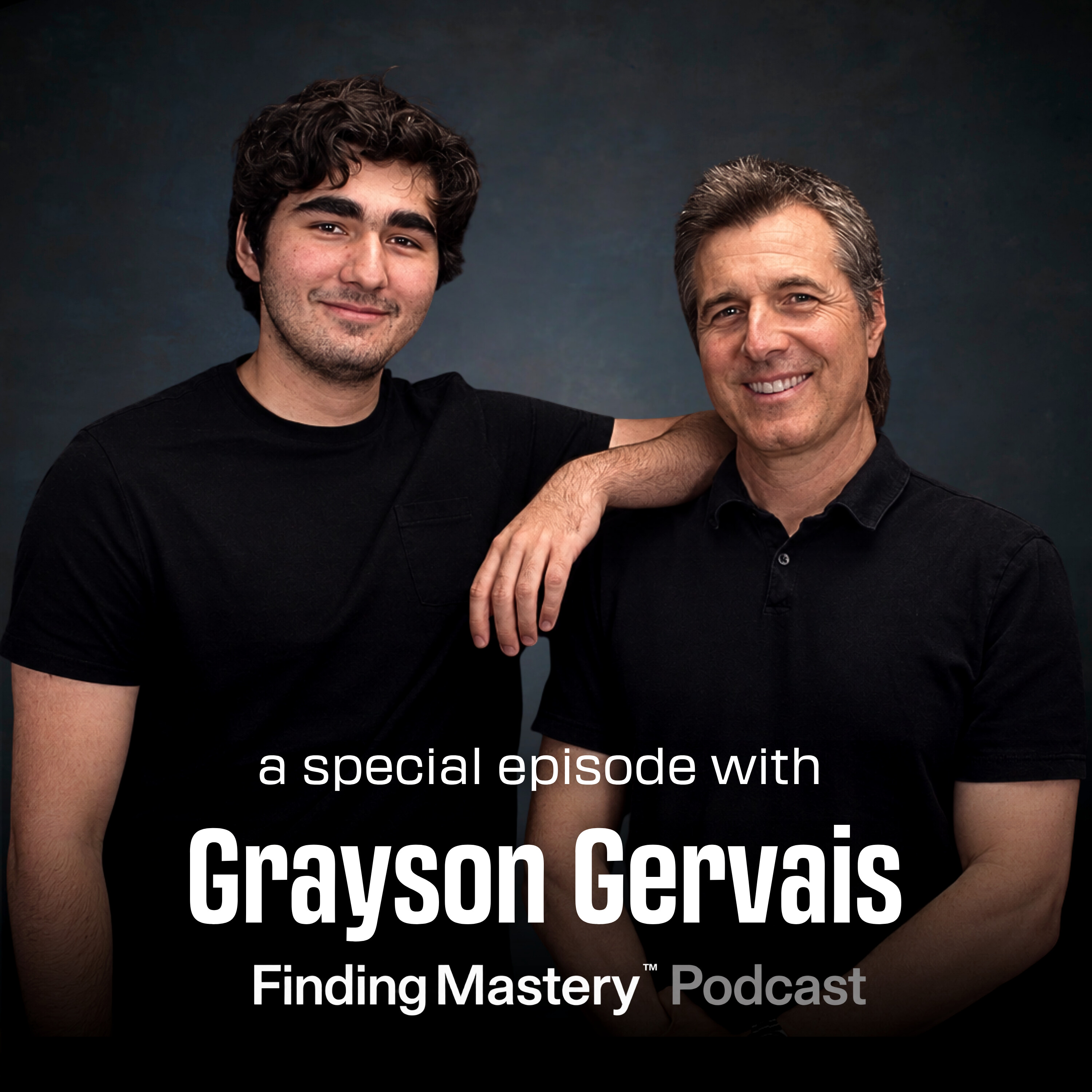
A conversation with 18-year-old club volleyball player Grayson Gervais about the psychology of youth sports and how parents should support athletes—especially during losses, conflicts, and the “car ride home.” It’s framed around his book Dear Parent, Sport Isn’t Easy, Here’s How to Have Our Back.
Grayson Gervais is 18, has six years in high-level club volleyball, and wrote the book while still actively playing (before his final season). Host Dr. Michael Gervais is his father and a sport psychologist.
Parents should listen more than coach; honor the person while developing the player; coach promises and misinformation can harm athletes; balance team practice with targeted individual work; avoid both undertraining and overtraining to prevent burnout; success is relationship-based, not scoreboard-based.
A tournament serving moment where his dad’s feedback landed badly, followed by repair and better communication; a chapter on coaches “not perfect” after being promised a role and then not playing; a memorable rival win where the team felt connected and present.
0:00Dr. Michael Gervais: A quick personal note here. If you're a parent of an athlete, you know what I mean about the importance of the car ride home. That sometimes overly intense drive after a tough match or a tough game where you're trying to sort out how to navigate it. Sometimes it's really easy and sometimes it's really tricky. My son Grayson wrote a book about those moments. It's called Dear Parent, Sport Isn't Easy, Here's How to Have Our Back. and he wrote it as a short guide, a set of letters for parents of young athletes. He's 18, six years into high-level club volleyball, and he wrote it as a senior in high school while he was living these experiences.
0:38Dr. Michael Gervais: It's written to us, to the parents, from that passenger seat. Every chapter is a story, what he learned, something a parent can try each week. These are lessons about tough teammates, coaches who got it wrong, and what a commitment like this actually costs in time and sleep for the young athlete. The question he challenges us to consider is not about whether our kids' teams win or lose. It's about whether we honor the person while we're developing the player. I'm his dad, so weigh that accordingly. I think this might be a really important book for you as a parent who's in the thick of youth sport.
1:14Dr. Michael Gervais: Again, it's called Dear Parent, Sport Isn't Easy, Here's How to Have Our Back. Order your copy today at dearparentbook.com. It's available as both an ebook and hard copy. Again, that's dearparentbook.com. Welcome back, or welcome to the Finding Mastery podcast. I'm your host, Dr. Michael Gervais, and today we're doing something just a little different. On the podcast, we often talk with athletes and coaches and parents about youth sport, what we're getting right, what we're getting wrong, and how we can better support our kids. Yet the voices we don't really hear from are the young athletes themselves.
1:52Dr. Michael Gervais: So today, I'm sitting down with one of them, an 18-year-old high-level high school volleyball player. And he just happens to be my son, Grayson, who's just written his first book, Dear Parent, Sport Isn't Easy, Here's How to Have Our Back. And to celebrate its release, we're sharing this special conversation about navigating the highs and lows of youth sport, what kids actually need from us. And of course, a few things his own dad, yours truly, could have done better along the way. As you can imagine, I have loved watching him up close and personal on his journey. And this book is a great reminder that sometimes the most important thing that we can do for our kids is to listen.
2:30Dr. Michael Gervais: To really listen. So with that, let's jump into this conversation with my son, Grayson Gervais.
2:41Dr. Michael Gervais: Okay, today's a little different. This is a conversation that I actually never thought we would have. I've had over 600 interviews at this point, interviewing some of the most extraordinary people on the planet that are really solving some of the most complex human endeavors that we're faced with. And I love it. And I can't believe I get to sit here with you because you went after something that I think all of us are really trying to wrestle with. You wrote a book. You wrote a book to parents. Dear parent, dear parent, sport isn't easy. Here's how to have our back. And what you went after, Grayson, is the relationship between parents and kids in youth sport.
3:33Dr. Michael Gervais: And I'll tell you, is a big one. This is a really important conversation. So first of all, obviously, I'm your dad, you're my son, your mom and I love every part of who you're becoming, who you are, and the whole thing that you've done this feels like it's really special. I'm incredibly humble because it's 11 chapters and you only went after me three times. so I'm sure we're going to talk about that but Grayson just to get started um why did you write this book why did you write Dear Parent the reason that I wanted to write Dear Parent is because there really are no books in this atmosphere of club sport that come directly from the athletes like sure there are things that come from coaches and come from parents who've seen the experiences but I think it's very rare that you see something coming from being written from the point of view of an athlete who is still kind of in the space.
4:33Like obviously I'm on my way out. This is my last year, but I wrote this book before my final season. So I got to still be in the process and my memory was still very fresh of like the events that had happened over the last four years. Um, and I think that being able to like share those experiences is something that parents don't always see. And I think that learning like from the athlete is, shows the uniqueness of the experiences.
5:03Dr. Michael Gervais: Why the title of the book, Dear Parent, and why the subtitle, Sport Isn't Easy, Here's How to Have Our Back? Well, I think specifically with Dear Parent is, it's like, it's supposed to be a note to parents. Like it's supposed to feel personal. And like, it's supposed to feel like when you write a letter and you say dear whoever like you want them to feel invested and you want them to feel like it's specifically for them and so I think the name dear parent like makes it known that it is for the parent and then sport isn't easy here's how to have our back why is that a subtitle because I think oftentimes parents can get involved in like living through their child but like they're not necessarily capturing the same messages that way.
5:48And by saying sport isn't easy, here's how to have our back. Like specifically the, here's how to have our back part is the main message of like, you are like how to fall back and how to be the person from the sidelines that your kid can have support from and know that is there to support them in the challenging moments.
6:10Dr. Michael Gervais: Well, it's a point of view that I think we all want as parents, like what is happening for the kid? Cause there's this thing that's happening inside of us that is unsettling for most of us. And so you went right at the heart of what you want us to know. And in doing so, things that you wanted your mom and I to know as well, which was really cool as a gift inside of a gift. Okay, before we get into the mechanics of the book and the desired outcome for folks, there's so many gems in here. I'm your dad, so I'm going to I'm going to love you up on this thing, but I know what it took to do this. So what did, in general, what did sport do for you?
6:52Dr. Michael Gervais: Like what was the purpose of being in sport for you? The biggest thing that sports gave me was like the opportunity to be a part of a team and be a part of a community because I think that like having that experience where I have 12 teammates, maybe I played with them before, maybe I haven't, like that you just become bonded to because you spend a whole year, like twice a week and then tournaments, like just being with them. I think my favorite thing about playing sports was that like you get very close to these people and like you kind of understand like how they work and like what they like, what their experiences are.
7:28And I think that the reason I continued to play sports even through my 18s club year, like I think it's just because of that community and because of like the people.
7:40Dr. Michael Gervais: Meaning that most kids in high level club drop out their senior year if they're not going to go play college. Yes. Yeah. And you made the choice that you didn't want to play college. You didn't want to go in that path because you had other ambitions, you know, other than sport. So you're saying the reason you stayed in club as long as you did was because of the relationships. Yes. Yeah. And of those relationships, like what did you learn about yourself? Well, I think for me, I learned that like, I like to be around other people, like, and that I like to, like the feeling of being connected and like being in that group and like having experiences that like I wouldn't get if I was by myself at home or playing a single person sport.
8:20Like I think that I just enjoy actually getting to connect with people and getting to bond and getting to learn different experiences.
8:27Dr. Michael Gervais: So what is it about being a teammate that you found to be meaningful? Being in the bubble that is my high school, which is very small, I think you kind of know everyone there, but being able to get these new outside perspectives that are so different from what I've known from a young age, I think that that's what makes sport cool is you get a variety of experiences and emotions and situations that like aren't always necessarily normal for the environment that you're in. And you know, one of the things I love about it is like either I had it or I didn't, right? Either I could make the thing happen or work with the elements to my very best or I didn't.
9:12Dr. Michael Gervais: And it was a great teacher. So again, surfing, Mother Nature was a great teacher because if you overestimate your skills and abilities, you could put yourself in a real precarious situation. If you underestimate your skills and abilities, you never really get the thrill of it. And so did you have that in your sport, which is obviously club volleyball, high school and club volleyball? The experiences that I've gotten from club volleyball specifically have taught me a wide range of outcomes. I think I've had a lot of maybe less or so negative experiences, and I've had a lot of really great experiences.
9:49and I think that combining the lessons and the takeaways from both of those has allowed me to kind of figure out who I am more and help build my character and my relation to others.
10:02Dr. Michael Gervais: What do you want parents to learn or experience or have while they're listening to this conversation and or reading your book? I think that the biggest thing is that everyone's story is unique and everyone's experiences are unique and the way that, like, dear parent can help a parent realize that there are different challenges and everything's not always, like, like, everything's not always so green and perfect. And, like, that's, I think, the biggest takeaway for me. You know, when I read it, I was like, oh, golly, he put that in about me. You know, like, did he really put that in? Wait, Grayson, are you sure you don't want to edit this part out?
10:41Dr. Michael Gervais: And so, but you're bold and you're like, no, dad, that's the honest truth. And I was like, I did, I screwed that up. And we'll talk about those. But what you're pointing to is that you got to know your kid. Is that right? Yes. Because what's going on inside of your kid is different than what's going on inside of another kid. And is also different than what's going inside of you, the parent. what do you think was going on for me and your mom? You can separate them or combine them. Like, what do you think was going on for us when we were watching you? I think maybe there was anxiety for you and mom.
11:21That like specifically the worry of if everything was going to be okay, like how was it going to be okay?
11:31Dr. Michael Gervais: Meaning like if you made a team, didn't make a team, if you liked the position that you were in, you know, with the depth chart and all that. Yeah, that kind of thing. All right. What was your take about the anxiety that your mom and I had? Where do you think that came from? Well, I think just I don't totally know the answer to that question, but my best guess would be that it came from not knowing the environment of club sport. Because as you said earlier, you were a surfer and mom was a dancer and a gymnast and all of like individual sport. I think that like the environment of a club team sport is very different and I think like the not knowing and like the fear of the unknown of what was going to happen I think caused that stress and anxiety in moments yeah I think you're right I think that I would use a mixed metaphor I was a fish out of water you know I did not know how this world of youth sport really worked professionally I work with people that went through it successfully and whatever but like I didn't know how to do it And plus I was up close and personal, you know, like it's different when it's your kid.
12:41Dr. Michael Gervais: It's just different. And so I think, I think you've got a good analysis there. Finding Mastery is brought to you by Magic Mind. Something that I come back to often is the power of principled mornings. The performers who sustain excellence over decades, not just for a season, they almost all have one, a set of behaviors that they do not negotiate away because they understand that how you enter the day shapes how you move through it. For a long time, my mornings have been disciplined, but a little incomplete. I do all the practices for stillness and movement, but when I sat down for the first real hours of cognitive work, there was a ceiling that I kept noticing, clarity that faded faster than I wanted to, and I told myself it was normal.
13:21Dr. Michael Gervais: Magic Mind is part of my mid-morning routine as a way to work with that. It's a daily two-ounce mental performance shot with clinically backed ingredients like lion's mane, ashwagandha, turmeric, two seconds every morning. It's awesome. And I notice when I skip it, sharper thinking, steadier focus, better energy through the back half of my day. I'm not wired. I'm just more consistently on. The formula is based over 10 years of research, nano encapsulated for five times better absorption than traditional pills and powders. Go to magicmind.com to get 50 % off your first order. Small routines done consistently are where excellence tends to live.
13:57Dr. Michael Gervais: This one might be worth adding. Finding Mastery is brought to you by LinkedIn Hiring Pro. When you're building a small business, every new hire has the potential to make a real impact. The right person, they can bring fresh energy and new ideas and really help the whole company move forward. It's awesome to watch when you get it right. So finding that right person, finding that great hire, it takes clarity. You have to know what you're looking for. You have to recognize it when you see it and then make the call with confidence that this is the right hire. That's where LinkedIn Hiring Pro can help.
14:29Dr. Michael Gervais: It's really like having a hiring partner throughout the entire process. You can chat with it just like you would a recruiter. You tell it what matters most for you, for the role, compare candidates side by side, you give it feedback, and then Hiring Pro listens, it adjusts, it helps surface the people who actually might fit what you need. They're trying to help us optimize. We're still the ones making the decision. LinkedIn Hiring Pro is just a smarter way to find the right people to build the team of your dreams. Now, if you haven't already checked them out, LinkedIn Hiring Pro can really help your business.
14:57Dr. Michael Gervais: Get started by posting your job for free at linkedin.com slash finding mastery. Terms and conditions apply. Again, that's linkedin.com slash finding mastery. Where did you learn that framework that team practice was for the team and individual practice was for me? And if I wanted to get better, I needed to go and, you know, bear down and control the things that I knew would be a good, wild investment. Like, where did you learn that? I think that really came from mom. And I think she kind of... Did you say dad? No. No? Okay. It was hard to hear. Yeah, I'm sure. No, I think that came from my mom.
15:39Dr. Michael Gervais: Did you say dad? No. I think that that came from my mom at a young age because I think like just she was kind of like, I don't know how to explain it. But I think she was kind of maybe upset that, like, I wasn't doing my first couple years, that I wasn't doing more than just the team workout. And, like, I didn't know. Like, I was still, like, 13, 14 at the time. Like, I didn't know that I had to do more to get better. Like, I thought I would just get better as a result of practice. And I did to an extent. But I think that— She knew what it takes to get better. I mean, as an extraordinary athlete herself who put in tons of hours, tons of hours in both ballet, dance, and gymnastics, like those are some of the most grueling, brutal sports as a reference point.
16:37Dr. Michael Gervais: And so she was offering that to you and then she would get frustrated. And I think that this is pretty normal for a lot of families. But what would you say to the parents listening right now when they're like, listen, son, daughter, team sport is for the team. individuals for you and where you get better? Like how would you want them to say it or how would you want them to support that? Well, I think it just needs to be known that like team practice is like everybody gets better. So it's like you and maybe the person that you're competing with that has your same position, like you're both going to get roughly about the same amount of reps and the same amount of like play within individual practice.
17:15but going and getting like individual lessons or working in a garage or like going to the beach at least for volleyball like that kind of stuff I think allows athletes to become more like individually honed to what their weaknesses are and what their skills that they need to improve are and they can work on that individually whereas in team practice it's like a general let me just say for setters individually
17:44Dr. Michael Gervais: well explain maybe for some folks what setting is setting is in volleyball when your passers pass the ball up and it's the person who facilitates the ball to your outside hitters or your opposites kind of like a quarterback as a mixed metaphor they decide where the ball is going to go in a way but I think just taking setting for example like in team practice it might just be just setting to your outside, setting to your middles, or setting to your oppos, and it might just be, you get three minutes each, and then it's like, you work on serving, and defense, and like other stuff, but it's like, if my back set was never, like, really good, like, and I'm not working on that in team practice, then how, when it comes time for game, for the game, am I going to be ready to execute that set that I, just is not as good as my other ones, like, and so I think that's where it comes in, whereas I had to seek out help and work on my backside to get it to a place where it was good enough for me to be content with.
18:51And I think that that would not have happened if I just relied on team practice.
18:58Dr. Michael Gervais: So what do you say to, I want to stay with kind of a mom theme here for a minute. What do you say to the industry that is saying, you need to do more year round sport. Like you've got to go further and you got to get the privates and you got to do all this stuff. And it's only one sport or you're going to get left behind. Because what mom's pointing to here, which I think is accurate, your framework, team practices for the team, individuals is for, you know, the extra that you need to grow individually. What do you say that like that's going to burn kids out? It's too much. Like it's too intense.
19:34Dr. Michael Gervais: It's too serious. And here we are as a family saying no you need individuals to get better well i think there's just a line between it between everything like doing too much is like is a detriment and will burn out athletes especially at such a young age when like the capacity to work hard isn't always there but at the same time i also think that like if you do nothing and you just do team practice and show up to tournaments. Like I also don't think you can get radically better by doing the same that everyone else is doing. And I think you will get left behind if you don't do extra. But I also think you will get burnt out and lose your love for the game if you do too much.
20:19Dr. Michael Gervais: Stay with mom for a minute because there's a ton of moms listening. And I want to say that the mom's like, you have to trust me here. This is a really cool, sturdy kid. and your relationship with your mom is so foundational to who you've become. And yes, mom has challenged you. What have you learned from the way that mom has worked with you to help you be better? And where did the line get kind of blurry and messy? You know, because we're talking about mom. You should actually talk about me because I made way more mistakes, I think, than mom did. So, but let's just stay for moms for a moment. I think that the biggest thing that my mom did well was she knew when to push and when to not push.
21:03Like I think at the beginning when I didn't really know, she was very adamant about you have to do more, you have to like work more, you have to get more reps than just like the team practice reps. But I think as I started to do more, like she kind of let go of that like constant like pushing and kind of like it was still there And she was still helpful and like wanting to make sure that I knew like that I still needed to work even when I got better. But I think she started to like step back and like cool off and become like more of a passenger, as she would say, and less as a driver.
21:42Dr. Michael Gervais: Yeah, that was a framework. I remember a bunch like because the challenge was for you to be the driver. and at some point she was the driver of so much and now you feel like you're the driver which was this kind of seat switching like that was always the plan it's really cool to hear you say it that way i think it's our hope right i think it's parents hopes that we're going to run as hard and fast as we can out in front of you and you know pass you the baton so that you can run even further. So when mom was up against the edge and you didn't want to hear it, right? How do you want parents to know how to do that tension point better?
22:26Well, I think that like just reading the environment and reading like the room is the most important. Learning the environment and like seeing when like your athlete wants to talk or even just in general, like related to non-athletics, Like if they're tired or stressed out or in a bad mood, like that's not the time to like start talking to them and like trying to overload information in those moments. I think that like parents need to find the window where them and their athlete are constant in like emotions and in willingness to listen and willingness to have a conversation.
23:06Dr. Michael Gervais: Yeah. Finding Master is brought to you by Momentus. I have spent my career studying the mind, how to develop it for high performance, how it can be great in high stress conditions, and what helps it stay sharp over the long arc of life. And one of the things I've learned is to pay close attention when science starts pointing somewhere new. Creatine is one of those places right now. We've known for decades what it does for the body, strength, power, recovery. It's about well studied as any supplement out there, but the work emerging on creatine in the brain is what has my attention. The brain runs on energy, the same currency a working muscle does.
23:42Dr. Michael Gervais: And creatine appears to support brain energy metabolism, helping working memory, easing mental fatigue under exactly the conditions so many of us operate in, sustained demand, stress, not enough sleep. For something that's been around this long, that's a genuinely interesting frontier. So if I'm going to take something daily, the quality has to be unquestionable. That's why I use Momentus. They searched the globe for the highest quality creatine. Then they built their own specification around it. Signature spec is what they call it. It's made in a pharmaceutical facility, six stages of testing, four independent agencies, and it's NSF certified for sport.
24:18Dr. Michael Gervais: When you take something every day, that level of quality compounds. Go to livemomentus.com slash findingmastery and use the code findingmastery for up to 35 % off your first order. Again, that's livemomentous.com slash Finding Mastery, code Finding Mastery.
24:59Dr. Michael Gervais: The second layer is really rich with information. And in meetings, it's easy to miss it when our heads are down and we're taking notes. That is why I use Granola. Granola is an AI-powered notepad that makes your meeting notes useful. It captures what happens in your meetings and then turns them into clean, structured notes with decision and action items pulled out and made easy to find. And the best part, it works right through your device's audio, which means that it integrates seamlessly into the video conferencing tools that you already use. No big setup, no awkward bots. I use it every day when my meetings are done.
25:31Dr. Michael Gervais: There's a clean recap and a clear set of next steps that are just waiting for me. Nothing slips away. This isn't about doing less. It's about being more present. I think you're really going to like what Granola is doing. Once you try it on a first meeting, it's hard to go without. You can try it totally free. Head to granola.ai slash mastery. That's granola.ai slash mastery to get your time back. Go to granola.ai slash mastery and try it on your next call. Brings us to another chapter. I think you opened it up with It's Not About You, which I think was like about parents. There was a tournament.
26:09Dr. Michael Gervais: I think it was this chapter. It might have been another chapter where you highlighted a moment when I grabbed you after a game and I was like, son, what's going on with your serving? And that was about me. Well, I guess I'll just start by explaining the moment. It was either day two or day three of a long tournament. and after a game that just hadn't gone my way serving-wise, it wasn't necessarily that I was a negative while serving, but I wasn't a positive while serving. I think that when you came up to me afterwards and said, what's wrong with your serve? I was like, I think I got defensive immediately.
26:44I got really upset because I was like, well, what do you mean? I was fine. I was probably like a zero that game. In the moment that you said it, I couldn't tell if you were being serious or joking, but I think as we talked about a little more I was like oh he's actually serious I was like um I guess like I didn't feel the same way that you did about my serve that day the results of that moment I think allowed us to get closer because I think after I walked way upset you realize that like how you handled it wasn't necessarily the best way that you could handle it in the moment And I think that the reflection after that moment allowed like both sides to have an actual conversation about what could have been better and how you could handle it better.
27:31Dr. Michael Gervais: Yeah. I was wrapped up in my head about something. Have I apologized? Yes. Yeah. Good. Because I feel, you know, like I don't want to parent that way. And I came up missing the window and missing you in that moment. And I was barking at it. And I think about many parents, like I didn't realize that I was off. You know, I didn't know it, but of course I was. And normally what I would do is something very different. You know, like, what'd you figure out? Or I love watching you play. Like, how was it for you? And it's more about your experience. But this one was like, whatever. I'm not going to try to justify anything that I did here.
28:11Dr. Michael Gervais: And what I love that you just did is that you held your ground. and I remember that moment I was like oh yeah this isn't dad's kind of way about this thing you held your ground I was like oh there's like a young lion in there and so I remember that and then we parted ways nothing terrible right nothing terrible but then when we came back we worked on the process not about the placement of the serve I don't think you put that second part in the book did you I don't think so I don't think that ever came out when I was writing it. No, so that's cool that we're doing this. You know what you did say that brought me to tears when I read it?
28:53Is that sometimes my dad would say things that would come out sideways.
28:59Dr. Michael Gervais: Mom, too, I think you had it in there.
29:03Dr. Michael Gervais: And you knew it was okay because it was coming from the two people that you trusted the most in the gym.
29:18Dr. Michael Gervais: thank you for the pass that you've given and the grace you've given your mom and I for all the mistakes that we have made I know that we are you in the feels now? me too
29:35Dr. Michael Gervais: we have tried I have tried my very best and I've made the mistakes that I didn't want to make and so really grace and thank you for giving us the grace
29:52Dr. Michael Gervais: sorry and i think also actually there's never this is for you and it's also for our entire finding massive community we would never apologize for the emotions and you feel all the feels was the chapter that you wrote about like go to the edge of your emotions which you and i are doing now. I cut you off because I want to support always for you the flowing of emotion. In every setting that we're in, knowing how to work at our edges, and if it spills out of our eyes, whatever. That's the honest experience. This is strength. Vulnerability, the courage to get to the edge and just stay in it. You're a great teacher, Grayson.
30:34Dr. Michael Gervais: Okay. Thank you. And then, so I cut you off oh well I was gonna say thank you to you and mom as well for um just like sticking in the hard moments and like staying staying with me in general like and just always being like a constant factor of love and support yeah man I wish we could run it back because I'd want to clean up all the mistakes I made. And I want to run it forward in a way that we use all of this to be even better for each other. You know, and before you were born, before we had all of our mistake making and hug making and before of all that, But when people would ask me what is success, I had more of like a traditional kind of answer, you know, like live a great life and have fun.
31:39Dr. Michael Gervais: And like it was never about a scoreboard of money or any of that. But now it's so clear that success for me, I don't know if I've told you this, I think I have, is to have a great relationship with you, full stop. and to do that, to have a great relationship with mom and our family unit to be nimble, strong, can withstand mistake-making and can withstand all this stuff, but that we have each other's back. And that is success for me. Okay, we've talked about my mistakes. There's plenty of them in the book too. What do you really, really, really hope that parents can get right in this, what I consider to be one of the more dangerous places to navigate for kids, which is youth sport.
32:32I just think that the biggest thing that parents can get right is just listening to their child in moments. I think the biggest thing is just understanding what they're going through and their situation and understanding what's going well and what's not going well and how the different situations can lead to different growth. like the great situations are going to instill confidence and instill like that love for the game and the bad situations you're going to be able to look back on and see how they're at your athlete and how your child like grew as a person because of those experiences that didn't go their
33:08Dr. Michael Gervais: way yeah right let's go back to the idea about youth sport in general what do you think that youth sport has gotten wrong? I think there's a lot of coaches will say what they want to get the best players, but they won't necessarily follow through to that when the season starts. And so I think that like those experiences are one, what club sport gets wrong because it's not necessarily always an honest environment. And that's not like an always or never thing, but I think that oftentimes it does come out like that. But I think too, it also is what builds character for players and I think that like if I had not had the experiences that I had through these like difficult situations of well that's not what you told me like I think that I would have grown less and so I don't like obviously in the moment it's gonna suck that like you're not getting the results that like or the yeah the results that you were promised in a way, but I think also it builds character and it allows for athletes and players to grow as people.
34:19Dr. Michael Gervais: That's why you wrote chapter number two, coaches aren't perfect. Because being up close and personal, I saw some of the shady, underhanded misinformation, mispromising that was made to you. And that I think is a big part of club sport that you're talking about. That's pretty tough. What was that like for you? In the moment, it definitely was not fun. Like having been told that like, oh, we want you, we want you to play, like all of that kind of thing. We're going to build this team around you. Yeah. And then not following through. And like, I didn't really play at all that season, like at my position.
34:59Dr. Michael Gervais: When something like that happens, there's promises by adults made to you. and then they go back on their word. And you've got a chapter in the book on four parents on how to navigate this. How did you learn, Grayson, to not take that so personally when it was totally about you were radically impacted by it? How did you learn to not take that so personally? Well, because I knew that it had nothing to do with me as a person. Like I knew, at least for me, I could separate the player versus the person. And I knew that like it wasn't because, oh, my coaches hate me or like my coaches don't like me.
35:43Like I just knew that there was other circumstances and other situations that like had nothing to do with my character or my person. All right.
35:53Dr. Michael Gervais: is there a single moment in sport that comes to the surface for you that you're like this was a this was this was a moment that is important for me one moment was my sophomore year of high school when we like beat our biggest rivals in volleyball and like we hadn't beat them since like 2017 or something and I feel like that moment it was at home there was like a bunch of people in the stands Like, it was a good game. Like, it went to five sets. It was, like, 15-12 at the end of the game. Like, I think I will always remember that moment because everyone was, like, that's the best we've ever played as a team.
36:31And, like, in that moment we felt very connected and very, like, striving for the same goal. And I think that, like, that moment is one that will always resonate with me.
36:43Dr. Michael Gervais: The feeling of being connected? like the feeling of no one person was like above everyone else like everyone was playing for the same goal and like no one was like mentally checked out like everyone was present knowing that like it was possible to win that game i hope you get so many more of those those are cool moments coach carroll came flying out of the seattle seahawks office one day and he grabs me and he's like, Mike, can you feel this music's blaring? Like, you know, this was like in November. Shorthand the story, we ended up winning the Superbowl that year, but in November, because the Superbowl is played in February, in November, nobody knew.
37:25Dr. Michael Gervais: And he was talking about having a hundred and some alpha competitive humans with their noses pointed in the same direction. i'm so stoked you got a taste of that and it's special it's hard and you really do need to find people that are mission-minded to be able to do that with and so you play a big part in creating that environment and you also want to be around people that want something similar and it's really cool i want to take a second here to tell you about a morning routine that i've been using for years. For me, it's a great way to switch on my mind, to ready myself to take on the day.
38:03Dr. Michael Gervais: So before I check my phone, my emails, market updates, or text threads, I choose how to start my morning. That's always in my control. That's always in your control too. This is the same morning mindset routine that some of the world's top performers across sport, business, and the arts are using. The best part, it only takes about 90 seconds to do. So just head over to findingmastery.com slash morning to download the audio guide for free. Again, head to findingmastery.com slash morning to get your morning mindset routine. Finding Mastery is brought to you by our partners at Lisa. Most of you know that I have a morning mindset routine.
38:42Dr. Michael Gervais: It's what I do every morning before I check into the world around me, I check into the world inside of me. And it's just a few quiet moments to set my intention for the day, make sure I answer to the things that I'm grateful for. And I want to focus my attention on what matters most. And what that does is it wakes up the mindset to help me bring the best of myself in the day ahead. Generally speaking, I wake up feeling pretty good. No aches, no stiffness, nothing pulling my focus, you know, the minute that my eyes open up. So when your body gets the recovery it needs, it is so much easier to set your mind up to help you be your very best.
39:17Dr. Michael Gervais: So that's why we turned to Lisa for some support. We've worked with Lisa for a long time now because they build quality crafted mattresses that are tailored to how you actually sleep. Your position, your feel, all of it. Premium materials, premium mattresses, real full body support. The intention they put into their products is real. I love what they're doing. Go to Lisa.com for up to 30 % off mattresses plus get an extra$50 off with the promo code MASTERY. Exclusive for our listeners. That's L-E-E-S-A.com promo code MASTERY for up to 30 % off mattresses plus an extra$50 off. And let them know we sent you in this survey after checkout.
39:55Dr. Michael Gervais: Your last chapter of the book was, It Takes a Lot to Pursue Club. You're a four-year varsity high school player. You're a captain for a number of years on club and in high school. You chose the title, It Takes a Lot, to pursue basically club and high school sport. Why did you want to end the book with that idea? I didn't want to give the impression that club sport was only about sport by itself. I think there's so many factors of time managing social in school and many other circumstances that go into pursuing club sport. And I think figuring out where like athletes values lie in what is important to them in that moment or how are they going to time manage playing in a tournament and having an essay that they have to turn in the next day.
40:48Like all of those kinds of things add up in the experiences and as a part of club sport. Yeah.
40:54Dr. Michael Gervais: Just to be clear for some parents that are in club sport or heading into club sport is that Grayson, you would practice two to three times a week and you have tournaments on weekends. you are in a very challenging academic school and sometimes club practice doesn't get done till nine you're not home till 9 30 sometimes it's a quick snack and sometimes you got homework you know still on the other side of it so figuring out sleep has always been a priority in in our family so figuring out how to work backwards to getting the right amount of sleep and the right amount of intensity in school first it's called scholar athlete for a reason right school first athletic second.
41:32Dr. Michael Gervais: But sometimes the time allocation is really tricky. You've done a great job, son. I watch you. You really tell me if I'm wrong. Okay. Do you take first point, game point, practice point? Do you take all of those like really as that they have the same weight? Yes. Because I do not see you rattle, son. And I don't know if that's because you have to show me that you're solid, but I don't feel like that's it. And I'm just saying that to be kind of provocative, but I don't see you rattle. Like, come on. Come on. Really? I think that, like, I think one thing that you tried to tell me from a young age was like, that there are no big moments, there are just moments.
42:13Dr. Michael Gervais: But for you to actually embody that, do you really, like, does that feel like it's a first principle for you? Yes. Yeah. I believe that for you. From your vantage point, what does it look like when a parent is living through their kids? I think that like when you have these parents who played the same sport in when they were in high school and even when they were in college, like they want the same level or they think that their kid wants the same goal as them. And maybe that's getting recruited to college. Maybe that's like playing pro, like whatever that is. And if a parent reached there or didn't reach there and they start putting all of this effort into making sure their kid does reach there.
42:56and I think that's where going back to the idea of burnout that I talked about earlier like I think that's how you burn out your kid is and that's how you make them fall out of love with the game is that you just keep pushing your ideas onto them and you make them do do do and that's not
43:12Dr. Michael Gervais: necessarily what they want I think you got to build that foundation of the relationship to your earliest point which is parent your job is to see your unique child support them Challenge them. Love them. You know, get up on that edge of making mistakes, but use the repair, the time to repair the relationships, to learn and hug and cry and laugh and have that be part of the broth of a great relationship. What was it like to have your dad be a sport psychologist? And here you are writing a book, Two Parents of Sport. I don't think I ever thought of you as a psychologist. I think I kind of always thought of you as dad.
43:57Like, you're just the annoying person that makes me upset when we're working out together. Like, you're not, I don't know, I just never really interpret you as a psychologist. You're more just dad.
44:11Dr. Michael Gervais: Might be the highest compliment I think I've ever gotten. That's cool. Yeah, well done. I'm just so excited for your future. I'm excited for the parents that are going to read this. I wish I had something like this and I think that this is an important step in the youth sport community to have something like this look it's 80 pages it's short, it's to the point, it's storytelling at its best and with some clear takeaways and some clean questions that parents can ask themselves and go do with their kids later can I ask you to can I ask you maybe to look right at the camera and speak to a dad and then what you hope that a dad could do for their kid?
45:02Okay dads, I think that the one thing that is the most important is making sure it's known that you care for your athlete and that you're always going to be there for them no matter like the different situations and the ups and the downs that you're always going to be present and aware for them. Bang.
45:22Dr. Michael Gervais: Go moms. All right, moms. All right, moms. I think that the biggest thing is letting it be known that you're there and that your support is there and that your child can fall back on you when they have these moments of like tension and of struggle and also that they can fall back on you when everything is going really well and that everything is like perfect in a way. All right. Last set of questions here. One of the things that we haven't spent any time with really is a through line in the book, which is how to do the car ride home. For parents, how to be great on the car ride home. And I think that idea was something that was really important to our family.
46:07Dr. Michael Gervais: And I think sometimes we miss the mark. We were outside the window. And thank you again for giving us grace and being able to explain it in so many ways. You're not one that doesn't back away from telling me when I'm off. And you're also one that doesn't let mom say whatever. And you stand for what is right for you and what is right for the family. So you did a great job of getting that in here. And The Car Ride Home, I think, parents, if you read this book, you will be better on The Car Ride Home. And The Car Ride Home is like this really important sensitive window on how to learn, how to be connected, how to have, you know, your back and kids back in that moment.
46:49Dr. Michael Gervais: All right. So you ready for just a handful of last questions? These are quick hits. Sure. Okay. One or two words. It all comes down to? What you say to yourself. Oh, interesting. Your relationship with yourself. Interesting. Okay. Okay. Success is? Defined by the individual. What is a mark of success that's important to you right now? Just being an overall good person. Like I think that like for me it costs nothing to be a kind person. And I think that that's something I try to do every day. Where do you think sport is going in your life? Well, I think my time of playing sport is coming to an end.
47:37And maybe I'll play club in college, but I think that sport is always going to be something that like is important to me because, I mean, that's the field I want to be in and work in. Like I think that sport will always be a part of my life.
47:54Dr. Michael Gervais: Pressure comes from? Pressure comes from not knowing how to handle the situation. Why do you want sport to be part of your life going forward? Because I think sport teaches so many things and has so many, like, it's never the same for two people. It's never the same for two teams. Like, it's always different and mostly new experiences that, like, you don't really see anywhere else. Love is? A constant. Relationships are? The foundation. Relationships are the foundation. that's worth unpacking a little bit what does what does that mean i just think like relationships are so important because without relationships you're you end up by yourself and like or you can't end up by yourself and i think that like building a community through relationships is something that is so important and like so important to me because i like being connected and i like talking to people and i like hearing other people's stories and hearing how they process stuff that I might process differently.
49:02Dr. Michael Gervais: Why? Why? Why is that important? Because I like to be able to learn from other people's experiences and mold their experiences into something that I could take into my own personal life. And why is that important that you're going to learn from other people's experiences? Because without learning, you get stuck in your own ways. And I I think that not being open and being able to learn is how people, and this is a generalization, but how people can end up unhappy. And I think that, like, by learning from other people, you start to figure out ways that, like, you can build on your own thoughts and your own emotions and relationships with others.
49:46And that is, I feel like, the foundation for a happy life.
49:52Dr. Michael Gervais: Why is pursuing a happy life important to you? because I like to be happy. That's a pretty good reason, yeah. Interestingly enough, you would not know this, Harvard did a 80-year study where they followed people, and they found that there was two factors that rang above all other factors when people lived, quote-unquote, a good life, connections, call it relationships, and purpose. Pretty cool. like you in intuitively are calling on what really good science has suggested is one of the core factors and you're living it right now. Grayson, you're a cool kid, man. I love being your dad. Thank you for being a kid that's willing to be honest and to take the risks to go for it.
50:40Dr. Michael Gervais: Somebody that we can hug and cry and laugh and do all of it together. And so for me, success is having an adult relationship with you going forward. And yeah, this is cool. I'm really stoked for you for your future. And is there any last words that you'd like to leave parents with? I think like making sure that it's known that you're there for your child and that like love is always present, even in the hard situations. Again, thank you. Thank you just for being there for me always. Love you, bud. Love you, too.
51:51All right.
51:52Dr. Michael Gervais: Thank you so much for diving into another episode of Finding Mastery with us. Our team loves creating this podcast and sharing these conversations with you. We really appreciate you being part of this community. And if you're enjoying the show, the easiest no-cost way to support is to hit the subscribe or follow button wherever you're listening. Also, if you haven't already, please consider dropping us a review on Apple or Spotify. We are incredibly grateful for the support and feedback. If you're looking for even more insights, we have a newsletter we send out every Wednesday. Punch over to findingmastery.com slash newsletter to sign up.
52:27Dr. Michael Gervais: The show wouldn't be possible without our sponsors and we take our recommendations seriously. And the team is very thoughtful about making sure we love and endorse every product you hear on the show. If you want to check out any of our sponsor offers you heard about in this episode, you can find those deals at findingmastery.com slash sponsors. And remember, no one does it alone. The door here at Finding Mastery is always open to those looking to explore the edges and the reaches of their potential so that they can help others do the same. So join our community, share your favorite episode with a friend, and let us know how we can continue to show up for you.
53:04Dr. Michael Gervais: Lastly, as a quick reminder, information in this podcast and from any material on the Finding Mastery website and social channels is for information purposes only. If you're looking for meaningful support, which we all need, one of the best things you can do is to talk to a licensed professional. So seek assistance from your health care providers. Again, a sincere thank you for listening. Until next episode, be well, think well, keep exploring.
Mike’s son, Grayson, wrote a book to parents of young athletes, and it challenges how we think about supporting our kids through sport.
Those of us with kids in youth sports know what the experience gives them... teamwork, commitment, the skill of balancing a full week. We have come at that subject often on this podcast, usually through the lens of the coach, the parent, or the research. This one comes from the kid’s angle – from the court, the car ride home, and the receiving end of those parent and child conversations.
Grayson has played competitive club volleyball for six years, four of them as a varsity player and a captain. He wrote the book as a high school senior, in the middle of his last season, while the lessons were still fresh.
It’s called Dear Parent: Sport Isn’t Easy. Here’s How to Have Our Back. Eleven chapters… tough teammates, coaches who get something wrong, and what a club sport actually costs in time and sleep. Each one is a story, what he took from it, and something a parent can try that week.
Mike and Grayson get into the moments Grayson felt supported and the times where he didn’t, how he learned to separate the player from the person when a season went sideways, and the thin line between extra work and burnout.
You also get to watch Mike as a dad and Grayson as a son.
The question the book leaves us with is not whether our kids’ teams won or lost... It is whether we honored the person while we were developing the player.
___________________________________________________
Links & Resources:
Grayson Gervais’s Book: Dear Parent: Sport Isn’t Easy. Here’s How to Have Our Back.
Book Website: dearparentbook.com and you can get your copy here.
Subscribe to our Youtube Channel for more conversations at the intersection of high performance, leadership, and wellbeing: https://www.youtube.com/c/FindingMastery
Get exclusive discounts and support our amazing sponsors!
Go to: https://findingmastery.com/sponsors/
Subscribe to the Finding Mastery newsletter for weekly high performance insights: https://www.findingmastery.com/newsletter
Download Dr. Mike’s Morning Mindset Routine: findingmastery.com/morningmindset
Follow on YouTube, Instagram, LinkedIn, and X
See Privacy Policy at https://art19.com/privacy and California Privacy Notice at https://art19.com/privacy#do-not-sell-my-info.
Scan the code with your iPhone camera
Listen in the app.