 Finding Mastery with Dr. Michael Gervais
14 Oct 2026 · 1h 11m

 Add vo to ChatGPT or Claude to ask about everything you hear
vo listened to this episode to put together the overview and transcript, so there may be the odd mistake.
The psychology of healthy relationships, centered on how trauma, shame, and long-term self-investment shape dating, marriage, and trust. Dr. Thema Bryant argues that relationships are a major predictor of mental wellness and that healing requires both individual work and attention to context (family, politics, systems).
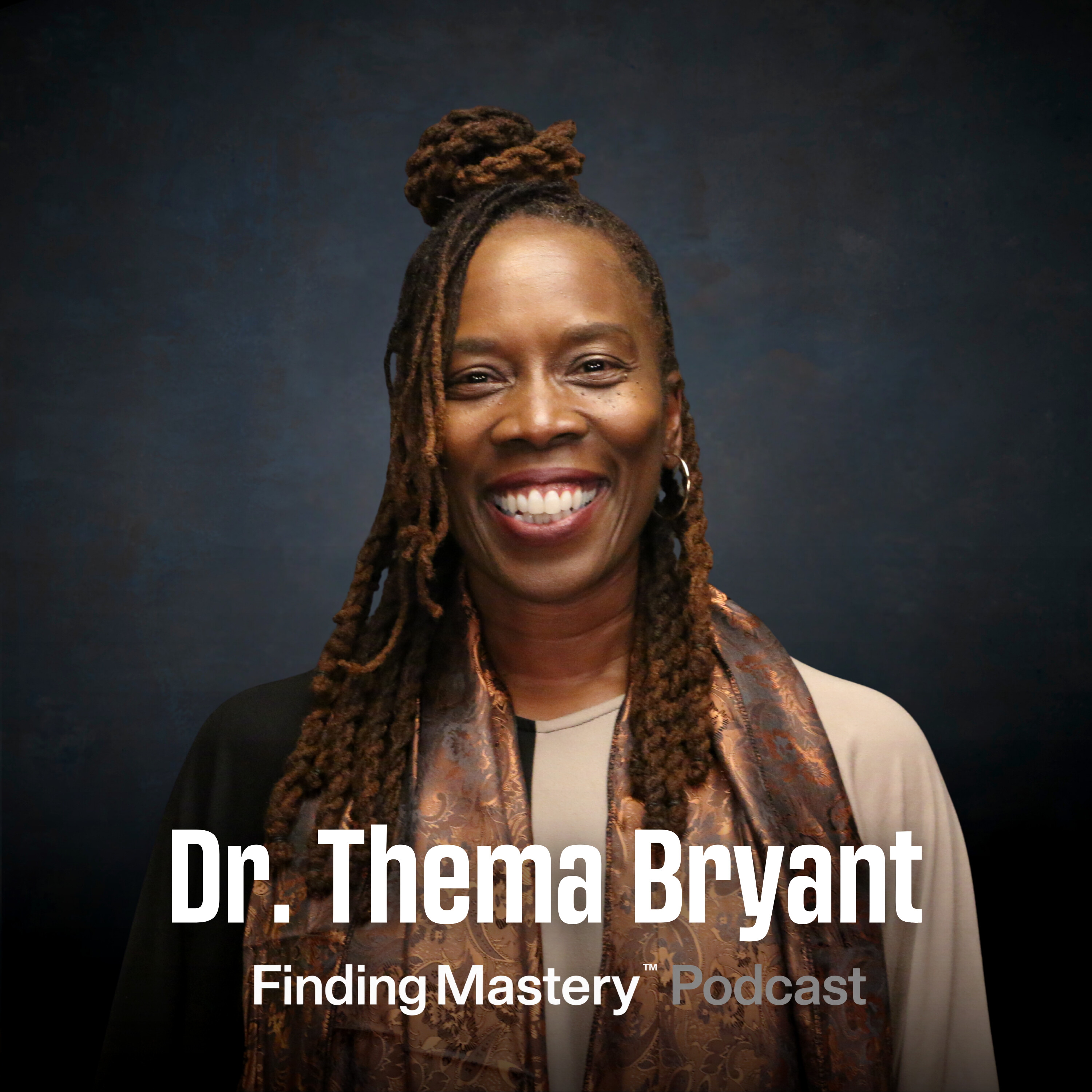
Dr. Thema Bryant—former president of the American Psychological Association; director of the Culture and Trauma Research Laboratory; author of Matters of the Heart: Healing Your Relationship with Yourself and Those You Love; professor of psychology at Pepperdine University; host of The Homecoming Podcast. Background includes research with trauma survivors and lived experience with community violence (Baltimore) and civil war/evacuation (Liberia).
0:00Dr. Michael Gervais: Finding Master is brought to you by Magic Mind. A question that I often come back to and I hear from people I work with isn't, how do I perform well today? It's how do I protect my capacity to perform well over my entire career? That's a different question and it changes what you invest in. At some point, I started applying that same thinking to my own brain. Not just what helps me get through a heavy week, but what am I actually building over time? Because there is a difference between burning through your cognitive resources to meet the demands of the day and investing in the long-term health of your brain.
0:30Dr. Michael Gervais: That's one of the reasons I enjoy using Magic Mind. It's a daily two-ounce mental performance shot with clinically backed ingredients like ashwagandha, turmeric, and lion's made. When I drink it, I know that I'm investing in better focus, sustained energy. And what I value just as much is what's happening underneath. These ingredients support stress adaptation and long-term brain health in ways that seem to compound over time. That's the long game. The formula is based on over 10 years of research and nano encapsulated for five times better absorption than traditional pills and powders. Go to magicmind.com and get 50 % off your first order.
1:06Dr. Michael Gervais: The best performers I know make investments today that their future self-thanks them for. This is one of them. From your past dating relationships, pull the wisdom out of the wounds, right? Look at yourself. Is there any way that I contributed to the problem. And then I can bring that wisdom and that lived experience. So like, I know I would do things differently. Dr. Tama Bryant, former president of the American Psychological Association. Director of the Culture and Trauma Research Laboratory and author of Matters of the Heart, Healing Your Relationship with Yourself and Those You Love. A professor of psychology at Pepperdine University and is the host of the popular The Homecoming Podcast.
1:45Dr. Michael Gervais: What do people maybe misunderstand about the importance of investing in yourself so that you can have great relationships with others? You can keep doing what you've been doing and achieving what you've been achieving, but you are worthy of the joy that comes from fully being in tuned with yourself. And I want to invite you to not neglect yourself and not erase yourself. So once trauma happens, how does that impact our relationships with others? Trauma often creates shame. And so then when people are living with shame, they often shrink. This gets to relationships. It can shift our expectations.
2:28So you can believe that this is what love looks like. They love me and they beat me or they love me and they did these other things to me.
2:36Dr. Michael Gervais: What do healthy relationships look like? Healthy relationships are authentic for your folks who are watching who aren't yet married, but maybe want to be married. When you're dating, they must pay attention to... That's cool.
2:57Dr. Michael Gervais: First of all, I'm so excited to sit with you because you hold a space about relationships that's really important for me, for our community. And so thank you for all your research and your commitment to really understanding how relationships work. So thank you for being here. Oh, you are welcome. And thank you so much for having me and cultivating this space and this dynamic audience. Yeah, I wish that we had more live experiences so that we could hear from them. And when we do have them, like the questions are on point. All right, leading question here. You have spent much of your professional life understanding how relationships work, what makes them, what breaks them.
3:37Dr. Michael Gervais: What do you hope people will learn from this conversation today? That one of the biggest predictors of their wellness, their mental state, will be their relationships. We often think it's our accomplishments, our achievements, our degree, our bank account, our home, all of those things. But what really shapes your life are the people you spend the time with. And it can make it or break it. Yeah. Is the bulk of your research or the bulk of that finding from the longevity study at Harvard or is it from other resources as well? Other resources as well. A big part of my work is also with trauma survivors.
4:19And so when people are going through hard life events, you know, whether we think about death or grief or loss or a medical issue, it makes a difference if you're going through it by yourself or if you feel like you have a dream team of sorts, not just like a medical dream team, but like family and friends that are processing it with you. I also work with trauma survivors in terms of people who have experienced interpersonal trauma, like community violence, gun violence, assault, domestic violence, really hard things. And a big part of what shapes their recovery process is do I have people who treat me sacredly, who care about my healing and my recovery, or do I feel like abandoned by the world and that no one cares?
5:08Dr. Michael Gervais: Love that you introduced the word sacred. I'm going to put a pin on that because I want to come back to it. Let's start upstream with your working definition of trauma because it's a unique way in to the power of relationships. Yes, absolutely. Yeah. So let's start with help us understand your understanding of trauma. So a traumatic stressor is an experience that overwhelms your usual capacity to cope. So we have regular stress, daily stress, and those are usually experiences related to our different roles. So you might have a role in your family or a role at work, role in the community. And we kind of figure out how to handle that stress of like, oh, I'm the parent, I have to do this.
5:51Or I'm the CEO, I have to do this. And we kind of make it work. And then there are life events that happen that are disruptive. We think about traumas as disrupting our sense of ourselves, disrupting our ability to trust other people, disrupting our ability to manage our emotions. And so they are experiences where we can feel hopeless or helpless or unsafe or powerless. And so sometimes people will misuse the word and will say things like, oh, there was a lot of traffic. It was traumatic. Well, that was stressful, right? And so, you know, traumas can come in different categories. They can be interpersonal, which means somebody did something to you or a group of people did something to you.
6:38There can be a medical trauma. There can be a traumatic death. So if you had a loved one die by suicide or homicide or suddenly in some, you know, very intense way, that could be traumatic. Natural disasters can be traumas. and when you're dealing with a natural disaster, often you're not going through it alone. It's like everybody around you is going through it. And then a trauma that not everybody talks about too, that not everyone talks about, one is intergenerational trauma. So the impact on you if your parents survive trauma, it affects the way they raised you. It affects the way you look at life or look at the world.
7:24And their nervous system was shifted by what they experienced, and they can pass that down to you. And then we think of something called societal trauma or the trauma of oppression, which is basically if you are a member of any group that experiences being marginalized, that can be traumatic. So members of your community who grew up in poverty, people can say that poverty can be traumatic. Racism, sexism, heterosexism, ableism. So a discrimination based on a group you're a part of can also traumatize the nervous system. Okay.
8:05Dr. Michael Gervais: So I think I just watched you work. You work in grids, don't you? Yeah. Yeah. So what I mean by that is you went down the seven or eight different types of trauma. You went across three lanes, self, others, and emotions. You walked us through the dysregulation component of it. And then, but the whole time you were also connected to the honesty of it for you. Right? Meaning that this is not just an academic exercise while you've trained or studied relationships. I imagine you put yourself, because of that, you put yourself in your work. Okay. That's tricky to do. It takes a lot of courage, a lot of recovery from the intensity of that vulnerability.
8:50Dr. Michael Gervais: That's probably why you're so good at it. Oh, thank you. And I like to tell our students that I teach at Pepperdine University and to let people know their lived experience is a source of wisdom. Right. There are some things you get from the book and it's wonderful. And please study the books. And then there are some things, you know, because you lived it. So if I'm with a client who isn't really breathing, I notice that not because I learned it in a book, but I know what it's like to hold yourself tightly and to not be breathing. So when I say to someone, do you want to take a breath? And they kind of laugh and they're like, how'd you know I wasn't breathing?
9:26It's like, oh, I know what that looks like.
9:28Dr. Michael Gervais: Yeah. Because you know what it feels like or just because you know what it looks like. Both. Yeah. Both. So I did a bunch of research on what I think is the greatest constrictor of human potential, of one's potential, which is this slippery little nearly undetectable fear of other people's opinions. And for fun, we called it FOPO, fear of people's opinions. And I wrote about it and did the research because I needed to understand it. It was my way of working out what is this thing I have? what is this thing that kept me back? And so with all sensitivity, what is the reason you studied trauma? To know that it's possible to heal.
10:16Like I needed to know that for me. And I describe these different types of trauma. So I've experienced multiple ones. I grew up in Baltimore, Maryland, which I always like to give a shout out to Baltimore. That has many beautiful things.
10:31Dr. Michael Gervais: I was going to say, are you about to say the source of my trauma? Yeah, some of it. Especially growing up at very high rates of community violence. One of the things that struck me is interesting because sometimes you don't know what you've been exposed to until you're out of it. And so I have two kids and I remember picking up my daughter from eighth grade and she looked kind of stressed. And I was like, what's going on? And in eighth grade, she had just witnessed her first fight. and that was mind-blowing to me because I don't know the first time I saw a fight. It was early. Yeah. People were fighting all the time.
11:07So it was like in Baltimore. In your living room? Yeah. And then the community and in school.
11:14Dr. Michael Gervais: Yeah. Okay. And so it was like, oh, wow, you've never seen a fight before. That's amazing. That's how great for you. But so that and then I lived in as a teenager, my family moved to Liberia, West Africa. Amazing. Which, again, was amazing because for the first time I saw everyone in a position of power look like me. The head of the university, the head of the bank, the head of the government. So when people say you could be anything you want to be, like I saw that. I saw that like I could be anything I want to be. So that was the beautiful part of my time there. During my second year there, there was a civil war.
11:57So we ended up being evacuated and it was like a whole experience. And so whether we say community violence or like national wars, that traumatic things can happen. And can you still live a good life?
12:11Dr. Michael Gervais: Did it dysregulate you? Oh, certainly. When we were evacuated, one of the things that's disorienting is I came back to the states where not only did people not know a war was going on, but most people couldn't tell you where Liberia was on a map. So it's very disorienting when you're worried about people's safety, like, you know, the communication system wasn't great. So you don't know where people are or how they're doing. And then, you know, as I said, I was a teen. So I come back and people want to go to the mall and do like very frivolous things. So that it took a moment to get back into myself.
12:49Dr. Michael Gervais: Yeah. Yeah. For survivors, not survivors, but folks that come back from war. Yeah. There's a reacclimation phase and it's heavy. Some people, no problems. They slide right back in and, you know, it kind of worked for them. We actually thought it was a high neuropeptide Y. was a differentiator. Like if, I don't think that's held up, you know, but trying, the research was really trying to understand, like, why do some people slide back into kind of an ease into their, you know, family or whatever? And why does some have such a hard time? It was jarring for you or traumatic for you? I would say both.
13:29Cause in addition to the shifting of environments, there's also the grief you know people died right so and i think it's important for us also to name that being impacted is actually a sign of wellness meaning that that if i experience war and death like your daughter right if i yeah if i if there's war and death all around me and i'm like i'm good i'm ready you know to do my two o 'clock my three o 'clock my four o 'clock then there's a disconnect
14:01Dr. Michael Gervais: Yeah, that's not natural. Right, right. That would be, what's the saying? Like an unreasonable response to an unreasonable. Yeah. Yeah, okay. So that was, I don't know, decades ago. Yes. And is it still in your body or is it? No, it's not. And that's a beautiful thing. I appreciate the question because some people, when they talk about events, they're talking about it like it was last night and it was decades ago. Right. Right. That they're stuck in some ways. And so I'm grateful that I can have compassion for my younger self, compassion for, you know, families that were devastated, but I don't live in that.
14:46Like I'm not stuck in that.
14:48Dr. Michael Gervais: Does Bessel van der Kolk have it right that the body keeps the score, that trauma is a somatic experience and a cognitive and psychological and behavioral? Is it all of that or is it primarily somatic? It is all of that. And I'm so glad that the field is getting back to, I'm going to call it cultural wisdom, that our bodies and our spirits are affected. We're not just like floating brains, floating cognitions, especially if the body was the site of the violation, right? It shows up. And so I would say, especially for our high performers, that it shows up in migraines, it shows up in nausea, it shows up in backache, but they would say like, I'm not depressed, you know, I'm not anxious, but your body won't let you sleep at night, right?
15:40So there's something else going on, like all is not well.
15:44Dr. Michael Gervais: What do you do with folks that are seemingly operating on all cylinders, but they report that they're not rested in the morning? And you ask them, how'd you sleep? And they say, oh, you know, I slept seven hours or six and a half. Ideally, you'd want them to sleep somewhere around eight. And then they're sophisticated enough to say, well, here, do you want to look at my biometrics? And they're measured some kind of way. Yes. And they show you the aura ring or whatever, and let's call it like 5 % to 7 % is in REM sleep. You know, or 5 % to 7 % only is in deep sleep. How do you work with that? Yeah.
16:23I like to help people to think about the invisible labor. Right? Like our body and minds are working even when we're sleeping. And so then there can be this restlessness. When we talk about soul fatigue or that someone's bone tired, like when your soul is tired, when your bones are tired, that's the kind of fatigue that a nap won't fix. That you're not just physically exhausted. There's a deeper peace there. And so as you say, like someone who's performing at this level, sometimes that is someone who is driven. And what can drive us is the fear of scarcity and the fear of unworthiness. So if that's what's behind this constant motion, I like to let people know, I see you beyond your doing.
17:23because busyness is a masterful trickster, right? When you see someone very productive, you're like, oh man, they're doing it. They must be great. And you can be very productive and very busy and very miserable.
17:39Dr. Michael Gervais: Yeah, well said. It used to be a badge of honor and I think people are no longer appreciating that badge, meaning that I'm busy is code for like, I don't really have direction and I am unoptimized and like my soul and my spirit are not part of my work, but my emotion and motor are really big. It's running. Yeah. So when people say to you like, oh, you're busy, right? It's like, well, hold on. Right, what is going on here? Finding Mastery is brought to you by Athena. So optimism often gets mistaken for wishful thinking. In reality, it is one of the most powerful performance skills that there is.
18:18Dr. Michael Gervais: An optimistic mindset doesn't just improve the quality of your life. The research is clear there. It's also a real competitive advantage. It helps you be more open to possibilities, to adapt faster, to be more agile. And here's what I've noticed. It is hard to stay open and curious when you're buried in the reactive stuff of life, the overflowing inbox, the calendar that runs you, the travel, the follow-ups, the hundred of small tasks that keep you putting out work fires instead of looking forward with bright eyes. That's where Athena comes in. They match you with a dedicated, full-time remote executive assistant.
18:49Dr. Michael Gervais: It's a real person who takes those things off of your plate. Their EAs come from the top 1 % of more than 60 ,000 applicants. So they're sorting the best of the best for you. And they're fluent in the AI tools that make great support even sharper over time. And clients get back an average of 15 plus hours a week. So when the reactive noise feels like it's being managed, you get to lead from a different place. Open, curious, focus on what's possible. That is worth looking into. Go to athena.com slash mastery right now and get matched with your EA. Give yourself a few hours back this week and go to athena.com slash mastery and see who they pair you with.
19:24Dr. Michael Gervais: Bonnie Mastery is brought to you by our partners at Lisa. Most of you know that I have a morning mindset routine. It's what I do every morning before I check into the world around me. I check into the world inside of me. And it's just a few quiet moments to set my intention for the day, make sure I answer to the things that I'm grateful for. And I want to focus my attention on what matters most. And what that does is it wakes up the mindset to help me bring the best of myself in the day ahead. Generally speaking, I wake up feeling pretty good. No aches, no stiffness, nothing pulling my focus, you know, the minute that my eyes open up.
19:57Dr. Michael Gervais: So when your body gets the recovery it needs, it is so much easier to set your mind up to help you be your very best. So that's why we turn to Lisa for some support. We've worked with Lisa for a long time now because they build quality crafted mattresses that are tailored to how you actually sleep. Your position, your feel, all of it. Premium materials, premium mattresses, real full body support. The intention they put into their products is real. I love what they're doing. Go to Lisa.com for up to 30 % off mattresses, plus get an extra$50 off with the promo code MASTERY, exclusive for our listeners.
20:31Dr. Michael Gervais: That's L-E-E-S-A.com, promo code MASTERY for up to 30 % off mattresses, plus an extra$50 off. And let them know we sent you in the survey after checkout. All right. Okay. Now I understand why you wanted to do this work. What do people maybe misunderstand about the importance of investing in yourself so that you can have great relationships with others? Can you talk about that dynamic? Yeah. I think what often happens is we are raised, many of us are raised to be very outward focused. So instead of people kind of interrogating themselves or developing themselves, what people have often done is studied other people's reactions to figure out how I need to be in this space.
21:24Dr. Michael Gervais: This was a big part of my work. Right. People's opinions. Yes, that's exactly. A made up story or an actual story. Like how am I bouncing off of what I think they're thinking. Yes, what I think they think and what I think they want. And let me say for some people, it's a safety issue of like, I'm trying to figure out how to make people happy because then I'll be safe, then I'll be rewarded, then I'll be chosen, then I'll be loved. Were those four or five words purposeful? Yes. Can you say them again? Then I'll be safe, then I'll be chosen, then I'll be promoted, then I'll be loved. Is there an order there?
22:03People often think about the safety first. Yeah. And so, you know, for that, I would say, you know, you talked about like, was the violence in the home? If someone grows up with domestic violence, then they, you know, have described for me learning to study like people's footsteps. Like they could tell by the way the parent is walking down the hall, whether or not it's about to be trouble. And so when you live, or even if you're in an abusive relationship or with an abusive boss, to survive, you study them to figure out how to please them so that you can be safe or try to maximize your safety.
22:41Dr. Michael Gervais: What do you think? When you think of 100 people in a room, what percentage of folks are still trying to sort out if they're safe? The majority. I think you're right. Yeah. Because not just physical, but also emotional safety. Is that an earned guess or is there research behind that? Yeah. Well, unfortunately, you know, when we look at these rates, here's the thing. With trauma, going back to trauma, when we first, and I'm going to say we, this is before my time, when they first looked at the field, the we, the we. But I've never done this research, but we looked at it, yeah. So when they first looked at defining it, the word rare was in the definition of?
23:20Of trauma. What do you mean rare? Trauma was defined as a rare event. And then they had to take the word out because it's not rare. Right? The number of people who have experienced molestation, the number of people.
23:32Dr. Michael Gervais: Do you know any of these numbers off the top of? Yeah. So we would say like one in four, one in three. That's right. Yeah. Yeah. So. And surprisingly, that number, there's a difference between genders and a surprisingly high number for little boys. Yes, absolutely. Some would say like one in six. That's right. That's a surprisingly high number. It's huge. And even I'll tell you, when I did some work in the military, I came in looking at military sexual assault and the experience of like women who were enlisted. But once I started doing the work, found out that the higher number is men who have been sexually assaulted by other enlisted people.
24:14And that doesn't get talked about. You know, there is that loyalty and that silence or get dismissed along the lines of like hazing. But numerically, it makes sense because, of course, there are many more men in the military than women. But those stories don't get told.
24:30Dr. Michael Gervais: Yeah. So when you think about the safety, for just the sake of not having the research at our fingertips, like would you be as bold to say as two thirds of a room of 100 are sorting out safety still? Yes. Yeah. Yeah. More or less? I would give it two thirds. Yeah. To focus on like physical and emotional. Yes. Which actually that definitely makes sense when we think about even around resources. Right. Who are the people who are the people with the major resources and who are what are the number of our nation that is struggling financially that experiences housing instability, food insecurity and, you know, the reality that we don't live in a meritocracy.
25:15And I think that's what messes some people up is they come in and just say, I'm going to work hard and be promoted. And you can work hard and not get promoted because a part of it becomes relational. And, you know, if they say, you know, there are some companies where by the time you get an interview, you could do the job. Like they don't interview people who couldn't perform. So then a big part of their decision making is who they want to be with. Right. It's like if the majority of people coming in for this position could do the job, now it's about something else. And so the relationship is important, relationship building.
25:54And for some people, that's very hard.
25:56Dr. Michael Gervais: Yeah, there is a bunch of research on likability. And I'm not bringing this up because that's the only variable, but there is a variable. You're competent. The person maybe feels like, oh, I could see myself working with you, but you're not likable. then what are the characteristics of likability and unlikeability? I'm not exactly sure, but I know that there is good research there if someone wants to understand that. Right. You know, part of it is this warmth, approachable, flexible, like your ability to communicate, to connect. Did you just describe likability? Yeah. I think you just did, didn't you?
26:28Dr. Michael Gervais: Well done. Thank you for cleaning me up. Yeah. When you said warmth, I was like, oh, that's right. That is actually one of the core criteria. So what are they? Right. Warm communication skills, ability to connect, and a flexibility, which comes with like engagement. Do I feel like I'm interacting with a wall or like someone who can be shifted or affected by me? Okay. All right. This is great. There's so many places I want to go here. Are you more interested in the healing process or are you more interested in building relationships from wherever a person is? Meaning somebody is doing well in their marriage or, you know, teammates or coworkers, whatever?
27:08Dr. Michael Gervais: What is your orientation? I would say both and, but I usually do start with the healing of the self, just because I'm going to give a double, a contradictory answer. We can hold complexity. We can hold it. We can hold it. Thank you. One is when I'm not in a good place myself, it's going to affect who I choose, and it's going to affect how I show up in relationship. so that could like sabotage it to begin with because I'm not in a good place. So that's on one hand. On the other hand, I push back on the notion that you have to be all healed and all wonderful in order to be like worthy of love or in order to have a loving relationship.
27:52One of the things I've discovered with clients is people can get to a good place single, but once they start dating again, It's going to trigger some of that old stuff because it's just easier to be well by yourself. You don't have somebody up in your face trying to connect with you. So people can say like, oh, I worked on myself. Very good. And I feel like I'm ready to date again. Beautiful. And then once they start, now we're going to have more work to do. And that's okay.
28:25Dr. Michael Gervais: I remember my first experiences in therapy. I was like, oh, there's no one else here to verify what I'm saying. Like, okay, now hold on. I got to be really honest. So I really appreciated that moment. Like, okay, this is on me. And then fast forward a handful of years, my wife and I were doing some work. And when she entered the picture into the, I was like, oh man, this is way better because like I'm this and I'm trying to do this. And she's like, what, what world are you living in that you think that that's how you're showing up? And I'm like, well, what do you mean? And so now we're in the honest, like there's a mirror being held up in witness of another, you know, highly interested person that is working from frameworks.
29:10Dr. Michael Gervais: Listen, I know you're going to double down on this, but I'm going to say if you haven't done work on yourself and haven't done work with your partner, there's a whole world in front of you where things can be so much more dynamic and better. And there's deeper intimacy. There's more fun. But you got to earn it. Yeah. Yeah, yeah. And that is so important. One, I love the piece of like another perspective because we are like narrative. We're telling the story from our vantage point. And sometimes most of the time, like we can't see the other side of that. Some clients will try to do it and will say things like, well, if my partner was here, they would probably say this or, you know, to try to kind of even it out some.
29:53But yeah, it's very helpful, you know, even family therapy, because there are different tellings of the same story.
30:02Dr. Michael Gervais: Can you speak right to somebody that is absolutely like they're doing great in life? Why do they need to invest in the things that you have come to understand? Speak right to a high performer. Yes. Like, why? Why do this work? Yeah. Can I speak right to them? Yeah. Oh, yeah. Okay. They've been waiting for you. All right. They've been waiting. Very good. it is not that you need to, it's that you deserve to. You can get through life without it. You can keep doing what you've been doing and achieving what you've been achieving, but you are worthy of the joy that comes and the clarity that comes and the rest that comes from fully being in tuned with yourself from telling yourself the truth and then living based on that truth.
30:52To know that after all of the external doing, there is a part of you that has not been tended to. And I want to invite you to not neglect yourself and not erase yourself.
31:08Dr. Michael Gervais: There's some words in there I don't usually use. Yeah. Yeah. I self-neglect. Yeah. And erase. Deserves. Right. All right. Now the framing is set. Right. For those of you who don't think you need the work, the stage has been set. And I think that I do think like, if you think about potential, this is an investment in your potential because nobody does the extraordinary alone. You need a relationship with yourself that is rad, is awesome. And from that place, develop relationships with other people. And when you come together for a shared vision, a shared mission, a shared purpose, the relationship is what carries it with yourself and with others.
31:45Dr. Michael Gervais: So, all right, now let's get into your framework just because I'm putting two asterisks, truth telling, which you just said, and being sacred or sacred. Yes, let's do that. Yeah, sacredness from earlier. Sacredness. So go into your theoretical framework first. So with liberation psychology, the criticism that liberation psychology gives traditional psychology is that there has been an overemphasis on the individual. and a lack of attention to context, right? Well done. So that we are affected by our environment. And that's not only our family environment, but it's also our political environment.
32:28And I think most people could connect, right? With like political stress. Some people say political trauma. So we're affected by these policies. We're affected by government. We're affected by all of those things. And so to come into therapy and think that it's just about your cognitions, absent of all of that, is problematic. It's just not accurate. So it allows us to invite people to think about and to talk about how the larger world, including the political environment, has affected their mental health.
33:09Dr. Michael Gervais: So you're working in context. Yes. So full stop. Right. And that's going to be the same for feminist womanist is pay attention to context. An example from that would be if I'm working with a woman who has body image issues, it would be really short sighted if I thought she was the root of that alone. Or, you know, or just her mother, like your mother dieted a lot. So like you and your mother are the reason you have body image issues. as if we are not bombarded with all of these images as soon as we can perceive that present this very narrow idea of what is beauty. So it's like you're having to push through all of that.
33:46And also it's affecting men as well now too, of like what does the leading man look like, right? And as far as I am from that, that it is a struggle to see my beauty or my worthiness when all of these messages say like, I'm not that guy or I'm not that woman.
34:05Dr. Michael Gervais: Yeah. Okay. I just need a preamble. I'm not adopting this, but I want to push so that I can hear it from a multidimensional way. Okay. That sounds great. You hear my tone here. Like, great. Doesn't sound great. That sounds terrible. Wouldn't you think that it's such a leading kind of... Okay. However, it is the responsibility of the person. So great that you understand their context. How does that help? because when we talk about creating healthy lives, it is not just about individual change, but individuals change systems. Okay, so you're doing a pebble in the pond. You start with the person and there's a ripple effect outwards.
34:49Dr. Michael Gervais: Yes, yes. Okay, great. So let's say, for example, let me say this. If you say, yes, you working in corporate is very stressful and like there's nothing to be done about that. So you just got to focus on you. That's usually how it gets presented, right? But if we're talking to leaders, these systems don't just have to be like this. We don't have to maintain systems in the ways in which we inherited them. So there are some toxic things. There are some dysfunctional things. We would talk about it as industrial organizational psychology. So now you have the power. You have some power. So are you going to continue to sustain an unhealthy system?
35:32Are you going to do to newcomers what was done to you because you think that's the way for companies to thrive? And so we see some shifting in that where, you know, I had a friend, I won't name the company, but a friend who worked at a company where they brought in like the gym and brought in the yoga and, you know, did the various things, you know, for happier workers, changes the environment. So that is the kind of thing we can do when we pay attention to context.
36:02Dr. Michael Gervais: Finding Mastery is brought to you by LinkedIn Hiring Pro. When you're building a small business, every new hire has the potential to make a real impact. The right person, they can bring fresh energy and new ideas and really help the whole company move forward. It's awesome to watch when you get it right. So finding that right person, finding that great hire, it takes clarity. You have to know what you're looking for. You have to recognize it when you see it and then make the call with confidence that this is the right hire. That's where LinkedIn Hiring Pro can help. It's really like having a hiring partner throughout the entire process.
36:34Dr. Michael Gervais: You can chat with it, just like you would a recruiter. You tell it what matters most for you, for the role, compare candidates side-by-side, you give it feedback, and then Hiring Pro listens, it adjusts, it helps surface the people who actually might fit what you need. They're trying to help us optimize. We're still the ones making the decision. LinkedIn Hiring Pro, it's just a smarter way to find the right people to build the team of your dreams. Now, if you haven't already checked them out, LinkedIn Hiring Pro can really help your business. Get started by posting your job for free at linkedin.com slash finding mastery.
37:04Dr. Michael Gervais: Terms and conditions apply. Again, that's linkedin.com slash finding mastery. Finding Mastery is brought to you by David Protein. We travel a lot at Finding Mastery and sometimes travel makes it tricky to eat well. Best intentions and then you're at the airport. And then suddenly the only options around you are the ones that you'd rarely choose at home. Something I come back to often is that discipline isn't really about willpower in the moment. It's often about choice architecture, setting up your environment ahead of time so that the easy choice and the good choice are the same one. That's the role David plays for me on the road.
37:38Dr. Michael Gervais: The gold bar, it's their flagship high protein density, great texture, flavors that make it easy to stick with. So when I throw a few in the bag before my trip, I've already made the decision. The hard moment later takes care of itself. And the team here at Finding Mastery, they love the bars as well. They are ripping through them in the Finding Mastery lab. Salted peanut butter and fudge brownie seem to be the fan favorites right now. They have built something with real rigor in a crowded, sometimes ambiguous space like nutrition. That matters when it's something that you reach for again and again.
38:06Dr. Michael Gervais: David bars are now available in major retailers like Walmart and Target. And if you'd like to buy them directly and get a special offer for being a Finding Mastery listener, head to davidprotein.com slash findingmastery, where right now, if you buy four packs, you'll get the fifth free. Again, that's davidprotein.com slash finding mastery. Yeah, cool. I thought you were going to go a different direction. That's why I wanted to push on it. I thought you were going to say, no, look, if you're trying to understand a person, because that's kind of the major potency of a relationship with a therapist or psychologist is like, no, you go into a sacred space, you create this environment where you could fall into a thousand pieces because it's in that liminal space, that in-between space that like ahas happen and realizations happen and healing takes place.
38:55Dr. Michael Gervais: If you're trying to do that, you need to understand the context of their thoughts and the context of their behaviors. Yes, it's both and. It's that, okay. So you can do some things about your environment, but also a way of knowing. Because here's a thing that is very suspicious, right? So when psychologists do or therapists, social workers do an intake, so that's like in your first meeting, they ask you questions. We'll ask you questions about your sex life. We'll ask you questions about drug use. We'll ask you questions about your work, about your family, all these things that we have deemed important.
39:30We'll even ask you questions about your trauma history. But when I say we should ask people questions of if they've ever experienced discrimination, the pushback I get is, Tama, that sounds political and we don't want to be political.
39:43Dr. Michael Gervais: Oh. Yeah. Right. So then it is which question is, oh, you can ask someone about their sex life and their drug use, but you don't want to know if they have been mistreated based on their identity. Right. So that's very revealing. I don't understand. Right. And I'm thinking like, yeah, it's like it's not on an intake I was ever introduced to. And matter of fact, like it's an interesting question on on intakes is have you ever been in a lawsuit? Like that's even more kind of off. Right. It's random. Like that someone has decided this is important for me to know. Discrimination is right. Yeah. Yeah.
40:22Dr. Michael Gervais: We will ask about abuse. Right. Yes. Yeah. We'll ask in detail. We feel like it's our business, but not to ask that. And another category, just like we've been doing more attention to the body, I'm glad people are giving more attention to spirituality. Going back to our sacredness, the majority of people in the U.S. and the majority of people in the world think that their spiritual beliefs are important to them. And so then to go routinely working through human beings and never ask them about their spiritual or religious traditions, it's like, you know, we're missing it. For people who it's not important to, then it didn't matter so much that you didn't ask.
41:04But there are people for whom that is a very core part of their identity and the ways in which they cope and make meaning. And so it's important that we not leave out the body and not leave out people's spirituality.
41:17Dr. Michael Gervais: Blanking on the researcher right now that points to a person's sense of religiosity and spirituality is the number one protective factor for mental health. Not a nice to have, but the most significant. And I'll put a link in there. But it's Dr. Lisa Miller that did that research. And it was phenomenal. We had her on the podcast. She was amazing. I love that. Yeah, she was great on that. Okay, let's move into trauma and microtrauma for just a minute. There's a difference in my mind between the two. Do you separate the two? Or do you? No, I don't use microtrauma. Yeah. So I usually say traumatic stress and stress.
41:55Dr. Michael Gervais: Okay. And stress means chronic or acute. You're just opening that space up there. But is your stress traumatic or not? Yeah, is the stress traumatic or not? And who makes it so? Or what makes it so? Right. So it goes back to our definition about things that are disruptive, that create a sense of hopelessness or helplessness or overwhelm or that disorient you. So it is a more intensive process than stress. The reason I'm hesitating is when we look at the definition for PTSD, there's something called criteria A. And the criteria A would be events like a shooting or sexual assault, things like that.
42:40People do now also talk about emotional traumas. So if I'm not going strictly by this PTSD definition, then I would include that in that. Meaning, for example, harassment that wasn't physical, but that was emotionally overwhelming, I would say could be traumatizing.
43:00Dr. Michael Gervais: So once trauma happens, it enters our sense of self. And there's lots of ways that we could kind of open that question up. How does that impact our relationship with ourselves? How does that impact our relationships with others? And I think you could go to lots of places, but if you could make it as simple for somebody like me to understand. Okay, sure. So trauma often creates shame. And I want to distinguish shame from guilt. So guilt is I feel bad about something I did, and so now I could not do that again. I'm sorry, and I won't do it again. Shame is I feel bad about who I am. And so then when people are living with shame, they often shrink, they often hide, or on the other side, some people overcompensate, right?
43:54Underneath is the shame, but outside, I'm like, I'm amazing, right? Very grandiose. Welcome narcissism. Yes, exactly, exactly. Welcome hubris. So that shame can keep us in a box. It can also feed the depression and the anxiety. It can cause us to try to overcompensate because we're trying to earn love and earn value. It also, if the trauma happened early enough, this gets to relationships, it can shift our expectations. So you can believe that this is what love looks like, right? They love me and they beat me. Or they love me and they did these other things to me.
44:38Dr. Michael Gervais: They embarrass me. Right. Yes. Yes. Ignored me. Yeah. So we're like, you know, this is what love looks like. So it can set us up in that way. It can create an anxiety. So there's these different attachment styles with anxious attachment. No matter how much people express that they love you, it's hard for you to believe it. so you're always feeling afraid they're going to leave or that you're not going to be enough, that fear of abandonment. And that can be very frustrating because to the partner, they're like, you know, I told you I love you. Why are we coming back to this now? I need the reassurance, you know, so it can make you anxious.
45:17And then for some people, it makes them avoidant. And so avoidant, usually people have given them the feedback that they're emotionally unavailable.
45:25Dr. Michael Gervais: Which one intrigues you the most, avoidant or anxious attachment? Here it is. It's like with a caveat. Avoidant when they desire relationships. Because if they're avoidant, because some people are avoidant and they're clear they don't want to be bothered, then there's really nothing interesting there. Like they've already decided and this is my safety base level. I'm living my life and I'm not bothering anybody. You know, I let people know, no, I'm not interested in relationships. So, okay, it's more interesting or intriguing or challenging. I have people who are married and avoidant. I have people who desire connection and relationship and they're avoidant.
46:09And it can be confusing to them as well as, of course, confusing to their partners. Sometimes these are people who are not really in tuned with themselves. so they don't understand what their partners want from them. It's like, they want me to open up, but like open up and say what? Right? Because they're like, they're not checked in. So they're not intentionally not letting people in. They haven't cultivated that space. So they can tell somebody wants something from them and they don't know how to do it.
46:44Dr. Michael Gervais: I don't spend a lot of time in relationship, like work with people. I really enjoy it when I used to do it, but I don't spend a whole lot of time on that now. I think that that numbing or disconnection would be growing in kind of modern therapy. Is that the case? Yes, very much so. For multiple factors, one, the pandemic, people, you know, spent time disconnected. And some of our young people grew of age where they like have gaps, like they missed a socializing time or a dating time where now people prefer text than to talk to people. And then we have like the whole social media dynamic where you can feel like you have a lot of friends, but like aren't really known.
47:31So there is a real reality of loneliness. And I like to say to people, loneliness is not something to be ashamed of. It simply means I want deeper connections than I currently have, which is a beautiful thing to want.
47:46Dr. Michael Gervais: Yeah. You've done that twice. You've de-stigmatized in a very eloquent way, moving from the symptom, the label to the craving or the desire that sits underneath of it. Yeah. And so I want to be in a great relationship with my wife. I want to be in like great relationships with people. What do healthy relationships look like? Yeah. So healthy relationships are authentic. So that's an act of trust and it's a risk of like, will I let them in to actually know me? Because as long, you know, those early stages, if they're knowing my representative, like we haven't built relationship yet, right? My representative.
48:35Dr. Michael Gervais: Yeah, right. My my kind of public facing. What I think I'm supposed to say, blah, blah, blah. And it's like, wait, have they met you yet? So authenticity, and then there's mutuality and a reciprocity. So being both a giver, being a generous person, and also able to receive. Sometimes some people are givers and it's hard for them to receive. So trying to study within myself, you know, where do I lean and how can I, you know, show up more authentically and here it is consistently. So I've got a model of trust that has been really good for me. It helps me a lot. It helps me for self-scouting, self-analysis, and it helps me in conversations with other people.
49:27Dr. Michael Gervais: And it's also helped me for selection. when I'm asked for a professional organization to pick talent that's going to be a good fit, like for the NFL. And it rests on three legs to the trust triangle, if you will. Integrity, am I the same person that over a glass of wine and a cup of tea or like high stress? Do I hold up of who I say I'm going to be? Benevolence is the second, which is like, can I convey that this, how this is good for both of us? Not just good for me, like self, you know. And then the third is like, do I have the ability? Do you trust my logic, my skill set? So do you trust my benevolence, my ability, and my integrity?
50:09Dr. Michael Gervais: And if I'm ever in a place where somebody is like pulling away from me or something, and then, but I want to have the relationship, I check in, I'm like, what's up? And no one ever says, I don't trust you. They don't say that. But then if I can poke around a little bit, like, hey, is this something that I said? Is this something I didn't say? and I'm trying to figure out, is it benevolence, integrity, or ability? How do you think about developing trust? And do you use a similar model or do you have another framework? Because trust is kind of the, it's the water table for the whole thing. Yes, absolutely.
50:42One would be honesty, right? Because some people either say what they think you want to hear or they're saying what would ensure they don't get in trouble or face a consequence. So then we can't have trust if we don't have honesty, right? The second part of it is honoring the agreed upon covenant.
51:10Dr. Michael Gervais: What does that mean? It means couples have different rules. Or even if there are other kind of relationships, our friendship has different rules or expectations. So what have we decided works for us? And are we honoring that? And people do that very differently. Like some couples have rules about social media that you don't follow random people or you don't follow your ex. And some people are like, I don't care. They follow their ex, their friends or, you know. So whatever that agreement is, especially as a therapist, like it's not for me to give you all your agreement. What is your agreement?
51:44Right.
51:45Dr. Michael Gervais: I love that you say, and I'm laughing, not because of the example you just gave. I'm in my own head, like laughing, thinking about my wife right now. We were going through, it was some tension that we're going through. I can't remember. I'm blessed with being able to forget quickly like some stuff and I like a clean bed before I leave like my bedroom like pull the sheets back up or whatever and so I pulled my side up I left hers and it was a moment and so I'm downstairs and she goes so that's how it's going to be like this was not our agreement you know my wife is an extraordinary truth teller can you go back to truth telling And there's a difference between just saying what's on your mind and like conveying truth.
52:26Yes.
52:27Dr. Michael Gervais: So can you help the viewer listener on how to be a better truth teller? Yes. A part of being a truth teller. Well, one thing I think that gets misunderstood about truth is some people take truth telling to be an excuse for being mean or harsh. Right? I think it's so lame. It's so terrible. They're like, well, I'm a truth teller. They just can't handle it. And it's like, it's not only like what we say, but how we say it. Right. I can tell the truth in love. I could tell the truth with care. And my intention when I tell the truth is I'm not trying to be hurtful. Right. I'm trying to be honoring, even if it's a hard truth that I need to say.
53:08Dr. Michael Gervais: Yeah. Right. And when you say hard truth, the way I convert that is that it's hard for me to say it. Not hard for you necessarily to hear it. But first and foremost, it's hard for me to say this because I don't want to hurt you. I don't. But what I do want more is I want more togetherness. I want more something. Yes. And so this is hard. Right. And sometimes it is hard for the other person here no matter what. That's true. But I first want to use the filter first. Like this is hard for me to say. Yeah. This is not easy. And what that does is it helps me be more tender. Right. It helps me be more caring and thoughtful if I go.
53:43Dr. Michael Gervais: So that's one. Coaches. Keep going. the way in which I deliver my honesty. Another one is why we often recommend for couples to do like kind of weekly meetings or whatever you want to call it, to not let things accumulate. Because sometimes they're like, well, I didn't get a chance to say it. Or they wait till you bring up something else to bring up their thing. And they're like, well, now that we're on that, I have five things I've been holding. So it's not only - From six years ago. Right, exactly. The way I say it and the when of, so to be honest, I try not to hold it, right? I want to express it as soon as possible as a part of the honesty.
54:28Dr. Michael Gervais: Bonnie Master is brought to you by Granola. Here's something that I think most of us miss without even really realizing it. Every conversation that we have has two layers happening at once. There's the conversation, the obvious conversation with the words themselves. and then there's everything else underneath. That's the emotional language, the subtle tones of voice, micro expressions, the brief pauses before someone answers. That second layer is really rich with information. And in meetings, it's easy to miss it when our heads are down and we're taking notes. That is why I use Granola. Granola is an AI-powered notepad that makes your meeting notes useful.
55:04Dr. Michael Gervais: It captures what happens in your meetings and then turns them into clean, structured notes with decision and action items pulled out and made easy to find. And the best part, it works right through your device's audio, which means that it integrates seamlessly into the video conferencing tools that you already use. No big setup, no awkward bots. I use it every day when my meetings are done. There's a clean recap and a clear set of next steps that are just waiting for me. Nothing slips away. This isn't about doing less. It's about being more present. I think you're really going to like what Granola is doing.
55:33Dr. Michael Gervais: Once you try on a first meeting, it's hard to go without. You can try it totally free. Head to granola.ai slash mastery. That's granola.ai slash mastery to get your time back. Go to granola.ai slash mastery and try it on your next call. Body Mastery is brought to you by Fatty 15. Okay, let's talk about longevity. Longevity is much more than simply adding years. It's about maintaining health and a zest and a vitality and enhanced performance as you age. And that's why I'm excited about Fatty 15. It's an award-winning supplement. It's powered by C15, which is the first essential fatty acid discovered in over 90 years.
56:13Dr. Michael Gervais: Okay, so C15, it's a geroprotector. What that means is it helps to slow biological aging by strengthening your cells, basically protecting them from damage. You can think of it like kind of like a 401k for your health, where you're investing in cellular quote unquote resilience. And I dug into the research on the relationship between C15 and heart health. I love what I saw. Fatty 15 is on a mission to optimize your C-15 levels to help you live healthier, longer. Get 15 % off your 90-day subscription starter kit by heading to fatty15.com slash findingmastery and use the code findingmastery at checkout.
56:52Dr. Michael Gervais: That's fatty, F-A-T-T-Y, 15.com slash findingmastery. Start investing in your long-term health today. You got to be on your game. Yeah. Because you have a full life. Our listener has a full life. You got to be on your game. This is why it's so important that you eat right, sleep right. You know, you do your internal work because it is so easy just to kind of push some of this under the carpet. Oh, yeah. And for me too. Right. And I want a great relationship with everybody as different contexts and shapes because it's so easy to be like. it's so hard in some respects to actually create a disruption in the flow when the aggression or microaggression or the ignoring or something that happened.
57:43Dr. Michael Gervais: Like, okay, that was yesterday. Yeah. Well-intended. Sometimes you got to, I do think you roll over things just fine, but do you agree with that? I agree that it is like, pick your battles. And like, If you're really affected by it, you want to say it. Can I really release it? Was it kind of like, uh, that was weird, but okay. Yeah, right. Or if I'm still holding it, then me not saying it is going to create a problem. Because now they don't know what it is. There can be no repair. Because I'm operating on the surface like things are fine, but I'm accumulating resentment underneath. And also you're going to keep doing it if you don't know it bothers me.
58:26Dr. Michael Gervais: Yeah, that's right. In some respects, you owe it to yourself. Right. And that's another part of the honesty is be honest about how you feel, which is use that word tender. It is a more tender thing than to just like name the behavior. It's like I felt what about that, right? So how do you start a truth telling conversation? Well, one, it is helpful if you go ahead and do like a regular time to say like, whether it's going to be on the date nights or it's a different night than the date night because we want date night to be drama free. Date night is not the time to get it. Right. Okay. Date night is fun night.
59:06Okay. Now we're in our meeting. And so I would say a good way to start is for both people to give an appreciation of something this person did this week that you appreciated. And then, you know, we can go into anything that happened this week that bothered me or didn't sit right with me. And as they're sharing theirs, you know, part of honesty also requires us to breathe and release the defense and the explanation so that I can actually hear.
59:39Dr. Michael Gervais: Yeah, you said something in your book that, by the way, I love how you write. Thank you. You said something in your book that was cool, which was at some point you need to make a decision. I can't remember how you said it, but at some point you need to make a decision. Are you going to be the lone soldier fighting the war of what? You said it better than I just said. But like at some point, are you going to allow yourself to be part of rather than always defending or protecting yourself? Right. Yeah. To be able to get to the we. Right. If I want to build this up in a strong way, then I'm not just looking to defend my ego or my intentions.
1:00:17It's I'm trying to build the us. And so then that removes the winning or losing. I won the argument. The argument with the person you're trying to cultivate this harvest with.
1:00:31Dr. Michael Gervais: I love when I go back to my most important relationships are at home for me. And when my wife says to me or, you know, to my son, like, hold on, hold on. We're on the same team. I'm like, oh, that's right. Hold on. Right. Yeah. Thank you for the pause. Yes. So good. And then another thing that we use to deescalate is like, not a code, but like, hey, panda bear. It's her code to me. Like, hey, I know you. I love panda. I think panda bears like their apex predator because nobody bothers them. And so they get to roll around and have a great time in life. Like, you know, hey, panda bear, which is like a fun little jab.
1:01:11Dr. Michael Gervais: And there's always a wink and a little spark behind the eye. Like, hey, you are not who you think you are right now. You know, right. So give us another maybe best practice that we can be better in relationships. Yeah. Not taking each other for granted. Right. You're talking about family life or marital life. like to be intentional of I don't want us to slip into being roommates. Yeah, you mentioned that a lot in your writing. Okay, so how do we do that? Right, it means bring the romance back, bring the care back, bring spontaneity back. Because you already know your person, unless you're new.
1:01:49But if you know each other, so often it's not a mystery. Like you know what they like. You know, it's going to bring a smile to their day that for most people, it doesn't require some big grand thing. I know there are some people and you see those little videos where someone planned a surprise for them and they're just like, you know. But most people, it's like simple pleasures, right? Instead of the word triggers, which is a reminder of traumas, there's something called glimmers. So like what are they?
1:02:19Dr. Michael Gervais: This is new to me too. Yeah, the glimmer. The glimmer. So like things that like pull out the joy, like many joy bringers, right? It's like, oh, I want to give my spouse, my partner a glimmer today, you know? Really cool. Yeah. I would love for our Finding Mastery community to go on like a little glimmer training. One active glimmer a day, post about it. I don't know if we'll actually do this because I don't know how to get that going, but that would be a really fun, quote unquote, competition or accountability. Right, to see that, yeah. Imagine the ripple effect that you just inspired the. Right.
1:02:55Yeah, that's true. And especially I'll say for people to see leaders or successful people doing like these simple joy bringers, right? Yeah.
1:03:06Dr. Michael Gervais: You know, one of the things that I do with coaches in sport is, I do this with the Seattle Seahawks, is that we would compete with each other. Quote unquote compete. This is meant to be more fun. Yeah. Is that, you know, the days are long in pro sport. And the commitment away from family needs to be thoughtful. And oftentimes it's actually quite selfish. And so there's this conflict. Like I love doing this thing, call it coaching in this case. I love my family. And I go, well, okay, how are you going to resolve that? And they're kind of caught. So one of the things that sounds super simple, but we'll both grab 14 postcards.
1:03:47Dr. Michael Gervais: And somebody will take care of the postcard once you write it. They'll put a stamp on it for us. and we're competing. And like every day, we're going to send a thoughtful note to someone at home, spouse or otherwise. And come to find out if you grab 14 and you know that somebody else also grabbed 14, I haven't had an experience yet with a coach that I'm competing. They write 14. Can't write them. You have to write them one day at a time. But it's a small little thing. If you grab 14 and you, 14 postcards and then you mail them. Yes. And somebody else in your community, You're like, okay, let's see who's got it.
1:04:22Dr. Michael Gervais: Right. Can you, can you step up and do 14? Yeah. We both end up doing it. That's good. I like that. It's an easy one. It's a little glimmer. It creates a culture of like, you know, yeah. Appreciating people that are like probably sacrificing way more than you are. Yeah. Yeah. You know, okay. And I will say along the lines of for your folks who are watching who aren't yet married, but maybe want to be married. When you're dating, to pay attention to what people's love language is, because a person whose love language is time, this arrangement probably won't work. Good point. Right? So there are other people who are like, as long as they get the words or the cards or the affection or whatever it is.
1:05:06But if someone is very much like kind of needs to be up with you every day. It's not personal. The letter is actually not going to work.
1:05:15Dr. Michael Gervais: Yeah. Yeah. Okay. Good point. And for folks that are not sure, you know, how to do the relationship, the dating slash marriage, they're still kind of bouncing around in between. I've been fortunate. I've been married 31 years. So all that being said, for those folks who, you know, don't quite have like their bearings, like anything other that you would add to that for that community? Yeah. I would say recognizing what you value, what's important to you, because sometimes we're choosing based on things that aren't really significant or don't have the sustainability, right, or the staying power.
1:05:58And also recognizing, I like to say, from your past dating relationships, pull the wisdom out of the wounds, right? Look at yourself in terms of like the fact that, you know, these situations didn't work. And yes, it could be that like, oh, they were just a terrible person. But is there anything that I would want to shift about me? Is there any way that I contributed to the problem? And then I can bring that wisdom and that lived experience. So like, I know I would do things differently.
1:06:29Dr. Michael Gervais: If a version of you is not something outside of you and a version of you does not require set experiences to happen, but the versions of you are things that happen inside of you that are predominantly required for some insight and some truth telling to yourself and some commitments to yourself to grow into the next version. But it's already inside you. You're just not it as much as you would hope to be. How many virgins have you been through? Countless. It's an ongoing. I was actually having a conversation with someone earlier today. And what I was saying is many of the lessons I've learned at a certain point, it's a deepening as opposed to a brand new.
1:07:16You know, it's like as life shows up, like the truth is revealed in a deeper way. But it's been an interesting stretching. So I'll share that a little over a year ago, my mom passed from breast cancer. And I was super, super close, am super close to my mom. And still. Yeah, still. Very much so. Very much so. One of my biggest, most appreciated compliments is people who know her who see me and are like, you remind me so much of your mom. And I'm like, yay. But I'll tell you an interesting shift in terms of identities. So I have one older brother, and so I've always been like the little sister. You know, you're an adult, but you're the little sister.
1:07:57And so after my mom passed, someone called to ask my brother something, and he had them call me, and they said, quoting him, he said we had to check with you because you're the matriarch now. I was like, how does the little sister become the matriarch? That's different, you know? Yeah. So that's been up, but I'm embracing it, you know, the evolution. So maybe that's my newest self.
1:08:28Dr. Michael Gervais: Yeah, there you go. Yeah. Very cool. Okay. There's something to be said about the path of wisdom. Yeah. And it is not for age. It is for time under tension. Yeah. And internal discernment to get to that place. And it's not a function of age. It's like you have to earn it. Yeah. So it sounds like you're earning it or have earned it. Well done. Yeah. If we knew what you knew, how would we lead better? If you knew what I knew, you would not leave yourself behind. You would show up in the truth of who you are and recognize that anything less is tokenism. Tokenism is like when your face is in the place, but not your spirit, not your wisdom.
1:09:17It's just you got it. Like you got the spot. You're holding the spot, but you're not really there. You're just filling in. So I would encourage us to refuse to be tokens and to be transformational leaders, which means the change has to start with us.
1:09:36Dr. Michael Gervais: What you just shared and how you shared it, I wanted to ask you another question, and then I thought I'm kind of running over what I'm feeling to ask that question, which is there's so much heartfelt care in what you just said. And so it probably touches what you just said. More people than look like they are the token and more people look like they're the, the representation of something. But like what you just said is like, are you really bringing you forward? Yes. No matter what race, gender, color. Yes. Are you there? Are you really there? Are you present? Yeah. Or dialing it in. I love that.
1:10:21Dr. Michael Gervais: It's almost a mic drop for me to stop talking, Mike, because that, you know, that is the great calling, I think, that you are making for other people. Yes. One, thank you. Oh, you are welcome. Thank you. Yeah. I love it. Yeah, it's really good. What did we not hit that's important for you? That you're not stuck. And sometimes, you know, it's that sunk cost. So sunk costs is this idea in social psychology. The more you've invested, the harder it is to walk away. And especially in this day and time when people have like three and four careers or when you said the new version of yourself, that if it's not fulfilling, don't say as one client said to me as they were complaining about their job, they were like, you know, I said, have you thought about looking at other jobs?
1:11:08And she goes, I only have 10 more years till retirement. Oh my God. Oh my God. A decade? A decade? No, don't do that. Don't do that. So if it doesn't speak to you anymore, if it's not fulfilling, or maybe it never was, give yourself permission to consider turning the page.
1:11:30Dr. Michael Gervais: Radical. I want to take a second here to tell you about a morning routine that I've been using for years. For me, it's a great way to switch on my mind, to ready myself, to take on the day. So before I check my phone, my emails, market updates, or text threads, I choose how to start my morning. That's always in my control. That's always in your control too. This is the same morning mindset routine that some of the world's top performers across sport, business, and the arts are using. The best part, it only takes about 90 seconds to do. So just head over to findingmastery.com slash morning to download the audio guide for free.
1:12:08Dr. Michael Gervais: Again, head to findingmastery.com slash morning to get your morning mindset routine. Finding Mastery is brought to you by AG1. The people that I am fortunate to work with, the ones who sustain high performance over decades, they aren't chasing the next big thing. That's not how it works. What they do is they invest in fundamentals, things that they can trust day after day after day. And that's exactly what AG1 has been for me. For nearly a decade now, one scoop in cold water, it's been one of my go-to morning anchors, no matter what's in front of me. One of the things that I love most about AG1 is how they continue to make the product better, constantly upgrading the ingredients and refining nutrient forms to work better with your body.
1:12:52Dr. Michael Gervais: It's one simple daily routine that supports gut health, that fills my nutrient gaps, and just helps me show up as the best version of myself. If you haven't tried it yet, this is a great time to start. Simply head to drinkag1.com slash finding mastery to get started. With your first order, you'll receive a free welcome kit and a free flavor sampler. Again, that's drinkag1.com slash finding mastery. Your morning is important. Own the start of your day.
1:13:23Dr. Michael Gervais: It all comes down to. To collective liberation. For you to be free and to be intentional about freeing others. You're calling on what is broken about self-help. Self-help, 1980 phrase, you know, probably earlier. But it's like, invest in yourself so you'll live a better life. Come on. Yeah. Ignore the coral reef of humanity, please, is what that's saying. It is. Like, just take what you can from whatever. The whole purpose to invest in yourself is to invest so that you are a great teammate, a great partner, a great person in this ecosystem. Yeah. I love that. Yeah. If we knew what you knew, how would we parent better?
1:14:06If you knew what I knew, you would dance with your kids. Yes. Is that? Yes. Yes, that's a real thing. Not just symbolically or metaphorically. Dance with them. Have your children seen you joyful. And it's the only time they see you joyful is when you're doing something that doesn't involve them. That's cool. Okay? Let them see you enjoying their company. That's cool. Yeah.
1:14:33Dr. Michael Gervais: What a fun conversation. Thank you for the commitment to relationships. Thank you for what you're doing for our community by being here. And one final question for you is when you're in a conversation, this conversation or other conversations that are, you know, more natural, I guess, in some respects, what's happening for you? Like, what are you attending to that we wouldn't know that you're attending to? I am listening for what is being said to make sure I grasp that. But I'm also trying to hear what's not being said. So like the understory, the unspoken, and trying to tap into that. Are you paying attention to the emotionality under the narrative?
1:15:17Dr. Michael Gervais: Or you're paying attention to the empty space that has not been filled yet? Right. Both. I'm paying attention to like the pauses in silence. Like when you caught yourself and said, I'm about to go over my emotion. Let me slow down. Right. So the emotion, the silence, and I'm going to say a third part is spirit. Yeah. You've said that four times. Yeah. And I enjoy your spirit, which is a, it's a different thing than your words, which I enjoy. Great questions. But I enjoy your spirit to me as a deeper. Oh, that was actually for me. Yeah. That was a compliment. Yeah. Thank you. Yeah, that was an observation.
1:15:56Dr. Michael Gervais: Yeah. And when you say spirit, what does that mean to you? Some people think of it as your heart. And I would say, you know, even a deeper place than your heart. It's funny that you say that because I was going to ask you and I didn't. What is happening behind your eyes? And I didn't. I didn't find the right kind of moment to, but you have something that's happening behind your eyes. and the exact opposite would be the the death stare of a thousand mile sterile or whatever the saying is where it's just flat and there's nothing and then most people are so tired that they can't get that spark to shine through and then some people they've got this thing that's behind their eyes and yours is not like this piercing spark it's this warm hair is like what it feels like, like you've got stuff in there that you understand and that you are not judging and critiquing.
1:16:51Dr. Michael Gervais: You are not trying to solve. You are being present and there's a warmth behind it. But that was me trying to, but what is happening behind your eyes? Yeah. As you were talking, I thought the matriarch is here. The matriarch, she arrived. Yeah. Where did the adolescent go? Wait, hold on. Yeah, right, yeah, right. That and, you know, I would say like soul food, or I encourage people to do like morning rituals or morning devotions so that when you, morning sacred practice, so when you go out in the world, you're not showing up empty, right? You've tended to the fire. What is that practice for you?
1:17:33It for me can be reading, meditation, prayer, drinking tea, watering my plants, journaling. What the morning looks like varies, but the most consistent part would be reading and prayer.
1:17:50Dr. Michael Gervais: The mechanism is to fill your cup. Yeah. The mechanism is not to check the box that I did these six things before I could leave the house. Funny story. My son's now 13, but when he was younger, you know, when they're teenagers, they sleep in a little more. But when he was little, he'd wake up early. And I had the unfortunate experience of, I told y 'all I'm from Baltimore. So I had the unfortunate experience of being asleep in the room and feeling a presence standing over me. And I open my eyes and it's my son. And he goes, you forgot my breakfast. it's still dark outside i'm like what in the world and i made a commitment this is not how i want to start my day so i would i would get up before he gets up so that i can nourish myself so that i can start my day with something in my tank it's really cool yeah that idea to like feel something scary like that and then say wait i don't want this anymore so i'm going to make some changes because he was trying to take care of his needs.
1:18:56Dr. Michael Gervais: And then there's this exceptional ability, let's call it, or skill for people that are really intentional but do like amazing things in their life, whether it's at home or in the boardroom, wherever it might be on the pitch, is that they do cast forward. They use their imagination to think about like, okay, intent, let's say for you, he's 13 and he's going to be out of the house in five more years. Okay, five more years. Yeah, you know what would be fun is to know that I made him breakfast nine out of ten times or whatever. So casting forward in a way that, and you can use a little bit of like, oh, I don't want that.
1:19:35Dr. Michael Gervais: You can play the negative movie out like, no, I don't want to be the mom that was sleeping to get her extra 12 minutes of sleep in. So casting forward. Appreciating the moment. Because as everyone tells you, it goes fast and it does. Because I have a daughter now I shared about to be a senior in college. and we're like, oh my gosh, like where did the time go? But also teaching him how to - Short years, long days. Yes, yes. And he does now know how to make a bowl of cereal. He can even make an omelet. That's pretty good for the team. Yeah, well done. Okay, thank you again. This has been a real treat.
1:20:09Dr. Michael Gervais: Where can we find you? DrTama.com is my website and that will connect you to my social media, which is DrTama. And then my podcast is the Homecoming Podcast. The video version's on YouTube and then the audio was on the other major platforms. And the book that you were talking about is Matters of the Heart, Healing Your Relationship with Yourself and Those You Love. Awesome. Well done. Thank you. Thank you. Next time on Finding Mastery, we're going back into the vault for a conversation with Michaela Schifrin we first released back in 2024. Michaela is one of the most successful alpine skiers of all time who has continued making history with Olympic gold in 2026.
1:20:50Dr. Michael Gervais: In this conversation, Michaela reveals how she manages extraordinary pressure, learns to trust her own voice, and finds freedom in the process of becoming great, rather than simply winning. So join us Wednesday, October 21st at 9am Pacific, only on Finding Mastery. All right. Thank you so much for diving into another episode of Finding Mastery with us. Our team loves creating this podcast and sharing these conversations with you. We really appreciate you being part of this community. And if you're enjoying the show, the easiest no-cost way to support is to hit the subscribe or follow button wherever you're listening.
1:21:27Dr. Michael Gervais: Also, if you haven't already, please consider dropping us a review on Apple or Spotify. We are incredibly grateful for the support and feedback. If you're looking for even more insights, we have a newsletter we send out every Wednesday. Punch over to findingmastery.com slash newsletter to sign up. The show wouldn't be possible without our sponsors and we take our recommendations seriously. And the team is very thoughtful about making sure we love and endorse every product you hear on the show. If you want to check out any of our sponsor offers you heard about in this episode, you can find those deals at findingmastery.com slash sponsors.
1:22:03Dr. Michael Gervais: And remember, no one does it alone. The door here at Finding Mastery is always open to those looking to explore the edges and the reaches of their potential so that they can help others do the same. So join our community, share your favorite episode with a friend, and let us know how we can continue to show up for you. Lastly, as a quick reminder, information in this podcast and from any material on the Finding Mastery website and social channels is for information purposes only. If you're looking for meaningful support, which we all need, one of the best things you can do is to talk to a licensed professional.
1:22:39Dr. Michael Gervais: So seek assistance from your health care providers. Again, a sincere thank you for listening. Until next episode, be well, think well, keep exploring.
What happens to the rest of your relationships when the one you have with yourself goes untended?
Dr. Thema Bryant is a clinical psychologist, tenured professor of psychology at Pepperdine University, director of the Culture and Trauma Research Laboratory, and former president of the American Psychological Association. She hosts The Homecoming Podcast and wrote Matters of the Heart: Healing Your Relationship with Yourself and Those You Love.
Her starting point is a finding she keeps returning to. One of the biggest predictors of your mental state is not your achievement or your bank account. It is the people you spend your time with.
Thema and Mike get into her working definition of trauma, the difference between guilt and shame, and why so much people pleasing begins as a strategy for staying safe. Thema talks about being evacuated from Liberia as a teenager during a civil war, and the shift in her own identity after her mother died last year.
This conversation is also for the person doing well by every external measure who sees no reason to do any of this work. It is not that you need to, Thema says. It’s that you deserve to.
Asked how we would lead if we knew what she knows, Thema’s answer was that you would not leave yourself behind.
Enjoy the conversation.
__________________________________
Links & Resources:
Dr. Thema Bryant’s Website: drthema.com
Dr. Thema Bryant’s Books: Matters of the Heart: Healing Your Relationship with Yourself and Those You Love, Reclaim Yourself: The Homecoming Workbook, Homecoming: Overcome Fear and Trauma to Reclaim Your Whole, Authentic Self, The Antiracism Handbook
Dr. Thema Bryant’s Podcast: The Homecoming Podcast with Dr. Thema (video version on YouTube, audio on Spotify and Apple Podcasts)
Mentioned in this conversation: Dr. Lisa Miller’s research on spirituality as a protective factor for mental health. Her Finding Mastery episode: The Psychology of Spirituality | Dr. Lisa Miller. Her book: The Awakened Brain: The New Science of Spirituality and Our Quest for an Inspired Life.
Subscribe to our Youtube Channel for more conversations at the intersection of high performance, leadership, and wellbeing: https://www.youtube.com/c/FindingMastery
Get exclusive discounts and support our amazing sponsors!
Go to: https://findingmastery.com/sponsors/
Subscribe to the Finding Mastery newsletter for weekly high performance insights: https://www.findingmastery.com/newsletter
Download Dr. Mike’s Morning Mindset Routine: findingmastery.com/morningmindset
Follow on YouTube, Instagram, LinkedIn, and X
#FindingMastery #ThemaBryant #DrMichaelGervais #MattersOfTheHeart #Relationships #Trauma #Healing #Shame #EmotionalSafety #SelfWorth #Attachment #Loneliness #Therapy #Psychology #MentalHealth #HighPerformance #Emotionaltrauma #reltionshiptrauma #selfhelp #selfhealing
See Privacy Policy at https://art19.com/privacy and California Privacy Notice at https://art19.com/privacy#do-not-sell-my-info.
Scan the code with your iPhone camera
Listen in the app.