Ask ChatGPT
 Finding Mastery with Dr. Michael Gervais
18 Nov 2026 · 55m · 16 chapters
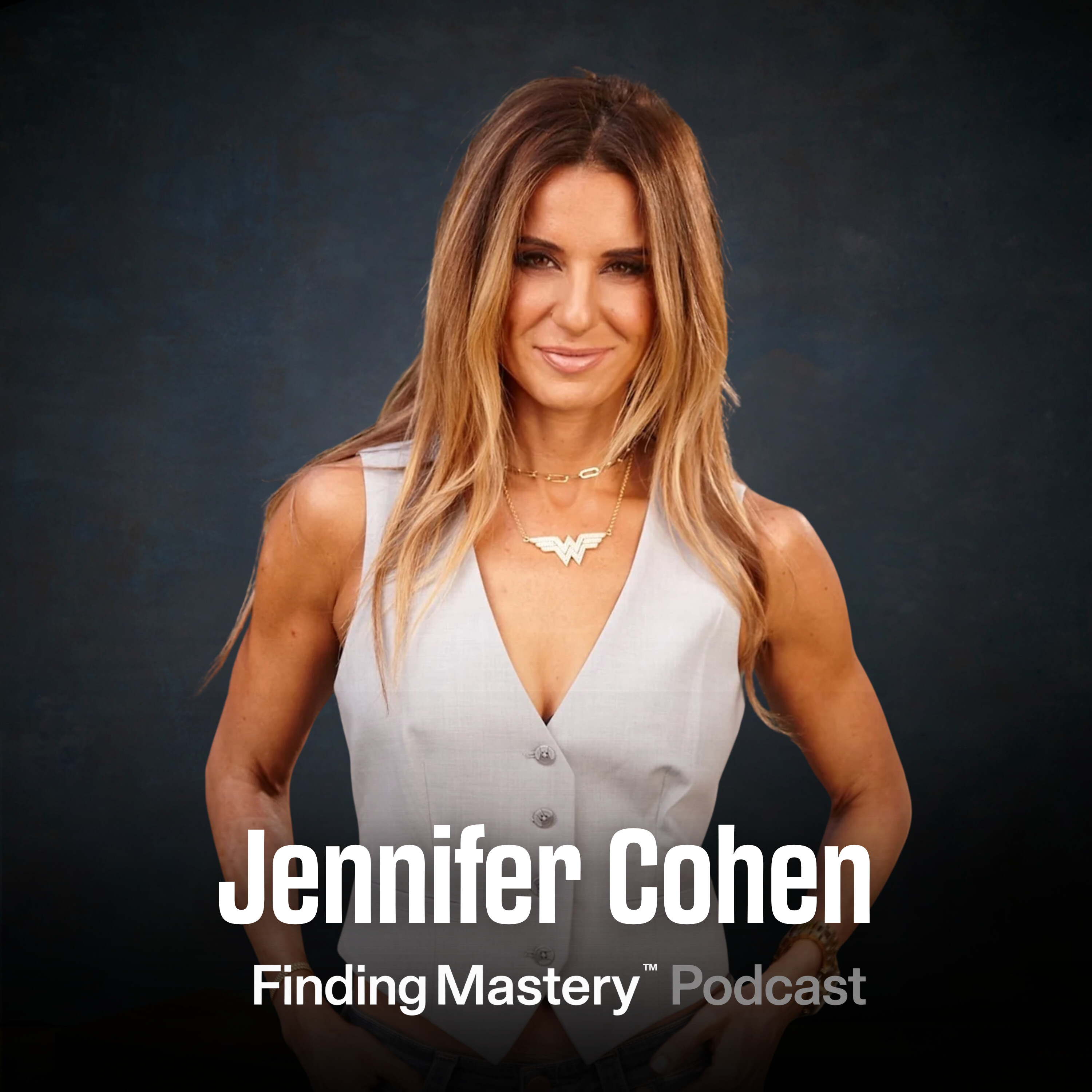
The psychology of being bold—how to ask for what you want, reframe fear of failure, and design a life around experimentation and “exceptional” actions rather than staying average.
Jennifer Cohen, entrepreneur/brand builder/podcaster/educator; author of Bigger, Better, Bolder; founder/host of the Habits & Hustle podcast; TEDx talk with 6M+ views. Michael (host) is referenced throughout but no background is provided in the transcript. A mutual friend, James (founder of Magic Mind), is mentioned as part of how the guests were introduced, but he is not interviewed in this episode.
Boldness is a skill you can workshop; most people aren’t extraordinary by birth—effort and more attempts create “extraordinary” outcomes. “What’s the worst that can happen?” reduces fear and rejection/regret. Confidence and agency come from action-based proof (e.g., consistent exercise), not affirmations. Likability enables bold asking; connection skills matter (soften first, let people finish, use names intentionally).
At 17, Cohen asked Keanu Reeves to help her make a MuchMusic demo tape; she gave him her phone number on a gum wrapper/lip liner, later received calls on her answering machine, interviewed him at home, edited the footage, and submitted it. She also discusses using exercise as a compounding “force multiplier” and contrasts social media comparison with real belonging.
Written by AI. May contain mistakes.
Discover how successful individuals aren't as different as they seem.
“I was never the lowest on the totem pole.”
Understand the significance of pursuing your desires instead of settling.
“The biggest difference that makes somebody look extraordinary versus someone who's just average is...”
Explore how knowing what you don't want can lead to finding what you do want.
“And so my entire philosophy, my entire platform is about giving people the courage and I hope bravery to learn the skill of being bold and really going out there and creating and curating the life they actually want.”
Learn why having audacity can be more valuable than traditional skills.
“And the thought of failure is so scary and so debilitating that they'd rather just stay comfortable than push themselves to what their potential is.”
Understand the value of reframing failure and rejection in pursuing goals.
“I think I just, where did I learn to be audacious?”
Learn about the philosophy of making multiple attempts toward goals.
“failure's how you learn, either failing or learning.”
Explore how the fear of regret can motivate bold actions.
“or a no, of course, I don't like it, but I kind of have to go.”
Hear a personal story about the power of asking and taking risks.
“Okay, so let's say, for example, I want to be the VJ.”
Understand how belief systems drive bold actions and success.
“However, I can't help but listen in a different way.”
Learn how to combat negative self-talk and embrace extraordinary potential.
“And as you've clearly articulated, our imagination is oftentimes way worse than the actual experience.”
Understand how taking action and following through fosters true self-confidence.
“When you say confidence, what do you mean by that?”
Learn how likability is a crucial precursor to being bold in social interactions.
“And so how, and then the question becomes, I think we've lost the ability to know how to socialize and how to connect.”
Explore how social media manipulation affects mental health and genuine connections.
“That's why I'm totally tuned to what you're saying, which is develop your belief system, have a vision of a compelling future, do an exercise like what's the worst really that could happen here?”
Learn how to actively curate the life you want rather than accept what's available.
“Let's just talk about dating for a second.”
Explore the concepts of agency and self-efficacy and their importance in life.
“you're going to end up living the life of somebody else.”
Discover how curiosity can enhance opportunities and help you grow.
“for taking the time to write the book, to be clear and concise on the proposition, the hope, practices that we've talked about today.”

Get the gist, explore an idea or ask about something said.
 Claude
On Finding Mastery with Dr. Michael Gervais, what are the key points of this episode?
Searching your listeningAutomatic transcript. May contain errors.
0:00I got this harebrained idea. I'm like, you know what? I'll just ask Keanu Reeves to be on my demo tape and then I'll send it into MuchMusic and then they'll watch it and I'll get the job. I literally thought that was like totally normal.
0:12Dr. Michael Gervais: Help me square this idea. I had no plan. I was 17 and I literally wrote my phone number in a lip liner on a gum wrapper and I gave it to him. Everyone of course laughed at me. On the fifth day, my mom said to me, you should go check your answering machine. And I hear, hi, this is Keanu. This message is for Jennifer. Jennifer Cohn is an entrepreneur, brand builder, podcaster, and educator. She is the author of Bigger, Better, Bolder, founded and hosts the top-rated Habits & Hustle podcast, and her TEDx talk has more than 6 million views on YouTube. I was never the lowest on the totem pole. I was never the highest.
0:49I was in the mid-range. And what I noticed, though, was the one thing I had going for me was I had the audacity.
0:55Dr. Michael Gervais: You say it so plainly because you have been able to be a student of it. Most people aren't born extraordinary. People have to work on being extraordinary at something. Everything's a skill. If you want to be bold, you can work on the skill of being bold. What are some habits that are important or some provocative questions to help unlock? Listen, I meet the most successful people on the planet. And you know what I've noticed? Nobody is that much more extraordinary than anybody else. The biggest difference that makes somebody look extraordinary versus someone who's just average is...
1:33Jennifer. Michael.
1:36Dr. Michael Gervais: I am really looking forward to unpacking and understanding why you wanted to write the book that you wrote, how you've designed your life, and what the kind of grand ambition that sits underneath all of it is. And there's an ease when you have mutual friends. Yes. And so we have a friend, James. Oh my God, I love James. So for those of you who want to know, James is the founder of a company called Magic Mind, which I'm totally obsessed with. They have this amazing performance shot and James is an amazing founder. And has he been on a podcast before? No, it's going to happen. Oh, okay. But this is how we met is that we're at an event for Magic Mind.
2:14Dr. Michael Gervais: That's right. And he put us together. He's like, you two need to talk. And so. That's right. Yeah. And so here I am. We love them, but we're here to talk about you. Before we dive into the nuances, what do you hope that people will take away from this conversation specifically about how they're designing their life? I always say, thank you so much, by the way. I'm so happy to be sitting here with you. I would say the overarching message that I want people to take away is not to be afraid to ask for what they want, that they should chase what they want and not just take what they get. And I say that because I believe most people acquiesce to what's in front of them and accept good enough.
2:54And so my entire philosophy, my entire platform is about giving people the courage and I hope bravery to learn the skill of being bold and really going out there and creating and curating the life they actually want.
3:15Dr. Michael Gervais: How do you help people understand what they really want? The first part is what you just said. That's the hardest part, right? Is to figure out what they actually want. And what I always tell people is that the only way to find out what you want is to know what you don't want. Right? And the only way to do that is by trial and error. This is not, I mean, listen, I'm not preaching rocket science. I think that a lot of this is throwing a lot of things at the wall and seeing what sticks and then moving in that direction. Where did this life approach or this experimentation approach come from? I'm a guinea pig.
3:54I think mediocrity is a superpower. And I think that I feel like I grew up pretty average, pretty mediocre. I was an okay student. I was like an okay-looking kid. I was an okay everything.
4:07Dr. Michael Gervais: and average in every way, average, average in every way. That's what most people think when they think about you. Listen, but I didn't say I am average now. I said I felt and I was average, but the onus was on me. If I wanted to be spectacular in any way or exceptional in any way, it doesn't just happen by osmosis. It was very intentional. And I did certain behaviors to become really good at certain things. And that was by me putting myself out there, trying and making attempts. The way I see it, Michael, is that if you want to be mediocre, you do mediocre normal things. If you want to be exceptional, you need to do exceptional things that most people don't do.
4:54And the reality is, and you know this probably more than anybody, right? Like 99.9 % of people don't even make an attempt and they don't even put themselves in the place to win and they don't want to fail. And the thought of failure is so scary and so debilitating that they'd rather just stay comfortable than push themselves to what their potential is. And so I, from a very young age, knew that and refused to like live in that box. And so I constantly made myself uncomfortable because I didn't want to be mediocre. I wanted my life to be bigger and better and bolder, right? And so I would, because I was mediocre, the idea of failing wasn't as scary to me as it would have been if I was spectacular, right?
5:51Because I think when someone is too perfect, they're so scared of losing that perfection that the fear of failure could be even more debilitating. But if you've got nothing to lose, and you're just mediocre and average anyway, people should be hopeful if they're listening to this. Because why not? How much worse can it be? I guess you can dip down, but the chances of you going higher is also bigger.
6:16Dr. Michael Gervais: You know, what I'm hearing as you're describing this is that first and foremost, you had, let's just call it an accurate assessment of who you were at that time. And I don't know if it's accurate or not, but for you, you were accurate with diagnosing this idea that, look, I'm pretty average in these ways and I don't like that current state. So what can I do about it? The point I'm making is that that self-reflective, honest evaluation or honest look at oneself is, I think, rare in itself. Thank you. I think that also I am and I was early on pretty self-aware. But I was also someone who was like, I love to observe.
6:56Like, I love to watch other people. And I learned a lot from how other people live their life. Right. And I knew, like I said earlier, how I envisioned my life or was just as important to know what I didn't want versus how much I did what I did want. So it was like a reverse engineer, so to speak. I've come from a smaller city in Canada, which was a great place to grow up and all the things. Where'd you grow up? Winnipeg, Manitoba. You know what? Yeah. Okay. The Winnipeg Jets. Did you ever work with them? No, I didn't.
7:26Dr. Michael Gervais: It's a hockey world. It is. It's a hockey world for sure. Canada is one hockey village, really. And so this is what I had. I had a lot of audacity. So with mediocrity, with average, I was always very audacious. And I think audacity gets you way further in life than probably most other skills. Where did you learn that? I think I just, where did I learn to be audacious? I think I had a lot of audacity as a kid. I'd ask a lot of questions. I was super curious. I kind of always had this idea of, and I always asked these questions, why not me? And if it can happen to someone else, why can't it happen to me?
8:08And those were like songs that were always in my head. And so the audacity made me think, well, I wanted to, you know, I wanted to be at the time, and now I'm aging myself, but I wanted to be like a video disc jockey for much music. Yeah. Well, it was much music is the equivalent of MTV. Right. Right. It's the same thing. But for Canada and they were having this like huge countrywide search for the new like BJ. And they were picking one person. They had thousands and thousands of people who wanted at the time. That was like the biggest job in the world for people who are like like late teens, early early 20s.
8:46It was like the big thing. Do you remember like Carson Daly World? Oh, yeah. And I'm like, you know what? I loved music back then. And I'm like, I can do that job. I knew a lot about music. I loved all that stuff. I would watch much music as, you know, MTV as kids. And I'm like, I want that job. Why not, right? Like, why not me? They'd have to pick somebody. And I knew early on, like, okay, they're going to have thousands and thousands of audition tapes and demo tapes and people trying to do this job. What am I going to do to, like, stand out? That was the thing. Like, I knew that it wasn't going to be average old me.
9:20I had to do something or leverage something else for that potential opportunity. And at the time, Keanu Reeves was at the height of his career. He actually has never lost the height of his career. It's unbelievable. But at the time, he just finished Speed, which was like a huge movie. And for whatever reason, he came to my small city to do Hamlet. He had this dream of performing Shakespeare. Go figure. I don't know. And he wanted to do it in a small town. So I got this harebrained idea. I'm like, you know what? I'll just ask Keanu Reeves to be on my demo tape and then I'll send it into MuchMusic and then they'll watch it and I'll get the job.
9:59I literally thought that was like totally normal.
10:02Dr. Michael Gervais: Okay, pause the story here. Yes. Because help me square this idea. Yeah. Look, I'm pretty average, okay? And I know I need to do something above average to kind of get into this ecosystem of being a VJ or whatever you wanted to do. And there's often this commingling of like, I feel average. Okay. Boy, things like people are different than me that do those things. Those people are extraordinary. I don't know how I fit there. So you know what? Let me, let me not embarrass myself. Let me not, let me not put myself out there. How did you square those two philosophies? I see what you're saying and how my brain worked was kind of the opposite.
10:45it. I felt like because the average stuff was kind of, it wasn't a deterrent. Like I was smart enough. Okay. I was pretty enough. Like I was never like the, I was never the lowest on the totem pole. I was never the highest. I was in the mid range. And what I noticed though, was the one thing I had going for me was I had the audacity. So I knew like when I, like I read a lot of biographies and memoirs. I knew like at like, at like at a DNA core level that if I just asked, like, because in my life of patterning, I was, I was very good at patterns, like would ask questions all the time that were very, that were like audacious and personal and not my business.
11:29And people would tell me because I had earnestness about it. I was like genuinely curious. and I had like an audacity in my brain to think, well, maybe if I just did that thing, what is the worst that can happen? So the evolution of that wasn't, I didn't think like that. I didn't think, oh, I'm so average, humdrum, I'm not even gonna try. I thought I'm average. My options are either stay average, right? Or make an attempt to be extraordinary or like get to be more than average because what's the worst that can happen? Would you answer that question?
12:05Dr. Michael Gervais: What's the worst that can happen? Yeah, I'm like, what's the worst? I'll either stay where I am at this baseline or this whatever it is will get me up a notch. Like that was literally the thoughts in my head. Well, let me play it out. You go up to Mr. Reeves and you say, hey, can you do this thing? I'm trying to do this thing. And you're pitching it and he looks at you and he says, hey kid, do you know who I am? This is not him. Anyways, notwithstanding, let me just make up a story that you get dismissed or brushed off or something happens. And for most people, that would be a pretty serious blow.
12:39Dr. Michael Gervais: For you, that is not a compelling downside. No, it's not a compelling downside. Tell me more. Like again, so for me, I was no worse off. So like certain things would be in my head. The reason why I even wrote this book was because I think I became so desensitized to not doing well and failing that I was immune to the feeling. So I already felt like, okay, if I don't get it, or if he doesn't, if he says, hey, lady, like, or hey, kid, shove off. Okay, well, it wouldn't affect me. Like if I would get a no, it wouldn't take me down a tailspin like it would if I was exceptional. I hear people talk and say all the time, fail fast, fail forward, fail often, failure's how you learn, either failing or learning.
13:23Dr. Michael Gervais: And so what, it's fine. Like, just go for it and be bold. and I get nauseous because I can't feel that they really mean it. It feels to me cognitive. It feels intellectual. Those are good words and said in an eloquent way, it sounds really smart. I believe that you are unencumbered by the way it feels to not get the thing that you want. My sense is from not just a cognitive experience, but like an embodied experience that you are saying, yeah, really, it's actually more painful for me not to go. No, really, if I get a rejection or a no, of course, I don't like it, but I kind of have to go. And if it's a no, like I'm okay.
14:07Listen, what would you rather have, rejection or regret in life?
14:12Dr. Michael Gervais: We know from a research standpoint that regret is far more difficult to deal with. Absolutely. But how did you know that as a kid? Because that was my framework. You asked me earlier, why did I write this book? Because I think a lot of this stuff is about reframing your framework and rejigging how you see things. For me, that was my framework. What would be worse? I would rather try and not get it than not try and always wonder. I'm like a broken record because how much worse off can you be, right? Like you're either going to get something better. Like I live by a couple different mottos, right?
14:48Like this is why I believe in this, this whole book is about this 10 % target, not the whole book, but a piece of it is making 10 attempts at whatever you want most, because one of two things will happen. Either one, you'll get that thing, or another opportunity will present itself that you never knew existed.
15:07Dr. Michael Gervais: Walk through the practice. Finding Mastery is brought to you by LinkedIn Hiring Pro. When you're building a small business, Every new hire has the potential to make a real impact. The right person, they can bring fresh energy and new ideas and really help the whole company move forward. It's awesome to watch when you get it right. So finding that right person, finding that great hire, it takes clarity. You have to know what you're looking for. You have to recognize it when you see it and then make the call with confidence that this is the right hire. That's where LinkedIn Hiring Pro can help. It's really like having a hiring partner throughout the entire process.
15:42Dr. Michael Gervais: You can chat with it just like you would a recruiter. You tell it what matters most for you, for the role, compare candidates side by side, you give it feedback, and then Hiring Pro listens, it adjusts, it helps surface the people who actually might fit what you need. They're trying to help us optimize. We're still the ones making the decision. LinkedIn Hiring Pro is just a smarter way to find the right people to build the team of your dreams. Now, if you haven't already checked them out, LinkedIn Hiring Pro can really help your business. Get started by posting your job for free at linkedin.com slash finding mastery.
16:12Dr. Michael Gervais: Terms and conditions apply. Again, that's linkedin.com slash finding mastery. Okay, so let's say, for example, I want to be the VJ. So I'll just finish with that story and I'll use that principle to what I'm talking about. Okay, so I really wanted that job. And I told all my friends, I told my family, everything else. And people were like laughed at me. They're like, what are you going to do? You're going to go find Keanu Reeves and he's going to like help you and you're going to get this job. And then what? I'm like, well, I want to at least attempt it or try. Everyone laughed, blah, blah, blah.
16:47Nobody would even go with me to even go to the theater where he was doing Hamlet because it's minus 40 in Winnipeg in the winter. You know how cold minus 40 is? Very cold. And to stand outside for more than 30 seconds, you can get frostbite. Does anyone even know what frostbite is? It's really, really cold, okay? I had to like bribe my girlfriend, one of my friends to come with me and stay outside with me for like, I don't know, until he like comes out of the back door. Long story short, she lasted four and a half minutes. I sat there by myself for 35 to 40 minutes. Finally, the door opens and like there was a crowds of people.
17:27There was tons of media waiting because it was like a big deal. this massive star was in this small town, right? And, you know, Entertainment Tonight and all those like inside all those magazines, all those like entertainment gossip rag magazines were waiting. And I literally was like, okay, well, here's my chance. Like, again, this audacity. And I walked through all the people and all the crowds, saw him. And there was, like I said, huge crowds. And I went up to him and I, you know, basically like tugged at his jacket. And he looks around and looked at me and he said, can you just wait your turn for your autograph?
18:03Basically like shove away. How old were you? 17, very like 17, almost 18. Anyway, and I'm like, autograph? Why would I want your autograph? How is that going to help me? Like, I was like, that doesn't do any. I'm like, I actually -
18:16Dr. Michael Gervais: So you reengaged? Yeah, I reengaged. Wait, was this a thought? No, I literally was like - You said, why would I want your autograph? Yeah, he's like, just go. He's like, if you, he's like, just wait your turn for your autograph. I'm like, autograph? I literally was like confused. I was like, why would I want your autograph? I didn't come here for your autograph. I came here because I really want this job with much music. And I need to make a demo tape. And they're not going to watch it if it's just me and my friend Lucy. Can you help me make this demo tape? And he was so taken up. He didn't even hear it.
18:45He was confused, obviously. And everybody else was kind of like calling his name and tugging at his jacket. And he was like looking at me like I had two heads. And I repeated myself two more times. and thankfully he was very nice. And he was like, I don't even know what you're talking about, but why don't you give me your phone number and I will call you. And I was like, then I'm like, and I thought to myself, this big star is not going to call me. So I said, are you really going to call me? Because I don't want to sit on my phone, like hoping and waiting for you to call if you're not going to call.
19:16So like, if you're not, just tell me to go home and I'll, but I'm like having this conversation. He's like, just give me your phone number and I'll call you. And I'm like, okay. I was like fiddling around. I had no pen. I had no plan, nothing. Some girl gave me a lip liner. I had a gum wrapper in my pocket. Seriously, I had no plan. I was 17. All I had was audacity. That's all I had. And I literally wrote my phone number in a lip liner on a gum wrapper, and I gave it to him. And I said, please call me because if not, you're going to really hurt a 17-year-old's feelings. And so he kind of like smirked or smiled and I walked away.
19:56I went home. I went to school the next day and I told all my friends and my boyfriend and all the things. And everyone, of course, laughed at me. And, of course, no phone call. And, you know, the next day, the same thing happened. And the third day, again, the same thing happened. And everyone now is like, oh, did Keanu call? Like laughing at me. I was like the laughingstock of school, right? that I actually had the audacity to believe that the biggest star on the planet was going to help me make a demo tape so I can get my job. And the fact that I went and sat, like, I, like, took the action to sit there and stand there in the cold was so ridiculous.
20:33Anyway, I went home. I was living at home, of course, and I must have been 17. And on the fifth day, my mom said to me, you know you should go check your answering machine because they had answering machines back then and I went to check my answering machine I pressed play and lo and behold guess who's on my answering machine my mother talking to Keanu Reeves and I hear a hello hello you know hello hello you know back then hello hello and you hear hi is Jennifer available and my mother was like, who is this? And you hear, this is piano calling for Jennifer. And my mother thought it was a joke and a prank.
21:17And she's like, this is very inappropriate to be playing jokes with Jennifer. And hung up on him.
21:26And this is recording. It's still on the answer machine. And you still hear him on the you hear him still on the answer machine being like, hello? Hello? oh, and then finally he clicks off. He calls back again. It happened the second time. He calls. He's like, hi, this is really Keanu Reeves. I met your daughter. I'm calling. And my mother's like, this is no. And like she got upset and she hung up the phone again.
21:50Dr. Michael Gervais: Oh my goodness. And then on the third time, she didn't even answer the phone and it was him on the phone. And I hear, hi, this is Keanu. This message is for Jennifer. If you get this message, I met you the other night. You were talking about something, about something. I don't know what you were saying. and I promised you I'd call you back to maybe help you with something, but here is my phone number. And I was, of course, hysterical. Cut to, I call him back. And 24 hours later, I picked him up in my mother's Cutlass Supreme, took him back to my house. My mother made him lunch, and I had me and my friends create some kind of mock studio with all these amateur cameras around, like those camcorders all over the house.
22:34and I went in and I interviewed him for two and a half hours. And then I edited it together and then I sent it into MuchMusic.
22:42Dr. Michael Gervais: What a story. When I listen to the beats that you just hit, I'm pulled into the story. Nice job on storytelling. Thank you. However, I can't help but listen in a different way. And when I listen to the way that you're describing this, your belief system is actually the thing that propels you. the belief that I have an idea and if not me, then who? So that's a first principle that you have been operating for a long time. First and foremost, you had an idea. So you use your imagination to see an amazing future state, an amazing future project that you wanted to work towards. That imagination was so compelling to you that you would rest on your first principles like, Like, hold on, I need to do something special.
23:28Dr. Michael Gervais: And if not me to do the special thing, then why not me? That type of idea. So it's amazing how simple ideas can carry thoughts, words, and actions towards the thing that matters to you. And it sounds innocent. And I'm listening to that as, you know, a 17-year-old and a rock star, movie star. and I want to believe that it's all innocent. It was so innocent. So what happened was, that's why it was very precise and it didn't just happen by accident that I didn't go to his hotel, right? I picked him up and he came back to my home where my mom was and my dad were, like my friends were. And then I drove him back to the hotel and that was all.
24:15Yeah. There was no like tomfoolery. He actually is a great, nice human being. And I got lucky that he was very, very nice, and he actually helped me. But even if he didn't, that moment, though, in my life was an exceptionally pivotal moment for me because it taught me something. It taught me that if you don't ask for what you want, the answer will always be no. And the why not me is 100%, but what is the worst that can happen? That is literally like, again, I keep on repeating it because my entire philosophy and messaging and any success and every success I've ever had in my life is by me just basically asking and making the attempt.
25:01And most of the time it doesn't work out. But truth of the matter, something else comes from that opportunity that I never even thought of because I went down some path. You know, like an object in motion stays in motion. You know, that is literally how I live my life. And I try to really hammer this into anybody and everybody who I talk to, who follow me, who I work with. I mean, literally, I think that we are our own worst enemies. And if we don't believe in ourselves, then why should anybody else? And then what? And by the way, even like in life, you know, when you really kind of, and I'm sure you've noticed this too with people, that it's not the people who are just, people aren't born to be, I mean, you work with athletes.
25:47It's a little bit different with talent. Most people aren't born extraordinary. People have to work on being extraordinary at something. There's like, everything's a skill. If you want to be bold, like you can work on the skill of being bold. You can work on the skill of soccer. You can work on the skill of agility. You can work on Spanish. People may not get to a 10, but they can move from a zero to a four or four to an eight. So it's not about being the best necessarily, but it's about getting better and being the best version of what you can be.
26:19Dr. Michael Gervais: You say it so plainly because you have been able to be a student of it. Yeah. And this is not an intellectual exercise that you've cobbled together that this sounds good, but you've actually been metabolizing these thoughts and exercising them on a regular basis. All that being said is our community's really smart and they are, for the most part, like really elevated in the things that they do or hungry for the next kind of stepwise growth arc. I am actually not what you think when it comes to the interest in sport. My training is in the psychology of sport. Sport is just a place that is so physical and so tangible and requires speed and accuracy.
27:03Dr. Michael Gervais: And it's, it's so observable that it allows this invisible world of psychology to make sense. My actual larger ambition is more closely aligned to what you're describing, which is taking the best practices that help people become everything that they would hope they could become, which asterisk is already inside you. It's not outside out of you. And taking that from the exemplars of sport into where we're working, which is the enterprise small business corporations, that's where I want to invest deeply. And so what you're speaking to are the best practices for all humans, which is invest in your belief system.
27:46Dr. Michael Gervais: Because if you don't, your brain will drive and your brain is just trying to keep you alive. It's finding all the threats. And it's saying, stay away from that dangerous edge. And that could be a rejection. That could be public embarrassment. That could be fill in the blanks. And as you've clearly articulated, our imagination is oftentimes way worse than the actual experience. So you use your imagination to see a compelling future, not a disastrous one. Right. Or you bubble wrap the disastrous one to say, is that as bad as it gets? Hold on. Let me really think. is as bad as it gets that I get embarrassed in front of my friends asking this movie star for help.
28:24Dr. Michael Gervais: That is as bad as it gets. Oh, I can deal with that. Yeah. Can I deal with it? Oh yeah. I can totally deal with that. And then you kind of contain it and then you move on. Right. Exactly. What's the worst that can happen? That is exactly how I think. We overthink ourselves out of any good opportunity because we think we're not good enough. We have this imposter syndrome. We think someone else is better. Listen, I meet the most successful people on the planet. And you know what I've noticed? Nobody is that much more extraordinary than anybody else. The biggest difference that makes somebody look extraordinary versus someone who's just average is more attempts, more belief in themselves, and more just like chipping away, chipping away, chipping away.
29:04I think extraordinary is in all of us if we choose to believe it and then workshop it. That's really what it is. It's like workshopping it, practicing it. So if you want to do anything in life, it's about doing those habits to get you to that place, right? It's about that. Like people will always say, oh, I want to be so, I wish I can be as fit as you. Let's just say that as an example. Okay, well, what are you doing to be as fit as me? What are you eating? What time are you waking up? How are you sleeping? Are you exercising? No, no, or I don't have time. So people want to be extraordinary. People want a certain thing.
29:43But how many people are willing to do the work and the hustle and the thing to get there? Now, that's the difference. That's where the rubber meets the road.
29:54Dr. Michael Gervais: How do you help people that have an idea of what they'd like and then get in their head about it or don't fundamentally, this is a big idea for me, fundamentally organize their life around the things that matter most to them? saying I want to be fit is very different than fundamentally organizing your life around health and about being strong that you know whatever the narrative might be so how do you help people to close that gap what are some habits that are important or some provocative questions to help unlock okay well first of all I think I've been my own guinea pig so I think that in itself is something I feel like the fact that I've workshopped myself as an example can be somewhat But, you know, it can be somewhat of a help.
30:34You could take a horse to water, but you can't make it drink. So I try to provide people with frameworks that I believe can actually work. And I think that there's a few things. I think certain things are fundamentally true, right? Like boring habits give you a better physique, right? Isn't it true? Doing boring things actually get you to the finish line. People are constantly looking for magic potions and the new social media viral fad and trend. When all of that are just distractions. People are constantly being distracted, distracted, distracted. So the first thing I tell people is to actually focus on what you want and like do that thing.
31:12Stop looking at that shiny ball and this shiny ball because that's just, these are all just noise and distractions.
31:19Dr. Michael Gervais: Or to make it even more concrete, how many minutes a day do you exercise? Oh, okay. I would do 60 minutes a day. Maybe 45 minutes, 45 to 60. These are minutes. Minutes. Yes. And then how many minutes do you think the average person is looking at social media or watching TV? Four to six hours a day. So if you want to be psychologically and emotionally fit, we would say best practice, according to science, is somewhere between eight minutes and 20 minutes of work. That's not that bad. That's actually so little. It's so doable. Wow. So doable. So doable. And if you want to be physically strong, mobile, nimble, whatever it might be for you that you're looking for, 45 to 60 minutes is, I think, the upper.
32:03Dr. Michael Gervais: I think if you were on, the research is like, well, you know this. If you were doing three times a week HIIT training at 15 to 20 minutes, there's a lot of benefit that's coming from that. If you did steady state 45 to 60 minutes, which is some pretty boring time under tension exercises, you stack three months of that together, you're on your way. You stack three years, you got something. You stack 30 years, the rest of your life, you will be fundamentally different as a person. It's a compounding effect. Just like an investment. Like an investment. I talk about that a ton. It's a force multiplier.
32:40I think exercise in general is a force multiplier for life. And I also think fitness is a microcosm for life because I think the habits that you learn by doing fitness exercise and doing that daily teaches you the fundamentals of success in life. Discipline, patience. It also gives you self-esteem. It teaches you how to do hard things when you don't want to, right? showing up day in, day out, even when you don't have, like, you don't just go from day one to day four and look super fit and strong, right? It also changes your mental prowess. Like, I think why I exercise and what I tell people, you asked me earlier, what do I tell people?
33:22I'm like, really? You want a goal, but you don't know what it is? Start going to the gym every day. Just do that one thing. Because I promise you, you going to the gym every day, it won't just make you physically more fit, but it will change how you think. It will change the way your neurotransmitters, like your synapses work together, you will become a different person. You will see yourself different. It will change your self-esteem. It'll change your self-confidence level. You will feel much more empowered. You'll have more agency. To me, that is step one. I think exercise is the best habit that somebody could integrate into their lives for every other thing, for your brain, for your self-esteem, for your confidence, for your agency, everything.
34:04It'll make you smarter.
34:06Dr. Michael Gervais: Finding Master is brought to you by Magic Mind. I get to spend time with people who are relentless about training their minds. It's one of the things I love most about my profession. And for me, and those I work with, we are looking for ways to optimize our psychology and our brains. Magic Mind is a daily two ounce mental performance shot loaded with vitamins, amino acids, antioxidants, and clinically backed ingredients like turmeric, ashwagandha, and lion's mane. The ingredients are nano encapsulated for five times better absorption than traditional pills and powders. And I love the taste. I love what they're doing here.
34:38Dr. Michael Gervais: I use magic mind just about every mid morning. And what I noticed is that I think just a bit more clearly, my focus is definitely enhanced and I don't experience an afternoon drop. That's not a small thing when the quality of your thinking is one of your most valuable skills. So go to magicmind.com and get 50 % off your first order. You spend a lot of time sharpening your mind. It is worth fueling the brain behind it. Finding Mastery is brought to you by Athena. So optimism often gets mistaken for wishful thinking. In reality, it is one of the most powerful performance skills that there is. An optimistic mindset doesn't just improve the quality of your life.
35:15Dr. Michael Gervais: The research is clear there. It's also a real competitive advantage. It helps you be more open to possibilities, to adapt faster, to be more agile. And here's what I've noticed. It is hard to stay open and curious when you're buried in the reactive stuff of life. The overflowing inbox, the calendar that runs you, the travel, the follow-ups, the hundred of small tasks that keep you putting out work fires instead of looking forward with bright eyes. That's where Athena comes in. They match you with a dedicated full-time remote executive assistant. It's a real person who takes those things off of your plate.
35:45Dr. Michael Gervais: Their EAs come from the top 1 % of more than 60 ,000 applicants. So they're sorting the best of the best for you. And they're fluent in the AI tools that make great support even sharper over time. And clients get back an average of 15 plus hours a week. So when the reactive noise feels like it's being managed, you get to lead from a different place. Open, curious, focus on what's possible. That is worth looking into. Go to athena.com slash mastery right now and get matched with your EA. Give yourself a few hours back this week and go to athena.com slash mastery and see who they pair you with. Let me pull on a couple threads.
36:20Dr. Michael Gervais: When you say confidence, what do you mean by that? When you say agency, what do you mean by that? I think that the more you see yourself being capable of doing hard things, when you see yourself being disciplined and following through, I think the follow through is massive. I think that people who follow, say they're going to do something and then actually follow it through. To me, there's no bigger and better way to build your own self-confidence and self-esteem. So what you're asking me is when I say, what do I mean by self-confidence and agency? I think when you are someone who works out regularly, you are showing and proving to yourself that you can show up every day, you can do hard things, that you have the discipline, that you're not relying strictly on motivation to get you there a few days and then you just drop off.
37:16I think doing something day in and day out, it gives you a sense of self. And that's what I mean by agency, that you can do it, I think it's invaluable. And that builds true confidence. People think that you can be standing in front of a mirror and just bellow out some affirmations. I'm beautiful. I'm great. I'm confident. But if your brain doesn't really believe those things, you're actually harming yourself, right? You can't just say something without any proof, right? So you have to do the action first to get the proof. And then that will be actually authentic and real.
37:49Dr. Michael Gervais: I'd add one little nuance is that you have already done amazing things in your life. You've done hard, challenging, difficult, prickly, uncomfortable. You have a whole, even if you haven't exercised, I'm speaking now to a 19-year-old, right? That you've already got a body of evidence that you can do difficult things. So part of the work is going back and indexing. What gives me the right to say that I am capable? What gives me the right to look at this hard problem and say that I can go try my best to go solve it? And I might just solve it in an amazing way, but what gives me the right to speak confidently to myself?
38:29Dr. Michael Gervais: You've already got the body of work. You need to do the internal intellectual or cognitive, in some respect, work to be clear that you've already been through some hard stuff. What is that hard stuff that gives me the right? Then when you go forward and you do hard things, you're adding to that body of work. Do you know what I really feel too, Michael, is that I think people today, with how we are, we tend to focus much more on theory. We read every self-help book. We buy every self-help book. And instead, we theorize instead of actually going out and actually practicing and doing and proving to ourselves.
39:09Like there's no better way to build a better you than to actually build a better you by doing the thing, right? Versus just reading about someone else doing it or reading about how to do it. You know, there's a very big disconnect. It's invaluable to go out there and prove to yourself. You can't like, you know, everyone's always like, well, how do you build confidence? How do you build self-esteem? By actually like going out there and trying something and figuring it out, figuring it out. like it's okay. It's like, that's the bottom line, right? Like we got to practice the skill of resiliency, right?
39:44We're, we're, we're losing the ability to be resilient. We're living in a, I think a very fragile world where people are getting more and more scared to make these attempts and put themselves in a situation to potentially be extraordinary.
40:00Dr. Michael Gervais: I was doing research for this conversation and I came across something that you wrote. Stop trying to be impressive. And then you cited five underrated ways that are evidence-based of psychology to do that. So let me tick these off and just have you comment on them. Be the first to soften. What do you mean by that? I think that people tend to walk in rooms and they think the way to win someone over and be likable is to brag and tell whoever it is about all their accomplishments. But what really makes somebody like you and want to be around you is when you show them that they are heard and seen and interesting.
40:43So I just basically switched the script, so to speak. Yeah. Right?
40:47Dr. Michael Gervais: This is good. There's good research. There's a lot of good research on that. You're creating a sense of connection, safety. Right. Because what happens for most brains is if I am unsure, I am looking for is this environment okay? So I'm going to tune to you, see are your pupils constricted? Are they dilated? Are you smiling? Are you happy? Are you creating an ecosystem inside yourself that feels buoyant or scared? So you're saying be the first to soften, which is a demonstration that this moment is okay. Yes. Yeah. Okay. Number two, let people finish. What do you mean by that? Stop. Don't interrupt people.
41:24Basically, I think this is all under the umbrella of human connection and likability, right? Because that's kind of like an area I'm diving much more into. I always have, but this is something that I'm really passionate about because with AI and social media, I've seen, and you, of course, know this too, the amount of people who are lonely and isolated and much more emotionally dysregulated because they don't have the ability to connect. And so I'm really a big person to believe that get off your phone, stop doom scrolling, and connect with somebody. And so how, and then the question becomes, I think we've lost the ability to know how to socialize and how to connect.
42:09So I'm trying to like give people these ideas, like simple ways to do this because likability, if you want to know the truth, is the most underrated skill for success.
42:20Dr. Michael Gervais: Yeah, there's research. Likeability is a strong component or characteristic for emotional success in life. Meaning that if you are not likable, people tend to not want to help you. pretend not to want to be around you. If it's all about you and self-aggrandizing and look at me or follow me, people are less interested in being around that than you imagine. You know, it's funny you say that too, because I did a whole TED talk on this likability thing. Yeah. And that was the precursor. So I wrote a book and I did my first talk on being bold and that did very well. And I would get all these thousands and thousands of questions and I would be speaking to thousands of people and going to companies and talking about the skill of being bold.
43:01And what I noticed was that it's really hard to be bold if you're not likable. It's much easier to get away with asking a question and getting what you want if people actually like you. So the truth is being likable is the precursor to being bold.
43:20Dr. Michael Gervais: I didn't draw that connection for you, and I'm going to be a little bit more provocative here, is that likability is actually about how I like to feel when I'm around you. And so we're projecting that Jennifer is so likable, but I actually like how I feel. It's all about that. Yeah. Which is like this kind of slippery little confusing psychology bit. We are trying to figure out our way. And I think you'll agree to this. No one really knows how this thing works. So we're trying to figure it out as we go. And so who are my people? Where do I feel stimulated and safe? All that being said, you've got a couple more that are really nice.
44:00Dr. Michael Gervais: Use their name with intention. Share something human first. And then you go on to say leave people with emotional clarity. What do you mean by that one? At the end of the day, it's about making people feel comfortable, letting them feel seen, letting them speak, so don't interrupt them. when you say somebody's name, it automatically makes you feel more connected to them, right? If you said, oh, Jennifer this or, oh, Jennifer that, I feel automatically like a sense of more closeness with you. Like we're friends, right? This happens on my podcast all the time, right? Like if someone says, oh, you know, Jennifer, I meant to tell you blah, blah, blah.
44:37Something in my brain just like brightens up. Like, oh, okay, we're friends now, right? Like why it happens, I don't know, but I know how it makes me feel.
44:48Dr. Michael Gervais: Oh, I do know why. Okay. I know because you're, you're the doctor or the psychologist, but yeah, tell me. It's actually like not that complicated is that it's a mechanism to tune if we're safe or not. So we, in a crowded room, you can pick up your name quickly and it's a way to discern, am I being rejected? Are they talking about me in a way that I'm being relegated and rejected? Or are they talking about me in a way that is favorable and I belong. So this is a belonging mechanism because being pushed out of the tribe is a near death sentence, certainly 300 ,000 years ago. Right. So we are hyper-vigilant to the sound of our name because what we're trying to figure out is like, am I in trouble?
45:27Dr. Michael Gervais: Am I being rejected or am I being accepted? And so with that being said, when you hear someone say, Michael, how does it make you feel? Well, when you said it with intention and smile and I can hear the tonation that it's favorable, oh, yeah. yeah, yeah, tell me more. Like, I'm in. As opposed to that Michael. You're like, oh, God. I'm in trouble. Like, what's happening? Well, that's... I hear my parents' voice. But I also think authenticity is exceptionally important, right? Like, if you seem like you're just doing it because if you're waiting for someone to finish talking and then so you can have the next, like, line, right?
46:02Or when there's so much... I think people are so performative because they themselves are so uncomfortable that if we can drop that and just get back to the basics and baseline of just trying to connect with someone at the basic level, you know, I think that makes somebody extremely likable as well.
46:21Dr. Michael Gervais: I think most people are super sensitive to being manipulated. So if you're trying a tactic, as opposed to what you're suggesting, which is just be honest with the conversation, be honest with using the name because you like them and you want to signal like, Like, I see you and your name is a sweet way to do it. It goes way further than any sort of like class that you take. You learn the seven, you know, tactics to pick somebody up in a bar. Like, no, I get like super uncomfortable thinking about manipulation and tactics. There's a dark art in here somewhere in psychology, but. No, it's true. But by the way, this is the problem with social media, though.
46:58I think people are seeing a lot of that, the manipulation tactics. People are being very braggadocious. Like, oh, you know what? like get rich quick. This is what you can have. Like there's such a dark underbelly of what people are seeing and that becomes their new normal. They normalize it. I think that's normal behavior. So how do you get back? Like to me, I find it to be the biggest turnoff on the planet, but some people are easily more easily manipulated than others and, but they don't know what they don't know. So if you're constantly down that rabbit hole and you don't find your people and have the ability to connect genuinely and properly, you can lose your way and lose how to do that.
47:41And this is why isolation and suicide and all these things are at such a high. You know that, I mean, I know this is not what we're really talking about, but I think that this is why it's so important, is someone at my child's school five days ago, 13 years old, committed suicide because they are on social media. We didn't have that problem. And this is a common thing. Like, they're on Snapchat taking pictures of themselves before they're going to commit suicide. And this has become a normal thing where kids now are thinking their followers are their friends and that the like is a real friendship.
48:20I mean, we're so distorted in what real friendship is and what belonging is and connection is and why I'm bringing this up. It's like I'm very, very passionate of trying to get people. And I am a big social media person, and I see what it does to my brain. And if it's screwing with my adult brain, what it's doing to kids' brains.
48:42Dr. Michael Gervais: Two things. Thank you for bringing that forward. Suicide is a permanent solution to something that could be fixed, could be solved. I lost a family member to it, and it's a haunting experience for all of the survivors. That being said, there's somewhere between 43 ,000 and 47 ,000 a year in the United States that commit suicide amongst the 300 million. Depending on the depth chart, seventh leading cause, somewhere in that range in the U.S. It's a big number, but it's also not normal. This is not 150 million people, half of the population in the U.S. It's not a normal thing. It is surprisingly an alarming rate, I should say, increasing.
49:27Dr. Michael Gervais: So I think I just want to couch it that it's not normal to commit suicide. It is sometimes a very confusing way to think about ending suffering for self and others. And let's insert right now the suicide hotline for anyone that wants to reach out and have a conversation. We'll put it in the show notes that there's resources available for us. So all that being said, there is a connection between social comparison as an amplification for anxiety, depression, addiction, suicidality, that that social comparison thing is problematic. That's why I'm totally tuned to what you're saying, which is develop your belief system, have a vision of a compelling future, do an exercise like what's the worst really that could happen here?
50:15Dr. Michael Gervais: Can I manage myself in that worst case scenario? No, yes. If no, then how do I develop the skills to be able to manage that better? Yes, I can do it. I can manage that. It won't feel fun. But then that gives me the entree to take action. Look, I really appreciate what you're doing. I have one more question about this. Do boys and girls in your mind play in different sandboxes? Why should they? Yeah, I don't want to ask that question yet. But in your mind, as kids, are the sandboxes fundamentally different that we play in? I think they are, and I don't think they should be. Yeah. So when you think about gender differences, are you pointing to be bold to female population mostly, a male population, or are you saying, no, this is a human?
51:01I think it's a human, but I do believe that a lot of women have made themselves comfortable taking a B role because they think that they would come off as being aggressive or bitchy or masculine or demanding. So therefore, I think that I am speaking to a lot of women. But with that being said, I have a big male audience too. And I think I'm speaking to anybody who is fearful or has self-doubt. and I'm just telling anybody, stop getting in their own way and just ask the questions because you never know unless you ask. But I do think that predominantly a lot of times women are scared. But then, you know, I think that you tell me also what you think.
51:51What do you think?
51:52Dr. Michael Gervais: About which people? About the fact that you see this all the time, I'm sure, but I think that you think that mostly women are the ones who are scared scared to chase what they want? Or are women the ones who are just settling for good enough? Like you tell me, have you not noticed that predominantly more women? I think there's a difference in the sandboxes that we play in, which I think is not to your point. Is that right? No, like we should play all in the same sandbox, but there's a lot of biases and stigmatization about like who should do what and when. And in the sandbox of when a boy does something, he's like, oh, that's great leadership.
52:31Dr. Michael Gervais: And a girl does something, oh, she's kind of being pushy or bossy or something. Yeah, she's being pushy or like bitchy. And that's still kind of around. Now, what I would suggest is that I think you speak eloquently to people that are feeling tight. They know they have more in them. They know that there's something more to give or to grow into. And they feel that they're being held back by their own psychology. And you're saying, run some experiments. You're saying, just kind of get some reps under, Build some habits. Start small. And I would say that I'm not sure I would want to co-sign some men and some women to be more bold.
53:08Dr. Michael Gervais: I think the majority of people could use the freedom to go for it. Finding Master is brought to you by Lisa. Flow state is one of the most optimal human states that we can be in. When you are fully absorbed in what you're doing, the noise just falls away and your best work, It has room to emerge. Flow isn't something that you can force. It doesn't work like that. You create the conditions for it. And one of those conditions is knowing how to be calm, to be well recovered, to have a nervous system that is repairing. That's why sleep is such an important part of high performance. We've worked with Lisa for a long time because they understand that great sleep is personal.
53:48Dr. Michael Gervais: Their mattresses are designed around how you actually sleep, your preferred position, the feel you like, and what your body needs to fully settle in and recover. You can take their quick sleep quiz in just a couple of minutes, and Lisa will help select the mattress that's right for you. Better sleep, a clearer mind, and with Lisa, that's something you can choose to prioritize on purpose. Go to Lisa.com for up to 25 % off mattresses, plus get an extra$50 off with promo code mastery, exclusive for our listeners. That's Lisa, L-E-E-S-A.com, promo code mastery for up to 25 % off mattresses, plus an extra $50 off.
54:28Dr. Michael Gervais: Let them know we sent you in the survey after checkout. Finding Master is brought to you by David Protein. We travel a lot at Finding Mastery, and sometimes travel makes it tricky to eat well. Best intentions, and then you're at the airport. And then suddenly the only options around you are the ones that you'd rarely choose at home. Something I come back to often is that discipline isn't really about willpower in the moment. It's often about choice architecture, setting up your environment ahead of time so that the easy choice and the good choice are the same one. That's the role David plays for me on the road.
55:00Dr. Michael Gervais: The gold bar, it's their flagship high protein density, great texture, flavors that make it easy to stick with. So when I throw a few in the bag before my trip, I've already made the decision. The hard moment later takes care of itself. And the team here at Finding Mastery, they love the bars as well. They are ripping through them in the Finding Mastery lab. Salted peanut butter and fudge brownie seem to be the fan favorites right now. They have built something with real rigor in a crowded, sometimes ambiguous space like nutrition. That matters when it's something that you reach for again and again.
55:29Dr. Michael Gervais: David bars are now available in major retailers like Walmart and Target. And if you'd like to buy them directly and get a special offer for being a Finding Mastery listener, Head to davidprotein.com slash finding mastery, where right now, if you buy four packs, you'll get the fifth free. Again, that's davidprotein.com slash finding mastery. Do you know what I also think? Because we're talking about things, and it's not just career, right? I see it across the board. I see that people are going out with people because they ask, like, because. Are you talking about dating? Dating. Let's just talk about dating for a second.
56:05When you don't think in this type of framework, you literally just live the life that is presented to you. And I want people to live the life that they envision for themselves, which means not just going after, going for a job. Are you just going to take the job that's available or are you going to think of the company and the thing that you want to do and apply for that job or call that person? Are you just going to dating? Are you just going to date the guy who swiped on you on an app and then, okay, well, he swiped on you. So I guess you're going to go out with him and get married. Why don't you take control and initially, like, who do you want to date?
56:44Right? Like, is that the guy you really want to be with? Or is it just because he asked you out? Like, who do you want to be with? Is that the job you really want? Or is it just because it was available? My entire messaging is about stop just taking what's available or what's easy. and like take a minute and actually literally curate and create the life you want. Because if you don't curate and create the life you want, you're going to end up living the life of somebody else.
57:14Dr. Michael Gervais: You are pointing squarely to the same proposition that I would hope people would recognize from elite athletes to the rest of the world that you're talking about agency. Agency. Agency is I'm choosing. Yeah. I'm choosing. I'm an active participant in my state and my future. The people that have high agency, I think they have an advantage in life because they are choosing. Why would somebody have agency? Because they have what's called efficacy. They have a sense of power. They feel a way about themselves. How do you build self-efficacy? There's an evidence-based set of practices that will support that.
57:55Dr. Michael Gervais: They're all psychological skills building. mental imagery, self-talk, breathing, meditation, mindfulness, friends that say you could do that. Using your imagination to see in the future, could I solve that? Having real masterful experiences where you've got a command of yourself and I can keep going. Those best practices are available to all of us. You're talking about it. I'm talking about it. We're using a different language, if you will, but you are totally on agency. I'm totally on agency. Yeah, that's not an unfamiliar word to you. And neither is efficacy. No, both of those are extremely important.
58:32We do say the same thing. We just package it differently.
58:34Dr. Michael Gervais: Yeah, that's right. So listen, thank you for spending your time, for taking the time to write the book, to be clear and concise on the proposition, the hope, practices that we've talked about today. Is there anything left that is important that my questioning didn't get us to? You're so good. I think you did a great job, Michael. I appreciate it. And if people want to, you know, pick up a copy or check me out on Instagram, I'm at TheRealJenCohen. TheRealJenCohen. TheRealJenCohen. And Habits and Hustles, my podcast. Yeah, for sure. Check both of those out. And at what point is bigger and bolder, at what point are we enough?
59:15I was waiting for that question. Yeah. Right? And I think that we, it's all about perspective, right? I think that we, the idea isn't that you're not enough, but I believe that people should be growing all the time. And if you are staying stagnant, that's not good either. I feel the idea is, and this is for people who feel like they aren't hitting their potential and that they're feeling held back. and if you feel like you are big and and bold and all the things then maybe the book isn't for you but I think there are principles that work with everybody I'm a big person of curiosity curiosity is a superpower as well talk about how curiosity is the biggest opportunity multiplier in the world you don't know if you don't ask if anybody feels like they are shy or need to be more bold or brave or have courage to do whatever that thing is, this is the person that the book is written for.
1:00:17Dr. Michael Gervais: Well done. Thank you, Jennifer. Thank you, Michael. Yeah, awesome. Next time on Finding Mastery. What happens when the person bringing joy to millions is quietly struggling behind the scenes? Dr. Michael Jaffe sits down with Savannah Bananas style and former Dancing with the Stars contestant Jackson Olsen to explore his remarkable rise to fame, his personal struggles with anxiety and panic attacks, and why he's choosing to speak openly about his mental health in the hope of helping others. So join us Wednesday, November 25th at 9 a.m. Pacific, only on Finding Mastery. All right. Thank you so much for diving into another episode of Finding Mastery with us.
1:00:59Dr. Michael Gervais: Our team loves creating this podcast and sharing these conversations with you. We really appreciate you being part of this community. And if you're enjoying the show, the easiest no-cost way to support is to hit the subscribe or follow button wherever you're listening. Also, if you haven't already, please consider dropping us a review on Apple or Spotify. We are incredibly grateful for the support and feedback. If you're looking for even more insights, we have a newsletter we send out every Wednesday. Punch over to findingmastery.com slash newsletter to sign up. This show wouldn't be possible without our sponsors, and we take our recommendations seriously.
1:01:34Dr. Michael Gervais: And the team is very thoughtful about making sure we love and endorse every product you hear on the show. If you want to check out any of our sponsor offers you heard about in this episode, you can find those deals at findingmastery.com slash sponsors. And remember, no one does it alone. The door here at Finding Mastery is always open to those looking to explore the edges and the reaches of their potential so that they can help others do the same. So join our community, Share your favorite episode with a friend and let us know how we can continue to show up for you. Lastly, as a quick reminder, information in this podcast and from any material on the Finding Mastery website and social channels is for information purposes only.
1:02:16Dr. Michael Gervais: If you're looking for meaningful support, which we all need, one of the best things you can do is to talk to a licensed professional. So seek assistance from your health care providers. Again, a sincere thank you for listening. Until next episode, be well, think well, keep exploring.
Jennifer Cohen was 17, standing outside a Winnipeg theater in minus 40 cold, waiting for Keanu Reeves to come out the back door.
She had no pen and no plan. A girl in the crowd handed her a lip liner, she found a gum wrapper in her pocket, and she wrote her phone number on it. She did not want an autograph. She wanted help making a demo tape. Five days later, her mother told her to check the answering machine.
Jennifer Cohen is an entrepreneur and brand strategist, host of the podcast Habits & Hustle, and author of Bigger, Better, Bolder. Her TEDx talk on getting what you want has been viewed more than five million times.
Jennifer and Mike get into why she calls mediocrity a superpower, the ten attempts she makes at anything she wants most, and why she believes likability comes before boldness. She is clear about the math she ran in her head at the age of 17: rejection or regret, and which one she could live with.
This conversation is for anyone who has been taking what is offered instead of asking for what they want. Jennifer’s position is that bold is a skill, and that most people never make the attempt.
Her line is that if you do not ask for what you want, the answer will always be no.
Enjoy the conversation.
__________________________________________________
Links & Resources:
Jennifer Cohen’s Website: jennifercohen.com
Jennifer Cohen’s Books: Bigger, Better, Bolder: Live the Life You Want, Not the Life You Get, Strong Is the New Skinny, No Gym Required, Badass Body Goals
Jennifer Cohen’s Podcast: Habits & Hustle (habitshustle.com)
Jennifer Cohen’s TEDx Talk: The Secret to Getting Anything You Want in Life, TEDxBuckhead
Mental Health Resources: If you or someone you know is struggling, the 988 Suicide & Crisis Lifeline is available 24/7 in the US. Call or text 988, or chat at 988lifeline.org.
Subscribe to our Youtube Channel for more conversations at the intersection of high performance, leadership, and wellbeing: https://www.youtube.com/c/FindingMastery
Get exclusive discounts and support our amazing sponsors!
Go to: https://findingmastery.com/sponsors/
Subscribe to the Finding Mastery newsletter for weekly high performance insights: https://www.findingmastery.com/newsletter
Download Dr. Mike’s Morning Mindset Routine: findingmastery.com/morningmindset
Follow on YouTube, Instagram, LinkedIn, and X
See Privacy Policy at https://art19.com/privacy and California Privacy Notice at https://art19.com/privacy#do-not-sell-my-info.