
In short
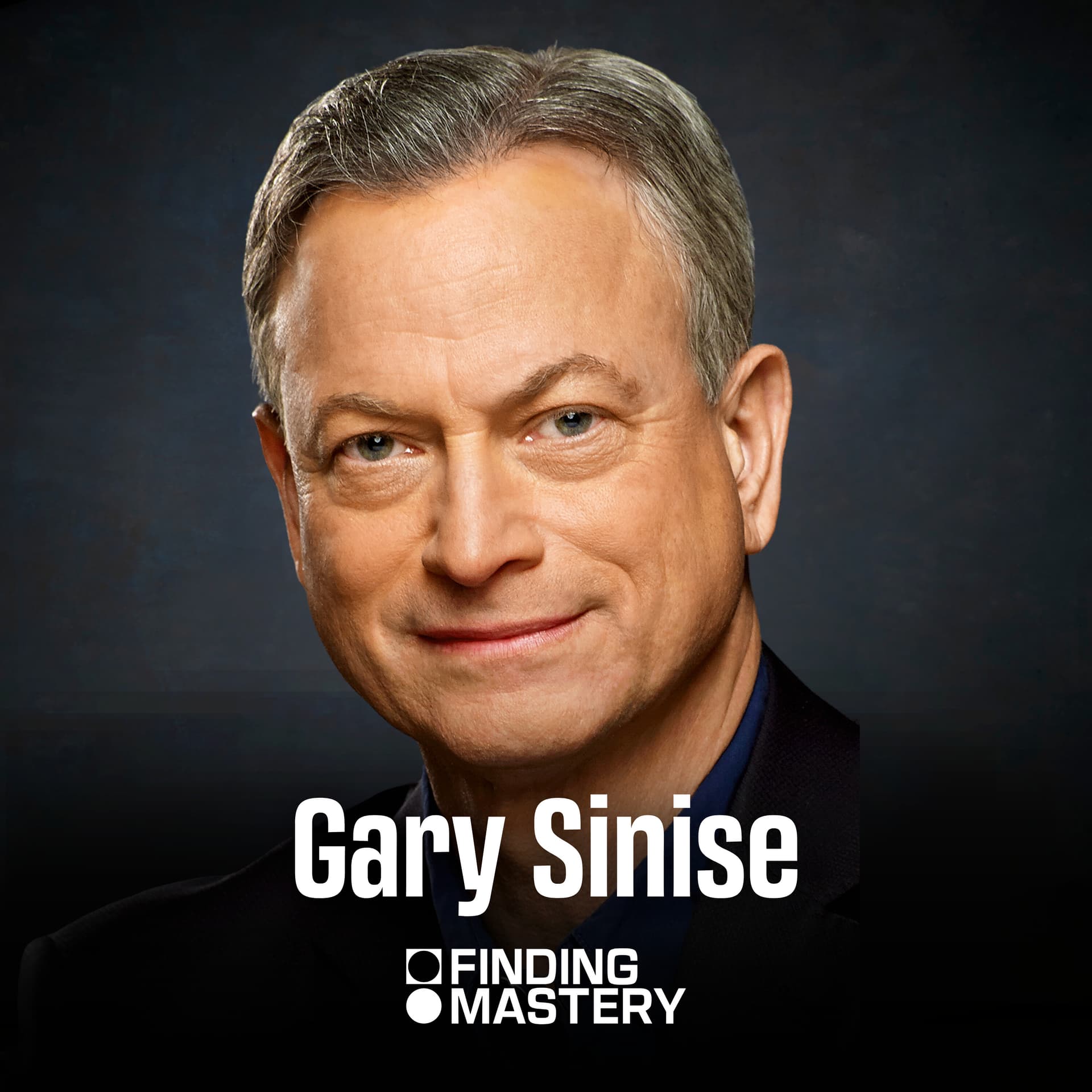
Gary Sinise discusses his “self to service” journey—how acting roles (especially Lieutenant Dan in Forrest Gump) and major life events (Vietnam-family roots, 9/11, and later family illness) shaped a lifelong commitment to veterans and caregiving.
Guest backgrounds
Gary Sinise is an Emmy-awarded actor and director, known for playing Lieutenant Dan. He grew up struggling academically but found confidence through music and theater, later co-founding/leading the Steppenwolf Theater ensemble (with figures like John Malkovich, Laurie Metcalf, Joan Allen, John Mahoney).
Key claims
Real success is measured by how deeply you give, not just what you achieve. Service began as a family inheritance of supporting Vietnam veterans, intensified after Forrest Gump, and became urgent after September 11th. Showing up for wounded service members can change a room’s emotional tone. Grief is ongoing, but purpose can be sustained through action and beauty.
Notable examples
DAV recognition in 1994—2,000 wounded veterans cheering him for portraying a disabled veteran. USO hospital visits starting in 2003 at Landstuhl Medical Center, where soldiers recognized him as “Lieutenant Dan.” Family trials: wife’s stage 3 breast cancer (2018) and son Mac’s rare chordoma cancer (2018), plus Mac’s music compositions that Gary continues to share.
Written by AI. May contain mistakes. Listen to the episode to check what was said.
Chapters
Tap a time to open that second in VOFrom Self to Service
0:03 to 1:06
Gary Sinise shares how 9/11 transformed his life into one of service.
“Mastery because we know one great hire can change everything.”
From Self to Service
1:47 to 3:35
Gary Sinise shares how 9/11 transformed his life into one of service.
“Welcome to the Finding Mastery podcast, where we dive into the minds of the world's greatest thinkers and doers.”
Discovering Acting Through Music
3:35 to 9:10
Gary discusses his journey into acting, beginning with music and theater.
“Gary, I have been looking forward to this conversation.”
Overcoming Inadequacy and Fear
9:10 to 14:00
Gary reflects on feelings of inadequacy during his early career and how he overcame them.
“But again, as I said, academics just did not come naturally to me.”
The Journey of Leadership and Confidence
14:00 to 18:24
Gary Sinise shares his experiences in leadership and the confidence gained from overcoming fears.
“And sure enough, when it came down to it, here's all the college kids, and yet they elect me to be the artistic director of the theater company.”
Learning from Intimidation
18:24 to 18:50
Sinise discusses how he learned from more educated peers in theater, turning intimidation into growth.
“And eventually, we were a very, very tight ensemble.”
From Self to Service
21:23 to 28:00
Sinise discusses the journey from personal success to serving others, detailing his military charity work.
“So I think it's starting to make sense for me, but I don't want to skip too many steps.”
Gary Sinise's Journey with Veterans
28:00 to 38:14
Explore Gary Sinise's emotional connection to veterans and how his role in Forrest Gump shaped his mission to support them.
“And for those watching, you know, you put your hand on your heart, but what is the feeling?”
Gary Sinise's Journey with Veterans
40:14 to 40:28
Explore Gary Sinise's emotional connection to veterans and how his role in Forrest Gump shaped his mission to support them.
“P-R-O-T-O-N-V-P-N.com slash mastery for 70 % off your two-year plan.”
Following the Call to Action
40:28 to 42:07
Hear how the events of September 11th propelled Gary Sinise toward greater service for veterans.
“The 80s and 90s were just setting the stage.”
Show all 25 chapters
Gary Sinise's Impactful Hospital Visit
42:07 to 45:47
Gary Sinise shares his transformative experience visiting wounded soldiers in the hospital.
“either to Walter Reed or Bethesda or Naval Medical Center or Brook Army Medical Center.”
Finding Purpose Through Service
45:47 to 47:00
Sinise discusses how his experiences shaped his purpose and commitment to service.
“You know, of course we need science and technology and engineering and math, STEM programs in school, but STEM without STEAM lacks a humanity.”
Facing Personal Tragedy with Courage
47:00 to 52:12
Sinise talks about the challenges he faced when his wife and son were diagnosed with cancer.
“reinforcing this, this inner experience that you wanted to be of service and in service.”
The Journey of Loss and Grief
52:12 to 56:00
Sinise reflects on the universal experience of loss and how to manage grief.
“His was an incurable rare cancer that, you know, there's maybe 300 cases per year in the U.S.”
The Challenge of Managing Loss
56:00 to 56:18
Exploring the struggle of coping with loss and management strategies.
The Challenge of Managing Loss
57:03 to 58:31
Exploring the struggle of coping with loss and management strategies.
“Again, that's fatty, F-A-T-T-Y 15.com slash finding mastery.”
Courage in the Face of Grief
58:40 to 1:04:32
Gary discusses his son's illness and the emotional challenges faced.
“He was exceptionally courageous and graceful in how he dealt with it.”
Music as a Legacy
1:04:32 to 1:10:00
Reflecting on the creation of music by his son during his battle with cancer.
“Before we get to the music and the gift that is still being given through you and his music, before we get there, where are you in your grief cycle or your grief process?”
Mac's Musical Journey
1:10:00 to 1:11:29
Learn about Mac's collaboration and final music projects before his passing.
“You can see the recording session and hear the music at Maxineese YouTube.”
Impact of Music Sales
1:11:30 to 1:13:14
Discover how the sales of Mac's music are benefiting the Gary Sinise Foundation.
“And after we lost Mac, I started finding all this additional music that he wrote.”
The Role of Caregiving
1:13:15 to 1:14:21
Gary discusses the profound impact of caregiving and prioritizing family during challenges.
“But the caregiving, I've always had like, I don't know.”
The Role of Caregiving
1:14:30 to 1:15:49
Gary discusses the profound impact of caregiving and prioritizing family during challenges.
“And I want to come back to something a little more personal.”
Mac's Health Journey
1:17:15 to 1:20:06
Hear about the challenges faced by Mac during his battle with cancer.
“He continued to go to work at the foundation.”
Legacy Through Music
1:20:07 to 1:21:34
Understand how Gary continues Mac's legacy through music and service.
“and I know that these projects have been a big part of helping me get through that I feel like I'm sharing Mac and I'm bringing things to life that he never could do, but I'm doing it for him.”
Upcoming Episode Preview
1:21:35 to 1:22:38
Get a sneak peek of the next episode featuring Olympic gold medalist Caroline Marks.
“I know that we almost made it happened down in Tennessee.”
Transcript
Automatic transcript. May contain errors.0:00Dr. Michael Gervais:Finding Mastery is brought to you by LinkedIn. We use LinkedIn Hiring Pro here at Finding Mastery because we know one great hire can change everything. One bad hire, it can cost you a lot, way more than time. It can cost you momentum and culture and real dollars. And that's why how you hire matters just as much as who you hire. And it's why I've become a big believer in the power of LinkedIn Hiring Pro. Here's what I appreciate about it. When you're running lean, you don't have hours to sift through a pile of resumes hoping to find the right person somewhere in the stack. Hiring Pro is built exactly for that reality.
0:32Dr. Michael Gervais:You describe the role and it screens candidates for you, surfacing the people who are a best fit so that you can spend your time and conversations with those folks rather than in the weeds of the applications. And the results back it up. Those hiring with LinkedIn are 24 % less likely to need to reopen a role within 12 months compared to the leading competitor. So join 2.7 million small businesses already using LinkedIn to hire. Host your job for free at linkedin.com slash mastery. Terms and conditions apply. Again, that's linkedin.com slash mastery to post your job for free. When the opportunity to audition for Lieutenant Dan came along, I very much wanted to do it and get that part.
1:12Because of the Vietnam veterans in my own family, I just felt like this role is meant for me. I've got to get it.
1:18Dr. Michael Gervais:What if real success is measured not by what you achieve, but how deeply you give? The Disabled American Veterans Organization invited me to come to their national convention in 94. and I look out in the crowd and there's 2 ,000 wounded veterans, wheelchairs, crutches, whatever the disability is because of their service. And they're all cheering me on for playing Lieutenant Dan. And that was profoundly impactful to me.
1:47Dr. Michael Gervais:Welcome to the Finding Mastery podcast, where we dive into the minds of the world's greatest thinkers and doers. I'm your host, Dr. Michael Gervais. I trade and training a high-performance psychologist. Now, the idea behind these conversations is simple. It's to sit with the extraordinaries and to learn, to really learn how they work from the inside out. This is not about hacks or shortcuts. It's about what they're searching for, how they organize their inner life and the skills they've used to shape their craft and themselves. Today's conversation is with the incredible Gary Sinise, an Emmy award-winning actor and director whose journey from self to service has become a blueprint or purpose.
2:21Dr. Michael Gervais:We talk about how the role of Lieutenant Dan from Forrest Gump opened his heart to America's veterans and how September 11th changed his life to one of service. After that terrible day for our country and the reaction that so many had to raise their hand and go sign up to serve our country and go off to war and get injured and we started losing people, I just felt like I was teed up to go to a greater call to action. And how Gary's role as a husband and father deepened that mission when his family faced its own unimaginable trials. In August of 2018, my son was diagnosed with a very, very rare cancer called chordoma.
2:59And so I'm doing the fighting for him to keep him alive and to keep the enemy from overrunning us. For me, the grief, you know, it's always there. I miss my son more than I can.
3:15Dr. Michael Gervais:We also talk about the music of his late son, Mac, that you're listening to right now, And how finishing and sharing those compositions became both a tribute and a way to keep serving others through beauty. With that, let's jump into this week's conversation with Gary Sinise.
3:35Dr. Michael Gervais:Gary, I have been looking forward to this conversation. And you have taken up the emblem, if you will, for moving from self to service. And I know that that's a term that you've coined, from self to service. And I just can't wait to have the conversation to really understand how you've organized your inner life to do just that. So let's just start at the top. Like, you know, as an artist, you've got a deep purpose that you've connected to over the years. Maybe can we just first begin with what drew you to the theater as a young man before you even ever imagined a career on stage or obviously on screen?
4:10Oh, thank you, Michael. Thanks so much for having me. Happy to talk about that. It was an accident, really, that I fell into acting and theater in high school. I was a struggling young academic, or I don't even know you'd call me an academic, but struggling with academics is what I was. I was really having a hard time with all that from an early age. I don't think I ever learned properly how to read and write when I was a youngster. And it makes you think how important those fundamentals in that early childhood age, you know, second grade, third grade, fourth grade, all those grades, how learning those fundamentals properly are really a key to how you develop later on.
5:03And for some reason, I just failed at all that as a youngster. So I struggled all the way through junior high school and high school. one thing that I fell into that I did connect to was music. And I had my first guitar in fourth grade, and I just loved doing that. And all the way through into high school, up into my early twenties, I was kind of playing. But as I was playing in high school, in high school bands, and failing just about every class, and not really knowing, my parents were fearful that I was going to get kicked out of school and not really knowing what I was going to do. I remember, I think I was ditching a class as a sophomore and standing in this hallway with some of my band members, this drama teacher came walking down the hall and she looked at us and we were pretty scruffy looking.
6:04And she was directing the play West Side Story. And if you know West Side Story, Of course, it's about two opposing gangs, the American gang and the Puerto Rican gang. And they're living in New York City and they're fighting each other and all of that. And she comes walking down the hall and she says, you guys look perfect to play the gang members in this play. Come and audition for the play. And then she puttered off, you know, down the hall. And we just sort of laughed it off for a second. But after school, I decided to go check out the audition and a bunch of pretty girls were walking in there and I just I followed them in and they handed me a script and said, get up there, read this part.
6:46I didn't know anything about an audition or anything, so I wasn't really taking it that seriously. And I just got up and started goofing off and everybody was laughing at me and the teacher was laughing at me. And next thing I know, the following morning, I go and I see the cast list and I got in the play. And I got a little couple of line part, small part. Well, that started me on a journey in high school to do every single play I could do. I just fell in love with it. And by the end of high school, I was one of the top theater students. I was getting A's for the first time ever in theater classes.
7:26And I started a theater company after that. After I graduated, I wasn't going to go to high school. And I wanted to keep acting. I wanted to keep doing it. And so we started a theater company with some of the kids. This was 1974. And that theater company is 50 years old now. It's a giant multi-theater, multi... There's restaurants and classrooms and everything. It's a giant building on the north side of Chicago. And it started with kids. who had a passionate love for theater. And that's how I got started and just learned everything about acting from working with the members of the theater company.
8:09And that led to the movie and television business and, you know, something that I've been able to make a living at for a long time now.
8:16Dr. Michael Gervais:And that theater is called Steppenwolf, the famed Steppenwolf Theater. Is that right? Yes. Yeah. Okay. So it makes sense. It was like all these divine accidents, if you will, that were taking place at a young age. But let me go back to two pieces that I'm really interested in. What was it like? Go back to like when you were in grade school and high school, go back to that psychology that was being built when you were clearly not good in the institution that you were forced to be in, the academic stuff. I want to understand what that was like for you walking around the hallways. And because I think that's going to be material for why you've done so much in your life, but I want to understand that piece.
8:57Dr. Michael Gervais:And the second part, you could start wherever you wanted, is do you want to know what that intuition was that led you to the practice or led you to the audition, I should say? So those are the two things I wanted to understand. There was a lot of growing up where I was good at certain things like baseball, real good at baseball, liked all that. But again, as I said, academics just did not come naturally to me. It was hard for me. And so I felt, you know, there was a part of me that felt pretty incomplete. I mean, I felt like a failure at certain things. Yet, you know, no matter how I may have tried and my parents tried, but my parents weren't academics either.
9:43My dad barely made it through high school himself and joined the Navy after high school. they weren't going to be able to kind of help me academically and they didn't have the money to get me a tutor so I was kind of flailing around a bit and therefore feeling a bit inadequate when it came to you know meeting some of the other kids who were much better at that than I was but I was good at music and I could play and I had bands and that gave me some confidence and some courage because the bands were pretty good for high school bands. And when I got on stage as a band member, this kind of shyness or inadequacy that I might have had academically in high school, that all went away and I just started performing.
10:35And I was rocking out like Jimi Hendrix. I mean, I was really having a good time and it gave me a lot of confidence. And then when I stumbled into the theater and I found that I was good at performing, that, you know, even though I didn't make it through high school, I had to go back for an extra semester because I didn't have enough credits to graduate because of all the failing and everything. But I found this thing that I was good at and that gave me that gave me a lot of confidence. And for, you know, many times we won't find that thing that ends up being our life source, right? Acting became something that I ended up making a living at.
11:23And I discovered it as a young 16-year-old. Quite often, you know, we stumble along through college and we think we're going to go to college for one thing. And you kind of study in one thing and then you end up coming out of college. just paying all that money, studying one thing, and then you never do that, right? You find another job and that becomes your thing. I found a job that I was good at as a 16-year-old. So all the bumbling around and kind of failing that was done, I counterbalanced all that with performing and learning that I was good at a craft. I discovered a craft in high school that I was able to make living at.
12:04And I was the guy who didn't go to college. And I was around all these people in the early theater company, John Malkovich and Laurie Metcalf and Joan Allen and John Mahoney. All these people have went on to have very, very good careers in the movie business. But they all went to college and they all studied and they all were pretty intellectual. And when I got around them, I felt a little inadequate again. But yet when I got on stage and started performing, you know, I was equal to everybody else and it didn't matter if I went to college or not. So that gave me a lot of confidence. And then I became one of the top leaders of the theater company.
12:44Dr. Michael Gervais:What is the inadequacy sound like in your head? What does it feel like in your body? If you can go back to those and maybe you're still working through, you know, from time to time. But if you go back to those periods, what did it sound like? And what did it feel like in your body? As an actor, you learn how to pretend that you're not pretending, right? That's what you do as an actor. And as an actor, I got pretty good at pretending that I didn't have this fear inside me, this fear of failing. And that was important because the fear of failure, even though you don't want to share that with a lot of folks, the fear of failure makes you work a lot harder, I think.
13:35It made me work a lot harder. I felt sort of, you know, I was around a bunch of intellectuals, you know, that were very well read and they studied Stanislavski and, you know, they knew all this stuff about the history of theater and all of that. I didn't know any of that. And that made me a little intimidated, I remember. But I remember never kind of showing that or revealing some of those feelings and just letting it manifest itself in working very, very hard. And sure enough, when it came down to it, here's all the college kids, and yet they elect me to be the artistic director of the theater company.
14:23And it was because I was kind of an action guy. You know, what I couldn't articulate verbally because maybe I didn't have the knowledge that some of the other folks had, I turned that into action. And I would take control of things and just go at it and make it happen. And all those early lessons that I learned about leadership and fighting against your fears and never letting your fears kind of dominate your behavior or your way of life or your thinking or anything, all of that just turned into what eventually became a confidence. and having been through many, many scenarios of leadership over the years, every time we succeeded and we did fail, but every time we failed, we learned some good valuable lessons for the next time.
15:15And every time we succeeded, it gave a new confidence that, okay, we've been through that scenario before. We know how it works. We knew that we were fearful of it. Yeah, we achieved it. And that gave me a lot of confidence going forward. And that has always led life now. Now, you know, having been through that multiple times over many, many years, you just develop a confidence that, hey, it's going to work out. Just got to chip in and just dive in. We live in a great country. We have the freedom to do what we want. And all you have to do is work hard to achieve it. And I've been through that scenario so many times that I feel a lot of confidence that we're going to get things done if we can only dream them.
16:00Dream them up and go make it happen.
16:03Dr. Michael Gervais:Okay. So for you, when you're in a room, when there's intellectuals, when there's these people that are talking a big game, if you will, I'm curious about your self-talk. How did you work with that? Did you say, Ooh, I need to stay away from those types of conversations because I'll be exposed. Or do you say, okay, I see them. I'm going to go over here and double down on like knowing my lines or understanding the character inside and out, or I'm going to be great at adding value in other places that they don't seem to want to go. Like, I want to know what your self-talk was in the moment you walk into a room and everybody else seems like they're three steps above.
16:40Well, the more you walk into those rooms and you sit there, the more you learn. It wasn't like I was intimidated forever about being around big talkers. The more we were around that, the more I was around that, and the more you would learn from each other. And I learned a lot from the people that were maybe better educated on certain aspects of doing theater or acting or whatever, because they had gone through college and they had been taught a bunch of things. And so they were coming out of college and they were sharing all that and they were expanding on all that. And the more we worked together in those days, our strengths individually started to pop out and you started to see each person's strength.
17:31One person might not say anything in a meeting. Like I remember Laurie Metcalf. Okay. Laurie Metcalf is one of our great American actresses, right? And Laurie was always just the quiet one sitting in the corner, listening to everybody talk. And then what Laurie would do is just get up on stage and just beat everybody down. I mean, she was always so good on stage. She didn't need to say anything about anything. It wasn't that she didn't have ideas or thoughts or want to communicate. She would communicate when necessary, but other people were kind of taking the leadership role in the company and those leaders were emerging.
18:13And I remember I learned a lot from each individual person in the original group of Steppenwolf Theater. There were nine of us and each one had different types of strengths. And we would all learn from each other. And eventually, we were a very, very tight ensemble. Everybody knew what each other's strengths were. We'd rely on that. They knew that I was the kind of person that could kind of see something and go get it and work hard to make it happen. And so that's why they eventually decided to invite me to be the artistic director of the company.
18:50Dr. Michael Gervais:Finding Mastery is brought to you by Sunlighten. I'm really excited about a new partner of ours. Something that I've come back to again and again is when I invest in recovery with the same intention that I bring to my work, everything gets better. My energy, my focus, my ability to show up fully for the people that I'm with and the work that I care about. That's why I am so bought in on the Sunlighten M-Pulse Intelligent Sauna. I was first introduced to their team a few months ago and was so impressed by what they've created. This is one of the most advanced infrared saunas that they've built in over 25 years of pioneering this technology.
19:25Dr. Michael Gervais:That's right. They've been at this game for 25 years. I had one installed in my home a few months ago, and it's made a real difference. I feel more refreshed, more grounded, more relaxed, and it's become a consistent part of how I recover, how I reset every day. I'm using it to support muscle recovery, for improved oxygen delivery, and for nervous system recovery. And what I love most, I don't have to leave my home. They're offering the Finding Mastery community up to $2 ,100 off. Simply head to sunlighten.com and use the code mastery for this great discount. Again, that's sunlighten.com and use the code mastery for up to$2 ,100 off.
20:03Dr. Michael Gervais:Finding Mastery is brought to you by Lisa. We are serious about recovery. Sleep sits right at the center of that practice. I have been fortunate to work with some of the most extraordinary performers for the last two decades. And sleep and recovery are foundational, full stop. It's where the body and the brain repairs. And that's why finding a mattress that supports your recovery matters so much. A great mattress, it's not something that you stumble into. It is a choice. You find it on purpose, the same way that you'd approach anything that really matters in your life. We've worked with Lisa for a long time now because they get it.
20:37Dr. Michael Gervais:They build beautifully crafted mattresses tailored to how you actually sleep. Your position, your feel, your preferences, all of it. You can take their sleep quiz and find your match in about two minutes. Premium material, serious comfort, full body support, no matter how you rest. One of our teammates here at Finding Mastery picked one up recently. Can't stop talking about it. Says it. They're waking up more rested than they have in years. Right now, they're having a July 4th sale. Go to lisa.com for 30 % off select mattresses. Plus you get an extra$50 off with the promo code mastery exclusive for our listeners.
21:11Dr. Michael Gervais:That's Lisa, L E E S A.com and use the promo code mastery for 30 % off select mattresses plus an extra$50 off when you use the code mastery. You definitely, I think have shared what has been underpinning from self to service that, that model that you, that we referenced earlier, which is like you're biased to action, you're biased to be a learner and kind of to be in service of something bigger. So I think it's starting to make sense for me, but I don't want to skip too many steps. I do want to, I want to go to, like, I think most people know you and I first was introduced to, you know, it was probably mid-career for you or something, but it was Lieutenant Dan in Forrest Gump.
21:53Dr. Michael Gervais:And so how did that experience also open up your decades-long connection with the military? Well, I'll tell you, the seeds for the military work and support work were planted earlier than that. Probably, you know, with the veterans in my own family and especially the veterans on my wife's side of the family, Vietnam veterans. And Lieutenant Dan, of course, is a Vietnam veteran. And having met them in the, oh, mid-70s to late 70s, My wife's two brothers served in Vietnam. Her sister's husband served in Vietnam. Her sister served during the Corps War in the Army. You know, a lot of veterans on her side of the family and my side of the family.
22:37So a lot of the genesis of what would evolve into an eventual full-time mission starts there. And Lieutenant Dan was something that happened, you know, a good 10 years after I had started supporting Vietnam veterans. in the Chicago area. And so when the opportunity to audition for Lieutenant Dan came along, I very much wanted to do it and get that part because of the veterans, the Vietnam veterans and my own family. I just felt like, ah, this role is meant for me. I've got to get it. I hadn't done that many movies up until that point. Yeah, just only a few. I did an adaptation of Of Mice and Men.
23:21Of Mice and Men came out in 1992 in October. And within months of that, I was offered a giant part in a Stephen King miniseries that was going to be on ABC, four-night miniseries based on his book called The Stand. And that was really the first time like an offer came. You know, a lot of times you have to go and audition for it, right? And then you wait around and find out if you're going to get the part. Well, out of the blue, I get this offer from ABC to star in The Stand. And it's a huge part in a huge miniseries. And then shortly after I finished that, I auditioned for Forrest Gump and I got that.
24:10So 1993 was a very productive year. And I remember just really wanting to play that Lieutenant Dan part very, very badly because of the work that I'd done in the 80s with Vietnam veterans. And that just led to a lot of great things afterwards. I mean, Forrest Gump was a big sort of career change, a big shift.
24:36Dr. Michael Gervais:You've raised millions and you've done so much for the military families, you know, from national concerts, from just so much that you've done. What have you learned about leadership from your life commitment to being in service? The self-disservice that you've mentioned, that is the subtitle of my book called Grateful American, A Journey from Self to Service. And what I mean by that is it's not a journey from selfishness to unselfishness or anything. It's a journey from a focus on myself, my acting career, what I was doing there, this small kind of singular focus of being successful in the movie business and television business and making a theater work to service, which is taking the success that I had in the movie and television theater business and turning it into something that could benefit others, that could be a positive.
Read the full transcript
25:39have a positive impact for other people. And the seeds of that were planted, as I said, in the 80s with the Vietnam connection and the support of Vietnam veterans in the Chicago area, and then the 90s getting involved with the Disabled American Veterans Organization, which I don't know if you know much about them, but the DAV at that time, 1994, They represented about 1.5 million wounded veterans going all the way back to World War II. World War II, Korea, Vietnam, the Gulf War. And they contacted me after Forrest Gump came out. And, you know, I'm playing a disabled veteran. I'm playing a double amputee in Forrest Gump.
26:34And they wanted to recognize me for playing that part. So they invited me to come to their national convention in 94 and receive their National Commander's Award for playing a wounded veteran. And I didn't know anything about the DAV at the time. Hadn't heard about them at all. But yet, you know, in fact, the book I mentioned, Grateful American, the very first page of the book describes walking out onto the stage in the ballroom in Chicago at the Conrad Hilton Hotel and being introduced and walking up onto the stage, shaking hands with the national commander. His name is Richard Marbs. He's standing on crutches with one leg missing all the way up to his hip.
27:26And I look out in the crowd and there's 2 ,000 wounded veterans. Wheelchairs, crutches, whatever the disability is because of their service, they were out there and they're all cheering me on for playing Lieutenant Dan. And that was profoundly impactful to me. And I still remember that feeling of looking out there and seeing all these real life Lieutenant Dans applauding me for playing a part, a part that they were living themselves. and that was life-changing and so I stayed I stayed actively involved with them over the years and so there are many many aspects that grew into the Gary Sinise Foundation and the the USL and all the stuff that I was doing that kind of led up to that oh there you go so let's go back
28:23Dr. Michael Gervais:to a bit of that kind of origin moment if you will when you did such a good job you felt their appreciation for being seen. What was that feeling that you had? And for those watching, you know, you put your hand on your heart, but what is the feeling? I don't know yet. I wasn't actually prepared for it. I mean, I remember they brought me down through the kitchen, you know, in the ballroom and, you know, I was in a hotel room upstairs and they snuck me down through the kitchen and I'm standing behind the doors that go out to the ballroom and I could hear my voice on the video screens that they were they were playing scenes from Forrest Gump and the scene that they were playing when I got to those doors was the hurricane scene I don't know if you remember that but Lieutenant Dan climbs up on the mast of the shrimp boat and the shrimp boat is caught in a hurricane and he's screaming at God, come on, give it to me.
29:27Give me everything you got. You know, I can take it, you know, come on, come on. And he's really suicidal. I mean, or he's, he's challenging God to, to take him, you know, and he's been a guy who has been really challenged with a lot of post-traumatic stress, you know, guilt because he, he walked his platoon into an ambush that day and people got killed and hurt. He's living with that, that it was his fault that that happened. And he's just saying, bring it on, bring it on. And he survives. And if you remember the funny scene afterwards is like a news reporter saying, well, the hurricane came through and it destroyed all the shrimping boats, everything, every boat, except for one.
30:18And it's Forrest Gump and Lieutenant Dan's boat, and they end up with all the shrimp and they become millionaires. So it's a beautiful story. If you look at the story of Lieutenant Dan, it's a beautiful story because he's somebody who's dealing with a lot of guilt and pain, sadness for what happened to him, yet it's a happy ending, right? It's a happy ending. And the DAV wanted to recognize me for that, for playing a Vietnam veteran with a happy ending, because so many movies up to that point that were made about Vietnam and a Vietnam experience, when you look at them, you're questioning whether that Vietnam veteran is going to be okay at the end of the film.
31:03If you look at Coming Home, for example, the film Coming Home, at the end of that film, Bruce Dern, who's suicidal because of what he went through, he takes off his uniform and goes into the ocean and swims out and he's never coming back. I mean, he just goes out there and dies. And if you look at the end of The Deer Hunter, for example, Chris Walken takes his own life. and you know look at the end of platoon charlie sheen is flying out of the out of the war zone after a huge battle and he's looking down he's he's in the helicopter he's looking down and he's seeing all these dead bodies all over the place tears running down his face and you just go i'm not sure he's going to be okay but at the end of forrest gump at the end of the lieutenant dan story he's okay he's moving on he's successful he's he's wealthy he's in business he's married he's pressing forward and and it's it's i always say that's the story that we want for everybody who serves our country and gets injured in battle we want them to come home and be okay and so i took i kind of took that charge to try to to help our wounded veterans to have that lieutenant dan story that happy ending that pressing on that let's let's put the war years behind us and move forward and be okay.
32:29You know, I think that's what the DAV recognized when they wanted to show those, that story and recognize me for playing that part.
32:37Dr. Michael Gervais:Gary, I can't help but to feel and to notice that you're still tuned with all of the emotion that you felt from that time and from your service. Am I, am I missing, misreading that? Or are you kind of in the throes of the emotion right now as well. You're right. I mean, I think your original question was, how did I feel? Yeah. And yes, you can tell it's something that I live with every day. I remember it every day. I remember those feelings every day. I remember the thousands of wounded folks that I've met over the years. I remember those feelings every day and what it was like to hear their stories.
33:15And I remember what it was like to go out on that stage and look out in that audience and see 2 ,000 wounded veterans cheering me on. And, you know, standing back behind that door, I didn't know what I would feel when I walked down on that stage. But when I did and looked out into that ballroom, the emotion just took over. And that was as meaningful an award as you could ever get from people that really were living the character that you played and portrayed, you know, as a, you know, fictional character, yet they wanted to recognize me for that. And that had more meaning than anything. And it was very powerful.
34:00And somebody videotaped the moment that I walked out on that stage and spoke to the crowd. And it was overwhelming emotion, for sure. I was stunned. In fact, the chapter in the book, the very first chapter is called Stunned, because I was kind of stunned and bowled over by what was happening that day.
34:19Dr. Michael Gervais:I think what I'm marked by right now is that you carry the emotions. Okay. To be a great actor, you need to work well with emotions and not to do what most people do is hold them back because they feel so overwhelming or to be muted with just a handful of emotions that are more tolerable or acceptable or safe, like frustration or irritation or, you know, somehow that those are safer to use, which is unfortunate because it's such a narrow scope of all the full range of emotions. But listening to you and to even now, 30 years later, to still have the emotions be part of your experience, I think there's something just below the surface that we can all learn from you.
35:01Dr. Michael Gervais:And then to feel those emotions on stage 30 years ago when you're being recognized and then say, I'm going to do something with this, for this, is kind of the mark of purpose. And I am also curious about from all of the lessons that you've learned from people in uniform, is there a story or a moment that sings at the high table of changing your trajectory? Of course, this moment was on stage, but I'm also wanting to understand if the moments where somebody said something to you or didn't look at you or didn't address you, or is there other things that come forward that have helped you on your path?
35:41Oh, there's many, many, Mike. So many, too many. How long do you have?
35:51I mean, I could tell you one story after another of the people that I've met and the people that have profoundly impacted me. That was truly an impactful moment being in front of 2 ,000 wounded veterans. I mean, I'd never done that before. That was all brand new. and then after that I think that was a seed that was planted because it wasn't like all of a sudden the next day I'm out there and you know doing it I think the work that I'd done in the 80s that impact that was made on me after playing Lieutenant Dan and this and the letters that I would receive from veterans and the times that I would meet veterans especially Vietnam veterans That was all leading up to September 11th.
36:37And there's another chapter in my book called Turning Point. And that chapter is the September 11th chapter. And it was indeed a turning point for me toward a greater call to action. After that terrible day for our country and the reaction that so many had to raise their hand and go sign up to serve our country and go off to war and get injured and we started losing people, I just felt like I was teed up to a greater call to action. And that's when I started really moving from self to service. In fact, right before September 11th, I was on Broadway and I was doing One Flew Over the Cuckoo's Nest on Broadway with Steppenwolf Theater.
37:28We won the Regional Theater Tony Award that year for Best Revival. And I was nominated for Best Actor. Didn't win that. But it was a successful production that closed July 29th. And six weeks later, our country was attacked. That ended up being the last play that I did I haven't done a play since Because as I said All of a sudden I felt called to a greater purpose And I just started reacting To help the men and women who were themselves Reacting to what happened to our country on September 11th So I started visiting them in the war zones with the USO And going to the hospitals And all that manifested itself Into the creation of the Gary Sinise Foundation
38:15Dr. Michael Gervais:Finding Mastery is brought to you by Magic Mind. I get to spend time with people who are relentless about training their minds. It's one of the things I love most about my profession. And for me, and those I work with, we are looking for ways to optimize our psychology and our brains. Magic Mind is a daily two-ounce mental performance shot loaded with vitamins, amino acids, antioxidants, and clinically backed ingredients like turmeric, ashwagandha, and lion's mane. The ingredients are nano-encapsulated for five times better absorption than traditional pills and powders. And I love the taste. I love what they're doing here.
38:47Dr. Michael Gervais:I use Magic Mind just about every mid-morning. And what I notice is that I think just a bit more clearly. My focus is definitely enhanced and I don't experience an afternoon drop. That's not a small thing when the quality of your thinking is one of your most valuable skills. So go to magicmind.com and get 50 % off your first order. You spend a lot of time sharpening your mind. It is worth fueling the brain behind it. Finding Master is brought to you by ProtonVPN. For so many in our community, travel is part of the rhythm of doing meaningful work. Boarding flights, hopping between cities, working out of hotel lobbies and coffee shops, it's all part of what it takes for some of us to lead and build at a high level.
39:27Dr. Michael Gervais:And one thing that's easy to overlook in that rhythm is digital security. Because the moment you connect to public Wi-Fi in a hotel or airport or cafe, your activity is suddenly a lot more exposed than most people realize. Logins, emails, financial information, sensitive work, it's all in the open in a way that doesn't match the standards we hold for the rest of our lives. That's where ProtonVPN comes in. ProtonVPN is a secure service designed for people who want to prioritize their digital privacy and security. It lets you access the internet the way it should work. Open, secure, and on your own terms.
40:01Dr. Michael Gervais:If you take your work seriously. Take the conditions you work in seriously too. Right now, ProtonVPN is offering you 70 % off a two-year plan when you go to protonvpn.com slash mastery. That's proton, P-R-O-T-O-N-V-P-N.com slash mastery for 70 % off your two-year plan. Again, that's protonvpn.com slash mastery. The 80s and 90s were just setting the stage. And then when our country was attacked and the images that happened on, you know, that I saw on that day, like so many of us witnessed on television, and that just started me on a quest to try to play a role in helping our country through that.
40:48And I thought because of the veterans work that I'd been involved with in the 80s and 90s and, you know, starting to hear about service members deploying to Afghanistan, getting hurt, families losing loved ones, Iraq, you know, the difficulties there. That was just calling me to do something. You know, what does an actor do? You know, well, I reached out to the USO and I just said, I want to go visit our troops. I want to go support them. I want to try to help them through these difficult times because we were seeing people get hurt. We were seeing people get killed. And it was difficult for me to just sit there and do nothing.
41:36And so I just started reaching out where I could and eventually started going on trips. And I remember the very first military hospital I went to was in August of 2003 in Germany. And what we have a hospital there called Landstuhl Medical Center. And Landstuhl is where if you're hurt in Afghanistan, Iraq, someplace like that, you will be flown to Germany and you'll go to Landstuhl first and you'll be stabilized. and then you'll be sent somewhere back home, either to Walter Reed or Bethesda or Naval Medical Center or Brook Army Medical Center. And you come home and then you continue your rehabilitation there.
42:22Well, I went to Landstuhl. It was the first time I saw wounded soldiers and Marines and people that were fresh off the battlefield. And I remember pulling up and I was very, very nervous to go to the hospital because the last time I was in a hospital was when my grandmother died, and it was hard to see her like that, and I did not like hospitals. And so here I am. I'm driving in the bus to go to Landstuhl Medical Center to see people that had just been blown up like two days before, and now they're in Germany. And I was very nervous about it, and we pulled up in front of the hospital, and as soon as I started to get out of the van, a big bus pulled up, and soldiers started pouring out of the hospital and unloading the wounded out of this big bus on stretchers with wires connected to them.
43:16And these were all people that just landed on the airfield in the C-17 and the trucks went out there to get them and now they're going to move them into the hospital. I'm watching our incredible men and women do their job getting these wounded folks into the hospital quickly. And that was impactful. And then I went into a room and there were about 25 or 30 wounded service members in there. They were going to fix them up. These were injuries that weren't so severe that they would be sent home, but they would be patched up and sent back to the battlefield. And I walked in there. I had a little USO hat on.
43:53I had some glasses on. I didn't really look like a tough guy at Lieutenant Dan. I looked like a kind of a nerdy guy with a hat and glasses. And I didn't really know what I was going to do. And all of a sudden, somebody saw me. And it was very quiet in that room when I walked in. All of a sudden, somebody saw me and they started screaming, Lieutenant Dan at me. and then the whole room started looking at me and all of a sudden it went from this somber quiet you know depressed room to everybody standing up and coming over to me and wanting pictures and wanting autographs and wanting to talk about lieutenant dan and oh god well give me a you know and the whole mood in the room changed it was wonderful it was great and i walked out of that room to go upstairs now.
44:43I'm going to go up to the very severely wounded who are going to be sent home. And I remember, you know, going into that room of 30 people, I was very nervous. And when I walked out, I thought, wow, I just changed the whole, just all I did was walk into that room, showed up, and I changed the entire mood of these soldiers who had just come from the battlefield, You saw their buddies get killed, saw other people get wounded. You know, they were dealing with some tough stuff. And yet I walked out and they were feeling pretty good when I walked out. And I felt like I just did something important.
45:20And I left that hospital feeling like, wow, all you got to do is show up. You know, I didn't I didn't really do anything. I just went there, you know, but walking into the room, I showed them that I was there for them and that I cared. about them. And that set me on a path to just do that hundreds and hundreds and not thousands of times over the years.
45:47Dr. Michael Gervais:You know, of course we need science and technology and engineering and math, STEM programs in school, but STEM without STEAM lacks a humanity. And what a case you're making for the arts and what a gift the arts have given you and you've given the arts. And in return, people like me benefit, and even more so people that feel seen by the roles that you play so eloquently, evidenced by when you walk into a room and they, you know, they know that you're Gary, but they knowed Lieutenant Dan. Wait, I think many of them didn't know I was Gary. They just, at that time, the time I'm describing, right, they just knew Lieutenant Dan.
46:31They didn't even know what my real name was. They just knew Lieutenant Dan. Over the years, you know, it's changed. But at that time, I wasn't that well known. I just played a couple of parts. They knew my face as Lieutenant Dan and Lieutenant Dan was here and it made him feel better.
46:48Dr. Michael Gervais:So you obviously have dedicated your life to service and it sounds like you're, you know, the purpose was really starting to congeal for you. And, you know, it was, you were down that path even more. And it was like, you're getting these kind of lightning rod experiences that were reinforcing this, this inner experience that you wanted to be of service and in service. And then, I mean, this is like a transition that I can't imagine, which is then your wife gets sick. You've got your own battle on your home front between, you know, your wife and your son. And, and can you, can you help me understand how you've worked through that process and maybe, maybe explain Moyer's condition and Mac's condition for the listener.
47:32Yeah, well, thanks for asking, Michael. In 2018, my wife was diagnosed with stage three breast cancer, probably about May of 2018. And in August of 2018, my son was diagnosed with a very, very rare cancer called chordoma. So it was like a one-two gut punch, you know, within months of each other. My dad had had a stroke not that long before that, and he was struggling. And it was, you know, it was a challenging time. time but continuing the mission of service you know you know through my dad uh and his disabilities and everything that was happening with him was helping me you know to be able to kind of manage um the caregiving and what needed to be done to help my dad and my mom and then when my wife got sick, having done this now for many, many years and seen so many families going through difficult, challenging times with their loved ones in the hospital, right?
48:51I had been to the hospitals multiple times and I'd seen some of the most horrific wounds that you can imagine, You know, very, very difficult things, you know, the people surviving, getting blown up, you know, and all the scars and, you know, traumatic brain injuries and blindness and amputations and everything that go along with that. I'd witnessed that multiple times and I'd seen these families persevere through great challenge, you know, multiple surgeries. I mean, I've seen and met, you know, wounded service members who've had hundreds of surgeries over a period of time. They're in and out of the hospital constantly because of infections and different things that are happening that have to be adjusted.
49:48And so their families go right along with them. And there they are in the hospital with them. And I'd seen that so many times that now, you know, my dad needs help. Now my wife needs help. And especially my son needed help. And I think having been through that so many times with so many families, I mean, and remember, I mentioned there was a time where I just did not want to be in the hospital at all. You know, I didn't like hospitals, didn't want to be in there. But the more I did it, the more I went to kind of lend a hand and to show support, and the more I could see that those visits were positively impacting these families and these wounded folks.
50:40I wouldn't say it got easier because it's never easy to see somebody with half his head gone or, you know, burns all over their bodies or whatever it is. That's hard. That's hard to witness. And I have taken other celebrity pals with me to the hospitals and they couldn't go back, you know. But I knew that, you know, I had made a difference in their lives and they had made a difference in mine because I had seen them just persevere through such tremendous challenge that when it came time to kind of face those things on my own. I think I was prepared. God prepared me for this, you know, in a way I had been prepared and I was able to kind of manage.
51:30kind of better manage the health challenges that my wife and son were going through than I would have if I'd never done that before, if I'd never been to the hospitals before, if I'd never met any of these families before, that somehow they gave me a lot of strength, courage, knowledge, you know, what to look for, how they were persevering through these things, and seeing them go through it over and over and over just gave me a lot of courage and a lot of strength to do it myself. And it was very, very difficult. Thankfully, my wife went into remission after surgery and radiation and chemo. Our son was a different story.
52:14His was an incurable rare cancer that, you know, there's maybe 300 cases per year in the U.S. About 70 % of the time they can remove the tumor and it's gone, it's cured. But we were in the 30 % where it came back and spread. And once it does that, there are no drugs that, you know, they haven't developed any drugs to fight this particular cancer. So you just try a lot of different drugs on it. And I watched my son courageously fight that battle for five and a half years.
52:54Dr. Michael Gervais:And for folks that are not familiar, chordoma, meaning core, like spinal core, it's a rare bone cancer that starts at the skull or the spine. And one of my dear friends was just diagnosed with it. We coached together in the Seattle Seahawks. And he went in and he's like, God, my back hurts. It's like he's pointing you know, towards kind of his paraspinals, like between his shoulder blades. And so he went in for, you know, soft tissue work and some chiro work and like, it's not working. And they gave him some, some pain medications. And then at some point, somebody in the process goes, you need an MRI because the stuff is not working.
53:36Dr. Michael Gervais:I think it was an MRI. And he goes in, did his, did his study. And as he left and he's kind of in his car driving home, the technician called and said, Hey, listen, I'm not really supposed to tell you what to do, but, uh, you need to get back in here and talk to some docs. I just called some docs. And, um, so, you know, boom, straight away, pulled it out. It's huge. And so, um, so he's going through it right now. Michael, how is he doing? Uh, so they did the operation. They took, took the initial tumor out. uh when yeah i would say two and a half months ago it's about so he's wow he he's not he's not really walking yet he will he's standing for a little bit and he can kind of move around for a little bit but um i mean you know better than anybody just how brutal anything on the spine and skull can be and so but more importantly than that gary like i feel like i can't let myself imagine my son developing something that would take his life before me.
54:46Dr. Michael Gervais:And so I don't, out of all of the right places of dignity for your son and compassion for you and your family, what can you pass on to the rest of us to better prepare us for the most tragic of life events? You know, none of us as human beings escape suffering. Suffering is a part of the human existence, the human experience. Pain, it's part of our experience. Loss, grieving. We all go through it. I can't tell you how many people I've met since I kind of went public with the fact that we lost our son. The number of people that have been through that themselves that have reached out to me, it's a great number.
55:42And it just reminds you that this is just part of life. It's an unfortunate and sad part of life. If we get through without too many health problems in our lives, then we've done pretty damn well, you know. But most of us as human beings go through something either personally ourselves or we're right next to somebody who is going through it. And so there's no escape, you know. There's no escape from that. So what are we left with after that? We're left with how we manage it.
56:18Dr. Michael Gervais:Body Mastery is brought to you by Fatty 15. Did you know that Navy dolphins helped unlock a secret to healthy aging? It's a wild story and it's the foundation for a product that I've come to really love, Fatty 15. Fatty 15 is built around C15, the first essential fatty acid discovered in over 90 years. And it was discovered by Dr. Stephanie Van Watson. She's the co-founder of Fatty 15 while she was working with the U.S. Navy. And based on over 100 studies, we now know that C15 strengthens our cells and is foundational for healthy aging at the cellular level. Stephanie's been on the podcast and it was one of my favorite conversations.
56:55Dr. Michael Gervais:She's amazing. And what her and her team are building is something I'm really excited about. Head to fatty15.com slash finding mastery and use the code finding mastery for an additional 15 % off your 90 day starter kit. Again, that's fatty, F-A-T-T-Y 15.com slash finding mastery. And the code is finding mastery. Okay. I want to take a quick minute here to talk about finding mastery. If you are leading a team right now, you already know that strategy, execution, priorities, accountability, those matter. And what I've seen time and time again is that organizations don't rise or fall to the plan alone.
57:30Dr. Michael Gervais:Of course not. They rise and fall to the internal conditions of the people that are carrying the plan. That's the inner game that I'm pointing to. And the teams that invest in their psychological skills, they're the ones that are best prepared to navigate dynamic environments like the one we're all living in right now. At Finding Mastery, we help leaders and teams build the mindsets and psychological skills that support sustainable high performance. And we do it inside the rhythm of business, not as one more thing, but as a practical way to operate when pressure is real and the stakes are high.
58:02Dr. Michael Gervais:We have partnered with teams at Microsoft and Salesforce, LinkedIn, New York Life, Marisk, Adidas, AIT, Waymo, and so many more, helping leaders lead through change, strengthen culture, and perform more consistently in high-stress and high-stakes environments. And you're not just kidding me. You're kidding a whole team that includes high-performance psychologists, performance strategists, and Olympians who know how to bring this work to life. So if you want to really unlock the edges of your team's potential, simply go to findingmastery.com slash innergame to learn more. Again, that's findingmastery.com slash innergame.
58:39Dr. Michael Gervais:Let's keep pushing. Let's keep exploring. We have a strong faith in our family. My son had a strong faith. He was exceptionally courageous and graceful in how he dealt with it. And that was a motivator for me as the primary caregiver for my son, Mac, to keep me strong and keep me fighting on for him. and somebody in the family needs to be needs to manage the situation needs to be a helpful manager because there's so much that goes along with fighting a rare disease like that with the appointments and the scans and the medications and the you know the radiation and all these different things that you're constantly trying and then you're you're and then you're managing side effects every single day about something.
59:41Oh, we tried a new drug. Now there's a new side effect. Now there's a side effect from the drug that we are using to manage the side effect. So, I mean, you're constantly adapting just like you're fighting a war. You know, I felt like my son's battle buddy, right? I'm in the trench with him and he's wounded and he can't, you know, he's doing his best to fight but he he he can't and so i i'm i'm doing the fighting for him to keep him to keep him alive and uh to to keep the enemy from overrunning us you know and you're and you're kind of working hard to do that but what what choice do we have you know we either you know, it can either make you fold up in a fetal position on the floor and try to escape it.
1:00:38But there is no escape. So what do you do? You have to, you have to fight back. It's like, it's like anything. We want to do that not only for the loved one that we're fighting for, but for everybody else that's being affected by what we're going through. And I knew that in my particular case, if the family didn't ever see me feel like we were losing the battle, then we were always going to be in the fight. Right. And there were only a few times where I crumbled down with my wife, where I was feeling like I didn't know what to do because it was getting worse. And with chordoma, metastatic chordoma is what we ended up with, where it spread.
1:01:32In this particular case with our son, his case was very unusual because it's a slow-growing tumor. Like your friend, that tumor very likely was growing there for years and years and years. It's slow, slow, slow growing. And with our son, it's likely it could have been growing there since birth. Because it starts in the spinal cord. His was on the sacrum and the coccas, the base of the spine. And it could have been there. I mean, for, you know, he was 27 when we finally diagnosed it. And it could have been there from birth, just growing very slowly. But what happened after it came back was the metastases was spreading uncharacteristic.
1:02:29It was so uncharacteristic because it would usually spread slowly. There were chordoma patients who had the metastatic chordoma situation happen. There was one patient who survived for 20 years. you know dealing with the you know because his chordoma even though it metastaside it it was still localized to one area max boom it started shooting everywhere mac had tumors all over his body and you could see a bunch of them and they weren't getting any smaller the more drugs we tried. We kept looking at those tumors. They weren't getting smaller. And in the back of your mind, you know, hey, this is getting worse.
1:03:21In the front of your mind, you're like, what's the next drug? What are we going to do next? How do we, you know, we've got to, so I was always thinking, even though we start one drug, I'm already on to what's the next thing we're going to try. And you just stay in the fight. And, you know, it is a hard thing. But if you don't fight, if you don't give it everything you got, if you don't try to, you know, keep that loved one around as long as possible by giving it your all and showing them you're not going to quit, you want them to remain strong, you want them to have a better day tomorrow than they had today.
1:04:04You don't want them thinking about cancer all the time. So you think about it all the time. And I was just trying to be the one who thought about it so that my son could just watch TV and read his Bible or read his books or listen to his podcast or think about music, which he ended up doing at the end of his life, which was just a magnificent thing that happened to us in the last year of his life. Whew.
1:04:33Dr. Michael Gervais:Yeah. Before we get to the music and the gift that is still being given through you and his music, before we get there, where are you in your grief cycle or your grief process?
1:04:49that's that's a good question Michael I'm like like like all of our family I mean um am I crying every day um no but can I yes you know yes at the drop of a hat as something, you know, like anybody who's misses somebody who they love so much and, and, and lost, you know what I'm talking about, you know, just, just one. Yeah. You know what I'm talking about? One little thing or one little moment or all of a sudden, boom, you're choked. I was choked up with my wife last night because I was talking to her about one thing and boom, all of a sudden it's coming out. Um, so it's present, it's ever present, you know,
1:05:47Dr. Michael Gervais:Gary, what do you do when it comes up? You know, like when you're with your wife, do you more often than not, do you let it flow or do you try to keep it contained? How, how, how do you, how do you work? How do you work with the emotion? Yeah. Well, in the beginning, you know, You're all crying together all the time. All the time. Right. The whole family is crying every day, every moment, all the time. And you're trying to get through. There's the funeral arrangements and there's the this and the that and all the things you got to do and you deal with. And then six weeks after Mac died, I wrote a story and I wanted people to know.
1:06:33He worked for the Gary Sinise Foundation. He loved the foundation. We lost him. So I posted a story on the foundation website and we got thousands and thousands of comments and notes back. And it was very helpful. And as time went on, Michael, what you kind of, you learn, you know, you start to manage it a little better as time goes on. And where the family would all be together and we all be teary eyed, you know, at the same time. Now, maybe it's dad's turn. Dad's choked up right now about something. The daughters put their hands on my shoulder and just let me have that moment. You know, they're not going to go there, you know, at the same time that I am, you know.
1:07:21But there's going to be another moment where dad is wrapping his arms around the daughters and the wife and and the family members and the friends that are going through. some tough stuff and, and you help, help each other through. And it's, it's management for me, the grief, you know, it's always there. I miss my son more than I can
1:07:49more than I can articulate really.
1:07:53Dr. Michael Gervais:Thank you, Gary. But the emotion is, is always there. And it's a little bit different for me, Michael, because Mac had this music thing that happened in the final year of his life that where he he went back and finished a piece of music that he wrote in college. And he hadn't been thinking about music at all because he'd been fighting cancer and he couldn't play drums anymore. He's in a hospital bed. He was disabled. He's paralyzed from the chest down. He had a big giant tumor on his nose, another one here, another one here. He had him. I mean, he was struggling. But in early 2023, he said, dad, I want to finish this piece of music.
1:08:39I never finished it in college and I've been thinking about it. And the fact that he said that to me, I remember I'm standing in his bedroom. He's in a hospital bed. He's on a breathing machine. I mean, it's all this stuff We had to have all this medical stuff for him. And just out of the blue, I remember I had my back turned to him, and he started talking, and I looked at him, and he said, do you think some of your band members would help me work on it? And I just remember feeling so good that he was talking about music again in the midst of all this cancer stuff. And so I said, absolutely. So some of my band members.
1:09:21Dr. Michael Gervais:Scurrying to go get every little instrument. Yeah, of course. It was like, are you kidding me? And so he got in touch with my violin player and my violin player. And Mac was our, he was our number two drummer. If my drummer couldn't be there. Oh, he was. So he had some chops there too. Mac was an incredible drummer. That's how he started. And he went to USC Music School. And he went in as a drummer and came out as a, just a great musician, composer. and so he would play with my band if my drummer couldn't be there and so my band all loved mac the first time he played with us he was 15 years old and he was a great great drummer they all loved him and so he's he he had he knew all of them and he went to work with my violin player dan myers on this piece a little bit then my piano player ben lewis came in started playing the piano you know Mac would give him this stuff Ben would lay it out on a recording send it back to Mac he notes would be flying back and forth in July of 2023 he had he had teamed up with another buddy from college Oliver Schnee who was a fellow composer and Oliver helped Mac finish this piece They went into the studio July 17th, 2023, and recorded this piece called Arctic Circles.
1:10:50And it's at Maxineese YouTube. You can see the recording session and hear the music at Maxineese YouTube. And you can see Arctic Circles. You can see Mac playing harmonica on the great American classic called Shenandoah. And other original music is on there. Well, that started him on a quest to make a whole album. So he made an album called Resurrection and Revival that he finished. It was all finished in December of 2023. And Mac died on January 5th, 2024. So he heard all the music He designed the album cover He never got to actually hold the record But he designed it all And the record was finished after the first of the year We put it on sale at the Gary Sinise Foundation Because he wanted the proceeds of the vinyl to go to the foundation We made about 500 And within the first 24 hours we had a thousand orders for the record So now we've sold almost 9 ,000 vinyl records of Resurrection and Revival.
1:12:05And after we lost Mac, I started finding all this additional music that he wrote. So I did another album called Resurrection and Revival Part 2. And between the two records, we've sold almost 9 ,000 vinyls. In May, those two records were among the top 10 most downloaded albums in America on iTunes.
1:12:28Dr. Michael Gervais:Yes, yes, yes. I mean, it was number six and number nine, just for that moment in time, you know, because people are constantly downloading. So that list changes all the time. You're going to get a bump with this one, too. Oh, I love it. I'm looking at our producers. They're all crying. I'm looking at our team right now. They're all crying. Like you've got me, you know, in tears as well, Gary. Like the way that you have shared the spirit of being a caregiver as a battle buddy, as somebody who kind of steps in to fight the fight. I think you just changed the way I think about caregiving. I've always had a hard time thinking about that part of me, but I can get in a fight for somebody.
1:13:15Dr. Michael Gervais:But the caregiving, I've always had like, I don't know. I haven't been in that situation. I don't know. But I think you just opened this massive aperture for me. And I think that our community is going to stand up for no other reason other than just support you and Mac and the arts. And I know that you're going to get massive amounts of bumps in sales here, too. So thank you. Oh, Michael, thank you. You know what, Michael? I mean, you would. You never know what's coming around the corner. I mean, you know, any minute, anything could happen to any of us or to somebody we love and everything like that.
1:13:52But you would do what you need to do. You know, what do you need to do? I mean, what's the important thing to do right now? What's really necessary? Who needs you right now the most? You know, and my wife and son needed me the most. I kept doing the mission of the Gary Sinise Foundation because they didn't want me to stop doing that. But I stopped acting in 2019. The last role I did was December 2019. And 2020 became the most difficult month.
1:14:27Dr. Michael Gervais:Finding Mastery is brought to you by LinkedIn. Earlier, I mentioned LinkedIn Hiring Pro. And I want to come back to something a little more personal. We talk a lot about the people who make extraordinary things possible. And I want to take a moment to acknowledge some of ours. Janelle, Taylor, Alex, Emma, and our newest teammate, Chelsea. Every single one of them came to us from LinkedIn. And every single one of them has raised the bar of how we operate here at Finding Mastery. Our relationship with LinkedIn, it also runs a lot deeper than just using their tools. We also work with their teams on the corporate side, helping them build the kind of high-performance culture where great people want to stay.
1:15:04Dr. Michael Gervais:They want to grow. I've been building businesses for over two decades now, and I'll tell you, the right team, that matters so much. It's the difference between grinding and flowing. So this partnership, I believe in from the inside out. When you hire through a platform like LinkedIn Hiring Pro that surfaces people who are genuinely aligned with what you're building, you get a different quality of candidate, not just in skills, but in fit and values, the kind of energy someone brings to a team. So if you're thinking about your next hire, I want to strongly encourage you to be intentional about where you look.
1:15:38Dr. Michael Gervais:The right person is out there and LinkedIn Hiring Pro helps you find them faster with a lot more confidence. Post your job for free at linkedin.com slash mastery. Terms and conditions apply. Again, that's linkedin.com slash mastery. Finding Mastery is brought to you by our flagship mindset training course, Finding Your Best. Anytime you feel the pull to reset, to zoom out, to refocus and ask, am I moving toward the person I want to become? It helps to remember this. Lasting change comes from training. Not resolutions, not short-term sprints, but deliberate practice of the skills that shape how we show up.
1:16:15Dr. Michael Gervais:In work, in relationships, and in the moments of great intensity as well. That's what finding your best is all about. It's a science-backed framework for training your mind. And it's the same set of tools that we've taught to Olympic athletes, top executives, elite military teams, and artists at the peak of their craft. In this course, you'll learn the foundational psychological skills to be your very best. Full stop. And the best part is you can start anytime. Right now, we're running a limited time offer on finding your best. Simply head to findingmastery.com slash course and use the code RENEW100 to get$100 off your registration.
1:16:47Dr. Michael Gervais:If you've been waiting for the right moment, this is a good one now to lean into. Spring and summer, they are powerful seasons of momentum. It's a great natural time to step into growth, to refocus, to recommit to who you want to become. And this discount will not be around for long. So go to findingmastery.com slash course code renew100 for$100 off today because your future is not shaped by what you intend. It's shaped by what you train. Mac was walking through 2019. He continued to go to work at the foundation. He started a podcast for the Gary Sinise Foundation. But 2020, he had two major surgeries to remove tumors from his spine.
1:17:32additional tumors that had grown on the spine and it disabled them and I could you know luckily I'd been fortunate in my career and I you know did well on CSI New York and made some money and I tucked it away and I could afford to just focus on what was critically important which was trying to keep my son out of pain and this cancer was painful for him and I was just trying to keep him out of pain and to help my wife. And they never wanted me to stop going and playing concerts for the troops or going, you know, doing that work. But I had to shift. I had to shift the priorities a bit. And I had to rely on my team at the foundation to do a lot more because I was not going to travel as much away from home.
1:18:19And you just do what's necessary to try to keep someone healthy and feeling as good as possible and to try to have a good day today you know and that's all we were trying is what let's let's hope we have a good day today you know for him and i knew i was i was important to to help and make that happen and when he started doing the music and when i went into the studio and i saw him he he's sitting there in his wheelchair listening to the orchestra. You can see that piece on his YouTube. For Arctic Circles, it's a gorgeous piece. And watching Mac, he's sitting there with the score in his lap, and he's working.
1:19:08His buddy is up here, and they've worked on this piece together, and now the orchestra is playing it for them. And I hadn't known anything about it. and I sat there listening to this thing with tears rolling down my face and my daughter was there, my mom was there, my wife was not feeling good that day, she couldn't be there, but we were there and it was all recorded on video and now we have, there's several videos that are on his YouTube channel of music from the first record and from the second record and the fact that people are listening to the music, they're buying the music, it's helping the Gary Sinise Foundation that's what Mac wanted you know he continues to contribute to helping our veterans by sharing his music and now I'm working on another album part three because I found more music so your original question way back when was how do I get through it how's the grief process and everything and I know that these projects have been a big part of helping me get through that I feel like I'm sharing Mac and I'm bringing things to life that he never could do, but I'm doing it for him.
1:20:21And that's a good feeling.
1:20:27Dr. Michael Gervais:You, Gary, what a life, what a conversation that you've invited me and us into. Thank you for sharing your pain and suffering. Thank you for sharing the way that you orientate your life or service to others. Thank you for changing the model in me about caregiving. Thank you for being an emblem for a great family man. And so it's not lost on me right now what you are sharing. And I can't remember the last time I felt this shook in a conversation. and it's not something that you've done to me in that way, but it's happened through me. And so I just want to say thank you for the words you've chosen and the way that you've shaped your life to be an absolute alignment of the beauty of love.
1:21:26Dr. Michael Gervais:And so you are fully aligned, my friend. So I can't wait to go watch you play live at some point. I know that we almost made it happened down in Tennessee. But at some point, I'm really looking forward to it. So, Gary. Thank you. Yeah, thank you so much. I mean, the foundation is the right place for people to go to support. Also, the music, you know, would be a fun place to support. And maybe at some point, you know, when you go on your national tour, we can follow you that way as well. Well, I'm hoping that at one point I can go around the country and have different orchestras play some of the music.
1:22:04There's orchestral music, there's jazz, there's all kinds of music here. And I'm hoping to do some events around the country where we share the music for a broader audience.
1:22:15Dr. Michael Gervais:We're in to help. Whatever, Finding Mastery, we're in to help. So keep us on your short list, my friend. Yeah. Gary, what a great gift. Thank you so much. My pleasure, Michael. Thanks for having me. Next time on Finding Mastery, We're joined by Caroline Marks, Olympic gold medalist, world champion and one of the most electrifying athletes competing today. In this conversation, Caroline and Mike go beyond the podium into the emotional side of competition. How she deals with pressure when everything's on the line, why trusting her tight inner circle matters and the surprising mindset shift that helped her come back even stronger.
1:22:52Dr. Michael Gervais:Join us Wednesday, November 19th, 9am Pacific, only on Finding Mastery. all right thank you so much for diving into another episode of finding mastery with us our team loves creating this podcast and sharing these conversations with you we really appreciate you being part of this community and if you're enjoying the show the easiest no-cost way to support is to hit the subscribe or follow button wherever you're listening also if you haven't already please consider dropping us a review on apple or spotify We are incredibly grateful for the support and feedback. If you're looking for even more insights, we have a newsletter we send out every Wednesday.
1:23:31Dr. Michael Gervais:Punch over to findingmastery.com slash newsletter to sign up. The show wouldn't be possible without our sponsors and we take our recommendations seriously. And the team is very thoughtful about making sure we love and endorse every product you hear on the show. If you want to check out any of our sponsor offers you heard about in this episode, you You can find those deals at finding mastery.com slash sponsors. And remember, no one does it alone. The door here at Finding Mastery is always open to those looking to explore the edges and the reaches of their potential so that they can help others do the same.
1:24:06Dr. Michael Gervais:So join our community, share your favorite episode with a friend, and let us know how we can continue to show up for you. Lastly, as a quick reminder, information in this podcast and from any material on the Finding Mastery website and social channels is for information purposes only. If you're looking for meaningful support, which we all need, one of the best things you can do is to talk to a licensed professional. So seek assistance from your healthcare providers. Again, a sincere thank you for listening. Until next episode, be well, think well, keep exploring.
From the publisher
What if real success is measured not by what you achieve, but by how deeply you give?
On today’s episode, we sit down with Gary Sinise—Emmy Award–winning actor and director best known for his roles in Forrest Gump, Apollo 13, and CSI: New York, and founder of the Gary Sinise Foundation—to explore his lifelong arc from self to service.
Gary takes us back to the accidental spark of belonging he found in high school theater, the early days building Steppenwolf, and the quiet battle with inadequacy that forged a bias for action and leadership. We trace how portraying Lieutenant Dan in Forrest Gump became an inflection point—culminating in a life-altering moment on stage with 2,000 wounded veterans—and how 9/11 transformed his work into a full-fledged mission to support service members and their families.
Gary also opens a tender window into his home front: his wife’s battle with breast cancer and his late son Mac’s courageous 5½-year fight with chordoma. He shares how showing up—again and again—became a practice, a purpose, and a way through grief.
In this conversation, you’ll learn:
- How to turn inadequacy into action—and why a bias toward doing builds real confidence
- The key to shifting from achievement to contribution without losing your drive
- How to lead with presence when others seem steps ahead
- Why purpose expands through loss—and how faith, family, and service hold the line
- What it means to show up as a caregiver and “battle buddy” through life’s hardest seasons
- How to transform creativity into service—and why art can be an act of healing
If you’re craving a reminder that meaning is made in the moments we choose to serve, especially when it’s hard, then this conversation will move you.
__________________________________________________________
Links & Resources
Subscribe to our YouTube Channel for more conversations at the intersection of high performance, leadership, and wellbeing: https://www.youtube.com/c/FindingMastery
Get exclusive discounts and support our amazing sponsors! Go to: https://findingmastery.com/sponsors/
Subscribe to the Finding Mastery newsletter for weekly high performance insights: https://www.findingmastery.com/newsletter
Download Dr. Mike's Morning Mindset Routine: findingmastery.com/morningmindset!
Follow on YouTube, Instagram, LinkedIn, and X
Links: http://garysinisefoundation.org
YT: @macsinise7489
See Privacy Policy at https://art19.com/privacy and California Privacy Notice at https://art19.com/privacy#do-not-sell-my-info.