
In short
An AMA episode where Dr. Michael Gervais and guest Jeff Byers answer community questions about performance and mental health: resilience after illness, managing anger without harm, understanding the default mode network, and coping with loneliness during travel.
Guests
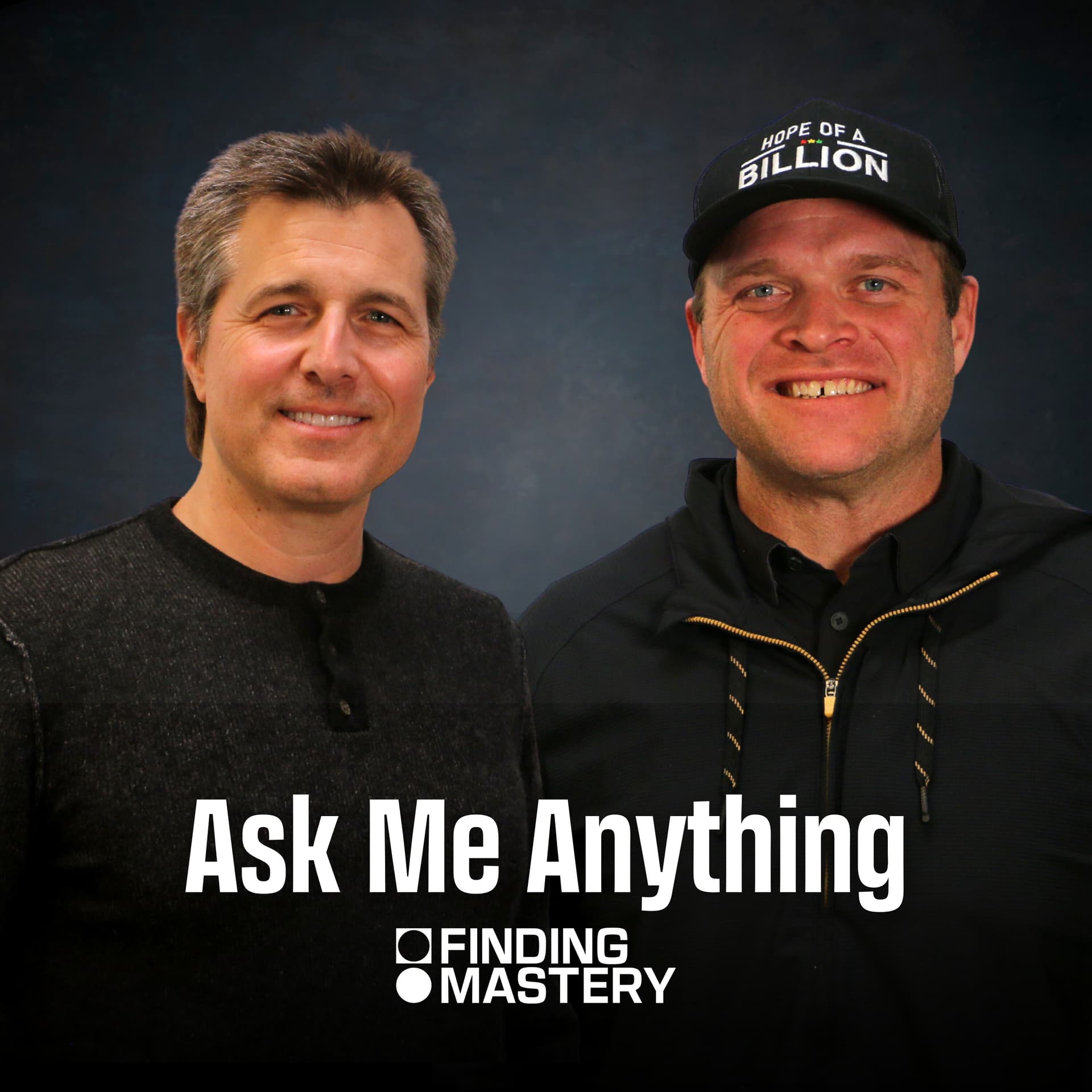
Jeff Byers, former NFL player; co-founder and CEO of Momentus. Background referenced: worked with high-performance athletes (via Gervais’s sports psychology work) and built a purpose-driven business.
Key claims
Perfectionism drives an overactive nervous system; reframing to purpose improves resilience. To downshift from fight/flight, practice meditation/breathing, widen gaze outdoors, and use social/physical “rest and digest” cues (laughing, hugging, exercise rebound). Anger is an emotion with physiological signals; feelings are the interpretation. Default mode network is self-referencing “am I okay?”; deep focus quiets it. Loneliness is normal but becomes harmful when enduring; time-boxing loneliness training helps.
Notable examples
“Above the line/below the line” (Conscious Leadership) for recognizing emotions; a 10-minute loneliness time box in hotel rooms; anger scales (annoyed vs rage) and Ken Reviser’s “five R’s” (recognize, release, regroup, refocus, respond).
Written by AI. May contain mistakes. Listen to the episode to check what was said.
Chapters
Tap a time to open that second in VOThe Importance of Loneliness
0:03 to 1:05
Discussion on the epidemic of loneliness and its impact on mental health.
“One bad hire, it can cost you a lot, way more than time.”
The Importance of Loneliness
2:15 to 3:38
Discussion on the epidemic of loneliness and its impact on mental health.
“how to navigate the complexities of our human experience.”
Introductory Dialogue with Jeff Byers
3:38 to 5:08
Dr. Gervais and Jeff Byers discuss their relationship and shared experiences.
“And it's also a treat because of the business that you built, Momentus.”
Addressing the Question of Perfectionism
5:08 to 7:04
Discussion on the challenges of perfectionism and its effects on resilience.
“It's like, so, but, oh man, I do, I do feel lonely sometimes.”
Reframing Life's Challenges
7:04 to 9:06
Exploration of reframing challenges to foster learning and growth.
“You've probably heard this line because we were around the same people that you got to learn to love to be uncomfortable.”
Understanding Purpose
9:06 to 11:34
Insights into the three tenets of purpose and its importance in life.
“the whole problem off, which is the expensive nervous system that's running and the lack of resilience.”
Impact of Generational Values
11:34 to 13:08
Jeff shares how his grandparents instilled values of community service in him.
“I really am passionate about creating impact in community, right?”
Managing Stress and Nervous System
13:08 to 14:01
Discussion on managing stress and understanding one's nervous system response.
“Interesting that your grandparents probably didn't know the science, but they were living it and they passed it down to you.”
Navigating Modern Stressors
14:01 to 18:38
Explore techniques to manage stress and transition from work to home life.
“Like I grew my own vegetables when I played in Carolina.”
Navigating Modern Stressors
19:51 to 20:56
Explore techniques to manage stress and transition from work to home life.
“Anytime you feel the pull to reset, to zoom out, to refocus and ask, am I moving toward the person I want to become?”
Show all 19 chapters
Understanding and Processing Anger
21:08 to 28:01
Delve into healthy ways to experience and express anger constructively.
“I'm looking for different ways to experience anger without an outward harmful expression of it.”
Navigating Emotions: Anger vs. Fear
28:01 to 35:05
Learn about the complexities of anger and fear, and how to process these emotions effectively.
“So there's a couple of things like I'm feeling for Anna right now.”
Understanding the Default Mode Network
36:44 to 42:01
Explore the default mode network in the brain and its impact on focus and relationships.
“And I don't even know what he's talking about here.”
Understanding Loneliness and Its Impact
42:01 to 45:17
Explore the nature of loneliness and its effects on mental health.
“And so this is a mechanism to make sure that we're not blowing it.”
Coping Strategies for Loneliness
45:17 to 48:57
Learn effective strategies to manage and cope with feelings of loneliness.
“One, do exactly what we've been talking about in this conversation.”
The Role of Community and Environment
48:57 to 53:15
Discover how community and environmental factors influence feelings of loneliness.
“You go to the office or the setting and it's inside the building or whatever.”
The Role of Community and Environment
53:28 to 54:50
Discover how community and environmental factors influence feelings of loneliness.
“And I want to take a moment to acknowledge some of ours.”
Building a Sustainable Rhythm for Personal Growth
56:05 to 1:04:30
Learn how to balance personal reflection with responsibilities in leadership roles.
“I was introduced to finding mastery through a development program at work and the course was genuinely transformative for me.”
The Impact of Internal Work on Leadership
1:04:30 to 1:06:30
Discover the story of a CEO who transformed his efficiency through personal investment.
“And I'll leave with one story is that the CEO of AT &T, I hosted him at the Seattle Seahawks game.”
Transcript
Automatic transcript. May contain errors.0:00Dr. Michael Gervais:Finding Mastery is brought to you by LinkedIn. We use LinkedIn Hiring Pro here at Finding Mastery because we know one great hire can change everything. One bad hire, it can cost you a lot, way more than time. It can cost you momentum and culture and real dollars. And that's why how you hire matters just as much as who you hire. And it's why I've become a big believer in the power of LinkedIn Hiring Pro. Here's what I appreciate about it. When you're running lean, you don't have hours to sift through a pile of resumes hoping to find the right person somewhere in the stack. Hiring Pro is built exactly for that reality.
0:32Dr. Michael Gervais:You describe the role and it screens candidates for you, surfacing the people who are a best fit so that you can spend your time and conversations with those folks rather than in the weeds of the applications. And the results back it up. Those hiring with LinkedIn are 24 % less likely to need to reopen a role within 12 months compared to the leading competitor. So join 2.7 million small businesses already using LinkedIn to hire. Host your job for free at linkedin.com slash mastery. Terms and conditions apply. Again, that's linkedin.com slash mastery to post your job for free.
1:04Jeff Byers:I suffer from terrible loneliness. Where does that sudden and impelling loneliness come from?
1:10Dr. Michael Gervais:I think the question is really important for this reason. What questions are tugging at you right now? And how might exploring the answers to those questions help unlock your potential? The questions that have come from our community, they're also real. Welcome back. Welcome to a special episode of the Finding Mastery podcast. I am your host, Dr. Michael Gervais. A high-performance psychologist named Michael Gervais. Who Pete Carroll brought in to work with the Seahawks. Famous for his work with Felix Baumgartner when he jumped out of space in the Stratos Project.
1:42Jeff Byers:Olympic athletes depend on something more than just training and talent. They have to stay mentally tough.
1:48Dr. Michael Gervais:And this week, we're turning the microphone around again. And instead of diving into mastery through the minds of our remarkable guests, We are going straight to you for another Ask Me Anything episode.
1:58Jeff Byers:I'm looking for different ways to experience anger without an outward harmful expression of it. Can you explain the default mode network? In the constant pursuit of perfectionism, how do you... Stop there. That's it.
2:09Dr. Michael Gervais:You have once again submitted really deep and thoughtful and sometimes vulnerable questions about life and performance and relationships and how to navigate the complexities of our human experience. Now, in this episode, we have the help of former NFL player, co-founder and CEO of Momentus, and of course, the friend of Finding Mastery, Jeff Byers. All offer insights and perspectives designed to help us all think a little differently, to hopefully live a little better. Our brain's dictum is survival. Loneliness is fine. It's normal. Moments of feeling loneliness. But when it's enduring, so much so that it is on the rise as an epidemic.
2:49Dr. Michael Gervais:Death by despair is a real thing.
2:52Jeff Byers:I read Loneliness and I was like, oh man, I do feel lonely sometimes.
2:56Dr. Michael Gervais:As you listen, I hope that you'll pay attention to the questions that resonate most strongly with you. We all know the answer that perfectionism doesn't exist. This brings up a lot for me. I don't know if I've ever said this publicly, but in high school. So with that, let's jump into your questions, our reflections, and an exploration of what matters most right here on Finding Mastery.
3:23Dr. Michael Gervais:Jeff, this is awesome that we get to do this. And it's been a long time that we've known each other. We've had, you know, a lot of similar friends for a long time. You played at a high level football. I got to be able to be part of it as a sports psychologist. So this is a treat. And it's also a treat because of the business that you built, Momentus. And, you know, you and your partner built something that is real. You're real. The business is real. Our experiences have been real. And the questions that have come from our community, they're also real. So how are you doing?
3:55Jeff Byers:I'm doing awesome. And I'm really honored to be back here with you. And I'm also like reading these questions out loud and doing all that is going to be really interesting. It brings back a memory of mine. I had an offensive line coach when I played for the Panthers named John Masco, and he would have everybody read openly in front of the O-line like, hey, here's how this play is supposed to be run and just like reading in front of public. And it's been a long time since I've actually like read words that were written word for word. Because I'm like you, I'm pretty dynamic in talk.
4:28Dr. Michael Gervais:You're an orator.
4:29Jeff Byers:Yeah.
4:30Dr. Michael Gervais:Yeah. So good. There'll be a little performance evaluation happening internally for you. Yeah. Yeah. That's good. And I just looked at some of these questions, skimmed them over last night. And wow, like our community is on it. I saw that you just looked at them for the first time now, like your first pass of these questions.
4:44Jeff Byers:Yeah. They are real. I'm glad I'm not sitting in your seat on this one. Um, and I, well, I don't have your background, but also just like, we all face real issues, challenges, and what lives between our ears is complicated and it's different, but similar for everybody. And like, in a lot of these questions, I see bits and pieces of things that I have and we all do. And that's what's so, I'm like, I don't know how I would even start to answer that question. It's like, so, but, oh man, I do, I do feel lonely sometimes.
5:12Dr. Michael Gervais:Yeah. And that's one of the questions has come down. How do you deal with loneliness? And so let's jump into it because this is not going to be a Mike only conversation. You're on the hook now too.
5:22Jeff Byers:Oh man, this is really exciting to be able to like be on the other side of this. All right, the first question is from Billy. In the constant pursuit of perfectionism and the expectation to feel 100 % 24 seven, how do you protect the central nervous system from sending misfires after being legitimately ill? I just got over the neurovirus after 72 hours, but the anxiety that it's left behind has stayed with me for weeks. How do you promote physical resilience so that I can perform at work and at home and calm this amped up nervous system? Oh, man.
5:51Dr. Michael Gervais:That's a lot. Billy, smart question. A couple of key things that I heard in there is he's looking for some solutions for resilience. It's got a switched on nervous system that feels like it's kind of on a high alert. But the most important thing I heard in there, and it probably starts here, is it was the first sentence, his drive for perfection. The expectation to feel 100 % 24-7. Yeah. You heard the same thing. I heard that.
6:12Jeff Byers:That's where I automatically went.
6:14Dr. Michael Gervais:So what that means to me, and I want to hear what it means to you, is that the framing of his situation is pushed through, kind of call it the channel of needing to be perfect. So if the framing is to be perfect, you're already on shaky ground. You're already in a situation where you cannot win. Why do I say that? We all know the answer, that perfectionism doesn't exist. The striving for something that doesn't exist is problematic. if you just think about first principles and logic. So I start there and I say, okay, so if we're going to look for something to calm the nervous system, let's work on reframing kind of how you're approaching life.
6:54Dr. Michael Gervais:It sounds so dramatic. And then you will become more resilient as the approach. But before I get into some thoughts and some tactics, maybe even some research to support it, what is your first pass at it?
7:05Jeff Byers:You've probably heard this line because we were around the same people that you got to learn to love to be uncomfortable. Right. And that's something that I remind myself in all of these situations in life, because I find myself every day is a little different for me. And I've stopped trying to control the uncontrollables. And therefore I never am like, I'm a hundred percent, you know, like I'm perfect. I'm always learning. And that uncomfortness is what I've found to love. Like the ambiguity and finding the joy in not feeling great and figuring out how do I figure out what I love about this situation?
7:41Jeff Byers:It's finding the joy and purpose in it as a whole. And just knowing, like, I think about purpose more than perfect. Right.
7:48Dr. Michael Gervais:You just answered it. Like you were given the clues to the answer, which is, and I just wrote them down. Like instead, instead of approaching perfection, you're looking for purpose. That was the kind of the last little hurrah. But right before that, You said, no, I'm approaching life to be a great learner. I'm approaching life to be uncomfortable because that's where learning and potential opens up. So this whole thing about learning, growing, and the mechanism to be uncomfortable driven by purpose. Yeah. Okay. Those are separate but related. Purpose, according to research, has three main tenets to it.
8:25Dr. Michael Gervais:I'm going to hit those in a second. But the way that you're going after purpose is you're saying, look, if I'm going to be honest about my commitment to purpose, then I need to stay at that uncomfortable edge because that's where real learning happens and that's where accelerated growth takes place. And so you have fundamentally committed to be lined up for accelerated growth personally and probably in your business and in your relationships that is grounded in purpose. Does that sound like Jeff Byers? 100%. So that is orthogonally different than I am driven to be perfect. And will you go back and read the first two sentences in the question?
9:02Dr. Michael Gervais:In the constant pursuit of perfectionism. Stop there. That's it. In the constant pursuit of perfectionism is where the fundamental flaw that is setting the whole problem off, which is the expensive nervous system that's running and the lack of resilience. Okay. So if somebody were to model their life a little bit more like you, Jeff. Careful. But it is not surprising to me, knowing you, that you have cracked high performance in the sport that you first loved, football, both a high level of college, high level in the pros. And then you also did the same thing in business, purpose-based with an accelerated commitment, an honest commitment, sorry, to learning, being uncomfortable is where that happens to get to accelerated growth.
9:46Dr. Michael Gervais:I don't think actually we need to take it any further. If you change the fundamental position, you're going to have the downstream resilience that you're looking for. Now, that being said, let me go back to purpose, the three tenets of purpose. I want to start with a story. This brings up a lot for me, is that I had a mentor. I needed a mentor in high school. I was a good kid. I was confused. I didn't really know who I was. I didn't know kind of, I didn't have a big picture. My son loves, loves, cracks a huge smile. and I don't know if I've ever said this publicly, but in high school, I'm gonna couch it that I was an underperformer.
10:24Dr. Michael Gervais:Okay, that's not uncommon for people to wanna brag about this, but what, and I'm not trying to brag, I'm trying to be honest here. I failed psychology in high school. I have that report card in my diagnostical manual, which a diagnostical manual for psychology is this large book that has all of the symptomology and clusters for diagnoses. I looked at it last night with him. He goes, dad, did you really, like, did you really fail psychology? How old your boy? 17. 17. And he's doing great. Yeah. He's doing great in school and life. And I went on and grabbed it and I showed it to him and he's like, I can't believe it.
11:02Dr. Michael Gervais:So I share that with you because I didn't have my purpose lined up. I was really struggling. Purpose, according to science, rests on three things. It has them personally matter to you. that has personal meaning to you. Nobody can give you your purpose. It has to be bigger than you. It's not about you and just you being at the center of your world. And the third component is it has to be out in front of you, something to work towards. Those are the three legs of purpose. And when you get that dialed in,
11:34Jeff Byers:kind of the rest seems pretty easy. Yeah.
11:36Dr. Michael Gervais:What is your purpose? Do you know?
11:38Jeff Byers:Yeah. I mean, it's not as crystal clear. I really am passionate about creating impact in community, right? And being able to do that generationally, right? And teaching my kids on how to do that. I think I have a unique position where I'm at is where I can galvanize for change and galvanize for a lot of different people that necessarily won't galvanize for themselves. Where did that come from for you? I was very close with my grandparents on my dad's side. And I see my grandparents as very purpose-driven at 60s plus. They helped build the community art center in two different cities. They helped contribute to a library.
12:16Jeff Byers:They built arts festivals, funded music. And you see the impact that it has. And I remember them talking to me about it and them always giving. I also, they used to, my grandparents are both now passed on, but they used to give us money, right? Money to go spend towards the end of their life. But they said, before you can cash this check, you have to write to me where you're going to donate X amount of this check to, right? For your Christmas present or your birthday present. And so it's like, they were instilling this, right? With privilege creates obligation. So they give you a hundred bucks.
12:53Jeff Byers:Yeah. You gotta, you gotta call me and tell me where you're going to, who you're donating$50 to. It was 50%. I don't know. Whatever. it was. Yeah. Whatever it was. It probably was one of my grandparents as a whole. And it was just like that early on. Bigger than you. Bigger than you.
13:08Dr. Michael Gervais:And it mattered to you. You got to choose. Interesting that your grandparents probably didn't know the science, but they were living it and they passed it down to you.
13:15Jeff Byers:Yeah.
13:16Dr. Michael Gervais:That those are the first two elements.
13:17Jeff Byers:Yep.
Read the full transcript
13:18Dr. Michael Gervais:Yeah. Amazing. So I share that with you because our nervous systems are on fire right now because of the pace and the speed of the world and because of the inability that we are walking around with not knowing how to deal with that stress.
13:33Jeff Byers:Yeah.
13:34Dr. Michael Gervais:And how to kind of calm the nervous system. How do you deal with your nervous system when it's, cause you're living a high stress life.
13:41Jeff Byers:Yeah. I wish I had like a set protocol and I'm not great at it, right? Like I get home and I get chippy with my boys and I get chippy with my wife and I get short and those things. And I definitely show up to work as a very consistent person. And then when I'm home, I let those things wear. I think big things for me is like constant outdoor time, right? And things that bring me joy, right? Like taking the dog for the walk with my boys, throwing a ball, wrestling with them, you know, cooking dinner as a family, like doing things together versus like tasks, like go do this, do that, clean your room is really important to me.
14:15Dr. Michael Gervais:Are you tuned to your nervous system? and what I'm saying is like the fight flight response uh yes I know and I'm always like I
14:22Jeff Byers:like after I do it I'm like oh man I knew I was in that and I don't have the right tools yet to downgrade to downgrade or I'm thinking about them too late right and I would say when I played I had a really great set of tools right you go from you know my position that is so violent and I would come home like no kids right there's a very clear distinction when I was an NFL player to being at home. So I'd come home. I had a garden. Like I grew my own vegetables when I played in Carolina. I had like, I mean, people made fun of me a lot, but like, I love to garden and I always cook like a meal from scratch for dinner.
14:59Jeff Byers:And that was like, that was my downgrade of like go from something really violent, right. Which is a game of football. And you're like trained to be violent to right. Creative giving, right. Creating on that. And now, right. What I find you just said is like my work life swirls everywhere. And it's like, I don't have those systems in place. Cause I'm like, right. Home in five minutes. Right. Yeah. On my drive home. Yeah. Maybe taking a work call, thinking about something at work. Right. And there's stresses at work.
15:30Dr. Michael Gervais:And yeah, this is, so you're describing like what the modern condition is, you know, like all on intense during kind of the nine to five hours. If anyone has the luxury of nine to five and then do some stuff with the family and then you go home and you need to towards the end of the night answer emails clean up some stuff like it's two shifts as we have come to understand this is why the on mechanism and the recovery mechanism the gas is pedals down the gas pedal comes off and so the i'll be technical for a minute the sympathetic nervous system is the fight flight freeze submit response and the parasympathetic nervous system is the the rest and digest model this is not new information.
16:12Dr. Michael Gervais:But if we don't have an active practice to trigger the rest and digest systems, we run sympathetic dominant. Always. Okay. So what are those counter-rotation practices that you can put in place to be able to down-regulate? Billy, very clearly, kind of two of the big ones are meditation and or breathing practices. A third one is being able to have a peripheral vision gaze. So locked down to the barrel of the gun or the tooth of the saber tooth or like that narrow kind of intense thing, just like when we're looking at our phone, is a triggering mechanism and is corollary to the fight flight thing.
16:54Dr. Michael Gervais:So when we widen our gaze and we can do it and see the kind of the landscape of the world, you can't do that in a room. You need to be outside to do that. It also triggers the rest and digest. Laughing, holding hands, hugging, The thing that happens after high stress purposely induced, like intensity from exercise, there's a rebound effect, which is the rest and digest. So there's a whole host of things to be able to do to purposely downregulate. This is why meditation and mindfulness practice has had this massive kind of moment over the last, call it 15 years, maybe more like 10 years is more popular.
17:30Dr. Michael Gervais:I was introduced to meditation in 1998. 1998. And so I've been meditating since 1998. I don't know what I would do without it. It allows me to have perspective. It allows me to be in tune with this always present awareness. So awareness is not something you build. Awareness is always there, but you do need to build the psychological skills to be aligned with awareness, to be with awareness. And awareness is kind of the whole thing. If you're not aware, you can't adjust. Awareness is the whole thing, being tuned with awareness. So mindfulness meditation is kind of one of those ways. So anyways, I think we nailed it.
18:13Dr. Michael Gervais:Shift from perfection to purpose, as you eloquently said. Calm your nervous system down. We've just listed a handful of things. Most of them are in your control. And then you will become by default more resilient if you are able to downregulate and you're not sympathetic dominant it all the time. Big point. You have to practice the mental skills to be able to adjust your nervous system. Yeah. So cool. Finding Mastery is brought to you by Rag & Bone. I've been a big fan of Rag & Bone for a number of years. I just love what they do. It's a go-to for me when I'm choosing clothes. I've been wearing their infused denim for a while now.
18:49Dr. Michael Gervais:They've done just a really nice job with this product. For me, I am really intentional about what I invest in. In clothing, it's no different. I want things that are well-made, that stand the test of time, that don't distract me, that support my focus on the things that matter most. And that's exactly why these deliver. And they look sharp, full stop. They've spent 20 years obsessed with getting this product right. And that kind of long-term commitment to craft, that's something we talk a lot about here at Finding Mastery. Quality compounds. The right inputs may consistently over time show up in everything.
19:18Dr. Michael Gervais:And you can feel that the moment you put these on. If you're ready to upgrade your denim with something that's genuinely built to last, it's time to upgrade your denim with rag and bone. For a limited time, our listeners get 20 % off their entire order with the code finding mastery at rag-bone.com. That's 20 % off at rag-bone.com with the promo code finding mastery. And when they ask you where you heard about them, please support our community and this show and let them know that we sent you. Finding mastery is brought to you by our flagship mindset training course, finding your best. Anytime you feel the pull to reset, to zoom out, to refocus and ask, am I moving toward the person I want to become?
19:58Dr. Michael Gervais:It helps to remember this. Lasting change comes from training, not resolutions, not short-term sprints, but deliberate practice of the skills that shape how we show up in work and relationships and in the moments of great intensity as well. That's what finding your best is all about. It's a science-backed framework for training your mind. And it's the same set of tools that we've taught to Olympic athletes, top executives, elite military teams, and artists at the peak of their craft. In this course, you'll learn the foundational psychological skills to be your very best. Full stop. And the best part is you can start anytime.
20:29Dr. Michael Gervais:Right now, we're running a limited time offer on finding your best. Simply head to findingmastery.com slash course and use the code RENEW100 to get$100 off your registration. If you've been waiting for the right moment, this is a good one now to lean into. Spring and summer, they are powerful seasons of momentum. It's a great natural time to step into growth, to refocus, to recommit to who you want to become. And this discount will not be around for long. So go to findingmastery.com slash course, code RENEW100 for$100 off today because your future is not shaped by what you intend. It's shaped by what you train.
21:08Jeff Byers:All right, next one from Anna. I'm looking for different ways to experience anger without an outward harmful expression of it. and without an inward harm for expression or turning into anxiety by avoiding it. I'm looking for something beyond the usual contemporary literature and advice. It's healthy to experience anger, et cetera, et cetera. I have been through all of that. And I'm looking for actual examples of high performers who allow themselves to experience their anger, notice the experience of it, and not have to crush it inward or communicate it towards others in a destructive way.
21:39Dr. Michael Gervais:Anger's tricky. What's the goal? I hear her asking for, how do I work with one emotion? And this emotion happens to be anger. Let's do two things. Let's separate the difference between emotions and feelings. Let's do that work for a minute. But let's float up a couple levels first and talk about the bigger aspiration is to be unbothered. That's the highest performing state is that whatever happens outside of you, you are unbothered by it because you are eloquently adjusting to whatever it is. You can't control that. You can, you, this sounds so simple, but if you have a real set of internal capabilities and skills, you are more like Bruce Lee's aspiration, mind like water.
22:26Jeff Byers:Yeah.
22:27Dr. Michael Gervais:You just kind of roll. You stay moving onward, like towards what? Towards your purpose. That's really hard. It's so hard. So hard. The ultimate attainment is to be unbothered.
22:36Jeff Byers:Yeah.
22:37Dr. Michael Gervais:Right? Yeah. Now, emotions are part of the ecosystem. And I'm on record saying the Olympics are for big emotions. The Super Bowl is for big emotions. But really, I don't see those two that differently. And I don't see everyday life that differently than the Olympics and the Super Bowl. Life is for big emotions. If you do not know how to work with your emotions, it's a hard life. Let me just kind of ground emotions from feelings. Separate those two things for a minute. Emotions are the physiological experiences that are observable, that you can see in another person. Okay, you can measure emotions.
23:15Dr. Michael Gervais:Feelings are private. They are subjective. It's the way that you are interpreting or making sense of that physiological experience. Okay, physiological experience. What do I mean by that? When you are angry, there will be a tension. There will be a skin color difference. There might be a sweat that comes on board. That also might be fear. That also might be excitement. So the way you're interpreting those physiological observable experiences are feelings. So Anna, anger's cool. I'm not like, oh, it can't be angry. I would love to get your take on how you dealt with anger. I understand there's also a different sandbox.
23:58Dr. Michael Gervais:Little boys and little girls, oftentimes, certainly in the US and many of the Western cultures played in different sandboxes. And in that sandbox, we learn about emotions differently.
24:07Jeff Byers:Yeah.
24:08Dr. Michael Gervais:So I don't know the sandbox that Anna, you played in. I don't know that, of course. But I can kind of dangerously assume that this was not one that you were promoted to express anger.
24:20Jeff Byers:Yeah, I do think society really has taught us anger is really bad. And it's a natural feeling, emotion, et cetera. I believe that. When you are bothered. Yeah, yeah.
24:32Dr. Michael Gervais:That's really, anger is like, I'm bothered by this. Yeah, 100%. And I'm frustrated and I'm intolerant and I'm pissed off or I'm raging or I got wrath or I'm just like annoyed.
24:42Jeff Byers:There's ranges of anger. And what I read in this is like, it doesn't feel like it's okay to be angry. anger. Like, how do I, like, I don't want to outwardly express it or inwardly compartmentalize it. And that's the only things to do, right? In my mind.
24:58Dr. Michael Gervais:Those are the two things that any emotion works.
25:01Jeff Byers:Works. Yeah.
25:02Dr. Michael Gervais:External expression or internal musing, if you will. Yeah.
25:05Jeff Byers:And I think it's okay to feel like, you know, I think she writes here, it's like, it's healthy to feel anger. It is, right? I know that doesn't help anything, but I think it's also creating the practices, right around it. And for me, right? Like I do, I do experience anger.
25:21Dr. Michael Gervais:So do a scale of anger. So just think like for a minute, if you've got a one to 10 scale, rage is 10.
25:28Jeff Byers:Yeah.
25:29Dr. Michael Gervais:Okay. Annoyed is a one.
25:31Jeff Byers:Yeah.
25:32Dr. Michael Gervais:Okay. Anger used as a five, the word anger is a five. Where do you spend? Are you, are you below the five?
25:38Jeff Byers:I'm below five almost always. I get really irritated. Where's pissed off for you? What number? Pissed off is, is probably a five or a six, like really close. No, say anger is five. Oof. Where's ticked off and where's pissed off? I would put pissed off below anger. Interesting. For me, like pissed off is like, one of the things I think that drives my wife crazy is I get over things really fast, right? And I get pissed off or ticked off. Then I'm like, that was stupid. Why did I ever do that? Right? Like take a step back, bigger picture. It doesn't matter. I'm sorry. That was a dumb reaction. And so like anger to me is something that sits.
26:13Dr. Michael Gervais:Oh, there you go.
26:14Jeff Byers:Right. And like Like pissed off is like, Mike, you kicked me in the shins. That was stupid. And you're an asshole. And then I'm like, oh, you kicked me in the shin because I said something I shouldn't have said. Right. Like, I get it. That was, you know, like.
26:27Dr. Michael Gervais:Let's take the lead here because I want to learn from you. And maybe I can add a best practice that I've learned to how to deal with any emotion. Call it anger in this place. Yeah. Okay. Is you get over it quickly. This is good. This is, this is like, go back to Bruce Lee, like mind, like water, trying to be unbothered, kind of going with the flow. but you got caught behind a rock for a little bit too long. Okay, right? But you're fast. You're rolling through the stream, if you will. If you can name your emotion.
26:53Jeff Byers:Yeah, it's important.
26:54Dr. Michael Gervais:That's part one.
26:55Jeff Byers:Yeah.
26:56Dr. Michael Gervais:Yeah. So being aware that you're in a state that you don't really want to spend a long time is always foundational. Awareness is foundational. Then if you can name it, oh man, I'm pissed. This is pissed. And then if you just watch it for a minute, see where it wants to go, you're learning about how your body and your mind are connected to this emotion. That's an awesome practice. And the third is you got to take some sort of, I don't know, pause, like a breath, a reset. Like there's a practice to down-regulate even in that moment. Do you do both those?
27:27Jeff Byers:Yeah, yes. I mean, sometimes I wait too long to pause and breathe, but it happens, right? And we brought in this practice called conscious leadership into our company. And they have this silly saying called above the line, below the line. and the first thing is like, I'm below the line. I'm feeling anger, right? I'm feeling fear. And like, that's like the first thing is you got to train yourself to feel those things. Because once you know, like I'm there, then it's really easy to be like, okay. That's it. That's it. Well, that's awareness. And it's okay to be below the line. It's fine. We're humans.
28:00Jeff Byers:Yeah, yeah, yeah. We're taught it's bad. Yeah. Right? But you know what? Yeah.
28:04Dr. Michael Gervais:Okay. So there's a couple of things like I'm feeling for Anna right now. Yeah. One is like, the point is like, you learned anger in your sandbox and the cultural sandbox of the, certainly where we live, we both live in the United States is like, yeah, anger is not so great, but you know what? If somebody comes into your home and they're a threat to your safety, there's a couple options. Okay. The ultimate option is like totally poised. You are eloquent with how you're handling that situation. Yeah. Cool. Like call that, just call that poised. You could be scared or you could be pissed off. In that moment, what would you choose?
28:40Dr. Michael Gervais:If you can't find the ultimate poise, the eloquence to be able to deal with that moment? I'm running to the fire. Yeah, you'd rather be pissed off. Yeah. In most competitive situations, take any sport you want. If you're going into an environment where the stakes are high and you're not feeling quite right about it, you're not in that poised state, would you choose to play your first rep scared or a little pissed off. Pissed off. Yeah. Anger will facilitate performance better than fear will. Yes. Okay. This is a dangerous game I'm suggesting though. Because if you can't find poise and you feel yourself sliding into the anxiety, fear kind of response, what that does is it tightens us up, makes us smaller, more hesitant.
29:24Dr. Michael Gervais:My suggestion here, and this is again, a little bit of a dangerous fire, is like, wait, hold on. Figure out how to get to another state other than the scared state and maybe angers. Now I'm playing with a dangerous emotion on purpose. I don't think any of us want to stay in a dangerous kind of anger state for very long. So I understand the kind of the subtlety to this. So there is a place for anger. If you stay stuck in that thing, it's problematic. And or you publicly embarrass somebody, you got problems, right? If they're caught in the wrath of your anger and you belittle them, you cut them down, you fill in the blanks, you embarrass them, you have to publicly repair that as well.
30:07Dr. Michael Gervais:If you're publicly embarrassed, you need to publicly repair. And I'm not so sure people come back from it. And when you are angry, you say things that can hurt other people. And I don't think people come back from that easily.
30:19Jeff Byers:It's very hard. That is very hard. We've all said things that we regret, every one of us. And they are. They take a long time to repair. I kind of in this conscious leadership practice that we've had in our business, I've found that fear and anger, I used to think a lot of my fear was anger, right? And I've actually diagnosed a lot of my anger is actually me being scared.
30:40Dr. Michael Gervais:Okay, so you're on a good science here. If we just made emotions really simple and you had four basic emotions and you had a scale of one to 10 on each one of these, by the way, this is good homework for you and your partner. This is good homework for you and your wife. This is good homework for you and your teammates, you and your kids as well. You just draw four kind of primary emotions. And you put on the scale of one to 10, you put a five, and you put the word anger. Okay? That's the anger scale. And then fill in all the hash marks of what words, where does pissed off go?
31:12Jeff Byers:Yeah.
31:12Dr. Michael Gervais:You put it like a four. I put it like a seven. Yeah. Okay? So now we're going to calibrate. Yeah. But we're putting words to the dimension so it's not like I'm angry. So I'd like to say, Lisa, my wife, before we did this work, I'd say, well, what, like, how angry? Yeah. And she goes, I'm pissed. Wait, is that a four or a seven? Yep. Okay, so this is the calibration that's really important. Yeah. Then on the second scale, you put happy as a five. Yeah. And you fill in all the words. Okay? And then scared.
31:36Jeff Byers:Yeah.
31:37Dr. Michael Gervais:Right? And that's a five, and you fill in all the words. Like, the most fear is, like, terrified. Yeah. Okay? And then the last one is sad. Okay? Sad is the last one. Now, what we know is that anger is a secondary color. Anger is the second emotion. When you do the deep work, you realize that anger, there's an emotion that comes before anger. It's something on the sad scale, like, boy, I'm really let down. I'm really hurt, you know? And that's such an agitating, difficult state to be in. it's way more proactive, like I was talking about earlier, to go to express anger because that first one is so tender.
32:18Dr. Michael Gervais:And or you're somewhere on the scared scale, like to your point, which is like, I'm afraid this is going to keep happening. And instead of working from that tender kind of isolated fear-based place, it is socially more acceptable to do something on the anger scale. Yeah. So the problem with it is that it's expensive to run. Anger is a very expensive emotion to run. You can publicly damage another person in the relationship. And if you're not careful, you kind of get stuck in the anger loop as opposed to dealing with the first emotions, which is where the real work happens. So I don't know. Yeah.
32:55Dr. Michael Gervais:Do you think that, yeah. Do you think Anna is going, okay, you said a lot of words, but I'm not sure I feel any better about this?
33:01Jeff Byers:Potentially. But I do think there's only two ways to process anger. It's outward harmful expression, which is how you burn bridges, right? And you create sometimes irreparable damage, right? Or an inward harmful expression. You can inwardly process it and it doesn't have to be a harmful expression.
33:18Dr. Michael Gervais:Yeah. Right.
33:19Jeff Byers:Like that's the thing of like, you can outward or inwardly take the emotion in my mind, but it doesn't have to be a harmful expression inward, right? Yeah. If
33:27Dr. Michael Gervais:you're cutting yourself and being yourself and like, you know, okay. As opposed to like just saying, wow, I'm really pissed off at myself. Huh? Now she asked for a tools. Yeah.
33:37Jeff Byers:Okay.
33:37Dr. Michael Gervais:I did the name it, but there's a second generation mental skills coach called Ken Revisi. You might've remembered Ken Revisi. He passed away a number of years ago, but he had this system called the five R's. It's a little complicated, but it's, it's simple. Okay. So the five R's are how to deal with the emotions or how to deal with an unsettled state. First, recognize.
34:00Jeff Byers:He's talking about be
34:01Dr. Michael Gervais:aware. Are you at what he would do? It's really fun. Are you at a red light? Are you at a yellow light? Or are you at a green light emotionally? Yellow light is like, man, I'm a little shaky, my confidence or whatever. Okay. Recognize. Then release. Take a breath. Release that intensity. Okay. Maybe five breaths, maybe one breath, whatever it is. Release it. Okay. Maybe a yell. Maybe kind of bang your bat. Maybe if you're angry, bang your baseball bat on the grass in a socially appropriate way. Recognize, release, regroup. So get back, talk to yourself, back yourself, get yourself back together.
34:37Dr. Michael Gervais:Pull it together now through self-talk. Recognize, release, regroup, refocus. Take your attention and put it outside of you on the task at hand. Recognize, release, regroup, refocus, respond. Just go let it rip. Go out there and do the thing. So those are the five R's that Ken Reviser introduced as a mental skills practice that I think are pretty practical. And if you can remember the five R's and you can practice the five R's, I think there's really utility in that.
35:04Jeff Byers:Yeah, those are awesome. Yeah.
35:07Dr. Michael Gervais:Body Mastery is brought to you by Fatty 15. Did you know that Navy Dolphins helped unlock a secret to healthy aging? It's a wild story. And it's the foundation for a product that I've come to really love, Fatty 15. Fatty 15 is built around C15, the first essential fatty acid discovered in over 90 years. And it was discovered by Dr. Stephanie Van Watson. She's the co-founder of Fatty 15. While she was working with the U.S. Navy and based on over 100 studies, we now know that C15 strengthens our cells and is foundational for healthy aging at the cellular level. Stephanie's been on the podcast and it was one of my favorite conversations.
35:44Dr. Michael Gervais:She's amazing. And what her and her team are building is something I'm really excited about. Head to fatty15.com slash finding mastery and use the code finding mastery for an additional 15 % off your 90-day starter kit. Again, that's fatty, F-A-T-T-Y, 1-5, dot com slash finding mastery, and the code is finding mastery. I want to take a second here to tell you about a morning routine that I've been using for years. For me, it's a great way to switch on my mind, to ready myself to take on the day. So before I check my phone, my emails, market updates, or text threads, I choose how to start my morning.
36:20Dr. Michael Gervais:That's always in my control. That's always in your control too. This is the same morning mindset routine that some of the world's top performers across sport, business, and the arts are using. The best part? It only takes about 90 seconds to do. So just head over to FindingMastery.com slash morning to download the audio guide for free. Again, head to FindingMastery.com slash morning to get your morning mindset routine.
36:48Jeff Byers:All right, next one, Mont. And I don't even know what he's talking about here. So can you explain the default mode network, how it works, how it can work for or against us and other resources or practical advice on how to change it to work in our favor? I'm trying to be more optimistic and creative by default instead of worrying. First off, I don't know what the default mode network is and what he's talking about, so.
37:10Dr. Michael Gervais:I love that. Okay, default mode network. It's a mechanism in our brain circuitry that is the default mechanism, okay? And so basically, our brain's dictum is survival. Yeah. More than anything else, right? It's designed to scan the world for dangers, to figure out kind of how to survive this world. So the default mode network is when your brain is kind of at its basic level, it is making sure that you're okay. And so right now, it could be, does Jeff think I'm okay? Am I saying the right things that I want to say? There's this self-referencing network. Am I okay is what we think the default mode network is about.
37:50Dr. Michael Gervais:And I want to put a huge asterisk next to this. The science and research around this is, I don't know, a couple of decades old only. So there's a lot of room here to keep space available for a deeper understanding. I wrote a bunch about it in the book, The First Rule of Mastery, because that self-referencing default mode network, am I okay, is a bit of the culprit to being fully present and being joyful and being connected to other people. Because I've got this thing underneath of me that's saying, does Jeff think I'm okay? Am I okay here? Is this room okay? Am I okay? Is it going to be okay? That it corrupts our ability to be fully present and engage with another person.
38:29Dr. Michael Gervais:Okay. So how do you quiet the default mode network, which is what I think was talking about. Deep focus. So if you're on the side of a cliff and you are kind of hanging on and figuring out survival and your attention is on the next kind of thing that you need to do to figure out that moment, and you're all in in that deep focus because it's a survival kind of thing, you will not have time for the default mode network. What does Jeff think of me right now? Okay. Deep focus like meditation, deep focus on a task at hand, solving a complex problem requires deep focus. So when somebody is deeply focused, we see that their default mode network quiets down.
39:05Dr. Michael Gervais:So deep focus is the kind of the antidote of the wildly reference checking, am I okay? Default mode network.
39:14Jeff Byers:Do you think deep focus, why it's so important is because it ties to purpose, right? When you're in deep focus, it, right? Like for me, when I think, when I hear you say this, right? Like when I am able to deep focus, meditate, right? Step back. I almost always eventually get to purpose. Like, what do I care about? Why am I here? Right? Like that thought process and that deep focus draws me back to purpose, which allows me to not have those questions of like, am I here? Am I good enough? What am I doing? All of that.
39:48Dr. Michael Gervais:Yeah. That's a really, that's eloquent. That's clean. And also let's say that you had a purpose mindset. Let's say you, you and I kind of, as we sat down, The thing that was most important to you was to be connected to your purpose as you're choosing how you're responding to the questions or whatever. And that thing takes up, occupies the majority of your thinking. Okay. It becomes the main reference point. That quiets down the default mode network. And the default mode network's job is, am I okay? and instead of am I okay, the new question, if you have a purpose mindset, which is trainable, is am I aligned?
40:29Yeah?
40:29Dr. Michael Gervais:Yeah. So that's what you're talking about and I think what you were saying is like when you meditate, meditation is an all-in practice of refocusing a thousand times, you know, in 10 minutes.
40:41Jeff Byers:Yeah.
40:41Dr. Michael Gervais:Refocusing back to one thing, maybe a breath, maybe a flickering candle, you know, maybe a mantra, maybe to following your thoughts, whatever, okay. But the all in refocusing back to the thing quiets the default mode network. And eventually it creates more available space for you to be connected to the things that matter purposely more to you. So I would point to like meditation is a good one. Optimism, I don't know how to square default mode network actually with optimism. So I'm going to just kind of squint at that and kind of glaze over. But do you think that that was a value to Manta?
41:17Jeff Byers:Yeah, I think so. So, I mean, first I learned about the default mode network. And it makes sense, right? Like we are millennia's around survival. That's right. And how do we survive? Very rarely do we ever have to actually survive. Like nothing in this room is going to kill us unless something terrible happens. You know? That's right. But it's hard. Like we're wired a certain way.
41:39Dr. Michael Gervais:But the main threat for most people is not that the roof is going to fall. Yeah. The main threat is what is Jeff going to think of me? Yes, exactly. What is Mon going to think of me?
41:47Jeff Byers:Yeah.
41:47Dr. Michael Gervais:And because if we got kicked out of the tribe because of underperformance. And we die. It's a near death sentence, right? Yeah. So that's why we're so designed like the ecosystem to be relational. Yeah. To be cooperative. Fascinating. Yeah. And so this is a mechanism to make sure that we're not blowing it. Yeah. I think the clear takeaway for anyone, including Mons on this, is invest in a practice that supports deep focus. Yeah. And when you recognize, when you're not in the deep focus places, no problem. And when you recognize that you are paying attention to how you're doing, that's fine because it helps your course adjust.
42:25Dr. Michael Gervais:But if it feels like it's overwhelming, just kind of wink at it. Be like, oh, not now. Yeah. Come back to the task at hand. Yeah.
42:33Jeff Byers:Yeah. All right, Claude. I find when I leave Canada for extended travel periods, I suffer from terrible loneliness. Where does that sudden and impelling loneliness come from? Uh, this was one of the first, like when I just skimmed it, like I read loneliness and I was like, oh man. And as it sat on me, I was like, man, uh, I, I do feel lonely too sometimes. Right. And I think we all have different feelings of loneliness. Like when I look back on it, I think this is a really interesting question, right? Like I suffer from terrible loneliness when I leave my home, my place of, of living. And where does that sudden and impelling loneliness come from.
43:14Dr. Michael Gervais:Yeah. I can hear it in your voice too. Like loneliness is, it's hard. It's hard when you feel like you can't manage it.
43:23Jeff Byers:Yeah.
43:24Dr. Michael Gervais:Loneliness is fine. You know, like it's normal moments of feeling loneliness, but when it's enduring, when it's sitting kind of in the, in the bed of everything that you're doing, it's like, so much so that it is on the rise as an epidemic. Death Death by despair is a real thing. Suicide is in the US, there's about 49 ,000 suicides per year. Death by despair is this new category that has emerged, which is people that are so lonely, so desperate in their lives that they are accidentally killing themselves. They're overdosing by accident. To just cope. So let's address loneliness because it's a real thing, especially when we're promised to be more connected through social media and all that stuff, that loneliness by definition is like you're in a public place and you still feel lonely.
44:17Dr. Michael Gervais:Alone is different. Sometimes when you're alone, you don't feel lonely. So the point is like when you're away, I think that this question is when I get out of my environment and I go away, this loneliness thing emerges. The way I hear the question is really framed in when I'm in the grind and I'm kind of doing my thing and I'm hustling, I'm doing whatever the thing is. It's like got enough noise that I don't pay attention to the thing that's underneath the surface, which is this sense of loneliness. Then I travel away and I don't have my familiar kind of practices and my familiar people, my familiar conversations, that there's enough space that that loneliness bubbles up.
45:01Dr. Michael Gervais:And I think the question is really important for this reason is because you're aware of something and you're recognizing a pattern, which is grind to kind of in the hotel room. And when you're in the hotel room, it's telling you something about what you need to work on. So how do you work on loneliness? One, do exactly what we've been talking about in this conversation. Feel it, create the space. Okay. For the next 10 minutes, I'm going to be connected to what's happening inside of me. And if loneliness emerges for that 10 minutes, feel it. You might cry. You might curl up in a ball. You might like have surprising emotions or thoughts that emerge, but you're going to time box it for 10 minutes.
45:43Dr. Michael Gervais:So you're going to train the uncomfortableness of loneliness for 10 minutes. And after that 10 minutes, 15 minutes, 12 minutes, 20 minutes, just time box it. That you say, right, good work. That's good training. I just exercised in this way. And then you kind of just go on to the next thing. But when a loneliness feeling emerges later, you're like, wait, I'm going to actually go get in touch with that tomorrow in my training. So it's not ubiquitous across the entire day. You box it in, in a way that you can train it, get to know it, be connected to it. You can wrestle with it. And it's not bleeding throughout your day.
46:19Dr. Michael Gervais:No different than when you wake up in the morning and you're like, okay, I'm going to exercise later in the afternoon. And it kind of just is sitting all day long. Like, yeah, I got to exercise later. And then you get home at four o 'clock, you're like, I got to exercise, but I just need a break. And just kind of sitting all day long. This is one of the benefits I think of exercising in the morning. It's time box. Yeah. And then it doesn't bleed into my day. Okay. So. And then you don't do it. And then you. And then you feel. If you, if you put it, if your training is in the afternoon versus in the morning.
46:47Dr. Michael Gervais:Yeah. So that's what I'm suggesting is when you time box it and you wrestle with it, you do the thing, it doesn't bleed throughout your day. Same with loneliness. Yes. Yeah, exactly.
46:55Jeff Byers:Yeah. Yeah. I think that's really powerful actually. Yeah. If you just like continue to kick, then you never address it. You never do it. And then you go to bed and you're like, for me, it's like, man, I should have worked out. I had every intention to do it. Yeah, I wanted to. I feel lonely. Yeah, right. Right. That's exactly right.
47:11Dr. Michael Gervais:And Jeff, one more thing on this is that loneliness is one of the symptom clusters for depression. Yeah. So depression is a, it's a real condition. There's nothing to be afraid of. More people know what depression is than you might think.
47:26Jeff Byers:Yeah.
47:27Dr. Michael Gervais:Okay. And so I don't want to just miss that it's part of a cluster of something else as well. It's not just loneliness itself. It could be on a path of depression, okay? Major to minor depression to dysthymia to something that's really kind of like, you know, it's just kind of garden variety down in there. The last thing I want to just hit on this thing is that people that are connected, according to research, people that are connected, they increase their survival odds by like 50%. That's a huge number. So I don't want to scare the lonely person like, yeah, I'm going to die early. But there is evidence that loneliness, there's an increase in mortality rate by like high 20%.
48:08Jeff Byers:Yeah. It's interesting because it sounds like at home, they are great. It's cool. And I mean, who knows what Claude does for work or requires them to be gone for months at a time. And that, to me, makes it feel like they have a real sense of purpose where they're from, right? They have connection. to people. Oh, that's how you hear this. Right? And then when they leave, that whole system that they have is left behind. The people, the things they love, their comforts, the known. And who, like, I, again, don't know who they are, but like, and then it's like, when they leave, it's like the world, right, is not how I expect it to be.
48:45Jeff Byers:And I don't know how to navigate it. And therefore, this is the, you know, what's rattling behind my head. Like nobody here knows me.
48:56Dr. Michael Gervais:Okay. I think you're right. And so I like where you're taking this. And so there's a couple best practices and you'll know these as an elite athlete is when you're in a hotel room, let's just use an example, and you're at another place, it might be really easy to not go outside for a while because you go from your hotel room, you don't have kind of some outside stuff. You go to the office or the setting and it's inside the building or whatever. So you could be totally whacked on circadian rhythm. You'd be totally disconnected from nature, totally connected from sunlight. That is a, like a central nervous system depressant.
49:28Dr. Michael Gervais:So depression, central nervous system is depressed from biological, from psychological, from a lot of things. Oh, you know, what's important? I can't believe I didn't even think of this is that somebody were to come in an athlete or somebody comes in and like, Hey Mike, I'm, I'm really struggling with depression early in my career. I'd be like, okay, let's go to kind of a cognitive behavioral training, you know, let's do best practices for that. Okay, good. I'll be it that the relationship between us is really the fabric of the whole thing. But I don't know, like 10 years in my practice, which was way too late, I was like, wait, hold on.
49:59Dr. Michael Gervais:They might have a pituitary gland issue. There might be a medical thing. They're just calling it depression or loneliness, but maybe their pituitary is not firing. Maybe there's some other stuff that's happening that their central nervous system feels depressed, but it is biologic. It's more organic, if you will, that way, rather than unpsychologic. And so let's not rule that out. And I look at you because there could be some supplementation. There could be some nutrition, dietary things where people are like not feeding their Krebs cycle the right way. They're not feeding, you know, like if somebody were to say to you, I'm depressed.
50:35Dr. Michael Gervais:Okay. I'm not asking for medical advice. Okay. But they're saying I'm depressed. And when you say, would you say, Hey, how's your, how's your vitamin D?
50:43Jeff Byers:Would you say that? No, I would not. But I think like part of it is like what I read and think about this is when you're at home, you have routine and a practice, right? I read that Claude has this. When you're on the road, right? You go out to eat, you order, you don't cook, right? You don't get outside very much. You might just go to the hotel gym by yourself where you have like a workout crew at home. And it's like, how do you, right? Like think about the things that is your community that drives connectivity where you live. And you have to like, it's work, but you have to replicate those things, right?
51:19It's like, hey, I'm on the road.
51:22Jeff Byers:I try to still take all the same nutrition supplements. I try to sleep. Like, I'm like, oh man, you know, I'll stay up and watch a movie tonight because I'm laying in my hotel room. Like, I don't have anything to do. Like no kids, nope. I try to keep a rhythm. And I find myself when I'm on the road, right? There's this terrible habit of like, wake up, go to a hotel gym, you know, hotel breakfast, right. Go to my meetings, come back to the hotel, right. After dinner. And like, there's no space, right. Like nobody's like, oh man, I'm just like relaxing my hotel room. Like I feel like, let's go sit in the lobby.
51:58Jeff Byers:Let's go to the coffee shop. Let's go to like, cause at home, like you have an outdoor space to sit. You have a couch, a living room, a dining room table, and everything just is like there in a hotel room. You live in this 20 by 20 box and it's depressing. It is like, I dislike it a lot. And I'm on the road a ton.
52:14Dr. Michael Gervais:You know, I think you relate to this is that when I'm with a football team and it's camp and camps are a grind, as you know, right? Three weeks of like, it's a grind. Now, when you're done with a long day, all the coaches, most of the coaches at least, and most of the athletes go back to home, wherever the home is. Maybe it's a roommate or maybe it's family. And you know where I would go? Back to my hotel room. by myself.
52:38Jeff Byers:Yeah.
52:39Dr. Michael Gervais:You talk about like being tired and alone. I'm a social creature. I don't want, I don't like going back and just sitting in the hotel room, but I'm like, damn, I don't have anybody.
52:48Jeff Byers:Yeah.
52:49Dr. Michael Gervais:Of course I have this huge amount of space for, for the love I have for my wife and my son, but they're not there. I can call, but it's just a little bit different.
52:59Jeff Byers:Yep.
52:59Dr. Michael Gervais:I relate to this.
53:01Jeff Byers:Yeah. And I think like it's, you guys just got to find what to me. You go to community.
53:06Dr. Michael Gervais:yeah you go to like environmental conditions and community conditions i go to psychological as well you know i want to point to that and i'm also just creating space for biologically you know to make sure that i don't know it's just uh there's not something else yeah i think that's very wise yeah finding mastery is brought to you by linkedin earlier i mentioned linkedin hiring pro and i want to come back to something a little more personal we talk a lot about the people who make extraordinary things possible. And I want to take a moment to acknowledge some of ours. Janelle, Taylor, Alex, Emma, and our newest teammate, Chelsea.
53:41Dr. Michael Gervais:Every single one of them came to us from LinkedIn. And every single one of them has raised the bar of how we operate here at Finding Mastery. Our relationship with LinkedIn, it also runs a lot deeper than just using their tools. We also work with their teams on the corporate side, helping them build the kind of high-performance culture where great people want to stay. They want to grow. I've been building businesses for over two decades now. And I'll tell you the right team that matters so much. It's the difference between grinding and flowing. So this partnership I believe in from the inside out.
54:13Dr. Michael Gervais:When you hire through a platform like LinkedIn Hiring Pro that surfaces people who are genuinely aligned with what you're building, you get a different quality of candidate, not just in skills, but in fit and values, the kind of energy someone brings to a team. So if you're thinking about your next hire, I want to strongly encourage you to be intentional about where you look. The right person is out there and LinkedIn Hiring Pro helps you find them faster with a lot more confidence. Post your job for free at linkedin.com slash mastery. Terms and conditions apply. Again, that's linkedin.com slash mastery.
54:50Dr. Michael Gervais:Finding Mastery is brought to you by Sunlighten. I'm really excited about a new partner of ours. Something that I've come back to again and again is when I invest in recovery with the same intention that I bring to my work, everything gets better. My energy, my focus, my ability to show up fully for the people that I'm with and the work that I care about. That's why I am so bought in on the Sunlighten M-Pulse Intelligent Sauna. I was first introduced to their team a few months ago and was so impressed by what they've created. This is one of the most advanced infrared saunas that they've built in over 25 years of pioneering this technology.
55:25Dr. Michael Gervais:That's right. They've been at this game for 25 years. I had one installed in my home a few months ago, and it's made a real difference. I feel more refreshed, more grounded, more relaxed, and it's become a consistent part of how I recover, how I reset every day. I'm using it to support muscle recovery, for improved oxygen delivery, and for nervous system recovery. And what I love most, I don't have to leave my home. They're offering the Funny Mastery community up to$2 ,100 off. Simply head to sunlighten.com and use the code mastery for this great discount. Again, that's sunlighten.com and use the code mastery for up to$2 ,100 off.
56:04All right.
56:05Jeff Byers:Next one's from Matthew. I was introduced to finding mastery through a development program at work and the course was genuinely transformative for me. Wow. Thank you. He says, it helped me see how much of my day was being driven by reaction rather than intention. Even with that awareness, I still struggle to protect time for reflection and self-investment when work and life are full. How do you recommend people build a sustainable rhythm that honors both responsibility and personal growth, especially in leadership roles where others depend upon you? I could ask this question. You could have asked that question.
56:42Jeff Byers:A hundred percent. So the question I'll read again, how do you recommend people build a sustainable rhythm that honors both responsibility and personal growth, especially in leadership roles when others depend on you? Like he's struggling to protect time for reflection and self-investment.
56:55Dr. Michael Gervais:Yeah.
56:56Jeff Byers:I love this question. It's awful. I love that. Matthew, I feel you every single day. Lots of times I go to bed, I'm like, man.
57:05Dr. Michael Gervais:You know what's cool, Jeff, is like you're kicking ass in life. You got a healthy family, you got a healthy business you've had like this high performing career before that in sport like you're doing great and and for you to say uh i struggle to have enough kind of reflective time i love hearing that because i understand it too myself and i think most people would say oh of course you know jeff and mike have it all together and like because they're not in the corporate grind or they're not whatever. This is a real thing. So what I do as a best practice for me, and first and foremost, like I've, this is an unfair advantage because I've been studying high performance psychology for, you know, 30 some years or whatever, you know, so it's an unfair advantage of the, the mountaintop I've been able to climb to, to understand all of what goes into living a high performance life.
57:57Dr. Michael Gervais:I know that this simple solution that I'm going to share with you will fall far below the complexity of your unique life. Okay. But the solutions in psychology are relatively simple. What's complex is it uniquely fitting for this individual that I have not met yet. Okay. So here's my, and I want to hear how you deal with it, like to your best. One is I carve out time in the AM to do the work. That is not a new idea. If I miss it, because I don't know, I got to be in the office earlier or I got an early flight or whatever. Then I'm looking for times throughout the day to do it. And if I can't, if I can't do that internal reflective work, I'm not mad at myself.
58:41Dr. Michael Gervais:I used to be like, oh man, I'm gonna, but now I'm like, oh, tomorrow. So what is that internal work? The morning mindset routine, and I'm sure that we can put a little show note link in here to send it to folks. It's a very simple four-step process that is part of every one of my mornings. It's four things I do before I get out of bed. And it's fast. And it's the bare minimum. It's one breath. Maybe if I got some time, it's 20 breaths. It's one breath. I'm in control of this thing, okay? It's one thought of gratitude. It's one clear intention. I'm using mental imagery for the intention. And then I just pull my sheets off and I take a moment to be where my body is.
59:18Dr. Michael Gervais:So then I'm practicing being present. It's those four steps every morning. It's a baseline. And if I can open each one of those up for a handful of moments, I'm winning. But if it's just one, one, one, one, and I'm literally in and out in 90 seconds, okay. Yeah. All right. So I just need to just say that I really appreciate it because I think we have this idea that we're supposed to be doing everything at full tilt. Sometimes it's just a 90 second training for me.
59:48Jeff Byers:Yeah. How about for you? I feel like I'm not quite in the phase of, it's okay, you didn't do that today. Like you are. I, a lot of days I'm like, son of a, I like, why didn't I spend 30 seconds on myself? One of the things I really realized, and this was about two years ago is like, I needed like, not like a 30 seconds today. I need like a three day get out of my chaos. That is Jeff, a father and husband, Jeff, right? The CEO, co-founder, right? Not that. Like go somewhere and do something that is very out of my normal. And that deep grind that I've found, right? It's always outdoors. It's always physical in the back country, in remote places where there isn't distraction, right?
1:00:39Jeff Byers:I literally have to create an environment where I can't be distracted. And it honestly takes me a little while to get out of my own, right? Work mind, family mind. What can I do for the inward reflection? I found that if I do that once a quarter, it's really healthy for me. And that's like, it's kind of like a Masagi, right? Like a long, hard adventure where it's like, my body's tired, my mind's tired, and I'm not thinking about work. Like I am a little bit, right? Because my mind is wandering, but I got to give it space on it. And then, yeah.
1:01:12Dr. Michael Gervais:Yeah. Matthew asked, like, how do you recommend people develop this?
1:01:16Jeff Byers:Yeah.
1:01:16Dr. Michael Gervais:And you and I are both answering in slightly different ways, but the same commonality is to schedule it.
1:01:22Jeff Byers:Yes.
1:01:23Dr. Michael Gervais:So get ahead of the calendar. Schedule it quarterly. Yeah. Like the three-day or annually. I don't know what it is, but like really schedule it. And now, you know, beginning of the year type of stuff, like cool, like get it. Think about you've got another handful of months, you know, schedule it. My alarm goes off or my wife's alarm goes off. And then we purposely hit the snooze button. That's six minutes. Now I'm not falling back asleep. Trying not to. 95 % of the time. That's my six minutes to go do some internal work. So I'm scheduling it and it's small. It's tiny. It's deliverable. It's habit building.
1:02:00Dr. Michael Gervais:Start small, celebrate. So here's another thing for Matthew is that when you schedule the thing, your three-day, just scheduled it. You've put it in the calendar. Celebrate like a wild person.
1:02:11Jeff Byers:Yeah.
1:02:11Dr. Michael Gervais:Okay. So you're pairing this wonderful feeling with the first act. And then when you buy the ticket. Like celebrate like a wild person. Talk about it. Like back yourself, like have fun with it. Now on my path, I just do like one breath, celebrate. Like, that's right. I'm a little bit better today. So I am trying to pair positive states with the actions that I want more of.
1:02:32Jeff Byers:Yeah. Yeah. So one of the things that does help me on this is right. I'm like the sticky note person on that. Right. Oh, you do. The athlete, you know, of like, I'll write something. like I used to write things on my wrist tape of like what I wanted to, like, what is my intention? You did. Right. And I wrote attitude and effort almost consistently of like, because of those things you can control. And one of the things that, right, I've done around this of like, I don't know if it's helping me with more time for reflection or self-investment, but it's more of this reminder is like be, I think Courtney Thompson said this, who you introduced, like be where your feet are.
1:03:12Jeff Byers:Yeah. Right. It's like this reminder. It's okay to be where you are, right? Like stop chasing.
1:03:18Dr. Michael Gervais:It's a requirement. It's a requirement. It's a requirement. Right.
1:03:21Jeff Byers:But it's like, oh man, I wish I had time. And it's like, no, I'm in this meeting. Right now. Or like, oh, I have 30 seconds to do it. Right now. Do it right now.
1:03:30Dr. Michael Gervais:And then when you do it right now, I'm going to pair it with that other kind of best practice for creating sustainable habits is celebrate like a wild person. Like, oh, I just did it. I'm doing it. Great.
1:03:38Jeff Byers:Yeah.
1:03:39Dr. Michael Gervais:Over time, the celebration is not necessary.
1:03:41Jeff Byers:Yeah.
1:03:42Dr. Michael Gervais:Because you're just in it. And that is the inherent reward itself. So yes, yes, yes.
1:03:48Jeff Byers:But I also think what is so important, Matthew, with this is just like, you just knowing that you struggle to protect time to do it is like incredibly important. Like the self-awareness to have that, hey, I want to do more time for reflection and self-investment is like 95 % of the battle. It's like have that space to know you need to do it. And now it's just the action of it.
1:04:11Dr. Michael Gervais:And I'll just kind of wrap it up is that schedule it. Yeah. Is it 90 seconds in the morning? Is it a three day, once a month, once a year, whatever it might be. And that's kind of like using the planning part of you to invest in the things. You don't, it doesn't need to be massive.
1:04:27Jeff Byers:Yeah.
1:04:27Dr. Michael Gervais:But it might grow. Yeah. It just might grow. And I'll leave with one story is that the CEO of AT &T, I hosted him at the Seattle Seahawks game. And so we're on the sidelines and the stadium is 68 ,000 people at the Seahawks, as you know. And so we're standing there, it's starting to fill up. And I looked up and I said, hey, how many people do you indirectly manage? And he looked up and he said, how many people are here? I said, 68 ,000. And he says, four times up. Oh, okay. And I said, I looked at him. I said, John, really? And he goes, yeah. And I go, oh, and it clicked because earlier in the day, he was talking to me about his practice.
1:05:07Dr. Michael Gervais:So his morning practice, he started with a 10-minute meditation. And he's like, man, that was good. After that 10 minute, I just kind of felt better, okay? And then he said, so I doubled it to see what the experiment would yield. Man, my emails were better, my conversations, I was more switched on. So I'm at 20 minutes a day, Mike, and it's pretty good. He says, I got up to four hours a day. Of meditation? Not a meditation, of like internal work in the morning. So reading some stuff, his was meditation and prayer, writing some stuff. I go, four hours? that's half a work day for most people. He goes, yeah, I work, you know, I work 10 hour days, no problem.
1:05:42Dr. Michael Gervais:He goes, but I was so much better in my remaining six hours of the day. I was crushing it. And he says, I became bedrock for people as opposed to surface crust. Daunting. I'm not at four hours a day of the internal investment, but I point to like - Nobody's busier than he is.
1:06:02Jeff Byers:No, exactly. Right, like - Exactly. I mean, when you say I manage four times 68 ,000 people.
1:06:08Dr. Michael Gervais:320 ,000 people.
1:06:09Jeff Byers:I'm just like, oh man. Yeah. Man, I think I got, I think it's hard here.
1:06:14Dr. Michael Gervais:Well, to be fair, he's got probably 12 direct reports.
1:06:16Jeff Byers:Yeah. But it doesn't matter. That's cascaded. I don't have like, I have the same probably direct reports as he does. That's exactly right. Yeah. I'm not responsible for 300 ,000 plus souls. Isn't that amazing? And their livelihood.
1:06:28Dr. Michael Gervais:Maybe even more importantly that he was doing the internal work. 100%. And I'll just start that story one more time. is that he started with 10 minutes and he liked how efficient and how good he felt. So he kept doubling. So anyways, Jeff, this is awesome. Congratulations on how you're designing your life. Thank you for being a great co-host to the AMA here. And congratulations on like what you're building at Momentus. We love the partnership and I feel really safe with what you put into your products. So thank you.
1:06:55Jeff Byers:Thank you. Awesome to be here. Next time on Finding Mastery, we're joined by Michelle Kari, creator and host of Challenge Accepted, the hit YouTube series where Michelle trains with elite performers to take on some of the world's toughest physical and psychological challenges. In this conversation, Mike and Michelle explore what separates preparation from bravado, why courage is a system, not a personality trait, and how Michelle has built a serious, sustainable business in the creator economy without burning out. Join us Wednesday, March 11th, 9am Pacific, only on Finding Mastery. All right.
1:07:33Dr. Michael Gervais:Thank you so much for diving into another episode of Finding Mastery with us. Our team loves creating this podcast and sharing these conversations with you. We really appreciate you being part of this community. And if you're enjoying the show, the easiest no-cost way to support is to hit the subscribe or follow button wherever you're listening. Also, if you haven't already, please consider dropping us a review on Apple or Spotify. We are incredibly grateful for the support and feedback. If you're looking for even more insights, We have a newsletter we send out every Wednesday. Punch over to findingmastery.com slash newsletter to sign up.
1:08:08Dr. Michael Gervais:The show wouldn't be possible without our sponsors. And we take our recommendations seriously. And the team is very thoughtful about making sure we love and endorse every product you hear on the show. If you want to check out any of our sponsor offers you heard about in this episode, you can find those deals at findingmastery.com slash sponsors. And remember, no one does it alone. The door here at Finding Mastery is always open to those looking to explore the edges and the reaches of their potential so that they can help others do the same. So join our community, share your favorite episode with a friend, and let us know how we can continue to show up for you.
1:08:45Dr. Michael Gervais:Lastly, as a quick reminder, information in this podcast and from any material on the Finding Mastery website and social channels is for information purposes only. If you're looking for meaningful support, which we all need, one of the best things you can do is to talk to a licensed professional. So seek assistance from your health care providers. Again, a sincere thank you for listening. Until next episode, be well, think well, keep exploring.
From the publisher
What questions are tugging at you right now, and how might exploring the answers help you live and perform with more clarity?
We’re back with a special edition of the Finding Mastery podcast: another Ask Me Anything episode, built from the deep, thoughtful questions submitted by our community.
In this AMA, Michael Gervais is joined by Jeff Byers, former NFL player, Co-Founder and CEO of Momentous, and longtime friend of Finding Mastery. Jeff has built something very special with Momentous, a supplement company grounded in transparency and integrity in an industry that can be full of noise and misinformation. He often says trust is earned, and he takes that responsibility personally.
His relentless approach to mastery, both for himself and for the team he’s building at Momentous—makes him an ideal co-host to help Mike wrestle with questions across a wide range of topics… how to perform with more clarity, how to work skillfully with strong emotions, and how to build a life that feels aligned with what matters most.
Key insights we explored:
- Shift from perfection to purpose… why “the constant pursuit of perfectionism” is a setup for burnout, and how purpose changes the whole frame.
- Downregulating the nervous system… practical ways to move from sympathetic “on” to parasympathetic “rest and digest,” including breath, gaze, laughter, touch, nature, and intentionally induced recovery.
- Anger and emotional skill… how to feel anger without outward harm or inward collapse, and why the goal is to build the capacity to be “unbothered.”
- Loneliness and connection… why loneliness can surge when you leave familiar people and routines, and how “time-boxing” the feeling can help you train it instead of letting it bleed through the entire day.
- Reflection when life is full… how to build a sustainable rhythm for inner work, from 90-second practices to scheduled retreats, and why scheduling and celebration matter.
If you find yourself wrestling with perfectionism, emotional spillover, loneliness, or a life that won’t slow down, this AMA is a strong reminder that mastery is trained—one choice, one practice, one reset at a time.
__________________________________
Links & Resources
Subscribe to our Youtube Channel for more conversations at the intersection of high performance, leadership, and wellbeing: https://www.youtube.com/c/FindingMastery
Get exclusive discounts and support our amazing sponsors!
Go to: https://findingmastery.com/sponsors/
Subscribe to the Finding Mastery newsletter for weekly high performance insights: https://www.findingmastery.com/newsletter
Download Dr. Mike's Morning Mindset Routine: findingmastery.com/morningmindset
Follow on YouTube, Instagram, LinkedIn, and X
See Privacy Policy at https://art19.com/privacy and California Privacy Notice at https://art19.com/privacy#do-not-sell-my-info.