
In short
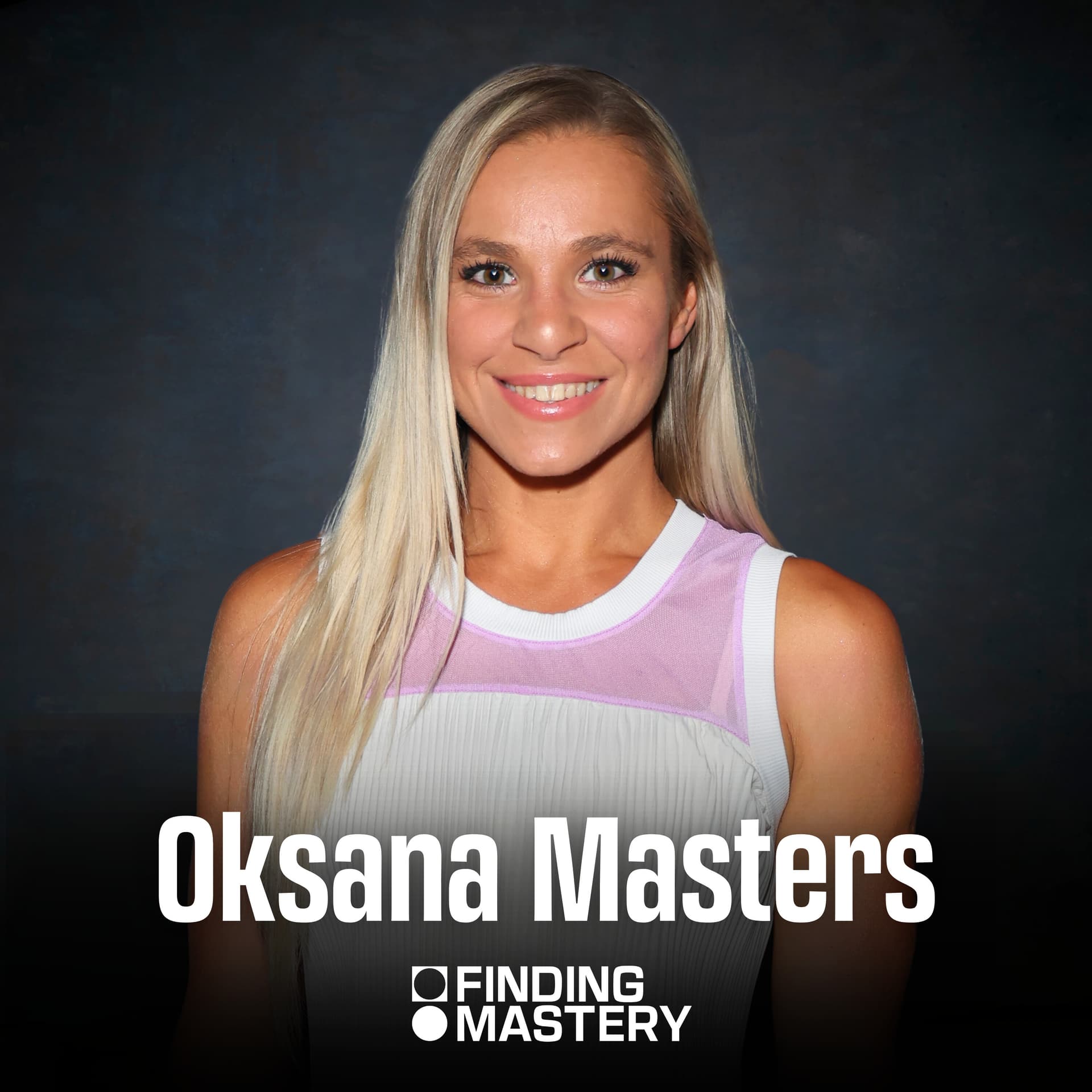
Oksana Masters’ life story from Ukraine after the Chernobyl-era radiation leak to becoming a decorated U.S. Paralympic multi-sport champion, focusing on PTSD-like hypervigilance, abuse in orphanages, reclaiming agency, and reframing disability narratives away from “inspiration porn.”
Guest backgrounds
Oksana Masters, born in Ukraine three years after the Chernobyl disaster; born with severe leg deformities and other medical issues. She lived in three orphanages until adoption at 7.5 by a single mother in America. She later became a Paralympic gold medalist and elite athlete.
Key claims
Radiation exposure likely caused her enamel stripping and deformities. Her early life included physical/sexual abuse, starvation, and mistreatment. She manages hypervigilance via deep focus (counting to 10, cycling/bike focus) and therapy. Society treats disabled people as “invisible” and judges capability based on limited views. On the start line, “nothing is decided yet,” so her story can be rewritten.
Notable examples
hoarding and savoring sugar cubes (tiny bites to stretch food); friend Lainey protecting her in the last orphanage and dying traumatically; a rose tattoo placed over a scar with the Aretha Franklin lyric “a rose is still and always will be a rose.”
Written by AI. May contain mistakes. Listen to the episode to check what was said.
Chapters
Tap a time to open that second in VOOksana's Beginnings: A Life Shaped by Chernobyl
0:00 to 0:29
Learn about Oksana's early life in Ukraine and the impact of Chernobyl on her health.
“I was born in Ukraine and it wasn't until I got to America, I went to my first dentist and they saw radiation in my teeth.”
Reflections on Overcoming Adversity
2:20 to 3:35
Hear Oksana's thoughts on her journey and the strength she found within.
“Boksana, I am so excited to sit with you and have this conversation.”
Understanding Hypervigilance and PTSD
3:35 to 5:10
Explore Oksana's experiences with PTSD and hypervigilance in her daily life.
“and a complete human in the sense that you're amazing.”
Coping Mechanisms and Focus
5:10 to 8:00
Learn how Oksana manages her hypervigilance and finds focus during racing.
“Like I didn't know that's what it is, but I guess in like scientific terms, like, yes, I do have PTSD.”
Childhood Experiences and Orphanages
8:00 to 12:25
Oksana shares detailed memories of her time in orphanages and the challenges faced.
“of like what you're feeling, like racing and stuff.”
Childhood Experiences and Orphanages
12:31 to 13:40
Oksana shares detailed memories of her time in orphanages and the challenges faced.
“you know the real cost isn't just the salary.”
Reflecting on Childhood and Survival
14:56 to 18:00
Oksana discusses her childhood experiences and the survival strategies she developed.
“There's a lot of details that we're not including.”
The Impact of Lainey
18:00 to 20:48
Oksana shares the significant role Lainey played in her life and the trauma of loss.
“The way it works is from birth to three, you're in one orphanage.”
Living with Survivor's Guilt
20:48 to 24:44
Oksana expresses her feelings of guilt about surviving when others did not.
“And yeah, she was, she was the pretty version of me.”
Living with Survivor's Guilt
24:56 to 26:06
Oksana expresses her feelings of guilt about surviving when others did not.
“how to develop it for high performance, how it can be great in high stress conditions and what helps it stay sharp over the long arc of life.”
Show all 28 chapters
Transforming Pain into Power
27:39 to 28:00
Oksana discusses the theme of using challenging experiences as fuel for strength.
“And I think that's the whole point of this book.”
Transformative Insights from Scars and Identity
28:00 to 33:44
Oksana discusses how her past experiences shaped her identity, including physical and emotional scars.
“I would tell myself like to stop doing that if I could go back in time too.”
Perceptions of Disability and Visibility
33:44 to 40:17
Oksana shares her experiences with being perceived differently due to her disability and the importance of visibility.
“Can you open that up a little bit, like what that's like?”
The Meaning Behind the Rose Tattoo
42:46 to 45:36
Oksana shares the significance of her rose tattoo as a symbol of resilience and worth.
“A specific lyric, which is, a rose is still and always will be a rose.”
Releasing Anger Through Sports
45:36 to 47:24
Oksana discusses how she channels her anger through sports and physical activity.
“And it wasn't directed to one specific thing of anger.”
Mindset and Personal Control
47:24 to 51:24
Exploring Oksana's evolving mindset and her approach to life's challenges.
“to stay and on a podium you know a global podium like you have and so and i also don't know the lows that you've i don't i haven't lived in your body so my point is though how do you think about mindset?”
Perceptions of Paralympic Athletes
51:24 to 56:00
Discussion on how society views Paralympians and the frustration with misconceptions.
“Like you go and get a degree, college degree, you worked your steps up and you're a business owner or a CEO, whatever it is.”
The Nature of Luck in Life
56:00 to 58:15
Exploration of how luck plays a role in personal history and survival.
“And I also hear you use the word lucky a bunch.”
The Zen Farmer Parable
58:16 to 1:00:06
Discussion of the Zen farmer story and its implications on perception of luck.
“And then are you familiar with the Zen farmer story, the parable?”
Internal Narrative and Self-Talk
1:00:07 to 1:04:06
Examining how self-talk affects performance and self-perception in sports.
“If you like put these words out there from your mouth to guess bad luck, you're going to see all the bad in it only.”
The Balancing Act of Self-Doubt
1:04:07 to 1:08:26
Understanding the push-pull of self-doubt and the impact on performance.
“And then outside, I'm learning how to process it as a holistic approach of me and myself, Oksana as a whole, not just in the race.”
Gratitude Towards Family
1:08:27 to 1:10:00
Sharing deep gratitude for maternal influence and support in life.
“I know where the bounce is kind of weird.”
Emotional Tribute to a Mother
1:10:00 to 1:10:44
Oksana shares heartfelt gratitude towards her mother for her sacrifices and support.
“to get to like find that new ball kind of thing.”
A Mother's Resilience
1:10:44 to 1:11:55
Discussion about Oksana's mother's struggles and triumphs in a male-dominated world.
“And I'm sorry for the gray hair that you got before we left Ukraine that month.”
Oksana's Aspirations
1:11:55 to 1:12:42
Oksana expresses her desire to make a positive impact without seeking recognition.
“She had to put a man down on the adoption papers because you had to have a father.”
The Power of Belief
1:12:42 to 1:13:10
Discussion on the importance of belief and perseverance in achieving goals.
“I just want to leave an imprint of a better world.”
Exploration of Inner Growth
1:13:10 to 1:14:12
Conversation about personal growth and the journey of self-discovery.
“I believe everything that you've said, you know.”
Connecting with the Community
1:14:12 to 1:15:38
Oksana discusses her hopes for community engagement and support.
“I want people to buy your book, be part of your community.”
Transcript
Automatic transcript. May contain errors.0:00I was born in Ukraine and it wasn't until I got to America, I went to my first dentist and they saw radiation in my teeth. And that's when they were like, this is most likely Chernobyl that caused all this.
0:10Dr. Michael Gervais:What if I told you that one of the most dominant athletes of our time began her life in unimaginable hardship and then rewrote her story chapter by chapter? Society determines people with disabilities. I'm invisible. My story has been written for me as a girl with a disability, as an orphan, as a female in sports. I wanted to rewrite my own story. Welcome back. Welcome to the Finding Mastery podcast, where we dive into the minds of the world's greatest thinkers and doers. I'm your host, Dr. Michael Gervais, by trade and training a high-performance psychologist. Now, the idea behind these conversations is simple, to sit with the extraordinaries, to really learn how they work from the inside out.
0:48Dr. Michael Gervais:And today, we're doing just that by bringing back another unforgettable conversation from the Finding Mastery vault with the incredible Oksana Masters. When you think of an athlete like Serena Williams or Michael Jordan, the first thing that pops into 90 % of people's minds is what they've achieved and the greatest of all time. But when you think of a Paralympian, oh, well, what happened to your body? Where did you come from? Where you come from, it's important. It's shaped you, but it's not your identity of who you are. Oksana is a multi-sport Paralympic gold medalist, one of the most decorated Paralympians in U.S.
1:22Dr. Michael Gervais:history. Oksana's journey, it's a masterclass in what it means to reclaim agency in a life that offered her none. I want to give a disclaimer here. This episode deals with some pretty heavy subjects around abuse and they could be triggering for you. I'm encouraging you now to use your best judgment. I personally found this conversation to be incredibly meaningful and wonderfully healing. It's going to sound so weird, but like I'm so thankful for what I experienced and what I went through because I now know nothing's going to get as bad as that, first of all. And now what I'm doing here, I'm in complete control and can have the option to choose how I want to approach this.
1:57Dr. Michael Gervais:We're re-releasing this episode now because her message about how she worked with her experiences to live with a sense of freedom and power, it feels just as relevant, if not more so today. So with that, let's jump right into this week's conversation from the Finding Mastery Vault with Oksana Masters.
2:20Dr. Michael Gervais:Boksana, I am so excited to sit with you and have this conversation. I read your book and I couldn't put it down. It was overwhelming in parts and inspiring in equal ways. And I'm I'm in awe on how you've navigated your life. And you are literally, to me, a living emblem of how to deal with shit. Like in some cases, like your mom is an absolute badass. You are a badass. Like how you've organized your inner life is incredible. The deep insight you have on how to deal with. I don't want to let's call it what it is like for me it's dark like some of the human behaviors that you've been through have been dark and you know we all have our own
3:18Dr. Michael Gervais:unique dark parts of our life our own scars our own battle wounds and you have written a story that's remarkable and you faced some incredible things and then squared up with them. And you also have this sense of peace in your life. You're a kick-ass athlete and a complete human in the sense that you're amazing. And so I just want to start by saying that. So thank you. Thank you. First of all, you're way too kind. You're way too kind. I'm just a person, just a girl with no legs, really. But thank you so, so much. I'm so excited. I'm just a girl with no legs. Yeah, I'm just a girl. Sometimes I'm 5 '8", sometimes 4 '0", it, sometimes just curl up in a ball.
4:00Dr. Michael Gervais:You are too funny. Okay. What do I need to know about you to understand you? Oh man. I honestly, I don't know. I'm a really boring person, to be honest. There's really, I think I'm one of those people. I think a lot of people are like, oh, you're so bubbly. You're so positive. And I was never just right away, always positive and bubbly and loved myself and had this outlook in life. And I found just how to laugh at myself and make fun and light of situations when I'm uncomfortable. So I just laugh for no reason sometimes. So there's this idea of equal opposites in some respect. As somebody who really wants to soar in life, there's some sort of counterbalance to having some depth.
4:52Dr. Michael Gervais:For people that understand the light, they also need to understand the dark. And so you embody the light, but you've also faced down and worked with the dark. So one of the things I'm really intrigued by is, do you resonate with PTSD? Well, I guess like I, it's weird. It's like a label. Like I didn't know that's what it is, but I guess in like scientific terms, like, yes, I do have PTSD. And to this day, Like I'm something like loud noises and there's certain smells and certain just certain things. Like I'm a super hyper vigilant person too. And there's 30 things that can be happening in a room and I'm hearing each one individually.
5:35And it makes my body just stress, so stressful and so draining to try and like tell my body constantly of you recognize these things and the sounds and you're fine. But yeah, I mean, I do.
5:49Dr. Michael Gervais:look what i hear when i hear you say it is like listen i'm i'm not about trying to get labeled and um which i really appreciate and then on the other side i hear you saying yeah it's not like it was a thing last year that i'm now done with or it's not a thing that i kind of struggled a couple years after some of my early trauma you're saying yeah no i still have a hyper vigilance and by the way that is really one of the guiding functions of ptsd it's not it's a terrible name for a lot of reasons. Oh, really? I didn't know that. Yeah. So how do you manage that? How do you deal with that part of hypervigilance?
6:26Dr. Michael Gervais:Because it's exhausting. It is. And my fiance hates going to a movie with me because, oh my gosh, I can hear every crunch of every person's popcorn and sneeze and everything. And I'm like looking back and I'm like, he's like, just stop it. Just stop it. And like every whisper. Honestly, for me, it's my one time that I don't have any of that, except sometimes I do when I'm extremely zoned out is in that moment of racing and my mind just shuts off and I go to one specific. I do this weird thing I've always done and I count to 10 over and over and over and people are like, why don't you count to 100?
7:04It's a lot more going on. I'm like, I don't know. I've always counted whatever I do, just like count to 10. And I don't know why I started doing that and when i started doing that but from where i can remember and when i counting the weird thing is like my mind subconsciously is like processing their different going into memories and stuff and just that's the moment where i don't have any of that stressful anxiety until there's i don't just like a random like bird or something or like something that would be that comes by and i'm when i'm on the bike and i'm like oh my god and it freaks me out but because i'm so zoned out that's the only time every other time it's um it's just kind of there and don't really i don't
7:45Dr. Michael Gervais:know well so that what you just described is deep focus is a one of the inoculations for a racing mind and if you're fully committed to one and then two and then three right and you're fully committed to that there's literally no space to muse other ideas or images or feel the pain of like what you're feeling, like racing and stuff. And like, you're just focused on that number. Okay, so give some context for folks that haven't read your book that don't understand what some of the early childhood experiences give to your best abilities without me asking something that you don't, where you don't want to take a conversation.
8:26Dr. Michael Gervais:But can you give a general sense? Because you did such a nice job in your book explaining your early childhood experiences. So I was born in Ukraine And I was born three years after Chernobyl radiation leak happened. The radiation levels, what people don't even know to this day, is so high and so strong and keeps rising that there's a ground 100 miles around where Chernobyl is. Like, it's just dead land right now. And when my birth mom was traveling and she must have eaten something or in that area that was affected by radiation that resulted in when I was in her birth, when I was in her stomach, resulted in my like deformities, disabilities, I guess.
9:11I was born with my legs. And it wasn't until I got to America that I went to my first dentist and they took x-rays and my adult teeth, they saw radiation in my teeth. and that's when they were like, this is what time? And they went back and did the timeframe and kind of of where the village I was, well, the last orphanage, you don't really, where I was from and everything in Ukraine and kind of said that it's most likely Chernobyl that caused all this. Because when you're born with a disability or anything that's like a deformity in the body, a lot of times it's localized. So if you have an amputation, it's like at the legs and only at the legs, or maybe it'll be like on a leg and an arm or something, but it's the same type of a disability.
9:55Where for me, I was born with my legs. I was missing the main weight-bearing bones on both of them and my knees were kind of floating there. They weren't really knees. My enamel was stripped and radiation is one of the only things that can strip enamel. And my hands were deformed. I was missing my organs and kidneys and some muscle groups. That's why I really got to focus when I go straight on a bike, because if I don't, then I'm like, the one muscle group is going to take over because it's stronger. But because of all the stuff that was going on, I was put right to an orphanage because my birth parents didn't have the resources for the medical care I was going to need.
10:34And they thought they were going to be giving me a better life in the orphanage where they could potentially give me what I need. And that wasn't the case. I lived in three different orphanages straight from birth until I was adopted. when I was seven and a half. And within those three orphanages, the one I remember the most and the one that my memories are so vivid that are in the book. And I share a lot, but there's some things that I just don't share in the book and the memories because I'm still trying to figure out how to put words to the things that I experienced. But the last one is where a lot of the stuff happened and there was just mistreatment, abuse, physical, sexual, starving to death, and just being extremely malnourished.
11:23When I came to America, I was diagnosed with failure to thrive. I wasn't going to live long because of just my size. And my immune system was non-existent at all and just very weak. And it's weird. My hair was black and coarse, and I had black eyes and everything. Everything changed when I came to America. And finally, my mom says it was just food, love, and hugs. And I grew within like six inches within a few months of being in America. And my mom adopted me as a single parent. And then we came to... And the crazy thing is like, she just saw a picture of me. She didn't go to the orphanage first to be like, oh, I love her personality or anything like that.
12:10she just saw this really not so cute picture of me. And thank God she saw something in it and fought for me for two years. It was a very long battle that she had to go through. And now I'm here.
12:25Dr. Michael Gervais:Yeah, you are. Bodymaster is brought to you by LinkedIn Jobs. If you've ever hired for a small business, you know the real cost isn't just the salary. It's the time that you lose when the fit is off, the momentum that stalls when that fit doesn't work. And that's the pressure of having to get it right while you're still running everything else. That's why I'm paying attention to LinkedIn Hiring Pro. It's built for the reality of hiring when you're operating lean. You describe the role in playing language and then Hiring Pro helps you draft the job post, surface the right candidates, and then narrow to a short list without turning hiring into another full-time job.
12:59Dr. Michael Gervais:And when applications start coming in, it doesn't leave you buried in resumes. It streamlines screening, including AI-powered interviews for initial conversations. How about that? So that you can spend less time searching and then more time connecting with the people who match what you need. With Hiring Pro, you can hire with confidence, knowing you're getting the best talent for your business. In fact, those hiring with LinkedIn are 24 % less likely to need to reopen a role within 12 months when compared to their leading competitor. Join the 2.7 million small businesses using LinkedIn to hire.
13:29Dr. Michael Gervais:Get started by posting your job for free at linkedin.com slash mastery. Again, that's linkedin.com slash mastery. Terms and conditions apply. Finding Mastery is brought to you by David Protein. Travel a lot at Finding Mastery. And sometimes travel makes it tricky to eat well. Best intentions, and then you're at the airport. And then suddenly the only options around you are the ones that you'd rarely choose at home. Something I come back to often is that discipline isn't really about willpower in the moment. It's often about choice architecture. Setting up your environment ahead of time so that the easy choice and the good choice are the same one.
14:05Dr. Michael Gervais:That's the role David plays for me on the road. The gold bar, it's their flagship high protein density, great texture, flavors that make it easy to stick with. So when I throw a few in the bag before my trip, I've already made the decision. The hard moment later takes care of itself. And the team here at Finding Mastery, they love the bars as well. They are ripping through them in the Finding Mastery lab. Salted peanut butter and fudge brownie seem to be the fan favorites right now. They have built something with real rigor in a crowded, sometimes ambiguous space like nutrition. That matters when it's something that you reach for again and again.
14:36Dr. Michael Gervais:David bars are now available in major retailers like Walmart and Target. And if you'd like to buy them directly and get a special offer for being a Finding Mastery listener, head to davidprotein.com slash finding mastery, where right now, if you buy four packs, you'll get the fifth one for free. Again, that's davidprotein.com slash finding mastery. There's a lot of details that we're not including. and oh yeah well yeah like my friend laney yeah well your friend laney we can we can talk about that there's things like there's the horror part of it which i'm not interested in talking about in this moment with you but there's the parts where like i'm like like can you talk about the sugar cubes how you like this is remarkable by the way i don't i'm sorry real quick i don't want to miss this point i don't want to miss that you came to america with hugs and some food some pure love that your mom had and you grew six inches in a handful of months like that that should paint a picture of like just how bad it was and so look can we just start with the sugar cubes and like i think that really brings it to life for me at least yeah so i i love sugar cubes even when i got to america i hoarded them in my room and under my mattress was sitting behind my board, my headboard.
15:54I was really, really hungry at times. And if I washed a pair of 10 socks on this like metal, like old washboard, I would get a sugar cube. And I learned how to savor that sugar cube. I think my fiance hates the way I eat now because it's something I still do to this day. Like I, he calls me like a little rabbit. I take the smallest bites and then And I individually, within that bite, I make that bite like 10 separate bites in itself. The way I ate that sugar cube to keep it longer and last longer is, so everyone knows what a sugar cube is, obviously. And it's like has within that square, it has like these little tiny crystals of sugar.
16:36And I would take little bite by bite and chew each one individually. And it would just last me for a very, very long time. And I just would get fuller that way faster and I would have more. and just learned how to do that. And I do that now to this day with my grapes. I eat the, I'm such a weirdo. I eat like the peel first and that either like the outside. And then like later on, it all actually came in handy when I was living out of my car. I learned how to make that box of spinach that I could afford the grocery store last that much longer. Cause it was, I've already been there. I knew that.
17:10And that's, I worked for that food and savored it.
17:14Dr. Michael Gervais:All right. I think that's where I learned hard work. Like, okay, if i work hard there's like not a reward but there's good out of it well this is not advised right like starve starve your kids so they understand yeah this is not this is not what we're saying okay but i mean remarkable like it speaks to your resourcefulness your cleverness the will to live um a strategy to figure out how to optimize when it is deplorable and so So that to me, it feels like that captures so much about your internal resources. And now let's just be clear. This was like in the age four, five, six, right? Seven-ish.
17:56So no, this was five and six, five to seven. The way it works is from birth to three, you're in one orphanage. From three to five, you're in like considered like a baby home. And then five to 16, you're considered an adult. Unless you're four and you outgrow your bed, then you go automatically to the adult one.
18:22Dr. Michael Gervais:And so you had a friend in there, Lainey, which you talk about in the book. And she was like, she took care of you. Yeah. I didn't realize how much she was taking care of me and how much she was protecting me. I've been through therapy too. And I was the really hellish child that just would make it very difficult on the therapist. Oh, you were. wouldn't talk or anything. And I had one incredible one in Buffalo, New York. It was supposed to be a 30 minute consultation. And all of a sudden my mom's like, it's an hour and a half in and I'm still in there. And she comes out and she's like, can she, Oh, can I have some milk and some cookies?
18:59She's like, yeah, but is this okay? Like we're past the time from the consultation. She's like, yeah. After that, that she's like, I don't remember. I don't know. I know I didn't say anything. I was not a talker. I was not, but she gave me things to draw on things. And, and at the end she walked out and she told my mom, like, she's going to need a lifelong therapy for the rest of her life. She's been through some, like, it's very apparent in her body language and what she's drawing. And she, my mom was trying to figure out what it was that patient confidentiality. She wasn't going to tell her, but it was very apparent for her within like the first five minutes of being with me.
19:37There was a lot of deep stuff. A lot of that deep stuff was what I did not know what my friend Lainey, who was one of my best friends there in the orphanage in the last one, was protecting me from until she was gone. And when I say gone, I mean, I'm not going to say the specifics because you can read about it, but she didn't just pass away peacefully. Unfortunately, it was a pretty traumatic way that I had to watch her die. And that's a guilt that I have with me because it was my fault of what happened and why we were out of our rooms. But that's why I wanted to write this book is because I've always felt so guilty and always wondered, why did I make it out?
20:27Why was I the one that made it and she wasn't? Why didn't like, like I don't, I didn't understand it. And then I felt guilty about it. And this was my way to honor her legacy and make her story so that she is someone. It didn't just go unknown. And she is there. And she's been that part of my journey the whole entire time. And yeah, she was, she was the pretty version of me. She had the natural blonde hair. This is fake. I don't have blonde hair. and she had the blue eyes and just nothing that physically wrong um and she was older and just like just so so sweet like just so so kind so can i offer an observation yeah yeah so i think i'm
21:17Dr. Michael Gervais:watching you take care of yourself right now what is that yeah so like you my hair completely on it No, no. You're completely honest with what you just responded. And there's a lot of emotion. And I can hear it in your voice. And I'm sure you can feel it. But I watched you like not go into, let's say a 10. Let's say on a scale of one to 10. It's like an eight is where I'm about to like fall into 1000 pieces. And like, you know, like, or maybe that's a nine or something, right. And And like somewhere in the seven or eight zone, I'm like, okay, like I can feel it, but I can still manage it. And I think you were right up in that seven and eight, if we're calibrating correctly.
22:02That's because every time I talk about her, I get to a point where I'm fine, fine, fine. And then all of a sudden I'm like crying and I don't want to do that on you. That's why I was like, people can read about the specifics because when I start to talk about it, there's so much, there's so much power in when words come to life and you put them out there and you speak them from your mouth. And that's why I hated my story. And it was so hard for me to love my story and love myself and know what I went through wasn't my fault. But yeah, I just totally lost my train of thought why I was going with that.
22:42Dr. Michael Gervais:Does that happen sometimes when you go and kind of get close to the trauma that there's a blankness that comes with it sometimes? Sometimes. Yeah, I recognize it. Sometimes, but not oftentimes with Lainey, though. I think because I just saw it and heard, and it sounds like that when you watch something like that, you do not forget ever. I'm so glad we're talking about this. A big part of this book was about Lainey, but when I read this part of the book, I was like, oh, there's a hero, right? right and i wondered how you worked through that and the book in the book the way you write about it um you pulled me right into it it felt like i was there like watching and i wondered about like the survival guilt that you might feel about that and that's what you're dealing with now maybe or or have been and it's like it doesn't make any sense because you wouldn't have chosen that you wouldn't have you wouldn't have wished that like that it's not anything close to what um either of you wanted and so it's like it doesn't make sense why was it her and not you yeah well because she pushed me she took care of you yeah we're all so lucky to have somebody like Lainey in our lives yeah and that's so cool because Because every time I race, like I'm so, there's so many times and moments, whether I'm training or racing, and I feel like literally like sometimes like a push and I'm like looking back to see who it is and I'm by myself.
24:22And in my mind, I've like told, that was my way of telling myself, like, that is Lainey saying I'm like right here by your side still. And then she's never left and all that kind of stuff. So I'm pretty lucky because I have that extra secret weapon that not a lot of athletes have. and when I get really retired specifically and when I feel that and I think someone's behind, it's a competitor pushing me. Sometimes it is because it gets racist and it happens, but I'm pretty lucky to have that. And it's like that second wind.
24:53Dr. Michael Gervais:Finding Master is brought to you by Momentus. I have spent my career studying the mind, how to develop it for high performance, how it can be great in high stress conditions and what helps it stay sharp over the long arc of life. And one of the things I've learned is to pay close attention when science starts pointing somewhere new. Creatine is one of those places right now. We've known for decades what it does for the body. Strength, power, recovery. It's about well studied as any supplement out there. But the work emerging on creatine in the brain is what has my attention. The brain runs on energy.
25:24Dr. Michael Gervais:The same currency a working muscle does. And creatine appears to support brain energy metabolism. Helping working memory. Easing mental fatigue. Under exactly the conditions so many of us operate in. sustained demand, stress, not enough sleep. For something that's been around this long, that's a genuinely interesting frontier. So if I'm going to take something daily, the quality has to be unquestionable. That's why I use Momentus. They searched the globe for the highest quality creatine. Then they built their own specification around it. Signature spec is what they call it. It's made in a pharmaceutical facility, six stages of testing, four independent agencies, and it's NSF certified for sport.
Read the full transcript
26:02Dr. Michael Gervais:When you take something every day, that level of quality compounds. Go to livemomentous.com slash finding mastery and use the code finding mastery for up to 35 % off your first order. That's live, L-I-V-E, momentous.com slash finding mastery with the code finding mastery. Finding Mastery is brought to you by Lisa. We are serious about recovery. Sleep sits right at the center of that practice. I have been fortunate to work with some of the most extraordinary performers for the last two decades. And sleep and recovery are foundational, full stop. It's where the body and the brain repairs. And that's why finding a mattress that supports your recovery matters so much.
26:43Dr. Michael Gervais:A great mattress, it's not something that you stumble into. It is a choice. You find it on purpose, the same way that you'd approach anything that really matters in your life. We've worked with Lisa for a long time now because they get it. They build beautifully crafted mattresses tailored to how you actually sleep. Your position, your feel, your preferences, all of it. You can take their sleep quiz and find your match in about two minutes. Premium material, serious comfort, full body support, no matter how you rest. One of our teammates here at Finding Mastery picked one up recently. Can't stop talking about it.
27:13Dr. Michael Gervais:Says it. They're waking up more rested than they have in years. Right now, go to lisa.com for 25 % off select mattresses. Plus, you get an extra$50 off when you use the promo code mastery. That's exclusive for our listeners. That's Lisa, L E E S a.com promo code mastery for the 25 % off select mattresses plus the extra$50 off when you use the code mastery. You have a unique experience that you have are figuring out how to integrate that into, you know, your power. Yeah. And I think that's the whole point of this book. that's exactly how to say like like i want people to when they read it not to learn about my story and my experiences but how can they make their hard parts their shitty experiences or their bad days into their power and fuel to like not just be something bad that happened like oh yeah this is a really sad memory but you know what like you started this conversation at the beginning of there's always that big contrast and there's we can take from both have you ever read or do you are you aware of banksy's insight the you know the contemporary artist banksy no about dying twice i clearly live under a rock well you're training a lot so it's understood um they say you die twice when you stop breathing and then the second one a bit later when somebody mentions your name for the last time pretty cool so laney's still living how about it yeah okay how do you use and integrate your experiences that this is like what i really want to understand because there was an insight that you had which was somebody asked you if you could go back and kind of change you know your seven year old's experiences and you're really bold do you remember what you said in that interview I would tell her I wouldn't change a thing to just keep fighting.
29:09Except stop climbing books, the bookshelves that I always got ripped from and just in trouble all the time because I clearly didn't learn from getting in trouble all the time and getting punished and I still went and did it anyways. So I tell myself that too.
29:23Dr. Michael Gervais:What do you tell yourself? I would tell myself like to stop doing that if I could go back in time too. Just like not just, yeah, keep fighting, but also let's not put ourselves in like more trouble than we already get. Do you take risks? Is that what that's about? Like, are you an adventurer or risk taker? Like, help me understand that part of you a little bit. I am in a weird way. Like I'm not, there's a reason why I love cross country skiing and not downhill skiing. Cause I like to work against gravity. It's safer in that aspect. So risk wise like that. No, I do not. But I am a very adventurous person and want to try and will do something at least once.
30:07And I've always been very, um, I think I've always walked that line of like right on that edge of a fear and exhilarating kind of thing okay so you like that you you like
30:22Dr. Michael Gervais:that feeling yeah and then yeah when i can know that i am control of it when i'm control like in like controlling every aspect of it kind of thing so this is another insight before we get to the alignment piece you had another insight which is like for so much of me and so much of my early life, my story was written for me. I have your, right. And then you say, but that's different on the start line. On the start line, the story isn't written. Nothing's decided yet. Nothing is decided yet. And so much of your life was, as you put it, like decided for you. So what were the things that were decided for you?
31:00Dr. Michael Gervais:What are you capturing in that insight? When my story was written for me, I'm referring to scars that I came with that I remember and I know how I got and some I don't remember. And they were already written for me, that part of me on my body that I had no control over. What does that mean? What are those scars that you're referring to? Like on my legs and my hands and stuff. And I have this one on my stomach and that I remember very vividly getting one night and it's just like, I didn't have a control in that. I didn't have, I didn't like the scars now, like I'm recovering from an injury on my hand and I have the scar and I have these scars on my elbow from Pyeongchang when I was racing and messed my elbow up.
31:46These scars I was going to control off because it's from an injury. I know where they came from. The scars that are resulted of abuse and punishments or like the ones I have a lot of like IV cut down scars where it was just reuse, reuse. I was the smallest and the youngest. So I was the last one to get all the needles. And so they just got infected to cut everything out. So there's some medical scars too. And that's all that I had no control over. And I didn't, like, I just, that was written for me. And in addition to that, mentally, when I came to America and started processing and understand, not even understanding, but when all the memories I thought I was suppressing and hid and told my mom nothing ever happened, it was that like invisible scar tissue inside that was also something that was written for me.
32:41And I had to relearn how to rewire my brain and my process when I look in the mirror, in addition to going through amputations two separate times in my life. And both times, someone's telling me, why would you do that? You can't do anything if you cut your legs off. And my legs are above the knee, which makes a very, very big difference if you're below the knee amputee to above the knee amputee because you're missing two joints, ankle and a knee. And society determines people with disabilities that I'm invisible. I'm not worthy of setting goals, let alone achieving those goals or love or being seen.
33:19And my biggest pet peeve is determining what I'm capable of achieving and doing based on what their limited view is. And so in that aspect, my story's been written for me as a girl with a disability, as an orphan, as an abused orphan, as a female in sports and being a smaller statue built and stuff. And I wanted to rewrite my own story.
33:43Dr. Michael Gervais:Thank you for the insights there. and more importantly thank you for getting so close to your experiences that i feel like i can feel it too um you're forcing just by the way you're choosing your words for me to be in touch with times that i felt like i wasn't seen and uh my essence didn't matter as much as their experience and i think a lot of people can understand what that means so you take it a step further you say I was invisible. Can you open that up a little bit, like what that's like? And I think there's probably two parts. You can talk about the trauma part, of course, but there's also the everyday thing is like, I've learned from some Paralympic athletes I've spent time with is that people don't want to look.
34:34Dr. Michael Gervais:And because if they look, they don't want to make you feel different or weird. I've got the opposite problem. People stare like there's no tomorrow. Like their eyes are about to, my pet peeve is if you're going to look, look. And then it's a question. It's when people go and they're like this and their eyes are following. It's like they're about to fall out of their heads. They're going so far. And then they're trying not to look. It's more obvious than if you just look and turn. And it's fine to look, but it's like, I'm walking through airports or anywhere in the grocery store. or, you know, it's like, what's really hard is I have my prosthetics.
35:11I'm okay with those. My hands is what drives me insane. People don't know what to do. Cause sometimes when I pay for something with a card or cash and they go and they're like, and they jump. And then like that, because it's so different, they didn't expect my hand to look the way it does like a little tiny T-Rex claw coming at them. And maybe I need to paint my nails.
35:28Dr. Michael Gervais:Wait, what did you call it? My little T-Rex claw. I have little short hands anyways. Like my hands are, I'm a short person. and so I try to make it up with my legs and be tall to hide for that but my hands are like I've had a lot a lot of surgery reconstruction surgery on my hands to the point like doctors don't understand how I'm using my hands because scientifically within my anatomy it makes no sense I shouldn't be able to but I found a way like we all find ways and so you had you were born to five fingers yeah five fingers no thumb but it was like um they were all webbed and so when i was in ukraine i had seven surgeries to help a little bit i was born fun fact six toes which is not due to radiation that apparently something like you get passed down from your parents so i can't wait to one day meet my birth family and be like did you have six toes and by why did you give me these eyebrows that like stop growing halfway and i have to fill in the rest there's a lot so so there's a lot there so so on the six toes is it like literally like it's an extra toe or is it yeah so it's not like coming from the same but oh so yeah and but your fingers had like two nail beds in each finger yeah did i read that correctly yeah they were all like everything doubles but what i don't have is so like i have this one this one but then i don't have that extra joint that you do here.
36:53It's just one, two.
36:55Dr. Michael Gervais:That's right. Yep. Okay. Yeah, cool. And then they took my fifth finger, like moved it from here to here. So I don't have - To where your thumb normally be. Yeah. So like, I don't have this muscle here because it's not a thumb, which is half of your hand. What's the best type of interaction when somebody notices your hand or they're looking like, and like, what's the best kind of, and what's the worst kind of reaction that, or inner interaction that. The worst is like when you like do a double take as if someone just poured hot water on them or cold water on them. It's like, okay, cool. Get, get cultured experience.
37:32Get out a little bit. I know I live in. Is that what you say? Yeah. Sometimes when they're rude or I'm just like, God, stare much. I'm that person. Sometimes like I am, I'm passive aggressive. And my fiance is like, no, Oksana, you are just aggressive, aggressive. Sometimes there's no passive aggressiveness.
37:50Dr. Michael Gervais:And I'm like, oh, when they need it, when they need that aggressive, aggressive, I like to call people out because then they brings attention to like, oh, and maybe that will help them. And the next time they see someone that they're like not used to seeing or whatever, but it's those people that come when I say, thank you for your service. And I'm like, what? So they automatically assume and associate someone with amputees or something like that is automatically because of military and that's what it was and i don't know if it's because it helps them process of how and what could have happened to someone's legs and why they are the way they are please don't do that i mean i know i'm a badass and i look tough but i'm no don't just assume and say thank you because on the other side of that is i say oh i'm not in the service like oh oh okay and then just walk away so it's like okay well may I ask what happened?
38:43That's like, you could just do it that way. If you weren't in the military, I just assumed, because you look like a badass, that you could just say that. I'm like, it's okay to ask. You don't have to just stare. And because you're uncomfortable, like, it's the only way is I have my legs. I was hiding my legs. I had the foam and the nylons to try and hide it. And I realized I was bringing the wrong attention and the negative stares. And people were just, they couldn't figure out like, well, what's wrong with me? Why do I walk? Like I got something up my back or something. And that's because they couldn't see what I was working with.
39:22And so I decided to, the sports helped me find the strength of accepting who I am and seeing it, my growing partner who looks so cool with his legs. I'm like, okay, I'm going to do this so they can see the components of it.
39:34Dr. Michael Gervais:Yeah, it's cool. I actually really appreciate that piece. It's like, I love that like insight, which is like kind of bring whatever it is to the forefront, bring it to the light. Cause you know, as you've, as you've also articulated, we all have dark tunnels and your mom helped you find, you know, the light through that tunnel is one of your insights. And so like, just kind of bringing things into the light for me, at least when I bring something to the light, then it's like, oh, well, it's so exhausting trying to carry this thing around when I bring it to the forefront, to the light. And other people are like, oh, is that why you're all stressed out?
40:08Dr. Michael Gervais:Oh, okay. Now I understand. Cool. Yeah. I get stressed out too. Thanks for letting me know. Yeah. 100%. Finding Master is brought to you by Magic Mind. Something that I come back to often is the power of principled mornings. The performers who sustained excellence over decades, not just for a season, they almost all have one. A set of behaviors that they do not negotiate away because they understand that how you enter the day shapes how you move through it. For a long time, my mornings have been disciplined, but a little incomplete. I do all the practices for stillness and movement, but when I sat down for the first real hours of cognitive work, there was a ceiling that I kept noticing.
40:47Dr. Michael Gervais:Clarity that faded faster than I wanted to, and I told myself it was normal. Magic mind is part of my mid-morning routine as a way to work with that. It's a daily two-ounce mental performance shot with clinically backed ingredients like lion's mane, ashwagandha, turmeric. Two seconds every morning. It's awesome. And I notice when I skip it, sharper thinking, steadier focus, better energy through the back half of my day. I'm not wired. I'm just more consistently on. The formula is based over 10 years of research, nano-encapsulated for five times better absorption than traditional pills and powders.
41:19Dr. Michael Gervais:Go to magicmind.com to get 50 % off your first order. Small routines done consistently are where excellence tends to live. This one might be worth adding. Finding Mastery is brought to you by our flagship mindset training course, Finding Your Best. Anytime you feel the pull to reset, to zoom out, to refocus and ask, am I moving toward the person I want to become? It helps to remember this. Lasting change comes from training. Not resolutions, not short-term sprints, but deliberate practice of the skills that shape how we show up in work, in relationships, and in the moments of great intensity as well.
41:52Dr. Michael Gervais:That's what finding your best is all about. It's a science-backed framework for training your mind. And it's the same set of tools that we've taught to Olympic athletes, top executives, elite military teams, and artists at the peak of their craft. In this course, you'll learn the foundational psychological skills to be your very best. Full stop. And the best part is you can start anytime. Right now, we're running a limited time offer on finding your best. Simply head to findingmastery.com slash course and use the code renew100 to get$100 off your registration. If you've been waiting for the right moment, this is a good one now to lean into.
42:25Dr. Michael Gervais:Spring and summer, they are powerful seasons of momentum. It's a great natural time to step into growth, to refocus, to recommit to who you want to become. And this discount will not be around for long. So go to findingmastery.com slash course code renew 100 for a hundred dollars off today because your future is not shaped by what you intend it's shaped by what you train i think this is a segue about your tattoo your rose tattoo which one okay your rose tattoo i think there's a segue here can you talk about one of your the way that you have conceptualized that a rose is just a rose and your rose tattoo So I am a Aretha Franklin fan, and there was a song that just hit my heart and I identified so much with it.
43:14A specific lyric, which is, a rose is still and always will be a rose. Doesn't matter what form it's in. And so that, well, she said that my metaphor and taken in the way I interpret it was, yeah, you're right. It doesn't matter a rose, whether it's a dead rose, a thriving, beautiful colored rose or halfway dying rose, it's will always be a rose still. And that kind of helped me. So I got this tattoo specifically placed over a scar that I had. And the way I received that scar was super traumatic in that literally, Mike, this was a scar that happened so recently when my mom adopted me, I was still picking out the stitches up until a few months after I was in America.
43:58And then all of a sudden I'm like, I got it finally. And she'll my mom. And that's how recent that situation happened from when she adopted me. And it was only going to get worse if she didn't get me then. And it's a rose that is thriving on one side and it's transforming into a dying black and white rose and kind of frailing away. And it says a rose is still and always will be a rose on the words on the sides of it. And that was for me to remember when I look at that, not to see the scar, but to see that no matter what was taken away from you, that you're still, you're still worth it. You're still deserve love and you still are a person and you still can love yourself.
44:40Dr. Michael Gervais:What do you do to love yourself? Like, how do you practice that? I sweat it out. Not going to lie. I just sweat workout. I just, I just have to go and throw some weights and release that energy and stuff. And, um, I recently I'm really getting into like my me time, which is like my 3000 steps skincare routine. And it's not just because like of doing that. It's like the process I'm in the, it's kind of going back to counting. And when I'm doing each, each process of it is kind of just like not focusing on anything else just focusing on what i'm putting on and just that process like 10 minutes and all that kind of stuff and and then the other side is so that girly girl side and then the just work out to be honest i've got a lot of anger i was an angry racer and i was just a very angry kid i think people will learn why.
45:33And I didn't know why I was angry. And it wasn't directed to one specific thing of anger. It was just anger. I don't know if you've seen, oh gosh, Inside Out, that animated show about the emotions.
45:47Dr. Michael Gervais:Yeah, it's really clever. My favorite one guy was the angry father side. Yeah. I was like, yes, I get him because it's so raw. It's so emotional and so real. And I was just that angry kid and I got to release that in sports. You would use, you would come from that place. You could express that, the intensity of anger in working out. And so that's one of the ways it probably. Because I got the release. Yeah. It was a let go. So there's also this interesting little meditative process that you had like this full presence with, with the anger and intensity and the physical movement and all the attention required that there is a release valve in there for you.
46:28Dr. Michael Gervais:I'm not suggesting that that is healthy or that that is like a way to heal, but you're using it, right? Yeah. Well, and it's interesting because like you're saying you're not suggesting it's a heal. I've had some injuries and you know, it's really scary and I'm going to have to find ways to heal. And this is the real honest truth because my coping in my therapy for a lot of stuff right now is sports and training and just that's my escape and when i'm injured what's going to happen when that goes away exactly that's right yeah so and that's so you're aware of it yeah i think well you're going to need another tool right yeah well it's coffee i love coffee and i have a espresso machine and i'm just gonna have to steam milk 24 7.
47:15Dr. Michael Gervais:okay so you've been through highs and lows as all of us have i think um yours are really unique and your lows are pretty damn low and your highs are pretty damn high you know like pretty lucky i don't know what it's like to stay and on a podium you know a global podium like you have and so and i also don't know the lows that you've i don't i haven't lived in your body so my point is though how do you think about mindset? How do you think about the way that you approach an event or events in your life? I don't know. This is honestly something that is kind of like a new territory for me. And I'm still learning to navigate it and still trying to find the, how do I approach it in that way?
47:59And the mindset of it, it's going to sound so weird, but like, I'm so thankful for what I experienced and what I went through. And my mindset, instead of being so angry like I was at that time, because what I lived and what I experienced and when I, now, these are tools I have because I walk that path. I now know when nothing's gonna get as bad as that, first of all. And now what I'm doing here, I'm in complete control and can have the option to choose how I wanna approach this. And there's sometimes where it's good
48:37Dr. Michael Gervais:that type of um taking responsibility i think is probably right at the center and that unless you have advice i don't know i have no idea no that sounds yeah no no no i yeah i would not dare to give you advice but i think that that um that sounds like okay that's probably a pretty powerful place to come from like i'm gonna i'm in control of how i'm gonna use my emotions. I'm in control of how I'm going to show up. And so it feels like that would be a really powerful orientation to come from. And then you've also got like this other really powerful, I think there's a dovetail here, is that it's a quote in your book.
49:19Dr. Michael Gervais:I feel like the theme that people focus on in the story of a Paralympian is the hardship and not the athleticism. That's the most frustrating thing on earth. It's like orphan girl, no legs skier. That's always first. It pisses me off to the core because excuse me, I'm not an orphan anymore. I have an amazing family. Stop using that as a line. And my legs are what created the opportunity for me to be an athlete. I'm not missing legs. I guarantee you 99 % of Paralympians are not viewing themselves in that way that the media is portraying them. We've turned into inspiration porn in some ways. If people could see the behind the scenes conversation that we have, they would better understand.
50:00Dr. Michael Gervais:So like pretty rad insight. So like when I say that to you, what do you mean? Like when you think of an athlete like Serena Williams or Michael Jordan, first thing that pops into 90 % of people's minds is what they've achieved and the greatest of all time. But when you think of a Paralympian and you think about, oh, well, what happened to your body? Where did you come from? And it's beyond frustrating to be constantly seen, not by what you're doing, what your actions are, what you have done with your life, despite of where you come from, the path you've walked. And there's still the past people want to focus on that.
50:45And there's this discrepancy on the way we view professional athletes, businessmen, businesswomen. I mean, it's not just in athletes. It happens everywhere. and people kind of pity in some ways and have this like very different approach and just want to change the tone and the conversation and the dialogue of Paralympic athletes. The sweat equity is exactly the same as professional athletes, as Olympic athletes in just not just athletes, like I said, but like also in business world. Like you go and get a degree, college degree, you worked your steps up and you're a business owner or a CEO, whatever it is.
51:31Where you come from, it's important. It's shaped you. But it's not your identity of who you are. It's exactly what you're doing from this in the moment, in your actions.
51:44Dr. Michael Gervais:Finding Mastery is brought to you by AG1. Summer is here, at least for those of us in the Northern Hemisphere. You can just feel it though. Days are longer, pace picks up, and there's this sense of momentum that comes with the season. For me, that also means more travel. It's more early mornings, more late nights, and it's just really a schedule that isn't consistent as I'd like it to be. That's exactly when having a simple, reliable, daily foundation, it matters. AG1 has been that foundation for me for over a decade now. One scoop and a glass of cold water in the morning, and I know I'm supporting my gut health, full stop, filling the nutrient gaps that are hard to cover through food alone.
52:23Dr. Michael Gervais:And what ends up happening is I'm giving my body what it needs to keep showing up. And that really matters to me. What I love about AG1 is that it doesn't ask a lot of me. It's one habit, one scoop, and it travels easily. The AG1 travel packs are something I genuinely rely on this time of the year. I throw a few in my bag before a trip and the routine stays intact wherever I am. If you haven't tried AG1 yet, or you've been planning to think about getting back into it, now's a great time to start. Visit drinkag1.com slash finding mastery to get an AG1 flavor sampler and a bottle of vitamin D3 plus K2 free in your welcome kit with your first AG1 subscription.
53:01Dr. Michael Gervais:It's a$72 value. Again, that's drinkag1.com slash finding mastery. I want to take a second here to tell you about a morning routine that I've been using for years. For me, it's a great way to switch on my mind, to ready myself to take on the day. So before I check my phone, my emails, market updates, or text threads, I choose how to start my morning. That's always in my control. That's always in your control too. This is the same morning mindset routine that some of the world's top performers across sport, business, and the arts are using. The best part, it only takes about 90 seconds to do. So just head over to findingmastery.com slash morning to download the audio guide for free.
53:44Dr. Michael Gervais:Again, head to findingmastery.com slash morning to get your morning mindset routine. So earlier you said like, I'm a badass. And I agree. To me, you're a badass because of your psychology. And yeah, the way that you have applied yourself in the physical world is like the expression of your mind. And so it's like you've used your body, just like any athlete uses their body as an extension of how they use their mind. And so that's what I'm impressed by. So I want to make sure that I heard how you think about that and then also say, I know that that's where we started this conversation, but for me, it's about your psychology.
54:32Dr. Michael Gervais:It's about how you work with your past trauma and how you approach this present moment, whatever this moment is, and how you think about your future. And that's the psychology of you I'm trying to understand better because your insights are remarkable. And what you've done as a demonstration of them is evident. I think that's where I'm very lucky because I've had people ask like, where does this all insight come? Where do you like, but I think it's the first seven and a half years of my life. I didn't have a voice. I was just an observer of my environment and of how people like good and bad people acted and all different types of, I saw a lot of different experiences and I internalized and just think that and then lived in philosophically and very metaphor ways.
55:17Well, no childhood, you would not want your child.
55:20Dr. Michael Gervais:There's no child that we would ever like. No, you want them to share their voice to make them. Jesus, like what you live though is like, I mean, it's childhood hell. I don't know another way of thinking about it. But there were some really good times too. Like I've had really incredible memories too. And it's funny how those are, even though there weren't that many memories of those incredible, amazing times, they're stronger than the 3 billion times more bad that I experienced, if that makes sense at all. What an incredible survival strategy that is, or like a natural strategy is to hold on to those wonderful moments.
56:03Dr. Michael Gervais:And it doesn't mitigate the others, but it's like, it's almost like this counterbalance that you figured out is like, no, I need to also hold on to these and savor these wonderful moments and make sure that they're close to the surface as part of like survival. And I also hear you use the word lucky a bunch. Oh, yeah. Oh, God, yeah. Like that should have been the title of the book is pretty damn lucky. Is that like a, is that a grounded philosophy for you that I feel pretty damn lucky in life? I mean, I'm pretty lucky. I don't know what else you explained besides just luck. The chance that my mom saw a picture of me and she tried to get me when I was five is when she learned about me.
56:49Ukraine closed adoptions and put a moratorium on all foreign adoptions and there's a ban. And the US did the same thing. I don't know any other word except luck because during those two years, everyone was telling her to just, You can go to Russia. You can get a baby. You wanted a baby. You can have a kid in like a month. You don't know when this is going to happen. You don't know when, if she'll still be alive and all this stuff. And she waited for me. That's luck in that moment. Because I didn't control that.
57:18Dr. Michael Gervais:I get confused by luck. And I get confused because I don't know what to think about luck, really. So I'm learning from you here because I just don't know what to think about it. Because people say I've been lucky or like that you've been lucky or whatever. And I go, I don't know. because there's, I could, I could follow it the other way and say, bad luck where you were born, you know, and the conditions there at the orphanage or good luck that you had a mom, good luck that you're born with, um, you know, the, some sort of, uh, ability to be super resourceful, like whatever genetic coding that might have.
57:59Dr. Michael Gervais:So good luck, bad luck. I don't know, But I hear you saying, no, I'm lucky. And I go, oh, that's you also paying attention or attending to the favorable parts of your life and amplifying those. And so then I see that working. And then are you familiar with the Zen farmer story, the parable? No, because I still live under a rock. Okay. So once upon a time, as most Zen parables might start, there's an old farmer who was working his crops for many years, and then his horse ran away. And upon hearing that news, his neighbors all came to visit, and they said, oh, such bad luck. And they said sympathetically to him, you must be really upset.
58:46Dr. Michael Gervais:And the farmer says, we'll see. Good luck, bad luck, who knows? And then the next day, the horse returns, bringing with it other wild horses. And then the neighbors come and they're like, oh my God, how wonderful. Like your horse returned and you received two more. Like, this is amazing. And he says, we'll see. Good luck, bad luck, who knows? And then the next day, his son tried to ride one of the untamed horses. And then he was thrown off and he broke a leg. And the neighbors came back and said, oh my gosh, so sorry to hear about your son. And that he can't help you with farming. And this is terrible.
59:20Dr. Michael Gervais:And then what bad luck. And then the farmer says, we'll see. Good luck, bad luck, who knows? And then the last day of this parable, the military officials come through the village and they're taking all the young men who are able-bodied to be able to work in the military. And they pass him over because his legs were broken. And then all the neighbors come running back and say, oh my gosh, congratulations. You know, your son, he's not going to war and this is like great news. You must be so happy. And the man, the farmer says, you know, we'll see. Good luck, bad luck. Who knows? And so that Zen parable like sticks with me.
59:56Dr. Michael Gervais:Like, I don't know. You think it's a mindset? Because he didn't choose. He didn't like write the negative and bad, like bad luck yet. He just, it's kind of, yeah. So maybe that's what it is. Like, like we said, there's like power in word. If you like put these words out there from your mouth to guess bad luck, you're going to see all the bad in it only. So how do you do that? how do you speak to yourself, like your self-talk? Because there's words that we put out and then there's words that we use in. And so how do you use your internal narrative to be a badass? Well, to be honest, my internal narrative is pretty hard on myself.
1:00:36It's not -
1:00:36Dr. Michael Gervais:Okay, so high self-critique? Yeah, like when I - Or self-doubt? Both. Let's break it apart. You say, I've got lots of self-doubt. I've got lots of self-critical. Like it's not wonderful to be in my head sometimes. It's not probably all the time because. No, not all the time. There's just, it's like an event or like. So it's prior to an event. Prior to an event. And then some of my teammates just get really frustrated with me sometimes because even if I won, all I can focus on is that thing that went wrong. And I'm mad about that. That's the only thing I can't let go. Okay. So that got you good.
1:01:16Dr. Michael Gervais:let's be clear that's not good enough i can do that better what come on xana let's go get your together right like that type of thing got you good whether it's in the weight room on the track holding a gun whatever it might be like that got you good and then it sounds like that has facilitated intense preparation but but debilitates the ability to have freedom and peace so there's a there's this you've gotten you are literally the most decorated Paralympic athlete in the Winter Games and so and you've won more medals than any other uh Olympian in the Winter Games I think that that's a fair data point right I'm sorry Apollo oh no
1:02:06Dr. Michael Gervais:what's up Apollo he's a friend and so that's awesome yeah and so all right so here you You are. And you're saying, yeah, what got me here is I kick my own ass a lot and I don't wish this on anybody. What's the next level for you? Like, would you, would you train your daughter? Would you train her in this approach? No. You would not. Like I would have her be proud of herself and let herself celebrate the good and the win or the really good moments. and we talk about the good moments first, I feel like, for her. Where for me, what I need to do more and better of is focus on the good things on that race and wow.
1:02:52And then like, okay, but I really didn't like this. Instead of flip it and focus on the bad and the first thought is bad.
1:03:00Dr. Michael Gervais:So that's what you're working on. Yeah. Okay. But then it's weird because I think this is where by the environment that I grew up in and my neurological system, the way it's wired, is so used to being told negative, bad things. And what I'm used to is proving myself wrong, proving them wrong, fighting for the food, fighting to survive. So it became this weird push pull comfort level of self doubt in a way when i doubt myself i'm not doubting myself it's like even though i'm talking to myself i'm not perceiving it as it's my voice oksana what are you talking like oh my god like you're not ready for this at all you haven't done you didn't make every single day count look how strong they look and i'm focusing on all those other opponents strengths and giving them the benefit of the doubt well they had a bad race I just got lucky.
1:04:00And it's this internal dialogue that I process it all while I'm in the sport itself. And then outside, I'm learning how to process it as a holistic approach of me and myself, Oksana as a whole, not just in the race. That makes sense.
1:04:16Dr. Michael Gervais:You're hitting it. You just opened up the narrative for, I don't know, 90 % of people, which is downgrading one's own history and body of work attributing um and i'm going to go i'm going to be antagonistic to you a little bit attributing a little bit of luck to your success and skill to them so the reason they're so good is because they they are badasses and you know i just kind of got lucky i because you know that maybe you got a little quicker start than you normally would have or whatever happened like you squinted at one of the targets and it went in you know you're not supposed to squint but you got that happens too lucky shot of course it does yeah but it's because of the follow-through you have to have good like body first but there's some good lucky hits yeah so so but that that equation of downgrading your body of work and upgrading the skill of the other people is a disaster right it's it's like the substrate of anxiety it's the substrate of of self-doubt and then if you add a little self-criticalness on it it becomes pretty toxic and i i want to make sure i heard you correctly like you speak to yourself in a way that you would never let somebody else speak to you that way.
1:05:25Dr. Michael Gervais:Did you say that? Or did I just kind of make that up in my head? I would never say that to a friend, like, or like, I would never let a friend be spoken to or thought of that way. But yeah, that's, that's really interesting, isn't it? Because you take care of other people, right? The way Lainey took care of you, probably the way your mom helped support you, right? So you know that well. But I think most people would recognize that too, is like, they would never, they speak to themselves in a way that they would never speak that way to another person. Like if I say to myself, come on, Gervais, get your shit together.
1:05:55Dr. Michael Gervais:What is wrong with you? By the way, I'm done saying that to myself. Like I've reached a certain point in my love of myself that I was like, yeah, I got to be done with that, that type of thinking. And so I would not let somebody else talk to me that way. And I would never coach somebody that way. So that's when I knew it was really twisted. And how are you going to let go of that? Like, how do you imagine it well hold on do you want to let go of that i think i heard you say that you do but i don't want to presume well i do because well like so it's weird because i only do that in the sporting environment i don't do that outside of a sport outside of a start line and racing and before not a start line but the pre-start line area and the night before and i guess yeah so i'm only doing it in that moment when i'm expected of something i guess and you know it's interesting because and i'm trying to find the words because like in my mind i'm like this is i don't know how to put like a word to a feeling because it's not necessarily one of that it's a feeling that's very similar to my house in ukraine and your back is against the wall.
1:07:05And it's a very familiar feeling for me. It's impossible to just, okay, well, work through it, throw that out because it's really toxic. I think I have found a way for me that how to just harness it to that line of where it's good, but I don't live in what the words I'm speaking to myself and I don't actually take that to heart outside of that race and view myself that way in the mirror at all. And I don't know, maybe this is what I need to do to be for next season when I am working on my comeback with this injury is get rid of that because we had a sports psychologist that he, and I think part of it is because to be honest, it's because my processing and healing still is in that moment of sport.
1:08:00And so it's processing the memories, working through them, through that emotion of when your back's against the wall and you have to like fight. I don't know. It's like, it's just a weird twist, a little ball that is, I have found how to shape this ball to be a positive ball, hopefully.
1:08:15Dr. Michael Gervais:Yeah. And I'll just use the ball bouncing metaphor. Like there's an important question, like the ball that I'm bouncing now, do I want to keep bouncing this ball? Or is there a different one I want to pick up because I know this one. I know where the flat spots are. I know where the bounce is kind of weird. Like, but is there another, it's a weird metaphor that we're trying to make come alive here a little bit, but like, I like the vine metaphor a little bit. Like I know how to swing on this vine, but the longer I swing on the vine, the more momentum I lose. And at some point I've got to take that vulnerable step to go to a new vine.
1:08:48Dr. Michael Gervais:And I'm not suggesting this is the one for you. But I think most of us can recognize that we don't want to speak to ourselves. We don't want to beat ourselves up. We don't want to do that because it just kind of leaves a death by a thousand cuts. What I was going to say is like in the book, I talk about our sports psychologist I worked with for the biathlon side, when I realized the transition of not racing so angry and the sustainability of it. He had me put my hands out and he said, think of something that makes you angry that you feel like is your power and your secret power and making you strong when you race.
1:09:25And he put pushing on my hands and had me resist against it. And I could resist, but not for a very long time. And then he's like, think of something that makes you happy. And so for me, instantly I thought of my mom and Lainey, because that was just these explosively strong, powerful things. And it was at first he pushed down, but I was able to resist against him and was sustaining that resistance from him. And that's where that moment when I felt that physical, oh shit, I feel it. I see what you're saying. That's I think is what for me, because I'm a physical person, I have to experience it and feel it to get to like find that new ball kind of thing.
1:10:05And I think it is with this and it's just learning how to think.
1:10:08Dr. Michael Gervais:Okay, awesome. Last thoughts. What do you want to say to your mom? Oh my gosh. Oh my gosh. I don't, honestly, I have no idea because literally there is not one single word that exists in any dictionary in this world, in any language that describes who she is and could ever describe the emotions and what she means to me, who she is, because they don't exist yet in this language, but I'd say thank you for picking me out of all the people for not giving up on me, for saving me. And I'm sorry for the gray hair that you got before we left Ukraine that month. And just, she's the reason why she saved my life.
1:10:58She literally saved my life. And then she saved my life again by introducing the world of sports for me and realizing this is going to be her outlet to release this when she doesn't know how to articulate things until she finds it.
1:11:13Dr. Michael Gervais:I want to encourage people to read the book, your book, The Hard Parts. One of the things I'm going to ask is to, for an introduction to your mom, your mom is epic. And the way that she kind of put it all out there and fought for you and like, didn't know what she was doing in it, but trusted. That's the crazy thing. She never made a conscious decision once. She's the kind of person that she also fought her own battles as a female at that time, getting a PhD and going through that and just in the very male dominated world and then adopting a single parent when she's being constantly challenged.
1:11:49like, is something wrong with you? What's wrong with your mind? Why are you not married? Why you can't do this? She had to put a man down on the adoption papers because you had to have a father. And she was like, now she's like, I don't know why I didn't put like Bruce Willis or I don't know, some like big person down or something. But yeah, like she's incredible. And everything I am is by watching her fight and not give up for me.
1:12:20Dr. Michael Gervais:What do you hope for? All I want is I want to be that person behind the scenes where no one knows who or what or why. This one part of this world is better. And this, oh my gosh, this sport is incredible. Or I just want to leave my imprint. I don't want to leave a record because that is going to get diminished at some point. I just want to leave an imprint of a better world. And it's better because I had one little ounce of grain of sand to put into that giant pot that we all contribute to. But I don't want to be known for that. Yes. I don't know. More of that, please, in the world. Okay. It all comes down to?
1:13:02It all comes down to belief.
1:13:04Dr. Michael Gervais:If you knew what I knew, you would? Never give up. You are awesome. I believe everything that you've said, you know. So there's still some unlocks that you're working through, which is like, I think the unlock from badass to something. I wonder what that is. It's like, you don't let go of being a badass, but like, what's that next version? Yeah. What's that next iteration of you? And it's probably going to be returning back to that feeling of being at home everywhere you go. You know, that sense of wholeness. Yeah. Everything that I felt when I saw my mom for the first time in Ukraine was home.
1:13:42Oh my God.
1:13:43Dr. Michael Gervais:I think that what you just did is that feeling is probably the most power, one of the most powerful. Anger is powerful. So I don't want to diminish it, but it's just like when you play with fire, you get burned. And it's not sustainable and it's draining. And, and, and, and. But that feeling is like benevolent and life-giving and amazing and far deeper. And so I wonder how you'll play with that insight. Let's catch up again. Okay. Like I'm in your corner. I love what you're doing. I want people to buy your book, be part of your community. I feel fortunate to spend this time. I'm stoked that you're doing work on the inner game, you know, the sports psych.
1:14:22Dr. Michael Gervais:That's awesome. I wish everybody that same commitment in their own life. And then I just want to, again, I want to say thank you. Oh my gosh. Thank you so, so much. I, I feel like I could talk to you for like three hours. Thank you so much for letting me black blonde. Yeah. And then I want to make sure I get connected to your mom as well. Absolutely. Although she's the kind of person that literally, I guess the best way to describe her is she's like, you'll know her whole life story, the checkout line. And I'm like, mom, they don't need to know where you went to school and just like what you did and what you ate last night.
1:14:55But to sum up my mom, she is one of those people that she'll give you the shirt off her back. And if it's that color you hate, she will find you that favorite color shirt after she took hers off. Like she's just that person.
1:15:10Dr. Michael Gervais:That's really cool. All right. So where do you want to hope people go to like to support you and be part of your community? Is it social? Is it a website? Obviously it's the book. Social media at Oksana Masters, kind of everywhere or yeah, learn about. You can learn a little bit about me, but I really hope that you feel empowered when you read my story to find your own superpower within the hard parts you have and tackle the world. All right, let's go do it. I appreciate you, Oksana. Thank you so much again. Okay, cheers. Next time on Finding Mastery, Tim Ferriss joins Dr. Gervais for a refreshingly honest conversation about navigating self-doubt, ambition, and the art of letting go and why play might be the antidote to modern overwhelm.
1:15:59Dr. Michael Gervais:Join us on Wednesday, August 27th at 9 a.m. Pacific. All right. Thank you so much for diving into another episode of Finding Mastery with us. Our team loves creating this podcast and sharing these conversations with you. We really appreciate you being part of this community. And if you're enjoying the show, the easiest no-cost way to support is to hit the subscribe or follow button wherever you're listening. Also, if you haven't already, please consider dropping us a review on Apple or Spotify. We are incredibly grateful for the support and feedback. If you're looking for even more insights, we have a newsletter we send out every Wednesday.
1:16:36Dr. Michael Gervais:punch over to finding mastery.com slash newsletter to sign up. The show wouldn't be possible without our sponsors. And we take our recommendations seriously. And the team is very thoughtful about making sure we love and endorse every product you hear on the show. If you want to check out any of our sponsor offers you heard about in this episode, you can find those deals at finding mastery.com slash sponsors. And remember, no one does it alone. The door here at Finding Mastery is always open to those looking to explore the edges and the reaches of their potential so that they can help others do the same.
1:17:11Dr. Michael Gervais:So join our community, share your favorite episode with a friend, and let us know how we can continue to show up for you. Lastly, as a quick reminder, information in this podcast and from any material on the Finding Mastery website and social channels is for information purposes only. If you're looking for meaningful support, which we all need, one of the best things you can do is to talk to a licensed professional. So seek assistance from your health care providers. Again, a sincere thank you for listening. Until next episode, be well, think well, keep exploring.
From the publisher
What if I told you that one of the most dominant athletes of our time began her life in unimaginable hardship - and then rewrote her story, chapter by chapter?
This week, we revisit one of the most powerful conversations in the Finding Mastery vault with Oksana Masters; multi-sport Paralympic gold medalist and one of the most decorated Paralympic athletes in U.S. history (with 19 medals).
Born in Ukraine with birth defects caused by radiation exposure from Chernobyl, abandoned to an orphanage, and later adopted in the U.S, Oksana’s journey is a masterclass in grit, resilience, and the relentless pursuit of agency. Her story is not only about becoming a world-class athlete - it’s also about reclaiming her narrative, finding freedom through adversity, and turning deep pain into fuel for thriving.
What you’ll learn in this episode:
- How Oksana transformed unimaginable hardship into strength and purpose
- Why reclaiming agency - even in the smallest ways - can change the trajectory of a life
- The role joy and play can have as tools for survival in the darkest moments
- How she navigated trauma while striving for greatness on the world stage
- What resilience really looks like when challenge isn’t avoided, but embraced
This is a conversation about courage, hope, and an indomitable human spirit, an episode that will stay with you long after you’ve listened.
_______________________________________________
Links & Resources
Subscribe to our Youtube Channel for more conversations at the intersection of high performance, leadership, and wellbeing: https://www.youtube.com/c/FindingMastery
Get exclusive discounts and support our amazing sponsors!
Go to: https://findingmastery.com/sponsors/
Subscribe to the Finding Mastery newsletter for weekly high performance insights: https://www.findingmastery.com/newsletter
Download Dr. Mike's Morning Mindset Routine: findingmastery.com/morningmindset!
Follow on YouTube, Instagram, LinkedIn, and X
See Privacy Policy at https://art19.com/privacy and California Privacy Notice at https://art19.com/privacy#do-not-sell-my-info.