Ask ChatGPT
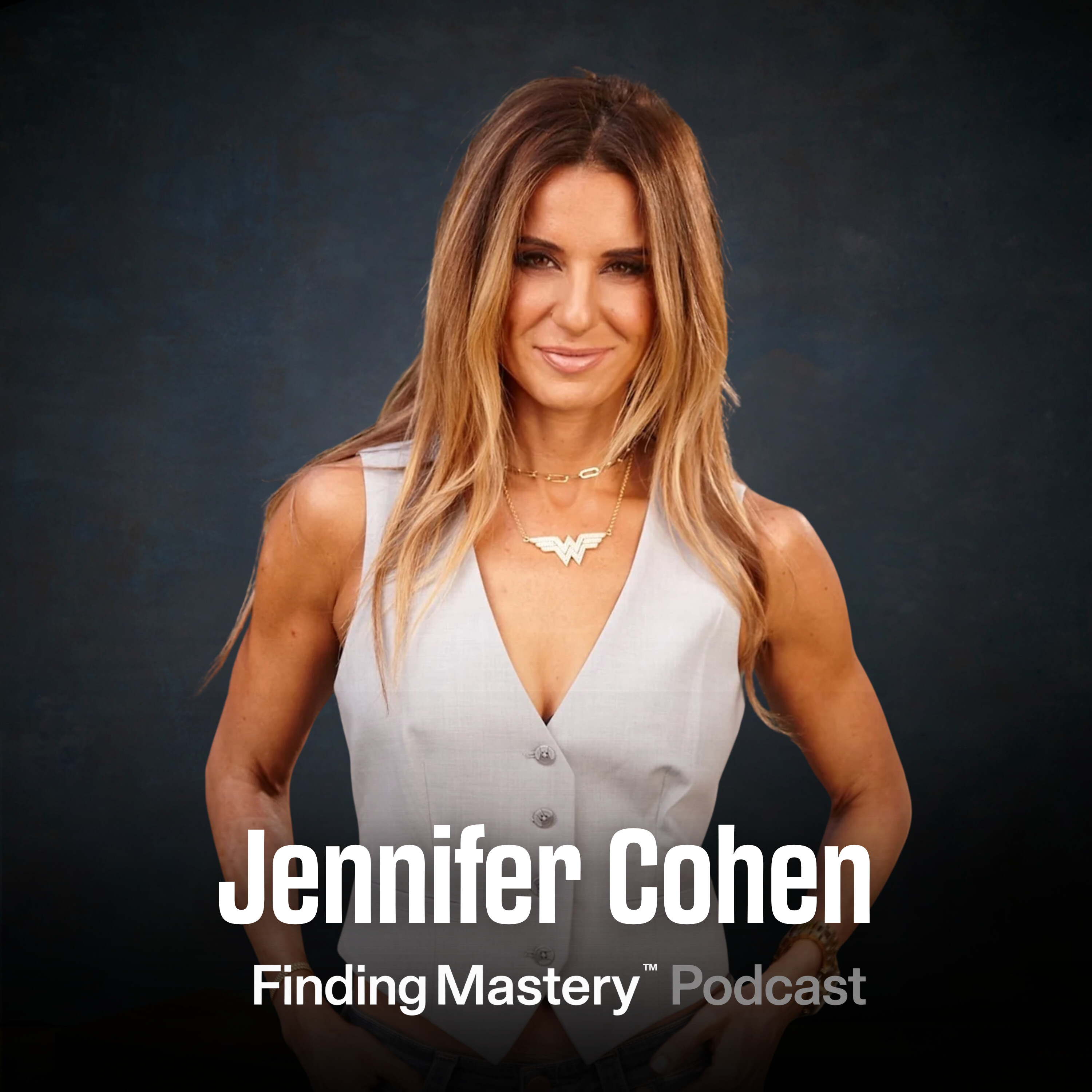
 Finding Mastery with Dr. Michael Gervais
16 Jun 2025 · 1h 11m · 24 chapters
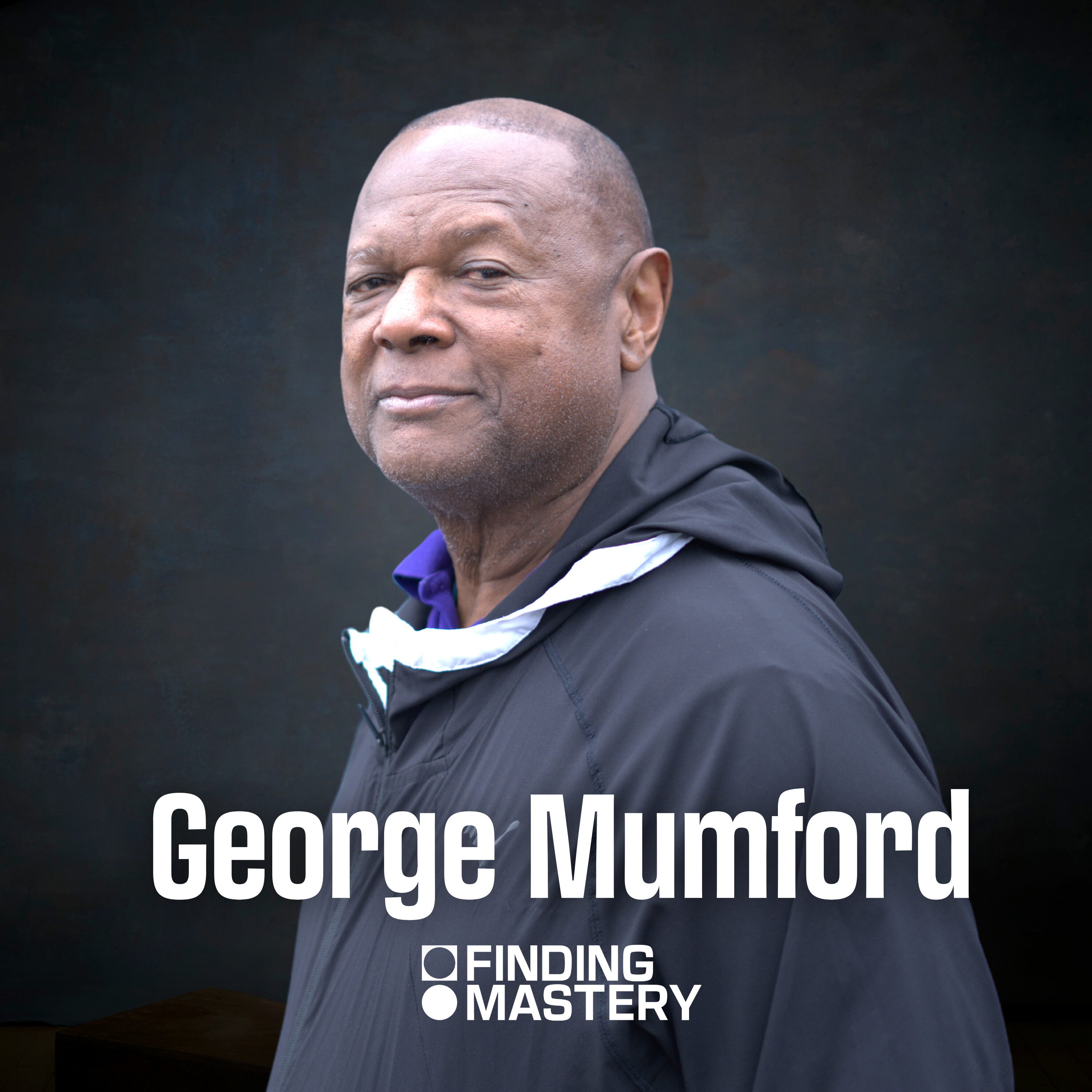
George Mumford, a mindfulness coach, discusses building a long-term “championship mindset” by protecting cognitive capacity, unlocking self-expression, and staying in the “slipstream of flow” rather than defaulting to “clutch” survival reactions. He ties mindfulness to performance, resilience, and transformation after trauma.
George Mumford is a revered mindfulness teacher who guides people through “inner terrain” self-discovery. He describes coming from chronic pain and recovery (about 39 years), including hiding his sensitivity, using drugs during periods of pain, and later moving from recovery into teaching mindfulness. He worked with elite athletes, including the Lakers (notably in 2010) and claims a connection to Kobe Bryant and Michael Jordan via his work with NBA championship teams.
Performance is about investing in long-term brain health, not burning through mental resources. “Unlocking” happens by observing experience uncritically in the moment and reflecting afterward. Challenges are opportunities; anxiety/uncertainty are “doorways” that build resilience. “Best self” is created by space between stimulus and response to choose aligned actions; grace and forgiveness help after emotional “hijacking.”
A Lakers session where he felt “you don’t belong here” but stayed present and served. A story about Michael Jordan vs. Steve Kerr where clutch aggression briefly replaced flow, and Mumford explains separating action from identity and resetting with apology. He also contrasts flow vs clutch using his own “street mode” example.
Written by AI. May contain mistakes.
A discussion on the importance of protecting your capacity to perform over your career.
“The best performers I know make investments today that their future self-thanks them for.”
Mumford shares insights on his journey and the importance of serving others through mindfulness.
“So I'm stoked to have this conversation with you.”
Discussion on navigating life's challenges and the importance of vulnerability for strength.
“I didn't know, and I remember one of my teacher mentors, Jack Kornfield, said to me one time, man, you brought mindfulness and performance in a way that no one's ever done that before.”
Explore how to observe and express hidden emotions without judgment.
“And I didn't know another way other than using some agitation, irritation, downright anger sometimes.”
Understand the difference between being in a flow state and clutch performance.
“There's a spontaneity that is wonderful.”
Learn about the importance of self-comparison and personal growth.
Explore the nuances of defining and achieving your best self.
“And people often ask me, and I'm curious how you'll respond, and I'll say how I answer as well.”
Discuss the shared language among high achievers across different fields.
“See, because you meet what you mirror and also when you can see the greatness in others, that means you can see the greatness in yourself.”
Examine how our perceptions shape our understanding of success.
“Or would you say that a violinist that's trying to be his or her very best and a basketball player and an entrepreneur and a rabbi are going to talk about distinctly different things?”
Learn how embracing discomfort can lead to personal resilience.
“And so on some level, it's about if you're really present and you're really sincere and you're really vulnerable, you'll see what's there.”
Discuss the importance of trusting the process and learning from mistakes.
“Just not knowing and having to trust that things are going to work out.”
Explore how high-pressure situations affect performance and mindset.
Learn about the competitive mindset and intensity from stories about Michael Jordan.
Discussion on the athletic journeys of various players and their transitions.
“And he was, you know, and he was, he was, he was really good at it, but, but he wasn't great at it.”
Exploration of effort versus results in achieving personal goals and overcoming challenges.
“Start investing in your long-term health today.”
Delving into Michael Jordan's drive and how it affects team dynamics.
“should be this way, instead of being with what is.”
Discussion on concepts of true self, best self, and the challenges of self-perception.
“It's convenient for us to say, oh, he's just like that or he's a bully and he's this and that.”
Exploring the importance of empathy and understanding within team dynamics.
“So if I'm being hostile to you, that's what's going to come back to me.”
Learn how understanding others' perspectives can lead to clearer actions.
“So we have to get to that point where we realize that that's why it's important to be able to get out of the box and just notice and just say, okay, so how Mike might be feeling?”
Explore the core values and structures that build great teams.
“What is your understanding of a great team?”
Understand how to handle high-performing individuals within teams.
“and if you can sustain that, that's how you three-peat.”
Discover how to align personal principles with team values for success.
“You say, we're going to work on shared values and clear goals.”
Explore the significance of self-honesty and integrity in personal growth.
“You know, if we just talk about love or whatever, but here's the thing.”
Learn powerful lessons on leadership and personal accountability inspired by Maya Angelou.
“how would he insert himself or be part of this conversation?”

Get the gist, explore an idea or ask about something said.
 Claude
On Finding Mastery with Dr. Michael Gervais, what are the key points of this episode?
Searching your listeningAutomatic transcript. May contain errors.
0:00Dr. Michael Gervais: Finding Master is brought to you by Magic Mind. A question that I often come back to and I hear from people I work with isn't, how do I perform well today? It's how do I protect my capacity to perform well over my entire career? That's a different question and it changes what you invest in. At some point, I started applying that same thinking to my own brain. Not just what helps me get through a heavy week, but what am I actually building over time? Because there is a difference between burning through your cognitive resources to meet the demands of the day and investing in the long-term health of your brain.
0:30Dr. Michael Gervais: That's one of the reasons I enjoy using Magic Mind. It's a daily two-ounce mental performance shot with clinically backed ingredients like ashwagandha, turmeric, and lion's made. When I drink it, I know that I'm investing in better focus, sustained energy. And what I value just as much is what's happening underneath. These ingredients support stress adaptation and long-term brain health in ways that seem to compound over time. That's the long game. The formula is based on over 10 years of research and nano encapsulated for five times better absorption than traditional pills and powders. Go to magicmind.com and get 50 % off your first order.
1:06Dr. Michael Gervais: The best performers I know make investments today that their future self-thanks them for. This is one of them. It's not about the end result. It's always a journey. It's about you doing the best you can. And that energy, that accomplishment is going to follow you. You don't know where it's going to take you, but it's going to take you where you need to go. What if I told you there was a golden thread between Michael Jordan, Kobe Bryant, and Phil Jackson? And what if I told you he goes by the name of George Mumford? Welcome back. Welcome to the Finding Mastery podcast, where we dive into the minds of the world's greatest thinkers and doers.
1:39Dr. Michael Gervais: I'm your host, Dr. Michael Gervais, by trade and training a high-performance psychologist. And the idea behind these conversations is quite simple, to sit with the extraordinaries to really learn about how they work from the inside out. And today, we are doing just that by bringing back a conversation from the Finding Mastery Vault with the legendary George Munther. Obviously, you had a lot that you imparted and helped Kobe through his life. What did you learn from him? He taught me how the trust and the tenacity and never quitting and committing and being creative about his approach to things.
2:14He had this ability to expand things. I say, I'm going to do this, and I don't have to back away from it, but to see it as an opportunity.
2:23Dr. Michael Gervais: George is one of the most revered mindfulness teachers in Leedsport. By guiding people through their inner terrain of self-discovery to help them be more present in their lives. I didn't see myself as a trailblazer. I was just doing what was in front of me. I knew that if I wanted to really learn about this stuff, I had to teach it. And the second thing I knew is if I wanted to keep it, I had to give it away. So the best thing I can do is share my experience, strength, and hope and just keep serving. We're re-releasing this episode now because, well, the world does not feel any less chaotic than when we first aired it.
2:54Dr. Michael Gervais: And George's message that our darkest moments can become the doorway to deep transformation is more relevant than ever. Let's jump into this week's conversation from the vault with my dear friend, George Winford.
3:11Dr. Michael Gervais: i have a legend george mumford is in the studio today it's been so fun to see your work and to know your work and your book unlocked is awesome so you came from a different place than your first book and this book like it i'm just so happy for you that you were able to get what you got down in writing for so many of us to benefit from. So I'm stoked to have this conversation with you. And thank you for sharing Unlocked with us. You're welcome. And I'm happy to be here doing this with you. I feel like we go back a ways. And I've been admiring your work. So obviously, your work and the work of so many others has influenced my work.
3:54I don't know how you can do this without being able to piggyback or step on the shoulders of the giants to come before us.
4:02Dr. Michael Gervais: Man, that sense. So one, thank you very much. And ditto, because you were a trailblazer early on, introducing this thing to elite sport, you know, and when most people weren't ready for it. And so I do want to have a conversation about trailblazing and like how some of the headwinds and how you navigate those spaces, because we're in a world right now that there's lots of headwinds. And I think people can benefit from your insights on how to deal with challenges. Yes. So I would say you mentioned that I'm coming from a different place here. I think the experience of writing The Mindful Athlete, but also being in this space and understanding that there's a process to unlocking, you know, just going through our challenges and the challenges have a lot to do with getting to the other side.
4:58So for me, I didn't see myself as a trailblazer. I just, after getting into recovery and dealing with chronic pain, I was just doing what was in front of me. I had no intention of being a trailblazer or anything, but I knew two things. I knew that if I wanted to really learn about this stuff, I had to teach it. And the second thing I knew is if I wanted to keep it, I had to give it away. So the best thing I could do is share my experience, strength, and hope and just keep serving. And so that's what happened. People would come to me and say, hey, can you do this? And I would do it. And eventually I was in the corporate space and eventually I left the corporate space to do this, this thing, do this process to share my journey.
5:45And so to me, it was me getting to that place where I was unlocking, coming from the hell realms, and then, you know, to go from being in a shooting gallery or a crack house and being behind the bench of an NBA championship team. I mean, that's unlocking.
6:06Dr. Michael Gervais: It is unlocking. And so it wasn't like my intention was to be a service, really. It was always about, and I believe in my book, The Mindful Athlete, when I wrote that, took 20 years. And I think what got me over the hump was I realized that I could help people. I couldn't do it for me, but I could do it for others. So this element of serving and just being willing to just meet things, embrace everything, and say yes to it, and then, you know, change roadblocks into stepping stones. So that's pretty much it. I didn't know, and I remember one of my teacher mentors, Jack Kornfield, said to me one time, man, you brought mindfulness and performance in a way that no one's ever done that before.
6:48And I said, oh, I did? Really? Because I wasn't self-conscious. I was just really just doing what I knew to do, and my intention was to help. And by helping others, I was helping myself. So, I mean, here I am since I've been in recovery for going on 39 years this July, and I've averaged over a book a week during that time. and I have more enthusiasm and excitement about life than I've ever had. So this process is something that you can engage in, as Warren Bennis said in his book, on becoming a leader, self-knowledge and self-invention, lifelong processes. So I feel like that's what I'm doing, just sharing my journey of self-discovery with people.
7:34And I believe that the greatest adventure we can be on is getting to know ourselves better so that we can serve.
7:41Dr. Michael Gervais: love that last part to serve yeah you have used your experiences and your unlocks your insights unlock and insight is a they're cousins to each other in many respects you've used your unique unlocks and insights your adventure in life and the process that's helped you during that that's kind of what you've done with other people. My point is that you've lived it and you shared your story. And then you've shared how to help other people know their story. Okay. What is it like? Because you know that you and I are going to talk about painful times in your life. And by the way, before we go there, the people I love most in this world are those that have gone through to the depths they've been ragged around by the world and they've faced it and they've squared up with it and they have invested in themselves to heal they've turned over their their need that they can solve everything themselves and they said i need to be vulnerable as a beginning step for strength and you've done it and you so beautifully have led from that place place so i say that because i come from a place that um is really humbled by what it takes to do what you've done and i'm talking about early life stuff not even i'm not even talking yet about what you've done with the bulls and the lakers and the knicks and and and and and which is extraordinary stories of its own but i just want to spend a moment on on the early stuff first i want to say mom 13 kids huh mom went to 13 kids 13 kids and what number were you number 10 number 10 yes okay so you had a a bunch of brothers and sisters before eight sisters four brothers eight sisters four brothers and you were georgie porgy and so were you bullied no i wasn't bullied i don't i wouldn't say bullied i was uh encouraged to be tougher yeah um and i think the reason i don't think is being bullied because I think the intention was to make, to help me navigate this thing called life in a certain way.
10:05And so being a young boy, young man, young child, having super sensitivity or being empathic and picking up other people's stuff, I really didn't know how to deal with that. So they knew that I had to toughen up. And so I would say that's, I wouldn't say bully. I was sort of forged in the fire, if you will, baptism of the fire, just by saying you have to be tougher. We're worried about you being able to survive in this world.
10:35Dr. Michael Gervais: Did you lose that empathic nature of yourself or did you at any point in your coming up? Because you definitely have it now. Yeah, yeah. I hid it. You hid it. I hid it. I encrusted it in the shower. As I talk about, I was locked down. I was locked in. Yeah, and this is why you turned to drugs? Yes, yes. And so the drugs and the other stuff, for a lot of reasons, mainly because of pain. I was in pain. I was injury prone. I had a lot of issues. I had chronic stomach issues or GI issues because I didn't realize it was the stress of not being myself, the stress of just hiding and not being able to be true to who I was, but I didn't know I had that.
11:23So I was just reflecting on this the other day, and even now to some degree I'm still waiting for permission to be able to express myself.
11:30Dr. Michael Gervais: You still are. In little ways, yeah. That's remarkable. Yeah, and otherwise there's a process. There's times when, and now it's more subtle because it's like, okay, it's like you have, I forget what you call those light switches, the dimmer switches? Yeah, yeah, yeah. So it's like I'm not all the way down where you can't see the light. I'm up where the light is showing, but there's still some more room to grow. That's what I mean by that. And every once in a while, I'll get hints of, oh, wow, I'm waiting for permission, or it's still not totally safe to be that vulnerable and express myself or to let my light shine or what I call the masterpiece within being able to express that.
12:18Dr. Michael Gervais: Finding Mastery is brought to you by Athena. So optimism often gets mistaken for wishful thinking. In reality, it is one of the most powerful performance skills that there is. An optimistic mindset doesn't just improve the quality of your life. The research is clear there. It's also a real competitive advantage. It helps you be more open to possibilities, to adapt faster, to be more agile. And here's what I've noticed. It is hard to stay open and curious when you're buried in the reactive stuff of life. The overflowing inbox, the calendar that runs you, the travel, the follow-ups, the hundred of small tasks that keep you putting out work fires instead of looking forward with bright eyes.
12:54Dr. Michael Gervais: That's where Athena comes in. They match you with a dedicated full-time remote executive assistant. It's a real person who takes those things off of your plate. Their EAs come from the top 1 % of more than 60 ,000 applicants. So they're sorting the best of the best for you. And they're fluent in the AI tools that make great support even sharper over time. And clients give back an average of 15 plus hours a week. So when the reactive noise feels like it's being managed, you get to lead from a different place. Open, curious, focus on what's possible. That is worth looking into. Go to athena.com slash mastery right now and get matched with your EA.
13:27Dr. Michael Gervais: Give yourself a few hours back this week and go to athena.com slash mastery and see who they pair you with. Finding Mastery is brought to you by our partners at Lisa. Most of you know that I have a morning mindset routine. It's what I do every morning before I check into the world around me. I check into the world inside of me. And it's just a few quiet moments to set my intention for the day, make sure I answer to the things that I'm grateful for. And I want to focus my attention on what matters most. And what that does is it wakes up the mindset to help me bring the best of myself in the day ahead.
13:59Dr. Michael Gervais: Generally speaking, I wake up feeling pretty good. No aches, no stiffness, nothing pulling my focus, you know, the minute that my eyes open up. So when your body gets the recovery it needs, it is so much easier to set your mind up to help you be your very best. So that's why we've turned to Lisa for some support. We've worked with Lisa for a long time now because they build quality crafted mattresses that are tailored to how you actually sleep, your position, your feel, all of it. Premium materials, premium mattresses, real full body support. The intention they put into their products is real.
14:32Dr. Michael Gervais: I love what they're doing. Go to lisa.com for up to 30 % off mattresses plus get an extra$50 off with the promo code mastery exclusive for our listeners that's l e e s a.com promo code mastery for up to 30 off mattresses plus an extra$50 off and let them know we sent you in this survey after checkout what gets in the way of that for you because i think yeah i relate and i think a lot of people understand that permission thing which the only way i've worked through that is i had to say fuck it like i can't i can't do that i can't wait for the world to be just right for me to step in and be okay so i i wish this wasn't the case but i in the commitment to be honest like i wish i could say i was super fluid and just loving kindness just exuded out of me my whole but it's like i had to have an understanding of anger right Because I didn't know another way to say, I want to change.
15:37Dr. Michael Gervais: Yes. And I didn't know another way other than using some agitation, irritation, downright anger sometimes. How did you, or how do you do it now when you feel that? Yes. Well, it's this idea of creating this ability to observe my experience uncritically. Uncritically. Yes, and notice or mindfully. And just to notice things, because part of this process is a revealing, a revelation. It's like there's things that are hidden and there's things that are going on that we don't know about until they manifest. So when I say I'm still doing that, I'm meaning that I'm still unlocking and I'm still, it's like you have a bunch of stuff in the proverbial, well, not even the closet, but in the basement.
16:23And there's a lot of good stuff and stuff not so good in that basement. And so when you open that door, stuff's coming up. Some of the stuff that comes out is not helpful. Some of the stuff is helpful. So I don't know that I was hiding out until I realized, oh, I've been hiding out. And that will be reflected in, okay, so you have this ability, but there's more there. What stops you from expressing it? Like you said, it's only when I can start to open and let what's hidden reveal itself. And how do you do that? Well, interesting, like what I say, by embracing saying yes, whatever comes up, and then generating the hope and asking the question, what is this?
17:09Or just pursuing excellence in wisdom with grace and ease. That's how I do it. I'm trying to understand stuff. So helping others, seeing how other people get stuck, and then reflecting, in what ways am I stuck? or in what ways do I feel like I'm not fully self-expressed. But the process of unlocking is seeing where we're stuck and seeing where we're not really, we're kind of closing down or we're just, you know, we're stuck in limbo. We're in survival mode.
17:37Dr. Michael Gervais: So how do you, but how do you uniquely do it? And there's a two-parter to this. Yes, yes. In the present moment when it flares. Yeah. Okay, and then also in the quiet recesses when you're alone. Yes. So there's two parts to the question. Like, how do you work through that? I'll give you a prime example. I was working with the Lakers in 2010. They were playing the NBA championship against the South Dixon. And when they come to town, I work with them. So we had a session that morning before Sunday game. And I was going into the room where we have breakfast and then there's the set up to watch film.
18:25And the voice said to me, you don't belong here. They don't wanna hear from you. You know, so trauma came and it was like, like, okay, get outta here before they throw you out. And I could just observe it like music, like background music in a restaurant, just notice it and just focus on serving, doing what I needed to do. So I kept it in the background, just kept it open, but I focused on what I wanted to do and what I knew to do, and I was able to perform and at the same time not beat myself up or worry about it. But that was something that came out of nowhere. Just under the conditions, things happen.
19:06You open up, all of a sudden there's a negative committee or there's some trauma that you're feeling where your body wants to shut down, the last thing you want to do is be vulnerable and get up in front of folks in a really critical time and talk to them about being in the moment and expressing yourself sincerely. So that's how I dealt with it. And then afterwards, I just reflected on it. And I noticed that this is what happens when you open a heart. There's stuff that comes out, And it's our ability to not push it away, not to pull it towards us, but to just let it speak to us in its own language and listen to what it has to say.
19:45But what's really happening is there's a healing going on. There's an ability of it getting sanitized by the light, as you will, and just holding it and not doing anything with it, but seeking to understand what it means and how to relate to it in a way where I can actually teach and help other people who are going through things that are unexpected. But at the same time, the idea is to be in a moment, to see it, and let it speak to you in its own language. And then there's a lesson there. There's a wisdom that comes out of that. There's a creativity that comes out of just being able to be still and know.
20:22So does that make sense? A hundred percent. It is that one way. But there's other ways I would do it depending on the situation. but here's the challenge and the adventure of it. I have no idea how it's going to happen, but it's going to happen. The way I handle it is going to be different. In other words, I have to trust the masterpiece within, the wisdom within. If I have mindfulness where I can let things speak to me in its own language and understanding, knowing what am I supposed to do? I'm supposed to be in the moment, see what's happening, and relate to it in a way that empowers me and be in a growth mindset.
20:59So it's something, it's an opportunity and it's a lesson. So much of what you described is aligned with how I approach it as well.
21:09Dr. Michael Gervais: There's a spontaneity that is wonderful. And it also creates, that vulnerability creates space for things to pop up that might not be what you want to hear or see or feel. Or convenient. or that's convenient right now that's a great phrase or a great idea and so you know the present moment is where we're trying to spend as much time as we can but in the present moment like i'll not to be a dualist but there's negative and positive there's like hardships and beauty that happened in the present moment right and it's for me it's the difference and i'll just string this back around it's the difference between the concept and sport and maybe business of being clutch versus being in a flow you know like this the slip stream of flow which is effortlessly adjusting eloquently adjusting to the unfolding and clutches like this i'm going to dominate like i'm a force of will you know and it's a little bit it's very different approach and you're spending much more time and interest in being in the slip stream of flow as opposed to clutch I'm not picking I'm gonna use the one that works yeah yeah you see what I'm saying there's a wisdom that knows when when I got a when I got to step up there with as much assertiveness and just meet it meet it meet the force that's coming at me with force even though it's coming out of love but it's still dynamic and it's still intense so it's not judging I had an experience you know in because I I grew up in a certain part of town, and I remember...
22:50Which is code for? For I grew up in the inner city, in the tough neighborhoods. Which is code for? It's hell, whatever. That's it. Yeah, hell. It was a doggy dog. It was very much this kind of situation. And I was... What was I doing? I was going to part of Boston, it was the North End, and I'm walking with my girlfriend, and I'm seeing a drug door go down, and I'm seeing shaky characters. How old are you? I was... Let me see, that was like 87, so I was probably 36 or something like that. Okay. And I went into my street mode, and my girlfriend said, well, what's wrong? Because she seen me, I went into this, what you talked about, the clutch mode.
23:39Yeah. And she said, what's wrong? And I said, oh, nothing. But me going into clutch mode prevented people, when they knew, oh, he knows, he sees us, leave him alone. Don't go there with him because he's not one of these guys that don't know what time it is. He knows what time it is. And I felt embarrassed by it at first because I felt like, oh, I don't want that part of my life where I'm in the jungle and I got to be a lion and I got to meet force with force. I felt, you know, like, okay, I thought I had evolved beyond that. But then I realized, no, that's your inner wisdom telling you that you had to go into that energy mode so that you could neutralize the forces that are out there so that I didn't have to go through.
24:25Because as soon as they see, oh, okay, he knows, you know, once they see that I'm aligned also, then they back down. But it's me just being timid and trying to ignore it instead of opening to it and saying, okay, this is a survival skill. That's the reptilian brain kicking in to help me. So that reptilian brain, even though it's fight, flight, and freeze, and it's survival, if I'm walking across the street and a car's coming, that's the thing that moves me out of the way without me having to reflect on what should I do.
24:57Dr. Michael Gervais: Speaking of being clutch, speaking of being great in difficult situations, I'm going to bring up Kobe now. Was Kobe more clutch? Or was he more about the flow slipstream? I think he's more about the flow and the slipstream. Effortless effort? Yes. But at the same time, that was the work we did. But I think you come around to it at some point, and each person has had that experience. But sometimes, like I said, when you get met with clutch, sometimes your reaction is to be clutch instead of just being more like Akita or Tai Chi. Just use their energy against them. and be like water and just flow with it, embrace it in a way where you don't have to meet force with force.
25:43So, yeah, he definitely learned that lesson.
25:48Dr. Michael Gervais: Obviously, you had a lot that you imparted and helped Kobe through his life. And it's a good relationship, as I've come to understand, for you guys. What did you learn from him? What did I learn from him? What I learned from him is that you have to meet people where they are. You have to meet him where he is and help lead him. They call that leading and pacing in neurolinguistic programming, NLP. It's always about meeting people as they are, not trying to change them, but helping him to unlock, helping him to be his best version of himself. And so to me, he taught me how to trust that and the tenacity and never quitting and committing and being creative about his approach to things.
26:38He had this ability to expand things and say, I'm going to do this, and I don't have to back away from it, but to see it as an opportunity and to meet that challenge with intelligence, with heart, and with a strong will.
26:55Dr. Michael Gervais: When there's a challenge, he sees it as an opportunity as opposed to a threat. Yes. he's he's got a tenacity and a a deep trust it sounds like right the trust is so i can let go and to have effortless effort and then a tenacity which is i'm curious how those two work together and then was he trying to be and i don't want to undersell or give any discount to the first thing i said which is when there's a challenge seeing as an opportunity versus a threat that as einstein has shared like there's a fundamental decision we all have to make the world is either hostile or safe, right? Oh, you mentioned that in Unlock as well.
27:34Dr. Michael Gervais: So I've paraphrased, I've paralleled that insight to say, we all have a fundamental decision to make in life is, am I going to approach success or avoid failure? And so he was approaching success, seeing challenges as opportunities. Opportunities for being his best or opportunities to be the best? His best. he would if if he's in this conversation he would say yeah yeah that's it it is best because to be the best you're comparing yourself with others in this process you're competing against your previous best self that's right and so it's really about you because that's the only thing you can control is you being you and you being the best version of yourself bonnie master is brought to you by linkedin hiring pro when you're building a small business Every new hire has the potential to make a real impact.
28:25Dr. Michael Gervais: The right person, they can bring fresh energy and new ideas and really help the whole company move forward. It's awesome to watch when you get it right. So finding that right person, finding that great hire, it takes clarity. You have to know what you're looking for. You have to recognize it when you see it and then make the call with confidence that this is the right hire. That's where LinkedIn Hiring Pro can help. It's really like having a hiring partner throughout the entire process. You can chat with it just like you would a recruiter. You tell it what matters most for you, for the role, compare candidates side by side, you give it feedback, and then Hiring Pro listens, it adjusts, it helps surface the people who actually might fit what you need.
29:02Dr. Michael Gervais: They're trying to help us optimize. We're still the ones making the decision. LinkedIn Hiring Pro is just a smarter way to find the right people to build the team of your dreams. Now, if you haven't already checked them out, LinkedIn Hiring Pro can really help your business. Get started by posting your job for free at linkedin.com slash finding mastery. Terms and conditions apply. Again, that's linkedin.com slash finding mastery. Finding Mastery is brought to you by David Protein. We travel a lot at Finding Mastery and sometimes travel makes it tricky to eat well. Best intentions and then you're at the airport.
29:36Dr. Michael Gervais: And then suddenly the only options around you are the ones that you'd rarely choose at home. Something I come back to often is that discipline isn't really about willpower in the moment. It's often about choice architecture, setting up your environment ahead of time so that the easy choice and the good choice are the same one. That's the role David plays for me on the road. The gold bar, it's their flagship high protein density, great texture, flavors that make it easy to stick with. So when I throw a few in the bag before my trip, I've already made the decision. The hard moment later takes care of itself.
30:04Dr. Michael Gervais: And the team here at Finding Mastery, they love the bars as well. They are ripping through them in the Finding Mastery lab. Salted peanut butter and fudge brownie seem to be the fan favorites right now. They have built something with real rigor in a crowded, sometimes ambiguous space like nutrition. That matters when it's something that you reach for again and again. David bars are now available in major retailers like Walmart and Target. And if you'd like to buy them directly and get a special offer for being a Finding Mastery listener, head to davidprotein.com slash findingmastery, where right now, if you buy four packs, you'll get the fifth free.
30:37Dr. Michael Gervais: Again, that's davidprotein.com slash findingmastery. I'm nodding, checking, yes, yes, yes, yes. And people often ask me, and I'm curious how you'll respond, and I'll say how I answer as well. It's like, what do you mean you're best? What do you mean by that? What is the best? Why are we talking about versions? Why aren't we talking? So there's a subtlety in language here that I think can, if we're not careful, becomes amorphous and escapes. and escapes the concreteness required of, I know what it means. You know what this means. Kobe knew what this means. Right. Okay, so how do you describe being your best?
31:25Dr. Michael Gervais: Being your best. Yeah, it's creating space between stimulus and response. And in that space, you have the freedom and power to choose in alignment with your values and the goal that you have. So being your best means based on the intel you have, your mindfulness and the wisdom, knowing the basic essentials and what your goal is, being your best, meaning having an intention and being able to express it honestly or sincerely or authentically. it's honestly george we haven't we i can't remember the last time we got deep on on some ideas it was probably at wisdom and uh wisdom two point of the conference and we think so much alike it's quite remarkable actually because we've come from very different approaches and so um it's refreshing and also startling in some respect i go yeah yeah yes why do you think I say what I said at the beginning of this.
32:25Now you understand what I said? Well, no, I don't. When I said giants and you. See, because you meet what you mirror and also when you can see the greatness in others, that means you can see the greatness in yourself.
32:40Dr. Michael Gervais: I'm uber humbled. And at the same time where I was going with it is that I've had this pretty rich understanding. I hope you'll co-sign it, but you might not because you've spent so much time with like greats is that game recognizes game and so you can see it based on what you just said so yes check it and then the other is that it feels like there is a language that is unique to people that understand and have committed their life towards their very best towards unlocking to use your phrase it's actually the tag that we've been using in our business for a long time unlocking the potential within that's how we talk about it and by the way my mission my personal philosophy is every day is an opportunity to create a living masterpiece i mean so the parallels here are phenomenal but let me go back to my point is that game recognizes game and there's a shared language and that we end up talking about the same things in a very similar way independent of the industry or craft but it's that pursuit that gets to that shared language.
33:46Dr. Michael Gervais: And have you found that to be true? Or would you say that a violinist that's trying to be his or her very best and a basketball player and an entrepreneur and a rabbi are going to talk about distinctly different things? Well, they're talking about the same thing, but they're using the language that they're accustomed to. So if you have a PC, you're going to use a certain software. If you use a Mac, you're going to use the iOS. You're going to use a certain software. but the end result is the same. It's just that how you can talk about it might be different, but it's the same thing because our perception, my conditioning and my state of mind are going to have an impact on what I can see, what my perception is on any given day.
34:32And so on some level, it's about if you're really present and you're really sincere and you're really vulnerable, you'll see what's there. and the truth will set you free.
34:47Dr. Michael Gervais: And it will scare the shit out of you. Yes, because that's the part. I talk about it a little bit in the book, but I don't think we give it enough emphasis, and that is one side of the coin is freedom. The other side of the coin is uncertainty and anxiety. And so there's, and this goes back to Kierkegaard, Soren Kierkegaard, 1846, he called it the alarming possibility of being able. When we embrace that, so what's the anxiety tell us or the change? It's a lesson. If we walk through it, not only do we get to the other side, but we build up resilience to be able to do it again and again and again.
35:27Because that's what's required is people think, oh, you've got this good achievement. Yeah, that's great. But there's some anxiety and uncertainty, and there's some people that aren't happy with you achieving what you achieved for whatever reason. So, you know, I don't have to, if you talk about the Buddha being stoned, Christ being crucified, I don't need to say any more than that. There's always going to be somebody that doesn't like the light. And so being able to be true to yourself and do what you know to do and to embrace the anxiety or uncertainty and to use it as a lesson or like a doorway, you just walk through it.
36:05But I'm not saying you walk through it painlessly because i like to say no struggle no swag so it's going to be a struggle and if you're struggling you're learning and that's how you build up your strength so without both sides of the coin you
36:21Dr. Michael Gervais: don't have the result you've got to have both yeah so i talk about this like if you think about building capacity to be able to handle more right is that there's a panic feeling there's that there's an edge that we need to get to and stay in that edge as long as we can that pant and it feels like it's the panic signal is what it's a tripwire for anxiety but it's panicking and most people want to just retreat find high ground right now do whatever i can and the extraordinaries as you'll come to recognize and you yourself being one of those to be able to stay in that space as long as i possibly can as long as you can and then what i found is that what they do is they instead of going so they there's an extended period of time in that panic and instead of dipping all the way back down to comfort they they stay in that edgy space but decrease it and then push back up because they know how hard it is to get there and that's where all of the yeah the the truth telling takes place that's right okay so so i call it getting comfortable with being uncomfortable yeah i feel like that gets thrown around so much yeah but what i mean by that is is you build up an endurance and a tolerance of discomfort because here's the interesting thing wait wait before you get the insight what is uncomfortable for you it depends depends what you're talking about what's uncomfortable for me um it varies but what's uncomfortable for me is um pain physical pain physical pain or emotional pain or whatever, or just being in the unknown.
37:54Just not knowing and having to trust that things are going to work out. Do you believe that they're going to work out?
38:01Dr. Michael Gervais: Yes. But then even with that belief system, when you're in the unknown, like, I don't know what you're about to say and you don't know what I'm about to say. So in this unknown, what are you trusting? I'm trusting that if I embrace whatever comes up, generate the hope that even if I make a mistake, I'm going to learn from it. so it's not about making mistakes it's about saying yes to it and and and being present for it and doing the best i can do you know based on what i know now but trusting that it's going to be a learning opportunity that everything that the universe is friendly and i'm aligned with how things are so i don't have to deny or or or destroy or um or remove anything i just need to be still and know i need to stay in that eye of the hurricane and i'm going to see what i need to see and there's a wisdom and creativity that comes out of that silence that that is powerful and helps me to get to change this the roadblock into a stepping stone okay so that's that's how your process works and then let's imagine let's and i see why athletes would say yeah yeah yeah right like yeah yeah yeah yeah ceos too ceos too and let me add an element to it it's just athletics is so concrete where ceos it's um it's it's less observable their performance right you see the outcome quite amazingly uh from wall street or whatever but let's say that um you add another layer of intensity is if you don't deliver today let's say in this conversation just like an athlete has a finals or tryouts or whatever that the the you don't get the reward the external reward the later reward you might get the internal unlock but you might not make the team you might actually like lose a bonus you might fill in the blanks on the external later rewards how do you help folks through that like i'm thinking i know how much time you spent with michael jordan so how would you from never i don't know michael and what a force though steve kerr told me a story now about when he and michael were practicing yes and steve like the way before i get to the question steve says to me he goes mike it was intense practicing with michael he says practices were way more intense than games because i had to go against the most fierce competitor in basketball maybe on the planet every day yes he says he tells about this one story which i'm sure you know about i think you were with the team during this time but jordan's dribbling the ball up this in practice and um you know steve's trying to guard him and jordan you know steps to the left right fade away puts it in and kind of looks at steve like okay what are you gonna do now next play down michael runs the same kind of jab step move fade away and it looks at him again like what are you doing third play in a row same move jab step fade away and then walks up to steve and is like what's wrong with you when are you going to step up when are you going to stop bullshitting around you know i'm paraphrasing here and then unloads on him gives him a right cross right into his jaw and so steve says to me mike like it's kind of different being around these guys like it was very different being around jordan on a day-to-day basis yeah so when i'm when i'm asking that question i'm coming from steve's perspective and kind of obviously what i know historically about michael how how would you help him when he's got that deep drive to be i think he wants to be the best i think kobe was about being personal best but it feels like michael wants to be the best how how did you help him through that if my assumption is right yes so it's always about you competing against your previous best self so you're right you can do your best and have a great game and still not win or still not make the team that's my definition of a winner is because you did everything you could do and the result is a result and there's some good that came out of that that's going to carry you in some other area and maybe it's like i'm thinking of uh was it tony gonzalez yeah basketball was one of the great tight ends yeah but basketball was his first love.
42:21That's right. And he was, you know, and he was, he was, he was really good at it, but, but he wasn't great at it. And no, actually, I think he was at the Cal. He was, yeah, I think he was at Cal. Okay. Cause my nephew used to train him when he was a basketball player. Okay. Um, so you could say, I can hear our fact checkers right now. Yeah. So, so think about this. Yeah. But think about, but think about it this way, wherever we went, uh, then we, we can go with Antonio Gates where I can name a bunch of these basketball players Jim Graham. Jim Graham. Yeah, I remember playing against him when he was at Miami.
42:54No, I mean, I was working with Boston College. So I met our team playing against him. So I know all these guys, Antonio Gates. You know, we played against them.
43:05Dr. Michael Gervais: Binding Master is brought to you by Granola. Here's something that I think most of us miss without even really realizing it. Every conversation that we have has two layers happening at once. There's the conversation, the obvious conversation with the words themselves. and then there's everything else underneath. That's the emotional language, the subtle tones of voice, micro expressions, the brief pauses before someone answers. That second layer is really rich with information. And in meetings, it's easy to miss it when our heads are down and we're taking notes. That is why I use Granola. Granola is an AI-powered notepad that makes your meeting notes useful.
43:40Dr. Michael Gervais: It captures what happens in your meetings and then turns them into clean, structured notes with decision and action items pulled out and made easy to find. And the best part, it works right through your device's audio, which means that it integrates seamlessly into the video conferencing tools that you already use. No big setup, no awkward bots. I use it every day when my meetings are done. There's a clean recap and a clear set of next steps that are just waiting for me. Nothing slips away. This isn't about doing less. It's about being more present. I think you're really going to like what Granola is doing.
44:10Dr. Michael Gervais: Once you try on a first meeting, it's hard to go without. You can try it totally free. Head to granola.ai slash mastery. That's granola.ai slash mastery to get your time back. Go to granola.ai slash mastery and try it on your next call. Body Mastery is brought to you by Fatty 15. Okay, let's talk about longevity. Longevity is much more than simply adding years. It's about maintaining health and a zest and a vitality and enhanced performance as you age. And that's why I'm excited about Fatty 15. It's an award-winning supplement. It's powered by C15, which is the first essential fatty acid discovered in over 90 years.
44:50Dr. Michael Gervais: Okay, so C15, it's a geroprotector. What that means is it helps to slow biological aging by strengthening your cells, basically protecting them from damage. You can think of it like kind of like a 401k for your health, where you're investing in cellular quote unquote resilience. And I dug into the research on the relationship between C15 and heart health. I love what I saw. Fatty 15 is on a mission to optimize your C-15 levels to help you live healthier, longer. Get 15 % off your 90-day subscription starter kit by heading to fatty15.com slash findingmastery and use the code findingmastery at checkout.
45:29Dr. Michael Gervais: That's fatty, F-A-T-T-Y, 15.com slash findingmastery. Start investing in your long-term health today.
45:39It's not about the end result. It's always a journey. It's about you doing the best you can. And that energy, that accomplishment is going to follow you. And it's going to lead to something else. So it may be, like for me, I got hurt playing basketball and injured, couldn't play. Ended up getting addicted to pain meds and illegal drugs. And here I am. So, yeah. What an adventure you've had.
46:06Dr. Michael Gervais: You don't know where it's going to take you, but it's going to take you where you need to go. I know where I want to go. I want to be in the amphitheater. I want the ball in my hand and I want to drain it. And I hear you, George, but like, what's all this stuff? Like, I want to be great every moment. am I, you know, so, okay, count, count, count, so my whole point is, so yeah, you can be great, but sometimes we, well, we don't, it's not the results, it's the effort, that's all we can control is our effort and our attitude, and the results that happen are going to happen, but the thing is, that's when you're still locked up, you're still locked, because you think it should be this way, instead of being with what is.
46:48Dr. Michael Gervais: I'm down with it. And, so when you've got somebody who is relentless, that would beat up a teammate because they're they're not demonstrating that they're solving the problem i'm talking about jordan yeah yeah was jordan like i get you or was jordan like uh okay you want me to switch everything up like how was how how did that go no it was it went because i talk about you know what do you want and and who do you need to be to do what you want to do so let's just talk about that situation with Steve Kerr. That's not necessarily who he is. He got... That's not who Michael is. Yeah, yeah. That was a moment in time.
47:28That's a moment where the clutch took over from the flow. Using your language. Yeah. Okay. So all of us can have a moment of unclarity or what I call the hindrances where greed or aggression took over and he wasn't able to see clearly and be in the moment. This is why you add the word grace. Yes. To your personal philosophy, right? Well, that's one of the reasons, yeah. That's one of the reasons. Because you have to have grace and you realize when you know better, you do better. So even the grace makes mistakes and maybe you push it too much, but the whole idea is to know that you push it too much and apologize and redo, reset, and then, you know, That's the thing.
48:16Forgiveness is really important. So, okay, I'm sorry I did that. I was out of control. But that was just a moment in time. That's not who I really am. It was just that I got hijacked. I got emotionally hijacked. You know how that works. So when you're in fight, flight, or freeze, or when you're not in love and a willingness to compete, and, you know, you got to know micro psychology. Usually when he comes at you like that, you got to come back at him. And even if you would have pushed him and knocked him down, then he would say, okay, now this guy got fight, so now I know that he's going to be in the trenches with me when it gets tough.
48:54He's not going to back off. So that might be his psychology. I don't know. I haven't talked to him about it. But I will say this, that when you make a mistake like that and when you cross the line, which is very easy to do when you're in that clutch, as you talked about, once you cross it, that's not a problem as long as you apologize and you forgive and forget and then you begin again. So that's the thing. So we get this idea. We keep locking us or locking us into a way of being because we had an activity. So we got to separate the action from the person. You see what I'm saying? But we don't do that.
49:29It's convenient for us to say, oh, he's just like that or he's a bully and he's this and that. And you got to look at the content and the context of what's happening. We don't do that. We take the content and put it in any context and think it's equal. It's not. It has to be at a certain time. Plus, we don't know what MJ was going on in his mind. We don't know what his relationship with Kerr was off of the court, which might influence what happened on the court. I'm not saying it did, but I'm just saying that possibility exists. That's right.
49:59Dr. Michael Gervais: Yeah, I understand. I love the context and content perspective. I really appreciate that because things that were happening 200 years ago would never fly now. right and so or let's call it 600 years ago would never fly now and so yeah so i really appreciate that so let's go true so let's go best self true self small self okay so best self we're saying like there's this um tension to get up into that experience of best self there's a tension of letting go and trusting required so it's not all you can't force your way into best self i think I think you're not you can't force yourself in the flow the best way to get in the flow is to not to try to get in the flow that's right best way to write a book after 20 years is stop trying to write a book how long did it take you write your new book unlocked uh probably months maybe well it's a long story it was a long process I had to get a new collaborative writer but it it went pretty quick probably six months that's something like that seven months so best self okay it's and the way that you talk about stimulus and response and in between having the space to make choices that are aligned with your i call it first principles and you call the values i think so i'm interested in virtues and first principles and those are kind of the bumpers to be able to navigate now let's go true self versus small small self so this is where i get sometimes confused about true self is because right now if i'm kind and loving it's my true self and also if i'm pissed off and agitated it is my true self it's not my highest self okay so is best self and true self and small self are you do you say best and true are the same actually and we're competing against small self well i want to just say that all of those are constructs see part of the issue we're having here is that we want to talk about the non-linear in a linear way so you can get tripped up with all of that with this self or that that self and whatever but the only self i'm interested well i'm interested in all of them but just to know when you're being true to yourself should i know in self be true you know when you're out of character when you're in character and you got to understand that we're human beings we're even who we say we are we're changing wait wait wait you just said something cool you said true to your character is that what you just said no to yourself for yourself but would you how'd you say it about character you're in character yeah you're in character in other words like if my intention is to be loving and i was just unloving then all i need to do is is just uh you know better you do better how do i get back in on on track because a lot of a lot of you know these guidance missiles these guidance systems they have to do with negative feedback so nothing's straight it's zigzag you get off you get back on that's what i mean so you know you are out of you know you were out of love get back into love okay or or get back into just fully honestly expressing yourself and you're going to get angry thing you're going to get tripped up but we can have these labels about it but we are becoming so even who we think we are we're more than that like i I just said to myself, so the idea is it's helpful for me to talk about doing something that's helpful or not helpful, not to judge it.
53:32And to say when you're your true self or when you're your self, where you get beyond the illusion of separateness, I and the other. Then that's what I'm talking about when you see I and the other one. And when you get beyond that illusion and you can just be. Now, there's times when that happens, like, say, 9-11, people run into the building, marathon bombing, people running towards the explosion, not away. When the young man, I forget his name, that had the heart attack in football. I mean, you know. Oh, Hamlin. Hamlin. Everybody went beyond. The game wasn't that important. Everybody went beyond that.
54:04We get beyond that. So the real question is, how can we have more of those experiences where we get back to what really counts as like loving each other and competing, helping us compete with each other, bringing the best out of each other, meaning competing in the right way based on values of not losing our humanity but actually not withholding, but actually competing in a way where we're bringing out the best in each other. And so this is totally different. So when we have this best self, little self, small self, when I talk about being real or the big ass, the big self, is when you realize that there's an illusion of separateness that we need to go beyond and realize that how I treat the other person is how I want to treat myself.
54:50so if I want love, I got to be love. If I want peace, I got to be peace. If I want kindness, I have to be kind. So if I'm being hostile to you, that's what's going to come back to me. And so when I'm being hostile, when I have those hindrances, there's no ability to be present and to see clearly. So obviously I'm not being my true self if the true self is knowing the truth and letting the truth make you free. In other words, just seeing the other person And there's a spirit, somebody has a masterpiece, somebody who wants to be happy just like I do, somebody who suffers like I do. We have to get to that point.
55:27Now, that might sound Pollyanna-ish, but one reason I relate to people and I relate to you, I'm relating to your masterpiece. I'm not relating to your persona. And so you might say, oh, you know, yeah, that, no, but what I'm talking about is the greatness that's inside of you. I'm embracing that. And if I embrace it in you, I'm going to embrace it in me. it doesn't mean we don't have struggle or conflicts or we don't have disagreements. That's not what I'm talking about. I'm talking about honoring that you're seeing things the way you're seeing things. And if I saw things the way that you saw things, I see what you were seeing.
56:03Dr. Michael Gervais: That's what's up. So we have to get to that point where we realize that that's why it's important to be able to get out of the box and just notice and just say, okay, so how Mike might be feeling? And if I saw, how is he seeing things? And once I see how you're seeing things, everything's clear. Is this how you work across teams, helping to create this stitching between people? It all depends. It all depends. In other words, this is part of my repertoire. It's part of what I do. But here's the thing, and when I went on my book tour for the Mindful Athlete, people got frustrated with me because they wanted me to give them a formula.
56:43And the formula is there is no formula. Just being present and letting things speak to you. And then out of that insight, now you're acting because once you see clearly, you can behave clearly. So good actions need good images or good understanding of what's happening. Great actions need great images. Needs more clarity.
57:07Dr. Michael Gervais: Finding Mastery is brought to you by Momentus. There's a principle that the team at Momentus uses that has stuck with me. The relentless pursuit of better. Creatine is a good window into what they mean by it. Creatine is one of the most studied supplements in the world. The benefits are reasonably well-established, strength, power, recovery, and increasingly what it does for the brain. It's been found to support brain energy metabolism and easing mental fatigue. So this is something a lot of people do take every day. And when you take something on a regular basis, what's in it, what's not, and how consistently it's made all start to add up.
57:39Dr. Michael Gervais: That's the part that Momentus obsessed over. Rather than settle for what's on the market, they searched the planet for the highest quality creatine source. Then they built their own specification around it. They call it the signature spec. It's made in a pharmaceutical facility, 10 times fewer impurities, six stages of testing across four independent agencies, NSF certified for sport. And it's micronized so finely it actually mixes clean. No grit. Go to livemomentous.com slash findingmastery and use the code findingmastery for up to 35 % off your first order. That's livemomentous.com slash finding mastery, the code finding mastery.
58:16Dr. Michael Gervais: When you commit to something daily, the quality really matters. Finding Mastery is brought to you by AG1. The people that I am fortunate to work with, the ones who sustain high performance over decades, they aren't chasing the next big thing. That's not how it works. What they do is they invest in fundamentals, things that they can trust day after day after day. And that's exactly what AG1 has been for me. For nearly a decade now, one scoop in cold water, it's been one of my go-to morning anchors, no matter what's in front of me. One of the things that I love most about AG1 is how they continue to make the product better, constantly upgrading the ingredients and refining nutrient forms to work better with your body.
58:57Dr. Michael Gervais: It's one simple daily routine that supports gut health, that fills my nutrient gaps, and just helps me show up as the best version of myself. If you haven't tried it yet, this is a great time to start. Simply head to drinkag1.com slash finding mastery to get started. With your first order, you'll receive a free welcome kit and a free flavor sampler. Again, that's drinkag1.com slash finding mastery. Your morning is important. Own the start of your day.
59:29Dr. Michael Gervais: Let's do great teams for a minute. Okay. What is your understanding of a great team? And before I make an assumption, have you been part of great teams? Yes. Yeah. Winning teams, but it doesn't mean they're great. Yes. Great teams. Great teams. Okay. So what is your understanding of, let's do two parts to it, the becoming of a great team and the expression of a great team? And you can please start in either way. Well, you have to have shared values, obviously. So core values and a worthy cause are really important. That's it. Is winning enough? No, no. So I'll just take the Chicago Bulls for an example.
1:00:14Dr. Michael Gervais: How many years were you with them? Five. During which five? 93 to 98. So the second three-peat. Okay, so I was there when Jordan was gone, and we had to pick up the pieces and keep it moving. So I would say if you look at that, I like to use that, and hopefully Phil's okay with me sharing it, but when he took over from the Bulls, the first thing he had to do is get the team to understand that synergies are always greater than some of the individual parts and that when you're a great player, you make teams better. So he had to talk to them about sharing power and sharing vision. and so when he got them, there's a book called Tribal Leadership and it talks about the five stages.
1:01:01So the five stages are life sucks. I'm going to put it that way. My life sucks is phase two, stage two, where you get around other people who talk about how their life sucks. I'm great and you're not. That's like the glass ceiling. It's like anything that is a threat, I deny. I destroy, I remove. We're great, they're not, that's stage four. And then stage five is life is great. So I summarize it, but that's basically it. So as a leader, those different levels are gonna get you different results. So obviously, to win three-peats, and I've been with teams that won three three-peats and came really close to winning a fourth three-peat.
1:01:53It's about when your life is great, that's when you can sustain excellence for a sustained period of time. And so you could say that the Bulls were at stage three where, you know, well, when they won a championship, they weren't, but initially it was like Michael and Jordan, so it was, I'm great and you're not. That's first stage three. So he had to take them from stage three to we're great and they're not, to stage five, which life is great. And so the way you do that is you have worthy, you have core values and a worthy goal. This is how we're going to be together. We're sharing, you know, like five fingers on the hand.
1:02:31We're going to support each other and all of that stuff. So you work on this commitment on values and a shared vision and that sort of thing. And so the goal, so you have to go from stage three to stage four. We're great. And then when you get to stage five, life is great. and if you can sustain that, that's how you three-peat. Okay? And so, and you can see that that happens. So you can have great teams, but what's the definition of a great team? The way the Celtics were winning, I grew up in Boston, so the way the Celtics were winning those eight championships, my friends would say, well, the other team's better, but they lose.
1:03:10Well, Bill Russell said the best team always wins. You know, so it's the synergy. You may not have the same quality of individual players, but how you support each other, how you play, how you share not only value but love and respect and all those things, but core values and a worthy cause. Everybody's in line with that cause. That cause is whatever that is. And so you need that to matriculate through those stages. You don't go from stage three to stage five right away. It takes time.
1:03:42Dr. Michael Gervais: What do you do when somebody is a high earner? They're a high flyer. They are one of the best in the world at what they do. They're on the team and the team has ambitions to be great. But you've got an unreasonable in some respects, because I think most of the best in the world are rather unreasonable. And I can explain that later. But when you've got an unreasonable, exacting, high standard, high commitment to excellence performer on the team and and. They don't always play well with others. How do you work through that? And it's a larger question about what gets in the way of being a great team.
1:04:24Dr. Michael Gervais: Just kind of narrowing. Yes, yes, yes. Well, that person has to be willing to commit to the same core values. like sharing the ball you know play movement ball movement all of those things and when you don't have that then that's a problem what what core values do you feel most aligned okay let's talk about let's use steve's core values that i didn't know he talks about um steve kerr steve kerr i I think it's mindfulness, joy, compassion, competition. That's it. Okay. So those are sort of grooves for engagement, you might say. And you can see when they didn't win championships, they weren't in joy.
1:05:13Maybe they might not have had right mindfulness. They might have been mindful of what's wrong, but they weren't playing with joy. They weren't compassionate, and they weren't competing. and so those values so everybody has to be in alignment with that and usually it can't come from the coach it has to come from the individual so it has to come from the grassroots so when you do that and then you commit to those then when something happens those core values are going to kick in and say okay so okay if i'm if i'm going to go um trade for somebody or if i'm going to draft somebody if they don't have those core values you shouldn't be draped drafting them
1:05:47Dr. Michael Gervais: so i was i was with um helping well i was helping a gm this is a fun story and uh the gm says um like we're we're walking through the draft and people are going to try to guess the team but they won't be able to do it and um he says i think i might make a trade here but i'm afraid i'm making a trade with the devil there's a high talent high flower flyer and doesn't really fit but I think I can, I think we can get him to be part of the team. And I was like, oh boy, even the, even the whole construct of it was problematic. It did not work out well. And, but I understand the temptation. Yes. Right.
1:06:29Dr. Michael Gervais: I understand it. And so you would advise from the outset, uh, if your intuition is going that direction. Yeah. But this is not personal. This is about, this is like, if they're in line with your values, then that'll work. Or it won't, let me put it this way, doesn't mean you're going to win a championship, but it won't disrupt the team chemistry. And I have a lot of coaches say to me, I don't know what team chemistry is, but I know when I have it. How about it? And I know when I don't have it. Because we're all talking about it. Yes, yes. Yeah, we know when we're talking. Yeah, so it's really about, so this is the thing.
1:07:03It's about, it's the inside game, right? It's about having people that align with your values and they're interested and they're worthy because they might be just interested in just scoring a lot of points or making a lot of money. You have to get clear about that.
1:07:16Dr. Michael Gervais: So how does a high-performing team take place? You say, we're going to work on shared values and clear goals. Yeah. I think you use... Yeah, but you need integrity, people with integrity and learners. People who likes learners, people who are willing to be flexible and want to learn. And that, to me, I'll put it this way, and I was talking to somebody about this. Don't compete, create.
1:07:39Dr. Michael Gervais: That's unbelievable. You just said that. It was the name of my former company. That's unbelievable. I was just saying, well, you know, but I'm just saying, so when you get people, you have to figure out, and there's, you know, the book by the All Blacks, I forget the name of the title of the book, but they had a chemistry problem that you got to have, you know, sweep in the shed. Everybody does certain things. You have to understand. Legacy, I think is the name of the book. So just really quickly on that is that friendly with some of the coaching staff there. Okay. And they, enough of them won't read that book.
1:08:12Interesting.
1:08:13Dr. Michael Gervais: That I haven't read it. Okay. And so there was like the, you know, there was a, I don't think this is wildly known,
1:08:23Dr. Michael Gervais: but they didn't feel like it was captured in the right way. And so I haven't read it. And I've heard there's a lot of good in there. Yeah. There's a lot of good in there. But it could have been better, is what you're saying. No, that it was a little dubious on how it happened. And listen, I don't know the author. I don't even know the author's name. And I'm not saying it's the author. But there was something there that enough of them were like, we're not reading that thing. I was like, well, all right. Yeah, well, that's unfortunate because sometimes, yeah, it's hard to know what people's thinking is, what goes on behind the scenes and whatnot.
1:09:02And it's interesting because truth is universal. That's a shared language. Yes. And I go on principles. Why? Because principles are timeless and self-evident, and they don't change.
1:09:15Dr. Michael Gervais: How do you help people clarify their principles that matter most to them? They got to go inside. Be still and know what's their heart. So their mind, body, heart, and soul has to be in alignment. So they have to exercise all four aspects of their being. you know like physically we get that mentally got to get that one the heart emotions and relationships and the spirit or the soul you know uh you know contribution and meaning all of that stuff is really important and so i'd say you got to start with the person knowing who they are so i would say how long that takes yes i agree with you i'm laughing yeah yeah but here's the That's ongoing.
1:09:56But here's the thing. But here's the thing. Even if you don't know who you are, if you align with principles, you'll get there. How about it? You know, if we just talk about love or whatever, but here's the thing. The thing is, you got to at least know, number one, you got to accept personal responsibility. And two, know that you make choices. Even if you don't make a choice, you're making a choice. So you got to start with those two. And then you got to be willing to look at your stuff, the good, the bad, the ugly. and understand what you do well and leverage that and what you need to improve on to do that.
1:10:32But I would say my formula is you got to know yourself to be yourself, to express yourself, to share yourself.
1:10:39Dr. Michael Gervais: Something I talk about a bunch is that I want to be an honest man. And so honesty is a principle that matters to me. And honesty with myself, honesty with others. And sometimes it's hard. and it's probably unbecoming to say that, but I want to present a certain way. I don't always want to face the hard truth. And so there's easy ways to navigate through being dishonest, which isn't immoral or egregious, but it's like not confronting the thing that needs to be maybe confronted. That would be to meet dishonest. And so I'm not saying like lying about something, but just not being fully committed to the hard experience.
1:11:20Dr. Michael Gervais: Okay. so honesty is one and then there's um there's other ones that i'm practicing as well creating is a first principle kindness is a first principle for me and i can go on and share a couple others i don't those are the ones i'm practicing now i can i can practice them for a while and then i can practice a whole three or five other ones so for me it's not permanent it doesn't mean that i'm shape-shifting, it means that I'm picking a couple that I'm finding are going to have high value and high attunement for me right now, and I want to get better at them. And then I could insert another one later.
1:11:57Dr. Michael Gervais: When I say that to you, what happens for you? Do you say, oh yeah, that sounds like a good approach? Self-honesty is where the confidence comes from. Self-honesty is the most important thing. Know the truth, and the truth shall make you free, and do not know itself be true. So even if we're not being honest with ourselves and we're presenting there's a lack of integrity integrity is power or integrity is workability so being integrous or having integrity was mean saying what you mean and meaning what you say if you line up your thoughts words and actions i think those are the most powerful people and you're talking about integrity that align yeah yeah so it's like if the bridge doesn't have integrity you're not going to drive over it yeah and if your part if your teammate or partner doesn't have integrity you're not going to roll with it as well Yeah, or you have to understand you got to verify, you know, but even though you have to have faith, but you have to verify it.
1:12:50But there's something about trusting and helping people by marrying, by being the billboard on integrity or trust and honesty, being honest even when it's hard to be honest. But at the same time, it's a process, a working process. But I think the most important thing is to know when you're not being honest and what impact it has on you. You see, because that's the teaching right there. Not that you should or, you know, you want to be an honest man. It's more about you notice that honesty is the best policy, especially self-honesty is so huge that without the self-honesty, then you can't be honest.
1:13:30I mean, that's really important. And these are not easy things, but like I like to say, no struggle, no swag. You got to work for this. It's not something I got swag. I earned it. I earned it. So you got to earn it. You can't just get it. You got to earn it because if it's not too swag and if it's not too swag, then you're not going to have the power. You're not going to have the presence of being able to do things.
1:13:54Dr. Michael Gervais: As soon as you poke somebody like that, it kind of falls into a thousand pieces. If it's not honest, fake it till you make it. You fake it, you might not rank it. It's really simple. Act as if. Fake it as you make it, you won't, you won't make it. And it's, you're already telling yourself it's a lie. so your subconscious is gonna be relating to it like you're not worthy and it's not doable. So fake it till you make it is a poor substitute. The real deal is to act as if. My skin crawls when I hear the phrase fake it till you make it. Fake what? Fake a principle? Right. Fake yourself? Right. Fake an added, like, I don't wanna fake handbag.
1:14:39Dr. Michael Gervais: I don't want a fake. I don't want anything fake. There's nothing that's going to hold up and be durable enough as a fake. And so that idea, anyone listening to this right now, like, George, I'm nodding my head. That's a whack way to go through life. And so I'm saying the same thing, that it's a tragedy that people are considering that that's the way to get through, to get over. All you're doing is getting over on yourself and practicing a way that is leading you further way from authenticity right that's a lockdown that's a lockdown those are four cold walls aren't they yeah all right so who do you know that is incredibly honest that is one of the best in the world that holds both holds that emblem at the forefront well i don't know if i can answer that because I don't know all the information, but I mean, as far as them being able to speak and just it seems to align, I can't, I think there's moments of honesty.
1:15:44I don't think you can say one person is totally honest and, you know, is emblematic of the honest. Now I got to start talking about the Buddha and Jesus Christ and folks like that. But I feel like if my intention is to be honest, I probably know myself better than anybody else and I say you know on a good day I can do it you know but there's moments when you can't especially when it comes to family or whatever but to me it's not so much of being honest it's the intention of being honest and when you're not honest to learn from it and to correct it see because we have this thing about integrity when we get out of integrity they were always out of integrity and you can't trust that person I'm here to say that when you're out of integrity all you got to do is get back into integrity It's that simple.
1:16:31Dr. Michael Gervais: If Phil Jackson was here, who I know you have a long relationship with, what would, how would he insert himself or be part of this conversation? What would he add to this conversation? He'd probably be kind of saying what I'm saying. Yeah. You guys have a rich partnership, don't you? Yes, we have 30 years. How fun is that? Yeah, it's cool. And it's keeping, and that's the thing about having friends, because you know we have blind sports like our cars and having friends that are able to call us on our stuff and say hey man you know what's up with that you know it's interesting um several years back um my roommates in college were obviously judas erving dr j and and al skinner and skinner was was coaching at um kennishaw state it's crazy to drop that in there yeah it's good but anyway it's crazy i i hadn't seen Doc in a while so we were all at the game and after the game we're talking and this is we go back to like college and there's this holding each other accountable where Jay said something like um the old man you left that dude in your game I'm glad you took him out like I said come on man take him out he ain't he's not doing it so that's how and I'm not saying that to to violate any any privacy or anything but what I'm saying is we still hold each other accountable to this day Yo, man, that was great, man.
1:17:54Keep doing it. You know, come on, man, that was lame. What's up with that? You see what I'm saying? And so these young folks, it's like if you're friends, you don't, and it's not confronting with hostility. It's like laughing and saying, come on, man.
1:18:07Dr. Michael Gervais: You know, you know, you're representing. My wife checks me all the time with it. She's like, hey, just make sure that you're being honest because, you know, we've been married 35 years, so, like, there's a depth there. she says as you as you grow people might not want to be as honest with you and so like i crave it and i hope that my ego and my fragility in life don't get in the way of it you know and like people feel that and they're like no this is an invitation to anyone that's listening to please be honest yeah but here's the thing when you're when you're not honest uh you can learn from it and get back in integrity that's cool you know one of the things that Maya Angelou I learned a lot from her, but one of the things she said that's real powerful is when you know better, you do better.
1:18:53Dr. Michael Gervais: So if I give you a couple of quick hits, like reductionist types of thoughts, which one word to one sentence answers, which I'm going to put some golden handcuffs on you now. Okay. All right. These are going to be hard for you. Okay. But maybe not. It all comes down to. Being in the moment and being yourself. my vision is to be loving with a warrior spirit with a serving and compassionate heart pursuing excellence and wisdom with grace and ease if leaders knew what i knew they would share power and get out of the way if the next generation knew what i knew they would be still and know who they are you're doing pretty damn good here if parents knew what i knew they would be the message and um and let go so their kids can grow limiting beliefs are being locked up the place that i want to be but i don't have permission to be is i don't think that's true cool i think uh i can want to be places it doesn't mean i can't get there but then where i want to be might not be where i'm supposed to be where do you want to drive people to people can go to my website george mumford.com but also if they're interested they can go online and pre-order my book i know amazon and i don't know the other places but i know definitely amazon you can pre-order at a discount, I believe.
1:20:37Dr. Michael Gervais: Unlocked. Unlocked. George Mumford. The George Mumford. And the website one more time is? It's georgemumford.com. George, what a gift. What a treat to sit down with you and do it in this forum and to hear your wisdoms just roll at the end like that, the depth in the conversation. You're an honest man. And I want to say thank you for the contributions you've made in my life and so many people's lives and the writings. and more importantly, the presence that you bring into the places that you go. Yeah, well, I love you, brother. Thank you, George. That's how I want to leave it with you. Oh, my goodness.
1:21:13Okay. Thank you, George. All right.
1:21:15Dr. Michael Gervais: Love you. Love you too. That was great. To be able to revisit conversations like that, it's so rewarding. Emma, on the heels of that, who do we have on next? I agree for the record. There is always something new to take away with every single listener. Okay, next up, things got real as you sat down with the incredible Julie Wainwright to talk all things business, resilience, and reinvention. Okay, I see what you did there. So for those that might not know Julie's name, she's a trailblazing entrepreneur. She's founder of The RealReal. And quite frankly, she is a resilient force in the tech and fashion worlds.
1:21:50Dr. Michael Gervais: So we talk about what it takes to lead through public failure, how to scale with clarity, how to keep showing up when the odds are stacked against you. Plus, we talk about building a billion-dollar business from scratch in her 50s. That's right. in her 50s, building a billion-dollar business. Julie's story is one of radical reinvention, disrupting stereotypes, grit, and self-belief. She's candid, she's bold, she's deeply insightful. Make sure to tune in next on Finding Mastery.
1:22:24All right.
1:22:25Dr. Michael Gervais: Thank you so much for diving into another episode of Finding Mastery with us. Our team loves creating this podcast and sharing these conversations with you. We really appreciate you being part of this community. And if you're enjoying the show, the easiest no-cost way to support is to hit the subscribe or follow button wherever you're listening. Also, if you haven't already, please consider dropping us a review on Apple or Spotify. We are incredibly grateful for the support and feedback. If you're looking for even more insights, we have a newsletter we send out every Wednesday. Punch over to findingmastery.com slash newsletter to sign up.
1:22:59Dr. Michael Gervais: The show wouldn't be possible without our sponsors and we take our recommendations seriously. And the team is very thoughtful about making sure we love and endorse every product you hear on the show. If you want to check out any of our sponsor offers you heard about in this episode, you can find those deals at finding mastery dot com slash sponsors. And remember, no one does it alone. The door here at Finding Mastery is always open to those looking to explore the edges and the reaches of their potential so that they can help others do the same. So join our community, share your favorite episode with a friend, and let us know how we can continue to show up for you.
1:23:37Dr. Michael Gervais: Lastly, as a quick reminder, information in this podcast and from any material on the Finding Mastery website and social channels is for information purposes only. If you're looking for meaningful support, which we all need, one of the best things you can do is to talk to a licensed professional. So seek assistance from your health care providers. Again, a sincere thank you for listening. Until next episode, be well, think well, keep exploring.
What can we learn from the same person who helped unlock greatness in Michael Jordan, Kobe Bryant, and Phil Jackson? The answer is: a lot.
Meet George Mumford — the mindfulness coach behind some of the most legendary names in sport. Known as “The Mindfulness Performance Whisperer,” George has worked with elite NBA players, Olympic athletes, world-class artists, and top-tier CEOs to help them master their inner game.
This timeless episode from the Finding Mastery vault is as relevant today as ever. In a world filled with chaos, distraction, and performance pressure, George reminds us that our greatest growth comes not from pushing harder — but from turning inward.
In this conversation, George shares:
Whether you're a coach, athlete, creative, or simply trying to live more intentionally — this conversation will challenge and inspire you.
Subscribe to our Youtube Channel for more powerful conversations at the intersection of high performance, leadership, and meaning: https://www.youtube.com/c/FindingMastery
Get exclusive discounts and support our amazing sponsors!
Go to: https://findingmastery.com/sponsors/
Subscribe to the Finding Mastery newsletter for weekly high performance insights: https://www.findingmastery.com/newsletter
Download Dr. Mike's Morning Mindset Routine: findingmastery.com/morningmindset!
Follow on YouTube, Instagram, LinkedIn, and X
See Privacy Policy at https://art19.com/privacy and California Privacy Notice at https://art19.com/privacy#do-not-sell-my-info.