
In short
Howie Mandel discusses his mental health journey (OCD, panic attacks, anxiety, depression, ADHD), the stigma of admitting it publicly, and how he uses stand-up comedy as both a shield and a bridge. He argues that “success” is personal comfort, not fame, and that mastery requires working from the inside out and staying comfortable with discomfort. He also connects his stage persona to coping strategies like staying in the moment and seeking adrenaline.
Guests
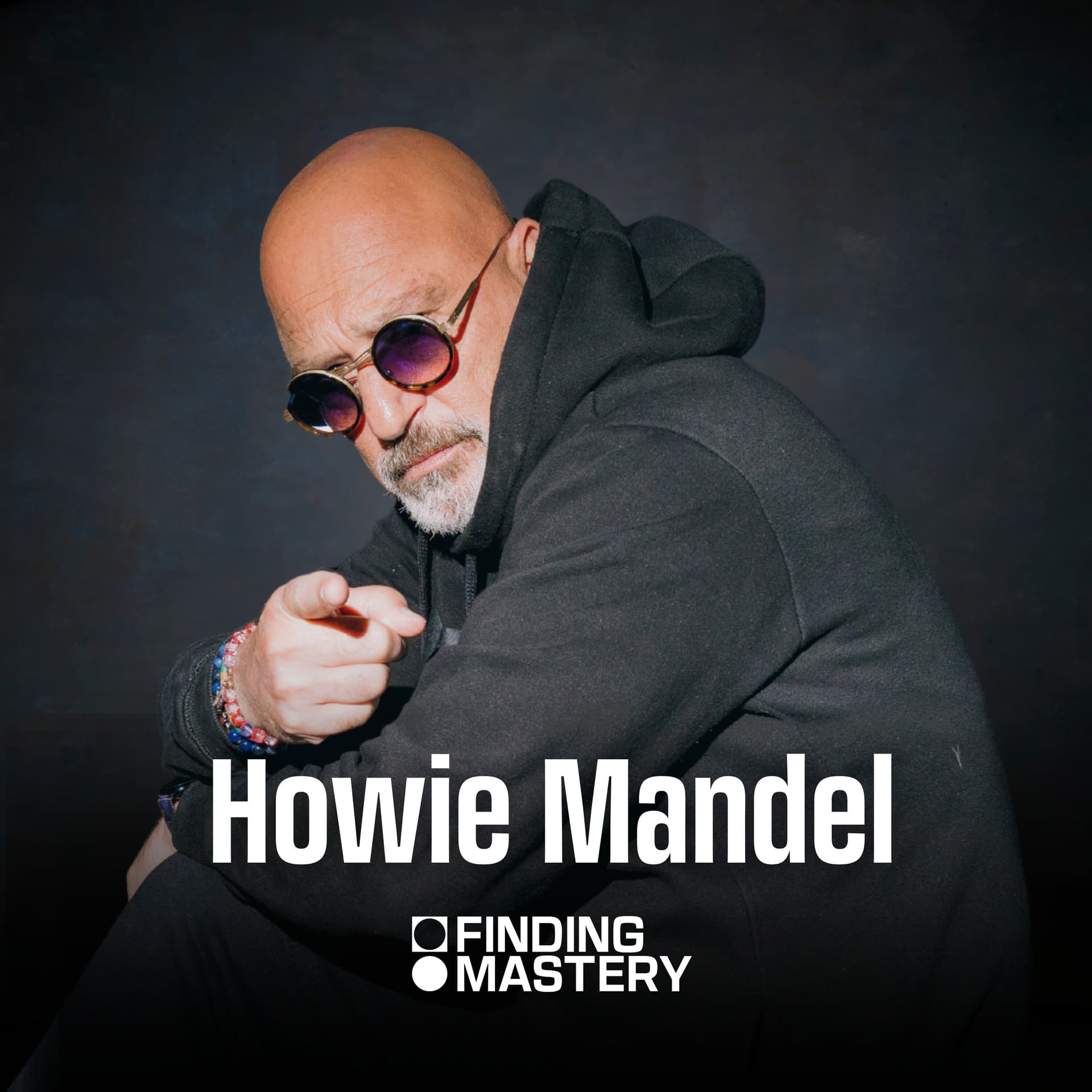
Howie Mandel (comedian, TV host, actor, producer) interviewed by Dr. Michael Gervais (high-performance psychologist and podcast host).
Key claims
Mandel was diagnosed in his 40s; he once feared national disclosure would make him unemployable. He says comedy helps him “tread life” by embracing discomfort. He frames fame as belonging-seeking and low-value compared to inner stability.
Notable examples
His Howard Stern panic attack on-air; the “me too” stranger who shared OCD; his April 19, 1977 Toronto Yuck Yucks debut using latex gloves to cope with OCD cleanliness; his son’s YouTube success video with 100M clicks that shocked him.
Written by AI. May contain mistakes. Listen to the episode to check what was said.
Chapters
Tap a time to open that second in VOHowie Mandel's Panic Attack on Live Radio
1:05 to 2:04
Howie Mandel shares a life-changing panic attack experience on air.
“That's livemomentous.com slash findingmastery, the code findingmastery.”
Howie Mandel's Early Life and Mental Health
2:36 to 4:28
Howie discusses his childhood, early struggles, and mental health issues.
“Now, the real story, though, it isn't what he does.”
Navigating Life's Challenges
4:28 to 7:40
Howie reflects on coping mechanisms and the universal struggles of life.
“So talking to a psychologist, you know, I got to open that up a little bit.”
Redefining Success and Happiness
7:40 to 11:16
Discussion on personal definitions of success and the pursuit of happiness.
“I feel that life, as long as we're still talking and breathing, is a work in progress.”
The Illusion of Fame
11:16 to 14:00
Howie discusses the meaningless nature of fame and legacy in life.
“But they'll tell me, you know, that's all subjective.”
Reflections on Fame and Legacy
14:00 to 14:56
Howie Mandel discusses the fleeting nature of fame and its lack of value.
“walk down the Hollywood Walk of Fame, I can't tell you how many names I don't know.”
Reflections on Fame and Legacy
15:00 to 16:01
Howie Mandel discusses the fleeting nature of fame and its lack of value.
“And sometimes travel makes it tricky to eat well.”
Mental Health and Vulnerability
17:30 to 19:36
Discussion on the importance of being open about mental health challenges.
“the clarity and precision of your language is really crisp on what matters most.”
The Impact of Fame on Personal Value
19:36 to 21:49
Howie Mandel shares personal experiences contrasting fame with meaningful contributions to society.
“And there are people, she was a kindergarten teacher.”
Stigma Surrounding Mental Health
21:49 to 25:41
Discussion on the stigma of mental health and the challenges of seeking help.
“and then somebody sitting in an edit bay and putting that together.”
Show all 22 chapters
Stigma Surrounding Mental Health
27:15 to 28:00
Discussion on the stigma of mental health and the challenges of seeking help.
“It's the time that you lose when the fit is off, the momentum that stalls when that fit doesn't work.”
Howie Mandel's Panic Attack on Howard Stern
28:26 to 32:06
Howie Mandel shares his experience of a panic attack on live radio and the aftermath.
“And what happened was I was on a live broadcast, the Howard Stern radio show.”
Finding Comfort in Discomfort
32:06 to 36:20
Mandel reflects on how embracing discomfort has shaped his career and life.
“There's a stability to the inside out approach and there's a fragility requiring the outside in approach.”
The Thrill of Stand-Up Comedy
36:20 to 40:58
Mandel recounts his first stand-up experience and the exhilarating connection with the audience.
“And you want to keep your head above the water in life and in relationships, you know, whether it's in marriage, whether it's in your business, whether it's just in your survival, whether it's just in your contentment.”
Howie Mandel on Stand-Up Comedy
43:33 to 46:18
Howie Mandel discusses his love for stand-up comedy and his approach to performance.
“I have no desire now to do a Netflix special or any of these things that my fellow comedians do.”
Coping with ADHD and OCD
46:18 to 47:44
Exploring Howie's experiences with ADHD and OCD and their effects on his life.
The Evolution of Comedy and Content Creation
47:44 to 51:07
Howie shares insights on the changing landscape of comedy and content creation, particularly with YouTube.
“and he showed us how to live to our edges.”
Curiosity and Lifelong Learning
51:07 to 56:00
A discussion on the importance of curiosity and learning throughout life and its relation to contentment.
“Like I don't even understand why it's funny, let alone whether I can make a comment, I don't like it, or that's not funny, or that's not funny to me.”
The Nature of Curiosity
56:00 to 58:03
Explore the mindset of curiosity and its roots in personal experiences.
“It's like in a way that you approach something.”
Engagement as a Core Element
58:04 to 1:01:07
How engagement influences success and personal fulfillment in life.
“Because you listen in a very particular way.”
The Evolution of Engagement
1:01:08 to 1:04:06
Reflecting on the ebbs and flows of engagement through life and career.
“And if you look at all the biggest, whatever you want to call economic successes in people's lives, the Microsofts, the Steve Jobs.”
Quickfire Questions and Wrap-Up
1:04:07 to 1:05:18
A rapid-fire session of questions leading to the episode closing.
“Next time on Finding Mastery, we recorded live at the California Surf Club in Redondo Beach with NHL Hall of Famer and LA Kings president, Luke Robitaille.”
Transcript
Automatic transcript. May contain errors.0:00Dr. Michael Gervais:Finding Mastery is brought to you by Momentus. There's a principle that the team at Momentus uses that has stuck with me. The relentless pursuit of better. Creatine is a good window into what they mean by it. Creatine is one of the most studied supplements in the world. The benefits are reasonably well established. Strength, power, recovery, and increasingly what it does for the brain. It's been found to support brain energy metabolism and easing mental fatigue. So this is something a lot of people do take every day. And when you take something on a regular basis, what's in it, what's not, and how can it be?
0:30Dr. Michael Gervais:consistently it's made, all start to add up. That's the part that Momentus obsessed over. Rather than settle for what's on the market, they searched the planet for the highest quality creatine source. Then they built their own specification around it. They call it the signature spec. It's made in a pharmaceutical facility, 10 times fewer impurities, six stages of testing across four independent agencies, NSF certified for sport, and it's micronized so finely, it actually mixes clean, no grit. Go to livemomentous.com slash findingmastery and use the code findingmastery for up to 35 % off your first order.
1:05Dr. Michael Gervais:That's livemomentous.com slash findingmastery, the code findingmastery. When you commit to something daily, the quality really matters. I was on a live broadcast, the Howard Stern radio show. I had a panic attack and I said, hey, listen, I'm going to pass out right now. Legitimately, I have something called obsessive compulsive disorder. I've been diagnosed. I'm medicated. And if you don't open the door for me right now, you're going to have to call 911. I thought I was in a commercial break. I saw that this whole thing had been broadcast nationally. It was probably the darkest, most devastating moment I can remember.
1:37Dr. Michael Gervais:What if the very thing you've been hiding from the world is actually the doorway to real connection? I wandered out into the street. And right away, somebody came up to me and they went, are you Howie Mandel? And I didn't even make eye contact. I looked down and I went, yes. They go, I just heard you on Howard Stern. And I just went, oh, shit, what do I do now? And he said two words, me too. And I went, me too? What are you saying? He goes, I have obsessive compulsive. Thank you so much for talking about it. Welcome back. Or welcome to the Finding Mastery podcast, where we dive into the minds of the world's greatest thinkers and doers.
2:10Dr. Michael Gervais:I am your host, Dr. Michael Gervais, by trade and training a high-performance psychologist. And the idea behind these conversations, it's simple. It's to sit with the extraordinaries, to learn, to really learn about how they work from the inside out. This is not about hacks or shortcuts. It's about understanding what they are searching for, how they organize their inner world, and the skills they've built to shape themselves and their craft. Today's conversation is with the one and the only Howie Mandel. He's a legendary comedian, a TV host, actor, producer. Now, the real story, though, it isn't what he does.
2:41Dr. Michael Gervais:It's how he thinks. I happen to have mental health issues which were not addressed nor would be addressed in the era that I come from. Really late in life, in my 40s, I was diagnosed. But living with these kind of, for lack of a better term, demons inside of me, I never felt comfortable. In this raw and revealing conversation, we go deep into Howie's psychology and how comedy has been both a shield and a bridge for him. April 19th, 1977, I went to a comedy club in Canada and somebody dared me to get up on stage. I have all these strangers just looking at me, expecting me to deliver something. And I had nothing.
3:18And I put my hands in my pocket and I didn't have anything to do. and I carry latex gloves with me. And when I pulled my hands out, the glove came out of my pocket and I pulled the glove over my head, past my nose, and I started breathing and the fingers were going up and down and up and down and people started laughing and then I blew it off my head. The audience roared and I went, good night. And ever since that moment, I've only tried to recreate April 19th, 1977 again. That's why I go on stage.
3:44Dr. Michael Gervais:So with that, let's jump right into this week's conversation with the legend, Howie Mandel.
3:54Dr. Michael Gervais:Howie, I've watched you for a long time. I've laughed in my living with you, you know, for years. And to have the moment to sit with you is really cool. So thank you for all that you've already given. Well, thank you already for this fine compliment. And just listen, as somebody who started out life never being invited to the party, as soon as somebody has any interest in spending any time with me, I feel thankful. More than showing up somewhere. I feel that somebody asked me to be somewhere and somebody wants to talk to me and somebody takes any interest. I find that fascinating. So talking to a psychologist, you know, I got to open that up a little bit.
4:31Dr. Michael Gervais:So growing up, was it a misfit and outcast? How'd you label that? I think everybody feels like they're outcast and a misfit. I think that what I've learned in life is, you know, we try with such vim and vigor from the time we are aware to fit in. And the way to fit in traditionally is to be like. You have to be like. As a kid, I come from the 50s and the 60s. I'm going to be 70 this year. But as a kid, you listened to the radio, so you wanted to know what the hottest music was and what you should buy and what you should be listening to. You looked at magazines or TV and saw how somebody was dressing or what kicks they were wearing.
5:16And that's, you know, everybody was wearing these shoes. So I had to tell my mom to buy these shoes. You just want to be like everyone else. Just by virtue of who I am and my genetics, I was not, nobody is like anybody else. So I happened to be tiny. In high school, I was 4 '10 and 89 pounds and a very late bloomer. I happened to have mental health issues which were not addressed nor would be addressed in the era that I come from. Really late in life, in my 40s, I was diagnosed. But living with these kind of, for lack of a better term, demons inside of me, I never felt comfortable. I was always aware of being different and the result of the issues that I have ADHD OCD depression anxiety made me act out in ways that did not put me in line with what other people
6:18Dr. Michael Gervais:were willing to want to hang with or be with was it a hard upbringing was it a hard go or is this like I just kind of stuffed it down. I played on the surface and I just kind of bounced around. Okay. And I use my humor and one of my gifts to deflect and shield, or was it like hard and dark and lonely? And maybe it's moments of both, of course, but. I think you're right. It's moments of both. I happen to be really lucky to have always been surrounded by an incredibly caring and loving family. My parents were amazing and supported everything. It's just a different time. was it hard and lonely yes was i did i have a place to go to be coddled and loved yes i think life is hard for everybody i think life business whatever it is what we all are looking for and maybe this is why you do this podcast is a coping skill how do you cope with whatever feelings you have as a human as a business person as how do you cope how do you strengthen whatever it is your drive to do whatever you want to do, your drive to fit in, your drive to be a little more popular, your drive to be in that friend group, your drive to, you know, succeed in business.
7:37It was really hard. I think it's hard for everybody. I feel that life, as long as we're still talking and breathing, is a work in progress. And you should be aware of that, that it never remains the same. You always have to adopt and adapt. And I think we are not creatures of adopting or adapting. That's just our resting place. It's work. It's really easy to just, this is who I am. This is how I do it. This is where I come from. These are the cards that have been dealt to me. And 99 % of the world, in my view, is really unsatisfied with what they have, who they are, what they've achieved, or how things are going.
8:22And that's why it becomes part of the vernacular to call Wednesday hump day, you know, because halfway through the week, you are getting over the hump of this. Can I use language on this?
8:35Dr. Michael Gervais:Oh yeah. Yeah. Yeah. Over the language, over the hump of shit that you're dealing with, whether it's a workplace environment that you're not happy with to maybe get to the weekend, to not do anything really exciting, just not do the shit. So everybody feels, and that's why we live in a, in a world now that is incredibly divided because most people are looking outside for what they believe their own personal success would be. And I'm not talking about financial or happiness. It's the government needs to help them. And if the government's not helping them or they're not happy, they blame it on whatever side they want to blame it on.
9:11Politics has really tapped into the darkness of humanity because that's a great fuel for them to win.
9:18Dr. Michael Gervais:Yeah, I mean, if you look at Gallup's poll and you break human psychology into three strata. There's people that are thriving. There's people that are struggling and there's people that are suffering. And the suffering plus struggling is better than 70%. So the majority of people are having a hard go. There's a healthy amount of folks that are like, look, I feel like I'm floating and like, it's pretty good. I've got a dinghy. I've got like, you know, a drink. I'm comfortable. The sun, I've got some shade. I'm out in the ocean. It's kind of nice. And the majority of people are like, I don't understand that picture.
9:53Because we are kind of just bombarded. And now in this world with social media, even more, we're bombarded of what success looks like or should look like, which I don't believe at all anymore. We're bombarded with, look what I have and you don't have. Look at what they have and you should have. look at what, like, what is the word success? What is success? I think that's what it all comes down to. And in my opinion, success is personal comfort. And I don't mean with money or things that you own or things that you've achieved, just feeling good about where you are, just feeling happy, just have a reason when you wake up in the morning, something that you look forward to, something that makes you happy.
10:45It doesn't have to be something that makes you a dollar. It doesn't have to be something that gets you notoriety. It doesn't have to be, but we're taught that. We're taught it's got to look rich. It's got to look shiny. It's got to be beautiful. But I will tell you as somebody who chased that for many years of my life and achieved certain things that you think would make you happy, I'm telling you from this side, and maybe I'll get hit for this, but those aren't things that end up making you happy you think they'll make you happy this is
11:15Dr. Michael Gervais:why i wanted to have the conversation with you is because one i'm enthralled with the idea of mastery of self through mastery of craft and when i watch you you are masterful at comedy like you know what i'll give you my phone right now and you could look at a ton of comments i don't read a lot of the comments but most of the comments will be negative because that's who comments most people that's 99 % - That's your earlier point. 99%, right. But they'll tell me, you know, that's all subjective. Have I mastered comedy? There's always way, you know, in fact, let's speak fact and truth. And this is how I used to look at things.
11:54I remember when I first blew up, I sold out in an hour, the Radio City Music Hall, two shows. And Radio City Music Hall sits approximately 7 ,000 people. And I was in the dressing room with my wife and we're looking out onto 7th Avenue in Manhattan, 7 ,000 people are teaming out after the first show. 7 ,000 people are coming in for the second show. So there's 14 ,000 people blocking the corridor of traffic. There's cops out there with stanchions. They're trying to move. And my wife goes, this is all for you. What are you thinking? And truth be told, I was thinking that this city has, at the time, maybe over 10 million people living in Manhattan.
12:35This is 14 ,000 people. so 9 ,986 ,000 people don't give a shit that I am in town and will not pay for a ticket, don't like me, probably don't even think I'm funny. So is that freeing for you or was that, did that - Not at the time. After this amount of years of life and therapy and medication, you have to free yourself in, because you could focus on that. I did focus on that at that time.
13:08Dr. Michael Gervais:And that statement could go two ways. There's a hinge between like, there's nine million people that don't know who I am. Like, that's awesome. Like, I don't actually matter that much. Or you go, there's nine people that da-da-da. Like, wow, that's not enough. Man, I got more attention. I need more because like people need to know me. Like there's a hinge idea. Well, there was a time where I wanted to, you know, I thought that if I make a lot of money and I'm famous, those are the answers. But what are any of those? One time I used to work with Sharon Osbourne and we were passing a graveyard and she looked at, see all those stones?
13:47Who's the richest guy in that field? It doesn't matter. It really doesn't matter. And people in my business are often asked, what do you want your legacy to be? I don't know that there is a legacy besides procreation. My legacy are my children. You could be super, super famous. walk down the Hollywood Walk of Fame, I can't tell you how many names I don't know. You know, in that moment, the world was really bright and all about them. But that fades. You can ask the average person outside of show business, give me your great-grandfather's first name, your great, great-grandfather. I'll give you two generations.
14:25They don't know the first name. Of their own family. Of their own family, two generations. So when you think of the word fame, you are trying to achieve the ability for somebody that has no consequence in your life to recognize you. Nothing but a stranger in a restaurant will turn around and watch you eat because they saw you on TV. Like, what is that? Well, that's not, there's no value in that.
14:56Dr. Michael Gervais:Finding Master is brought to you by David Protein. Travel a lot at Finding Mastery. And sometimes travel makes it tricky to eat well. Best intentions, and then you're at the airport. And then suddenly the only options around you are the ones that you'd rarely choose at home. Something I come back to often is that discipline isn't really about willpower in the moment. It's often about choice architecture, setting up your environment ahead of time so that the easy choice and the good choice are the same one. That's the role David plays for me on the road. The gold bar, it's their flagship high protein density, great texture, flavors that make it easy to stick with.
15:29Dr. Michael Gervais:So when I throw a few in the bag before my trip, I've already made the decision. The hard moment later takes care of itself. And the team here at Finding Mastery, they love the bars as well. They are ripping through them in the Finding Mastery lab. Salted peanut butter and fudge brownie seem to be the fan favorites right now. They have built something with real rigor in a crowded, sometimes ambiguous space like nutrition. That matters when it's something that you reach for again and again. David bars are now available in major retailers like Walmart and Target. And if you'd like to buy them directly and get a special offer for being a Finding Mastery listener, head to davidprotein.com slash finding mastery, where right now, if you buy four packs, you'll get the fifth one for free.
16:07Dr. Michael Gervais:Again, that's davidprotein.com slash finding mastery. Finding Mastery is brought to you by ProtonVPN. When I work with high performers, one of the things that we talk about is taking real responsibility for the things that are 100 % under your control. The discipline to be great with the things that are in your control is a mark of mastery. Your digital privacy is one of those choices. And it's one a lot of people hand over without ever deciding to. Think about how much your life now lives online. Your conversations with loved ones or colleagues, your finances, your work. And it's far more exposed than many of us realize.
16:42Dr. Michael Gervais:Most of us just accept that as the cost of being online. But it doesn't have to be that way. You can decide to take some of that ownership back. That's where ProtonVPN comes in. ProtonVPN is a secure service designed for people who want to protect their privacy and their online life. And if you travel a lot, it's great. It encrypts your connection, so what you do online stays yours. And what I respect is that it's built by a team that treats privacy as a core value. And they've got a track record to back it up. Right now, ProtonVPN is offering you 70 % off a two-year plan when you go to protonvpn.com slash mastery.
17:18Dr. Michael Gervais:That's P-R-O-T-O-N-V-P-N dot com slash mastery for 70 % off with a two-year plan. Again, protonvpn.com slash mastery. the clarity and precision of your language is really crisp on what matters most. And what you're saying very clearly is what those for wisdom of the ages have been saying, which is like - Well, I don't need you to know me. I need me to know more. That's exactly it. So there's a commitment to work from the inside out, to really understand how to be home, at home with yourself, wherever you are, that takes work. And that's why I want to have this conversation with you. Yes, master of craft on comedy, but for you to be porous with the public world and your private life about mental health.
18:05Dr. Michael Gervais:You were early in this narrative. I don't think I was. I think I was late in this narrative. You gave some air cover to people. This was 30 years ago. Right. Yeah. So you gave a lot of air cover to people. I don't even know if you recognize that. And then, so I was on the front edge of athletes saying, Hey, listen, you guys are seeing this craft. I'm good at the thing I do, but there's something else here that matters more to me right now. My inner life is upside down. I'm anxious, depressed, OCD, the things you mentioned, and I can't keep doing it this way. So the cool kids, you and them, you create air cover for the rest of us to say, oh, I don't have to have it all buttoned up.
18:41Dr. Michael Gervais:I don't have to have this perfect glossy image of life. And that's what I wanted to talk to you about. Why did you come forward with it? And what was the work that you've done to be able to find this deeper sense of freedom. And before you answer that, Howie, before the mics turned on, I said, is there anything off limits? And you said, no. Nothing. What would be off limits? Why would something be off limits? I don't really understand. Again, in the same way that I don't think there's any value in fame. I don't think there's any value in it, really. I also don't think there's any value in not celebrating humanity and your foibles and your darkness.
19:23And I'm a human being, you know, and I'm just, if not more flawed than somebody sitting next to me. And because I've achieved whatever I've achieved, like I got to tell you, I do a podcast with my daughter, Jacqueline, who I admire beyond words, went to school to become a teacher and she became she got her master's in urban education and was teaching in uh crenshaw and south central and if you don't know la the real hard hard places where you know i used to sit in our classes and watch and these kids don't have a pencil they most of them don't have two parents at home if if that they don't have lunches they don't have anything Their hope is that any one of them at five and six years old knows a really close family member who was either incarcerated, overdosed, killed.
20:20And she was the light in their lives. And there are people, she was a kindergarten teacher. And there are people that are in college now that still call her and she made a change. and the reason I'm telling you this, besides the pride of a parent, is I will walk into a room with my daughter, even today, and people will come up to me and wanna take a picture with me and say, we'll give you a free, can we give you a free T-shirt? Can we do that? And I'm standing beside a human being, she just happens to be my daughter, but I'm standing beside a human being who has legitimately, legitimately changed somebody's life And I am a guy who is on TV telling somebody, I like the way you dance.
21:08And they want to give me so much more. She doesn't make enough in that living in that world that she's in to pay for a nice house here in Los Angeles. You know, her husband has, you know, I'm talking about from one income. There's no way she could live in a nice house in a nice neighborhood in Los Angeles and be an inner city teacher. and I get paid way more than I deserve for, you know, what I'm contributing to society. I'm just so kind of taken aback by, you know, or people want to be my friend or people make me offers just because I'm on TV.
21:48Dr. Michael Gervais:You know, you're pointing to, I like that you're taking the conversation in this direction because the easy kind of narrative here is that you said fame is not valuable i think is how you phrased it and i'm nodding my head and agreeing but what fame what recognition will do is it's a transactional experience that oh i do belong so it's very very dangerous of feeding the belongingness that we all crave well we all you know if people in my business if they get a job and that's why I'm fascinated by even the, you know, I'm not knocking acting, but for the most part, the, you know, the biggest night is the Academy Awards.
22:30And you think, oh my God. And we give these people, including myself, I've been in movies, incredible respect for being picked up, having somebody help dress them, standing on a piece of tape and saying what somebody else wrote 30 times over and over and over again from different angles. and then somebody sitting in an edit bay and putting that together. And then they have a night where they give each other awards for pretending to be something they're not. And then we give them millions and millions of dollars. Not only that, we want to know who they voted for and what policy they think is important.
23:10And I'm thinking like, why? I don't really understand it's so crazy so what i found accidentally and did not do i was incredibly embarrassed of my mental health weaknesses my wife of 46 years now gave me an ultimatum 30 years ago saying she couldn't handle me anymore it's really hard to live with somebody who is in in pain and, you know, feels mentally out of control. And I tried to control everything around me. You know, I built a secondary building. If my kids coughed, I moved into another house on the property. And if they touch something that I deemed was dirty, I would force it just, she goes, you really need help.
24:00You know, and I kind of rationalized all these behaviors and this anger and this depression and I went and got help and I got diagnosed. When I got help and diagnosed, there was a huge relief that this was, this was really something that had an identity and could be, you know, coped with. I don't use the word cured because I'm coping. You're working with it. I'm working with it and we're all dealt a hand that we have to work with and but as a child of the 50s and 60s and even today there is a stigma attached to uh mental health you know 100 you know i i i've talked so many times like if you're in an office in a public place and you go oh my back is out a thousand people will hand you a card for their chiropractor or if you're too thick and they'll
24:54Dr. Michael Gervais:also say oh man are you okay yeah i had a backache once too it was so hard and like are you how you doing but when you've got a private thing that they can't see well even if you could see you if you god forbid you just said you can see you well even if you just said listen i i don't know what's come over me i can't even function today and i can't stop crying and i'm going to be crying and i can't cope you know people back off from you or if you said listen i i just need i got to go to my psychiatrist in the middle of a day in middle America. I don't know that you would be deemed, it's not as, there's a stigma.
Read the full transcript
25:30A hundred percent. A hundred percent.
25:32Dr. Michael Gervais:It's getting, it's getting, it's changing. I hope. It sounds like you are not feeling the change that you would like, that you see and imagine. And I agree with you. I think the people that need the most help, it is, it is, you know, just like, you know, you know, racism is still here too, you know, And that's changing, but it's hard work to do. And it's hard to be a woman and it's hard to be. It's just hard to be. It's hard to live. Body Mastery is brought to you by Fatty 15. Okay, let's talk about longevity. Longevity is much more than simply adding years. It's about maintaining health and a zest and a vitality and enhanced performance as you age.
26:13Dr. Michael Gervais:And that's why I'm excited about Fatty 15. It's an award-winning supplement. It's powered by C15, which is the first essential fatty acid discovered in over 90 years. Okay, so C15, it's a geroprotector. What that means is it helps to slow biological aging by strengthening your cells, basically protecting them from damage. You can think of it like kind of like a 401k for your health, where you're investing in cellular quote unquote resilience. And I dug into the research on the relationship between C15 and heart health. I love what I saw. Fatty 15 is on a mission to optimize your C15 levels to help you live healthier, longer.
26:52Dr. Michael Gervais:Get 15 % off your 90-day subscription starter kit by heading to fatty15.com slash findingmastery and use the code findingmastery at checkout. That's fatty, F-A-T-T-Y, 15.com slash findingmastery. Start investing in your long-term health today. Finding Mastery is brought to you by LinkedIn Jobs. If you've ever hired for a small business, you know the real cost isn't just the salary. It's the time that you lose when the fit is off, the momentum that stalls when that fit doesn't work. And that's the pressure of having to get it right while you're still running everything else. That's why I'm paying attention to LinkedIn Hiring Pro.
27:31Dr. Michael Gervais:It's built for the reality of hiring when you're operating lean. You describe the role in playing language, and then Hiring Pro helps you draft the job post, surface the right candidates, and then narrow to a short list without turning hiring into another full-time job. And when applications start coming in, it doesn't leave you buried in resumes. It streamlines screening, including AI-powered interviews for initial conversations. How about that? So that you can spend less time searching and then more time connecting with the people who match what you need. With Hiring Pro, you can hire with confidence knowing you're getting the best talent for your business.
28:03Dr. Michael Gervais:In fact, those hiring with LinkedIn are 24 % less likely to need to reopen a role within 12 months when compared to their leading competitor. Join the 2.7 million small businesses using LinkedIn to hire. Get started by posting your job for free at linkedin.com slash mastery. Again, that's linkedin.com slash mastery. Terms and conditions apply. And we have this stigma attached. And what happened was I was on a live broadcast, the Howard Stern radio show. I talk about it in my book. And I didn't want to touch the doorknob to leave. and they were having fun, you know, I'm a comedian, so they were having fun with the fact that I couldn't touch the doorknob and they kept trying to make me grab it.
28:46And I started, I had a panic attack and I said, hey, listen, all kidding aside, I'm gonna pass out right now. And I feel like I'm gonna die. And Howard, legitimately, I have something called obsessive compulsive disorder. I've been diagnosed, I'm medicated. And if you don't open the door for me right now, you're gonna have to call 911. And they opened the door for me. And when I walked out in the hallway, I thought I was in a commercial break. I saw that this whole thing had been broadcast nationally. And my, it was probably the darkest, most devastating moment I can remember in my history because I thought, oh my God, I just confessed nationally on radio that I'm a mental health patient.
29:29And number one, my first thought went to my poor kids. Everybody's going to say at school that your dad's a mental case. I've just embarrassed and shamed my entire family. Number two, I'm never gonna work again. Why would anybody handle, why would anybody hire, you know, all these, any job that I have, I don't know if people are aware of, but even in show business, you know, even on AGT, there's an insurance policy on you, you know? There's a, you know, if something should happen, and they usually, when you start a new job, you'll even have a medical checkup, kind of, you know, it's just surfacy.
30:04It's not anything. But if you have a diagnosed mental health disorder, they're probably never going to hire me again. So I'm an embarrassment to my family. I'm unemployable. I don't know what to do. And I wandered out into the street. And right away, somebody came up to me. I couldn't even make eye contact with somebody in this teeming sidewalk of Manhattan within seconds of me coming out the door. And they went, are you Howie Mandel? And I didn't even make eye contact. I looked down and I went, yes. They go, I just heard you on Howard Stern. And I just went, oh, shit, what do I do now? And he said two words, which meant something different then than it means now.
30:42But he just went, me too. And I went, me too? What are you saying? He goes, I have obsessive compulsive. So thank you so much for talking about it. What do you mean? He goes, it was so comforting to hear that, you know, in our own heads, regardless of whatever our mental issues is, we're all alone. We all feel like nobody really, and we don't. nobody really sees things the way you see things. Nobody feels exactly like you feel. Nobody, so it is very lonely. And when you're suffering, you feel very alone because nobody can feel what you feel. So for him to say me too, and that really helped, he had no idea how much he helped me to say, I'm not alone.
31:19What you feel, the thing that I described, you've been diagnosed too, and you're going through this, and you're out here and you're willing to talk about it? I wasn't willing to talk about it. Well, now I have a friend. You just threw me a life preserver. And then I went home and within weeks, this is before the internet, I started getting hundreds and hundreds of letters from people who were saying thank you. And every letter made my life and my mind a little bit lighter, a little bit brighter, a little bit. So I realized for my own sake, you know, I'd like to come off a little more altruistic, but I'm not.
31:53For my own sake, they helped me. and anybody who comes up to me in the street today and says oh yeah thank you for talking about it or i have it too or my kid talks about it or is there anything you could suggest you have no idea how wonderful that's like strangers coming up and hugging i don't want you to hug me but that's a
32:11Dr. Michael Gervais:real verbal mental hug yeah so again thank you because uh you create air cover you've created space it's an accident that you that you stepped into this yeah but the fact that you continued and you owned it and what serendipity is like a thing i don't know how to explain it but for someone to walk up and say that to you it's remarkable i believe in i wouldn't you do i do i would imagine though there's a little bit of a trap and i don't know if you've kind of navigated this trap door or you're still flirting with it which is when somebody says something to you thank you amazing you've helped me so much that that reinforces and gives you the set of validation that you're okay, as opposed to from the inside out, the knowing that I'm at home with myself and I am who I am and I'm working my very best.
33:03Dr. Michael Gervais:There's a stability to the inside out approach and there's a fragility requiring the outside in approach. And if you could just open up the aperture there a little bit about how delicate it is for you or how sturdy you feel. Well, I'm not sturdy. I've used this term. I said, I've become very comfortable with discomfort. discomfort is the major unlock this is a major unlock for for people to understand i do want to stay here stand-up comedy has been is my comfort zone because it's really uncomfortable and my analogy is this that's okay sorry i'm interrupting i've been told not to interrupt go ahead i've been scarred by my people a little bit which but right here this is the thing this is the through line between mastery of craft and mastery of self your commitment to be uncomfortable on both sides so i do want to understand that as well so there's three things i want to understand so will you remember you promise you remember where you were yeah okay keep going this is awesome so i've become comfortable with discomfort and if i had to use analogies if you find a passion in something you're excited about and that should just be for most people what we should try to find is life.
34:18That should be what you're passionate about. And life is ebbs and flows and it's hard. But if you wanted to put it in a much more visual tone, if you just love boxing, you want to be a boxer. Boxer is your life. You love the sport. You love the physicality. You love the challenge. You love the competition. It's your life. And that's what you want to do. That's a choice you made, then I will tell you in order to box, there's going to be moments when you can't even catch your breath. There's going to be moments when you're going to be punched in the face so goddamn hard that your lights are knocked out, you know, and you're just going to be lying there and they're going to be counting.
35:03You can't let the count out. You got to get up. You got to get up. If this is what you want to do, and the analogy is a boxer, life is a fight. And if you want to fight, it's going to hurt sometimes. It's going to be so joyful when you connect and you win and you knock your opponent out or you go up and you get the belt or if you hit the weight, like whatever you need to do to succeed, if that's a word that, you know, succeed is such an open framed word, but that's what life is. And life is a constant fight and a constant kicking. Life is like a river and you're flowing. You're never in the same place.
35:47I'm not in the same place as I tell you this story and I articulate whatever it is that I'm trying to articulate as I was when I sat down and you said, hello. You know, I'm in a different place right now and everything is different and everything around me is different. Nobody's in the same place. You've moved on in whatever the interesting question is. The listener is not in the same place. So I got to constantly navigate. We all are. And tread life. And that's how you go. And if you stop treading, and it's easy to stop treading, and we all stop treading in different ways, you drown. And you want to keep your head above the water in life and in relationships, you know, whether it's in marriage, whether it's in your business, whether it's just in your survival, whether it's just in your contentment.
36:34if you can be content and I'll tell you I found stand-up comedy I was miserable most of the time and I went to a comedy club in April 19th 1977 I went to a comedy club in Canada Toronto yuck yucks because somebody said let's go I was with one or two people and I watched stand-up I had never seen live stand-up before live I'd seen you know Carlin and Dangerfield and all these people on but I never aspired to do that. I mean, it doesn't even seem like something that this middle-class kid from Toronto, I have nobody in show business. It doesn't seem like something that you even think about. And the host, Mark Breslin said, if there's anybody that thinks they can do this, we'll service an amateur hour.
37:22I think it was at midnight. I can't remember what it was. Does anybody want to do it? And somebody at the table went, you should go up. And I went, okay, like I always do. Like I said, okay to this. I say okay to everything. for fear of missing out, which is also a problem and a gift, you know, because I - Because you say yes. But for fear of missing out, I get very little sleep because I'm on the internet all day long because I don't want to miss anything. I feel like the world's going much faster than I am, and it is, and it's scary, and I'm constantly treading. But I said, okay, did not really prepare, thought it might be funny because somebody dared me to get up on stage, that somebody was going to go, ladies and gentlemen, Howie Mandel.
38:04And then I'd show up and that would be funny. And that'd be the joke. And that would be the story. I did. I showed up and they went, ladies and gentlemen, Howie Mandel. And if you look at old tapes of what I used to do, I didn't have any preparation. The audience applauded. I'd never been on a stage before. I'm looking at the microphone and I look out and there's spotlights in my eyes and it's blinding, but I can see the audience applause dies down. I can see the people in the front and now they're just staring. I have all these strangers just looking at me expecting me to deliver something and I had nothing and my whole being was surging with terror and embarrassment and just this nervous pulsing of like I'm not delivering it's like that nightmare when you show up at a party in your underpants you know people talk about all these scary things you know I show up at a party and I was the only one I was naked at the party and you know that's what you feel like and the nerves took over and I started without without even thinking and no plan, I started going, okay, okay, okay, okay.
39:04And I was giggling and terrified. And I think the audience related, without being able to articulate this, the audience related to my terror and discomfort. And I was going, okay, okay, okay. And they started giggling, maybe because they were uncomfortable. And then when they started giggling, I started going, what, what, what? And that kind of became my catchphrase. And then I put my hands in my pocket and I didn't have anything to do. And I carry latex gloves with me, did at the time, because if I was out in public and I had to go to a public restroom, I didn't want to touch anything because I had OCD.
39:34I didn't know I had OCD. I just wanted to remain clean. And when I pulled my hands out, the glove came out of my pocket. So I didn't know what to do. I was terrified. And I pulled the glove over my head, past my nose, and I started breathing. And the fingers were going up and down and up and down. And people started laughing. And then I blew it off my head and the audience roared and I went, good night. And I walked off stage and Mark saw me in the hall. he goes, you got to come back and do it tomorrow. And I go, do what? And he said, do what you did. And I went, okay. And then I started showing up there every night.
40:06It was the first time a large group of strangers, we were for whatever reason on the same wavelength, laughter releases an endorphin. Everybody in the room, nobody knew me, but everybody liked me. We were all having fun. I was terrified. it was like being on a roller coaster i love roller coaster i love thrill rides because that adrenaline the scarier it is the higher it is the closer to death the faster it is the more exciting you go i want to ride that again and ever since that moment i've only tried to recreate april 19 1977 again that's why i go on stage that's why i do what i do it's never that exciting anymore but But I would go, like, I'm on tour all the time.
40:55And people always say, how are you? I used to love when you did stand-up comedy. You know, I never stopped.
41:02Dr. Michael Gervais:Finding Mastery is brought to you by Sunlighten. I'm really excited about a new partner of ours. Something that I've come back to again and again is when I invest in recovery with the same intention that I bring to my work, everything gets better. My energy, my focus, my ability to show up fully for the people that I'm with and the work that I care about. That's why I am so bought in. on the Sunlighten M-Pulse Intelligent Sauna. I was first introduced to their team a few months ago and was so impressed by what they've created. This is one of the most advanced infrared saunas that they've built in over 25 years of pioneering this technology.
41:36Dr. Michael Gervais:That's right, they've been at this game for 25 years. I had one installed in my home a few months ago and it's made a real difference. I feel more refreshed, more grounded, more relaxed, and it's become a consistent part of how I recover, how I reset every day. I'm using it to support muscle recovery, for improved oxygen delivery, and for nervous system recovery. And what I love most, I don't have to leave my home. They're offering the Finding Mastery community up to$2 ,100 off. Simply head to sunlighten.com and use the code mastery for this great discount. Again, that's sunlighten.com and use the code mastery for up to$2 ,100 off.
42:15Dr. Michael Gervais:Finding Mastery is brought to you by Lisa. We are serious about recovery. Sleep sits right at the center of that practice. I have been fortunate to work with some of the most extraordinary performers for the last two decades. And sleep and recovery are foundational, full stop. It's where the body and the brain repairs. And that's why finding a mattress that supports your recovery matters so much. A great mattress, it's not something that you stumble into. It is a choice. You find it on purpose, the same way that you'd approach anything that really matters in your life. We've worked with Lisa for a long time now because they get it.
42:48Dr. Michael Gervais:They build beautifully crafted mattresses tailored to how you actually sleep. Your position, your feel, your preferences, all of it. You can take their sleep quiz and find your match in about two minutes. Premium material, serious comfort, full body support no matter how you rest. One of our teammates here at Finding Mastery picked one up recently. Can't stop talking about it. Says it. They're waking up more rested than they have in years. Right now, go to lisa.com for 25 % off select mattresses. Plus, you get an extra$50 off when you use the promo code mastery. That's exclusive for our listeners.
43:21Dr. Michael Gervais:That's Lisa, L-E-E-S-A dot com. Promo code mastery for the 25 % off select mattresses plus the extra$50 off when you use the code mastery. But during the 80s and 90s, I did like 10 HBO specials and all these cable specials. I have no desire now to do a Netflix special or any of these things that my fellow comedians do. i love three four times a week and i do it dropping in at the comedy store at the laugh factory at the ice house at the improv and just doing a set for p i just i love stand-up comedy i still do it are you scripted or unscripted because this is pretty much on you know listen i love coming up with a routine that works i love that art of coming up of being a wordsmith and and writing something that if I repeat it, it'll definitely trigger strangers to respond to me.
44:19I love the idea, that's a craft. I love the idea of being taken off the script and being scary, like going, not knowing where they took me. Power goes out in a room, that's great. Somebody shows up, somebody makes a noise, somebody throws up, the mic goes up. I love that. That's so exciting. And people go, you should do a special. And I go, well, why? Why? I don't need to be more famous. I don't need to be on TV. I just want to do this. I'm really comfortable with just showing up somewhere. And if I had to be a server someplace in a restaurant to pay my rent, but once, twice a week, I could show up in a little club and do that.
45:02that is such a happy place. You have no idea. And I'm aware of, I don't have that need. And I don't have the need. I'm lucky to do it for, I still do it for big money, but I don't have the need to do it for the money or for the notoriety. I just like doing it.
45:19Dr. Michael Gervais:I get how that squares with ADHD, the spontaneity, that whole mix is probably well suited for the way that you're able to network thoughts. How does that work with OCD? OCD, I've had to, you know, and continue to have to cope with. You know, I'm a dichotomy, you know, as somebody who doesn't want to be touched, doesn't want to touch, doesn't want to be in public. It's hard for me. What are you craving? Deepest down in your heart, what are the things that you're craving? Contentment, just to be, be okay just to feel okay to not have fear fear is a driving force and what is it that you're afraid of something bad happening to a loved one is that why you work to control so much i don't know you tell me i don't i don't know either i just feel like as much as you think you have control this is so much this being existence is so much bigger than us you try to control you know it's scary i have three children and three grandchildren and there that's the those are the most important things in my life the dichotomy is a really good word for you because you've got this spontaneity thrill kind of thing that you experience and then ocd is really in this anxiety meets control bit but then you were talking philosophically about like look life is a river we are different from the moment we said hello so intellectually you're spot on with the unfolding nature of life and then there's another part of you intellectually or maybe mechanically in your brain it's like no but don't touch me don't be close don't do this don't sneeze and because you become uncomfortable with it but that is a natural unfolding thing that can also fit into your philosophy right except that the thrill and putting myself in uncomfortable positions and just being on that is a panacea for keeping me in the moment i'm not focused if i don't like quiet and if i'm in the quiet then i'm worried and i'm scared and the fears that we all think about what's going to happen next because something's going to happen next and when that pops up when you are on that drop on a on a roller coaster when you're coming down to the consuming that's i'm not yeah that's right and that's what stage does for me that's exactly right you know so i I spent a good part of 10 to 15 years working with some of the most extraordinary risk takers on the planet.
47:44Dr. Michael Gervais:Felix Baumgartner, who was Red Bull Stratos, who jumped from the edge of space at 128 ,000 feet and the brightest minds in aerospace were not sure when he passed through the sonic experience if his head and torso would do Mach 1, speed of sound, if his arms and his legs would have a drag on them, if they'd stay intact or not. And we just lost him. He just passed away. He was his dear friend. and he showed us how to live to our edges. And that's why in the same spirit, you're living to your edges. Try. And yeah, you are. So how do you organize your inner life to get up for the edge? It's an adrenaline.
48:20You know, it's, I'll give you an example, just based on my business. I told you how I got into the business, but then it became very corporate. You know, I worked for a lot of corporations and I felt like very tied. This is how you do it. and then it can become very repetitive. About 20 years ago, I called my son over the summer holidays and he was 16, 17 years old. And I've always taught my kids, just don't be idle. Just like be productive. And I don't mean make a lot of money. I mean, just do something productive. So I called him at three o 'clock in the afternoon one day, a weekday, and I woke him up.
49:00And I said, Alex, this is my son's name. I wouldn't use a different name because then he would be confused. But I said, Alex, you got to get a job. I can't be waking you up at three o 'clock in the afternoon. It's not healthy. It's not healthy. And he goes, I was working all night. I said, how do you work all night? And I don't even know that you have a job. What were you doing? And he says to me, this is 20 years ago. He says to me, YouTube. And I said, YouTube, YouTube, you can scroll through on your phone. what do you mean you're doing YouTube? He goes, no, I was doing YouTube. I go, what are you doing?
49:36What'd you do last night? And he goes, we were downtown throwing water balloons off the building. And I said, this does not seem like a job. This does not seem productive. And he goes, oh yeah, come over. And I went over to where he was and he showed me a check for$20 ,000 for that week. And I went, what the hell is this? What are you doing? Are you doing porn? I had no idea what what he was doing. And he said, I'll show you. And I hadn't really looked. And he showed me, for the life of me, I can't remember specifically what it was, but I know he showed me a YouTube video that had a hundred million clicks.
50:09First of all, I've never seen the number, you know, as successful as I've been, I've never seen anything get a hundred million viewers or whatever. And I started reading comments and they went, this is the funniest thing. This is, you're brilliant. This is the most I've ever laughed. And it was a comedy video. and I didn't recognize it as comedy. I didn't, I don't even understand why this is funny. Like I come from a place where when we started the comedy story, I understand the difference between Carrot Top and Dennis Miller, you know? And even if you don't like me or John Oliver because we're very different people, I understand why, you know, it's different tastes, like country music versus rock and roll or whatever you like.
50:51I didn't even recognize this as comedy. And that was the scariest moment of my life. that was an awakening because I said, wait a minute, a hundred million people are engaging in this as comedy. And they think it's funny. Like I don't even understand why it's funny, let alone whether I can make a comment, I don't like it, or that's not funny, or that's not funny to me. It's objective.
51:15Dr. Michael Gervais:But they're tuned to something. And that was a rude awakening. He's very successful now. This studio we're in, he built, he has a network of a million podcasts that people listen to and watch he ended up going behind the scenes and realizing that all these influencers needed content he creates white label content and shares in the ad revenue he does fine the point is but he taught me so i said wow i don't even speak the language anymore and what i realized we all do we all do curiosity runs through everybody's veins. And going full circle to the beginning of this conversation, when we're young, I'm going to talk about my generation, we all listen to the radio to find out what's the hottest music.
52:00What should we be buying? What should we be listening to? We look at magazines and they still do this online. What should I be wearing? What is the style? What is the fashion? What is that? At a certain point, probably around your mid forties, people get tired of looking and seeing what's new. They have their music. They like that music spoke to them at the time where they're burgeoning and they're talking like they talk. And then life just continues. That river continues to flow. The language becomes different. The way we consume becomes different. The way we do business becomes different. You know, people can stay in their bed in their underpants now and become a billionaire and never leave that bed.
52:42And they can do that on a laptop. You could never have done that. Everything changes. and we sit around and your kid will play you a song and you'll go that's not music you want to hear music i'll play you my music and that doesn't hit them it doesn't hit them you realize the language has changed it's like going if you wanted to go now and go live in italy for a year you don't speak the language your lifestyle is different you learn that so i took it upon myself and it kind of hit a switch that is very unhealthy and healthy where my curiosity i have fomo as Oprah coined the phrase, but fear of missing out.
53:16And I sit online all night and all day and just try to say, I wanna speak the language. I wanna be able to engage. I wanna be able to entertain somebody now. And that's what I do. And if you walk around, we're in my facility right now, I have a gaming team, I'm fascinated by it. I have a gaming team on Twitch that's playing live gaming. That's a great income stream. I have a very different -
53:42Dr. Michael Gervais:for you or for them? Both. Mm-hmm. Did most of the people you met here, I have technology here that the hologram technology is because I got tired of doing Zoom calls and doing things like this on Zoom. And I found ProtoHologram, I found them on Instagram. I DM David, I went over to think, this is how I'm gonna be myself so I can get places without going any place. And I ended up seeing it, that's the low hanging fruit. There's so many, it employs, it's a software company that employs AI. I ended up moving them into my building. That's the head office. I invested. I sit on the board. I found a live band in the gaming team on Twitch.
54:15You know, I just have to be aware of how the world, I, for my own personal, it doesn't make me better. It doesn't make me more successful. I just need for comfort to know that I understand the language of our community, of our world now, you know?
54:32Dr. Michael Gervais:Let's start, let's kind of wind it back to one thought which is your definition of success is contentment okay so i'm chasing contentment but this these don't sound like contentment activities these sound like i don't have to make they sound like what like you're actually chasing stimulation being switched on so being switched on and being aware and being able to speak the language and understand makes me content that's the piece i just have to understand it's like if i moved you to italy right now you would try really to learn the language because what are you chasing? Are you gonna be more success?
55:08Are you gonna make more money? You might make more money if you speak the language and you might, and those are afterthoughts, but I wanna speak the language of the world. I wanna understand what -
55:17Dr. Michael Gervais:You are a learner. You're - Curiosity. I think curiosity doesn't kill a cat. Curiosity makes cats thrive. And I'm one cat that wants to thrive because that is every day I figure there's gotta be, like, what are they doing now? You know? And I'm so curious and I don't bemoan anybody of my age who is not curious. I wish, I wish that I could have that comfort where, you know, I could sit at home, I could retire and I could be content. Some of them say they're content. I think a lot of people who retire die. I think if you are not stimulated mentally, you will screw up physically. What do you think curiosity rests on?
56:04Dr. Michael Gervais:So curiosity is a mindset. It's like in a way that you approach something. For you, what does it rest on underneath? It's a difficult question. Another way I can ask it is where does it come from? Meaning if I don't know, I feel scared. Or when I do know, I'm looking for the aha moment. Like I can't wait to get to the ahas. It tickles me. And that's probably not a great. The aha moment tickles you or the process of like going towards. My wife gets mad at me all the time because it's not just about business or social media or whatever. I have always, like, even as a kid, just stared at people. I love to watch people.
56:42I love, I love it. You don't have to know me. I like to watch you operate and see how things are done. and then I can't tell you how many times my wife, I just prefaced this by saying she gets mad at me, where I'll engage a stranger in a conversation and I start asking too many questions and they end up in tears and I will walk away and my wife will go, well, you had to ask, you know, like, are you married? And my husband just died. Why did you ask? Why do you ask? Why do you care? I go, I don't know, but I'm really interested. I see something. I wanna look at it. I wanna not touch it, but I'm using that as an analogy.
57:19I want to see something. I want to touch it. I want to know about it. I want to, I just want to. I just, I don't know. I can't just, it feels wrong for me personally to just let, I'm not trying to fill a void. Maybe I am, as I say it out loud, but I just want to, you know, if I hear a noise in another room, I want to walk in and see what that noise is. A lot of people are okay with hearing a noise in another room and going, oh, there's a noise and continuing on. I don't know why. You tell me, why do I need to know what that was? Why do I need to know about somebody that I've never seen before?
57:53I'm never going to see again. Why? Why do I need to stare? Why do I?
57:57Dr. Michael Gervais:I don't know. Well, I will tell you, this is really cool that you brought this up because I was going to ask when we had a moment, like, what are you doing when you're listening? Because you listen in a very particular way. It's the eye contact. It's the way that I feel when you're listening. there's an intensity about you and there's a round there's a contour to it so the contour is like you're not burrowed in like what is he gonna say next like this doesn't make sense hurry up kid that type of thing it's like oh wait i wonder where he's gonna go so there is a curiosity that sits right underneath do people say that to you about the way that you listen no they say i don't listen they say i like i add because i like you yeah i interrupt yeah but i interrupt, I interrupt because I am, see, this is, maybe I'm wrong, but I can't be wrong about, I could be wrong about myself.
58:49You know, I do a podcast and they say, you know, we want to hear them, not you. But when you start saying something that I'm really interested in, I'm like a five-year-old kid who goes, you go, well, I, you know, I grew up in Germany. Germany, you grew up in Germany. What was that? Like, let you finish the sentence. But I'm so excited. I'm really enthralled with with what you're saying or really interested in what you're saying, so interested, the term interruption is not what I'm doing. The term is I'm engaging. That's my engagement. My engagement just happens to be seen by everybody else as an interruption.
59:24Dr. Michael Gervais:What's happening for you right now as you're speaking, because there's a different neurochemistry in the way that you were just speaking about the way that you engage with other people. Do you know what that feels like inside of you? No. You don't articulate that well. not myself everybody else would notice it when you switch on everybody was like oh they probably say something like oh how he's on it or whatever they might say but that when you get excited i think other people are demonstrably influenced by it you know i pitch things i'm always selling and i'm always i like that i like that and i i'm on social media i'm on every platform i like that And I say to people, the key, and I'm not using my own terminology for success, but if you want to buy this show, if you want to do this business, if you want to go viral, if you want to have a good, I said that the one word that social media brought is engagement.
1:00:19engagement is my whole essence and it's not to have a viral moment it's just that i have a tendency to just maybe because i feel so alone and every i just want to i want to i want to be part of whatever it is you're part of i just want to engage i just want to engage and so much of what people talk about and so much of what they put on our media is just so passive it's just noise. There's so much noise. And if you could find a moment, an idea, something that engages, there's something. And that's what in that moment of my fear, without any aspirations of being a comedian, being successful, being famous, being anything, I engaged a room of strangers.
1:01:06And I'm chasing that. That's all I chase is engagement. And if you look at all the biggest, whatever you want to call economic successes in people's lives, the Microsofts, the Steve Jobs. They were these outliers that were so focused on doing a specific thing that ultimately engaged this huge mass. All of a sudden, everybody was interested in how it's done this way. They engaged in that tool that these people created. They were so engaged and they hit a seed of what engages all of us. And they brought that together. And I think what I chase is engagement. That's all I chase.
1:01:53Dr. Michael Gervais:I feel it when you're engaged. This is part of your signature way of going through life. But don't you feel that in everybody? It's not me. When somebody is disengaged or when something is just noise. Yeah, if I pick up my phone and I'm doing da-da-da. Right, 100%. I think engagement is the seed of life. I think that is the seed of success is the seed of contentment, whether you're engaged with a life partner, with your child, with whatever you're doing, with a hobby, that is the value. And when you engage, when you can hook on and hold on to something that makes you content, that makes you happy, we think that we're going to be engaged if we can grab money, if we can grab notoriety.
1:02:39What you find is those are empty engagements that are, they fade. You know, it doesn't matter how much money you have when you die, you're going to be in the same place. It doesn't matter how many people know you, eventually nobody's going to know you. You know, as somebody who has gone through, you know, I blew up on HBO in 1981. The next day I was able to play, you know, two shows a night at 10 ,000 seats. In 2005, I couldn't sell 75 tickets at a comedy club. So I know the difference of how I'm engaging an audience, how much of that audience is engaged. And then deal or no deal blew up. And then I was off of deal or no deal.
1:03:20They did 500. And then, so I've seen those ebbs and flows, which are really not that show business, but show business is a really good emblem for life. You know, there are times in your life where you're so engaged, where your relationships are really engaged. You know, I've been married for 46 years. you know it's hot and heavy at the beginning there's times where there's strife in life and finance and whatever that's going on in other people's lives where you're not as engaged and you strive to become more engaged engagement is life engagement is success engagement is the fuel
1:03:56Dr. Michael Gervais:that we all seek howie more so than the words you've chose it's how you've chosen them and the way that you've embodied the words that you're choosing what a gift i mean i am a gift yeah yeah i am a gift i feel like you're wrapping me up right now you are aren't you i love what you just did that i took the gift and the wrapping and then we're closing the show and and we're giving it to uh is that your camera is that your close-up right there yeah yeah and we're and he's giving this gift to you oh god all right look i do want to ask you like one or two word questions here as response one or two word responses the responses are one or two yes right okay it all comes down to yes if you could name a boat what would the name of the boat be not titanic mastery is are you baiting me You baited me perfectly.
1:04:53We're going to end with that. Howie, thank you, brother, so much. This was awesome. Thank you.
1:04:58Dr. Michael Gervais:Next time on Finding Mastery, we recorded live at the California Surf Club in Redondo Beach with NHL Hall of Famer and LA Kings president, Luke Robitaille. From being a ninth round draft pick almost overlooked by the league to becoming one of hockey's all-time greats, Luke shares how hope, grit, and a relentless commitment to getting a little better every day shaped both his career on the ice and his leadership off of it. Join us on Wednesday, October 8th at 9am Pacific only on Finding Mastery. All right. Thank you so much for diving into another episode of Finding Mastery with us. Our team loves creating this podcast and sharing these conversations with you.
1:05:39Dr. Michael Gervais:We really appreciate you being part of this community. And if you're enjoying the show, the easiest no-cost way to support is to hit the subscribe or follow button wherever you're listening. Also, if you haven't already, please consider dropping us a review on Apple or Spotify. We are incredibly grateful for the support and feedback. If you're looking for even more insights, we have a newsletter we send out every Wednesday. Punch over to findingmastery.com slash newsletter to sign up. The show wouldn't be possible without our sponsors and we take our recommendations seriously. And the team is very thoughtful about making sure we love and endorse every product you hear on the show.
1:06:17Dr. Michael Gervais:If you want to check out any of our sponsor offers you heard about in this episode, you can find those deals at findingmastery.com slash sponsors. And remember, no one does it alone. The door here at Finding Mastery is always open to those looking to explore the edges and the reaches of their potential so that they can help others do the same. So join our community, share your favorite episode with a friend, and let us know how we can continue to show up for you. Lastly, as a quick reminder, information in this podcast and from any material on the Finding Mastery website and social channels is for information purposes only.
1:06:53If you're looking for meaningful support, which we all need, one of the best things
1:06:59Dr. Michael Gervais:you can do is to talk to a licensed professional. So seek assistance from your healthcare providers. Again, a sincere thank you for listening. Until next episode, be well, think well, keep exploring.
From the publisher
What if the very thing you’ve been hiding from the world is actually the doorway to real connection?
On today’s episode, we sit down with legendary comedian, TV host, actor, and producer Howie Mandel - best known for Deal or No Deal, America’s Got Talent, and decades of stand-up. But the real story isn’t what Howie does. It’s how he thinks.
In this candid and deeply human conversation, Howie shares his lifelong journey with OCD and anxiety, his complex relationship with performance, and how comedy became both a shield and a bridge. Together with Dr. Mike, he explores what it means to embrace our humanness, manage the noise inside our heads, and show up vulnerably - onstage and off.
You’ll learn:
- How Howie Mandel transformed lifelong struggles with OCD and anxiety into creative fuel.
- Why vulnerability—even accidental—creates the deepest connections.
- How to become “comfortable with discomfort” and why that unlocks mastery.
- The difference between chasing fame and living from true contentment.
- Why engagement—not achievement—is the real key to a fulfilling life.
If you’ve ever wondered what would happen if you brought your hidden self into the light, this episode is your invitation to find out.
Links & Resources
Subscribe to our Youtube Channel for more conversations at the intersection of high performance, leadership, and wellbeing: https://www.youtube.com/c/FindingMastery
Get exclusive discounts and support our amazing sponsors!
Go to: https://findingmastery.com/sponsors/
Subscribe to the Finding Mastery newsletter for weekly high performance insights: https://www.findingmastery.com/newsletter
Download Dr. Mike's Morning Mindset Routine: findingmastery.com/morningmindset!
Follow on YouTube, Instagram, LinkedIn, and X
See Privacy Policy at https://art19.com/privacy and California Privacy Notice at https://art19.com/privacy#do-not-sell-my-info.