
In short
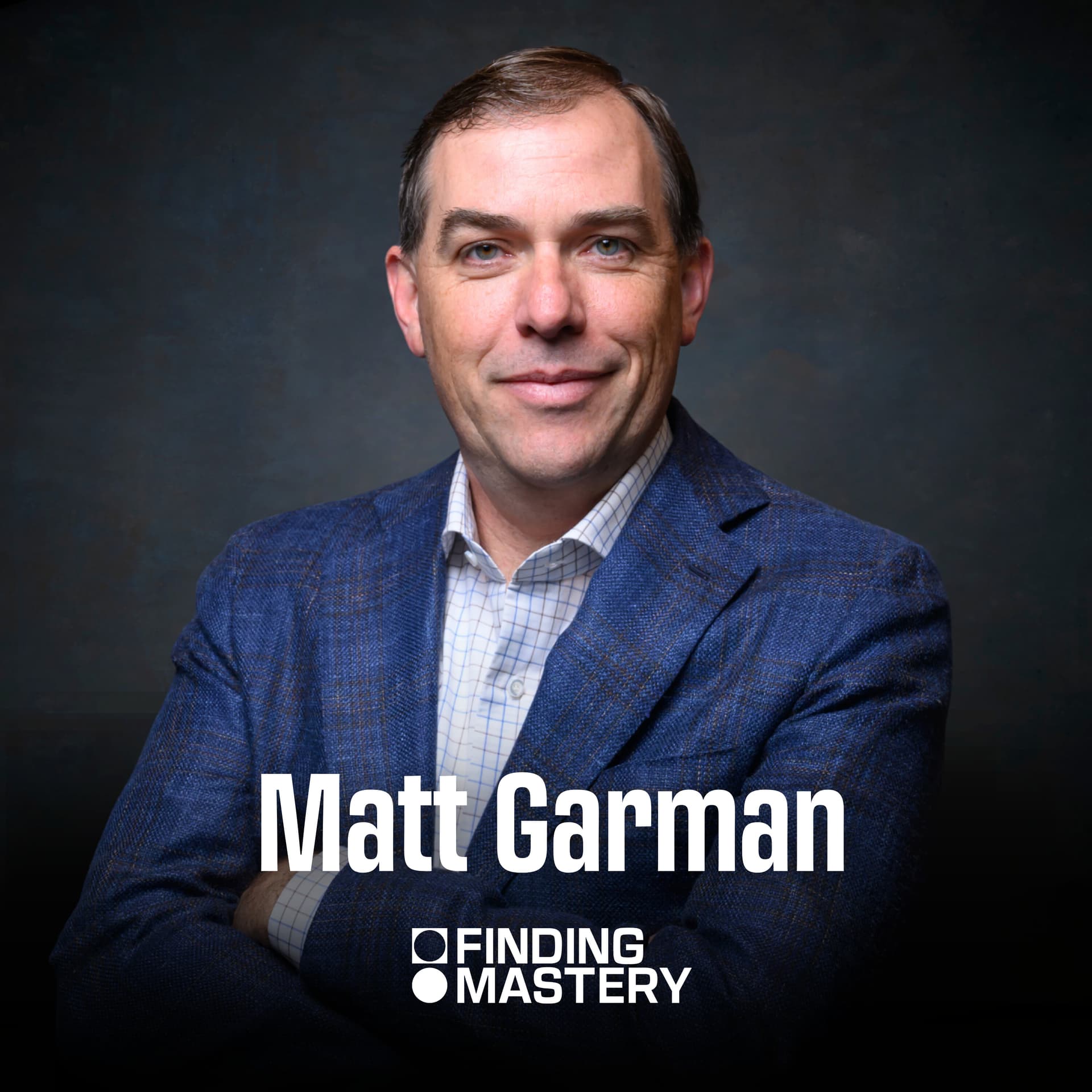
Matt Garman (CEO, Amazon Web Services) explains how AWS scales “startup speed” inside a $120B+ company, focusing on optimism, risk management, fast iteration, and decision-making frameworks (especially one-way vs two-way doors). He also addresses AI adoption friction and why replacing juniors with AI is a “terrible idea.”
Guest background
Matt Garman is CEO of AWS. He previously worked in startups and joined Amazon as a business-school intern to help build a plan for AWS’s first customers, learning how innovation happens “inside a company.”
Key claims
AWS’s main “competition” is inertia from on-prem systems, not just other cloud providers. Most decisions are two-way doors (easy to undo), so teams should push decisions down to those closest to customers. Use six-page written documents (not PowerPoint) to force detail and tradeoff clarity. Take risks, but manage downside; avoid naive optimism while maintaining bias for action.
Notable examples
Fire Phone is cited as a failed project where people still advanced. He contrasts “minimum viable” with “minimum lovable” products. He mentions “Speed Matters” and “Bias for Action” awards for acting without waiting for permission.
Written by AI. May contain mistakes. Listen to the episode to check what was said.
Chapters
Tap a time to open that second in VOWho is Matt Garman?
0:03 to 1:29
Exploration of AWS and Garman's role in its development.
“Mastery because we know one great hire can change everything.”
Who is Matt Garman?
1:42 to 2:32
Exploration of AWS and Garman's role in its development.
“Welcome to the Finding Mastery podcast, where we dive into the minds of the world's greatest thinkers and doers.”
Decision-Making at AWS
2:32 to 2:51
Discussion on decision-making styles and the importance of optimism.
“like why are you slow to make a decision?”
AI Adoption Challenges
2:51 to 3:13
Exploring the challenges of AI adoption in businesses.
“by replacing juniors with AI is a terrible idea.”
Matt's Journey to AWS
3:13 to 7:23
Matt Garman shares his journey to AWS and his passion for innovation.
“First, I want to congratulate you on a massive body of work and leading an important company into our future.”
The Role of Family in Development
7:23 to 11:26
Garman discusses how his family shaped his views on success and confidence.
“You're like, ah, something looks good over there.”
Optimism and Opportunity
11:26 to 14:00
Garman reflects on optimism and the importance of seizing opportunities.
“look, I mean, it's like the world is a big place.”
Embracing Opportunities Despite Risks
14:00 to 14:16
Learn why seizing unique opportunities can be beneficial, even amidst uncertainty.
“And I was maybe the only one that raised my hand and said, I'm interested in that.”
Optimism and Abundance in Business
14:16 to 15:18
Explore how optimism shapes decision-making and risk assessment in business.
“But I think you got to look for opportunities like that, too, and jump on them when you see them.”
The Scale of AWS
15:18 to 15:36
Hear about AWS's impressive revenue growth and historical milestones.
“You looking for and readying yourself for the ball to bounce a certain way is probably why you're able to kind of get chunks of yardage if we use a football analogy for just a moment.”
Show all 31 chapters
The Scale of AWS
15:58 to 17:08
Hear about AWS's impressive revenue growth and historical milestones.
“Something that I've come back to again and again is when I invest in recovery with the same intention that I bring to my work, everything gets better.”
Optimism Among Industry Leaders
18:28 to 20:36
Discuss the predominance of optimism in successful leaders and its impact on risk-taking.
“So at the plus 100 billion, your peers, so people that are at the similar tables to you and maybe larger tables, do you find them to be fundamentally optimistic or fundamentally pessimistic?”
Balancing Risk and Management
20:36 to 22:29
Understand the importance of balancing optimism with risk management in business.
“And that toxic positivity is kind of collapsing on that concept a bit.”
The Speed of Innovation vs. Mastery
22:29 to 24:15
Explore the tension between moving quickly in innovation and achieving mastery in products.
“So one of the, let's call it shadow risks in our modern world of people and things moving so fast is that the risk of taking time to build something beautiful.”
Decision-Making Models in Large Organizations
24:15 to 27:42
Learn about effective decision-making frameworks that allow organizations to innovate rapidly.
“When you ship a consumer electronic device, as an example, you don't get to redo the bezel if you want to do it later.”
Teaching Decision-Making to the Next Generation
27:42 to 28:00
Understand how to explain the concept of one-way and two-way decisions effectively.
“It's a framing that I use with my son, and he's a 17-year-old.”
Understanding One-Way and Two-Way Decisions
28:00 to 29:26
Learn how to differentiate between one-way and two-way decisions, emphasizing the importance of focusing on inputs over outcomes.
“And nowadays, I'm not sure if that's a two-way.”
Encouraging Two-Way Decisions in the Workplace
29:26 to 31:28
Discover how to foster an environment that rewards proactive decision-making and recognizes employee initiative.
“Like there, you can update it and you kind of make the calls of which things are doable or not, or undoing or not.”
Criteria for Success and Termination at AWS
31:28 to 33:19
Explore the criteria leading to success or termination at AWS, focusing on performance and alignment with company values.
“We do have a leadership principle called write a lot.”
Supporting Risk-Taking in Leadership
33:19 to 35:16
Learn how leadership can support risk-taking within teams and the importance of taking ownership of decisions.
“How do you take the risk taking off the table as best as you possibly can to free people up to take the right types of risks?”
Supporting Risk-Taking in Leadership
37:14 to 37:29
Learn how leadership can support risk-taking within teams and the importance of taking ownership of decisions.
“That's proton, P-R-O-T-O-N-V-P-N.com slash mastery for 70 % off your two-year plan.”
Making Decisions with Heart and Logic
37:29 to 39:25
Understand how to balance logic and empathy when making tough personnel decisions.
“So when you face a decision to consequence, a one-way door type of thing, do you have a process that, like, is there a mechanism that you work through to be able to get to clarity?”
The Balance of Support and Challenge
39:25 to 42:00
Discover the importance of balancing support with challenge in high-performance environments for optimal team growth.
“The contour is more right angle than it is with smooth edges.”
Empathy and Support in Leadership
42:00 to 45:50
Learn the importance of empathy and support in managing high-performing teams.
“You have to understand where people are coming from.”
Long-Term Thinking and Organizational Growth
45:50 to 48:40
Discover how to think about organizational structure for sustainable growth.
“And for most people, that's like, that could be monthly horizons or quarterly horizons.”
The Role of Nuclear Energy in Future Planning
48:40 to 50:30
Understand the significance of nuclear energy in Amazon's sustainability strategy.
“So there definitely is some long-term planning in there.”
The Role of Nuclear Energy in Future Planning
51:29 to 52:42
Understand the significance of nuclear energy in Amazon's sustainability strategy.
“If you are leading a team right now, you already know that strategy, execution, priorities, accountability, those matter.”
AI Adoption and Its Challenges
52:55 to 56:00
Explore the frictions and opportunities related to AI adoption in business.
“What is the main friction right now with AI?”
The Future of Work in AI
56:00 to 57:20
Explore how AI will change job roles and the necessity for adaptation.
“And in many ways, AI has the ability to let them deliver even more value than they did before, where they were having to learn how to work.”
Navigating Leadership in a Fast-Paced Environment
57:20 to 58:20
Learn about balancing speed and team dynamics in leadership.
“Matt, thank you so much for the time of sharing how you work and the frameworks that you work from and the felt sense of like conscientiousness that is imbued in the language that you choose.”
Reflecting on a Meaningful Conversation
58:20 to 58:50
A recap of the insights shared during the conversation with Matt Garman.
“And so we should copy that because it worked really well, because there is no example of this before.”
Transcript
Automatic transcript. May contain errors.0:00Dr. Michael Gervais:Finding Mastery is brought to you by LinkedIn. We use LinkedIn Hiring Pro here at Finding Mastery because we know one great hire can change everything. One bad hire, it can cost you a lot, way more than time. It can cost you momentum and culture and real dollars. And that's why how you hire matters just as much as who you hire. And it's why I've become a big believer in the power of LinkedIn Hiring Pro. Here's what I appreciate about it. When you're running lean, you don't have hours to sift through a pile of resumes hoping to find the right person somewhere in the stack. Hiring Pro is built exactly for that reality.
0:32Dr. Michael Gervais:You describe the role and it screens candidates for you, surfacing the people who are a best fit so that you can spend your time and conversations with those folks rather than in the weeds of the applications. And the results back it up. Those hiring with LinkedIn are 24 % less likely to need to reopen a role within 12 months compared to the leading competitor. So join 2.7 million small businesses already using LinkedIn to hire. Host your job for free at linkedin.com slash mastery. Terms and conditions apply. Again, that's linkedin.com slash mastery to post your job for free.
1:29small, they offer it will deliver to the thing that they think about. And if you have somebody that thinks big and says, hey, look, we can do this other thing that seems unachievable, even if you get 95 % of the way there, it's a pretty good outcome. We want people who are going to go do something, not just sit around and think about it.
1:42Dr. Michael Gervais:Welcome back. Welcome to the Finding Mastery podcast, where we dive into the minds of the world's greatest thinkers and doers. I'm your host, Dr. Michael Gervais. By trade and training, a high-performance psychologist. The idea behind these conversations is simple. It's to sit with the extraordinaries and learn, to really learn how they work from the inside out. Today's guest is Matt Garman, CEO of Amazon Web Services. What AWS is, our goal is to power all of the applications, capabilities, and technology that every company around the world needs to do. Whether that's two kids in a dorm room building a new web application, whether that's some of the largest companies in the world running their technical infrastructure, we run the data centers and the services that power a lot of what they do.
2:19Dr. Michael Gervais:In this conversation, we unpack how he leads one of the world's most innovative companies from why optimism fuels bold ideas to how he empowers teams to make faster decisions using his one-way versus two-way doors approach. A lot of times when you really dig in, like why are you slow to make a decision? People are afraid that they're just like, I'm not sure I'm allowed to make that decision. And so we tell people if a decision is an easy two-way door decision, which means it's super easy to undo. You make this decision, turned out it didn't quite work right, you just undo it and then keep running forward.
2:46Overall, you're going to get to where you want to go faster.
2:48Dr. Michael Gervais:We also explore what's really slowing AI adoption by replacing juniors with AI is a terrible idea. What is the main friction right now with AI? People are appropriately worried about business disruption and job disruption. Some people position it as elimination. I just don't think it's that. I think it's... With that, let's jump into this week's conversation with Matt Garman.
3:13Dr. Michael Gervais:Okay, this has been a long time coming. First, I want to congratulate you on a massive body of work and leading an important company into our future. So, Matt, thank you for coming on the podcast. Yeah, thanks for having me. I'm looking forward to it. Okay, great. So for those who might be unfamiliar with AWS, in the most simplest of terms, how do you describe AWS? That's a good question. And, you know, like I've been describing AWS for 20 years. Fortunately, more people know about it now than they used to. But yeah, so AWS, it's cloud computing. And effectively, actually, when we started AWS 20 years ago, our vision was people running their own data centers and racking servers and putting storage together was non-differentiated.
3:58And so our view was we could deliver that as a service. And so what AWS is, is our goal is to power all of the applications and capabilities and technology that every company around the world needs to do. And whether that's two kids in a dorm room building a new web application, whether that's some of the largest companies in the world running their technical infrastructure, whether that's government agencies that are trying to drive their mission, we run the data centers and the services that power a lot of what they do. So that's kind of our vision is to, you know, a lot of times we say we try to do the muck and the hard things that the customers, it's not differentiated for our customers.
4:36And so that's our goal. We want our customers to be able to move faster, innovate better, and we deliver innovations that try to help customers do that.
4:44Dr. Michael Gervais:Is the majority of your effort for AWS to serve large businesses or for individuals? We try not to make that differentiation. In fact, when we were starting early on, we got some advice from some people that said, look, there is no possible way that you can build a company that can go after supporting small, early stage startups and go after large enterprises. And we took that advice and put it aside and decided to disregard it. And we do both. And so from the very beginning, startups have been incredibly important for what we do. Individual developers, we want them to be able to create and really have the power to create the same thing that the biggest companies in the world do.
5:23We want an individual developer to be able to scale to support millions and millions of customers. and we want to have the controls and compliance and security and capabilities that the very largest banks and healthcare companies and media and entertainment companies and really every industry around the world can rely on. And so that's how we think about it. We think about it as it's not, you know, we want to be able to build capability. Some capabilities are obviously more applicable to an enterprise and some are more applicable to a startup. But generally, our services are designed to support all of those customers.
5:55Dr. Michael Gervais:So Christian Dior has Balenciaga. And Nike has Adidas. What's the ecosystem look like of competitors in this stand for AWS? Is it Microsoft Cloud, Azure, and or otherwise? Yeah, I mean, look, if you look in the cloud computing world, it's Microsoft and Google or the other really large competitors that are in our space. But I will say that the vast majority of our competition is still status quo of people running data centers on-prem. So today, estimates vary, but it's roughly 20 % of workloads have moved into a cloud environment, and the rest of those are still inside of legacy on-prem compute environments.
6:35And so there are many people out there that are trying to go after those workloads, some of those that we mentioned. But the real competition is inertia, is trying to get enterprises or startups or small, medium-sized businesses to change how they think about things. How do you get off of a mainframe that you've been on for 30 years? How do you get off of legacy VMware environments? How do you get off of these old databases that are crusty and you've been running on for 20 plus years? And so that really is the competition. Honestly, it is helping customers get into a more modern world so they can take advantage of all the great technologies and the new capabilities that are out there in the world.
7:14Dr. Michael Gervais:So let's go back. Let's roll it back a little bit. When you joined AWS, you weren't even sure what AWS was. That's why I wanted to start with hearing your understanding of AWS, because I think it was like 20 years ago. You're like, ah, something looks good over there. It looks interesting. I'm not sure what it is. So who does that? Well, my first job actually was as an intern. So that was pretty low risk. I was in business school. I was at Amazon. Amazon was at least a real company. So I had no idea what AWS was. It was a secret, you know, internal project. So I didn't know until I started what it even was.
7:45But I was excited about it. I was interested. Part of why I joined, actually, I had done startups before Amazon, before I went to business school. And I was interested to see how a larger company innovated inside of an existing business. And so I talked to a couple of different companies, and I talked to Amazon, and they said, hey, we're actually building a new business inside of Amazon. Can't tell you what it is, but love to have you come do your internship for us. And I was like, well, great, that's exactly what I want to see. So I did that and learned about what we were building with AWS and thought it was super interesting.
8:17And I did, again, didn't quite know what it was, but it sounded cool. And so, yeah, that was my intern project was to actually put together a business plan of who would be our first customers that we would possibly go sell these services to that we were building.
8:30Dr. Michael Gervais:Okay, go back to that framing. You wanted to, say it one more time, you wanted to understand how companies inside of companies could grow. Is that what I heard? Yeah, basically. I'd been at these small startups before, right? 10 people, 15 people. One of them had grown to be like 50 people. And when you innovate in that, you're starting from zero. And I had read a bunch about how folks at Google and Amazon and others build new products and services inside of those existing companies. And I was interested to just, you know, learn. I was kind of curious as to see how does that, how is that different?
9:03And how do you drive a culture of innovation inside of a larger organization? And so that was part of my internship as I kind of sought out an example like that where I could try to learn. I had no hopes that it would be something that was as transformative as AWS was. So I got a little pretty lucky there. But that was what I wanted. That's just something I was interested in learning at, mostly because I was pretty sure that I wanted to go back and work at startups. And I thought it would be a good grounding for if I ever was at a startup that could grow bigger to make sure to maintain that culture as part of that company.
9:36Dr. Michael Gervais:There you go. Okay, so the original kind of interest was culture of innovation. If you did it in a company, inside a company, you didn't have to really scrape for money and resources and manage that narrative. But you did need to, of course, make sense of something. So what you were most interested in a culture innovation. OK, that's going to be important for us. And I do want to go back to your dining room table. Like when you were a kid, did you guys all eat at the same table? Was it chaotic? Was it very calm? Was it more Puritan? Was it more intense? Like, just, I think we can learn so much by understanding the table.
10:13Yeah. So, yeah, we ate dinner together most nights. My mom cooked dinner. My dad's a Lutheran minister. And my whole family, I would say, is talkative. And so, in fact, when you think about Thanksgiving, we'd have something like 20, 25 people over. And you really had to fight to get a word in edgewise. And so I think that, and there was lots of vigorous debate, I would say. all friendly and respectful, but vigorous. And, you know, I think that pushed me to make sure that if I wanted to get my opinions out there and heard, which I did, I had to actually do it. But also I will say, you know, the family was incredibly supportive.
10:53You know, I made sometimes unconventional choices. In fact, right out of undergrad, when I went to go work for a startup, my mom was very worried. She's like, are you sure that this company is going to make it? And I was like, no, mom, I'm not, but it's okay if it doesn't. And it didn't, by the way, it went out of business in 18 months, my first startup that I worked for. But, you know, I think I learned a lot and I always had confidence that if things didn't go well, I could find something else and get to the next thing.
11:17Dr. Michael Gervais:Where did that sense of efficacy come from that, you know, if it doesn't work out, I'll figure it out. I don't know. Maybe it's a rational confidence. I don't know. But it's a, look, I mean, it's like the world is a big place. There's a lot of things to do. Wait, wait. Okay, Matt, you're dropping gems. Where does that abundance come from? I don't have a good answer for you there. Is it dad? Is it mom? Is it something you learned in high school, college? I've always kind of just felt that way. Like I kind of was like, there's a lot of opportunities out there. And, you know, I think I was always just kind of confident that things would work out if I worked hard on them.
11:55Dr. Michael Gervais:Do you believe that the future works out if you apply yourself? Or do you think that, are you more optimistic as a framework or more pessimistic? I am. I will say, yeah. So I am always very optimistic. And so maybe that's kind of where it comes from is I'm always just kind of optimistic that, you know, my friends make fun of me as I'll stand at the tee box playing golf and I'll hit a drive and it will clearly look like it's like 20 yards into the forest. And I'll be like, it might open up. Like, I'll probably find it. I often don't just to be clear, but I have that optimism that, you know, It'll probably work out.
12:26And look, it doesn't always work out, by the way. And a lot for me has been good luck, just to be super clear. And I think some of it you make your own luck, but some of it is real. Like you just get lucky. And I had a very supportive family. I continue to have a very supportive family. I do think that AWS is an incredible opportunity that I stumbled into. And then you make some of that, right? I think that the team here has been incredible, and we've worked hard to build the business up. And there's still a long ways to go. So it's a mix of, I would say, talent and hard work. But luck is in there too.
12:58But you got to be optimistic. And I think when you think about the future, I'm very optimistic that we can get to the right place. And it doesn't mean it's easy, right? And there's a lot of hard things out there.
13:08Dr. Michael Gervais:It's interesting to hear a highly trained engineer account for luck as part of the equation. Luck is a complicated concept. And I don't think you're just casually throwing it around. But I don't want to presume something. Like, yeah, so when you're saying it's not all luck, just to be super clear, like it can't, it's not all, but it's a combination of those things. Like there's a lot of things that could go wrong that are potentially out of your control. And sometimes they do. And sometimes they can be catastrophic and sometimes they're not. And so some of that is bad luck or good luck. And but you have to take those chances and you have to look for those chances, too.
13:44And I do think that some of that is there, too, where you recognize that. I'll use the early one as an example, which is when I came to the Amazon kind of intern sell day, there was a whole bunch of leaders there kind of pitching their jobs. And there was a whole bunch of business school interns and all really smart people. And there was a bunch of people that were like, they heard like, hey, we're doing an internal kind of new business startup that's going to be deep technology focused. And I was maybe the only one that raised my hand and said, I'm interested in that. Everybody else was like, I'm going to go work on books or music or sporting goods or something that was more established and safer.
14:15And I thought it was interesting and I wanted to go learn it and, you know, and got lucky that that turned out to be a really interesting thing. But I think you got to look for opportunities like that, too, and jump on them when you see them.
14:26Dr. Michael Gervais:You're making my job super easy. I love this. Oh, good. That's what I'm here for. As I'm trying to understand. That's what I'm here for. Yeah, no, yeah, that's really good. Because you're sharing your framework so crystal clear. So there's an optimistic lens. There's a lens of abundance. You're accounting for luck, but what you're saying is you need to look for things. That is the optimism at play. Like there's things out there. That's the optimism and abundance kind of co-join. There's things out there. I've got to look for it. As opposed to if your brain is doing what it's designed to do without the psychology to drive it, your brain is designed to find all of the dangers and threats and things that could go wrong, the things that could eat you or kill you.
15:08Dr. Michael Gervais:And then what that looks like in modern life is like, yeah, if I take that risk on an AWS I've never heard of, I don't know if that's going to work out. Maybe I'll just go do the safe game, whatever that is. You looking for and readying yourself for the ball to bounce a certain way is probably why you're able to kind of get chunks of yardage if we use a football analogy for just a moment. Okay, that's cool. So amongst your peers, people that are, I don't know what the top line revenue for AWS is. Is it public? It is. Yeah, we announced it. We're rounding airs,$120 billion run rate. Yeah, something like that.
15:43Dr. Michael Gervais:That's probably pretty cool to say. I remember our first days when it's like, you know, we passed$10 a day of revenue. So, you know, we've come a ways. We've come a ways. Finding Mastery is brought to you by Sunlighten. I'm really excited about a new partner of ours. Something that I've come back to again and again is when I invest in recovery with the same intention that I bring to my work, everything gets better. My energy, my focus, my ability to show up fully for the people that I'm with and the work that I care about. That's why I am so bought in on the Sunlighten M-Pulse Intelligent Sauna.
16:18Dr. Michael Gervais:I was first introduced to their team a few months ago and was so impressed by what they've created. This is one of the most advanced infrared saunas that they've built in over 25 years of pioneering this technology. That's right. They've been at this game for 25 years. I had one installed in my home a few months ago and it's made a real difference. I feel more refreshed, more grounded, more relaxed, and it's become a consistent part of how I recover, how I reset every day. I'm using it to support muscle recovery, for improved oxygen delivery, and for nervous system recovery. And what I love most, I don't have to leave my home.
16:52Dr. Michael Gervais:They're offering the Fonny Mastery community up to$2 ,100 off. Simply head to sunlighten.com and use the code mastery for this great discount. Again, that's sunlighten.com and use the code mastery for up to$2 ,100 off. Finding Mastery is brought to you by Lisa. We are serious about recovery. Sleep sits right at the center of that practice. I have been fortunate to work with some of the most extraordinary performers for the last two decades. And sleep and recovery are foundational, full stop. It's where the body and the brain repairs. And that's why finding a mattress that supports your recovery matters so much.
17:30Dr. Michael Gervais:A great mattress, it's not something that you stumble into. It is a choice. You find it on purpose, the same way that you'd approach anything that really matters in your life. We've worked with Lisa for a long time now because they get it. They build beautifully crafted mattresses tailored to how you actually sleep. Your position, your feel, your preferences, all of it. You can take their sleep quiz and find your match in about two minutes. Premium material, serious comfort, full body support, no matter how you rest. One of our teammates here at Finding Mastery picked one up recently. Can't stop talking about it.
18:00Dr. Michael Gervais:Says it. They're waking up more rested than they have in years. Right now, they're having a July 4th sale. Go to lisa.com for 30 % off. Select mattresses. Plus, you get an extra$50 off with the promo code mastery. Exclusive for our listeners. That's Lisa, L-E-E-S-A dot com. And use the promo code mastery for 30 % off select mattresses plus an extra$50 off when you use the code mastery. Okay. So at the plus 100 billion, your peers, so people that are at the similar tables to you and maybe larger tables, do you find them to be fundamentally optimistic or fundamentally pessimistic? I would say mostly optimistic.
18:41Dr. Michael Gervais:Yeah. I didn't want to kind of bait you into that because I haven't met a world's best that is not optimistic. They're all optimistic. Yeah. It's a wild kind of just keeps splashing me that their psychology is built on like, hey, something could work here. Hey, I think this could work. I think if we get this thing together and if we really apply ourselves, we've got to take some risks now. This could work. So how do you work with people that hedge their bet or hedge the company's bet, which is not fundamentally wrong. Of course, we need people to say, hey, I think you should stay away from the cliff.
19:15Dr. Michael Gervais:You've been dancing out there a little too long. We need people to pull us back from the frontier sometimes. But how do you work with people that have a naysay, gloom, doom outlook on what could be? Yeah, I would say it's much harder to work with people who have like a really naysayer doom gloom all the time kind of, you know, I think that's a tougher one. I will say, though, you need a mix of personalities to drive a successful business because you can't all just be super optimistic either. You actually need some people to help balance you that says like, you know, we're very optimistic. But like when you're thinking about security threats or operational rigor and things like that, like you want to think about what could go wrong too.
19:57because that's a big chunk of what you're doing. And so you want that mix of things because you can't just be like, oh, it'll probably all work out. I don't have to worry about it. Like that, I'm not, you know, so it can't just be that. You actually want people who are incredibly rigorous and say, this could go wrong, this could go wrong, this could go wrong, particularly so you can then go and make sure that you build belts and suspenders around that to make sure that they don't. You know, and so I think you want a mix of folks like that. And, you know, now if everybody is always just, you know, sad panda all day, that kind of brings down the team.
20:22And so you can't just be that. But I think there's a mix of that that you want for a team.
Read the full transcript
20:27Dr. Michael Gervais:Yeah, naive optimism is very, very dangerous, right? And like, oh, it'll all work out and we can just kind of do whatever we want. That's just silly and it doesn't work. And that toxic positivity is kind of collapsing on that concept a bit. But yeah, so you probably hire for people that have not a doom and gloom, but a readiness and a warning to counterbalance some of your like, no, let's go. Yeah, that's right. Look, we think, you know, I'll step back a bit. We kind of use different words for these at Amazon, but we do look for some of these principles. We call them leadership principles as we're hiring people.
21:03And a couple of things we look for is we look for people who do things like think big as one of our leadership principles. And, you know, and Jeff put these in place 20, 25 years ago. But the idea is that if you have somebody that thinks small, they offer or deliver to the thing that they think about. And if you have somebody that thinks big and says, hey, look, we can do this other thing that seems unachievable, even if you get 95 % of the way there, it's a pretty good outcome. And so we have that. And then another leadership principle we have that I think is really reinforcing there is a bias for action.
21:34And so we want people who are going to go do something, not just sit around and think about it, but actually jump in and drive and do it. And so we look at all those kind of leadership principles, and then we layer on things like operational excellence where we want to make sure that what we do, we can do great.
21:47Dr. Michael Gervais:Are you a risk taker or risk manager? Well, I think you've got to do both. So I think I don't accept that you can just be one of those things. I would say, on average, I kind of push the team to take more risks, and I would push the business to take more risks. But you've got to manage risks, too. And so I can't remember who it was. In business school, it was someone that came to give a speech. And he said, look, you don't want to avoid risks. You just want to get paid for them. And if you can get paid for taking the right set of risks, and there's the right sets of upside for it, then it's a good deal.
22:17And then you mitigate as many of the downside risks as possible of that. And so risks aren't inherently bad. In fact, if you have no risk, you're probably not going to make much money from it from a business. And so, you know, I think that taking risks is really good. And you have to figure out how you manage the downside of those.
22:31Dr. Michael Gervais:So one of the, let's call it shadow risks in our modern world of people and things moving so fast is that the risk of taking time to build something beautiful. Yep. at the cost of moving fast to build something that can is good enough right now just to barely get introduced. Yeah. So it's like, you know, the art of mastery versus the skill of productivity. Where do you fall on those two? And maybe I don't know if your personal life is different than your leadership role, but if you could open up both of those, both personal and leadership between the slow art of mastery and the high speed of productivity.
23:11I'm definitely on the kind of move fast and kind of iterate from there. I think that's just how I typically do things. I think, I don't know if my business or personal kind of take is any different really. And, you know, there's a few reasons for that. I do think that in business in particular, the cost of going slow is just so high. And, you know, the business that we're in, innovation and technology moves so fast that, you know, look, you have to get to a product offering that's great for customers. And so you kind of have that customer lens, which is, you know, I think there are a lot of times people in technology world talk about a concept like minimum viable product that they want to launch.
23:44We kind of coined that a minimum lovable product. Like what's a product that's the smallest amount that you can do that people will still love? And it's great. And I think you can always do more. You can always polish. You can always add more features. You have to have something that's super useful and capable and great for a customer when you want to launch it and a capability. But if you wait until it's perfect, three more people are going to launch ahead of you because just the world is moving so fast. And, you know, we have the luxury where it is software, a lot of the pieces that we do. I mean, we obviously have a server component and a hardware component inside the data center, but the thing that customers touch and feel is software.
24:19When you ship a consumer electronic device, as an example, you don't get to redo the bezel if you want to do it later. Admittedly, different businesses may have different bars as to what's good enough to ship, but from a software world, you know, I think shipping fast and often is important. And you've got to have great security. You've got to make sure you can stand behind your product because for us, businesses are trusting us with their important workloads, but they also want capabilities as fast as we can give them to them.
24:47Dr. Michael Gervais:What are some of the best practices for you and your teams to be able to move with speed? Yeah, that's a good question. Actually, it's where I spend a lot of time and we spend a lot of time at Amazon thinking about because we're no longer small, right? Amazon's a large company. AWS is a large company at this point, as we called out. And we've got to keep moving with the speed of a startup. And so the really interesting thing is for me, if we can really continue to nail each and every day, benefiting from the size and scope of AWS, while also continuing to innovate at the speed of a 20-person startup, we'll be in good shape and we'll continue to do great.
25:27And so part of where we spend a lot of time thinking about it. We don't always get it perfect, by the way, but we spend a good amount of time thinking about how do you push decision-making down to the lower levels of the organization that are closest to customers and can move fast and not kind of be bogged down by the size of an organization. I think if you look throughout history, a lot of companies that went really slow, there's decision-making frameworks, there's approval frameworks, there's managers, managers, and managers. And frankly, managers are overhead. I want as many people at the people that are doing the actual work to make decisions as fast as possible.
26:00And so one of the mental models we use actually is this concept that we push inside of Amazon, which is because you really want a broader set of organizations. You have to build these mechanisms that other people can make decisions as you might make them. And so one of the mechanisms or mental models that we use is this idea of a one-way door versus a two-way door. And so it's pretty, and many people have talked about this from Amazon, but it's a really useful mechanism where a lot of times when you really dig in, like why are you slow to make a decision, lower down the organization, people are afraid that they're just like, I'm not sure I'm allowed to make that decision.
26:36Like I would do it. The answer is A, but like I'm not sure I was able to make that call. And so what we tell people is if a decision is an easy two-way door decision, which means it's super easy to undo. You make this decision, turned out it didn't quite work right. You just undo it and then keep running forward. Make that fast. You don't need to wait for more information because the speed will matter. And you launch that and you go with that decision and you undo it if it's wrong and no problem and we keep running. And overall, you're going to get to where you want to go faster. Now, if it's a one-way door decision, which is really hard to come back the other way through that decision, think it's we committed$5 billion to go do something or we've launched something that then customers rely on that's hard to take back or something like that, then you want to be a little bit more thoughtful about it.
27:21And it doesn't mean you have to have layers upon layers upon layers of decision makers, but you want to take a little bit more time to make those one-way door decisions and two-way door decisions. And that really does free up then your employees. Because the vast majority of decisions are two-way door decisions, right? It's like 90 plus percent of them, 95 percent of them are that way. And so if you can move fast on all of those, it really helps your organization go faster and move quickly.
27:42Dr. Michael Gervais:It's a framing that I use with my son, and he's a 17-year-old. And so I'm trying to help him understand the difference between one-way and two-way decisions. I love that. Yeah, I think it's landing well with him. How do you just... Before he gets a face tattoo or something like that. Right, right. And nowadays, I'm not sure if that's a two-way. That might be two-way with some of the laser removals. Yeah, so, but like, let me play this out. Is drinking and driving a one-way or two-way? Yeah, that's for sure the one-way door decision. Yeah, it's interesting because I think a lot of people will hedge in that, no, it's only one way if a catastrophe happens.
28:17Dr. Michael Gervais:I'm like, no, that's a one way. Because if the catastrophe. Well, that's not the decision. That's the outcome. The decision is to get in the car. That's right. So open up, maybe just for fun. Maybe you've got a clear framing on how to do this, but maybe just open it up. How would you teach somebody, like a 17-year-old kid or a entry-level employee, what a one-way and two-way decision is? I think you have to focus on the decision, not the outcome, too. And so to your drinking and driving one, it really is focusing on inputs, not outputs. And so from an input perspective, what we really do is, I think the simpler the better, by the way.
28:53And so is it easy to undo? That's it. Is it just easy to undo or not? And so if you crash and kill someone, that is very hard to undo. You can't undo that, right? You can't undo that. But in work, hopefully, most of our decisions are less impactful than that. But even so, and I think the easiest ones are, are you going to go commit a billion dollars or not? that that's an easy kind of far out, like, okay, we should think about that one. But I think there's even when people are like, oh, if I launch this on the website or something like that, or decide to, you know, make this feature choice or whatever, like you can always change it.
29:29Like there, you can update it and you kind of make the calls of which things are doable or not, or undoing or not. And, and there's thousands of decisions a day that people get nervous because we have a big business now. It's$120 billion. Like maybe I'll mess it up. And most decisions aren't going to mess it up permanently because they're pretty easy to undo.
29:46Dr. Michael Gervais:Okay. So one of the things that you're levering there is that felt sense of autonomy and impact, which are great drivers for engagement for lots of other things, just flourishing in life, you know? So do you reward people, externally reward people with recognition and or money, I guess, I think it's probably recognition in this case, for making a bunch of two-way decisions? Or do you allow the inherent autonomy and felt sense of impact on doing something that seems like the right call to just take care of itself? Yeah, I think we do both. I think we try to have some explicit signals to the organization, all company meetings that we do a couple times a year, and we'll do awards where we have a bias for action award where somebody saw something that needed to be fixed and they didn't wait for permission.
30:29It wasn't necessarily part of their job, but they jumped in and fixed it, whether it was for a customer or an operational issue or a security issue or whatever it is. And we have a couple of other things like that. We have another one called Speed Matters, which is just somebody that really saw something and moved quickly. and something where the team was like, oh, we're going to have to do a bunch of thinking and this might take a month. And they're like, forget it. And they just did it in a day. And highlighting examples like that, I think are powerful. And they're good kind of crystallizing viewpoints where people can see, oh, that is interesting.
30:58Like there was a couple of people that had to weigh in. And instead of waiting for a month, they just got everyone together for 30 minutes and decided and launched it the next day. And examples like that really, I think helped the team realize and further emphasize kind of what's possible out there. So we do things like that. And we work really hard, and we're probably not perfect at this either, but we work really hard to not overly punish people when they made some good decisions and things just didn't work out and we had to undo them and that's okay. And we kept growing. And so I think that's kind of really thinking about that.
31:29We do have a leadership principle called write a lot. Like if you're two-way door decisions, if you're wrong every time, that's also not great. So we still want people to be right a lot, and that's something that we look for. But it doesn't have to be every time. But, you know, if you're making two-way door decisions wrong every single day, you know, we probably want to think about that, too.
31:44Dr. Michael Gervais:Okay. Your employee base is going to be interested in this response here. How do you get fired from AWS? Well, I haven't done it yet, but... No, not you. That's funny. That's funny. No. I don't know. I haven't been fired yet. I haven't been fired. Yeah. No, not you. Not you. How do people get fired? How do they get moved out? Is it from an abandonment of values? Is it from lack of speed? Is it from not taking enough risks? You know, like, how do you get moved out? Is it from being pessimistic or, like, the thing's wide open? I do think that one of the things, some of it is just not delivering.
32:21Like, you know, one of our, another of our leadership principles is deliver results. Like, you've got to do that, too. Like, and so you have to be able to, all these things, you know, you still have to be able to do your job well. And so you have to, you know, if you're a software developer and you just don't deliver any code, like, you know, it doesn't matter. All the rest of the stuff doesn't kind of matter. You still have to do that part of your job. So you've still got to be good at your job. And we have a pretty rigorous review process where we really measure on both kind of how do you do delivering on your job, but also kind of how do you measure up on the leadership principles?
32:49And do you fit the type of culture that we aspire to have here at the company? And if not, are you working on it? Which is also important, too, right? If you acknowledge, like, hey, yeah, you know what? I'm really working on trying to get better at Think Big. I'm going to need some pushes. I'll keep working on it. But it doesn't come natural to me. that's okay. We want to see people that are working on it. But it's a combination of those things, which is the first one is just like every company. You got to deliver, you got to be executing, you have to do a good job at whatever your role is and how you do it matters too.
33:18Dr. Michael Gervais:Okay, there you go. How do you take the risk taking off the table as best as you possibly can to free people up to take the right types of risks? One of the things that I like to do is kind of highlight to the team that I'm willing to, like if I think they're making a smart bet and it's a big bet, I'm happy to jump in front of it and own it for them. And if it goes well, then it can be theirs. And if it goes poorly, I'm happy to jump in front and kind of take the bullets for them and at least, at the very least, be in that with them in front of that and take ownership of it. And I do think, you know, I have this idea that I really want my leaders and my team to be able to make decisions.
33:54And my view is if I've decided to let them make that decision, that's a decision for me that I also own the decision that they make. Because that is the decision. And so I kind of let them know, like, look, if I tell you, you get to make the call, you get to make the call, and I will stand by your call. Like, that is the thing. And I'm happy to stand up and take responsibility if things don't work out, because that's kind of my job and my role. And my role is to make sure we have great people who make really good decisions and are smart, and we have the right team in place to do that. And look, they don't all work out.
34:26And even with our business has been quite successful, and some things haven't worked out. And I think across Amazon we do that. We have some wildly unsuccessful projects, like things like, I don't know if you ever used the Fire Phone. It was not awesome.
34:38Dr. Michael Gervais:I do. I do remember. I did not use it. No, it was not awesome. And most of the people on that project still work at Amazon in really high-profile roles because we found other things for them to do. And because it was not because they didn't work hard or even make good decisions, we just didn't work out. And I think that's a good learning for people and it's a good kind of recognition that the outcomes don't necessarily, if you did the right things on the inputs, the outcomes, hopefully they go well and we stand by them. Yeah, I mean, and it's counterbalanced with the point that you do need to get results.
35:09Dr. Michael Gervais:You know, like there's a counterbalance. You can't have 10 straight fire phones like that. Okay, right, exactly. Finding Mastery is brought to you by Magic Mind. I get to spend time with people who are relentless about training their minds. It's one of the things that I love most about my profession. And for me, and those I work with, we are looking for ways to optimize our psychology and our brains. Magic Mind is a daily two-ounce mental performance shot loaded with vitamins, amino acids, antioxidants, and clinically backed ingredients like turmeric, ashwagandha, and lion's mane. The ingredients are nano-encapsulated for five times better absorption than traditional pills and powders.
35:45Dr. Michael Gervais:And I love the taste. I love what they're doing here. I use Magic Mind just about every mid-morning. And what I notice is that I think just a bit more clearly. My focus is definitely enhanced. and I don't experience an afternoon drop. That's not a small thing when the quality of your thinking is one of your most valuable skills. So go to magicmind.com and get 50 % off your first order. You spend a lot of time sharpening your mind. It is worth fueling the brain behind it. Finding Master is brought to you by ProtonVPN. For so many in our community, travel is part of the rhythm of doing meaningful work.
36:18Dr. Michael Gervais:Boarding flights, hopping between cities, working out of hotel lobbies and coffee shops, it's all part of what it takes for some of us. to lead and build at a high level. And one thing that's easy to overlook in that rhythm is digital security. Because the moment you connect to public Wi-Fi in a hotel or airport or cafe, your activity is suddenly a lot more exposed than most people realize. Logins, emails, financial information, sensitive work, it's all in the open in a way that doesn't match the standards we hold for the rest of our lives. That's where ProtonVPN comes in. ProtonVPN is a secure service designed for people who want to prioritize their digital privacy and security.
36:56Dr. Michael Gervais:It lets you access the internet the way it should work. Open, secure, and on your own terms. If you take your work seriously, take the conditions you work in seriously too. Right now, ProtonVPN is offering you 70 % off a two-year plan when you go to protonvpn.com slash mastery. That's proton, P-R-O-T-O-N-V-P-N.com slash mastery for 70 % off your two-year plan. Again, That's ProtonVPN.com slash mastery. So when you face a decision to consequence, a one-way door type of thing, do you have a process that, like, is there a mechanism that you work through to be able to get to clarity? I'm really trying to understand how do you discern to make the more accurate decision?
37:44You know, one of the things for me is that I find that a lot of times when the decisions finally get to me, like the team knows what they want to do. Like we have a lot of smart people. And so what I try to do is I try to poke on the logic that they got to to the decision. Like, did they, you know, how did, what was their thought process to get to what they wanted to do? Why did they think about it? Did they think about a couple of things around the edges? And I find like one of the valuable things I can do is just help them actually make the decision that they know that they want to make by kind of saying, yep, that's the right way to go.
38:15And, you know, look, you spend a rigor. I think we have a lot of rigor around Amazon. You know, we have people write documents, which I think is pretty well known in the industry, where it's not a PowerPoint presentation. When you want to go through a big decision, you write a narrative, you write a six-page document about what the decision is and what the thing is and how you're thinking about it. It really forces you to think about the details of what you want to do and really outline the arguments for and against of where we go. And then it allows you to also really probe and understand which parts of that thinking might have been robust and which ones were not and where there might be holes in that.
38:48I think part of the reason why Jeff outlawed PowerPoint 25 years ago at Amazon is because PowerPoint really allows you to paper over details. You can just have a smooth talker and not really get into the details. And with a document, you get into those details and you can understand it. And a lot of times it's kind of relatively clear or it's even clear what the tradeoffs are when you're making a decision. And so a lot of times, I think a lot of the value I can add is just make that decision and let the team keep going forward. And so I think – or identify where we haven't fully thought some things through and need to do a little bit more work before we're ready to make a decision.
39:22And so that's kind of how I think about it.
39:24Dr. Michael Gervais:Let's do it this way. That's very cognitive. right that's a very intellectual process that we're gonna we're gonna discern through details and as you know lore goes some of your meetings or most of your meetings i don't know where there's big decisions that need to be made you'll sit and read for the first 10 minutes together something along those lines so it's very intellectual in that capacity when you need to let someone go or you need to do something that has more of a heart feel to it how do you bridge the gap between the head and the heart, because I feel like AWS, Amazon in general, I think as well, is more of a cognitive, less heart, more intellect.
40:02Dr. Michael Gervais:The contour is more right angle than it is with smooth edges. How do you make decisions from the heart? Look, when it comes to people stuff, you can look at all of the data and it still is a real person. And so definitely when you have to let somebody go, I mean, like, you know, I don't sleep at night. Like it's hard. There's no two ways about it. it's hard. I have this thought that the vast majority of people that are working, particularly in jobs like in AWS, want to be high achieving. Like they want to do a great job. They're not here to like, like, and frankly, we, we, we, I tell people this when, when I do interviews, I like, if you want a job where you can coast and it's going to be easy, this is not the one for you.
40:38Like it's not easy and it'll be fulfilling. You'll get to do things. You have a huge impact on the world. We'll have really hard problems. Like I promise you we'll get to go innovate and And it's not going to be easy. Like it is going to be hard. And that doesn't mean you have to work 120 hours a week or something crazy like that. But it's like it's going to be taxing. And it's not a coasting type of job. And so I really do believe that most people who work in an environment like AWS want to be high achieving and they want to do a good job. And so but sometimes cultures are not good fits for people or environments are not good fits for people.
41:09And so part of what I think about is if you have the person who's in the wrong job or the wrong environment, like you're kind of doing them a service in some ways because they're going to find another job. Like this is not like a thing that someone's going to be unemployed for the rest of their life. And I have lots of examples where, you know, I've said, like, this is not the right place for you. And we've moved some people on and their careers have flourished. In fact, I've gotten a couple of people who have actually written and said thank you because I may not have moved on and I might have kept trying to bang my head against a wall in an environment that wasn't right for me.
41:41And so I appreciate you kind of giving me that push to go find a different spot that was a better fit. And not everyone, by the way. Not everyone sees it that way. But it is true. And most people, they want to be in a place where their career is going to keep growing. And so they don't want to be stuck at the bottom rung of the performance tier. So it doesn't make it any easier. And I think you have to lead with empathy. You have to understand where people are coming from. You have to understand situations. I do think that as a manager and a leader, being empathetic and understanding where your team is coming from is incredibly important.
42:13Because again, things are hard. There's a lot of things that we ask employees to do that are difficult and challenging. And it's important to understand the people aspect of those things too. And I try to do both.
42:22Dr. Michael Gervais:Yeah, I get that from you. There's two really important variables that I've learned from high-performing support. It's support then challenge. So if it's challenge only without support, people burn out. They become constricted. If it's too much support, well, now we're in a day spot. So it's support then challenge and to have fast iterations of that cycle. Support, support, challenge, challenge, challenge, challenge, support, support, challenge. And the high-performing environments tend to naturally gravitate to challenge with not enough support. And so if you get both of those right, I think you get something really special.
42:58Dr. Michael Gervais:And for you, just personally, you're in a high-speed environment. You've got high demands from downward pressures and internal pressures as well to do something amazing. How do you recover? And part two of that is what systems do you put in place for other people to recover from the demanding environment that is part and parcel of AWS? us. Yeah, I think part of that is just figuring out a balance personally of how you can kind of mentally reset so that you're ready to go the next day and the next week and the next month. And everybody's different. So there's not going to be any kind of one size fits all.
43:34I think it's important for me to know that I also get to spend time with my family too. And so I make it a priority that if I'm not on the road traveling, I get home in time to have dinner with the kids and my wife. And I appreciate that. So I get to see them every day and spend a little bit of time with them both at dinner and after dinner. You know, personally, I also, you know, I mentioned golf earlier. Like I found during COVID, I started playing golf just because it was the thing you could do outside. And I found it like an incredible refresh where you just take, you know, three to four hours to focus on nothing but hitting a little white ball.
44:07And I'm not good at it, but it's okay. It's a thing I could focus on. And actually, it was my wife that highlighted. She's like, you know what? I think you're in a better mood and you're like more focused when you play like on the weekends. I was like, you know what? I think that might be right. And so for me, it's a little bit of a like, you know, you can take three or four hours a week and you get kind of mental reset there. And it's, you know, it's a luxury to be able to do that, but it's helpful. And everybody's got to find their thing that does that. And it might be going for a run. It might be reading a book.
44:36You know, it might be, you know, whoever, who knows what it is. For my wife, it's yoga, but whatever it is, you got to find that thing that kind of read, kind of focuses you. And I think that's super important because I also think one of the other secret sauces of AWS and Amazon is we have people who've been here for a really long time. We do want people that are here. We don't want people to burn out after two or three years. We want people to be here 10, 20 years because you get a lot of institutional knowledge. You get, actually, that's one of the things that drives speed is that much of my leadership team, you know, we have a few people that are newer, but a lot of my leadership team has been at Amazon for 20 years.
45:10And so they really understand the culture. When you say something, you don't have to go deep into explaining what you're pushing on. Like, hey, we need to do this better. There's some shorthand there. They understand the operational aspects of the company. And a lot of that allows you to move more quickly and spread out if you can kind of talk to the team and say, hey, here's where we need to go land. Because obviously a lot of our junior developers are, of course, new. They're fresh out of college. And so if you have that, it's a huge luxury. But it means you've got to create an environment where people can last for 20 years.
45:39Because if everybody's burning out after three or four years, you don't get that.
45:42Dr. Michael Gervais:If you think about horizon one, two, and three, which horizon do you think mostly about? So horizon one is like, I'm looking at the first horizon. And for most people, that's like, that could be monthly horizons or quarterly horizons. Horizon two tends to be three to five years, but I didn't want to kind of back you into what it is. And horizon three is like, you know, 10 years. And then some people answer the question, they go, yeah, I'm thinking like generational, like, you know, 200 years. You know, is that Horizon 10? I don't know. Like, where do you spend most of your time thinking? Yeah, it's funny.
46:14Jeff told me once that he's, you know, he's building like a 10 ,000-year clock so that he can tell people to think long-term. I don't think anything about 10 ,000 years later. So not that far. I would say the majority of my thinking is somewhere in between, you know, call it the one to two quarters and three to five years. I think it's, you know, somewhere in those two ranges. And, you know, definitely most of what we think about is appropriately, you know, in the next call it one to two quarters. I don't know if that's a, but, you know, that level of thinking like, how are we thinking about our product roadmap?
46:47How are we thinking about, you know, our sales quotas? How are we thinking about working with customers that we're trying to help launch something? or how are we thinking about partnerships, all of those kind of things. You know, we necessarily think also a bit longer term with that too. So when you think about organizational structures and you're thinking about kind of how do you make sure that we have the right team in place, you know, I tell our team we're trying to build, and part of it is we try to think about we're a very growth mindset. And so we're at$120 billion today, and I tell our team, look, we have the opportunity to be a$300 billion,$500 billion business.
47:20Like I don't really know how big it could be, but it can be really, really large. And so we got to be thinking about at least the next kind of step is to how do we organize to get to be a$300 billion business? And it's probably, I started kind of helping people think about this mental model back when we were probably like$50 to$60 billion. And they're saying like, you know, like it's not, you know, that's an order of magnitude that we're not going to get to with the exact same product set, exact same organizational structure, exact same go-to-market plans, all of those kind of pieces. And so, you know, you've got to think about, like, what do you do differently to get from$50 billion to$100 billion to$300 billion to$500 billion?
47:57And you don't necessarily have to think about the 500 one right now, but to get to 300. And it's a useful mental model for people to think about, oh, right, we have to think about some things differently. There's also some tactical things that, frankly, you have to think about for us that are three to five years out. Like, how do we make sure that we have enough power availability for our customers in 2030? because sometimes some of these things like having enough data centers, having enough power, these are not one-month decisions. They're oftentimes you're thinking about, I mean, we're planning right now for how do we make sure we have power in 28, 29, and 30.
48:29And beyond, by the way, we're investing in nuclear and other things like that to ensure that out into the 30s, we have enough carbon zero energy to support what we think the world is going to need. So there definitely is some long-term planning in there. It's necessary to think about what that looks like. But, you know, it's probably a mix of those two.
48:47Dr. Michael Gervais:Matt, when you think about nuclear power, I'm sure 20 years ago, you didn't think that you're going to make decisions on, you know, understanding nuclear power to lay, I don't know, hundreds of million dollars of bets on it. Just to the order of magnitude, what type of bets are you laying on nuclear? You're right. I did not think that I would be making decisions like that. Or for that matter, I didn't think that we'd be building our own silicon. Like there's a bunch of things that we do today that 20 years ago, I thought were like, there's no chance that we're going to be doing. But here we are.
49:14And it's fun, by the way. It's cool to get to do some of those things. And I do think, you know, look, one of the biggest challenges we have is how do you get to a carbon zero energy world? And that's not something you just flip a switch with and just say, okay, we're never going to use natural gas again. You know, how do you build the actual, you have to be able to do it, right? And so how do you, you know, Amazon, we're the single biggest purchaser of brand new renewable energy contracts in the world every year for the last five years. And I don't know if we're doing enough. Like, we've got to go faster and do more.
49:45And so nuclear is one of those things where I think it has to be one of the solutions. And so it's a big bet for us. We're doing, we have a really large partnership in Pennsylvania around nuclear. And so that's a big bet for us. We have a longer term bet with investments in small modular reactors, which I think is an interesting longer-term bet, different than these kind of large things that take 8, 10 years to go build. You can put these smaller reactors that look a little bit more like gas turbine size, rounding errors. You can go put next to data centers that aren't the whole solution, but that can also be part of the solution.
50:18And so I think that's a big bet for us. And across the board, we think that carbon zero energy is a super important long-term goal for the company and for the world. And it's something we're very committed to doing. And I think nuclear is a big part of that.
50:32Dr. Michael Gervais:Body Mastery is brought to you by Fatty 15. Did you know that Navy dolphins helped unlock a secret to healthy aging? It's a wild story. And it's the foundation for a product that I've come to really love, Fatty 15. Fatty 15 is built around C15, the first essential fatty acid discovered in over 90 years. And it was discovered by Dr. Stephanie Van Watson. She's the co-founder of Fatty 15 while she was working with the U.S. Navy. And based on over 100 studies, we now know that C15 strengthens our cells and is foundational for healthy aging at the cellular level. Stephanie's been on the podcast, and it was one of my favorite conversations.
51:09Dr. Michael Gervais:She's amazing. And what her and her team are building is something I'm really excited about. Head to fatty15.com slash finding mastery and use the code finding mastery for an additional 15 % off your 90-day starter kit. Again, that's Fatty, F-A-T-T-Y, 15.com slash Finding Mastery. And the code is Finding Mastery. Okay, I want to take a quick minute here to talk about finding mastery. If you are leading a team right now, you already know that strategy, execution, priorities, accountability, those matter. And what I've seen time and time again is that organizations don't rise or fall to the plan alone.
51:44Dr. Michael Gervais:Of course not. They rise and fall to the internal conditions of the people that are carrying the plan. That's the inner game that I'm pointing to. And the teams that invest in their psychological skills, they're the ones that are best prepared to navigate dynamic environments like the one we're all living in right now. At Finding Mastery, we help leaders and teams build the mindsets and psychological skills that support sustainable high performance. And we do it inside the rhythm of business, not as one more thing, but as a practical way to operate when pressure is real and the stakes are high.
52:16Dr. Michael Gervais:We have partnered with teams at Microsoft and Salesforce, LinkedIn, New York Life, Marisk, Adidas, AIT, Waymo, and so many more, helping leaders lead through change, strengthen culture, and perform more consistently in high-stress and high-stakes environments. And you're not just kidding me. You're kidding a whole team that includes high-performance psychologists, performance strategists, and Olympians who know how to bring this work to life. So if you want to really unlock the edges of your team's potential, simply go to findingmastery.com slash inner game to learn more. Again, that's findingmastery.com slash inner game.
52:53Dr. Michael Gervais:Let's keep pushing. Let's keep exploring. Very cool. What is the main friction right now with AI? The main friction with AI? Well, there's a whole bunch of ways you can take that. So I don't know if there's one, but I'll list two if that's all right. One is just the availability of infrastructure. There's a massive growth of data centers, of power availability, of chip availability. And you've seen lots of us in the industry are investing in all layers of the industry, right? Whether it's utilities and power suppliers versus chip manufacturers versus cloud providers, all throughout that ecosystem are investing massive amounts of capital to help kind of build up.
53:37because it's a very compute-intensive application that has massive implications for, I believe, every part of business and probably a lot of consumer life too. And I'm very bullish about the promise of AI. I think it can massively improve efficiencies and effectiveness and how every job is done and how every business is run. I think there's a huge opportunity there. The second big friction today, though, is just there is going to be some bumps along the way with regards to adoption. And people are already thinking about, you know, there's the normal technology life cycle where people are worried, am I getting enough value out of this?
54:14And I think this happens with every new technology. The answer is maybe yes, maybe no today, and almost for sure tomorrow. And so like, you know, it's a, how do I get to that spot? And, you know, people are appropriately worried too about business disruption and job disruption. And I think it really is a disruption and not a elimination. I think some people kind of position it as elimination. I just don't think it's that. I think it is your job may be a little bit different tomorrow than it is today. And when there's more value creation, there are more jobs to be had and there's more things to be done.
54:43And I think that that's most likely what is going to happen. But that is a change for lots of companies. And so when you think about friction, there's also adoption friction and just thinking about how do I change the way I work? How do I change, upskill my employee base? How do I think about how I get real value out of this in the enterprise? And so those are the two big frictions that we have today. One's tactical, which is just, you know, how do we go spend a bunch of money and get a lot of stuff there? And the other one is organizational and how do you make sure you get value out of the company?
55:10Dr. Michael Gervais:Yeah, because you're on record saying replacing junior staff with AI is one of the dumbest things that you've ever heard. And at the time of this recording or this conversation, there's other very public CEOs that are saying, I just don't need this many heads. So are you staying the course with that idea that you're not using AI to replace people? Or is there a future where it's like, you need to figure out how to use AI to be able to have a meaningful role here at AWS? us. Well, specifically what I said in that other one was, I think using, like imagining that you're going to get rid of all of your junior people seems like a terrible idea.
55:47Because it's, you know, a lot of times what I was saying is the junior folks, the people that are just graduating from college, oftentimes they're your least expensive employees. They're probably actually the most familiar with some of these AI tools and they're the least stuck in their ways of doing it the old way. And in many ways, AI has the ability to let them deliver even more value than they did before, where they were having to learn how to work. And so imagining that this is a way to get rid of all your junior employees seems like a silly idea that I just don't see how that happens. Also just seems like at some point that collapses on itself because then no one learns how to work.
56:20And then I don't know how the world, there's a bunch of unemployed kids out of college. Anyway, so that was mainly my comment there. I do think, by the way, and we say about replacing employees, I think that the jobs change. And so I do think that in the near term, there will be churn. There will be people who don't adapt to the new way of doing work, there are some jobs that probably will go away. And so I'm not suggesting no jobs go away. I think that's also incredibly naive. And there are definitely jobs that are going to be automated. And there will be different jobs that are created. And so there's definitely going to be some churn in there.
56:53I think some aspects of work will be able to be done with many fewer people. And there's going to be an incredible opportunity to do more things, which you're going to want people to do. And so there's going to be a balance of that. There's going to be a transition in that. But, you know, I think you're going to want a mix of experienced and junior people doing that. And we should accept, and this is part of that thing that I mentioned before, there is going to be some turn and change and not everyone will be able to adapt exactly with that change. And there'll be some upskilling that's in different jobs that are going to be required.
57:23Dr. Michael Gervais:Matt, thank you so much for the time of sharing how you work and the frameworks that you work from and the felt sense of like conscientiousness that is imbued in the language that you choose. So I just want to say thank you for your time. Thank you for leading from the front. And one last question, what are you personally working on? Like, what are you trying to solve personally right now in this wild world that we're in? Yeah, I'm personally trying to figure out how to balance moving incredibly fast and helping the team kind of move at that speed too. Like it is just, it's, and at the size that we are, and it is like, there's a lot of decisions.
58:02There's a lot of things to do. And how do you balance that and give the team the space to do that and the framework to do that without kind of taking your foot off the gas? And I also don't claim to be able to have all the answers to that. But I think we're all learning in this space. Part of the fun of this space is there is no model. You can't say like, this is the way that people did this thing before. And so we should copy that because it worked really well, because there is no example of this before. And so you don't have a lot of$120 billion companies that are growing 17, 18 % year over year and accelerating.
58:37And so that's a fun place to be, but it's hard. And I'm still kind of learning how to do that too.
58:43Dr. Michael Gervais:Awesome. Matt, what a great conversation. Thank you so much. Yeah, thank you for having me. Next time on Finding Mastery, we're joined by Gary Sinise, award-winning actor and humanitarian for a conversation about purpose, resilience, and a life dedicated to service. Gary shares how supporting veterans, first responders and military families became his mission long before he faced his own profound loss and how that commitment to serving others ultimately gave him the strength and tools to navigate his own most devastating personal challenges. Join us Wednesday, November 12th at 9 a.m. Pacific only on Finding Mastery.
59:23All right.
59:24Dr. Michael Gervais:Thank you so much for diving into another episode of Finding Mastery with us. Our team loves creating this podcast and sharing these conversations with you. We really appreciate you being part of this community. And if you're enjoying the show, the easiest no-cost way to support is to hit the subscribe or follow button wherever you're listening. Also, if you haven't already, please consider dropping us a review on Apple or Spotify. We are incredibly grateful for the support and feedback. If you're looking for even more insights, we have a newsletter we send out every Wednesday. punch over to finding mastery.com slash newsletter to sign up.
59:59Dr. Michael Gervais:The show wouldn't be possible without our sponsors. And we take our recommendations seriously. And the team is very thoughtful about making sure we love and endorse every product you hear on the show. If you want to check out any of our sponsor offers you heard about in this episode, you can find those deals at finding mastery.com slash sponsors. And remember, no one does it alone. The door here at Finding Mastery is always open to those looking to explore the edges and the reaches of their potential so that they can help others do the same. So join our community, share your favorite episode with a friend, and let us know how we can continue to show up for you.
1:00:36Dr. Michael Gervais:Lastly, as a quick reminder, information in this podcast and from any material on the Finding Mastery website and social channels is for information purposes only. If you're looking for meaningful support, which we all need, one of the best things you can do is to talk to a licensed professional. So seek assistance from your health care providers. Again, a sincere thank you for listening. Until next episode, be well, think well, keep exploring.
From the publisher
What if your biggest competitive advantage isn’t how technologically advanced you are — but how psychologically agile your teams are?
On today’s episode, we sit down with Matt Garman — CEO of Amazon Web Services — to dig into the leadership frameworks behind one of the world’s most innovative companies. We cover his “one-way vs. two-way doors” decision model, why “minimum lovable product” beats perfectionism, and how to push autonomy down while keeping trust and security high.
We also explore what’s really slowing AI adoption (and why replacing junior employees with AI is a terrible idea), why documents beat slide decks for high-stakes calls, and the long-view energy bets—including nuclear—that AWS believes will shape innovation and sustainability. Along the way, Matt shares the personal side of leading at speed: family dinners, golf as a reset, and the “support then challenge” cadence that helps teams sustain pace without burning out.
What you’ll learn:
- How to use the “one-way vs. two-way doors” framework to make faster, smarter decisions
- Why optimism (not naïveté) is a core competitive advantage for innovators
- The key to shipping a minimum lovable product customers actually want
- The real frictions in AI adoption—and why replacing juniors with AI backfires
- Why long-horizon energy bets (including nuclear) matter for innovation and sustainability
If you’re leading in a fast-moving world—or want to—this conversation offers practical frameworks and a shot of grounded optimism to help your team move faster, smarter, and with more heart.
__________________________________
Links & Resources
Subscribe to our Youtube Channel for more conversations at the intersection of high performance, leadership, and wellbeing: https://www.youtube.com/c/FindingMastery
Get exclusive discounts and support our amazing sponsors!
Go to: https://findingmastery.com/sponsors/
Subscribe to the Finding Mastery newsletter for weekly high performance insights: https://www.findingmastery.com/newsletter
Download Dr. Mike's Morning Mindset Routine: findingmastery.com/morningmindset!
Follow on YouTube, Instagram, LinkedIn, and X
See Privacy Policy at https://art19.com/privacy and California Privacy Notice at https://art19.com/privacy#do-not-sell-my-info.