Ask ChatGPT
 Finding Mastery with Dr. Michael Gervais
25 Jun 2025 · 1h 39m · 43 chapters
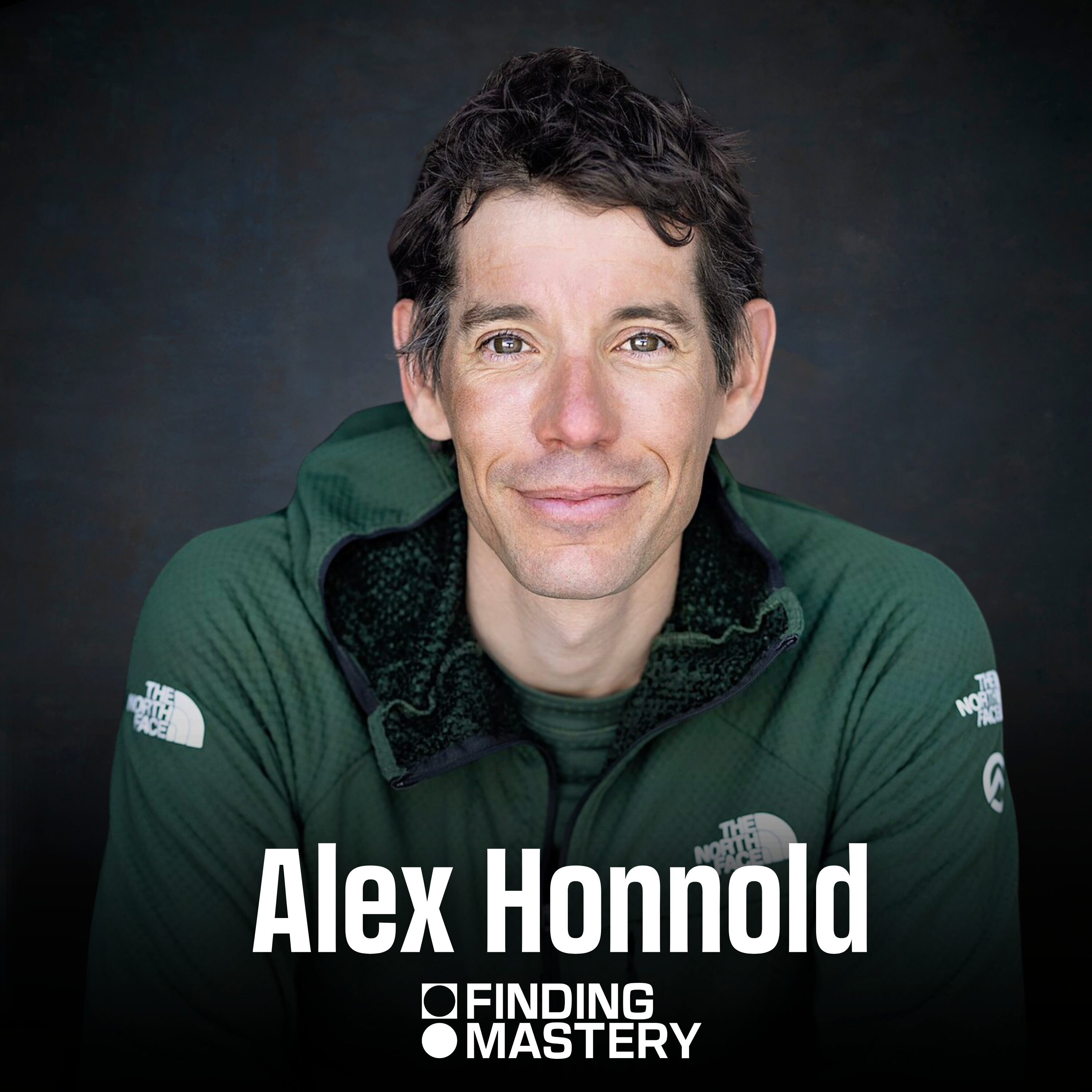
Alex Honnold’s mindset for free solo climbing—staying calm, managing fear, and making risk decisions by separating likelihood (risk) from outcomes (consequence). The episode also covers fatherhood, grief, and how he frames setbacks as “success” when he bails safely.
Alex Honnold, legendary American rock climber known for the rope-free free solo ascent of El Capitan (nearly 3,000 feet), featured in the Oscar-winning documentary Free Solo. Host: Dr. Michael Gervais, a high-performance psychologist and interviewer.
Honnold grew up in Northern California among other top climbers (Ethan Pringle, Kevin Jorgensen, Chris Sharma), which made him feel “not that good” despite loving climbing. His father died when he was 19; he describes it as a finite-life reminder that reduced parental pressure and helped open his life choices (including dropping out of college).
Many “fear of heights” people are really afraid of dying; Honnold prefers “risk = likelihood” and “consequence = what happens.” In free solo, consequence is often death, but he argues likelihood can be extremely low with preparation. He maintains calm via task focus: “next correct thing,” often mechanical goal-shifting (up becomes down).
A 2,000-foot solo attempt thwarted by extreme wind; he downclimbed to abandon the mission, watched his phone fall, then retrieved it and called the day a success. He also discusses a surf story where ego prevented bailing earlier, contrasting it with his climbing approach.
Written by AI. May contain mistakes.
Learn about the extraordinary life and mindset of climber Alex Honnold.
“In my case with free-souling, the consequences are almost always death.”
Explore Alex's insights on risk, fear, and the balance of parenthood and climbing.
Discover how losing his father influenced Alex's approach to life and climbing.
“It'd be fun to ask you this same question.”
Hear Alex discuss the freedom gained from loss and the pursuit of personal passions.
“But then my dad dying kind of left the door open a little bit to like do other things, like maybe, maybe not finish my degree.”
Learn about Alex's path to becoming a renowned climber and his initial struggles.
“And not like not crazy traumatic things.”
Understand how Alex managed self-doubt and competition among peers in climbing.
“But I was really into it and I loved doing it.”
Alex Honnold shares a harrowing experience climbing in challenging conditions.
“So because of that, you've had lots of reference points.”
Explore how Alex maintains focus and clarity under pressure during climbs.
“How do you maintain the clarity of goal even when you're in an edge-pushing moment?”
Learn how climbers manage trauma and make sense of their experiences.
Discover how a growth mindset helps climbers frame their experiences positively.
Uncover the role of optimism in achieving success in daunting situations.
Uncover the role of optimism in achieving success in daunting situations.
“Well, yeah, you have to have a lot of, not just self-belief, but belief in the goodness of the world in order to put yourself out there and try something that hasn't been done or like try to push.”
Explore how life changes impact risk assessment and decision-making in climbing.
“Do you have clarity of a compelling future that you're working toward?”
Delve into the distinctions between risk, danger, and consequence in high-stakes situations.
“It's like so much has happened since then.”
Learn how Alex Honnold perceives and evaluates risks in climbing versus how they are perceived by the public.
“You know, it's hard to determine how likely somebody is to fall off or how likely something bad is to happen.”
Discover the details of Luke Aikins' daring jump from 30,000 feet and the preparation involved.
“So Luke jumped from 30 ,000 feet without a parachute into a net that he built.”
Explore the different types of thrills experienced in rock climbing versus skydiving.
Understand the importance of focus and attention in high-risk activities and everyday life.
Discuss how modern distractions affect attention and the importance of prioritizing meaningful pursuits.
Learn Alex's strategy for managing social media to avoid distractions and maintain focus.
Explore the challenges Alex faces in balancing climbing with personal and professional responsibilities.
“I love that you are living your life according to the way you wanted to do it, but I've made that up.”
Explore the challenges of balancing climbing aspirations with family and work responsibilities.
Discuss how Alex's climbing purpose evolved from personal achievement to a broader perspective.
Learn how Alex's relationship has influenced his performance and overall happiness.
Hear Alex reflect on his accomplishments post-El Cap and their personal significance.
Discuss the challenges of vulnerability, intimacy, and public perception in Alex's life.
“Vulnerability and intimacy versus pushing an edge where – Definitely the former.”
Explore how fear affects both climbing and everyday life decisions for Alex.
“I don't know, like the next year or something.”
Alex shares his thoughts on death, existence, and the philosophical implications of life.
Exploration of beliefs about death's finality and its impact on living fully.
“But there is an impulse like, should I jump?”
Discussion on the mental aspects of climbing and how visualization affects performance.
“You mean the things that I'm trying to do are so close to death?”
Discussion on the mental aspects of climbing and how visualization affects performance.
“about a morning routine that I've been using for years.”
Insights on how climbers mentally prepare for climbs and the importance of scenario planning.
“Because there's a lot of easy filler climbing that I just knew that I would just climb.”
Discussion on the challenges of balancing climbing aspirations with family responsibilities.
“vertical like up and down every peak I tagged every named summit and did like 14 classic climbing routes like up and down all these things.”
Exploration of how climbing projects impact family time and personal fulfillment.
“So it just means that a lot of my climbing has been sort of work-focused like that.”
Discussion on the meaning of success in parenting and relationships with children.
“You know, like kind of selfish in that like he went after it his way.”
Insights on the lifelong nature of parenting and maintaining family connections.
“It's like, yeah, it's the first male in the family in like a generation.”
Debate on the importance of quality interactions versus the quantity of time spent with kids.
“It's not, am I going to go climb the next highest notch for my peers or for me to know that, that I did something special?”
Discussion on the value of learning from masters in various fields and the nature of motivation.
“Yeah, so like that movie it's there's a tortured nature to that like But like I don't care about sushi at all.”
Reflections on personal achievements in climbing versus external recognition and comparisons with peers.
Exploration of climbing challenges and personal growth through experiences.
Discussing how one's definition of success changes over time.
“I've been interviewing him for 15 years.”
Reflections on middle age and the quest for a meaningful life.
“And you're like, what did I do with all my time?”
Alex shares about his foundation and its focus on community projects.
“And so thank you for how you show up in the world and what you represent and people that want to live a great life.”

Get the gist, explore an idea or ask about something said.
 Claude
On Finding Mastery with Dr. Michael Gervais, what are the key points of this episode?
Searching your listeningAutomatic transcript. May contain errors.
0:00Alex Honnold: In my case with free-souling, the consequences are almost always death. Like for the most part, if you fall off, you're going to die.
0:05Dr. Michael Gervais: We understand the psychology of excellence and we understand what a great mindset means and how to be great with fear. And then there's Alex Honnold. Welcome back or welcome to the Finding Mastery podcast where we dive into the minds of the world's greatest thinkers and doers. I am your host, Dr. Michael Gervais, by trade and training a high-performance psychologist. Now the whole idea behind these conversations, it's pretty simple, to sit with the extraordinaries and learn about how they work from the inside out. Today's guest is legendary climber Alex Honnold, best known for his free solo ascent of El Capitan, meaning climbing nearly 3 ,000 feet of sheer rock face.
0:43Dr. Michael Gervais: No ropes, no safety lines. All of this was featured in the Oscar-winning documentary Free Solo.
0:49Alex Honnold: You have to have a lot of not just self-belief, but belief in the goodness of the world in order to put yourself out there and try something that hasn't been done or try to push. In your 20s, you're constantly surprising yourself. You're like, oh, I did something I didn't think I could do. It was incredible. Now I'm rewriting what I think I'm capable of. It's freaking hard work. And especially as I get older, it's probably harder and harder work. You surprise yourself with your own success less often.
1:11Dr. Michael Gervais: We explore the mindset behind the climber, how Alex organizes his inner life towards mastery.
1:17Alex Honnold: Most people that say they're afraid of heights are actually just afraid of falling off an edge and dying. And you're like, well, that's totally well-founded. You should be afraid of falling to your death. I don't want to fall off something. It's just that I'm very confident that I'm not going to fall off most things.
1:28Dr. Michael Gervais: How he manages risk, consequence, and fear with a rare clarity.
1:32Alex Honnold: I would prefer to use risk to describe the likelihood of something happening and the consequences being what will happen if that thing does happen. We also talk about fatherhood and how he's no longer just chasing the next set. I still love sending, but I know that sending the hardest things in the world will only last for, you know, at the most another decade. But what do I do with the other 40 or 50 years?
1:52Dr. Michael Gervais: I'm kind of like, you know, I want to build like a healthy, well-rounded future. I want to invite you to listen for his deeper framework and how he has this rare honesty to get right down into the truth. Now I'm starting to think about it a little bit more because my three-year-old might remember me if I die at this point, maybe. So with that, let's jump right into this week's conversation with perhaps the most significant mind in all of sport, the one and only Alex Honnold.
2:22Dr. Michael Gervais: Alex, when it comes to the folks that I think are the most significant in the world of athletics, you sit tall on the mountaintop here. and so I'm I love the way you've designed your life what you've done and how you carry yourself so I'm stoked to sit with you because I think um the way that you've done what you've done is really special and you have a lot to teach us so thank you for coming in I appreciate that I
2:50Alex Honnold: don't know if I have anything to teach but but let's let's chat and find out I figured you'd say that that's all I'm just I'm just living I'm struggling the same as everybody else just doing
2:58Dr. Michael Gervais: my best yeah yeah when you say struggled like do you mean that in like a like a suffering struggle
3:05Alex Honnold: or like no i mean i know i mean like aspiring to do your best all the time you know but same you know i have two little kids i'm like navigating parenthood i'm constantly trying to decide if i'm doing the right thing like should i be training more should i be training less should i be resting should i be going harder you know it's like what should i be spending my time on and it's all the
3:23Dr. Michael Gervais: same sort of things that everybody deals with it's you know it's definitely the same stuff that i wrestle with. So how old are your kids? One in three. One in three. Let's start here for a minute. When my son was born, so he's now 16, when my son was born, a friend of mine asked me this question. It'd be fun to ask you this same question. Mike, if you had the chance to go to Mars and you'd be the first one to go to Mars, the only hiccup is that you've got a 50 % success rate. would you go and instantly i'll tell you my answer my reflective answer but what is yours
3:58Alex Honnold: oh i'd kind of think about it but i definitely would at least consider it yeah i i think that
4:03Dr. Michael Gervais: you'd probably lean on the side of like yeah there's something here there's something it's
4:07Alex Honnold: hard to say though i mean i think i would wind up leaning against that because i don't have any particular set of skills that would suit exploring mars you know like like i should not be the person to go to mars even though it'd be amazing and like that's that's cool and doing a first is
4:19Dr. Michael Gervais: cool but but it just shouldn't be me because you're full of first like that's something that you've lived you know there's a there's a ethos in your world of climbing that like when you do a first ascent or whatever it might be that that's a thing yeah yeah it's great i mean it's nice to
4:34Alex Honnold: yeah maybe that's just sort of like explorer's gene or something but just the idea of pushing boundaries a little bit like doing something new i mean it's exciting yeah and so then he sweetens
4:44Dr. Michael Gervais: so instantly i was like oh yeah i'm going and then i paused and i said whoa wait a minute it's like my son was like six months old like oh wait hold on i got a six month old i don't know right now and then so then he sweetened it and he said what if the whole thing was designed that you're the one that saves the planet and you either go or don't go so he added like a social responsibility on it and i was like ah yeah then you obviously go right then you obviously go right and then he says okay if i take that away what's the hesitation and so obviously you go right for the social responsibility but if that's not on the table let's go back to your response like do you bring your children into that decision making factor or is it because i was like planted
5:31Alex Honnold: in two worlds i was like i mean you having a six-month-old i honestly wouldn't because your six-month-old wouldn't remember anyway it's like it doesn't matter to them yeah you know it's like I'm starting to think about a little bit more because my three-year-old might remember me if I die at this point maybe but You know, I mean and this sounds really callous, but but this sort of true that that if I die You know my wife will probably find somebody else eventually or you know, we have a rich community either way it's like my kids wouldn't be totally bereft of Like they might not have their dad dad But they would have plenty of people in their lives that look after them and love them and help take care of them And like they're not gonna be left alone you know so you're kind of like that's a cool feeling well i mean and that's because of your friends yeah friends and family and and my wife's like a young attractive woman you know like she finds somebody eventually you know i mean after hopefully a healthy period of mourning but like but i mean and she hates it when i talk about that kind of stuff because she's like oh that's so so callous sounding but i'm kind of like people lose parents all the time it's not as if you're doomed you know like uh my dad died when i was 19 and that's obviously a blow but it's not gonna lead to a terrible life necessarily you know it's like or it doesn't have to yeah so how did
6:49Dr. Michael Gervais: how did losing your father as a teenager impact you like looking back at it now i was actually
6:55Alex Honnold: just reading this interesting book uh he was malcolm gladwell like maybe david goliath i just read it on a flight but um but uh he had a whole site about prominent historical figures who'd lost parents at young ages and i have kind of thought that encountering like loss at a young age just encourages you to go a little harder in a way because you're just reminded that life is short sort of like oh i have a finite amount of time you got to use it yeah that definitely would have shaped you for sure and in my particular case i think it also took off a little bit of the the sort of parental pressure to like stay on a, on a path, you know, not that my parents were explicitly pressuring me that hard, but they sort of expected me to go to college, expecting me to wind up and, you know, would probably wind up an engineer or something.
7:37Alex Honnold: But then my dad dying kind of left the door open a little bit to like do other things, like maybe, maybe not finish my degree. Anyway, I dropped out of college. So I think that allowed a little more flexibility in a way, you know,
7:48Dr. Michael Gervais: like let's say it's a heavyweight boxer or a football player. you know there's lots of scenarios i could pull in that oftentimes will say well once i get in the ring and i get my first hit or i get hit then i settle down because i know it's not the big bad monster that i had imagined like it's it's another skilled person they're dangerous you know but i'm okay and i think when we face hardships one of the the benefits to come like you can go through a hardship like a loss of a parent and we could have a thousand scenarios where you could find the track of post-traumatic stress disorder or you could find the track for post-traumatic growth you could find either path and what i hear you saying is like yeah i had a real shocker in my life and it like it it was materially important and it actually opened me up to go a little further
8:44Alex Honnold: Yeah, and actually, I mean, both my grandfathers on both sides and my father all died within sort of three years, like in late teens. And so I think.
8:51Dr. Michael Gervais: Oh, so you had bang, bang, bang.
8:53Alex Honnold: Yeah. Yeah. And not like not crazy traumatic things. You know, the grandparents were super old. They died natural causes. Like it was all it's all fine. But it definitely was a stark reminder, you know, that life's finite and a particularly important time of life, too. You know, I was 19, I guess, when my dad died. so you're sort of like oh what am i doing in my life you know what am i doing university like yeah you're out of high school yeah you're already i'd done my first year university and and was was not thriving i was sort of like not it wasn't i wasn't i wasn't well adapted to university lifestyle like i was mostly just spending my time climbing and not uh not that psyched so you were
9:33Dr. Michael Gervais: already kind of i was already searching yeah and you're already really good at climbing like you're
9:40Alex Honnold: getting recognized at that point no it wasn't that good i was uh i'd gotten second at nationals but that's only because the really good guys had to stop doing the youth competitions they were all competing with adults um actually just by sure i didn't know i was like okay i was not a child prodigy i was i was not good i was psyched that up yeah you were psyched i was really psyched you loved it yeah i loved it but i was not uh by any means great and it's it's interesting just by sheer coincidence uh the region i grew up in northern california wound up Sort of creating like four professional climbers of all the same age and they've all been better than me my whole life Basically who are these climbers?
10:16Alex Honnold: So Ethan Pringle who's still a professional climber He's never as well known as as some other climbers, but he beat me through all of childhood and everything Until like maybe age 14 or 15 when he started competing as an adult instead and doing like international competitions and making money And so then then I was able to do a little better because he left the category But then also, you know, Kevin Jorgensen who who freed the Donwall with with Tommy Caldwell. Yeah He was also in my age group same region same everything But he also compete as an adult at an early age because he was so good I mean Chris Sharma had come from the same region.
10:48Alex Honnold: He's a he was like the leading climber of the last generation basically I didn't compete with him. He's slightly different but a but same area And so anyway, I grew up thinking I wasn't that good because everybody else is way better
11:00Dr. Michael Gervais: I have a whole new appreciation for you because part of the formation years, you were not the one. I always thought you were the one.
11:08Alex Honnold: No, no, I sucked. I sucked. I mean, I didn't suck. I was a good climber. I was not a great climber. But I was really into it and I loved doing it. I did all the time. And I think that's an important distinction because people look at some YouTube clip and they're like, oh, that guy is like, you know, people, if you're thinking on the nature versus nurture spectrum, they're always sort of like, oh, that guy is just a freak. You know, there's something wrong with him. meeting like do these things and you're like no i spent like 30 years practicing this thing getting slowly getting better at this thing still not even that good at the thing it's like just working away
11:37Dr. Michael Gervais: working it's like what do you think i'm going to go back to dad in a minute but what do you think that you are what are you good at yeah so little so little come on being humble so you know you've
11:49Alex Honnold: earned your nickname no big deal no i think i think the main thing actually is is psych like the mental part of it uh well no it's like the motivation the stoke yeah the stoke for it yeah because i think particularly with free soloing which is what i'm most well known for like the climbing ropeless i think that volume matters like having done tons of reps basically like doing a lot of climbing and i've always been motivated enough to go climbing all the time like always have the adventure like do the thing hike out to the wall even in bad conditions and like try and so i think that has allowed me to get the the volume required to be a decent soloist I mean that's the same traits make you sort of a worse boulder in a way let's say because there are other aspects of climbing where it's better to not do that much volume it's better to sort of focus high intensity efforts it'd be like the difference between ultra running and sprinting let's say you can't do it yeah you can't do both yeah physiologically it's like different things yeah so I've always been really into sort of ultra climbing you know tons and tons of climbing wide variety conditions wide variety of styles.
12:48Alex Honnold: And that makes you feel pretty comfortable for the free soling. It doesn't make you the strongest climber. It doesn't make you a great boulder, let's say.
12:56Dr. Michael Gervais: Finding Master is brought to you by Granola. Here's something that I think most of us miss without even really realizing it. Every conversation that we have has two layers happening at once. There's the conversation, the obvious conversation with the words themselves. And then there's everything else underneath. That's the emotional language, the subtle tones of voice, micro expressions, the brief pauses before someone answers. That second layer is really rich with information. And in meetings, it's easy to miss it when our heads are down and we're taking notes. That is why I use Granola. Granola is an AI-powered notepad that makes your meeting notes useful.
13:31Dr. Michael Gervais: It captures what happens in your meetings and then turns them into clean, structured notes with decision and action items pulled out and made easy to find. And the best part, it works right through your device's audio, which means that it integrates seamlessly into the video conferencing tools that you are to use. No big setup, no awkward bots. I use it every day when my meetings are done. There's a clean recap and a clear set of next steps that are just waiting for me. Nothing slips away. This isn't about doing less. It's about being more present. I think you're really going to like what Granola is doing.
14:01Dr. Michael Gervais: Once you try it on a first meeting, it's hard to go without. You can try it totally free. Head to granola.ai slash mastery. That's granola.ai slash mastery to get your time back. Go to granola.ai slash mastery and try it on your next call. Finding Mastery is brought to you by LinkedIn Hiring Pro. When you're building a small business, every new hire has the potential to make a real impact. The right person, they can bring fresh energy and new ideas and really help the whole company move forward. It's awesome to watch when you get it right. So finding that right person, finding that great hire, it takes clarity.
14:38Dr. Michael Gervais: You have to know what you're looking for. You have to recognize it when you see it and then make the call with confidence that this is the right hire. That's where LinkedIn Hiring Pro can help. It's really like having a hiring partner throughout the entire process. You can chat with it just like you would a recruiter. You tell it what matters most for you, for the role, compare candidates side by side, you give it feedback, and then Hiring Pro listens, it adjusts, it helps surface the people who actually might fit what you need. They're trying to help us optimize. We're still the ones making the decision.
15:06Dr. Michael Gervais: LinkedIn Hiring Pro, it's just a smarter way to find the right people to build the team of your dreams. Now, if you haven't already checked them out, LinkedIn Hiring Pro can really help your business. Get started by posting your job for free at linkedin.com slash mastery. Terms and conditions apply. Again, that's linkedin.com slash mastery.
15:27Dr. Michael Gervais: So because of that, you've had lots of reference points. So you can map against something when you're in a heavy situation, like i've seen or felt or smelt something like this an answer is likely in this region yeah and
15:41Alex Honnold: not panic in like weird situations you know when stuff starts to go a little sideways like literally last week i had all soloing this adventure which kind of reminded me of my 20s i was like this this feels like something i would have done a decade ago it's like a total botch and how old
15:55Dr. Michael Gervais: do you know i'm 30 i turned 40 this summer yeah congrats yeah okay good so what was the what was
16:02Alex Honnold: debauchery here well i went out i went out to go scrambling in the afternoon and scrambling means like to go free soling so i was going to solve this like 2 000 foot wall this like thing by my house average day for you 2 000 free soul yeah it was yeah yeah kind of average yeah yeah yeah um it was going to be sort of an active rest day it was a rest day from like real hard climbing but it was kind of going to be a casual outing anyway but there were is this a consequential wall i don't know if it ever been sold before so i mean but it's not like rad it's not cutting edge okay like i wouldn't have nobody would know about it it's not like
16:37Dr. Michael Gervais: reported or anything yeah i don't know i'm just giving some context because it's like no big deal i'm gonna go do this thing so free soling for you is not something that happens once a year you gear up for it cameras on i'm gonna try this thing no i mean the big ones are kind of like that the
16:54Alex Honnold: things you do for film projects the things you do for tv or whatever um and then occasionally the things you do for your personal projects where you're like this is cutting edge this is rad but in order to do the things that are cutting edge you have to do tons of things that aren't cutting edge that's right you know it's like you have to practice yeah so um so in this particular case i went out practicing and uh and i mean it was supposed to be like 50 mile an hour gusts but you never know with the canyons depending on the direction of the wind anyway i was like oh that's nice and so when i was hiking into the canyon it's really late season right now a lot of these You normally do more in the winter when it's cooler, but right now it's like kind of hot but because it was windy I was like oh, it's kind of nice and it was like conditions were fine anyway, it turns out as I got higher up the wall was like ripping wind like psycho wind and then the hardest part of the route is like 700 feet up and And basically was on this like really smooth panel in the center of this wall and it was like insane wind and I like Basically wasn't really able to climb because it was like too intense like you're being shaken Basically, it's like hard to even hang on because you're being like pushed back and forth by 50 mile an hour gusts
17:51Dr. Michael Gervais: And then and just to paint the picture one more time you have nothing to rely on you've got your hands Yeah, I'm just holding your head. Yeah, and you're on the side of the 1500 feet up at this point no 700 feet of 700 feet and if you make a mistake a 700 foot fall
18:05Alex Honnold: Yeah, there's a worse so then so then the big bit all made it all sort of traumatic was that in the middle of all this It's like so crazy. I mean also It's hard to describe how intense wind like that is But like so my backpack straps are like slapping me in the face and like hitting everything I had no shirt on and so like the straps were like slapping you're and you're like Ah everything hurts and then my chalk bag kept flipping over and basically like dusting my whole body with chalk So like you can't really see and you're like ah like this intense anyway And then during all this it's like 50 mile an hour updraft Like basically my pants are like going my shorts are blowing like crazy my phone fell out of my pocket and I was the only car in this like remote sort of four-wheel parking lot thing and uh, and I drove an electric car there And so my phone is my key and I was kind of like, oh you know now I'm screwed and so uh and so then I and I'm like near the end of the hardest part in the center of this wall but then I face this dilemma if I topped out the mountain like if I made it to the top of the 2 ,000 foot wall then to hike all the way back around to go look for my phone would I'd be sort of pushing it towards dark I mean it's kind of a big thing to summit the mountain and the descent and then go back to the base and look for your um so I wound up down climbing straight back down just like reversing I was like time to just abandon ship I was like this is not my day but it's kind of a bummer because i'd already done the whole hard part basically so i had to reverse the whole hard part and you went down did you go down because of the wind conditions or your phone both basically i was like i kind of hit a point where i was like i don't think i can go up it's like too intense with the wind too crazy and i i mean when i felt my phone fall in my pocket i just stopped and like watched it go all the way to the ground so you know you
19:36Dr. Michael Gervais: want to keep eyes on to see where it lands so you can go find it yeah but you know yeah i mean
19:42Alex Honnold: is kind of normal for you i mean it was like anytime you're climbing even when you're climbing with gear if you drop something you like really make an effort to see where it goes you can find it again okay because like otherwise again a reference point canyon yeah it's like you know it's a whole mountainside and you're just like wandering around looking for a broken thing it's
19:56Dr. Michael Gervais: like not that easy to find when you drop stuff on mountain okay so i want to i've got a really sorry this is a whole story no i've got a really tight question i want to ask you but i'm gonna i'm going to give you a preamble to get to it. This wasn't long ago. So you and I are not, um, at, at all comparable in, uh, any way when it comes to sport. Okay. So it was, I don't know how long ago, but there was a big swell and it's in my, my local break, uh, here in LA. And I, you know, I'm not out of shape, but I'm not in kind of nowhere near top shape to, to surf this, but I'm like i got it so um grab my board and i'm on the beach i'm looking at him like oh it's a little bigger than i thought it always looks a little bigger from the bottom or something right oh it's a little bigger okay good you know what i know i'm reading the current i know exactly i'm gonna hug the jetty okay good i'm good you're like i wrote a whole book about performance mindset here i go here i go here we go right and so and there's a bunch of people on the beach are like yeah yeah come on michael and i'm like listening to that i'm looking at it and i know that i haven't served you know kind of the size in a minute and i'm hugging the the um so i get in i'm good my mindset is good and i'm hugging on the jetty to kind of take this rip out to stay out of the impact zone and i don't know what happens i can't stay in in the current so now i'm flow i'm kind of drifting to where the impact zone is.
21:22Dr. Michael Gervais: Okay. So I'm right now in a problem zone and I could, I should have probably turned, I should have turned back around and gone in and tried again. But I was in this mindset like this, this walk of shame was not something I'm going to do. This was a dangerous mindset. This is not what I should have done. Okay. And so I did eventually get out outside. I was so exhausted. Triceps are like, like blown up, like not what you want to have happen. My whole back is lit up and I'm exhausted out back. I had no business being out there at this day. So, so long story to get to this very crisp moment is that I didn't listen to my better judgment.
22:06Dr. Michael Gervais: So can you explain how you work with your mind when you've got some social pressures and you've got some ego pressures um happening for you as well well in this case in
22:19Alex Honnold: this particular storm there's basically no social pressure because i'm alone in the canyon it's just so it's just ego basically just my personal yeah and and yeah i mean i was in very much a similar situation where it's like you know it was very windy at the bottom of the route and i probably could have bailed then but the thing is i don't want to bail for bad conditions until they're actually untenable until you have to bail and in this particular case i'm sort of like okay well I gave my absolute best shot and then I had to bail You know and so yeah the conservative thing would be to give up sooner But you're kind of like but then you would spend the rest of the day wondering like well Maybe it wasn't that windy I mean as it turns out it was like much wind years I got higher I think just the nature of the canyon and the smooth the sheerness of the Wall at that in that area and stuff, but that's not something that you could totally predict from below I'm you know you're like oh It's a windy day and it's forecast to be windy But if it's like a south wind and the canyon it basically just depends on the geometry of the canyon and like the actual specific aspect of the face and so kind of like well i tried my best found out that i couldn't do
23:18Dr. Michael Gervais: it and and went home like so you don't run into a tension there or are you really good with answering the call of danger like the juice is not worth the squeeze um because for me it's a there's a thin line between um pushing just past a comfort zone into like a danger zone where there is a consequence but if you don't go to that place you don't unlock the thing that you
23:44Alex Honnold: need to unlock to keep growing yeah no i totally agree with that i mean in this particular case i feel like i pushed well out of my comfort zone and was like okay i pushed as far as i'm willing to push and this is not working out and and now i'm bailing and how did you develop and then i down climbed very carefully which you know it's down climbing is more dangerous than upcoming um it's just i mean it's kind of the same it's okay but it's but it's challenging the reason i
24:10Dr. Michael Gervais: ask is because there might be an added challenge like oh i'm gonna do oh one hold okay good i got this like there's a there's a target there's a more um confident posture i can imagine on a normal route up yeah but then when you hit a zone where it's like this is too dangerous it very easily could flood the whole circuit which is like oh i got to go into protection mode this is beyond my my limit so now as i'm climbing down i'm actually in a different body because of my mindset that's
24:38Alex Honnold: interesting i actually don't think i experienced that so much i think it's more like i hit a point where i was like my goal was to climb the wall my new goal is to climb down the wall and now i'm just going to confidently move down instead of up you know it's like the same kind of it's just kind of like i had one goal going into the day and now i've reached a certain point where i've completely reset my priorities for the day it's like my new goal is to down climb find my phone and make it out of here.
25:02Dr. Michael Gervais: How do you do that? How do you maintain the clarity of goal even when you're in an edge-pushing moment? Well, not to say there weren't some moments in the middle
25:13Alex Honnold: where I was like, this is anus. What am I doing? I hate this. This is horrible. Especially with the chalk blowing in my face and the straps hitting me. And I was like, oh, it's really hard to focus. But beneath all the external, like the physical sensations and the challenge of it, I mean, there's still some, you know, you hope some kernel of calm on the inside. It's like, and now we'll just do the next correct thing, which is in this case going down. Yeah. Very carefully.
25:39Dr. Michael Gervais: Do you, is that how you speak to yourself? Like more technical or do you speak to yourself more motivational, more like coach to have your own back? Or is it truly like, okay, find the next hold. Good. Okay. That's good. Next one. What, what am I going to do?
25:53Alex Honnold: Like maybe more technical like that. I don't know. I don't even know if there is that much real self-talk. Should there be?
25:59Dr. Michael Gervais: I don't know. Keep going.
26:02Alex Honnold: I mean, in this particular case, it was very just like I wanted to go up. I no longer want to go up. Now I'm going down, and it was just mechanical. Like, okay, use this hold. I mean, I basically was reversing all the moves that I had just done. I'd never climbed the route before, so as I'd been going up it, I was figuring it out. Sort of like, okay, here's a hold over here. There's a hold over there. Here's how I stay in balance despite the really, really strong wind. and so then on the way down i was just like okay i'm now reversing these moves very mechanically like put feet here hands there yeah balanced yeah so it's truly task focus your attention is focused solely on the task yeah and that's particularly true uh on something that that i haven't climbed before in this case because i actually do have to think about the holds you know is it something because sometimes climbing can feel automatic if you know the sequences really well but in this case i had to actively scan the wall and like look for the feet look for the hands and kind of where i bailed uh it was important to look around because there was stuff out to the right stuff out to the left you had to like look for the clues you know like little tiny traces of chalk from previous climbers things like that
27:03Dr. Michael Gervais: so let's let me see if i can combine two things like we're talking about when your dad passed away and there's it can close the aperture of potential or open it post-traumatic growth is kind of an opening of the aperture it sounds like you had i'm not saying that you didn't go through all the stresses of losing a loved one but you found your way in an opening to keep to to kind of take your life by the by the horns if you will and if we square that with reversing your climb it sounds like there's a there's a string between these two which is like no i'm not going to allow this moment to flood my system to put me into um an over um traumatized state like i'm just you're pretty mechanical at that point yeah yeah it's interesting i mean so i've talked quite a lot
27:59Alex Honnold: with some of my climbing friends about this like why some experiences why two climbers can have the same experience and one comes out of it totally traumatized and another comes out of it's like that's just normal day and and actually even while i was up on the wall i mean and and just to be clear this whole experience I'm talking about the other day with with so long in the wind and whatever it's not as if this is like some unique experience for me like this kind of things happen tons like it used to happen a lot more when I was younger just because I made worse decisions probably so I haven't had anything quite like that in a while but variations on that theme happen not infrequently you know it's like where you get into something a little beyond what you expected and you have to sort of manage one way or another or retreat or whatever but yeah I don't know i mean while i was up in having that experience i mean it did occur to me i was like is this the kind of thing that like ends a soloing career not because you fall and die but because you're like traumatized from it you're like i never want to do this again but yeah it's like that's where i don't think so i think it's just you know it's just it's just a bad day in the wind
28:54Dr. Michael Gervais: i think that's what you do though i i think that you've got this model that um you use everything in your world internally and externally to build so going down is like you know what i made a good
29:09Alex Honnold: choice yeah i'm a safe climber well actually so and i even justified it to myself because uh the thing i was trying to do is supposed to be like 14 pitches which is like the lengths of the segments of the climb and then some easy scrambling to the top and i did the first six or seven and then reversed it so i want to do in like 12 or 14 pitches because you know you kind of double what you did okay and i was like what's basically the same as if i climb the root because i also did the whole hard part and then down climb the whole hard part so i was kind of like Well, even though I technically failed on the thing that I was trying to climb I was like I actually did as much hard climbing as I was intending to do for the day So I was like I'll call the day a success and I found my phone at the bottom and even though it was completely destroyed It's still functioned the Bluetooth still functioned unlock my car and I was able to drive home I was like what a day, you know, it's like I think I think that Though I'm not trying to repeat things like that, you know it was you're not trying to repeat any of this yeah i was like this this is a mistake but i think
29:59Dr. Michael Gervais: that what you just described is maybe one of your crown jewels the the growth mindset around it with just the way that you frame situations you have your back you build you use your external world and your internal world no matter what the circumstances are and you are you're using it to take a step forward whatever that is like yeah that was a success well i did this many and this many and you know what and i i reached a limit good job like it's hard to get to the limit go me go me it's like i made a lot of bad decisions today but go me
30:32Alex Honnold: but never sounds like that in your head does it no no i mean you're like what an idiot well i spent the whole evening at the freaking apple store and then like adt like changing my you did like new phone new switching my number because the thing was shattered like it was all kind of a debacle and i basically wasted my whole evening like dealing with with my stupid decision i was like
30:50Dr. Michael Gervais: this was a bad choice and i like wasted a lot of time and so similar to like we find yourselves you find yourself in a heavy situation i think that again i'm going to say this one more time i think the crown jewel is you don't say to yourself like you said maybe what an idiot but it doesn't it's not like it gets in it's not like it corrupts your self-esteem your self-worth your self-confidence it doesn't corrupt you yeah that's that's probably i've never really thought about it
31:17Alex Honnold: that way but yeah it's probably kind of true how did you i think that i'm very optimistic person basically like believe in human goodness and the general like positive trend of the universe and maybe because i grew up seeing star trek you know my mom was really into star trek i grew up like you know it's very utopian it's very like positive future focused and i don't know i think you'll
31:35Dr. Michael Gervais: maybe appreciate this is that um i haven't met a world's best now including you in this conversation that isn't fundamentally optimistic.
31:45Alex Honnold: Well, yeah, you have to have a lot of, not just self-belief, but belief in the goodness of the world in order to put yourself out there and try something that hasn't been done or like try to push. You know, it's like you have to believe it's possible if you're going to push like that.
31:58Dr. Michael Gervais: Period.
31:58Alex Honnold: Yeah.
31:59Dr. Michael Gervais: Yeah.
32:00Alex Honnold: I'm sure that's true for entrepreneurs and everything as well. It's like, you know, if you're trying to like create the next big company or do something, you have to believe that it can succeed.
32:09Dr. Michael Gervais: Finding Mastery is brought to you by Athena. know. The psychological skill of control is something we talk about regularly here at Finding Mastery. And part of that skill is being honest about what's actually yours to carry and being clear about what is not. Not every task deserves your time, even when it really needs to get done. If you're leading a company or a team, there is so much competing for your attention every day. You know that. You feel that. The inbox, the calendar, travel, hiring, the list goes on and on and on. And just because something needs to get done doesn't mean it needs to get done by you.
32:38Dr. Michael Gervais: That's the shift that Athena is making possible. They match you with a dedicated, full-time, remote executive assistant. It's a real person who takes on the inbox, calendar, travel, the details that fill up your day. They're EAs. They come from the top 1 % of more than 60 ,000 applicants. The best of the best. And they're fluent in AI tools. They make great support. They support you even better than you can imagine over time. Clients, on average, get back 15 hours a week. How about that? Take control of what's in your control and learn to delegate the rest. Check out what Athena is doing. I think you're really going to appreciate it.
33:12Dr. Michael Gervais: Go to athena.com slash mastery right now and get matched with your EA. Give yourself a few hours back this week and go to athena.com slash mastery and see who they pair you with. Finding Mastery is brought to you by our partners at Lisa. Most of you know that I have a morning mindset routine. It's what I do every morning before I check into the world around me. I check into the world inside of me. And it's just a few quiet moments to set my intention for the day, make sure I answer to the things that I'm grateful for. And I want to focus my attention on what matters most. And what that does is it wakes up the mindset to help me bring the best of myself in the day ahead.
33:48Dr. Michael Gervais: Generally speaking, I wake up feeling pretty good. No aches, no stiffness, nothing pulling my focus, you know, the minute that my eyes open up. So when your body gets the recovery it needs, it is so much easier to set your mind up to help you be your very best. So that's why we turned to Lisa for some support. We've worked with Lisa for a long time now because they build quality crafted mattresses that are tailored to how you actually sleep. Your position, your feel, all of it. Premium materials, premium mattresses, real full body support. The intention they put into their products is real. I love what they're doing.
34:22Dr. Michael Gervais: Go to Lisa.com for up to 30 % off mattresses. Plus get an extra$50 off with the promo code MASTERY. Exclusive for our listeners. That's L-E-E-S-A dot com promo code mastery for up to 30 % off mattresses plus an extra$50 off. And let them know we sent you in the survey after checkout.
34:43Dr. Michael Gervais: Do you have clarity of a compelling future that you're working toward? I don't know. That's a good one.
34:49Alex Honnold: I mean, instead of sitting in chairs, we should be laying on a sofa. I need to recline and be like, OK, you need a little pendulum. It's like straight therapy. Poorly lit. Yeah, yeah. Turn down the lights in here. Yeah, right. I don't know. I mean, I mean, are you asking like, what is my vision right now? Because I mean, I think in this exact moment, I'm sort of struggling with that exact question. It's like, Oh, what should I be working on? Like, what's the like, what's the best use? I mean, I think that's as a self coach athlete. I mean, the thing with rock climbing is that there's no like team, there's no team.
35:22Alex Honnold: There's nobody around you telling you what you should be doing. It's like, you know, my whole quote unquote career as a climber, I've just come up with goals that inspire me and then push myself. to do them and so I think that the biggest challenge you know from time to time and of course I've faced this in the past sometimes but it's basically sort of apathy you know every once in a while you're just kind of like well do I need to do that like I mean because it's freaking hard work and especially as I get older it's like probably harder and harder work you know you have you surprise yourself with your own success less often is what I'm finding I think and maybe not because I'm aging but also just with kids now and like family stuff and I work more and do a lot stuff but but i you know i mean i think one of the most joyous moments in climbing is when you do something you didn't think you could do and this isn't necessarily with free swallowing this is like when you're climbing with a rope you're like oh i'm trying something that's in my limit it's really hard but then every once in a while you just have moments of sort of transcendence where you're like oh i did something like i'm sure i was going to fail but i did it and i was like oh my god i totally exceeded my own expectations it was amazing i'm so psyched and like obviously i still experience that from time to time definitely less often you know i feel like in your 20s you're like constantly surprising yourself you're like oh i did something i didn't think i could do it was incredible like now i'm rewriting what i think i'm capable of you know now i'm sort of like you know every once in a while i have glimmers where i'm like oh i feel way better than i expected okay so our last conversation was a handful of
36:40Dr. Michael Gervais: years ago you were kind of flying high post um your big your most famous climb you know where
36:47Alex Honnold: it was 3 000 square feet so that was the that was before the film came out but after the actual I forget when exactly we spoke. It was at USC.
36:56Dr. Michael Gervais: It was at USC. It was an awesome.
36:57Alex Honnold: It feels like a long time ago to me. Yeah. It's like so much has happened since then. It's like, I'm pretty sure the film came out after that. It was pre-COVID. Well, yeah. I mean, yeah, pre-COVID. But for me, that was like pre-marriage, pre-kids, pre-crazy film. Yeah, right. Pre like my adult life, basically.
37:11Dr. Michael Gervais: Yeah, it was a whole different world. There's something that you said about risk-taking. So this is kind of pre-kids, pre-marriage that I'd love to play it back. and then have a reframing or an agreement. I'm super curious what I said about that. Because in a way, it's a totally different person. That's like 10 years ago. Emma, can you play that clip that we were talking about earlier of how he was talking about risk? So spending some time in the adventure world and the action high-stakes environments, there's a phrase that happens when I'll talk about some projects that I've been part of, and people will respond.
37:49Dr. Michael Gervais: They'll lean back, and they'll say, why would they do that? Speaking of you or somebody, why? I don't understand it. And then there's this unique phrase that pops out right behind it, which is, well, they can't have kids. And then something like, they can't really love their mom.
38:10So,
38:13Dr. Michael Gervais: I don't get the sense of that for you, but how would you respond to that? I don't know.
38:17Alex Honnold: I mean, I don't have kids or family or anything. like that, so I can't speak to that. But I think that I'm making very clear intentional choices. And I would think that I will continue to make well-informed decisions regardless of my family situation. I don't know, I mean, a lot of my friends, other professional climbers that I've done a lot of the big enchainments and things with, do have kids, do have young kids. And it's not as if anything has changed for them. I mean, we still, I mean, the goal is always to survive. It's like I mean we want to live so it's not like You know, yeah, it's not like that's gonna change That's funny at the end.
38:56Alex Honnold: I'm referencing Tommy Caldwell you were and uh The I still actually paraphrase something that he always says I mean he he sort of jokes that he didn't want to die in the mountains before he had kids and he still doesn't want to die in the mountains And that sums up my current attitude still I'm like well I didn't want to die in a terrible accident before I had my kids and now that I have kids I'm still not trying to die in a terrible accident
39:17Dr. Michael Gervais: and you're also pointing to your decision making you're like my decision making is pretty sound
39:23Alex Honnold: so well at least you like to think so like this whole little anecdote we were telling earlier it's like yeah but still still trying my best so has being a parent changed the way that you approach risk i mean i don't i don't think that much i mean and i i recently did a difficult soloing project for uh for for a film thing that will hopefully be out in a year and a half but uh but it was the first sort of cutting edge wall that I'd sold in a while I told my wife that I was like you know I think the thing that I'm doing is probably like top 10 free solos for me and she was like oh because top 10 for me at this point it's like it's pretty hard and uh actually at the time I think she didn't think that much about it and then she was actually hanging out with Tommy Caldwell and then she mentioned like oh he said it was top 10 and Tommy was like uh isn't that kind of messed up like are you stressed and she was like anyway but so it was the first like hard thing I'd done in a while for sort of extreme free soloing if you want to call that and you don't like to call it extreme well I mean I mean it didn't feel that extreme it you know top 10 I showed up I spent two weeks you know I prepped like four or five days and did it and it was great and had a good time filmed on it was like it didn't feel extreme extreme but it was it is challenging like the grade is started I don't know it suited me well but but my point being that before I did it I was kind of like is this going to feel different now that I have kids like is this going to be scarier like am I going to get up there and find that I don't have it anymore because I'm just like visualizing my three-year-old and you know like our morning routine and everything and uh the reality was that that i had a great time i loved it i was up there i was like this is so great like i love this kind of thing i mean because i did the prep i felt confident it felt felt easy basically it felt
40:56Dr. Michael Gervais: great so you didn't have the distraction that you thought like you know at the base or somewhere in a tricky moment where it's like man maybe i shouldn't be pushing because i need to be there
41:05Alex Honnold: for my kids no i mean you know obviously i was thinking about my i was facing my kids like every time I could through the trip. But for the actual climb, it was like I did all the prep work required. I felt good. I felt bad. I don't know. Yeah, it was amazing.
41:18Dr. Michael Gervais: You have a really rich insight about the difference between risk, danger and consequence. Can you open those three up for us?
41:25Alex Honnold: Yeah. I mean, so so I like to differentiate risk and consequence. I mean, danger is kind of just its own thing. But but most people use risk to sort of mean like something seems dangerous, like, oh, that's really risky. And I don't know what the actual definitions of all these words are like, I haven't used a dictionary. But I would like to, I would prefer to use risk to describe the likelihood of something happening and the consequences being what will happen if that thing does happen. And so in my case with free-souling, the consequences are almost always death. Like for the most part, if you fall off, you're going to die.
41:56Alex Honnold: So the consequences are incredibly high. But if you're watching a video or you're seeing a photo of somebody free-souling, you can't really evaluate the risk. Like you can't judge the likelihood of me falling off through an image because some of the terrain is really freaking easy and oftentimes if you're seeing photos or video you're probably seeing the parts that are easier because that's the part that we decided to film on you know for a lot of for a lot of this kind of content like sometimes I do the things by myself and then you go back and you film on the parts that are scenic or that like look great and to the casual viewer you can't tell the difference between the easy stuff and the hard stuff anyway it all looks insane you're like that guy's hanging on the side of a cliff like that's crazy yeah but so you know basically I think it's hard for a viewer to evaluate risk.
42:37Alex Honnold: You know, it's hard to determine how likely somebody is to fall off or how likely something bad is to happen.
42:42Dr. Michael Gervais: Because for them, it's a perceived risk. For you, it's actually not a risk.
42:46Alex Honnold: Well, what they're seeing are the consequences. They're seeing that the consequences are death no matter what. So they're like, that seems insane. Oh, so the lens that they see it through is the consequences. Yeah, exactly. I got you. But then they sort of use the word risk. But basically, because the consequences are super high, they sort of conflate that to mean like, oh, it's likely that you're going to die. And you're like, well, no, the likelihood of me falling off is is practically zero it's just that if i do the consequences are severe that's right and so i think that that there's a a healthy attitude around evaluating risk like that where it's like just because the consequences of something are incredibly high if the likelihood is incredibly low you're kind of like well it could still be reasonable to do that
43:23Dr. Michael Gervais: thing you know i think it was i i attribute something to you but i actually as we're talking I don't think you shared it with me. I think it was Luke Akins. So Luke jumped from 30 ,000 feet without a parachute into a net that he built. A bunch of boxes? Oh, the net thing. The net. Yeah, Heaven Sent was the name of the project. Heaven Sent. Yeah, so imagine that. 30 ,000 feet, you look down, your target is the size of a stamp. But it gets bigger as you go. That's the top of optimism, yeah. That's the optimist. That's great. and um so when he called me up and he's like mike you know are you in on help me with this project damn dude this is this is a this is binary yeah either you do it or you don't yeah either you hit it or you don't but you're gonna hit it i mean does anybody so he was well so he did he ever miss in practice 86 halos high altitude openings which are dangerous in themselves you have to have special permission for ish you know for someone like him not that dangerous i mean he is exceptional um for me incredibly dangerous right okay but so he was 86 for 87 where he actually didn't miss once yeah so once so going into the how why'd he miss i was a win thing oh you know like he's like doing his best and he's doing his best he's tracking tracking and like it's counterintuitive
44:42Alex Honnold: you know when you're skiing but i guess that's the kind of thing though where you you judge your
44:45Dr. Michael Gervais: conditions before you go and that's right and same to your point like and there's there's gusts
44:50Alex Honnold: that happened similar to your your climb and you have to suspect that of his 87 practice goes he probably did a lot of his practicing in marginal conditions to see what the limits of the conditions
44:59Dr. Michael Gervais: are all types of ranges windy days yeah and so um so that's kind of always that was hanging in in his mind but 86 for 87 he's world class yeah you're like on the day of he's gonna do it let's go that's chill and so on the day of he was actually behind the target and so meaning that he had to you know it's closing fast and he had to put his head down to increase his speed to be able to get to the target so he didn't land right in the center he landed just just in the net he survived um he was successful but just like those last minute calculations the last kind of 1500 feet were heavy and so but that's what he practiced right i mean that's like a normal that's like a normal day for him yeah the thrill was this is where i get confused the thrill at the end when he made it was like he was glowing there was a thing it was like the most alive i know luke is in those moments and i don't get that from you i don't get that when you when you got on top of when you're on top of a wall i think that's because rock climbing is fundamentally less
46:08Alex Honnold: thrilling than falling out of space that's right you know he's coming is a little slower a little more that's right different different dna it is still deeply satisfying though but i suspect that part of what part of the rush that he was experiencing was having completed something that he'd worked on for so long that's like oh i've achieved this thing that's right and so with climbing i mean i definitely get a thrill of achieving things that are hard you know like if you put tons and tons of effort into something and then you succeed like there's still definitely a thrill around that but it's just not the same as jumping out of space you know because that's
46:37Dr. Michael Gervais: yeah it's totally different now do you so oftentimes like the most dangerous part of a a thing is moments before the final success is going to take place like the last three the last three steps to get to the top of the the mountain up do you think that's actually a thing
46:54Alex Honnold: i don't know if i believe that i feel like that's sort of like a a popular like a cliche but i don't know or when people say like with climbing the accidents always happen on the way down to mean like oh you have to stay alert the whole time and you're like well no accidents happen on the way down for for different reasons like with high altitude yeah because with high altitude mountaineering because you're like incredibly fatigued and like weather and whatever or um with rock climbing stuff because rappelling is like fundamentally more dangerous in a way because you're like hanging on the gear and whatever yeah um but i think those types of you know like accidents happen at those times i'm like is that true i don't know like i think that you're probably pretty extraordinary at holding focus and so you're not letting but don't you think anybody doing something cutting edge like that is focused all the way yes i know like how many olympians like coast across the finish line it's like no people go all the way to the end well those those and they're notable exceptions that's that's like those exceptions make the rules because you're like oh that person got beaten by a nose because they eased up at the very end like that's embarrassing you know it's like that's right embarrassing yeah or like in the nfl when people like spike the ball on the one yard line back so you had you're like but like but those types of stories are funny
48:01Dr. Michael Gervais: because they're so rare because you're like what an idiot yeah right and spiking the ball in the one yard line is what's the consequence there yeah it's like not that big it's not physical
48:10Alex Honnold: like when your life depends about it i mean i bet his teammates made fun of him for like the rest of the rest of his career yeah you don't live that down yeah but it's like when your life depends
48:19Dr. Michael Gervais: on it you're paying attention so that is you you're hitting on a couple things that are really important one that statement when your life depends on it you do what what how did you just say attention you pay when your life depends on it you pay attention when something really matters
48:35Alex Honnold: you go all in with your intention yeah with your attention with your intensity with your
48:40Dr. Michael Gervais: the focus to be able to execute we take life pretty casually that's because most of life is very casual yeah but the at the deepest level the consequence of you missing um on the surface level you missing a joke that you're you're or a smile from your your newborn or whatever like okay there'll be another one yeah totally at the deepest level you don't get that one back it's
49:04Alex Honnold: gone yeah you don't get that one back you'll get tons more maybe if we're alive yeah yeah right
49:10Dr. Michael Gervais: because with some luck yeah yeah with some luck because we don't know when this thing ends so like this i can get somber quickly on this because there's a unknowing about how the bet that we're going to have another one it's it's unknown but for the for the last 53 years of my life it's worked out there is another one but there will be a time when it's not and i learned this from studying the samurai warriors is like, I want to prepare to be great in my moment so I can be great at the moment, my last moment too. And so what you're pointing to is when something really matters, you're great with your attention and focus.
49:50Dr. Michael Gervais: I love that insight. I also love what you're saying is like for your climbs, there's a compelling future that you're working towards. Now there's a finite nature to it. And I think we need to pull both of those forward to live a great life what is the compelling future i'm going to live um as a as a parent as a whatever as a global citizen what's the compelling or what's so important that i can give all of my attention to
50:13Alex Honnold: it so but that's i think that's the crux that's the really hard part it's like there's so few things in life that demand that level of attention or that you want to give that level of attention to and particularly in the modern world where there's so many other things that are engineered to take your attention you know it's like you know i mean it's a little cliche to complain about that kind of stuff but it's like there are just so many i mean just think like advertising like stuff constantly trying to grab you and like take your attention it's like you really need something that matters a lot to you to keep you focused on a certain path especially when you're down a
50:43Dr. Michael Gervais: scrolling doom and there's the dopamine the cheap dopamine hit you didn't earn it but you're getting that little kind of hit of like feel good you're feeling alive like there's something happening
50:53Alex Honnold: and then you're like wait there's nothing happening i'm just like my shoulders hurt from being hunched over my phone you're like what am I doing with my life that's like terrible so what do you do to
51:02Dr. Michael Gervais: manage social media and the kind of the cheap dopamine well I just I don't have any of the apps
51:07Alex Honnold: I uh I mean I still put I have the accounts and I post stuff but um but I send it to to a friend who does it for me basically I like send my captions send photos and so that way I can batch stuff so if I'm on a flight I can just like send a bunch of photos send a bunch of captions and
51:20Dr. Michael Gervais: then it just gets doled out over time is that because you you don't think that you can manage yourself with it or is it uninteresting to you because yeah it's no it's too interesting i mean that's the thing is that it is because it used to be that i mean so you know i mean all the apps
51:34Alex Honnold: used to be way more benign you know fewer advertisements like chronological scroll like all that kind of stuff where it's just like a little less addictive like designed to be less addictive and so then i was kind of like oh this is fun you know i see what my friends are up to but then then it was like too much time and so i would like erase the app sometimes but then you like reinstall the app because you feel like you have to post something but then when you're going to post something you're like oh what's what's my friend doing like oh my friend has a new girlfriend what's her to you like oh wow and then you go down some rabbit hole and then you're like what am i doing my life is a complete waste of my time it's totally stupid yeah anyway so chunks
52:03Dr. Michael Gervais: of 28 minutes you know are we lose them yeah no i remember uh i'm just making that number up
52:10Alex Honnold: yeah no uh freaking instagram uh uh released what was it reels or whatever like their version of tiktok yeah and i remember i was like sitting on the john was like what's this and then just started scrolling and like you know like 45 minutes later i get off the john i'm like oh my legs were numb i'm like what am i doing my life and then immediately uninstall the apps again it was like no i'm done with this like this is psycho like what you know that's a discipline there's a discipline in you that comes through well but the thing for me though is that it only takes discipline once because otherwise to uninstall the apps and now you know because i've been having my friend sort of manage it for so long uh at a certain point she wound up changing all the logins and everything like so all the two-factor authentication is all through her now so i can't log in even if I wanted to and that just happened because it was more practical because she had to like log in and out of stuff and whatever but so the discipline required was the one time when I erased the app and then the choice to have somebody else help me with it and then and that saves me from having to
53:06Dr. Michael Gervais: use self-discipline every freaking day that's brilliant that's that that's a thing that I learned it's like a passing comment about when you when I go shopping for food be disciplined in that moment totally and then your house no that's exactly like my house when i'm sort of
53:22Alex Honnold: quote unquote on the program when i'm like tight about diet and like training hard or doing whatever um yeah it's exactly that there's just no there are no sweets in the house sort of like
53:31Dr. Michael Gervais: it's easy that way then when you go to your cupboard you know you don't have to make a
53:36Alex Honnold: choice between the sweets and the whatever yeah exactly it's not a hard choice you're like i'm gonna eat anything i can find you're like sadly there's nothing to find and so that's what you eat. I'm like, oh, I have like sardines in the cupboard. I guess I'll eat those. So you are disciplined. Well, I mean, I wouldn't say I'm any more disciplined than everybody else. I think, you know, you employ strategies like that to limit the amount of self-discipline required.
53:57Dr. Michael Gervais: So you're clever in the way that you design your life. Yeah, trick yourself. Yeah. Yeah.
54:00Alex Honnold: Life design type stuff.
54:04Dr. Michael Gervais: Finding Master is brought to you by Magic Mind. A question that I often come back to, and I hear from people I work with, isn't how do I perform well today? It's how do I protect my capacity to perform well over my entire career? That's a different question and it changes what you invest in. At some point, I started applying that same thinking to my own brain. Not just what helps me get through a heavy week, but what am I actually building over time? Because there is a difference between burning through your cognitive resources to meet the demands of the day and investing in the long-term health of your brain.
54:34Dr. Michael Gervais: That's one of the reasons I enjoy using Magic Mind. It's a daily two-ounce mental performance shot with clinically backed ingredients like ashwagandha, turmeric and lion's mane. When I drink it, I know that I'm investing in better focus, sustained energy. And what I value just as much is what's happening underneath. These ingredients support stress adaptation and long-term brain health in ways that seem to compound over time. That's the long game. The formula is based on over 10 years of research and nano encapsulated for five times better absorption than traditional pills and powders. Go to magicmind.com and get 50 % off your first order.
55:09Dr. Michael Gervais: The best performers I know make investments today that their future self-thanks them for. This is one of them.
55:18Dr. Michael Gervais: I love that you are living your life according to the way you wanted to do it, but I've made that up. There might be a hidden little secret that you're working from that you're like, yeah, look, I think this thing got away from me. I was pure. I was a dirtbag. I say that affectionately for folks that don't know what that means. That I'm living in your car to, you know, to climb, not into it for money. and then this thing happened now you're famous you are asked to travel the world to share your insights and ideas there's real pressures you've got money and a house and a family and and and has this thing gotten away from you in in any structure or are you are you managing it well
56:03Alex Honnold: i mean i'd like to think i'm managing it well but no that's always the question that i ask myself it's like oh is this the path you know because if my only goal was to send the heart you know to do The hardest climbs do things that are cutting-edge then obviously I would cut away Any kind of corpus P any kind of work events like you know, I host two podcasts I'm like I'll cut all that kind of stuff, you know, like any kind of extra things that all get cut away and I would just try to send on The other hand the reality of climbing is that you can only climb like 30 or 40 hours Even if you're adventuring all the time and having like crazy things You can still only do it for 40 or 50 hours in a week And that still leaves you plenty of time to do other hobbies and stuff like say I host a podcast or like do some work event and that's kind of the challenge for me is that there's always going to be some balance and you know now i have a family and so that's like a whole other dimension as well and so if i wanted to climb the absolute hardest things then yeah it'd be easier if i didn't have a family if i didn't if i didn't work at all but i know that sending the hardest things in the world will only last for you know at the most another decade anyway and then a lot of the stuff around working and having a family all that is like me looking at the whole rest of my life you know i might be alive for 50 plus more years i'm kind of like well maybe 10 of those could be devoted to sending but what do i do with the other 40 or 50 years i'm kind of like yeah that's where you know i want to save retirement i want to provide for my family you know i want to build like a healthy
57:24Dr. Michael Gervais: well-rounded future let's do a um a comparison let's go back again 10 years pre-family what was your purpose then and sending the gnar sending the gnar yeah the the sending just like reckless
57:38Alex Honnold: abandon in sending no but just like wanting to leave a mark and climb like wanting to achieve something and climb like do things that haven't been done like do hard things like improve as a climber just go hard so was it notches on your belt that you had the most first no i mean not exactly first but but you know you could sum it up as that basically not just like you know achieving
57:57Dr. Michael Gervais: things that matter whatever okay and was it for the experience of and the knowing that you were able or was it for the recognition that like you know oh he's top of the totem I mean it's a little bit of I mean you know like it's a lie if you say that recognition doesn't matter because obviously
58:16Alex Honnold: being recognized by your peers and being sort of you know impressing your friends always matters but a lot of it is is feeling like you're improving I mean so much of climbing especially for me for so many years going back to Yosemite every season every spring and fall each season you're trying to outdo what you've done the previous seasons like you do a route and then the next season you come back and you try to do that same route in a day and then you come back and you try to do that same route in a few hours or you try to free solo that route or you know basically there's this constant like progression of ways to get better at rock climbing and so you just want to keep feeling like you're improving is it fair to say that you made a fundamental commitment in your life to pursue that purpose kind of but but but not explicitly you know it's like not as if i would have said that i was on this path and and that's kind of the thing is that sometimes it's hard to tell until a decade later when you're like oh wow i was really like doing it
59:05Dr. Michael Gervais: for a long time yeah okay so how has your purpose changed or not go back now take us into present
59:12Alex Honnold: moment well i think present moment like i still love sending trying my best but just the reality is that i spend a lot more of my time around family stuff around work stuff around you know everything else this is this is the thing work-life balance yeah and actually let me just say though that the thing that I struggle with is um and I think I think this is maybe in the film free solo but I think one of the things that my wife has sort of brought to my life a little bit is that she's always had this this idea of like well why not have it all or like why not do it all and and she brought that up at the I think it's in the film free solo but toward the beginning of our relationship I was kind of like I should be single and angsty and like it'll help me send and she was like why don't you just have a happy well-adjusted relationship and still send you know she's like why don't you just have both like you don't need to be like depressed and angstful in order to perform like want to be happy and still perform and at the time that felt like a revelation revelation to me I was like huh like you mean I can be happy and still climb really hard and in a way I mean it's really played out that way like we've had a we've had a great you know now it's been almost 10 year relationship it's like all happy and healthy and I've still arguably done all my hardest things you know in the last 10 years actually that's probably true
1:00:25Dr. Michael Gervais: wow so you are doing harder things now than you did before but yeah you know it's interesting
1:00:29Alex Honnold: actually so this is this is the whole thing so you know i do a lot of corporate speaking and the structure of my my talks always sort of lead up to free selling all cap which now happened in 2017 so it's like a long time ago and so i spent a lot of time talking about you know the build up the training all the things i did before all cap and then my show always just you my talk ends with me summoning all cap and so I know my my ancient history really well in a way because I talk about all these stories all the time but I sort of discount all the things I've done in the last seven or eight years because it's it's post all caps it's like who cares and and the reality is that nobody nobody knows any of this stuff nobody cares like it's just anyway so a while back a couple months ago my wife told me that I have all kinds of notes on my phone where I keep track of like training and climbing and just things and like plans for the year and aspirations and whatever you know I have tons of different notes she was like you should have a note of all the things that you're proud of since El Cap you know like climbs that matter to you like basically like list out things that matter and so I started keeping track of like you know 2022 what are the things that I did in those years and when I started listing out achievement like climbing achievements that kind of would matter you know I was like none of them got any of the recognition that Fries on El Cap did because they're not like that scale but a lot of them actually are really cutting edge and like cool and i'm proud of them but like nobody really knows about nobody cares and i'd sort of forgotten about a lot of it and listening it all out made me sort of recognize that i've had like some very productive years since then they just aren't they aren't el cap so you kind of forget about it this is like a little bit of a golden handcuff
1:02:06Dr. Michael Gervais: is that it's a thing that you're most known for and it's a moment in time you loved it you feel really good about free solo but like you're there's something different about you than when we met in 2017 or 2018 or whenever that was hopefully i'm slightly more mature and i mean i'm 10 years older but there's something different behind your eyes what is the difference that is it is it a deadness what do you what do you see i don't know is it a deep fatigue because i have a one-year-old and a three-year-old no there's something um i don't want to put a word to it i have two words that describe it but how would you describe the the thing that's behind your eyes go if you can go back to the stage at usc and go back to like this moment i mean if i
1:02:51Alex Honnold: had to guess you know usc eight years ago whenever that was i mean i would have been a lot more shy in a way like way less used to public speaking way less comfortable with that kind of state i mean also at the time that would have felt like one of the classiest things i'd done i'm like this is great it's usc you know the storied institution yeah it all would feel like way more intense whereas now i've just done so much more of that kind of stuff it's like oh it's you
1:03:14Dr. Michael Gervais: know it's all a little bit more casual and fun but so the words i have is uh and these need some explaining is that um there's a more openness and there's a um it's like you're closer to the surface so shy would be an interesting way to have the reverse of it but you're closer you're the the the porousness between more open yeah who you actually are and and how close that is to the
1:03:40Alex Honnold: surface feels way more available yeah i can see that i mean i think part of that part of that is just adulthood maturity and just being a little more like you just mature into yourself for some well ideally it's the aspiration of maturity yeah right but then i think part of that is also the sort of well-founded confidence that comes with achieving most of the things that you're trying to do in life you know it's like oh i've gotten to do the things that i'm most proud of and i mean the thing with like i spend so much time talking about the film free solo and free selling all cap and all that and i'm like at least it is the thing that i am incredibly proud of you know it's like if you're gonna spend a lot of time talking to groups about a thing at least it's something that i am very happy like every time i see you don't cringe when you watch it no it's like oh i'm so proud yeah yeah it's amazing it's a massive film is amazing it's beautiful the scenery is amazing like it just makes me happy on every level and i'm like oh that's great And so to spend your time talking about something that you're excited about, it's like, yeah, it's good.
1:04:34Alex Honnold: What is harder?
1:04:35Dr. Michael Gervais: What is scarier? What's more uncomfortable? You picked the adjective here. Vulnerability and intimacy versus pushing an edge where – Definitely the former. It is. Yeah, for sure. Yeah. So talk about how you manage or work through, maybe even bring up a moment if you can, where you were like, man, this is really hard for me. I'm imagining it's, no details needed, but a conversation with your wife or maybe it's -
1:05:09Alex Honnold: No, but like reading my vows or something like at our wedding. We actually had two, we got married during COVID. So we did like a tiny family ceremony like during COVID and then did like a giant, you know, friend party at our house whenever COVID was like less restricted. I don't know, like the next year or something. But yeah, like public displays of affection like that. I mean, oh, that feels like much more challenging. What's at risk? And also in general, I would say that it's much harder for me to receive praise than to receive criticism in a way, which is interesting because I do so many public events where everyone's like, you're so amazing, you're so amazing.
1:05:44Alex Honnold: but I find it like very draining. You know, eventually I go back to a room and I'm like, oh, I'm so worked, you know. Why is that? I don't know. Huh. I mean. Yeah. Well, actually, and to be fair, if I had all those people telling me that I was shit, like that would probably be kind of draining too. But that would also be demoralizing. Yeah. But I think in general, it's just easier to take criticism in a way, you know.
1:06:06Dr. Michael Gervais: Well, I wonder if it's because.
1:06:07Alex Honnold: Or like criticism can fuel you more in a way.
1:06:10Dr. Michael Gervais: You can. Where you're like, oh, you're like, F that guy.
1:06:12Alex Honnold: Like, let me show him, you know.
1:06:13Dr. Michael Gervais: I wonder if because the praise, it's pulling you forward. So now there's a spotlight on you when that happens, which would be uncomfortable for healthy people, but feel really good at the same time. And I wonder if you're afraid of that drug. And so is one of the reasons you constantly kind of manage it or push it away or deflect it? Because there is a drug in being recognized for being special. and if it comes if the drug source is constantly external then we need them to do it and it's a very dangerous proposition if we can back ourselves and believe in ourselves and have a relationship that is grounded in something within ourselves it's always available there's a mastery to that there's a dependency on the former yes i've never really thought about in those terms i mean i don't
1:07:00Alex Honnold: think i've ever struggled with like that internal self-belief you know at least not in things that i feel good at um i believe you yeah i mean yeah like obviously i've spent my whole life like doing like the things that i think i can do i really believe that i can do i mean there are plenty
1:07:14Dr. Michael Gervais: of things that i can't do yeah and are those things climbing and relationships well climate
1:07:20Alex Honnold: no relationships i'd say i'm terrible relations have i muddled my way through and thankfully have have stumbled upon a great wife and like managed to make it you know managed to hold on to that for a decade but um but no i'd say i'm terrible that kind of stuff but um maybe not terrible because actually you know we've yeah we've we've navigated i mean just navigating the whole free solo filming and then the tour and all that i mean it's like quite a relationship stress you did all that with with yeah well so yeah i met my my then girlfriend right when we started filming making that film and so it was two years of them making the film which was incredibly stressful for a new relationship because it's like they're literally documentary camera crews following you around while you're like trying to date it's like that's sort of weird and intense and then there was the whole film tour coming out after that you know which culminates with us going to the academy awards and all that kind of stuff and you're like it's it's all a lot for a for a new relationship it could be could could could have been a disaster in the making totally right but in a way it actually worked you know i don't want to say it brought us closer together but it was like uh because we probably would have been together either way but but i think you know it was like a stressor that i think made the relationship better rather than worse i mean this is so trite to ask this but i want to ask it with the preamble um that i really um i really have a high respect for fear and its role that it takes and we all face it
1:08:44Dr. Michael Gervais: you have it i have it that you know like fear is part of um the broth of living well and if if that broth is too salty too much fear like call it clinical anxiety you know like that that's a really good metaphor yeah it's part of the broth yeah good so what are the things that you are
1:09:05Alex Honnold: afraid of oh i mean all the all the same things everybody well most people are afraid of falling though well yeah but i am too i mean i don't want to fall off something it's just i'm very confident that i'm not going to fall off most things yeah actually i mean and i say this to people at events all the time because i always have people come up and be like oh but i'm so afraid of heights and I'm like, almost nobody's actually afraid of heights. Everybody's afraid of falling off and dying. You know, most people that say they're afraid of heights are actually just afraid of like falling off an edge and dying.
1:09:31Alex Honnold: And you're like, well, that's totally well-founded. You should be afraid of falling to your death. You know, I'm afraid of falling to my death. It's just that I'm pretty confident that I'm not going to fall off on easy terrain.
1:09:40Dr. Michael Gervais: It's a tricky one because I too, I have all of that biological stuff right when I even get to an edge of any cliff and I'm in control of my body. I'm standing at the edge of the cliff. There could be a fence there, but I'm a little closer to normal. and I look down and I still feel all of that DNA biological stuff saying, hey, this is dangerous. And I can feel, okay, I'm not going to jump just randomly over the thing. But there is an impulse like, should I jump? You do wonder. There's a weird thing that happens. Okay. All that being said, the fear of death, what is your model of what happens after you physically die?
1:10:13Alex Honnold: I think you're just done. Yeah. I'm not religious or spiritual in any way. I'm sort of like, oh, when you die, it's like, you know, it's like powering off a device. You're done.
1:10:22Dr. Michael Gervais: Yeah. It's an interesting philosophical position is like, were we told, okay, so this, this, I'm going to get into a dangerous territory where there's going to be plenty of people in our, both of our communities are like, man, you got some work to do here, Mike. But what were we told from the institutions of religion that there's a better later?
1:10:43Alex Honnold: so be a good servant now to the powers that be, that screws with me.
1:10:50Dr. Michael Gervais: I have a low trust. I think like most folks right now on institutions, there's like what's really the game that's taking place. Okay, so were we told generations ago in my family that be a good servant because if you're not, you go to a bad place when you die. And if you are, the rewards later are going to be amazing. And you're saying, yeah, I'm not buying into that. I think when we die, we die. That's it.
1:11:19Alex Honnold: Yeah. Yeah, basically.
1:11:20Dr. Michael Gervais: So does that increase your ability to live well?
1:11:24Alex Honnold: Well, that's the thing. I mean, circling back to parents dying at a young age and sort of like experiencing loss, I think that's a reminder that when people are done, they're done. And you know, just like, oh, I have a very short amount of time.
1:11:37Dr. Michael Gervais: So better live the best life I can.
1:11:41Alex Honnold: Yeah. Or do the things that I'm looking to do.
1:11:43Dr. Michael Gervais: Do the things I'm looking to do. Yours involves a tethering that's different than most people between physical life and physical death.
1:11:55Alex Honnold: What do you mean? You mean the things that I'm trying to do are so close to death? Are consequential. Yeah, consequential.
1:12:01Dr. Michael Gervais: More than the things I'm doing on a regular basis. And do you think that I live a crazy life? Because people think you live a crazy life. I'm indoors sitting. I think your life seems relatively, I mean, it seems interesting, but very normal. Very normal, right. Which would be boring and uninspiring. And I think you think that most people that live indoors are kind of crazy.
1:12:23Alex Honnold: No, I don't think so. I mean, the thing is, like, I could see myself in a different life. Like, you know, I would love to be doing what you're doing if I wasn't doing what I'm doing. You know, I can definitely see myself in tons of different worlds. You know, like I could, and I think maybe that's growing up with a rich imagination, like which i think contributes to the life that i have lived is that you know i could imagine going on a totally different path but you know people i sometimes get asked things like oh you know if you couldn't climb like what would you do and i'm kind of like anything you know like i don't know i was studying to be an engineer maybe i would have been an engineer maybe i'd like the i could imagine any other life and i could imagine feeling pretty fulfilled and in
1:13:00Dr. Michael Gervais: most lives so imagination um probably linking to compelling future clarity probably linking to great, great motivation to actually apply yourself to do the things that you see in your movie. And when you see the movie, do you feel it? When you use your imagination, do you feel like you're actually in the movie or is it more, um, does it have a lack of feeling? Yeah, I think so.
1:13:24Alex Honnold: I think that visualizing the right things can trigger the accompanying emotional state. That's right. Like if you really visualize, like, I mean, if you vividly think about falling to your death and things like that, then you're sort of like, well, it makes you feel a little, you know, maybe not quite like quite the same feeling but close close enough when you do imagination of like a new thing
1:13:42Dr. Michael Gervais: that you're going to do or something that you want to be great at um is there if you were to make up a ratio between seeing the success of it and seeing the the mistakes and failures of it both are important i think what is the relate what is the percentage relationship between the two that's
1:13:58Alex Honnold: interesting i have no idea how to put a number to it because it's probably not quite 50 50 but you know it's probably 70 30 positive to negative or something like that i mean because there's definitely a fair amount of negative but overall it skews positive i think and when it when the negative pops up what do you do with it you just i mean you just watch it the same as everything else you're just kind of like i mean i rewind it i'll catch it as soon as i can and then i'll rewind the tape and then like lay a new track over it or what i'll do is i'll just kind of pause and
1:14:28Dr. Michael Gervais: reset i want to lay another track over the mistake track or put myself in the compromised situation and figure it out from there those are the two things i see see i don't quite see that i mean
1:14:39Alex Honnold: i see the point of that because that's like to learn how to do something well or to feel confident doing it but i see all the different scenarios playing out like if i'm visualizing a hard climb let's say and you sort of imagine falling off different places you imagine like your foot sleeping or you imagine like your hands feeling all slick and like it being humid or whatever like no matter how many negative things i sort of visualize i don't think that that changes the likelihood of anything happening one way or another but it just allows you to sort of process all these different potential forks in the road cool so you use it for like almost an emotional framework well it's like scenario planning yeah like these are all the things that could potentially happen me thinking about them doesn't make them any more likely to happen it just means that i've at least considered the possibilities and then ideally mitigated against them yeah i do not
1:15:22Dr. Michael Gervais: believe if you close your eyes and see a red bicycle it's going to show up yeah and you're you know like that's not how this works i there is evidence but i do believe that if you close
1:15:32Alex Honnold: your eyes and you visualize the things that could happen you'll be less surprised if or when they do happen and that's that's the whole point to me brilliant and that gives you an additional
1:15:40Dr. Michael Gervais: reference point it's like a free reference yeah exactly it's like you get to practice without doing the thing without any consequence yeah the only consequence is feeling the feelings that
1:15:48Alex Honnold: you know that might accompany which is what you're trying to do anyway because the idea is that you don't want to feel those things too intensely on the day of, you know, like when, when you're actually doing the climb, you don't want to suddenly be like, Oh my God, I can't believe I'm up here. This is so crazy. You're going to be like, Oh no, this is exactly what I imagined it would feel like. This is, this is normal.
1:16:09Dr. Michael Gervais: I want to take a second here to tell you about a morning routine that I've been using for years. For me, it's a great way to switch on my mind, to ready myself to take on the day. So before I check my phone, my emails, market updates, or text threads, I choose how to start my morning. That's always in my control. That's always in your control too. This is the same morning mindset routine that some of the world's top performers across sport, business, and the arts are using. The best part, it only takes about 90 seconds to do. So just head over to findingmastery.com slash morning to download the audio guide for free.
1:16:44Dr. Michael Gervais: Again, head to findingmastery.com slash morning to get your morning mindset routine. before let's go back to free solo for a minute how many times did you see the route in your mind
1:16:58Alex Honnold: oh i mean it's it's a huge route so it's more like visualizing very specific sequences and certain boulders and everything and so would you play the whole thing in your mind or would you know i don't think i've ever visualized the whole it's too much it's like it's too big yeah i would
1:17:12Dr. Michael Gervais: just think about the different segments here and there yeah that's right yeah it's like i mean to
1:17:16Alex Honnold: actually i mean i i can't and even when even on the day of like when i free solo to cap i could couldn't have visualized every move from the bottom to the top, I don't think. Because there's a lot of easy filler climbing that I just knew that I would just climb. Yeah. But you just don't have to memorize because it's easy.
1:17:31Dr. Michael Gervais: If you had like one thought for our community to live a great life, what would you leave us with?
1:17:40Alex Honnold: Beats me. I'm like, I'm here to learn, you know, so you tell me. I don't know. I always just say like, do the thing. You know, like whatever you're working on, like just do the thing.
1:17:50Dr. Michael Gervais: I think it's important to know what the thing is that you're working on that's what well like yeah I'm learning that that's a little bit of you're in a transition phase right now well it's
1:18:01Alex Honnold: hard to say or I'm just in a grumpy week it's just I split usually I got this bandit on one finger I like split one of my fingertips which is like pretty common thing in climbing but anyway I have a cut on my fingertip and so I'm trying to do this like hard climb and I can't really hold on that well because my one finger split and it's just kind of frustrating I keep failing and you're just like uh i'm like what am i doing yeah it's amazing like one fingertip it's so embarrassing because like nfl players will like break their femur and like take a bunch of vicodin and go back in and play out the rest of the game and in climbing it's like you split your tip and it's like the tiniest tiniest cut on your fingertip but the thing is is you just can't pull as hard as you can on your fingertips if it's split and so even though like in the grand scheme of human pain it's like totally trivial it's like nothing compared to like a boxer getting punched in the face over and over but it does affect performance enough that you just can't push as as hard as you need to it's it's very frustrating it's so sad so did you you got a hangnail that's what that's kind of it yeah you're like oh my hangnail's bleeding it's so embarrassing but i just can't send my
1:18:59Dr. Michael Gervais: barrage and you're like god that's annoying okay let's go back here i would love if there's something i can do for you to sort out um this transition phase about where you're going next is there anything there I can be a service like of what you're what you're really working on right now well I mean like yeah what do I do next you know it's like what's I don't know I mean how do
1:19:25Alex Honnold: you juggle like what you should be doing versus what you want to be doing versus what well let's open up and how do you know when you know I mean I think for me uh like climbing has has more longevity than most sports and so like I'm turning 40 this year kind of like realistically actually Like one of my friends who's 65 I think just climbed one of his hardest routes and you're kind of like oh It's pretty good It's a little different for me because I've been trying my very hardest since I was in my 20 Like since I was well since I was 10, you know Basically I've been trying as hard as I can as a climber So it's not as if I have quite as much room for improvement, you know Because I've been training like my whole life to this point, but I think there's still definitely some room for improvement But like how hard do I want to go and I know I spent I've been climbing at this wall That's like over an hour hike up to this cliff And so you have a lot of time to chit chat with your friends as you hike up to the wall And the other day I was hiking up with a friend of mine He's a professional climber one of the best sport climbers in the u.s.
1:20:19Alex Honnold: Jonathan Segers and He was he was kind of pushing he was like He was advocating that I try to do harder routes like harder grades Because he's kind of like, oh, you know You realistically probably have a five-year window at this point to like do the hardest things that you'll ever do And he was kind of like don't you want to feel like you've achieved the hardest thing you can in your life and I was kind of like yeah I hear you it would be nice to like have a bigger number on my resume or whatever but I was also like if I never climbed again starting tomorrow it's not like I'd look back at my climbing quote-unquote career and have any regrets that I should have done it differently you know I'd be like I'm pretty proud of what I've done I think I've done done my best and and it's great like that's that's fine and so I'm kind of like how much harder should I go and you know I
1:21:02Dr. Michael Gervais: know which things do which things do i want to do where do you feel um most alive is it on the
1:21:09Alex Honnold: wall or is it with family is it like no it's like yeah it's like soloing walls so it's so great i
1:21:14Dr. Michael Gervais: love i love just rambling up and down things is it soloing or is it pushing the edge where there's you know the consequence danger risk skill intersection is um most precarious most exciting
1:21:28Alex Honnold: No, it doesn't have to be the most dangerous thing. It just has to be things that are I mean, I think one of the challenges for me right now is that I'll say to a friend that i've sort of picked all my low-hanging fruit, you know Like all the things that I think are cool Like i've just done a lot, you know, like i've been going really hard for 30 years Or i've been a professional climber for 17 years and i've been going like hard the whole time And so a lot of the obvious challenges and like things to do i've kind of done a lot of it and so now anything that's like new and exciting for me represents like a season-long project or like some kind of like big thing like a couple years ago I did um I live in Vegas like Red Rock is like the famous climbing area outside of Las Vegas it's like these beautiful mountains anyway over the years I've sold tons of different routes in Red Rock and a couple years ago I did this enchantment where I sold the entire mountain range in a single long push it was like 25 ,000 feet of vertical like up and down every peak I tagged every named summit and did like 14 classic climbing routes like up and down all these things.
1:22:24Alex Honnold: Anyway, it was like a 36 hour nonstop climbing thing. And the whole time I was working on it, I was like, this is psycho. Like, why is this the thing that I have to do at this point? Because it used to be enough to just go in and climb a route and think like, what a cool day. I sold this route. And now I was putting together this insane roller coaster ride up and down every mountain, climbing all the routes and all the mountains in a single single go. And I was kind of like, is this what it takes now to be excited about doing a new thing? It's like, God, that's so tiring. And now I look at the mountain range and I am very satisfied that I did this cool traverse.
1:22:54Alex Honnold: I mean, I was proud of myself. But to do something better than that, I was sort of like, oh, that's too much.
1:23:01Dr. Michael Gervais: Is it too much effort or prep or is it too much time away from your deepest investment?
1:23:08Alex Honnold: Yeah, a little bit of both. That's the thing. Kids and wife. Yeah, I mean, most of my climbing goals right now are just so much more home focused and like training in the garage and just, you know, because that way I can do breakfast with the kids, dinner with the kids. Like I'm always at home for at least the beginning and end of every day.
1:23:21Dr. Michael Gervais: Yeah, I wonder if this is more about like this quote unquote work-life balance, which I'm not sure. I can't teach it. I don't understand it. But like, I wonder if it's more of that or if it's more like, okay, am I in this last call it five to 10 year window where I need to go big and have another thing? if it's that um i would i would want to know like am i answering that bell for others or is that my bell that i'm ringing you know no that's a fair question because you're kind of like
1:23:54Alex Honnold: yeah though i don't think anyone expects anything of me at this point i think really i think you've and you've got that kind of freedom yeah and i mean and i don't even necessarily expect that much of myself but i just i just look i like doing it you know it's like it's so fun to yeah and it's interesting the last couple years like the the biggest projects that i've done have been sort of media things like uh like tv projects or film things because they're so much easier to justify the time away from from family because like we're getting paid and it's a professional thing and it's like a good work opportunity and whatever it's just easier to to do those as opposed to a personal project where i'm just choosing to spend a month or two away from the family because i want to achieve something for myself that just like doesn't feel like right And it's certainly not fair to my wife, who's then left with this giant burden of dealing with the two scream babies.
1:24:44Alex Honnold: I don't know. So it just means that a lot of my climbing has been sort of work-focused like that. And I love doing that, and I love those projects. But it does – it's just not quite as – I don't know. It's not the same. If you never got paid again, would you look for challenging routes?
1:25:02Dr. Michael Gervais: If you didn't get paid for this, that's still not.
1:25:04Alex Honnold: Yeah, I would still try to find all the things that I haven't done. Like, you know, you just want to find things that are new and first.
1:25:10Dr. Michael Gervais: If people no longer had interest in you speaking about your life or your accomplishments or whatever. I'd climb a lot more. You would be okay with that? Oh, yeah. Yeah. I would just climb more. There's no drug for money. There's no drug for attention.
1:25:25Alex Honnold: Well, not to say that it's not nice to get paid for doing something that you love to do. And I mean, I like to joke with my friends that corporate speaking is like the best gig in the world. Which one? What is? Corporate speaking. Like just speaking to groups and stuff. if I'm like, oh, I get paid to tell stories about rock climbing, like I could literally talk about rock climbing all day. Anyway, I love rock climbing. It's like, yeah, it's the easiest work in the world. And I love, if I'm going to do any kind of work, I love doing that kind of work.
1:25:48Dr. Michael Gervais: And what if that went away, for whatever reasons, how would you design your life?
1:25:54Alex Honnold: I'd probably just climb. I mean, I'm still sponsored by climbing companies. And I would just, I don't know, just try to send more. You'd try to send more. Or if it all just totally wound down. If I got canceled for some reason. that's right yeah that's where i'm kind of going yeah then i i think i'll just hang with the fam
1:26:09Dr. Michael Gervais: and climb i don't know yeah interesting so then so then okay so now you're making it a little bit more honest right i'd hang with the fam so this is a little bit more about a um a balance between time with family time on the mountain and that that sounds like that's the the main challenge Look, one of my great fears is that when I'm done here, when I die, is that my wife and my son, if they were to say, you know, good man, really tried his best to make a difference. Shit. You know, like kind of selfish in that like he went after it his way. And I wish he would have spent more time with us. it's a fear that runs underneath for me because they are my greatest supporters they are my greatest challenger of me to be my best and i do have that like at what point do i stop saying yes to the corporate gig that requires me to go to you know wherever middle east or whatever like
1:27:13Alex Honnold: but i mean but your son's 16 so you must have a pretty good sense of if you nail that balance
1:27:18Dr. Michael Gervais: right i mean he's basically an adult well teenagers are tricky you know but my goal is one of my like i want to ask you what what success means to you but what my one of my working definitions of success is is a great adult relationship with my son like i can't wait for that but that means i need to have the right investments now too and okay so so let's do that like what is success when you're as a parent or like in life in life yeah i don't know i don't know i mean
1:27:49Alex Honnold: do you know what failure is well premature death probably i mean you know or or like poisoning all the relationships around you and like leaving the world the worst place yeah it's interesting hearing what you just said there with an adult relationship with your kids because actually uh so i live on a property with two houses and my in-laws my wife's parents live next to us in a separate house which is totally amazing and so uh it's kind of like a little family compound but and then my wife and then my mom lives down the road and so basically there's a bunch of family like in the area and it's and it's nice but so it's been interesting seeing my in-laws and my wife uh as like adult their adult relationship because you know my wife is turning 32 or something but we've had two kids over the last couple years and my in-laws have been there for to help with with all the things and it's just been interesting to see that that my wife is probably closer to her parents now than she was through her 20s because they're living together they're like you know they're helping with with grandparenting and like all the things and it made me realize that you know i think i'd sort of traditionally thought of parenting is like from zero to 18 and then your child is off in the world i'm kind of like i don't know i mean my my in-laws are like deeply involved and they're like with my wife all the time and i don't know it's um it's it's broadened my my vision of parenting you know it's more of like a lifelong pursuit which is obvious i know but but it's like interesting to see it yeah there
1:29:09Dr. Michael Gervais: was a moment where i i thought um i could go i could go anywhere in the world and post up and be excited about a new culture you know like i've got this romance about portugal i've got a romance about new zealand like and then and then at some point i was like like a place with surfing yeah and then at some point i was like wait hold on like this is where i'm gonna be in my family and
1:29:31Alex Honnold: i'm there that's where i totally agree i think for for my later years of life and like wherever the family goes i have two daughters wherever they wind up settling and don't you hope that
1:29:41Dr. Michael Gervais: they stay in the same neighborhoods or same like so yeah or at least the same region or yeah right yeah if that if i had two i have one i'd have two houses then you know like yeah yeah that's i mean
1:29:53Alex Honnold: i think that's that's totally the way and that's what my in-laws are doing they live next to us for most of the year and then they live next to their other daughter for for the summers and it gets like really hot in vegas and so they can be basically with their grandkids year-round where does your pressure i just had a nephew this morning oh you did yeah the uh yeah Yeah, my sister-in-law had a baby this morning. Congrats. So anyway, the in-laws are there. My wife's gone in a couple days. It's like, yeah, it's the first male in the family in like a generation. Everyone's had girls.
1:30:18Dr. Michael Gervais: Oh, you have two girls.
1:30:19Alex Honnold: I have two girls and I have a niece already. And then now we have a nephew. I'm like, oh, what a day.
1:30:27Dr. Michael Gervais: Where's pressure come from for you right now?
1:30:29Alex Honnold: Well, I mean, there isn't really any. And that's sometimes what I think is would like in some ways I think it would help if there was somebody telling you like you need to do this. because like i think i'm capable of doing a lot more if i tried you know if i wanted to if i wanted to work that hard but you're kind of like i don't know yeah i think this is the challenge of having much totally you know and it's funny because i mean you don't want to complain about being successful but you're sort of like but but i think the joy is found in the challenge and the striving and the struggling and if you there's nothing to strive for or struggle for then you're
1:31:00Dr. Michael Gervais: kind of like oh where's where's the fun but i'm excited for you to teach let's let's let's revisit maybe in like a handful of months or six months or something to teach like what are you learning about because i think the the the new kind of quote-unquote pressure is from much a love of climbing time away from family and investment in family is kind of the the let's go back to the broth the the broth that you're trying to sort out the next phase and again it's like time with family time with climbing it sounds so simple when you break it down like that but that that's kind of the new, the transitional phase that you're in.
1:31:37Dr. Michael Gervais: It's not, am I going to go climb the next highest notch for my peers or for me to know that, that I did something special? Like, I don't think you need that. It doesn't sound like it'd be nice. It's good. It's exciting. But the real tension is between time on the mountain and time with family. And I might just be projecting on you what's happening for me, but that's what it sounds. There sounds like there's a similarity there.
1:32:00Alex Honnold: Yeah. It just, it somehow feels easier to justify time away from family if it's for something cutting edge you know if it's some rad objective yeah because when you're just like oh i just want to go climbing i just want to go out with my friends and climb this route that i've climbed a million times before you're kind of like that's hard to justify if you're like or i could be at home to do school pickup and also just so that my wife has enough time to like do her own projects like working on a book project and like doing her own stuff you know and so i think that when you focus on the cutting edge stuff or or even like i was saying like doing tv projects like big projects it's just so much easier to justify because you're like well you have to do that because it's like some big thing.
1:32:34Alex Honnold: That's right. Yeah. But yeah, I mean, I think you're kind of right though, the navigating all those like, yep. Big project versus small project versus family time. And I wonder, the interesting thing with family time though, is that I think that, you know, it's like, you obviously don't want to spend, you don't want to be a hundred percent focused on your kids all the time because that's not healthy for your kids either. It's not. And I've sort of found that if I have several hours a day of parenting, I'm really into it. Or let's say like two or two and a half hours of like full play devoted to my three-year-old like we're doing a thing and i do that quite a lot we spend a lot of time we have a swing set and we like spend a ton of time on the swings just like playing on the swings and hanging out and like that works beyond that though i just i can't just can't do that many hours a day of just like playing with the child but i also and i could be wrong about this but i feel like she gets a lot out of that you know it's like like you don't need to see someone all day every day to have a strong relationship with them you can have like meaningful interactions when when they
1:33:30Dr. Michael Gervais: matter quality of time yeah way more important than quantity there's a balance between the two
1:33:35Alex Honnold: totally i feel like i'm only good for a certain amount of quality a day and maybe that's a personal failing but i'm kind of like i can do a few hours of like quality a day yeah but beyond that i'm like oh like i just don't like i just don't love kids the way some people love kids and i mean even my kids i'm like i love my kids but you know i can only play with my kids so much every day your commitment to be honest is cool yeah well i suspect most people
1:34:00Dr. Michael Gervais: feel that way yeah yeah i think you're right and and i mean and i've met plenty of other people
1:34:04Alex Honnold: like you know say my mother-in-law has like this remarkable ability to just like be with kids and be present and play like almost indefinitely but for me it's like there's just always something in the back of my mind with like there are other things i feel like i should be doing yeah it's like it's just i mean i can do a few hours and i'm like into it it's so fun it's like beautiful but then you're like okay i should be like training or you know if you could sit with the true master who would that be well i'd say i've met a lot more masters of craft yeah i've met a lot of people who are good at a thing i would say i've met very far fewer masters of masters of self and i maybe i don't know i'm interested in both because i mean i love masters of craft like i love like literally any craft like i love meeting people who are very very good at a Because I find that so interesting like how do you get so good at the thing and and I find that even if it's a thing that I don't care about Like have you seen movie?
1:34:56Alex Honnold: What is a hero dreams of sushi? Yeah, it's incredible. It's just so good. Yeah. Yeah, so like that movie it's there's a tortured nature to that like But like I don't care about sushi at all. Like I don't care about rice I don't care about fish, you know, I'll eat it
1:35:10Dr. Michael Gervais: But how long did he have to make eggs for before? Yeah Yeah, exactly.
1:35:14Alex Honnold: Yeah, but so I think that's a perfect example that if someone has devoted enough to their craft then they are fundamentally interesting you're like that is cool okay so who would it be kobe if he was still alive i'm allowed to just choose somebody from the grave yeah for sure yeah and
1:35:28Dr. Michael Gervais: where would you sit with him and if you only had one question this is like reductionist 101
1:35:33Alex Honnold: but i would want to have lunch with kobe like eat a salad with him and just be like like what kept him motivated for so many seasons like i i've for some i don't know like i find kobe interesting because it feels like and i don't know any i don't know that much about basketball besides like reading a few books and things but it feels like he was maybe not as talented as a lot of other players but he just worked so hard and was so great and you know achieved so much i'm sort of like i find that more interesting maybe because it strikes a nerve or you know it's like i feel kind of the same way it's like what do you do when you don't have that much talent but you love the game and you just try your hardest for a long time in your mind do you
1:36:09Dr. Michael Gervais: think kobe was more internally driven or externally driven oh he seemed internally driven i mean
1:36:14Alex Honnold: certainly all accounts are like that he was like psycho about training like pushing himself trying
1:36:19Dr. Michael Gervais: to be the best to be able to do the thing not to get recognized or paid for the thing yeah yeah it's good to have both yeah there's no but that's the thing is i mean even the most internally
1:36:28Alex Honnold: motivated person still appreciates external recognition you know because if you bust your ass at something all the time it's nice for somebody occasionally to tell you that you're doing a good job yeah it's like external recognition is still satisfying for anybody and you get told that you are special yeah but i don't believe him that's that's the key yeah it's got to be like water up a duck you just let it all just roll right off you don't feel special come on no i'm proud of the things that i've done i do think i'm good at a very particular thing um but i mean i'm not even like all my friends who are climbers are all better than me for the most part it at at specific aspects of climbing you know obviously but the world doesn't know
1:37:06Dr. Michael Gervais: their name it's an interesting dilemma that you found yourself in well yeah well that's that's why
1:37:11Alex Honnold: it's easy to ignore the yeah the positive you know comments because you're kind of like well you know i mean i know all my friends like literally all the people that i carpooled with to the craig the other day are like basically better than me you know but they're not like globally known you're kind of like i mean one of them is a freaking pharmacist in town you know like i mean yeah most of my peers that i'm climbing with in vegas are like computer program or pharmacist like a doctor you know they're all just like dudes with with jobs and and i wouldn't say that they're better climbers than me all the way around but they are kind of better at specific things and they certainly have moments and so it's a weird thing like to look around your friends and
1:37:48Dr. Michael Gervais: be like i'm gonna make something up this is for maybe you but for other people in our community like you know that they're better um but you're the one that gets stopped in the airport and you've probably got more money in your bank account than they do and you know and they know that you're better that they're better than you it's an interesting no but they actually probably wouldn't
1:38:10Alex Honnold: say that they're better they would say that like yes they can outperform me in a very specific way and you know i look at them and i only see the thing that they're better at they would look at me and be like well you can do all these other things in climbing like come on yeah right like yeah maybe wouldn't free solo yeah anything anything right yeah i see yeah but the thing is like i'm looking at um like board climbing is like when you train on like a training board um like all my friends are better than a board yeah in an indoor facility it's like absolutely what i'm worst at in climbing and all my friends are better than me at that kind of thing and so i look at that i'm like literally everyone's better than me and they would look at that and be like well you're not the best on this particular training apparatus but you know but you i mean i am a good rock climber you know like i i can't get up like mountains and things yeah is there
1:38:55Dr. Michael Gervais: one that's sitting out there that is scaring you that like if you'd like to go challenge yourself
1:39:00Alex Honnold: on it mountains yeah like yeah yeah they're a bunch of like big walls in the world and they're definitely on like a life list yeah i think that some of that as my kids get a little bit older i'll be more willing to do some of the big expeditions again like leave for a month or two to like do things that are that are exciting but it just feels like well we have a one-year-old it's like do i need to do that right now it's like maybe i'll wait till she's five i had a motorcycle for a long time and i kind of grew up on them and it got stolen locally here uh it was it was a harley
1:39:30Dr. Michael Gervais: and my wife was like all right we're done until he's 18 i was like what and she's like come on just just you know donor cycles like just just and then she like looks at me and i've been married to my wife for like 30 plus years we're best friends and she looks at me she goes well it's okay if you want to get a bike like do you have a do you have an um do you have any interest in the name of the man that's going to raise your son i was like oh my god come on you know that's harsh yes really come on come on yeah okay uh just to wrap this up i got a fun uh your one of your dear friends jimmy chin um who i've he's been on the podcast and i've been able to surf some fun waves with him and i think he's an amazing human maybe one of the world's great climbers as well he carries gear and you know like maybe not world great climber world's great climbing cinematographer there you go yeah okay good fair put him no no he's a great climber but the reason
1:40:27Alex Honnold: he's such a great photographer is that he's fit enough to stay to to stay ahead or keep up with everybody yeah with it in in harsh mountain environments and like on cliffs with big gear
1:40:36Dr. Michael Gervais: yeah and he's and he fits in environments really well you know like socially as well So I asked him, I said, hey, you know, Alex is coming on the pod. Do you have a question for me? He says, that's a tough one. I've been interviewing him for 15 years. Has his idea or definition of success changed over the years? What was it in his 20s and what is it now?
1:40:59Alex Honnold: You know, in my 20s, my definition of success was sending, like achieving hard things, like doing something cutting edge and climbing. and I think now having done that a lot like having achieved most of the things on my on my to-do list over the last 15 years you know I think it's maybe rounded out a little bit I don't know I'm sort of like you know no matter how much of that you achieve like do you succeed in anything like you know have you actually gotten anywhere I don't know so now it's slightly my definition of success is has rounded out to be a little more like rich full life you know like happy family like you're just all the i don't know it's more like a i mean there's no finish line you know there's no like point where you like achieve success you just it's trying to lead a meaningful life the whole time like constantly which for me i think helps to keep setting goals for myself so you keep like it's the path that's so satisfying like feeling like you get up early and you train and you eat well and like you're you're living your best life and you're like the best version of yourself and i think that's what's so satisfying in life and i think that's easier when you have big goals for yourself or like things that you're trying to achieve, like goalposts.
1:42:05Alex Honnold: Maybe I should think of it as like a gates on a slalom course. You know, it's like as you're winding through life, it's like, well, you need the gates to help you steer your way down the mountain, but, or in my case, up the mountain. But, you know, I mean, I think that's kind of my definition now. Like I'm trying to stick to the path.
1:42:20Dr. Michael Gervais: If you were to finish this thought to live a meaningful life, how would you, how would you finish that?
1:42:26Alex Honnold: I have no idea. I don't know to lead a meaningful life. Oh, you just do your best you stick to the path I mean, I've always seen it as I always call it like if I'm on the program Like to me the program is like I'm training. I'm eating well. I'm like going to bed early I'm not like doing a self-sabotaging behavior I'm not like staying up way too late or like binging sweets or like doing things that you know are not really in your best interest But you just do them from time to time anyway because you're like effort I just want to live a little but you kind of know it's stupid like so for me being on the program is kind of living my best life.
1:42:59Alex Honnold: It all comes down to, I'd say it comes down to having the right goals. I'm like the things that keep you motivated. Yeah.
1:43:06Dr. Michael Gervais: So it's, it's incumbent that you really think deeply about where you're putting your effort.
1:43:11Alex Honnold: I think so. I mean, otherwise you eventually die anyway. And you're like, what did I do with all my time?
1:43:16Dr. Michael Gervais: It's a great place to end. It's a great place to end. Uh, you know, I'm, I'm curious if there's been any unlocks or anything interesting that's happened below the surface for you during the conversation or um or not it
1:43:30Alex Honnold: doesn't need to be i mean i think the framing around family and and just i mean you know the sad reality is i'm just easing into middle age you know and yeah you just wonder like is this
1:43:41Dr. Michael Gervais: what all middle-aged people grapple with or is this no you're different you're different in this like because not not not most people don't really really really really really understand what it's like to design their life around what matters most. And so you've got two things that matter a lot to you now, and that's a new dilemma. And yeah, I'm rooting for you. If I could be of any assistance, you've taught me a lot from a distance. And I know we don't really know each other, but you've taught me a lot. And so thank you for how you show up in the world and what you represent and people that want to live a great life.
1:44:23Alex Honnold: I appreciate that. I'm like, I'm just doing my best, just muddling through, you know, I just tried.
1:44:28Dr. Michael Gervais: But it's that statement. It's that humility and the honesty. Well, I guess because we're all just muddling through. Yeah, I am a mess in progress as well. So I appreciate it. Yeah, I'm rooting for you, man. I love how you've designed your life and thank you for sharing as much as you're able to do with us today.
1:44:44Alex Honnold: No, I appreciate it.
1:44:45Dr. Michael Gervais: Oh, one more thing. Where do we find you? And name your foundation is?
1:44:51Alex Honnold: Honolfination.org, you can find, yeah, I mean, I'm not trying to promote anything in particular. You can find me on social media. But the thing I care more about probably is honolfination.org, where we support community solid projects around the world. It's been my own sort of passion project for the last 13 years.
1:45:06Dr. Michael Gervais: All right, man, I appreciate you. Thank you, Alex. Yeah, thank you. Okay, Emma, who could possibly follow that? I mean, Alex is so good. Well, it's actually all on you. Come on. we're back on our next installment of ask me anything where okay okay good it's our listeners turn to ask the questions and with the help of yogi is the voice of the people your turn to come up with the answers you know what's really fun about this is that i get to do this with my friend yogi roth this is another opportunity where we turn the microphone around and instead of diving into mastery through the lens of our guests we are going straight to you our community for a unique Ask Me Anything episode.
1:45:45Dr. Michael Gervais: You submitted so many good questions about life, performance, relationships, navigating the complexities of the full human experience. I mean, our community is really strong. You guys brought it. We had to split this one into two parts. So Yogi and I were sitting down here for part two, where we sat down to answer those questions and perhaps to get us a little closer to our personal best. So I want to encourage you to tune in once more to hear your questions my reflections, and an exploration of what matters most right here on Finding Mastery. All right. Thank you so much for diving into another episode of Finding Mastery with us.
1:46:25Dr. Michael Gervais: Our team loves creating this podcast and sharing these conversations with you. We really appreciate you being part of this community. And if you're enjoying the show, the easiest no-cost way to support is to hit the subscribe or follow button wherever you're listening. Also, if you haven't already, please consider dropping us a review on Apple or Spotify. We are incredibly grateful for the support and feedback. If you're looking for even more insights, we have a newsletter we send out every Wednesday. Punch over to findingmastery.com slash newsletter to sign up. The show wouldn't be possible without our sponsors and we take our recommendations seriously.
1:47:01Dr. Michael Gervais: And the team is very thoughtful about making sure we love and endorse every product you here on the show. If you want to check out any of our sponsor offers you heard about in this episode, you can find those deals at findingmastery.com slash sponsors. And remember, no one does it alone. The door here at Finding Mastery is always open to those looking to explore the edges and the reaches of their potential so that they can help others do the same. So join our community, share your favorite episode with a friend, and let us know how we can continue to show up for you. Lastly, as a quick reminder, information in this podcast and from any material on the Finding Mastery website and social channels is for information purposes only.
1:47:42Dr. Michael Gervais: If you're looking for meaningful support, which we all need, one of the best things you can do is to talk to a licensed professional. So seek assistance from your health care providers. Again, a sincere thank you for listening. Until next episode, be well, think well, keep exploring. Come on.
How do you stay calm and focused when you’re 3,000 feet off the ground — with no ropes, no safety lines, and no room for error?
Legendary climber and free soloist Alex Honnold returns to The Finding Mastery Podcast for a raw, insightful conversation about mindset, being great with fear, and what it means to live at the edge of human performance.
Alex is best known for his historic, ropeless ascent of El Capitan — captured in the Oscar-winning film Free Solo (which you should watch if you haven’t seen it yet). But in this episode, we go far beyond climbing.
We explore:
This isn’t just a conversation about climbing. It’s about the psychology behind pushing your limits, the skill of regulating your mind under stress, and how to chase a bold, purposeful life — even when the summit feels out of reach.
Whether you’re an athlete, entrepreneur, or anyone seeking mastery under pressure, Alex’s honesty, humor, and hard-earned wisdom deliver lessons for all of us.
___________________________
This episode is brought to you in part by Momentous. In a space that’s crowded with bold claims and limited regulation, Momentous stands out. Every product is rigorously tested, NSF Certified for Sport®, and developed alongside leaders we deeply respect, people like Dr. Andy Galpin and Dr. Stacy Sims. To experience the Momentous Standard for yourself and get 35% off your first subscription, use the code FINDINGMASTERY at livemomentous.com.
___________________________
Subscribe to our Youtube Channel for more conversations at the intersection of high performance, leadership, and wellbeing: https://www.youtube.com/c/FindingMastery
Get exclusive discounts and support our amazing sponsors!
Go to: https://findingmastery.com/sponsors/
Subscribe to the Finding Mastery newsletter for weekly high performance insights: https://www.findingmastery.com/newsletter
Download Dr. Mike's Morning Mindset Routine: https://findingmastery.lpages.co/morningmindset!
Follow on YouTube, Instagram, LinkedIn, and X
See Privacy Policy at https://art19.com/privacy and California Privacy Notice at https://art19.com/privacy#do-not-sell-my-info.