 Finding Mastery with Dr. Michael Gervais
11 Jun 2025 · 1h 1m

 Add vo to ChatGPT or Claude to ask about everything you hear
vo listened to this episode to put together the overview and transcript, so there may be the odd mistake.
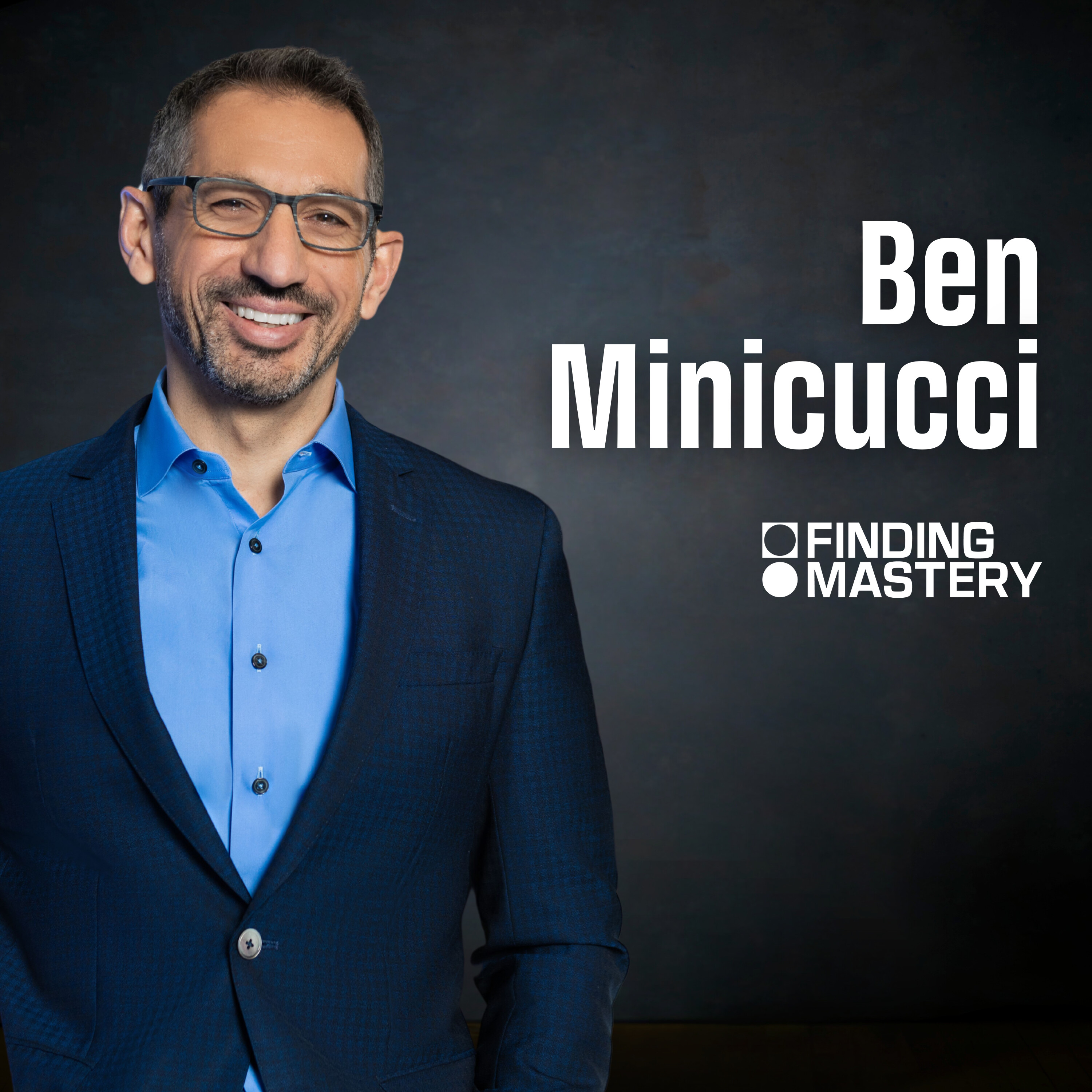
How Ben Minicucci (CEO of Alaska Airlines) leads through crisis by building trust, practicing vulnerability, harvesting group wisdom, and shaping culture around “do the right thing,” especially during major operational and organizational change (including Alaska’s acquisition of Hawaiian Airlines).
Ben Minicucci is CEO of Alaska Airlines; respected aviation leader guiding transformation and the Hawaiian Airlines acquisition. Raised in Montreal by Italian immigrant parents who emphasized hard work, honesty, family, and education despite limited schooling (father illiterate). He describes a childhood dinner-table culture of frank, heated debate and values-based decision-making.
Great leadership requires “see it, own it, change it” transparency (especially admitting when you don’t have answers). Leaders earn trust by listening more than talking, drawing out diverse viewpoints, and creating “air cover” for constructive challenge. Outcomes reveal truth; hiding weaknesses eventually fails. Culture is built by relational values and clear standards for “the right thing,” judged by impact on people and business.
He noticed a maintenance-critical issue after hearing a mid-cap door blowout on a 10-week-old Boeing 737 MAX, grounding the fleet before the FAA. He describes using board transparency/vulnerability and encouraging executives to train uncomfortable skills. He cites Tom Brady’s late-career discipline as a model for continuous improvement.
0:00Dr. Michael Gervais: Finding Master is brought to you by Magic Mind. A question that I often come back to and I hear from people I work with isn't, how do I perform well today? It's how do I protect my capacity to perform well over my entire career? That's a different question and it changes what you invest in. At some point, I started applying that same thinking to my own brain. Not just what helps me get through a heavy week, but what am I actually building over time? Because there is a difference between burning through your cognitive resources to meet the demands of the day and investing in the long-term health of your brain.
0:30Dr. Michael Gervais: That's one of the reasons I enjoy using Magic Mind. It's a daily two-ounce mental performance shot with clinically backed ingredients like ashwagandha, turmeric, and lion's made. When I drink it, I know that I'm investing in better focus, sustained energy. And what I value just as much is what's happening underneath. These ingredients support stress adaptation and long-term brain health in ways that seem to compound over time. That's the long game. The formula is based on over 10 years of research and nano encapsulated for five times better absorption than traditional pills and powders. Go to magicmind.com and get 50 % off your first order.
1:06Dr. Michael Gervais: The best performers I know make investments today that their future self-thanks them for. This is one of them. I got the call and I heard the mid-cap door blow out, which was really weird for me because I knew the door. I'm like, well, that door just doesn't blow out. It's bolted on. So it was two quick questions I asked. I said, hey, what kind of airplane? It's a max. It's a max. And I said, how old is it? 10 weeks. So my maintenance and engineer mind went in. I said, well, that door doesn't get checked for two years. I have to be sure I got to check 65 airplanes. We grounded the fleet before the FAA grounded the worldwide fleet before everyone else.
1:38Dr. Michael Gervais: It was like, no, put safety first. What does it take to be a great leader in moments of calm and in crisis? How do you maintain strength in a heartfelt way? Welcome back, or welcome to the Finding Mastery podcast. I am your host, Dr. Michael Gervais, by trade and training a high-performance psychologist. And this week's guest is Ben Minacucci, the CEO of Alaska Airlines. Ben is one of the most respected leaders in modern aviation. He's guiding Alaska through bold transformation, including their recent acquisition of Hawaiian Airlines. Born to Italian immigrants and raised in Montreal, Ben's leadership roots were planted early.
2:14My father was illiterate, never went to school, couldn't read or write, gets on a boat, goes across the entire Atlantic Ocean to Montreal, where they raise a family. But the one thing they all said is, we work hard, do what's right, and be honest, and we want you to go to school because we didn't go to school. When you have an education, good things come.
2:30Dr. Michael Gervais: He brings that same spirit into the boardroom, leading with unwavering values, deep relational intelligence, and a sharp sensitivity to culture. When people come into a room, one of the things they want to hear, they want to hear the leader, hey, what do you think? And I never say what I think at the beginning. I've learned that because once I say what I think, everyone thinks it's the best idea in the world. Instead, I say, no, no, I want to listen for you. Tell me what you guys think. There's something about the wisdom of the group. And so for me, it's about talking less and listening more. So with that, let's jump right into this conversation with Ben Minacucci.
3:04Okay, Ben, this has been a long time coming.
3:09Dr. Michael Gervais: I just want to start with a note that I have a real appreciation for you as a man, as a human, and as a leader. And so as I've gotten to know you, the way that you work is special. And I hope that I can do your genius service in this conversation. And I just want to start by better understanding, you know, where you come from. And I think that that has shaped so much of who you are as an extraordinary human and leader. So maybe we can just start at the top. What was the breakfast table like? What was the dinner table like when you were growing up? Oh, Mike, thank you. Thank you for doing this.
3:48And you're very kind. I'm flattered, honestly. You know, my upbringing was great for me. I mean, and just to give a context, you know, my parents emigrated from Italy in the 50s. You know, it was after the World War II. Italy was very poor and there was no work. And my father had an uncle who was, they call it America. They say, hey, come here, there's work. And next thing you know, my father gets on a boat. And just my father was illiterate. Never went to school. Couldn't read or write. He gets on a boat, goes across the entire Atlantic Ocean, ends up at a point of Halifax, takes a train all the way back to Montreal where he meets his uncle, my great uncle.
4:39And he's got work for him and he works. And then six years later, goes back, sees my grandfather and says, I'd like to marry your daughter. They knew the family. Well, you come from a good family. I respect you. Yes, you can marry my daughter. and takes my mom back to Montreal where they raise a family. And me and I have two brothers and a sister. I'm the youngest. And we got raised in Montreal. And, you know, my mother had fifth grade. My father never went to school. And, you know, the amount of respect I have, because, you know, as you get older, you understand like how two people navigate a culture.
5:14This is a French culture. They come in because it was Montreal. Very little English. It's all French. and all they do is speak Italian. They can barely read or write. And they create a life for themselves, and they work hard. And all they said is, you know, it's hard work, and nobody's going to give you anything for free. You work hard, do what's right, and be honest and work hard, and good things will come. But the one thing they always said is, we want you to go to school, because we didn't go to school. And when you have an education, good things come. So that was like the dinner table. We'd always wait for my father to come back home from work.
5:49You know, nobody ate before he came back from work. We'd eat and, you know, have dinner. It was great. But I never knew what I didn't have. You know, we didn't have a lot, obviously. And we'd eat from, you know, the backyard, the tomatoes, the peppers. You know, everything was grown. We'd cure our own meats, make our own sausage, prosciutto, salamis, you know. So that's all I knew. I knew that we made everything. You know, wine, we'd make our own wine. My father would get wine. So everything we did, we did on our own. You know, they rarely bought packaged goods. It was everything was made at home.
6:24And so that's how I grew up. I grew up with that mentality, you know, pasta, everything, you know. The only thing, every once in a while, you'd see a goat come in, chickens and life. And that was my upbringing. Everything was, they were very frugal, you know, every dollar counted. There's nothing more important than family and taking care of each other and your family. And so those values get ingrained in you, you know. How did they teach family matters? You know, it was always about taking care of each other. Yeah. And it was always about, you know, everything you did was to make sure that, you know, you were safe, that there was food on the table.
7:03It was like the essentials, you know, like y 'all worked to make sure there's food on the table, roof on your head. I mean, that's how I grew up. It was the basics. It wasn't, you know, lots of toys and lots of stuff. It was like this, you know, everything is about hard work. And I remember my dad saying his aspiration, you've got to remember, and we all did, my brothers and sisters, but I used to do his pay slips. At the end, he used to tell me, okay, Monday I worked 12 hours, and I'd have to write it on Tuesday. I worked 11. And how old were you? I was 8, 9 years old, and I would do this for him.
7:34And then the only thing he could do is sign his name, right? So he would sign his name, and then he would hand that in, right? So I would see all those hours. he'd work you know six days a week and then you know on sunday he'd work around the house and but that's that was his life it was work hard make sure i can provide for my family that that is what that is what the leader of the house does right it provides for the family what emotion are you feeling right now just an immense amount of pride for what you know my father did again where do you feel it? I just feel it all over, you know, just the amount of, it's honestly, it's like, I think about him driving the car, him not, like he wouldn't drive by reading signs, he'd drive by landmarks, like, so he'd be driving saying, I got to turn here, and as a kid, you don't realize it, you're a little kid, and say, your dad gets you from point A to point B, and only later I realized, no, he can't read that, he's driving because he knows he turns right at the white building, and then he drives down until he sees, you know, that orange brick house and then he turns left there and that's how he, but he knew every part of the city, you know, cause he, he lived there.
8:47He learned how to drive, you know, and especially now when you think of, you know, I think of all the challenges that, and stress you could feel going through this stuff. I think about him and saying, wow, here's someone who raised four kids, you know, bought a house, you know, put food on the table and he was just driven, driven, driven to succeed for providing for his family. And, and, and I think of, of, of, you know, how he started and, um, and the opportunities he gave us, you know, um, you know, it was just incredible.
9:21Dr. Michael Gervais: Yeah. When your body changed and you felt all of the emotions thinking like reminiscing about the care that your dad had for you, it's not lost on me that that is one of the main drivers for the culture that you're wanting to build. We'll get to that. which is about care and kindness and taking care of each other, you know? So we'll get to that, but it's starting, you're starting to kind of fertilize some seeds here. When you were feeling that emotion, now I want to go back into like this conversation. When you're feeling all of that emotion, there's this taboo thing that like men are not supposed to do emotions and, and in the workforce, like maybe women aren't supposed to do emotions for different reasons.
9:57Like we've both got these, both genders have this message that emotions are not okay in the workforce, which to me is an insanity.
10:09Dr. Michael Gervais: Emotions drive the whole thing. Relationships are at the center of whatever we're trying to do. So what did you just do when you felt all of those emotions? Because they were there, but you managed it. You worked with it. Were you, I don't know, were you trying to push them down or were you like, oh, that's interesting. Oh, Mike, I'm glad you saw that. Or was it like, oh, shit, it's going to. No, I'm glad you saw that. I think like today I'm much more comfortable expressing my feelings more than I did 20, 30 years ago. Why is that? I think because I think the, and it's one of the things I want to promote in our organization.
10:49And even with our board, I had this great discussion with a group of board directors from across the country. I said, you know, one of the things that I want to do with my board that I appreciate is the transparency and vulnerability when you don't have the answer. And not having to feel like you're showing up and saying, well, I got to, let's see, I got to have all the answers. I got to be, you know, this confident and never show any sign of weakness. And I think that's the worst thing for a leader, because I think that you'll never get to the right place. You never get to the right solution when you say, look, these are the things that are going well.
11:23Here are things that are not going so well. And me and my team are struggling through a couple of things. And we don't have the right answer yet. But you show this transparency, honesty, vulnerability that you see the problem. You see it. You acknowledge it. And now you have to own it. And once you own it, you can go change it. And this is one of the things I'm trying to promote in the organization. See it, own it, and change it. Because if you see it, that is, a lot of people just don't want to see it. They don't want to see where they're not hitting expectations or they're not being the best that they can be.
12:00And if they can't see it themselves, hopefully they have someone close that says, hey, you're not hitting the mark. And then when they do see it, can you actually say, okay, you know what? It's mine now to own. And I'd be interested in what you think because athletes are the same way, right? If you're not performing as an athlete, they usually know because it's pretty brutal. That environment, that industry is pretty brutal. But how do they own it? I think that's where I see the difference between great athletes and athletes who maybe don't live up to their potential or refuse to admit that maybe they've got work to do, you know.
12:36But the ones that own it are the ones that end up changing outcomes and having fantastic seasons and excel to be one of the best under a trade. And so the see it, own it, change it for me has been a big revelation because seeing it as being vulnerable and saying, all right, I'm not hitting the mark in this area and I got to own it to go change it.
13:00Dr. Michael Gervais: Finding Mastery is brought to you by Athena. So optimism often gets mistaken for wishful thinking. In reality, it is one of the most powerful performance skills that there is. An optimistic mindset doesn't just improve the quality of your life. The research is clear there. It's also a real competitive advantage. It helps you be more open to possibilities, to adapt faster, to be more agile. And here's what I've noticed. It is hard to stay open and curious when you're buried in the reactive stuff of life. The overflowing inbox, the calendar that runs you, the travel, the follow-ups, the hundred of small tasks that keep you putting out work fires instead of looking forward with bright eyes.
13:35Dr. Michael Gervais: That's where Athena comes in. They match you with a dedicated full-time remote executive assistant. It's a real person who takes those things off of your plate. Their EAs come from the top 1 % of more than 60 ,000 applicants. So they're sorting the best of the best for you. And they're fluent in the AI tools that make great support even sharper over time. And clients get back an average of 15 plus hours a week. So when the reactive noise feels like it's being managed, you get to lead from a different place. Open, curious, focus on what's possible. That is worth looking into. Go to athena.com slash mastery right now and get matched with your EA.
14:09Dr. Michael Gervais: Give yourself a few hours back this week and go to athena.com slash mastery and see who they pair you with. Binding Mastery is brought to you by our partners at Lisa. Most of you know that I have a morning mindset routine. It's what I do every morning before I check into the world around me. I check into the world inside of me. And it's just a few quiet moments to set my intention for the day. Make sure I answer to the things that I'm grateful for. and I want to focus my attention on what matters most. And what that does is it wakes up the mindset to help me bring the best of myself in the day ahead.
14:41Dr. Michael Gervais: Generally speaking, I wake up feeling pretty good. No aches, no stiffness, nothing pulling my focus, you know, the minute that my eyes open up. So when your body gets the recovery it needs, it is so much easier to set your mind up to help you be your very best. So that's why we've turned to Lisa for some support. We've worked with Lisa for a long time now because they build quality crafted mattresses that are tailored to how you actually sleep. Your position, your feel, all of it. Premium materials, premium mattresses, real full body support. The intention they put into their products is real.
15:13Dr. Michael Gervais: I love what they're doing. Go to Lisa.com for up to 30 % off mattresses, plus get an extra$50 off with the promo code MASTERY, exclusive for our listeners. That's L-E-E-S-A.com, promo code MASTERY, for up to 30 % off mattresses, plus an extra$50 off. and let them know we sent you in the survey after checkout. I love what you're saying. And I have lots to say about the athlete bit here. And I will, but I want to first go to, there's two things I want to say. So I want to say them out loud to you now about the owning it bit is actually, I think, driven by something else than owning. And I want to come back to that.
15:56Dr. Michael Gervais: But owning is the thing that they, we need to do. So I'm just saying it out loud to come back to it. I want to talk about the vulnerability piece because there's a strength in, hey, here's how it is. Here's what I see. Things that are going well and things that are not going well. And this is where we're struggling. This is where things are going really well. There's a power in that. And there's a risk in being vulnerable, right? In a traditional leadership model, you're changing it. This is why I want to have this conversation with you. how do you manage when you say to somebody who can decide if you're going to have a seat, you know, if your contract's going to get renewed, if whatever, and you're saying in an honest way, here's the things that are not going properly and they might have a bad day or they might be vindictive or they might not be trustworthy or they might want their cousin in your role.
16:43Dr. Michael Gervais: How do you manage that when it starts to get twisted in the wind, when you're doing the quote unquote, right thing for change? You know, what I tell people a lot, because it is one of the hardest things to do, because, you know, in my organization, when people, especially when they hit the higher levels of the organization, and they show what they believe is weakness, or
17:11some inability to do a role or a job, they might think, hey, I'm going to lose this job that pays me well, has good benefits and, you know, this fantastic thing they have can disappear. And I say, over time, if you try and hide it, the mask is going to get lifted and we will see the true self that's there and you'll lose it anyway. So what I want to see from people is not how you're trying to hide it, because I will see through that over time. You might come in and fool me once and I might say, okay, well, they put on a good show. the second third and fourth time outcomes never lie outcomes never lie is what i tell people and your job at the end of the day is to produce outcomes and so if over time your track record and producing outcomes is strong that's when you have the ability to even be vulnerable and transparent and feel safe and not feel like while I'm at risk.
18:10And I think that's what I tell people. I said, the more you do it, the more you'll have a track record of outcomes and you'll have more confidence in people to say, look, this is the type of person when they say, look, things aren't going well, but I see it and I own it. And I will come back with a plan that's going to change that outcome for the change of outcome for the good, whether it's for employees, whether it's for guests, whether it's for safety or operations for whatever the area, to me, that's what I see. But when I see someone trying to hide the true nature of an outcome,
18:47Dr. Michael Gervais: then I know the red flags go up. So it's a book I'll just reference right now. It's called The Night in Rusty Armor. And you referenced the mask like a Carl Jung, you know, the psychologist, the analyst where I go to, which is like we're all wearing these masks for approval and over time those masks get exposed because nobody can keep it up long enough and you're referencing to outcomes um and the mask and in sport we say you what did you say outcomes you can't hide outcomes yeah yeah outcomes don't lie outcomes don't lie in in sport like in this tape doesn't lie yeah so you see you see effort you see enthusiasm you see like disciplined um technique you see it on film you can't quite catch it live you know sometimes maybe but like so the tape doesn't lie okay um or tape tells the truth so the knight in rusty armor is this idea that we're walking many of us most of us are walking around with this big armor and we got to shine it up and you know we want it to look really good And if you don't shine it, which takes a long time to do, it starts to rust.
19:55Dr. Michael Gervais: And then, you know, if you're not polishing it and shining it and it's rusting, you got to oil it now too. And it's heavy, by the way. And the whole narrative of this, it's like a 50-page book, is why not go to like moccasins? Okay. So from the knight in rusty armor to something that is stripped down. And that's what you're calling for. And I wonder how much of that is your appreciation for what we would say is the best. Now I'm going to go back to your earlier point. The best of the best of the best, the half percenters, they demand the truth. They might live in a warped reality about what they're capable of and what they think they can do.
20:36Dr. Michael Gervais: But they know that the truth is what is going to allow them to make the right investments to get better. And they hold other people to that crazy standard, usually to themselves as well. Well, and I think you see that in sports. You see some of those type of individuals that delineate themselves from everyone else, right? That's right. I can see. You can see, I don't know, like what Tom Brady did, right? Like where, you know, the investment he put in time to perform at a level so late in his career, like I've never seen an athlete do getting into his 40s and still perform at that level. You know, when I see that, that is a dedication and discipline to his sport and his trade that I take to myself and say, look, as an executive leader, as a CEO, you train and you try and master your trade to the best of your ability every time.
21:40You should be learning. You should be getting better. if don't let anything slip away. And if there's an area that you need to go work on, throwing a ball on the run, going the other way, that's what you should do. Go train that. And there's an equivalent in the business world, right? A, I'm not comfortable doing that. That's outside my level of comfort. You got to go train it no matter where you are in your career. So that's where I see, and that's where I like to push my executives is to say, like, come in and be vulnerable. Well, tell me where this area that you need to work on. You don't have to hide it from me.
22:14Once I hear it from you, it's great. Tell me that because now I know you can go work on it and I'm going to help you be successful.
22:21Dr. Michael Gervais: Well, they have to trust you to do that. They have to trust themselves, one, to bring the truth forward. Because as soon as you bring truth forward that is unremarkable, right, that is unflattering, is that now there's that vulnerability piece. And what you're saying very clearly is it's in that space between bringing it forward and your ability to respond to it, which includes the executive leader, the CEO's ability to create some air cover, to work with you. So how do you help your people trust you? And then because ultimately you are responsible for saying, hey, I'm sorry, but we need to move on.
22:58So one of the things I've learned as I, you know, and I'm not the leader today that I was 20 years ago. Yeah, the core is there, but you say, like, I have to get better. I got to do these things better. One of the things that I knew I had to get better was listening and asking questions. And so when people come into a room, you know, one of the things they want to hear, they want to hear the leader. Hey, what do you think? And I never say what I think at the beginning. I've learned that. I never, because once I say what I think, everyone thinks it's the best idea in the world, right? Instead, I say, no, no, I want to listen from you.
23:33Tell me what you guys think. Tell me what, you know.
23:35Dr. Michael Gervais: And it's organic. It's not like you're going to twist it. No, no, it's organic. And if I hear, if Mike is not speaking up and Mike's in the room and I know things are spinning in his head, I say, Mike, what do you think? What do you think? And I try and draw out as many thoughts and the diversity of thought and opinions, especially if it's a tricky topic that that I may have a view on but I'm not really sure like I'm 100 sure and I think for a leader always to say like you know yeah I got a thought on it but there's something about the wisdom of the group when all these ideas come that you can build on an even better solution to you know the problem that you're facing and so for me it's about listening, talking less and listening more, listening hard.
24:21And the one thing, especially in today's society with all the electronic equipment, this tendency to touch and not focus, listen hard to when people are talking, listen to what Mike is saying, listen to what Andy is saying and Shane and Kylan, listen hard. Cause if you listen hard, there's a lot that they're saying that's important. And then ask questions. What are you listening for? I'm listening for something, because everyone at the core has something that they feel that could be, and if it's a delicate topic, something that could hurt the organization, damage trust in the organization, not be good for customers, be costly for the business.
25:06And so what I look for, especially when there's, you know, do you have strong characters in a room, is to make sure those strong characters have their point of view, but the ones that don't may have some insight that can lead you to a better solution. And so that's what I've learned over time is to go draw out a lot of these things, especially when I'm making big decisions about stuff like acquiring Hawaiian Airlines or making big decisions with employees or guests, like changing loyalty programs with guests and all those type of things, which could be easy to do on the surface, But when you peel back the layers of the onion, you got to make sure that, hey, this has a lot of dominoes that can impact.
25:48And I may not see all those dominoes from where I sit, but other people do.
25:52Dr. Michael Gervais: So you are relational as a leader, right? And you're trying to pull all of the information, the wisdom, you're harvesting wisdom from the collective. And then you're wanting to hear it all to fine tune your point or to create a net new position. I will change my opinion. Like if I hear a compelling argument on, hey, I think we're going down the wrong path. And that's what I want my people to. I always say, look, if you think we're going down, I want you to throw that red flag. So you risk, is your approach risk management? Like I want to hear the dangers, the red zones. I want to hear all of that.
26:27Dr. Michael Gervais: Or is it I want to hear the upsides, the above the line, below the line thinking is the way to think about it. How are you approaching those conversations? I want to hear both. Like I want to hear if, like, for example, if someone has a strong view on where to go, I want to hear the counter. And I want to hear, hey, Mike, no, here's why I disagree with that approach. I want to hear someone across the table saying something and then I want to hear another. And what I'm trying to do is promote this conversation and dialogue and challenge. Yeah, because you're diluting groupthink is what you're doing.
27:01Dr. Michael Gervais: And then do you come... Okay, so when we do work with athletes and executives, one of, I think, the great gifts that I and other folks that do this work, like you might do this work with people, is when I'm working with somebody, I close my eyes and I need time under tension to understand them. I need to know some stuff about them. And I close my eyes and I think deeply, not listen to, but I think deeply about what I think is possible for them. And then I want to calibrate that with them. And there's two ways to do that. And so this is like casting a vision, creating a vision of what could be.
27:41Dr. Michael Gervais: It's exciting. It's wonderful. And there's two ways to do that. Either I come to and I say, all right, Ben, next week, let's talk about what we think is possible. And I come to it and I say, all right, Ben, here we are. You know what I think is possible? And I say this grand thing. Or I come into that meeting and I say, Ben, what do you think is possible? I've got my idea, but I want to hear what you, is that more your, the second part more your style? Yeah, it is a little bit because I've seen too often with people as I've grown in my career is the leader, you're exceptional because you think on a grander scale, but some leaders, their thinking isn't as broad.
28:20So if they come in and say, hey, I thought about it, here's what I'm thinking for you, right? And it could be way smaller than what you're thinking.
28:26Dr. Michael Gervais: That's exactly right. So, okay, so now you're on to the second bit, which is the calibration. Yeah. So either way I think can work. Yeah. But the art of this extraordinary process of listening deeply or thinking about a vision together is the calibration. Yeah. Is that you'll see there, if you're really good, you'll see the pupils constrictor dilate. You'll see the smile micro-expression. And sometimes you'll see overwhelm it. like, oh, that's bigger than anyone's ever said. Or you'll see, or you'll hear that, what? Come on, man. Really? That's it? You know, so you got to calibrate with them. So we're a little adjacent to your wisdom harvesting that you're doing.
29:06But in your role, like you come in as an equal. And what I worry about in something is, like, I just worry about, oh, it's my voice with someone want to say. Drowning out? Drowning it out. Yeah. Because I've seen in, you know, the leader of the room say, hey, I've got a great idea about how to do this. And then everyone says, you know what, if you haven't created the environment where someone says, you know, Ben, that doesn't sound like such a great idea. A lot of people, you know, a lot of people, if you haven't fostered that environment, will just fall in line. That's a great idea. And that's a great idea.
29:40And what what I'm looking for is one, making sure people are coming up with the ideas and then, and then, you know, you know, putting some gasoline and lighting up, okay, I need to give us more, give us the best that this thing can give us, you know?
29:54Dr. Michael Gervais: Oh, this is cool. Give us the best. So if you're, so I'm thinking about like a new CEO or a new executive leader or a new leader anywhere that's building a team, first 90 days type of think, thought is that you would walk into a thing a room and you'd say give the let's here's an idea let's give the best to this is that how you're framing it it's give us the best on this yeah and and what i'm trying to get out of people and you know it's funny you know as you're talking i think about um some some of the folks that i really have to get it drawn out and to really make them feel comfortable they're probably my smartest leaders the smartest people that they're actually brilliant right academics you know in the school like you know just top of their class and but they're afraid they're afraid to be wrong they're afraid not to have the exact right answer that's right fopo how about it fopo right and saying well no i'm the smartest in the class i gotta have the right answer for the boss and my identity what they're thinking for me when i see that i'm like okay i gotta get that away from you i gotta make you feel comfortable not being the smartest person in the room i gotta make you feel comfortable that you maybe you're not right all the time and that maybe the idea that you had can be built upon to be even bigger than what you thought and better than what you thought and i think that's the thing for me when i see in a room you know like i kind of look at the person and say let let i need to draw more out of you and then i need to build on it because i can see that you're maybe you're a little bit like you said you see the body language you're a little Oh my God, does Ben think I'm wrong?
31:29Does Ben think, you know, I don't have the, you know, the best solution to this thing.
31:34Dr. Michael Gervais: Okay. So you don't, you don't diminish your shine so that other people can. You are pulling the best of people forward. And then you're looking at each individual to create a micro relationship to help them kind of open the aperture to bring it forward. And some people, so there is this lens of, let's call it faux pas, fear of people's opinions where it's like, I don't want to be wrong. I don't want to look a certain way. I don't want to be rejected, da, da, da. And there's also people are introverted thinkers. And introverted thinkers in a room of 12 other smart people, they're processing the whole time.
32:12Dr. Michael Gervais: And then they need to go away and come back. But sometimes we don't have that time. Yeah. So if you could speak to a leader right now that's trying to establish this harvesting wisdom, collective insight to bring the best forward for the thing we're trying to solve, what would you suggest to them as a best practice? Like super concrete. Don't overthink what you're going to say. you know and you have an instinctual reaction to a statement or something uh just say it have the confidence to say it and and why you think there could be issues with it and and i think that's what i'm looking for is i'm looking for that that that dialogue that that constructive challenge with people that brings the best and i think when you have that like when i'm in a room and i don't hear anybody talk and it's quiet, I think that's where I worry.
33:08I worry that, okay, this group is not comfortable saying what they have to say from a, you know, they're thinking about it so often. I got to be careful what I say, how I say it, who I say it to. And I think for when I look at my organization, that is a cancer for me.
33:28Dr. Michael Gervais: Bonnie Mastery is brought to you by LinkedIn Hiring Pro. When you're building a small business, every new hire has the potential to make a real impact. The right person, they can bring fresh energy and new ideas and really help the whole company move forward. It's awesome to watch when you get it right. So finding that right person, finding that great hire, it takes clarity. You have to know what you're looking for. You have to recognize it when you see it and then make the call with confidence that this is the right hire. That's where LinkedIn Hiring Pro can help. It's really like having a hiring partner throughout the entire process.
34:00Dr. Michael Gervais: You can chat with it just like you would a recruiter. You tell it what matters most for you, for the role, compare candidates side by side, you give it feedback, and then Hiring Pro listens, it adjusts, it helps surface the people who actually might fit what you need. They're trying to help us optimize. We're still the ones making the decision. LinkedIn Hiring Pro is just a smarter way to find the right people to build the team of your dreams. Now, if you haven't already checked them out, LinkedIn Hiring Pro can really help your business. Get started by posting your job for free at linkedin.com slash finding mastery.
34:30Dr. Michael Gervais: Terms and conditions apply. Again, that's linkedin.com slash Finding Mastery. Finding Mastery is brought to you by David Protein. We travel a lot at Finding Mastery. And sometimes travel makes it tricky to eat well. Best intentions, and then you're at the airport. And then suddenly the only options around you are the ones that you'd rarely choose at home. Something I come back to often is that discipline isn't really about willpower in the moment. It's often about choice architecture. Setting up your environment ahead of time so that the easy choice and the good choice are the same one. That's the role David plays for me on the road.
35:04Dr. Michael Gervais: The gold bar, it's their flagship high protein density, great texture, flavors that make it easy to stick with. So when I throw a few in the bag before my trip, I've already made the decision. The hard moment later takes care of itself. And the team here at Finding Mastery, they love the bars as well. They are ripping through them in the Finding Mastery lab. Salted peanut butter and fudge brownie seem to be the fan favorites right now. They have built something with real rigor in a crowded, sometimes ambiguous space like nutrition. That matters when it's something that you reach for again and again.
35:33Dr. Michael Gervais: David bars are now available in major retailers like Walmart and Target. And if you'd like to buy them directly and get a special offer for being a Finding Mastery listener, head to davidprotein.com slash findingmastery, where right now, if you buy four packs, you'll get the fifth free. Again, that's davidprotein.com slash findingmastery. Yeah, yeah, yeah. and how did mom and dad let's go back to breakfast table dinner table um how did they how were those conversations are you responding to what you didn't have or are you reenacting what you did have you know you're making me think back and dinner conversation stuff that you know and maybe it's how italians are and stuff but italians are very like i'm going to say what I think.
36:22And I'm going to tell you. And sometimes, you know, the truth hurts, you know, like, but it was very honest. It was very visceral, you know. I think you're absolutely wrong and out to lunch, you know. And like, so those kind of, I was used to really hearing honest, visceral discussions about a topic and very back and forth and, you know, no holds barred, right? and and so i was very used to and so i'm very comfortable i grew up being very comfortable in people going back and forth and challenging each other and getting preheated because the times get heated when they talk you know uh at least my family did and so i'm used to heated this i'm i'm i'm very comfortable i'm very comfortable with that so and it's funny when i came to pacific northwest pacific northwest is more you know control contained you know emotions and so I like bringing more of that out to say like hey I want some of that that debate I want some of that challenge and and tell us what you think and don't be all in your head you know so I so so I grew up with with that feeling very comfortable and in a meeting when things get heated you know things do get heated I'm like oh my god what's going on I'm I it doesn't faze me at all I'm like I feel like great now we're talking good good let's talk let's cut let's talking.
37:41You know, I feel good when that happens.
37:44Dr. Michael Gervais: Because you had time under tension with an animated spirited conversation, people saying whatever, and you don't get kicked out of the family for that. No. Just like, you know, that's not why you get kicked out of maybe a team discussion of bringing it forward. Results are a different thing. Yeah. Right. And what I try and do when I see someone bring a very controversial subject up that he and they are in a big group going against the grain and even for me it's like whoa okay that was really good and then I actually congratulate a person hey that took a lot of courage publicly publicly I said that took a lot of courage that's what I'm looking for that's leadership yeah you know because I said look, it's challenging the status quo.
38:33And there was one, I'm remembering an incident, one of my leaders did, that upset a bunch of people. But at the core, he was right. At the core, he was right. And that's what I said, at the core, he's right. Because when we're having this other discussion, there was like a little feeling, I said, oh, is this the right thing? And everyone was like, you know, everyone else, I was pulling a pin, oh, no, it's right. And I said, you know, that feels like this. And I'm like, and then there was silence along the room. I'm like, excellent. I said, because I think there could be something there. And I congratulated him because it took courage for him to say that, that, you know, because it would impact everybody in that room.
39:10Like he was saying impacts everyone, their benefits and stuff. And, and I thought it was, I thought it was great that we need more of that. And, and for me to give cover to that, to that is very important.
39:22Dr. Michael Gervais: And to spot it and call it publicly, call it public, see it, own it right change it is so that i learned this from one of the um u.s olympic sports psychologists a good friend of mine and he's got three words that he he says capture the best coaching now it's not ever going to be this simple but when an athlete does something that you're that you're watching and observing it's that and then the athlete says this and you say yes yes that so that yes that so you catch it that right there that and then they like this so that that yes that which is exactly what you're referencing as well like nice job i i see that i feel that thank you for having the courage to bring that forward you're rewarding it right on the spot which is it's such an agitating experience when the room is like i don't know two thirds the way to closure on an idea, right?
40:19Dr. Michael Gervais: Or we're just kind of leaving the conversation to the next agenda item and everyone's feeling okay about it. And then somebody says, wait, hold on. I haven't brought this forward yet. That's exactly it. And you're right. And in a little bit, it's, and it's funny because I think when I see discussions, not going exactly, look, it's going that way. And part of me is like unsatisfied, to be honest. They're saying, hey, you know what, Is this still the right thing? And again, I'm pulling it. It's okay. It looks like everyone's comfortable. So it could just be me. So when a person like that brings, throws that little bit of a grenade in there and pivots the conversation a little bit, I think that's fantastic.
41:01And it's especially in the space we are now, integrating two airlines, trying to manage two dual brands, trying to do all these things, bringing two employee groups. What I don't want is this. I think this is good enough and going in there versus no, no, this needs to be the best, you know? And I think you see it with teams a lot, right?
41:22Dr. Michael Gervais: Yes, 100%. I think you're right on it. So your ability to create a culture rests on a desire to get to the honest truth to make it as good as it possibly can be. You do it in a relationship-based way. And your relationships, just like your family's relationships, rest it on a set of core values. can you pull those values forward and clearly articulate what those values are to you? Yeah. It's the one, and it's even an Alaska value. Like I just feel at the core all the time, there's a whole bunch of things of how you're wired. But for me, it's, I know when it's right and I know when it's wrong. And I've been in my whole career.
42:15So doing this for, you know, being in the military and now. So, you know, I'm talking a long time, almost four decades. But throughout military business, like for me, there was always something at the core that either felt right or wrong.
42:32Dr. Michael Gervais: Do the right thing is one of the core values at Alaska. Yeah. And do the right thing is based on a whole bunch of different values, right? It's based on honesty and integrity and all those things. They all kind of form up to do the right thing. So for me, it's like if every time we made a decision at a company about a big thing and all those decisions weighed against all your internal values, and then it ends up as saying, is this the right thing to do? And then to me, that's what it was. Is this the right thing? Because you're hitting on two things. One is action. You have a bias to outcome and action, right?
43:09Dr. Michael Gervais: Like that's a really important bias in a performative world, a world where results matter. So, and you're using do the right thing as an emblem for a feeling that you have that rests on a set of core values, right? Call it honesty, whatever. and those core values the do the right thing piece can get confusing for some when i say look i sorry ben but i just don't think we're doing the right thing yeah and you say wait hold on mike i think we're totally doing the right thing so that and i was cautious about saying it without like putting some context around it okay keep going yeah and no no because it's because everyone can have their version of do the right thing yeah but i do think there's something universal about uh and and for me and and and for my do the right thing it's it's i always think about people like what's the impact of people right again you're relational yeah yeah and uh what's the impact to the business what's the impact of the bottom line what's the impact of performance what's the impact to all these things and i think for me it's it's kind of like a mosaic all these things for me this mosaic of everything that's important to me so i have this mosaic that okay the you know and And if it's, whether it's family, whether it's business or personal.
44:28So if it's business, I have all these things that are important for me for the business. That people depend on me and our company to deliver. And this mosaic for me ends up being this do the right thing. And it could be a thing of greens or reds. And it's going to be majority all green, right? For me to say, okay, this is the right thing. It may not be perfect here, but if there's too much spattering of red in there, if there's too much red for me it's like okay you know what uh i gotta go and is that a you said
44:58Dr. Michael Gervais: it feels a certain way so that's it's an embodied is the is what speaks to you like a hot flash if it's not the right thing or is what speaks to you like this this the aperture opens up and there's a breath of fresh air is it i'm asking something kind of flowerly but it's actually quite technical i think like when it's right like when the idea of hawaiian airlines came to me for example right Which is just for context, the recent acquisition, was it an acquisition? It was an acquisition, yeah. A recent acquisition that you're in the middle of a culture... Transformation and a business transformation.
45:33A whole thing. A whole thing. Like you're right in the middle of change. We're in the midst of... We're transforming Alaska into a global airline. Hey. Yeah. And it's pretty cool. And our employees are amazingly inspired by the vision. and but when the idea came to me i knew i said oh my gosh this is if we can do this and pull it off in my core of course we had to do all the due diligence the financial analysis the regulatory analysis you know the brand analysis the culture analysis the labor analysis all that analysis had to be done but at my very core from the day i thought of it the day i brought it up to the board I knew that if we did this, it would be transformational for us.
46:17And so all the analysis that happened six months later only validated that this was really the right thing to do. But there's this feeling that says, yes, yes, yes, yes, yes, yes. Versus I'm going to do this thing and it's like, I don't have that. Yes, yes, yes, yes. This is the right thing.
46:39Dr. Michael Gervais: How do you tune yourself to be able to hear or feel that yes, yes, yes, yes, which is basically your intuition, your self-talk something so that you can take action in an aligned way? Also, so I'm an engineer. So here's, I think I'm an engineer, I'm analytical. And this is where I think over time, you know, you evolve as a leader and you evolve before everything needed to follow, you know, engineers are very data-driven formulas, metrics. And so before it was like, you know, F equals MA, force equals mass times acceleration. And, you know, so many neurons are based on, so it was all like formula.
47:22It was like, this has to equal this or this, or it doesn't work, right? And so what's good now is that now if I have an instinct on something, I then use my analytical and my data background to say, okay, does it make sense? Does this thing make sense? Or I'm just getting excited about an idea that I'm enamored with. And so I think it's using both sides now. I'm using the a little more feeling and trusting gut instinct with analysis and gut to validate that it's going the right way.
47:58Dr. Michael Gervais: And then do you have a set of practices that are important for you to be able to to be more tuned to hear that voice? Meditation is probably the only thing that I've really changed in the last few years. I begin meditating more and in a quiet space. I love my times in the morning. you know, uh, when I wake up and just being in silence, you know, uh, with a little bit of light, uh, through the windows and, and just sitting there and letting thoughts come to me, uh, about all sorts of things. And then thinking about something and letting it, you know, when I thought about home, just thinking about all the things that could, could happen or could not happen with that.
48:41And for me, it's just, I've learned to embrace it and not fight it, you know, all these different thoughts that come in. And then just one triggers another, triggers another. And it's funny because if you do it every day, these things just are there in the back. And one day, one week, one month, they all build on themselves to give you a clearer picture of what to do. And that's what I've learned over time.
49:10Dr. Michael Gervais: Bonnie Mastery is brought to you by Granola. Here's something that I think most of us miss without even really realizing it. Every conversation that we have has two layers happening at once. There's the conversation, the obvious conversation with the words themselves. And then there's everything else underneath. That's the emotional language, the subtle tones of voice, micro expressions, the brief pauses before someone answers. That second layer is really rich with information. and in meetings, it's easy to miss it when our heads are down and we're taking notes. That is why I use Granola. Granola is an AI-powered notepad that makes your meeting notes useful.
49:46Dr. Michael Gervais: It captures what happens in your meetings and then turns them into clean, structured notes with decision and action items pulled out and made easy to find. And the best part, it works right through your device's audio, which means that it integrates seamlessly into the video conferencing tools that you already use. No big setup, no awkward bots. I use it every day when my meetings are done. There's a clean recap and a clear set of next steps that are just waiting for me. Nothing slips away. This isn't about doing less. It's about being more present. I think you're really going to like what Granola is doing.
50:15Dr. Michael Gervais: Once you try it on a first meeting, it's hard to go without. You can try it totally free. Head to granola.ai slash mastery. That's granola.ai slash mastery to get your time back. Go to granola.ai slash mastery and try it on your next call. body mastery is brought to you by fatty 15 okay let's talk about longevity longevity is much more than simply adding years it's about maintaining health and a zest and a vitality and enhanced performance as you age and that's why i'm excited about fatty 15 it's an award-winning supplement it's powered by c15 which is the first essential fatty acid discovered in over 90 years okay so c15 it's a geroprotector.
50:58Dr. Michael Gervais: What that means is it helps to slow biological aging by strengthening your cells, basically protecting them from damage. You can think of it like kind of like a 401k for your health where you're investing in cellular quote unquote resilience. And I dug into the research on the relationship between C15 and heart health. I love what I saw. Fatty 15 is on a mission to optimize your C-15 levels to help you live healthier, longer. Get 15 % off your 90-day subscription starter kit by heading to fatty15.com slash findingmastery and use the code findingmastery at checkout. That's fatty, F-A-T-T-Y, 15.com slash findingmastery.
51:39Dr. Michael Gervais: Start investing in your long-term health today. yeah so just to decode that it it doesn't sound like you're doing in the morning when sitting with the light you know this wonderful picture i'm imagining but i know better being in the pacific northwest myself yeah it's sometimes the light is it's not sunshine and it's not like the sun's coming up and it's more like this you know there's a gray light coming in there's something coming but but you're not doing a critical analysis for that x number of minutes you are letting you are observing without judgment. You're watching the stitching between thoughts and just allowing space to be an active observer of the thoughts.
52:21It's exactly that. Yeah. And it's something like I never, you know, if you would have told me 30 years ago, my 30 year old self would be, you know, like it's, you know, it's just, it's got to work. Right. It's, uh, and, but I, I, I think, I think I'm a better leader today because I still have that analytical mind and I love, you know, like I said, outcomes and numbers are so important for the business, no matter who you are, whether you're an athlete or whether you're a business, at the end of the day, numbers matter. And so I believe in numbers, but I also believe in how you get there. And I think how you get there can be the difference of sustainable success and fleeting success.
53:05Dr. Michael Gervais: Well, you're very warm. And in that warmth, there is never a thought for me that, oh, he's really wonderfully kind, but he kind of struggles with systems thinking or he struggles with like critical analysis. So literally you are the yin and yang. You have all of the warmth. This is why I wanted to sit with you in this format. You have all of the warmth, the genuine care, because you are relational in how you go about your life. And you have the ability to do systems thinking, logical analysis, to be able to say, where does this break? I felt something. Where does this break? And oh, by the way, we're doing it together.
53:45Dr. Michael Gervais: And so it's not just me giving directive in authoritative way. It's us moving forward to bring our very best forward. That's what we all need. as sure as I am here, if there is a working definition for me about modern leadership, you are embodying it. And I give you that. I know it's a high compliment, but I've seen it. I've seen it in action. And I've seen where you've made investments in the leadership trainings that you've included us in to help show your people how to invest in themselves so that they can be more fully themselves. Not many CEOs are investing in a true high-performance well-being program across the organization to do it, you know.
54:33Dr. Michael Gervais: And so, like, one, I've seen you put your money where your mouth is. It's a feeling I have around you. And I know you're working relational and values-based. And the thing that I want to highlight is that they're not just words on walls. You didn't do the intellectual exercise to redesign the values. and as I've come to learn you you did go back to pen and paper on the merger to make sure that the values of Alaska are are trued up for this acquisition for this blending of cultures and did they change the values that that you're working towards we're pretty much have aligned on on on the values but they're not changed very much and and what we did we were We're fortunate with Hawaiian because what a wonderful culture they have.
55:21And if you've ever been to Hawaii, which I'm sure you have, you realize how special and unique Hawaii is. They have a connection. There's a strong family connection, which I love. They take care of each other.
55:34Dr. Michael Gervais: You are a great custodian for this. And so I love that when I see them and I see them with taking care of parents and grandparents and how the family unit is so strong, how they are tied to the land, how they take care of the land and how they're mindful of everything they do to keep Hawaii special, you know, the land and the oceans. Sounds like Montreal for you. Yeah, yeah. And so when bringing our cultures together, our culture is based on, you know, being kind, kindhearted and doing the right thing. And there's all about malama. What's the word? Malama, which is care. and so it was easy to bring those together to say this combination is one plus one is going to equal 100.
56:21You know, it's not, it's, this is why I think our employees feel so good about the future because they see this combination as being transformative because it's going to be more than just bringing two companies together. It's going to create the next generation of company for us And so it's always fun to see this, you know, and we're building it right now. It's happening right in front of our eyes. And I tell people, I said, you know, you're in it right now. It's a lot of work. And I said, when you're going to look back five years or 10 years, you've created a new platform for our company that is going to be with us for decades to come.
57:00Dr. Michael Gervais: Okay. Stress and change can be synonymous, meaning that part of my working definition of stress is that it is change occurring. And there's stress on a system, stress on a person, whatever. If you frame stress like, oh, this is something. This is going to be something. You know, the Chinese farmer Cohen or parable is really, I think, wonderful, meaning that we don't know how it's going to go. I'll reference the parable later because it's long. But the idea is like, we don't know how things are going to go. So let's see. Let's see how it goes. So the framing of change is materially important to the experience of the change.
57:39Dr. Michael Gervais: And you're framing the change as like, this could be, if we do this right, there's something really special that is going to change the way that so many people experience travel. And our families here as part of the employee base, we're going to have something special to look back on and to experience while we're in it. Does that sound close to being right? It's exactly how I feel. And I think it's, I think how people are starting to feel that this thing is different. It's different. And I've been here 21 years. it's amazing to talk to people who've been here 30 40 50 years and to say hey ben you know when i joined the company you know the farthest we flew was san francisco which is about a hour and 45 minutes 45 minutes you know uh you know today we fly all over the country and and of course uh you know in mexico belize costa rica all that stuff and but now we're actually going global we're flying to Tokyo in May, you know, and Seoul in the fall and Europe next year.
58:38And when I talked to our employees, they're like, wow, I never thought in my career that the company would end up being that. And then I realized that I saw some publication that, you know, because we're, our country is, we have a lot of big airline companies, but we are the 13th largest airline now in the world.
58:58Dr. Michael Gervais: So this is important because it's like, what is this about? This is like, um, a coming to age feeling. Yeah. Like we're entering where the big boys go, you know, like, but, but we're this, um, not small, mighty little, whatever, but we're the Pacific Northwest hub. And now we're entering into this new phase. So there's an, that, is that what you're, It's like it's you you've nailed it and and one of the things I tell people is I don't want to lose You know, we talked about culture and values is that we as we come this big a bigger and a global airline I don't want to lose what's been special about our company about this small company feel about connection about About you know the the culture this you know, my whole thing is about this culture of empowerment, right?
59:46With the frontline employees and this culture of empowering with leadership empowering them for what to be able you know like in in our world of airlines you can imagine it's so regulatory there's a whole bunch of regulatory rules and then there's all these policies we put in place in a company if you have to print them out there's like books this big and i say look you know what every employee at our airline is empowered to do the right thing be kind-hearted deliver
1:00:13Dr. Michael Gervais: performance be remarkable and own safety i happen to know your your values because of our relationship but you just eloquently stitched together that you hold the power to do these five values, a la virtues, and to do them at the highest level. Be remarkable is a new one that you just brought up, the owning the safety. So those are two new ones that you just added. But you're saying that you hold the power to do all five of those. Okay, so I've got a bias here. I just want to run it by you and see if we're aligned or different. There's no right or wrong on this. But sometimes when the monarchy says, we're empowering you.
1:00:54Dr. Michael Gervais: Okay. It's like they are giving power to another set of people, which I have a rash thinking about that. I don't hear you saying that, but I just want to, I want to align with it, that you're already seeing people that they, they inherently hold power. And you're saying, please flex it in this way to, to be, to be remarkable to make sure we're taking care of safety we're getting results or driving results we're doing the right thing and we're doing it in a kind-hearted way yeah it's a my it's what i tell people i want to make sure you exercise your clout as as uh as you know a team member at our company that you have all the authority to do this and um you know whether if you need to pause the operation because you're not sure we're going too fast hey there i don't feel good pause it nobody's going to question you like hey you paused the operation you stopped it because you wanted to check on something because you thought there was a safety issue great thank and i don't care who you are you could be a pilot a flight attendant a cleaner a fueler a mechanic i don't care just stop it and say hey we're going a little too fast we just got dot eyes and cross these before anybody in our company is allowed to do that anybody you did that i think when there was a safety issue and this was maybe a year ago i couldn't believe you did it it was totally the right thing i was getting on one of your airlines uh or i was getting on one of your flights around the max and you grounded you grounded them all i grounded them all and for me that that decision by the way it went so far for me i knew that you're of that character but it went so far like he's not he's not risking my life to make a buck no and and and it's maybe explain that for folks Well, it's, and it goes back to our values, right?
1:02:35Own safety is our number one value. Own safety. And so when I got the call on the door, again, this is where it helps being an engineer and I grew up in the maintenance world, right? I got the call and I heard the mid cabin door blew out, which was really weird for me because I knew the door and I'm like, well, that door just doesn't blow out, it's bolted on.
1:02:52Dr. Michael Gervais: Did you think it was a user error or did you? Then I asked some questions. So it was two quick questions I asked. I said, hey, what kind of airplane is it? Max. And we just started getting Max. So 18 months we had max. It's a max? And I said, how old is it? 10 weeks. So my maintenance and engineer mind went in. I said, well, that door doesn't get checked for two years from delivery. So that thing is 10 weeks old. It was an issue out of the factory. If it's an issue out of the factory, if I have 65 of those flying, I said, I don't know what's going on. And so I'm driving, and I call the chair of my board and I'm saying, like, I may have to ground the fleet.
1:03:31If I don't get an answer from Boeing engineers in the next hour, I'm grounding the MAX fleet. And so I see the engineers. I go through. It's designed like I thought because I'm, you know, being my main's background. And once I saw the pictures of the airplane that I landed and the structure, no damage to the structure, I'm like, all right, those bolts weren't in. I have to be sure. I got to check 65 airplanes. We had 65 of them. And I'm grounding the whole fleet to check them. Now, for me, it was simple. I'm a maintenance guy. Take the sidewall off. Take the insulation off. Check, check, check, check.
1:04:02We're good. Unfortunately, once we started taking everything out, we found a lot of noncompliance. And we grounded the fleet before the FAA grounded the worldwide fleet before everyone else. And my CFO didn't say, Ben, you know how much this is going to cost us? Our chair of our board didn't say, Ben, are you sure? That's a ton of money. It was like, no. Put safety first.
1:04:22Dr. Michael Gervais: Because that's cool because you also, one of your core values is about performance. Yeah. And so those two can be at odds with each other. Yeah. And the greater, the first principle of safety. First principle of safety. Right. So you're working from the first principle of safety. Yeah. Yeah. And then do the right thing. Those two obviously align. And to do the right thing, that was part of what I was saying, like to do the right thing for me. Yeah. And my whole set and everything building up with us, do the right thing, ground the fleet. I cannot be 100 % sure that all those other. What if your chairman would have said, I hear you, I think you're overreacting.
1:04:53Dr. Michael Gervais: You know, why don't we release half the fleet, check the other half, we'll spot it and see if there's a sampling here that we can figure out. What if that would have, it's hypothetical. How would you have managed that when you've got this strong thought? You know, one of the advantages, again, I have is my technical background. Yeah, there you go. And I think if someone did not have a technical background, you know, you could take him down that path. For me, it's the world I grew up in. So there's a competency there that you rest on. Yeah. For me, it was like, no, you don't understand. Like, this is, I need to have 100 % confidence.
1:05:36And until I have 100, the only way I get 100 % confidence out of a new airplane coming out of the factory that has this discrepancy is for me to ground the fleet and take a whole look at them. But in my mind, I'd already calculated all the permutations, how long it would take us to inspect the fleet and all that, I knew the scope of work. And so, you know, and you know, what I didn't count on was the reverberation across the entire industry of all the stuff we would find, right? But if everything was per, you know, the last 20, 30 years, it would have been a quick ground inspect good back in service.
1:06:14well done uh and uh but for me it was like no no i'm not sure down uh and the last thing i thought
1:06:22Dr. Michael Gervais: about was money last thing you know and i oftentimes i listen to what people say listen hard uh listen to what people say and i'm also listening for what they're not saying and what you didn't say in your answer just now was well i'm a ceo he's got to listen to me you know like you said no look listen, I'm coming from confidence. I know some, I know some things we're partners in this. And, um, so we, you know, it was easy. We were aligned, but we're partners in the conversation. You didn't say it's my call. Yeah. Stand down. Yeah. Like you don't come that way. No, it's it. And it's not the relationship we have.
1:06:58Dr. Michael Gervais: That's right. Yeah. Well, I can't imagine you ever know. And with our board, it's, um, no, it's, uh, and our chair is wonderful. And it's not the, And she actually respects my technical background. So she pretty much said, you know, it's your call. She just actually told me it's your call because she knew this was my area of expertise and that I would do the right thing for everyone that depends on our company, you know, and our employees, our guests, their safety first. And then everything else was secondary. So turning third base here, you've got a big motor. You do a lot. You're on your bike.
1:07:41Dr. Michael Gervais: You're doing all the high performance, well-being, self-care stuff that I would hope somebody who really wants to be their very best would do. when I say you're on your bike, you're racing, you get 15 races a year, right? So you're on your bike, your fitness is important. And I wanted to understand where the motor came from. Is your motor coming from like a dark history and, you know, it, I can't see it and feel it, but there is, there's a theory about there's three factors for high internal drive. Competence, you have it. Relationships, you have it. And autonomy, you have it. Not only do you have it, you value that so much that you're sharing it with all of your team members.
1:08:25Dr. Michael Gervais: You're relational in your approach. You value the autonomy. Anyone here has the power to speak up and say it. And you're encouraging competency across the board for skilling up. Listen, this is such a breath of fresh air. I could go on and on and on. I want to honor your time and say, Ben, again, for many reasons, thank you for your time. Thank you for this conversation. You're exactly the leader that I would hope I would have the chance to work with. So thank you. I'm flattered being here with you. And this was such a fun discussion. And you took me down paths that, you know, I hadn't thought of.
1:09:02Thank you for a great talk. Awesome.
1:09:06Dr. Michael Gervais: Okay, that is a another great conversation. Emma, I think we have one coming from the vaults next week. Is that right? You are right. Some of these conversations are too good to only release once. So as part of the From the Vault episodes, we're revisiting a brilliant conversation you had with George Mumford. Okay, this is a great conversation. It's just so good. There's so many gems. So for those who may not know him, George is a friend of mine and a legend in the world of elite sport, not just for who he's worked with, though the list is incredible. Michael Jordan, Kobe Bryant, Phil Jackson, the list goes on.
1:09:41Dr. Michael Gervais: But because of how he helps high performers unlock their greatness. We are kindred spirits in the way that we go at this to help others be still, to be real, and to be fully present. And let's face it, in today's high pressured, high distraction world, this conversation feels like a breath of fresh air. It's one of those conversations I think you'll want to hear again or for the first time. Join us right here with my dear friend, George Mumford on Finding Mastery. All right. Thank you so much for diving into another episode of Finding Mastery with us. Our team loves creating this podcast and sharing these conversations with you.
1:10:18Dr. Michael Gervais: We really appreciate you being part of this community. And if you're enjoying the show, the easiest no-cost way to support is to hit the subscribe or follow button wherever you're listening. Also, if you haven't already, please consider dropping us a review on Apple or Spotify. We are incredibly grateful for the support and feedback. If you're looking for For even more insights, we have a newsletter we send out every Wednesday. Punch over to findingmastery.com slash newsletter to sign up. The show wouldn't be possible without our sponsors. And we take our recommendations seriously. And the team is very thoughtful about making sure we love and endorse every product you hear on the show.
1:10:56Dr. Michael Gervais: If you want to check out any of our sponsor offers you heard about in this episode, you can find those deals at findingmastery.com slash sponsors. And remember, no one does it alone. The door here at Finding Mastery is always open to those looking to explore the edges and the reaches of their potential so that they can help others do the same. So join our community, share your favorite episode with a friend and let us know how we can continue to show up for you. Lastly, as a quick reminder, information in this podcast and from any material on the Finding Mastery website and social channels is for information purposes only.
1:11:32Dr. Michael Gervais: If you're looking for meaningful support, which we all need, one of the best things you can do is to talk to a licensed professional. So seek assistance from your health care providers. Again, a sincere thank you for listening. Until next episode, be well, think well, keep exploring.
What does it take to be a great leader in moments of calm and crisis? And how do you maintain strength in a heartfelt way?
Ben Minicucci is the CEO of Alaska Airlines — where he leads with a values-first approach rooted in trust, accountability, and care. With a background in engineering, military service, and operations, Ben is redefining what it means to lead a high-performance culture at scale.
Ben is one of the most respected leaders in modern aviation, guiding Alaska through bold transformation — including their recent acquisition of Hawaiian Airlines — while doubling down on the values that got them here: be remarkable, be kind-hearted, deliver performance, own safety, and do the right thing.
Ben leads with unwavering values, deep relational intelligence, and a sharp sensitivity to culture. As you listen to this episode, I’d invite you to reflect, how do you hold space for truth and vulnerability? What’s your relationship with accountability, especially when the stakes are high? And where in your own life might deeper care create greater outcomes?
Let’s dive into this masterclass episode with Ben Minicucci.
Subscribe to our Youtube Channel for more powerful conversations at the intersection of high performance, leadership, and meaning: https://www.youtube.com/c/FindingMastery
Get exclusive discounts and support our amazing sponsors!
Go to: https://findingmastery.com/sponsors/
Subscribe to the Finding Mastery newsletter for weekly high performance insights: https://www.findingmastery.com/newsletter
Download Dr. Mike's Morning Mindset Routine!
Follow on YouTube, Instagram, LinkedIn, and X
See Privacy Policy at https://art19.com/privacy and California Privacy Notice at https://art19.com/privacy#do-not-sell-my-info.
Scan the code with your iPhone camera
Listen in the app.