
In short
Super Bowl XLIX defensive play-calling and “flow state,” plus broader lessons about preparation, emotional readiness, handling winning/losing, and leadership culture.
Guests (backgrounds)
- Bill Belichick (Patriots head coach): Six Super Bowl appearances, three wins; discusses Patriots’ defensive game plan vs Seahawks.
- Coach Mike (likely Mike Tomlin) and Russell Wilson/Bobby Wagner/Pete Carroll are referenced as opponents; Malcolm Butler and Brian Flores are discussed as Patriots staff/players.
Key claims
- Patriots’ last-play call was “goal line three corner,” built on film study and situational checks.
- Flow state enabled calm, precise execution under extreme pressure.
- Emotional readiness and relationships matter as much as physical/tactical preparation.
- Losing can be traumatic; it took years for New England to heal after dramatic defeats.
Notable examples
- Jermaine Kearse’s 40-yard catch; Dante Hightower’s one-armed tackle after a shoulder injury.
- Malcolm Butler’s interception on the final play; Brendan Browner’s matchup adjustment at halftime.
- Halftime coverage changes after a late Seahawks touchdown.
Written by AI. May contain mistakes. Listen to the episode to check what was said.
Chapters
Tap a time to open that second in VOThe Super Bowl Experience
0:45 to 2:12
Discussion about the significance and atmosphere of the Super Bowl.
“We have good ones, and we have ones that we don't talk about.”
Super Bowl XLIX Breakdown
2:12 to 3:53
Analyzing the controversial last play of Super Bowl XLIX.
“And it was a play that we knew, you know, Seattle liked to run.”
Defensive Strategy Insights
3:53 to 5:38
Exploration of defensive strategies during Super Bowl XLIX.
“David Tyree, who I coached at Syracuse University, catches one off his head.”
Key Plays of the Game
5:38 to 9:05
Revisiting pivotal moments and decisions during the game.
“So Browner's big influence was actually right before halftime.”
Flow State in High Pressure
9:05 to 11:58
Understanding flow state during critical moments in football.
“I just changed all the coverages at halftime.”
Mental Toughness and Focus
11:58 to 14:02
Discussing the importance of mental toughness and focus in sports.
“and I didn't want them to call timeout because I didn't want them to figure out what it was.”
Understanding the Flow State in High Pressure
14:02 to 16:30
Learn how the flow state can enhance performance in high-pressure situations.
“So now you're in the pocket and then you need to go into a deep focus, like deeply understand and be with the details of the game.”
Coaching Philosophy: Preparation and Adaptation
16:30 to 18:12
Explore the importance of preparation and adaptability in coaching.
“Like that used to be the old school saying, right?”
Emotional Awareness in Athletes
18:12 to 22:14
Discover how emotional awareness impacts athlete performance and teamwork.
“What part of the game is mental for you?”
The Aftermath of Victory and Defeat
22:14 to 26:42
Examine the emotional complexities of winning and losing in sports.
“We had run that play like six times in practice.”
Show all 26 chapters
Learning from Pain: Growth and Healing
26:42 to 28:00
Understand how experiences of loss can lead to personal and team growth.
“But this was so triggering and traumatic for some that it took us about three years as a team to heal.”
The Impact of Group Flow in Football
28:00 to 28:37
Discusses the concept of group flow and its significance in high-pressure games.
“It was really literally like a video game.”
Memories of 2007 Super Bowl Loss
28:37 to 29:21
Reflects on personal memorabilia and emotional ties to losing the Super Bowl in 2007.
Remembering Junior Seau
29:21 to 29:53
Remembers the impact of teammate Junior Seau and the emotional weight of their losses.
The Pain of Losing and the Drive to Win
29:53 to 30:49
Explores the emotional aftermath of Super Bowl losses and the motivation to win again.
“They understand why this is so impactful to you.”
Transitioning to a New Coaching Role
30:49 to 31:57
Discusses the challenges of transitioning to a new coaching role after leaving New England.
“And it just, that was a trigger for me to, like, you know, the intensity went up.”
Lessons Learned from the Jordan Documentary
31:57 to 32:50
Shares insights gained from the Jordan documentary about intensity and winning.
“You know, like I should have left all that needed to stay in New England.”
Understanding Coaching Mistakes
32:50 to 34:39
Reflects on the mistakes made in coaching and the importance of adapting to new environments.
“They were, look, they were going through a transition of a new coach, a new system, a new everything.”
The Importance of Joy in Coaching
34:39 to 35:30
Discusses the lack of joy in coaching and the need for a growth mindset.
“You're a different type of high performer because it's just like win, win, win.”
Self-Discovery After Coaching Setbacks
35:30 to 37:20
Details the self-discovery process after being let go from a coaching position.
“And can you imagine being, like, my 12-year-old self should be kicking the shit out of myself.”
Navigating the Dark Side of High Performance
37:20 to 39:40
Explores the pressures of high performance in coaching and its consequences.
“If we knew what you knew about investing in yourself, if the listener or viewer were like, well, how do I do it?”
Rediscovering Purpose in Coaching
39:40 to 42:00
Describes the journey of rediscovering the true purpose and joy in coaching.
“So the hard part is going back and reading all that information a couple months after you take it all.”
The Joy of Coaching
42:00 to 43:14
Discover the transformative joy of coaching through the lens of personal experience.
“But I got into coaching because I remember at RPI watching Jimmy Schertzer, who was my replacement at right guard after I graduated.”
Lessons in Leadership
43:14 to 45:28
Gain insights on leadership and team culture from personal anecdotes in sports and entrepreneurship.
“And one of the things I used to do when I played, I would take notes of all my head coaches, from Mike Shanahan to Tony Sperano to Pete Carroll.”
Building Trust and Authenticity
45:28 to 48:14
Understand the importance of trust and authenticity in relationships and leadership.
“Because there's a science that you have.”
Reflections on a Meaningful Conversation
48:14 to 48:34
Reflect on the key insights from a profound discussion about sports and life.
“So listen, I think we could go on for a long time.”
Transcript
Automatic transcript. May contain errors.0:01Dr. Michael Gervais:The Super Bowl becomes everything. There is so much noise. You have three hours to tell everybody what you know about this game. The game is everywhere.
0:23Dr. Michael Gervais:Welcome back to The Game Inside the Games, brought to you by Microsoft Copilot. And what an honor. What an honor to sit with two legends. Coach, welcome to the podcast. So speaking of winning, I've got one nice little ring that I'm wearing. But how many – you're not wearing any of your rings. No, they're locked. How many Super Bowls have you participated in? And how many have you won? I've been to six. I've won three. Oh, my goodness. We have good ones, and we have ones that we don't talk about. There's got to be some time that goes by. No, I mean, what an unbelievable week. You know, Super Bowl week, it's obviously the pinnacle of our sport.
1:00And, you know, celebrate it. It's just so much fun. You know, great to be a part of. Interesting to see this side of it. You know, we're usually behind the house, you know, trying to prepare, get ready to go, and kind of in your own little tunnel. So great to see, you know, the pageantry and the involvement with the fans and the media and all that stuff. It's really, really cool. I wanted to wait to the end of the episode to bring this up, but this is a great transition right here. Really quickly, can you guys walk me through Super Bowl XLIX? and for everybody out there watching, it's one of the most controversial moments in the NFL, right?
1:32Like Pete Carroll, Coach Mike, right? Like Russell Wilson, Bobby Wagner, right? We're talking about this team could be a dynasty, and it comes down to one of the last plays. The last play. The last play. The last play, yeah.
1:47Dr. Michael Gervais:Thank you for bringing this up. I love that you're enjoying this. No, I like that. That's a good one. Thank you. I appreciate that. I appreciate that. I appreciate that. Explain to the people, right, because should we give it to Marshawn Lynch to run, but we call it pass. But you were the guy on the other side that called the play for Malcolm Butler, who is sitting right here, actually. We're going to get him on the show as well later to talk about this. But you guys go. Yeah, well, it was a defensive call. It was called goal line three corner. And it was a play that we knew, you know, Seattle liked to run.
2:17They liked to run it in those situations.
2:20Dr. Michael Gervais:Wait, Coach, Coach, how did you know that we liked to run it? because we didn't show that play. Yeah, well, there's a lot of film study that goes involved with that play. You run that play a bunch, and there were some checks in that play that they would go to based on what the defense was doing. So that kind of one under two route to the one side and then what we used to call snag seven flat, kind of that West Coast philosophy was on the other side of that formation. You had Brendan Browner and Malcolm Butler lined up against two of our receivers. We did, we did, yeah. and walk us through it. Actually, let's go back a step.
2:56There's a lot to this game.
2:57Dr. Michael Gervais:There's a lot here. There's definitely a lot to this game. I was going to pick it up that we had two or three wild offensive plays. Jermaine Kearse caught a 40-yard bomb on his back. Like bobble, bobble, bobble. He's on his back, and he catches a ball. And then you could feel the momentum. Yeah, it shifted. Yeah, you could feel all of it. So it was definitely a situation where... Was that a broken play? As far as him catching it? Yeah, from you guys. No, I mean, honestly, we were right there in coverage. Malcolm actually made a good play. Duran Harmon is coming over. They had just changed the rule that year, so we were real cautious about hitting those guys.
3:34That's right. You know, so Duran actually winds up jumping over him, and then the ball lands, and then he catches it. The hard part about that play was, you know, I'm sitting there. It's cross field, so it's diagonally to my left, and I'm, like, looking. I'm like, oh, my God, he just caught it. And I'm having complete flashbacks, Super Bowl, 07, same stadium. David Tyree, who I coached at Syracuse University, catches one off his head. And I'm like, did this just happen again? I hate this building. This is like the worst stadium to play a Super Bowl in ever. Right? So I'm having all of that. I'm reliving that moment from 07.
4:07He just caught it. They're down inside the low red. But the most amazing play that happened in that series is the next play where they actually handed off the lynch. And Dante Hightower, he makes a one-armed, one-shoulder tackle because his shoulder was separated. I was watching at that moment on the sidelines,
4:25Dr. Michael Gervais:and I'm watching everyone knew the ball was going to Marshawn on that play too because he was steaming. He was rolling. And I saw it, and I was like, is it? Oh, gee. Oh, okay, all right, all right, regroup. Because he made a great play. It's always the play that sets up the play. You talk about mental toughness. You talk about preparation. You talk about transitioning and staying in the moment, you know, and going from one play to the next. So that was a huge play for us. Dante Hightower, like, he saved that game on that play. So, you know, the clock is running. One yard line. Yeah, Seattle's subbing.
5:01Obviously high drama, right, Super Bowl. So, you know, no problem. 26 seconds to go. So the clock is moving. So I know what I'm going to call. We had put the defense in. It was goal line three corner. I hadn't run this defense. I mean probably 10 years it probably was longer and you know what the crazy thing about this defense is you know every training camp Bill would come to you he's like hey did we did we put goal line three corner in yet and they'd be like yeah no we didn't put that in yet Bill we didn't put that in yet because I was like I'm never gonna call this like when am I gonna call this this was a matchup versus what we call 11 personnel yep so one tight end one back three wide receivers a little bit of a lighter group but it was a heavy you know run stopping front for us and I'm like we'll just blitz in those situations whatever the case may be I'm like so we never we never never put it in man we win the AFC championship game and I'm like we have to play Seattle and I remember walking to the defensive staff room you know Monday and I just looked at the staff and I go I go you guys aren't gonna believe this they're like what I'm like we're putting in goal line three corners they're like what are you talking like yeah they're like 12 years I'm like listen it's going in we got to get it in for goal line we got to make sure we rep it I got to see it I got to change it and it was a process over two weeks just to get that thing up and running again
6:11Dr. Michael Gervais:Coach, how much of that had to do with Brendan Browner, who was a defensive back on our team and then came over to play with you guys? So Browner's big influence was actually right before halftime. I love Browner. He changed our season for us. Early in the year, you know how you always have those moments where something's going to spark this and something's going to get it going? Browner had one of those moments. I mean, you want to talk tough. This dude is tough. And he's so personable. I love tough guys. That's why I needed you. Because I need tough guys. Was Darrell Revis on that team? Yeah.
6:45Yep. Revis was on there too. Nope. Nope. Wait a minute now. Wait a minute now. Change everything. At the moment. Nope. We're going. We talked about this already. So at halftime. You just talked about this. Nope. That's good. At halftime, we had given up a touchdown right before the half. I was, I'm losing. Are you back on our game? You got to stay here holding a coach. Yes. Yes. Yeah, yeah. I'm not Mike Duff. I'm not Mike Duff. So we give up a touchdown right before half. I'm steaming because –
7:17Dr. Michael Gervais:And that was Coach Carroll. Yeah. Bev and Carroll put a real risk on a play. It was like a corner route or something. You know what? It was a fade stop. It was a fade stop. Because we were carrying the fades to the back pylon. And who does that? That was like – No, it was great by Russell. They had it because, look, once you get those situational clock plays, right, there's a whole chess match that's going on. 11 seconds how far out am I am at the 16 yard line I can throw it 10 yards I can throw to the front pylon I can throw to the back pylon I've got seven seconds I'm on the five yard line how fast does the ball have to come out because you're trying to maximize how many plays and certainly you've got to have the field goal so you've got to save the time for the kick and so they you know they called the play and I was like I was gonna be shot to the end zone and I think it's like just hey undercut the goal line don't don't drift because it's got to go to the front pylon they don't have enough time to throw at the extra 10 yards to the back of the end zone and we drifted and he he faded and came back hit the touch so i am touchdown i'm angry yeah i'm hot walk off into half i am walking off half i'm bill i am like yelling at bill bill belichick well we're having a discussion you gotta remember listen i'm italian so a lot of people like why are you yelling i'm like this is a conversation i don't really understand like there's no yelling this is just no that's how we talk northern italy or southern italy uh i am southern italy yeah so am I.
8:36Nice. Yeah, Sicilian. Okay. Alright. We're at Naples. Naples. Okay. There you go. And I visited both. Beautiful country. Beautiful country. One of my favorites. Yeah, so I'm like, just mad. I wasn't yelling at him. I was just mad. And, you know, Browner's like, listen. He's like, what do you think about switching the matchups? And I'm like, what do you think? He's like, put me here. Let's go there. And I'm like, yeah. And I'm putting Malcolm in because Malcolm didn't play. So at halftime, that's when I went into the halftime and I said, Malcolm, you're in all the packages. I'm like, this is your matchup.
9:04This is what you're doing. Browner's going here. You know, Rivas is going here. We're going to help here. This is what we're doing. I just changed all the coverages at halftime. So we come out, the play that you're talking about where it juggles. So Malcolm actually during the second half made some really good plays on third down. We were able to kind of get Seattle off track a little bit. Yeah, yeah. We actually, the series before that, we had a call stack back or left where it's third and two. It's going the other way. And third and two on like the three-yard line, whatever it was. and they hand the ball off to Marshawn.
9:36And Hyde's coming off the edge, and Rob Ninkovich crashes down and tackles Marshawn short of the first down. They kick the field goal. That's right. So that was the offset in the score because the score was like going back and forth.
9:46Dr. Michael Gervais:Yep. So that was the offset where then, you know, we scored, and then we were up or whatever it was. And then so going down, we knew that's why they had to score the touchdown. That's right. So then going back to the play, Hightower makes an unbelievable play after the crazy catch where I'm like, I'm having flashbacks 07. And then they put 11 personnel out there, and I was like. And explain to the casual, the 11 personnel is. So offensively, we're always tracking. Defensively, we're always tracking the offensive personnel. So how many skilled players are out on the field? You know, offensive guys, you know, you guys are smart, right?
10:17So there's always five offensive linemen, one quarterback. So we know the five other guys on the field is going to be some combination. 11 personnel, 12 personnel. 11, 12, 21. we you know basic way that we would do it we always start running back tight end and then you assume what the wide receiver count is right it's got 11 it's one running back one tight end and three wide receivers three right so usually a passing type of uh personnel group or spread you out type of personnel group so as soon as they put it out there i knew i was like okay goal line three corners coming but but my biggest thing there was because we had three receivers out yeah Yeah, so that was the three-corner matchup.
10:54But everything else on the field was goal line. Big bodies. Oh, you brought out the big boys. I had all the big boys. 350-pounders were coming in. Oh, we easily had 1 ,000 pounds of flesh on the left-hand side. It was not Marshawn. I was not letting him run it in. Because I was not going to walk away from that game going, Marshawn. Don't forget, I played Marshawn. He played at Buffalo. You know what he's capable of. I think I sent flowers to Buffalo when they traded him to Seattle because I was like, this guy is going to be so good. He's going to be so good. So I was like, you know, my biggest thing is like, we can't let him beat us.
11:31Don't let the guy you know is going to beat you beat you, right? That's the whole mentality defensively. So, I mean, to that side of the defense, I had, you know, I think it was Branch, it was Will Fork, it was Chandler Jones, I had Jamie, I had Hightower. I had like, there's some pretty good football players to that side where they're going to run it. And on our sideline, we saw that the big boys are out. So what happened was is I go next to Bill because I'm not going to sub this, and I didn't want them to call timeout because I didn't want them to figure out what it was. Because I knew once they saw all the big bodies going out there, they would think it was goal line people.
12:06The automatic check in that play is to go to the pass, come out of the run, and go to the pass. We knew what the pass was. I wasn't worried about the one under two. I didn't think they'd throw that. it's the other side i was worried about the snag seven flat that's that west coast you know little spot route flat route seven route to the back pylon that's the route that i knew would beat us
12:26Dr. Michael Gervais:because we'd get picked so and again for the casual listener that's on that's happening if you're watching from russell's back that's on the left hand side on the right hand side is the one under the one under which are your two dvs yes and our two receivers yes and our two receivers are running this kind of interesting little rub route yeah little rub route get in the way create some mess yeah and then it's meant to be almost a walk-in yeah it should be picked and you should catch it go easy no problem so we get it out so i'm i go i go to bill clock is you know here's what's crazy you get those moments there was like 26 seconds left that felt like 15 minutes to me like life just slowed everything slowed down oh look you're in the zone and you're like i know exactly what i'm gonna do and now i'm i'm next to bill and i'm like hey are you calling the time out because I knew there was some game management going on.
13:17And he's staring across the field, and he won't answer me. And I'm like, hey, are you calling the timeout? Because I'm not putting this out. I'm having a whole conversation with him. He's ignoring me. Are you waiting to put the package out? Yeah, because I didn't want them to call timeout and figure out what it was. The clock was running down. Right.
13:33Dr. Michael Gervais:And if you don't get the guys out in time, it's a scale. Now I've got a problem. And so, wait, hold on. You're in the zone at this point? You're in flow state? Yeah. Complete flow state. I love it. Yeah. This is the game inside the game. James. What's that book? The Rise of Superman? Yes. Right? Flow State? I'm in that. Yeah. Okay. I'm on it. So just for the, again, for the listener viewer here, Flow State happens. There's a couple triggers. One is when you love the challenge that's in front of you and you believe you have the skills to navigate that challenge. So that's kind of the math. I love this.
14:04Dr. Michael Gervais:Yeah, we're good now. Okay. So now you're in the pocket and then you need to go into a deep focus, like deeply understand and be with the details of the game. So you're right there. Yeah. Yeah. What I love about the flow state is everything else in your brain shuts off. Yeah. You know, your brain is just wired to ignore everything that's not important to that moment. Because again, remember, a lot of flow state comes from fight or flight, you know, back in the day, and it's survival. That's right. So your brain shuts everything that it does not need off. Yep. And focuses on the task. How do I get away?
14:34The task at hand. What do I need to do?
14:36Dr. Michael Gervais:The wildebeest, the warring tribe. Or how am I going to fight them? That's right. What am I How am I going to go to it? How am I going to attack this? Most people go too narrow. They want it so bad, they tighten up, and they lose track. And it sounds like you were able to maintain this vibe. It was very calm. It was very, like, just... I hate hearing this. I'm joking. This is beautiful. It was, like, whatever was going on in the stadium, I have no idea. Yeah. I don't remember the chaos or whatever was happening on the field. I remember very clearly the conversation I was having with Bill, but it was probably with myself.
15:08Yep. He was staring at Pete because he was trying to evaluate what's the chaos level of their sideline. Because in this moment, what you're trying to do is who can operate and execute the best under as much. I mean, you want to talk stress? Yeah. This is a high-speed. This is high-stress, high-pressure situation. That's right. Who can operate more efficiently in this situation? So he's evaluating their chaos. I'm good. And then eventually, just at some point, he looks and he's like, hey, call it. And I was like, clicked on. Boom. I was like, hey, hi, goal line three corners coming in. And I'm like, Flo, make sure Malcolm's in there.
15:42Because that was the one package I didn't – I forgot to go over. I was like, hey, Malcolm's in on everything, which meant goal line three corner too. So late, B-Flo, you know, he gets him in late. Malcolm goes running out. Brian Florence. Brian Florence. Coach. Yep. So we're – you know, I'm on with high. I said, hey, listen, I go, we got goal line three corner. I go, look at the depth of the back. I'm like, they're probably going to check to the pass. Watch the snag seven flat to your right. I didn't even worry about the other side. I was talking to high. I had changed on Friday's practice before the Super Bowl.
16:12I had changed the alignment of Hightower, Jamie Collins, and Chandler Jones because I was worried about the pick play. Which is important because, you know, usually, you know, once it's in, it's in. Friday, fast Friday. We're not making too many adjustments. Yeah, I don't live by that rule. Oh, really? I don't. So, you know, I am. There is no hay. There is no barn. Like that used to be the old school saying, right? Hey, the hay's in the barn. No. We don't want to confuse people. There's no hay. There's no barn. There's just work. And when things over is after the three hours of that football game.
16:42So I'm going to work all the way through. Now I'm not adding. I'm not trying to confuse. We're going to get this right. Yeah, I want to be right. Because my biggest thing as a coach is I don't play the game. No one wants me to play the game. Like that would be really bad. But I won't sleep.
16:57Dr. Michael Gervais:Can you imagine you and me on the goal line? Yeah. Listen, I've torn both Achilles. I don't need anymore. I'm good. But my biggest fear and why I would stay up every night during the course of the week was I just need to make sure that I give my players every tool possible to let them have a chance. Have a chance to go perform their best on the field. Like, that's my job. You know, like, you go play. And I got to do everything I can to make sure that you can play at the highest level. So I was tweaking that alignment because I didn't want those guys to get picked. I didn't want the flat route to come open.
17:29And we walked through it over and over. I moved it. walked through it, saw it on practice, fixed it. So now in the game, that's where I'm focused. Now, again, everyone's like, Lynch is going to run the ball. I'm like, well, look, if Lynch runs the ball, then these five bodies that are over here that weigh probably combined, like, I don't know, 2 ,000 pounds. You like your odds there. They've got to stop them. But I also knew that the series before, Rob Ninkovich had tackled him on third and two by himself, and they didn't get the first down. So I knew they were going to check the play. So the play's going.
18:02I'm over.
18:03Dr. Michael Gervais:This is game theory right now. This is the storytelling of game theory. Yeah. Right? Like all of these chess moves that are happening. It's happening. It's multidimensional. Yeah. And you're locked in. I'm in. What a great time to be locked in. That's right. Yeah. What part of the game is mental for you? And what part is tactical, strategic? You know what? That's a great question. Because I probably struggle to figure out the difference between, to me, the game is problem solving. Yep. Which is mental. Yep. It is mental. we always talk about our preparation for our players. You've got to be physically and mentally ready to go.
18:35But then the third one is you've got to be emotionally ready to go too. And that's the biggest piece. And that's what I've found now more so than ever. Back in the day, I'm kind of on my fourth generation of NFL player, right? So my old heads, Teddy Bruschi, Junior Seau, Willie McGinnis, Roosevelt, Colvin, it was physical and mental. You want to talk alpha dogs. But now there's so much more emotionally, I think, going on with the kids and the players. They're so much more aware of what's happening. There's so much more outside influence that really affects them. When did that click for you? Yeah, I know exactly the moment, too.
19:13I'll tell the story. So I walked through the locker room, and Chandler Jones, who I love to death, Chandler was like my son, he's on his phone. And I was like, hey, man, what's wrong? I could tell something was wrong He's on his phone and something's wrong And he was just like, ah, these people And I was like, why do you care? That's just not my generation That's not how I grew up And I was not I'm on social media now, but I was not on it I didn't know any of that stuff So it didn't make any sense to me And then later He came back and we were talking about it And I was like, this really affects you And he's like, yeah, this bothers me and I'm like, why?
Read the full transcript
19:55I need to explain it and I didn't understand why but it didn't matter. It didn't matter if I understood it. All I needed to know was it affects him. Something is affecting him. So what's the difference if it's someone on the phone or if it's he went home and someone from his family wanted too much? He was a rookie so that had to be either 12. And you guys had him for how many years? I had Chan And, man, whole rookie deal. So maybe 14, 15. Okay, so I want to say that. I mean, obviously the Super Bowl, 14, 15. And I want to say that because Chandler Jones, one of the best defensive ends that we saw in this era, in that era, and then also was up for a major contract.
20:38You guys chose not to resign him. He goes to the Las Vegas Raiders, signed a huge deal there. But then also over the last couple years, he's been struggling mentally. Right? And so we can't diagnose what's going on, but it's been tough these last couple years for the Jones family around his brother. It's so important. It's powerful for you to say, like, I saw something there emotionally. Yeah, and with a guy that you care so much about. That's right. Like Chandler Jones, I love Chandler Jones. I'd do anything for Chandler Jones. And he is, you know, look, we're very close, right? We're in the locker room with each other all the time.
21:17We learn about each other. We're a family. He's the youngest brother of three. It's a very competitive family. Arthur, John, like that is an unbelievable family. And Chandler's one of those guys that just always has this unbelievable personality, life. Like you walk in the room, you can't help but smile when Chandler's around. That's right. Huge smile, huge personality. And that's, you know, that's his joy. So you see when he wasn't like that. And that was very eye-opening to me to see that. So the reason why this is important for me because, you know, I play and now I'm running a company. And so I'm on both sides of it.
21:53And if you don't know where your your players are, your teammates are right. Like it affects performance. It affects how we show up as athletes. It affects how we show up as husbands. It affects how we show up as fathers and mothers and daughters. It affects us. So we have to understand the signs and symptoms of our players and all these things. right so it's a thin line between impairment and performance yeah yeah beautifully said yeah yeah it's it's and you know what's really important too to your point we got to just keep checking in on everybody like just keep checking in on everybody even though it may have been how do you do that text messages calls you know guy pops in my head i'm gonna just text him is it as simple
22:34Dr. Michael Gervais:as how you're doing yeah hey thinking about you you good yeah and that may be it and then you know just maybe yeah good coach like no problem yeah and you just you know that's that's really important Okay, back to the drama That's my nightmare Going back to this So that side I'm watching that side, the play is about to happen Lynch hops over They motion over, they build the bunch The ball is snapped Marshawn shoots to the flat We make a peel call To Chandler, I don't see Chandler peel right away Hightower gets picked I'm like, oh my god, they picked him And then on the headsets, everyone's like no they he picked it i'm like who picked what like i didn't even see the play yeah because i'm watching i'm watching the other side of it that's so i didn't even look and everyone's like he picked it and i'm like who picked so what happened was browner sees malcolm come out yep and browner goes he looks at malcolm he goes i'm gonna choke i'm gonna choke the s out of him you just go And so you watch the play, Browner's like, boom.
23:39He's so long.
23:40Dr. Michael Gervais:Yeah. And Malcolm just, boom, hits it. That was coming. Knew it was coming. Preparation. Preparation. We had run that play like six times in practice. Now, the funny thing is, a bunch of different guys saw it because I wasn't sure how they were going to do it, but we had run it a bunch of different times. That is brilliant. But Browner, he knew. Wow. And he reminded him. You know, that's all you need, a little reminder. That is great partnership, great team-mating. And there's so much here. I know, Mike, we can go so many places, but really quickly, I need you to respond to this, right? Because your greatest moment in one of the Patriots greatest moments was one of Seattle Seahawks.
24:14Yeah. Biggest failures. Yeah. You know, from sports, from a worldly perspective. Yeah. How did y 'all deal with that?
24:22Dr. Michael Gervais:So I've been in sport my whole life as well. And it's been picked. And I look down, I look down at Coach Carroll and he was watching. he was on like you know that coach dance where you're kind of on a standing but and holding your knees a little bit like that and like you know like there's an intensity and i look over hit him he's about eight people away from me and his head drops one mississippi two mississippi three mississippi and i see his head come back up and i go oh he just processed the whole thing I was like wow so I was like holy moly so that to me was a pivotal moment and then we go into the locker room I've never felt the intensity of emotion in a locker room that I felt in that locker room there was 6-6 crying, there was 6-4 ready to rip somebody's head off there was 6-3 that was kind of laughing.
25:24Dr. Michael Gervais:There was, I'm just doing body height. Um, there's, uh, one of the owners that was in full tears, like, Oh my God, I can't believe it. Like there was all of the emotion except for joy. There was nobody with joy. So all of the most difficult emotions, loss, grief, bitterness, anger, frustration, intolerance, all of it was present with the most alpha competitive humans on the planet. So we won one in dramatic and lost one in dramatic fashion. I am so thankful. Now, this might sound like I'm glazing over something. I'm really grateful that I got to experience both. Yeah. And to understand what needs to take place to lead to a place to be free, to win or lose.
26:11Dr. Michael Gervais:yeah we played freely yeah but we did not prepare our men to lose we prepared them to win yeah and we didn't know how to lose and so it took i think three years oh yeah for a healing process to take place sure and i think our best team was actually the next year i think we're really good in 15 skill wise yeah but but there was still that yeah that grieving process the anger the resentment the confusion. It was a trauma. And I say that word with all respect for what big trauma is. But this was so triggering and traumatic for some that it took us about three years as a team to heal. That's right.
26:52Dr. Michael Gervais:And so I am grateful for both. I mean, I've won three and I've lost three. So you know, and I'm big time, you know, and I know. Would you trade it for winning six? Oh, yeah. You always want to win six. Yeah. But so here's why, because if I had won after 07, I probably would be like, what do you do after that, right? 19-0. I think you just get a big belt. Right, right, right. And you walk around and you're done. You're done. Because you're done. I'm done. But I'm really grateful I got both. Yeah. Like, I feel like I'd be muted if I only got one. Only the loss or only the win. That's strong. I don't know if I have that strength yet.
27:23Yeah, good. I'm going to try to get that strength. Okay, good. Here's what I'll tell you. Yeah. So the 07 one, you know, you get to the Super Bowl, you get all this cool stuff. This was your first Super Bowl. No, 04 was my Super Bowl. Okay, this was your second. We go back 07. This is the undefeated year. I mean, honestly, and I've watched a lot of football. It's the best football team I've ever seen. We had this amazing, amazing team. Now, the Giants were the best team at the end of the year, no doubt. We always say from Thanksgiving on, whoever the best team is is going to win, and New York was that.
27:56But at the midpoint of that season, the things that our team was doing, it was crazy. It was ridiculous. It was really literally like a video game.
28:03Dr. Michael Gervais:Group flow is the technical term. when everyone's highly skilled and they're operating almost like a swarm of birds or you know how birds will just kind of transform and move together everybody's in sync flow yeah and when you can get the high skill with group flow it's like it's a different level we changed our mindset that game that that year and that's i think why we you know there's a couple factors why we lost but you know to your point it took me shoot it might have taken me eight years before i went and finally opened up the bin that had all of my memorabilia from that season from 07 yeah like i just found a jersey from 07 that my linebacker group gave me you know we call ourselves the backer hood and it's you know super bowl jersey it's got 07 on it and it's signed so like junior signed it teddy signed like all my old heads it's signed but that had been in my garage in a box because that pain of losing that game was real yes then we go to 11 is there still healing for that for you you know what i think i'm okay my my biggest thing with that game that i hate about that game is i wanted to win that super bowl for junior seau so bad he is he was one of the best people best players best everything i've ever been around i've spent so much time with junior one-on-one just you know he was out there by himself i was young and in that loss after that game like his and again we're at the post game party and his smile he's he is like like he buddy buddy right so he is lit up did you get and it was like uh yes in passing it is for the audience out there that may not know the junior seo's story uh a hall of famer yeah one of the best to ever do it not as a player but as a human being but he also um i would say he's a victim of suicide that's right yeah he made the final choice there was some struggle with us there was some struggle so yeah sorry let's get back to that but i just wanted to make sure you know Everybody is watching.
29:57They understand why this is so impactful to you. Yeah, two losses for you. So, yeah, May 2nd, junior. And there's a group we always kind of text each other, you know, check in. On May 2nd. On May 2nd, too. But that was the 07. 11 Super Bowl, we lose to the Giants again. And I remember that one, I was like, I'm going to stay out here, and I want to feel all this pain. Yeah. And, you know, we had lost in dramatic fashion again. Yeah. And I stood out there, and the confetti came down, and Alicia Keys sang New York. And, you know, I remember the moment I sat there, and I'm like, I will do anything.
30:36We've got to get back. We've got to get back. We've got to win. Like, I need these guys to feel what it's like to win. Like, we had won in 04, and we had lost twice. And I was like, we've got to. These young guys. Vince needs to go win again. These young guys we're bringing in. We've got to go win. And it just, that was a trigger for me to, like, you know, the intensity went up. My intensity went way up. You know, probably a lot of guys were, you know, it was like, man, coaches, angry. I'm like, not angry, but this is a special group when we can do something special. Yeah. And we pushed from, you know, 12, we went back.
31:07You know, we went to like eight straight AFC championship games, right? So 12, we push back, we lose. 13, we lose the AFC championship game. 14, we go and we win. And I remember Jamie Collins on the plane on the way home. He was a young player. Hightower was a young player. And I was, you know, we're all excited. I'm checking on everybody, and he's like, he just looks at me, he's like, I got you, coach. Like, it clicked. Why the intensity, you know, was so important, the focus had to be so high to actually win that last game. We won again in 16, we lose in 17, you know, and that was the one that I probably, I was really upset about.
31:45That one really bothered me because I knew I was leaving. You know, I was going to be going to Detroit. To become a head coach. And I was, you know, and that's where I didn't do a good enough job of going to Detroit and transitioning. You know, like I should have left all that needed to stay in New England. And I carried that intensity into a building that wasn't. And you know what? I never realized it. I didn't realize it until I watched the Jordan documentary, right? The nine episodes. Yeah. And he says it. And it was like three o 'clock in the morning. I'm like, you know, summertime. So I got to watch all my movies in like four days because that's the only time I'm home.
32:19So I'm grinding. I'm watching this. and he said about losing and his intensity to go back and win and how he told everyone and just set the tone for that. And I was like, I didn't. And it just hit me like a ton of bricks. I was like, I didn't leave that. It was mismatched. It was. It was. It was so wrong. I was so wrong in doing that and bringing that into a building and bringing that to players in a building that didn't understand why I was, because all I wanted to do was go back and win. I just wanted to go back and win. Tell us why. Give us the why behind it, though. Why did I want to win or why?
32:54No, like why was that a mistake? Because it wasn't fair to those guys. They were, look, they were going through a transition of a new coach, a new system, a new everything. And, you know, I got to go in there and, like, I got to just learn the guys. You know, I got to spend time and try to get them to understand me. So what I hear is my neuroticism, your neuroticism from losing.
33:19Dr. Michael Gervais:and the baggage you had around that, you carried that in a debilitating way to culture and relationships. To start, yeah. To start, right? So good. And it hit, but it didn't hit me soon enough until, you know, later. Right. And then I was like, damn, you know, you can't. I didn't quite feel the foundation the way that I needed to. And prioritize what I should have prioritized, which was the players. Yeah. Do you understand the beauty in this, though? Tell me. There's a lot of people out there in sport and business that need to hear this story. Because there's, in sport, right, the next coaches or players going into a new environment.
33:59You guys created that culture, that type of mindset, right? Think about Jamie Collins in that situation. It took him a couple years to understand it, right? So for you to transition to a new moment, that's the culture you're trying to get there. But now you can teach the process to creating that culture. and then also in business right like Jim Collins all these phenomenal business imprints talks about good to great how the mighty fall built to last all those things one of the things that he teaches in these books is when a a new executive come in and lead the company how to transition how to get the right people on the bus who to take off the bus put in different seats so even men and women built in companies need to hear this story so it's there's you you still like you're different You're a different type of high performer because it's just like win, win, win.
34:48But I think that, like, there's guys like me that appreciate some of the losing because of the lessons that you learned and built you up, but then also to teach. And so, man, that's a beautiful story for me. Listen, coming from you, that means everything to me. You know, because all I really care about, the players are what's important to me, right? And I've developed a lot of coaches too, you know, Pat Graham, Brian Flores, Josh Boyer. Like, those were all my QC, Brendan Daly. Like, you know, Ben Johnson I hired at Detroit. Like, those are my guys that I've hired and I saw something in. So I love developing coaches.
35:22But to me, you know, it's about the players. And you mentioned a word earlier that I definitely did not have my first year, and that was the joy. Joy. And can you imagine being, like, my 12-year-old self should be kicking the shit out of myself. You know what I mean? Because I was the head coach. Like, me? coming from a small town in New York where I didn't play major college football. I didn't have all that. I was smart. I knew the game. I was taught really well. I can teach the game. I know how to do all that. But to walk in there as a head coach and not, like, have joy because I was mad that Ertz got a touchdown pass and, you know, in a blitz cut.
36:01Like, you don't forget those calls. And it took me that whole season to kind of then stop and, like, I got to reset. And you know how that is. It's really hard after a year, you know, to try to reset all that stuff. But that's growth mindset, right? And we got to go in and we got to try to continue a growth mindset. Do you want another chance? I'm very competitive. So, you know, I think I would love to. You know, look, I think Pete Carroll.
36:22Dr. Michael Gervais:At a head coach show? Is that what you're talking about? Well, listen, Pete Carroll, you know, he was at New England. Yes. Got fired. Yes. Bill was at Cleveland. He got fired. Now, I'm not saying I'm Pete Carroll or Bill Belichick, but there's a lot of great coaches that, unfortunately, I joined a fraternity with that all have been fired in the NFL and some others have had, you know, second chances and done well because there is no book for it. There is no book. There's no book. And I think you might appreciate this is that one of the things Coach Carroll talks about often is that fire from the Jets, fire from New England.
36:51Dr. Michael Gervais:And then he went on a self-discovery process. Yeah. Okay. So that was, that pain was like, oh wait, I need to get myself together. Yeah. I need to know who I am so that I can act accordingly, so that I can think accordingly. So he journaled his process to get down into who he was and what he wanted to build if he ever had another chance. And so the self-discovery process is huge. It's huge. I did the same thing. What is your process? If we knew what you knew about investing in yourself, if the listener or viewer were like, well, how do I do it? How do I know myself better? What did you do? Yeah, well, you know, I think it's, I was sitting in a situation where I got let go from Detroit.
37:38And I think you spend like, you know, you spend a while going, why? You know, what happened? Like, hey, there was a plan. We were moving. You know, it was going to happen, but it was a big, you know, why, why? And you stop saying why. And you start saying, okay, what did I do? Because we spend all of our time as coaches critiquing and criticizing and correcting and fixing. Well, okay, I needed to do that to myself. So it took a whole quality control approach. you know i called the people that worked underneath me on my staff the people that worked in the building and i just did like almost six months of interviews and i said listen i said this is gonna be this is gonna be hard for me yeah i said but i need it oh my god i said so please just and i wrote it all down and i tried to also ask questions like hey where do you think the problem was here how could i have done this different or what did i not see a lot of sometimes you don't see stuff you know and you're like what was happening and there was just a whole process of like six months of like gathering information hit that michael jordan thing too which was great for me i like i love the 30 for 30s right those are so inspiring and such you know good mental thinking of like i'm always trying to like how do champions think how do they work you know trying to tap into that mentality and i i talked to a bunch of people that had worked with me before i left and kind of you know i talked to my family a lot okay what would you know and look i would I would go to the office on Sundays after the game.
39:00I didn't go home till Friday. I slept in the office every night. I'd go home for Friday for two hours, see my kids, go back Saturday, and not go home again till Friday. Like, that's not a good way to live. I was going to just say. Yeah, and I was very large. I was eating, you know, all the time. And, you know, I was just like, A, I'm going to die.
39:20Dr. Michael Gervais:This is the dark side of high performance. is those mine, yours, yours, our selfish pursuit to be our very best. We say it's for the guys or whatever, but really there's something about us that we want to know we're okay. And winning is the anecdote of the insecurity of not knowing. So you're not on the dark side any longer. No, we're good. So the hard part is going back and reading all that information a couple months after you take it all. That's a beautiful process. Because really, as you're taking it, you're probably not actually comprehending it. You need to absorb all of it. It's like a fire hose.
39:56Yeah, and sometimes in my head, it's got to sit for a little bit. And then I went back and read through it all. And I think one of the things is you read through, when I read through my notes, I tried to identify before I went through, what are my core values? Why did I start coaching? What's important to me as a person and as a coach? and if I don't find these things in these next set of pages of notes that I just put down of what I just did I go then I got it I got a problem and I got to fix that yeah so what is your purpose coach yeah I love that question obviously take family out of it right you know and right now one of the beauties that I've been able to do is just be a better dad be a better husband you know I am not good at the work work-life balance at all yeah I did not learn that very well and as I'm listening yeah and and that is probably what affects me the most you know i get really depressed when i don't see my kids or i don't see my wife you know struggle with depression well i mean i think we all do right when we're in those situations you're working 20 22 hour days yeah right i mean that's not healthy no you know and you're constantly at the highest of high levels like think about it like in new england we went to eight straight afc championship games every year was like the maximum amount of stress and pressure and then the next year was more you know because they built and you're not taking care of yourself you're not in the best mindset and you know that that can affect you so i always say all the time like you know i'm i'm old and not every one of my years is going to be my best year and i know that first year in detroit was not my best year i know that you know for a fact yeah but that doesn't mean i'm not a good person it It doesn't mean I'm not a good guy.
41:37You know what I mean? It's just I was not my best. So you try to regroup and rebuild and go. So for me, you know, my purpose in the game had to really come back to, and this was not on my list of notes, somewhere along the line winning and competition and being at the top of the mountain crushed everything else that you get into coaching for. And I was like, wait, wait, wait. But I got into coaching because I remember at RPI watching Jimmy Schertzer, who was my replacement at right guard after I graduated. I'm a GA. I watched him do something in a game that I taught him how to do, and we scored a touchdown.
42:19And the joy that I saw on his face was my switch. Because you spend most of that year, when football is done and it's taken away from you as a player, obviously I'm small level football, small college football, but you spend the next six months going, I can still play.
42:33Dr. Michael Gervais:That's right. I can still do this. I can still do this but the joy you probably could play right now play a little tight he can catch a couple touchdowns but that joy that I saw him have on his face flipped it for me and I was like I had more happiness and appreciation for his joy than I did probably in my entire playing career and so that was my flip I wanted to help young men grow and be better men and football players and that was that was the reason that was i'm an aeronautical engineer like i had an unbelievable career path i left all that to go to coaching and that's why because i wanted to help people and i lost that somewhere coach i think it's bigger than just athletes i i i like i've been around a lot of great leaders i had an opportunity to learn from you guys from afar i'm a big fan of bill belichick and um what he's about and i'm also i fell in love with pete carroll when I was there.
43:33And so I understand leadership. And one of the things I used to do when I played, I would take notes of all my head coaches, from Mike Shanahan to Tony Sperano to Pete Carroll. I was able to take notes, and I was watching it. And I'm saying all that to say that I believe you're exceptional, and I think that it's bigger than just – and I'm not – you know me as a player. I'm not a bullshitter. Yeah. And I don't know if we – are we allowed to say this because we got presented by Microsoft. right but my big microsoft guy coach you're exceptional i appreciate you're exceptional and i think that your message and your philosophy your methodology is something that we can take as athletes as entrepreneurs and even also managing our household like if we take our same approach in sport to becoming the best husband yeah the best wives the best fathers like we're talking about high performance at another level yeah right I had that same challenge as a transitioning from athlete to entrepreneur I had the same mindset yeah going into building my company now leading my team I thought everybody were high was was high performers yeah or could understand the culture and what I did is I invested 15 million dollars into my company the first year we lost 400 ,000 the second year we hit five million a third year we had ten point five million dollars and then it came crashing down because what you mismanage you lose yeah and what I what where I was struggling was was building my team and a culture because I was coming in every day like the standard is the standard and he didn't know that like this person don't understand the environment that I came from that I was trained in and so the key learning for me over the last couple years has been how to build my team and build that culture and the the journey and the process of it so I spent the last year and a half just I'll show you I'll show I'll show you guys bill belichick pete carroll coach tomlin's um you know team meetings their speeches i was like hey guys this is the environment i'm used to so coach uh i'm right there with you and uh if i don't know why i'm feel called to say this to you but i feel like uh when you are in that meeting again in front of the ownership and you get that opportunity that you lead with that like man that's the power that's the juice yeah i appreciate that yeah thank you thank you what and thank you listen like i said we've known each other a long time competed against each other forever you know how much respect i have for you i wanted to bring you in because i knew you know again i knew you'd get it you know but for you to say that that means more to me than anything because you played the game and you've seen great leaders and you've seen coaches and i I just appreciate that a lot.
46:34Because there's a science that you have. Like you said, the science behind it. There's a science that you have that can't be taught. And one of the things that I've learned in my own journey is the relationships is all that matter. So now being able to put the emotional part in that you talked about and bringing up Chandler Jones and going back to 2012. Like that is the sauce. We got the science down, but then a relationship. That's it. That's it. It is. What a gift. And I always say with the relationship thing, my biggest thing was, and this is what we all need to be, and I would tell you, just be authentic.
47:14Yes. I don't care. Whatever it is, it is. It doesn't matter. I love all of you. Yeah. Just be authentic so I know. Yeah. Because once it starts to be unauthentic, you know, especially like me, like I've got to be authentic, then all the leadership styles don't matter. Yeah. People see the message. but if you're not authentic it's hard to see the message because they're too busy looking at
47:35Dr. Michael Gervais:what style are you yeah so there's three legs to trust authenticity is one of them so are you consistent in the character that you show in calm waters are you the same in rugged waters that's one the second is does your logic make sense do you have the ability should i trust you because It's like, can you get it done? And then the third is, do you see what I'm in this relationship for as well? Can you get the benefit from me? Is it all about you or is it about us? Do I trust your ability? And are you the same person, calm waters and rugged waters? Those are the three legs to the stool of trust.
48:13Dr. Michael Gervais:And it sounds like you've got them. So listen, I think we could go on for a long time. What a gift to have you here, Coach. Thank you so much. Thanks so much. Brandon Marshall, like, you really bring it home for us. So thank you for talking and exploring about the game inside the games. And this is a real treat. Thanks so much. I appreciate you guys more than I can explain to you. Why do we have to stop? So good. So good. So good. Thanks so much. Yeah, that is awesome. Yeah. You guys are the best. Okay, Copilot, you were part of all that conversation. And I didn't want it to end. Brandon didn't want it to end.
48:51Dr. Michael Gervais:And what is the main insight from that conversation? What stood out to you was Matt describing being in the zone, time slowing down, noise fading, and how he was able to focus only on what mattered. Flow state. Of course, flow state. All right. Thank you.
49:16All right.
49:17Dr. Michael Gervais:Thank you so much for diving into another episode of Finding Mastery with us. Our team loves creating this podcast and sharing these conversations with you. We really appreciate you being part of this community. And if you're enjoying the show, the easiest no-cost way to support is to hit the subscribe or follow button wherever you're listening. Also, if you haven't already, please consider dropping us a review on Apple or Spotify. We are incredibly grateful for the support and feedback. If you're looking for even more insights, we have a newsletter we send out every Wednesday. punch over to finding mastery.com slash newsletter to sign up.
49:52Dr. Michael Gervais:The show wouldn't be possible without our sponsors. And we take our recommendations seriously. And the team is very thoughtful about making sure we love and endorse every product you hear on the show. If you want to check out any of our sponsor offers you heard about in this episode, you can find those deals at finding mastery.com slash sponsors. And remember, no one does it alone. The door here at Finding Mastery is always open to those looking to explore the edges and the reaches of their potential so that they can help others do the same. So join our community, share your favorite episode with a friend, and let us know how we can continue to show up for you.
50:29Dr. Michael Gervais:Lastly, as a quick reminder, information in this podcast and from any material on the Finding Mastery website and social channels is for information purposes only. If you're looking for meaningful support, which we all need, one of the best things you can do is to talk to a licensed professional. So seek assistance from your health care providers. Again, a sincere thank you for listening. Until next episode, be well, think well, keep exploring.
From the publisher
The Super Bowl isn’t just a physical game — it’s a psychological one.
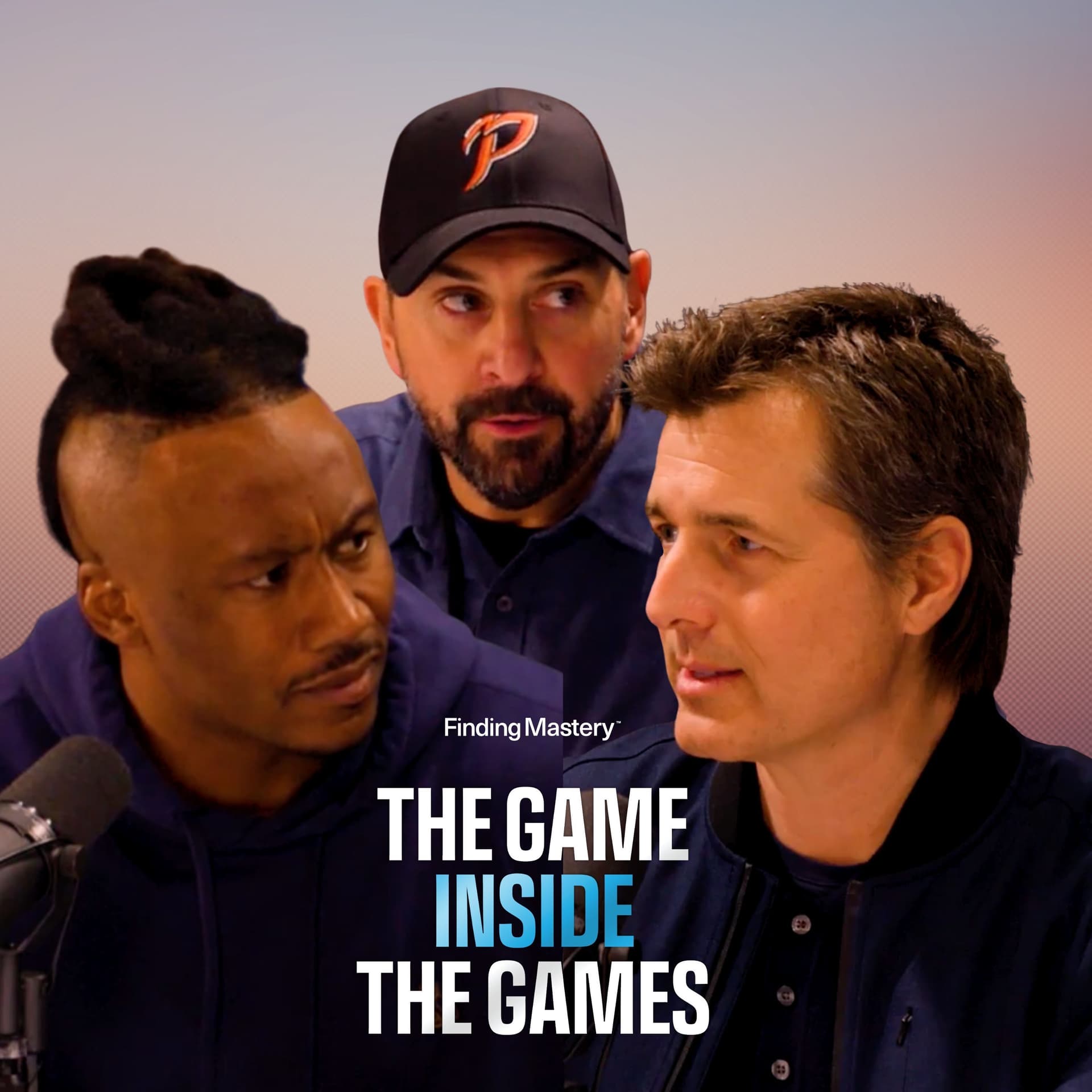
In this special Game Inside the Games episode, Dr. Michael Gervais is joined by NFL coach Matt Patricia and former All-Pro Brandon Marshall to unpack one of the most defining moments in Super Bowl history: Malcolm Butler’s game-winning interception.
This episode explores what it looks like to perform under pressure when the whole world is watching.
Subscribe and follow along all week as The Game Inside the Games delivers daily episodes leading up to the Super Bowl — revealing the mindset behind elite performance.
_________________
This episode is powered by: Microsoft Copilot, Insight
Insight is redefining integration for the Agentic Era by closing the 65% execution gap currently leaving enterprise AI at a standstill. As a leading Solutions Integrator and top 1% Microsoft partner, we don’t just provision licenses; we build the high-performance infrastructure and secure data estates AI requires to thrive. By converging AI-optimized networking with our proprietary Radius™ Microsoft 365 Copilot framework, we solve the infrastructure-AI paradox. From silicon to skills, Insight leverages "Customer Zero" expertise to transform software into a high-yield autonomous enterprise—enabling seamless, secure collaboration between your people and your AI.
_________________
Links & Resources
Subscribe to our Youtube Channel for more conversations at the intersection of high performance, leadership, and wellbeing: https://www.youtube.com/c/FindingMastery
Get exclusive discounts and support our amazing sponsors!
Go to: https://findingmastery.com/sponsors/
Subscribe to the Finding Mastery newsletter for weekly high performance insights: https://www.findingmastery.com/newsletter
Download Dr. Mike's Morning Mindset Routine: findingmastery.com/morningmindset
Follow on YouTube, Instagram, LinkedIn, and X
See Privacy Policy at https://art19.com/privacy and California Privacy Notice at https://art19.com/privacy#do-not-sell-my-info.