
In short
Jesse Cole explains Banana Ball and the Savannah Bananas’ “fan-first” reimagining of baseball—shorter, faster games with entertainment, trick plays, and constant crowd interaction. He also details how they sustain creativity through daily/weekly “forced functions,” reverse-engineering the ideal experience, and iterating based on fan reactions.
Guest backgrounds
Jesse Cole is the creator behind Banana Ball and the Savannah Bananas. He played competitive college baseball (scholarship at Wofford), then his playing career ended after a shoulder tear. He later became a GM in Gastonia, North Carolina, where he had to grow a failing team with almost no money, building communication skills through constant public speaking and over 1,000 podcasts.
Key claims
Banana Ball removes “friction” in traditional baseball (walks, mound visits, bunting; ~2-hour time limit; inning points). The goal is “one fan at a time” connection, even in NFL stadiums. Innovation comes from iteration and over-the-top weekly creative processes modeled after Saturday Night Live.
Notable examples
fans catching foul balls for outs; a kid catching a foul ball to win and being lifted onto the field; “3-2-2 drop” dance pitches with massive ESPN/digital reach; “standoff” Texas tailgaters walkouts; handwritten letters from the coach in the upper deck; early setbacks in Savannah after taking over a failing minor-league park.
Written by AI. May contain mistakes. Listen to the episode to check what was said.
Chapters
Tap a time to open that second in VOIntroduction to Banana Ball
0:03 to 4:29
Discover the concept of Banana Ball and its innovative rules.
“If you've ever hired for a small business, you know the real cost isn't just the salary.”
The Journey of the Savannah Bananas
4:52 to 9:09
Explore Jesse Cole's journey from struggling GM to creating a cultural phenomenon.
“they see all these things and they say, look at them.”
The Role of Baseball in Identity
16:12 to 19:56
Exploring Jesse Cole's childhood and its connection to baseball.
“I think there's a sadness to the 19-year-old way of living.”
Overcoming Challenges in Life and Business
19:56 to 25:28
Jesse Cole discusses early struggles and the turning point in his journey.
“And so there was a divorce and some substance abuse that was taking place.”
Revolutionizing the Game: The Banana Ball Concept
25:28 to 28:00
Learn about the innovative ideas behind Banana Ball and the fan experience.
“reinvest millions of dollars into our people, into our fans because of that lesson that we learned.”
Innovative Storytelling in Baseball
28:00 to 29:28
Discover how unconventional storytelling can transform a baseball experience.
“He's like, they've seen what the typical three-minute shorts are.”
Reinventing the Game: Banana Ball
29:28 to 30:48
Learn about the disruptive changes introduced through Banana Ball and how it enhances fan engagement.
“We're doing the same game and we're watching, we're taking videotape and seeing our fans are leaving at nine o 'clock, even with all the entertainment, they're still leaving early.”
Iterating for Success
30:48 to 32:16
Understand the importance of iteration and adapting rules to improve the fan experience at games.
“I was like, that's not making big, it's just more.”
Iterating for Success
32:20 to 33:21
Understand the importance of iteration and adapting rules to improve the fan experience at games.
“sometimes travel makes it tricky to eat well.”
The Creative Process and Risk
34:50 to 36:24
Delve into how innovative teams sustain creativity and manage risk effectively.
“the ones you shared seem really reasonable.”
Show all 37 chapters
Creating Unique Live Experiences
36:24 to 42:01
Discover strategies for delivering unforgettable live entertainment at baseball games.
“Night Live because it's every Saturday, it's a brand new show with a brand new host.”
Understanding the Business Model of Savannah Bananas
42:01 to 44:05
Learn how the Savannah Bananas operate within stadiums and the value they bring.
“How do you show up at a stadium that takes billions of dollars to build and you show up rent-free?”
Sustainability in Sports Operations
44:06 to 45:22
Discover how the Savannah Bananas maintain sustainability for their team and staff.
“And you're kind and you're nice and you treat people well and you do it.”
Personal Journey of Adoption
45:23 to 47:21
Hear about the emotional journey of adopting children and its impact on family life.
“Are our players playing maybe 190 less games than they play Major League Baseball?”
Innovative Nonprofit Initiatives
47:22 to 51:30
Learn how the Savannah Bananas are creating positive impacts through their nonprofit work.
“So that's how we got into our nonprofit, Bananas Foster.”
Learning by Doing in Business
51:31 to 52:26
Understand how taking action and learning through experience drives innovation.
“We see a problem and we realize that no one knows exactly how to do anything until they do it.”
Imagination and Innovation in Sports
53:53 to 56:00
Explore how creativity and imagination drive new ideas in the sports industry.
“talking about human energy in this case, right?”
Innovative Seating Solutions
56:00 to 57:05
Learn how creative thinking can solve challenges in sports venue setups.
“Now, the next step is how do you learn to put seating in a place that doesn't have seating?”
Curiosity and Continuous Improvement
57:05 to 58:20
Discover how curiosity drives growth and improvement in the game experience.
“But I would have lawyers or other people on our table say, Jesse, stop sharing so much.”
The Show Experience Culture
58:20 to 1:00:00
Understand the importance of live performance and audience engagement in sports.
“You feel something you never felt before.”
Learning from Failures
1:00:00 to 1:02:00
Explore the value of learning from mistakes and how it shapes team dynamics.
“How do you work with your staff, your team?”
Redefining Winning in Sports
1:02:00 to 1:03:50
Examine how the Bananas prioritize fan experience over traditional winning.
“but how do you make the experience better for fans?”
Authenticity in Performance
1:03:50 to 1:06:20
Learn about the balance of entertainment and genuine competition in sports.
“then to me, that's winning as an organization.”
Memorable Finale Moments
1:06:20 to 1:10:00
Discover how creating emotional connections enhances the sports experience.
“To Sun, because they have no lights there.”
The Closing Night Tradition
1:10:00 to 1:10:43
Learn about the emotional tradition that concludes each game night.
“going to be so impactful and significant for our future, because I was like, this happened.”
Creating Memorable Experiences
1:10:44 to 1:11:11
Discover the importance of making fans feel appreciated during events.
“And then I lost time for another hour or so, but that's how we finish every night there.”
Creating Memorable Experiences
1:12:11 to 1:13:16
Discover the importance of making fans feel appreciated during events.
“at least for those of us in the Northern Hemisphere.”
Creating Memorable Experiences
1:13:20 to 1:13:35
Discover the importance of making fans feel appreciated during events.
“and a bottle of vitamin D3 plus K2 free in your welcome kit with your first AG1 subscription.”
The Role of Sport in Self-Discovery
1:13:35 to 1:15:05
Explore how sports can help individuals learn about themselves and their aspirations.
“As a psychologist, the way I view sport is that it's a way to learn more about who you are, who you want to become, how to open up the aperture of what's already inside.”
Optimism and Facing Criticism
1:15:05 to 1:16:21
Understand the importance of optimism in overcoming challenges and criticism.
“Like, so what I get to do is I get to build a world where whether you're two or you're 82, you're dancing, you're singing, you're seeing new things, you're getting touched and impacted by players.”
Reframing Challenges as Seasons
1:16:21 to 1:17:43
Learn how to view life's challenges as temporary seasons.
“When somebody is not optimistic, what do you hope that they would understand?”
Taking Action Against Stress
1:17:43 to 1:18:34
Discover actionable steps to combat stress and negativity.
“And a season, that's a long period of time.”
Understanding Pessimism
1:18:34 to 1:19:44
Gain insights into how pessimism can be a protective mechanism.
“I write, I do thank you videos every day.”
Balancing Optimism and Reality
1:19:44 to 1:21:19
Learn how to balance optimism with a realistic view of challenges.
“So you, you pull yourself back from the edge.”
Encouraging Innovation in Sports
1:21:19 to 1:24:00
Explore the need for innovation in sports and the importance of community.
“Can you just open up that moment for me?”
The Quest for Consistent Creativity
1:24:00 to 1:26:20
Explore how to maintain creativity and culture in a growing organization.
“And it's like, I'll go, I'll call my dad.”
The Importance of Joy in Innovation
1:26:20 to 1:27:00
Understand the role of joy and community in successful business models.
“When the world is so digitally dopamine focused and you are experientially human focused, like what a well-timed, well-designed accident that you're creating on purpose.”
Transcript
Automatic transcript. May contain errors.0:00Dr. Michael Gervais:The Body Master is brought to you by LinkedIn Jobs. If you've ever hired for a small business, you know the real cost isn't just the salary. It's the time that you lose when the fit is off, the momentum that stalls when that fit doesn't work. And that's the pressure of having to get it right while you're still running everything else. That's why I'm paying attention to LinkedIn Hiring Pro. It's built for the reality of hiring when you're operating lean. You describe the role in playing language, and then Hiring Pro helps you draft the job post, surface the right candidates, and then narrow to a short list without turning hiring into another full-time job.
0:32Dr. Michael Gervais:And when applications start coming in, it doesn't leave you buried in resumes. It streamlines screening, including AI-powered interviews for initial conversations. How about that? So that you can spend less time searching and then more time connecting with the people who match what you need. With Hiring Pro, you can hire with confidence knowing you're getting the best talent for your business. In fact, those hiring with LinkedIn are 24 % less likely to need to reopen a role within 12 months when compared to their leading competitor. Join the 2.7 million small businesses using LinkedIn to hire.
1:02Dr. Michael Gervais:Get started by posting your job for free at linkedin.com slash mastery. Again, that's linkedin.com slash mastery. Terms and conditions apply.
1:25Jesse Cole:Nearly 11 million followers on TikTok. You're going to be entertained like never before.
1:30Dr. Michael Gervais:If somebody hasn't been paying attention, can you just explain in your own words what banana ball is?
1:35Jesse Cole:We're combining the game of baseball with brand new rules. What are all the boring parts? Stepping out of the box. Walks, mound visits, three to four hour game. And then I said, all right, well, what would be those perfect scenarios? What would be really cool? A two hour time limit. If you win the inning, you get a point. No walks, no mound visits, no bunting. What if a kid caught a foul ball to win the game and the players rush out? They bring them on the field. they lift them over their shoulders and they're celebrating the media's interviewing them after the game. That's banana ball.
2:01Dr. Michael Gervais:What if instead of chasing a seat at the table, you built an entirely new game and then the world fell in love?
2:07Jesse Cole:We started with the Savannah Bananas, first playing traditional baseball, and then we created the party animals that now have a huge following, then the firefighters, then the Texas tailgaters. And the key is each team has their own identity, their own point of view. This is the greatest pregame in sports that never ends.
2:21Dr. Michael Gervais:Welcome back Welcome to the Finding Mastery podcast, where we dive into the minds of the world's greatest thinkers and doers. I'm your host, Dr. Michael Treve. By trade and training, a high-performance psychologist. The idea behind these conversations is simple. To sit with the extraordinaries and to learn. To really learn about how they work from the inside out. And today's guest is someone who has completely reimagined what's possible in sport. Jesse Cole grew up dreaming of playing Major League Baseball. But when his playing career abruptly ended, he didn't walk away from the game. He reinvented it.
2:49Jesse Cole:When I was in college, I was a very competitive baseball player. I had this goal of playing at Fenway Park, of being drafted, and it was everything. It was that top scholarship guy, scouts watching. I had to put pressure on myself. And I never performed with my ability. In fact, I ended up tearing my shoulder because I was doing so much. I wished I played with the fun that I played when I was 12 years old, the way my dad taught me. Because I put that expectation of this big scholarship and this demand on me that I played different. And that affected everything.
3:11Dr. Michael Gervais:Building a scrappy team from nothing, sleeping on an air mattress, and then pitching local rotary clubs for ticket sales.
3:18Jesse Cole:On January 15th, 2015, we got the phone call that we were out of money. We sold our house, emptied our savings account, put our money in, and actually we're on an airbed. I mean, everyone was like, you're an embarrassment to our city. You're never going to sell a ticket. But we saw nonstop entertainment games. So we had to have characters. We saw the Banana Nanas, the senior citizen dance team. We saw the idea of a Mananas, a dad bod cheerleading squad. Just like some of the greatest innovators, there's a point where you have to disrupt yourself or someone else will.
3:41Dr. Michael Gervais:Jesse went on to create Banana Ball, a high-energy fan-first version of baseball that has become a cultural phenomenon. phenomenon, selling out the biggest stadiums in the country and drawing millions of fans worldwide through his fearless experimentation, his infectious energy, and then a deep belief in joy. Jesse has built more than a team. He's built a movement. And in the process, he's shown what can happen when you dare to break the rules.
4:04Jesse Cole:I think a lot of people now, they see all the social media, they see all the highlights, they see all these things and they say, look at them. It's been 20 plus years of learning and building and growing to be able to create something that really makes a difference. And the crazy thing is I believe we're still in the first inning.
4:16Dr. Michael Gervais:So with that, let's jump right into this week's conversation with the showman, the disruptor, the visionary man behind the Savannah Bananas, Jesse Cole.
4:28Okay, Jesse, so you come in, you come in with some energy, right?
4:34Dr. Michael Gervais:You got a suit, you got a smile, you got a body of work behind you, and you've got an amazing community that is standing up for you and with you. and so well done on creating a community.
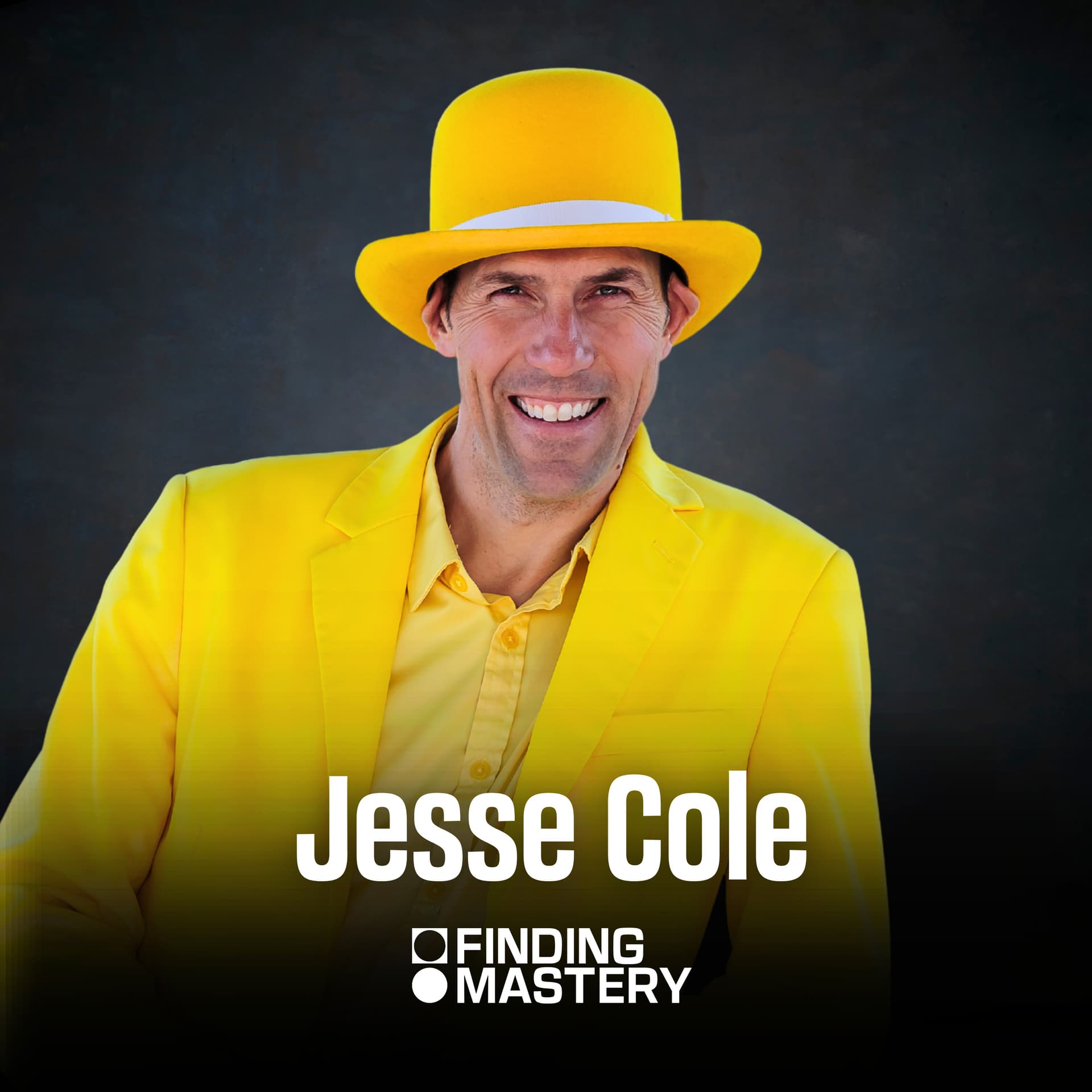
4:47Jesse Cole:Well, thank you. It has been a extremely long journey. I think a lot of people now, they see all the social media, they see all the highlights, they see all these things and they say, look at them. And, you know, it's been 20 plus years of learning and building and growing to be able to create something that really makes a difference. And, you know, the crazy thing is I believe we're still in the first inning. You know, we're not even close to what I believe we can, the impact that we can make in this world. And so that's what, that's what fires me up every day. That's why I have energy and that's why I'm in a full yellow tuxedo trying to bring the fun every day.
5:14Dr. Michael Gervais:If somebody hasn't been paying attention and they're not sure what banana ball is, can you just explain in your own words what banana ball is?
5:21Jesse Cole:It's been described as baseball meets Broadway or what ESPN called the greatest show in sports. So we're combining the game of baseball with brand new rules. Fans catching foul balls for outs, a two hour time limit. If you win the inning, you get a point, no walks, no mound visits, no bunting. Cause we say bunting sucks. Like we literally eliminated that rule and mixed with nonstop entertainment, speed, trick plays, celebrations. And we're just trying to create an experience that people have never seen before and the fastest and most entertaining sport. And so we started with the Savannah Bananas, first playing traditional baseball and then Banana Ball.
5:55Jesse Cole:And we created the party animals that now have a huge following. They're selling out their tour and the firefighters and then the Texas tailgaters. And then we have two more teams and for 2026 and the Banana Ball Championship League starts. And the key is each team has their own identity, their own point of view. So they're doing things differently, their own live music, their own characters. And so you can go see a Texas tailgater show and you're going to see country theme line dancing. The players are in their own country rock band. It's a different theme, a different point of view. The party animals are the greatest party in sports.
6:24Jesse Cole:The firefighters, the hottest team in sports, the Texas tailgaters is the greatest pregame in sports that never ends. And so you build these points of view so people can experience each one in a different way.
6:33Dr. Michael Gervais:So obviously I'm been watching what you're doing and it's awesome. We'll get into that in a bit. But then I did not realize that you also had three books. So you've put your ideas down as well. So there was really a wonderful gift for me to better understand you and where you came from. Thank you for not just doing the thing you're doing, but also archiving along the way. It's a meaningful lesson.
6:55Jesse Cole:Well, I think that is something I think back and Walt Disney, you know, is probably my biggest inspiration about someone that has just continued to break the rules and go against criticism and create and have a vision that's, you know, bigger than anything. And I was fortunate that there were a lot of quotes, a lot of things he shared. There were some interviews, you know, and then obviously his biographies later, but I just like, man, if he was sharing the journey, when people are saying, you know, you can't do a full length animated short film. No one wants that. You know, no one wants that.
7:21Jesse Cole:And a theme park, are you kidding me? No, those won't work. And to see what his mind was saying, I would have loved that. So when we started, yeah, my first book, I was 31 years old and we just barely started the bananas. We were one year in, but I was like, I wanted to just share it as something that also helped me learn. You know, I believe the greatest leaders are the greatest teachers. And when you teach, you learn. And so I try to share those because it helps me communicate, helps me learn. And, and, uh, you know, I learned a little bit of that from Walt Disney during his time. You are a student and you
7:50Dr. Michael Gervais:also express really well. So you share your ideas, your emotions. There's an honesty about you that I want to understand. I was forced to. Go there.
8:02Jesse Cole:Because when we first started, I was 23-year-old general manager of a team in Gastonia, North Carolina, a team that no one wanted there. They weren't successful. They had 200 fans coming to the games. They were the worst team in the league, maybe the worst in the country. $268 in the bank account, failing. And that's the reason I got the job because no one wanted it. I was very fortunate. I was an intern and I sold some sponsorships. I did pretty good at selling. So the owner gave me the opportunity to be GM. and we had to get people to come to the games. I couldn't pay myself the first few months.
8:32Jesse Cole:There was no money. And so I had to get out there. I had to communicate. And I had to, I mean, I remember just every Rotary meeting, every Kiwanis meeting, every JC's meeting, everything I could go to, I was just saying, hey, let me share about our team. And I had no idea how to do it. I mean, I remember even some talks, I like forgot what I was talking about. I never did it, but I was forced to, and I forced that so I could learn how to communicate. And to do that, then you also had to force yourself to learn. So that's when I started studying Walt Disney, PT Barnum, Steve Jobs, Amazon. Because it's like, how do you do something that, you know, everyone's telling you you can't do?
9:03Jesse Cole:And for us, it was trying to make baseball fun. So I think that that forced function, it was the only way to be successful is I had to start communicating and sharing and then getting the reps in. You know, people don't realize, I did over a thousand podcasts when I was like 27, 28, 29 years old. I said yes to every single one. And it was just to communicate, to share and to grow. And for me, you mentioned this earlier, you're like, you have a lot of, you have a lot of energy. Well, I used to have not a lot of energy. I only had energy when I did things that gave me energy. And so that's why I created my energy list and it's creating, sharing, and growing.
9:36Jesse Cole:And so if I'm creating, sharing, or growing, I can do it all day long and be the best dad to my kids and the best husband to my wife. But if I'm not, I'm done. And so I learned that speaking, sharing on a podcast, sharing on stage, that gave me so much energy and fired me up that I just kept saying yes.
9:51Dr. Michael Gervais:Let's go back to how you got the GM job. Yeah. And then I want to come back to your philosophy. This is a core philosophy. Those three words are the makings of your core philosophy. They're actually the values that are guiding your thoughts, words, and actions. I want to come back to that.
10:05Jesse Cole:Creating, sharing, and growing?
10:06Dr. Michael Gervais:Yeah.
10:06Jesse Cole:Interesting. Okay.
10:07Dr. Michael Gervais:Yeah. Those are three values that are informative for you. They're almost like guardrails or wayfinders to make sure that you're lined up in the right direction is if you're doing those three, you are able to line up your thoughts, words, and actions.
10:20Jesse Cole:Yes.
10:20Dr. Michael Gervais:And then when you have like that type of wood behind the arrow, that arrow becomes more true. It becomes more reliable. It becomes more potent.
10:29Jesse Cole:I've never thought of it. I've always thought of it personally. But now when I think about it with everything that we're doing with the business, creating, sharing and growing, it all goes together in that order. Creating, sharing and growing.
10:40Dr. Michael Gervais:Yeah. And for you, though. Yeah.
10:42Jesse Cole:Well, personally for me, but it also goes to everything that we do with our teams as well. Yes. I'm learning.
Read the full transcript
10:47Dr. Michael Gervais:There is kind of the stitch. And I do want to go back to this GM thing. No, that's good. I'm saying it out loud for myself. There's the hook there is that when somebody is very clear about the first principles or the values that matter most and then can figure out how to organize their life around those, whether that becomes a team setting, whether it becomes a family unit, whether it becomes a full organization or Savannah bananas, like whatever sphere that you're in, if you're very clear about your thoughts, words and actions, you influence that space. Yes. And you're resting on three values.
11:19Dr. Michael Gervais:So we'll come back to that. Yeah, that is really good. So you got a GM job that is not very attractive.
11:25Jesse Cole:That's an old Legion field in a little small town, you know, south of Charlotte and a college summer baseball league, one of the lowest levels of baseball. But you said I did something. I sold well. What allowed you to sell well? So when I was in college, I was a very competitive baseball player. I was very fortunate. I got a scholarship. I turned down some other big schools because I got a really big scholarship on a Wofford College Division I school. Immediately, it was the biggest scholarship they offered. So immediately, I put a lot of pressure on myself because I knew I was this big scholarship guy.
11:51Jesse Cole:Now, fortunate, you know, they let me pitch and hit. And I started off amazingly. I was the Southern Conference Player of the Month for the whole conference. And then that - You and Shohei. Yeah, yeah. But I'm saying this because I learned so much from this and this affect everything. I put so much expectations on myself then. First month, I was the top player of the whole conference as a freshman, 18 years old, playing against some of the top players down south. And I felt I had to continue to stay at that level. And so baseball then became very serious for me. Very serious, didn't perform the way it would go into the summers.
12:24Jesse Cole:And I was, I was MVP one year in the summer. I was an all-star the next year because the summers I just had fun. And I went back with that top scholarship guy. Scouts watching, I had to put pressure on myself. And I didn't have to, I did. And I never performed with my ability. In fact, I ended up tearing my shoulder because I was doing so much.
12:41Dr. Michael Gervais:So what am I hearing in your voice right now? What is this emotion?
12:46Jesse Cole:Well, this is the, now I'm so grateful I did that.
12:51Dr. Michael Gervais:Yeah, but that's not what I'm hearing.
12:52Jesse Cole:Now, but looking back, I realized that if I did what I preach now to all our players to have fun and to just enjoy and understand what you're a part of, I would be still playing the game. But in looking retrospect, I'm so glad, like looking back, because now -
13:07Dr. Michael Gervais:I think you can have both.
13:08Jesse Cole:Yes, I have both. because I regret the way that I played the game. I wish banana ball existed. I wished I played with the fun that I played when I was 12 years old, the way my dad taught me. Because I put that expectation of this big scholarship and this demand on me that I played different. And that affected everything. And so, but in a good way, if I didn't tear my shoulder, I would have never gone to Gastonia. I would have never gone to Savannah. So in retrospect now, it's the best thing that ever happened to me. But I wish I knew then what I know now about the way you should play the game with fun.
13:39Jesse Cole:And I did during the summers, but not when I was at school.
13:43Dr. Michael Gervais:Finding Master is brought to you by Lisa. We are serious about recovery. Sleep sits right at the center of that practice. I have been fortunate to work with some of the most extraordinary performers for the last two decades. And sleep and recovery are foundational, full stop. It's where the body and the brain repairs. And that's why finding a mattress that supports your recovery matters so much. A great mattress, it's not something that you stumble into. It is a choice. You find it on purpose, the same way that you'd approach anything that really matters in your life. We've worked with Lisa for a long time now because they get it.
14:16Dr. Michael Gervais:They build beautifully crafted mattresses tailored to how you actually sleep. Your position, your feel, your preferences, all of it. You can take their sleep quiz and find your match in about two minutes. Premium material, serious comfort, full body support no matter how you rest. One of our teammates here at Finding Mastery picked one up recently. Can't stop talking about it. says that they're waking up more rested than they have in years. Right now, they're having a July 4th sale. Go to Lisa.com for 30 % off. Select mattresses, plus you get an extra$50 off with the promo code MASTERY, exclusive for our listeners.
14:51Dr. Michael Gervais:That's Lisa, L-E-E-S-A.com, and use the promo code MASTERY for 30 % off. Select mattresses, plus an extra$50 off when you use the code MASTERY. Finding Mastery is brought to you by Magic Mind Something that I come back to often Is the power of principled mornings The performers who sustain excellence over decades Not just for a season They almost all have one A set of behaviors that they do not negotiate away Because they understand That how you enter the day shapes how you move through it For a long time my mornings have been disciplined But a little incomplete I do all the practices for stillness and movement But when I sat down for the first real hours of cognitive work, there was a ceiling that I kept noticing.
15:33Dr. Michael Gervais:Clarity that faded faster than I wanted to. And I told myself it was normal. Magic Mind is part of my mid-morning routine as a way to work with that. It's a daily two-ounce mental performance shot with clinically backed ingredients like lion's mane, ashwagandha, turmeric. Two seconds every morning. It's awesome. And I notice when I skip it. Sharper thinking, steadier focus, better energy through the back half of my day. I'm not wired. I'm just more consistently on. The formula is based over 10 years of research, nano encapsulated for five times better absorption than traditional pills and powders.
16:04Dr. Michael Gervais:Go to magicmind.com to get 50 % off your first order. Small routines done consistently are where excellence tends to live. This one might be worth adding. Yeah, so it's still alive in you. I could hear it and feel it. I don't think it was like a regret. I think there's a sadness to the 19-year-old way of living.
16:28Jesse Cole:Yes. It was everything. It was everything for me. Like getting drafted.
16:31Dr. Michael Gervais:It was too much.
16:32Jesse Cole:It was, yes. I had this goal of playing at Fenway Park, of being drafted, and it was everything. That's all I thought about. That's all I worked on. What did that mean to you? Fenway or just everything. The dream coming true. It was, you know, I was the only child. My dad and I, the one big bond that we had was baseball. Every day, coming home from school, we would go play. It was my identity was built on baseball. And fortunately, I was one of the top players in Massachusetts. And I had the opportunities, Boston College, Northeastern, went to Wofford to play down South. And then immediately Southern Con's player of the month.
17:05Jesse Cole:I have scouts. I'm hearing from scouts. I'm throwing 90 miles an hour, which back then was something. Now everybody throws 95. And, you know, that was, that was it. That's what I worked for every day. Every day I'd be working out and playing for that. So that was, that was my path to where I was going. Why do you think it was so important for you? identity if you go deep into who feeling loved so it was something my dad and i have the most right now i mean we say i love you almost every call there's a different level of but he never said it to me when i was a kid and so i didn't hear that necessarily and his appreciation his love meant the world to me and so when i played well when i i mean it was a different level of excitement from him because he saw what i was doing and so he would say now you know you love me for me and all that.
17:49Jesse Cole:But that's what I felt back then. So the idea of, you know, we watched baseball games together. We watched the Red Sox together constantly. The idea of getting an opportunity to play for the Red Sox for me and for him, that's something I thought about constantly. Yeah.
18:01Dr. Michael Gervais:So you're carrying a couple of things in there. The dream of the togetherness, the bond, the love. And oftentimes when we are, when we come from experiences in families where there's a trauma that we're sorting out, when we're a 14 year old kid or whatever, like we don't have the sophistication that we do now. So we adopt these personas. Yeah. You could be the Joker. You could be the high performer. You could be the angel. Like there's a handful of personas. So you adopted the high performer. Yes. Right.
18:31Jesse Cole:Oh, everything in grade in school and everything. I had to get good grades because if I got good grades, I would feel more love and all that. Yeah.
18:38Dr. Michael Gervais:Yeah. So it's look, but what ends up happening is there's a corruption. It's you don't get seen for yourself. you get seen for your performances. And then what was the trauma, if you're comfortable talking about it, that you had as a child that led to that?
18:53Jesse Cole:My parents got divorced. I was only a child. My mother had some challenges. So my mother had some challenges. So she wasn't in the picture and my birth mother. And luckily I had a stepmother who joined our family and helped, but yeah, just, I didn't have a connection with my mother. And so at all, like really at all. And it was my dad. If you look back, I had a great childhood. My dad was amazing. And we had, I had the best time. I just didn't know what that other side was. You know, I guarantee they're going to ask, we have three kids now under seven and they're going to like, you know, your life must've been crazy.
19:19Jesse Cole:How was it? Well, it was our life. It was, this was it. You know, they don't have the other, like stay at home. They travel around the country with us. They're homeschooled. It's a crazy lifestyle. But you know, I think for me, it was, it was wonderful. I was grateful. We got to go on trips. We played baseball all the time. It was a great childhood, but that was, that was the childhood I knew. So I don't necessarily call it a trauma. I felt like I was very fortunate. My dad took care of me in an unbelievable way. My stepmother came in and they were, they were great. Just my birth mother, I didn't have the great connection with.
19:45Dr. Michael Gervais:And so you can still have, it's like the two things. You can still have two things. You can have the childhood that you knew, but you can also have a sadness and a longing for your biological mom in this case. And there was a divorce. And so there was a divorce and some substance abuse that was taking place. And so in that mess, if you will, there's still a longing that a child can have. Yeah. Yeah. And that longing that you're saying was to be seen, to be loved. Yeah. Yeah.
20:12Jesse Cole:To feel. And now you zoom out and look at where we are. And there's so many things that happen in our game. So everyone feels like they're a part of something. Look how you did that. Yeah. And it's even to the end of the night. And there's certain moments that I just look and look around and I see happy joy, happy tears, emotion. And I feel so grateful to be able to provide that. And yes, there's definitely, it's rooted in that feeling.
20:34Dr. Michael Gervais:You had an insight in one of your books, which was do for one what you can do for all, something along those lines. And so I just hear that idea in how you just answered that question. And the one is probably you in this case.
20:51Jesse Cole:If you want to go deep into it, yeah. I mean, I think, you know, that's why we take so much pride when we go to these big stadiums, these NFL stadiums, that we often meet the whole staff in the upper deck. and I say, you know, guys, people think that we can't create an experience like we can in our small little ballpark up here. And I said, no, we're gonna do the same way we've done from day one. And that's one fan at a time. And even our coach now, he writes handwritten letters and signs and puts them in different seats in the upper deck. And we meet up there and I get up in the upper deck every single night for two innings and do pictures with fans and interact and stuff.
21:20Jesse Cole:And so, you know, whether you're got the seat behind home plate, or if you're really far away, I want everyone to feel like they are truly a part of something that we care about them. And so I think it's one of our special parts of our experience, but it's something we'll never, ever stop doing.
21:32Dr. Michael Gervais:The attention to detail is remarkable. So going from a couple, no, a couple hundred folks to 80 to 90 ,000 folks in an NFL stadium. Do you staff those stadiums yourself or are you training the existing vendor staff? Yeah. Because when you were small, it was you and your 12.
21:51Jesse Cole:Yes. So this, this actually kind of goes into one of the big lessons that impacted our business from a podcast that you had with John Nordstrom that dramatically changed the way we looked at how we grew. With John Nordstrom. Yes. The interview you had back in 2021, maybe it was many years ago. That's right. And it was as we were debating this idea to go and take the show on the road. And again, for people who don't know the journey, like we went from Gastonia, 10 years, 200 fans a game to getting a thousand to 2000. We started having success. I mean, we were trying everything, every experiment, every promotion, you name it.
22:22Jesse Cole:And from grandma beauty pageants to flatulence, fun nights, to salute to underwear nights. We tried it all. We were experimenting and learning. But then we went to Savannah and it was an old ballpark and literally minor league baseball there for 90 years and they were failing. And they left and we came in there and we proceeded to fail. So the context, again, we came in there, myself, our wife, our 24-year-old team president and three 22-year-olds. That was our entire team. And we sold a handful of tickets our first few months on January 15th, 2015. we got the phone call that we were out of money and we were overdrafted our account.
22:52Jesse Cole:We were missing payroll. And so it was that moment that we had just started a team that we had nothing left. So Emily turned to me, we sold our house, emptied our savings account, put our money in and we're sleeping on an airbed. And so like a twin, twin airbed, you know, the story very well. So that's where we were. And we were just trying to be a regular baseball team or make it fun, you know, have different entertainment, dancing players, et cetera. So we did that for a while before we got to this moment that I was about to share. When you ask about how much do we travel with. So we just a regular baseball team for five years, but I realized that fans were leaving games early.
23:24Jesse Cole:We were literally taking videotape and pictures every 30 minutes. And we realized when they were leaving, even with all the entertainment, the banana nanas, the band, everything. And so then I knew, Hey, if we put ourselves in our fan shoes, we have to do something different. And so when we were like, how are we going to go on the road? And I listened to your podcast. I just kept saying, we just got to be so good at Steve Martin quotes so good. They can't ignore you. We've got to be so good at the kidding. Cause he kept talking about, you know, we just kept getting better in Seattle and everyone kept coming to us and say, Hey, we want a Nordstrom here.
23:53Jesse Cole:The malls of America are mogul. He's like, Nope, Nope, not interested on it. And he's like, we're going to keep doing it. And then they said, well, what would it take? And when he said, well, and he didn't want to say it, but you were like, well, how did you do it? He's like, well, they offered me a signing bonus. You're like, what kind of signing bonus? And it was 30 to 40 million. And I'm in my mind. I'm like, what? And he's like, well, then you're like, well, then you had to pay rent. It was like, no, we just had a$1 rent. It was like for guaranteed 10 to 15 years. And then it was like, but because it made the malls so much more valuable by bringing in Nordstrom, everyone else came that it was a big win for the developers.
24:23Jesse Cole:It was a big win for everyone. And so I thought about that. It's like, why do we have to go on the road like everyone else? Why don't we be so good that we can make it a big win for everyone that we don't have to pay the rent. We don't have to do everything else that makes it hard for us. And so starting in Mobile, Alabama, our first ever one city world tour, the city contributed for us to come. We found one city, only one that would do it because they're like, he actually, the mayor read my book and he's like, Oh, I love what you guys are doing. You're really trying to make the experience every, we had never played a game on the road, but he said, well, he said, what would it take to get you guys?
24:51Jesse Cole:I go, what would it take? My mind, like, what do you have in mind? And so he made a nice offer and the tourism came involved and we went there. And again, a lot of things didn't go right, but we had, we sold out both nights. It was huge. The hotels were sold. People came into town. And it's like, this is our model. So now every single city we go to, every venue we go to, we bring hundreds of people. We don't pay rent anywhere we go. And because of that lesson from Nordstrom, I realized that create a product that is so good that everyone else wins, that there's a value to you coming in. And you, that podcast, John Nordstrom, gave us the opportunity to probably reinvest millions of dollars into our people, into our fans because of that lesson that we learned.
25:34Dr. Michael Gervais:I'm so thrilled to hear that. That is one of my notes to talk to you about. And you just nailed it, which is you do something that I think is one of your crown jewels, which is you feel something, you think something, you line those two things up together, and then you take action. Even so much towards like that vision that you're seeing and feeling that it costs you maybe, I don't know, selling your home, living on an air mattress. It's like that idea takes incredible courage, but it takes vision of something that is compelling you to take action. Yeah. So can you open up? I gave you a lot of kind of room in there.
26:14Jesse Cole:You got to see something other people don't see. So what people often are, they're focused and they're seeing what currently is. They don't see, like I reverse engineer and I say, what would be the perfect, the most amazing epic experience and work backwards from that? So here's an example. when it came up with the rules for banana ball. I looked at all the friction points in baseball. It's too long. It's too slow. It's too boring.
26:34Dr. Michael Gervais:This would be a good point to actually describe banana ball. So a handful of folks that don't know it.
26:38Jesse Cole:No, no, there's a lot that don't know. Believe me, there's a lot. We're still learning. But the reality is when I looked at the game of baseball, now when we did the bananas, we chose to make that team called the bananas, even though no one wanted it. We chose that because we saw what it could be. And here's that exact example you're kind of talking about. We saw a nonstop entertainment game. So we had to have characters. I saw, we saw the banana nanas, a senior said it's a dance team. We saw the idea of a man nanas, a dad bod cheerleading squad. We saw the idea of a banana baby that we put a baby in a banana costume and lift it up before the game to start the game, which makes no sense in the scheme of things.
27:10Jesse Cole:But if fans watch a little baby coming up to start the game, this weird ritual, awesome. And so we saw all these things of what it could be because we're like, the bananas could be fun. Go bananas. You know, can't stop the peeling music video. Like we thought of all these ideas and it was criticized locally, like ridiculously. I mean, everyone was like, you're an embarrassment to our city. You know, you're not, you're never going to sell a ticket. But what we saw is like, if we're going to be like everyone else, we're going to get results like everyone else. And in Savannah, everyone else failed.
27:37Jesse Cole:The team had to leave because they couldn't sell enough tickets. They never had success from attendance. And so I was like, we can't be. And I learned in Gastonia for 10 years to go from a hundred fans to a couple thousand and selling out games that you had to do things people have never seen before. You had to get them to feel things. There's competition in sporting events and baseball. There's thousands of baseball games all over the world constantly. We've all seen a baseball game. They had to see something different. This is exactly what I learned from Walt Disney. He's like, they've seen what the typical three-minute shorts are.
28:03Jesse Cole:I want to give him a full-length animated with unbelievable storytelling. He was the first one to do color and flower and trees and then Snow White. Almost went broke for it. He has 100%. Then the same thing with music and that sound. He almost went broke for Fantasia. All of that. But he saw, what if we had the music? What if we had the sound? What if we had a full length and the storytelling and the emotions that you feel? And so he saw it. And so I was just like, what would Walt think on this? How could you see a better experience? And so that was how we thought of bananas and then the same thing.
28:29Jesse Cole:So we started selling out every game Now at first we were failing but they came out And they saw that first night and they saw players go into the crowd and deliver roses to little girls in the middle of the game We broke down the barrier. I said you can't be a spectator. I want to break down the barriers. I want fans in the crowd I want more fans on the field I want after the game all the fans interacting with the players because that's more of a perfect scenario If you're a kid, you know hoping for an autograph, you know, that's what all kids they go to a game They hope to get a ball. They hope to get an autograph.
28:57Jesse Cole:Well, what if we find a way to give them something even more? And so you look at that, you reverse engineer that. And so with Banana Ball for five years, we were playing, selling out every game. Great business, very healthy. It was college summer baseball. So we weren't even allowed legally to pay the players at that point. Couldn't even legally do it. It wasn't allowed. So on paper, it's a great business model. All right. Great business model. We're healthy. But then I realized just like some of the greatest innovators, there's a point where you have to disrupt yourself or someone else will. And I wanted to do it ourselves.
29:26Jesse Cole:So I said, we're playing traditional baseball. We're doing the same game and we're watching, we're taking videotape and seeing our fans are leaving at nine o 'clock, even with all the entertainment, they're still leaving early. And then at nine 30, they're really leaving. So I went down for banana ball. I said, all right, what are all the friction points? What are all the slow points? What are all the boring parts of a baseball game? I wrote them all down, stepping out of the box. All right. Walks, mound visits, a three to four hour game. All right. And then I said, all right, well, what would be those perfect scenarios in a game?
29:56Jesse Cole:What would be really cool? What if a fan caught a foul ball and it was an out? And then I actually envisioned, I said, what if a kid caught a foul ball to win the game and the players rush out, they bring them on the field, they lift them over their shoulders and they're celebrating the media as interviewing them after the game. I'll never forget in 2023, we're playing in Kannapolis, North Carolina, still building our way up a small tour. Blind drive, 15-year-old kid catches it. Players rush out to him. lift him up on their shoulders. He's in the paper the next day. I never told anybody. It's exactly what happened.
30:29Jesse Cole:And so with the game of banana ball, that's what we tried to create. And we've had to add rules and enhance as we see how the games work. And I mean, the greatest innovation happens from iteration. You just keep trying things and experimenting and then you do new things. You know, we were playing in Tulsa and it was a showdown, which again, think about this, the end of a game, three hour game. It's like, all right, extra innings. We're back to just more baseball. I was like, that's not making big, it's just more. So how do you, you're borrowing from hockey. You borrow everything. Yeah. So I heard a podcast of Rube Waddell, this crazy pitcher in the 1900s that he would literally, if there was a fire truck in the game, like outside, he would get off the mountain, chase a fire truck to go.
31:06Jesse Cole:Like he was crazy. He would also drink beers, take people's food in the state. Like he was a lunatic, but an amazing lunatic. And so what he would do when he'd pitch, sometimes he'd be like, I got this guy, everyone off the field. and I was like, that is awesome. That is the epitome of showmanship. I mean, you can't not watch that because he said, I don't need anybody else. It's me. So I said, what if our end of our games, we have pitcher versus hitter and no on the field. So what if it's a showdown? And so again, envision that perfect scenario. So we created that. That's how we started doing that.
31:33Jesse Cole:So we were in a showdown in Tulsa and the umpire missed the call at the end of the game. And it almost, it turned bad because our players care. This isn't the Harlem Globetrotters. It's a competitive game. It was ugly. The fans were upset. The players were upset game was over bananas lost and the players for the first time They didn't come out the first 10 minutes to go autographs. Like I was like this is bad So by the next week the next game We had the fan challenge in play where fans could literally if there was a bad call They could hold up a fan challenge and do it And so that's the way we look at all of this if something doesn't feel great for the fans How quickly can you test something new and then learn from it because the greatest Entrepreneurs business leaders.
32:12Jesse Cole:I believe they learn from doing as much as anything. You got to start doing doing.
32:16Dr. Michael Gervais:Finding Mastery is brought to you by David Protein. Travel a lot at Finding Mastery and sometimes travel makes it tricky to eat well. Best intentions and then you're at the airport and then suddenly the only options around you are the ones that you'd rarely choose at home. Something I come back to often is that discipline isn't really about willpower in the moment. It's often about choice architecture. Setting up your environment ahead of time so that the easy choice and the good choice are the same one. That's the role David plays for me on the road. The Gold Bar, it's their flagship high protein density, great texture, flavors that make it easy to stick with.
32:49Dr. Michael Gervais:So when I throw a few in the bag before my trip, I've already made the decision. The hard moment later takes care of itself. And the team here at Finding Mastery, they love the bars as well. They are ripping through them in the Finding Mastery lab. Salted peanut butter and fudge brownie seem to be the fan favorites right now. They have built something with real rigor in a crowded, sometimes ambiguous space like nutrition. That matters when it's something that you reach for again and again. David bars are now available in major retailers like Walmart and Target. And if you'd like to buy them directly and get a special offer for being a Finding Mastery listener, head to davidprotein.com slash findingmastery, where right now, if you buy four packs, you'll get the fifth one for free.
33:27Dr. Michael Gervais:Again, that's davidprotein.com slash findingmastery. Finding Mastery is brought to you by our flagship mindset training course, Finding Your Best. Anytime you feel the pull to reset, to zoom out, to refocus and ask, am I moving toward the person I want to become? It helps to remember this. Lasting change comes from training, not resolutions, not short term sprints, but deliberate practice of the skills that shape how we show up in work and relationships and in the moments of great intensity as well. That's what finding your best is all about. It's a science backed framework for training your mind.
34:00Dr. Michael Gervais:It's the same set of tools that we've taught to Olympic athletes, top executives, elite military teams and artists at the peak of their craft. In this course, you'll learn the foundational psychological skills to be your very best. full stop. And the best part is you can start anytime. Right now, we're running a limited time offer on finding your best. Simply head to findingmastery.com slash course and use the code renew100 to get$100 off your registration. If you've been waiting for the right moment, this is a good one now to lean into. Spring and summer, they are powerful seasons of momentum.
34:32Dr. Michael Gervais:It's a great natural time to step into growth, to refocus, to recommit to who you want to become. And this discount will not be around for long. So go to findingmastery.com slash course code renew100 for$100 off today because your future is not shaped by what you intend. It's shaped by what you train. Pull back the curtain on the process that you and your team go through on a, let's call it a weekly cadence to understand so that we can understand how you actually innovate and put into action the wild ideas that you have. the ones you shared seem really reasonable. Yes. The floating a baby up or whatever you're doing, or like some of the things that are in your book are unreasonable.
35:13Dr. Michael Gervais:Yes. You know, so there's that fine line. If you're, you're taking a lot of risk, but you have a philosophy about risk that I think frees you up. So there's a, that's a two part question really, which is about the process. Yeah. And then your model for risk taking.
35:28Jesse Cole:What I'm fascinated about is trying to look at who has been able to sustain creativity for a long period of time. And so for us, you know, we realize that what we ask ourselves every single night, we're doing 10 to 15 things that never happened before in a baseball field. Every single night. I heard Steve Jobs talk about you have a force the function. So like we force, I mean, in our game promos, we have to do a completely brand new promo in between innings. Then we have all the celebrations, all the walk-ups, everything before. And no matter what, it's like, we have to, and we have to do one in pregame.
35:55Jesse Cole:And so when we have multiple games, there's multiple new things that never happened before. So that's a forced function, but how do we do it? We studied Saturday Night Live specifically. I look at, there's very few, you know, there was Pixar while they were in their heyday. WWE have a lot of respect for them. You know, they were everything in the eighties and they're still very relevant. You know, not many people can do 40 plus years. Taylor Swift, but she's constantly reinventing herself. There's a small group, Mr. Beast. I mean, there's a small group that's very at that highest level, highest standard.
36:22Jesse Cole:And so one that I was like, well, the biggest similarity for us right now is Saturday Night Live because it's every Saturday, it's a brand new show with a brand new host. So we're at a brand new venue, a brand new place. And, and we have to be able to figure out how to do a brand new show. So with Saturday Night Live, I found a documentary. It was by James Franco and he followed a whole week on the set of Saturday Night Live. And he basically showed a whole week. And I was like, I'm going to watch this. And so I was like, this is good. So it was like Monday, you know, they come in and it was with John Malkovich.
36:52Jesse Cole:He was the guest host. So Monday he comes in and And all the writers, they meet them. And they just start pitching ideas. All right. He's just listening. They're talking. Then the next day, they start writing all the ideas. Then on Wednesday, they have a table read. They start going through it. Then they start picking some. They start doing rehearsals. They start doing props. Then on Saturday, they actually do a full run through in front of a crowd before the 1130. And more in Michaels, he's watching the crowd reaction. He's trying to get the feel for it. Then they actually cut things. So with our team, I was like, guys, this is the blueprint.
37:22Jesse Cole:We have games every week. So we got to write new ideas, create new ideas. have a table read, do rehearsals, ideally do some rehearsals in front of fans so we can see their reaction. And so, yeah, in 2023, we said, let's start doing it. And what we realized was for us, the gold standard is what's great for the live crowd and great for the digital crowd. We don't do any marketing on how to get people to our games. We want to create an experience that's so epic that it becomes remarkable. And so to do that, what we have to do is we have to have ideas of things that people have never seen before in a baseball field that's over the top, that's big, that's unique, that's different.
37:52Jesse Cole:One idea can change everything. The 3-2-2, which was, we saw there was a popular dance, the drop challenge. This was, geez, three, four years ago. It was basically just a song by Beyonce and everyone just drops. And we just said, what if the pitcher does the drop like that with the music and just throws a pitch? And we're like, no way, why not? And it was crazy is the ESPN Banana Land, the first season, they actually capturing us, coming up with us and documenting like the first one. and we put it out there. The pitcher dropped and we had the two other infillers behind him and dropped in the middle of the game.
38:25Jesse Cole:And the fans were like, live, like, what is happening? And then digital got like 40 million views because people had never seen it before. And we said, whoa, this opens up a whole nother bucket. We can do any type of dance during that. We can do any type of thing. We'd have different things in the background. We could have split there. We could have fans there. There's so many opportunities. So that became one bucket. And I was like, oh, all right. So every night we come up with different unique dances, but then you push yourself. So now we have a new team in Texas, the Texas tailgaters. They sold out their whole headlining tour.
38:51Jesse Cole:It's crazy. We said, we can't just do a 3-2-2. We said, what's something different? And the idea came around from a person on our team. He said, well, what if we do a standoff? And so like, do-do-do, do-do-do. So you have the pitcher walk out, the hitter walk out, and they go back to back and they just go all the way because they're a Texas country-based team till they get to the mound, till they get, then you're hitting. And so it's new iteration of something people have never seen before. And so it just - What they're very familiar with. The other one, the Westerns. Yes, Westerns, yes.
39:18Dr. Michael Gervais:Or the 322 drop.
39:19Jesse Cole:Yeah, so they're familiar with something. You add it into our, you banana-fy it is what we always say. So one idea leads to another. And so, yeah, we have now our players have their own OTT session. Our broadcast is a part of it. Our creative, our marketing team, over the top ideas. So that's what it's called. Every Tuesday we have our over the top meeting. So like we have, you know, four shows this weekend, two in Texas and two at Yankee Stadium. And we'll have multiple all day Tuesdays, our creative day, until we get to a table read at the end of the Tuesday. day. And then we start preparing rehearsals, getting the props, getting everything we need, teaching the players, the dances, teaching the players, the songs.
39:52Jesse Cole:Okay. So each game is net
39:53Dr. Michael Gervais:new because you're introducing, did you say 15, 12 to 15?
39:57Jesse Cole:You still play your main hits. So K baby is a big ritual. We do it all our stadiums, right? We still honor a feature foster family because of bananas foster our nonprofit. Like we have some of our main moments, but then there's big new elements that we do every single night.
40:09Dr. Michael Gervais:And you just had Derek Huff on. Yes. We had him on the show, but you had him dancing with his partner. Yeah. Was that to open the show?
40:17Jesse Cole:No, that's no, everything's a surprise. So I learned this from Bill Veck, one of the greatest owners of all time. He had the White Sox and the Browns. He actually talked about a fans first, he had the grandstand managers night in an actual major league game. He let the fans make the decisions, what the players were going to do, bunt, steal, hit and run, pinch run. He put the managers in rocking chairs in the seats as this guy was unbelievable. Every night he said, if you're got to do fireworks, don't tell people, make it a surprise because you never know what's going to happen when you come to the game.
40:44Jesse Cole:And so that inspired me. So we have guests, a lot of our nights at major league stadiums that we don't tell anybody.
40:49Dr. Michael Gervais:Go back to the Beyonce 322 for just a moment. Is that that's when I learned about what you guys were doing. I was one of the 40 million that saw it on YouTube, which YouTube is free for everybody, right? You pay for the stadium. YouTube is free.
41:02Jesse Cole:Again, that's our whole ethos. Like we haven't really discussed it, but the whole ethos is putting ourselves in our fan shoes. So the name of the company is Fans First Entertainment. so yes there's no ticket fees no convenient fees no service fees we pay your taxes there's no shipping fees on merchandise in savannah because we control everything all the food and bev it's all included and so yeah we said what's a big another friction point for fans you got to go to paywall now where's the game is it on this channel is it on this channel is it on this channel oh i don't have that subscription anymore i can't watch the game so what's the opposite it's behind a paywall behind a paywall so we made every single game free for youtube through we've thrown away millions of dollars the last few years doing that because of the opportunity working.
41:36Jesse Cole:But now, just like John Nordstrom, you keep creating a great product and making the product better. So now you show up at Yankee Stadium. And, but we have deals from ESPN. We have deals from other groups, TNT, CW, Roku, and they're still lending us for the first time ever. It's a non-exclusive deal. So how does it work? It's non-exclusive. So we can keep it on YouTube and on ESPN. Yeah, there you go. So you get a free for your fans and you get to, I know we're diving around. No, no, no, no, no.
41:59Dr. Michael Gervais:I'll come back to the three, two, two in a minute. go to the business model here. How do you show up at a stadium that takes billions of dollars to build and you show up rent-free?
42:09Jesse Cole:Because of the value you provide. So again, what I realized, we saw this because in Mobile, Alabama, you know, again, you see us Yankee Stadium, the football stadiums, but you know, 3 ,500 seat stadium.
42:18Dr. Michael Gervais:But you had to pay$20 ,000 for your first license at one of these stadiums. This was like way back 25 years ago.
42:24Jesse Cole:For Savannah to be a year-round tenant. Yes, we pay$20 ,000 to be a year-round tenant. Year-round tenant. Year-round Okay, right. Yes. So that's the year round. But then when we went to these other places, we said, well, what's the value? So if we come there to a stadium that has nothing going that day, and they get 100 % of the food and Bev. They get the food and Bev. 100 % of the food and Bev. Got it. And who gets parking? They get parking. Okay.
42:46Dr. Michael Gervais:So it's a win.
42:47Jesse Cole:Oh, it's a huge win. And then it's a win for tourism. So when we went to Charlotte, we played two games at the Panther Stadium, NFL Stadium. 148 ,000 fans. They said it was near record. Wait, no, no. They don't sit 148 ,000. Two nights. Back to back nights. Okay, thank you. Two nights, 148 ,000 fans. Charlotte reported it was near record hotel occupancy. $38.6 million economic impact. So when you think about that, and now we have this data, so what's the value for a city, tourism, and a stadium? Yeah, are they not going to make as much money as a concert where a huge act pays a half million dollar rent and there's splits on tickets?
43:20Jesse Cole:Yeah, they might not make three, four, five million dollars on us, but the team might make a million, a million and a half profit. Plus they got all the tourism, so the city gets a big impact. And so we have to just make our product better and better. So we continue to draw people from all over the country, wherever we go. That's what I focus on. Yeah. People are driving and flying. We average 38 to 40 states almost everywhere we play, which is just crazy.
43:41Dr. Michael Gervais:So you get gate and merch. Yes. Right. And so they get parking and food and bath.
43:47Jesse Cole:And then, and depending on the deal, the venue, sometimes they get some of the premium, but they have like set premium clubs or suites. You know, there's a breakdown of there that, you know, those partnerships are a little different and unique at the stadium. Yeah. So, but it's a win, you know, everybody wins. Flat out. Everybody wins and they might not win as big as some others. And we've had a lot of stadiums say no, but you find ones that say yes. And then you deliver and you get a great experience for everyone. And you're kind and you're nice and you treat people well and you do it. So they actually enjoy having you.
44:12Jesse Cole:You know, it's just, you have to deliver on what you say. How is this sustainable for you and your team? There's a few different levels of sustainability. There's sustainability on the travel, which, so, so I've been fortunate to work a little bit with Chick-fil-A and they've been out to us and I've spoke there and we've worked together. And, you know, again, they were very non-negotiable on their Sundays. They're closed every Sunday, but they do more revenue than every other place. And so their team gets rest on Sundays. We don't play games on Monday, Tuesday, Wednesday. I've committed to that.
44:41Jesse Cole:I learned the hard way in 2022, 2023. We were playing in between and it was just tough. You know, you're in a new stadium, starting up, loading up, starting up. And so, you know, we only have, you know, 60, 70 games each team or whatever that's going to be when we go into the league. Major League Baseball played 162 games. They're playing six days a week. Talk about sustainability. That's hard for a family. So there's that. And then there's the creative sustainability. That's right. So for me and Emily, Emily, my wife, who cares so much about her people, she got a hard, like we're thinking, how do we do that?
45:08Jesse Cole:So we actually are even willing in the middle of this tour to have complete weekends off for the entire organization, which is crazy in the sports. Imagine Major League Baseball having multiple weekends off. Just don't do it because it's lost revenue. I'm not worried about the revenue. I'm worried about our people actually feeling energy, excitement for what they do. And who are the people? Is it the athletes? or is it the staff? It's everybody. So yes, yes. Are our players playing maybe 190 less games than they play Major League Baseball? But every night they're signing, they're doing pictures, they're coming up new dances.
45:37Jesse Cole:Wait, they're how many games less? So Major League Baseball is 162. 162, yeah. And so we'll play, our season will be 60 to 65,
45:46Dr. Michael Gervais:maybe 70 with playoffs. However, you're not the full MLB machine, you know?
45:52Jesse Cole:Yeah.
45:52Dr. Michael Gervais:Yeah, so that actually seems reasonable to me.
45:54Jesse Cole:Yeah, but it's for our staff as well. And I mean, think about this, every night, every weekend, we're going to a new stadium. We travel with 200 plus at the major league stadiums, the minor league stadiums for other tours. Like the party animals, they have more followers than every major league baseball team on TikTok. So like they're selling out their tour in minutes. This is one of your four teams, the party animals. Yes, and we're gonna have, we'll have two more coming in October. So they sold out on their tours, but they have about 150 that we travel in. And then we hire major league stadium out of three to 400 to merchandise stands, the Nanner Scanners.
46:22Jesse Cole:We put them in full banana costumes and they scan your tickets in. Operations, the load, and we bring in three, five semi-trailers, which again, we had no idea how to do it when we started.
46:31Dr. Michael Gervais:You're traveling with more than an NFL team travels and you're traveling about half of what a Formula One team travels.
46:37Jesse Cole:Yeah.
46:38Dr. Michael Gervais:So you're in a pretty heavy lift. A hundred percent.
46:42Jesse Cole:And so we often stay an extra day to let people rest. Like we do different things to try to work on the rest. But yeah, it's a lot. And so that's what we're looking at on how do we continue to give an opportunity for them to be a family time. So we actually let them travel with family at certain weekends and do other things because the greatest creators, they want to create something they would love. That's great for them. Like you look at Steve Jobs, the first phone, he was like, they're clunky. I want to create something different. The eye, he's the MP3 players, the walkman, like Pixar, same thing.
47:08Jesse Cole:I want to create a movie they would love. And what are you creating? So I want to create something that is unbelievable for fans, but also great for families internally. We have three kids under seven. We adopted our two young girls, our biological son. How can you make it where?
47:21Dr. Michael Gervais:I didn't know you adopted.
47:22Jesse Cole:Yes, we had two girls, a foster. So that's how we got into our nonprofit, Bananas Foster.
47:26Dr. Michael Gervais:Oh, very cool.
47:27Jesse Cole:So yeah, so yeah, one when she was six days old, right out of NICU, and another one when she was two and a half. And so we adopted them officially last year.
47:35Dr. Michael Gervais:Can we pause about the bananas and talk about that decision? That is a significant life decision.
47:41Jesse Cole:That's what I said. If we could figure it out and create it so it's gonna be great for us, we believe that we can create a model that can be great for all our people as well. But if you wanna dive in, that was Emily's dream. She supported me in this big dream of what we want to create with the bananas. And she knows that this dream is much bigger than where it is right now. And that can be tough for her or anybody to know that it's here. And in 2020, when we were obviously COVID and we were trying to figure out the business and all that, she just had in her heart, she goes, there's 400 ,000 kids in the US who don't have a permanent home.
48:09Jesse Cole:She's like, we got to do something. She read the book, Everything is Figureoutable by Marie Forleo. And she said, you know, it's just a simple concept. Everything's figured out no matter what the situation is, you can figure it out. And so we said, well, if it's COVID, it's hard. Why don't we try to become foster parents? And so we actually got licensed in the middle of COVID. And months later, we got the first call and a two and a half year old girl joined us. She had gashes on her body. She was scared of the dark. She was nonverbal, two and a half, just saying yuck and no. She had a challenging, challenging background.
48:35Jesse Cole:That first night, she was so scared of the dark that she actually slept on my shoulder the whole night. And there's a picture that makes me emotional thinking about it. And - What does it mean to you? It means so much. We were able to give love to this girl that, But, you know, again, I'm not talking about a past. We don't know. But what we understand, there's probably neglect. That's why a dark room, closed door, scared. There was probably just that. Yeah, so she joined us. And then we were going on a date night. And we got another call. And it was a six-day-year-old in the NICU who was battling.
49:05Jesse Cole:A lot of everything was in her system. And so she joined us. And again, the goal in foster care is to always help reunite, reunification, and bring them back. So we didn't expect. We were just, hey, we're helping. A week turns into a month. Turns into two months, turns into a year, turns into a year and a half. And then we knew it just, it wasn't the best situation for the families. And actually our youngest, Addison, her mother, I shared in the book, her mother, we were flying at the end of our tour. I'll never forget this. Our 2022 tour, it was only seven cities. So this was the first like, Mobile was like, okay, we can do this in one city, but seven cities, can we do a real tour?
49:37Jesse Cole:And so I was already full of emotions. We did it. It was unbelievable. And it's Mother's Day and we're flying back home after the last tour game. and Emily turns to me and she's bawling her eyes out. So she's up with Kenna and I'm with Maverick and she hands me the phone. And Addison's biological mother wrote a whole note. She said, on Mother's Day, I couldn't imagine a better gift than to allow you to be the mother of my daughter. And it was that moment that she said, she was so mature, her birth mother, to know that she wasn't in a spot to take care of her. And so Emily cried and we knew that was the moment.
50:12Jesse Cole:And so, geez, that was two years later, it went through the process. We were actually finally able to adopt them.
50:18Dr. Michael Gervais:Again, an idea with emotion and then action taken. And so. You're good at finding the thinking there. Yes. Yeah.
50:27Jesse Cole:I think it's benevolent. And that's, and then we started the nonprofit because then we realized we, let's take it to the next level right after that. It was just one step. We're like, we can only do so much. Banana Fosters. Yeah. Bananas Foster. Yeah. So again, you look at a problem. So you look at a problem. How are most nonprofits run? And, you know, it's always talking about all the bad things, asking for money. But what if we don't ask for money at all? And what if we just honor future foster families? So when we go to any stadium, a family that's maybe taken in 30 kids, 40 kids, adopted three, they become the heroes in front of a sold out crowd and get a standing ovation every night.
50:56Jesse Cole:How do they do that? You bring them down. You stop the game. In the middle of the game. Emily walks out there. Please welcome to the field. You know, Savannah Manana's owner, Emily Cole. You know, she tells the story of them and what they did. Stadium rises, standing ovation. The kids run out. The whole players, both teams run out, put their arms around them. and then they come off the field. We don't ask for donations. We just share that and we make them heroes and every stadium we do that. And so now what we've been seeing is we got people reaching out left and right saying, I wanna learn more.
51:23Jesse Cole:I wanna become a foster family. I wanna know it. And so that I'm so proud, like that is Emily's baby. And we've now hired three, four, five people as we do it all over the country. But yeah, I think you're right. We see a problem and we realize that no one knows exactly how to do anything until they do it. You just start doing it.
51:38Dr. Michael Gervais:And that's the first that's the first principle for yours. No, no one really knows how to do it. So you got to start.
51:44Jesse Cole:You just start and you learn from I do. I went to Greenfield Village and Detroit, Henry Ford, another person I look up to the plaque. It said, Henry believed in learning by doing. And I think that's true of almost anything. You know, you don't know how to play banana ball games at football stadiums. We don't know how to do a cruise ship. We literally took all our fans. We sold out a cruise ship with no banana ball. The one thing that we do, we said, well, what if we can learn how to entertain our fans for three to four days without playing the main thing that we do? And we just did it. And now we just another one that sold out.
52:13Jesse Cole:So it's like, that's my mindset. I just want to learn more. I want to be the fastest learning organization in sports. If we can learn faster than anyone else, talk about sustainability from a business standpoint, we can be sustainable. It's the creativity that I believe to be at the highest level of creativity. There's not many blueprints out there on how to continually do it. And so that's where we're have to learn new things constantly to be able to do that in 5, 10, 15, 20, 30 years.
52:37Dr. Michael Gervais:Finding Mastery is brought to you by Sunlighten. I'm really excited about a new partner of ours. Something that I've come back to again and again is when I invest in recovery with the same intention that I bring to my work, everything gets better. My energy, my focus, my ability to show up fully for the people that I'm with and the work that I care about. That's why I am so bought in on the Sunlighten M-Pulse Intelligent Sauna. I was first introduced to their team a few months ago and was so impressed by what they've created. This is one of the most advanced infrared saunas that they've built in over 25 years of pioneering this technology.
53:12Dr. Michael Gervais:That's right. They've been at this game for 25 years. I had one installed in my home a few months ago and it's made a real difference. I feel more refreshed, more grounded, more relaxed, and it's become a consistent part of how I recover, how I reset every day. I'm using it to support muscle recovery, for improved oxygen delivery, and for nervous system recovery. And what I love most, I don't have to leave my home. They're offering the Fonny Mastery community up to$2 ,100 off. Simply head to sunlighten.com and use the code mastery for this great discount. Again, that's sunlighten.com and use the code mastery for up to$2 ,100 off.
53:51Dr. Michael Gervais:I think your mechanism sounds sustainable, but the rhythm is the one to be careful because you're talking about human energy in this case, right? But the mechanism sounds sustainable.
54:03Jesse Cole:Yes. And we're going to have to continue to think on how we push ourselves out of our way of thinking. So I'm saying it's like, we know now so many things that do work well in front of a live crowd and need to try something different. So the best example of this is Taylor Swift could have met a great country singer for many years. She knew the types of songs that she knew would work, even though everyone said, no, a female country singer, it doesn't work that much anymore. It's not going to do it. But she's like, no, I'm going to now go into pop. You know, I'm now going to go into folk. I'm now going to go into, you know, she's constantly reinventing herself and testing.
54:33Dr. Michael Gervais:So how does it work for you? Like, do you have a thought and a feeling or is it primarily a feeling or are you using your imagination to see around corners to create a compelling idea of what could be. So help me understand how you link. It's imagination. It's imagination. So for you, it's, yeah. So, and then how, okay. So hold on. This is, sorry to interrupt you. Yeah. How, what do you do to create the space to use your imagination?
54:57Jesse Cole:I always want our fans every night to say, you wouldn't believe what they did. You wouldn't believe how they made me feel. So again, you working backwards. Working backwards. So you go to, you wouldn't believe. So you wouldn't believe where they played. You wouldn't believe what they created. You wouldn't believe how they showed that game on TV. You wouldn't believe what happened in the stands during a game. So like for instance, right now you wouldn't believe where they played. I've got a lot of ideas on places that people have never imagined. And now I know we start going through the process.
55:25Jesse Cole:Well, then you ask the question, what's it going to take? What's it going to take? And you got to get creative because, you know, to do games at certain places that have never had games before, you got to put seating, you got to build a field, you got to do all that. But what I'm realizing is we're learning how to do that. When we go to a football stadium, we bring in all the netting and padding. We had a great partner, netting professionals. They helped us out and we built the deal, which was a great trade partnership. And we learned that. So now we know we can put padding and netting anywhere.
55:54Jesse Cole:We had to go to football stadiums that you had to put grass in and we had to do ones that you had just turf. We learned how to do that last year. Now, the next step is how do you learn to put seating in a place that doesn't have seating? Now, anybody, there's companies that do it, but how do you do it where you don't pay millions of dollars? So how do you do it where it's a win, win, win, win, win for everybody without doing that. So that's another test that will happen in the next couple of years. And so you do that. And then it's like, okay, now that you know this competency, now I can put a game anywhere and where else could we play?
56:22Jesse Cole:So that mindset of it's one step ahead of the other. Like we went to football stands because we didn't know if we, the relation with MLB, we didn't know how it was going to work. We wanted to have another opportunity. We didn't know how football state was going to work with 190 feet down the left field line, you know, in Clemson. It's crazy. But for the 81 ,000s, we played a game in an hour and 43 minutes with 20 plus trick plays, 11 home runs, and it was great for our fans. So now we will do more football stadiums. And so you just, you do and then learn. You have to imagine what would be cool from a fan point of view, what would be fun.
56:51Jesse Cole:If this were to work, would it be epic that you could do again and do it bigger and do it different?
56:56Dr. Michael Gervais:So that's kind of the mindset. So let me stay on this question one more time before I go to thinking around corners. Is this an internal private experience or is this an extroverted, you know, kind of talk it out experience?
57:08Jesse Cole:I share probably way too. But I would have lawyers or other people on our table say, Jesse, stop sharing so much. But I also share because I learn when I share, I get a reaction.
57:16Dr. Michael Gervais:Yes. But your process to use your imagination is an extroverted process. 100%. Yeah.
57:20Jesse Cole:So you're not - I write it down. No, I write. So every morning I write. Oh, you do? Oh, I write. I've started that. I read the book Miracle Morning by Hal Elrod. And that changed everything, geez, 10 plus years ago.
57:29Dr. Michael Gervais:See, there you go again. You do, you, like John Nordstrom.
57:33Jesse Cole:Yeah.
57:33Dr. Michael Gervais:You didn't passively listen and go, man, that's amazing for John. Like what a great job he did. That's really smart. You absorbed it. You put it through a filter and then you put it in action. You test it. You test it. We experiment with everything. Talk to me about curiosity. How does curiosity and experimentation work for you? It's one of our fans first principles, constantly curious.
57:53Jesse Cole:It's the only way that we believe we can grow. And so I guess it's also an obsession on continuous improvement. So to give you an example, this is something I don't think many people know. After every game, we have an LCP, which means learn, change plus. So it started with us in entertainment. because our live show in entertainment is our main, that was our main differentiator. If you come to one of our games, the broadcasts are fine, the social media, they're good, but they can be a lot better. Our live show is how we start this. We want to make a live show. You feel something you never felt before.
58:22Jesse Cole:So it started with that. So we have our whole script, pregame, during game, postgame. I mean, our shows, people are realizing that a major league stadium or football stadium, they start at two o 'clock. We do a rope drop with the whole opening performance and the players are there to greet you when you walk in at two o 'clock. For a seven o 'clock game. and then we have a three o 'clock show on the stage that goes to 4.30 when we have the big march and then we have - So 4.30 is when I see the pictures of like - The packs, the thousands out in the streets. That's still two and a half, three hours before the game but because we built the show into there.
58:50Jesse Cole:So like we are obsessed with that and so that's part of the script. Then we have the game with all the new things we've never done before, the celebrations, the dances, the walk-ups, all that. And then we have a post-game plaza party and that's where we'll do a whole nother performance and that's where I have, it was really special moments, stand by me, thanking the fans, signing autographs. My point is that's the whole show. Our director of entertainment, our show callers, we all put notes into an LCP, learn, change plus. So we look at everything in the show. What do we learn? What are things that we would change?
59:18Jesse Cole:And what are things that we got to plus? And so we put those in the notes. And then at the end of the night, we have an idea of how are we going to get better for tomorrow? What things can we take with us and get better for next week? What things are we not going to do? All of that. So now that's become a part of our culture. And the P for plus is like what you're going to push further. It's the best lesson I've learned from Walt Disney. And it's, he said, Disneyland is a living, breathing thing. It'll never be complete. We will continue to plus the show. He called it a show. And, you know, he said, whenever I go on a ride, I'm always asking what's wrong with this thing and how can it be improved?
59:48Jesse Cole:So he used to time going on the Jungle Cruise and he went on it once and it was only two minutes. It was supposed to be four and a half. Boy, his team heard about it. And by the time he came on that afternoon, it was fixed because he knew what the perfect time he had, You had to feel the whole experience. And so plus is something that we, that's our final fans first principle. We will always plus the experience.
1:00:05Dr. Michael Gervais:How do you work with your staff, your team? Yeah. When something isn't to your standard or isn't to the standard of the fans?
1:00:15Jesse Cole:That's a fault I have. I try to coach 95 % of the time. Sometimes my emotions come out and it happened this past week in Texas and Emily actually was in the dugout and she had to come over to me. How I work with our staff is it's constantly trying to coach and share, you know, hey, the sound wasn't right here. Hey, we're doing this. Like the moment that really got me was that we have these new Texas Tailgaters aprons instead of t-shirts, we're throwing out aprons, you know, trying to mix it up. And it was the first time. And so it was like, oh, I want some Texas Tailgaters aprons. And I always, the first thing I do is I look to every seat in the stadium and I want to make sure there's a player there, our staff member there.
1:00:52Jesse Cole:And right on our main dugout, all the fans stood up pumped. and there was no one there. And my little part of my core just died right there because I watched disappointment in hundreds of fans' faces. And I reacted, I went in the doggone, I reacted almost probably like someone if they struck out in a big moment, it wasn't the reaction I should have. And this happened recently. I haven't done it in a long time. And because I care so much. And so I, you know, I went after I Kapo, I said, I go into our guys. I said, we can never let down the fans like that again. We need to find it. And I found out what, I go, what happened?
1:01:25Jesse Cole:and they share the story. I go, what will we do in the next situation so that never happens again? And then we talked about it again at night. And to me, what I realized is that if these are young, 23-year-old, 24-year-old young people, if they, sometimes if they see how much something matters to me, it will get into their system that it also matters to them. That was not my best moment. But we, after the game, we meet as a group and debrief on everything that happened and talk about things that went right, things went wrong, how are we going to improve it? How are we going to plus it? It's just part of our culture.
1:01:55Jesse Cole:But now our banana ball, our coaches do the same thing. After every game, they look at not who struck out, who got out, but how do you make the experience better for fans? How do you make the show better? How do you make the games faster? How do we have more trick plays? All the differentiators in our game that we're trying to focus on, those areas they meet with their coaching staff and talk about that. They share that on paper.
1:02:13Dr. Michael Gervais:How much does winning matter and how much does high performance matter?
1:02:16Jesse Cole:Winning is subjective. For us, if the bananas lose or the main headliner team loses, if it's a great show, we all won. And our players know that. And I share that with our players. Winning will matter more next year. And I'm very conscientious of how that can affect things because we go into the league. We're gonna have the banana ball championship. It's everything comes together.
1:02:36Dr. Michael Gervais:This is with six teams now, not four.
1:02:38Jesse Cole:But what I always tell the guys is so much bigger than a game and what we're trying to do and how we make people feel. And I've been to too many. I remember I went to a great football game many years ago and it was a great game at the end. It was Patriots. I would never forget it was Patriots versus the Panthers. It was in Charlotte. I grew up in Boston. So I'm watching, you know, kind of a Patriots fan, but being neutral. And there was a touchdown at the end and Gronk caught it from Brady. And at the last minute, the Patriots won. And where everyone's leaving and the amount of people cussing, just swearing out of their minds, furious.
1:03:06And I watched, I was like, I never want that to happen.
1:03:10Jesse Cole:I, 74 ,000 sold out crowd for the Patriots. And 95 % of people leaving Panthers fans are screaming and angry because of that game. And I was like, you go back to Walt Disney, control the controllables. He wants to control how people, when they walk in, you want in one entrance, where all the other amusement parks had multiple. He wants to control what you see, what you feel, what you hear. I go, if we make everything based on solely winning and losing, fans might not have a great experience. And so we even change our language. It's not welcome to the game, did you enjoy the game? It's welcome to the show, did you enjoy the show?
1:03:44Jesse Cole:So even when the Bananas lose a bad game, and there are big Bananas fans, did you enjoy the show? And if we can always answer with hopefully yes, then to me, that's winning as an organization. That's winning for banana ball. And that's what our group is collectively focusing on.
1:03:58Dr. Michael Gervais:Your outfielder though, can't drop a ball.
1:04:01Jesse Cole:I mean, they do drop. It goes for a trick play and he drops it sometimes.
1:04:06Dr. Michael Gervais:Like who's the, what's the athlete's name that, do you call them athletes or performers?
1:04:10Jesse Cole:I just call them by their names, to be honest with you. But yeah, I mean, yeah. Dancers, yeah. Well, no, they're ball players.
1:04:15Dr. Michael Gervais:So if it's a tie game and he goes up and does a backflip, you know the gentleman I'm talking about?
1:04:20Jesse Cole:Well, we have a few that do them now, but D.R. Meadows was the first one ever to do it.
1:04:23Dr. Michael Gervais:and it's awesome to watch. It's remarkable. And he drops it. Yeah. And kind of, let's say somebody kind of comes home on third to score and game over.
1:04:33Jesse Cole:Yeah.
1:04:34Dr. Michael Gervais:So what happens there? Like,
1:04:35Jesse Cole:are you,
1:04:36Dr. Michael Gervais:you're good with that?
1:04:37Jesse Cole:Yes. Let me give you the best example. We're playing in Cooperstown. So one of the oldest ballparks of the country, it's, it's, it's, it's a 2023. So it was just the bananas and party almost. There were no other teams. This is the first time we went all around the country, playing in 33 cities. The bananas, just the two teams, just the two teams. Yes. We're still learning everything. It's the first time doing a national tour. We're figuring it all out. Just minor league parks. And so the day before, they put us in the Hall of Fame, which was a really cool moment. I'll never forget. They were playing this final game.
1:05:01Jesse Cole:But this game mattered more than any other one. And here's why. Ten games prior, the Bananas were up nine games to none. The year was over. Like, the Bananas already won the tour. We thought. The Party Amos won the next nine straight. So they both were 33 and 33 going into this final game. And not scripted. Not scripted. you can't script the party almost winning nine straight games. I'm sure you could.
1:05:23Dr. Michael Gervais:WWE does it all the time.
1:05:25Jesse Cole:In baseball, it's much, I mean, you could make, it would look too fake because hitting balls, throwing balls, you would have to have so many.
1:05:32Dr. Michael Gervais:A hundred percent hand on Bible that you are. I would have never,
1:05:35Jesse Cole:ever, ever in a game scripted any part of the actual impacting the baseball game ever. I mean, I'm proud of that. And that's why it's, I hope you never change that. Oh, a hundred percent. So like you can, as far as like the entertainment, like when they score, we have, this is the run of scoring Sally. if they score this is what they do this is how it's going to walk up this is who's going to come into the game now but what actually happens on the field and if we were to ever do something like that like an umpire miss a call there's a fan challenge and there's player challenges if we ever keep the whole thing on us correct even if we ever and i'm kind of giving a tease of something that could happen in the future if we were to do that yeah it can be corrected immediately because of that.
1:06:14So 33-33.
1:06:17Jesse Cole:Fifth inning. This game comes down at all. Fly ball to D.R. Meadows. To Sun, because they have no lights there. So the Sun, Blair, he goes for a backflip. Hits him right off the face. Run scores. Next ball. Deep fly ball. Deep to center. All the way back. He goes for the backflip again and nails it. The Bananas end up losing the game. That run didn't actually impact. But I tell that story to everyone who tries out with us. I tell a story to everyone who joins us. The ability to take one off the head in a situation, a championship game, and then go and do it again, that's what we want to create.
1:06:49Jesse Cole:Those moments matter so much to the sense of like, we're not afraid to fail. I want people that are not afraid to fail. Now, it's going to be challenging when you get to a point when fans really maybe start caring a little bit more. They become really big party animals fans or tailgaters or firefighters fans. How can you make those trick plays matter? And so those are things we're looking at affecting the rules. So a fan goes, oh, he went for this because it was important in how it can impact.
1:07:12Dr. Michael Gervais:It's like a three-point shot in basketball versus a two-point.
1:07:14Jesse Cole:Or you have whoever has the most trick plays in a certain amount of the game. It could affect maybe add a point in that.
1:07:20Dr. Michael Gervais:You're going to add that element as part of the scoring mechanism. Potentially. Potentially.
1:07:25Jesse Cole:So then it gives an opportunity to go for things. And fans can understand as well, not just put on a show.
1:07:30Dr. Michael Gervais:That's right. So you have to—you're dabbling with things.
1:07:33Jesse Cole:WWE, everything's scripted. It's entertainment and athletic. But other than that, like, I don't know anyone that's all entertainment and not scripted. Like, I can't think of anyone. So we're trying to do something that really hasn't been done before. And so it's going to be messy for us when we try to figure this out. Next year will be messy, but we'll make a quick adjustments when we need to.
1:07:49Dr. Michael Gervais:I think it was Walt Disney that said, I'd rather entertain people. And if they're, I'm going to butcher the quote. It's the hinge between education and entertainment. I'd rather entertain people. And if they get some education, great. It's the right paraphrase. And that's what you're doing. Yes. Right. Okay. In my world of finding mastery, I want more of that. But my default as an applied scientist is to kind of be boring on education. And boy, do I and we need more of what you have. You have this aperture that you've opened up. Thank you. And there's a freedom about you. And I'm going to kind of draw this bridge, if I can, from early experiences in your life with your parents, divorce issues, da-da-da.
1:08:31Dr. Michael Gervais:you adopting a performer identity. And now you are almost devoid of the shackles that that has created. And you are an extraordinary performer. Your identity, if I'm making it.
1:08:44Jesse Cole:Well, no, I think of our team as the performer. I think it's just someone kind of helps orchestrate it. You're in a yellow suit. I guess it's your definition of performer. I see. I just had Derek Hough perform. I see that's a performance, you know, for myself, you're right. I guess because I speak, I share, I'm on the field in front of it is a hundred percent yeah i see that yeah yeah and you're creating an ecosystem of yeah of performance for others yes yeah yeah right it is it is showman it is i do have the showman mindset because i'm constantly even when i introduce a player i'm thinking about how do i have the inflection here how do i do this where are they coming from what's the light every time when i finish the night and this is the moment that i at the end of the night we thank the fans and we do a stand by me moment that this happened in mobile organically the band was playing for an hour after the game and fans weren't leaving.
1:09:31Jesse Cole:So this is right at the end of COVID, just giving a part perspective. And people are finally getting back together a little bit and fans didn't want to leave. And the band was playing for an hour and they were exhausted. I mean, we were two nights, it was exhausted, but the tuba players look at the drum. They're all like, tuba's like one more, one more. So he just starts playing the opening beats of Stand By Me. And I watched as our staff, our players, cast, and our fans organically put their arms around each other and they started singing and I was in it, but I actually, I captured the moment because I knew it was a moment that was going to be so impactful and significant for our future, because I was like, this happened.
1:10:07Jesse Cole:And this is going to be how we finish every single night from now on. And so now wherever we go at the end of the night, the band does a whole performance. We do a big, Hey baby, which is our big dance. And I say now for final tradition, and I always tell the story. I say, this is how it started. And you guys have been standing by us since that moment. So everyone with your friends, your family and your new bananas ball family. Well, you put your arms around each other and everyone puts their arms around each other. You're in the middle and we start singing Stand By Me. And then everyone at the end, they bring it in.
1:10:35Jesse Cole:And I thank them. I tell them, this is why we're here. We're here because of you and we're never going to stop because of you. And we raise our hands and we say fans first. And I say, good night. That's how I finish every night. And then I lost time for another hour or so, but that's how we finish every night there. It's those moments of bringing people together. And you mentioned performer. Yes, I think about how do I deliver this to really make people know how much this means to me, to us, to them being, most of them got there at two o 'clock. It's now 10 o 'clock. They've been there eight hours.
1:11:01Jesse Cole:Maybe their first time they've been on a bucket. They've been on the wait list for three years. This is a bucket list trip for them. I want to make sure they feel for me and everyone else that we truly love them and appreciate them for being there with us.
1:11:12Dr. Michael Gervais:Body Mastery is brought to you by Fatty 15. Did you know that Navy Dolphins helped unlock a secret to healthy aging? It's a wild story. And it's the foundation for a product that I've come to really love, fatty 15. Fatty 15 is built around C15, the first essential fatty acid discovered in over 90 years. And it was discovered by Dr. Stephanie Van Watson. She's the co-founder of Fatty 15. While she was working with the US Navy and based on over 100 studies, we now know that C15 strengthens our cells and is foundational for healthy aging at the cellular level. Stephanie has been on the podcast and it was one of my favorite conversations.
1:11:49Dr. Michael Gervais:She's amazing. And what her and her team are building is something I'm really excited about. Head to fatty15.com slash findingmastery and use the code findingmastery for an additional 15 % off your 90-day starter kit. Again, that's fatty, F-A-T-T-Y, 15.com slash findingmastery and the code is findingmastery. Finding Mastery is brought to you by AG1. Summer is right around the corner, at least for those of us in the Northern Hemisphere. You can just feel it though. Days are longer, pace picks up, And there's this sense of momentum that comes with the season. For me, that also means more travel.
1:12:24Dr. Michael Gervais:It's more early mornings, more late nights, and it's just really a schedule that isn't consistent as I'd like it to be. That's exactly when having a simple, reliable, daily foundation, it matters. AG1 has been that foundation for me for over a decade now. One scoop and a glass of cold water in the morning, and I know I'm supporting my gut health, full stop. filling the nutrient gaps that are hard to cover through food alone. And what ends up happening is I'm giving my body what it needs to keep showing up. And that really matters to me. What I love about AG1 is that it doesn't ask a lot of me.
1:12:58Dr. Michael Gervais:It's one habit, one scoop, and it travels easily. The AG1 travel packs are something I genuinely rely on this time of the year. I throw a few in my bag before a trip and the routine stays intact wherever I am. If you haven't tried AG1 yet, or you've been planning to think about getting back into it, now's a great time to start. Visit drinkag1.com slash finding mastery to get an AG1 flavor sampler and a bottle of vitamin D3 plus K2 free in your welcome kit with your first AG1 subscription. It's a$72 value. Again, that's drinkag1.com slash finding mastery. As a psychologist, the way I view sport is that it's a way to learn more about who you are, who you want to become, how to open up the aperture of what's already inside.
1:13:46Dr. Michael Gervais:So it's a mechanism. Sport is a mechanism. And it's awesome for a lot of reasons. And it's got tons of problems.
1:13:52Jesse Cole:How do you see sport? I've never been asked that question because I'm always being open. I'm so in our world of trying to create something better each night. But what I love about sport is that every night it's something new. It's some way of expressing yourself, being out and competing. Like for me, I have this big fear of just boredom, irrelevance, settling down. And so the fact that why you look at what's happening now and the disruption of TV and social, what's the one thing all the stations, the platforms want? Sports. Because it's a new live experience. Now where I think in traditional sports, to an extent, there hasn't been enough innovation.
1:14:29Jesse Cole:It's still very similar, but it's still, you never know who's going to win. You never know what's going to happen. There's a moment. It's pitcher versus hitter. the player with the basketball shooting, like those moments are, you don't get to feel those often. And many people don't get to feel them at all. And so I think there's a tremendous level of that. But when I think overall about sport, I think about in the sports that I enjoy, it's not individual, it's teams coming together. It's the camaraderie. That's what I get excited about.
1:14:56Dr. Michael Gervais:I think for you, sport is community and sport is innovation. I think it's your petri dish to work out how elements can come together to create something that new. It's everything. Yeah. Yeah.
1:15:06Jesse Cole:I mean, you get to build a world. Like, so what I get to do is I get to build a world where whether you're two or you're 82, you're dancing, you're singing, you're seeing new things, you're getting touched and impacted by players. Like it's this new world that is fascinating.
1:15:20Dr. Michael Gervais:I can see you dropping into Walt Disney framing and PT Barnum framing and Steve Jobs framing. I can see that you've really studied. How do you study them?
1:15:30Jesse Cole:Thousands of books and podcasts. So, I mean, that's why I got into your podcast. I study your, I mean, I religiously listen to founders now. I try to, you know, you always say you're average of the five people you surround yourself with. Well, I try to surround myself with Walt Disney, Steve Jobs, Jeff Bezos, Ed Catmull, some of the most creative people. And if I'm surrounding myself with them, I can think the way and, you know, I don't want to be around negative people. I want to be around dreamers. Emily always says, Jesse, you're always so optimistic about the future. I'm like, we're going to figure it out.
1:15:59Jesse Cole:We're just going to keep doing it. We're going to keep showing up. Most people, they don't show up. And those, some of those people I listened to, they just kept showing up, even with criticism. I mean, we get more criticism now. And it's crazy. We're getting criticism regularly. And that's the thing I'm trying to learn because it hurts. It still hurts. I'm not numb to it. But then I realized that Jobs, Bezos, Walt, they got tons of criticism.
1:16:19Dr. Michael Gervais:But they didn't let that drown out. They kept moving forward. When somebody is not optimistic, what do you hope that they would understand? The best example would be from my dad.
1:16:29Jesse Cole:He battled two forms of cancer back about 10, 12 years ago. And I was, no, it was 12 years ago. I wasn't even in Savannah. I was in Gastonia. I was the GM running the team there. And he had one the size of a tumor, the size of a pear outside of his liver. And it was bad. And so he had to be in the hospital regularly. And he kept saying, Jesse, you stay in North Carolina, you do what you need to do. But he's like, I'm going to get through this. And we're good. So I called my dad every single day. Still talked to my dad almost every day. And every day I'd say, dad, how you doing? He goes, Jess, I'm great.
1:17:00Jesse Cole:Tell me about your day. What ideas you're working on? Next day, dad, how are you doing? Great, Jess, great. Every single day he said, great. And then one day I said, dad, how you doing? He goes, good, Jess, what's going on with you? And that was the good word. The good changed everything in my mind. So I talked to Diane, my stomach, what happened? She goes, he had one of the worst nights I could ever imagine. The chemo, the throwing out, the sick, he wasn't even sure. Like he was, I've never seen anything like that. He woke up that morning and said he was good. And when I talked to my dad later, he said, oh, Jess, it's just a season, man.
1:17:31Jesse Cole:I want to get to the next season. Just a season. Hey, wait till the next season. And look at this. Hey, the Red Sox are on a run right now. I get to watch the Red Sox. He reframed everything as a season. Think about that. And a season, that's a long period of time. But if you reframe everything as this tiny little blip, you know what I realized, we've had now some challenging moments, some challenging criticism, some bad decisions, some things that have hurt us. And all of a sudden it's gone in a little period of time. And so for me or someone that I would say, it's to realize, to don't, you know, again, you're the psychologist, so you'd look at it a much better way than I would.
1:18:06Jesse Cole:But I just constantly look at, well, what can we do now? I believe constraints foster creativity. What are the challenges? All right, this is, now what can we do because of this? And if you have everything easy, you're not going to learn. You're not going to, so you got to get out of your mind, I try to get out of my head and say, what are the action steps? And Bezos said this as well. He said, when I'm really stressed, it's because I'm not doing anything about it. I'm thinking and I'm worrying. And so take action. And so I try to take action. Gratitude. I write, I do thank you videos every day.
1:18:36Jesse Cole:So every day I used to do thank you letters for six years. And now I do videos and I just immediately, because they can see my tone, how I feel. They can see genuine and I'll send it to someone. And immediately after that, I get something back from them. And it's just, everything seems, wow, like what really matters?
1:18:51Dr. Michael Gervais:You send it to someone?
1:18:52Jesse Cole:Always. Yeah.
1:18:53Dr. Michael Gervais:So if optimism is a fundamental belief that something's going to work out well, that tomorrow is going to be a little bit better, you know, that it just might break open whatever the dream is that yet. That's optimism. The quote unquote pessimists believe that, oh, you optimists, you're not dealing in reality. Yeah. You know, like it's a little naive, don't you think?
1:19:13Jesse Cole:Yeah. I get that a lot. Yeah. Yeah. I get that a lot.
1:19:16Dr. Michael Gervais:Yeah. By the way, I haven't met a world's best that is not fundamentally optimistic. Yeah. That's interesting.
1:19:23Jesse Cole:So that's just a one underlying theme.
1:19:25Dr. Michael Gervais:And I have not found compelling enough research to say that there's value in pessimism. So all of the research around optimism that I've, that I'm familiar with is rich and compelling.
1:19:36Jesse Cole:Yes. However, not everyone is optimistic because
1:19:38Dr. Michael Gervais:pessimism is a protection mechanism from trauma, survival, re-traumatized, being re-traumatized. So you, you pull yourself back from the edge. If you believe that going for it might hurt too much.
1:19:50Jesse Cole:So, so everyone that, so basically you're saying anyone has experienced some trauma, maybe as a child, they revert to pessimism.
1:19:56Dr. Michael Gervais:No. So no, pessimism is a mechanism in place to save yourself, to not have your hopes crushed. So optimism, there's a bunch of hope and optimism. Like I believe it's going to work out, but for it to work out, I have to actually put myself into the mix and apply myself. And then if it doesn't work out, is it me? Is it the, so, ah, you know what, let me find all the faults and all the things that could go wrong, all the things that might not work out. Let me protect myself. So folks that are pessimistic have earned it usually from past experiences where they've been burned and hurt and let down and their dreams been stepped on.
1:20:36Dr. Michael Gervais:So there's a place, there's a reason why they have it. Optimists can revert to pessimists. Because I know we - 100%, it's not an all or nothing. Yeah, 100%. Like there's a sliding scale. 100%, because I know there's moments where it's like,
1:20:46Jesse Cole:you feel like everything's coming down.
1:20:48Dr. Michael Gervais:That's right. Yeah, for you personally. Oh, 100%. Oh, yes.
1:20:51Jesse Cole:But then, yeah. that's what it's like. It's not eternal optimism. It's not always. There's moments, but then I have to force myself to get out of that moment. I have to take action. If I just sit there and think, I have to do something.
1:21:02Dr. Michael Gervais:Yeah. So optimism, you need to figure out how to control the things that are in your control and maybe even commit to mastering those things. And then that gives you the best chance to this idea of what could be amazing to put yourself in the playing field, if you will, to make something happen. So it is one of the things. So gratitude and you sharing kindness and love and appreciation for other people would be something that you're working on mastering it sounds like yeah let's take third base here kind of rounding halfway halfway to home here is three two two right so back to yeah yeah yeah yeah so when that idea came forward and you've got a seriousness about your respect for the game of baseball and an irreverence for the rules that don't make any sense yes okay and somebody says we're going to do this thing and they're going to dance and like that i mean there's a bombastic kind of thing I could see myself going, oh my, that's a great idea, but wait, hold on a minute.
1:21:54Dr. Michael Gervais:We can't do that. Can you just open up that moment for me?
1:21:58Jesse Cole:A lot of companies, a lot of people there, they're so focused on either their current customers and their current people that they're serving. And they don't think about necessarily their future fans. And so I've talked to so many teams. They're like, oh, our season ticket holders won't like if we get this crazy. Well, if you're only focused on your season ticket holders and on a base of more people that you can bring joy to, you're going to be stuck doing the same things you've always done. And so for us, like, I mean, And we even had, we had a big consultant group, a very well-known group come in.
1:22:23Jesse Cole:And we were thinking about our stadium and the future of banana ball. Like we just, we hadn't really played banana ball. We just were thinking about it. And so we had them come in and they interviewed a lot of people in the city and fans. And they came back to us, whatever you do, don't go all in on banana ball. Don't do it. You can't go all in on banana ball. You got to say this because everyone, they want you, they love what you're doing right now. Stay with what you're doing. Do not go there. And we immediately ended that relationship and, you know, and we paid the money. And we said, no, we're going all in.
1:22:51Jesse Cole:You know, the famous thing, if people ask what they want, they say they want faster horses. Steve Jobs never did surveys. You have to see that vision of where we're going. And I saw a regular baseball game. And I saw that if I'm a fan and I watch a pitcher do a dance and then throw a wicked strike with a nasty slider, that's awesome. That's awesome to watch. if you do it and the hitter hits a bomb. That's crazy too, because that's unbelievable showmanship. What's the worst that happened? They do a great dance and they throw a wild pitch, which has happened, but the fans still got to watch them do a dance in the middle of the game.
1:23:27Jesse Cole:So again, I didn't see a risk there. I saw the opportunity like that fan catching a foul ball to win a game. If the opportunity is so much better for the fans at the end, even if there's going to be messy moments, you go for it. And so what I remember when we were talking about it, we all started laughing. If we're laughing, If we're all laughing, you create something you would love. I was like, that's hilarious. When I tell an idea, you know, a crazy, the living pinata promotion or crab my pants in Baltimore or any of these ideas. And I get a reaction of laughter. Go for it. So I often, I'll do ideas, you know, today.
1:24:00Jesse Cole:And it's like, I'll go, I'll call my dad. I'll say, dad, or what do you think about this one? And immediately based on their reaction, if they start laughing a little bit, why not? And so like that, we all felt it in that room. We're like, that's kind of funny. Let's try it. And then we got the results.
1:24:13Dr. Michael Gervais:I think about what happens for people in your position is that sometimes the, the team stops being honest and becomes lonely. Yeah. So they laugh at the jokes that are not funny. They laugh at the ideas that are actually terrible, but it came from you. So. You become yes, man. Yeah, you have to. Yes. Yeah. So I think you're going to figure that out. I'm not concerned for you, but I also like, I would like to have a part two of this conversation on how you figure out from. 200 to 2000 employees and how the jokes stay funny and the things stay honest. That's the big thing. Yeah. And how the culture, like I will want it, like you've, you're going to, you know, bruise your knees and scrape your elbows here with some culture stuff, probably, which is the, it's the right challenge.
1:25:01Jesse Cole:It's, it's happening. And we understand that. And if we can help in any way. No, I appreciate it. It's, you know, it's fascinating. You probably could diagnose this as well, but I do save the comments that people say it'll be, it'll be gone in a year. It's a fad. They've jumped the shark. They're 15 minutes are up. And so I will never share those or publicly say anything, but it's, you know, I don't know. Kobe Bryant's had similar motivation and it's, it's not probably the best motivation, but for me, it's like, if everyone sees this because and one, it happened, you know, the basketball group and all these groups it's happened.
1:25:32Jesse Cole:Everyone sees it's a fad. It fires me up to think, well, what will it take not to be a fad? How do you have that consistent creativity, that consistent culture of creativity. The Pixar, how they built it. WWE, how they built it. So like I get real, a tremendous amount of motivation of knowing that everyone thinks this will be gone soon. And it pushes me to figure out what we can't keep doing the same things. What's our next big risk? What's our next big challenge?
1:25:58Dr. Michael Gervais:Yeah. I can't wait to see what you do. Like congrats on what you've built on the community, on the innovation. I do think that what you're doing is a community building innovation based company that is producing new, new type of baseball. And joy, hopefully joy is that feeling of joy.
1:26:15Jesse Cole:The world's hungry for fun and not taking themselves too seriously.
1:26:18Dr. Michael Gervais:Perfectly situated. We need joy. When the world is so digitally dopamine focused and you are experientially human focused, like what a well-timed, well-designed accident that you're creating on purpose. Yeah. You got to get lucky. What's what, uh, JFK said, the harder I work, the luckier I get. well, you've seen something for a long time.
1:26:39Jesse Cole:Yes. So that's not by accident. Yeah, you got to see it and then you just got to do it. And I get it. So you got to see a show because I think once everyone they see on the outside, it's really we've been built on that live experience. The digital, we're still learning like completely. We're learning everywhere, but that's our MO.
1:26:54Dr. Michael Gervais:All right. Well, Jesse, thank you for what you're bringing to the world. And thank you for the time we spent together. It was a lot of fun. Thank you. Next time on Finding Mastery, we're joined by Vanessa Van Edwards, best-selling author and body language expert to reveal how the smallest shifts in your behavior can completely change how others see you. From hand gestures to tone of voice, Vanessa and Dr. Gervais unpack the science of first impressions and how to appear more confident, be heard, and even help our children build stronger social skills. Join us on Wednesday, October 22nd at 9 a.m.
1:27:26Dr. Michael Gervais:Pacific, only on Finding Mastery. All right. Thank you so much for diving into another episode of Finding Mastery with us. Our team loves creating this podcast and sharing these conversations with you. We really appreciate you being part of this community. And if you're enjoying the show, the easiest no-cost way to support is to hit the subscribe or follow button wherever you're listening. Also, if you haven't already, please consider dropping us a review on Apple or Spotify. We are incredibly grateful for the support and feedback. If you're looking for even more insights, we have a newsletter we send out every Wednesday.
1:28:01Dr. Michael Gervais:punch over to finding mastery.com slash newsletter to sign up. The show wouldn't be possible without our sponsors. And we take our recommendations seriously. And the team is very thoughtful about making sure we love and endorse every product you hear on the show. If you want to check out any of our sponsor offers you heard about in this episode, you can find those deals at finding mastery.com slash sponsors. And remember, no one does it alone. The door here at Finding Mastery is always open to those looking to explore the edges and the reaches of their potential so that they can help others do the same.
1:28:37Dr. Michael Gervais:So join our community, share your favorite episode with a friend and let us know how we can continue to show up for you. Lastly, as a quick reminder, information in this podcast and from any material on the Finding Mastery website and social channels is for information purposes only. If you're looking for meaningful support, which we all need, one of the best things you can do is to talk to a licensed professional. So seek assistance from your health care providers. Again, a sincere thank you for listening. Until next episode, be well, think well, keep exploring.
From the publisher
What if instead of chasing a seat at the table, you built an entirely new game — and the world fell in love with it?
On today’s episode, we sit down with Jesse Cole, founder and owner of the Savannah Bananas and creator of Banana Ball. Jesse has built one of the most extraordinary, fast-growing sports movements by breaking every rule in the book. In an era where attention is the hardest currency, he’s turned baseball into a full-blown entertainment experience — part sport, part show, and all heart.
From selling out ballparks across America to giving foster families standing ovations mid-game, Jesse’s vision is driven by one principle: Fans First. He shares the habits and systems behind that mindset — from his “Learn, Change, Plus” culture of constant improvement to the leadership lessons that came from adopting two daughters during COVID. It’s a conversation about leading with joy, embracing risk, and using creativity as a form of love.
In this episode, you’ll learn:
- How to design sold-out experiences by removing friction — and why iteration beats perfection
- Why culture must evolve from “team” to “teammates”
- The simple system that keeps the Savannah Bananas innovating nightly
- Why “winning” is redefined as a remarkable show and shared joy–not just the score
- How Jesse and his wife Emily turned their foster journey into Bananas Foster
- What it means to “play your own game” — in business and in life
This is a masterclass in building something meaningful — not by following the rules, but by following your heart.
--------------------------
Links & Resources
Subscribe to our YouTube Channel for more conversations at the intersection of high performance, leadership, and wellbeing: https://www.youtube.com/c/FindingMastery
Get exclusive discounts and support our amazing sponsors!
Go to: https://findingmastery.com/sponsors/
Subscribe to the Finding Mastery newsletter for weekly high performance insights: https://www.findingmastery.com/newsletter
Download Dr. Mike's Morning Mindset Routine: findingmastery.com/morningmindset!
Follow on YouTube, Instagram, LinkedIn, and X
Banana Foster: https://bananasfoster.org/
See Privacy Policy at https://art19.com/privacy and California Privacy Notice at https://art19.com/privacy#do-not-sell-my-info.