
In short
Emotional intelligence (EQ) as the foundation for success—emotions drive behavior via the limbic “low road,” and people can improve outcomes by identifying emotions, understanding why they’re happening, and redirecting behavior. Claims include: only 36% can accurately identify emotions as they happen; EQ predicts performance and earnings (higher EQ linked to about $37,000 more on average; each EQ point ~+$1,700/year); awareness alone isn’t enough—skills are needed to manage emotions; stuffing feelings backfires, while compartmentalizing can help temporarily.
Guest backgrounds
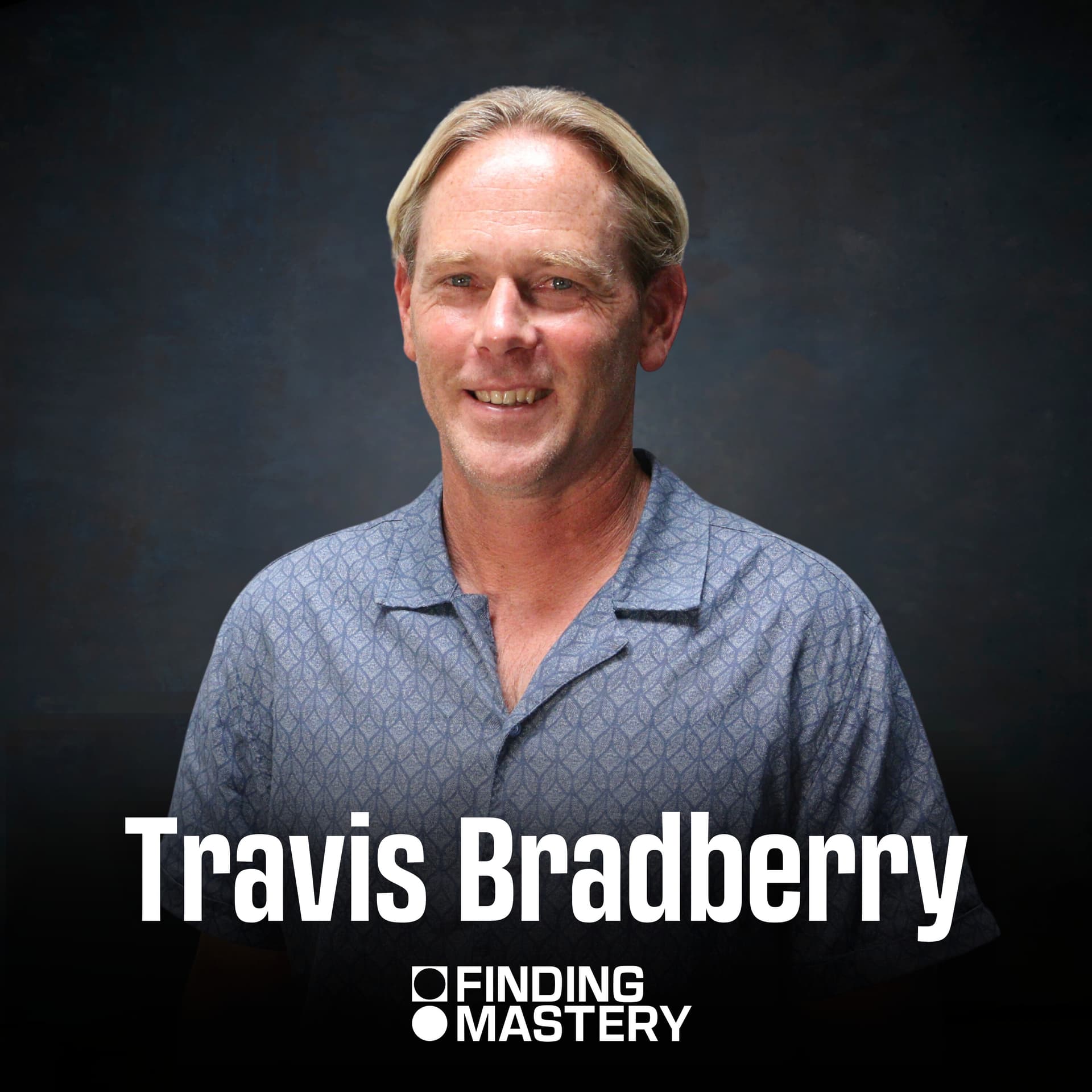
Dr. Travis Bradberry—psychology undergrad exposure to EQ research (Yale/Peter Salovey); dual PhD in clinical and industrial psychology; developed an EQ test and training program; sold 5+ million books on emotional intelligence; has worked for ~25 years in writing/speaking/training.
Notable examples
executive coaching via 360 feedback helped a “bull in a China shop” leader recognize how she treated people (also improved her softball coaching); “anger funnel” example (fear/vulnerability funneling into anger); athlete Tom Brady/Julian Edelman-style moment where he catches himself mid-rage and shifts; 360/peer/spouse input to expose blind spots; “spot it, you got it” and “life like a movie” practices.
Written by AI. May contain mistakes. Listen to the episode to check what was said.
Chapters
Tap a time to open that second in VOThe Power of Emotional Intelligence
0:00 to 0:41
Learn about the significance of emotional intelligence and its impact on success.
“We have more than 400 emotional experiences every single day.”
Travis Bradberry's Journey with Emotional Intelligence
1:51 to 3:38
Discover Dr. Bradberry's background and how he became an expert in emotional intelligence.
“You've got a rich and deep understanding based on research.”
The Costs of Ignoring Emotions
3:38 to 6:28
Explore the negative consequences of not recognizing and managing emotions.
“We developed, started with an emotional intelligence test and ultimately a training program.”
Ambition and Emotional Awareness
6:28 to 8:06
Understand the relationship between ambition, anxiety, and emotional awareness.
“Are you working from a more anxious place or inspired place?”
Defining Emotional Intelligence
8:06 to 10:44
Learn a clear definition of emotional intelligence and its components.
“or they walk on stage and present, there's a flood of emotions.”
The Thought-Emotion Loop
10:44 to 13:20
Discover how thoughts and emotions interact and influence behavior.
“So is your position that emotions are influencing thoughts or is it the primary driver thoughts influence emotions?”
Training and Tailoring Emotional Intelligence
13:20 to 14:00
Find out how training can be tailored to improve emotional understanding and management.
“Let's go back to the thought emotions loop is when I design, let's call it training or intervention, emotions are bottom up and then thoughts are top down is how I think about it.”
Understanding Emotional Awareness in Training
14:00 to 15:22
Learn about tailoring emotional training to individual awareness levels.
“Well, I, I like, I like your, your, your model there, you know?”
Understanding Emotional Awareness in Training
15:26 to 17:40
Learn about tailoring emotional training to individual awareness levels.
“And sometimes travel makes it tricky to eat well.”
Improving Emotional Intelligence Without Resources
17:51 to 19:16
Discuss strategies to enhance emotional intelligence even without resources.
“Okay, before we get to the assessment piece, if somebody wants to increase their emotional intelligence.”
Show all 39 chapters
The Importance of Self-Awareness in Emotional Intelligence
19:16 to 20:46
Understand the critical role of self-awareness in developing emotional intelligence.
“Because, you know, we'll talk about the four skills, right?”
Navigating Emotional Intelligence in Society
20:46 to 22:30
Examine the evolution of emotional intelligence and its impact on society.
“So this is a big arc from two, from the state we're in now to something significantly better.”
Differentiating Between Emotions and Feelings
22:30 to 24:08
Learn about the distinction between emotions and feelings and their significance.
“Like the weights on the barbell and that kind of sweet spot in the middle is just not well traveled.”
Coping Mechanisms and Performance Anxiety
24:08 to 26:18
Discuss the use of coping mechanisms like alcohol in public speaking.
“The emotions, but this observable nature of motions, meaning they're physiological.”
Emotions: Complexities and Duality
26:18 to 28:00
Explore the concept that individuals can experience two emotions simultaneously.
“So my, my point is to, to, to go back to what you're saying is it's often a mix and understanding that mix can take you pretty far when you're feeling something.”
Understanding Emotions and Their Complexity
28:00 to 31:28
Explore the nuanced relationship between feelings like anger, fear, and vulnerability.
“I feel like I can toggle back and forth, but tell me more about what you're experiencing and what that insight that you can have two at the same time.”
The Importance of Self-Awareness in Leadership
31:28 to 34:12
Learn how self-awareness can transform leadership effectiveness and personal interactions.
“I'm going to send it to you and make sure it is Edelman.”
The Importance of Self-Awareness in Leadership
34:16 to 35:25
Learn how self-awareness can transform leadership effectiveness and personal interactions.
“hired for a small business, you know the real cost isn't just the salary.”
The Importance of Self-Awareness in Leadership
35:28 to 36:32
Learn how self-awareness can transform leadership effectiveness and personal interactions.
“At least for those of us in the Northern Hemisphere.”
The Importance of Self-Awareness in Leadership
36:39 to 36:51
Learn how self-awareness can transform leadership effectiveness and personal interactions.
“Again, that's drinkag1.com slash finding mastery.”
Motivation for Change and Emotional Management
36:51 to 42:01
Discuss the motivations behind personal change and strategies for emotional management.
“Because to do self-awareness work means that you're going to, you're looking for a change.”
Understanding Self-Management and Emotions
42:01 to 44:45
Learn how self-management involves channeling emotions effectively.
“All right, so self-management is - So self-management is channeling your emotions into producing the behavior that you want.”
Understanding Self-Management and Emotions
45:01 to 46:11
Learn how self-management involves channeling emotions effectively.
“great in high stress conditions, and what helps it stay sharp over the long arc of life.”
Understanding Self-Management and Emotions
46:18 to 46:28
Learn how self-management involves channeling emotions effectively.
“That's live, L-I-V-E, momentous.com slash finding mastery with the code finding mastery.”
Gender Differences in Emotional Management
46:28 to 51:36
Explore the differences in emotional management across genders.
“So I'm making this about me to not kind of straddle some writ large thing, but like, can you talk about the gender differences on management, emotional management?”
Developing Social Awareness
51:36 to 56:00
Understand the importance of social awareness and intuition.
“Um, and this is why, you know, this book is called the new emotional intelligence because it's the latest thinking in the field, right?”
Understanding Relationship Management
56:00 to 56:49
Learn about the importance of relationship management and how it ties into emotional intelligence.
“if you're something like if you're muted in some way, you lose connection to all that stuff.”
Understanding Relationship Management
57:14 to 57:57
Learn about the importance of relationship management and how it ties into emotional intelligence.
“What that means is it helps to slow biological aging by strengthening your cells, basically protecting them from damage.”
Emotional Intelligence Framework
57:57 to 59:05
Explore the foundational aspects of emotional intelligence and its practical applications.
“Start investing in your long-term health today.”
Exploring Gender and Age Differences in EQ
59:05 to 1:00:19
Understand how emotional intelligence varies across gender and age demographics.
“I want to understand the gender differences from your research.”
Emotional Intelligence in the Workplace
1:00:19 to 1:02:38
Learn about the impact of emotional intelligence on workplace performance and leadership roles.
“There's lower levels of self-management that's related to brain development.”
Improving Emotional Intelligence
1:02:38 to 1:04:46
Discover strategies for enhancing emotional intelligence and managing stress effectively.
“companies tend to increasingly focus on tenure, short-term financial gains, industry knowledge.”
Psychological Agility and Emotional Mastery
1:04:46 to 1:10:00
Delve into the relationship between emotional mastery and psychological agility for better performance.
“You had a piece of research that 70 % of people are not very good at working with stress.”
The Impact of Emotions on Agility
1:10:00 to 1:10:44
Learn how emotions can impede agility and decision-making during stress.
“They're so potent that if I'm in that tornado, I got to deal with all of that because it's the signal for survival in many cases.”
Emotional Intelligence in Leadership
1:10:44 to 1:11:39
Discover the correlation between stress levels and emotional intelligence in leaders.
“And by and large, they've done a lot of work on EQ and their senior leadership, they're high EQ folks, except when they get stressed.”
Parenting and Emotional Tone
1:11:39 to 1:12:32
Understand the importance of setting an emotional tone as a parent for children's emotional intelligence.
“Point to the parents, like what you'd hope we do.”
The Future of Face-to-Face Communication
1:12:32 to 1:13:18
Examine concerns about the decline of face-to-face communication in the digital age.
“And you, because there's something we can do.”
The Loss of Real Communication
1:13:18 to 1:13:52
Realize the importance of face-to-face interactions and the loss felt by newer generations.
“that moves us further and further away from that.”
Closing Remarks and Community Engagement
1:13:52 to 1:14:33
Learn how to connect with Travis Bradberry and the community through his platforms.
“not on tiktok all day doesn't mean you're not using technology as a substitute for real communication.”
Transcript
Automatic transcript. May contain errors.0:00We have more than 400 emotional experiences every single day. We find that just 36 % of people are able to accurately identify their emotions as they happen. That is wild. Our brains are structured so that emotions are the primary driver of our behavior. So if you understand what you're feeling, you can then channel that feeling into producing the behavior that you want.
0:19Dr. Michael Gervais:What if the single biggest predictor of your success as a partner, a leader, or even a parent isn't your IQ, it's not your technical skills, but it's your ability to work with emotions. Emotional intelligence in its simplest form is understanding what you're feeling, why you're feeling it, and using that to produce the kind of outcomes that you want in life. If you think you can stuff your feelings and ignore them, they control your actions. Welcome back or welcome to the Finding Mastery podcast, where we dive into the minds of the world's greatest thinkers and doers. I am your host, Dr. Michael Gervais, by trade and trading, a high-performance psychologist.
0:50Dr. Michael Gervais:The idea behind these conversations is simple. It's to sit with the extraordinaries, to learn, to really learn how they work from the inside out. Today's guest is Dr. Travis Bradbury. He sold over 5 million books about emotional intelligence, and he's got a new one coming out, the new emotional intelligence, and it's awesome. Now, in this week's conversation, we explore why emotional intelligence, EQ as it's named, is the foundation for almost everything that matters. It doesn't matter if you throw a football for a living, conducting surgery, manage a team, doing sales, your behavior's driven by your emotions.
1:22People with higher EQs make about$37 ,000 more on average. Every point you increase your EQ leads to about another$1 ,700 in annual salary. So there is a linear connection between EQ and performance and EQ and earnings.
1:33Dr. Michael Gervais:We dig into what emotional intelligence really looks like in practice and why it's part of the foundation for living a great life in the modern world. Just about the only thing you need to keep in mind as a parent is that... That gives us hope. If you can master that, you've won 90 % of the battle. I'm excited to share this one with you. So let's jump right into this week's conversation with Dr. Travis Bradbury.
1:59Dr. Michael Gervais:Okay, Travis, here we go. Emotional intelligence. You've got a rich and deep understanding based on research. And it seems like it's your body of work, your life work right now. Absolutely. Yeah. Okay. So first and foremost, what's important for me to know about you to really understand you? That's a great question. I suppose my background is probably somewhat relevant. I was an undergrad studying psychology when I got exposed to emotional intelligence. There was a study that came out of Yale that Peter Salovey, who's now the dean of Yale, conducted, showing that this is a separate psychological construct of how we think that's really important to how we do in life and how we perform.
2:45and for me growing up in a home where I wouldn't say emotions were ignored but maybe they weren't quite valued and talked about as much as they could you know my my mom grew up on a farm in a small town in South Dakota and her parents my grandparents you know lived through the Great Depression and it's this whole pull yourself up by your bootstraps mentality so I was a young guy learning about this thinking I need this I need to know more about my emotions and how I can use them more effectively. So when I started, I did a dual PhD in clinical and industrial psychology. So clinical psychology, the psychology of the individual and industrial psych, business psychology.
3:25And I just found that emotional intelligence melded those two fields really well. So I focused all my research on that. And by the time I was a couple of years into my program, my colleagues were calling me the emotional intelligence guy. And I ended up going into business with one of my professors. We developed, started with an emotional intelligence test and ultimately a training program. And then I started writing books and speaking. And I've been doing this for almost 25 years now.
3:50Dr. Michael Gervais:Awesome. So in there, there's probably some stories that we could pull on about like when, when you're a young man and kind of muted with emotions, what was the cost of that in, at any part of your life, either early, early times or, or now, like what was the downside of that? Oh, wow. Yeah. The costs are, are, are massive. I mean, I can think of, um, you know, my wife is a psychologist as well. Oh boy. Yeah. We're quite a pair, but she and I started dating in high school. We're high school sweethearts with, with a little break there in college before we, and I can think of how our relationship has evolved over the years and how my mastery of my emotions and my ability to talk about them and how just that's allowed us to evolve and have more constructive conflict.
4:42You know, I can think of being young in my 20s and running a business and having employees and not having management experience and how I was able to better tolerate perhaps my urge to micromanage or sort of things of that nature. And then it's just personally for me, you know, we all have our things that hold us back, right? Achilles heel. and I'm a very driven person. I'm a very competitive person. I'm a very driven person and I'm the kind of person that will push too hard. And sometimes when you do that, you crash and burn. I mean, I did undergrad in three years. I did a dual PhD in five years.
5:18I was the first person to complete that degree on time. And there's some moments along the way where you really get tested and you get pushed really hard.
5:27Dr. Michael Gervais:What are you trying to solve or prove or do with the speed that you're on? What is that about? One is big goals. So you need to get, get going quick. If, if, if you want to, if you have lofty ambitions, one is impatience. I'm not the most patient person you're ever going to meet. I want to go. But when it was, when I was an undergrad, you know, I, I still think that the way we go off to university and we learn about a lot of abstract stuff before we enter the field, I feel like it's a little twisted. I think more of the apprenticeship model as a way you should be learning a profession. So I was very impatient to be taking electrical engineering at UC San Diego when I was a psychology major.
6:09I just wanted to get it done. I want to get the whole thing done. I want to get out in my PhD program where I was going to be learning from psychologists how to practice my field. So there was a method to the madness. There's a reason I wanted to do it fast. And I feel like as I got out into the field, I became a little more patient. But yeah, those are the factors driving me.
6:28Dr. Michael Gervais:Are you working from a more anxious place or inspired place? Oh, they both get me there. They really do. If we had a ledger, which one has more? Yeah, I would say it's on it. When I was younger, definitely more anxious, right? You've got, you know, you don't have any money. You don't have any career success. You're just all ambition. And so I think anxiety, this desire to prove yourself can really drive you. And that's really morphed because, you know, I did achieve a lot of things at a young age and the certain things I, I, I did way more than I thought I could or would. And that really shifts your perspective.
7:06How many books did you sell? I've sold 5 million books so far.
7:10Dr. Michael Gervais:Yeah. There you go. Say it again. 5 million. Yeah. And my original goal was to do a hundred thousand copies with my first book. And you shot way too. Yeah. So, all right, well, hold on. I get your ambition, right? That you've You've got a motor, you've got to drive. You needed to understand how emotions work if you were going to go to the places you wanted to go. And so there's some tension inside of that. I do want us to ground on the definition of emotional intelligence. Yeah. So I want to get us to that, which is the kind of the bulk of this conversation. I appreciate that there's an, you're working with emotion.
7:49Dr. Michael Gervais:It's not like you just studied it. Like they're in you now. They are a driving force for you. and as much as you can point to them and the research and the best practices, the best teacher is like how you're actually navigating with them right now and teach us from that place as well. That's what I'm hoping to do with you. Yeah. So many people, you know, when they sit in that chair or they walk on stage and present, there's a flood of emotions. I say the Olympics and world championships are for big emotions. How are you navigating in this moment right now, whatever emotions are present? You might be like, oh, actually kind of easy or like, whoa, all of a sudden I felt my heat turn up or, you know, like what's happening actually right now for you?
8:31Yeah, that's interesting because before podcasts existed, you know, I would do a lot of TV and radio interviews and TV, especially national TV. It's a three minute interview. Better get it in. And they want and your publisher is they want the sound bites. And to me, that's a tremendous amount of pressure. I love podcasts because it's conversation and I know I can have a conversation. I don't really have anything to prove. I'm just going to share what I know and maybe ask you hopefully some good questions and we'll have a conversation and leave it there. But there's also, for me, familiarity removes pressure because, you know, whether you consider this kind of setting with lights on you and cameras or speaking, you know, I've spoke to some really, really large audiences and that was really difficult for me at first.
9:18There was a lot of anxiety. Um, and, and familiarity helps with that. I mean, you still have to put in the work, but it does help to have some reps, right?
9:27Dr. Michael Gervais:Yeah, cool. Let's do the definition. Let's start with, take us back to like sixth grade. You know, how do you clearly articulate emotional intelligence? Yeah. So, you know, emotional intelligence in its simplest form is your awareness of emotions and yourself and others, and then what you do with that awareness. So if you understand what you're feeling and why you're feeling it, or perhaps what someone else is feeling, why they're feeling it, what the world looks like through their eyes, you can then channel that feeling into producing the behavior that you want. So, you know, we have more than 400 emotional experiences every single day.
10:04Our brains are structured so that emotions are the primary driver of our behavior. Everything you experience in the world around you, it goes to the base of your brain, travels through your limbic system. You have an emotional reaction first, right? The limbic system is where emotions are generated before you're able to think rationally about it. So if you understand what you're feeling, you then have some more choice in what kind of behavior that feeling produces. If you think you can stuff your feelings and ignore them, then they just drive the bus, right? They control your actions. so I'll just sort of loop back emotional intelligence in its simplest form is understanding what you're feeling why you're feeling it and using that to produce the kind of outcomes that you want in life all right let's pull on two
10:52Dr. Michael Gervais:pieces here one is I want to understand if think about like the triad here thoughts emotions and behaviors and it's the the syncopation of those that get us to performance. Okay. So is your position that emotions are influencing thoughts or is it the primary driver thoughts influence emotions? Or it could be interactionless, bang, bang. You know, it's like too quick for us to really know. Yeah. Let me go one more turn on this because I think you'll appreciate it. You're talking about the high road and the low road of when information comes in. So the low road is like before conscious awareness, we are taking in information and responding to it from a survival mechanism, which is the limbic system.
11:34Dr. Michael Gervais:Right. So it's fast. Yes. Before it gets to conscious awareness. That's the high road. It takes a little bit longer to get up there. Yes. So you take both of those bits of information. Are you more interested in the thought to emotion or are you more interested in the emotion to thought? I see thought and emotion operating in a loop. You know, it's the chicken and the egg type of situation. it doesn't really matter which came first although it's probably the emotion but it's a feedback loop and what you think in response to what you feel then affects the trajectory of that emotion so you can't make it go away you can't think it away but you can't think the emotion you can't think the emotional way but you can prolong it you can intensify it you can allow it to steer you in the wrong direction or in the right direction.
12:24So I think of it in terms of that, that feedback loop. And when I think of the high load, the high road and the low road, you've got to understand that I've worked with some really low EQ people over the years in very high level positions. They have way too much responsibility to have low EQ. And some of them, they go on the low road for a very long time, right? It's almost like the way you might respond if you were attacked by a lion for 30 seconds, they run that out for 20 minutes, you know, just throwing chairs and yelling. And it's just, some people can be very, very hijacked for their emotions.
13:00Dr. Michael Gervais:Do they know it in your opinion? Do they know that they are working from the primal limbic system and that's governing or running the whole show? I think it's more of, I, this is the way I am type of thing. I'm just a yeller and, you know, or a lot of finger pointing, a lot of people deserve it type of mentality. That's, that's what I see a lot of. Yeah. Let's go back to the thought emotions loop is when I design, let's call it training or intervention, emotions are bottom up and then thoughts are top down is how I think about it. And so we can devise bottom up strategies for training and top down strategies, depending on what is most available to the person like, oh yeah, man, I get caught in my head and I'm just a looping on this thing.
13:44Dr. Michael Gervais:And yeah, I have these feelings that like, I don't, ah, it's just unsettled or whatever the narrative is. Oh, good. Let's go top down and let's get, let's start working with those thoughts. And people are like, man, I feel sick to my stomach or like, it's just, I'm flooded down there. Oh, we're going to do some bottom up strategy. Yes. Where do you go with training? Cause I know, you know, training. Yeah. Yeah. You go with training. Well, I, I like, I like your, your, your model there, you know? Um, and I think the people that are pretty aware of their emotions are candidates it's for top down, right?
14:16So some people are, they're so aware of them, but they don't know what to do with them, right? And they get caught in these thought loops. And the people that don't understand their emotions, they just know they're feeling something and they don't know what to do. You know, those are your, your bottom up types. My plan or my focus with training and even in writing a book is it has to be tailored to the individual because there are different levels of awareness. There are different understandings of emotion approaches, just like you just shared. and so if you don't give someone a tailored approach they're not going to go very far and that's why you know for example you know my book comes with a test there's a passcode and you can go and take a test and see how you score what your score profile is how you look you know in a unique way and that's a test that you know we sell for 50 bucks without the book but it's i'd be a hypocrite if i wrote the book and didn't give someone a test when i'm i believe in a tailored approach.
15:09Dr. Michael Gervais:I also think$50 for that assessment is pretty cheap. Like, yeah, you did a nice job on helping bring to the surface patterns. Yeah. You know, and so nice job on that. Finding Mastery is brought to you by David Protein. Travel a lot at Finding Mastery. And sometimes travel makes it tricky to eat well. Best intentions, and then you're at the airport. And then suddenly the only options around you are the ones that you'd rarely choose at home. Something I come back to often is that discipline isn't really about willpower in the moment. It's often about choice architecture, setting up your environment ahead of time so that the easy choice and the good choice are the same one.
15:47Dr. Michael Gervais:That's the role David plays for me on the road. The gold bar, it's their flagship high protein density, great texture, flavors that make it easy to stick with. So when I throw a few in the bag before my trip, I've already made the decision. The hard moment later takes care of itself. And the team here at Finding Mastery, they love the bars as well. They are ripping through them in the Finding Mastery lab. Salted peanut butter and fudge brownie seem to be the fan favorites right now. They have built something with real rigor in a crowded, sometimes ambiguous space like nutrition. That matters when it's something that you reach for again and again.
16:18Dr. Michael Gervais:David bars are now available in major retailers like Walmart and Target. And if you'd like to buy them directly and get a special offer for being a Finding Mastery listener, head to davidprotein.com slash finding mastery, where right now, if you buy four packs, you'll get the fifth one for free. Again, that's davidprotein.com slash finding mastery. Finding Mastery is brought to you by Magic Mind. The question that I often come back to and I hear from people I work with isn't how do I perform well today? It's how do I protect my capacity to perform well over my entire career? That's a different question and it changes what you invest in.
16:53Dr. Michael Gervais:At some point, I started applying that same thinking to my own brain. Not just what helps me get through a heavy week, but what am I actually building over time? Because there is a difference between burning through your cognitive resources to meet the demands of the day and investing in the long-term health of your brain. That's one of the reasons I enjoy using Magic Mind. It's a daily two-ounce mental performance shot with clinically backed ingredients like ashwagandha, turmeric, and lion's mane. When I drink it, I know that I'm investing in better focus, sustained energy. And what I value just as much is what's happening underneath.
17:26Dr. Michael Gervais:These ingredients support stress adaptation and long-term brain health in ways that seem to compound over time. That's the long game. The formula is based on over 10 years of research and nano-encapsulated for five times better absorption than traditional pills and powders. Go to magicmind.com and get 50 % off your first order. The best performers I know make investments today that their future self-thanks them for. This is one of them. Okay, before we get to the assessment piece, if somebody wants to increase their emotional intelligence. Let's start, let's say you start with an assessment. Okay.
18:01Dr. Michael Gervais:Good standard. Let's say somebody does not have available resources to go buy the book. They don't have available resources. I'm not sure who that is in our community. Of course, people are going to be flooded buying your book here. Where would you suggest they start right now before the book arrives to get a little bit better at emotions? Well, you have to think about what your strengths and weaknesses likely are. And there's a great deal of research that shows that the most accurate representation of your behavior is not what you think, it's what everybody else sees. Right? So in leadership trainings and companies, we do a lot of 360 assessment where you rate yourself and your peers rate you and your supervisor or supervisors rate you and your direct reports rate you and then you get a comparison of those things.
18:50and the people with the most accurate ratings are the top performers. So if you're waiting for the book to come, you need to go talk to somebody, maybe your business partner or a colleague or your spouse and say, hey, I just learned about this emotional intelligence model on this podcast. Here are these four skills. Where do you think my strengths and weaknesses are, right? What should I be working on? What should I be leaning into doing more of? I think, yeah, that's it.
19:15Dr. Michael Gervais:That would be good. So you're an advocate of exposing blind spots. as a way to get better. Absolutely. Because, you know, we'll talk about the four skills, right? But emotional intelligence hinges on self-awareness. That's the first skill. You can't go anywhere until you increase your self-awareness. You and I are singing at the same table, the high note. It all begins with awareness. Yes. And I will say that awareness alone will never be enough. No. It's important. It's necessary, but not sufficient. I'll say that again. But when you only are aware, it actually compounds the experience and can make it a much more difficult experience for you.
19:50Dr. Michael Gervais:Case in point, I am aware, let's say that I'm sick to my stomach because I'm so nervous. Boy, I'm aware, but I have no skills to manage it. And now I'm even more aware that my stomach is in knots and I'm sweating and, and I'm, man, I'm even more aware. I wonder what they're thinking. Are they noticing me? So I'm, my awareness is heightened. It's gone from an internal awareness, good, to an external, like navigating of what they might be thinking. And I don't have the skills to actually maneuver through that. And that's why I wanted to talk to you. Okay. And so awareness alone is not enough. I do want to get to the four main skills.
20:30Dr. Michael Gervais:And I want to do one more thing here, which is how do we move from where we are? This is like a big question. Where we are now globally with our lack of emotional intelligence to where you envision, if you could envision the world flourishing. So this is a big arc from two, from the state we're in now to something significantly better. Yeah, that's an interesting one. It's an interesting because so when I started this work, there was the first big emotional intelligence book came out in 1995 and it was on Oprah twice and it was on the cover of Time magazine. And for those who don't remember Oprah, if you, if your book was on Oprah, you were, you had it made, right?
21:13And so this was not your book. No, this is not my book. Dan Goldman's book. Yeah. So when I was starting my career, uh, six years after that, people said, Oh, aren't you worried? This is a fad. This is going to go away. And I've heard that for the last 25 years. And the opposite has happened. Emotional intelligence has increasingly become a part of the vernacular. You see it in people's dating profiles. They say, I'm looking for someone who's emotionally intelligent. I never thought I'd see something like that. That's wild to me. So that's good. That's progress. The only way we're going to get anywhere is through people putting in the work.
21:48It's one thing to talk about. It's another thing to have some personal accountability and work on it. And the thing that I struggle with where the United States is as a society as a whole is when I look at all the political divisiveness and the separation and conflict around that, it seems not a very constructive approach to us making progress. So I see things that are progress. I see things that are more difficult. I don't know if they're exacerbated by social media or what the deal is, why we're becoming so polarized in this country. But, you know, the country, like a person, there's kind of strengths and weaknesses, and we need a path to follow.
22:23Dr. Michael Gervais:I think on the emotional skill set, it's a little bit like a barbell mechanism for me that I think we're overstimulated with emotions and then kind of numbed at the same time. Like the weights on the barbell and that kind of sweet spot in the middle is just not well traveled. Yeah. And we're spending less time face to face. I mean, I have a 16 year old and I'm watching him date and it's like, wow, there were a lot of conversations that happen in text before there's any face to face. How the heck do you understand a person sending sentences back and forth? You know, it's wild to me. So you're saying we got to work to get to a state.
Read the full transcript
23:00Dr. Michael Gervais:The other thing I think is also important is the difference between emotions and feelings. Are you aligned with Antonio Damasio's kind of differentiation between feelings and emotions? And Damasio is one of the USC professors, the leading thinker, as you know. And he's essentially saying that emotions are the physical observable sensations. and then feelings are the subjective making sense of the emotion. So feelings are private, emotions are observable in public. Yeah, well, you need to be able to label what you're feeling or you label your emotion and call it a feeling, right? So there is no absolute measure of what you're feeling.
23:41And any language you can have around it so that you can better understand what you're feeling, I think that's a positive thing. So in that sense, I agree with this model. and I'm not too in one camp or the other in how you should go about it. It's just a matter of as an individual, do you have a way to really take a look at what you're feeling? Do you have a way to identify these emotions and understand them? And that's the path you need to be on however you do that.
24:07Dr. Michael Gervais:Cool. So, and we'll do it one more time. The emotions, but this observable nature of motions, meaning they're physiological. So if I'm sweating or my hands are shaking and my breathing is changing, Those are all emotions. My interpretation of those states could be, I am so excited. Or it could be, this is what love feels like for me. Or it could be, I'm out of my mind scared. Yes. Right? So that's a feeling. The labeling of the observable emotional expression. Yes. And often it's a combination of the two. It can be. Yeah. Yeah. Okay. So when I, you know, a lot of people in my field that are authors, especially that cater to the business world more.
24:51I mean, I certainly, not that I don't sell books to people that are individuals trying to improve themselves. They're, they're on the speaking circuit. And I know people that love it. They're like, you know, Ram Charan doesn't even have a home. Who is it? Ram Charan.
25:07Dr. Michael Gervais:I don't know. He's a, he's a, speaks to businesses and he goes hotel to hotel 365 days a year. He's at the Plaza. The only place he goes back to if he doesn't have a place to be is the Plaza in New York. And what does he talk about? I got to go check him out. Oh, he's a high level strategy guy. So it'd be like C-suite team. Let's, let's work on strategy. I'm not that guy. I like to be home. I'm pretty introverted. And so put me in front of a room of 5 ,000 people and yeah, I'm feeling some anxiety and I'm also feeling some excitement. It's a mix, but what allowed me to overcome that, because I'll just tell you, I'll, I'll be vulnerable here early in my career, uh, especially because when you, people are paying you a lot of money to speak, they expect a lot.
25:50I would have a drink before I would go on stage so I could be fun. And that would, and that would make me calm and it would make me outgoing. And that's not how I, I'm sad. I'm not doing this for 20 years. Same said Keith Richards and Mick Jagger. And now I have a bottle. No, I, you know, it's something I did for a little while until I learned how to channel all that anxiety and all that excitement and let the excitement win and just go out there and go for it. So my, my point is to, to, to go back to what you're saying is it's often a mix and understanding that mix can take you pretty far when you're feeling something.
26:26Dr. Michael Gervais:Would you think that drinking alcohol before a nervous event is always a maladaptive coping mechanism? Or would you be so bold to say, ah, I mean, yeah, it's like, it's dangerous, but it's, it works. And where would you position your, your voice there? I mean, for me, you know, you know, when I was doing it, I was saying, well, it wouldn't make me, I wasn't drinking enough to do anything absurd, you know, and, and I would do well in the talk, but my goal is to have a mindful approach. And at the time I felt like perhaps I couldn't do it on my own. And that's what I worked towards. Um, and it's a little, I don't know, I'm not one to drink in a work setting.
27:10So it's a little bit weird to like be drinking and going on stage. I don't know. So it wasn't, it wasn't aligned sort of like with how I wanted to be.
27:19Dr. Michael Gervais:Yeah. Yeah. Yeah. I feel the same way. I purposely like I, I've got some structure about how I go about ready, you know, there's preparation and there's readiness. So you do training slash preparation and then the final dusting is readiness. And so that readiness, I, I definitely don't want to have anything to do with alcohol. It mutes me as opposed to like opens me. So yeah, I'm totally with you on that. Okay. Let's, let's do this. You said something, I want to get to the four pillars of your model, but you said you can have two emotions at the same time, which I'm confused by that. I don't have the internal experience that I can be excited and scared at the same moment.
28:00Dr. Michael Gervais:I feel like I can toggle back and forth, but tell me more about what you're experiencing and what that insight that you can have two at the same time. You have, as you mentioned, when you feel an emotion, you have sort of this, this, this physiological arousal that happens. And oftentimes it is a combination of feelings. It's just how you, in that moment, what's producing that. And okay. Sometimes it's very linear and one wins over, but I don't know a better example than, than my speaking. Okay. I'll give you another one. There's theorists in the field that don't believe anger is a real emotion.
28:39It's not a core emotion. And that's because a lot of people funnel their emotions into anger.
28:45Dr. Michael Gervais:I consider it a secondary color, secondary primary colors, you know, and then there's a secondary, you need a couple combinations or you need something else to get to anger. I'm curious your take on it. So, so the way I see it is, you know, the, the thing, the thing that I teach in my book is to understand that you're using the anger funnel. So you take a less palatable emotion like fear. So someone does something that makes you feel threatened. That makes you feel really uncomfortable. So you get mad at them. Right. And the reality is you don't like feeling threatened. You don't like feeling vulnerable.
29:17And so you don't want to sit with that. So you're very willing to sit with anger. But my point is the water gets muddy really quick. At one point, are you just vulnerable and threatened and at what point are you angry? It's a mix.
29:32Dr. Michael Gervais:I like your language around a funnel. That's like the primary to secondary color. I feel like anger is a second hit. There's a first hit that comes in and hurt or fear are kind of the two that for me at least are the ones I've seen with athletes when they're embarrassed or hurt or let down. Something on that scale versus the other scale which is like vulnerable, scared da da da. Those can funnel right into a response. It's more, oftentimes it can be more facilitative. You know, there's an energy around anger for performance. At least I'm not advocating anger. I think we need less anger in our world.
30:07Dr. Michael Gervais:Yeah. You know, but I think what you're saying, if you're aware that you're in the funnel, then you can make a choice. Right. Because if you wait until you completely come out the other side and it's full blown anger, then let's say you're an athlete, you're yelling at the umpire and you're getting kicked out of a playoff game. Right. So that's bad outcome. but there's a moment where you you you feel vulnerable you're in a slump you just got a bad call for strike three and you start to get angry but you don't do anything with it right so that's why i say it's kind of a mix there's there's there's states where you're sort of in limbo between two emotions you got to choose which which path you're going to follow okay yeah this is great clip edelman is uh he's playing for the patriots it's an intense moment he gets called for something he comes flying to the ref like he's going to front the ref and argue with the ref and the ref looks at him, you know, like, are you really up in my space right now?
30:58Dr. Michael Gervais:Because you can get ejected. You know, there's lots of things, additional penalties. And then it was awesome. Edelman takes this moment and he goes, oh, I'm working on it. I'm working on this. I just get so mad so quickly. And then he smiles, the ref smiles, he runs away and it's a good moment. So for me, it captures just about everything. It's like, sometimes I need somebody outside of me to look at me like what's going on? And if I haven't done some work, I can't be light about it. I can't shift out of that state. And so I just love that clip. I'm going to send it to you and make sure it is Edelman.
31:31Dr. Michael Gervais:But nice. You know, Julian, if you're listening, I got to talk to you about it. All right. What do you think? You want to go to your model? Yeah. And kind of open that up? Yeah, let's do that. Yeah. Four, four pieces to your model. So we talked about self-awareness, right? That's opens the door. When you're working on your emotional intelligence, you're working on increasing your self-awareness. You are constantly leaning into the discomfort and trying to see something new. I've done a lot of work with really high level execs, very successful people. And I'm continually amazed at how willing they are to suffer, to get ahead.
32:04But the moment it comes to increasing their self-awareness, they can't tolerate it. It's hard now. It's hard. And that's because we're taught that this is the way we are. So you don't want to look at the blemishes. But that's not how EQ works. That's not how the region of the brain is structured. It's very plastic and malleable. So when you lean into the discomfort, when you learn what you should be doing differently, you are opening doors and you can change your behavior.
32:32Dr. Michael Gervais:Make this concrete. Tell a story or invite me into an experience you've had that highlights the self-awareness training. Sure. So early on in my career, I would do executive coaching. And that's something eventually my business got too big and I was just whatever the author and the speaker, I didn't get to do it anymore, but I really enjoyed it. I was working with an executive at a telecommunications company and she was very successful. She was an up and comer, but she really rubbed her team the wrong way. So there were some performance problems that were the result of her inability to be affected with people.
33:06She was the proverbial bull in a China shop type of leader. So we took her through the 360 process that I mentioned, she got to see what she thought. She got to see what everybody else thought. And we talked about some different approaches. We increased her self awareness. She also happened to be a very, very fired up softball coach. You know, she sit there in session. She told me how many inches her daughter's pitches would break. And, you know, it had to be, she had to get that up. So we talk about that. I love baseball. Great. No problem. We can talk about it. So she comes into session one day and she says, um, yeah, so I was at practice last night.
33:40And, uh, one of the dads comes over and he, you know, grabs a chain link fence and he says, you're, you're working with an executive coach, aren't you? And she said, did Travis tell you? How do you know? He said, I can tell by how you're treating the girls. So she didn't realize that she was treating the girls differently. We worked on self-awareness of how she approached people in a business setting. And it translated, it opened a door to how she was as a softball coach. And I see that a lot.
34:12Dr. Michael Gervais:Body Master is brought to you by LinkedIn Jobs. If you've ever hired for a small business, you know the real cost isn't just the salary. It's the time that you lose when the fit is off, the momentum that stalls when that fit doesn't work. And that's the pressure of having to get it right while you're still running everything else. That's why I'm paying attention to LinkedIn Hiring Pro. It's built for the reality of hiring when you're operating lean. You describe the role in playing language and then Hiring Pro helps you draft the job post, surface the right candidates, and then narrow to a short list without turning hiring into another full-time job.
34:44Dr. Michael Gervais:And when applications start coming in, it doesn't leave you buried in resumes. It streamlines screening, including AI-powered interviews for initial conversations. How about that? So that you can spend less time searching and then more time connecting with the people who match what you need. With Hiring Pro, you can hire with confidence knowing you're getting the best talent for your business. In fact, those hiring with LinkedIn are 24 % less likely to need to reopen a role within 12 months when compared to their leading competitor. Join the 2.7 million small businesses using LinkedIn to hire.
35:15Dr. Michael Gervais:Get started by posting your job for free at linkedin.com slash mastery. Again, that's linkedin.com slash mastery. Terms and conditions apply. Finding Mastery is brought to you by AG1. Summer is here. At least for those of us in the Northern Hemisphere. You can just feel it though. Days are longer, pace picks up, and there's this sense of momentum that comes with the season. For me, that also means more travel. It's more early mornings, more late nights, and it's just really a schedule that isn't consistent as I'd like it to be. That's exactly when having a simple, reliable, daily foundation, it matters.
35:51Dr. Michael Gervais:AG1 has been that foundation for me for over a decade now. One scoop and a glass of cold water in the morning, and I know I'm supporting my gut health, full stop, filling the nutrient gaps that are hard to cover through food alone. And what ends up happening is I'm giving my body what it needs to keep showing up. And that really matters to me. What I love about AG1 is that it doesn't ask a lot of me. It's one habit, one scoop, and it travels easily. The AG1 travel packs are something I genuinely rely on this time of the year. I throw a few in my bag before a trip and the routine stays intact wherever I am.
36:26Dr. Michael Gervais:If you haven't tried AG1 yet, or you've been planning to think about getting back into it, now's a great time to start. Visit drinkag1.com slash finding mastery to get an AG1 flavor sampler and a bottle of vitamin D3 plus K2 free in your welcome kit with your first AG1 subscription. It's a$72 value. Again, that's drinkag1.com slash finding mastery. Why do people change? Why do people change? Oh, wow. Because to do self-awareness work means that you're going to, you're looking for a change. And I think there's two, there's a hinge idea about being uncomfortable and actually changing. And so what is your insight around why people change?
37:11Dr. Michael Gervais:I mean, I think it's because they're motivated to get better. That's interesting. And it could be that you're motivated to just be a better version of yourself or to not be bad, right? Sometimes maybe let's think of your spouse's, I really wish you wouldn't do X, Y, and Z in your life. Like, well, I don't want to bum my partner out. So I'm going to, I'm going to make a change. But it's motivation to get better either way. So yeah, I think that that's right. And I think that that's aspirational. And I, my experience has been, and there's a book on, it was foundational. I don't know if you remember from grad school.
37:44Dr. Michael Gervais:How do people change? That was the title. And one of the big insights for that, from the book and from my own experience is that people need to experience some sort of suffering and pain. So pain is why we change. Like I'm done with this. Yeah. I can't keep doing this. Why am I, why am I stuck in like, there's like something that has to go through a filter to be like, I'm going to do the work. So self-awareness, it's a bit of work. Yeah. Yeah. Like, okay. Self-awareness is the first pillar. What would you suggest? One, two, three practices to increase self-awareness. 360, you hit on one. Yeah.
38:22Or any, any form of assessment. So any sort of objective look at you. Okay. The rest are exercises, right? Like the anger funnel exercise. Or another really good one is you spot it, you got it. And the idea with you spot it, you got it is there's stuff that people do all day long that is potentially very annoying, yet certain things get our go, right? They just really, really rub us the wrong way. And that's because they reveal something about us that we know we need to work on. It could be a struggle with confidence and you see someone else struggling with confidence that really bothers you. It could be something you're not even aware that you need to work on that someone else is struggling with.
39:01Dr. Michael Gervais:Spot it, you got it. You spot it, you got it. It's clever. And another strategy I really liked in your writing was watching movies. Actors are really good at working from emotions. Is this a self-awareness practice or is this a self-management practice, which is the second pillar? Well, the way I translate that into a strategy in the book is to think of your life like the movies. So when you're watching the movie, the protagonist is about to do something and you're like, no, you know, you can see it coming because you have an objective understanding of what you're looking at. You need to learn how to do that mentally about your own life.
39:34You need to be able to pull back and see that higher level view. That is self-awareness in action.
39:40Dr. Michael Gervais:Yeah, it's another way to watch a movie. Okay, self-awareness to self-management. Right. Define that and give us some practices. So self-management is what you do with what you're feeling, okay? so the mistake people think about self-management is that it's somehow stuffing your feelings or turning them off you can't do that you can it's not very good right so you're saying you just can't I don't think you can I think you convince yourself that you did that you stuffed it down and in my experience when you do that it erupts to the surface in unexpected ways is that is that I don't know the research on this is that research based or is that your intuition That's my intuition.
40:18Dr. Michael Gervais:Yes. So there's been plenty of times, like let's say somebody, oh, it was just recently, it was just yesterday. Yeah, this is good. I lost a dear friend and I was on a call with one of our friends and we were talking about the experience and I was, I needed to kind of transition the next kind of, I don't know, two minutes to something else. And we're just getting ready to end the call. And we're telling each other how much we appreciate each other. And I was totally kind of rich in my throat with sadness and just all of those feelings that you can conjure up. And I recognized it. And I was like, just not now, though.
41:00Dr. Michael Gervais:I just couldn't go to that place. And I haven't opened the valve since. Right. So I put it somewhere. I didn't open the aperture, have it move from my throat to my jaw, behind my eyes. I didn't let that happen. Okay, so what I see you describing is compartmentalizing a feeling, which I think is distinct from stuffing a feeling. Okay. So not allowing that feeling, you needed to shift gears and you needed to work so it wasn't the time to cry. And you're able to compartmentalize that and move in a different direction. To me, stuffing a feeling would be not allowing yourself to feel grief. So you say, maybe, who knows why you would say that?
41:39Maybe you think it's weak or something like that and you say, I'm not going to feel grief or maybe this person wasn't worthy of my grief. Like maybe you have a complicated relationship with a person you lost, whatever. If you try to turn that off, it will come back with a vengeance when you least expect it, right? You need to process the emotion. You need to grieve. You need to let it run its course. So I agree. You can compartmentalize emotion. I just don't think you can turn it off.
42:02Dr. Michael Gervais:Yeah, okay, cool. All right, so self-management is - So self-management is channeling your emotions into producing the behavior that you want. So you're aware of what it is you're feeling and perhaps you're going to redirect it to produce what you want or you're not going to let it drive the bus. So like, well, that old man, he's aware he's getting mad. He runs over to the ref and he catches himself. He does something different. He still felt the feeling, but the feeling didn't win. Did he turn the feeling off? Not necessarily. It still happened, but he redirected it. Yeah, so that's self-management.
42:32Dr. Michael Gervais:Okay, and I just want to make sure I hold this placeholder for men for a minute. It's like, I think modern leadership I think men have an unfair advantage here because different sandboxes when we're kids men and women and I do want to get into the gender and you know cultural aspects and age aspects of emotional intelligence but we played in different sandboxes and I feel like I could get in a lot of trouble for how I'm going to say this I'll just use my experience rather than writ large men and women I was told and I think many people would identify with me is like big boys don't cry you know toughen up that kind of thing and then when i would look around like men at funerals are not really crying you know and then you know i hear suck it up and i hear all these things so i'm like oh yeah don't show emotions and then i come into this world and i got all these emotions inside me yeah yeah but what's wrong with me you know and so i'm the one that i'm actually boy can't let them know now so i gotta play these other games i got tired of that by the way so that was a a really good moment for me to do that work.
43:40Dr. Michael Gervais:It was kind of probably too late. It was in my thirties. No, not too late. It was later than I maybe would have hoped. Never too late. Never too late. Thank you for that. So, and I think modern leadership is like really understanding how to work with emotions. And then I'll take care of my counterparts here. And, you know, the female experience is like, they're told not to do emotions in workplace, but they've got some, I'll just use one person in particular, my loving wife, She's way better at it than I am. And if she's going to go into an environment and mute one of her great assets, we're both blowing it.
44:13Yeah.
44:15Dr. Michael Gervais:I want to take a second here to tell you about a morning routine that I've been using for years. For me, it's a great way to switch on my mind, to ready myself, to take on the day. So before I check my phone, my emails, market updates, or text threads, I choose how to start my morning. That's always in my control. That's always in your control too. This is the same morning mindset routine that some of the world's top performers across sport, business, and the arts are using. The best part? It only takes about 90 seconds to do. So just head over to FindingMastery.com slash morning to download the audio guide for free.
44:50Dr. Michael Gervais:Again, head to FindingMastery.com slash morning to get your morning mindset routine. Finding Mastery is brought to you by Momentus. I have spent my career studying the mind, how to develop it for high performance, how it can be great in high stress conditions, and what helps it stay sharp over the long arc of life. And one of the things I've learned is to pay close attention when science starts pointing somewhere new. Creatine is one of those places right now. We've known for decades what it does for the body, strength, power, recovery. It's about well studied as any supplement out there, but the work emerging on creatine in the brain is what has my attention.
45:28Dr. Michael Gervais:The brain runs on energy, the same currency a working muscle does. And creatine appears to support brain energy metabolism, helping working memory, easing mental fatigue under exactly the conditions so many of us operate in, sustained demand, stress, not enough sleep. For something that's been around this long, that's a genuinely interesting frontier. So if I'm going to take something daily, the quality has to be unquestionable. That's why I use Momentus. They searched the globe for the highest quality creatine. Then they built their own specification around it. Signature spec is what they call it.
46:01Dr. Michael Gervais:It's made in a pharmaceutical facility, six stages of testing, four independent agencies, and it's NSF certified for sport. When you take something every day, that level of quality compounds. Go to livemomentus.com slash finding mastery and use the code finding mastery for up to 35 % off your first order. That's live, L-I-V-E, momentous.com slash finding mastery with the code finding mastery.
46:28Dr. Michael Gervais:So I'm making this about me to not kind of straddle some writ large thing, but like, can you talk about the gender differences on management, emotional management? Yeah. So in my own research, and I'll tell you, you bring up this sort of stereotype that men fall into, which is, you know, they're not supposed to express their emotions. And oftentimes you'll hear them say, well, I'm not even, I don't think about that stuff. I'm not aware of that stuff. Well, my research shows that that's not true. Self-awareness, men and women score identically. I mean, not even just statistically identically, like it's the same score.
47:03So we have, the genders have an equal awareness of emotions. That's why I didn't ask about awareness. I'm interested in the management piece. Yes. And when it comes to self-management, they're pretty equal, but it's the social side of things where I see the difference.
47:18Dr. Michael Gervais:Okay. So you're now you're moving us to pillar three. Yes. So, so before we go to pillar, so we got, let's go back self-awareness, self-management. And what is one or two things that we can do to better manage? Okay. So to better manage, I mean, the, I'll tell you the biggest mistake that I see people make, and that is that they don't understand the positive emotions need to be managed to. So let's talk about sport when you're winning. Let's talk about in business, when you've got the new product that's, that's killing it, you tend to think you walk on water and things get sloppy really, really quick, right?
47:50Positive emotions need to be understood and managed to. It's not just, Oh, when I feel good, that's okay. And when I feel bad, I need to do something with it. I need to understand all of the feelings and make sure they aren't sending me in the wrong direction. Very cool.
48:03Dr. Michael Gervais:Yeah. If you name an emotion, is the research still tuned that just naming it dissipates the intensity of it? Well, sitting with an emotion allows it to run its course. So if I just say, whoa, this is sadness. Sadness kind of feels like it's in my stomach. I'm naming it. I'm not really sitting with it. I'm just naming it. That doesn't dissipate it? I mean, I think naming an emotion is part of the process of sitting with an emotion. So you're participating in that. It's like the entry point. Okay. What are some other management strategies? Self-management often affects your relationships as well.
48:36How you manage in response to another person. and the biggest mistake that people make there is they win the battle to lose the war right so they don't choose to self-manage in this moment they're too tempted to prove that they're right right and it erodes the overall quality of a relationship so self-management is often a a tool that you can use to better your relationships knowing when to bite your tongue when to take a step back cool
49:03Dr. Michael Gervais:So walk us through the 90 second downshift. The 90 second downshift. Yeah. Like this was a practice that when I heard you talk about, I was like, oh, there's a 90 second thing that you can do to downshift to regulate just a little bit better. Yeah. Yeah. Well, I mean, again, so this is about sitting with your emotions, right? It's giving them sort of room to breathe, to run their course. And if you're acting on an emotion, the moment you feel it versus giving it some time to sit with it, you're going to have a far more effective outcome. Often, you know, one of the strategies in the book, another self-management strategy is to sleep on it, right?
49:39So you feel compelled to act now. Well, if that judgment is a good one, it's still going to be a good one tomorrow. So why not sleep on it and see if you still feel that way? Grandma was right in so many ways. She was, yeah. She'd been around the block, so she knew. Yeah.
49:53Dr. Michael Gervais:Okay, let's do social awareness now. This is pillar three. Yes. Okay. So social awareness is awareness, obviously, of the emotions of other people, but perhaps more importantly, it's understanding what the world looks like through their eyes. So it's not just what they're feeling, it's what they're thinking, it's what they're seeing, it's their perspective of a situation. People who are really skilled at social awareness understand other people's motivations and they don't assign motivation to them, right? That's where we make mistakes and we get real ineffective in relationships, where we start making assumptions about what another person thinks and feels instead of trying to actually understand it.
50:29Okay.
50:30Dr. Michael Gervais:So if when that runs through my filter, I'm like, oh, it's not just being socially aware of, of how I'm showing up in an environment, but it's understanding the emotions that are happening in the other and then understanding, um, like what's right behind that emotional experience. Yeah. Which is the primary drivers. Yes. So, so it's, yes, it's, it's understanding, you know, what they're feeling, but also what, what are, what are they motivated by? Right? What does the situation look like to them? How does it speak to them? Adjacently, are you more interested in motivations or commitments by other people?
51:06Dr. Michael Gervais:I'm more interested in commitments, but I'm, I don't think there's a right or wrong. Like I want to know what somebody's committing themselves to as opposed to like the temporary motivations, but there's a place for me for both. Yeah. I, I, I definitely think there's a place for both. I think that again, it's, if you want to understand the whole picture, you'd really have to look at both. If you just get hyper focused on their commitments or on their motivations, then you might lose sight of something important. That's cool. All right. Brilliant. Let's hit maybe a couple of ways to, to increase your social awareness.
51:35Yeah. So let me give you a little bit of a counterintuitive one. Um, and this is why, you know, this book is called the new emotional intelligence because it's the latest thinking in the field, right? I, my biggest book was 2009 and it's gotten kind of outdated. I, it's awesome that it's still, you know, a bestseller and people like it, but there's a lot more to add. So when it comes to social awareness, you also need to trust your intuition. And there was a study conducted by the University of the Netherlands where they did something very interesting. If you take people that can see and you put them in front of a computer monitor and you flash images of people demonstrating strong emotion, mirror neurons in your brain mimic those emotional states.
52:15Dr. Michael Gervais:Let's pause, get the conditions. My eyes work, but I can't see. Correct? Like, so the brain, the region, I think that was the part of the study is that they lost the connection. You're more intimate here than I am. They lost the connection to the occipital lobe, but their eyes could work. Right. So, so what they did is, so, so, so your eye, if the person is angry, we'd furrow our brow a little bit, or if they're happy, we might crack a little smile. It's involuntary. And they took people whose eyes work perfectly, but their visual cortex at the base of their brain had lesions. So it couldn't process what the eyes were seeing.
52:48So these people were blind. They had never seen in their whole lives or since they had an accident that caused lesion. And they were having the same reaction as people with sight. That is wild. Right. I've never seen a research study where the researchers talked about being freaked out before. It was kind of interesting.
53:03Dr. Michael Gervais:Because this is part of the entry point to the low road and the high road. Yes. So there's a stimulus happening in the environment and they are responding in an emotional, they are processing it with an emotional response. And if I have it right, that if there was a picture of somebody smiling and I'm looking at it and you're looking at it, we might actually kind of the corners of our lips might turn up. Yes. And it's subtle. Maybe it's demonstrative. Like, oh, the picture was smiling. They're happy. Oh, me too. Oh, that's nice. And like I really smile. But they were doing the same thing, even though that they were technically blind.
53:38Dr. Michael Gervais:And they were asking these people, you just cracked a little bit of a smile. What happened there? Did you see something? What did they say? No, dude, I'm blind. What are you talking about? so then why'd you do it? well I don't know it was just a hunch I just felt the need to it was intuition and what's your takeaway from this? okay so as I said earlier everything you experience has to go to the base of your brain and then it travels travels to the limbic system first so these researchers went back and they redid layered MRIs and they found an alternate pathway your eye has an optic nerve that runs from your eye to the back of your brain and along the way they realized the signals we're branching off to the limbic system so that you have an emotional reaction to what you're seeing before your brain is even able to know what you're seeing.
54:25And the way this is demonstrated in real life, and we've all experienced this, you walk into a room full of people and something is up. You don't know what. It's not because you can tell someone's folding their arms a certain way. You just feel it the moment you walk in. Your limbic system is processing what you don't even know you're seeing yet. And to be socially aware, you have to learn to understand and trust that intuition.
54:49Dr. Michael Gervais:I love that insight. It is really high level to listen to intuition, then to take action on it. Like I love that. And the people that are, let's call them intuitives, or they're just, they have this spidey sense about them. It's awesome. It's not necessarily as consistent and reliable as I would hope it is. And that's because I think I'm biased by the way that I learned about intuition. But my wife has this, talk about it twice now, she has this way that I'm like, wait, what are you noticing? And it's like, I love it. It's a real source. But for me, it's not as finely tuned as I would hope. Yeah.
55:31And the way I think of it is it's a process. It's a tool. It's not an answer. Yeah, right. It's like any feeling you have, you say, oh, I feel something. Where's this coming from? So you walk into that room, you get that feeling in your gut. You say, I'm going to sit with this for a minute and figure this out. Instead of saying, why am I being paranoid? You know what I mean? The unselfaware response is to try to stuff it, ignore it. It doesn't have any value.
55:57Dr. Michael Gervais:That's right. And if you're anxious, if you're drunk, if you're drugged, if you're something like if you're muted in some way, you lose connection to all that stuff. If you're staring at your phone, right? Yeah. There's so many ways. Okay, so let's get to the last one, the relational piece. Yes. Relational management. So relationship management is the fourth skill. And relationship management requires that you use the first three skills in concert. So you're managing relationships to a better outcome by being aware of your own emotions and what's going on with you, being aware of, socially aware of other people's emotions, what's going on with them, and you're going to self-manage as a result.
56:32So I know what's going on with me. I know what's going on with you. And here's what I'm going to do about it. to improve the quality of this relationship. It's something that you do in concert. You know, you're using all of these skills to improve your relationships.
56:49Dr. Michael Gervais:Body Mastery is brought to you by Fatty 15. Okay, let's talk about longevity. Longevity is much more than simply adding years. It's about maintaining health and a zest and a vitality and enhanced performance as you age. And that's why I'm excited about Fatty 15. It's an award-winning supplement. It's powered by C15, which is the first essential fatty acid discovered in over 90 years. Okay, so C15, it's a geroprotector. What that means is it helps to slow biological aging by strengthening your cells, basically protecting them from damage. You can think of it like kind of like a 401k for your health, where you're investing in cellular quote-unquote resilience.
57:30Dr. Michael Gervais:And I dug into the research on the relationship between C15 and heart health. I love what I saw. Fatty 15 is on a mission to optimize your C-15 levels to help you live healthier, longer. Get 15 % off your 90-day subscription starter kit by heading to fatty15.com slash findingmastery and use the code findingmastery at checkout. That's fatty, F-A-T-T-Y, 15.com slash findingmastery. Start investing in your long-term health today. why did you not call it social management why did you call it relational management or relationship management i called it relationship management because dan goldman wrote the first book and that's what he called it and it made sense to me yeah yeah that's very cool i like that you didn't shift that to fit your model because you can see like self-awareness self-management, social awareness, social management.
58:27Dr. Michael Gervais:And you, you were, I saw that and I was like, Oh, this is the nod back to Coleman. Yeah. And, and, and, you know, it's interesting too, because I, I started writing when I was really young. My, my first book came out in when I was 28 and I tried in the beginning to be a little more like Malcolm Gladwell, a thinker, but that's not what people want with emotional intelligence. That book had already been written. They want to know how to do it. And I started succeeding when I started just focusing on that. So I'm not going to change the model. I'm not going to, you know, I'm just going to tell you how to do it.
59:01And I'm going to apply everything I know to try to bring that to life.
59:05Dr. Michael Gervais:Let's go back to two things. I want to understand the gender differences from your research. I want to understand age differences. And I also want to understand performance differences. So can we start with gender first? Sure. Women outscore men on the social side of emotional intelligence. That's where the only place we see a statistically significant difference is that women are more effective when it comes to managing relationships. And there's some also some increases in social awareness. How about cultural before we get to age? I haven't done a big study for about 15 years, but you do tend to see some nuances in culture.
59:45Higher social EQ skills in collectivist cultures, things of that nature. I just found that it was a little too sort of labeling. In presenting that research, I felt like people wanted to make things too concrete and it moved away from this individual focus because you can be low in the social, you know, you can be from a collectivist culture and be low in the social side of EQ. It just depends on the individual. Okay, fair. How about age? EQ tends to increase with age. maturity helps. Being on this planet longer in your own skin and learning your do's and don'ts helps. And you definitely see in younger people, late teens, early 20s, there's more impulsivity.
1:00:24There's lower levels of self-management that's related to brain development. You know, this idea we're not fully cooked until we're about 25, that prefrontal cortex where a lot of this self-management happens. Those are the two big indicators.
1:00:36Dr. Michael Gervais:In the workplace, what are we seeing as a difference between like boomers and Gen Y or Gen X? I don't see a massive difference between like the generations that butt up against each other, like boomers and Gen X. It's more this trajectory as you move through your 20s to your 30s, your 40s to your 50s. It's just kind of this slow linear progression where EQ tends to go up on average. Okay, so let's shift to performance. Yes. EQ and performance. This is a two prong for me. It's like you've got some research on EQ points relative to earnings. you've got some data on EQ stratted across managers versus executives and then I want to dig a little bit on EQ and performance under pressure so let's start with the first one so emotional intelligence is a very strong indicator of performance in the workplace we find that 92 % of top performers are people with the upper echelon of EQ they have really high EQs a very small percentage of bottom performers have high EQs.
1:01:39And it's also linked to, I mean, right, it's linked to performance and with performance comes outcomes like making more money. So people with higher EQs make about $37 ,000 more on average. Every point you increase your EQ leads to about another$1 ,700 in annual salary. So there is a linear connection between EQ and performance and EQ and earnings.
1:02:00Dr. Michael Gervais:When you cited that executives are not as good at emotional intelligence as middle managers, what is your finding and what's your takeaway there? Yeah, so let me tell you two things about this. One, when I first did that study, we found that, you know, people were promoted into middle management for being good with people. So an individual contributor had a lower EQ than a supervisor. It started to go up for the supervisor. EQ scores peaked in middle management. And from there, it was a ski slope all the way down to the C-suite, where CEOs have the lowest EQ score on average. And that's because once you move above middle management, companies tend to increasingly focus on tenure, short-term financial gains, industry knowledge.
1:02:46They would lose sight of EQ. The problem is that among CEOs, for example, the top performers are those with the highest EQs. So the best executives have the highest EQs. Right. Even though executives on average would have lower E. So that was in my 2009 book. Rerunning those numbers for my new book, it's flattened out a lot because there's much more emphasis on EQ in workplaces. But I still work with companies where I'll run that data for them and they have the original graph going on. They haven't put in the work. Got it. Yeah. But as a whole.
1:03:21Dr. Michael Gervais:Got it. That's cool. So you can get better at emotional intelligence. Speak right to the heart of how you're thinking about emotional intelligence can be improved. How emotional intelligence can be improved? Well, it's about self-awareness, right? It's opening that door and being able to form new habits, right? The pathway between your limbic system and your prefrontal cortex, your rational brain, is very malleable and plastic. And old habits die hard because your brain loves efficiency. there's pathways that reinforce that behavior right if you're going to cross a river over and over again your brain's going to build a bridge and if you stop crossing that river those pathways wither and die right so if you're a yeller and you learn how to bite your tongue to redirect your behavior and stop yelling suddenly that pathway is gone and you don't even think about yelling anymore you do something new you have an alternative that your brain forms a pathway for So increasing EQ, my whole method is to start small, right?
1:04:24The book has 60 strategies. When you take the test, it just tells you three to work on. And I suggest you start with two of those three until they become habitual, until you catch yourself doing it without thinking about it. Now you're ready to move on. You can work your way through all 60, but you're going to have to do it a couple at a time or you're never going to get there because you can't form 60 pathways at once, but you can form a couple.
1:04:46Dr. Michael Gervais:You had a piece of research that 70 % of people are not very good at working with stress. And was that your research or was that something that you cited? Was that a meta-analysis? That's my research. Yes, stress. The ability to manage stress is one of the most glaring weaknesses when it comes to people's EQ profile. That and awareness of emotions. We find that just 36 % of people are able to accurately identify their emotions as they happen. It's remarkable. Yeah, it's just, it's a real, there's a real deficit there. How did you, what was the research that you did to have that finding? 36 % of people are able to accurately identify the emotion that they're experiencing.
1:05:28Right. So that's one of the aspects of my assessment that we measure. And I have, well, 10 million people now have taken all of my assessments combined. And we're able to just churn numbers on that and see. We also collect performance data on people that take the test. so we're able to run connections between different EQ skills and outcomes.
1:05:48Dr. Michael Gervais:That's where I want to hit you next. But before we go to the stress, so 70 % of your population has said that they're not very good at dealing with stress? They've shown through their test results that they're not very good at managing stress. They don't self-identify, I struggle with working with stress. You've backdoored it in the ways to deduce that they are not good at working with stress. And with the new test that comes with the new book, A lot of the people that are trying to make themselves look like they're good at it actually are lowering their scores. That's fun. Because it's good. Okay, well done.
1:06:18Dr. Michael Gervais:I want to understand that later. So are you talking about acute stress or are you talking about chronic stress? Both. So are you not differentiating or are you differentiating between the two? I'm assessing both. Okay. Yeah, yeah. And for the listener, acute stress is like when the alarm bell goes off and you have that response. How well are you able to deal with that moment? And then chronic stress is over time, the pebble in the pond just keeps filling up and I feel like I'm overwhelmed. That's a very different 70%. 70 % of people are not skilled at it. And only 36 % can accurately name the emotion.
1:06:53Dr. Michael Gervais:Right. And so what's the connection there, right? That's right. If you're aware, it opens the door. There you go. Okay. So now let's talk about performance. What do we need to know if the listener really wants to be a better performer in life? they want to show up more as themselves, they want to be more agile as the demands of the environment require it. They want to be able to access more of the skills that they have inside them and express them eloquently. That can be in a living room, that can be in a boardroom, that can be on a wave, that can be wherever. If they want to be better at performing, what do we need to understand about emotional intelligence?
1:07:29If you want to be better at performing, you need to be the master of your emotions. Emotions are the primary driver of our behavior. It doesn't matter if you throw a football for a living, if you're conducting surgery, if you manage a team, if you're doing sales, your behavior is driven by your emotions. And here's the crux of the matter. Most people are in highly skilled professions. If you're an accountant, you're competing with other accountants that went through the same schooling that are doing the same job. So what is going to differentiate you? Well, IQ has already been pulled out because you have to have a certain threshold to get there.
1:08:10I'll give you another example. Doctors have the narrowest IQ range of any profession. You have to have about a 130 to get through med school. Well, it tops out at 155. So you've got this little tight range. So the 150 is not necessarily going to shine that much over a 135. But the emotionally intelligent doctor sets themselves apart, as does the emotionally intelligent basketball player, the emotionally intelligent salesperson. It's the only edge that's left.
1:08:35Dr. Michael Gervais:If you've been taught to suppress your emotions based on your family, based on your gender, based on whatever those narratives are, how do you get ahead of getting better at emotions? Well, the biggest thing you're missing is awareness, right? So you spent your whole life ignoring them. So you've got to build that awareness. That's the only way you're going to get there. and you just, you got to start somewhere. All right. I'm really interested in psychological agility. Okay. And when you hear the phrase, knowing what you know about emotional intelligence, where do you naturally kind of pull apart or open up what people need to be better at to be more psychologically agile?
1:09:23Right. So, I mean, ultimately we're talking about flexibility. And I feel like flexibility and agility that's dictated by your perspective. When you see things one way, you have one path to follow. You're not going to be very agile. And that can be how you see yourself, how you understand yourself, or a situation, or other people. So to me, it's an awareness exercise to achieve psychological agility.
1:09:49Dr. Michael Gervais:I also think that if I am, let's call it, I'm in a tornado of emotions. Emotions are so noisy. They're so loud. They're so consuming. They're so potent that if I'm in that tornado, I got to deal with all of that because it's the signal for survival in many cases. and then it's costing me something. It's costing me agility. It's costing me to take in information and respond in an agile way. So to me, I feel like if I am stuck in the tornado of emotions and I'm just managing the emotion, I'm not eloquent with it yet. I'm not masterful with it. I don't have a chance to be psychologically agile. Yeah, and even if you are, once you get in that tornado, it turns your skill set off.
1:10:37So in the book, I recently did a series of keynotes for one of the largest telecommunications companies in the country. And by and large, they've done a lot of work on EQ and their senior leadership, they're high EQ folks, except when they get stressed. So we did some really kind of thorough analysis of them. And we found that all those relationship management skills with their subordinates kind of turned off when the stress level got too high. Again, once you're in the tornado, you can't be agile. So you have to have good stress management techniques because there's always going to be that looming deadline, right?
1:11:15As soon as it's done, there's another one. So what do you do in response? How do you keep yourself out of that tornado? How do you keep maintained perspective to be agile?
1:11:24Dr. Michael Gervais:When you think about parenting and EQ, speak to the parents in our community about how to help their children be better with emotional intelligence. They've got so many competing demands that looking inward is something that is challenging. Yeah. Yeah. Point to the parents, like what you'd hope we do. Honestly, the only, just about the only thing you need to keep in mind as a parent is that you set the emotional tone that your child is going to follow. They are going to model off that. And it's something that's achieved day in, day out. So every time you find an opportunity to discuss and process an emotion, to own a behavior, even when you make a mistake, to own a behavior, to go back and go, you know what?
1:12:11When I lost my cool right there, I didn't have to do that. That was a mistake. I regret that. I wish I could have done that differently. We'll see how I do next time. Admitting a mistake actually helps your child to be more emotionally intelligent because it's showing them a process and they're going to model off that. So as a parent, if you can master that, you've won 90 % of the battle.
1:12:32Dr. Michael Gervais:Awesome. That gives us hope. And you, because there's something we can do. It's not like a script we need to run. And you know, you don't, you don't need to be perfect. You just, you just need to create the method. Yeah. When you, knowing everything that you know, and you think out five to 10 years from now, when it comes to emotional intelligence, when it comes to emotional health. What do you see for us? You know, I hate to be a little negative, but my only concern is the continued movement away from face-to-face communication, right? Our brains have eons of face-to-face communication that they were built for.
1:13:09And we have a rapid influx of technology over the last 20 to 30 years within intensification in the last decade. that moves us further and further away from that. And something is lost, but when you're so used to sending a message in Microsoft Teams versus walking down the hall to talk to somebody, you just, you get so used to it, you don't realize what you're missing anymore. And anyone, I'm 48, anyone my age that thinks that they're not missing out on that, just compare yourself to the 20-year-old that you know. And all the stuff that they don't do face-to-face or via voice and they don't think they're missing out, you know they are.
1:13:48you're just you're doing it too just maybe not quite at their level you know just because you're not on tiktok all day doesn't mean you're not using technology as a substitute for real communication.
1:13:57Dr. Michael Gervais:Travis what a great conversation you really understand both from an applied standpoint and a research standpoint you've written eloquently you understand how to communicate clearly I just want to say thank you for the dent you're making and this has been awesome where would you like people to go to be part of your community? Well you are welcome to read my book, The New Emotional Intelligence. I am also on LinkedIn at Dr. Travis Bradbury. I'm also on Instagram and the socials under that handle. So I'm always posting stuff if you want to check it out. This was awesome. Thank you. Yeah, thanks for having me.
1:14:33It was a great conversation.
1:14:35Dr. Michael Gervais:Next time on Finding Mastery, Canadian beach volleyball stars Brandy Wilkerson and Melissa Humana-Paradise sit down with their coach Marcio Sicoli and Dr. Michael Gervais. Hosted by USC's Dave Belasco, they relive the wild ride of Paris 2024. From near elimination to center court under the Eiffel Tower, it's a story of resilience, trust, and what it takes to rise together. Join us Wednesday, September 17th at 9 a.m. Pacific, only on Finding Mastery. All right. Thank you so much for diving into another episode of Finding Mastery with us. Our team loves creating this podcast and sharing these conversations with you.
1:15:16Dr. Michael Gervais:We really appreciate you being part of this community. And if you're enjoying the show, the easiest no-cost way to support is to hit the subscribe or follow button wherever you're listening. Also, if you haven't already, please consider dropping us a review on Apple or Spotify. We are incredibly grateful for the support and feedback. If you're looking for even more insights, we have a newsletter we send out every Wednesday. punch over to finding mastery.com slash newsletter to sign up. The show wouldn't be possible without our sponsors. And we take our recommendations seriously. And the team is very thoughtful about making sure we love and endorse every product you hear on the show.
1:15:54Dr. Michael Gervais:If you want to check out any of our sponsor offers you heard about in this episode, you can find those deals at finding mastery.com slash sponsors. And remember, no one does it alone. The door here at Finding Mastery is always open to those looking to explore the edges and the reaches of their potential so that they can help others do the same. So join our community, share your favorite episode with a friend and let us know how we can continue to show up for you. Lastly, as a quick reminder, information in this podcast and from any material on the Finding Mastery website and social channels is for information purposes only.
1:16:30Dr. Michael Gervais:If you're looking for meaningful support, which we all need, one of the best things you can do is to talk to a licensed professional. So seek assistance from your health care providers. Again, a sincere thank you for listening. Until next episode, be well, think well, keep exploring.
From the publisher
What if your success as a leader, parent, or partner depends less on IQ — and more on emotional intelligence?
On today’s episode, we sit down with Dr. Travis Bradberry — best-selling author and one of the world’s leading voices on emotional intelligence (EQ). With over 5 million books sold, including his latest The New Emotional Intelligence, Dr. Bradberry has spent decades studying how EQ shapes performance, relationships, and well-being.
In this conversation, we explore what emotional intelligence looks like in action: how it shows up in leadership under pressure, how it impacts the quality of your relationships, and what happens when it’s missing.
You’ll learn:
- Why EQ often outperforms IQ and technical skills as a predictor of success
- How to recognize blind spots that undermine relationships and performance
- What leaders with high EQ do differently when stakes are high
- Strategies for cultivating self-awareness and self-regulation
- Why EQ is central to living a “great life”
Tune in to hear Dr. Bradberry share practical strategies for building EQ in the modern world — and why doing so can unlock deeper trust, resilience, and clarity in every part of your life.
Links & Resources
Subscribe to our Youtube Channel for more conversations at the intersection of high performance, leadership, and wellbeing: https://www.youtube.com/c/FindingMastery
Get exclusive discounts and support our amazing sponsors!
Go to: https://findingmastery.com/sponsors/
Subscribe to the Finding Mastery newsletter for weekly high performance insights: https://www.findingmastery.com/newsletter
Download Dr. Mike's Morning Mindset Routine: findingmastery.com/morningmindset!
Follow on YouTube, Instagram, LinkedIn, and X
See Privacy Policy at https://art19.com/privacy and California Privacy Notice at https://art19.com/privacy#do-not-sell-my-info.