
In short
Redefines “wealth” as five measurable pillars beyond money, arguing that what you track drives your actions and that chasing external status creates an “arrival fallacy.” Core themes include time as the most precious asset, aligning stated priorities with lived priorities, and creating “Kairos” moments by giving meaning to each moment rather than waiting for later.
Guests (and backgrounds)
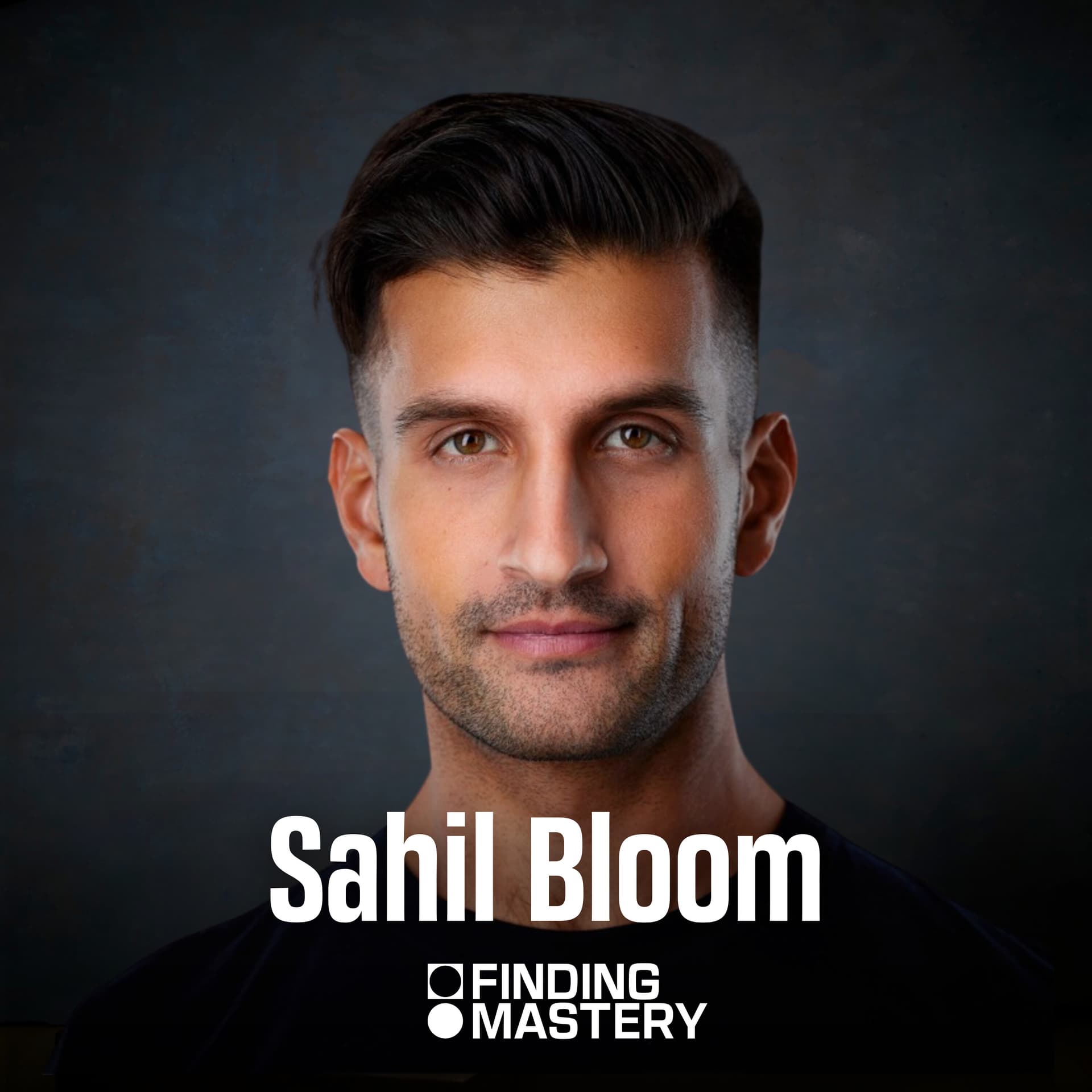
Sahil Bloom, former private equity investor who left his job within 45 days after a “15 visits left” realization about seeing his parents. He moved 3,000 miles to live closer to both sets of parents. Host: Dr. Michael Gervais, high-performance psychologist.
Key claims
Money is incomplete as a life scoreboard; bad measures/incentives can backfire (cobra effect). “Enough” is about articulating the life money is for; expectations are a major financial liability. Time wealth includes freedom and how you “contour” your presence. Kairos time is created by you.
Notable examples
British cobra bounty story; “bigger boat” yacht comparison; Rockefeller “just a little bit more”; Cold War nuclear protocol near-miss; Sahil’s move closer to parents; fertility hardship and “complaining what you prayed for.”
Written by AI. May contain mistakes. Listen to the episode to check what was said.
Chapters
Tap a time to open that second in VORedefining Wealth Beyond Money
0:30 to 1:51
Discover the concept of five types of wealth and their significance in life.
“Welcome to the Finding Mastery Podcast, where we dive into the minds of the world's greatest thinkers and doers.”
The Scoreboard of Life
1:52 to 4:43
Explore the importance of how we measure our lives and what we prioritize.
“And closing that gap is how your life improves.”
The Duality of Measurement
4:44 to 6:52
Discuss the pros and cons of measuring aspects of life and the consequences of poor measures.
“So you took the old scoreboard of like money, two cars, two and a half kids, or whatever those metrics are, and said, we can do better.”
Old Wealth vs. New Wealth
6:53 to 10:48
Understand the differences between traditional wealth and new wealth that emphasizes life satisfaction.
“Yeah, I think there's sort of two important points here that you're hitting on.”
The Five Types of Wealth
10:49 to 12:57
Learn about time wealth and its impact on life choices and responsibilities.
“So before digging into the more nuanced take on new wealth that you've got, I was very clear that old wealth is bank account, house, car, watch, like all of the status external things.”
The Five Types of Wealth
13:37 to 13:59
Learn about time wealth and its impact on life choices and responsibilities.
“The ingredients are nano encapsulated for five times better absorption than traditional pills and powders.”
The Five Types of Wealth
14:12 to 15:19
Learn about time wealth and its impact on life choices and responsibilities.
“It's the time that you lose when the fit is off, the momentum that stalls when that fit doesn't work.”
The Arrival Fallacy and Realizing Time's Value
15:23 to 17:55
Discover the realization of the fleeting nature of time and its impact on relationships.
“I took the job that I thought was the one that was going to lead me to the path, the idyllic land of success.”
Reassessing Control Over Time
17:59 to 20:39
Understand how to take control of the time spent with loved ones for a richer life.
“We had taken an action and created time.”
Chronos vs. Kairos: Two Types of Time
20:42 to 22:49
Explore the Greek concepts of Chronos and Kairos and their implications on life.
“to be your very best in the moments with your parents?”
Show all 25 chapters
The Importance of Every Moment
22:52 to 26:39
Learn about the significance of treating every moment as valuable and impactful.
“It sounds more, but it helps me be here now because I don't know.”
Exploring Spirituality and Time
26:40 to 28:01
Consider how personal beliefs and the nature of time intersect in our understanding of life.
“which was to fire these nuclear missiles back and saved the future of the planet in this one moment where all of these, you know.”
Exploring Zoroastrian Influence and the Concept of God
28:01 to 28:56
The conversation touches on Zoroastrianism and its connection to existential questions posed by a child.
“So one of my uncles is Zoroastrian, Persian, Zoroastrian.”
Exploring Spirituality and Time
29:01 to 30:11
Consider how personal beliefs and the nature of time intersect in our understanding of life.
“the mind, how to develop it for high performance, how it can be great in high stress conditions, and what helps it stay sharp over the long arc of life.”
The Five Types of Wealth and Their Order
31:47 to 36:34
A discussion on the five types of wealth and the personal definitions of financial success.
“There was a hinge idea and experience on time.”
Reflections on Enoughness and Life Choices
36:35 to 42:01
Insights on defining what 'enough' means and the impact of societal expectations on personal happiness.
“And suddenly in this one moment, all of the excitement and joy that my friend had experienced from creating this experience with his friends had been deflated at the comparison to this other boat.”
Navigating Personal Struggles During COVID
42:01 to 44:53
Explore the challenges faced during COVID and the impact on personal relationships.
“being stuck at home, social life non-existent.”
Navigating Personal Struggles During COVID
44:56 to 45:59
Explore the challenges faced during COVID and the impact on personal relationships.
“Days are longer, pace picks up, and there's this sense of momentum that comes with the season.”
Navigating Personal Struggles During COVID
46:05 to 46:19
Explore the challenges faced during COVID and the impact on personal relationships.
“in your welcome kit with your first AG1 subscription.”
Reflections on Parenting and Fertility
46:19 to 50:56
Discuss the complexities of parenting and the emotional struggles around fertility.
“and how that interplayed with that moment in my life is still very raw and real.”
Asking the Hard Questions
50:56 to 56:00
Delve into the importance of confronting uncomfortable questions for personal growth.
“Okay, if you could kind of turn the corner here just a little bit, what do you hope people will get from your research and your writings or this conversation to be just a little bit better?”
Redefining Success: A Personal Journey
56:00 to 58:09
Discover how personal values shape success and the importance of taking action.
“the special skill or trait or whatever the superhero has.”
The Intersection of Purpose and Longevity
58:10 to 1:00:42
Explore the relationship between purpose, well-being, and longevity in life.
“And one more turn before we round up here is that Dr.”
Defining Your Purpose Through Ikigai
1:00:43 to 1:01:56
Learn how the concept of ikigai can help define your purpose based on your current world.
“And ikigai is a foundational idea in Japanese culture that you're reminding us of that process.”
Reflections on a Meaningful Conversation
1:01:57 to 1:03:05
Engage with the hosts' reflections on the value of meaningful discussions and partnerships.
“And it is a life mission that I find really interesting and exciting.”
Transcript
Automatic transcript. May contain errors.0:00Sahil Bloom:When you've thought about measuring your life, what was the one thing that you measured? It was money. And so what I set out to do with this book was to try to create a new scoreboard, a new way of measuring your life around the pillars and the things that really do fundamentally create this good life, if you will, that we are all seeking to build. That is what the five types of wealth is about.
0:21Dr. Michael Gervais:What if the real risk isn't failure? It's spending your whole life chasing a version of success that was never yours to begin with. Welcome back. Welcome to the Finding Mastery Podcast, where we dive into the minds of the world's greatest thinkers and doers. I'm your host, Dr. Michael Gervais, by trade and training, a high-performance psychologist. Now, the whole idea behind these conversations is quite simple, to sit with the extraordinaries to learn about how they work from the inside out. Today's conversation is with Saul Hillbloom, a former private equity investor who made a radical life shift after realizing he might only see his parents 15 more times.
0:59Sahil Bloom:Within 45 days, I had left my job. We had sold our house in California. And my wife and I had moved 3 ,000 miles across the country to live closer to both of our sets of parents. We had taken an action and created time.
1:12Dr. Michael Gervais:That gut check moment, it led him to redefine what it means to live well for him.
1:17Sahil Bloom:I never talked to anyone who said that their enough life was traveling around on a private jet by themselves. I know many people, and I'm sure you do, who have way more money than I do, but are not wealthy. because they are constantly chasing some version of more that the world has handed them.
1:34Dr. Michael Gervais:The invitation here is to explore what you are really optimizing for in your life. Are your daily actions aligned with what you say matters most?
1:44Sahil Bloom:There are two types of priorities in life. There are the priorities we say we have, and there are the priorities our actions show we have. Oftentimes, there's a huge gap between the two. And closing that gap is how your life improves. Let's dive into this week's conversation with Saul Hill Bloom.
2:03Dr. Michael Gervais:Okay. I'm really excited that you're here. We're finally here in the Finding Mastery Lab. Like I've wanted to sit down with you for a long time. So welcome. And I'm excited for the conversation.
2:13Sahil Bloom:The feeling is very mutual. I'm thrilled to be here.
2:16Dr. Michael Gervais:Okay. So I think we've got a lot of thoughts that rhyme together. I feel that way too. Yeah. And so thank you for putting together a book that it's not easy to tackle the five verticals that you went after. So let's just kind of start big picture for a minute. What's the flyover for the book? What were you trying to do? And then I want to better understand you, the person that is underneath the ideas. And then the third part is I want to understand kind of what you hope we will take from your research and your writings. So let's start with a flyover the book.
2:53Sahil Bloom:The book is fundamentally about asking yourself what you want your life to look like. And what you measure around your life, I have found, dictates your ability to go and create that life. Very few people focus on measurement on our journey, but if you really zoom out and think about it, what you measure in life really matters. The things that you measure end up dictating all of your actions. Peter Drucker is this famous management theorist. He has this quote where he says, what gets measured gets managed. It's the idea that as humans, the things that we can measure end up being the things that we narrowly hone in on and optimize around.
3:40Sahil Bloom:Put on a sleep tracking ring or band, all of a sudden you become the most annoying sleep person in the world. You start saying like, oh, I can't go out because my sleep score is gonna be thrown off. Suddenly, all of your actions surround this one thing that you can now measure. Historically in our lives, when you've thought about measuring your life, what was the one thing that you measured? It was money, your net worth, the ability to earn and generate income and wealth. And unfortunately, if all of your actions surround that one thing, what we find societally and in our own lives is that we can win that one battle, but lose the much bigger picture war.
4:22Sahil Bloom:And so what I set out to do with this book was to try to create a new scoreboard, a new way of measuring your life around the pillars and the things that really do fundamentally create this good life, if you will, that we are all seeking to build. That is what the five types of wealth is about. It is about redefining this life scoreboard, if you will, so that we can take the right actions to win on that much bigger picture scoreboard.
4:48Dr. Michael Gervais:Yeah. So you took the old scoreboard of like money, two cars, two and a half kids, or whatever those metrics are, and said, we can do better.
4:56Sahil Bloom:Yeah, we can do better. And it's not about saying that those things don't matter. It is about saying that they are incomplete. They are a piece of the puzzle. Money isn't nothing. It simply can't be the only thing. Okay.
5:09Dr. Michael Gervais:So that phrase, managing and measuring, okay, it actually drove me crazy and great. graduate school. So there was, there's this, let me just start with like psychology is invisible. We can't see thoughts. We don't know where they come from. We don't know how much they weigh. We don't know where they go. We don't know how to put handles on them. Like you can't see thoughts just like you can't see gravity. You can see the artifact of gravity. You can see the leave behind of gravity. You can see the artifact of thoughts too, behavior. So the idea in graduate school is like, if you can't measure it, you can't manage it.
5:48Dr. Michael Gervais:And I thought, what? Like, there are so many things that we can't measure because we can't even see them, but we know they're powerful. It is what ultimately led me to moving from the sports science track that I started. So I started in psychology, then I get a master's degree in sports science, and then back to psychology. I did want to measure some stuff because this intangible world, this fascinating world of psychology. I wanted to put handles and measure and understand how to get better at something. And it ultimately led me back to the invisible world of psychology. And to have a love affair with the invisible is a difficult thing to do.
6:29Dr. Michael Gervais:So I want to start with, it sounds like you are swinging to, yeah, I want to measure stuff. There's a scoreboard to finances. There's a scoreboard to the other four verticals of wealth. And I do want to measure so I can best manage. And I think manage is not the word after reading your book. It's more about optimizing. So can you just respond to that hinge idea just a little bit?
6:56Sahil Bloom:Yeah, I think there's sort of two important points here that you're hitting on. One is this idea of a desire to measure is very much a double-edged sword because a good measure is a fantastic thing. And you take the right actions, you create the outcomes that you desire. But a bad measure can be debilitating. So you can have this desire to measure something. You have a fear of, you know, this intangible, the invisible. So you go and chase something that you can measure that's tangible. But if it's a bad measure, it can actually lead to the entirely wrong set of outcomes. There's all these famous stories from history of this that are really funny.
7:39Sahil Bloom:Like in colonial India, the British wanted to get rid of the cobra population that was like running rampant in the streets of Delhi. And so they put out a bounty where they said, we'll pay you for every cobra head that you deliver. So these enterprising Indians went and started breeding cobras and then chopping their heads off and bringing them in to make money. The British realized this was happening and said, bounties off, this is not happening anymore. And these cobra breeders now had a whole bunch of cobras that were worthless, so they just released them into the streets. So this measure that was designed, this incentive that they put in place that was designed to reduce the number of cobras in the wild actually increased it.
8:21Sahil Bloom:So it was an example. It's called a cobra effect. This example of like the wrong measure can actually lead to the entirely wrong set of consequences of outcomes.
8:31Dr. Michael Gervais:This is what I really enjoyed about your writing is that, you know, that one, that story is emblematic of how you weave a deeper insight through each of the five verticals of wealth. And you've got that right balance in your writings between storytelling and personal experience with some science and framing. So I just wanted to highlight that and say, cool, well done. Thank you for that. I appreciate it.
8:57Sahil Bloom:But the other piece is to just recognize that all measurement are inherently a little bit of art and science. Like when we're talking about measuring in our lives, the money one, the reason it has been historically the measure is because it was so measurable. It's very easy to say like, well, my entire life worth is this one number. And we are all operating on, generally speaking, the same scoreboard around that. So you can walk into a room and humans are, you know, status-seeking creatures. It's a very simple way to create a hierarchy around the people that you're all around. You walk into a party and everyone sort of stacks themselves up according to this one measure.
9:37Sahil Bloom:When we start moving into these domains that don't necessarily have as simple of a measurement, you have to embrace a little bit of that kind of invisibility, a little bit of the fuzziness that comes with it. How do I measure the quality of my relationships? I can't necessarily tell you, like, I have a better relationship with my kids than you have with yours. It has to be an internal measure, an internal locus of control, if you will. And I think that much of this, much of this whole idea, much of what we both talk about, frankly, is about shifting from these external locus of control to internal locus of control.
10:14Sahil Bloom:Meaning you are fundamentally the one that is capable of creating the change in your world. You are capable of taking actions and creating outcomes according to the things that you want. And that, I think, is where a lot of people get stretched, where it becomes a little bit more intangible, and you need to turn inward. You can't use these things as a way of necessarily stacking yourself against others.
10:40Dr. Michael Gervais:We're begging the question, like, what is the scoreboard and the measurement that you outline in the book for the five dimensions? Put a pin in that for right now. And let's stay on new wealth. So before digging into the more nuanced take on new wealth that you've got, I was very clear that old wealth is bank account, house, car, watch, like all of the status external things. Old wealth for just a moment. New wealth for me is a sense of zest for life, of vibrance. There's the animation of flourishing, the spirit of aliveness. And Harvard's 80-year study on that pointed to purpose and connection as two of the main threads for what I would call new wealth.
11:34Dr. Michael Gervais:Now, you separated that idea just a little bit further and said, right, what you're talking about are these five dimensions. So do you want to hit the five dimensions quickly and then talk about how you're thinking about managing them?
11:47Sahil Bloom:Yeah. So the way that I have thought about constructing this is around these five pillars, these five types of wealth. The first is time wealth. It's about freedom to choose how you spend your time, who you spend it with, where you spend it, when you trade it for other things. It's fundamentally based on an awareness of time as your most precious asset, the one thing that you cannot get any more of.
12:12Dr. Michael Gervais:Once you spend it, it's gone. You can't get it back.
12:14Sahil Bloom:Once you spend it, it's gone. And there's a resonance about how you spend it, meaning you and I are both in an unfolding
12:21Dr. Michael Gervais:moment right now. So time is happening. And if I am worried or anxious or intolerant, I'm spending that currency in a certain way. It's happening no matter what for all of us. But the way that you spend that, the contour of how you fit in the pocket of this unfolding, moving moment is materially your responsibility. And so that's how, like, I love that you're introducing time wealth, but you, back to Locust of Control, fundamentally shape how you contour with the ever unfolding present moment.
13:00Sahil Bloom:That right there, the way you articulated it, I've never articulated it quite in that way, as elegantly as you did. that was the fundamental realization that changed my life.
13:36Dr. Michael Gervais:main. The ingredients are nano encapsulated for five times better absorption than traditional pills and powders. And I love the taste. I love what they're doing here. I use Magic Mind just about every mid morning. And what I noticed is that I think just a bit more clearly. My focus is definitely enhanced and I don't experience an afternoon drop. That's not a small thing when the quality of your thinking is one of your most valuable skills. So go to magicmind.com and get 50 % off your first order. You spend a lot of time sharpening your mind. It is worth fueling the brain behind it. Body Master is brought to you by LinkedIn Jobs.
14:11Dr. Michael Gervais:If you've ever hired for a small business, you know the real cost isn't just the salary. It's the time that you lose when the fit is off, the momentum that stalls when that fit doesn't work. And that's the pressure of having to get it right while you're still running everything else. That's why I'm paying attention to LinkedIn Hiring Pro. It's built for the reality of hiring when you're operating lean. You describe the role in playing language, and then Hiring Pro helps you draft the job posts, surface the right candidates, and then narrow to a short list without turning hiring into another full-time job.
14:40Dr. Michael Gervais:And when applications start coming in, it doesn't leave you buried in resumes. It streamlines screening, including AI-powered interviews for initial conversations. How about that? So that you can spend less time searching and then more time connecting with the people who match what you need. With Hiring Pro, you can hire with confidence knowing you're getting the best talent for your business. In fact, those hiring with LinkedIn are 24 % less likely to need to reopen a role within 12 months when compared to their leading competitor. Join the 2.7 million small businesses using LinkedIn to hire.
15:11Dr. Michael Gervais:Get started by posting your job for free at linkedin.com slash mastery. Again, that's linkedin.com slash mastery. Terms and conditions apply.
15:22Sahil Bloom:I had been marching down this very traditional path along old wealth. I took the job that I thought was the one that was going to lead me to the path, the idyllic land of success. I was going to make enough money that everything was going to go away. My internal problems, my external problems, I was going to feel good about myself. I wasn't going to be insecure anymore.
15:42Dr. Michael Gervais:If you had the right kind of external markers.
15:45Sahil Bloom:Yeah. If I just had X amount of money. What was the industry remind me? I was working in private equity. That's right. In finance, you know, go invest and make a bunch of money, get a bunch of fancy things. And I kept doing this thing. It's called the arrival fallacy. You like build up this idea that there's some destination that you are going to get, some bonus, promotion, title, goal. You're going to get it, and you're going to feel like you've arrived. Suddenly, I'm going to wake up in this like idyllic land. Everything's going to be great. And inevitably, it is a fallacy. You get the thing, and you reset to whatever the next one is.
16:16Sahil Bloom:You feel this familiar sense of dread, of never having enough. And unfortunately for me, along that whole journey, I would get those things, and every step of the way, I blinded myself to the fact that these other areas of my life were starting to suffer and show cracks. Most importantly, my relationships. I was living 3 ,000 miles away from my parents, who I'm very, very close with and who I had noticed for the first time were slowing down, that they weren't immortal, which is what you think when you're a kid. And the one moment that shifted this entire thing for me, the moment that I realized what you just articulated was I went out for a drink with an old friend.
Read the full transcript
16:56Sahil Bloom:We sat down and he asked how I was doing. And I told him that it had started to get difficult living so far away from my parents, 3 ,000 miles away. And he asked how old they were. And I said mid-60s. And he asked how often I saw them. And I said about once a year. And he looked at me and said, okay, so you're going to see your parents 15 more times before they die. And in that moment, I felt like I had been punched in the gut. I mean, the idea that the amount of time you have left with the people that you care about most in the world is that finite and countable that you can place it onto a few hands.
17:37Sahil Bloom:That had really just shaken me to the core. And we took a dramatic action. We reassumed that internal locus of control. Within 45 days, I had left my job. We had sold our house in California, and my wife and I had moved 3 ,000 miles across the country to live closer to both of our sets of parents. And the reason that I say the way you articulated that was so powerful for what happened in that moment was it created a recognition of the fact that you are in much more control of your time than you think. We had taken an action and created time. The time was going to pass one way or another, but the number of moments we had with these people we cared about could change.
18:23Sahil Bloom:We were in control of that. So that number, 15, it's now in the hundreds. We make this change, and suddenly it goes from 15 like that to being in the hundreds. I see my parents multiple times a month. They're a huge part of my son, their grandson's life. We had taken an action and created time. We had reassumed agency over this thing that we were in control of. So time is passing one way or another, but your ability to experience it, to deploy it into the moments and the windows that really count, that's up to you.
18:53Dr. Michael Gervais:So there's two parts to that. One is you increase the time with your parents by making a decision. And I want to go back to the hinge moment one more time. And what I'm also pointing to is the way that you fit. like, you know, a musician or a dancer fits into the music and there's a pocket. So musicians call it being in the pocket. Athletes call it being in the zone. You know, scientists call it flow state, but the moment is moving. So that's kind of the way we talk about time. It's not just being present with time. You and I are present right now. And if I'm frustrated and if I'm pissed or if I'm anxious, I'm still in the present moment, but the contour of how I'm in the pocket of this moment has a tone to it.
19:51Dr. Michael Gervais:So this idea that be present, bullshit, That's not right. We are always present, but we might just be three-quarters the way with it. We might have a prickliness with it. We might have an abundance and a joy with it. We're always in the unfolding present moment. Even when our mind is thinking about later, there's still part of us, the essence of us as well is here. I wanted to have this part of the conversation because I know how much you value time. and you made this hinge shift in your life to go have more time. But there's also right underneath of that, the way that you contour yourself in the unfolding unknown present moment.
20:37Dr. Michael Gervais:Can you open that idea up a little bit about how you ready yourself to be your very best in the moments with your parents?
20:48Sahil Bloom:you know i think that a lot of this for me in my own life has been a derivative of this idea from ancient greece that there are two types of time ancient greeks actually had two different words for time they had chronos which was the idea of chronological linear quantitative time the clicking of the clock that is the way that most of us interact with time that's how we think of it. And then they had Kairos, which was the idea that not all time is created equal, that there are specific moments, windows that have more texture. I think of it as texture. I think of it as meaning of weightiness to it.
21:30And that energy put into those moments has
21:34Sahil Bloom:greater outcomes. It actually creates on a higher level.
21:38Dr. Michael Gervais:You speak a lot about leverage, like input-output. You know, like, is it Archimedes or Hercules? I can't remember. Archimedes. Yeah, like, you know, give me a lever, I can move the world. That type of idea. The exact quote is escaping me. It is that.
21:54Sahil Bloom:Give me a place to stand and I will move the earth.
21:57Dr. Michael Gervais:Yeah, and so that idea, you speak a lot about that. And I like to think about inputs to outputs. And outsized inputs have a dramatic impact on outputs. And the one more thing here is that the way that we are spending our time holds material impact in the way we design our life. And the arrival fallacy is real and this time, this idea that we're going to have more time is real. And those two false ways of dealing with the reality of the fleeting nature of time keep us into this never, never land. Like, I'll see you later. Okay. As I'm walking out the door, not making eye contact, not addressing, like, I might not see you ever again.
22:48Dr. Michael Gervais:And that's a really important practice for me. And it helps me. It sounds more, but it helps me be here now because I don't know. now my job right now is to be here with you and if i don't honor that and i've got this idea like we're going to see each other again like oh it's going to be great we'll have dinner hey that might not ever happen so it helps me stay here but hold on let me stay on this kairos idea for a minute let's see what you do with this chronological tick tick tick tick can i be present get more time with the things that i like doing with the people i want to be with tick tick tick okay and then Kairos is this idea about the animation, the texture, I think you said.
23:26What if I were to suggest that some moments don't have more value than others?
23:33Dr. Michael Gervais:This is the Kairos idea. But blending those two, that every moment of your life is the most important moment that you'll ever have. And the Super Bowl is not a bigger moment than practice number one. those those um there's not a fallacy for this but the the idea that one moment matters more than the other the kairos i think actually sets me up for the the arrival fallacy i'll be different later when that moment happens i'll be prepared and i'm going to train now to be prepared for that moment no yes and no this moment is the only moment i get and if when you take this moment away from me and I no longer get to experience this moment, that's the end of my physical life.
24:18Dr. Michael Gervais:That's kind of how it's defined. So how do you square that idea between Kairos and Kronos?
24:25Sahil Bloom:What I really think about often is that
24:31Sahil Bloom:Kairos time is not some predetermined fate-driven concept. Ditto. It is created by you. And so it's interesting. Which you give meaning to the moment. Exactly. Which is to say that you can create any moment.
24:50Dr. Michael Gervais:So why not create this moment to be the most important moment?
24:53Sahil Bloom:I think that is what is within your control entirely to do. And so you should do that.
24:58Dr. Michael Gervais:Does that sound exhausting to you?
25:00Sahil Bloom:No, I think that it sounds like the way that we... That doesn't mean that you apply the most intense, insane energy to every moment. but it means that you take every moment seriously. And what I would say about this idea of big moments or these windows, the reason I believe in that is because the world doesn't just revolve around you. There's everyone else that is also going about hopefully trying to create the most of every moment that they have. And sometimes all of those forces that are out in the world, think of it as like atoms flying around in space, collide in these very unique ways that create this incredible symphony of these things coming together in this one spot where it really counts.
25:47Sahil Bloom:And everything that you've done leading up to that has built to this one crescendo where whatever it is, it's one minute left in the Super Bowl. All of these players who have spent their entire careers putting and investing energy into their given moments have led up to this very unique point in time. And the way that you act during that point in time has significant impact on what the future looks like for the world in a lot of cases. I mean, if you think about it in certain geopolitical moments, like think about the person who saw the missiles firing during the Cold War and their responsibility was to press the button and fire nuclear missiles back.
26:28Sahil Bloom:But they thought for one moment about whether or not this might be not real. They could have ended the entire world in that world. This is a real story. This is a real story. This happened. The person said, like, no, I don't think this is real. Chose not to follow what the protocol was, which was to fire these nuclear missiles back and saved the future of the planet in this one moment where all of these, you know. Oh, the power of discernment. And, you know, look, I think that reading more and going deeper down the rabbit hole of the very nature of time will break your brain in a lot of ways. Because what you realize is that there's no such thing as just like time existing, right?
27:14Sahil Bloom:Like there's not a present moment that you can say across the entire span of the universe. There's not really that, that's not really a concept. Time doesn't exist. Time sort of exists in the mind of the perceiver of the time. What I have found personally in my own journey wrestling with these things as a not particularly religious person that's that's a funny way of saying it you know i i don't have some dramatic belief in a single higher power what was your family's um my dad's family has um jewish descent uh my mom's side of the family is sort of a blend of like hindu muslim zoroastrian i mean there's like a little bit of everything.
27:58Sahil Bloom:Buddhist. So a real mixed bag. Is it a Persian influence? Like Zoroastrianism? Yeah. So one of my uncles is Zoroastrian, Persian, Zoroastrian. It's the kind of world's first religion, which is - Yeah, it's an ancient - It's a beautiful - Yeah. And what I will say is that after having my son, and now he's three years old, he asks a lot of questions. He's going down a big why phase of asking why. When we talk about a lot of these things, and he's asking me why, why, why, I find that a lot of the why rabbit holes converge to something that feels like God at some point. Part of that is that it gets to the point where it feels unexplainable by physics and by what we understand about the world around us.
28:44Sahil Bloom:And I always find that interesting. I wouldn't say it has made me all of a sudden feel religious, but it is interesting to me that things converge to this inability to comprehend what we are trying to articulate or comprehend.
28:58Dr. Michael Gervais:Finding Master is brought to you by Momentus. I have spent my career studying the mind, how to develop it for high performance, how it can be great in high stress conditions, and what helps it stay sharp over the long arc of life. And one of the things I've learned is to pay close attention when science starts pointing somewhere new. Creatine is one of those places right now. We've known for decades what it does for the body. Strength, power, recovery. It's about well studied as any supplement out there. But the work emerging on creatine in the brain is what has my attention. The brain runs on energy, the same currency a working muscle does.
29:32Dr. Michael Gervais:And creatine appears to support brain energy metabolism, helping working memory, easing mental fatigue under exactly the conditions so many of us operate in. Sustained demand, stress, not enough sleep. For something that's been around this long, that's a genuinely interesting frontier. So if I'm going to take something daily, the quality has to be unquestionable. That's why I use Momentus. They searched the globe for the highest quality creatine. Then they built their own specification around it. Signature spec is what they call it. It's made in a pharmaceutical facility, six stages of testing, four independent agencies, and it's NSF certified for sport.
30:08Dr. Michael Gervais:When you take something every day, that level of quality compounds. Go to livemomentous.com slash findingmastery and use the code findingmastery for up to 35 % off your first order. That's livemomentous.com slash findingmastery with the code findingmastery. Finding Mastery is brought to you by our flagship mindset training course, Finding Your Best. Anytime you feel the pull to reset, to zoom out, to refocus and ask, am I moving toward the person I want to become? It helps to remember this. Lasting change comes from training. Not resolutions, not short-term sprints, but deliberate practice of the skills that shape how we show up.
30:46Dr. Michael Gervais:In work, in relationships, and in the moments of great intensity as well. That's what finding your best is all about. It's a science-backed framework for training your mind. And it's the same set of tools that we've taught to Olympic athletes, top executives, elite military teams, and artists at the peak of their craft. In this course, you'll learn the foundational psychological skills to be your very best. Full stop. And the best part is you can start anytime. Right now, we're running a limited time offer on finding your best. Simply head to findingmastery.com slash course and use the code RENEW100 to get$100 off your registration.
31:19Dr. Michael Gervais:If you've been waiting for the right moment, this is a good one now to lean into. Spring and summer, they are powerful seasons of momentum. It's a great natural time to step into growth, to refocus, to recommit to who you want to become. And this discount will not be around for long. So go to findingmastery.com slash course code renew100 for$100 off today because your future is not shaped by what you intend. It's shaped by what you train. We started with time. There was a hinge idea and experience on time. Is there an ordering between time and why you put mental as kind of the third chapter in the book or the third vertical?
32:00Sahil Bloom:Time being first and financial being last was very deliberate.
32:05Dr. Michael Gervais:Yeah.
32:06Sahil Bloom:The in-between was sort of a personal approach. Yeah. Largely social was the second because it flowed naturally off of this idea of time and the amount of time you have with these people. Yeah. Flowing into social, flows into mental, flows into the physical. Flows into financial. Flows into the financial.
32:28Dr. Michael Gervais:Okay, cool. And so when you think about living a good life and you've got the five verticals of wealth, which most people call health, you know, like so like you're having fun with modern wealth. is is financial is it less important to you or is it equally as important as it was and you've rounded out the other four sources of wealth to have a tide that's higher than you know rising tide that was bigger than it was before or have you diminished the importance of financial wealth
33:06Sahil Bloom:I have gotten clarity on what being financially wealthy means to me.
33:12Dr. Michael Gervais:I was going to ask you about what does enough mean?
33:15Sahil Bloom:That is really what I've done with financial wealth, is I've recognized that it all hinges on your ability to clearly articulate what the life is that you are actually trying to build, what the money is for. Very few people have any ability to articulate what the money is for. You go and ask someone, hey, what does enough mean to you? And they give you a number, but they cannot tell you the life. They can't tell you where they live. What are they doing? What are they thinking about? What are they working on? Who are they with? All of these things that are really what that money is supposed to be building towards are left in this abstract place in their mind.
33:56Sahil Bloom:They might feel like they know what it looks like, but they don't. And what happens to most people is if you leave that idea of enoughness as a number, it just resets two to three X when you get close to it.
34:10Dr. Michael Gervais:This much in the bank. And when you get that, it's like, wait, who is the famous? You did the quote.
34:15Sahil Bloom:Oh, John D. Rockefeller. Yeah, was asked. Yeah. How much money is enough money? And he said just a little bit more.
34:22Dr. Michael Gervais:That's haunting.
34:23Sahil Bloom:Yeah. That actually haunts me.
34:25Dr. Michael Gervais:Yeah. You know, when I've heard it before and when I read it in your book, I was like, there it is again. Yeah. Because it keeps resetting.
34:33Sahil Bloom:It's this poverty of more. This, you know, incessant quest for more that distracts you from the beauty that is this idea of enough.
34:44Dr. Michael Gervais:So open up your insight here. How would you hope we design our life?
34:51Sahil Bloom:I think it all begins with clearly articulating what that life is that you are trying to build. And I really do think it comes down to asking yourself those questions. Where are you? What are you doing? Who are you with? How are you living? What does it look like? Is it one house? Is it two houses? Is it five houses? It's not about it being Spartan or bear. It is about it being yours. And mine is going to be fundamentally different from what yours looks like. I've never talked to someone in the thousands of people I interviewed for the book. I never talked to anyone who said that their enough life was, you know, traveling around on a private jet by themselves.
35:30Sahil Bloom:It just doesn't happen. No one wants that. People want to be surrounded by those they love doing things they find meaningful, hopefully healthy enough to do those things with some freedom. It's remarkably consistent across people. And there's some nuance to how fancy it is, what they're able to afford, all these different things. But the ability to clearly see that picture in your mind is then how you can reverse engineer, okay, what are the actions I need to take then to go and build towards that thing? The reason it's so important is because your expectations are your single greatest financial liability.
36:07Sahil Bloom:We don't think about that. We don't think about the fact that expectations are the greatest risk to living a wealthy life. I know many people, and I'm sure you do, who have way more money than I do but are not wealthy. They are not wealthy because they are constantly chasing some version of more that the world has handed them. Maybe they live in New York City and they're making$10 million a year, but they hang out with people making$50 a year. and all they do is spend all their time feeling bummed that they can't have the house in aspen or that they can't have the bigger boat or the bigger yacht and i tell this story in the book of a friend who sold a company for several hundred million dollars and he was celebrating this exit by taking all his family and friends on this trip on this yacht and he was so excited and all his friends are coming they're all celebrating so exciting again this is another haunting story Yeah, and one of the friends arrived and looked over at the next mooring and saw this even bigger yacht and said to my friend, wow, I wonder who's on that one.
37:12Sahil Bloom:And suddenly in this one moment, all of the excitement and joy that my friend had experienced from creating this experience with his friends had been deflated at the comparison to this other boat. And so the lesson, as I say it, is there is always going to be a bigger boat. in life. If you are measuring your entire worth on the basis of this thing, this money, this status symbols that you can achieve, you are going to be chasing this mirage, this castle in the air that just keeps disappearing and reappearing on the horizon. One of my favorite movies from childhood is Cool Runnings. It's this movie of this Jamaican bobsled team.
37:51Sahil Bloom:It's kind of a funny, cute movie. And John Candy plays the coach. And he has this line, he says to one of the players, A gold medal is a wonderful thing, but if you're not enough without it, you're never going to be enough with it. That line, if I could get that tattooed on my brain, I would. If you're not enough without it, you're never going to be enough with it.
38:17Dr. Michael Gervais:It's so good. Yeah. Yeah. And you're describing something that, you know, as I read that passage and hearing it again, there's a CEO that I spend time with who it's a European-based company and it's one of the largest companies in the world. And he's got one of the largest boats in the world. And he very candidly says, what am I doing? You know, like he's got to keep grinding because he bought some stuff that now owns him. And I had a hinge moment early in my life where I was going to travel the world and serve. And I was perfectly fine for my breakfast nook area in the apartment I was living in to be grounded on a plywood and milk crates and a vinyl cloth that I'd throw over.
39:10Dr. Michael Gervais:And that was my aspiration as long as I could surf the world. And so low material possessions and really high experiential stuff. I'm really glad I didn't do that. I missed out on something by choosing the path I did, but I'm really happy in the path that I did choose. But I did miss something that now I do want to go travel a lot to surf or ski or whatever, but my body is old, older, and I can't do what I did 25 years ago in a wave, 35 years ago in a wave. So I am missing something by it. So I don't think that there's like this one path that is clear. I can afford to go do that traveling and I'm choosing not to do it.
39:57Dr. Michael Gervais:And I can't do the thing as well as I would have loved to have done it when I was younger. So I don't think it's this, you know, fairy tale that we write. There's costs and benefits to, you know, kind of all the decisions. But I do appreciate you ringing the bell to say, wait, wait, wait, broaden the scoreboard. Okay, let's come back though. I do want to understand your hinge idea that fundamentally changed your life from Stanford, private equity, making money, external rewards are kind of the main theme. That's your scoreboard. Somebody says to you, you've got 15 visits with your parents left.
40:37Dr. Michael Gervais:And you said, Oh, okay. This is not uncommon so far, but what's uncommon is that you fundamentally shifted and changed your life based on a moment of pain, of realization. Open up that moment a little bit more when your friend said that to you and then what happened inside of you to take the actions that you did.
40:59Sahil Bloom:I think that in a lot of ways, that moment was the culmination of a lot of tiny moments where I had felt that that change needed to happen. And it was the proverbial straw that broke the camel's back. You were ready. I think I was ready because I had felt micro pain over and over and over again for a period of at least 18 months.
41:29Dr. Michael Gervais:And why didn't you take action on those smaller micro?
41:33Sahil Bloom:because i think micro pain is easy to ignore yeah especially if you are a disciplined driven ambitious person who is prone to write off pain as part of your growth and part of your uh sort of journey to achieve the things that you want i think it's easy to look at those feelings those sensations that you're experiencing and to say like well i'm just going to grind right you kind to take pride in it. And I had gone through a pretty dark time during that 18 months with COVID, being stuck at home, social life non-existent. My wife and I, unfortunately, were struggling to conceive at the time. We had been together since we were 15 years old.
42:18Sahil Bloom:It was the first time we'd ever experienced real hardship in our relationship, really creating strain, bottling that up because I didn't have anyone to talk to about it. There were all of these forces that were sort of chipping away. And I was compounding it by drinking six, seven nights a week. There were just a lot of forces in my life that I felt were pushing that way. But nothing had been the like enormous tsunami wave that hits you and says, you have to do this. to be totally frank i think that it is easy to say that the worst thing in the world is being on a bad path i personally think that the worst thing in the world is being on a good path that isn't yours a bad path is the one that screams at you every single day that you have to get off it is so obvious it's so clear to everyone around you to yourself that like i need to get off this path because it's destroying me.
43:22Sahil Bloom:But the good path that isn't yours is much trickier because there are a lot of forces that tell you to stay on it, that tell you that it's good, you're paying your bills, you have a house, like there's these things, people think you're impressive. There's all these things that are saying to stay on it. And that is very much where I found myself on that good path that wasn't really mine. So all of those micro cuts, while they might have been impactful in sort of an absolute sense, in the relative sense of the bigger picture, they weren't enough. They weren't enough to actually spark action. The tsunami wave that came when I had this recognition about the time, that was what pushed it all over the edge to recognize this isn't even a good path.
44:09Sahil Bloom:If I measure on a different plane, this is not a good path. This is a bad path, and it needs to get changed.
44:15Dr. Michael Gervais:So that insight shifted you from good path that's not yours to a bad path, which actually made the shift easier. How close to the surface are the emotions of that pain at that time, the depressed state that you're in? How close to the surface is that feeling now as you were just speaking?
44:38Sahil Bloom:Close to the surface and can I still feel it, how I felt?
44:43Dr. Michael Gervais:buried deep down or no, I've talked about this enough that there's not a whole lot of energy or no, it's still kind of close to the surface. Finding Master is brought to you by AG1. Summer is here, at least for those of us in the Northern Hemisphere. You can just feel it though. Days are longer, pace picks up, and there's this sense of momentum that comes with the season. For me, that also means more travel. It's more early mornings, more late nights, and it's just really a schedule that isn't consistent as I'd like it to be. That's exactly when having a simple, reliable, daily foundation, it matters.
45:18Dr. Michael Gervais:AG1 has been that foundation for me for over a decade now. One scoop and a glass of cold water in the morning, and I know I'm supporting my gut health, full stop, filling the nutrient gaps that are hard to cover through food alone. And what ends up happening is I'm giving my body what it needs to keep showing up. And that really matters to me. What I love about AG1 is that it doesn't ask a lot of me. It's one habit, one scoop, and it travels easily. The AG1 travel packs are something I genuinely rely on this time of the year. I throw a few in my bag before a trip and the routine stays intact wherever I am.
45:53Dr. Michael Gervais:If you haven't tried AG1 yet or you've been planning to think about getting back into it, now's a great time to start. Visit drinkag1.com slash finding mastery to get an AG1 flavor sampler and a bottle of vitamin D3 plus K2 free. in your welcome kit with your first AG1 subscription. It's a$72 value. Again, that's drinkag1.com slash finding mastery.
46:18Sahil Bloom:The pain around our struggles with fertility and how that interplayed with that moment in my life is still very raw and real. mainly because I catch myself in the present moment struggling with this odd dynamic of complaining about things that I prayed for. You know, recently I had this...
46:52Dr. Michael Gervais:Wait, before you go to the story, what does that mean?
46:54Sahil Bloom:You know, like in life... Complaining what I prayed for. In life, we have this tendency to... pray for things, right? Like these things for the future that we want, whether it's as simple as this house that I want or this car or this engagement ring or having a healthy child in my case. And then you get that thing and a few months go by and all of a sudden you find yourself complaining about the exact thing that you prayed for. And I have in my own journey felt that, that we have this beautiful, healthy boy. And there have been several instances recently even when he's a toddler. He's terrorizing me in some way.
47:41Sahil Bloom:I'm trying to work on something. And I find myself complaining. I'm like, why is he doing this? This is so annoying. Doesn't he know I'm working? And then I catch myself. And I remember that five years ago. I mean, again, I say I'm not a particular religious person, but I prayed every single night that we would one day have a healthy child. And now here I am in this moment complaining about the exact thing that I prayed for.
48:10Dr. Michael Gervais:How are you managing your emotions right in this moment? Because you're flooded. I don't really feel like I need to manage them. They're just happening?
48:18Sahil Bloom:Yeah. And you're letting it flow? Yeah, I don't mind being open about these things.
48:22Dr. Michael Gervais:Yeah, yeah, cool.
48:23Sahil Bloom:I do feel like sometimes you physically manage them. Like I can feel it with my hands. Like there's a tension in my hands that I'm kind of trying to bottle something, even just thinking about it. But I think that as a man, especially, who, you know, looks a certain way and has a certain track record of like, I was an athlete, I worked in this, you know, career and these high status things. Like there's this belief or this assumption that everything is just great and you manage or bottle up whatever it is that you've felt along the journey. And you probably haven't even felt those things, but if you have, you just kind of coast on by them and then onto the next thing.
49:17Sahil Bloom:And especially with fertility, I think it's one of those things that people tend to just suffer with in silence. We certainly did. You know, this like monthly buildup to this one moment and this enormous letdown. And for me, with my wife especially, seeing the disappointment in her was particularly challenging because I just want to be like the, you know, the feeling of safety, the provider. and not being able to do something in that way is a very unfamiliar feeling for someone who has always been able to do the thing that fixes x like identify the problem be the solution the better outcome on the other side that was my whole life was just that it's like i'm just gonna plan execute and then you get the outcome over and over again whatever it was and it's unfamiliar territory when you get thrown into this position where you can't do that.
50:23Sahil Bloom:It's something is in God's hands in some way, as it were. And, you know, I have since felt that on a variety of different occasions, you know, most recently with my parents' health. And I would say that the moments that I experienced with my wife coming to terms with that, wrestling with that, us enduring, crawling through the mud with that, have prepared me better than anything else for navigating what is undoubtedly going to be a painful next 10 or 15 years as my parents get older and as I have to experience that struggle that comes with that.
51:02Dr. Michael Gervais:Thank you for not just having clever words on a book and telling some clever stories to, you know, to share your insights from the book on this podcast, but to be the animation of thoughts and emotions that are fundamentally important to living a good life. You're doing it now, so thank you. Okay, if you could kind of turn the corner here just a little bit, what do you hope people will get from your research and your writings or this conversation to be just a little bit better?
51:41Sahil Bloom:I hope that people will ask themselves some of these inherently uncomfortable questions.
51:49Dr. Michael Gervais:Let's tick off like concretely a handful of important questions and then maybe even pull on the thread a little bit to take it a little bit further, like how, what to do with those
51:59Sahil Bloom:questions. The insight here is just that all of the answers that you seek in life are found in the questions that you avoid, right? It is the ones that you don't want to ask, that you don't want to look in the mirror. One of the most powerful questions anyone can ask is, if a third party were to observe me for a week, what would they say my priorities are? Recognition is that there are two types of priorities in life. There are the priorities we say we have, and there are the priorities our actions show we have. Oftentimes, there's a huge gap between the two. And closing that gap is how your life improves.
52:40Sahil Bloom:but you need to create an awareness that the gap exists in the first place in order to take action to close it. Zooming out enough so that you can see that I have found creates enough perspective to go and do it. Speaks to the second question that I'll offer which is one of my favorites. If you were the main character in a movie of your life what would the audience be screaming at you to do right now. We've all been there sitting in a movie or television show. We just want to jump through the screen and grab the main character and chase the girl to the airport. Don't go down in the basement, you know, look out behind you, whatever that thing is.
53:22Sahil Bloom:You are that main character in the movie of your life and the audience would be screaming something at you right now. So what is it? What is that thing that is so blindingly obvious from the outside looking in that you are either choosing to ignore or have yet to create enough perspective to see. Do you know what that is for you? Slow down. I think life often follows this like almost accordion where it's closed in and you start getting anxious that you don't have enough opportunity. Oh my God, what am I going to do? How am I going to do all these different things? Suddenly some things start going well.
54:01Sahil Bloom:You're taking action. The accordion expands. all of a sudden every opportunity in the world is in front of you. It looks like you're, you know, this enormous expanse. And because you are still in the pattern of thinking of that small shoved in accordion, you start grabbing at everything out in front of you. It's like this buffet. And then all of a sudden you're overwhelmed. You have too many things on your plate and you realize you need to start shifting it back in. And then you go through that whole experience again. I have very much on the back of this book experienced that rapid expansion. And I am very bad at saying no to things.
54:40Sahil Bloom:As much as I talk about it, write about it, try to improve upon it, I self-identify as a nice person, which is one of the worst things that you can self-identify as if you were trying to say no. Because anyone that comes and asks you for a little bit of your time, like, well, I'm a nice person. I should spend five minutes with this person 15 minutes. I should respond to this. I should grab coffee with this. And every single time you say yes to something, you're saying no to something else. And in my case, what I'm saying no to is time with my son and wife. It sounds harsh, but it's the reality.
55:11Sahil Bloom:That's what it is. And learning to navigate that natural accordion of life a little bit more effectively, sort of reduce the amplitude of your wave, if you will, that is where my life will improve.
55:27Dr. Michael Gervais:That's really cool, man. Because you did two things. You stayed pretty concrete about doing less, and then you took it right down into the emotional. What I'm learning from you is that you allow emotions to move pretty transiently throughout your body, and you use words well to be able to capture what's happening. You're not run over by emotions. You're working with them. I think that that's maybe a little bit of the superhero that I feel from how you're showing up, the special skill or trait or whatever the superhero has. And what I really appreciate about that is that I've said oftentimes in my life is that if I'm going to go somewhere, you're not paying me to go do the thing.
56:14Dr. Michael Gervais:I actually like the thing. I've designed my life in a way that I really like the things I get to do. So I'm not paid to go to wherever to do the thing. My rate is actually quite simply early days. It was like, how much does it cost to be away from surfing or my loved ones or like, how much does that cost to be away from that for a little bit of a time? That's not a good business model, by the way, to think that way. It should be more about the value that you're providing. But I do still, in a very simple way, think like, oh wait a week away from my wife and son like oh hold on you know like that's a big ask so i really appreciate um the way that you're structuring your thinking and i've appreciated how you've outlined kind of a new scoreboard to think about and if people were to answer those big questions what do you hope they do with them i hope they take one tiny action against their
57:11Sahil Bloom:answer. I am a big believer that you are one year away from living a completely different life. The reason I'm a big believer in that is because I experienced that. I mean, in May of 2021, I was living in about as dark a moment as I've had in my life. My wife and I were struggling with this fertility journey. I was drinking all the time. We were living 3 ,000 miles away. one year later we were driving our son home from the hospital to both of our sets of parents cheering in the driveway of this home that we had created and built. I was working on things I cared about. I was healthier than I had ever been.
57:53Sahil Bloom:Literally one year. And so I cannot think of a better example to share with people that you are one year of asking the right questions and taking the right actions away from living the life that you really want. Awesome.
58:10Dr. Michael Gervais:Awesome. And one more turn before we round up here is that Dr. Butler, Robert Butler, in 2013, had a really important bit of research around purpose and longevity. And he found that people that were aligned to their purpose lived longer. And there's a handful of other bits of research around purpose that are compelling. But just the one on living longer, and if you combine that with a sense of well-being, which there's other research to support that. So higher quality and longer, healthspan, lifespan. How do you think about purpose and figuring out, one, how to help people align to purpose and how to swing across all five verticals of wealth that you've talked about.
58:59Sahil Bloom:I love this. It's sort of a derivative of this idea of ikigai. You know, ikigai is this ancient Japanese concept of thinking about the kind of like concentric circles of what you love doing, what you're good at, and broadly speaking, what the world needs. I love that idea of what the world needs as being this centering concept, because the term world is often misinterpreted. World can be as small as your family. Your world can be your partner, your child. Your world could be the world in a broad sense. How you define world during the current season of life that you are in fundamentally dictates the plane on which you need to think about your purpose.
59:48Sahil Bloom:I personally think that the natural progression that people go through is from thinking about their world as being themself to thinking about their world as being the world. And you can see that in a lot of
1:00:00Dr. Michael Gervais:octogenarians, you know, tend to think about generativity, giving back. Exactly.
1:00:04Sahil Bloom:Acts of service of others. That's right. Yeah. But it begins in this selfish state. I really think that is the first thing to get clear on when you think about defining your purpose. What is your current world in this season of life? If you are a new parent and you are just starting out on that journey, your world is your child and partner in whatever construct. And your most baseline level purpose is to create for that unit, for that world. And as you progress from that, that shifts. But being clear on what that world looks like, I think is where most people should start to start to hone in on what that purpose looks like.
1:00:41Dr. Michael Gervais:Nice. Super good. And ikigai is a foundational idea in Japanese culture that you're reminding us of that process. Yeah, very cool, man. Thank you so much. I've really enjoyed your writings and I've definitely enjoyed the conversation. One takeaway, what you hope somebody will be able to do with this conversation. Take one small action is what you said, answer some hard questions, and then take one more turn of the screw there.
1:01:11Sahil Bloom:In the coming week or month, put one hour on your calendar that is going to be just you and your thoughts. No technology, take a notebook, pen, and just think about some of the things that we've talked about during this conversation. Zoom out and think about these things. I guarantee you will come away from that hour with yourself with a new insight that will spark some action. And that may be the one action that does change your life.
1:01:38Dr. Michael Gervais:Last question. What is the hard problem that you are dedicating your life to trying to solve?
1:01:44Sahil Bloom:How to share complicated, mind-bending ideas in a way that actually sparks action in people's lives. Very cool. And it is a life mission that I find really interesting and exciting. and I define my own purpose around it to create positive ripples in the world, however those may come about.
1:02:10Dr. Michael Gervais:It's funny, that was almost gonna be the name of our company, Ripples. Oh. And my wife said, hmm, doesn't sound quite right. It sounds like it's rhyming with something else. Yes, it is a tough one. I love the pebble in the pot analogy. So that beautifully said, well articulated, clear with emotions, systems thinker, action oriented. You know, this was an intense conversation. How was it for you?
1:02:34Sahil Bloom:I felt lucky to be able to have that conversation. And so I hope that other people listening to it out there enjoy it and find as much value from it as I did in getting to have it. It really felt like a, I go on podcasts, but it's pretty rare that I come away feeling like, Oh, I am personally glad that I got to sit down and do that.
1:02:58Dr. Michael Gervais:I feel the same way. So it's a good partnership with a combo. So we should figure out how to do something together later. I would love to. Mate, thank you again.
1:03:06Sahil Bloom:Thank you.
1:03:07Dr. Michael Gervais:Next time on Finding Mastery, we're joined by Brian Werdersheim, a seasoned financial advisor who brings heart, clarity, and real talk to one of life's most emotional topics, money. No matter where you are in your financial journey, this episode offers practical, human-centered advice for building a healthier, more intentional relationship with your finances. Join us on Wednesday, August 13th, 9 a.m. Pacific for this super insightful conversation.
1:03:58Dr. Michael Gervais:Spotify. We are incredibly grateful for the support and feedback. If you're looking for even more insights, we have a newsletter we send out every Wednesday. Punch over to findingmastery.com slash newsletter to sign up. The show wouldn't be possible without our sponsors and we take our recommendations seriously. And the team is very thoughtful about making sure we love and endorse every product you hear on the show. If you want to check out any of our sponsor offers you heard about in this episode, you can find those deals at findingmastery.com slash sponsors. And remember, no one does it alone.
1:04:33Dr. Michael Gervais:The door here at Finding Mastery is always open to those looking to explore the edges and the reaches of their potential so that they can help others do the same. So join our community, share your favorite episode with a friend and let us know how we can continue to show up for you. Lastly, as a quick reminder, information in this podcast and from any material on the Finding Mastery website and social channels is for information purposes only. If you're looking for meaningful support, which we all need, one of the best things you can do is to talk to a licensed professional. So seek assistance from your healthcare providers.
1:05:09Dr. Michael Gervais:Again, a sincere thank you for listening. Until next episode, be well, think well, keep exploring.
From the publisher
What if the real risk isn’t failure—it’s spending your whole life chasing a version of success that was never yours to begin with?
That question sparked a radical transformation in Sahil Bloom’s life. A NYT best-selling author, entrepreneur, and investor, Sahil once had a sobering realization: he might only see his parents 15 more times in his lifetime. That gut-check moment became a catalyst for deep change—he left his high-powered career, moved across the country, and set out to architect a life rooted in meaning rather than momentum.
In this conversation, Sahil shares the mental frameworks, emotional reckoning, and actionable systems he’s used to redesign his life. Together, Sahil and Dr. Mike unpack the hidden cost of conventional success, the power of mortality to clarify purpose, and how to build a life worth living.
You’ll learn:
- Why “success” can become a trap—and how to redefine it for yourself
- The simple framework Sahil uses to make high-quality life decisions
- How to overcome fear when walking away from something “good”
- The role mortality plays in clarifying what really matters
- Strategies to realign your life around purpose, not performance
This one’s for anyone who wants to rewrite the script on what "success" means to you.
Links & Resources
Subscribe to our Youtube Channel for more conversations at the intersection of high performance, leadership, and wellbeing: https://www.youtube.com/c/FindingMastery
Get exclusive discounts and support our amazing sponsors!
Go to: https://findingmastery.com/sponsors/
Subscribe to the Finding Mastery newsletter for weekly high performance insights: https://www.findingmastery.com/newsletter
Download Dr. Mike's Morning Mindset Routine: findingmastery.com/morningmindset!
Follow on YouTube, Instagram, LinkedIn, and X
See Privacy Policy at https://art19.com/privacy and California Privacy Notice at https://art19.com/privacy#do-not-sell-my-info.