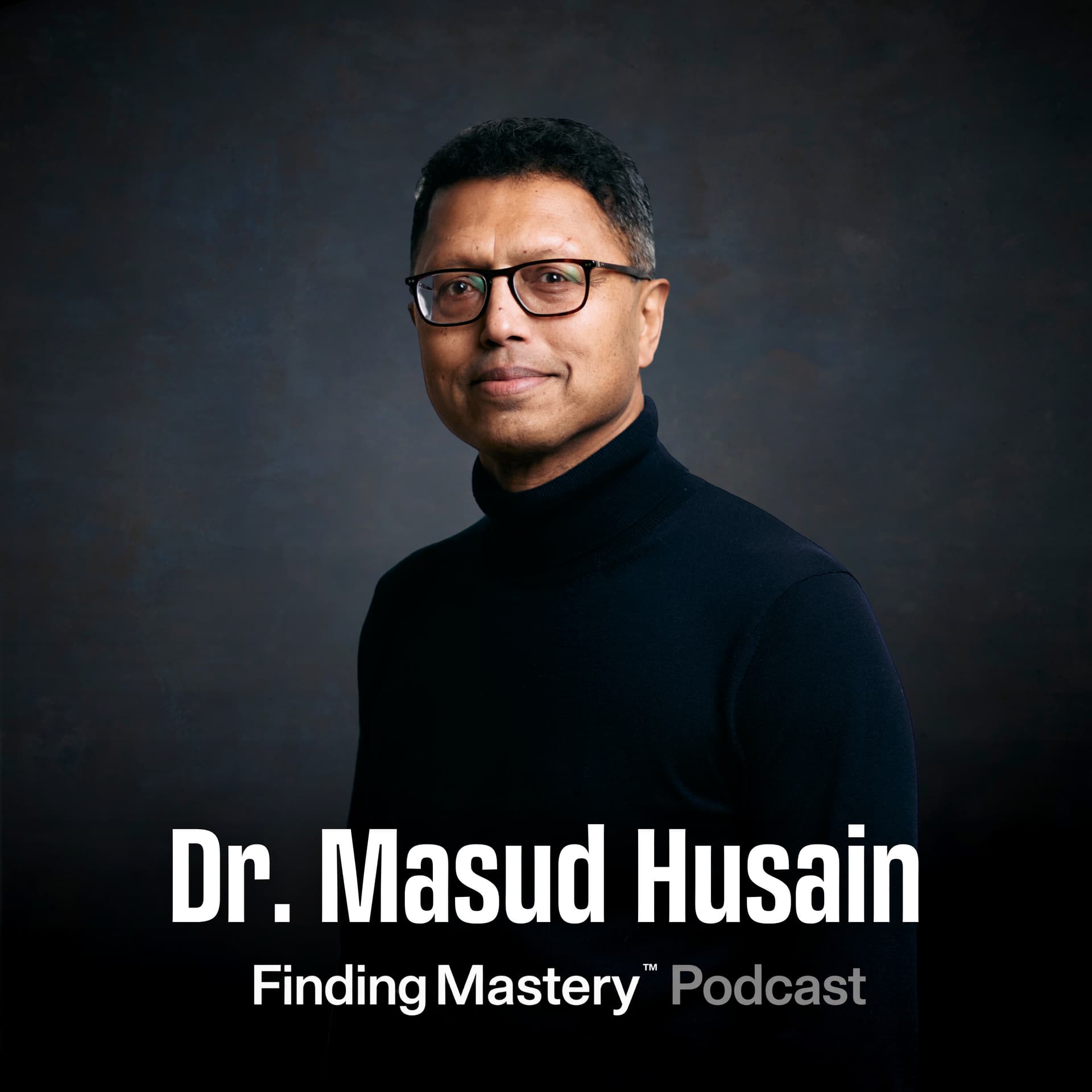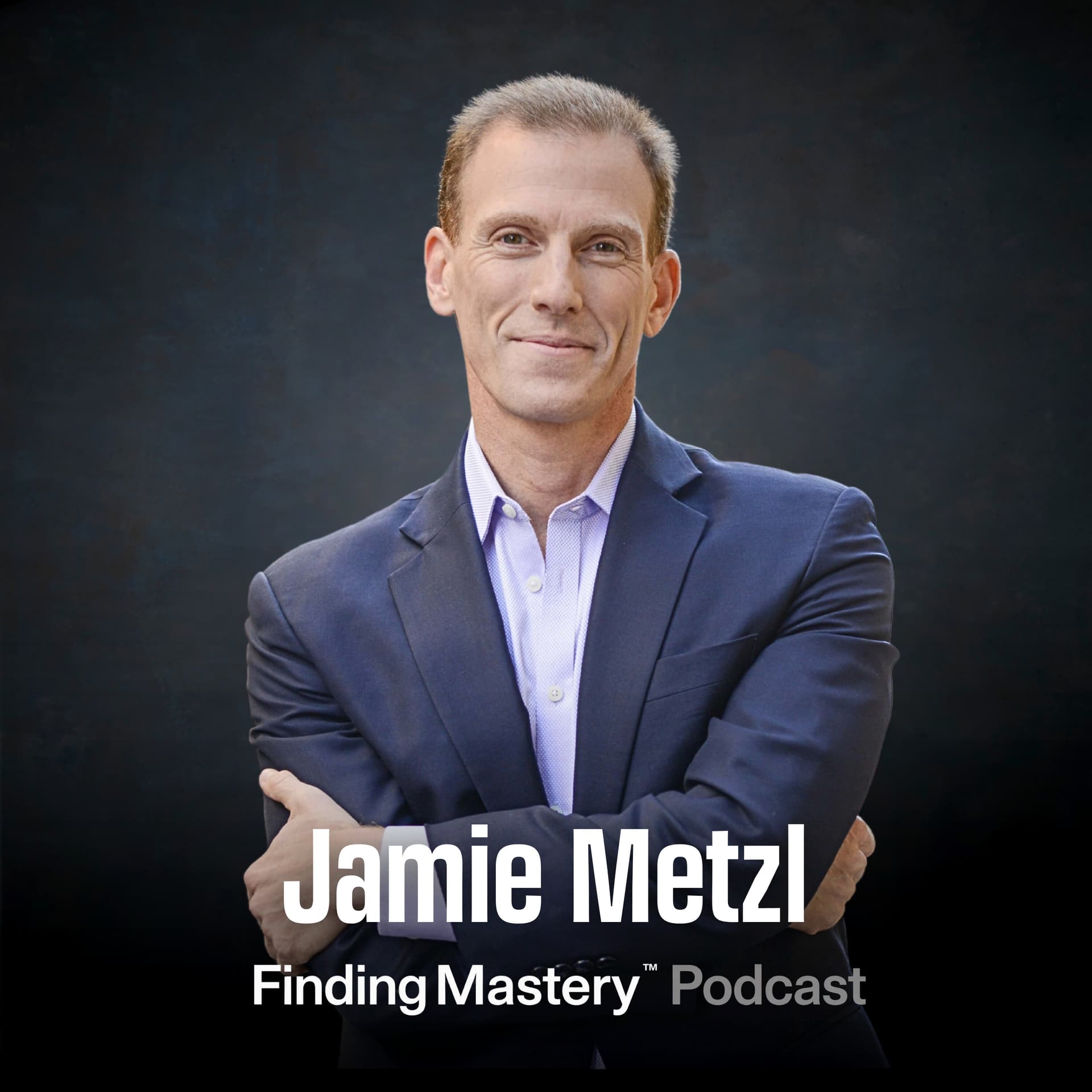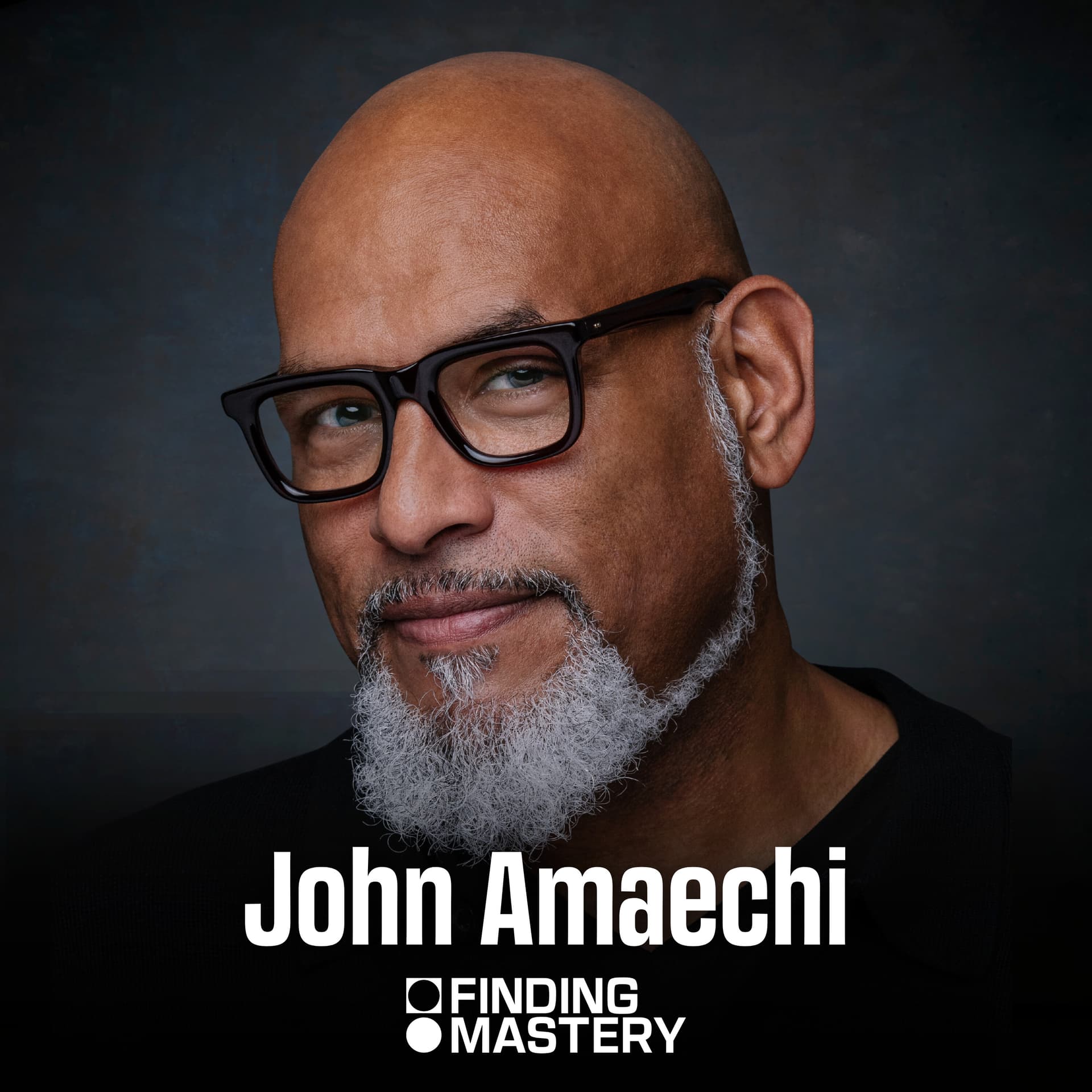

In short
John Amaechi (former NBA player) discusses courage, leadership, and empathy—especially how to live authentically as an openly gay athlete despite fear, rejection, and microaggressions. He also explains his approach to helping people thrive: clarity about identity, building a “cabinet” of supportive people, and practicing duty of care.
Guest background
John Amaechi is a British former NBA player, New York Times bestselling author, and an associate fellow of the British Psychological Society. He grew up in Stockport, England, was a “fat kid” who faced dismissal and bullying, and later became a psychologist and coach. He played in the NBA after moving to the U.S. at 17.
Key claims
- Principles aren’t principles until they’re “dinged” by consequences.
- Rejection is a biologically rooted near-death danger.
- Coming out can be strategic and safer depending on context; he wasn’t advocating “everyone should just come out.”
- Effective support depends on tangible care, a believable plan, and practical empathy—not just technique.
Notable examples
- He received death threats after coming out.
- As a large Black man, he describes people locking car doors and clutching wallets/handbags in elevators.
- He came out publicly after retiring, inspired by seeing a Pride parade wave from Sir Ian McKellen that moved a hidden kid—prompting Amaechi to think visibility could help others.
Written by AI. May contain mistakes. Listen to the episode to check what was said.
Chapters
Tap a time to open that second in VOJohn Amaechi's Journey in the NBA
0:00 to 0:52
Learn about John Amaechi's early career as the first British NBA player and his experience coming out.
“Amaechi's no ordinary British sportsman.”
John's Current Work and Purpose
2:14 to 2:42
Amaechi discusses his current focus on helping others thrive personally and professionally.
“It is about resilience, sovereignty, and the courage to hold onto your truth when the world tells you not to.”
The Influence of Childhood and Family
2:42 to 4:40
Amaechi reflects on his childhood experiences and the importance of familial support.
“You've been leading from the front for a long time.”
The Role of Emotions and Connection
4:40 to 7:18
Discussion on how emotions and connections shape identity and resilience.
“embedding, especially science, I think a very similar way to you do.”
Mom's Impact and Personal Strategies
7:18 to 10:05
Amaechi shares lessons from his mother's influence and strategies for dealing with negativity.
“And so I can utilize it in that way too, without ever losing it.”
Navigating Assumptions and Stereotypes
10:05 to 12:19
Amaechi discusses the assumptions people make based on his appearance and stature.
“who you are today but how did you work with when somebody would say ah look at him or whatever the words were.”
Experiencing Life as a Large Human
12:19 to 14:00
Discussion on the complexities of being perceived as a large individual and its social implications.
“Most people probably in the US, I would imagine, look at you and would say, oh, he's an athlete or former athlete.”
The Micro Assaults of Perception
14:00 to 17:18
Explore the subtleties of racial and social perceptions encountered by John Amaechi.
“He goes, I don't know if they know it, but like, I feel it, you know, there's like, I'm, I'm like, there's a danger to me.”
The Micro Assaults of Perception
17:21 to 18:23
Explore the subtleties of racial and social perceptions encountered by John Amaechi.
“Here's a stat that surprised me when I first came across it.”
The Micro Assaults of Perception
18:46 to 19:49
Explore the subtleties of racial and social perceptions encountered by John Amaechi.
“It can cost you momentum and culture and real dollars.”
Show all 49 chapters
John Amaechi's Journey to the NBA
19:50 to 22:34
Hear about Amaechi's early basketball experiences and his dream of playing in the NBA.
“I was a monster, but basketball was a non-thing.”
Navigating Identity and Professionalism
22:34 to 26:18
Amaechi reflects on his identity as a gay man in the NBA and the complexities involved.
“So I was like, what if I could have this feeling with these guys, but in a place where the sun always shines?”
The Fear of Acceptance in Sports
26:18 to 28:00
Discussing the challenges of being openly gay in professional sports and the fear of repercussions.
“Nobody, people, I think there's something intriguing to people about the idea that you, the revelation comes as you're making a jump shot or something.”
The Fear of Being Open in Sports
28:00 to 28:45
Explore the challenges athletes face regarding openness and acceptance in conservative sports environments.
Consequences of Authenticity
28:45 to 30:05
Discuss the potential personal and career consequences of being authentic in a conservative sports culture.
“But then you also look, who are the owners of these organizations?”
Navigating the Decision to Come Out
30:05 to 32:05
Understand the complexities and personal calculations involved in the decision to come out.
“You were afraid that they would like get you out somehow.”
Strategies for Sharing Your Identity
32:05 to 33:45
Learn how to safely navigate sharing one's identity in potentially hostile environments.
“And so do not, your principles are not worth being destitute in that type of environment.”
Correlations and Empathy in Relationships
33:45 to 35:50
Examine the importance of empathy and understanding in choosing who to share personal truths with.
“Is it, is it a parent that you think would be the right person?”
Correlations and Empathy in Relationships
38:08 to 38:36
Examine the importance of empathy and understanding in choosing who to share personal truths with.
“Spring and summer, they are powerful seasons of momentum.”
Duty of Care and Compassion
38:36 to 40:19
Discuss the concept of duty of care and how empathy shapes relationships.
“So empathy, I can feel what it's like for you.”
The Impact of Visibility
40:19 to 42:00
Reflect on the role of public visibility in personal identity and the courage to represent oneself.
“going to be in the relationship, no matter who I am, and I feel like they would want to know all of me or more of me.”
Reflections on the Pride Parade
42:00 to 42:29
John reflects on a powerful moment from a pride parade that inspired him.
“I can never tell how old young people are nowadays, but crouched behind a tombstone watching the pride parade.”
The Importance of Visibility
42:30 to 44:38
John discusses the significance of visibility for LGBTQ+ individuals in sports.
“And again, I understand I'm not Ian McKellen nor his status.”
Beyond Labels: The Complexity of Identity
44:39 to 47:24
John explores the multifaceted nature of his identity beyond being a gay NBA player.
“And so, you know, people please buy my books, but that wasn't the reason for it.”
Learning and Evolving in Psychology
47:25 to 50:22
John shares his journey of continual learning in psychology and its practical applications.
“like the relationships you're tuning safe, safe, safe.”
Coming Out: Personal Experiences
50:23 to 51:44
John recounts his coming out experience and the mixed reactions from family.
“Because I feel like it bolsters my defenses.”
Coming Out: Personal Experiences
51:45 to 52:33
John recounts his coming out experience and the mixed reactions from family.
“It felt like that would really be worth it, right?”
Coming Out: Personal Experiences
52:36 to 53:56
John recounts his coming out experience and the mixed reactions from family.
“and I want to come back to something a little more personal.”
Coming Out: Personal Experiences
54:04 to 55:09
John recounts his coming out experience and the mixed reactions from family.
“Days are longer, pace picks up, and there's this sense of momentum that comes with the season.”
Coming Out: Personal Experiences
55:17 to 55:51
John recounts his coming out experience and the mixed reactions from family.
“Again, that's drinkag1.com slash finding mastery.”
Facing Vitriol and Apathy
56:00 to 57:00
John Amaechi shares his experience dealing with hostility and the complicity of neutrality during his career.
“I have letters still that were sent to my sister's house in England to get to me, telling me how they were going to kill me, and how it's terrible that I was allowed to exist.”
The Importance of Support
57:00 to 58:20
Amaechi discusses the significance of having a supportive network during challenging times.
“How did you manage that time when you had that level of vitriol pointed at you?”
Boldness and Vulnerability
58:20 to 59:20
Exploring how boldness paired with vulnerability can lead to authentic connections.
“And I suppose that, I mean, it became a chapter of a previous book, that very notion of boldness with vulnerability paired, which seems so juxtaposed, but is so important.”
The Cost of Being Bullied
59:20 to 1:01:10
Amaechi reflects on how bullying impacted his social interactions and personal relationships.
“Given a choice, even on a road trip like now, I'll stay in a hotel room rather than leave the hotel room.”
Rage and Its Containment
1:01:10 to 1:02:30
Amaechi discusses the challenges of containing anger in a society that often denies evidence and supports bigotry.
“That's why I go to therapy, because containing that amount of rage is unhelpful.”
The Role of Selfishness in Groups
1:02:30 to 1:03:50
Analyzing how the selfishness of individuals in a crowd can enable harmful actions by leaders.
“embrace comfort, avoid discomfort, and avoid blame for their circumstances and their generic external circumstances that drive people to allow megalomaniacs to do awful things.”
Understanding Opposing Views
1:03:50 to 1:05:50
Amaechi examines the difficulty in comprehending why others might align with offensive views.
“How do you make sense of people that think differently than you?”
The Importance of Self-Knowledge
1:05:50 to 1:08:00
Emphasizing the need for self-awareness in achieving meaningful and challenging objectives.
“When you think of being relational, what are the key components to somebody to have that type of approach in life?”
Presence as a Relational Tool
1:08:00 to 1:09:50
Exploring how presence can influence interpersonal relationships and interactions.
“What are some of those skills that you're more interested in, those interpersonal?”
Valuing Presence Over Transactions
1:09:50 to 1:10:05
Amaechi argues that genuine inclusion is about engagement rather than transactional value.
“And I love, let's say I'm in a conversation, I've missed somebody in what you're talking, or my cadence between the five people is like, I ping, ping, ping, back to ping, but I've missed a ping on a person on frequency.”
The Importance of Relational Engagement
1:10:05 to 1:11:16
Learn about the significance of recognizing value in people beyond just their contributions.
“Other things that I do that are relational.”
Leadership Flexibility and First Principles
1:11:52 to 1:14:57
Understand the necessity of flexibility in leadership and the importance of standing firm on key principles.
“findingmastery.com slash morning to get your morning mindset routine.”
Identifying Your Triggers
1:14:57 to 1:16:48
Explore how to recognize personal triggers and what they reveal about your values.
“I think it's an advantage for my safety.”
Navigating Toxic Environments
1:16:48 to 1:20:21
Learn how to respond to toxic discussions and maintain integrity in challenging situations.
“Because that's an easy first place to start with the most obvious stuff that's going to trigger you.”
Finding Extraordinary Potential
1:20:21 to 1:24:00
Discover how personal journeys can reshape the perception of potential in others.
“And I am afraid what would have happened is that we would have talked about my book.”
Exploring Personal Growth Through Experience
1:24:00 to 1:25:08
Learn how past experiences shape our understanding of potential and growth.
“A book that will never be opened, never have an opportunity to change your mind.”
The Importance of Reflection
1:25:08 to 1:26:54
Discover how reflecting on everyday interactions can lead to deeper insights.
“I'm not one of them, oh yeah, just think of it, it'll happen.”
Understanding the OBE and Its Significance
1:26:54 to 1:28:59
Gain insights into the Order of the British Empire and its implications.
“So that's how you do, are you doing one-on-one therapy?”
Wrap-Up and Key Takeaways
1:28:59 to 1:31:18
Recap of important lessons from the conversation and upcoming episodes.
“So I built a community center in Manchester that had upwards of 3 ,000 kids a week going through its doors.”
Transcript
Automatic transcript. May contain errors.0:00John Amaechi:Amaechi's no ordinary British sportsman. John is just 17 years old and is joining the Cleveland Cavaliers as the first British person ever to play in the NBA. The dream had come true. There's one player in the history of the NBA that has started at the age of 17 and six years later been starting in the NBA. That is me. People are interested in the fact that I happen to be gay. Not anything else about it. Just, oh, to be known as the gay NBA player.
0:26Dr. Michael Gervais:What if the greatest act of rebellion in your life is refusing to apologize for who you are?
0:33John Amaechi:When I came out, I realized that there was about a 20 % group of people who were warm and supportive and some part of that number were grateful. And that there was a 5 % group that were vociferously hateful. They hated me. I had more death threats in that period than you can imagine.
0:51Dr. Michael Gervais:Welcome back, or welcome to the Finding Mastery podcast, where we dive into the minds of the world's greatest thinkers and doers. I'm your host, Dr. Michael Gervais, by trade and training a high-performance psychologist. And the idea behind these conversations is simple. It's to sit with the extraordinaries and to learn, to really learn how they work from the inside out. Today's conversation is with John Amici, former NBA player, New York Times bestselling author, associate fellow of the British Psychological Society, and someone who has spent a lifetime choosing dignity, truth, and courage over fitting in.
1:26John Amaechi:I went to Manchester Pride, and I look over my shoulder, and there's a kid crouched behind Tombstone, watching the Pride parade. Ian McKellen's doing the thing, waving from side to side. He weighs in our general direction, and this kid rises as if lifted from behind a tombstone. how awesome is that right a wave from a stranger from a distance and i was like damn it i've got
1:51Dr. Michael Gervais:to come out in america john didn't set out to be the first openly gay nba player he set out to be himself you were not afraid in that moment oh totally afraid you were afraid and did it
2:01John Amaechi:anyways yeah why did you tell the truth principles aren't principles until they're dinged a little bit right so you realize that there might be consequence from it but also there is something important about not denying who you are?
2:13Dr. Michael Gervais:This is a conversation about carving your own path. It is about resilience, sovereignty, and the courage to hold onto your truth when the world tells you not to. How did you manage that time when you had that level of vitriol pointed at you? I don't believe I've ever been asked that question before. I think... With that, let's jump into this week's conversation with John Amici.
2:42Dr. Michael Gervais:Okay, John, here we go. I'm so stoked to sit with you. You've been leading from the front for a long time. And so just to get us started, can you describe how you're spending your days now before we go into kind of some of your history and where you've been?
2:57John Amaechi:Yeah, it's exciting for me to talk about because I get to help people thrive and in the fullest sense of it, not simply allowing people to do that stratospheric burn where they become very successful but at a huge cost but the idea you can help people to move make transitions and really embed themselves into these these high level positions that they themselves want to get to and then the other side of it is helping people who don't know what it is they want to do but but have tremendous potential and probably the third group of people i support are people who have no idea how remarkable they are who are unable to describe the skills that they have with any kind of alacrity, right?
3:43John Amaechi:They just think that things that they do that are extraordinary. And as I watch, my eyes raise because it's utterly remarkable. So this constellation of people I get to meet every day, work with them, sometimes individually, sometimes within their teams or their organizations.
3:59Dr. Michael Gervais:So when you speak, you have a spark in your eye. You have a light inside of you that's like beaming to come out. I always look for that. that is something that is important to me with like okay where is somebody coming from and of course there's not like a literal light or spark but there's a a feeling that comes forward and so can you can we use that as a as a rope to pull on of where does that come from and it likely the contrast between times when it wasn't there would be um an important mark in the story yeah
4:33John Amaechi:I get to help people with my words, right? It's an amazing thing. By storytelling, by embedding, especially science, I think a very similar way to you do. You don't just give people science that's dry, like almost taking a powder straight to your mouth. You mix it in with storytelling and context, and it gives people a chance to absorb it properly. And I think it's an incredibly cool way to spend your living, right? Talking to people and helping them to then take that and move on. When I was much younger, I was a fat kid from Stockport, a tall, fat, black kid from Stockport, which is a town near Manchester in England.
5:15John Amaechi:And everywhere I went, people were either afraid of me or dismissed me as without intellect, without potential. and so the only people in my life who gave me that sense that I was remarkable with my family members especially my mom and it's from her if you'd have she's passed away now many many years but if you'd have met her she was the kind of woman that when she looked at you it was like um on a lovely like cool day in California for example closing your eyes and looking towards the sky and how the sun almost like illuminates your brain that's what it was like talking to
5:53Dr. Michael Gervais:what a what a radical representation of kindness and being seen and okay so do you come from that place like when when you and i were just talking is that the place you're coming from yeah almost
6:06John Amaechi:always the thing that makes me feel resilient and even in a world that feels chaotic and challenging and toxic sometimes are these memories of times with my mother especially but also other people and it does make a difference for me it makes me it's a resource for me it's what it is it's a proper resource and when you bring up the love
6:33Dr. Michael Gervais:of your mom right now where does that sit in inside of you i'm bathed in it yeah it's just so does it move to the surface or is it like a large strong mass in the center like and the reason i'm asking is because i know how emotions work for me but i don't really know how they work for other people. And I actually think most people don't really know how they work for themselves. And so I think it's a worthwhile discovery to bring to the surface, so to speak, how emotions work in others. So you're in it right now, I can see it. So how is it working for you in this moment?
7:10John Amaechi:I'm trying to contextualize. I suppose it's the gravity around which the me of me rotates. It's, I don't know if it's the sun at the center of my personal solar system or something like that. But it is, the thing that interests me is that when you say, where is it right now, is that I do know that when I speak to certain people or certain audiences at certain times, there are moments where it feels really appropriate to push it towards that person. And so I can utilize it in that way too, without ever losing it. in the last book that I wrote, The Promises of Giants, one of my students who were forced to read it, she was a young woman from China, and she said, I need to tell you something about your book.
7:53John Amaechi:You're not the star of your book. And I was like, okay, provocative. She said, your mom's the star of your book. And again, I was at a speech in Oxford the other day, where one of the comments that I saw on LinkedIn afterwards was this idea, it's as if you and your mom were both in the room. And I think that's the best way to contextualize what she is.
8:15Dr. Michael Gervais:So let's stay here for just a moment. Let's speak to mothers. Like, what did your mom do that maybe others can learn from?
8:24John Amaechi:She was an incredibly busy physician, doctor, who was not around a lot of the time. But when she was around, she was fully present and engaged. we were also the kind of family that could do stuff together but silently and feel very connected we were a family that read together but separately we'd all have our own book and we would sit around and read together and even that when i reflect on it felt like proper community not just like read your book and stop being a bother her ability to scoop you up in her attention was unmatched this idea that when in her presence it was like she was holding you with her attention a loud bang could go off in a corner a phone could ring something else could happen but you and her would end this thing but not in a way that felt constricting just felt really enabling
9:17Dr. Michael Gervais:you also work with images in your mind and those images have a contour of emotion with them right you are not working from a spreadsheet in your head is that right that is for sure yeah yeah so So you're available to the emotions. You're using words that have imagery connected to it and feeling associated. All right. So mom was able to hold you in a place of importance, even when she was not speaking to you. All right. That created a connection and some safety in a world where you were, as you just reported, made fun of, bullied. you stood out for the wrong reasons where there could have been a lot of swallowing of that pill that maybe i am not good enough so mom was a counter rotation to that it was sorry no no gone how did you work with let's say mom was one of the strategies or one of the core pillars for you to be who you are today but how did you work with when somebody would say ah look at him or whatever the words were.
10:19John Amaechi:I suppose there's two forces pulling at the same time, one that I have a great deal of faith in and one that I find hard to ignore. So I know because I can remember with great clarity the way my mother would look at me, for example, when I was reading books. She would look at me and I'd glance up occasionally and look at her face, and I knew in that moment that I am her clever boy. it is a an unassailable truth i know that to be true it is very protective but at the same time i will leave this studio and i will pass um tsa offices and i will pass regular people in the nice lounge that i'm going to be able to go to because of the privilege i now enjoy and they will not look at me as if i'm a clever boy i have known since i was probably 11 years old that I'm a monster.
11:12John Amaechi:I'm very clear on this. For folks listening, six foot ten, three hundred and... Many, many pounds. I don't know what it is in pounds. I'm about 150, 160 kilos. So enormous. Yeah, you're a large... I'm a unit. Is the best way of describing it, right?
11:28Dr. Michael Gervais:Hold on, I'm going to interrupt because this is to be noted. And I want to come back to the experience of walking around as a unit. In your intro in the book, I read it three times, is I thought for sure I was missing something, which was you describe who you are eloquently. It's a clever way to do a brag because you've listed it all. I was like, oh, taking a page. I was like, it's cool. Yeah, it was really good. But you did it in a way that was like, I think I knew what you were doing when you're, because I had to read it three times. You didn't mention that you played in the NBA for a long time.
12:00Dr. Michael Gervais:Six, six, 10. Oh, how tall are you?
12:03John Amaechi:I'm getting shorter in my old age. So six, eight now is probably accurate. Yes.
12:08Dr. Michael Gervais:Okay. I hope it doesn't happen to me too, because I don't have much to afford.
12:12John Amaechi:Right. I might be able to fit into regular clothes by the time I'm finished.
12:15Dr. Michael Gervais:Okay. You don't mention that you played in the NBA. Most people probably in the US, I would imagine, look at you and would say, oh, he's an athlete or former athlete. You get that probably a lot. Absolutely. Did you play ball?
12:28John Amaechi:You must have played ball. Wow, you're big. You must have is the one I always find most intriguing. Asking if someone played ball can be almost innocuous, but you must, I don't think people realize the magnitude of the words. You had no other options. You must play basketball. I mean, all, because what it really means is all I can conceive of you being good for is, especially because I've had literal encounters with people leaving Boston a few years ago, maybe five or six years ago. I still had a big white beard. I still had more of a belly than any basketball player currently playing has. And the flight attendance was like, oh, you must play for the Celtics.
13:05And I was like, uh, no, I mean, just
13:08John Amaechi:like, no, right. No athlete, no NBA player looks like me now. And I was like, no, I'm a psychologist. And she did one of these. She looked at me with a head kind of cocked, right. And then walked back, talked to her colleague and they came back and said, yeah, well, you know, you must, you're an athlete, right? You're an athlete. I said, no, I'm a psychologist. And they just, they wouldn't, they couldn't see it as a thing it's so um corrosive i think to have your mindset that way that when you look at people you talk to them and you're telling them what you think they're good for
13:39Dr. Michael Gervais:goodness okay uh nice segue back into you know when you're in the lounge and when people are up to you know come up to you so what is that like for you walking around as a very large human
13:54John Amaechi:i always feel like i have to do the full caveats like i'm really privileged there's lots of great things but it is it does feel assaultive right it feels it's annoying to know that i'm about to have to prove that i'm not what people assume that i am to kick off with it's an interesting framing
14:12Dr. Michael Gervais:which puts you on alert a lot it's a that sounds like you know your cortisol levels are kind of percolating right not maybe boiling but percolating if there's such a thing for cortisol but one of my friends he was on the podcast dwayne brown he was if there is a left tackle in the nfl and you could prototype kind of the body the intelligence the the the agility the the arm length of a left tackle he's like he's got and he's got this incredible personality that pulls people toward him so i was asking him like okay so this was during when was this was probably early 2000 so there was a bunch of upheaval in the u.s around race and um as if it's gone away and so i said so how is it for you and he goes you know what's like mike that i walk into whole foods it's a nice kind of grocery store and he says when i'm walking to whole foods to go grocery shopping and I hear all the, the car doors lock and I hear people double check to make sure their car is locked and people kind of hurry up and run into their car, like to close it.
15:21Dr. Michael Gervais:He goes, I don't know if they know it, but like, I feel it, you know, there's like, I'm, I'm like, there's a danger to me.
15:27John Amaechi:Yeah. It is a micro assault. That is, that is something harmful to other people and careless and thoughtless by them. It happens. So I work a lot in the city, uh, in London and also Canary Wharf, which is another kind of office area, really, really tall buildings. And I'll get into a lift with somebody. Uh, and if it's a man, I will watch as they kind of cross their arms with their hand over their pocket that contains the wallet.
15:58Dr. Michael Gervais:Oh, the wallet. Yeah.
16:00John Amaechi:And I'll watch women take their handbag from the shoulder closest to me and put it on the shoulder furthest away. And it's remarkable because I usually am working with the most senior people in that organization, the one they're wearing the lanyard of. They are imperiling themselves, if I was so minded, to report, oh yeah, Jane and Jim did this to me. Which I haven't and wouldn't. But it's crazy to me that I have to endure that, especially because the reality of it in my mind as we're going up, what feels like two minutes in a lift. And I'm thinking, you're trapped in a steel box with me. Why would you antagonize me?
Read the full transcript
16:40John Amaechi:Because although I'm not minded to violence, I am enormous. And if I wanted your wallet, and if I wanted your handbag, I would have your wallet and your handbag. And there'd be nothing you could do about it. And it's so engaging. And you said, look, the size of your hands. And you could never do anything. I'm so interested that people talk to me about, why don't you say anything? Why don't you react with anger? It's like, because you can't do the thing that tells them they are exactly who they think you are. You can't become the monster by raising your voice, even if it's justified, because you then become the very thing that made them close their car door in the first place.
17:18Dr. Michael Gervais:Binding Master is brought to you by Momentous Fiber Plus. Here's a stat that surprised me when I first came across it. Nearly 95 % of us are not getting enough fiber. And the thing is, most people think that they are. That used to be me. I eat well, I'm intentional about whole foods, and I still wasn't hitting it consistently. And fiber matters. It's one of those quiet, unglamorous fundamentals that shapes how the rest of your system runs. Your gut, your energy, how well you absorb, everything else you're putting in. So when Jeff Byers and the team at Momentus reached out about Fiber Plus, I paid attention.
17:50Dr. Michael Gervais:I've been using their products for years. And the reason I keep coming back to them, it's pretty simple. They don't chase trends. They They go deep on the fundamentals and they build it to a high standard. And the same holds true for Fiber Plus. It's clean, no artificial flavors, no unnecessary additives. The cinnamon flavor uses real cinnamon bark powder and it tastes great. And I don't usually say that about fiber supplements. I mean, they built this thing right. Like everything they make, Fiber Plus is NSF certified for sport, which is why it's trusted by over 200 professional teams and athletes.
18:20Dr. Michael Gervais:That's the momentous standard. And that's why it's been part of my routine. If you want to upgrade one of the most overlooked foundations of your health, head to livemomentous.com slash finding mastery and use the code finding mastery for up to 35 % off your first order. Again, that's livemomentous.com slash finding mastery. The code is finding mastery for up to 35 % off. Finding mastery is brought to you by LinkedIn. We use LinkedIn hiring pro here at finding mastery because we know one great hire can change everything. One bad hire, it can cost you a lot. way more than time. It can cost you momentum and culture and real dollars.
18:57Dr. Michael Gervais:And that's why how you hire matters just as much as who you hire. And it's why I've become a big believer in the power of LinkedIn hiring pro. Here's what I appreciate about it. When you're running lean, you don't have hours to sift through a pile of resumes, hoping to find the right person somewhere in the stack. Hiring pro is built exactly for that reality. You describe the role and it screens candidates for you, surfacing the people who are a best fit so that you can spend your time and conversations with those folks rather than in the weeds of the applications. And the results back it up. Those hiring with LinkedIn are 24 % less likely to need to reopen a role within 12 months compared to the leading competitor.
19:33Dr. Michael Gervais:So join 2.7 million small businesses already using LinkedIn to hire. Post your job for free at linkedin.com slash mastery. Terms and conditions apply. Again, that's linkedin.com slash mastery to post your job for free.
19:49John Amaechi:how long did you live in the u.s a long time i went to university i went to high school here
19:54Dr. Michael Gervais:in toledo ohio and what and what brought you in 1989 and what brought you to basketball and you came from a small town as you mentioned you know and how often did you get the statement oh you you're you're gonna play basketball oh in england yeah never never never i was I thought for sure you would have had that every third conversation.
20:18John Amaechi:Don't get me wrong. I was a monster, but basketball was a non-thing. It was a very niche community. I can't think of a parallel of a sport in this country that's that small. If you're thinking soccer, way too big, right? Way too big in this country. That's nothing like it. It would be an obscure, like there were more people playing lacrosse in England than there were playing basketball.
20:44Dr. Michael Gervais:My producer, Emma, she's loving this right now because we've been debating. How many people in your hometown said, you got to go to the United States to play ball?
20:52John Amaechi:Nobody. And indeed, anybody I told, when I told people I was going to go, because I didn't say I was going to go to America and play basketball. I said I was going to play in the NBA. And that's why I was going to America. And the number one reaction to that was laughter and mockery. I wrote it in my school yearbook. I'm going to go to America. I'm going to play for an NBA team and make a lot of money. I was 17. It was not the most profound promise I made. But I wrote it.
21:17Dr. Michael Gervais:You had an idea early, though.
21:18John Amaechi:I started playing at 17. I decided when I was 17, well, 45 minutes after the first time I picked up a basketball, I told the first person I was going to play in the NBA. Oh, so right away. Yeah, yeah, yeah. I went to a practice with these guys who were amazing. In the UK? In the UK. I went to a practice in a gym that smelled like urine with the rain just tippling down outside. I walked into this place. These kids ran towards me, grabbed me, and they're like, he's on our team. It was the most amazing feeling I'd ever had. I had never felt so welcomed. And when people looked at me, I could see in their face, envy.
21:59John Amaechi:I wish I could be like you. That never happened, right? I was the hunchback of Notre Dame when I walked through the streets. Here, I was something amazing. And I loved it. I loved it. At the end of the practice, We sat down, we're taking off our shoes, and they start talking about this thing called the NBA. I said, what is that? This is where the best people in the world play. It's in America. And I knew America, and I knew that in America, the sun always shines. Because what I knew of America was the A-team and Knight Rider, and I knew that the sun always shines, right? I didn't know about cold places.
22:34John Amaechi:So I was like, what if I could have this feeling with these guys, but in a place where the sun always shines? And that's why I decided to play in the NBA. It makes perfect sense. Yeah. I didn't know by the way what the NBA meant for another good three or four weeks. What do you mean? National Basketball Association. Oh, you didn't know what that meant? No idea. Just knew it was the NBA as well, where the best people play.
22:55Dr. Michael Gervais:It's good to be a kid sometimes. Right. Yeah. Okay. So you uproot your family, you come to the States.
23:01John Amaechi:Not uproot, just me.
23:02Dr. Michael Gervais:Just you. Okay. So got it. You left your family, came to the States by yourself.
23:08John Amaechi:Yeah. how did your high school i went to high school for one year i was put up by a family who had a kid on the team i stayed for about half a year uh after which point i started to get attention from scouts mostly just because i was tall because i was very bad and when i started to get attention from scouts that family was upset about it they thought it was taking away attention from their son and so they kicked me out and i ended up with the son of one of our assistant coaches um he and his wife took me in and uh took care of me very cool played college ball yeah yeah
23:43Dr. Michael Gervais:all right so found your way in college got recruited your sophomore year junior year uh
23:48John Amaechi:no i went to uh my it was my senior year i was in senior yeah okay what was it like when you were
23:54Dr. Michael Gervais:you know entering the hallways of your first nba team i weirdly don't remember very much about
24:01John Amaechi:the kind of behind the scenes part of it. Like I, what I remember is, is walking into a practice on the main floor at Gund Arena, which is, I know it's not that now, it's called something else, but in Cleveland. And I'd been in big arenas before. I played in the Big Ten, right? But it would, this was different. This was different. It was different for a number of reasons. One, my mother had passed away a few years before. So she never got to see me do this. She didn't remember to see me be in the league. But also, I realized that I'd done the thing that I'd set out to do. And so there was a sense of completion and terror.
24:42John Amaechi:Because it's like, I'm here, but now I have to stay here. And that is often the most difficult part. You know, there's lots of people who play in the league for a year and then disappear.
24:51Dr. Michael Gervais:Looking back, now you know yourself really well. Looking back at those kind of first beginning phases of being in the NBA, okay, dream is coming true. You're there. You feel some pressure that I got to keep it going. There's a sadness mixed in there somewhere that mom didn't get to see this. At the same time, what I'm most interested in, how well did you know yourself at that point?
25:13John Amaechi:Because I spent so much time alone and in books, I did very little other than think about me and my circumstances and kind of meta-analyze, think about the thoughts that I was having. and so I spent a lot of time doing that I think I was well examined being a gay person also meant that there was a lot of analysis to do there about your own feelings about your world how appropriate those feelings were what would be the consequences of those feelings so there were lots of things that forced me to think plus I was studying psychology and whilst not perfect as you you know and often quite perfunctory I think in its early stage especially undergraduate it puts you in a cycle where even when you're talking about abnormal psychology over there, it forces you to think about your perspectives on why is that abnormal and do I have any of these characteristics?
26:05John Amaechi:And so I think I was well, well examined, but I don't know if I'd pull all the threads together to make sense of it.
26:12Dr. Michael Gervais:Were you clear that you were gay at that time?
26:14John Amaechi:I was clear when I was 11.
26:16Dr. Michael Gervais:Oh, so you knew at a young age.
26:18John Amaechi:Oh yeah.
26:19Dr. Michael Gervais:Oh, I didn't put that together.
26:20John Amaechi:Yeah. No, nobody ever asks, I suppose. Nobody, people, I think there's something intriguing to people about the idea that you, the revelation comes as you're making a jump shot or something. But it's like, it's like, no, I knew for a long time and I was really resolved around it. And also, I think it's important for people to know, I was out to, in the way that gay people are out.
26:43Dr. Michael Gervais:you were yeah so you didn't announce it until yeah publicly announce it until you retired yeah
26:51John Amaechi:because i think the the fat bloke in in row 2a didn't necessarily have a connection to me that made him worth telling right i just it's like i don't know you except that you yell at me occasionally when i miss a shot why would i tell you random fan from another team why would i tell you teammates who got to know me and cared about me they asked and i told there's only one person who ever asked me and i didn't tell him at the time and that is greg oster tag who asked me as we were walking out on the court in a game surrounded this is not the time for this conversation so he pulls you aside and he says hey man i heard you again didn't pull me aside we were walking out we were running out onto the court yeah i was like this is not a good time for this yeah good i had another teammate who came to me on a plane uh obviously at the behest of the rest of the the team and was like so you don't talk a lot about girls and i was like indeed is that how you said it yeah indeed and he's like cool just wanted to check uh so that was it that
27:57Dr. Michael Gervais:was done and okay so so i've been pro sport a long time i haven't seen that in a locker room
28:10Dr. Michael Gervais:so how'd you do it i think people are still afraid now they are rightly afraid yeah like with their teammates even i think there's a couple there's a couple folks that might know and but yes i haven't been on a team where the team was very clear that there was a and and i'll be clear that this is uh i'm speaking about the nfl right now yeah yeah and so i haven't seen it doesn't mean that there's it's not happening it's not you know part of the relationships that people are are you know whatever but like it's i don't know for some reason it's not making the
28:42John Amaechi:surface it's a danger that's why keep going it's a danger if you're in a sport especially like american football the the absence of one block can end your career oh i didn't even go there that's it that can be it so you're saying somebody a slip a fall and suddenly a gap appears and you're exposed or or like a nasty retaliation all the volition if you will yeah and they're all defensible you know i probably in the last two days i went to a cigar bar in west hollywood and it has football playing i've seen more football in the last two days than i've seen in my entire life but you watch that and you instantly realize every moment is a critical physical opportunity for death, right?
29:30John Amaechi:There's consequences. Right? So that is something that's real. But then you also look, who are the owners of these organizations? They are some of the most conservative people. Is it small C or large C? I'm not sure. But they're some of the most conservative people in the world. My owner with the Orlando Magic wrote numerous books about conservative causes and the cultural problems with the society.
29:54Dr. Michael Gervais:So when you made the decision to say, you're right, you know, when your teammate asked you, like, you don't talk about women, you were not afraid in that moment. Oh, totally afraid. You were afraid and did it anyways. Yeah. You were afraid that they would like get you out somehow.
30:11John Amaechi:I didn't know what the result would be. Yeah. But I just knew that many of the, if you just kind of extrapolate out from this moment, many of the options that might appear would be negative. I didn't know how negative, very, or not very. I didn't know how catastrophic they might be. But I also knew there was a chance that nothing would be the response.
30:33Dr. Michael Gervais:Why did you tell the truth?
30:37John Amaechi:Principles aren't principles until they're dinged a little bit, right? Until you... You have to earn them. Until you realize that there might be consequence from it. But also, So there is something important about not denying who you are. Oh, foundationally.
30:51Dr. Michael Gervais:And people cover things up to avoid the dangers and to avoid one of the most dangerous things. I think there's lots of dangerous things, but one of the most dangerous things is the opinions of others. is the potential and or actual rejection, private or public, is a very, very, very biologically sound danger mechanism that's deeply rooted. Because we're kicked out of the tribe, it's a near-death sentence. So it's still alive with us today.
31:20John Amaechi:Yeah, I do think, I mean, again, this is one of those places where I would say, if you are the kind of person who's in an environment where you think it is so toxic and dangerous that coming out and revealing anything about yourself, whether it be your working-class background or your immigrant status or whatever else would cause you real harm, then I'm not here looking for martyrs. I was already in a privileged position. I was starting on that team. I know that there was genuine care from these teammates for me. And so in that context, I made a much safer decision, even though I could see the number of different ways it could go poorly.
32:00John Amaechi:it still was done with enough information to know that I would be safe. And also I was on multimillion dollar contracts with the NBA, unlike many people who are working hand to mouth. And so do not, your principles are not worth being destitute in that type of environment. I used to give this really plain, and I think lots of LGBTQ activists do this too. They just say, yes, everyone should just come out. I think that the bodies would be laid waste in so many environments and I'm not willing to, I don't have enough room in my house to take everybody in and I don't have enough money to make everybody able to eat.
32:36John Amaechi:And so I just can't offer that kind of advice to people.
32:38Dr. Michael Gervais:How do you help people when they, whatever it might be, being gay or anything that they're struggling to bring forward, how do you help them figure out how to do that? Is it leave the environment? Is it, is it build relationships and start small? Is it know who you are and make a decision. And these are all viable options in some tone, but how do you play those notes?
33:00John Amaechi:The first part is knowing who you are and having a really resolved picture of it. It doesn't mean it's the final picture, but having an understanding of it for you. What does it mean for me? What am I looking for from this? Because not everybody is looking for the same thing when they understand their identity. Then I think finding someone, I talk a lot about having a cabinet. I think in political terms, that's rather a spoiled term now, but ideally, it's the idea that you find people with different perspectives and expertise who are also deeply invested in you and some particular outcome. And so find, start gathering these people proactively.
33:42John Amaechi:You know, is it your, one of your sisters first that you can talk to? Is it, is it a parent that you think would be the right person? Is it a lifelong friend of yours? Who is that person? Is it a coach that's always adored you? Who is that person that you think might be the one person to start with so that the burden that you have is shared a little? What if that one person ends up saying, what?
34:06Dr. Michael Gervais:You, what? Oh my. I mean, that there's, there's a great risk in that, you know? So how do you know? You don't. You can gather as much evidence as you can.
34:19John Amaechi:And walk me down that path. How do you gather some evidence? I watch people, and I encourage people to watch people and what they do. So there are correlations, right? I like what you're doing here.
34:29Dr. Michael Gervais:I don't know if you've written about this or not, or spoken about it enough, but I think you're onto something. I'm super intrigued on how you're going to do this, because I think you walked it and lived it. Again, you're grounding it into some science around humans and psychology. So I interrupted for a reason to say, I like where this is going, and I'm really interested to see where you take it.
34:49John Amaechi:Yeah, there are correlations that you can look at, right? There are certain things, and this is extreme, but if you find somebody who thinks the earth is flat, you can, to a large extent, find out on which side of the political spectrum they exist. Even if you can't say the party, you can say where that party will be on the political spectrum. It is just a reality. and so what you can do is start to watch people for the constellations of things that show the kind of empathy required is this the person who still doesn't know the name of the person who brings them a coffee every day because if they still don't know after six weeks or six months this person doesn't have a certain type of empathy that is required for you be wary
35:35Dr. Michael Gervais:I love that you took it to empathy. That was like a, I didn't know you were going to go there. So you're watching for empathy.
35:42John Amaechi:I'm watching for empathy. I'm watching for critical thinking. I'm watching for beyond empathy, a type of proactive duty of care that might be evident for them with other people that might suggest they're capable of it. Because not everybody is capable of a duty of care.
36:01Dr. Michael Gervais:Finding Mastery is brought to you by Sunlighten. I'm really excited about a new partner of ours. Something that I've come back to again and again is when I invest in recovery with the same intention that I bring to my work, everything gets better. My energy, my focus, my ability to show up fully for the people that I'm with and the work that I care about. That's why I am so bought in on the Sunlighten M-Pulse Intelligent Sauna. I was first introduced to their team a few months ago and was so impressed by what they've created. This is one of the most advanced infrared saunas that they've built in over 25 years of pioneering this technology.
36:36Dr. Michael Gervais:That's right. They've been at this game for 25 years. I had one installed in my home a few months ago, and it's made a real difference. I feel more refreshed, more grounded, more relaxed, and it's become a consistent part of how I recover, how I reset every day. I'm using it to support muscle recovery, for improved oxygen delivery, and for nervous system recovery. And what I love most, I don't have to leave my home. They're offering the Finding Mastery community up to$2 ,100 off. Simply head to sunlighten.com and use the code mastery for this great discount. Again, that's sunlighten.com and use the code mastery for up to$2 ,100 off.
37:15Dr. Michael Gervais:Finding Mastery is brought to you by our flagship mindset training course, Finding Your Best. Anytime you feel the pull to reset, to zoom out, to refocus and ask, am I moving toward the person I want to become? It helps to remember this. Lasting change comes from training. Not resolutions, not short-term sprints, but deliberate practice of the skills that shape how we show up. In work, in relationships, and in the moments of great intensity as well. That's what finding your best is all about. It's a science-backed framework for training your mind. And it's the same set of tools that we've taught to Olympic athletes, top executives, elite military teams, and artists at the peak of their craft.
37:49Dr. Michael Gervais:In this course, you'll learn the foundational psychological skills to be your very best. Full stop. And the best part is, you can start anytime. Right now, we're running a limited time offer on finding your best. Simply head to findingmastery.com slash course and use the code RENEW100 to get$100 off your registration. If you've been waiting for the right moment, this is a good one now to lean into. Spring and summer, they are powerful seasons of momentum. It's a great natural time to step into growth, to refocus, to recommit to who you want to become. And this discount will not be around for long.
38:23Dr. Michael Gervais:So go to finding mastery.com slash course code renew 100 for$100 off today because your future is not shaped by what you intend. It's shaped by what you train. So empathy, I can feel what it's like for you. Compassion, I can feel and take action in alignment with what it must be like for you. And you're using duty to care with compassion. Is that what you're calling a higher strike when you're saying a duty to care for other people. not just compassionate. Compassionate's awesome. Compassionate people are dope. They feel what you must be going through and they take action to help.
39:01John Amaechi:Yeah. Duty of care is the kind of thing that means that with someone else, you cradle them, even if the circumstance that they're in is one born of reasons that you might not understand or agree with. It is simply your responsibility to do that. I meet lots of people who've ended up in very difficult situations, usually in work environments, but sometimes in relationships. And I can at once still have a duty of care to them. You cheated on your partner. That person is mad with you now, and you aren't living with them for the moment. I can empathize with the pain you might feel, even without kind of absolving you of the choice you made to cheat.
39:48John Amaechi:There's a duty of care, partly because of my position as a psychologist working with them, but also just as a human being. And I'm not approving of it. I'm not absolving them of it. So you can imagine if you saw that kind of behavior, you'd imagine that even if they were someone whose religiosity put them in a position where they thought you were bad and sinful and wrong and whatever else comes with it, that duty of care might be something that would suggest that this person could still hold you in a way that was respectful and dignified. Very cool.
40:18Dr. Michael Gervais:So that's you trying to sort out safety, partnership, you know, like if someone's going to be in the relationship, no matter who I am, and I feel like they would want to know all of me or more of me. Yeah. Yeah. There you go. Cool. So your teammates knew the rest of us didn't because you're like, It's not your business. It's my teammates, but it's the people I'm in relationships with, and I want them to know. And when you did decide to make it more public, what went into that decision for you?
40:47John Amaechi:So originally I retired between Christmas and New Year's of 2005. That's when I got a call from Jeff Van Gundy, who told me I'd been traded to New York. My family was in the car. My sister and a couple of friends were in the car on speakerphone. as I was told, I was traded. And the car was silent, and I rode along, and I was like, I am done with this. My body hurts, and I am done with this. I'm done with the eternal proving of this, and I'm ready for the next thing. So I retired, and I came back to England, and I had no plans of engaging with America again, really, other than to visit. And then I went to Manchester Pride at the LGBTQ Pride Festival in Manchester.
41:42And Sir Ian McKellen was the marshal.
41:45John Amaechi:And I was watching it from the cathedral gardens just to stay out of the way. Again, so many people, I just didn't want to be in it. But I wanted to see it. So I'm in the cathedral gardens and I think I'm alone until I look over my shoulder and there's a kid, I don't know, 13, 14, 15, I can never tell how old young people are nowadays, but crouched behind a tombstone watching the pride parade. And I felt sad about that, but also great, right? You get to see this Ian McKellen's doing the thing, waving from side to side. He weighs in our general direction and And this kid rises as if lifted from behind a tombstone.
42:25John Amaechi:And I must have made too much noise because he saw me and then scuttled off. And I was like, but how awesome is that? Right. A wave from a stranger from a distance. I was like, shit. Now I've got to. And again, I understand I'm not Ian McKellen nor his status. Right. I'm not overselling myself.
42:45Dr. Michael Gervais:You had that thought. But I have a dimension. You had that thought in a minute.
42:49John Amaechi:A wave from a stranger from a distance. A wave from a stranger from a distance. Are you kidding me? That is like psychology. A word from a stranger across a table. That's like, this is amazing. But this was exacerbated. Wow.
43:06Dr. Michael Gervais:Okay. A wave from a distance made a change.
43:08John Amaechi:Yeah.
43:09Dr. Michael Gervais:And you said to yourself?
43:10John Amaechi:I was like, damn it. Now I've got to come out in America. And again, for me, it was because.
43:16Dr. Michael Gervais:because you were waving to you were waving to all the little kids boys whatever that were like humans that were like thinking is it okay to come out or not and you're like if i can wave
43:27John Amaechi:but also a different dem like nobody my blackness overwhelms my gayness to the public gaze right when people look at me they do not conceive of me as a gay person because that's the narrow stereotype that people have, right? I thought that there's something powerful about the idea that seeing this image of what a gay person might be, might be useful, not just to other gay people, but to straight people who haven't really wrapped their head around this very cleverly. And for them, people like Sir Ian McKellen are acceptable, palatable gay people, whereas somebody who might look more like them might be a less palatable version of that.
44:10John Amaechi:And I thought it would be useful on many fronts also i mean i'm big-headed i wanted to believe that it would be useful on many fronts too so it was also i don't know that i could have done it if i didn't think it was going to be useful on many fronts so you wanted it to be benevolently useful for others yeah there's no this was not useful for you i'd well i mean i wrote a book and you know as well as i do books unless you're jk rowling and let's not talk about her uh they are not much more than a calling card, right? And so, you know, people please buy my books, but that wasn't the reason for it.
44:47John Amaechi:I just wanted one place where people could say, this is the account that I want you to have. I wanted to have an account that wasn't just about me being a gay person, but included that. I'm annoyed to this day, and I think I'm allowed to be, that there's one player in the history of the NBA that has started at the age of 17 and six years later been starting in the NBA.
45:09Dr. Michael Gervais:one player that is me and why is that annoying to you so it's annoying to me that the thing that i
45:14John Amaechi:didn't choose though i'm quite good at in being gay is the thing that people want to remark about not the fact that this kid came from stockport at 17 and in six years started in the nba that is nobody else has done that that's a remarkable thing that's about effort and choices and and a real drive. Those things are important.
45:38Dr. Michael Gervais:Yeah, because I'm thinking through, for me, I'm much more interested in the courage, to be honest, than I am in how well you can shoot a ball or how fast you got to the league. I know it takes an exceptional set of circumstances and hard work with a genetic coding to make it to the league. You got to work hard. You got to have some genetic gifts. You have many. And there's some circumstances that go into it. So it's interesting because me on the other side of the comment you made, I'm like, yeah, I am more interested in the courage to be oneself.
46:12John Amaechi:That's the difference though. You are actually interested in the courage, if that's what it is, to be myself. I'm not disputing that dynamic. What I'm saying is that people are interested in the fact that I happen to be gay, not anything else about it. just, oh, to be known as the gay NBA player. Is that, is that your... In the, yeah, if people know me in sport at all in this country, it is, that is what they'll know about me.
46:38Dr. Michael Gervais:And you would want them to also know. I wouldn't, I wouldn't care.
46:42John Amaechi:I just wouldn't want that to be the only thing. What else would you, what else would you want to add? I really enjoy the fact now that the vast majority of my clients don't know that I ever played. Well, this, in your intro, it's like, wait, what? I love it. I had, I had...
46:54Dr. Michael Gervais:I thought that I had you wrong. like did i get this wrong yeah because it's not in the intro at all it's not useful information
47:02John Amaechi:well done on the book by the way thank you yeah well done it doesn't help you understand me knowing that i love star wars is a better access to who i am as a person than knowing that i played basketball it's just you know it's interesting what i really want to understand is the process
47:18Dr. Michael Gervais:to get clear and then from from that clarity how you build the and you're walking me through it like the relationships you're tuning safe, safe, safe. Oh, empathy, duty to care, you know, like, uh, intelligent discernment. Oh, like these are my people. And then, so that feels like an unlock for me. And so I'm way more interested in the listener right now, knowing who they are, dressing accordingly and fighting the good fight for them from clarity to conviction is a path that we can all walk. And you are an emblem for that. It just so happens that you play a sport that lots of people watch. And so now I get to know your story.
48:02Dr. Michael Gervais:Is any of that offensive or too narrow-minded or too shallow in response to what you're saying?
48:08John Amaechi:I think one of the things that people, most people can embrace is the idea that their identity is seen in proportion. I don't know. Its components are seen in proportion. This is interesting. What does that mean? The proportion that's important to me, and I would hope other people would kind of embrace, is stories about my mom, is the real transformative power of presence and some technique through psychology. But when you look at the research, every psychological intervention is equally unsuccessful. No one part of this, no one new, oh, it's this technique this week. They're all the same. The real factors that make a difference.
48:53John Amaechi:Does this person care about me in a way that is tangible, practical, and felt? Does this person have a scheme that I can believe in? That scheme doesn't have to be real, believable, make any sense at all. If you buy into it, it will work. I love this is the stuff that excites me I love being utterly wrong nowadays I remember when I first got into you remember the Goldman days when it was the the emotional literacy Daniel Goldman was the right and I learned all about that first one emotional intelligence just loved it right just loved it and I thought right I've got it down now it was in early days and I just was stupid about it I didn't realize you have to evolve when it changes then somebody started talking to me about the four branch method of of it and I was like I don't know that and now I feel really stupid.
49:40John Amaechi:And now I just love the fact that every day I'm going to read something. I've got this amazing, some amazing people that I follow on TikTok who are scientists and nerds and bring, that's where you're getting your science now, huh? Some of it is amazing. Listen, I'm half joking. I also get some good cats and dogs liking each other a lot, which is great. But there are some brilliant people. One of the chapters is led by this phrase, a phatic expression, which I learned off TikTok. Just today, I wrote a piece that was based on I'm watching a video on TikTok about how clownfish become immune to the anemones.
50:13John Amaechi:And I made an analogy about, well, it's not important, but there's great stuff you can learn. And now I'm excited about how can I be wrong today? Because I feel like it bolsters my defenses. I feel like it makes me smarter, cleverer, more able to then use this stuff with the people that I meet. Whereas if I just stayed in that same place, imagine, and maybe for you, this is really something you can wrap your head around imagine only knowing what we knew when we first learned it imagine how useless we'd be you know it's in light of that i find myself attracted
50:48Dr. Michael Gervais:to psych 101 books going back and reading those kind of foundational theories with 20 some years of other theory and i go back and i look at them again i'm like wow that like so rudimentary but wait hold on this piece here yeah now that i read that with the stuff that i've come to learn holy moly like that you or she was on it you know so i'm attracted to the foundations again but all right go go back to the thing that i really want to understand clarity to conviction is this arc that i'm super attracted to you need some sort of courage or community to be able to support and challenge you to to keep going when you made the decision the little boy sounds like he was you know when he jumped from behind the tombstone what a great image you're like he was your muse in some kind of way like that okay if i could do that for many people like happy days but when you came out i'm sure that you didn't get amazing oh this is so great i'm sure it was a what was it
51:51John Amaechi:like when you came out it was a mixture of things but first to say when i saw this kid do that what was amazing about it was i didn't think if i can do this for lots of people i just thought if i could do this for one person. It felt like that would really be worth it, right? That would be, especially if it was one person who wouldn't have done that same response to an Ian McKellen or somebody else. So when I came out, the reaction was my, my family was so afraid. Um, my sisters were afraid. Um, one of my sisters sent me a mixtape, we're old, sent me a mixtape that she did. They included, I think it's the red hot chili pepper song.
52:28John Amaechi:I'm so scared for you. And, and we were, we were terrified.
52:33Dr. Michael Gervais:Finding Mastery is brought to you by LinkedIn. Earlier, I mentioned LinkedIn Hiring Pro, and I want to come back to something a little more personal. We talk a lot about the people who make extraordinary things possible, and I want to take a moment to acknowledge some of ours. Janelle, Taylor, Alex, Emma, and our newest teammate, Chelsea. Every single one of them came to us from LinkedIn, and every single one of them has raised the bar of how we operate here at Finding Mastery. Our relationship with LinkedIn, it also runs a lot deeper than just using their tools. We also work with their teams on the corporate side, helping them build the kind of high performance culture where great people want to stay.
53:10Dr. Michael Gervais:They want to grow. I've been building businesses for over two decades now, and I'll tell you, the right team, that matters so much. It's the difference between grinding and flowing. So this partnership, I believe in from the inside out. When you hire through a platform like LinkedIn Hiring Pro that surfaces people who are genuinely aligned with what you're building, you get a different quality of candidate. not just in skills, but in fit and values, the kind of energy someone brings to a team. So if you're thinking about your next hire, I wanna strongly encourage you to be intentional about where you look.
53:44Dr. Michael Gervais:The right person is out there and LinkedIn Hiring Pro helps you find them faster with a lot more confidence. Post your job for free at linkedin.com slash mastery. Terms and conditions apply. Again, that's linkedin.com slash mastery. Finding Mastery is brought to you by AG1. Summer is right around the corner, at least for those of us in the Northern Hemisphere. You can just feel it, though. Days are longer, pace picks up, and there's this sense of momentum that comes with the season. For me, that also means more travel. It's more early mornings, more late nights, and it's just really a schedule that isn't consistent as I'd like it to be.
54:23Dr. Michael Gervais:That's exactly when having a simple, reliable, daily foundation, it matters. AG1 has been that foundation for me for over a decade now. One scoop and a glass of cold water in the morning, and I know I'm supporting my gut health, full stop, filling the nutrient gaps that are hard to cover through food alone. And what ends up happening is I'm giving my body what it needs to keep showing up. And that really matters to me. What I love about AG1 is that it doesn't ask a lot of me. It's one habit, one scoop, and it travels easily. The AG1 travel packs are something I genuinely rely on this time of the year.
54:59Dr. Michael Gervais:I throw a few in my bag before a trip and the routine stays intact wherever I am. If you haven't tried AG1 yet or you've been planning to think about getting back into it, now's a great time to start. Visit drinkag1.com slash finding mastery to get an AG1 flavor sampler and a bottle of vitamin D3 plus K2 free in your welcome kit with your first AG1 subscription. It's a$72 value. Again, that's drinkag1.com slash finding mastery.
55:51John Amaechi:and that there was a 5 % group that were vociferously hateful. They hated me. I had more death threats in that period than you can imagine. I have letters still that were sent to my sister's house in England to get to me, telling me how they were going to kill me, and how it's terrible that I was allowed to exist. And then in the middle was this 75 % who you might think were neutral, but in cases of human dignity, neutrality is complicity, right? And it was this group of people who were like, it's really too early for it. We shouldn't be talking about this right now, or this is not the right time for this, or how can this be the priority right now?
56:35John Amaechi:It was a group of people whose apathy was really hurtful because it seemed to amplify the noise made by that 5 % who were so loud. Yeah, it was a hard time. Again, privileged individual, lots of things were, lots of support in my team, but. Check, check, check, check.
56:53Dr. Michael Gervais:How did you, not to be insensitive, but how did you, not insensitive to the context of the affordances that you've, you know, earned and McGivin in some respects. How did you manage that time when you had that level of vitriol pointed at you?
57:09John Amaechi:I curated a group of people around me in every location I went so when I spent a lot of time in America I had a group of people here who had been my friends my friend Ryan who lives in Utah these people had been my friends even while I was in the league and were there now they would just show up they would just show up not without not by being summoned they were just you're in LA and they just showed up and they did both distracted me from the moment chasing me at times when I when I had a particularly good experience and felt a bit too big for my britches but also reminded me of who I was and brought me stories of of impact that was more positive than negative how do you think that
57:55Dr. Michael Gervais:that process has helped you in the work that you do now, helping others become their very best?
58:04John Amaechi:I don't believe I've ever been asked that question before.
58:09John Amaechi:How does it help now? I think my life is a sequence of interactions and events that require great boldness and great vulnerability in concert. And I suppose that, I mean, it became a chapter of a previous book, that very notion of boldness with vulnerability paired, which seems so juxtaposed, but is so important. And that's something I tell leaders now who are so used to the idea that Success comes through omniscience, knowing everything, invulnerability, not in any way being able to be harmed. And I'm like, no, no, no, no. Real success comes anything that's going to bring people in, draw people to you from Utah to California, from England to New York.
58:54John Amaechi:The only thing that draws people to you like that is the authenticity that comes with boldness and vulnerability.
59:02Dr. Michael Gervais:What is the cost of being bullied? How does that happen for you? What was the dark side of that for you?
59:08John Amaechi:It made me very shy and hesitant to interact with human beings. I still don't much nowadays. I have a small group of close friends. I have a partner. And outside of that and family members, I don't interact much. Given a choice, even on a road trip like now, I'll stay in a hotel room rather than leave the hotel room. At home, I think my partner says I'm a homebody, which I think is a generous way of saying I would order in and never leave the house unless I have to. In part because you just, this is the way you can avoid the interactions that might be otherwise caustic. They might leave a ding in your door, if you like.
59:48Dr. Michael Gervais:I don't feel like you have much violence inside of you, but there's a response that other people have that it could be. Are you internally angry or or violent, or pissed off about how the early life went, or the current conditions that you experience are?
1:00:04John Amaechi:Not about the early life. Because again, every time I think about that, I can smile. Because for every negative interaction, there was sunlight, right? Kind of balanced by mom. It was just, anything done by these people just pales in comparison to the memories I have of her. so it's not about that but now the idea that we're in an environment that is so anti-science the idea that we're an environment that is that regards evidence as optional or and equivalent somehow to opinion the idea that we're in this place where we can deny pernicious bigotry in the name of something else or just deny it in a kind of dissonant kind of way is infuriating going through the Black Lives Matter moment, going through the Me Too moments and knowing that they were moments from the very beginning, knowing that there would be no enduring change because of them.
1:01:05John Amaechi:Yeah, it's enraging. You have to be careful. That's why I go to therapy, because containing that amount of rage is unhelpful.
1:01:16Dr. Michael Gervais:Yeah. And the rage is directed. Yeah. How do you work with that? And I say that like, I don't think I have a way of knowing.
1:01:25John Amaechi:It's the bad actors. Increasingly, I've been moving from this space where I think it's just charismatic individuals who are somehow intoxicating their followers. And I think that we have to be more honest about it and the fact that there are a large group of people that because of one or two key principles will allow horrors to occur. if you tell them their taxes will be lower, they will allow horrors to occur if a person will promise them that one thing. If you tell them that in Britain, brown people won't be coming into the country as much, they will sacrifice the NHS. They will sacrifice their personal wealth.
1:02:07John Amaechi:They will sacrifice the ability to travel across Europe for free. They'll sacrifice that if you just promise them less brown people in this country. And I think there's a point now where we have to stop imagining that is simply the magnetism of one or two charismatic figures, and rather the undeniable part of human existence, which is the desire to embrace comfort, avoid discomfort, and avoid blame for their circumstances and their generic external circumstances that drive people to allow megalomaniacs to do awful things.
1:02:45Dr. Michael Gervais:So you're inviting a step deeper in analysis saying that it's not one charismatic that has wooed people. You're saying that there's, there's a selfishness in the crowd that is creating actually the stage for the one charismatic person. And that selfishness is if that person will publicly do the things that I'm afraid to do or that I selfishly want done for me, then I'll do whatever. I'll look a blind eye. Just one thing. Just one thing.
1:03:15John Amaechi:That's what makes it so awful. Although many of these individuals we might look at often individual tent posts, if you like, that are notable, clear signals that they give, all it takes is one of those things. Oh, 2%. You offer me 2 % tax? I'm in. You do awful things, I'd be afraid to have you around my daughter.
1:03:37Dr. Michael Gervais:The lightning rod for that person, a lightning rod for something else. It could be another one thing you're suggesting.
1:03:42John Amaechi:So you can create a remarkable coalition of people who might ordinarily never tolerate each other's company. It's amazing to think.
1:03:50Dr. Michael Gervais:How do you make sense of people that think differently than you? They see it very differently.
1:03:56John Amaechi:Yeah. Do you mean in this particular context or broadly?
1:04:00Dr. Michael Gervais:Yeah, let's go with this context. Because, I mean, I think what's happening in the U.S. is like we don't really understand what another person is thinking, you know, or how they could so easily align with something that the other person sees and feels to be offensive.
1:04:16John Amaechi:So I think there are lots of elements, whether it's politics or business, where I can say it is reasonable for us to disagree. I love peanut butter and I do not like anchovies. Did you say anchovies? Anchovies. Anchovies?
1:04:33Dr. Michael Gervais:No, how do you say it? Oh, did I say? Now I'm confused. How do you say it? I say anchovies, but you said it with... Anchovies. Anchovies. Okay. Okay, got it.
1:04:41John Amaechi:I don't mind people who say anchovies. So there we go. And these are the types of things, and I'm sure there are more seminal things as well. They're more important things where I can just say, I don't see the evidence for it, for starters, but also this is the kind of thing we can have opinions about, right? You like beach holidays. I like remote forest holidays. You like holidays. I don't like holidays. I can say, I can respect and embrace that and also not insist on what I love for you who do not. what i find intriguing is that we've we've taken this a step further now where there are knowable facts that are no longer knowable facts they are now matters for debate by people without expertise and again i'm not telling you that everybody with a phd is is the know-all but i worked for a time with some of the scientists at cern and and and there just is a part of that where i have to say I know psychology stuff about helping you team better, but when you start talking about Higgs Boson, although I find it fascinating, I just can have no opinion on this.
1:05:47John Amaechi:And it feels like we're in a world where that's shifted and many things that we should agree should not be agreeable. The abuse of people, the manipulation of people, the cruelty towards people, unnecessary often, cruelty towards people i thought these were things that we had debated and decided upon apparently not yeah yeah especially in america where so much more is codified because in britain we don't have a bill of rights in the same way we don't have we have many protections right especially those that came from the eu frankly but we don't have it codified in the same way habeas corpus and things like this should be i thought they were done deals and yet here we are with them being stretched and deformed, malformed.
1:06:35Dr. Michael Gervais:When you think of being relational, what are the key components to somebody to have that type of approach in life?
1:06:45John Amaechi:I think you started off talking about it. If you don't know yourself, there is very little of importance, very little unique and challenging you can achieve. To me, the analogy I always use is that we love the idea of GPS nowadays, right? We take it for granted. It's on our phones. And people think it's amazing that in this age, we can find anywhere and we can find it and put a pin in it. But the real reason that GPS works is nothing to do with your destination. It's to do with your starting point. The whole reason it works is because you know where you're starting from. You can have a map that shows you where, I don't know, Trenton, New Jersey is, but you have no way of getting there no matter how close you are to that pinpoint if you don't know where you are now and i think that it comes back to it is fundamentally the essence do you know yourself have you developed some rudimentary at first but then more nuanced and complex interpersonal skills that allow you to navigate the frictions and tribulations of human interaction and have you then decided to develop some skills that enable you to influence even where you don't have direct power in organizations, whether that be a household, a community, an academic environment, or a business?
1:08:04John Amaechi:What are some of those skills that you're more interested in, those interpersonal? The interpersonal, well, presence for one. I love the idea. It is a tool or a weapon, your presence.
1:08:15Dr. Michael Gervais:And you're not talking about being present. You're talking about the way that you hold yourself in the present moment.
1:08:20John Amaechi:Yeah. The way you, so even the way you orient your body, the way you focus your mind to envelop people, that is the image I have in my head whenever I know I'm going to have a consequential interaction. And that is most interactions for me. Really? It just is. It's incredibly energy expensive, which is why as an introvert, I crash a lot after interactions. You've got to recover probably. right? But that's the image I have in my head. Oh, who's joined? Oh, somebody's just joined from the side. And my mind is like, and I'll reorient myself. It's like, yes, because acknowledging that you exist and that you're part of this is something I think that's powerful in and of itself, because we all know what it feels like to be ignored.
1:09:01John Amaechi:So we know that presence is important because the idea that somebody walks in a room and says hi to you and hi to you and hi to you is a way that they tell you that you're not important. So that alone is a huge thing. If people realize that -
1:09:17Dr. Michael Gervais:That's a relational approach. Yeah. That is foundation to including, not this idea of inclusion, but it is like, I see you and our collective relationships are stronger than the one hero that can get it done.
1:09:30John Amaechi:Yes, you're worth it. You're worth it to extend some energy to. You're worth it to avoid some distractions for.
1:09:39Dr. Michael Gervais:It's a difference between you bring value to a circumstance. Your value is not earned from the circumstance. It's our job to bring our value to. And I love, let's say I'm in a conversation, I've missed somebody in what you're talking, or my cadence between the five people is like, I ping, ping, ping, back to ping, but I've missed a ping on a person on frequency. and i love when that person goes hey hold on i'm like oh yeah shit like yeah yeah right like i love partnering with those types of strong you know that they know themselves they know their value they know that their ideas could be right or wrong but they're interesting yeah you know to bring forward so the relational piece you're saying you got to know yourself and then find what's interesting in other people like by including in the conversation what else when you think about being relational comes to mind one thing i want to add to the previous before i
1:10:34John Amaechi:move on is just the idea of i don't know that i include people because i think what they add might be valuable keep going i include people because they are present and they want to engage yeah cool and i just think there's there's a difference there are times when i think somebody's contribution is not valuable and i may i may talk about that but i just think if you only ever include people who are potentially valuable that isn't relational it's transactional yeah there you go. I think it's problematic.
1:11:04Dr. Michael Gervais:That's not relational.
1:11:04John Amaechi:Other things that I do that are relational. I tell people what I stand for all the time. I just think it's an important thing for people to understand.
1:11:15Dr. Michael Gervais:I want to take a second here to tell you about a morning routine that I've been using for years. For me, it's a great way to switch on my mind, to ready myself to take on the day. So before I check my phone, my emails, market updates, or text threads, I choose how to start my morning. That's always in my control. That's always in your control too. This is the same morning mindset routine that some of the world's top performers across sport, business, and the arts are using. The best part, it only takes about 90 seconds to do. So just head over to findingmastery.com slash morning to download the audio guide for free.
1:11:51Dr. Michael Gervais:Again, head to findingmastery.com slash morning to get your morning mindset routine.
1:11:59John Amaechi:when new people join my organization they have a conversation with me that my team calls the fence conversation and so i'll talk to them about the first thing i think is important for leaders is to recognize it is our job to flex i believe there are people who've they've got this idea that they've been so subject to the whims of tyrannical leaders through their junior career that when they come to the top like i can i'm going to do stuff my way if this is how i give feedback best you you better get used to this. If this is how I talk best, you better get used to this. If this is my style, you better get used to it.
1:12:32John Amaechi:And I think that's a ridiculous thing for a leader. You're already at the top. You're already supposedly the best and the smartest. It's your job to flex so that other people don't have to as much. So I say that first. You're not saying flex your strength. You're saying flex and agility. All right. So why not look at a person and say, well, actually, I prefer to give direct feedback. by the way, almost everybody I hear say that is a dick. They mean they're a dick. They don't mean direct. They mean this, this, this, what is called brutal candor thing. It feels to me like everybody who talks about that is much more interested in the brutal than the candor because candor can be delivered directly, but thoughtfully.
1:13:09John Amaechi:And that's what I think is, is how you're powerful, right? I'm really disappointed. I saw your output yesterday and I know you can be better than that, but more than that, you've really let us down right now. And that can't happen again. I can't emphasize enough. Why not that instead of that's ridiculous. You're awful. You're the worst person. There's a way of doing this, but so I'm willing to flex. And then I say, but there are some things I don't flex on. And here they are. And there's, they're in lots of different dimensions. Timeliness. Your first principles. Timeliness, showing up on time and respecting other people's time is really important.
1:13:45John Amaechi:Like attention to detail stuff for me is it lights the fire in my brain. I hate it when people don't pay attention to details because it's something we can all do. It's not about your intellect or intellectual horsepower. It's about whether you're willing to tolerate the mundanity of checking and rechecking, which I think is a key to success broadly in life. But then there are other things that live in the space of human dignity. And I'll say, you know what, this is where the fence conversation comes, it's like here, right here is misogyny. Here is the fence and I am not on it. I am here, but I'm not here hoping that Mike or somebody else will sort up misogyny.
1:14:22John Amaechi:I'm here with fire, figuring out how to destroy and sterilize this. This is who I am, but not done. Racism, Islamophobia, antisemitism, homophobia, trans, it doesn't matter. It's like literally any incivility that would impugn human dignity. it's here here's the fence i'm not on it here not lackadaisical not relaxing not hoping somebody else will do it fire that's who i am and i need you to know that and that will be the truth if we are together as a team it'll be the truth if we're together with a client it'll be the truth if we're in a car on the way back from a vent or on a plane heading to one
1:15:02Dr. Michael Gervais:no when somebody knows their first principles like you've just shared and they sit in the strength of those first principles there's a safety in that agreed because now we know now we know exactly you know where you're going to get lit up where you're going to get animated where you're going to get you know pissed off like it so it's really safe in that and the most dangerous people are the the ones that play this second game they're having second conversations there's a second thing that's happening so you and i are having an interaction and let's say i'm nodding my head to the things you're saying and then i and then i go over as we're both nodding and then as i go over uh as this conversations ends i go have a second conversation with somebody else in disagreement or i'm playing a shadow game it's a very dangerous person to be in those relationships because you don't know what you're going to get.
1:15:55Dr. Michael Gervais:I think it's an advantage for my safety. If I can create enough of the aperture to be open to know people, now I'm better situated because I know. Not to twist somebody in the wind so that we can partner properly to the shared vision or the shared mission that we're on. So this is not a contouring. This is like an alignment one and one equals 11 once we know what we stand for. First principles is foundational for you. And do you have a process for helping others understand their first principles?
1:16:25John Amaechi:I try and help people to understand what are the things that make your ears hot in a kind of in the vernacular, right? For me, a lot of the times I can tell because I have a physiological response to the thing that I'm witnessing, whether it's videos I'm watching online or whether it's politicians I'm hearing talk or business folk I hear talk. Is there something about that that gives you a visceral reaction? Because that's an easy first place to start with the most obvious stuff that's going to trigger you.
1:16:52Dr. Michael Gervais:And you're going to the direction of like, if you hear something that makes you hot, meaning that your skin crawls where you're like, that's, there's something wrong. Any strong reaction, even huge agreement. Yeah. So you're saying that is a, I'll go back to the lightning rod. Yeah, yeah. It's a little bit of a lightning rod moment. So you're saying, tune to the way your body responds when you hear something, because there's probably something in that.
1:17:14John Amaechi:Yeah, absolutely. I was in a, obviously as part of this kind of tour and running around America, I was in a podcast studio the other day. And they're a very big podcast apparently and lots of listeners. And I did not organize this, but I certainly didn't do my due diligence on it. And I was listening to the show that they were doing before I was going to be on. And it was like every hot button thing that I find indefensible was there. The misogyny was there. The racism was there. The kind of everyday casual sexism, I suppose, was there. The homophobia was there. And it's just like, I sat there and I was like, oh, I'm supposed to be here.
1:17:58John Amaechi:My team's expecting me to be here. the production team for this is also the production team for another show that i'm doing later on in new york and and there's real consequence for that i got up and i walked outside and i got looked at my phone and i sent a quick message to somebody and i went back inside i sat down and i was like i've gotta go it was so i felt awful because i knew that there would be consequences that thing again where i could see from this moment there's big and small maybe none but there's an opportunity for there to be consequences here. I spoke to the producer and I said, look, I'm not the guest for you.
1:18:33John Amaechi:I've been listening to the show. I've been watching how they interact and who they're talking about. I'm not the guest for this show. You've hit three or four of the things that I just, I can't be a part of racism, sexism and misogyny and homophobia. And I said, I'm just going to go now. And the guy looked very flummoxed and I walked out.
1:18:55Dr. Michael Gervais:they would have known they would have known what you stood for yeah written about it eloquently yeah and they wanted you on the show apparently you've done it twice in our conversation where i've said something and you're like wait hold on let me go back and fine-tune that and clarify so i don't find i wouldn't imagine it's a better way to say that that you would get run over in an intellectual conversation about a topic. So you didn't want to go fight that fight.
1:19:26John Amaechi:No, I don't debate people who won't change their mind. It's not a debate then. It's not a debate. Yeah, yeah, yeah, yeah. Nobody who says that is casual, right? I swear a lot, not on here, but it's just one of the things I really enjoy. I like swearing, and the people who I'm around, I like swearing too. and it's the one thing in our company policy that doesn't exist anymore. We don't swear at each other. That's different. But colorful swearing about stuff is allowed. And I swear a lot. It's who I am. But this was not just colorful language. This was the denigration of people. The list of people they wanted to attack that day happened to all be women who were black congresspeople.
1:20:13And I'm like, in what world should I go?
1:20:16John Amaechi:But if you're doing that, you're not going to change your mind because I'm here. Because some... What do you think would have happened? I think I would have gone on there. And I am afraid what would have happened is that we would have talked about my book. And what I'm afraid of is that people would have listened to the broadcast before it, and then listened to me not address what I'd heard, which is not possible as a leader? How could I possibly witness that? And then not, as the first part of the conversation, say, hey. I was just in, I was in Paris with a client of ours, and I'd listened to the whole, I've been asked to listen to the whole day of the conference before I spoke.
1:20:55John Amaechi:And so I threw my speech out the window and just addressed what I'd heard. I'd send a message to my team immediately afterwards, say, look, I may have screwed things up with this client because I told them what I think based on what I heard, which is, as a consultant, it's not always the thing that you're supposed to do. Right.
1:21:13Dr. Michael Gervais:She was to ask them what time it is borrowing their watch. Right.
1:21:16John Amaechi:Which is like, gross. And I was like, but this is what I'd done. And it worked out quite well. They responded to it, but that's what I'm supposed to do. So how could I go on this show and not address what I just heard?
1:21:28Dr. Michael Gervais:I'm interested though, because when you told me that, I was like, oh cool you stood up and got out forget about it takes courage takes clarity to be able to do that and then i'm thinking wait you could bring the fight to an audience that is confused or that is seeing differently or like i'm wondering about that piece and then i think what i'm understanding you're saying is like yeah but you know what he wasn't going to change and now i'm in a position to be like um that's what i'm trying to figure out like so so there's something incredibly generous
1:21:57John Amaechi:about your use of the word confused. There's a difference. And again, not to flatter you or your audience, but I imagine that people listen to you and the people you bring on, in part because they are as excited as I am, at least in some small part, to be like, oh, shit, I didn't know that. I've got this new thing that I knew, and it throws out old information and brings in new information that I still may want to go down the rabbit hole a bit on. But not every audience is that way. And I think part of the reason we are where we are, politically, not just in America, but in Britain, across Europe, especially Eastern Europe, is because we pretend that the reason that this group of people are following these singular figures, whether they be podcast hosts or politicians, is because they're confused and they're not confused.
1:22:49John Amaechi:They listen to this podcast because they trigger one of the tent poles, one of the lightning rod things that they approve of.
1:22:57Dr. Michael Gervais:so there's a collective confirmation that's taking place yeah they're pinging something
1:23:02John Amaechi:that's already alive in them yeah yeah and so if i go on that show i could be as eloquent as possible but the reality is what i'm doing is disassembling one of their lightning rods which feels like an attack and they're not going to tolerate that yeah 100 so that was a potential the juice was not worth the squeeze potentially dangerous yeah but no it's not even dangerous the thing that I was most afraid of was that we were just going to have a nice chat about my book. I was like, if we just have a nice chat about my book, I'm an awful person. There it is. How could I allow? Now I understand. Just having a nice chat about my book.
1:23:37John Amaechi:I'm selling my book. Because the first principle.
1:23:39Dr. Michael Gervais:To people who might buy my book because I didn't challenge the 10. Because your first principle is like the fence conversation, but the principle is actually, I fight for what matters. it just happens to be these yeah phobias that i mentioned earlier but the the first principles i fight for what matters and you would go into that conversation and potentially not fight yeah because of what you just heard now i understand to sell a book i mean that's the definition of a shill right
1:24:05John Amaechi:there yeah of a definition of a what a shill is that you are that i'd be willing to completely ignore right what i just see in order oh yeah some people my book who i know the second they read the opening chapter and learn who I am will now hate me. A book that will never be opened, never have an opportunity to change your mind. Oh my goodness. No, I'd be awful. I couldn't.
1:24:29Dr. Michael Gervais:How does playing in the league inform the way that you lead others or guide others?
1:24:36John Amaechi:I think, and I'm not a warm and fuzzy psychologist, but I see more potential in people because of my journey to the MBA. My mother told me when I was a child that the most unlikely of people in the most improbable of circumstances can become extraordinary. And I believed her. And I believe her now. And part of the work that I do, even with this book, the idea of ordinary skills that can help you be extraordinary, which is not manifesting. I'm not manifesting. I'm not one of them, oh yeah, just think of it, it'll happen. No, no, no, no. Build some ordinary skills and you can do remarkable things.
1:25:16John Amaechi:And so I think I see that differently now.
1:25:18Dr. Michael Gervais:What's one ordinary skill that you think is a kingpin for the others to fall into a place?
1:25:23John Amaechi:People have amazing experiences that sit never reflected upon, under-examined, and the utility, the lesson, the brilliance of that experience is just gone. And one of the things that I talk about in the book that I think is really important, it happened this morning. I wrote a piece about clownfish tied to this concept that I'd spoken about yesterday to somebody about, it was actually about people who have an identity, who align themselves with people who hate that identity for their own convenience, but they're protected from it through proximity or privilege. and I was writing about that, the idea of that's the clownfish.
1:26:06John Amaechi:That's a clownfish, what clownfish do. They allow themselves to get stung so they can build up a resistance and then be protected by the very thing that other clownfish, if they've not built up a resistance, will be killed by. And that happened because every experience that I have, every interaction, this conversation today will be rich with them, right? I'll go away and say, ah, shit, I should have said that. Or what did he mean by this? Or now I'm going to re-examine that. but every mundane interaction i have with somebody it sits in a place where i just i come back to it
1:26:35Dr. Michael Gervais:everybody no i mean the mundane ones like you re-examine your day or your interactions and conversations yeah so that's the self-discovery deeper examination the lessons jump out or the
1:26:47John Amaechi:connections between two random experiences 10 years removed from each other they just they They create this richness that helps me explain complex stuff to people. So that's how you do, are you doing one-on-one therapy? Yeah.
1:27:01Dr. Michael Gervais:Are you? Yeah. So that's how you're doing therapy is you're, you're pulling forward the uniqueness of the person, helping them make sense of their inner life and then develop a handful of skills on top of it to go fight the good fight in life, whatever it is. Does that sound like that?
1:27:17John Amaechi:Fight the fight that heads them towards something meaningful to them.
1:27:21Dr. Michael Gervais:Yeah, that's right. Not just fighting. Yeah.
1:27:22John Amaechi:Not just wailing against a world that seems unfair broadly, but to think, what is it you want to achieve and why? And is that going to be meaningful in the end? How do you get an OBE?
1:27:35Dr. Michael Gervais:Oh. There's a few things that you have that I, I'm not, I'm not 6 '10", so that's kind of, I can't play in the NBA, you know. So you've got a few things. Now you've got an OBE as well. Yeah. You know, so maybe for folks that don't know what it is, of course.
1:27:48John Amaechi:Officer of the Order of the British Empire. it's actually a reasonably controversial thing for a black person to accept in britain because of empire because i'm an officer of the order of the british empire the british empire for those who didn't know was a a fairly abominable thing right yeah there is a big movement now to try and change the name of it to the order of british excellence right which is a more appropriate thing because this award is given to people for excellence mbes the member of the order of the British Empire are given to people who've done remarkable things in their community.
1:28:22John Amaechi:These are people who have been relentless in the thing that they've done. Maybe they've been running a soup kitchen for 30 years, and nobody, not the local council, not anybody has noticed, but somebody's decided to say, this person deserves recognition, and they get it. And that recognition, because of the nature of class and status in Britain, will enable them to do more. More people will be attracted to them, more sponsors perhaps would come and support them. And my OBE is for services, volunteer services to sport, and for being a nerd apparently.
1:28:57Dr. Michael Gervais:Meaning the science. Yeah, meaning the science part.
1:29:00John Amaechi:So I built a community center in Manchester that had upwards of 3 ,000 kids a week going through its doors. I mean, I'm not associated with any more, but it's still going strong. And yeah, that's how you get an OBE or an honorific. Somebody has to nominate you, you can't nominate yourself. And then you go through a process and somebody judges you worthy or not. That's the, oh God, that makes my skin crawl.
1:29:24Dr. Michael Gervais:Right? Yeah. But I understand it. Yeah. I understand it. Okay. John, what a fun conversation. Thank you for the way that you showed up. Thank you. Yeah. I really appreciate the conversation, the depth, the clarity, the fun, the first principles and where you're pointing to for people to be better is to go inward, develop some clarity and some skills, and then do the thing that matters most to you. Thank you so, so much for everything. This is really cool. And I might have a UK project for us to work on. Oh, that'd be fantastic. Yeah. So help me in. Yeah. All right, mate. Thank you so much. Thank you.
1:29:56Dr. Michael Gervais:Yeah. Next time on Finding Mastery, we're joined by Kathleen Hogan, Microsoft's chief strategy and transformation officer, someone who's helped lead one of the most meaningful culture shifts in modern business. In this conversation, Kathleen and Mike get honest about what it takes to guide people through big change, how empathy, curiosity, and simple human skills can make all the difference. If you're craving a little clarity or just want to feel steadier in the chaos of work and life, this one will really land. Join us Wednesday, December 10th at 9am Pacific.
1:30:31All right.
1:30:32Dr. Michael Gervais:Thank you so much for diving into another episode of Finding Mastery with us. Our team loves creating this podcast and sharing these conversations with you. We really appreciate you being part of this community. And if you're enjoying the show, the easiest no cost way to support is to hit the subscribe or follow button wherever you're listening. Also, if you haven't already, please consider dropping us a review on Apple or Spotify. We are incredibly grateful for the support and feedback. If you're looking for even more insights, we have a newsletter we send out every Wednesday. Punch over to findingmastery.com slash newsletter to sign up.
1:31:07Dr. Michael Gervais:The show wouldn't be possible without our sponsors and we take our recommendations seriously. And the team is very thoughtful about making sure we love and endorse every product you hear on the show. If you want to check out any of our sponsor offers you heard about in this episode, you can find those deals at findingmastery.com slash sponsors. And remember, no one does it alone. The door here at Finding Mastery is always open to those looking to explore the edges and the reaches of their potential so that they can help others do the same. So join our community, share your favorite episode with a friend, and let us know how we can continue to show up for you.
1:31:44Dr. Michael Gervais:Lastly, as a quick reminder, information in this podcast and from any material on the Finding Mastery website and social channels is for information purposes only. If you're looking for meaningful support, which we all need, one of the best things you can do is to talk to a licensed professional. So seek assistance from your health care providers. Again, a sincere thank you for listening. Until next episode, be well, think well, keep exploring.
From the publisher
What does it really mean to live with courage and conviction?
On today’s episode, we sit down with Dr. John Amaechi — organizational psychologist, New York Times bestselling author, and the first openly gay NBA player. Along his journey, John always set out to be himself in a world that repeatedly told him he was too big, too soft-spoken, too smart, too different.
In this conversation, John brings us into parts of his internal world that are hard for any of us to talk about: navigating shame, identity, belonging, and the responsibility of not shrinking so others can stay comfortable. He talks about the cost of visibility, and the radical power of deciding that your worth is not up for negotiation.
In this episode, we explore:
- How to move from clarity to conviction in your personal and professional life
- Why vulnerability is a core strength of courageous leadership
- The key to creating relationships rooted in empathy and presence
- How to develop moral courage — and know when to walk away
- What it means to lead from your first principles
Through stories drawn from sport, psychology, and leadership, John challenges our cultural obsession with individual achievement and redefines what it means to succeed — not by how high you climb, but by how deeply you care and how many people you lift along the way.
___________________________________________________
Links & Resources:
Subscribe to our Youtube Channel for more conversations at the intersection of high performance, leadership, and wellbeing: https://www.youtube.com/c/FindingMastery
Get exclusive discounts and support our amazing sponsors!
Go to: https://findingmastery.com/sponsors/
Subscribe to the Finding Mastery newsletter for weekly high performance insights: https://www.findingmastery.com/newsletter
Download Dr. Mike's Morning Mindset Routine: findingmastery.com/morningmindset
Follow on YouTube, Instagram, LinkedIn, and X
See Privacy Policy at https://art19.com/privacy and California Privacy Notice at https://art19.com/privacy#do-not-sell-my-info.