Ask ChatGPT
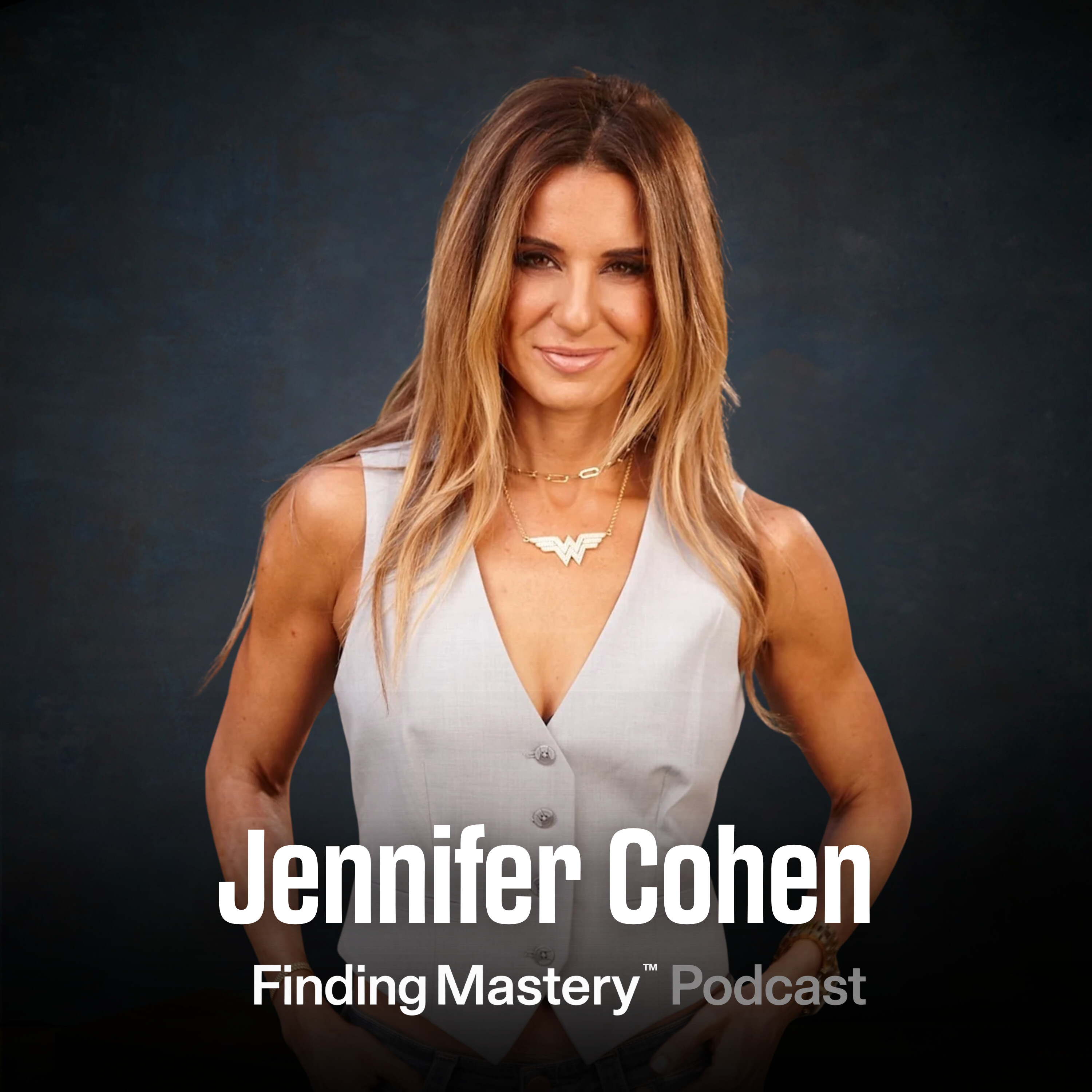

 Finding Mastery with Dr. Michael Gervais
18 Jun 2025 · 1h 16m · 35 chapters
Julie Wainwright, founder/CEO of TheRealReal, discusses reinvention after public failure (Pets.com), leadership through sexism/ageism, and how to build a billion-dollar brand by investing in long-term mindset and brain health, executing a clear vision, and creating a trusted “moat” via authentication and full-service operations.
Julie Wainwright is an entrepreneur who took TheRealReal public (one of only 23 women CEOs to do so at the time). She previously led Pets.com during the 1998 dot-com era. She started TheRealReal in her 50s (age 52 when pitching) from a living-room/table setup and later scaled it to large operations and thousands of employees.
Public failure can leave stigma (she describes being socially pushed out after Pets.com press). Women face structural funding gaps (she cites women receiving under ~2% of venture capital; post-COVID reporting suggests it’s worse). Reinvention requires changing mindset, separating others’ narratives, and focusing on learning-through-launch rather than perfection. The RealReal’s advantage was solving a supply problem with trust, not just competing on e-commerce.
Pets.com’s “sock puppet” stigma; Chanel allegedly bullying/planting fakes in TheRealReal; TheRealReal’s luxury consignment model (curated, authenticated, priced optimally; full-service pickup, photography, pricing, selling). Competitor comparisons: ThredUp (low-end), Poshmark (self-posting/social shopping), Threadflip (hybrid but no authentication).
Written by AI. May contain mistakes.
Julie Wainwright shares her entrepreneurial journey and overcoming challenges.
“Or welcome to the Finding Mastery podcast, where we dive into the minds of the world's greatest thinkers and doers.”
Julie discusses the challenges faced by women entrepreneurs and the need for mindset shifts.
“So with that, let's dive right into this week's conversation with the one and only Julie Wainwright.”
Julie reflects on her father's influence and her early experiences with business.
“So it's now, it was barely 2 % of all money went to women.”
Julie details her career path, learning experiences, and the move to international roles.
“So you're, you're hitting on something really important is that entrepreneurship is risk involved.”
Learn how leadership transitions can shape professional growth.
“So it was just me running international all over the world based out of London in my 20s.”
Understand how embracing risk can lead to future opportunities.
“And you had an idea of what the future could be.”
Learn methods to envision and anticipate future trends in business.
“And I would say I'm pretty good about five years out.”
Discover the inception and vision behind The RealReal.
“Like maybe when you're starting RealReal or anything?”
Explore the personal journey and storytelling behind the business.
“Like, I really appreciate how you wrote, the intimacy of the book, the honesty, the way that you walked through how you took bold steps and some of the dark side that comes with it.”
Understand the changes in e-commerce landscape from 1998 to 2010.
“Okay, so the idea of The RealReal was, and then we come back around to what the idea about ideas are.”
Learn how to spot opportunities and gaps in the luxury market.
“And I thought, okay, you can actually get a business going for about$100 ,000 now.”
Discover the importance of trust in the luxury resale market.
“You're looking for the gaps to solve a solution.”
Explore the full-service model and its impact on customer satisfaction.
Understand how innovative models differentiate businesses in competition.
“But the trusted bit is really important.”
Learn about the competitive landscape and strategies in luxury resale.
“So I figured if I'm getting this idea right now, it's up there somewhere, which means somebody else is also getting it.”
Explore the growth and operational scale of The RealReal over time.
“Threadflip, which was sort of in our positioning, but not really.”
Julie Wainwright shares her journey from failures to rebuilding her self-esteem.
“But there's an energy about how you think about ideas.”
Julie discusses the emotional toll of her career challenges and the importance of support systems.
“But I remember when everything was busting.”
Explore the impact of isolation and the importance of strong friendships during tough times.
“And here I am trying to sort out my life and not wanting them.”
Learn how to combat negative self-perceptions and embrace personal growth.
“and that they've adopted it at some point, and the way that they speak to themselves is dark as well and sad and depressing and full of anxiety.”
Understand the risks associated with starting a business and the mindset needed to succeed.
“So there was not a risk involved in starting?”
Find out how to foster a supportive and enjoyable work environment in a startup.
“You have the vision, you have the ambition, you have the work ethic, and you need to inspire other people to help.”
Discuss the demands of founding a company and the expectations of work-life balance.
“When you give them a problem, they don't say, well, I don't know how to do that.”
Discover the challenges of balancing work and personal life in startups.
“But at one point, and it was probably two and a half years in, she said, we have to have a talk.”
Explore Julie Wainwright's experiences with Chanel's resistance to TheRealReal.
“So you're a dragon slayer in a lot of ways.”
Learn about a personal story involving power plays and the importance of values.
“So, I mean, it was just, and I said, oh no, he just made stuff up all the time.”
Explore the pivotal moments of taking venture capital and going public.
“I've never met him, but like what he stands for, purpose over profit.”
Understand the critical impact of board member selection on company culture.
“the biggest mistake I've made since forever, was when I recommended new board members for the RealReal based, because my other board members got off to sell their stock, except for one guy.”
Discover lessons learned from navigating business challenges during COVID.
“My new board members thought I was horrible.”
Learn how to stay aligned with your values and purpose in leadership.
“Most companies, most venture capitalists don't have companies that go public.”
Discuss the future challenges and innovations in the fashion industry.
“I think this is going to help a lot of people on their journey, you know, to figure out how to build something that matters to them.”
Identify essential mindsets for thriving in today's fast-paced environment.
“they're barely profitable though and they're working themselves to death so it's going to be new and fresh.”
Learn why embracing failure is essential for growth and leadership.
“Look, I mean, whenever there's something new that comes in, fear can actually, fear is the worst mindset.”
A brief reflection on previous insights shared with a legendary guest.
“I mean, there's so much insight in there.”
Introduction to Alex Honnold and themes of his upcoming discussion.
“I mean, what do you say about someone who free soloed El Capitan?”

Get the gist, explore an idea or ask about something said.
 Claude
On Finding Mastery with Dr. Michael Gervais, what are the key points of this episode?
Searching your listeningAutomatic transcript. May contain errors.
0:00Dr. Michael Gervais: Finding Master is brought to you by Magic Mind. The question that I often come back to and I hear from people I work with isn't, how do I perform well today? It's how do I protect my capacity to perform well over my entire career? That's a different question and it changes what you invest in. At some point, I started applying that same thinking to my own brain. Not just what helps me get through a heavy week, but what am I actually building over time? Because there is a difference between burning through your cognitive resources to meet the demands of the day and investing in the long-term health of your brain.
0:30Dr. Michael Gervais: That's one of the reasons I enjoy using Magic Mind. It's a daily two-ounce mental performance shot with clinically-backed ingredients like ashwagandha, turmeric, and lion's mane. When I drink it, I know that I'm investing in better focus, sustained energy. And what I value just as much is what's happening underneath. These ingredients support stress adaptation and long-term brain health in ways that seem to compound over time. That's the long game. The formula is based on over 10 years of research, and nano-encapsulated for five times better absorption than traditional pills and powders. Go to magicmind.com and get 50 % off your first order.
1:06Dr. Michael Gervais: The best performers I know make investments today that their future self-thanks them for. This is one of them. I had to completely change my mindset.
1:16Julie Wainwright: I had to say, I am not gonna let that define me or let others define me.
1:21Dr. Michael Gervais: How do you rebuild after public failure and then find the courage to bet on yourself again? Welcome back. Or welcome to the Finding Mastery podcast, where we dive into the minds of the world's greatest thinkers and doers. I am your host, Dr. Michael Gervais, by trade and training, a high-performance psychologist. Now, the idea behind these conversations, it's really simple, to sit with the extraordinaries to really learn about how they work from the inside out. And this week's conversation is with Julie Wainwright, a trailblazing entrepreneur who built the real real from her kitchen table into a publicly traded company valued at over $1 billion.
1:58Dr. Michael Gervais: She started all of this in her 50s, breaking through a male-dominated industry and then navigating both sexism and ageism to build something the world has never seen before.
2:08Julie Wainwright: I was at that point where a recruiter had told me no one's going to hire me. And I'm too old. Pets.com is a big failure. I hadn't done anything compelling since then.
2:18Dr. Michael Gervais: How old were you? 52. 52 at the time that you were pitching RealReal. Yes. We talk about what it takes to lead through public failure, how to scale with clarity, and how to keep showing up when the odds are stacked against you.
2:31Julie Wainwright: Chanel personally bullied me.
2:33Dr. Michael Gervais: And they were trying to make the point that you can't resell their bag.
2:37Julie Wainwright: They were relentless, including planting fakes in the real rail of which some did get sold.
2:42Dr. Michael Gervais: How about that? If you're in a season of reinvention or you're searching for a clearer path forward, this conversation delivers hard-earned insights I think you're going to want to take with you.
2:52Julie Wainwright: I had no fear of failure with Rural Rural.
2:54Dr. Michael Gervais: You faced it.
2:55Julie Wainwright: I had none. Failure is part of your learning.
2:59Dr. Michael Gervais: So with that, let's dive right into this week's conversation with the one and only Julie Wainwright.
3:09Dr. Michael Gervais: Julie, I have wanted to sit with you for a very long time. I've been my family, my wife, and I have loved what you've built as a business. It's been a great tool for us. And the main reason I want to sit with you is because I see your high art as how you work with people to build businesses that make a difference. And so I'm really excited to sit with you because the life you've lived and how you've expressed that through businesses. So thank you so much for coming in.
3:43Julie Wainwright: Wow. Well, it's an honor to be here. Yeah, very cool. Thanks.
3:46Dr. Michael Gervais: Yeah. Okay. So first, let's introduce Poppy. Yep.
3:50Julie Wainwright: This is Poppy. She's probably almost five. My little rescue dog. Her dad was a pit bull and her mom was a chihuahua, Pomeranian, German shepherd. As far as the DNA test.
4:08Dr. Michael Gervais: precocious little thing that runs and is already kind of owning the mastery lab here so it's great he's left her mark everywhere so sweet okay um i think i don't know if our community knows that
4:20Julie Wainwright: we love animals like and so it's oh and i really appreciated that yeah so i love that okay all
4:26Dr. Michael Gervais: right um julie let's start you you're one of the 23 women to take a company to an ipo at the time
4:35Julie Wainwright: at the time there's been more after but yes i was one of only 23 and there's somewhere like at that time there was like a couple thousand probably at least you know so the the percentage here is dismal it's dismal so i mean it you know you feel good about that but you feel more i felt really terrible um however and i should go over and check i did ask nasdaq to put me on their fraternity board because when you walk in and they have all the we went public on their platform and they have all the pictures of the ceos and there wasn't one woman there so i said please put me up on the
5:12Dr. Michael Gervais: board i don't know if they did i'll have to go check okay good send a picture i'd love to i'd love to have some evidence because they you should i should be and there were i think there's been at
5:22Julie Wainwright: least four or five after me and they should whether it was on the new york stock exchange or nasdaq i I hope they're all there for future people to see.
5:31Dr. Michael Gervais: What is your take on why women entrepreneurship at the radical level of success that you've had have been so far and few in between?
5:41Julie Wainwright: There's so many reasons. I think, first of all, women, there's a mindset shift that you really have to create something big. You have to think that you can do that. and you have to really think that I can do what those other people do. Because I counsel women entrepreneurs quite a bit and most of the time they're not thinking big enough. So you have to think bigger. There wasn't a little better, but there isn't a great infrastructure to support women entrepreneurs. And a lot of women entrepreneurs do businesses that are geared toward women and most people with money are men and they really don't understand those businesses, so they're not necessarily getting funded.
6:28Julie Wainwright: And then in my world, which is more the tech world, it does help if you have a degree in engineering or you have it in computer science and something in the tech world and there aren't a lot of women. There's so many reasons. There's no one answer, but I would love to say we're making progress, but it slipped. Post-COVID, actually, things are getting worse. So it's now, it was barely 2 % of all money went to women. Now it's, now I don't even think they're reporting it. It's below, way below 2%.
6:58Dr. Michael Gervais: And when you're talking about most, like men have most money, you're talking about venture capitalists or private equity or like bankers that are funding businesses. That's right. Not spending on the products, but that are making the business kind of go from, I don't know, starting gates into what, you know, okay. All right.
7:19Julie Wainwright: why entrepreneurship for you well i would say first of all i'm gonna go way back but my dad started his own company when he was 29 he started his own art and design company how old were you at
7:31Dr. Michael Gervais: that time i was eight okay and where in the world are we south bend indiana okay and what was the
7:37Julie Wainwright: breakfast table or dinner table like it was more at night um and he well i'm gonna i'm gonna give you two pieces of data. When he started the business shortly thereafter, my mother was diagnosed with something she didn't have, but they said she was dying. But she didn't die. She had multiple sclerosis. It was misdiagnosed. My mom was only 28. So it was sort of this weird time, but he had just started his business. But between 29 to 36, he was really building the business and and continued and he loved it loved it so he started in our house and then he got an office and he got a partner um and just every night he would come home look what we're working on it's so exciting we just got this account today we would visit him in the office and you know everything was this is when artists had boards so it was like this is what's on the boards because literally had drawing tables and they would mock everything up with usually magic markers to take it in, some watercolor magic markers.
8:48Julie Wainwright: And so he was always, always excited about what was happening in the business. And his clients went from a buyer, which at that time was Miles Laboratory, so Alka-Seltzer, Flintstone Vitamins. He did some Chevrolet, did some Studebaker to also Notre Dame. But when he was doing the more commercial ads for people, everyone in the neighborhood was a potential actor in this. It was so much fun. So all of my kids that I grew up with were in some kind of ad or on a, you know, something, not television, but they were there, including all of us would do shoots in the park for the new cars. So it's like, okay, we're going to do a shoot.
9:30Julie Wainwright: So we were very involved in the business and it was fun.
9:34Dr. Michael Gervais: Okay. So you're, you're hitting on something really important is that entrepreneurship is risk involved. There is stress that's high. I say, I think about entrepreneurship as cold air on your skin. Like you've got to be able to tolerate that. And somehow your dad created a vibe that it was exciting. That was exciting. That was fun. There was an energy about it. There was a hub for your friends and around the dinner table and whatever that there was a there was a pull towards so you're watching going oh so when I adult I could entrepreneur and I could have a lot of fun doing
10:14Julie Wainwright: it so it wasn't I don't think well the other thing is I took an amazing class at Purdue through an entrepreneurship but I was still afraid to do it to go out on my own but I'll tell you Wait, why? I didn't probably, I'll tell you why exactly. I know exactly why, but I think it was more fear masking. But I kept thinking I had a lot to learn, and I really wanted to learn before I went out on my own. So working, when I graduated from Purdue, I was the second undergraduate Clorox had ever hired in brand management. And I learned so much there. I was there three years. It was so, they have very structured learning programs for how you market packaged goods.
10:56Julie Wainwright: So it was really good. Then I got a call to join a startup. My boss at Clorox had left and his wife had called me to join a startup in Silicon Valley called Software Publishing. And I was 20, probably, gosh, probably 25, going to be 25. And this is funny, I even remember how much I was making. So I was making$50 ,000 a year at Clorox because they were trying to equalize because I'd come in cheap because I was an undergraduate. Once you got promoted, they were trying to raise you up to the people at an MBA. And I looked above me. There were no women above me. One of the people who was a woman in brand management got promoted into HR.
11:42Julie Wainwright: That wasn't something I saw myself doing. I got this call to join this startup. and they said well look we don't really have a lot of money you'd have to take half your salary and i'm like i'm all in and it was i was living in the city it was down in mountain view but before i quit i had to meet with the manager of the division i was in at clorox and he had a big office and ready for this no handles on the door he had a button talk about power he had a button under his desk where he could either let you in keep you in or let you out oh god which is really creepy. But I mean, that was then. So he sat me down and he said, so you've accepted another job.
12:23Julie Wainwright: And I said, yes. And he goes, and what's the revenue? And I don't remember. It was really small, like 3 million. He said, I can raise the price of liquid bleach by a half a penny and make more than that company will ever make. Why are you doing that? And I said, well, well, it looks like this is the future and I'm young. And if I don't take a risk now, I won't. And then he's like, okay, you can't come back. And then he said something that was really funny. He goes, you know, when you leave here, these are the smartest people you're ever going to work with, which I have to say the people at Clorox, besides the fact it was sexist, but that was then, but the business did have integrity.
13:06Julie Wainwright: So that was true. And I still have very good friends from there. and also you were in boot camp so when you go through something that intense and we were working you know gosh six days a week 12 hours a day because everything was trying on purpose trying to make it hard but i remember i never forget the fact that he said i would never work with these type of smart people again and of course i worked with people that were brilliant brilliant after that so i think you know for me it was like i kept thinking i had something to learn and then And software publishing was fantastic. I mean, we introduced the first graphics package.
13:42Julie Wainwright: So it was called Harvard Graphics, which was the precursor to PowerPoint. And I was there working on the product team. But this is also insane. They basically said, who has a passport and wants to set up Europe? And so two of us were like, so I ended up moving to London in my 20s running. I had a boss who got fired. So it was just me running international all over the world based out of London in my 20s. And I lived there for three years. So it was like I was on this fun, growth, exciting time for so long.
14:17Dr. Michael Gervais: Finding Mastery is brought to you by Athena. So optimism often gets mistaken for wishful thinking. In reality, it is one of the most powerful performance skills that there is. An optimistic mindset doesn't just improve the quality of your life. The research is clear there. It's also a real competitive advantage. It helps you be more open to possibilities, to adapt faster, to be more agile. And here's what I've noticed. It is hard to stay open and curious when you're buried in the reactive stuff of life. The overflowing inbox, the calendar that runs you, the travel, the follow-ups, the hundred of small tasks that keep you putting out work fires instead of looking forward with bright eyes.
14:52Dr. Michael Gervais: That's where Athena comes in. They match you with a dedicated full-time remote executive assistant. It's a real person who takes those things off of your plate. Their EAs come from the top 1 % of more than 60 ,000 applicants. So they're sorting the best of the best for you. And they're fluent in the AI tools that make great support even sharper over time. And clients get back an average of 15 plus hours a week. So when the reactive noise feels like it's being managed, you get to lead from a different place. Open, curious, focus on what's possible. That is worth looking into. Go to athena.com slash mastery right now and get matched with your EA.
15:25Dr. Michael Gervais: Give yourself a few hours back this week and go to athena.com slash mastery and see who they pair you with. Finding Mastery is brought to you by our partners at Lisa. Most of you know that I have a morning mindset routine. It's what I do every morning before I check into the world around me. I check into the world inside of me. And it's just a few quiet moments to set my intention for the day, make sure I answer to the things that I'm grateful for. And I want to focus my attention on what matters most. And what that does is it wakes up the mindset to help me bring the best of myself in the day ahead.
15:58Dr. Michael Gervais: Generally speaking, I wake up feeling pretty good. No aches, no stiffness, nothing pulling my focus, you know, the minute that my eyes open up. So when your body gets the recovery it needs, it is so much easier to set your mind up to help you be your very best. So that's why we turn to Lisa for some support. We've worked with Lisa for a long time now because they build quality crafted mattresses that are tailored to how you actually sleep. your position, your feel, all of it. Premium materials, premium mattresses, real full body support. The intention they put into their products is real. I love what they're doing.
16:31Dr. Michael Gervais: Go to Lisa.com for up to 30 % off mattresses, plus get an extra$50 off with the promo code MASTERY, exclusive for our listeners. That's L-E-E-S-A.com, promo code MASTERY for up to 30 % off mattresses, plus an extra$50 off. And let them know we sent you in the survey after checkout. So you say yes. There's something about that. You can square up with risk. There's a risk here. You're not naive to it. And you had an idea of what the future could be. This is the future. I'm young. Now's the time to take the risk. So can we just quickly talk about how you think about the future? Like, how are you able to cast forward what it could be?
17:17Dr. Michael Gervais: And I'm asking you to share how you use your imagination to think about a compelling future later.
17:22Julie Wainwright: So it's fascinating because working in the tech world, you're around people that think differently. And so I've been able to gauge myself. And I would say I'm pretty good about five years out. One of the guys on my board when I started The RealReal, Cable Desai, is probably about 12 years, 12, 14 years out. And I've worked with him long enough to know that, like, he's not crazy. He was right. At first you're like, wow, that sounds a little out there. But I'm pretty good with five years. I think for me the key is taking in lots of information, cultural information, understanding technology, where that's going, understanding.
17:58Julie Wainwright: and this has almost become part of my brain cycle now, but also understanding what could possibly stop that from evolving. And it's also when you see it, you know it. But I'm pretty good about five years out, sometimes six, but I have been with people that are much further out there. And the issue with them is it's hard when you're sitting around a table dealing with what is now and where we're going in four or five years to then have someone at the table that's like, well, look, this is really where we're going to be because they sound crazy.
18:34Dr. Michael Gervais: Okay. So how do you do that? Like, can you make it concrete? Like maybe when you're starting RealReal or anything?
18:40Julie Wainwright: All right. Well, yeah, the RealReal is a good example. Once I got the idea, I knew that, so I have this, I have this idea about ideas.
18:48Dr. Michael Gervais: Okay. Before you shared the idea of ideas, what was the idea of RealReal? Before you say this actually, sorry to interrupt. I loved your book. You wrote it. I asked you, like, this is just to share for the listener, is I asked you beforehand, did you write this? And you said, yeah. Like, I really appreciate how you wrote, the intimacy of the book, the honesty, the way that you walked through how you took bold steps and some of the dark side that comes with it. well done on the book. And I think it's a very helpful guide for people on their journey to figure out, you know, how to design their life in a way where they really want to meet the moment of entrepreneurship or taking risks or designing life that feels aligned.
19:34Dr. Michael Gervais: And so this is me saying congratulations. I really enjoyed it. My wife enjoyed the book and we both, like I said earlier, enjoyed the business that you created. Like you solved something that was important for people.
19:47Julie Wainwright: Thank you. I did write. I mean, I wrote the book because I didn't think anyone else could tell my story.
19:53Dr. Michael Gervais: Yeah, I think you got that right.
19:54Julie Wainwright: And anyway.
19:56Dr. Michael Gervais: Okay, so the idea of The RealReal was, and then we come back around to what the idea about ideas are.
20:01Julie Wainwright: So when I decided I needed to start my own company, I knew I wanted to go back into commerce and e-commerce. and the world I had been the CEO of pets.com it was a very that was in the year 1998 it was very hard to get a commerce site up during then now you fast because you had to build every bit of the code you needed real physical servers to keep them warm you needed you know almost five million dollars to open your door where you know the world had changed it's now 2010 And I thought, okay, you can actually get a business going for about$100 ,000 now.
20:42Dr. Michael Gervais: An e-commerce. An e-commerce business.
20:46Julie Wainwright: And what I did is I mapped out what Amazon was good at and what they were bad at. Because I knew no matter what you do, you're going to compete with Amazon. And one of the things I knew they couldn't do was luxury. However, I also immediately thought, okay, they can't do luxury, but I'm not going to do a luxury brand. But I had it in the back of my mind. And then I was shopping with a girlfriend at a boutique that had a little bit of consignment in the back. And this is a venture capitalist. Her name's Ann Wimbled. We're good friends. We love shopping together. And she bought previously owned goods in that boutique.
21:22Julie Wainwright: And I said, wait, you've never walked into a consignment store once we got out. She goes, nope, would never shop in one and i said but you do you shop on ebay she said no i'd never shop on ebay i said you just bought consignment and she said julie i bought beautiful brands at a reduced price who cares that they were worn by someone else before and that was that's it and it was because i had that framework in my brain i'm like that's my luxury play against amazon it clicked right there. Very fast.
21:58Dr. Michael Gervais: So I see how you're working. You're looking for the gaps to solve a solution. You ruled things out because of no, no, no, no. And then you came back around. So you're open to revisiting an idea that you had maybe closed off. It was a different version, build my own Julie brand or where you started. But you came back around like, wait, hold on. consignment is interesting you add you added one more thing in your book which was i can't remember
22:26Julie Wainwright: how you got to it but she trusted the place oh she trusted it yes there were multiple things i'm like so why wouldn't you shop on ebay she didn't trust it why do you shop the why do you why do you trust
22:36Dr. Michael Gervais: this but she was i know the owner yeah i trust yeah and she knows who gave her these goods so this is the thing that you somehow cracked that i really want to understand is that the real real is so describe the business in like two so it really is a full service luxury consignment
22:53Julie Wainwright: business so for the consumer everything's been authenticated it's priced at an optimal price and the only certain brands are taken so it's a curated although large curation selection of luxury goods previously owned that have been authenticated and it's mostly sold on the internet but there are brick and mortar stores yeah and for the consigner it's full service we come to your house pick up your things we do all the work so we photograph it price it sell it and you just
23:24Dr. Michael Gervais: collect a paycheck so the point that i wanted to make here is that um when my wife would buy something or sell something there's a trust that it's a credible thing that's being purchased or or what we're selling or what she's selling because she's kind of done with the the the the product that you're saying, yeah, yeah, that's the actual designer or whatever. And so you created a trusted ecosystem.
23:49Julie Wainwright: It had to be. Yeah. And full service too.
23:52Dr. Michael Gervais: But the trusted bit is really important. Like, am I getting what was advertised? Right. And on eBay. You never know. And the dupes and the whatever they're called are so real. So many things. So many counterfeits. It's wild hell. Yeah.
24:07Julie Wainwright: It's wild. It's such a weird business.
24:09Dr. Michael Gervais: Okay. So, all right. Now let's go back. So you had an idea and it happened magically like bang through your friend. Right. And you said, I'm going to go do that.
24:19Julie Wainwright: Right.
24:19Dr. Michael Gervais: So is that how things work for you? Like lightning bolt. Lightning bolt.
24:23Julie Wainwright: But you know what? I also have this premise where I say I have an idea about ideas.
24:26Dr. Michael Gervais: Yeah.
24:26Julie Wainwright: So I figured if I'm getting this idea right now, it's up there somewhere, which means somebody else is also getting it. So I really felt like, yes, I had a framework in my head and I'd done some homework ahead of time. But I always feel like if I'm tapping into it, other people are.
24:44Dr. Michael Gervais: So is that like a collective consciousness type of idea? Well, that's how I talk about it. There's like a stream of ideas that are in the world.
24:51Julie Wainwright: They're out there.
24:53Dr. Michael Gervais: Yeah. And so the idea is not the rare thing. It's the action on the idea.
24:58Julie Wainwright: It's actually what you do, how you execute the idea. And in this case, I was absolutely right. So there was the RealReal focused on luxury, got funded eventually. But there were about four or five other companies that were trying to do the same thing at the same time. And one of them was ThredUp, which is still there, which is more low end. And the other one was called Poshmark, which was self-posting. And they were saying they were being social shopping, which I always thought was a bit obscure. And then there was a company called Threadflip. I'm talking about at the Genesis. Other ones have come.
25:39Julie Wainwright: Threadflip, which was sort of in our positioning, but not really. It wasn't full service, and they didn't really think about authenticating. And the real real. All of us were out raising capital at the same time. So five of us all meeting with the same venture capitalists.
26:01Dr. Michael Gervais: you're meeting with the same ones because it's a small group so your plan needs to out perform or make more sense than the other people's plans yes to the person you're pitching and they're in this case were they were your competitors men or women um all of them were men except tradesy was a woman yeah okay so there's that bias that we alluded to earlier the bias plus
26:23Julie Wainwright: they were all self-posting which is an ebay so meaning the user did all the work still and mine had all this back-end infrastructure, which people are like, oh, that's too much work. It'll never make money. It's too hard. But in fact, that's the moat. I never understood how they were going to differentiate their product, to be honest. Because if I just break them down, I'm like, and ThredUp pivoted. So they're sort of a different thing. They started someplace else, and then they had an infrastructure, and they pivoted to full. They do everything the real world does except authenticate but for$39 so that I never understood thread flip sort of had a hybrid model like we'll do some of the work but you can self-post but they weren't going to authenticate and I thought what okay then they're gonna I don't know what's going to happen to them but they're not clearly in our space poshmark had a whole oh this is social shopping everyone's going to be doing social shopping which is true social shopping's a thing but it's a thing on Instagram, not necessarily a resale platform.
27:27Julie Wainwright: But they felt like, oh, and they were going to be on fashion, but they felt like a segment of eBay for fashion, but nothing different than eBay to me. So then I had to sell the differences, why our category was different, why our approach to the customer was different, and why the company would get to profitability.
27:44Dr. Michael Gervais: And you said moat, meaning a defensible moat, that if we had this software algorithm and the authentication of the
27:51Julie Wainwright: brand oh it's bigger than that because you know if you do all the work for someone we have a sales team out in the field so we had people picking up the right products then shipping to central locations to be processed rows and rows of photographers taking pictures the authentication using ai and machine learning came much much longer it was a slower build process and so we started with just people people people doing every task and when i left the company with 1.5 million square feet under for op centers underway with about 30 i think they still have the same number
28:25Dr. Michael Gervais: about 3 300 employees and you started on your living room table it did yeah and and if i have it right the sequencing right um maybe one of the okay let me do two parts of this you smile when you speak i know it's so much fun right yeah like there's only when i'm happy yeah so the uh yeah That's good. Yeah, right. But there's an energy about how you think about ideas. So we've got to come back to that one more time. But also there's a dark side to kind of going all in. So this compelling idea that you have, this compelling future that you're working towards, for you to find the gap analysis, to create a moat, to understand your competitors, to pitch this compelling future to sophisticated business people, to be vulnerable in that, and to take the risk of moving from a safe, cushy job to like, I've got to go do this thing.
29:21Julie Wainwright: Oh, but see, I didn't have a job. So that's the other thing.
29:24Dr. Michael Gervais: Oh, that's right. Pets.com.
29:26Julie Wainwright: Had failed. And then, you know, I was at that point where a recruiter had told me no one's going to hire me, you know, and I'm too old. I had too many. I had Pets.com as a big failure. I hadn't done anything compelling since then. So I had to make a decision just sort of throw in my boots and like pack my bags and, you know, move away or try. How old were you at that time? 52.
29:49Dr. Michael Gervais: 52 at the time that you were pitching RealReal? Yes. Okay. And how did you not let the expert, how did you not let them leave a stain on your esteem, your worth, your value, your confidence, your efficacy? Those are fancy words for how you felt about yourself.
30:10Julie Wainwright: So after Pets.com's failure, I did let him. I mean, it was in the press, what a failure it was. It was, I mean, weird things would happen.
30:23Dr. Michael Gervais: What just happened to your voice?
30:24Julie Wainwright: Well, because I'm reliving it. I sort of relive it when I talk about it. And where is it? It was bad. Well, it was a dark, dark time. It was sort of like I had the biggest scarlet A on my. You did. I did. I mean, even when I'll tell you, I was thinking about prep for this. I was thinking about I remember going into a class in a bookstore that was having a writing class. And, you know, the teachers like saying, oh, well, you know, what did you do? Well, I just need to show a little bit of background. when I said I was the former CEO of pets.com, she basically wanted me out of the class. So it was sort of this social stigma layer.
31:08Dr. Michael Gervais: And when you were just sharing.
31:10Julie Wainwright: But that was a small example.
31:11Dr. Michael Gervais: That's a small example, but it's still.
31:13Julie Wainwright: Oh, it's still alive.
31:15Dr. Michael Gervais: The pushing out, the not good enough feeling.
31:19Julie Wainwright: Well, it's a little bigger because I didn't. I mean, I came from a family that you sort of, you know, you've got to kill something to eat. You know, you said basically you've got to make your own way. It's not like I came from, in fact, my dad used to say, if I make a lot of money, I'm going to spend it. So you guys better do well.
31:36Dr. Michael Gervais: Okay, thank you.
31:38Julie Wainwright: But so, yeah. So, I mean, I was like, I had to figure out my life after that. But I bought all that negativity. I embodied it. When I look at pictures back then, my shoulders are down. and then at some point and it really took a while I had to it took a long time way too long but it doesn't matter because I can't go back but I had to say wait a minute I had a big life before that I had a lot of success I'm healthy I love solving problems the tech world had been my world for a long time and I'd done well. And I had to completely change my mindset. I had to say, I am not going to let that define me or let others define me.
32:29And it was almost like I had
32:35Julie Wainwright: had enough and I stopped.
32:38Dr. Michael Gervais: Bonnie Mastery is brought to you by LinkedIn Hiring Pro. When you're building a small business, every new hire has the potential to make a real impact. The right person, they can bring fresh energy and new ideas and really help the whole company move forward. It's awesome to watch when you get it right. So finding that right person, finding that great hire, it takes clarity. You have to know what you're looking for. You have to recognize it when you see it and then make the call with confidence that this is the right hire. That's where LinkedIn Hiring Pro can help. It's really like having a hiring partner throughout the entire process.
33:10Dr. Michael Gervais: You can chat with it just like you would a recruiter. You tell it what matters most for you, for the role, compare candidates side by side, you give it feedback, and then Hiring Pro listens, it adjusts, it helps surface the people who actually might fit what you need. They're trying to help us optimize. We're still the ones making the decision. LinkedIn Hiring Pro is just a smarter way to find the right people to build the team of your dreams. Now, if you haven't already checked them out, LinkedIn Hiring Pro can really help your business. Get started by posting your job for free at linkedin.com slash finding mastery.
33:40Dr. Michael Gervais: Terms and conditions apply. Again, that's linkedin.com slash finding mastery. Finding Mastery is brought to you by David Protein. We travel a lot at Finding Mastery and sometimes travel makes it tricky to eat well. Best intentions, and then you're at the airport. And then suddenly the only options around you are the ones that you'd rarely choose at home. Something I come back to often is that discipline isn't really about willpower in the moment. It's often about choice architecture, setting up your environment ahead of time so that the easy choice and the good choice are the same one. That's the role David plays for me on the road.
34:14Dr. Michael Gervais: The gold bar, it's their flagship high protein density, great texture, flavors that make it easy to stick with. So when I throw a few in the bag before my trip, I've already made the decision. The hard moment later takes care of itself. And the team here at Finding Mastery, they love the bars as well. They are ripping through them in the Finding Mastery lab. Salted peanut butter and fudge brownie seem to be the fan favorites right now. They have built something with real rigor in a crowded, sometimes ambiguous space like nutrition. That matters when it's something that you reach for again and again.
34:43Dr. Michael Gervais: David bars are now available in major retailers like Walmart and Target. And if you'd like to buy them directly and get a special offer for being a Finding Mastery listener, head to davidprotein.com slash finding mastery, where right now, if you buy four packs, you'll get the fifth free. Again, that's davidprotein.com slash finding mastery. can you stay here one more moment to teach something okay which is i'd love to know how you're thinking about yourself in this moment with the emotions and let me just do a range sure which is like don't go there because it'll be too much you're a successful entrepreneur entrepreneurs don't cry uh i'm making things up um women need to look strong and i don't want to be the one that looks quote unquote weak by being in touch with emotions i disagree with that flat out but no none of that i think what it is is it was um by the way the press still asked me about it so it's one of those things that never goes away and and they ask about them they just did
35:51Julie Wainwright: because it was the 25 year of the dot com bust so they wanted to talk about pets.com okay and And they said, and honestly, I don't think I have it still, Michael, but someone was trying to be nice to me, but they did a whole, which wasn't nice, they did a whole press thing of all the negative press on pets.com. Literally, it filled binders about this tall all over the world because it was emblematic of a.com explosion, which actually in 25 years later it was the precursor to all these other businesses timing wasn't right timing could have been right it was really access to capital dried up because you know what other companies started then Netflix and he never stopped getting capital and his business also went through a period where you know no one else was getting funded he was still getting funded so he had the right team behind him that wouldn't give up But these are, you know, they're older businesses.
36:56Julie Wainwright: I mean, it's phenomenally successful. But I remember when everything was busting. It's like, no, he was still quietly going along and he had the right VCs behind him. But the world, the funding world stopped. I would say my biggest issue with it when I go back, it's multiple things. One is other companies lost more money than me, a lot more money. and yet if you go anything the puppet's still out there everyone still uses it now people what's the puppet oh the pets.com puppet was a big symbol of the dot-com yeah and so people it's a little sock puppet it was really cute okay and it had a good brand following but companies like webvan lost over a billion dollars shut down it was the precursor to doordash and instacart but no one talks about web fam when they no one they probably can't even find the ceo but no one scrutinized him but they all scrutinized me yeah and there's a saying in the
37:57Dr. Michael Gervais: military if you those that lead bleed and you were leading i was leading and i also in this case i
38:03Julie Wainwright: it's not about i think because i was a woman it didn't help all right so remember women ceos are rare. I don't think it helped. And I had a couple people tell me that in the media. It's like, you know why they're doing this? It's because you're a woman. So I don't think it helped. But it was so dark that I still get a little angry. I'm very sad. The other thing is I'd been married, but our marriage was under duress. When the pets, the day I had to shut down pets, he literally said, and he knew it, it was a public company. So I've taken a company public twice. He said, I want to leave. So he ran away.
38:45Julie Wainwright: And so then if you think about, okay, I'm shutting down pets. I'm going to go home that night. He's going to be gone. And I have weird press showing up at my door. And let's just talk about, I mean, I'm a woman. So 42 years old, married during the big childbearing age. Like we didn't try not to have kids, but we didn't do anything extraordinary. And I'm like, okay, now I've got, so you have to think about, at that time, I didn't think my career in Silicon Valley was over. I just thought I had to shut it down. The press was terrible. I had to get my life figured out. And the press never really stopped.
39:26Julie Wainwright: But it was so dark. And it was like everything piled up together. And when it went on past the norm, it took about a year, about nine months to shut the company down. when it kept going on. And I would say that's when I bought it. That's when I bought into the whole negative. It was sort of like too raw. It was too much. But a combination of like this isn't me, like waking, it was like a waking up. And also I just remember sitting at a baseball game and I was with a friend who really loves stats. I mean, records all the stats. She's really like a little probably on the spectrum, a little weird.
40:12Julie Wainwright: Anyway, she had to get all the stats all the time, knew all the stats of all the baseball players. And I'm more of a basketball, football person, but it's really fun to go to baseball. But I'm not knowledgeable about that as much as I am about basketball and football. This is called growing up in Indiana, by the way. and I thought oh my god look at those batters this one she's like so excited about this guy he fails 67 percent of the time and I kept thinking I failed once and I'm doing this to myself and I kept and then I I mean and I knew this too this is the thing when you know something I knew if I was that negative felt that bad every day I'd bring that forward you know and it's sort of like every day if you're if you're feeling bad about you're still bringing it forward even though you think maybe you're not and i'm like i have to stop this because i'm creating my own future by living in in the past or actually taking on how other people define me and it took a lot what were you there were a lot of distractions to keep me from really focusing on myself because shutting the company, the divorce, then yeah.
41:27Dr. Michael Gervais: So in that, all of that rawness and the emotions that come with that, I'm imagining that when you say dark, it was depression.
41:37Julie Wainwright: Well, it was, but it wasn't like, I'm going to throw myself off a bridge.
41:40Dr. Michael Gervais: Not suicidal.
41:41Julie Wainwright: No, but it was like, do I really want to go on that hike? Maybe I should just stay home. You know, do I really want to go to that event? Cause I had also gone out to a couple of events where like I'd gotten chastised publicly from people at the party and so it became like an anxiousness and also just like
42:01Dr. Michael Gervais: why do it so it became more pulling in and so lonely isolated malaise it wasn't it was more
42:09Julie Wainwright: isolated but i mean i had good friends so it wasn't like in fact even when my husband moved out a good friend moved in because i said ken this is bad because these people are should the the reporters are showing up at the house. And here I am trying to sort out my life and not wanting them. They were literally knocking on the door. It only happened twice, but it needed to happen once. And so I had a friend move in with me for a while just to, so luckily I do have really good friends.
42:41Dr. Michael Gervais: Yeah. And there's a survival, a thriving instinct that you have, which is like, I need to be around somebody that I trust and can help me.
42:51Julie Wainwright: But it is a pulling in without a doubt. Your circle gets smaller.
42:56Dr. Michael Gervais: Smaller, yeah. Probably a healthy response. What would you say to, let's just do women right now, what would you say to women who are struggling with the external narrative about who they are, what they're capable of, how worthless they might be, and that they've adopted it at some point, and the way that they speak to themselves is dark as well and sad and depressing and full of anxiety. How would you speak to that?
43:26Julie Wainwright: Wow, I wish I would have spoken to myself this way. I mean, at the end of the day, you only have one life. And actually, if you let other people define you, you'll never be able to live your own life. And I would say most people that actually whatever they did to me, it's really more a reflection of themselves, not of you. And you need to separate it. I think your friends and your lovers and your loved ones do matter. I mean, it matters a lot. So remember I talked about some of the people at Clorox had a lot of integrity. Some of those people were there. So I did develop really close friends and still have really close friends.
44:04Julie Wainwright: And those people know you and they can carry you. And they're sort of your life witness. And nothing else sort of matters, to be honest. It really comes down to you only have one life and you need to take stock. I mean, you see it. I see it in people all the time. I work with an entrepreneur who should have launched her business a year ago and she just won't do it. And I'm like, you've got to do it. I know this has to be. What do you think it is? What do you think is going on? I think I know. And she goes, I think I'm afraid. I said, but you love solving problems once you launch things, right?
44:41Julie Wainwright: And she goes, yes. I go, why don't you think of it as you're going to learn? You're going to get it right. I said, I think you're a perfectionist too, and it's not going to serve you because you don't have feedback. Why don't you just say, I'm not going to fail when I launch, and I'm going to be on a learning ground. But you see it. I think fear and buying into other people's agenda is your biggest stopper in life. Oddly enough, when I started The Real Real, I wasn't afraid.
45:09Dr. Michael Gervais: So there was not a risk involved in starting?
45:13Julie Wainwright: There was a huge risk.
45:15Dr. Michael Gervais: But you were not afraid.
45:17Julie Wainwright: I wasn't afraid. And also, once I got the idea, which was November of 2010, I launched in June of 2011. And as soon as I launched, I knew. I'm like, this is going to go. I knew right away. And I knew exactly what I had to do. And then it was like, then it was just getting it done. But I mean, we had scary moments then because I kept thinking we're going to run out of product. And so you have scary moments, but then you put a plan in place to address it.
45:51Dr. Michael Gervais: Oh, OK. Because it was one of the questions I had is that you put your house up against the. I did. Yeah. Which is a huge risk, you know, and I wanted to know like.
46:01Julie Wainwright: But it felt like it felt like a plan.
46:03Dr. Michael Gervais: Right, because the vision was so clear and your belief in the potential outcome that you were working towards felt like it was within arm's length. It wasn't too far away. Right. Right, yeah.
46:17Julie Wainwright: Well, I figured I'd know right away. How's that? And I knew right away. Meaning if the first sale failed, if the sell-through was so aggressive. So then the question is, my whole premise was this is going to be a supply problem, not a demand problem.
46:33Dr. Michael Gervais: Was there enough product?
46:34Julie Wainwright: Did you have enough of the right product on a regular basis? Yeah. If I was wrong on the demand, then it would have been a complete failure. But I was so right on the demand because my whole focus had been, I've got to solve this supply problem. The demand will take care of itself.
46:49Dr. Michael Gervais: And the demand was, I would like to buy something that is already used, that is of high quality, and I can trust it. There's plenty of buyers out there. Right.
46:58Julie Wainwright: And when we sold through everything we put up on the market right away, I'm like, oh, there's a voracious demand. So I was right. So I was solving the right problem.
47:08Dr. Michael Gervais: Body Master is brought to you by Granola. Here's something that I think most of us miss without even really realizing it. Every conversation that we have has two layers happening at once. There's the conversation, the obvious conversation with the words themselves. And then there's everything else underneath. That's the emotional language, the subtle tones of voice, micro expressions, the brief pauses before someone answers. That second layer is really rich with information. And in meetings, it's easy to miss it when our heads are down and we're taking notes. That is why I use Granola. Granola is an AI-powered notepad that makes your meeting notes useful.
47:44Dr. Michael Gervais: It captures what happens in your meetings and then turns them into clean, structured notes with decision and action items pulled out and made easy to find. And the best part, it works right through your device's audio. which means that it integrates seamlessly into the video conferencing tools that you already use. No big setup, no awkward bots. I use it every day when my meetings are done. There's a clean recap and a clear set of next steps that are just waiting for me. Nothing slips away. This isn't about doing less. It's about being more present. I think you're really going to like what Granola is doing.
48:13Dr. Michael Gervais: Once you try on a first meeting, it's hard to go without. You can try it totally free. Head to granola.ai slash mastery. That's granola.ai slash mastery to get your time back. Go to granola.ai slash mastery and try it on your next call. Body Mastery is brought to you by Fatty 15. Okay, let's talk about longevity. Longevity is much more than simply adding years. It's about maintaining health and a zest and a vitality and enhanced performance as you age. And that's why I'm excited about Fatty 15. It's an award-winning supplement. It's powered by C15, which is the first essential fatty acid discovered in over 90 years.
48:53Dr. Michael Gervais: Okay, so C15, it's a geroprotector. What that means is it helps to slow biological aging by strengthening your cells, basically protecting them from damage. You can think of it like kind of like a 401k for your health, where you're investing in cellular quote unquote resilience. And I dug into the research on the relationship between C15 and heart health. I love what I saw. Fatty 15 is on a mission to optimize your C15 levels to help you live healthier, longer. Get 15 % off your 90-day subscription starter kit by heading to fatty15.com slash findingmastery and use the code findingmastery at checkout.
49:32Dr. Michael Gervais: That's fatty, F-A-T-T-Y, 15.com slash findingmastery. Start investing in your long-term health today. Stay here for an operator. You have the vision, you have the ambition, you have the work ethic, and you need to inspire other people to help. No one does it alone is the first principle that matters to me. And so we need each other. And so when you're attracting people or people are attracted to you to help partner to build something special that is maybe bigger than you, I want to come back to that. What can you teach us about the people that you work with that will make the biggest impact and the biggest difference?
50:13Dr. Michael Gervais: What are those characteristics or qualities of people?
50:15Julie Wainwright: So I really knew I had to change people's behavior and view of wearing previously owned things for the business to do well. And the only way to do that was to make it cool. Make wearing previously owned things cool. Not like a consignment store.
50:32Dr. Michael Gervais: It's not like you couldn't afford the thing. It's like you chose.
50:35Julie Wainwright: Yeah, you chose and it's cool and it's unique and it's on trend now. You are on trend. by. So I wanted to, I always call it, I didn't want to break the romance of the brand. So I had to change a perspective. So I knew that. I also knew I couldn't do that because I'm not the fashion person. So I had to really hire a merchant who really believed what we were doing and could actually translate that into something cool and, you know, fashion-y. I'm not fashion-y. And so that was my first idea. It's like, I need a great merchant. I need a great merchant. So then it became someone who, and my first employee was a woman named Rati Sahi, who's now Rati Levesque.
51:19Julie Wainwright: She's married and is the CEO. But she was a merchant. She had been written up in some of the online sites about being very progressive. She had a little bit of consignment in her store. She was young. She was willing to take risks. She had worked really hard to actually build up the store. She clearly was stylish where I wasn't. And I would say when I met her, I'm like, so what did I, what was I looking at? Someone look hard, work hard, not get paid very much, buy into the vision and ready to really just do everything. Meaning build the desk, empty the trash. If you have to take the pictures because the photographer was quitting all the time, edit the photos, just do it all.
52:08Julie Wainwright: So I was looking for someone who wasn't going to, had a skill set. She clearly had a skill set as a merchant, but wasn't afraid to do everything else and work hard.
52:17Dr. Michael Gervais: Do you hire for skill or do you hire for scrappiness?
52:21Julie Wainwright: In this case, I was looking for both.
52:23Dr. Michael Gervais: Both. Yeah. Right. Well, you're an independent thinker. So I see how that would
52:27Julie Wainwright: be really important it's really important in a startup because you'll get the like for instance i and we hired this woman named maria who i write about in the book and she had she'd worked for she had a good salary she'd been with the company like 14 years she's like no no i want to get into fashion i'll do anything i promise you i'll do anything so she did customer service she did shipping she did i'd be like can you just figure out how we can get the best rates and if we're working with the best carrier she'll i'll figure it out she didn't know anything about shipping so you want people that problem solve, that have a good skill set of problem solving and will make it happen.
53:02Julie Wainwright: When you give them a problem, they don't say, well, I don't know how to do that. They're like, yeah, I'll figure it out. So that attitude, especially in the startup is brilliant. Absolutely brilliant.
53:13Dr. Michael Gervais: You know, there's, when we were doing selection at the Seattle Seahawks, Coach Carroll, the head coach of the Seattle Seahawks, one of the framings that he would have about fit, they had to obviously be physically, technically, mentally great. But the final kind of touches of who to bring on the roster, there's only 53 athletes, right? Was what I like playing pickup basketball with this person. And so he loved pickup basketball. So it's like, would I like to hang out in the backyard, you know, like, and play a competitive game. And there's something undervalued about the appreciation of wanting to spend time with people too.
53:54Dr. Michael Gervais: You know, great problem solver, ambitious, scrappy, all of those things. Skill, if you get it, is great. And then do I like the quality of the person, the way the person feels? Is that an important variable for you?
54:06Julie Wainwright: Oh, it's so important. And, you know, I'm still working with, there's a woman that was working in our finance department. and she said for the first five years that I was there we laughed so much it was so much fun that I never thought about going to work because see the other thing is we were all aligned on trying to build this business and resell is a weird business there's funny things that happen there's funny things that happen at startup all the time anyway and there and we would literally at points there were times when I couldn't stand up I was laughing so hard what a great culture so much fun it was so much fun so I think built so again fun so I would say if anything in my life I've craved um I always wanted to make my own money because I saw too many women who made bad choices um as a young girl by not having their own independence and their own money oh so that's That was another big lesson.
55:05Dr. Michael Gervais: A reference point for you.
55:06Julie Wainwright: Big reference. So here you see my dad and his friends having fun at work. And then you see women making choices of his age for money or for the lifestyle. And the contrast was so vivid. And it's still vivid. Having your own money, I think, is really important. But that was important. And then creating businesses and creating is fun. And creating that and making sure people join a company because they actually do have a passion for working hard and making it fun. It's so much great. So let me, I'll tell you a funny story about Rachi. We literally were joined at the hip, did everything. And she's, gosh, a lot younger than me, which was great too.
55:54Julie Wainwright: But I think, I know I had more energy than her. I still do. But anyway, so.
55:58Dr. Michael Gervais: Not that you're competitive about living a great life. We're always competitive.
56:01Julie Wainwright: But at one point, and it was probably two and a half years in, she said, we have to have a talk. And I'm like, okay. She goes, I can't work Sundays anymore. I'm like, what?
56:17Julie Wainwright: Are you kidding me? She's like, I'm like, oh, my God, you're such a millennial. She's like, I can't do seven days a week anymore. I'm like, all right, I guess if you have to. But anyway.
56:32Dr. Michael Gervais: If you were to advise a startup now, would you say seven days is required to get it going? Or would you say there's a different balance that's required?
56:39Julie Wainwright: I think people fool themselves that they think they're going to do something big and work part time. And I would say part time in a startup is not seven days a week. And I can tell you, especially when you're the founder, even when you're not physically there, you're working all the time. And you have to.
56:58Dr. Michael Gervais: How do you manage that insatiable drive with teammates that are more interested in maybe the work-life balance or the –
57:09Julie Wainwright: Well, those people came later, and it was always hard, to be honest. but at the beginning it really was people I would say until we got to pretty far probably about almost 500 million in sales because the company went 10 to 25 to 50 to 100 to 250 to five and it was sort of people that were all in and then it was always hard to find people were that committed and look you have to people I understand people need a life and I wasn't working seven days a week. Well, I probably was, but I didn't expect other people. I wasn't one of those people that set missives at 2 a.m. and expected someone to answer at 5 a.m.
57:50Julie Wainwright: I know I always respected people's boundaries, but then I just wanted complete accountability. So I had to switch because to, you have to be then accountable for the decisions you make.
58:03Dr. Michael Gervais: Cold air on your skin.
58:04Julie Wainwright: And if you are accountable and you can get the job done in a shorter time, then that's fine.
58:10Dr. Michael Gervais: And so create whatever lifestyle you want. You're accountable to these numbers.
58:15Julie Wainwright: You're still accountable, right. And the only risk with that, and it was always a risk, it can result in a lot. It becomes a process-driven company, not an innovation-driven company. And so then we had to figure out how to balance that. So the innovation was still coming from Rati and I talking regularly on a regular basis. But that's not a scalable solution. So the innovation can get sidelined in that way.
58:52Dr. Michael Gervais: Yeah, this is a rich insight. And also number hitting is a lagging indicator. Exactly. So to be able to pivot quickly, there's a problem to innovation and there's a problem to agility if it's about numbers. And the only time you look at numbers is, let's say, quarterly.
59:10Julie Wainwright: Well, no, we had it daily. We had it, look, I mean, I had everything scaled where I knew what was happening every 20. I need that. I had it. I really need that. Oh, I had it set up so literally by, let's say, 9 a.m., I could tell you what the day sale was going to be on because I had complete pattern recognition without a BI department. I mean, so did all of us at the beginning. I'm like, okay, we're not, this is failing. We're going to have to do this. So, but everything, the business was real time. In commerce, it's easier in real time. But, you know, there is a really, especially with a company that has a lot of processes and put technology in place to scale, having someone focused on that process is really critical.
59:50Having someone focused on innovating is also critical.
59:56Julie Wainwright: And when I left the company, I would say there isn't anyone there doing that. Now, do they need it right now? No. But will they need it? Yes. And it's harder for an outsider to come in because chances are their knee-jerk reactions or their ideas is something that was 10 years ago or five years ago and maybe tried or rejected out of hand. So it's a harder thing. But keeping that alive, think about Apple. And when Steve Jobs died, everyone's like, innovation's dead. Well, I mean, everyone, Tim Cook has been amazing. He's been amazing at process and building a company much bigger and more value than Steve.
1:00:40Not that they're mutually exclusive, but they haven't innovated for a long time.
1:00:44Julie Wainwright: And so the key is do they have that in their DNA still and where do they go? I don't know. I can tell you that an innovator's life within a larger company that has to hit their numbers every quarter and report their numbers is a harder life. And it's harder to keep that alive. You almost have to shell it off, but you don't want it disconnected from the company because if it's too disconnected, it's like what those strange people are doing over there. They're not integrated. It's a tough challenge. That's why companies end up buying a lot of innovation because they don't have it internally. And then they can kill it.
1:01:20Julie Wainwright: You know, they can kill it if a lot of them kill it because they don't have the mindset for the innovation.
1:01:26Dr. Michael Gervais: I want to take a second here to tell you about a morning routine that I've been using for years. For me, it's a great way to switch on my mind, to ready myself to take on the day. So before I check my phone, my emails, market updates, or text threads, I choose how to start my morning. That's always in my control. That's always in your control too. This is the same morning mindset routine that some of the world's top performers across sport, business, and the arts are using. The best part? It only takes about 90 seconds to do. So just head over to FindingMastery.com slash morning to download the audio guide for free.
1:02:02Dr. Michael Gervais: Again, head to FindingMastery.com slash morning to get your morning mindset routine. Finding Mastery is brought to you by AG1. The people that I am fortunate to work with, the ones who sustain high performance over decades, they aren't chasing the next big thing. That's not how it works. What they do is they invest in fundamentals, things that they can trust day after day after day. And that's exactly what AG1 has been for me. For nearly a decade now, one scoop in cold water, it's been one of my go-to morning anchors, no matter what's in front of me. One of the things that I love most about AG1 is how they continue to make the product better, constantly upgrading the ingredients and refining nutrient forms to work better with your body.
1:02:46Dr. Michael Gervais: It's one simple daily routine that supports gut health, that fills my nutrient gaps, and just helps me show up as the best version of myself. If you haven't tried it yet, this is a great time to start. Simply head to drinkag1.com slash findingmastery to get started. With your first order, you'll receive a free welcome kit and a free flavor sampler. Again, that's drinkag1.com slash findingmastery. Your morning is important. Own the start of your day.
1:03:17Dr. Michael Gervais: So you're a dragon slayer in a lot of ways. Like you face radical situations and you do it with a smile. You face the radical situation of a dark phase. You are honest in that approach. You came through with better insight, deeper understanding, and probably a bigger smile. You also face some dragons inside your business. This is two questions. How did you work with Chanel?
1:03:44Julie Wainwright: Oh, yeah.
1:03:45Dr. Michael Gervais: Okay. Like, and I'm aware that there might be some tiptoeing around this that you need to be for maybe legal reasons or whatever. And also, like, what are the most difficult parts of building a business? There's two parts of dragon slaying in there. So can you hit the Chanel thing? And the reason I bring this up is because you're charging, you're surging, there's an energy, you're building. and then you've got a titan that you know that is backdooring that is blocking that is demonstrative demonstratively pulling you away from growing and bigger opportunity because they saw a threat
1:04:20Julie Wainwright: right in the resale market that's right in the real real no they saw specifically the real real
1:04:26Dr. Michael Gervais: that's how you know you're actually like when the the big ones are like hey this one's a problem which is you right the real real so how did you deal with that bit maybe you can open it up in a story to demonstrate your point.
1:04:39Julie Wainwright: So look, the real, I mean, the real, real is a disruptor in the fashion industry. And I would say it's probably true that none of the big brands, whether it was LVMH or even caring, who was a little more open or Chanel wanted us to exist, but Chanel was the most active and they were active early on in the business because we We had a relationship.
1:05:04Dr. Michael Gervais: Active and blocking you.
1:05:05Julie Wainwright: And blocking us. We had a relationship with Saks and Neiman Marcus, which at that time were two separate companies. And the goal was to encourage people to consign their closet, then come back and shop at their stores. And Chanel absolutely blocked Neiman's and Saks from working with us. Now, they did it about, we had executed with Neiman's about nine or ten months. So it actually did help build the brand. But here's what I knew. And here's why I knew they wouldn't succeed. although they kept hammering away and hammering away. My business was business to consumer. And if a consumer bought the product, they had the right to sell it.
1:05:43Julie Wainwright: So they couldn't legally stop me. They could slow it down. They could, you know, and they did. They used a lot of tactics. But I knew that if I was meeting my, keeping my consignors happy and my consumers happy, chanel would lose so i focused on those things now chanel personally bullied me they which was so i mean it was childish personally bullied me it was like they brought me into a conference room to basically denigrate my business and me and i thought i mean it was like who it was i mean it was rude and it was really rude because it was 8 a.m in the morning i was living on the west coast So it was 8 a.m.
1:06:24Julie Wainwright: East Coast time at their headquarters.
1:06:26Dr. Michael Gervais: With the senior leader. Senior leader. The senior leader had a three-minute conversation with you. Left.
1:06:31Julie Wainwright: Exited to leave me with his IP lawyer who just basically, and I said, oh, we had just opened a pop-up in Soho. And I said, have you seen the store? And she's like, why would I? It's resale. And then it went downhill from there. And it was, you know, including, she goes, would you like some coffee? And I'm like, I'd love some. She goes, get it yourself. I mean, it was just like.
1:06:52Dr. Michael Gervais: And you didn't move. No.
1:06:53Julie Wainwright: I didn't move because it's so rude.
1:06:56Dr. Michael Gervais: It's really rude. And you know what I love? Share with the listener who hasn't read your book yet what you did, how you ended that meeting.
1:07:02Julie Wainwright: I just got up and walked out. I'm like, I don't need this kind of abuse. It was abusive.
1:07:07Dr. Michael Gervais: Were you pissed or were you graceful?
1:07:09Julie Wainwright: No, I wasn't graceful. I just said, you know what? We're done here. I was mad. I'm just like, in fact, I might have said, you are so rude.
1:07:18Dr. Michael Gervais: Yeah.
1:07:18Julie Wainwright: I mean, you're just rude.
1:07:20Dr. Michael Gervais: Yeah. I mean, that's it. That's it. So your most precious asset is your time.
1:07:25Julie Wainwright: Always.
1:07:26Dr. Michael Gervais: They clogged up your time. The senior leader didn't even clog up his time.
1:07:30Julie Wainwright: No, he just, no, he set me up. He set me up for like some confrontation with this person. He's just a nasty person.
1:07:38Dr. Michael Gervais: And they were trying to make the point that you can't resell their bag because when they sell it to the consumer. Well, that's what they would have liked. Yeah. But what is it like Porsche or maybe Ferrari that says like Ferrari, you can't sell your car within one year or two years whatever yeah and which is illegal in the u.s it's mine i do
1:07:57Julie Wainwright: whatever i want yeah but i think if you ever wanted to buy another ferrari then they're like
1:08:01Dr. Michael Gervais: no like you're i see what you're doing you're flipping the cars you're like hurting our business like okay so that's what they were trying to do and they they thought the real
1:08:10Julie Wainwright: in fact she said you're my biggest threat you're my biggest you know biggest fear and i'm like oh here you go but i knew she look they kept at it they were relentless um including planting fakes in the real rail of which some did get sold how about that um well that's not illegal
1:08:28Dr. Michael Gervais: hurts your credibility because now you're moving a fake chanel bag right and they're like look that's exactly what they did look what they're doing yeah and that you're saying that is illegal
1:08:40Julie Wainwright: No, it's not illegal.
1:08:41Dr. Michael Gervais: They can – Implant fakes.
1:08:44Julie Wainwright: No, I mean, look. Yeah, I mean, anyone can do it if they wanted to. But, I mean, was the real rules 100 % foolproof? Nothing can be. Right. When I left there, they were at 99.98 or something percent. And if anyone had any question about authenticity, we'd just take it back. So, yeah, I mean, Chanel tried to block it. But I thought their personal attacks on me were kind of surreal.
1:09:09Dr. Michael Gervais: Well, there's another one you shared where they, so there's your, I don't know, I'm going to make it up, like a 20-foot image of you being celebrated amongst some titan entrepreneurs. Can you tell this story?
1:09:22Julie Wainwright: That was WWD, which is the Women's Wear Daily. It's sort of the biggest event. And they were honoring Karl Lagerfeld, who was the creative director ever for Chanel. but they were also honoring me for the real rail and then they were and the other the head of gucci the head of uh gosh patagonia for sustainability yeah yvonne and we're at a table and i look to my right and i look at the name tag and it's that head of chanel north america is now sitting right next to me um and carl's at another table and we're all going up getting our words did you get to meet carl i didn't i thought he would probably hate me and i wasn't in the mood to get beaten up by him but and then he died a few years later but he he actually was very entertaining so the i guess the story about carl which i kind of love he just made everything up he like any stories he told about himself it was sort of everything was whoa whimsy so you really had to dig for the truth you know he'd tell a child of his childhood and of course he was really old.
1:10:28Julie Wainwright: So, I mean, it was just, and I said, oh no, he just made stuff up all the time. Nothing like the veracity level and his own stories when he was interviewed is like probably at 10%. So I've got the head of North American, you know, and I said, oh, you're going to have a bad night sitting next to me. And he said, no, I asked you. And I said, I bet you did. He goes, oh, anyway, it was, you know, I mean, I think that person was sabotaging. They had, when he left the table, WWD execs said they tried to get the award. He personally tried to get the award pulled and he moved the name tag so he could sit next to you.
1:11:04Julie Wainwright: So, I mean, I mean, so what, what kind of, it's like a physical power move or something. What is he like trying to psych me out?
1:11:12Dr. Michael Gervais: 100%.
1:11:13Julie Wainwright: I mean, but come on, that's just so silly. It's child's play.
1:11:17Dr. Michael Gervais: Well, for people that, for, for people that you're playing a different game. Okay. If you're trying to play a power game with that person, they've got a lot of power and they were trying to flex it in physical ways, in financial ways, in resource ways. But you were playing a different game. You were not interested in power. You were interested in building something bigger than you.
1:11:38Julie Wainwright: Right. Period. It wasn't about me. So even, you know.
1:11:42Dr. Michael Gervais: But you've got a 20-foot, you know, like image of you. I know. I know.
1:11:47Julie Wainwright: Well, it was Carl and then me, which I bet you someone did that on purpose. So you first walked past Carl, then I was right there, and then all the other CEOs.
1:11:55Dr. Michael Gervais: But those are massive.
1:11:55Julie Wainwright: Oh, massive.
1:11:56Dr. Michael Gervais: Like Yvonne Chouinard from Patagonia is like an entrepreneur hero of mine. I've never met him, but like what he stands for, purpose over profit. Sure, sustainability, yeah. So for you to be up in that high altitude.
1:12:11Julie Wainwright: And, you know, we were – oddly, when you do these things and you get awards, there seemed like, okay, an award. But that one sort of did matter. It was like, okay, we're here.
1:12:21Dr. Michael Gervais: Yeah. You know, we're absolutely here.
1:12:24Julie Wainwright: And it was a really special night. And because sometimes you get these awards and there's like, okay, you had to buy the table, you know, to get the award. And this wasn't one of those things. It's like, yeah, we'd love to give you this award and it will only cost you$50 ,000.
1:12:40Dr. Michael Gervais: And you have to bring all these people. All of your people.
1:12:42Julie Wainwright: And you want two of them. Yeah. You know, and you're like.
1:12:45Dr. Michael Gervais: What am I doing with my life?
1:12:47Julie Wainwright: But that wasn't one of those.
1:12:49Dr. Michael Gervais: Very cool. what would be this is dragon slaying again what would be some of the most or the most be you know provocative for a minute important decision that shifted your trajectory well see once i took venture capital money in then that was the that's where i was and i knew i was going to
1:13:09Julie Wainwright: need it so it really came down to just feeding the beast with money and getting um going ipo was a big shift. It was great. Some people forget when you take in venture capital money, they have to get it out. There was no natural buyer for the real real. Some of my investors had put their money in for eight years and then kept funding us as we went along. So taking the company public, being able to have a financial reward for the investors and the employees was pretty remarkable. I would say what shifted the business was the most, and it was probably the biggest mistake I've made since forever, was when I recommended new board members for the RealReal based, because my other board members got off to sell their stock, except for one guy.
1:14:04Julie Wainwright: and I blew it and I'll tell you how I blew it. I naively did not consider a value-driven axis when I looked at adding board members new or recommending you don't really add them when you're public you recommend them and I looked at their experience of what they could add an experience and didn't consider a difference in values and I would say that people coming from a corporate world being on a, and it was heavily loaded with corporate people after being on a company that was entrepreneurial in nature, that was collaborative in nature, that had high growth, that had technology as an underpinning, that tends to create a more collaborative, fast-moving decision-making as opposed to hierarchical.
1:14:55Julie Wainwright: And I just, I really blew it. So I would say the board members that I recommended were the wrong board members. And then someone told me this, which I think is interesting. Someone told me, a guy told me, he said, you know, the problem with what you did is women tend to recommend who they think will be add the best to the company and men tend to put on people that will always support them. And it never occurred to me. so I brought on people that I would say ideologically I was not aligned with and I don't even like them to be honest I don't like them as people and I didn't know how much I didn't like them so that ended up being bad for me and I don't think served the company to be honest because what I had was one guy on the board who was the last money in didn't get his money out and the stock fell pretty aggressively during COVID.
1:15:51Julie Wainwright: It was a big fight out. In fact, it really, I don't know what it, or it is, last time I looked, it was pretty much below when I left, still low. It's popped up and around, but it's been really low. And that person basically was undermining me and he had, and I sort of, and then I handed him a board that had no allegiance at all to me. And we were coming out of COVID, which was very demanding and I was really heads down. I had a new CFO.
1:16:18Dr. Michael Gervais: And he was motivated to make money.
1:16:21Julie Wainwright: I'm sure he had a lot of pressure because he blew it. He blew it personally. Let's just say that guy could have gotten off the board and sold his, and he didn't. So he lost money for his investment.
1:16:30Dr. Michael Gervais: So he swayed the board. I don't know that for a fact, but that's what I went into it. So you got pushed out. And then I didn't help.
1:16:39Julie Wainwright: I got pushed out. And I didn't help myself. I lost, you know, because I didn't help myself. Let's just say he probably created a story about me and then I just fed into it because I just, yeah. Yeah. And also, I mean, meaning I just called him on stuff very publicly and people thought it was a terrible thing to do.
1:17:00Dr. Michael Gervais: For your action.
1:17:01Julie Wainwright: My new board members thought I was horrible. And then I didn't. Anyway, it just degraded within a few months after that. But.
1:17:13Dr. Michael Gervais: I mean, there's a sadness here. Well, it was very sad because, oh no, it was terrible. I would say it was really bad.
1:17:22Julie Wainwright: And I will also say, which I say in the book, look, I was also really tired. COVID was hard on the business. We had to do a lot of weird maneuvers to get around shutdowns, to get the product up. The business was growing 40 % before COVID hit. Within five weeks of shutting everything, shutting down, it dropped. so it was in 40 % versus a year ago, so it was an 80-point swing. We had to do a lot. We had people freaked out. We had people in the op centers. We had to furlough people. We had the whole spraying the thing. No one really understood it. I was worried about people dying. And then my top CTO, who was great, said, I'm leaving.
1:18:07Julie Wainwright: I'm going back to Sweden. So he quit. And then I had to fire a sale. So it was just, you know, I don't know if you say these words on your show, but it was a shit show. It was a shit show. It was trying to hold everything together and hire new people. So it was a bad time. And, you know, and I had a new board. So it was bad.
1:18:28Dr. Michael Gervais: Lesson learned?
1:18:29Julie Wainwright: Yeah. Well, I would say that it all comes down to values. You know, it's all about values. Aligning. Aligning values. And also, I couldn't, I mean, the people that have been on the board were with me forever. So I couldn't say stay on and don't cash out on your investment. And I honestly, I wish, and none of them were that experienced at this either, but I wish my old board members would have actually advised me. But I think they did the best they can. Most companies, most venture capitalists don't have companies that go public. right it's more of an m &a world so i would say i wish i would have asked their advice but they honestly i was asking them advice on things that were going on the craziness that happened after we went public and most of them are like we've never seen this before so you know there's probably i probably could have reached out more but i also felt like i was keeping the company alive doing
1:19:25Dr. Michael Gervais: everything i could i totally see why you're successful you have you have a sharp spark and a appreciation for that when hard times come, that you know what that means and that you'll navigate through that again. Like I definitely understand your ability to see a vision, your ability to inspire other people to lead with a work ethic of value and a passion to be part of something bigger. And it's great that you're gonna make a lot of money along the way. I totally see the attraction to be able to be led by you and your frames of reference, both from early childhood all the way forward, that help you make bold decisions along the way that are backed in a plan.
1:20:16Dr. Michael Gervais: You're a systems thinker that also allows yourself to have that intimate connection with your people.
1:20:22Julie Wainwright: Absolutely.
1:20:23Dr. Michael Gervais: You mentioned purpose earlier, like being part of something bigger. What are your most important practices to be connected or to stay connected to purpose? I think it's really understanding your own values
1:20:38Julie Wainwright: and then just keeping yourself aligned all the time. And it's a weird time now too, just with all the politics. So it's hard. There's a weird environment that I haven't experienced as an adult, but I would say I'm very conscious about it. I'm very conscious about how I spend my time and what I do. And yes, it becomes being more conscious.
1:21:04Dr. Michael Gervais: Julie, I mean, it's so much fun. Like, thank you for sharing your expertise to going into hard places in the conversation and allowing me to feel like that sharp spark of brilliance that sits right underneath, you know, in your heart behind your eyes. That I think is a signature that I will not forget of how you created what you created and how you went about doing it with your people.
1:21:26Julie Wainwright: Well, thank you very much. And thanks for letting Poppy come.
1:21:30Dr. Michael Gervais: Poppy, yes. Yes. And I'm holding the book. And for audio listeners, the name of it is Time to Get Real, How I Built a Billion Dollar Business That Rocked the Fashion Industry. Great read. You know, full of insights. It's warm. It's thoughtful. It's directional. I hope you feel really good about it. I think this is going to help a lot of people on their journey, you know, to figure out how to build something that matters to them. And before you go, what do you think of You said three, would you say five to six years out is kind of a sweet spot for you?
1:22:03Julie Wainwright: Oh, you know, it's going to be fascinating because they're really in trouble. The luxury brands are in trouble and the really low end brands are full of plastic. So like the Sheehan's, they've actually now in looking at the ocean water sampling it, 35 % of all microplastics, which are now in our food, come from fast fashion. So we've got this high-end area that's really inaccessible except at something like the Real Rail for most people. And the low end, which is doing phenomenal damage to the planet. And in the middle, everyone's suffering. So I would say luxury brands are going to continue. They'll continue, but they're not going to see the growth they've seen in the past.
1:22:45Julie Wainwright: So they're going to struggle. um i would say that fast fashion personally is not going to go away but needs tear it does need tariffs because it's in trouble so i would say it's ripe for innovation with young designers who are thinking differently but they're going to have to be really scrappy because their money isn't going to be there but i do think it's ripe for individual smaller brands but it's going to
1:23:11Dr. Michael Gervais: be in trouble to build something that is not fast fashion plastic based um and there's people doing
1:23:18Julie Wainwright: it in new york um and they just have to figure out how to scale see this is the other thing there's some people doing great great things but they don't want to give away they're afraid to give away their business and they've got a nice little business at 10 million and that's fine they're barely profitable though and they're working themselves to death so it's going to be new and fresh. I think it's ripe for, it is in a disruptive state.
1:23:43Dr. Michael Gervais: If there was one or two or three mindsets that you think are critical for being great in this new way of living, right? The new world with AI and the speed and da, da, da, da. What would you name those mindsets?
1:23:56Julie Wainwright: You have to be really curious always. So, you know, you have to operate out of that and learning, not fear. Look, I mean, whenever there's something new that comes in, fear can actually, fear is the worst mindset. So curiosity, keep the learning. And if you find fear, you have to actually put it away, put the fear away. The other thing is, and it's a big shift, and once you make the shift, everything will change. Failure is part of your learning. so i would say again you have to be a risk taker recognizing the downside but the downside isn't as down as you think the weirdest thing happened to me after i failed when i failed at pets.com and this is probably why the real real worked i had no fear of failure with the real real you faced it i had none none yeah i'm like okay did that live through it it was a bad time but we're good now.
1:24:59Julie Wainwright: I'm like, it may fail again. I may fail again. We'll take it from there.
1:25:03Dr. Michael Gervais: Julie, thank you. Poppy, thank you for taking a nap. She's over it. Again, thank you so much.
1:25:10Julie Wainwright: Yeah, thanks.
1:25:11Dr. Michael Gervais: That was so refreshing. I mean, there's so much insight in there. Emma, who do we have next in the Foddy Mastery hot seat? Right. She was such a badass. Wait, I'm not sure I'm allowed to say that. You just did. Okay, moving on. Next up, we're switching gears as you sat down for the second time with the myth, the legend, the one and only Alex Honnold. I mean, what do you say about someone who free soloed El Capitan? No ropes, no support. Like he's climbing 3 ,000 sheer feet on his own. He's on another level. Mentally, physically, emotionally. This was really a fun one where we were able to reflect back on our previous conversation that we had back in 2018, which for Alex was pre-marriage, pre-fatherhood.
1:25:54Dr. Michael Gervais: and we're able to directly compare his answers then to now. Post-marriage, post-fathers. We talk fear, we talk risks and values and focus and legacy and what mastery looks like when your life is quite literally on the line. If you've ever wondered how to manage fear or reimagine what's possible, this one's for you. All right, thank you so much for diving into another episode of Finding Mastery with us. Our team loves creating this podcast and sharing these conversations with you. We really appreciate you being part of this community. And if you're enjoying the show, the easiest no-cost way to support is to hit the subscribe or follow button wherever you're listening.
1:26:34Dr. Michael Gervais: Also, if you haven't already, please consider dropping us a review on Apple or Spotify. We are incredibly grateful for the support and feedback. If you're looking for even more insights, we have a newsletter we send out every Wednesday. Punch over to findingmastery.com slash newsletter to sign up. The show wouldn't be possible without our sponsors and we take our recommendations seriously. And the team is very thoughtful about making sure we love and endorse every product you hear on the show. If you want to check out any of our sponsor offers you heard about in this episode, you can find those deals at findingmastery.com slash sponsors.
1:27:10Dr. Michael Gervais: And remember, no one does it alone. The door here at Finding Mastery is always open to those looking to explore the edges and the reaches of their potential so that they can help others do the same. So join our community, share your favorite episode with a friend, and let us know how we can continue to show up for you. Lastly, as a quick reminder, information in this podcast and from any material on the Finding Mastery website and social channels is for information purposes only. If you're looking for meaningful support, which we all need, one of the best things you can do is to talk to a licensed professional.
1:27:46Dr. Michael Gervais: So seek assistance from your health care providers. Again, a sincere thank you for listening. Until next episode, be well, think well, keep exploring.
What does it take to rebuild your life after public failure — and bet on yourself again?
This week, we sit down with Julie Wainwright — a trailblazing entrepreneur who went from the CEO of Pets.com during the dot-com crash to building The RealReal into a billion-dollar luxury resale powerhouse… all in her 50s.
Julie was one of only 23 women to ever take a company public — and she did it after facing national scrutiny and setbacks that would have ended most careers. Instead, she started over with clarity, grit, and heart — redefining what leadership and reinvention really look like.
In this conversation, Julie shares:
If you’re navigating a challenge, career pivot, or new season of life — this episode is packed with hard-won wisdom you’ll want to carry forward.
Subscribe to our Youtube Channel for more conversations at the intersection of high performance, leadership, and wellbeing: https://www.youtube.com/c/FindingMastery
Get exclusive discounts and support our amazing sponsors!
Go to: https://findingmastery.com/sponsors/
Subscribe to the Finding Mastery newsletter for weekly high performance insights: https://www.findingmastery.com/newsletter
Download Dr. Mike's Morning Mindset Routine: https://findingmastery.lpages.co/morningmindset!
Follow on YouTube, Instagram, LinkedIn, and X
See Privacy Policy at https://art19.com/privacy and California Privacy Notice at https://art19.com/privacy#do-not-sell-my-info.