
In short
Dr. Valter (Walter) Longo discusses “Fasting Cancer” and how longevity biology may prevent cancer and improve outcomes alongside standard oncology care. He argues cancer is linked to aging and that dietary interventions can shift cells’ behavior so cancer cells are more vulnerable while normal cells are relatively protected.
Guest background
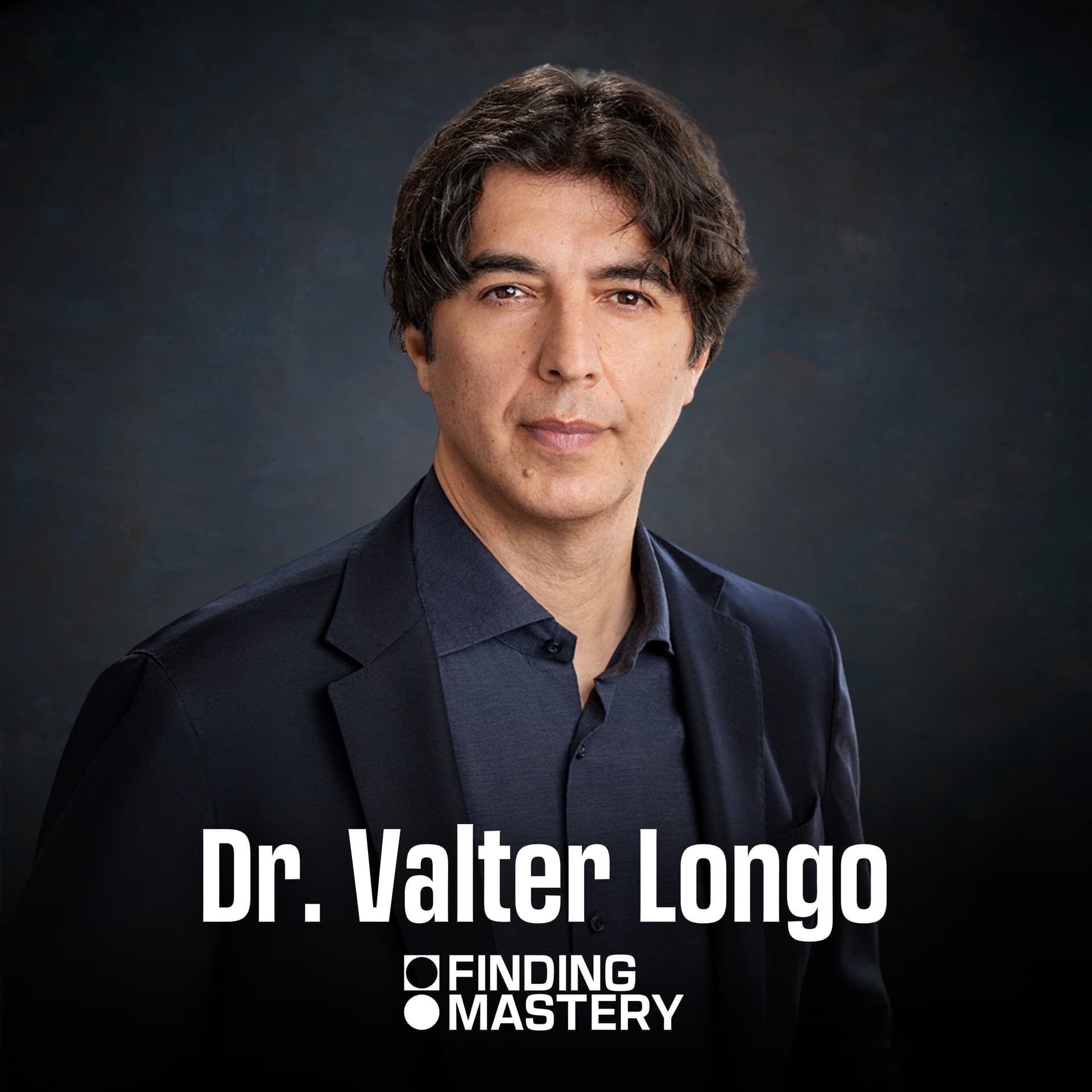
Dr. Walter Longo is a USC professor and director of the Longevity Institute. He authored The Longevity Diet and Fasting Cancer. He previously studied aging genetics (including TOR signaling) and later developed fasting-mimicking diets; his work includes clinical trials at USC Norris Cancer Center and a cancer-patient support foundation in Los Angeles.
Key claims
Treat aging to prevent cancer; fasting-mimicking diets (low protein, low sugar, high fat, low calorie) can separate cancer from normal cells; fasting should be periodic (not daily) and not framed as “water-only fasting,” especially for cancer cachexia/sarcopenia; high animal protein later in life may increase mortality risk; gut “organ clocks” matter for cancer risk.
Notable examples
Growth hormone receptor deficiency mice and Ecuador human cohorts show reduced cancer/diabetes risk; triple-negative breast cancer trials report improved survival with fasting-mimicking diet plus chemotherapy; Milan/National Cancer Institute paper describes exceptional responses (5 patients) using fasting-mimicking diet plus immunotherapy/chemotherapy; pancreas damage in mice reportedly recovers insulin production after fasting-mimicking cycles via Yamanaka-factor reprogramming.
Written by AI. May contain mistakes. Listen to the episode to check what was said.
Chapters
Tap a time to open that second in VOThe Connection Between Aging and Cancer
0:03 to 1:05
Discussing how aging treatments can influence cancer prevention.
“Mastery because we know one great hire can change everything.”
The Connection Between Aging and Cancer
2:43 to 3:39
Discussing how aging treatments can influence cancer prevention.
“Walter, it is great to be here with you today.”
Integrative Solutions for Cancer Patients
3:39 to 4:43
Exploring lifestyle changes that can help cancer patients improve outcomes.
“And then two, once you have cancer, most people Google, what else shall I do?”
The Goal of Living to 110
4:43 to 6:06
Understanding the importance of healthspan and longevity in relation to disease.
“is the number two cause of death in the U.S.”
Dr. Longo's Journey to Aging Research
6:06 to 8:11
Dr. Longo shares his background and motivation behind studying aging.
“That's why I saw scientifically and medically a great venture because it's so difficult.”
Nutrition vs. Lifestyle Choices
8:11 to 10:10
Discussing whether nutrition or lifestyle is more important for longevity.
“that maybe is even more important than music.”
The Role of Growth Hormone in Longevity
10:10 to 16:54
Exploring how growth hormone affects longevity and health outcomes.
“It was like science to, you know, get people to live to 110, right?”
Protein Intake and Longevity
18:14 to 27:34
Explore the relationship between protein consumption and long-term health.
“You are set up better from a metabolic standpoint, from a risk of falling standpoint.”
Gut Health and Longevity
27:34 to 28:00
Understand the significance of gut health in relation to longevity.
“With the gooms and seeds and nuts and cereal and whole grains and all that.”
Nutrition and Longevity: The Role of Gut Health
28:00 to 33:25
Learn about the importance of gut health and dietary choices for longevity.
“Well, legumes are maybe a third of my protein intake.”
Show all 18 chapters
Nutrition and Longevity: The Role of Gut Health
33:29 to 34:43
Learn about the importance of gut health and dietary choices for longevity.
“travel is part of the rhythm of doing meaningful work.”
Fasting and Its Impact on Health
34:43 to 42:04
Explore the nuances of fasting, including its benefits and methods.
“And this is different than intermittent fasting, which is what you're saying.”
The Impact of Diet on Cancer Treatment
42:04 to 48:14
Learn how fasting mimicking diets and dietary changes can support cancer treatment.
“And I understand your position to live a healthy life.”
Personalized Approaches to Advanced Cancer
49:53 to 56:00
Understand the strategies for managing stage four cancer through diet and lifestyle.
“Okay, so let's go to stage four brain cancer.”
Gender Differences in Fasting-Mimicking Diet
56:00 to 57:39
Explores gender differences in response to fasting and the importance of clinical trials.
“compared to a Western sedentary lifestyle and habits.”
Mainstream Acceptance of Fasting in Cancer Treatment
57:40 to 1:00:24
Discusses the potential for fasting to become part of mainstream cancer treatment protocols and the challenges involved.
“The fasting-weaking diet definitely should be part of the pre-diabetes, diabetes, inflammatory diseases.”
Personalization in Longevity Treatments
1:00:25 to 1:02:12
Highlights the importance of personalized treatment approaches in longevity medicine.
“And if our answers or our understandings or insights that we have right now are challenged and found to be refuted and are not holding up, then you quickly let go of them, you know, and you don't hold on.”
Collaboration in Healthcare for Optimal Outcomes
1:02:13 to 1:03:10
Emphasizes the need for collaboration among scientists, physicians, and dieticians for patient care.
“Actually being there with the physicians and with the clinicians every day, going through case after case after case, and then being able to follow them.”
Transcript
Automatic transcript. May contain errors.0:00Dr. Michael Gervais:Finding Mastery is brought to you by LinkedIn. We use LinkedIn Hiring Pro here at Finding Mastery because we know one great hire can change everything. One bad hire, it can cost you a lot, way more than time. It can cost you momentum and culture and real dollars. And that's why how you hire matters just as much as who you hire. And it's why I've become a big believer in the power of LinkedIn Hiring Pro. Here's what I appreciate about it. When you're running lean, you don't have hours to sift through a pile of resumes hoping to find the right person somewhere in the stack. Hiring Pro is built exactly for that reality.
0:32Dr. Michael Gervais:You describe the role and it screens candidates for you, surfacing the people who are a best fit so that you can spend your time and conversations with those folks rather than in the weeds of the applications. And the results back it up. Those hiring with LinkedIn are 24 % less likely to need to reopen a role within 12 months compared to the leading competitor. So join 2.7 million small businesses already using LinkedIn to hire. Host your job for free at linkedin.com slash mastery. Terms and conditions apply. Again, that's linkedin.com slash mastery to post your job for free. All the cancer cells go in one direction, which is I don't care that you're fasting me.
1:10I keep on going. And all the normal cells say, hey, I care very much about this condition. I'm going to stop. This is really probably the most powerful way to separate all cancer cells from all normal cells. We've seen a lot of people in stage four going into remission.
1:26Dr. Michael Gervais:Welcome back, or welcome to the Finding Mastery Podcast, where we dive into the minds of the world's greatest thinkers and doers. I am your host, Dr. Michael Gervais. A high-performance psychologist named Michael Gervais. Who head coach Mike McDonald and former head coach Pete Carroll brought into work with the Seahawks. Famous for his work with Felix Baumgartner when he jumped out of space in the Stratos Project. Olympic athletes depend on something more than just training and talent. They have to stay mentally tough. Today's guest is Dr. Walter Longo, professor and the director of the Longevity Institute at USC and author of The Longevity Diet and his latest book, Fasting Cancer.
2:03So far, we haven't seen anything that looks as promising as the dietary approach. We don't like to say too much about it because we don't want to give the impression that we know it was our treatment that did that. But certainly we've seen a lot of people going to remission.
2:17Dr. Michael Gervais:In this conversation, we explore how small intentional habits may have a far bigger impact on long-term health than many of us realize. I think you put it together, probably looking at maybe 20-year life expectancy difference compared to a Western sedentary lifestyle. With that, let's jump into this week's conversation with Dr. Walter Longo.
2:43Dr. Michael Gervais:Walter, it is great to be here with you today. I really enjoyed your book. Oh, thank you. Fasting Cancer. Yeah, I really enjoyed it. And the reason I enjoyed it is because, one, so many people are struggling, whether it's themselves and or their family or an intimate loved one with cancer. It's one of the leading causes of death in the U.S. And you have presented a very easy to follow and easy to understand path to help, I think, reduce cancer, the onset of cancer, and actually how to work with it once you have it. Do I have those two premises correct? Yes, it's correct. So the idea, of course, cancer and aging go together.
3:27And so by treating aging, you're also preventing cancer. And so that's one, and it was important to me to talk about exactly how you do that. What maximizes the aging treatment? And then two, once you have cancer, most people Google, what else shall I do? So I go to the whatever medical center and I get the treatment, but then what do I do for lifestyle, right? What about nutrition and fasting and exercise and all of that? So surprisingly, so many cancer patients were coming to us and my foundation here in Los Angeles and saying, I don't know where to go. So then maybe 10 years ago or so, we started as a foundation to help cancer patients and then think about these integrative interventions.
4:14How do you combine? How can you be respectful of the standard of care and at the same time, integrative solutions that at least have the potential of making the side effects slower and the efficacy of the treatment higher.
4:29Dr. Michael Gervais:At this point, are you more interested in the quality of life over time, longevity, healthspan, lifespan, those ideas, or are you more interested right now in understanding cancer and the process to help people through that? Well, cancer, I think, is the number two cause of death in the U.S. So clearly, whether it's cancer or cardiovascular disease or diabetes, if you want to live to 110, you cannot have cancer, right? So you can, but we need to make sure that you don't get it. And if you do get it, you get through it, right? So that's how cancer fits in, right? So we've never been a cancer lab first.
5:08We've always been thinking about cancer and cardiovascular disease, et cetera, as something that interferes with your ability to get to 110 and make it there healthier.
5:19Dr. Michael Gervais:Why did you come up with the number 110? Where did that come from? 110 comes from two people that I follow personally. One was Salvatore Caruso in southern Italy. He made it to 110. He was the oldest man in Europe. And he was in the little village both of my parents come from. So he saw me grow up and he was just a block away from my grandparents' and my parents' house. And the other one was Emma Morano. and Emma Morano got to 117 in Northern Italy. And I followed her for the last five years of her life. And she was the oldest Italian who ever lived. And of course, it's great to think about 150 years lifespan, but I just felt that Caruso and Morano were realities.
6:02And if they made it there, then I think a lot of people can make it there. It's extremely difficult, but that's it. That's why I saw scientifically and medically a great venture because it's so difficult. It's just almost impossible to make it to 110, right? So when you look at the numbers, you're thinking, how can we possibly get this person to get there? But yeah, all the things that we know at work and hopefully you have a chance.
6:29Dr. Michael Gervais:Why did you want to study this? What first drew you into studying longevity and the quality of life? Yeah. So I was actually a jazz performance major at the University of North Texas, which is one of the great schools for jazz, believe it or not. And the second year, beginning of the second year, they told me I had to direct a marching band. And I said, there's no way I'm directing a marching band because I was a rock player. I mean, I was studying jazz to play rock. And so as soon as they say that this is not an option, right, this is not optional, then I said, I want to study aging. So it was in my head.
7:07It always been in my head, right? I didn't think about, oh, what should I do? It was like, I'm going to the biochemistry department, and I figured if I combine chemistry and biology, that's got to cover the ground. I picked biochemistry, the hardest thing that I can think of. And yeah, it was always in my mind. One of the things I speculate is that when my grandfather died, so Caruso was only a block away from my grandfather. They were the same age, right? But my grandfather died 40 years before Caruso, right? And so that to me was just an unbelievable thing because I thought, you know, just little things can make such a big difference, right?
7:44But I think I was in the room when he died. And so I thought just as a five-year-old that probably stated in my head is a very, you know, central problem in life, right? So I think if you see it that early, it just affected me. And so I probably for whatever, 13, 14 years, It stayed in my head until I had the opportunity. Instead of studying music, I'm going to go study this thing that maybe is even more important than music. And I'm not. I think music is very important. But just in my head, it was just, you know, I had to study AGM.
8:20Dr. Michael Gervais:Was that born out of trauma? Or was that just an important imprint that happened for you at a young age that sparked interest? Was it more out of that or more from an inspired state? You know, I don't think it was trauma because it didn't seem to affect me back then, but I think it just, it was a very central, it became from that moment on, like, you know, instinctively, I think it became, it can't possibly be anything more important for me to do than figuring out how not to die. Right. And yeah, so I think it probably just instinct that forms when you are exposed to it, you actually see the person die.
9:02I mean, everybody has grandparents that die, right? But if you're in the room, I think, at least in my case, it hits you in a different way where you see the reality of life ending, right? And so, yeah, probably, yeah.
9:16Dr. Michael Gervais:When you go back to that moment, and I'll explain in just a moment why I'm asking this set of questions, but can you go back to that moment and do you remember the room? Do you remember those elements? Yeah, I remember everything, yeah. I remember there was the whole family gathered together. And in fact, I put it in my first book, Alfonso, it was his name. I almost like was the doctor in the room, right? I was a five-year-old. So then I say something like, can't you see he's already died, right? So almost like in an early age, I was already thinking about that job, right? You know, that job of being a doctor or being an expert in that field.
9:52So I don't know where it came from. But even when I got to UCLA years later, my first two years, I spent in the pathology department, right? So, yes, I went to biochemistry, but then I spent two years in the pathology department. So, yeah, so to me, the medical part was always very important. It wasn't about just science. It was like science to, you know, get people to live to 110, right? So, yeah.
10:17Dr. Michael Gervais:Okay. Are you more interested right now in nutrition or are you more interested in healthy lifestyle choices? We've always been interested in just making people live to 110, right? And so however that can be done, right? My first 10 years, all I did was genetics of aging. I didn't even do nutrition. And we discovered probably one of the most important pro-aging pathways called TOR, I see this kinase, in simple organisms. But the study after study after study was pointing, whether we're studying simple organisms or mice or humans, it was pointing us to nutrient signaling pathways, right? Meaning that it was all the genes that were controlling aging.
11:01So for example, growth hormone, the one genetic mutation that makes a mouse live the longest, right? It's called growth hormone receptor deficiency. With this GHRD, growth hormone receptor deficiency, the mice live 40 % longer, but health of the mice never develop any disease, right?
11:20Dr. Michael Gervais:Does the growth hormone receptor deficiency, does that mean that more growth hormone is circulating in the body? It means that there's more growth hormone circulating in the body, but it's not working. It's almost like you have no growth hormone. In fact, the other mice that have record longevity are the growth hormone deficient mice. Right now, the pituitary is not making growth hormone. And those have almost identical phenotypes, you know, meaning they, whether they're growth hormone deficient or they're growth hormone receptor deficient, you get long longevity, extreme longevity, and extreme health, right?
11:53These mice are surprisingly healthy.
11:56Dr. Michael Gervais:You're blowing my mind because I remember when human growth hormone was kind of first a thing when I was studying it in grad school. I was like, oh my goodness, this is amazing. However, there was one finding, subscript finding that scared me, which was that it grows all cells. But at the time, I remember thinking this is the elixir of youth. And what you're saying right now is when you don't have growth hormone, when the mice don't have growth hormone, they're living longer. Yeah, so now it used to be growth hormone and now it's the secretagogue, these peptides are now becoming very popular. So it's the same story.
12:33So growth hormone is not bad for you temporarily, right? So temporarily it helps you grow and it can even help fix lots of different issues and problems. But if you're thinking about a 110-year life, then you have to stay as much as possible in what we call maintenance modes. There are trade-offs in evolution between the attempt to grow and the attempt to protect yourself. So you've got to pick. You cannot grow and reproduce and maximize your protection. You've got to do one or the other.
13:05Dr. Michael Gervais:Because the growth choices require risk and strain and... Require a lot of energy, right? You have to put all your energy into your offspring. Evolution doesn't care about us, right? We can go, right? As long as our offsprings are doing well, evolution has done its job, right? So the force of natural selection is on making sure you reproduce and you could argue, you know, and even Darwin argued that maybe if you get out of the way, it's better, right? So live long, not too long and get out of the way. So then if you think about that, the growth hormone, of course, it's got a temporary job. It needs to make you grow, healthy, and reproduce, and get out, right?
13:46And that's exactly what happens, right? So it's not surprising that so many people think, wow, look at the short-term effects. But then, of course, what happens to you 20 years down the road? And, you know, so for example, acromegaly, which is a condition where you have very high levels of growth hormone, people that have acromegaly die early, mice that have acromegaly die early with lots of diseases and lots of problem very early, right? They end up, I think, being like seven foot six and like... Gigantism, yeah. So that tells you that, you know, high growth hormone, and in fact, they have IGF-1 levels, so the growth hormone activity is measured with insulin-like growth factor one, which is the result of having high growth hormone.
14:25So usually if they have about 300, they get a drug to block the growth hormone receptor or growth hormone release. The medical community already agrees that don't get your IGF-1, don't get your growth hormone activity too high because that causes problems. But anyways, yeah, there was mice, but then 20 years ago, we started following people in Ecuador that have the same mutation, growth hormone receptor deficiency. And sure enough, we published on them, you know, rarely having cancer, being overweight, but not getting diabetes, having cognitive performance more similar to people much younger than they are.
15:03And recently, a couple of years ago, we published on cardiovascular, They have less plaques, at least the one we examined. And we went down with cardiologists to determine, did they have cardiovascular disease? Maybe because everybody was saying, well, maybe they're protected from cognitive, they're protected from cancer, diabetes, or maybe they all die of cardiovascular disease. But in fact, they were even protected from at least cardiovascular risk factors. But my point was that growth hormone pathway is in the protein signaling pathway. So not just protein, but proteins have a central role in activating insulin-like growth factor one, TOR, and all these genes that we described as pro-aging, right?
15:43And so I had to move to the nutrition part because it seems like nutrition was the way to control the gene to control the aging process, right?
15:50Dr. Michael Gervais:So that's what you did with that finding. You were constantly trying to go upstream to see what had the greatest impact to make the downstream difference that you're looking for. Yeah, so once we saw that we had people and mice and all kinds of organisms living longer by having deficiency in this pathway, then the obvious thing was like, well, what happens if I manipulate the diet that controls these genes instead of needing drugs? Of course, we're also working on the drugs, but so far we haven't seen anything that looks as promising as the dietary approach. And so, you know, and later I think we're going to talk about the fasting-making diets.
16:25So then the idea has been, how can I just leave people alone, but intervene instead of GLP-1 and other drugs that are going to do good and bad, intervene with, you know, dietary approaches that are much safer. Yeah, they're a little bit tougher, right? It's easier to take a pill, but instead of making you not want to eat, they may make you very much happy to eat, but, you know, keep you healthy and long-lived. you.
16:54Dr. Michael Gervais:Finding Master is brought to you by Lisa. We are serious about recovery. Sleep sits right at the center of that practice. I have been fortunate to work with some of the most extraordinary performers for the last two decades. And sleep and recovery are foundational, full stop. It's where the body and the brain repairs. And that's why finding a mattress that supports your recovery matters so much. A great mattress, it's not something that you stumble into. It is a choice. You find it on purpose the same way that you'd approach anything that really matters in your life. We've worked with Lisa for a long time now because they get it.
17:28Dr. Michael Gervais:They build beautifully crafted mattresses tailored to how you actually sleep. Your position, your feel, your preferences, all of it. You can take their sleep quiz and find your match in about two minutes. Premium material, serious comfort, full body support no matter how you rest. One of our teammates here at Finding Mastery picked one up recently. Can't stop talking about it. Says it, they're waking up more rested than they have in years. Right now, they're having a July 4th sale. Go to Lisa.com for 30 % off. Select mattresses. Plus, you get an extra$50 off with the promo code MASTERY. Exclusive for our listeners.
18:02Dr. Michael Gervais:That's Lisa, L-E-E-S-A.com. And use the promo code MASTERY for 30 % off. Select mattresses. Plus, an extra$50 off when you use the code MASTERY. there's a lot of energy around protein and adequate consumption of protein to build muscle and one of the unlocks for a second phase or third phase of life meaning when you're i don't know past your 40s or 50s whatever phase that might be is that if you go into that phase of life with adequate muscle, that you are set up better. You are set up better from a metabolic standpoint, from a risk of falling standpoint. And the narration there is that you need to lift heavy weights.
18:49Dr. Michael Gervais:You need to work out. You need to have, I don't know, kind of a lot of protein. And your narrative is saying, wait, hold on. I don't think you need nearly as much protein. So there's a, I know that you're aware of that friction. Can you help me understand, juxtaposed to what I just set up, how you are ringing the bell for people to make a decision for longevity? It's good that you asked me that question because I just spent six months writing a review on proteins. I put together a team of like 10 people, hundreds of papers. But the trick was not just reading the papers, right? The trick was understanding the papers.
19:26You have what we call meta-analysis, right? And some meta-analysis, and this is what gets a confusion out there, some of the studies of all studies, maybe 25, 30 studies, will conclude something like higher protein intake, if it's from plant-based proteins, is associated with lower mortality, overall mortality, cancer mortality, et cetera, et cetera. And so I think they got distorted by influencers and a lot of people into all you see, even the science is saying. So the field was based on acute effects. If you have a lot of proteins and you work out, you can have a small additional effect than if you just work out.
20:08So that was number one issue. Then this meta-analysis from top places came in and showed that, and the headline was higher protein intake. And some journalists, a lot of journalists, may have gotten rid of the, an influencer may have gotten rid of the plant-based, right? And just say higher protein. When you dig into it, you see something very different, right? You see very consistently the high protein is bad for you, right? If it's animal-based, right? Very consistent, almost like no exception, right? And a lot of times you even see that in older individuals, right? Older individuals that have a high protein diet tend to do worse, right?
20:52I mean, high in the sense of 1.6, 2 grams per kilogram, as we're hearing the influencer recommend. So that's clearly bad for you. The question was, is high plant-based protein also bad for you when this paper indicated that it's not? When you dig into it, you realize they never studied high plant-based protein. They studied groups that had a higher proportion of plant-based protein, but in fact had probably less amino acids compared to the lowest group, right? So anyway, long story short, high protein diet is bad for you, really bad for you. That doesn't mean that you should go down to very low protein diet.
Read the full transcript
21:34You know, you should stay with 0.37 grams per pound or 0.8 grams per kilogram of body weight per day as recommended by most medical associations in the world. Okay, do that again for pounds. 0.37 grams per pound, right? So if you're a 100-pound person, that's about 40 grams of protein. If you're a 200 - Per day.
21:55Dr. Michael Gervais:Per day. Most people in the sport performance world, and like you said, the influencers are saying it's not nearly enough, that it needs to be almost a one-for-one. If you weigh 100 pounds, you need about 100 grams per day. Yeah, very dangerous, right? Very dangerous. For what reasons? Cancer mortality, overall mortality, cardiovascular mortality, gain weight, weight gain, right? So high protein, short term, you get society and that's what the papers indicate. But then in the long run, and this is Harvard study, nurses and physicians study. So in the long run, high animal protein diet is associated with weight gain and diabetes.
22:38Dr. Michael Gervais:What about for people that are highly active, like athletes or people that are fitness-based? I would say no difference. It's not what I will say because that's one of the chapters in my review. So we went through it paper by paper and meta-analysis. And I will say the only exception would be for professional athletes, right? You know, for professional athletes, there seems to be a small effect on top of the, you know, the physical, the training and the exercise. Small. So, yeah. So I think for professional athletes, I think each athlete should look into it and say specifically for this discipline, is there an advantage or is there a disadvantage?
23:20You know, my guess is in some cases you're going to have disadvantages. But yeah, for specific type of athletes, you know, there could be a small advantage of adding. You know, so there was one paper where, you know, they were looking at the performance, you know, like muscle performance. Like, I think it was weightlifting or something like that. And so exercise was like 27 and adding high protein to it was plus 2.5, right? So it was either 27 or 29.5. So 27 just with the exercise. And what is the 27? What's that? It was like improvement in force or I forgot now what the measure was. But the point was that most of it came from the training.
24:05And yes. So of course, if you're a professional athlete, that extra, you know, 10 % is a big deal. But for most people, I would say that that's just going to get you in a danger zone, not just based on the epidemiological data that I was telling you earlier. Mice, if you look at mice, a hundred years of research, the only way to extend the lifespan of a mouse, you know, in a major way or a rat is to either calorie restrict, so less calorie-based compared to normal or protein restriction, right? Or methionine or branch chain amino acid restriction, right? This is the most powerful, and now 100 labs have repeated this experiment over and over and over and over.
24:46Even branch chain amino acid reduction? Branch chain amino acid reduction or methionine reduction or protein reduction. This is not most powerful compared to diet. It's more powerful compared to anything, right? If you look at 100 years of research in mice and rats and longevity and health, not just longevity, cancer, diabetes, neurodegeneration, and lots of issues in mice and rats. If you look at 100 years, nothing other than calorie restriction, so low protein and low everything else,
25:19Dr. Michael Gervais:beats protein restriction. You know, you're pushing against a narrative that I've heard my whole life. So this is why I wanted to have you on. And I didn't think you were going to be this emphatic about it. I read your book and I read your position about increasing protein later in life. And I thought, wait, I can't be understanding this correctly. Reduce protein earlier in life to the, to the variants that you just said, or the window you just said. And then you're suggesting again, like I said, to increase it later in life. Yeah. Small increase though, it's from 0.8 to say one, right? So that, and even geriatricians seem to agree there.
25:55I mean, like, if you look at, you know, good quality, let's say health plant-based, health animal-based, one gram per kilogram, you know, in elderly, it's perfectly fine, right? No need to go, even in elderly, in most studies. Now, you even see in the elderly, the high protein intake, higher protein intake being problematic. So, but yeah, I would say that our conclusion is one gram per kilogram. So going up 20 % from what I said earlier, after age 65, 70. And this should be a biological age, meaning like, you know, on average, people in the United States, they gain weight until 65 and they start losing weight, right?
26:31And when you lose weight, that's when I think that you can make that 20%, not just increase the 20 % in protein intake, but also maybe the variety, right, are there. So for example, legumes have very low levels of methionine and also fairly low levels of branched-chain amino acid. So if you had a mostly legume-based protein diet, you might have a problem. And that's why that 20%, you know, helps, I think, in general, make sure that people are not malnourished by, you know, having low protein and then having low amino acid type of protein that they consume. You're going to have a whole lot of people that are really confused right now.
27:11Dr. Michael Gervais:And so, yeah. It's actually very simple. So think about, you know, say, if you want to be very, very safe in nourishment, think about 50-50. The best is 2-to-1 plant-based, animal-based proteins. For each protein coming from an animal source, for each gram coming from an animal source, two grams coming from a plant-based source. It doesn't matter what it is. Don't worry about it. Keep the variety. With the gooms and seeds and nuts and cereal and whole grains and all that. Then keep that 0.8 or 0.37 grams total per pound. So if you weigh 100 pounds, 37 grams, 40 grams, I say, if you weigh 200 pounds, maybe, you know, 70 grams or something like that.
27:56Dr. Michael Gervais:What are some key foods that you pay attention to that make sure that you get in on a daily, weekly basis? Well, legumes are maybe a third of my protein intake. And then, you know, fish is maybe one-fourth, one-fifth. And then the rest of it is whole grains, nuts, like almonds and walnuts. Yeah, so that's where I get most of my proteins. No red meat, no chicken? No, I eat chicken once a week. Okay. I eat chicken once a week, yeah. Okay. And it's not necessarily good, but it's fairly neutral. If you look at all the epidemiological data, chicken usually doesn't, it comes in the middle. Like it's neither good for you or bad for you, right?
28:40It seems to be fairly neutral. So if you have it once a week, I always figure I like it. And it's probably good having it once a week. It's probably okay.
28:49Dr. Michael Gervais:What is your position on gut health with longevity? The health of every system is key, right? New data is suggesting that you have to worry about the one organ that goes first, right? The age is the quickest. So now you're starting to have organ-specific clocks, right? You can sort of measure how old is your liver. So if your gut is 20 years older than your chronological age, so if you're 40, but your gut age is 60, you're going to have a problem, right? And you may end up with colorectal cancer or Crohn's or colitis. And so I think this idea is very important. It's a new idea because in the aging field, we always thought it's about your general biological age.
29:34But you could be very young and have one organ like the gut that is very old. And he's still going to have a problem, right? And my grandpa, right? So he had gastrointestinal issues. He never took care of it. And eventually after years and years and years, it turned into a cancer. And so, you know, he could have got an operation and he, you know, just as an operation might have given him an extra 40 years of, of life. Right. So I just wrote an article for an Italian newspaper about, you know, I always like to write about my relatives, right? And I put my uncle in there. Right. and I said, you know, my aunt went to the doctor, the cardiologist with my uncle, and it was for her, right?
30:15And she's a little bit upper contact. And, but at the end of her visit, she was fine. She said, you know, my husband, by the way, you know, his heartbeat is very fast. And the doctor, can you take a look at him? And sure enough, he already had a heart attack and he didn't know, right? And then he needed a quadruple bypass. and so, hey, he seemed to be very healthy and he was not, right? So he got a quadruple bypass and now 25 years later, he's doing great, right? So yeah, you could be perfect for everything else, but if your arteries are clogged up or your gut is inflamed, you got a problem, right?
30:56And it could be as simple as gluten. Think about celiac disease, right? Just one, just simple ingredient of one food type and it's going to make your life miserable, right? So, yeah. And, you know, if you have celiac disease and you don't get rid of gluten, you're going to have a miserable life and lots of problems.
31:17Dr. Michael Gervais:We had Dr. Tim Spector on, who has done a bunch of research around gut health, and he is saying something very similar to what you're saying. And his kind of horseshoe approach was 30 different types of plants per week, a variety of plants. And if you're doing that, you're probably going to have a pretty healthy gut flora. Yeah. Yeah. Yeah. Okay. So let's, so then let's move into fasting and fasting mimicking diets, which is a new term for me that you introduced. What do we need to understand about fasting? And is there a difference between genders across the two? First of all, I think if you think about fasting, I always say that it doesn't mean anything, right?
31:57There's just a word like eating, right? You know, is eating good for you? it and so i would say the majority of fasting practices are probably going to do damage in the long run right and so why is that well based on data right so if you look at you know people that fast for 16 hours uh most of them skip breakfast more the best breakfast keeping is being consistent and associated with higher mortality overall mortality higher cardiovascular mortality now we don't know why but you know not a good start right so if you're doing something for your health to say, I'm going to skip breakfast so I'm healthier.
32:32And in fact, the people that skip breakfast are living shorter. Yeah. So I would say that we need to move from fasting as a word to like exactly what is it that I'm doing and why. Right. And so we started a long time ago thinking about, um, out of all the things that people talk about, are there some that should be beneficial consistently and, uh, you know, and how long are they going to be in, in, in, are they going to be water-only fasting or different? So we identified, we started studying in mice and say, what if the mouse, instead of having this daily intervention or restrictions, just did it once a month or twice a month for four or five days?
33:14So then that gave rise to the idea of periodic fasting, right? And so we introduced this idea of periodic fasting. A few people had done it before, but this didn't really exist.
33:25Dr. Michael Gervais:Finding Master is brought to you by ProtonVPN. For so many in our community, travel is part of the rhythm of doing meaningful work. Boarding flights, hopping between cities, working out of hotel lobbies and coffee shops, it's all part of what it takes for some of us to lead and build at a high level. And one thing that's easy to overlook in that rhythm is digital security. Because the moment you connect to public Wi-Fi in a hotel or airport or cafe, your activity is suddenly a lot more exposed than most people realize. Logins, emails, financial information, sensitive work, it's all in the open in a way that doesn't match the standards we hold for the rest of our lives.
34:02Dr. Michael Gervais:That's where Proton VPN comes in. Proton VPN is a secure service designed for people who want to prioritize their digital privacy and security. It lets you access the internet the way it should work. Open, secure, and on your own terms. If you take your work seriously, take the conditions you work in seriously too. Right now, ProtonVPN is offering you 70 % off a two-year plan when you go to protonvpn.com slash mastery. That's proton, P-R-O-T-O-N-V-P-N.com slash mastery for 70 % off your two-year plan. Again, that's protonvpn.com slash mastery. And this is different than intermittent fasting, which is what you're saying.
34:46Intermittent fasting is usually, let's say, you don't eat for 16 hours, you eat one day, you don't eat the next day. Yeah, so that's intermittent fasting. But essentially, it takes longer for the human body or the mouse to shrink, right? And that's what you want. You don't want a major shrinking of organs and systems, but you want the human body to begin to shrink, right? And it takes probably the whole five days. Now, we couldn't go out. Five days for senescent cells? To begin to shrink, right? But to shrink the body, it starts getting rid of damaged components, like autophagy. I said, why? Because it hasn't eaten for five days, and it starts looking inside for sources of food, right?
35:29And fat is one of those, right? So you accumulate fat if you're like grizzly bear or emperor penguin. When you have food, you eat as much as possible, accumulate it, and then you start slowly using it. And that's the same for actually cellular component. You know, the cell can start eating itself by a process called autophagy. But then we discovered, and that was really surprising, that stem cells are starting to become activated at the end of the diet. And something called cellular reprogramming, Yamanaka factors, you know, so these factors that have the job of making an old cell young, they also start being activated together with many different genes associated with embryonic development.
36:10So what was happening, essentially? So you shrink because there's no food, right? And now when food comes back around, you have to re-expand. So we started thinking, is it possible that this re-expansion is using the same developmental genes that the mouse or the person is used when they were first born, right? And that's exactly what happens, right? So in that re-expansion phase, you're seeing the creation of a new organ, right? Of course, it's not the entire organ. It's just a component of it, but that's what we're seeing. And now the incredible thing is it also goes after the damage. It knows something is now working in this organ, so let me fix it before I start re-expanding, right?
36:54And it's really remarkably powerful because it's billions of years of evolution that have led to this extremely sophisticated... So, for example, we took the pancreas of a mouse. We damaged it irreversibly, right? and then they don't make insulin anymore. And then we start the fasting-mimicking diet cycles and you see that reprogramming occurring, the Yamanaka factors go up, the embryonic developmental genes, and then the pancreas goes back to making insulin, right? So it knows how to go back to its original function. And in doing so, it's becoming younger.
37:31Dr. Michael Gervais:And you're suggesting that at five days is when the autophagy process really starts to kick in and two things are happening. One is the removal of old decay, decrepit cells. And the second is the rejuvenation of cells that were healthy, but just a bit dormant. Is that, do I have that language correct? Healthy, but also, and more important, the ones that are not healthy, right? So now you're thinking, that's why we're saying the insulin, they're no longer able to, the beta cells are no longer able to make insulin. So now the fasting-mimicking diet refeeding cycles are turning back into a healthy insulin-producing beta cell.
38:13Okay, so it's both.
38:14Dr. Michael Gervais:Yeah. Yeah, okay, I got that wrong. Okay, thank you. So describe a fasting-mimicking diet as a protocol that we can all benefit from. Yeah, so 15 years ago, we first started doing clinical trials at New USC Norris Cancer Center with cancer patients with water-only fasting. Nobody wanted to do their water-only fasting. and so then the government sponsored research on the fasting mimicking diet. So we said, we have enough knowledge on what is it that is triggering fasting, what is it that is blocking fasting and so we developed a low protein, low sugar, high fat, low calorie fasting mimicking diet and so in that fasting mimicking diet could have been made with any ingredient that are consistent with what I just said but I decided that I wanted to make it with the healthiest ingredients that I could possibly think of.
39:06So I combined the longevity ingredients, so the vegetables, the nuts, and the whole grains, et cetera, with the fasting-mimicking properties, right? And so there was a good idea, and we didn't realize that it was a good idea until we did a study in mice on inflammatory bowel disease, and it turned out that water-only fasting was only about health as effective as the fasting-mimicking diet in repairing the damage to the gut. And in fact, the water-only fasting temporarily increased gut leakiness. And the fasting-making diet didn't, and then it repaired it much better, was more effective than the water-only fasting.
39:44And the reason was that the prebiotic ingredients, going back to what Spector was saying, the prebiotic ingredients in the FMD, the fibers, etc., were feeding the lactobacillus, bifidobacteria, and other bacterial population that then helped the gut repair itself. Yeah, so I think that the fasting-making diet, this composition, a very healthy composition, was very good from that point of view, but also from the behavioral, meaning training people to have a vegan diet. That was also, maybe we didn't quite realize it until years later when we started doing trials on diabetes, pre-diabetes, and we're starting to see people saying, it's a slow process, but people were saying, I never thought I could go five days with vegan food.
40:37And hey, I did it. And so I felt good. So that was also a very interesting observation. So it's not like they revolutionize their diet. They don't. But they slowly, it may take two or three years for them to say, you know what, I'm happier eating this way. And also one comment we hear from a lot of people is, you know i don't feel like i you know i used to maybe eat two pizzas in a row and now i don't feel like that's important to me anymore so it's like the food addictions or or the the relationship with food changes slowly but it changes and so this fasting mimicking diet you would suggest three to four times a year yeah it depends you know for diabetes patients and maybe once every month or every two months in the initial stage.
41:28Okay. And let's say obese, diabetes in the initial stage. And then you get down and to the, in the weight and more functional, and then you can go every two months, every three months. And so now in Southern Italy, we just finished testing 500 patients, uh, every three months, once every three months. So I mean, I cannot discuss the results yet, but certainly we think that that's probably, you know, a very effective, you know, once every three months to once every four months.
41:59Dr. Michael Gervais:Okay. And then, so now let's kind of turn your gaze on cancer. And I understand your position to live a healthy life. Fasting mimicking diet is one of them. More plant-based proteins than animal proteins. Reduction in overall protein. And you're suggesting that intermittent fasting It's not the way to do it, but I think I read 12 to 13 hours. No, 12 hours is very good. Yeah. So we use FMD and 12-hour daily restriction. So 8 a.m., 8 p.m. Absolutely. That's like one of our first, I forgot to mention that. Yeah, but absolutely. Very important. Okay. So now this is a lifestyle nutritional design to live healthier.
42:39Dr. Michael Gervais:Okay, great. Now speak to your understanding about cancer and somebody who is going through or just diagnosed with cancer, let's say, how does this relate to them? I think I start by talking about the business of cancer, right? And why is that? Well, because the business of cancer is a very big business. And it's a great business. I mean, like a lot of people's lives are saved by, you know, immunotherapy and other very powerful drugs. But because it's so expensive, because it takes almost a billion dollars to get a drug approved, it's very slow, right? If you came up with a very great idea for a cure for cancer, you know, it may never see the, it may never happen, right?
43:21There's a filter and cancer patients a lot of times may not get all the things that they should get because the, you know, nobody can face that billion dollar expense. So then you got to think different, right? And you got to think different without using drugs, because if you use other drugs, then, you know, you get into a violation. You can do it only for, with something called compassionate use, but lifestyle, you know, is allowed. Meaning like, you know, every oncologist, you have to do something, you have to eat something, you have to do something, exercise. So, you know, which is it? Yeah.
43:54So that's what my new book, Fasting Cancer, is about, is having foundations both in Europe and here in the U.S. following thousands of patients, cancer patients, and not just cancer. We started, you know, basically helping them integrate. say okay you know you're going to go to the oncologist and the college is going to give you the treatment and great you know we don't of course touch that but we are there to support that treatment as much as possible with everything we can in a personalized way right so then you you know why that why fasting mimicking diets right well first of all fasting as i mentioned is not feasible for cancer patient cachexia and and and sarcopenia and lots of problems that happen to a cancer patient, they need to eat.
44:42They need to eat, right? But when you give a fasting mimicking diet to a patient or to a mouse, I mean, in my sense, it's very clear. I mean, we get to look at a piece by piece, cell by cell. And so all the cancer cells go in one direction, which is, I don't care that you're fasting me. I keep on going, right? And all the normal cells say, hey, I care very much about this condition. I'm gonna stop, right? And so this is really probably the most powerful way to separate all cancer cells from all normal cells. It's just opposite direction, right? So now I always keep the example of, you know, let's say a billion people in the desert.
45:25So if you take a billion people and you put them in the desert and you make them run and, you know, and they don't have any water, what's going to happen in two weeks, right? You have a billion dead people. As long as they keep running. If you didn't run, you might have a shot, right? You're not drinking for two weeks, but you're in the desert. You're sitting down. Okay, you may have a shot. That's what we exploit, right? Say, okay, now the cancer cells cannot stop running. And so because they keep running, so if you take away the glucose and lots of other factors that are so important to keep running, they got a problem, but that's not enough, right?
46:02So why? Because they can steal from the rest of the body. So now you have to, okay, understand that they're running, starve them, and then hit them hard with something, which is the standard of care, right? For whatever the oncology field has come up with that. Yeah, whatever is the most, you know, whatever the oncologist says, for you in this stage, I'll give you this, perfect. So we work with that to say, okay, now we'll give you the wild card that makes things better, a lot better.
46:32Dr. Michael Gervais:Okay, so cancer treatments, many of them, in an attempt to kill the cancer, also damage or kill healthy cells. And what you're saying is when you starve the body just a little bit, the cells, right, or you restrict the glucose and the nutrients that it wants, it needs to be able to grow, it weakens those cells just a little, or makes them vulnerable, I should say. and that in of itself opens up the treatment to be more effective. But you're still adding the traditional treatments, which is damaging the healthy cells as well. So how does your approach only target the cancer cells and not the healthy cells?
47:12The treatment is the treatment is going to do damage. What we've seen, and first of all, I'm talking about mice here, and there's 20 clinical trials, human. But, you know, this is what I was saying earlier. It takes a billion dollars to get through. So the foundation clinics are very careful at saying, we don't know what's going to happen to a patient. And usually we work more with stage four, stage three, stage four, when the oncologist said, I don't have anything else. There is nothing that is going to work. So I just want to make sure that it's clear. I'm not saying we don't know. The clinical trials look very promising, right?
47:56For example, for triple negative breast cancer, now you see patients in small trials, but then the FMD plus chemotherapy surviving more or a lot more than patients with just chemotherapy, right? That's probably the more studied. There's several trials on triple negative breast cancer, which is one of the most aggressive.
48:14Dr. Michael Gervais:Body Master is brought to you by Fatty15. Did you know that Navy dolphins helped unlock a secret to healthy aging? It's a wild story. And it's the foundation for a product that I've come to really love, Fatty15. Fatty15 is built around C15, the first essential fatty acid discovered in over 90 years. And it was discovered by Dr. Stephanie Van Watson. She's the co-founder of Fatty15. While she was working with the U.S. Navy and based on over 100 studies, we now know that C15 strengthens our cells and is foundational for healthy aging at the cellular level. Stephanie's been on the podcast and it was one of my favorite conversations.
48:51Dr. Michael Gervais:She's amazing. And what her and her team are building is something I'm really excited about. Head to fatty15.com slash finding mastery and use the code finding mastery for an additional 15 % off your 90 day starter kit. Again, that's fatty, F-A-T-T-Y, one five dot com slash finding mastery. And the code is finding mastery. I want to take a second here to tell you about a morning routine that I've been using for years. For me, it's a great way to switch on my mind, to ready myself to take on the day. So before I check my phone, my emails, market updates, or text threads, I choose how to start my morning.
49:27Dr. Michael Gervais:That's always in my control. That's always in your control too. This is the same morning mindset routine that some of the world's top performers across sport, business, and the arts are using. The best part? It only takes about 90 seconds to do. So just head over to findingmastery.com slash morning to download the audio guide for free. Again, head to findingmastery.com slash morning to get your morning mindset routine. Okay, so let's go to stage four brain cancer. And somebody's given months to live, six months to live. And they refuse to take treatment, traditional treatments. If they've got six months left, they're saying, I'm not going to go be vomiting half of them or whatever the narrative could be for somebody.
50:15Dr. Michael Gervais:What would you suggest as an absolute baseline approach? Yeah, first of all, we suggest we've seen a lot of people in stage four, you know, going into remission, right? So we suggest that, yeah, we've seen a lot of them, right? We don't like to, you know, say too much about it because we don't want to give the impression that we know it was our treatment that did that. We don't know, right? But certainly we've seen a lot of people going into remission and even from stage four. And in fact, the National Cancer Institute in Milan, where they used to be skeptical about all of this, a few years ago, they published a paper saying something about exceptional responses in advanced stage cancer patients.
50:56And so they had five different cancer patients that combined immunotherapy, chemotherapy, lots of their treatments with the fasting mimicking diet. And they saw five of them going into remission. So they thought it was so surprising that five in the same trial go from stage four to remission that they publish a paper. So, yeah, so I think that I would say that I would give it a shot. Once you get to that stage, even if you have glioma, glioblastoma, and it's a really rough prognosis that, you know, I would stick with the standard of care like tamzolamide or radiation, et cetera, et cetera, and then add the fasting-mimicking diet.
51:33and then we add the ketogenic diet. And, you know, for each patient, there is a, so we do time-resistant eating. We, and all these recommendations, by the way, are made to the oncologist, right? So we basically say to the patient, take it to your oncologist. And this is the things we recommend. So time-resistant eating, usually it's 14 hours. Then the fasting-making diet, exercise, resistance training, and then the ketogenic diet, especially for the glioblastoma. So we rotate between fasting-making diet, what we call the longevity diet, and the ketogenic diet, meaning like a very low-carb diet.
52:08And the reason is to make it as difficult as possible for these gluteblastoma cells to survive.
52:14Dr. Michael Gervais:To keep, yeah, to survive. Okay, great. And would you immediately go on a fasting-mimicking diet, like right away? Everything is personalized, right? So we look at the muscle mass, we look at the weight, we look at BMI, are they eating normally or not, and lots of things, and then make the recommendations. I mean, in the Italian foundation, we also have physicians in-house here. Zolongo. Development of Zolongo Foundation in Milan, we have physicians. So we have physicians, PhDs, and nutritionists. Here, we're going to have them soon enough. Now we have PhDs, but not physicians yet. But I think that would be the ideal, to be followed by an integrated group that knows what they're doing.
52:56And they also are respectful of the job of the oncologist, who in the end is going to make the decision here.
53:03Dr. Michael Gervais:Now, in your book, you walk through a handful of different cancers, chapters, I don't know, 5 through 12 are approaches for each type of cancer. And is it dramatically different for each type of cancer, your recommendations from a nutrition and fasting mechanism? Yeah, dramatically different. And also stage, right? So somebody could be stage one, most stage one, we tell them don't do the fasting-making diet. Age and stage and BMI and muscle mass and history and, you know, what is the chances for life? So if you have a pancreatic cancer, you know, it could be early stage or earlier stage, but you might have a 32 % five-year survival versus, you know, early stage breast cancer, you know, ER positive, we might have 97 % five-year survival.
53:52Yeah, so it's a lot of calculations of risk and benefit. And yeah, so we try to bring the science to the oncologist, right? And say, hey, this is all we know about all these integrative interventions. And what do you think? Is this something that... And most oncologists, it used to be most oncologists say, no, no, I don't change anything. That was like the other way around. Most oncologists are saying, okay, this patient is not going to do well with what we got, right? So go ahead.
54:21Dr. Michael Gervais:you know that i'll allow it yeah what a important body of work and research you've contributed and like i said earlier i was really wanting to have this conversation because you are challenging many of the common narratives for healthy people uh specifically around protein i think that your research-backed approach is refreshing i really enjoyed your book and so well thank you yeah we you know a funny mastery we've got a small team of 40 some folks and you know we've got three of our three of our teammates here uh their parents are in the thick of the fight right now so i wanted to dig in and understand and what a great resource your book is and obviously your foundation oh thanks yeah so i don't know hit us with three things that you hope all people could do to live a longer life a better life you know a healthier life for sure the longevity diet like the everyday longevity diet which includes 12 hours of time or sitting eating right and i think in general it is a personalized you know people should do the most right you know if you eat a lot of red meat you know try to go last red meat that's it right so you don't necessarily have to you know abandon everything you've done before and then you know the yeah the fasting making diet that seems to be are are very powerful for so many diseases and conditions and you know we're testing more and more and so i think that list is going to expand and then i would say exercise exercise, both aerobic and resistance exercise training.
55:52Those are very important. Yeah, so those three things that I think you put it together, probably looking at maybe 20-year life expectancy difference compared to a Western sedentary lifestyle and habits.
56:07Dr. Michael Gervais:Brilliant. And I forgot to circle back around on the gender. Are there any gender differences for the fasting-mimicking diet, or are you not finding that at this point? we're not finding them, right? I think it's probably such a fundamental, you know, fasting response and refeeding response is such a fundamental because we see it in mice. We see it in simple organisms and it'd be strange between a male and a female. So I think as we're now doing these 500 people in larger trials, we're going to get to analyze everything differently and separately also. And so I think we're going to start seeing, yes, this responds better to this.
56:47And also, I think with women, you know, cycle and premenopausal and postmenopausal, there is a whole, you know, effort to be put in there. Like, you know, when is the best time to do the FMD compared to the period? I mean, you know, we have ideas, but I think it'd be nice to formalize with clinical trials. And yeah, so now we're doing studies on PCOS and endometriosis. And so a lot of women-specific studies, and I think those are going to help. Once they're done, they're going to help us also understand, you know, more specifically how we can help women both before menopause and after menopause.
57:25Dr. Michael Gervais:Brilliant. And if you fast forward, I don't know, three years, do you think your protocols will be part of the mainstream treatment for cancer? Or do you think it's going to take a lot longer? I think it's going to be part of the mainstream. and I think we're working very hard with trying to get reimbursement. The fasting-weaking diet definitely should be part of the pre-diabetes, diabetes, inflammatory diseases. Now Stanford has published a beautiful study on Crohn's disease and FMD and I think many more are coming out from lots of different places. Now cancer, I think that, you know, I hope that there's more funds that, you know, we need those billions of dollars that's the reality, right?
58:10So to take it all the way to phase three, FDA, until then, you know, I think cancer is going to be the hardest one, right? Because it's so regulated and it's so hard to finish and prove it. And there's so many, it's like diabetes is one disease. Cancer is a hundred different diseases and a thousand different therapies, right? So yeah, it's very difficult, you know, And I think immunotherapy has been a remarkable story because now it's been FDA approved for so many different uses. But it took 30 years to get there. And so with fasting, you're looking at something even harder. But yeah, I think it's got that potential.
58:51It's got the potential of immunotherapy in making cancer treatments work better. But we'll see.
58:57Dr. Michael Gervais:And when somebody wants to learn more about a fasting-mimicking diet, where do you want to point them? Yeah, of course, the book, the two books, The Longevity Diet, is more about prevention and living long. And the second book is Fasting Cancer. And that's just specifically, you know, with the help of many oncologists, including, you know, oncologists from MD Anderson and USC Norris Cancer Center. They had a very important role in curbing my enthusiasm, right? Sometimes like, no, no, no, no, you cannot say that, you know. And so it is important because, you know, one thing is to see, like you were saying earlier, right?
59:33You can see cases of people that we were talking about, they are cured all of a sudden or even going in remission. But you have to say, well, you know, this happens even in the absence of fasting-making diet, right? So it was the FMD, was it not the FMD? And yeah, so those oncologists in the book were very important in, you know, making sure that we don't overpromise. But I think everybody agreed that, like you were saying earlier, you were talking about glioblastoma in six months, right? Just that hope, that idea that, yeah, what if it was you that all of a sudden you got into remission, right?
1:00:09And we've seen it with so many patients, it could be you, right? Yeah, so I think that's a very important factor. And that was one of the major reasons to get out there. But also, you know, of course, there are randomized clinical trials showing that it may work better, yeah.
1:00:24Dr. Michael Gervais:One of the things I love about the scientific method and scientists in particular is that we are constantly searching for the right answers, the answers that hold up in the light. And if our answers or our understandings or insights that we have right now are challenged and found to be refuted and are not holding up, then you quickly let go of them, you know, and you don't hold on. It's like the anti-scientific approach. What have you needed to unlearn that was important and foundational for you as you've been in your seat for longevity? I think, you know, personally, I mean, I didn't take seriously the personalization early on because, you know, I was working with yeast and mice and I just thought, you know, this is going to apply to everybody.
1:01:10And yeah, to say that I had to unlearn this idea that, you know, because it's concerned and because we see things that span from different, you know, they grab lots of different organisms. That's going to apply to every person. That doesn't work like that, right? So, yeah, you have to really understand each individual. And it could be a very, very different treatment for two different individuals. You know, and also, you know, in general, the diet, right, the understanding that there could be people that, in fact, may need more proteins, right? They may need more animal proteins. You know, I don't know.
1:01:50But in general, that's not true. But, you know, maybe 3 % of the people may have a genetic predisposition that makes them very sensitive to, let's say, a low-protein diet, right? So yeah, that's certainly something that I think, you know, we're appreciating more and more as we follow thousands of patients. And that's been the difference, right? Actually being there with the physicians and with the clinicians every day, going through case after case after case, and then being able to follow them. And, you know, you don't always have a success story that makes you think about personalization and how to solve a problem.
1:02:31But that also points to, you know, what the system should be, right? So, which is, you know, it needs to be much more, medicine should be much more like these programs that we do together, meaning, you know, the scientists and the physicians and the dieticians, et cetera, et cetera. It's a collaboration to not just visit you and say, okay, take this and come back in a year. It'd be more like, okay, well, let's see how this does. and then we do some reading, we come back to you and it just goes back and forth until we solve your problem and then optimize your chances to make it to 110 healthier.
1:03:09Dr. Michael Gervais:Dr. Walter Longo, thank you so much. Thank you, thank you. Next time on Finding Mastery, we're joined by Dr. Daniel J. Siegel, Harvard-trained psychiatrist, neuroscientist, and best-selling co-author of The Whole Brain Child and No Drama Discipline. In this conversation, Dan explores why the hardest moments in parenting often reveal more about us than our children and how understanding our own experiences may be one of the greatest gifts we can give the next generation. From repairing after mistakes to building resilience and emotional health in our children, this episode offers a powerful framework for becoming a more present parent and a more integrated human being.
1:03:45Dr. Michael Gervais:Join us Wednesday, July 1st at 9am Pacific only on Finding Mastery. All right. Thank you so much for diving into another episode of Finding Mastery with us. Our team loves creating this podcast and sharing these conversations with you. We really appreciate you being part of this community. And if you're enjoying the show, the easiest no cost way to support is to hit the subscribe or follow button wherever you're listening. Also, if you haven't already, please consider dropping us a review on Apple or Spotify. We are incredibly grateful for the support and feedback. If you're looking for even more insights, We have a newsletter we send out every Wednesday.
1:04:24Dr. Michael Gervais:Punch over to findingmastery.com slash newsletter to sign up. The show wouldn't be possible without our sponsors. And we take our recommendations seriously. And the team is very thoughtful about making sure we love and endorse every product you hear on the show. If you want to check out any of our sponsor offers you heard about in this episode, you can find those deals at findingmastery.com slash sponsors. And remember, no one does it alone. The door here at Finding Mastery is always open to those looking to explore the edges and the reaches of their potential so that they can help others do the same.
1:04:59Dr. Michael Gervais:So join our community, share your favorite episode with a friend, and let us know how we can continue to show up for you. Lastly, as a quick reminder, information in this podcast and from any material on the Finding Mastery website and social channels is for information purposes only. If you're looking for meaningful support, which we all need, one of the best things you can do is to talk to a licensed professional. So seek assistance from your health care providers. Again, a sincere thank you for listening. Until next episode, be well, think well, keep exploring.
From the publisher
If your body already has powerful systems designed to repair and protect you, are your daily habits helping switch them on... or working against them?
Dr. Valter Longo is a professor and director of the Longevity Institute at USC, one of the world’s leading researchers on aging, nutrition, and lifespan, and the author of The Longevity Diet and his latest book, Fasting Cancer. His path into this work is an unusual one. He started as a jazz performance major, chasing rock guitar, and walked away the moment they told him he had to direct a marching band. What pulled him toward aging traces back to being five years old, in the room when his grandfather died, and a question that lodged in him and never left: what if little things can make such a big difference?
That question became a career. Longo walks Dr. Michael Gervais through the science of living to 110, a number drawn from two real people he followed personally, and the trade-off at the heart of aging: the body can pour its energy into growth and reproduction, or into protection and repair, but not both at once. From there he challenges one of the loudest narratives in health and performance today, the push for high protein, laying out why he believes most people are eating far more than the research supports, and what a safer balance actually looks like.
The conversation moves into the work Longo is best known for: fasting-mimicking diets, why he says fasting on its own doesn’t mean anything, and how cycles of eating less may activate the body’s own repair and regeneration. He and Mike explore what this could mean for cancer, where Longo is careful and precise about what the science does and doesn’t yet show, and they close on what it takes to unlearn a foundational belief when the evidence stops holding up. Mike opens up about how this conversation pushed against a narrative he’d carried his whole life, and why he wanted to have it anyway.
In this conversation, we explore:
- Why aging and cancer are deeply connected, and what that means for prevention
- The trade-off between growth and protection that shapes how we age
- Why Longo believes most people eat far too much protein
- What a safer, mostly plant-based protein balance looks like
- Why fasting on its own is a meaningless word, and what to do instead
- How fasting-mimicking cycles may trigger the body’s repair and regeneration
- What the science does and doesn’t yet show about food and cancer
- What it takes to unlearn a belief when the evidence stops holding up
If you’ve ever wondered whether your daily choices are quietly helping or hurting the systems meant to keep you well, this conversation offers a science-backed place to start thinking about your health and lifestyle.
A note from the team: This episode doesn’t exist in a vacuum. Over the last several months, Mike has had numerous conversations on health, nutrition with world-renowned experts like Dr. Gabrielle Lyon, Dr. Jason Fung, and Dr. Tim Spector, among others. These are all rich conversations that at times hold conflicting advice and guidance. We encourage you to listen to all of them, and as always, consult your doctor on what practices are best for you. Health, nutrition, and longevity are all deeply intertwined with living a life of full potential, and we’re committed to having these great conversations with world experts on these subjects. Keep commenting with what’s working in your life, keep passing these onto your friends, and as always keep pushing the frontiers of your own performance!
Links & Resources
Subscribe to our Youtube Channel for more conversations at the intersection of high performance, leadership, and wellbeing: https://www.youtube.com/c/FindingMastery
Get exclusive discounts and support our amazing sponsors!
Go to: https://findingmastery.com/sponsors/
Subscribe to the Finding Mastery newsletter for weekly high performance insights: https://www.findingmastery.com/newsletter
Download Dr. Mike’s Morning Mindset Routine: findingmastery.com/morningmindset
Follow on YouTube, Instagram, LinkedIn, and X
Dr. Valter Longo’s Books: The Longevity Diet and Fasting Cancer
See Privacy Policy at https://art19.com/privacy and California Privacy Notice at https://art19.com/privacy#do-not-sell-my-info.