In short
Mark Manson discusses “not giving a f*ck” as a psychology of choosing what to care about amid fractured information, social media comparison, and disinformation. He argues people should filter inputs, seek sincerity, and practice “first principles” like radical ownership, radical honesty, and radical acceptance. He also shares how he applies these ideas to building an AI-enabled mental health app and to running a growing media team.
Guest backgrounds
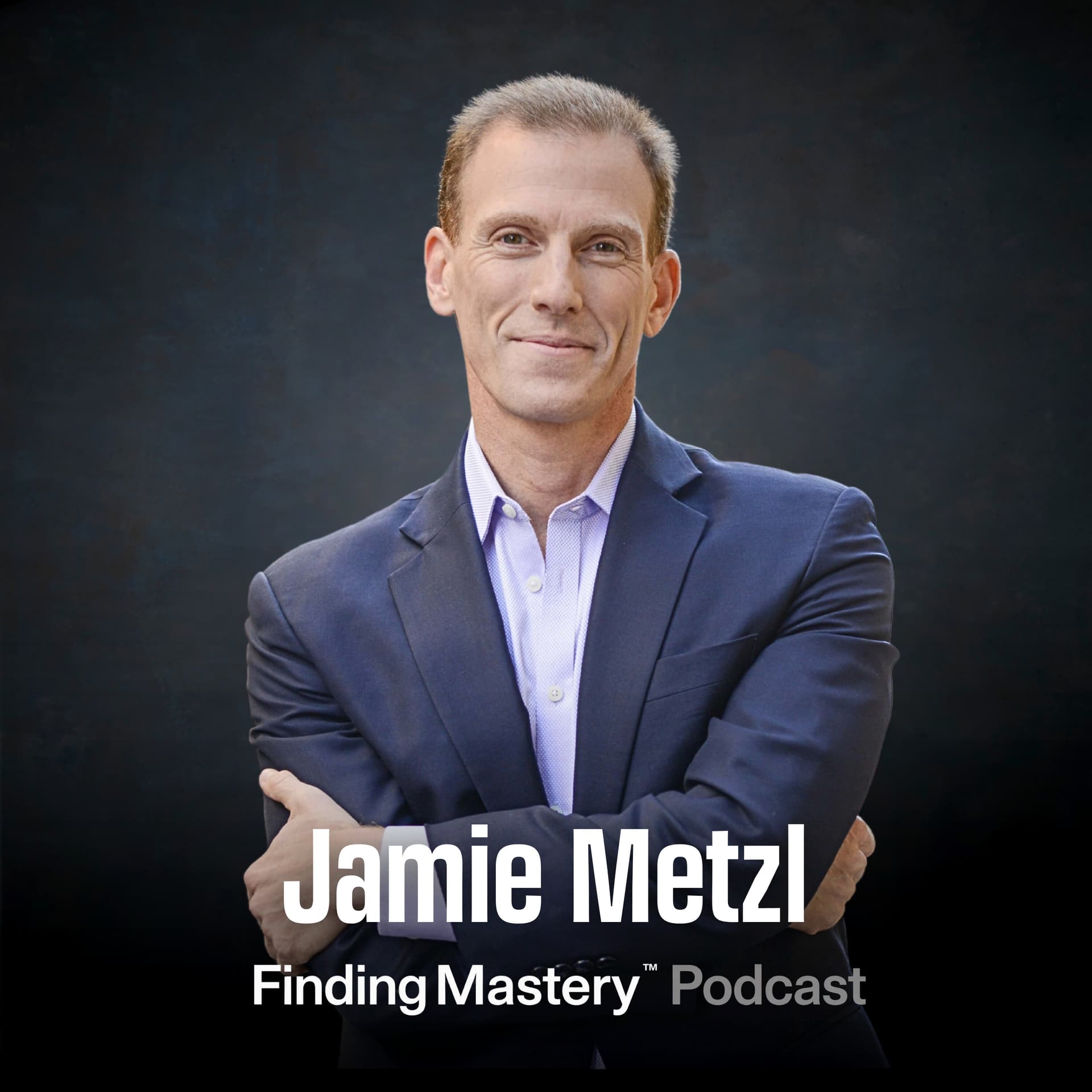
Mark Manson is a bestselling author of The Subtle Art of Not Giving a F* and Everything is F*. He grew up in the Bible Belt in Texas, was bullied, and became analytically driven and sensitive to hypocrisy. He later studied Buddhism and describes himself as an atheist who still values religion’s social training role.
Key claims
Cynicism comes more from insincerity (stories intentionally spiked) than from mistakes. People should follow evidence-based experts who can change their minds and disclose incentives. Values shouldn’t be adopted because a book/influencer told you to.
Notable examples
He describes a bully who acted “nice” only when a girlfriend/football social approval was present. He explains his app’s “second AI” eval/guardrails to prevent “AI psychosis,” including a chaperone-like evaluator that can disagree with users. He contrasts lean teams vs scaling to ~23 staff after pivoting into video/podcasting.
Written by AI. May contain mistakes. Listen to the episode to check what was said.
Chapters
Tap a time to open that second in VOExploring Modern Realities
0:03 to 0:58
Discussion on the complexities of current events and societal perceptions.
“Mastery because we know one great hire can change everything.”
Exploring Modern Realities
2:21 to 3:11
Discussion on the complexities of current events and societal perceptions.
“that kind of undermines the whole reason to value that thing.”
Information Ecosystem and Perception
3:12 to 5:00
Understanding how information influences our reality and perceptions.
“And the second is like, it's been too long.”
The Challenge of Authenticity
5:01 to 7:09
Mark discusses the importance of sincerity and authenticity in media.
“It feels amplified to me because of, it feels like a more polarized and louder opinion from people.”
Identifying Personal Values
7:10 to 9:00
Mark shares insights on how to determine what truly matters to you.
“But to bring it back to my book, like it's interesting because when I wrote The Subtle Art and Not Giving a Fuck, like these issues were just beginning.”
Radical Ownership and Responsibility
9:01 to 10:49
The significance of taking ownership of one's life experiences.
“what are the most important things to care about?”
Honesty and Social Validation
10:50 to 14:00
Exploring the importance of honesty in personal values and social interactions.
“You're building, you've built an app on purpose.”
The Role of Religion in Personal Growth
14:00 to 16:54
Exploration of how religion functions as a framework for mental health and personal development.
“I need to own my thoughts, words, and actions.”
Qualifying Information Sources
19:25 to 22:33
Discussing the importance of evaluating the credibility of information sources.
“Who am I going to listen to and who I'm not?”
Radical Honesty and Self-Reflection
22:33 to 25:43
Examining the practice of radical honesty and its role in self-awareness.
“And it's sometimes it conflicts with a lot of your short-term incentives and motivations, right?”
Show all 19 chapters
Pre-Mortem Exercises in Personal Growth
25:43 to 28:00
The benefits of pre-mortem exercises for anticipating challenges and improving outcomes.
“One is in sport, we'll do a, what's called a pre-mortem exercise.”
The Risks of Surrounding Yourself with Yes Men
28:00 to 31:22
Discussing the pitfalls of constant affirmation and the need for honest feedback.
“Like people who are surrounded by yes men, right?”
The Role of AI in Self-Discovery
32:58 to 35:19
Exploring how AI can help users uncover self-awareness and blind spots.
“So we onboard users through 20 or 30 questions.”
Radical Acceptance and Personal Responsibility
35:19 to 38:18
Discussing the importance of accepting reality while striving for improvement.
“Acceptance is one of the core tenets in Buddhism, and radical acceptance is a cool way to think about it.”
The Writing Process and the Role of AI
38:18 to 42:00
Insights on the writing process, distraction, and potential use of AI as a tool.
“For me, it's purely lack of distraction.”
The Evolution of Team Dynamics
42:00 to 47:08
Mark Manson discusses his transition from a lean team to managing a larger one.
“If you can prompt really well, I mean, here's the thing, this kind of comes back to the process, right?”
The Evolution of Team Dynamics
47:10 to 48:35
Mark Manson discusses his transition from a lean team to managing a larger one.
“Earlier, I mentioned LinkedIn Hiring Pro, and I want to come back to something a little more personal.”
The Evolution of Team Dynamics
49:40 to 49:50
Mark Manson discusses his transition from a lean team to managing a larger one.
“Again, that's sunlighten.com and use the code mastery for up to$2 ,100 off.”
Navigating the Creator Economy
49:50 to 55:29
Mark shares insights on building a successful media business and best practices for content creation.
“I mean, these days it's called like like a creator business, which I don't know, influencer business, thought leader business.”
Transcript
Automatic transcript. May contain errors.0:00Dr. Michael Gervais:Finding Mastery is brought to you by LinkedIn. We use LinkedIn Hiring Pro here at Finding Mastery because we know one great hire can change everything. One bad hire, it can cost you a lot, way more than time. It can cost you momentum and culture and real dollars. And that's why how you hire matters just as much as who you hire. And it's why I've become a big believer in the power of LinkedIn Hiring Pro. Here's what I appreciate about it. When you're running lean, you don't have hours to sift through a pile of resumes hoping to find the right person somewhere in the stack. Hiring Pro is built exactly for that reality.
0:32Dr. Michael Gervais:You describe the role and it screens candidates for you, surfacing the people who are a best fit so that you can spend your time and conversations with those folks rather than in the weeds of the applications. And the results back it up. Those hiring with LinkedIn are 24 % less likely to need to reopen a role within 12 months compared to the leading competitor. So join 2.7 million small businesses already using LinkedIn to hire. Host your job for free at linkedin.com slash mastery. Terms and conditions apply. Again, that's linkedin.com slash mastery to post your job for free.
1:29us to compare ourselves to others, but we evolved in small tribes and small communities. And so that comparison mechanism in our brain is very much designed to compare yourself to say the two or three dozen people around you, not the 300 million people on Instagram.
1:43Dr. Michael Gervais:Welcome back or welcome to the Finding Mastery podcast, where we dive into the minds of the world's greatest thinkers and doers. I'm your host, Dr. Michael Gervais. A high performance psychologist named Michael Gervais, who head coach Mike McDonald and former head coach Pete Carroll brought into work with the Seahawks. Famous for his work with Felix Baumgartner when he jumped out of space in the Stratos Project. Olympic athletes depend on something more than just training and talent. They have to stay mentally tough. Today's guest is Mark Manson, bestselling author of The Subtle Art of Not Giving a F*** and Everything is F***, whose work has challenged millions of people to rethink what they care about and why.
2:20If you were adopting a value because some guy with a book or a big Facebook page told you to adopt that value, that kind of undermines the whole reason to value that thing. Like the whole point of this process is to figure out what you care about yourself for no other reason than it is important to you. In this conversation,
2:36Dr. Michael Gervais:we explore a world where it's harder than ever to know what's real, what matters, and what's worth your attention. What is most upsetting to most people isn't necessarily that mistakes are made or a new story has gotten wrong. The problem is the insincerity of it. Finding out a story was spiked and portrayed wrong intentionally to nudge an election or to skew the population into thinking this, that's where people have gotten very cynical. With that, let's jump into this week's conversation with Mark Manson.
3:10Dr. Michael Gervais:Mark, last time we connected was in the middle of COVID. Good times. Great, great memories. stories.
3:21Dr. Michael Gervais:You know, two, one, I love the humor. And the second is like, it's been too long. Yeah. Like, I love how you think. I love how you operate. And it's been too long. So I'm really stoked to sit down with you. Thanks, man. It's good to be back. It's good to be here in the flesh. I know. And, you know, not quarantined with like a hazmat suit. So times then were strange. We're trying to figure it out. And it feels like times are strange now. There's a geopolitical intensity. There's just a lot happening, you know, at the time of marking this, like, are we at war? Are we not at war? I'm not sure. It feels like it.
3:56Dr. Michael Gervais:And I say that because I don't trust the signals that I'm getting. I don't know really what's happening in the Middle East, but I'm uncomfortable with the whole thing. Well, I'm glad you asked because no, actually, I have no idea either. You've got to give me the answers the whole thing. Perfect. Okay, good. So what is your take on what's happening now? Like, how's it going? You know, it's funny. Every time I hear somebody say something like that, like times are so weird right now, my knee jerk thought in my head is always point me to a time where they weren't strange. The dark ages. Yeah, where they didn't feel strange.
4:27Yeah, right. Because you can go back decade by decade by decade and every single decade people were freaking out over something and there was some sort of grand uncertainty that was happening. And it's just funny because it's a little bit of a perceptual bias in that we can sit here today and look back at the 90s and the 90s seemed so calm and so simple or the 80s and the 80s seemed so like logical and reasonable and like, oh, we totally understand why that all happened. But at the time, nobody knew, you know, it's just the flavor of uncertainty like morphs and shifts.
4:59Dr. Michael Gervais:Yeah, it feels amplified to me. I agree with your sentiment. It feels amplified to me because of, it feels like a more polarized and louder opinion from people. It feels more divisive than it was when I was younger. But maybe I didn't know. To me, what's really weird right now is that the information ecosystem has become completely fractured. And so there's kind of no shared source of truth or shared reality among the population. And so a lot of how you perceive reality is now being dictated simply by like what information sources you choose to ingest. And the problem is, is that there doesn't seem to be any consistently reliable information source generally.
5:45Dr. Michael Gervais:So one, title of your book is really important, you know, which is? The subtle art of not giving a fuck. So what I take from that is like you're helping people think about what to care about. Yes. And if information is unreliable in many respects and rabbit hole in dangerous ways, where are you personally finding information that you find to be neutral enough so that you can make an informed decision? Personally, my information diet, I seek out individual experts whom I trust, who I believe have a track record and generally are not affiliated with any sort of larger institution or organization or definitely not a political party.
6:25And I try to find a variety of them kind of across the spectrum and just pay attention to them and understand that, like, they're not going to be right about everything. But as long as they are being sincere, to me, that's what matters most. I think probably what is most upsetting to most people isn't necessarily that mistakes are made or, you know, a news story has gotten wrong. That's always happened. The problem is the insincerity of it, right? It's like finding out after the fact that, oh, actually this story was like spiked and portrayed wrong intentionally to like skew, you know, nudge an election in this direction or to skew the population into thinking this.
7:08I think that's where people have gotten very cynical and upset. But to bring it back to my book, like it's interesting because when I wrote The Subtle Art and Not Giving a Fuck, like these issues were just beginning. Like it was like super, super early days of this kind of online cacophony and of disinformation and people screaming at each other, echo chambers. And if you go back to the book, I talk about it a little bit, but I mostly just talk about it in terms of social media kind of skewing our perception of ourselves, of like where we kind of sit. You know, like we are human beings. It is natural for us to compare ourselves to others, but we evolved in small tribes and small communities.
7:48And so that comparison mechanism in our brain is very much designed to compare yourself to, say, the two or three dozen people around you, not the 300 million people on Instagram or whatever it is. And so in the book, it was kind of like, look, the technology is now kind of taking some of this ancient machinery in our brains and turning it against us. So we need to be very, very thoughtful of what we choose to pay attention to, what we choose to care about, what we choose to get emotionally invested in. Because we can't just rely on what we see at face value anymore. And I had no idea at the time how well that was going to age.
8:27For many years, I joked that I probably owe some percentage of my book sales to Trump. Not just him as a person, like in kind of the chaos that he creates, but the kind of the cultural effect that he has had on the entire media landscape, I think has just driven people back to my book to hear that message and be like, okay, I need to take ownership of this. And I need to be very, very thoughtful of like, what am I paying attention to and what am I caring about?
9:00Dr. Michael Gervais:Do you have a shorthand process for people to follow where you're helping them identify what are the most important things to care about? I intentionally try not to get into that game. I offer some principles in the book and in some of my other writing, but it's interesting. Like I made a very conscious decision early on in my career to not try to push my values onto anybody else. Yeah, you do a nice job of that. It drives me crazy. Yeah. Because it's, even if it's well-intentioned, right? And even if it is, say, a good value, I feel very strongly that if you are adopting a value because some guy with a book or a big Facebook page or whatever, like told you to adopt that value, that kind of undermines the whole reason to value that thing.
9:46Like the whole point of this process is to figure out what you care about yourself for no other reason than it is important to you. So if you are just picking and choosing the things to care about from the world around you or from the people around you, and then you read a self-help book that tells you, hey, you should value these things. Now that self-help book is part of that problem.
10:05Dr. Michael Gervais:Yeah. So I know that you're like antagonist to the self-help industry, but you're right in the center of it. I jokingly call myself a self-hating self-help guru. Yeah, the antisocial social club. that. Yeah. So yeah, I don't want to be in that category. So I align with you there. I don't want to be, I actually, it's a first principle of mine when I am working with people as a, as a sports psychologist or performance psychologist is I don't give advice and it drives people a little baddie. I will listen, I will understand, and I will agitate, but my first principles are not your first principles.
10:43Dr. Michael Gervais:So you do need to understand your first principles to be able to make decisions with speed and accuracy under pressure. You know, first principles help you and also mental skills help you. Right. And so do you have a sense, and I don't want to back you into a corner, but do you have a sense of some of your first principles that are important for you to be as skilled as you are in writing, in thinking, and building an app, which I want to get to. You're building, you've built an app on purpose. Right. So I've got kind of three core principles or core values of mine. The first is just radical ownership of everything in my life.
11:16So everything that happens to me, everything that goes on in my life, whether or not it's my fault, I have to take ownership and I have to be responsible for it. And because I just strongly feel like nothing else really works until you empower yourself and take ownership of your time in your life.
11:34Dr. Michael Gervais:Let me pause you on that just a second. Where was it about your environment that brought that first principle together? So I grew up in the Bible Belt in Texas and was a pretty nerdy, artistic kid, horribly unathletic. I tell people that where I grew up, there were only two things that mattered. That was Jesus and football. And I wasn't really into either of them. So I got pushed around a little bit as a kid. Does that mean bullied? Yeah, I was bullied. It was a very conformist environment. And I was not conforming very well. And so a lot of the other boys, the way they took that out was, you know, they just beat you up.
12:08Or they'd beat you up to kind of impress the other boys. That's right. And what did you learn from that? So I'll give you a simple example. There was one guy who used to bully me, but then he got a girlfriend and his girlfriend liked me. And so when his girlfriend was around, he was really nice to me. Oh. But it wasn't like a fake nice. It wasn't like a mean nice. Like he just kind of chilled out and he was like, oh yeah, Mark's all right. And then as soon as his girlfriend was gone and his buddies were around, he'd be a dick again. And it just made me realize that people are very multifaceted.
12:37multifaceted. Like he wasn't being manipulative in either context. It was just that ultimately he was optimizing for social approval and social approval when his girlfriend was around meant being nice to me and social approval when the football players were around was meant being a dick to me. And I saw this in a lot of different places. So I grew up, I went to church very frequently. My parents were both very involved in the church and I was always very analytical. And so I read the Bible and I would listen to the preacher. And then I would watch my parents hang out with their church friends at lunch or in the afternoon.
13:14And they were behaving completely oppositely of like everything we just heard in the church sermon. And so, of course, as like a 10-year-old, I'm like, what's going on? Like, why are you guys acting this way? And so it was just, I think from a very young age, because I grew up in that environment and because of kind of my personality, I was exposed at a very young age to a lot of displays of inauthenticity. I guess you would call it just seeking social validation. And I developed a pretty intense distaste of it. There you go.
13:42Dr. Michael Gervais:That's really cool. You know, so it's, again, it's honest for you. Right? And what you're suggesting people do is like go through a process to be honest with yourself about what matters and what to care about and who to care about their opinions. Right? Okay. Radical honesty. Cool. Yep. And that was born out of like, what is the hypocrisy that's happening and why are people acting this way? And I never want to be about that. I need to own my thoughts, words, and actions. Yes. Okay. Are you more aligned to a Buddhist process or a deity-based process, like a Christian? So I got very into Buddhism in my 20s, and it's been very impactful on me.
14:19I joke that I'm like probably the most pro-religion atheist you'll ever meet. I don't believe in anything, but I have come just through all of my years of studying psychology and personal well-being. And I think religion is good for most people, and it serves a very positive social role for the most part.
14:40Dr. Michael Gervais:In some respects, it's the ultimate training mechanism for billions of people. Here's a set of principles. They're meaningful, thoughtful principles. And here's a set of practices. Pray before you eat. it's the ultimate training ground to be more tuned to the things that quote unquote matter. Yeah. And so, but you're saying that as an atheist, you don't believe or you don't know. Agnostic or atheist? Yeah. Atheist, because I don't think too hard about it these days, but I would describe myself as atheist. I'll add to that as well, that I think religion was the original self-help, right? And I think one of the reasons you've seen the self-help industry explode in the last 30, 40 years is because of that decline in religiosity that we're seeing across Western culture.
15:22Dr. Michael Gervais:Which is a decline in trust. So, okay, there's an interesting note. It'll be interesting for you to square with this, is that one of the most significant protective factors for mental health is a belief in something later. Yeah. So a spiritual framework is by far one of the largest protective factors or significant contributors to mental health. Yeah. Which is an interesting finding. That is not what they taught me in graduate school. Yeah. It was a bunch of other things. Now to come to find out the thing that was kind of in plain sight for thousands of years has been like this framework on how to think.
15:53And it makes sense, right? Because if you have some sort of spiritual framework that you're operating off of and a belief in the afterlife, right? Suddenly any sort of suffering or struggle that you're going through in the moment, in the here and now, it becomes much easier to see the explanation of why this can be meaningful. Yeah. Of why there's a purpose to this struggle and this hardship. Whereas if you have no framework to believe in and you're just suffering, then it just feels incredibly unfair and you don't know what to do about it.
16:23Dr. Michael Gervais:On the extreme ownership as a first principle, I want to go back to the selection of information and what you tune to. Because that would inform what you're considering to be of what you're owning. Yes. You've got a bunch of people that you're tuning to for information. Right. You want to be unbiased, but we're all biased. Of course. It goes through a filter. Because the ultimate kind of end bucket is like, I need to own what I think, say, and do. Okay, so there's a filter in there somewhere for you about what is getting through and what's not. Got it. Okay, so this is the selection of information.
16:53Dr. Michael Gervais:Right. Finding Mastery is brought to you by Rag & Bone. I've been a big fan of Rag & Bone for a number of years. I just love what they do. It's a go-to for me when I'm choosing clothes. I've been wearing their infused denim for a while now. They've done just a really nice job with this product. For me, I am really intentional about what I invest in. In clothing, it's no different. I want things that are well-made, that stand the test of time, that don't distract me, that support my focus on the things that matter most. And that's exactly why these deliver. And they look sharp, full stop. They've spent 20 years obsessed with getting this product right.
17:24Dr. Michael Gervais:And that kind of long-term commitment to craft, that's something we talk a lot about here at Finding Mastery. Quality compounds. The right inputs may consistently over time show up in everything. And you can feel that the moment you put these on. If you're ready to upgrade your denim with something that's genuinely built to last, It's time to upgrade your denim with rag and bone. For a limited time, our listeners get 20 % off their entire order with the code finding mastery at rag-bone.com. That's 20 % off at rag-bone.com with the promo code finding mastery. And when they ask you where you heard about them, please support our community and this show and let them know that we sent you.
18:03Dr. Michael Gervais:Finding mastery is brought to you by our flagship mindset training course, finding your best. Anytime you feel the pull to reset, to zoom out, to refocus and ask, am I moving toward the person I want to become? It helps to remember this. Lasting change comes from training. Not resolutions, not short-term sprints, but deliberate practice of the skills that shape how we show up. Work, in relationships, and in the moments of great intensity as well. That's what finding your best is all about. It's a science-backed framework for training your mind. And it's the same set of tools that we've taught to Olympic athletes, top executives, elite military teams, and artists at the peak of their craft.
18:38Dr. Michael Gervais:In this course, you'll learn the foundational psychological skills to be your very best. Full stop. And the best part is you can start anytime. Right now, we're running a limited time offer on finding your best. Simply head to findingmastery.com slash course and use the code RENEW100 to get$100 off your registration. If you've been waiting for the right moment, this is a good one now to lean into. Spring and summer, they are powerful seasons of momentum. It's a great natural time to step into growth, to refocus, to recommit to who you want to become. And this discount will not be around for long.
19:12Dr. Michael Gervais:So go to findingmastery.com slash course code renew100 for$100 off today because your future is not shaped by what you intend. It's shaped by what you train. So what's my filtration mechanisms for like qualifying? Who am I going to listen to and who I'm not? Yeah. And what? Yes. Yeah. What gets through? Yes. There's two and they're kind of related. One is, are they primarily evidence-based versus, let's just call it tribal-based, right? It's like, is this a person of science? Is this somebody listens to evidence? And I guess the corollary to that is, is this somebody who can change their mind?
19:49And I actually deeply, like my respect for a thought leader goes up dramatically if I see them change their mind on something.
19:57Dr. Michael Gervais:That's cool. Especially if they do it publicly. But that's what good scientists do. Yes. Right? Yes. We don't know. This is what we think. We're still testing it. Matter of fact, I know my peers across the hallway or across the world are testing the same things and they have a very different view of it. Evidence coming forward ought to be the thing that we're listening to as opposed to the opinion. Yeah. So you like when people are like, this is what I think. Yes. Oh, come to find out that was not right at the time. Yes. Yeah. So you like that. So do you also like when people make mistakes and own the mistake?
20:32Yes.
20:33Dr. Michael Gervais:You like the public nature of being honest? Absolutely. Okay. To me, that's just criteria number one. I mean, obviously, we could get into what sorts of mistakes and how some mistakes are more serious than others. But this is assuming that they are rigorous in their research and they think clearly and they're a smart person and they're not trying to dupe anybody. The other thing I would look at is what's the incentive structure around them? Oh, interesting. Yeah, because there's a lot of people. I mean, the most basic example, right, is like when you see like a fitness influencer who's pushing a supplement all the time and then come to find out that they're like sponsored by that supplement.
Read the full transcript
21:11Dr. Michael Gervais:Well, this is why in research you have to disclose any biases that are embedded in the funding of the research or the participation of it. And there's always a disclosure with good science. So you're saying, yeah, if you're a fitness expert, fine that you like this supplement or this machinery or whatever it is, but just make it clear that that is what's actually happening. Yeah, and I don't think it's, look, we all have incentives and biases, right? But I think as long as the person is transparent about it and as long as they're not egregious, right? Like as long as they're not, like if somebody's out there pushing war against some country and then you come to find out they're like part of the KGB or something.
21:52Like, you know, it's, it's, as long as it's not something egregious conflict of interest, I think it's, some of it's inevitable, but I think it's just, it's important to be aware of those incentive structures and then understand that like, okay, this person, this is their background. This is how they get paid. So their view is probably going to be biased in this direction. It's probably still worth listening to them because they're very smart and they're very honest and they're very rigorous, but also understand that like that's where their bread gets buttered. So, you know, keep that in mind.
22:20Dr. Michael Gervais:Okay. Back to the three. Yes. So radical ownership, responsibility. Second one is radical honesty or as much honesty as reasonable. And then the third one. Whoa, let's stop there. Radical honesty. Sure. Radical is a cool word. We'll stop. I really appreciate that about you, that you've done that. I think you stand for that really well. Honesty is hard. Yeah, it is. And it's sometimes it conflicts with a lot of your short-term incentives and motivations, right? You know, it pisses people off. It can, you know, create tension. It can cut off opportunities, relationships. But like my approach with it is simply that, sure, in the short run, you're going to cut off a lot of those opportunities and relationships.
23:05But those opportunities and relationships were probably not going to be very sustainable over the long run anyway, because they were based on something very transactional, very short term. But I do want to say like there are some people like there was a guy back in the day named Brad Blanton who actually wrote a book called Radical Honesty. He was like hardcore about this. So he took it to the point where that if he had a thought about you, he thought it was immoral to not say that thought. Now, as a Buddhist, I don't trust my thoughts. I have tons of useless, unimportant, irrational thoughts day in, day out.
23:43So my threshold for – I thought I was the only one. I'm glad to know. Yeah. My threshold for honesty is, is anything that is relevant or pertinent to somebody's wellbeing. I feel a moral obligation to state it bluntly. If it's something I think white lies, you know, it's like, okay, whatever. Sometimes you got to get through life. What is your process to be honest with yourself? That's often the hardest part. It's funny. Cause I started doing this back when I was, I meditated a lot in my twenties and I started doing this a lot kind of as a thought experiment when I was on retreats, I later found out that it was, it's kind of a stoic practice called negative visualization.
24:20But one of the things that I used to do is I used to intentionally imagine the worst case scenario. And not just in terms of like, I'm going to come on this podcast, you know, let's, let's imagine me bombing, right? Like it's, it's not that, although that does have some usefulness, but I would imagine the worst case scenario in terms of like, let's say I'm having like relationship problems with my wife and I've got all of these hypotheses of like what the problem is. It's like, okay, well, it's, we, we moved to LA and that changed this thing. And like one of her parents has gotten sick and that's changed the dynamic here.
24:51And, you know, you've got all these explanations you're running in your head and you're kind of like collecting arguments and evidence for them. Situations like that, I would intentionally imagine, what if I'm the problem? What if this is my fault? But hold that thought lightly. Don't like start self-flagellating, but actually think about like, What would be true if this was actually I was causing this and I wasn't aware of it? What would be the signs? What would be the behaviors? And I think it's essentially just the ability to try on the thoughts that you don't want to try on and see how they sit with you.
25:28Because a lot of times you realize like once you sit with them for a minute, you're like, ooh, no, this kind of makes sense actually. Yeah, I think I'm contributing to this. But then you can hang that thought back on the rack and, you know, try something else.
25:42Dr. Michael Gervais:I love this for two reasons. One is in sport, we'll do a, what's called a pre-mortem exercise. Are you familiar with that? So you see prior to the Olympics, prior to the world championship, prior to a game, whatever, is that you go through all the things that would contribute to it being an absolute disaster. So you're actually spending time thinking about the disaster scenario and the contributing factors to it, and then you address them. And it might be like, and there's two buckets that emerge, buckets of things that are in your control and buckets that are not, and you address them. You do need to surrender to the things that are not in your control.
26:19Dr. Michael Gervais:But then post that, you figure like, well, how would I be agile enough if that were to happen? It's not in my control. Okay. But how would I be agile enough to give myself a better chance of being my best? Yeah. So a pre-mortem is a nice exercise. It involves kind of active visualization, Yeah. Eyes open on a whiteboard type of thing. We did that exercise. So with my startup, my co-founder and CEO, we did that exercise together. We spent an entire afternoon being like, what are all the worst things that can happen? Yeah. Is this for your app? Yeah. Purpose? For purpose. Yeah. And so we went through, you know, okay, absolute worst case scenario is a customer, you know, AI psychosis jumps off a bridge or something.
27:00Right. And they were talking to our app. Right. okay, what do we do? So there's two factors that go into that. The first one is simply like having stricter guardrails. So you get a certain amount of safety layer baked in at the foundational model level with AI. As an app, what we did is we just baked in, we built another layer of safety and guardrails on top of it. So it's kind of like, one way to think about it is you have your AI that the user's talking to. There's kind of a second AI that is secretly evaluating that conversation as that's happening and then flags things that are potentially problematic or dangerous and then can like step in and cut it off.
27:37It's almost like a chaperone or something that watches. So that's the first part. The second part, and it's interesting because I kind of had this sense coming from the personal growth world that a lot of the AI psychosis was coming from the AI's tendency to just agree with everything you say, right? Forget AI for a minute. Think about humans. I mean, you've probably seen this in some of your work. Like people who are surrounded by yes men, right? You've got a star athlete. His whole entourage just agrees with everything they say, like never challenges them, never disagrees.
28:09Dr. Michael Gervais:It's a trap door that's well greased. Yes. You can watch that person get untethered from reality in real time, you know, over the course of months or years. In some respects, it can help because they keep saying, you can do it. You can do it. You can do it. You're amazing. That's great. At some level, it does open the aperture of potential. It doesn't last long, though. You know, there's a real... Oh, God. Yeah. So, yeah. It might be great on the field, but, you know, as soon as they come off the field, it's like, whoa, whoa, no, no. Yeah. You've got some problems. So I had a sense early on, because for me, the most important thing with purpose was that it was made disagreeable, right?
28:46Because if you think about what actually gets somebody to grow and change, it is they have to come to the conclusion that they're wrong about something or that they missed something or that their assumptions are off base in some way. So it's of paramount importance that the AI is willing to call the user out and be like, no, that's not it. Let's keep digging and not just agree with everything you say or all of your assumptions. And it's interesting because research has actually come out just recently in the last month or two that has directly correlated the psychofancy problem of AI, the propensity to just agree with everything you say, to cases, you know, psychotic breaks and AI psychosis.
29:26For the user. For mental breakdowns for the user. Yes, correct. Yeah, it's a little scary.
29:30Dr. Michael Gervais:Yeah. So you built a second AI that's watching to keep the guardrails. Yeah. Yeah. Yeah, and AI engineering, it's known as like an eval system. So there's like kind of this AI you're talking to, and then there's like the AI, the evaluator that is grading the AI on its responses and giving feedback. Yeah, and you know what I like about this conversation is that we're talking about AI, but we're also talking about how to show up well as a teammate to other people, whether it's that, you know, partner at home or teammate at work, is that knowing how to communicate in an honest way, use your radical honesty, does not mean brutal.
30:04Dr. Michael Gervais:Yeah. But knowing how to hold a mirror up, knowing how to reflect back, knowing how to ask a question to really understand, and knowing how to have the tack to share your personal experience in the relationship with the other person. I think the best psychologists and sports psychologists, if you think about trained colleagues to help you be your best, they increase agitation. Yes. They do not say, oh, tell me more. Oh, it'll be okay. They don't do that. Yeah. That's actually a bad psychologist. What they do is they say, how do you feel? Like, where do you feel that? And you go, oh, it's sick to my stomach.
30:40Dr. Michael Gervais:What do you want to do about that? I don't want to feel this anymore. What do you want to change? You can't change him or her. What do you want to change? I don't know what to change. I'm afraid to. I keep trying, but it doesn't work. Whatever the, then there's an excuse to say, well, we can keep talking about it, I guess. But like, that's kind of not interesting. So there's like an agitation to help people get as close as they possibly can without kind of falling to a thousand pieces. The microtrauma, the trauma, the struggle, the way it feels, and then you get to a place where in AA, they'll talk about like, I'm sick and tired of being sick and tired.
31:15Dr. Michael Gervais:And it's a really nice partner to help people get to that place. So is your app doing it at that level or? Body Mastery is brought to you by Fatty15. Did you know that Navy Dolphins helped unlock a secret to healthy aging? It's a wild story. And it's the foundation for a product that I've come to really love, Fatty15. Fatty15 is built around C15, the first essential fatty acid discovered in over 90 years. And it was discovered by Dr. Stephanie Van Watson. She's the co-founder of Fatty15. While she was working with the US Navy and based on over 100 studies, we now know that C15 strengthens our cells and is foundational for healthy aging at the cellular level.
31:55Dr. Michael Gervais:Stephanie has been on the podcast and it was one of my favorite conversations. She's amazing. And what her and her team are building is something I'm really excited about. Head to fatty15.com slash finding mastery and use the code finding mastery for an additional 15 % off your 90 day starter kit. Again, that's fatty, F-A-T-T-Y 15.com slash finding mastery. And the code is finding mastery. I want to take a second here to tell you about a morning routine that I've been using for years. For me, it's a great way to switch on my mind, to ready myself to take on the day. So before I check my phone, my emails, market updates, or text threads, I choose how to start my morning.
32:34Dr. Michael Gervais:That's always in my control. That's always in your control too. This is the same morning mindset routine that some of the world's top performers across sport, business, and the arts are using. The best part, it only takes about 90 seconds to do. So just head over to findingmastery.com slash morning to download the audio guide for free. Again, head to findingmastery.com slash morning to get your morning mindset routine. so with the ai that that we built inside of it it what it's primarily optimized for is to help people surface things about themselves that they are not themselves aware of there you go cool because the superpower of of an llm is that it it is essentially operating off of the entire field of psychology like everything in human history is inside the llm so it is it is the best pattern matching machine that has ever existed.
33:31So we onboard users through 20 or 30 questions. We give them some basic psychological assessments, big five, you know, attachment types, a few other things. And then once they get in and they're actually talking to the AI, it has this context around both their personality and what they're struggling with. And then it's essentially just trained to catch blind spots and be like, well, that's interesting. Last week, you said that your wife is very supportive of you. But now it sounds like actually, you know, which way is it? Her behavior is not indicating that. So like what's going on here. Right.
34:06And then it forces you to sit there and be like, huh? Yeah, I guess that isn't very supportive, is it?
34:12Dr. Michael Gervais:Or I'm in a bad way. It is supportive and I don't want to hear it. Yeah. Yeah. Okay. Very cool. Okay. Third principle that you're operating from. Radical acceptance. This comes back to the very Buddhist part of me, which is that all suffering originates in resisting or a rejection of simply what is. Trying to delude ourselves from what's true around us and the reality around us. And I think on a very base layer, this is obviously accepting that I don't have control over things in my life and that certain things will happen. And it's not fair. It's not what I wanted, but learn to accept that. But then I also think there's a flip side of this, which is more internal, which is like accepting the things about myself that maybe I'd also don't really want to accept certain past behaviors, tendencies, aspects of myself that I don't really like.
35:03I think acceptance, it's so hard on both of those fronts. And I think there's a very strong kind of one to one correlation of the amount that people suffer in their lives and struggle psychologically and their unwillingness to accept certain things.
35:19Dr. Michael Gervais:Yeah. Acceptance is one of the core tenets in Buddhism, and radical acceptance is a cool way to think about it. I think about suffering with one addition, and this is more plain language. I nodded my head to everything you said. Yeah. And then I think, having something I don't want or not having something that I do want. And in plain language, I'm like, that's the way I experience suffering, and that's the way I see people really suffer. The acceptance of what is not and what is is a high art, and it gets really confusing between the difference between acceptance and— That's what I'm looking for.
35:55Dr. Michael Gervais:Surrender? Yeah. Okay. It gets really confusing between the difference between accepting and— Surrender? Surrender to the podcast, Michael. Thank you for filling in the gap. Yeah, it is that. I don't want to surrender anything, really. I do want to accept and work from reality. And then I also would love to hear your take on this. I want to not accept that right now is final, that everything is unfolding, interconnected and unfolding. So I do not want to accept. I refuse to accept that right now is final, which is a really complicated idea, I think. And it might make the Buddhists in our community, their heads spin like, no, I got to it wrong.
36:46Dr. Michael Gervais:Do you have a first reaction to that? I think this is very necessarily paired with the first principle, right? Like it's there, you need to have radical acceptance of what is, but also radical responsibility to make it as good as possible. It's funny. My Zen master back in Boston, he used to say this thing. It was kind of a koan type thing that he used to say when we were in retreat and he would just kind of walk around and very quietly say, you are perfect as you are and you can always be better. Can you hear the sound of one hand clapping? Yeah. And it's just, it's one of those, it's like both of those things are true simultaneously.
37:21And I don't know how, I don't know why, but I believe with every fiber of my being that both of those things are true.
37:28Dr. Michael Gervais:Yeah. I think the way I interpret that is I do plenty to get in my way. I do plenty to compromise the quote unquote perfection of the seed. And my mentor at one point said to me, Mike, you know, you really matter. I was young when he said this. He was like affirming. He's like, you really matter to people in your life. I was like, oh, thank you. That's great. He goes, now zoom out. This plant's been around for a really long time. You don't matter that much. You're not going to be here that long. Like hold those two together. I really matter, but I don't matter. Yeah. Yeah. So anyways, all right.
38:00Dr. Michael Gervais:We're in the esoteric world of first principles, which I do think is a, I'm watching. you share a set of first principles that inform the way you think and choose your words and the way you act. And so I'm imagining that these need to be alive and tuned for you to be able to think well and write well. So what do you do to prepare yourself to write well? For me, it's purely lack of distraction. So it's carving out time and space to give myself that space for deep thought and clarity and working on something on a deep level. I generally find, it's funny, I remember I was working on my third book and I, I was living in New York city at the time, which is crazy.
38:40And as you can imagine, I wasn't getting any work done pretty much anywhere I was. If I was at home, if I went to a cafe, like I was just constantly getting interrupted and all this stuff. So I got so desperate because the deadline was coming up. I went and found a WeWork in Midtown Manhattan, pretty close to my apartment. And I walked in and I told the guy, I was like, give me the most bare windowless office you have. I just need to finish this book. I was like, I don't want to talk to anybody. I don't want to see anything. I don't want to like run into anybody. I don't want to come to any of your events.
39:09Like just give me the broom closet with a little desk inside. And so I booked this little room. I set aside time, you know, four or five hours a day. I'd leave my phone at home, go down to the WeWork, sit in my little broom closet. Right. And then I remember talking to that guy. I walked out once and he was like, how's the book writing going? Feeling inspired. And I told him, I was like, I don't know if I'm inspired or not, but I'm not distracted. And in my experience, those two things are the same thing.
39:39Dr. Michael Gervais:Are you still doing it? No. I mean, it's - Because you're not writing right now? I'm not writing a book at the moment. Yeah. Like I can, if I need to write an article or a newsletter or, you know, a podcast intro or something like, I can get that done in my home office between things, you know, just set aside an hour or two and get it done. But a book, a year straight of like intense, deep work of four to six hours a day, I wouldn't be able, I'm not writing a book now, but if I started, I would have to change something pretty dramatically with my work habits. Go back to your first book. You've written three bestsellers.
40:10Yeah. Three number one New York Times bestsellers. How are you going to write your next book with AI? I actually have no idea.
40:16Dr. Michael Gervais:Will you use AI as a thought partner? Absolutely. Yeah. No question. Will you give it credit in the acknowledgements or is it like, this is what's happening and we're absolutely not you will not get ready you would just you would just like it's a good thought partner but it's not yeah it is a neutral arrangement of all of human knowledge right so it's it's any anything good or useful that it gives me it's it's because i prompted it well using ai to help you write or research is it's the same thing as like being really good with like library indexes like it's it's a skill you develop that helps you doesn't necessarily mean it gets credit for the book.
40:53Dr. Michael Gervais:Yeah, cheating or lazy would be, hey, AI, write me a book. Yes. Copy my old writing and have it be about this. And people have done that and it has not gone well for them. Yeah, meaning that we can tell. Yeah, there's been, I think, actually a couple fiction authors recently got caught. So it's interesting, they've now trained AIs on how to spot AI writing. And so they've been running a bunch of published, like recently published books through those spotter AIs and a couple of comeback with hits. It's caused a huge controversy in the publishing industry. I mean, I had a conversation with my agent probably like two months ago about this.
41:31And she was telling me, she was like, AI is kind of a four letter word in the industry right now. Like she told me, I'm very AI forward. Obviously I started an AI company, but she told me, she was like, if you use AI a bunch on, on your next book, like, I would not broadcast that, you know, in publishers meetings. Somebody just, I think they,
41:50Dr. Michael Gervais:I've read their introduction and they're like, this book would not be possible. It's better without my AI prompting or whatever, something along those lines. I was like, oh, that's kind of cool. But I don't, you know. If you can prompt really well, I mean, here's the thing, this kind of comes back to the process, right? Every first draft sucks. Every AI draft is a first draft and it sucks. So like the same way you should never publish your first draft of anything, you should never publish an AI draft of anything. Like you, it's a really cool thought. Like you super clean. You have to be imbuing yourself into the text and adding personality to it because that's what takes something from bland generic writing to actually being good.
42:32Dr. Michael Gervais:You recently wrote about keeping your team lean was kind of an operating principle at the, at the beginning of your career. And now you're like, wait, team is amazing. So you're building your team. Can you just talk about the difference between the philosophy for a lean team and like a larger team? Yeah. So I have never had a real job. I started a couple online businesses, solopreneur type projects in my twenties, started blogging, the writing took off. and that's what got me my publishing deal and everything. So from like 2008 to 2019, it was just me and two guys, a research assistant and then like a web developer tech guy.
43:17They ran everything on my online business. They ran all my courses, my social media, like everything, my newsletter, email marketing. So it's just the three of us for like over a decade. And for years and years and years, everybody was like, you should just be writing books. You don't need a team. You don't want to manage anybody. And both my guys were like pretty self-sufficient. And again, as a guy who had like never had a real job, never like been in a corporate environment and never had a real team, I was like, yeah, I don't want to manage. Like who wants to manage a team? Like that sounds awful.
43:47I just want to write. And that carried me up until about the pandemic when I hired a third person. But really where it changed was when everything went video and myself and a lot of authors who were kind of my generation in the 2010s, you know, we all had like a fork in the road, which was like, okay, do you try to do the video thing and the podcast thing and be on YouTube and Instagram and all that? Or do you just keep it lean and just keep writing books? And I chose the video path. And as soon as you step into that, which I don't have to tell you, we're sitting in the studio. I met like nine of your team members just walking in here.
44:31Now you're a business. Now you're like, you've got payroll, you've got rent, you've got equipment, you have editors, you have managers, producers, like the whole thing. So from 2022 to today, we went from four people to, I think today we're 23 people. And the funniest thing is that I actually love having a team. I love managing. I love being a boss. It's something that I never expected. And it's one of those things that I'm like kicking myself. I'm like, why did I wait so long?
45:06Dr. Michael Gervais:Oh, I can tell you why. It's expensive. It's expensive. You have to have a real business that has some scale. And this is in many ways refreshing for me to hear because AI replacing replacing employees is a concern that many people have. I'm not so concerned about that, actually. Our firm is 42 people. And we spend a lot of time thinking about how to work with AI. I don't need a replacement of humans, but I need the humans here to be great with AI, to build our AI employees and agents and products that we can really be efficient with our time. So we free up the mundane to be more creative. I love that part of it.
45:47Dr. Michael Gervais:And you know the idea, you've heard it teamwork makes the dream work yeah i totally disagree teamwork is the dream work yeah it's just that one word there makes all the difference like the way you feel about like being on a team and leading a team is i feel the same way it's it's awesome yeah we are built like a coral reef like we're supposed to be working well with others and you don't have all the skills you need other people. And, you know, so like if we can kind of figure out that counterbalance of skills that we don't have, it makes it work. I agree on the AI agent thing, especially being in a media business.
46:28And I imagine your business is similar. Like a huge component of my business is actually developing those long-term relationships, right? Like I need people around me that A, I trust. B, they really understand me and my work, my philosophy, my personality. And once you build those things with somebody over multiple years, it's such an asset that it would be so dumb to just throw that away because like, well, AI can do it. Claude can do it cheaper, right? It's like, well, Claude doesn't care about me.
47:00Dr. Michael Gervais:Full stop. Full stop. Yeah, full stop. Cares about how many tokens are being used. Exactly. Finding Mastery is brought to you by LinkedIn. Earlier, I mentioned LinkedIn Hiring Pro, and I want to come back to something a little more personal. We talk a lot about the people who make extraordinary things possible, and I want to take a moment to acknowledge some of ours. Janelle, Taylor, Alex, Emma, and our newest teammate, Chelsea. Every single one of them came to us from LinkedIn, and every single one of them has raised the bar of how we operate here at Finding Mastery. Our relationship with LinkedIn, it also runs a lot deeper than just using their tools.
47:37Dr. Michael Gervais:We also work with their teams on the corporate side, helping them build the kind of high performance culture where great people want to stay. They want to grow. I've been building businesses for over two decades now, and I'll tell you, the right team, that matters so much. It's the difference between grinding and flowing. So this partnership, I believe in from the inside out. When you hire through a platform like LinkedIn Hiring Pro that surfaces people who are genuinely aligned with what you're building, you get a different quality of candidate. Not just in skills, but in fit and values. The kind of energy someone brings to a team.
48:12Dr. Michael Gervais:So if you're thinking about your next hire, I want to strongly encourage you to be intentional about where you look. The right person is out there and LinkedIn Hiring Pro helps you find them faster with a lot more confidence. Post your job for free at linkedin.com slash mastery. Terms and conditions apply. Again, that's linkedin.com slash mastery. Finding Mastery is brought to you by Sunlighten. I'm really excited about a new partner of ours. Something that I've come back to again and again is when I invest in recovery with the same intention that I bring to my work, everything gets better. My energy, my focus, my ability to show up fully for the people that I'm with and the work that I care about.
48:54Dr. Michael Gervais:That's why I am so bought in on the Sunlighten M-Pulse Intelligent Sauna. I was first introduced to their team a few months ago and was so impressed by what they've created. This is one of the most advanced infrared saunas that they've built in over 25 years of pioneering this technology. That's right. They've been at this game for 25 years. I had one installed in my home a few months ago, and it's made a real difference. I feel more refreshed, more grounded, more relaxed, and it's become a consistent part of how I recover, how I reset every day. I'm using it to support muscle recovery, for improved oxygen delivery, and for nervous system recovery.
49:30Dr. Michael Gervais:And what I love most, I don't have to leave my home. They're offering the Fonny Mastery community up to$2 ,100 off. Simply head to sunlighten.com and use the code mastery for this great discount. Again, that's sunlighten.com and use the code mastery for up to$2 ,100 off. So what is your business? I mean, these days it's called like like a creator business, which I don't know, influencer business, thought leader business. Yeah. I see you cringing. Cause I was trying to figure out like you're a writer, you're a thinker writer and you've got ways that you're scaling it through podcasting and video and apps.
50:08Dr. Michael Gervais:So similar in a lot of respects to the things we're doing. And I was just wondering kind of how you orientate your, your business. I actually think of it as like new media. And the term new media is often used for like kind of news, like political news or current event media. That's not traditional like CNN, New York times, but I just see it as new media period. Like it's new entertainment, new educational content. I think what both of us have are small media businesses. Yeah. You've done really well on building your footprint, your video social footprint for folks that are inspired. They've got ideas they want to write, or they've got a book or they're like inspired by what you've done, what are some best practices to do really well in a very crowded world of thoughts and thought leadership?
50:56Dr. Michael Gervais:How do you maximize or what's some things I can learn or they can learn about not getting lost in YouTube? I think anybody who wants to start in this line of work, what I tell everybody is I say, pick one platform, pick your favorite, like what's the platform that you're on all day, every day that you, it's the first thing you open up when you pick up your phone. What is yours? For me these days, it would be YouTube. Okay. And just pick one thing and get really good at that. And then some of this ties into what kind of content you want to make, where are those people at. So if you want to do, I don't know, say business advice, right?
51:28Like, okay, maybe you focus on LinkedIn. But it's generally speaking, the platform that you enjoy the most is going to be what you're probably going to be best at anyway. And you want to build that audience in that narrow lane first and foremost. and get really, really good at that process and learn all the basics of just the online content business in general, right? Like coming up with ideas, testing hooks, repurposing content, the whole production pipeline, building an email list, all that stuff. Like that stuff takes years and you should just keep yourself sane and do it in one spot at first.
52:03Dr. Michael Gervais:What is most valuable to you right now? Is it your email because you own the relationships or is it YouTube subscribers because it's a broadcasting channel that's really pretty cheap? I think email is still the most valuable. It's definitely the most profitable part of the business by far. Give me one best practice for building a newsletter that has been important to you and maybe one best practice to grow a community on YouTube. For newsletter, it's about the consistency of value. And I would say it's newsletters, it's very much density of value. You're one of 500 emails that they're getting that day.
52:38So if they actually do open yours and take the time to read it, like don't waste their time, like really respect the click and deliver as much value as quickly as possible. I think a lot of people use their newsletters as kind of this like, I'm just going to kind of meander and let my thoughts flow and see what happens because these are my super fans. And it's like, no, these are your most valuable people. And you want to like really respect that relationship. YouTube is much more like television. You've got to have a great pitch. You've got to have a great hook. So that means really great title, thumbnail, first 30 seconds.
53:14And you can have, you can be the smartest person in the world with the most life-changing idea. But if it is packaged in a lame way, does not have a good title, and you are not introducing it well in the first 10 seconds, people are not going to watch it.
53:28Dr. Michael Gervais:What would you imagine the title of this conversation? What would you want the title of this conversation to be? It's a great idea. three principles that will change your life that's probably what i would go with right now off the top of my head yeah cool i think it's great and those are the three values that you talked about yeah and then we'd have to get like really large shots of you and me with these like ridiculous facial expressions like pissed off yeah like you're like angry and i'm like and then and then there's screen grab just happened and then there'll be text they'll be like you'll never be the same after this or something like that you know like tabloid type copy on the, that's YouTube.
54:05That is YouTube. You know, we talked earlier about that, that agitation, but doing it in like a safe and supportive way. I think a lot of what my work is simply shining light on the trade-off that is necessary or unconsciously, or people like don't realize is packaged with whatever their dream or goal may be. Yeah. Right. Like there's a quote in subtle art that I see get posted a lot, which is your dream spouse is the person you're going to fight with. Your dream home is the home that you're going to spend all your money repairing. Your dream job is the job you're going to lay awake stressing over, right?
54:43Like it's, and that's not to say none of these things are worth having. It just means that like, this is part of wanting it. You're also wanting the costs. You can't just want the benefit of something. You have to want the cost of something. That's the drum that I tend to bang on in everything I do.
54:57Dr. Michael Gervais:Very cool, man. What is a question that keeps you up at night or that you're really fascinated by? Was it worth it? That's the one. Was this worth it? If you only knew. Yeah, that's good. Well done, mate. I appreciate what you've done and what you stand for. You introduced a new idea in a fresh way across all three books. You're on the front edge of using AI and you've built a real community. So congratulations. Thank you. Mark, thank you for coming in. This is great. Yeah. Congrats again. Thank you. Next time on Finding Mastery, we're joined by Jon Kabat-Zinn, professor of medicine emeritus, molecular biologist, and founder of mindfulness-based stress reduction.
55:39Dr. Michael Gervais:In this conversation, Jon explores why so many of us are living in a state of distraction, disconnection, and anxiety, and why the ability to truly be present may be one of the most important human skills of the future. Join us Wednesday, June 3rd at 9 a.m. Pacific only on Finding Mastery.
56:21Dr. Michael Gervais:We are incredibly grateful for the support and feedback. If you're looking for even more insights, we have a newsletter we send out every Wednesday. Punch over to findingmastery.com slash newsletter to sign up. The show wouldn't be possible without our sponsors and we take our recommendations seriously. And the team is very thoughtful about making sure we love and endorse every product you hear on the show. If you want to check out any of our sponsor offers you heard about in this episode, you can find those deals at findingmastery.com. slash sponsors. And remember, no one does it alone. The door here at Finding Mastery is always open to those looking to explore the edges and the reaches of their potential so that they can help others do the same.
57:04Dr. Michael Gervais:So join our community, share your favorite episode with a friend, and let us know how we can continue to show up for you. Lastly, as a quick reminder, information in this podcast and from any material on the Finding Mastery website and social channels is for information purposes only. If you're looking for meaningful support, which we all need, one of the best things you can do is to talk to a licensed professional. So seek assistance from your healthcare providers. Again, a sincere thank you for listening. Until next episode, be well, think well, keep exploring.
From the publisher
What if the most important skill of our moment isn't knowing more, but knowing what's actually worth caring about?
Mark Manson is the bestselling author of The Subtle Art of Not Giving a F*ck and Everything Is F*cked, with three #1 New York Times bestsellers and tens of millions of readers around the world. The last time Mark joined Finding Mastery was in 2020, mid-COVID, when uncertainty was loud and the world felt strange. Five years on, the world is no less strange... it's just strange differently. The information ecosystem has fractured. Trust is harder to find. And the same noise we worried about five years ago has become the air we all breathe.
In this conversation with Dr. Michael Gervais, Mark walks through the three principles he's organized his life and work around: radical ownership, radical honesty, and radical acceptance. He explains why ownership is the foundation under everything, because nothing else really works until you take it. He explains why his bar for honesty is anything "relevant or pertinent to somebody's wellbeing." And he talks about why radical acceptance, the Buddhist part of him, is what allows agency without collapse.
The conversation moves into territory both timely and timeless. Mark and Mike dig into why the decline of religion has helped the self-help industry explode, why a spiritual framework remains one of the strongest known protective factors for mental health, and how the comparison machinery in our brains, designed for a tribe of thirty, now buckles under the weight of three hundred million people on Instagram.
Mark also opens up about Purpose, the AI app he's built, and what he learned designing it to be intentionally disagreeable. He explains why a yes-man entourage, whether it's people around a star athlete or an AI that agrees with everything you say, quietly untethers people from reality. And he shares the stoic-style practice he uses to stay honest with himself: imagining what would be true if he were the problem, then holding that thought lightly enough to set it back down.
By the end, Mark and Mike land on what feels like the heart of the episode... You can be perfect as you are, and you can always be better. Both can be true.
In this conversation, we explore:
- Why sincerity has become the most valuable signal in a fractured information landscape
- The three principles Mark uses to navigate uncertainty: radical ownership, radical honesty, and radical acceptance
- How our ancient comparison brain breaks under the weight of social media at scale
- Why a spiritual framework remains one of the strongest known protective factors for mental health
- The premortem practice that helps Mark stay honest with himself, and why most of us avoid it
- Why an AI (or a person) that agrees with everything you say is a slow-motion mental health risk
- How to use AI as a thought partner without letting it do your thinking for you
- The question that keeps Mark up at night, and might be worth asking yourself
If you've ever felt like the noise is winning, or like you've lost the thread on what's worth caring about, this conversation offers a sturdier place to stand.
Links & Resources
This episode is brought to you in part by our partner, Sunlighten, the company that has pioneered infrared sauna technology. Go to https://findingmastery.com/sunlighten to see how you can save up to $2,100 on their mPulse Intelligent Sauna.
Subscribe to our Youtube Channel for more conversations at the intersection of high performance, leadership, and wellbeing: https://www.youtube.com/c/FindingMastery
Get exclusive discounts and support our amazing sponsors!
Go to: https://findingmastery.com/sponsors/
Subscribe to the Finding Mastery newsletter for weekly high performance insights: https://www.findingmastery.com/newsletter
Download Dr. Mike's Morning Mindset Routine: findingmastery.com/morningmindset
Follow on YouTube, Instagram, LinkedIn, and X
Mark Manson's Books: The Subtle Art of Not Giving a F*ck, Everything Is F*cked: A Book About Hope, and Will (co-written with Will Smith)
Mark's AI app, Purpose: https://markmanson.net (see Mark's site for the latest)
See Privacy Policy at https://art19.com/privacy and California Privacy Notice at https://art19.com/privacy#do-not-sell-my-info.