In short
The psychology and neuroscience of parenting through Dr. Dan Siegel’s interpersonal neurobiology framework—how relationships shape the developing mind, why “repair” matters more than perfection, and how secure attachment supports resilience.
Guest background
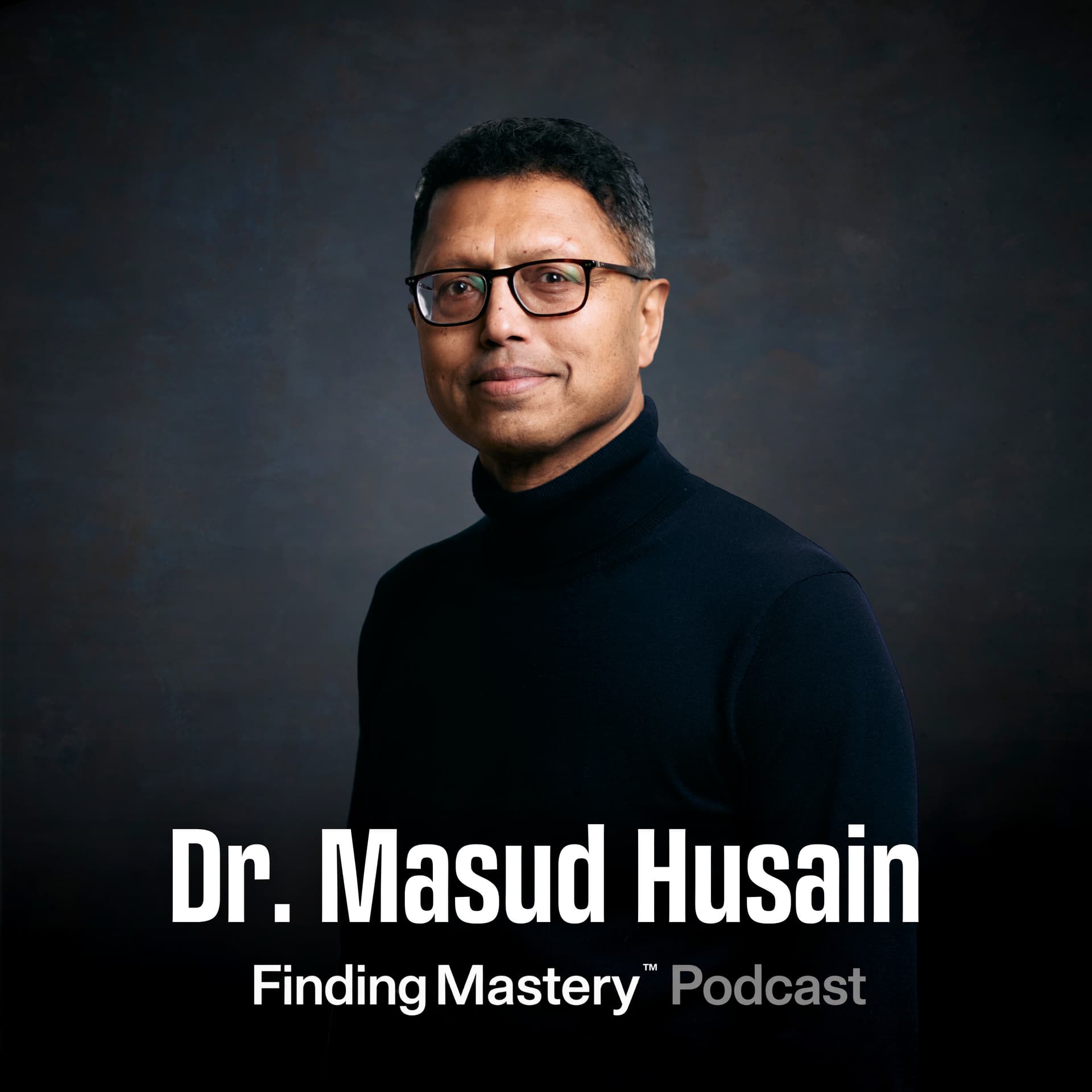
Dr. Daniel J. Siegel is a Harvard-trained clinical professor of psychiatry at UCLA, a neuroscientist, and a leading voice on how relationships shape the developing mind. He has authored 20+ books, including New York Times bestsellers The Whole Brain Child and No Drama Discipline. He is trained in developmental attachment research (studying parents before birth and predicting attachment outcomes across cultures).
Key claims
- The mind is relational and embodied; mental health is defined as integration (differentiation plus linkage) within the body/brain and within relationships.
- Parenting “mistakes” are normal; the goal is to repair ruptures to restore the child’s sense of security.
- Secure attachment is built from repeated “3 S’s”: being seen (attunement), soothed, and safe; this supports an integrated “window of tolerance.”
- Non-secure patterns (avoidant, ambivalent, disorganized) reflect learned strategies from suboptimal or terrifying caregiving, not fixed personality.
Notable examples
- Siegel’s “hot button” was “not being seen,” which could push him into chaos/rigidity; he learned to notice and repair by checking his internal state.
- He contrasts developmental attachment research with popular “adult attachment” TikTok/book usage that uses the same terms but different science.
Written by AI. May contain mistakes. Listen to the episode to check what was said.
Chapters
Tap a time to open that second in VOThe Importance of Relationships in Parenting
0:03 to 1:05
Dr. Siegel discusses the role of relationships in the development of a child's mind.
“Mastery because we know one great hire can change everything.”
The Importance of Relationships in Parenting
1:28 to 3:21
Dr. Siegel discusses the role of relationships in the development of a child's mind.
“A high-performance psychologist named Michael Gervais.”
Understanding the Mind
3:21 to 3:52
Dr. Siegel shares insights on defining the mind and its significance in mental health.
“And you've done it in a very astute, academic, learned, grounded way from a science standpoint.”
The Journey of Defining Mind
3:52 to 5:49
Exploration of the historical context and importance of defining the mind in psychiatry.
“What do you hope that I will better understand from this conversation?”
Interpersonal Neurobiology Explained
5:49 to 7:40
Dr. Siegel explains interpersonal neurobiology and its role in understanding mental processes.
“And I went on a journey to find somebody who was defining it.”
Optimizing Self-Organization in the Mind
7:40 to 13:14
Discussion on self-organization in the mind and how integration contributes to mental health.
“week goes by, something new emerges that I'm going, that's awesome.”
The Complexity of Thought and Behavior
13:14 to 14:00
Exploring the complexity of thoughts, behaviors, and their invisible impacts on life.
“Dan, if there's poetry in science, you're right at the center of it.”
Understanding Invisible Properties of Human Behavior
14:00 to 18:30
Learn how complex and invisible factors influence human behavior and performance.
“but this, the emergent property and the relational component is invisible.”
Insights on Parenting and Attachment
21:03 to 28:01
Explore how parenting styles and attachment theories impact child development.
“And so we did a really interesting thing.”
The Three S's of Parenting
28:01 to 28:54
Learn about the three essential S's (Seen, Soothed, Safe) in parenting and their importance in child development.
“You're being seen, meaning your mental life beneath your behavior is respected by your parent.”
Show all 41 chapters
Understanding Attachment Styles
28:55 to 30:04
Explore the different attachment styles in children and how they affect adult relationships.
“your thumbic area, and your fingers up here are the learning brains.”
The Impact of Non-Secure Attachment
30:05 to 31:12
Discover how non-secure attachment styles manifest in adulthood and their psychological implications.
“And then you see another 15 % has non-secure ambivalent, which is where they were inconsistent and intrusive, and that adult version of that goes on to be very preoccupied with their past.”
Ruptures and Repair in Parenting
31:13 to 33:32
Discuss the inevitability of parenting mistakes and the importance of repair and presence in parenting.
“but it involves these limbic and cortical areas.”
Integration and Parenting
33:33 to 36:53
Understand how parental integration directly influences the developmental outcomes in children.
“because I've had neuroscientists say, Dan, your model is ridiculous.”
Neural Integration and Resilience
36:54 to 37:33
Learn about the connection between neural integration in children and their resilience.
“So that's the tuning, the attunement, the tuning.”
Developing an Internal Compass
37:34 to 42:00
Explore how fostering discussions with children creates an internal compass for navigating life's challenges.
“Are you flooded into chaos or flood into rigidity a lot?”
Creating an Internal Compass for Kids
42:00 to 43:04
Learn how fostering discussions about feelings can equip children with an internal compass.
“But what that does is it creates an internal compass.”
Creating an Internal Compass for Kids
45:03 to 45:18
Learn how fostering discussions about feelings can equip children with an internal compass.
“Again, that's ProtonVPN.com slash mastery.”
The Relational Nature of Parenting
45:18 to 48:26
Explore the importance of relational connection in parenting and child awareness.
“human so that you can create a more integrated relationship so that the child becomes more relational.”
The Role of Awareness in Parenting
48:26 to 56:00
Understand how developing awareness can transform parenting practices and relationships.
“But what we're talking about is being held within awareness.”
The Importance of Relational Integration
56:00 to 57:20
Learn about the significance of internal work in fostering relational integration.
“Like you're not seeing my experience in it.”
Healthy Parenting: The Concept of Showing Up
57:20 to 59:00
Explore the idea of being present as a parent and its impact on children.
“Meaning I say that I want to be kind and here I am acting a jerk to folks.”
Embracing Imperfections in Parenting
59:00 to 1:00:50
Understand how to embrace imperfections and repair relationships with children.
“Start with knowing your own inner story.”
Shifting from Threat to Challenge Mindset
1:00:50 to 1:02:10
Learn how to change your perception of challenges in parenting to avoid burnout.
“mindset, Carol Dweck's term, you know, for let everything be your teacher.”
Shifting from Threat to Challenge Mindset
1:03:10 to 1:03:49
Learn how to change your perception of challenges in parenting to avoid burnout.
“Sure, you could interpret them as threats and you're going to get burnt out because you're going to fight mode, et cetera.”
Shifting from Threat to Challenge Mindset
1:04:39 to 1:05:58
Learn how to change your perception of challenges in parenting to avoid burnout.
“Okay, I want to take a quick minute here to talk about finding mastery.”
Developing Awareness and Resilience
1:06:11 to 1:10:00
Discover the importance of awareness and daily practices for resilience.
“So when you're living with the kindness and compassion, you are letting integration flourish.”
The Three Pillars of Mind Training
1:10:00 to 1:17:08
Learn about the three pillars of mind training and their benefits for emotional regulation and performance.
“And as you move the spoke around, you're doing that, especially in the first two segments, which bring in the different senses from the outside world and even inside the body.”
Embracing Uncertainty and Awareness
1:17:08 to 1:19:13
Explore how embracing uncertainty can lead to freedom and possibility in life.
“you do a graph of what's called a probability curve.”
Fluidity in Life's Journey
1:19:13 to 1:19:54
Discover the beauty of living like a river flows, embracing the surprises of life.
“He was an Irish Catholic priest and a philosopher and a poet and an Irish mystic.”
The Nature of Loneliness and Connection
1:19:54 to 1:23:53
Discuss the relationship between loneliness and the importance of relational connections in mental health.
“Number one, you shouldn't say the numbers, but I'll say the numbers.”
Exploring the Mind-Brain Connection
1:24:01 to 1:24:20
Learn about the relationship between the mind and the brain from Dr. Dan Siegel.
“And is your position that the mind emerges from the brain?”
Exploring the Mind-Brain Connection
1:24:23 to 1:25:45
Learn about the relationship between the mind and the brain from Dr. Dan Siegel.
“We talk a lot about the people who make extraordinary things possible, and I want to take a moment to acknowledge some of ours.”
Exploring the Mind-Brain Connection
1:25:52 to 1:27:05
Learn about the relationship between the mind and the brain from Dr. Dan Siegel.
“Anytime you feel the pull to reset, to zoom out, to refocus and ask, am I moving toward the person I want to become?”
Subjective Experience and Energy Flow
1:27:08 to 1:28:31
Delve into the concept of subjective experience and its relation to energy flow.
“I mean, take the term subjective experience.”
Emergence and Relationality in Understanding the Mind
1:28:32 to 1:31:31
Explore the theories of emergence and relationality in the context of the mind.
“It felt like a partial bit of the story.”
The Importance of Relational Mindset
1:31:32 to 1:34:00
Understand the significance of developing a relational mindset in individualistic cultures.
“And I thought he just doesn't grasp it, that you have to look at the relationality of stuff to understand bigger issues like mind rather than just an H2O molecule.”
Integration and the We vs. Me Concept
1:34:01 to 1:38:00
Learn about the integration of self within a collective and the challenges of individualism.
“I don't think that there's a more important mindset.”
The Shift from Individuality to Relationality
1:38:00 to 1:39:58
Explore the transition from an individualistic mindset to valuing relational connections.
“So when I do couples therapy, I'll see couples like this.”
Balancing Self-Care and Togetherness
1:39:58 to 1:42:00
Learn about the importance of self-care alongside nurturing relationships.
“That's this letting go and letting in relationality.”
Understanding Personal Needs and Growth
1:42:00 to 1:43:59
Discover how to recognize and address personal needs for self-improvement.
“And if you, if you, if you don't take care of the body, just to pull on this metaphor or the storyline a little further is that, um, and the body becomes painful or, um, fatigued easily.”
Transcript
Automatic transcript. May contain errors.0:00Dr. Michael Gervais:Finding Mastery is brought to you by LinkedIn. We use LinkedIn Hiring Pro here at Finding Mastery because we know one great hire can change everything. One bad hire, it can cost you a lot, way more than time. It can cost you momentum and culture and real dollars. And that's why how you hire matters just as much as who you hire. And it's why I've become a big believer in the power of LinkedIn Hiring Pro. Here's what I appreciate about it. When you're running lean, you don't have hours to sift through a pile of resumes hoping to find the right person somewhere in the stack. Hiring Pro is built exactly for that reality.
0:32Dr. Michael Gervais:You describe the role and it screens candidates for you, surfacing the people who are a best fit so that you can spend your time and conversations with those folks rather than in the weeds of the applications. And the results back it up. Those hiring with LinkedIn are 24 % less likely to need to reopen a role within 12 months compared to the leading competitor. So join 2.7 million small businesses already using LinkedIn to hire. Host your job for free at linkedin.com slash mastery. Terms and conditions apply. Again, that's linkedin.com slash mastery to post your job for free. So the human baby is designed to have more than just the mother as an attachment figure.
1:11So issue number one is we live in an individualistic culture, the United States especially, and that is totally not scientific. Our human family is meant to live in a village.
1:22Dr. Michael Gervais:Welcome back or welcome to the Finding Mastery podcast, where we dive into the minds of the world's greatest thinkers and doers. I'm your host, Dr. Michael Gervais. A high-performance psychologist named Michael Gervais. Who head coach Mike McDonald and former head coach Pete Carroll brought into work with the Seahawks. Famous for his work with Felix Baumgartner when he jumped out of space in the Stratos Project. Olympic athletes depend on something more than just training and talent. They have to stay mentally tough. Today's guest is Dr. Daniel J. Siegel, Harvard-trained clinical professor of psychiatry at UCLA, neuroscientist and one of the leading voices helping us understand how relationships shape the developing mind.
2:01Dr. Michael Gervais:He's also authored over 20 books, five of them being New York Times bestsellers, including co-authoring The Whole Brain Child and No Drama Discipline. We study parents before a child's born. We can predict with huge amounts of predictability across different cultures, a year later when the baby's born, how this baby will do what's called attach to parent A or parent B. Parenting is full of mistake making for all of us. Dan focuses on best practices to repair as opposed to desperately trying to be the perfect parent. We've never seen rates of anxiety, depression, suicide like we see now. There's a reason for that, you know, and it isn't just social media.
2:43Dr. Michael Gervais:With that, let's jump into this week's conversation with Dr. Dan Siegel.
2:53Dr. Michael Gervais:Dan, I've wanted to sit down with you for a really long time. I have been a student of yours without you knowing it. The commitment that you've made over the last, let's say, maybe four decades, I'm kind of making that up, about understanding brain and behavior and an integrated approach to living a full good life has been really important for me. And so I want to thank you in advance for the investment you've made in me and our community. And you've done it in a very astute, academic, learned, grounded way from a science standpoint. And you've made it very applied. You've made it, you're reading very easy to understand.
3:33Well, thank you. It's an honor to be here. Thanks for having me. And I deeply appreciate the experience because sometimes it gets lonely, you know, when you're busy alone typing away. So when I hear it's actually useful and helpful, it actually has a lot of real big impact on me. So thank you so much.
3:52Dr. Michael Gervais:What do you hope that I will better understand from this conversation? And or like you could proxy me for the listener. What do you hope the listener will better understand from our time together today? Well, you know, I do think starting here with potential is so important. And so, you know, it's hard to describe this because I was just doing the math the other day. You know, I've been a practicing therapist for 40 years, over 40 years, actually. When I became an educator in this field, I asked that question, like, what do I want my new students, anyone working with kids and adolescents in the field of mental health from any discipline?
4:29I was in charge of their education at UCLA in the psychiatry department. And I thought, what would I like them to learn? And ultimately, I felt kind of embarrassed that in my field, which was psychiatry, which was a part of the broader field of mental health, no one ever said what the mental was. So the first thing I would say from this conversation we're about to have is that back in 1992, when I was a training director in child psychiatry, I said, you know, let's try to see what this thing mind is. And I had to offer a definition of mind because I had 40 scientists from all over the university, rigorous, you know, peer-reviewed journal publishing academics who were doing, you know, investigations of all sorts from physics to neuroscience to anthropology, all in one room.
5:18And I said, let's ask a simple question. What is the connection between the mind and the brain? So in terms of your question to me, that journey led to a definition of the mind that I'll share with you soon. And that definition, which was offered over a third of a century ago, was the only definition around because my field, psychiatry, didn't have a definition of mind. Psychology, which I'm trained in as a researcher, didn't have a definition of the mind. Even the philosophy of mind field doesn't define the mind because they say it will limit your understanding if you define it. And I went on a journey to find somebody who was defining it.
5:52Nobody did. They described it but didn't define it. And so then I said, well, if you don't define what the mental and mental health is, how can you actually say what health is? So this has been like a third of a century working with this. And in that third of a century, there hasn't been another definition of the mind. And therefore, you can't have a definition of the mental health if you can't define what it's a health of. Anyway, so I hope we can get to that grounding because what happens with that is it really turns into this exciting. E.O. Wilson published a book in 98, so after we were doing this work, called Consilience, which just is a beautiful term from the 1800s in English, Old English, that says, what happens when different disciplines independently in rigorous pursuit of truth come to similar conclusions from very disparate pursuits?
6:45So we look for the conciliance across contemplative teachings, indigenous teachings, philosophy, history, arts, and all the different disciplines of rigorous science. You know, in empirical, peer-reviewed journals, stuff like that. And we try to find the conciliant ground. And it's in a field I work in called interpersonal neurobiology. I've published now over 100 textbooks that I'm the editor of. You know, so I've been pretty busy from an academic point of view. But then I'm also a therapist as well as an educator. So I'm trying to apply that rigorous, consilient academic approach to say what's useful.
7:23So in this conversation, I'm happy to share with you, wow, what'd you learn in a third of a century of doing this? Because there are some basic take-home messages that are super cool. And they themselves invite more questions and more consilient discoveries that every week goes by, something new emerges that I'm going, that's awesome. And you want to bring everybody into the tent. So rather than there being like, I'm going to fight with this other approach, it's just the opposite. It says, hey, the world has a lot of suffering. So let's work together. So interpersonal neurobiology, this framework for understanding, is not a form of therapy.
8:04It informs any form of therapy. It informs parenting. It informs education. It informs work in government. It informs how you work with an athlete. It informs all these different things because it's about being human. So if the human is involved, like I work a lot with people in politics and governments and stuff, you know, in the back end, you know, where people are privately consulting with me, you know, we can talk about, well, you know, what's going on inside of you that you're acting this way publicly in your political work? So there's ways of applying interpersonal neurobiology, which ultimately here's one take-home message.
8:43Number one, the mind is relational and embodied. So if you're in politics or you are an athlete or you are a parent or you are a mindfulness teacher or you're an educator of kids or whatever it is, just know, this is take-home message number one, that we're in a new age beyond Hippocrates from 2 ,500 years ago to say mind is more than just the brain in your head, that it's fully, fully, fully embodied. And mind isn't limited by skull or skin. It's fully relational. So when we talk about loneliness, we're talking about the fundamental nature of the relational side of the mind, right? So then we can look at the science to that and I apply it.
9:27That's number one. Number two, there is a definition of health that has a weird, simple, simple process that when I presented this group of scientists years ago, I thought this is too simple to be true. So someone's going to prove it wrong soon. That'll be great. And we'll come on to some new thoughts. In the last third of a century, what I'm about to say was the proposal, 1992, and then it predicted the findings of like literally a third of a century of research. And that is, you know, we said mind is subjective experience, consciousness, information processing, but the fourth facet of mind is something called self-organization.
10:09Now that phrase is a mathematical term that came out in the 80s from the study of complex systems. And it's basically this weird counterintuitive essence to what are called complex systems that built into the probability function of how they operate, they regulate their own becoming, which is totally counterintuitive. There's no director, there's no writer, there's no master plan. It's just this process that emerges from the interactions and components. And so what I said to this group is, could the mind be, and here's the definition, the embodied and relational emergent self-organizing process that's regulating energy and information flow?
10:53We did a vote, 40 academics, vote, vote, vote, 40 out of 40 thumbs up said they didn't have any definition of mind, never heard of that before. They're willing to go with it. It's consistent with what their work is all about for their lifetimes. And we went on to meet for four and a half years. so that was the birth of interpersonal neurobiology but then you can ask the question how do I optimize self-organization here's point number two an optimal mind a healthy mind is promoting optimal self-organization which happens in this incredibly simple way you have two sort of contrasting aspects of how the system works it differentiates on the one hand things are allowed to be specialized different unique so it's differentiating that's all that It means different with the word entiate there, you know, and link.
11:42And in the connection, in the linkage, you don't lose the essence of the differentiation. So it's not like addition. It's more like a fruit salad than a smoothie. You're not homogenizing something. And that we're going to name that balance of differentiation, integration. So here's the bottom line. Integration is how you optimize self-organization. So you go on a river where one bank of the river is chaos, the other bank is rigidity, and the central flow is the optimal flow of health or harmony, which have five features. It spells the word faces if you rearrange it, rename them. F is flexible.
12:20A is adaptive. C is coherent, meaning resilient over time. E is energized and S is stable. I read that in a math book in 1992. my head exploded because I said, oh my God, that's the best definition of the health I'd ever seen, mental health especially. And it was in a math book about complex systems optimizing their flow. So that's the second take-home message. We can define the mind as its embodied relational process. When you look at the self-organizing aspect of it, number two, you can then define mental health as a mind that creates integration within the body, including the head's brain, and within relationships.
12:58And that's where all the future research, every study, for example, of every psychiatric disorder, no matter its origins, showed impaired integration in the head brain. And every intervention that works when you study the brain effects, like mindfulness, for example, it grows integration in the brain. Those two things. Dan, if there's poetry in science, you're right at the center of it. Well, I'm deeply honored. and my dear friend who passed a long time ago, John O'Donoghue, who was a poet, he'd be smiling. Yeah. Yeah.
13:30Dr. Michael Gervais:The reason, the poetry doesn't come in rhyme in this case, but the model that you just outlined is a model you're intimately familiar with. You were part of co-creating or you created it entirely, which I would never give myself credit for creating something because I think we're always co-creating. I'm with you. That relational piece, yeah. I just say I'm a co-founder, pioneer or whatever. Yeah. Because it is a mutual. Yeah, it really is. But your framework there that you just outlined, I think the center of the whole thing is this really complex system that is organizing and growing and developing that we can't see.
14:13Dr. Michael Gervais:We can see the tissue. We can watch the electricity. but this, the emergent property and the relational component is invisible. We can't see thought. We don't know where they, the origin of them are. We don't know how much they weigh. We don't know where they go. Like we can't do that yet. And that's what I've found to be so complex about our beautiful science is that, um, I think it's one of the highest sciences because it is completely invisible. We can see downstream impact. We can see, we can see behavior. We can see micro expressions. We can see performance. We can see the downstream, what I would call impact to the way that our mind is organizing itself and framing and conceptualizing and even coaching the organism, sometimes optimally, sometimes not, you know, sometimes usefully, sometimes not.
15:03Dr. Michael Gervais:In the idea that you've laid out an orthogonal kind of approach between a chaotic and a rigid approach to life. And the work is to find integration so that this emergent and relational property can self-organize itself towards health. And I would say, I want to pause on, I want to put an asterisk on health for a minute because 25 years ago, I used to believe, and I think my field of human performance and human potential, I think we all pretty much swallow this pill, that high performance begins where wellness ends. Wow. Yeah. Really? Yeah. If you want to do something exceptional, if you want to do something that is changing how an industry, how humans, how we understand what's capable, that high performance, rare kind of space, that the only way to enter into that doorway or to enter that pathway is you had to compromise an incredible amount of well-being.
16:04How do you feel about that?
16:06Dr. Michael Gervais:I think we were wrong. I think I was wrong. I think that you can have both. I'm actively working that experiment as often as I possibly can. It doesn't always hold up. I think that people, there is a pathway to high performance where you come from agitation and irritation and pain and desperation. And because of that toxic fuel, it allows you to stay in a toxic state, lactic acid, brandykinase, agitation, just a little bit longer to unlock the body's capability to do something with greater precision, greater accuracy, greater speed, whatever the output might be. And that has been the model for a long time.
16:49Dr. Michael Gervais:Train harder, train harder, go further. And to do that, you had to organize your life in a way with great sacrifice, with great agitation, and the cost was a sense of well-being. I don't think it's right. I think what you have been pointing to is can you be more integrated? And in that integration, do you unlock something? Can you come from inspiration? Can you come from a sense of wholeness? Can you come from an alignment of thoughts, words, and action? Can you come from an awareness and an abundance to put in some colorful words? And from that place, can your brain be optimized? Can your mind be optimized?
17:33Dr. Michael Gervais:And can your skills be optimized? I think to be a better parent, the answer, I would full stop say yes. To be a better operator of life, I say full stop yes. But I'm actively working out, like with some of the best in the world, the experiment, Can you go to that messy edge that is required to unlock the next opening of your technical, your physical, your mental, maybe even spiritual sense of self? It's a good experiment. And I'm really happy I'm running it. And I'm probably like 75, 25. I'm on the favorable side of it. But there is very little research around this experimentation that I'm suggesting.
18:20Dr. Michael Gervais:I'm hopeful. Well, I look forward to the progress report on your 75-25. Yeah. Can we spend a little time on parenting? Sure, sure. Finding Mastery is brought to you by Sunlight. I'm really excited about a new partner of ours. Something that I've come back to again and again is when I invest in recovery with the same intention that I bring to my work, everything gets better. My energy, my focus, my ability to show up fully for the people that I'm with and the work that I care about. That's why I am so bought in on the Sunlighten M-Pulse Intelligent Sauna. I was first introduced to their team a few months ago and was so impressed by what they've created.
18:58Dr. Michael Gervais:This is one of the most advanced infrared saunas that they've built in over 25 years of pioneering this technology. That's right, they've been at this game for 25 years. I had one installed in my home a few months ago and it's made a real difference. I feel more refreshed, more grounded, more relaxed, and it's become a consistent part of how I recover, how I reset every day. I'm using it to support muscle recovery, for improved oxygen delivery, and for nervous system recovery. And what I love most, I don't have to leave my home. They're offering the Fonny Mastery community up to$2 ,100 off. Simply head to sunlighten.com and use the code mastery for this great discount.
19:36Dr. Michael Gervais:Again, that's sunlighten.com and use the code mastery for up to$2 ,100 off. Finding Mastery is brought to you by Lisa. We are serious about recovery. Sleep sits right at the center of that practice. I have been fortunate to work with some of the most extraordinary performers for the last two decades. And sleep and recovery are foundational, full stop. It's where the body and the brain repairs. And that's why finding a mattress that supports your recovery matters so much. A great mattress, it's not something that you stumble into. It is a choice. You find it on purpose, the same way that you'd approach anything that really matters in your life.
20:13Dr. Michael Gervais:We've worked with Lisa for a long time now because they get it. They build beautifully crafted mattresses tailored to how you actually sleep. Your position, your feel, your preferences, all of it. You can take their sleep quiz and find your match in about two minutes. Premium material, serious comfort, full body support no matter how you rest. One of our teammates here at Finding Mastery picked one up recently. Can't stop talking about it. says that they're waking up more rested than they have in years. Right now, they're having a July 4th sale. Go to lisa.com for 30 % off. Select mattresses, plus you get an extra$50 off with the promo code mastery, exclusive for our listeners.
20:51Dr. Michael Gervais:That's lisa, L-E-E-S-A.com, and use the promo code mastery for 30 % off. Select mattresses, plus an extra$50 off when you use the code mastery. what do you hope parents could better do for themselves and for their kids yeah to make a difference in the next generation well i mean just as i get ready to respond to that great question i i just want just a teeny teeny bit of a background you know when i was in medical school i was a part of a curriculum committee and we was like how can we train these young people to become physicians and so we were going to remodel the curriculum. And so we did a really interesting thing.
21:35We brought in historians like of 500 years of medical history and just saw these cycles of changing this way, that way, this way, that way, always responding to change what was just there. So we said, let's not change to change. Let's try to look at the deep structure. For that was like having an institution like a medical school nurture how a physician became that the physician she or he or they were going to become. So in parenting, you know, when I finished medical school, I went to pediatrics and I was really struck by how the way parents communicated with each other when a child was medically ill and then the way they communicated with the child who was the patient, you know, really made a difference in how we did work collaboratively as a team, me as the pediatrician, the nurses, everyone.
22:24And so I just became really interested in parenting. Probably at the same time, I was becoming very awake to how I was parented as a kid was very non-optimal, let's just say that. So I transferred over to psychiatry because I wanted to specialize in child and adolescent psychiatry. I wanted to really look at that and then ultimately became a researcher in attachment. So trained by the National Institute of Mental Health to look at what do we know about across all cultures, how the adults there to care for children influence the development of that child, right? So that's the field of attachment.
23:05In the public view today, a lot of people are quoting another branch of attachment, which studies romantic relationships that they call adult attachment. And they use the same terminology. And unfortunately, that social attachment world doesn't match with the world I'm about to describe to you. So if you go on TikTok or social media or get some of these popular books, just realize they're quoting a different field of attachment research, and it has its own validity. And it's just different. So I know those folks who do the research in that area, it's very valid work. It's just a different story.
23:41Dr. Michael Gervais:Are you referencing from the pop culture stuff, the anxious avoidant attachment? Well, we use the same terms. This is where the terminology is the same, but they don't correlate to what I'm about to talk to you about, even though the terms are the same. It's bizarre. And it would have been so much more financially effective because their model is so inexpensive to do. And ours is hugely resource bound in a way I'll tell you about in a moment. So anyway, it's too bad. And these fields generally don't talk to each other. So when I see the popular literature that people often quote to me as my patients, I go, you're quoting a whole different field of science.
24:22So I'm going to talk to you about something I call developmental attachment research, even though in the literature, it's just called attachment research. And we are the first wants to coin the term adult attachment, right? And it was used by the other field, adult attachment, for a whole different measure of that. Anyway, it's an interesting tension that that's a whole other different topic. But when you're asking me about parenting, just know what's the background of the person who's talking. So I'm the one speaking to you now. I'm trained as a developed, what I would call a developmental attachment researcher.
24:56It means We study parents before a child's born. We can evaluate different ways the parent has a narrative about how they themselves were parented that we assess while they're pregnant. We can predict with huge amounts of predictability across different cultures. A year later when the baby's born, how this baby will do what's called attach to parent A or parent B. Or just to make sure we say this, as humans, we have something called alloparenting. So the human baby is designed to have more than just the mother as an attachment figure. So issue number one is we live in an individualistic culture, the United States especially, that pushes for individualism and says the mom is the only attachment figure.
Read the full transcript
25:45And are you mom enough to – and that is totally not scientific. Our human family is meant to live in a village. yes it's a few specific designated attachment figures but it's more than just the mother so a lot of moms i work with they're overwhelmed they're depressed they're anxious because they're getting this lie told to them that if they were strong enough as a parent figure they could just mother this child by themselves and no other adult should take care of the child that child was designed to have other adults in their life so that's very message number one message number two is, you know, we've had 220 million years of being mammals where attachment was our thing.
26:31You know, birds do it too, for sure. But we as mammals started it first, by the way, before birds branched off from reptiles later on. But we developed attachment. And what it means is our babies are born and they're really immature, you know, and they have to have an attachment figure or they're going to die. And so built in genetically is the wiring to get ready for attachment. So that's just innate. And there's something called experience expectant. The brain expects to have an attachment figure. So if you're raised in a closet or raised in an orphanage and you don't have an attachment figure, that becomes an attachment disorder because your experience expectant brain system for attachment never got the attachment figure at all.
27:15That's one issue. another issue is what is that circuitry if you don't mind me you know to the yeah so you're born with a pretty much fully developed brainstem but partially developed is if you do your hand model the brain you do your brain so be in your palm put your thumb in the middle this would be the limbic area and the cortex is here where your fingers are bent over so the brainstem is pretty much fully formed so you have things like temperament your inborn features that give rise to personality, but that's in the brainstem. The limbic area is getting ready for attachment, okay? And it's going to work with the specific experiences you do have.
27:53So for 55 to 65 % of us in the United States, at least, you're going to have secure attachment, which is basically getting these three S's. You're being seen, meaning your mental life beneath your behavior is respected by your parent. It's focused in on with attunement by your parent. It's responded to in a beautiful, timely way. That's called attunement. And when there are ruptures, which happen all the time, you make a repair. So there's no such thing as perfect parenting. It's just being present as a parent. Soothed. When a child is distressed, this parent can connect with the child and bring them from a state of distress to clarity and calm.
28:33Okay? Soothing. Third one is safe, both physically safe and keep them emotionally safe. So if you are the source of terror, you quickly make a repair, right? So those three S's, if they're there, when ruptures are there, it's reliably and, you know, rapidly repaired, then you get the fourth S, which is security. And this involves, I think, this is all the writing I've been doing on this, the limbic area in your thumb area, your thumbic area, and your fingers up here are the learning brains. The emotional learning brain is a name we give to the limbic area, the reflective learning brain, the cortex.
29:08This is where the networks of attachment are really based. So they're all outward facing. How is this parent interacting with me? Am I seen? Am I soothed? Am I safe? And if you get those, you get security, which basically means an integrated system that's flexible, can keep you in that river of integration, not going much to chaos, not going much to rigidity. But if you have what's called the non-secure, I call it non-secure instead of insecure because people hear the word insecure and they think, oh, the person's insecure. But no, this can be a very confident person with a suboptimal attachment history, for example, with avoidance, and you become absolutely convinced with confidence that relationships don't matter.
29:51And that's called avoidant attachment because they had to learn that because their parents weren't seeing them, weren't soothing them. And they said, I better do this on my own. It's a waste of energy to connect with this caregiver. and that's 20 % of the U.S. population, 20%, one out of five. And the classic finding you see in adults who've been through that is they don't remember their childhoods, not because they were abused, but just because there wasn't emotionally salient, relevant, activating their closeness to their parents. And then you see another 15 % has non-secure ambivalent, which is where they were inconsistent and intrusive, and that adult version of that goes on to be very preoccupied with their past.
30:31And then in another grouping, and it adds up to more than 100 % just because the way we do the numbers, is called disorganized attachment. And this is where you had terrifying experiences with your caregiver. And then you get a fragmented mind that has this thing called dissociation. So with avoidance, you get a kind of disconnected way of being. You minimize the attachment system. With ambivalence, you rev up the attachment system because it's intrusive and consistent. You try to get more attachment things going. and then with disorganization, your mind fragments and it's unresolved trauma. And luckily we can heal unresolved trauma and loss.
31:08And that's a very preventable situation and also treatable situation. So that's the quickest summary of attachment you'll ever hear in your life, but it involves these limbic and cortical areas.
31:19Dr. Michael Gervais:And what's important about that is you're conjoining the midbrain, which is the emotional center, and then the higher brain. What do you call it? You have a clever name for it. The cortex, the reflective learning brain? No, it's something even, it's very pedestrian. It's like the upstairs brain. Right. Right. So, yeah. Which is your thinking, you know. Exactly. Okay. So what happens when there is a rupture, when a parent is in their own way and they do not see their child because they are in real time working out a trauma experience in front of their child. When they've created an unsafe environment in that moment.
31:57Dr. Michael Gervais:An emotionally unsafe one or even a physically one. Let's go emotionally, you know, yelling, screaming, something like there's just, there's something happening. And there's a rupture of three of those S's, let's say. How, what has been your finding to help parents repair that? Just a few very helpful pre-statements before we get into the details. Number one, try to be kind to yourself because this happens to everyone. And the reason in my parenting books, I write about my own books. Yeah, you do a nice job with this. You know, to my kid's shock. Like they once said to me, I said, is this accurate what I wrote?
32:36They go, yeah, it's accurate. But what's wrong with you? You're showing people what a jerk you can be. I said, exactly. So even if you study this, even if you have your, you know, advanced research training in this, even if you write books on it, you can still be human and mess it up. So number one, you've got to be kind to yourself. Number two, and this relates to being kind to yourself, just realize there's no such thing as perfect parenting. There's just being present. So if you can be present with a goof up you made and why that's why I write about these, you can go, oh, wow, I did that three minutes ago.
33:09I wasn't seeing my kid. I wasn't soothing them. I wasn't keeping them safe. Oh, yeah, yeah. I heard on that wonderful podcast. There's the three aces that lead to security. I'm going to show up now and be present for my kid. And what I need to do is say, that was a way I was behaving when I was not integrated. And if I'm not integrated internally, literally, I mean, if you do the hand model of the brain, you know, the skull doesn't move, because I've had neuroscientists say, Dan, your model is ridiculous. You flip your lid, the skull doesn't move, you're implying the skull moves. I said, it's a metaphor.
33:43It's just a metaphor. I know that's hard to think in metaphors, but it is, you know. So So you flip your lid and what happens if you think about this area, the cortex especially in the middle, it's taking everything from the body, everything from the brainstem, everything from the cylindric area, everything from the cortex itself and even the relational world and bringing those five distinct differentiated energy flow sources together into one whole without them losing their essence. So it's exactly what we mean by differentiation and linkage. it's a profoundly integrated area in the five meaning self-organizing consciousness no no no five five meaning from the body number one okay from the brainstem number two from the limbic number three from the cortex number four and from the social world number five yeah and exactly then it takes these other things and brings them together yeah right yeah but i didn't know if you're going back to those yeah no but those are good to bring in too so that's great so now it's literally differentiating linking them.
34:44So when we do this metaphoric flipping of your lid, it's no longer able to integrate. And in those states, you're prone to chaos and rigidity. Any state of not integration goes to chaos and rigidity. So basically, when we do parenting flub ups, it's usually because internally, we become non-integrated. Now, here's the amazingly simple, and I beg my interns, whenever I revise a book, I have like 20 interns working me and i say i want you to prove this prior version was wrong and find one thing that shows it's wrong and they go didn't you mean right i said no no that's cherry picking find one thing that shows it's wrong and then we'll change it'll be so much fun we'll get rid of that old stuff make new stuff you know you can't be wedded to what we said before so they fight they try they try they try they try to find these things around they can't which is by the way just great science you know like here's an idea yeah like please let's find more this thing breaks down and then
35:40Dr. Michael Gervais:let's upgrade it. That's what we do. That's why I love science, not because it's rigid, just because it's trying to challenge itself. But it takes a great scientist that is open to exploring and really wants to understand something as opposed to really wants to be right. Exactly. Yeah. So nice job on that. And they can't. Over 20, 25 years, they haven't found the thing that is wrong about the model. I told them, look, here's the simple equation. Show me this is wrong. Integration within the parent, like me making sense in my life, my brain being integrated like we just pointed out, allows for relational integration.
36:11What does that mean? I honor the difference between what my child's experiencing and what my expectations of how they should be are. So I can actually see my child who she or he or they really are rather than what I wish they would be. And in that differentiation, I'm now reaching out and communicating, linking with my child with respect and compassion for who they actually are. So that would be an integrated relationship. When you have integration within you, like a coherent way of making sense of how you were raised, trying to be fully present, your communication then can be integrative with your child.
36:49You have an integrative relationship. Then amazingly, what that creates in the growing child's brain is integration in their brain. Okay.
36:59Dr. Michael Gervais:So that's the tuning, the attunement, the tuning. If you're integrated as a parent. Then your communication is integrative, and that stimulates the growth of integration of a child's brain. And integration of a child's brain is the base of resilience. And amazingly, this is what I also told the interns, every form of regulation depends on neural integration, brain integration, that is cultivated by relational integration, like regulating attention, emotion, thought, behavior, morality. All that stuff depends on integration in the brain. So integration is health. That's what we've said. So basically your job as a parent is to begin with where am I at in terms of what I call a window of tolerance?
37:42Are you flooded into chaos or flood into rigidity a lot? Then you've got some work to do.
37:46Dr. Michael Gervais:Red zone, blue zone, green zone. That's another way of talking about that. Those are your terms. Those are somebody else's terms, the colors. The window of tolerance. I'm color challenged. But I talk about the window of tolerance. Yeah, right. Are we talking about the same windows here? It's somewhat similar. Not really. I mean, it's interesting because people would always point out the color thing, and I am color challenged. So the way it's different is – but maybe you can tell me if it's the same. You know, we have this very simple model. Like a river would be across time, and the window of tolerance would be one slice of time.
38:19So outside of the window, on one side is chaos. The other side is rigidity. And you can widen that window. Let's say, for example, you know, in my childhood, you know, my father was a rageaholic. My mother was removed from my father emotionally because he was such a nut. So she was very distant from her two sons. I was one of them. I was never really seen by her. And if I was sort of seen by him, he would distort it and then attack me. So anyway, so not being seen, let's just use that phrase, would push me into chaos or push me into rigidity. And what was your attachment style? I had every kind of attachment stance, the word I use for it, which is, you know, I was avoidant with my mom because she was emotionally removed.
39:00I was ambivalent with my father because he was intrusive and inconsistent. And because he was terrifying, I was disorganized also with my father. And with my therapist, luckily, I earned and learned security. So I have all four stances still available to me to this day.
39:17Dr. Michael Gervais:Because he or she saw you. She, my therapist. Yeah, she did the three S's. She did the three S's with me. Right, okay. And so you can earn that. That's because it's not about your temperament. It's not about genetics. It's not about something permanent. it. Your stance is something you learn so you can unlearn it and learn security. So that's the beautiful thing about that. So with this situation then, the window of tolerance means, you know, if my kids, and they learned this early on, like they're in the bathtub and I say, okay, you know, we have dinner in 10 minutes, so let's get ready to go.
39:50All right, dinner's in five minutes, let's get out. You know, they're just ignoring me because they're playing with each other, the brother and sister. And then I would just flip out. They wouldn't, I wouldn't be being seen as a dad and I would just get chaotic or I'd get really grumpy and rigid. You know, I'd do something like this. Finally, I learned that to check in with my own signals. I would say, you guys, I've asked you three times now. And I like I'm about to flip my lid. And once I said that, they go, okay, we're getting out. Not that it was a threat, but I just could tell that for me, my hot button.
40:20And when Mary Hartzell and I wrote this book, Parenting from the Inside Out, We use these personal things. My hot button was not being seen. Now, because there was so much anger in my house, you'd think that would be my hot button. No, I mean, that was like just being at home. So if people were getting angry, I could stay fully with a wide window of tolerance for anger. I could be integrated, meaning I have flexible, adaptive, coherent, energized, and stable. And there's lots of anger running around the house. No problem.
40:46Dr. Michael Gervais:You're familiar. The window of tolerance was wide. It was very wide. But not being seen? Not being seen. Tight. Oof. Yeah, right. Even with my wife, it was like that. So that was my hot – we all have these hot button issues. So to know that and to know if I did go into chaos, screaming and yelling or rigidity, I get grumpy and just remove myself, either of those, the kids are no longer being seen, soothed and safe. Maybe not so unsafe, but I have to make a repair. And that would be an example of me using my own inner awareness to see when I'm not integrated anymore, I'm flipping my lid around, not being seen.
41:22I don't go to them, you made me do that. No, it's my own issue. And so I have to work on that. And the good news is you can talk about it. So even now my kids are in their 30s. One just got her doctoral degree in environmental sciences and hiking the PCT. Huge congrats. Thank you, thank you. The other is a musician. So we have these fascinating art discussions of music and deep discussions of science and being out in nature and stuff. and it's just beautiful to see that if you develop you know these mind sight moments of looking into the mind and discussing it with your kids when they're young they get just used to it my our friends used to always say Dan you're talking to your kids too much just tell them what to do and maybe it's because my father always told me what to do which was nutty because he said nutty things to do but uh so I just never would maybe maybe too far to the other extreme so but it meant we were always discussing why are you doing that Why are you doing this?
42:18And what's your thought about that? And how are you feeling? And what's the meaning of that to you? But what that does is it creates an internal compass. So as your kids are navigating their world when they're no longer living with you, they have a lot of practice in fighting off social media things that go on or social pressure to conform. And neither of them are, obviously, you can hear from what they do, are conformists. but they have this internal compass that's super fascinating to get into and see how they literally travel their way through trails and all sorts of stuff.
42:55Dr. Michael Gervais:If life is an adventure, you are equipping your kids. So let's be super tactical. Finding Master is brought to you by Magic Mind. I get to spend time with people who are relentless about training their minds. It's one of the things I love most about my profession. And for me, and those I work with, we are looking for ways to optimize our psychology and our brains. Magic Mind is a daily two ounce mental performance shot loaded with vitamins, amino acids, antioxidants, and clinically backed ingredients like turmeric, ashwagandha, and lion's mane. The ingredients are nano encapsulated for five times better absorption than traditional pills and powders.
43:33Dr. Michael Gervais:And I love the taste. I love what they're doing here. I use Magic Mind just about every mid-morning. And what I noticed is that I think just a bit more clearly. My focus is definitely enhanced and I don't experience an afternoon drop. That's not a small thing when the quality of your thinking is one of your most valuable skills. So go to magicmind.com and get 50 % off your first order. You spend a lot of time sharpening your mind. It is worth fueling the brain behind it. Finding Master is brought to you by ProtonVPN. For so many in our community, travel is part of the rhythm of doing meaningful work.
44:07Dr. Michael Gervais:Boarding flights, hopping between cities, working out of hotel lobbies and coffee shops, it's all part of what it takes for some of us to lead and build at a high level. And one thing that's easy to overlook in that rhythm is digital security. Because the moment you connect to public Wi-Fi in a hotel or airport or cafe, your activity is suddenly a lot more exposed than most people realize. Logins, emails, financial information, sensitive work, it's all in the open. in a way that doesn't match the standards we hold for the rest of our lives. That's where ProtonVPN comes in. ProtonVPN is a secure service designed for people who want to prioritize their digital privacy and security.
44:44Dr. Michael Gervais:It lets you access the internet the way it should work. Open, secure, and on your own terms. If you take your work seriously, take the conditions you work in seriously too. Right now, ProtonVPN is offering you 70 % off a two-year plan when you go to protonvpn.com slash mastery. That's Proton, P-R-O-T-O-N, VPN.com slash mastery for 70 % off your two-year plan. Again, that's ProtonVPN.com slash mastery. You know, like very practical, if you can, about ways to become more integrated as a human so that you can create a more integrated relationship so that the child becomes more relational. That's one way to go, like super practical.
45:32Dr. Michael Gervais:Or the other way that you might want to take it is what are some ways that – or some questions that people – parents can ask to help their kid be more seen, to be more soothed? Like which do you find more powerful? Well, this is going to sound strange, but it actually relates to what we started with today. And so this may be wonky because, you know, I'm a scientist and a clinician and an educator and these are my kids. so I couldn't help just be myself. And I'll just outline some take-home points. Number one, inside of this body called Dan, I do feel like the mind is relational and it's embodied, and so that's just something I live, and you can live it too as a parent.
46:16So once you realize it's embodied and relational, you want your child to be aware of what's going on inside their whole body. So you can say, how's your body feeling? What is your heart telling you? What's your gut telling you? So that kind of stuff would be in our conversation. But the second thing is, no, the mind is fully relational. So when I'm interacting with my kid, I don't feel like, oh, I'm just telling him to do something. No, it's about this relational connection, almost like a relational field, like Michael Faraday talked about electromagnetic fields. You're literally in a field with your child that you can feel.
46:47You can almost palpate it. So that's the first thing. The second thing to say is, and this is where it gets super wonky, But if you say the mind emerges from energy flow and the physicists tell us that energy is what we said, the movement for possibility to actuality, what is possibility? They call it a formless source of all form. It's specifically called the quantum vacuum. It is this what one of my colleagues called, a physics professor at Amherst, calls the sea of potential. Now, that mathematical space, I have this thing called the wheel of awareness. Now we've done it with lots and lots of people, 77 ,000 people I've done it in person with.
47:25And when people take the microphone and say what they experience, they talk about the hub of the wheel, which is pure awareness, and the rim of the wheel being what you're aware of, like what I'm saying now with words, what you might see with your eyes, or what you're feeling in your body, or your thoughts and memories and emotions and stuff like that, and even the sense of relational connection. But the hub itself, those were all rim elements. The hub itself is something you can develop. Which is pure awareness. Pure awareness. What I think happens, this is kind of the wild hypothesis. This is from all these people we've studied.
48:01Pure awareness looks like it's when the energy position, so flow is like, where is it? On what's called a probability curve. When the energy position is in the plane of possibility on this graph we have, that is the quantum vacuum. That's the sea of potential. And it's a portal through which integration is allowed to arise. And so when you put that together with how you parent, then my job as a parent is actually to be present with my children, have a mindset conversation, that is talk about something beneath just surface behavior, which invites them to hold an awareness, whatever we're talking about, how they interact with their kids, why one kid came home drunk from a party, you know, and they helped them at the hospital or whatever, you know, all the different things in life that happen, lots of stuff happens.
48:56But what we're talking about is being held within awareness. So the way I see it with all this stuff we're talking about is that that kind of communication that I'm having with my child, whether they're five or 35, is allowing us to have the plane of possibility, the sea of potential come into the conversation and that I don't have to tell them what to do. This internal compass we're talking about is them holding whatever discomfort they may be experiencing with some interaction with kids or ideas of what they're going to do with their career or whatever. Like my son, Alex Siegel is a musician you can listen to his music, you'll see what happens as he takes his life and puts it out in the world in music, wherever you hear your music.
49:43And you'll hear these incredible songs of this journey of life. I feel, he might not phrase it this way, but that he's able to tap into the plane of possibility and let these gorgeous songs arise through him, right, that are based on stuff happening in life and the world, but you can feel it and the energy of the integrated song is there. Or when I see my daughter do the journey she's on academically and in her life, you know, it's all about tapping into the plane of possibilities. So as a parent, what does that mean? As a parent, what that means is, number one, we get in touch with making sense of our own life.
50:22Parenting from the inside out that I wrote with Mary Hartzell is a way to do that. The book Aware I wrote about this wheel of awareness and the companion book, Becoming Aware, is starting today you can do these things. So now you get in touch with that hub of the wheels, a metaphor, the plane of possibility. Now you start parenting from the plane, which is the hub. Now, whatever the challenge is, instead of seeing it, oh, my God, parenting is so hard, which it is. Oh, this is so terrible. No, you actually see these challenges as opportunities. And the chaos and virginity that's arising, okay, something's not integrated.
50:56it, you reach out to your kid, not as a, I'm going to tell you what to do, but let's join together in awareness, in this plane of possibility. And we're going to sit with that and we're going to co-construct in our conversation, an exploration of things. And here's the beautiful thing. The plane of possibility is where other options are sitting. It's the formless source of all form. So the formless source means all the potentialities are sitting there. So your kid may have chosen this to do with a group of friends or that to do. They didn't know, they feel hopeless, they have no other options.
51:31They tap into the plane in their conversation with you or reflective practice they may do on their own. Now other possibilities become available to you. And because it's the portal through which integration arises, they are health-based choices that arise. And you didn't tell them what to do. Together, you may have created the conditions where they got out of the blockages to differentiation linkage, which kept them stuck. but now you're opening to them they're literally resource re mean again and again and again source meaning the source of new possibilities and those possibilities that make sense a hundred
52:06Dr. Michael Gervais:percent it's it's um complex yeah you know um but humans are so we're not getting through this with the seven hacks well that's the thing like it's a my community here at finding mastery we we all recognize there's no shortcuts, there's no hacks, there's no tricks. I don't think there's any tips really. There are some foundational principles to work from. And I think what I hear, like, if I try to get to action here is my job as a parent is to understand how to be integrated, to not work from chaos or rigidity, to have an integrated sense of self. So I don't need someone outside of me to soothe me, to see me.
52:58Dr. Michael Gervais:It's nice if they do. That's wonderful. But my job is to be integrated as best to my abilities. And then from that place, tap into the mothership of awareness. I hear you saying we can develop awareness. I've always thought that awareness is there and my job is to tap into the slipstream of awareness. But you can develop the ability to tap more effectively. To awareness. Yeah, right. That is actually my best estimation. What psychological skill building really helps us to do is to be with awareness more often. Because once you're with awareness, all of the possibilities are available and you can And hopefully choose as opposed to just automatically, reflexively, reactively maybe is travel the path that you've always traveled that leads to the same destination.
53:52Now, yeah. Can I come back to one point you just made? Please. Because I'm just wondering if people hear us and hear that. So I have a feeling for what you're saying. We said, let me be integrated so I don't need to be seen and soothed by other people. I get that. I want to just ask you how you feel about this reflection on that. like when I think about my relationship with my wife, Caroline, you know, she's been meditating for 40 years way before I even thought that was something good to do, you know, before anyone was doing the science of it. She wrote this beautiful book called The Gift of Presence, you know, by Caroline Welsh, and she's taught me so much about that.
54:29I need to be seen by her as my partner in life, and I need to be soothed by her. Now, maybe I could use the word want, and maybe it's not desperate and maybe I'm not trying to have my child self do what my child, young Danny, needed from his mom and projecting that onto my wife, Caroline, for sure. So in that sense, I don't need it desperately like she's repairing my childhood, for sure. However, since the mind is relational, we have a few, maybe a handful of people close to us where it's okay and integrated to say, I'm a human being, and I do need these very few selected people, Caroline, Alex, Maddie, my kids, my wife, not to be attachment figures, me necessarily, Caroline, perhaps, not my kids, but close friends, where if I'm in a tough spot, I will call up a friend and say, hey, I need to talk.
55:24And they will provide me the being seen. Are you okay with that?
55:28Dr. Michael Gervais:Well, you did two things really nicely. One is you explored, which was cool, you know, and didn't come on top and say, no, no, no, no, wait, that's not what I said. You explored, which was. Wonderful. And the second is like you were clarifying the desperate, I was framing it without using the word that desperate need to be seen from your child. Earlier, hearkening back to your earlier kind of experience and mine as well. And so it was that neurotic, desperate kind of thing that how dare you bring this to my universe or whatever? Like you're not seeing my experience in it. And so you clarified the – there's lots of words we could use, the desperate or I introduced neurotic.
56:16Dr. Michael Gervais:Yeah. Like the leftover garbage stuff. The traumas, the unresolved stuff. But that idea, what I was working toward is this idea that when I feel integrated, then I can create a relational integration. I can create the space for relational integration to take place. And then in return, fostering the integration for the other. Yes. Right. And so I think the practical tools are you got to go do some internal work so that you can be present with your stuff. You can be with awareness. You can see another person. You can explore with them. If you need to soothe, cool. If you need to challenge, which gets tricky, that there's a place to challenge as well.
57:06But only once support, organic, authentic, deep support is had, do you earn the right to actually powerfully challenge somebody towards the standard or the way that
57:21Dr. Michael Gervais:they want to live their life? Meaning I say that I want to be kind and here I am acting a jerk to folks. So the kindness would be the standard. Yeah. And so if you just challenge somebody to be that standard more often without organic support, it becomes an anxious kind of broth of relationship as opposed to, you know, I really understand who you want to be and where you're coming from. I understand your scar tissue. I understand you. And I, but this is not what you, this is not, is this? Help me understand because this doesn't sound like that. And you put it as a question. Yeah, that's right.
58:00Dr. Michael Gervais:There's one question I want to go back to on parenting is that I know our community really cares about being their very best for their kids. Yeah. And it's akin to being a leader as well. Right? Not that you're parenting your directors or whatever, but there is a relational aspect here. If you zoom way out, what does healthy parenting look like and how can we be better at parenting? You know, I mean, it's showing up. Tina Payne-Brice and I wrote a book called Showing Up, and we have four books that kind of talk about what can you do ideally. And I don't think we would have written any of those if Mary Hartson and I hadn't written Parenting from the Inside Out.
58:42But the idea of showing up is how can you be present and tap into, from the inside-out point of view, tap into a deep understanding of where did your body, your inner self, come from in your own journey of being parented in your history? The research is really clear. Start with knowing your own inner story. Allow that to become coherent. If you say, how do I do that? Parenting from the inside-out will walk you step-by-step through how to do it. Brilliant. Once you started that journey, it's not like it's over. I'm still doing it. I mean, stuff happens with my kids now and their adult relationships.
59:19And I go, whoa, what did I do with them as a dad? And I've gone back to therapy to kind of figure out some things that were going on. So we're always on a journey. So it's not like, oh, I'm going to do it and finish it before I have a kid. No, start that journey so you can be present. Then with the showing up idea is these S's. you can if you just focus on those three s's how can i see the inner life of my child beneath their behavior how can i soothe them when they're distressed which means if it throws me out of my window of tolerance i'm in chaos or rigidity i'm no longer present so just being present is how i do that if even if i didn't have it myself and then safe if you do things that are scary like sometimes i'll get mad about things that scared my kids that was not good i need to make a repair when that happens.
1:00:03So those ways we can make a repair, repair, repair. Couldn't say it enough. And the repair isn't that, oh, there's a problem. It's more like, I think it's called kintsuji in Japanese. You get strength when you're putting these gold things to repair the broken vase or whatever it is. It's where the Leonard Cohen line of anthem goes something like, ring the bells that still can ring forget your perfect offering there's a crack in everything that's where the light gets in so the light of your love of this relationship isn't going to come from you being thinking you're supposed to be perfect quite the opposite actually that you're present for these quote imperfections that you just embrace and if you have a growth mindset, Carol Dweck's term, you know, for let everything be your teacher.
1:00:56So when there are challenging moments in parenting, instead of thinking, oh, my God, this is such a pain. Yuck, yuck, yuck. No. Say, wow, this is challenging for sure. There was a rupture. I need to repair it. Let me use this as an invitation for further growth. Then that's a state of mind. And then we do the best we can. Listen, we're not talking about, well, we're talking about VUCA, but we're not talking about artificial intelligence, we're not talking about social media, all the other stuff. These are really, really challenging times for youth. We've never seen rates of anxiety, depression, suicide like we see now.
1:01:31There's a reason for that. You know, it isn't just social media. There's a lot of other reasons for alienation and stuff. This is a time when we haven't needed as much as we need now parents to really have their own inner life together so we can show up and be for our kids. And it's only to get more challenging. So instead of saying, oh, my God, this is terrible, this is challenging, yes. If you experience those difficult things as threats, your system will enter a threat brain state and you'll get exhausted and burnout. If instead, and I did this with Joanna before she passed, she said she was a mentor for a lot of activists supporting environmental activism.
1:02:11and she said, Dan, they're burning out in ways I've never seen. I said, Joanna, if they keep on interpreting this day's news as a threat, they're going to go and fight, flee, freeze, faint, or fawn, all those five Fs, and they're going to burn out. So you need to teach them how to go from a threat mindset to a challenge mindset. She goes, how do I do that? I said, they can have an attitude adjustment where when they hear the news, they think of it as a song. And this challenge, not the threat, the challenge, of course, it's dangerous. So in that sense, of course, they're getting a threat state out of it.
1:02:49But they see it as a challenge, and they see it as their dance partner. And so I pick her up from this chair in her kitchen. She was my mom's age. She was 95 at the time. So we started dancing around the kitchen. We're laughing our heads off. And I said, you can teach them to dance with the challenges and not feel collapsed in a burnout because they're in a threat state. Same thing with parenting. You know, these are challenging times. Sure, you could interpret them as threats and you're going to get burnt out because you're going to fight mode, et cetera. You don't need to do that. You've made the beautiful commitment to raising a kid.
1:03:25It is the most challenging job in the world, and what a privilege. And so you take it on and you say, how can I have this resilience? and taking on a challenge mindset and being very careful if you're getting in the threat mindset to switch it out and dance with these challenges. You say, bring it on. Let everything be my teacher. Everything's my dance partner. What's the music of today?
1:03:49Dr. Michael Gervais:Body Mastery is brought to you by Fatty 15. Did you know that Navy Dolphins helped unlock a secret to healthy aging? It's a wild story. And it's the foundation for a product that I've come to really love, Fatty 15. Fatty 15 is built around C15, the first essential fatty acid discovered in over 90 years. And it was discovered by Dr. Stephanie Van Watson. She's the co-founder of Fatty 15. While she was working with the U.S. Navy and based on over 100 studies, we now know that C15 strengthens our cells and is foundational for healthy aging at the cellular level. Stephanie's been on the podcast and it was one of my favorite conversations.
1:04:26Dr. Michael Gervais:She's amazing. And what her and her team are building is something I'm really excited about. Head to fatty15.com slash finding mastery and use the code finding mastery for an additional 15 % off your 90-day starter kit. Again, that's fatty, F-A-T-T-Y, 1-5.com slash finding mastery, and the code is finding mastery. Okay, I want to take a quick minute here to talk about finding mastery. If you are leading a team right now, you already know that strategy, execution, priorities, accountability, those matter. And what I've seen time and time again is that organizations don't rise or fall to the plan alone.
1:05:01Dr. Michael Gervais:Of course not. They rise and fall to the internal conditions of the people that are carrying the plan. That's the inner game that I'm pointing to. And the teams that invest in their psychological skills, they're the ones that are best prepared to navigate dynamic environments, like the one we're all living in right now. At Finding Mastery, we help leaders and teams build the mindsets and psychological skills that support sustainable high performance. And we do it inside the rhythm of business, not as one more thing, but as a practical way to operate when pressure is real and the stakes are high.
1:05:33Dr. Michael Gervais:We have partnered with teams at Microsoft and Salesforce, LinkedIn, New York Life, Marist, Adidas, AIT, Waymo, and so many more, helping leaders lead through change, strengthen culture, and perform more consistently in high-stress and high-stakes environments. And you're not just kidding me, you're kidding a whole team that includes high-performance psychologists, performance strategists, and Olympians who know how to bring this work to life. So if you want to really unlock the edges of your team's potential, simply go to findingmastery.com slash inner game to learn more. Again, that's findingmastery.com slash inner game.
1:06:10Dr. Michael Gervais:Let's keep pushing. Let's keep exploring. that aikido or that judo only happens when you're aware yeah i'm in a threat state i'm in a dysregulated whatever rigid chaos whatever and with that that's this is why i'm going to point back to what you're saying is just so paramount which is you've got a daily practice to be with the the sea of awareness yeah more often and then what the whole thing whether you're trying to be the best in the world at something or your very best, whatever your orientation is, does the seat of the whole thing is awareness. Exactly. Yeah, there you go. So when you're living with the kindness and compassion, you are letting integration flourish.
1:06:54Dr. Michael Gervais:Yeah, that's very cool. When my son was born, this is 17 years ago, my wife and I looked at each other like, what do we do? Let's just not repeat the same mistakes that our parents made with us. Let's kind of first order business, but what are we trying to cultivate? She wrote a couple of pages. And so we said, let's, let's get our first principles in line, you know, and then from that, what are the values? So we went first order principles. She wrote a bunch down, I wrote a bunch down. And then, then we kind of whittled that down to values that matter to us. We circled a bunch of values, but they're based on first principles.
1:07:28Dr. Michael Gervais:So first, again, first principle thinking, and then we shared them and we're looking for the commonalities for the first couple of years, you know like what would those commonalities as a bit of a north star and what made our list was kindness and strength wow so those two like we wanted to help support and nourish a child that was kind and strong we haven't changed them since yeah we're still doing what a thoughtful way to start parenting yeah it was a good one it was because we didn't know like we didn't really there's we didn't know so that's just kind of where we started but lucky boy yeah lucky lucky husband.
1:08:06Dr. Michael Gervais:Like I'm really lucky to be here. I was even talking about your son. I know. He's really lucky, but I'm more lucky. Yeah. I feel like, yeah. So all that being said is can you take us home in what you would hope folks would do to become more connected to awareness, to become more of who they want to be in this topsy-turvy world that we're in, whether it's to be a better parent or a better partner or a better athlete, whatever kind of the role that they're interested in right now. Well, you're right. I mean, it is a tough world. People sometimes use the acronym VUCA, volatile for V, uncertain, U, complex, meaning it's nonlinear, large outcomes can come from very small changes.
1:08:49And A is ambiguous. Even if you knew everything, you wouldn't know. So these VUCA times are challenging. When you look at all the science of resilience and how we're supposed to handle things, And I think adults are suffering a lot now, and especially kids and adolescents are too. So these are challenging times for everybody. Internal development of this compass, this internal compass, I think is crucial. And in many ways, for me, the way I would approach, respond to your question is, whatever the practice can be, I happen to do the Wheel of Awareness every day. And for me, that does it.
1:09:26Dr. Michael Gervais:They do it every day. Every day. Every day. And what are the eight characteristics that make your will awareness? The pie chart, if you will. Yeah, I mean, it's, well, first of all, it's a super simple visual. So it's a center hub with an outer rim. There's a singular spoke of attention. In this practice, you develop what the science shows are the three fundamental principles, the pillars of mind training that cultivates all these cool things I can mention in a moment. but you're going to train attention to be focused. And as you move the spoke around, you're doing that, especially in the first two segments, which bring in the different senses from the outside world and even inside the body.
1:10:10Number two, you're going to train awareness itself, which is different from attention, believe it or not, to be open. And that's a very important thing you do as you explore the hub itself and enter this kind of almost like shift in these states we can enter of just being aware without being aware of something in particular. It's amazing. So to do that every morning is like fantastic. So that's number two. Number three is you develop kind intention.
1:10:38Dr. Michael Gervais:Oh, see, I went to a different place. This is your meditation practice. Yeah, yeah, yeah. Yeah, attention, awareness, and loving. Intention. And loving kindness. You're calling it intention. Yeah, because I think it really is an intention of positive regard. Beneficence is the one word you can use. Loving kindness would be one example of it. That's right. bigger that. Yeah, that's right. And how, so when you're doing beneficence or you're doing your, if you're setting, you're aligning with intention. Yes. Attention. Let me just go back and make sure I'm calibrating. This is your practice. And this practice is eight to 20 minutes.
1:11:13It's about 20 minutes. And these three principles are from all the research on other practices. Yeah. So the three pillars of mind training that basically make you physiologically healthier by reducing stress hormone, improving your immune function, improving heart function, reducing inflammation, and even optimizing an enzyme, telomerase, that repairs and maintains the ends of your chromosomes, slows the aging process, all those things, especially the last one.
1:11:40Dr. Michael Gervais:And I want to add, is involved with better parenting, emotional regulation, higher performance in high stress environments. And when you have these set of practices, you also increase the frequency of flow state, which would be considered an optimal state of performing. So the research around this mechanism is... Yeah, I call it three-pillar practice. Three-pillar practice is amazing. Amazing. And you even integrate the structure and function of the brain, which is the best predictor of well-being. So all those things are embedded in other studies. Now, it turns out the wheel has those three in it.
1:12:15What I find particularly exciting about it is it integrates consciousness. It differentiates the knowing on the rim from the knowns in the hub. It gives you the ability to link them through moving the spoke around. And then the added benefit, which I find specifically helpful, is you bend the spoke around into the hub and you leave the rim. So in terms of your question, all your worries about the VUCA world would be in the third segment of the rim. And so when you've learned the art of entering the hub of your wheel, this is the plane of possibility, then whatever all the junk is, it's kind of like being in the ocean.
1:12:56Whatever wild storms are in the ocean, if you can learn to swim 40, 50 feet beneath the surface, it's calm. So you've experienced now every morning, when I do it, I experience, I can get to the hub so if something happened we had a relative a young person in our family have a stroke in his early 30s so it's very agitating very worrisome what's going on oh my god I can quickly go to my hub I can get super clear I can then search the rim of what do I need to do to try to support him he's another part of the world this is the intention this is would be my intention to be kind and caring, but I can stay in a place of calm.
1:13:40I'm in my window of tolerance and make the phone calls I need to do to get an intervention for a young person having a stroke. I would totally get it if someone said, oh my God, I was so upset. I was so worried. I was crying. Totally get that too. But to be resilient and do what he needed would be for not just me, but his parents and everything, would be to have access to the hub of the wheel basically. So this for me is a super powerful aspect of it. In addition, as a parent, what it gives you is that clarity of, you know, this is where presence comes from, you know. And you wanted to talk about presence versus being present.
1:14:17So we could talk about that too. But this is where, you know, you can be present with what's happening as it's happening without going to chaos or rigidity. but presence you could almost argue is entering this larger field of this plane of possibility that we all share so you find a common ground with whoever you're dealing with you know and and when you live from this presence from this plane of possibility it gives you this incredible sense of connection and empowerment because it's no longer me versus them it's actually how do we let integration to arise in these different bodies? Sure, we have different bodies, but if I can channel that possibility, that kindness, that compassion that comes from that presence and just let it be there, I can learn to live from that.
1:15:09And it's going to activate, make it much more likely in another human being's body for them to start coming from there. And I can give you all sorts of examples of that, where when we live from that plane of possibility, from the hub of the wheel, this is why I do it every day, because I don't know what's going to happen today. But I know when I wake up, if I give myself that 20, 25 minutes, I do the wheel of awareness practice, I've grabbed the day. I've reminded myself, literally remind, bring back to my mind the resource of the plane of possibility, which is the hub, and I'm ready for the day.
1:15:45I don't think we really begin to understand
1:15:49Dr. Michael Gervais:and how to live anywhere close to our potential if we struggle with trusting that no matter what happens, we'll figure that out too. And trust comes from time under tension in challenging situations where you earn the right, be like, oh, I figured that out and that out and that out and that out and I adjusted to this. And boy, that one was really hard. It really tested me. But I figured some stuff out that I can adjust. I can be agile. I can be resourceful. I can develop that resilience that we spoke about before. And when you know, I'll bridge some metaphors here, when you can swim at 60 feet, did you say below the surface?
1:16:25Dr. Michael Gervais:When you know you can swim there in the cold, dark depths where you have to really be able to trust your ability to hold your breath and whatever, that you end up feeling more free in life. You end up being able to explore better. Exactly. Well, you want to hear something really wild, and this is where the consilience is so useful. So when I took the quantum physics view of energy's movement of possibility to actuarity and graft it out for the physicists and then mapped it on to these tens of thousands of people to the wheel, especially what they experienced in the hub. And again, the hub is awareness.
1:16:58Is awareness, pure awareness. It's just a metaphor of a thing you can visualize as a wheel, but the hub of that wheel is pure awareness as we've defined it. So on the mechanism side, you do a graph of what's called a probability curve. Certainty, you know, in actuality is 100 % at the top. The maximal uncertainty is the bottom where the plane of possibility is sitting. So here's to translate what you just said in this fun, conciliant way. When you embrace uncertainty, which is what pure awareness is, you realize its synonyms are freedom and possibility. Very cool.
1:17:37Dr. Michael Gervais:I mean, the attunement that we have there. Yeah, that's very cool. That to me, I think a Buddhist might say is, you know, there's an unbothered state of being, no matter what happens, I'm moving with it into the next moment. And in a world where people are truly committing to mastery is that they are artistically so agile with the unfolding moment that they are able to move with it again, and express themselves at that in an artistic way. Absolutely. And without awareness, without able to be with awareness, I don't know how it can work, but I see some great performers like grind and will their way, if you will.
1:18:25Dr. Michael Gervais:And I go, that's not what it actually is. That's not what's actually happening. That's what the language we've used for a long time. That's not what's actually happening. There's a giving to the unpredictable, unknown, unfolding moment. And when you can give yourself to that current and be okay and even excited with the unfolding unknown, which it can be, that is what anxiety is. I don't know how this is going to go. And you're gripping and holding and grasping and you're using your imagination in an undisciplined way of all the things that could go wrong. Yeah. Yeah, exactly. Exactly. And if it's okay, can I quote a friend of mine, a poet?
1:19:05John O'Donohue has this great, he always called it a partial poem, but anyway, it's published as a poem, called Fluid. So this was a guy who was a beautiful writer who wrote Anam Kar and To Bless the Space Between Us. He was an Irish Catholic priest and a philosopher and a poet and an Irish mystic. Anyway, he and I met after Caroline studied with him for a while. She's of Irish descent, so I sent her for a big birthday to be with him. Anyway, we got close. We used to teach together and sadly he died suddenly 18 years ago. One of his poems, Fluent, goes like this, something like this. I'd love to live like a river flows, carried by the surprise of its own unfolding.
1:19:53Thank you.
1:19:53Dr. Michael Gervais:Yeah. I mean, if I could have said it in less words, I would have tried to get that close but that's that's it and you know poets have a way to do this for us yeah you know i'll share one more poem with you because we're talking about parenting a lot and um i guess not just for me as a parent with adult kids now but there's a number of people in my life a long time in my life either family or friends where some people are dying and it's a quote from mary oliver that is i think very relevant to what we're saying but let me see how this lands with you, it goes something like, so there's a paraphrase, but it goes something like, there are three things we need to learn in life.
1:20:34Number one, you shouldn't say the numbers, but I'll say the numbers. Number one, we need to learn to love what is mortal. Number two. There's a risk in that, isn't there? Yeah. Number two, Two, we need to hold it close to our bones, knowing that our very life depends on it. And number three, when the time comes to let it go, to let it go. It's terrifying.
1:21:08Dr. Michael Gervais:Terrifying. This is one of the hardest things to consider. Yeah. Isn't it? It's a thing now. Yeah. Right? when we think about mental health and we think about the conditions that are increasing that are difficult for people to manage loneliness anxiety depression addiction suicidality fill in the blank how do you deal with loneliness personally or do you mean professionally or academically yeah personally you know i i tend to be someone who has a very small tight circle of people close to me, my wife, my two kids, my mom before she passed, really close friends. And I really put energy into those connections in a big way, you know, try to keep in touch with how everyone's doing, try to make sure, you know, each morning I do actually a meditation where I include reflections on them and our relationship, our connections to each other.
1:22:10And so I don't actually feel myself personally lonely. Sometimes I feel alone and sometimes that's good just to have some downtime. So I feel like I kind of intentionally try to make a priority of those connections. and the academic side of that is that you know years ago when I was going to medical school and people said the mind was only what the brain and that your head did and then when I entered pediatrics and then psychiatry training and people were staying with that line from Hippocrates from 2 ,500 years ago it just seemed to me that that was like a partial truth that certainly the brain and your head had something to do with your mind including the feeling of loneliness but it seemed to me that the mind was something that was both fully embodied, including your brain, and also is fully relational.
1:23:02So when you say the word lonely, and I feel what that lonely means, it's almost like half of the mind is missing its emergence, where it's coming from. And I know people sometimes dismiss the word emergence like it's not scientific, but it's super scientific, comes from math, and it's from the relationality of components of a system. So I think the mind that we have, like you say, your mind, my mind, it actually is coming from inside the skin encased body. Great. It's fully embodied, not just up in your head. And the second thing is it comes from our relational connections. Even like what's happening now between me and you, we're creating a shared mind.
1:23:44And in that connection, when that's severed, you start to experience loneliness because you're experiencing a partial mind. I think that's what loneliness is.
1:23:55Dr. Michael Gervais:Let me do two things. One is emergent. I want to go back to that. And is your position that the mind emerges from the brain? Partially. Okay. I think, go ahead. Yeah. And then that's what I heard you tracking, right? And then you're also saying that the mind is a unique property in and of itself. Finding Mastery is brought to you by LinkedIn. Earlier, I mentioned LinkedIn Hiring Pro, and I want to come back to something a little more personal. We talk a lot about the people who make extraordinary things possible, and I want to take a moment to acknowledge some of ours. Janelle, Taylor, Alex, Emma, and our newest teammate, Chelsea.
1:24:38Dr. Michael Gervais:Every single one of them came to us from LinkedIn, and every single one of them has raised the bar of how we operate here at Finding Mastery. Our relationship with LinkedIn, it also runs a lot deeper than just using their tools. We also work with their teams on the corporate side, helping them build the kind of high performance culture where great people want to stay. They want to grow. I've been building businesses for over two decades now, and I'll tell you the right team that matters so much. It's the difference between grinding and flowing. So this partnership, I believe in from the inside out.
1:25:10Dr. Michael Gervais:When you hire through a platform like LinkedIn Hiring Pro that surfaces people who are genuinely aligned with what you're building, you get a different quality of candidate, not just in skills, but in fit and values, the kind of energy someone brings to a team. So if you're thinking about your next hire, I want to strongly encourage you to be intentional about where you look. The right person is out there and LinkedIn Hiring Pro helps you find them faster with a lot more confidence. Post your job for free at linkedin.com slash mastery. Terms and conditions apply. Again, that's linkedin.com slash mastery.
1:25:48Dr. Michael Gervais:Finding Mastery is brought to you by our flagship mindset training course, Finding Your Best. Anytime you feel the pull to reset, to zoom out, to refocus and ask, am I moving toward the person I want to become? It helps to remember this. Lasting change comes from training, not resolutions, not short-term sprints, but deliberate practice of the skills that shape how we show up in work, in relationships, and in the moments of great intensity as well. That's what finding your best is all about. It's a science-backed framework for training your mind. And it's the same set of tools that we've taught to Olympic athletes, top executives, elite military teams, and artists at the peak of their craft.
1:26:22Dr. Michael Gervais:In this course, you'll learn the foundational psychological skills to be your very best. Full stop. And the best part is you can start anytime. Right now, we're running a limited time offer on finding your best. Simply head to findingmastery.com slash course and use the code renew100 to get$100 off your registration. If you've been waiting for the right moment, this is a good one now to lean into. Spring and summer, they are powerful seasons of momentum. It's a great natural time to step into growth, to refocus, to recommit to who you want to become. And this discount will not be around for long.
1:26:56Dr. Michael Gervais:So go to findingmastery.com slash course code renew100 for$100 off today because your future is not shaped by what you intend. It's shaped by what you train. Yeah. I mean, take the term subjective experience. Like you have a feeling of what it's like to be you right now. Now the word you is really interesting, but let's just stay with subjective experience. You have the feeling what it's like to be existing, right? So that experience of subjectivity, the feeling of what it's like to be alive, to me, falls under the broad category of mental experience. When we talk about the brain, what the brain is, and I'm trained in this, is electrochemical energy flow.
1:27:47If we're talking about the head brain, because you have a brain around your heart and a brain around your gut, but if you're talking about the head brain, it's electrochemical energy flow inside the skull. So nowhere is there subjective experience. Now, it is true if you get an assault on the brain, if you don't eat, if you get a particular injury, whatever is going to happen to the brain, certain networks in the brain will create certain subjective experiences. So that's where Hippocrates, in this book called On the Sacred Disease, on epilepsy, said, hey, everything that is the mind, your joys, your sorrows, are only, underscore only, related to what happens in your head's brain.
1:28:28So when I was in training, that's what I was taught, and it just felt wrong. It felt like a partial bit of the story. So when you say to me, hey, Dan, do you mean mind emerges from the brain? And so that's why I say partially, sure, but it's emerging from the whole flow of energy. And I know people will push back on that and say it's not scientific, but it's super scientific, actually.
1:28:51Dr. Michael Gervais:Well, everything is energy. Exactly. The fact that I can hear you is an energetic exchange. Exactly. You know, and I'm not saying I don't think you are energy in a woo-woo type of way. Right. Like actual exchange of particles that we can't see. Well, not even just particles, but, and that's, we can get into energy because it's super interesting and helps you understand consciousness. But it is, from a quantum physics point of view, who really study energy in a deep way, it's the movement from possibility to actuality, which is a wild definition from physics. In Newtonian classical physics, it's called the capacity to do work, like the work of us speaking with each other or, you know, walking down the street.
1:29:32so two different ways of looking at energy either way it's about this motion either literally motion like we're speaking with each other generating communication or from a quantum physics point of view this really wild thing which is worth sitting with for a moment the movement from a pool of possibilities that are all potentials into actualization okay yeah so now that's wild and that can be 100 pages in some books I've written. I spend that long unpacking that one sentence. Energy is the movement for possibility to actuality. But once you grok it, once you start grasping it, then you realize it's not constrained to the skull, that energy is something we experience every day.
1:30:18And what the hypothesis is, it's a proposal from years and years ago, but it's that the mind, subjective experience, consciousness, information processing, and even something called self-organization, those four facets emerge from energy flow, where we're using the word emerge just like a mathematician use it for understanding, for example, the wetness of water. The only way to understand wetness is the interaction of the components of the system, water molecules. If you were to grab a single water molecule and say, I'm a scientist, I'm going to reduce this wetness to the component where it comes from.
1:30:56Here's a water molecule, H2O. Wetness would disappear. And you might say, like I've heard a very famous writer say the other day on a podcast, anyone who used the words emergence is just waving their hands and saying abracadabra, it's meaningless. And I'm going, oh my God, he's doing exactly what Buckminster Fuller said in the 70s about synergy. If you don't understand relationality, like he used the word synergetics or synergies where the whole is greater than the sum of its parts. He goes, if you don't understand that, you don't understand reality. So when this person said emergence is meaningless, I was so sad because I really love this guy.
1:31:34And I thought he just doesn't grasp it, that you have to look at the relationality of stuff to understand bigger issues like mind rather than just an H2O molecule. you know, you miss wetness. If we just look at the head's brain, we're going to lose that the mind is both fully embodied energy flow inside your skin encased body and fully relational. And then everything starts to become clear. It's absolutely amazing. What a treat.
1:32:02Dr. Michael Gervais:I would imagine people feel loved by you. I would imagine that people feel that you really care about their experience and that you're rooting for them to be their very best and that they feel invested by you in their wellness, in their ability to be the very best of themselves. Your work has demonstrated that over the 20 some years, 40 years, I should say, of of writing. And, um, I just want to get, thank you, you know, like your ability to come from a neurotic state, um, to something, to someone who is really open and conscientious and, um, you're not willing to just agree for pleasantry. Like you're really trying to get underneath of it and calibrate.
1:32:52Dr. Michael Gervais:Um, obviously you've got a commitment to being on the path of mastery for a long time. You're relational. You've got a sense of agency about you that you know that you're choosing a way. And when you apply your way, you feel like you're going to make a difference. You've got that efficacy about you that's like, if I choose to put my gaze there, I think I can do something pretty special. And you're obviously as competent as they become. And anyone that's, yeah. So like, you've got that broth. It is so apparent to me. This is why I wanted to sit with you so much. It's so apparent to me why you are a leader of leaders in the field of the invisible.
1:33:28Dr. Michael Gervais:And so you got that balance between what you can see and what you can't see, and you're fascinated by what you can't see, but you are grounded in a world-class way about the materiality, and you're less interested, I think, in that. You're more interested in the emergent piece than anything else. And so the last question I have for you. Well, thank you. Thank you so much. That means a lot to me. And if it's true, then I'm extremely grateful. Thank you. Well, it's true for this person in this moment, for sure. And then, you know, make sure that we clear the table to make sure that you're not actually walking in water.
1:34:03Dr. Michael Gervais:Don't worry, I have kids and a wife. They'll let you know. Relational. I don't think that there's a more important mindset. And I do think mindsets we can develop. And there's a handful of them that I'm really interested in. and a relational mindset is what I'm going after to understand. I want to help people become or train them to become more relational in their mindset. And so if you just kind of riff for a minute on when I say relational mindset, what do you think are the sub-capabilities to help people be more relational? Well, thanks again for those reflections. the first thing I think to consider is a relational mindset in the setting of someone being raised in an individualistic culture.
1:34:56In anthropology, there's a term master narrative. So there's a master story. Who are you? Why are you here? In individualistic cultures compared to collectivistic cultures that says who you are is your skin encased body. So the you is equated with your identity as a self in the body. And so self equals individual. So relationality in that is sometimes performative. I'm going to perform certain things so I get certain things, friendship, commitment, sex, money, whatever it is. It's all transactional. So the risk of individualism is to believe that master narrative. And I think it's not only an error, it's a mistaken identity that who we are is just our individual bodies, but it's actually a lethal lie.
1:35:54so your question about relational mindset you know how do you engage in that the first level of that is to say my fundamental belief which is embedded in something called implicit memory as something called a mental model a kind of a schema that says who i am is just dan and not dan is supposed to go out and uh what's he supposed to do oh yeah get stuff and i need um I guess 100 units of stuff to be happy. I get 100 units, not happy. I'll get 1 ,000, get 1 ,000 units, not happy. Get 10 ,000, a million, a billion, a trillion, whatever. You know, I'm still not happy. I've got to get more and more and more.
1:36:32So there's this infinite appetite because it's filling up, as they say, a hungry ghost. It's filling up this vessel with a hole in the bottom of it. So it doesn't work. It's called the hedonic treadmill. Once a person kind of wakes up to that and realizes something's fundamentally wrong, and it's not the answer, oh, I need more stuff, which is why our world is collapsing. We have plenty of resources. But people have bought into this individualistic master narrative. So they keep on trying to produce more stuff so people could buy more stuff so they themselves get more stuff in their bank account.
1:37:08Now, someone listening to this might say, that's absolutely true. In fact, I'm going to use this to give me more. So go have at it. But the research is really clear. Once you have a minimal amount of income, your happiness is not determined by your income. I mean, that's just the research is really – the science of it is really clear. So then you say, well, then what is relationality based on? So in many ways, relationality is based on integration. How can I retain the me but belong to a we where in the we I don't lose the me? So this is where the word we comes in. It's fun to remember. and people aren't given the art of that often because it's all basically transactional.
1:37:51You want to make sure this relationship gives you this because friendship is good because it helps you. No, you can become a part of a we, which is having synergy. It's this emergence of something greater than the individual parts. Well, here's the trick, point number two, when you've been told that master narrative and if in your family you've again been encouraged to do individual, individual, individual, individual then what can sometimes happen is you believe that if you let go of all this individual preoccupation you're going to lose your mojo you're going to lose your you know the the key drive to what makes you successful because that's the master narrative you believe from the culture and from maybe your parents then what happens here is that you don't really feel like you're part of a we.
1:38:40So when I do couples therapy, I'll see couples like this. And one member of the couple will have kind of woken up from this strange nightmare of the master narrative and go, I think I'm really lonely in this marriage. Did you feel that way before? No, no, because he was this and I'm that, blah, blah, blah. But somehow I realized there's no we here. And I talked to him, yeah, he's not interested in a we. He just wants her to do this or that or whatever, whatever the combos isn't always male female like that by any means so that's a journey to ironically letting go to let in relationality and it's really a in a way it's it's a letting go of this clinging to an individualistic identity by letting go of the me being the only thing but realizing me is important but there's also the we of who you are and you'll start hearing people, when they start to do this, start talking about, we were planning this and we were planning that.
1:39:41I wanted to do this, but then I realized it was better for us to do this, this kind of thing. It's beautiful. And it's like a whole new garden they're growing, right? So instead of just these individual plants, you now get the feeling of the whole is greater than the sum of its parts. And that's synergy. That's this emergence. That's this letting go and letting in relationality.
1:40:03Dr. Michael Gervais:the image i i can't escape is like i grew up surfing but like a coral reef that's the we that's maybe the muy um piece of it is that there yes there's fish that are kind of swimming by themselves but like it doesn't really work unless there's a full ecosystem and the relationship with self and others and experience and mother nature this whole program is built on relations so that's why i'm i'm super interested in the relationality piece Totally. To mindset, which what I mean by that is like when you are entering into an engagement, into a room or a board meeting or a family talk or whatever it is, that you are holding the relational aspect as the core tenant of what you are working from.
1:40:50Dr. Michael Gervais:The mindset is like how you're, the lens that you're adopting for this particular engagement. And we could shift mindsets. We need an adjective to describe it. Yeah. I call it an identity lens. You do. Yeah. You literally, sometimes like getting near 70, you know, I have to have an identity lens that says, Hey, you've got a almost 70 year old body, buddy, get yourself to the gym. You know, your muscles are not going to maintain themselves. Your bones are not going to maintain themselves. You need to pay special attention to working out like you didn't have to do when you were in your 50s. Maybe I should have, but I didn't.
1:41:26Now you do. And if you do, it's going to make a difference on the quality and maybe even the length of your life. So I do that. And that requires a me, focus on me. And then if Caroline says, my wife says, oh, we need to do this. Let's do this together. And I go, absolutely. But I need to be a me at the gym this morning. And then let's have lunch together. And then let's go for a bike ride together. And then we'll do what together, which is great. And that's a we. So it's, it's balancing the two without feeling guilty. That's it. That I need, because she's not in charge of taking care of my body.
1:41:59That's right. You know?
1:42:00Dr. Michael Gervais:Yeah. And if you, if you, if you don't take care of the body, just to pull on this metaphor or the storyline a little further is that, um, and the body becomes painful or, um, fatigued easily. Like you can't do the we stuff very well because these signals coming from your brain or like my hip hurts, my back hurts. I need relief. I need comfort as opposed to what I want to do is attend to you. And I want to be part of your experience. But if my body is lit up with pain and discomfort, like this is why the pebble in the pond, like you got to take care of yourself first. And then the outward, you know, loving kindness for self, loving kindness towards others.
1:42:38Dr. Michael Gervais:I don't know if you can, I guess you could probably go the opposite direction to send loving kindness to others, but I don't know how to do that if I don't have a sense of love or kindness. Yeah. You know, it's interesting and maybe we'll do another podcast sometime, but there's this system of personality that I've been working with four colleagues for the last 20 years built on the Enneagram initially, but then it's developmental neuroscience and really exciting things. But for a third of the folks of the nine patterns, a third of them have this tendency to not be aware of what they personally need and they shirk them away for very specific strategic adaptive reasons so it's not like it's just out of nowhere but when you begin to understand that you understand yeah so basically what you're saying a third of folks will have this lack of kind of attending internally to what's going on and you know if in my personal life when my friends find out this model and i tell them about it they go oh my God, you've just explained my whole life.
1:43:42And it's been really liberating when people can understand the kind of the developmental neuroscience, the brain origins of this, then they're kind of able to see it and realize that's where their growth edge work is. That's where they can do the work. But that's a whole in-depth thing.
1:44:01Dr. Michael Gervais:Way to leave us on a cliffhanger. Wow. Dan, what a treat. Thank you so much for everything that I've experienced today and all that you've invested in the universe of humans to be a little bit better. Thank you. An honor. Great to be here. What a wonderful conversation. Next time on Finding Mastery, we're joined by legendary rugby coach Eddie Jones. Known for demanding excellence and pushing teams to their limits, Eddie shares how great leaders help people thrive under pressure, learn through mistakes, and build lasting trust. It's also a surprisingly personal conversation about the coaches who shaped him and why making people feel important may be at the very heart of great leadership.
1:44:44Dr. Michael Gervais:Join us Wednesday, July 8th at 9am Pacific, only on Finding Mastery. All right. Thank you so much for diving into another episode of Finding Mastery with us. Our team loves creating this podcast and sharing these conversations with you. We really appreciate you being part of this community. And if you're enjoying the show, the easiest no-cost way to support is to hit the subscribe or follow button wherever you're listening. Also, if you haven't already, please consider dropping us a review on Apple or Spotify. We are incredibly grateful for the support and feedback. If you're looking for even more insights, we have a newsletter we send out every Wednesday.
1:45:20Dr. Michael Gervais:Punch over to findingmastery.com slash newsletter to sign up. The show wouldn't be possible without our sponsors and we take our recommendations seriously. And the team is very thoughtful about making sure we love and endorse every product you hear on the show. If you want to check out any of our sponsor offers you heard about in this episode, you can find those deals at findingmastery.com slash sponsors. And remember, no one does it alone. The door here at Finding Mastery is always open to those looking to explore the edges and the reaches of their potential so that they can help others do the same.
1:45:56Dr. Michael Gervais:So join our community, share your favorite episode with a friend, and let us know how we can continue to show up for you. Lastly, as a quick reminder, information in this podcast and from any material on the Finding Mastery website and social channels is for information purposes only. If you're looking for meaningful support, which we all need, one of the best things you can do is to talk to a licensed professional. So seek assistance from your healthcare providers. Again, a sincere thank you for listening. Until next episode, be well, think well, keep exploring.
From the publisher
What if the most important work of parenting isn’t about your child at all... but about understanding yourself?
Dr. Dan Siegel is a Harvard-trained clinical professor of psychiatry at UCLA, a neuroscientist, and one of the leading voices helping us understand how relationships shape the developing mind. He has authored over 20 books, five of them New York Times bestsellers, including co-authoring The Whole-Brain Child and No-Drama Discipline. Trained as a developmental attachment researcher through the National Institute of Mental Health, Dan has spent more than 40 years studying how the adults who care for children influence who those children become. And his interest isn’t only academic. Dan describes his own childhood as decidedly non-optimal... a father who was intrusive and at times terrifying, a mother who was emotionally distant. He carried every non-secure attachment stance into adulthood, and earned security later in life, with the help of a therapist who finally saw him.
What he found over those four decades reframes how we think about raising kids. The research is remarkably clear: how a parent has made sense of their own childhood, assessed before their baby is even born, predicts how that child will attach. Children don’t need perfect parents. They need three things... to be seen, to be soothed, and to be safe. When those are reliably present, a fourth emerges: security. And when we inevitably blow it, because every parent does, what matters most is the repair. As Dan puts it, there’s no such thing as perfect parenting. There’s just being present.
In this conversation with Dr. Michael Gervais, Dan walks through the science of attachment and why the pop-culture version on social media is quoting a different field entirely, the myth that a mother should be able to do it all alone when children are wired for a village, and the daily Wheel of Awareness practice he uses to start every morning. The two also explore loneliness as the experience of a “partial mind,” the shift from a threat mindset to a challenge mindset that protects against burnout, and what it means to keep the “me” while belonging to a “we.” And Mike opens up about the moment his son was born, when he and his wife wrote down their first principles as parents and landed on two words: kindness and strength.
In this conversation, we explore:
- Why there’s no such thing as perfect parenting, only being present
- The four S’s every child needs: seen, soothed, safe, and secure
- How your own childhood story quietly shapes the way you parent
- Why repair after a rupture matters more than never rupturing at all
- The myth of the lone parent, and why children are wired for a village
- Why loneliness may be the experience of a partial mind
- The daily Wheel of Awareness practice Dan has done with 77,000 people
- How shifting from a threat mindset to a challenge mindset protects against burnout
If you’ve ever lost your cool with your kids and worried you’ve done lasting damage, this conversation offers a hopeful, science-backed way to repair... and grow.
_____________________
Links & Resources
Subscribe to our Youtube Channel for more conversations at the intersection of high performance, leadership, and wellbeing: https://www.youtube.com/c/FindingMastery
Get exclusive discounts and support our amazing sponsors!
Go to: https://findingmastery.com/sponsors/
Subscribe to the Finding Mastery newsletter for weekly high performance insights: https://www.findingmastery.com/newsletter
Download Dr. Mike’s Morning Mindset Routine: findingmastery.com/morningmindset
Follow on YouTube, Instagram, LinkedIn, and X
Dr. Dan Siegel’s Books: The Whole-Brain Child, No-Drama Discipline, Parenting from the Inside Out, The Power of Showing Up, Aware, and Becoming Aware
See Privacy Policy at https://art19.com/privacy and California Privacy Notice at https://art19.com/privacy#do-not-sell-my-info.