In short
The psychology of positive habits—how changing habits reshapes identity, how “wounds” drive recurring patterns, and practical mental/leadership habits for stress, anxiety, and relationships.
Key claims
“You are your habits”; you can’t be stressed and thankful at the same time; anxiety disconnects you from yourself/others; triggers in relationships are usually “you” (your wound), not the other person; healing comes from noticing patterns and letting go of control; self-disclosure in therapy builds connection and reduces loneliness in suffering.
Notable examples
Gordon’s “thank you walk” (saying gratitude out loud while walking) shifted his life after job loss and marital crisis; he realized his controlling behavior with family desserts/food came from a childhood wound of feeling powerless after his biological father left; he identified his “worst habit” as controlling; he used a “connect before you correct” leadership approach and “habit before the habit” (prepping clothes/books).
Guests
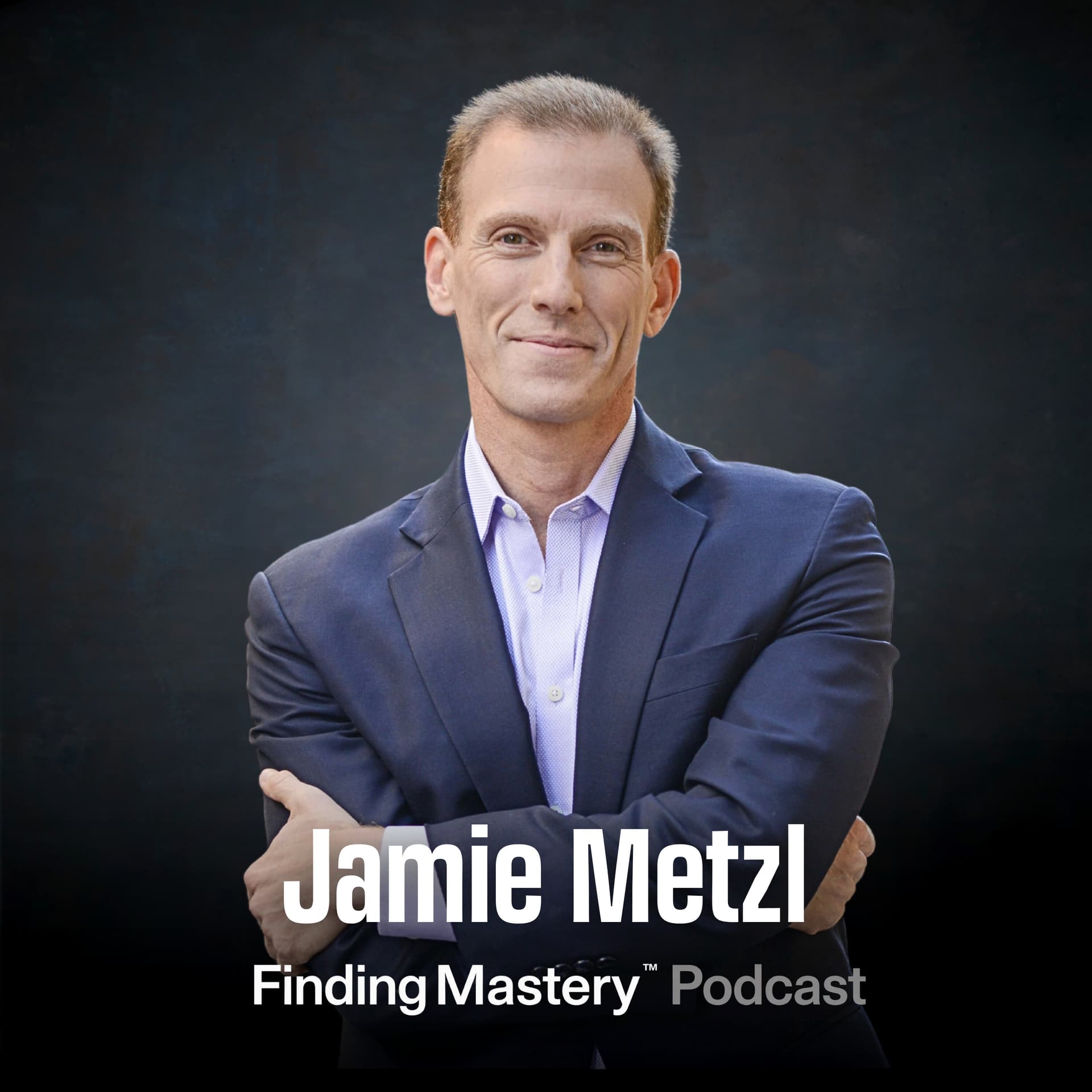
Jon Gordon (bestselling author of 33+ books, 18 bestsellers; leadership, habits, mindset; founder of JohnGordonCircle/mastermind). Host: Dr. Michael Gervais (high-performance psychologist).
Written by AI. May contain mistakes. Listen to the episode to check what was said.
Chapters
Tap a time to open that second in VOThe Impact of Habits
0:00 to 0:10
Explore how habits shape our lives and the power of positive habits.
“And so if a habit is not working for you, or you have a bad habit and it's holding you back, or it's hurting your life, you can pick a positive habit.”
The Journey of Healing
0:10 to 0:39
Discussion on healing past wounds and their impact on personal development.
“How much of who you are today is shaped by the habits you've built?”
Jon Gordon's Purpose and Journey
1:44 to 4:00
Jon shares his journey from personal struggles to helping others through positive habits.
“this week's conversation with John Gordon.”
The Power of Gratitude
4:00 to 6:08
Jon discusses the transformative power of gratitude and his 'thank you walk' practice.
“I also now know I want to write and speak.”
Self-Disclosure in Psychology
6:08 to 10:01
Exploration of self-disclosure in psychology and its role in building connections.
“And I felt like I was coming back full circle to my beginning in writing The Power of Positive Habits, 93 habits that over the years I've collected and have been doing and sharing.”
Self-Disclosure in Psychology
11:20 to 12:23
Exploration of self-disclosure in psychology and its role in building connections.
“It's the time that you lose when the fit is off, the momentum that stalls when that fit doesn't work.”
Creating Positive Change
12:30 to 13:43
Jon emphasizes the importance of habits and encourages self-discovery for personal growth.
“What do you hope people get from this conversation?”
Wounds and Personal Growth
13:43 to 14:01
Jon shares a personal example of dealing with family dynamics and controlling behaviors.
“It's why I wrote it, to really help them grow exponentially.”
Understanding Personal Wounds and Control
14:01 to 18:15
Explore the impacts of personal wounds on behavior and relationships.
“themselves so that they can be better in their life in whatever way that they kind of point that effort?”
Breaking the Cycle of Control
18:15 to 20:43
Learn about the journey of letting go of control and its liberating effects.
“I am not going to play that part in that role anymore.”
Show all 21 chapters
Reflections on Leadership and Self-Awareness
20:43 to 22:38
Discover how self-awareness and relationships shape effective leadership.
“Which is like, no one asked you for that.”
Reflections on Leadership and Self-Awareness
22:39 to 23:13
Discover how self-awareness and relationships shape effective leadership.
“And then that only really happens when they know themselves and they know that you are going to repair whatever rupture or repair whatever tensions come on the backside of a hard, honest, difficult conversation to have.”
Reflections on Leadership and Self-Awareness
23:16 to 24:26
Discover how self-awareness and relationships shape effective leadership.
“how to develop it for high performance, how it can be great in high stress conditions, and what helps it stay sharp over the long arc of life.”
Reflections on Leadership and Self-Awareness
25:34 to 26:01
Discover how self-awareness and relationships shape effective leadership.
“Spring and summer, they are powerful seasons of momentum.”
Self-Discovery and Spiritual Growth
26:02 to 28:00
Examine the role of spirituality and self-reflection in personal healing.
“Like in your marriage, you're two imperfect people coming together and you got issues.”
Embracing Healing Through Adversity
28:00 to 35:30
Learn how to recognize and heal from personal wounds through adversity.
“When I'm praying, I'm asking God to reveal to me where I need to grow, what I need to heal.”
Embracing Healing Through Adversity
35:37 to 36:40
Learn how to recognize and heal from personal wounds through adversity.
“Days are longer, pace picks up, and there's this sense of momentum that comes with the season.”
Embracing Healing Through Adversity
36:46 to 36:59
Learn how to recognize and heal from personal wounds through adversity.
“Again, that's drinkag1.com slash finding mastery.”
Positive Habits for Overcoming Anxiety
37:02 to 42:00
Explore practical habits and mindset shifts to manage anxiety and foster growth.
“Trust in your big life plan is the title of the chapter.”
Creating an Amazing Funeral: Legacy and Impact
42:00 to 43:58
Learn how thinking about your funeral can inspire you to live intentionally and make a positive impact on others.
“out and live that purpose that you just wrote down.”
Promoting Positive Habits and Resources
43:58 to 46:14
Discover resources and strategies for developing positive habits to improve your life.
“You are creating net positive in the world.”
Transcript
Automatic transcript. May contain errors.0:00You are your habits. And so if a habit is not working for you, or you have a bad habit and it's holding you back, or it's hurting your life, you can pick a positive habit. And as I said, that thank you walk, that one habit changed the course of my life.
0:13Dr. Michael Gervais:How much of who you are today is shaped by the habits you've built? And how much is shaped by the wounds you never healed? If I had to go very deep, what am I really working on? It's what wounds have I not fully healed that I think I've healed, but I probably haven't fully healed. So I think I'm doing great. But then something may surface and go, oh, I'm not fully healed yet. Welcome back, or welcome to the Finding Mastery podcast, where we dive into the minds of the world's greatest thinkers and doers. I am your host, Dr. Michael Gervais, by trade and training, a high-performance psychologist.
0:50Dr. Michael Gervais:This week, John Gordon is back on the podcast, and for good reason. John's a best-selling author of more than 30 books, 18 bestsellers, including his latest, The Power of Positive Habits. His writing, it lives right at the intersection of leadership, habits for personal growth, mindset and self-reflection. In your marriage you're two imperfect people coming together and you got issues and when something is triggering you about your wife or your spouse it's usually you. You think it's your spouse but it's usually you. We also get really practical. We talk about gratitude, self-talk, leadership under stress and how to build better mental habits.
1:27Well if you're anxious you feel very disconnected from yourself, from others. I have found the more you actually do this and you make it a habit. It increases alertness and energy, helps you sleep better at night. This is the ultimate leadership principle right here. With that, let's jump into
1:44Dr. Michael Gervais:this week's conversation with John Gordon.
1:52Dr. Michael Gervais:John, this is like, it's a real treat to be able to sit in person with you and have this conversation. We've known each other for years. Yeah, it's been a lot of time. We don't get to spend a lot of time with each other. We don't. Let's start with something pretty concrete. You've written 33 books. Holy moly. I don't know how you do it. And that's going to be part of this conversation. What you write about is really about lifting people up, supporting them, challenging them, giving them best practices to, in this case, your newest book to build habits. I just want to start with what do you hope people will get from this conversation?
2:27This conversation, the book, my life, I just want to lift people up. I want to encourage them. I think I want to be encouraged in life. So I want to encourage others. I remember when I was down, I was miserable and negative. My wife was going to leave me. That's how bad it was. I lost my job during the dot-com crash. Didn't know I was going to pay the bills. And I just remember struggling. And I remember saying, why am I here? What am I born to do? And why am I so miserable? And I realized, Mike, I was miserable because I wasn't living with purpose. I was really focused on myself instead of others.
3:03And right then and there, I said, I want to make my life about others. I want to encourage others. Because I was pretty self-focused. And I had become not a narcissist, but I had narcissistic tendencies. I think from the wounds I had dealt with in the past and the abandonment I had with my biological father leaving, that's a whole other story.
3:19Dr. Michael Gervais:Oh, no, that is going to be part of the story. All of that helped make me want more at that time and want to do more and become more and just live a better life. So it really became a quest to get better myself. And that quest began when my wife said, if you don't change, we're over. So I had to change if I wanted to stay married. It wasn't even like, hey, I want to get better at first. I want to stay married. But then it was like, okay, I also want to be a better version of me. I also asked what I was born to do. Writing and speaking came to me in that moment. I'll never forget. So I want to be more purposeful, make a greater impact.
4:00I also now know I want to write and speak. But what am I going to write and speak about? I don't know. So I began researching all these ways that could be more positive. And this was during the emerging field of positive psychology all the way back in 2001, 2002. And as I was researching these ideas, I found one that said you can't be stressed and thankful. At the same time. So I began practicing gratitude while taking a walk. I coined it a thank you walk. And while I was walking, I would just say what I was thankful for out loud. My neighbors thought I was crazy. But as I'm doing this. Were you actually speaking out loud when you're walking?
4:35Not just internal dialogue.
4:37Dr. Michael Gervais:No, I'm saying it out loud. I'm thankful that I could walk. I'm thankful that I can talk. I'm thankful for my kids, even though they're driving me nuts right now. I'm thankful for my life, even though it's not going well. I'm just thankful. I would just say what I was thankful for. maybe 10 minutes, 15 minutes, but I noticed a shift. And my wife noticed a shift. And right then and there, began a quest to get better myself that led to a mission to help others get better. Because as I was doing that, I began then sharing tips via e-newsletter, an e-newsletter, one of the first of its kind back in the day in 2002, using constant contact and sending this out to five subscribers.
5:15My mother, my brother, my teammates from college, I didn't even think they were reading it, but I was sending it to them. But people started to share this, and it started getting out there. And that's what led me then to start writing books and start speaking. Now, I was writing these positive tips, which were habits that I was doing all the way back in 2002, 2003, 2004, all the way to writing the energy bus in 2006. But as I'm doing these habits over the years and sharing them, I'm seeing people change, seeing them elevate, Working with athletes, working with teams and organizations. Next thing you know, I'm like, wow, this is working.
5:54Wow, these guys are changing. They're being impacted by it. And a lot of these habits were mental habits, which I know you love, because thinking is a habit. That's why there are so many thinking habits and mental habits in the book. There's also physical habits, but mental habits. So this book is really like a culmination of years and years of doing this. And I felt like I was coming back full circle to my beginning in writing The Power of Positive Habits, 93 habits that over the years I've collected and have been doing and sharing. And then new ones that I researched recently for this book. And the cool thing is, as I researched these new habits, I began doing them.
6:31And even in the last six months, I've elevated from a few of these new habits.
6:37Dr. Michael Gervais:It is one of the kind of hidden gifts in the profession that we're in is that one of my mentors early in my graduate program said, Mike, I just want to be really clear to you is that whatever you need to explore and work on in your life is going to show up in your sessions with other people. I said, what do you mean? He said, you're going to see that thing as quickly as you can imagine in the chair across from you. and that is going to be one of the greatest gifts is you're going to feel a certain way about it you're going to recognize yourself in it and it will be an impetus for you to go to do that work and he says i encourage you this is my mentor said i encourage you to let people know that you are also working and the thing that your client at that time is working on and this i said really you know like yeah and he's like oh my god this old idea that one person has it together and the The other person is a mess.
7:33Dr. Michael Gervais:He goes, I think it actually creates more harm. So what I'm talking about is self-disclosure. And for a long time, as a psychologist, the training is self-disclose, never self-disclose as a camp, self-disclose with minimal kind of time allocated. And then, but whenever you're going to do it, make sure that serves a purpose. But the purpose for me, for a lot of it, is to be honest in the relationship. Because I think that we're constantly sorting that out. Is the person across from us honest? Are we being honest? Because when it's unhonest, it is untrustworthy. Oh, yeah. Yeah. They also admire us for our strengths, but they really respect us and appreciate us for our weaknesses when we reveal them and how we overcame them.
8:18Yeah, that's right. If we can overcome them, then they know they can too.
8:23Dr. Michael Gervais:But what I'm saying in this case is like, I'll say somebody's working on something, and I'll lean and be like, I need that too. And they look like, really? I go, hey, let's figure this out together. And then we eventually get to something that we'll do, like a training something. And I do it alongside of that. We're holding each other accountable. Which seems like you're not supposed to do that. But it's like this amazing kind of gift to both of us in that way. Would you say because that creates connection and now you feel like there's a partnership where they're not in this alone. You're doing it together and growing together.
8:56There's also an authenticity and a vulnerability that paves the way for that connection. A hundred percent.
9:00Dr. Michael Gervais:You know, yeah, there's lots of reasons why, but self-disclosure in first and foremost is really about connection. So another person doesn't feel lonely in their suffering. Right. Everyone thinks that they're the only mess. Yeah, that's right. And when they know that you're a mess too, oh, great. I'm not so bad. This is normal. Yeah. Yeah. And there's also parts where the clients are X number feet, X number miles ahead of me in some things. and there's times when I'm X number of feet or X number of miles ahead of them and I come back the trail and pass them a flashlight or a torch to be able to kind of light the way.
9:37Dr. Michael Gervais:And for much of the time, I feel like we do it together where I'm holding the flashlight for a little bit and then at some point they hold the flashlight and then I'm like, where are you pointing that thing? Like, hold on, you got to take care of both of us. And then, and eventually they take it fully on their own and they're like, thanks, like I'm good. That's good. That's why, you know, in this book, I share a lot of stories of my own, like personal stories. It's really personal. Yeah, very personal. But also I did that because, again, I got to show my transformation, how these habits impacted me and hopefully inspire you and encourage you to know that they're possible for you.
10:11But they're short stories, so you read them, and then there's the habit, and you're like, oh, okay. If he can do it, I can do it. I give people hope is what I like to say.
10:21Dr. Michael Gervais:Finding Master is brought to you by Magic Mind. I get to spend time with people who are relentless, about training their minds. It's one of the things that I love most about my profession. And for me, and those I work with, we are looking for ways to optimize our psychology and our brains. Magic Mind is a daily two ounce mental performance shot loaded with vitamins, amino acids, antioxidants, and clinically backed ingredients like turmeric, ashwagandha, and lion's mane. The ingredients are nano encapsulated for five times better absorption than traditional pills and powders. And I love the taste.
10:51Dr. Michael Gervais:I love what they're doing here. I use Magic Mind just about every mid morning. And what I noticed is that I think just a bit more clearly. My focus is definitely enhanced and I don't experience an afternoon drop. That's not a small thing when the quality of your thinking is one of your most valuable skills. So go to magicmind.com and get 50 % off your first order. You spend a lot of time sharpening your mind. It is worth fueling the brain behind it. Body Master is brought to you by LinkedIn Jobs. If you've ever hired for a small business, you know the real cost isn't just the salary. It's the time that you lose when the fit is off, the momentum that stalls when that fit doesn't work.
11:28Dr. Michael Gervais:And that's the pressure of having to get it right while you're still running everything else. That's why I'm paying attention to LinkedIn Hiring Pro. It's built for the reality of hiring when you're operating lean. You describe the role in playing language, and then Hiring Pro helps you draft the job post, surface the right candidates, and then narrow to a short list without turning hiring into another full-time job. And when applications start coming in, it doesn't leave you buried in resumes. It streamlines screening. including AI-powered interviews for initial conversations. How about that?
11:57Dr. Michael Gervais:So that you can spend less time searching and then more time connecting with the people who match what you need. With Hiring Pro, you can hire with confidence knowing you're getting the best talent for your business. In fact, those hiring with LinkedIn are 24 % less likely to need to reopen a role within 12 months when compared to their leading competitor. Join the 2.7 million small businesses using LinkedIn to hire. Get started by posting your job for free at linkedin.com slash mastery. Again, that's linkedin.com slash mastery. Terms and conditions apply. And so in the most reductionist way, what do you hope people get from, let's go back to this conversation.
12:36Dr. Michael Gervais:Say it one more time. What do you hope people get from this conversation? I hope that they get better from it. I hope that they look within themselves and they get to know themselves better. I hope they can see how habits they choose will impact their life, that they don't have to be stuck where they are. They can actually pick new habits to create a new them. You are your habits. And so if a habit is not working for you, or you have a bad habit and it's holding you back, or it's hurting your life, you can pick a positive habit. And as I said, that thank you walk, that one habit changed the course of my life.
13:11If someone listens to this and they get better from this, but I also want them to read the book. I'm not going to lie. I do want them to read the book because I know this conversation is one thing, but reading the book is very personal. And as you read it, you're going to discover things within yourself as you're reading it. You're going to be inspired, encouraged to take action. And then as you begin to take action, you're going to really see some positive change in your life and some transformation. So yeah, I do hope people listen to this and get better from this conversation, but I do want them to read the book knowing it will make them better.
13:43It's why I wrote it, to really help them grow exponentially. What is one question that you're wrestling with in your life right now that if we're talking about people or the person listening right now to go inward a little bit to do a bit of self-discovery for
14:01Dr. Michael Gervais:themselves so that they can be better in their life in whatever way that they kind of point that effort? What's a question you're working on right now in your life? You know, if I had to really go very deep, what am I really working on? It's what wounds have I not fully healed that I think I've healed, but I probably haven't fully healed. So I think I'm doing great. But then something may surface and go, oh, I'm not fully healed yet. I'll give you an example. My wife, my daughter, my son, we were in Italy, and they start binging on desserts and food. And this is what they do, sugar, and they just start binging.
14:49And they've been like this my whole life. And it's very frenetic, and they're so addicted. And I have a controlling nature when that happens. And so I want to stop them from doing it. So I'm like, hey, come on, guys. And I start to literally try to play cop. What are you afraid will happen for you? Well, let's go into this. I know why it's happening. Because let me tell you how this played out. And so I realized what I was doing, how uncomfortable I was making them. And how they were lying about what they were eating. What I wasn't around. Like no one wanted to tell me. So I realized how destructive that was being and how I was making them feel.
15:28And also with my daughter. Because you were being critical, judgmental. Just judgmental and critical.
15:33Dr. Michael Gervais:But not even critical. just like controlling, just controlling. But hold on, see if you can go there for a minute. It's like, what are you trying to sort out? What are you afraid of that would happen to you if this behavior continues for them? Which is a wild way of thinking about it. I realized the reason why I was doing it because it's my wound of feeling powerless, of not having control. Why would you flex your power on the food choices that they're choosing? It's not even a wanting to. it's a feeling of that they are acting in a way that is detrimental to them because I've seen how this food and doing that has had detrimental effects on their health what about your health did you have a food issues oh when I was when I was um in my 40s I had a lot of food allergies but in my home growing up I would say yeah I was I was chubby kid and dealt with weight my whole family did did you get bullied for it no no i didn't get bullied for it but i had you know you're chubby you're so good you're good um looked in the mirror and um so you just you just brought back a moment where someone called me fat magic on the basketball court because i was i was good but i was chubby and so there's probably some element in there for myself so when that happens I recognize there's no doubt that I'm acting out of a wound and I don't want to be doing this anymore to them and making them feel that way.
17:05So I literally brought them together with me and I apologized and I explained that this was definitely coming from a wound that I know I need to heal and I need to heal it because it's not good for my marriage. I try to tell my wife what to do to work out and it's like this Mike. Did you work out today? Hey why are you eating that? You're going to feel horrible if you eat that. Don't eat that. Hey, Jay, Jay, did you get your workout in today? I'm calling my kids to make sure they got their workout in. I'm calling my wife to make sure she's not binging that day on desserts. Like how uncomfortable that it's a miserable experience.
17:41It's hard to be around you because, you know, I wouldn't want to be around me. Yeah. So, so, so the cool thing is though, and I have a circle that I mentor. I actually told them this story the other day and explained it to them when I was teaching about wounds and healing. So I'm not hiding from it at all. And I told my circle, I showed them and I showed my family, this is something that I don't want to do and I'm not going to do. When I released it in that moment, I released it. I felt so free. And ever since I have not said a word, I've actually felt free with it. I've released it. Like that's it.
18:14I'm done with this. I am not going to play that part in that role anymore. That's a bad habit. I asked my daughter, what's my worst habit because one thing I wish I wrote in the book was to get rid of your worst habit should be a habit. I did not put that in there, but it should be a habit to get rid of your worst habit. So I called my daughter up yesterday. Jane, what is my worst habit? Because I don't really have a lot of bad habits. Like I don't, I don't eat bad. She says my, my dessert is Greek yogurt. That's how, that's how disciplined I am. I don't gamble. I don't drink. I don't do porn.
18:48I don't do any of that. So what's my worst habit? She was, you're controlling. I said, all right, I'll take that. You're right. Like it is definitely my worst habit.
18:55Dr. Michael Gervais:It's a, it's a kind of easy button for me to see that if you struggled with somebody early in your life, choosing to not be around you, that would feel very out of control. Yep. And my father left when I was a year old, as you said, and then also a year. And then my, uh, for what reason? Why'd he leave? Yeah. he and my mom got divorced. And he exited your life? Exited my life. He was back and forth involved. Like we'd see him on weekends. But it was a very tumultuous relationship with he and my mom. Also going over to his house, he got remarried. He had a family. So I never felt safe. Can you feel like...
19:38I felt powerless. And then my mom remarried my stepfather. and I called my dad because he raised me since I was five and I loved my dad. He was great. But he had a family from a previous marriage and his family would come over. So I never felt safe. I never felt like I had power and I was the youngest. So I'm watching all this go on and I don't feel like I have any control and I have no power. But you do with your kids. But I do with my kids. With the gelato. Too much gelato. Stop eating the bread. Yeah. But which is crazy, right? And I think this is good for people to hear
Read the full transcript
20:13Dr. Michael Gervais:because it's not when you understand that it's coming from a wound. It's coming from a place where you're trying to feel safe. Yeah. And collapse with you also know there's very few people on the planet that would say that excess sugar is really a good choice. So you love them. You want them to be healthy. And this is a way that you've been disciplined to your own life with the choices you've made to feel in control. And then it just kind of found its way through some rigid kind of outwardly expression. Exactly. Which is like, no one asked you for that. No. But then you see them do it and you see them self-sabotage.
20:49So then it does affect me because I got a wife who's unhappy. I've got kids who are unhappy, not feeling well. Are you in their relationships because they're eating and it's actually whacking out their brain? They have such bad allergies. It messes with their mental functions when they eat certain foods. So you see how it plays out in their relationships, in their life. And you just don't want them to live that way. and that I am miserable because you're as happy as your happiest kid when you see them struggle. It's really hard to be happy when your kids are struggling. So you just want them to make better choices and do better.
21:20So then you feel like you have to control. But anytime we try to play God, we're going to be miserable because we were never meant to be God and we can't control. So that letting go of it, I'm like, that's it. I am not doing this anymore. You guys are going to have to figure it out. I hope you make great decisions, but I'm not going to take this on anymore. I love you and I hope you do. And it's amazing. once you let it go all of a sudden everyone starts to figure out on their own which is always a key indicator for you like this was a wound and it was something you need to work on because when something keeps happening and the pattern is there that's always a sign that it's you not them so i
21:56Dr. Michael Gervais:was had there was this thing that kept coming up in in um here at finding mastery in the business and i was having a hard time solving and getting through it and it was a repeating thing that was taking place for us as, um, you know, teammates here at Finding Mastery. And my wife said, wait, hold on, Mike. I've heard this six times. She says, what's your part in it? I go, it's not me. She goes, okay. And I was like, wait, hold on. What do you mean? And she goes, well, what do you think your part is in this? And I go, oh, I think it's this. And it was me being too exacting for a standard. And that is now creating a bit too much tension.
22:34Dr. Michael Gervais:And then it, you know, so I am so grateful for people in my life that hold an honest mirror up. And then that only really happens when they know themselves and they know that you are going to repair whatever rupture or repair whatever tensions come on the backside of a hard, honest, difficult conversation to have. Those are the ones that are on my rounds in my round table, you know, and so I'm really thoughtful about who I am fortunate enough to learn from and listen to. And it's the ones that hold the mirror. Finding Master is brought to you by Momentus. I have spent my career studying the mind, how to develop it for high performance, how it can be great in high stress conditions, and what helps it stay sharp over the long arc of life.
23:26Dr. Michael Gervais:And one of the things I've learned is to pay close attention when science starts pointing somewhere new. Creatine is one of those places right now. We've known for decades what it does for the body. Strength, power, recovery. It's about well studied as any supplement out there. But the work emerging on creatine in the brain is what has my attention. The brain runs on energy, the same currency a working muscle does. And creatine appears to support brain energy metabolism, helping working memory, easing mental fatigue under exactly the conditions so many of us operate in. Sustained demand, stress, not enough sleep.
23:58Dr. Michael Gervais:For something that's been around this long, that's a genuinely interesting frontier. So if I'm gonna take something daily, the quality has to be unquestionable. That's why I use Momentus. They searched the globe for the highest quality creatine. Then they built their own specification around it. Signature spec is what they call it. It's made in a pharmaceutical facility, six stages of testing, four independent agencies, and it's NSF certified for sport. When you take something every day, that level of quality compounds. Go to livemomentous.com slash findingmastery and use the code findingmastery for up to 35 % off your first order.
24:34Dr. Michael Gervais:That's livemomentous.com slash findingmastery with the code findingmastery. Finding Mastery is brought to you by our flagship mindset training course, Finding Your Best. Anytime you feel the pull to reset, to zoom out, to refocus and ask, am I moving toward the person I want to become? It helps to remember this. Lasting change comes from training. Not resolutions, not short-term sprints, but deliberate practice of the skills that shape how we show up. Work, in relationships, and in the moments of great intensity as well. That's what finding your best is all about. It's a science-backed framework for training your mind.
25:09Dr. Michael Gervais:And it's the same set of tools that we've taught to Olympic athletes, top executives, elite military teams, and artists at the peak of their craft. In this course, you'll learn the foundational psychological skills to be your very best. Full stop. And the best part is you can start anytime. Right now, we're running a limited time offer on finding your best. Simply head to findingmastery.com slash course and use the code RENEW100 to get$100 off your registration. If you've been waiting for the right moment, this is a good one now to lean into. Spring and summer, they are powerful seasons of momentum.
25:41Dr. Michael Gervais:It's a great natural time to step into growth, to refocus, to recommit to who you want to become. And this discount will not be around for long. So go to finding mastery.com slash course code renew 100 for$100 off today because your future is not shaped by what you intend. It's shaped by what you train. My kids have been my greatest teachers throughout our journey in terms of just looking at myself, realizing where I need to be a better leader, where my wounds are affecting me and holding me back. And also marriage is that as well. Like in your marriage, you're two imperfect people coming together and you got issues.
26:21And when something is triggering you about your wife or your spouse, it's usually you. You think it's your spouse, but it's usually you. Like here's another one. My wife will just leave all the stuff on the sink and in the sink. She doesn't clean up. Me, I eat. I wash the dishes. I put it away. Like that's what I do, but not my wife. And it just drives me nuts. Again, a lack of control, a lack of things being orderly. And so for years, it just bothered me I'd say something. And then finally I realized, oh, actually it's me. It's not her. It's like this is me. Like why does this bother me? It shouldn't, but it does.
27:01It's not her. So again, another trigger, another wound leading to healing. So to answer your question, I'm wondering what else is in there that I haven't dealt with that I need to.
27:12Dr. Michael Gervais:You are a bright light for so many people. You have a mastermind that you've created. You've got a circle of people that you mentor on a monthly basis. You are a coach to many people. How do you go formally do your work? I do my work through when I attend other people's talks, when I've been to other people's masterminds and listening and learning. I haven't gone through formal counseling in years. But you have done it, but not just in a while. Yeah, in the past. I do a lot of self-discovery and prayer, to be honest. Do you write, like journal in that way? I don't really journal, but when I am writing, like the things I'm writing about, I'm usually writing to myself.
28:01I'm usually speaking to myself. When I'm praying, I'm asking God to reveal to me where I need to grow, what I need to heal. And I'm also asking for healing. So as I walk and I practice gratitude and I pray on a daily basis, that's been a big part of my journey to allow God to show me. And God, I believe, loves us too much to allow us to live surface level and not deal with the wounds. I believe that when wounds come up, like this one did recently, it's actually a blessing. It comes up because God will use circumstances, challenges, and adversity to reveal it so you can heal it. You are so good with quibs.
28:44Say it again. He'll use adversity challenges to reveal it so you can heal it. This was revealed, and it was uncomfortable and painful. It really was. Which part is painful? The part where you see what you're doing, the part where you see how you're affecting your family, the part where you see that they're trying to do their best to satisfy you and you're making them feel that uncomfortable. And they love you too much not to say anything or they don't even want to hear you talk, so that's why they're not saying anything. And you know that this is your problem and your challenge. And it was painful to look at yourself and know you don't have it all together like you think.
29:19You do have these wounds. You do need healing on this journey. And it was a wonderful thing. I told my wife, I said, this is one of the greatest things. It's one of the hardest things. But this is one of the greatest things that has happened to me was this experience while I'm going through it. And so there's a level of awareness I have now of to be able to look for those things and be open to them. Because I'm not scared of them. And as you said, even now, like what am I thinking? What else do I need to uncover that needs to be uncovered? Because what you uncover will be covered with grace. What you try to cover will eventually be uncovered.
29:57Dr. Michael Gervais:And what is your process to go look at the things that are tender? It's really looking at your patterns. I really believe it's looking at your patterns. It's looking at the things that keep coming up for you. And again, how do you do that? What is your process? My process is just life is my process. Relationships are my process. So you're kind of, so underneath the surface, you are working often to say, what is this saying to me? And is there something here that I can learn from and grow from? Oh, my body just heated up when we're talking about that. Like I should probably pay attention. Where did that come from?
30:35Or even when I have a conversation with one of my team members, and I don't like to call them employees, but say team members, and I'm talking to them. And I said, you know what, John, you were a little short in that conversation. Like why were you so short? You know, you're stressed, you had a lot going on, but you know, you got to be a better leader to make sure that you're leading in a more positive way. You write about this, you got to live it. So I'm really self-aware when I'm not living up to it and not matching what I write about and want to be because I always feel like I have to strive towards that and I do have to walk the walk.
31:08Dr. Michael Gervais:I'll ask this in a different way, but do you have a weekly, daily mechanism with your teammates, employees that create the space for that? Or is this kind of randomly, haphazardly, you'll pull them aside and ask. Yeah, it's not a daily, weekly, but it is, hey guys, what can I do better? And where can I be better? And it's conversations a lot of times one-on-one, say with Angela on my team, what can I do better? Have you noticed that I've been working on X, Y, and Z? You know what's cool though? I will say that it's cool that a lot of my team members have said, wow, we can tell you're really working on you and your leadership.
31:45Because I'm going to be honest, I wrote The Power of Positive Leadership, right? I did not have a team when I wrote that book. I was working with all these great leaders, and I wrote that book seeing how they led and then creating a pattern and framework for great leadership, which is now used by a lot of organizations. So watching that and seeing that, okay, that's what it looks like. So now, fast forward, I have a team, and now I'm dealing with all this stuff, and you know how hard it is to lead a team. And I've been saying this in my talks, like, leadership is hard. But I'm often pulling out my book going, what did I write on page 95?
32:22Oh, yeah. That's right. I have to stay positive. So now I'm seeing where there might be a gap between what I wrote about and how I need to lead better. So the cool thing is I told them, hey, I'm going to really work on this because I'm on the road. I get back. I just gave talks. I'm exhausted. But now I have to deal with a million different things and fires to put out. If I was just running the company, it would be easy. I'm running a company and speaking and coaching and training and teaching and answering emails and looking at Slack and doing everything else and figuring out marketing and making sure operations is being improved.
32:57It's a lot all at once. And recognizing that, I know that I could be stressed and act out of my need state instead of my, you know, more positive state. If you ever took the Berkman, there's who you are in your normal state, who you are in your need state, and who you are in your stress state. That's right. In my normal state, I'm a very happy-go-lucky person. I want to enjoy life. That's me speaking. That's me getting together with friends. That's me coaching, having fun, doing what I love, writing books. That's me. The need state, when you're not getting your needs met and you're stressed, the Berkman shows that I can become very commanding and very controlling.
33:44And so for me, it's recognizing how life and circumstances, events, could then cause as triggers to affect who I am in that state. And so it's recognizing that and then going, okay, what's the healing mechanism for that? what's the next action, the next practice that's going to make me better? How can I approach this differently to make sure that I am actually growing and not hurting my team?
34:14Dr. Michael Gervais:When somebody is tired, discouraged, anxious, what are the positive habits? What are the habits that you would want people to invest in to work their way through that? Well, if you're anxious, you and I talked about this when we talked about the one truth. The root for the Greek word of anxious means to separate and divide. So when you're anxious, you actually feel separate and divided. You feel very disconnected from yourself, from others, and I would say, you know, spiritually. So I would want people to find moments of stillness. I would want them to take thank you walks and practice gratitude because you can't be stressed and thankful.
34:54at the same time. I would want them to get outside and get some exercise in the morning, get that blood flowing, get the dopamine and serotonin firing, get the sunlight on your eyes, which increases levels of cortisol, which increases alertness and energy, helps you sleep better at night.
35:13Dr. Michael Gervais:Well done. Okay, I want to do this. I want to hit a handful of these chapter titles. I'm going to give them to you at random. I'm checking the authenticity of your work here. And a quick one-liner about what does this mean and what does it happen to make this thing happen? Okay. Okay. Are you ready? Yeah, let's go. Finding Mastery is brought to you by AG1. Summer is here, at least for those of us in the Northern Hemisphere. You can just feel it though. Days are longer, pace picks up, and there's this sense of momentum that comes with the season. For me, that also means more travel. It's more early mornings, more late nights, and it's just really a schedule that isn't consistent as I'd like it to be.
35:54Dr. Michael Gervais:That's exactly when having a simple, reliable, daily foundation, it matters. AG1 has been that foundation for me for over a decade now. One scoop and a glass of cold water in the morning, and I know I'm supporting my gut health, full stop. Filling the nutrient gaps that are hard to cover through food alone. And what ends up happening is I'm giving my body what it needs to keep showing up. And that really matters to me. What I love about AG1 is that it doesn't ask a lot of me. It's one habit, one scoop, and it travels easily. The AG1 travel packs are something I genuinely rely on this time of the year.
36:30Dr. Michael Gervais:I throw a few in my bag before a trip and the routine stays intact wherever I am. If you haven't tried AG1 yet or you've been planning to think about getting back into it, now's a great time to start. Visit drinkag1.com slash finding mastery to get an AG1 flavor sampler and a bottle of vitamin D3 plus K2 free in your welcome kit with your first AG1 subscription. It's a$72 value. Again, that's drinkag1.com slash finding mastery. There's a little anxiety, I'm sure. Good. All right. My wound is coming out now. Your number, your favorite number is? 11. Trust in your big life plan is the title of the chapter.
37:11Dr. Michael Gervais:Yeah. What is that about? What's the habit? Trust in your big life plan. There's going to be adversity in your life and challenges, but there is a big plan that is meant for you in your life. And what's a habit? A habit for that is to actually see adversity and challenges as your partner in growth and part of that ultimate plan. Okay, this is random. Number 18, play your highlight reel. Play your highlight reel. You'd love this. This ought to be the easiest one for you. This is visualization. This is actually seeing the great moments in your life. You're getting on stage. Visualize yourself on stage when you had great speaking moments.
37:47Get on stage with that in mind to have more confidence.
37:50Dr. Michael Gervais:How often do you see a highlight reel? Do you do this training? You can do this highlight reel every single day. How often do you do it? And you can also do it in your life as much as you can. No, how often do you do it? I would do it once a week. Once a week. Not as much as I should. No, that's good. Yeah, there's, listen, there's no critique. Yeah, not as much as I should. There's no critique. Okay, good. Number 22, double 11, all right? Connect before you can correct. This is the ultimate leadership principle right here. Connect before you correct. So you know if you are correcting before you're connecting, you're going to get burnout instead of buy-in.
38:24You're going to get disengagement instead of dedication, resentment instead of results. You want to make sure that you are truly connecting with your team. They got to know that you love them and care about them. And when you do, you earn the right to challenge and correct them.
38:37Dr. Michael Gervais:I know you're really intentional. So let me start with number one. You chose this one for a reason. The title of the chapter is The Habit Before the Habit. So The Habit Before the Habit. it. I love this one because, you know, any habit that you want to do, you're going to have friction to implement the habit. So to help make sure you implement it, the habit before the habit helps that. You want to work out in the morning, make sure you put out your clothes and your sneakers the night before. So when you get up, it's looking right at you. There they are. There's no, I have to go find it. No, there it is.
39:05You put it on. You're more likely to go work out. You want to read at night before bed, put your book on the bed so you see it and then you'll see it. You'll read it hopefully because the friction is gone and you're more likely to do that habit. Number 56, do one more. Do one more. This came from George Boyardi I wrote about in The Hard Hat. He died on the field in 2004, was hit in the chest with a ball and died. And amazing young man. Well, people were inspired by him, especially Rob Pinnell, one of the greatest lacrosse players of all time. And he was inspired to do one more for George. So if it was 20, he would do 21 reps because George was number 21.
39:47So the idea is that, you know what, we could all do one more. Number 69, make the pie bigger. Make the pie bigger. You know, this is you and I. You know, earlier before this podcast, we were talking about our businesses and we were talking about how we can both improve and grow and just sharing ideas. We weren't focused on our own agenda. We were making the pie bigger. Whenever there's an opportunity, don't focus on getting your piece of the pie, How much you can make or take. Just make the pie bigger so everyone wins more. And I love to do that. When I wrote The Coffee Bean with Damon West, I gave him half of my advance and royalties of the book.
40:24And he said, John, you don't need me. You can just do this on your own. I knew we should do it together. And because we made the pie bigger, we're now impacting millions of people as a result of that one book, The Coffee Bean, because we did it together, make the pie bigger.
40:36Dr. Michael Gervais:And what's the habit to ready somebody to be able to see the world that way. Right. The habit is every situation you're in, you're asking yourself, how can I make the pie bigger in this moment? And you know, that simple framing requires some diligence if you want to be good at it. And as corny as this sounds, if you want to get better at something, you probably need to write something down. Yes. And so as corny as this sounds, if you want to get better at making the pie bigger, wake up in the morning and you write it down, you think about it. And it could be just that sentence, which is my goal today, or my intention is to make the pie bigger.
41:13Dr. Michael Gervais:And then check in at lunch and then check in at the end of the day. Did I make the pie bigger? Yeah. And you have to be honest, right? Did I make the pie bigger? Wait, I want to say yes, because it's important to me right now. But how did I do that? Oh, in that conversation with John, so check. And at the end of the day, maybe that's the only one, but I've given myself a chance for a couple more options. And someone's probably thinking, yeah, but so-and-so is trying to get their piece of the pie and take part of mine. What do I do? I have found the more you actually do this and you make it a habit, you start to attract other people who want to make the pie bigger with you.
41:49But in any deal you go in, just you're looking at the situation. One of my favorite habits too is to actually live with purpose and write down your purpose statement, what you're talking about. If you write your purpose statement down and you read it each day, that's a reminder for you to go out and live that purpose that you just wrote down. Reading it every day helps you live that purpose.
42:08Dr. Michael Gervais:Yeah. I'll give a plug right now. It's like your purpose is one of the greatest things you can do exponentially to live a great life is to be really clear about it. I know you've got a methodology. We've got a methodology here, wherever you go get it, do that work. It's, it is meaningful work. All right. Last one, 93, the final habit, create an amazing funeral. What do you think it is? Well, I know what it is because I read your book, but the, um, The Create the Amazing Funeral, the idea that you are going to create an experience where people can celebrate, where you are thinking about, for me, the way what I took away from it is cover some finances.
42:49Dr. Michael Gervais:All right. Yeah. Plan for the burden to be lifted as best as you possibly can for the ones that are still living. Yeah. And leave a legacy. And what is legacy? But impact. so if you have an amazing funeral if Michael Gervais it's your day and it's your time to go I envision in my funeral people are all there and they're celebrating because you lived because you made a difference in their life they're celebrating your life not celebrating that you died they're celebrating your life and because of that it's an amazing funeral you left a legacy and all these people are there and they're talking about what you said and what you did and reading your book and your next one that you're going to write that's going to impact them.
43:32I'm always encouraging you on that. And they're being encouraged by you because you poured into them. So what's the habit of that? Well, if I know I want to create an amazing funeral, then that means every day I'm going to live intentionally to impact the people around me, my team, my family, people I meet on the street. I'm going to make time for them. I'm going to encourage them so that they will have great stories to tell, hopefully at the funeral.
43:58Dr. Michael Gervais:You're amazing. John, you are a breath of fresh air. You are creating net positive in the world. People trust you for a reason. You are extraordinary at writing. I appreciate that. Yeah, you are a very good writer. The fact that you can crank 33 books, and how many are bestsellers? 19. Five children's books. It's remarkable. I didn't know I could write. Yeah, you represent something that is just so giving to the world. Thank you for helping me in a meaningful way launch my book. That was cool. That was a real gift, man. That was cool to see. Yeah, so thank you for that. I can't wait for the next one.
44:34Dr. Michael Gervais:You always say that. Yeah, I'm challenging. You were a big voice in my head to write the first one. All right, where can folks be part of your mastermind or where can folks be part of your group and get coached by you or take some courses? I appreciate that. Obviously read your books. JohnGordon.com? Yeah, JohnGordon.com, J-O-N, Gordon.com. You'll find the books. You'll find information about me. My mastermind, my circle is JohnGordonCircle.com if you're interested in that. And then I'm on social media everywhere. The book is thepowerofpositivehabitsbook.com. That's powerofpositivehabitsbook.com.
45:07The cool thing about that is we have a cool thing there. When you get the book, we're giving you a free habits developer, which means you put in your top three habits from the book, and then it gives you a 30-day plan to go implement those habits. Because people say, well, how do you make habits stick? Well, one, you pick habits that are sticky. I said, I didn't write this book to teach you about the science of habits and make habits stick. This is a book of habits that actually do stick. And when you put them into practice, because they're simple, powerful, and practical, they're going to impact your life.
45:37So let's put them into practice 30 days and you'll see how they impact your life. Well done. Well done, John. Thanks, brother. Appreciate you, brother. I appreciate you.
45:46Dr. Michael Gervais:Next time on Finding Mastery. Dementia is one of the greatest health challenges of our time. But what if much of our risk isn't fixed? Next week, Dr. Michael Gervais sits down with physician and neuroscientist Dr. Tommy Wood, whose research suggests that many of the factors influencing long-term brain health are more within our control than we've been led to believe. Together, they explore what dementia actually is, why brain decline isn't an inevitable part of aging, and the practical habits that may help protect your brain for decades to come. Join us Wednesday, August 26th at 9 a.m. Pacific, only on Finding Mastery.
46:20All right.
46:21Dr. Michael Gervais:Thank you so much for diving into another episode of Finding Mastery with us. Our team loves creating this podcast and sharing these conversations with you. We really appreciate you being part of this community. And if you're enjoying the show, the easiest no cost way to support is to hit the subscribe or follow button wherever you're listening. Also, if you haven't already, please consider dropping us a review on Apple or Spotify. We are incredibly grateful for the support and feedback. If you're looking for even more For more insights, we have a newsletter we send out every Wednesday. Punch over to findingmastery.com slash newsletter to sign up.
46:56Dr. Michael Gervais:The show wouldn't be possible without our sponsors and we take our recommendations seriously. And the team is very thoughtful about making sure we love and endorse every product you hear on the show. If you want to check out any of our sponsor offers you heard about in this episode, you can find those deals at findingmastery.com slash sponsors. And remember, no one does it alone. The door here at Finding Mastery is always open to those looking to explore the edges and the reaches of their potential so that they can help others do the same. So join our community, share your favorite episode with a friend and let us know how we can continue to show up for you.
47:33Dr. Michael Gervais:Lastly, as a quick reminder, information in this podcast and from any material on the Finding Mastery website and social channels is for information purposes only. If you're looking for meaningful support, which we all need, one of the best things you can do is to talk to a licensed professional. So seek assistance from your health care providers. Again, a sincere thank you for listening. Until next episode, be well, think well, keep exploring.
From the publisher
This is a conversation about habits, the ones you want to build and the ones you want to get rid of.
Jon Gordon has written more than 30 books on leadership, habits and mindset. Recently he called his daughter and asked which of his own habits was the worst. She said simply: you're controlling.
She was confirming something he had already come to see. Jon traces that habit of control back to a father who left when he was a year old, and to a feeling of powerlessness he thought he'd already healed. In reality, he still had more work to do.
Jon's most recent book is titled The Power of Positive Habits, and it tackles a critical issue so many of us face - how do I break the habits that no longer serve me, and how do I build ones that will help me flourish?
This is a conversation about self-awareness, self-challenge, and how to build practical habits, like gratitude, visualization, and something Jon calls the habit before the habit.
Links & Resources
Learn more about Jon here: https://jongordon.com/
Subscribe to our Youtube Channel for more conversations at the intersection of high performance, leadership, and wellbeing: https://www.youtube.com/c/FindingMastery
Get exclusive discounts and support our amazing sponsors!
Go to: https://findingmastery.com/sponsors/
Subscribe to the Finding Mastery newsletter for weekly high performance insights: https://www.findingmastery.com/newsletter
Download Dr. Mike’s Morning Mindset Routine: findingmastery.com/morningmindset
Follow on YouTube, Instagram, LinkedIn, and X
Jon Gordon’s Books: The Power of Positive Habits, The Energy Bus, The Power of Positive Leadership, The Power of a Positive Team, The One Truth, The Coffee Bean, and The Hard Hat
See Privacy Policy at https://art19.com/privacy and California Privacy Notice at https://art19.com/privacy#do-not-sell-my-info.