
In short
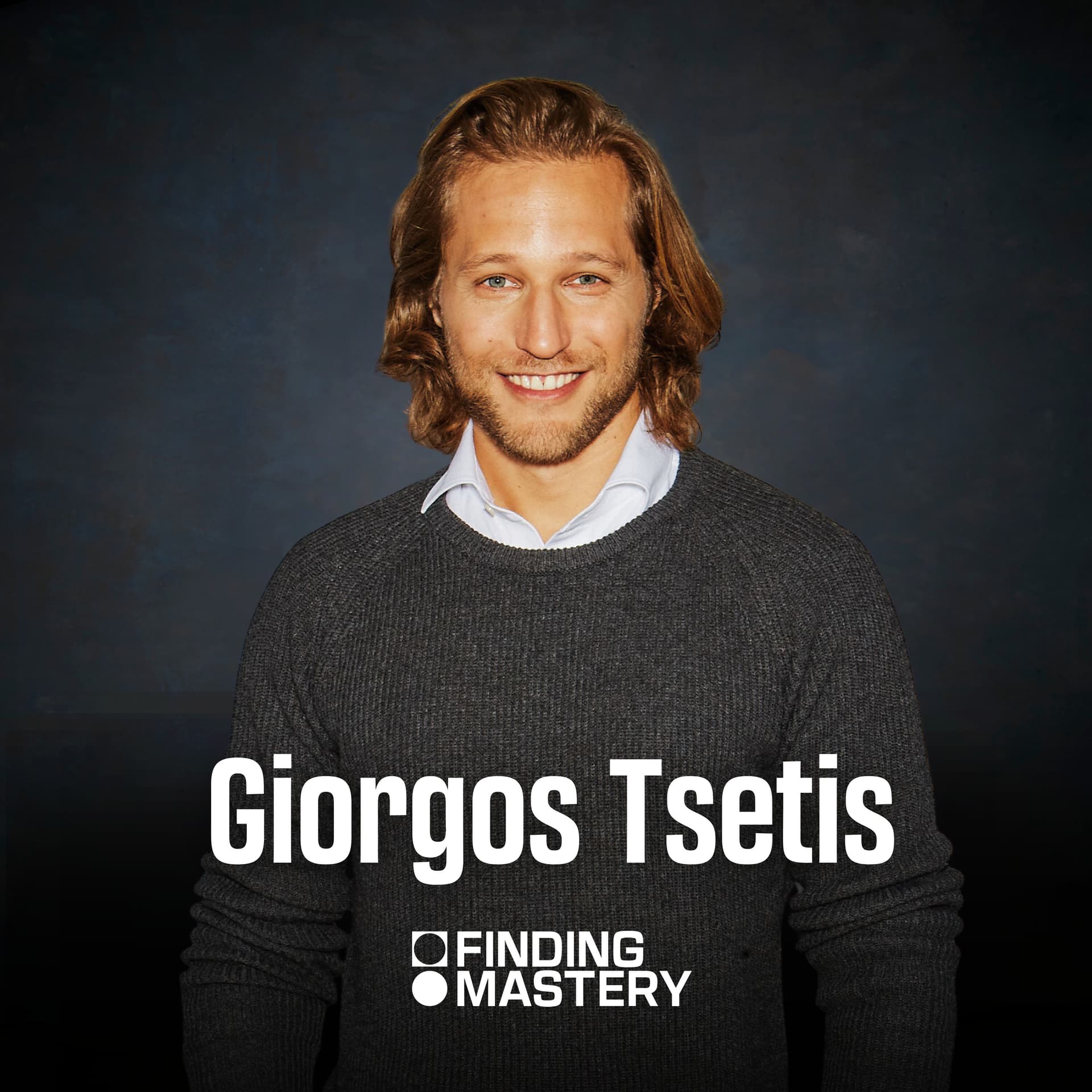
Episode topic: Giorgos Tsetis (Nutrafol co-founder/chairman) explains hair thinning as a multifactorial problem tied to genetics, stress, inflammation, hormones, and nutrition—and how Nutrafol built a science-backed supplement approach rather than relying on topical fixes.
Guest background
Former model and engineer; began losing hair in his early 20s in Holland; tried phenosteride/finasteride (phenosteride mentioned) and experienced side effects including sexual dysfunction; later co-founded Nutrafol with a science biohacker friend (Roland).
Key claims
Hair loss can be triggered by stress interacting with genetic predisposition; poor sleep increases inflammation via cortisol; internal health drives hair as a “reflection” of wellbeing; effective supplements require pharmaceutical-grade clinical trials and physician credibility-building.
Notable examples
Counting 400–500 hairs/day; women avoiding elevators due to light showing thinning; dermatologist hair-pull test predicting a bald spot by 30; using product trials with physicians by giving it away; Nutrafol acquired by Unilever in 2022; he exited in early 2025.
Written by AI. May contain mistakes. Listen to the episode to check what was said.
Chapters
Tap a time to open that second in VOThe Journey of Self-Discovery
2:16 to 3:15
Giorgios shares his life arc from personal pain to helping others.
“With that, let's jump into this week's conversation with my friend, Georgios.”
The Impact of Hair Loss
3:15 to 4:38
Giorgios discusses his early experiences with hair loss and its effects.
“What's important for us to know, to really know you?”
Exploring Side Effects of Medications
4:38 to 6:32
Giorgios explains the side effects he faced from finasteride.
“And I'll never forget, I went to a dermatologist and he did a hair pull test.”
Understanding Hair Loss Causes
6:32 to 9:09
Giorgios discusses the multifactorial causes of hair loss and solutions.
“So I needed to take control somehow of that situation because I just simply didn't want to jeopardize my health.”
Understanding Hair Loss Causes
10:48 to 11:49
Giorgios discusses the multifactorial causes of hair loss and solutions.
“And sometimes travel makes it tricky to eat well.”
Understanding Hair Loss Causes
13:06 to 13:19
Giorgios discusses the multifactorial causes of hair loss and solutions.
“That's P-R-O-T-O-N-V-P-N dot com slash mastery for 70 % off with a two-year plan.”
The Connection Between Hair and Identity
13:19 to 14:02
Giorgios reflects on how hair loss impacts personal identity and confidence.
The Emotional Impact of Hair Loss
14:02 to 17:48
Understanding the profound emotional effects of hair loss, especially among women.
“Um, it's a bit more known, um, and accepted.”
Developing Effective Nutraceuticals
17:48 to 22:38
Exploring the multifactorial approach to creating effective hair health supplements.
“A beauty of nutraceuticals and these natural compounds is that you can multi-target an issue pretty effectively.”
Developing Effective Nutraceuticals
23:54 to 25:01
Exploring the multifactorial approach to creating effective hair health supplements.
“It's the time that you lose when the fit is off, the momentum that stalls when that fit doesn't work.”
Show all 21 chapters
Insights on Hair Growth and Health
25:05 to 28:03
Discussing the relationship between overall health, nutrition, and hair growth.
“It's saying this is the science community.”
The Importance of Sleep for Performance
28:03 to 29:26
Explore the critical role of sleep in overall well-being and performance.
“And I can do it for like three, four days, you know, six and a half, six for three, four days.”
Nutrition's Role in Health and Hair
29:26 to 31:27
Discuss how dietary choices impact health and hair quality.
“Yeah, there's always, yeah, there's always, uh, there's always research and, um, a lot of new great findings that can, um, hopefully lead to that.”
Turmeric and Its Health Benefits
31:27 to 33:35
Learn about the benefits of turmeric and its anti-inflammatory properties.
“Because we have immune systems that can handle those toxins, but especially for children, it could be concerning.”
Future of Health and AI
33:35 to 35:20
Examine the intersection of health advancements and AI technology.
“With a little black pepper and yeah, for optimum absorption.”
Leadership Insights for Modern Leaders
37:46 to 42:00
Discover key leadership principles for fostering kindness and psychological safety.
“You just sparked an idea about, like, I'm remiss to not talk about your leadership jobs.”
Learning from Mistakes in Leadership
42:00 to 44:03
Discover how to evaluate partnerships and the importance of values in leadership.
“Yeah, apologizing and then being there with everyone, I think is incredibly important.”
Balancing Work and Personal Life
44:03 to 46:15
Explore the tension between professional obligations and personal commitments.
“But there is certainly sacrifice that takes place.”
Creating a Supportive Work Environment
46:15 to 49:04
Learn about fostering a positive workplace culture and employee well-being.
“because if that is toxic in whatever way, that impacts everything, right?”
The Role of Innovation in Business
49:04 to 50:36
Understand the challenges of maintaining innovation while ensuring product efficacy.
“to make sure that we offer to our customers, to our patients, the best solution possible was always the North Star.”
A Model for Modern Leadership
50:36 to 50:51
Recognizing impactful leadership that prioritizes kindness and innovation.
“and I'm incredibly excited to know and to hear what everything that you're working on because you're changing the world in such a phenomenal way by caring for people and elevating millions.”
Transcript
Automatic transcript. May contain errors.0:00Dr. Michael Gervais:Finding Mastery is brought to you by Momentus. There's a principle that the team at Momentus uses that has stuck with me. The relentless pursuit of better. Creatine is a good window into what they mean by it. Creatine is one of the most studied supplements in the world. The benefits are reasonably well established. Strength, power, recovery, and increasingly what it does for the brain. It's been found to support brain energy metabolism and easing mental fatigue. So this is something a lot of people do take every day. And when you take something on a regular basis, what's in it, what's not, and how can it be?
0:30Dr. Michael Gervais:consistently it's made, all start to add up. That's the part that Momentus obsessed over. Rather than settle for what's on the market, they searched the planet for the highest quality creatine source. Then they built their own specification around it. They call it the signature spec. It's made in a pharmaceutical facility, 10 times fewer impurities, six stages of testing across four independent agencies, NSF certified for sport, and it's micronized so finely it actually mixes clean. No grit. Go to livemomentous.com slash finding mastery and use the code finding mastery for up to 35 % off your first order.
1:05Dr. Michael Gervais:That's livemomentous.com slash finding mastery. The code finding mastery. When you commit to something daily, the quality really matters. What if the one thing that quietly chips away at your confidence in the mirror, in the shower, in your day-to-day life could also become the spark that changes everything? Welcome back or welcome to the Finding Mastery podcast where we dive into the minds of the world's greatest thinkers and doers. I am your host, Dr. Michael Gervais. By trade and training, a high-performance psychologist. Now, the idea behind these conversations is simple. To sit with the extraordinaries and to learn.
1:36Dr. Michael Gervais:To really learn about how they work from the inside out. This is not about hacks or quick fixes. It's about understanding what they are searching for. How they organize their inner world. And the psychological skills that they use to navigate a life of high performance. Today's conversation is with Giorgios Setis, a former model, engineer, co-founder, and chairman of Nutrafol, who in his 20s began to lose his hair. What started as a personal mission to solve his own problem grew into a science-backed approach that would help millions of people. In this conversation, we talk about the identity-shaking experience of hair loss, the connection between stress, health, and confidence, and what it takes to build something meaningful out of life's challenges.
2:16Dr. Michael Gervais:With that, let's jump into this week's conversation with my friend, Georgios.
2:26Dr. Michael Gervais:Georgios, this is like, I want to say it's a treat, but it's more than that. Like, I'm so happy to be able to sit with you to have a conversation about a life arc that you've experienced and co-created that I think all of us would hope to create in our own lives. So what do I mean by that? This life arc where you're able to have the self-discovery process to feel some sort of pain, to identify it, and then say, how do I solve it? And then try to solve it for others. And then along the way, building a beautiful business. So this idea from pain to changing other people's lives and figuring out the structure for it, I think it's brilliant.
3:08Dr. Michael Gervais:And I'm so stoked to sit with you to talk about it. Thank you so much. It's an absolute honor. Yeah, very cool. All right, so let's start at the beginning. How do you capture your origin story? What's important for us to know, to really know you? The business never started because we wanted to just build a business or make money. It was all started because we, as a group of people, were suffering from a very personal concern that we wanted to solve. And you just brought it up as well. I think it's important to do the things that you do in life for the right reasons. And because it was such a problem, hair loss, not just for myself, but also for my business partner, we were just so incredibly dedicated and motivated to drive change.
4:03Yes, we contributed to the world and we helped millions of people, but it started with ourselves. and the fact that it became what it became is just an absolute blessing.
4:16Dr. Michael Gervais:Okay. So let's get, let's go back a couple of steps there. You're running around New York City as a handsome model in your twenties. Is this the twenties? Yeah. And so you're living the life and then you are like, wait, I'm shedding. My hair is in the sink or it's in the shower or whatever. Like, so is that kind of how it started? Like what's going on here? I'm losing my hair. So I started to lose my hair in my early 20s and that was back in Holland. And I'll never forget, I went to a dermatologist and he did a hair pull test. And he said, by the time you're 30, you're going to have a bald spot on the back of your hair.
4:55And I said, that's not acceptable. Is there anything we can do about it? And he said, well, you've got this pill, which was phenosterite. Take it and you will prevent it. And so very early on in my life, I started to be very proactive about losing my hair. The problem was that I started to experience a lot of side effects around those pharmaceutical drugs. And that's what later what motivated me in New York City to say, you know what, stop. I can't compromise my health in order to keep my hair. I need to figure out something that is healthier.
5:36Dr. Michael Gervais:So finastericide is a tricky one as a medication because the side effects, there's some side effects that are pretty predictable. And, but it doesn't happen for everybody. Yeah. I think you're comfortable talking about the side effect that you want. Yeah, it definitely doesn't happen for everyone. But it's a known side effect is not just decrease in libido, but sexual dysfunction as well. So as a young man, that was obviously problematic. There was a new study that was published, I believe it was the University of Washington, where they proved out that the side effects can be prolonged. So sexual dysfunction post discontinuation of the actual drug.
6:19And that's what's made me absolute panic. Because now, because every single time I stopped using Finasteride, I started to lose my hair. So that was my experience. It doesn't mean that everyone was experiencing that. But for me, it was an issue. So I needed to take control somehow of that situation because I just simply didn't want to jeopardize my health.
6:41Dr. Michael Gervais:So now you've got anxiety built on the top of it. Stress on top of stress, on top of stress. That's right. Sleepless nights. And no exaggeration, all of that, right? Sleepless nights, anxiety, stress. Loss of confidence. Loss of confidence. And what's remarkable here in your story arc is that you weren't really losing your hair at a way that is like, whoa, this is changing the way I look. But you knew that it could happen. It would happen. It was on the path for it. So you're doing all the right kind of preventative steps. But there was this anxiety sitting underneath of it. And there was a side effect that was taking place.
7:21Yeah, absolutely. So it was a very proactive approach, but the evidence was there because my father started to lose his hair in his early 20s, completely bald. My mother's hair was thinning. And then I was losing, one day I was counting my hairs. It was like 400 to 500 hairs a day. That's too much. In the shower or in a cone? In the shower, no. Just even studying engineering and trying to. It was just raining hair. Yeah, yeah. It was absolutely raining hair. And it was also stress-related, but it's incredibly interesting because stress can trigger your genetic predisposition, right? So, and nobody was talking about stress.
8:01So I knew that I was genetically predisposed. I knew that I was insanely stressed. So I decided to take a very proactive and preventative approach to it.
8:11Dr. Michael Gervais:Yeah, and that was the finasteride? Finasteride, yes. And then you said, okay, I'm not doing that because of the side effects. I want to find another solution. and there wasn't one on the market that you felt comfortable with? Or like, how did that start? Yeah, so I took phenosterite for about nine years. So every single day I was taking this pill that was essentially blocking testosterone within my body, dehydrated testosterone. And that led to these side effects. And in New York City, I simply wanted to have a solution that was not just effective, but also very healthy for you. And all the basic vitamins and minerals that were out there were simply not effective enough because they also just address dietary deficiencies.
8:56Now, we all know that hair loss for men and for women is not caused by just dietary deficiencies. It's hormonal related. It's inflammation related. It's stress related, et cetera. So together with my science biohacker friend, Roland, we very quickly identified that the problem was multifactorial. So to address the problem through different angles. So that gave us hope because he, as a matter of fact, which is a funny story, he addressed his rheumatoid arthritis very effectively with some very potent botanicals, nutraceuticals targeting inflammation. and as a consequence of that, his hair started to grow back.
9:39He lost his hair in early days as well. So that would let us to believe, okay, well, there's multiple factors. Nobody's talking about stress. Nobody's talking about inflammation when it comes to hair loss. There must be a better way to address this in a healthier manner. And you went after this, like a supplement. You went after... That's right, because we've been told that just putting things on your hair is going to solve the issue, which again is not true. The problem is internal. I always believed in a whole body wellness approach. Your hair is essentially a reflection of your inner wellness or inner wellbeing.
10:17And if you want to make a change or a difference, you need to address it internally. That was always the original hypothesis. Yes, you can support it topically, but you need to address it internally. And that's why From the beginning, our focus was, well, if it's not drugs, then it need to be supplements. But then how do you make supplements effective enough, right? And how do you approach that the best way possible?
10:45Dr. Michael Gervais:Finding Mastery is brought to you by David Protein. Travel a lot at Finding Mastery. And sometimes travel makes it tricky to eat well. Best intentions, and then you're at the airport. And then suddenly, the only options around you are the ones that you'd rarely choose at home. Something I come back to often is that discipline isn't really about willpower in the moment. It's often about choice architecture, setting up your environment ahead of time so that the easy choice and the good choice are the same one. That's the role David plays for me on the road. The gold bar, it's their flagship high protein density, great texture, flavors that make it easy to stick with.
11:18Dr. Michael Gervais:So when I throw a few in the bag before my trip, I've already made the decision. The hard moment later takes care of itself. And the team here at Finding Mastery, they love the bars as well. They are ripping through them in the Finding Mastery lab. Salted peanut butter and fudge brownie seem to be the fan favorites right now. They have built something with real rigor in a crowded, sometimes ambiguous space like nutrition. That matters when it's something that you reach for again and again. David bars are now available in major retailers like Walmart and Target. And if you'd like to buy them directly and get a special offer for being a Finding Mastery listener, head to davidprotein.com slash finding mastery, where right now, if you buy four packs, you'll get the fifth one for free.
11:56Dr. Michael Gervais:Again, that's davidprotein.com slash finding mastery. Finding Mastery is brought to you by ProtonVPN. When I work with high performers, one of the things that we talk about is taking real responsibility for the things that are 100 % under your control. The discipline to be great with the things that are in your control is a mark of mastery. Your digital privacy is one of those choices, and it's one a lot of people hand over without ever deciding to. Think about how much your life now lives online. Your conversations with loved ones or colleagues, your finances, your work, and it's far more exposed than many of us realize.
12:31Dr. Michael Gervais:Most of us just accept that as the cost of being online, but it doesn't have to be that way. You can decide to take some of that ownership back. That's where ProtonVPN comes in. ProtonVPN is a secure service designed for people who want to protect their privacy and their online life. And if you travel a lot, it's great. It encrypts your connection. So what you do online stays yours. And what I respect is that it's built by a team that treats privacy as a core value. And they've got a track record to back it up. Right now, ProtonVPN is offering you 70 % off a two-year plan when you go to protonvpn.com slash mastery.
13:07Dr. Michael Gervais:That's P-R-O-T-O-N-V-P-N dot com slash mastery for 70 % off with a two-year plan. Again, protonvpn.com slash mastery. what have you come to understand about people's connection to hair their hair what what are some of the this is almost like tangential but i want to loop this back to identity um if we can but what have you come to understand about the narrative that we we have about our own hair it's a part of someone's identity um and that's big and i continue to see that every day yesterday I was sitting in a restaurant and somebody came to me says I don't want to disturb but I just want to quickly share with you that you changed my life and I was like oh my god I got goosebumps said I was losing my hair as a matter of fact I had some psoriasis on my on my face as well and you know I fully fully lost my confidence as a matter of fact you know I felt incredibly lonely for a very long period amount of time and we all know there's major consequences to that that really what drove us in the beginning as well, because just seeing and interacting with people and what they were going through when they lose their hair and, and men can lose the hair and that's, that's okay.
14:23Right. Um, it's a bit more known, um, and accepted. But, uh, 10 years ago, when we started the company, uh, women's hair loss was, uh, was a big deal. There's still some taboo around that. So when women go through hair loss, the impact on their identity is astronomical. Um, I met so many women who would, uh, can give you another example who would wait, um, for the elevator to be empty. Um, because if there would be in an elevator full of people, uh, typically the light shines on your hair and it shows, um, shows the concern, right? What I've witnessed is for many, it became a life limiting and that's big, right?
15:06Um, Life limiting, so not being able to live your life to your fullest potential is concerning. And that's what we have witnessed across the board. And that's why I got so incredibly passionate and excited about driving change. Because hair sometimes could feel a little superficial, but it's still deeply, deeply personal to people.
15:29Dr. Michael Gervais:So there's the nutrition component, there's a genetic component, and there's a psychological component. all three of those combined if they're not favorable or if they are favorable there's a behavioral component when you were designing the product that you wanted to take for yourself what did you want to make sure was in it and then also like what are some things that you found now that are not in it that if you could go back or what you know that's because there's always this emerging kind of forward pushing insights around nutraceuticals and supplements so what did you want to make sure was in it and then what are you curious about what could be a benefit moving forward number one was efficacy the product just has to work otherwise you're just building a marketing company right and i didn't want to be in that business i gave up my engineering business to um to dedicate my 10 years to to hair so i wanted to make sure that it's legit and i'm going to be able to make a difference in people's lives.
16:30That was the absolute priority. Now, how to go about that was this multifactorial approach. So we selected nutraceuticals that were able to target inflammation, to address stress, to address the dietary deficiencies, to hopefully rebalance with adaptogens, some of those hormones that may be a little off because of internal and external factors. And again, that became the hypothesis. And later we really proved it out through some some pretty state-of-the-art clinical trials, because essentially we did pharmaceutical-grade clinical trials to supplementation, which was also not necessarily something that was needed.
17:10I remember investors telling me, it's like, well, that's too big of a risk. It's like you're spending a million dollars on a clinical trial. It's like you don't have to do that. You can get away with making claims based on single ingredients. It's like, well, my question was always, It's like, well, how do you deal with that? If you put all these ingredients together, you want to make sure that there's no counterindications or it actually continues to work. Hopefully there's synergy. So from the beginning, we just really wanted to make sure we're doing what was right and proving it out. And that's probably what we're the most proud of.
17:41It's that research, that original hypothesis that's now published and worldwide recognized and now applied to not just hair, but different fields as well. A beauty of nutraceuticals and these natural compounds is that you can multi-target an issue pretty effectively. So that just along the journey, it kept us going because that efficacy was incredibly, incredibly important. Also for us to change the conversation, to go back to that emotional component, it's like, how do you resonate with millions of people? How do you change people's lives? Credibility is essential. And that's why we went to, from the beginning, We interacted with physicians to educate physicians, dermatologists, plastic surgeons, people who typically go to doctors for hair loss.
18:30We spent so much time with them to proudly show this new approach, which then allowed us to build this network and that level of credibility to be able to change that conversation. So we became the number one dermatologist recommended brand. And that was because we just very proudly were able to present that science.
18:51Dr. Michael Gervais:There you go. So that was the stepwise benefits. I'm more interested in the psychology that set up the decisions that you make that led to the outcome. So the psychology is I really want to help people, but I'm not going to just kind of spray some stuff, put it in a pill, pop it in and say, look, there's these three things are known to decrease inflammation and that's the solution for whatever. So you spent a bunch of money and took a risk to see if what you're actually building was working. That's right. And the point here is that you really wanted to know if it was working because of what reason?
19:26Dr. Michael Gervais:Ethical reasons. Keep going. Moral reasons. Because you didn't want to promise something that was not going to help somebody. Never. Okay. So then that leads to one of the maybe biggest openings is that now you're in the science community. You go to the applied scientists, MDs and physicians or whatever, and you show them what you found. And then it opens up. Originally, it was just an hypothesis. So we're presenting a white paper, hundreds of pages, which was not necessarily proven, but it made a ton of sense. But we were so incredibly passionate about this new approach because nobody was talking about the problem in a multifactorial manner that we're able to at least engage physicians, which was very interesting because there was an appetite to dressing it differently.
20:16And even with a lot of skeptical physicians, because it's obviously needed for physicians to be very critical and skeptical. The way we handled that was we would just give product away to them. Say, you know what, let's just try it. We put our money where our mouth was. And it's like, you don't have to buy any product from us. Try it on your patients that you believe may need some help. It was actually that simple. Going back to your point, it was always approached from a very authentic way. Still, today, the number one message is we're not selling product. And of course, we're selling product because we need to sustain ourselves and support our people across the board.
20:56But the message was always like, let's do everything, everything in our power to set people up for success and help them and support them through this emotional journey that they're going through. So imagine a world where the product would not perform. First of all, we would not have the business at the size that it currently is, but that would never, ever feel good.
21:19Dr. Michael Gervais:Are you able to talk about the valuation of the company? Yeah. So you went from a startup, bootstrap startup, early seed funding. Basically put all the money we had into research and we just barely made it to have physical product in hand, me and my business partner. It was just all in. Based on your savings account? All of it. Okay. Just all of it. It's like, this is it. Or nothing. How many years later? Go back to Europe if it doesn't work. Okay. How many years later did you get your last valuation? The company got acquired by Unilever in 2022. That was well over a billion dollars. I exited the company in the beginning of 2025.
22:08And that was a multi-billion dollar valuation, which was an amazing success, not just, of course, for ourselves, but also for our people internally, our partners just across the board. And the reason why I feel comfortable mentioning those numbers is because it represents impact. It represents the amount of people, which are millions and millions of people who were able to support throughout their journey that we just feel very, very good about.
22:39Dr. Michael Gervais:Body Mastery is brought to you by Fatty 15. Okay, let's talk about longevity. Longevity is much more than simply adding years. It's about maintaining health and a zest and a vitality and enhanced performance as you age. And that's why I'm excited about Fatty 15. It's an award-winning supplement. It's powered by C15, which is the first essential fatty acid discovered in over 90 years. Okay, so C15, it's a geroprotector. What that means is it helps to slow biological aging by strengthening your cells, basically protecting them from damage. You can think of it like kind of like a 401k for your health where you're investing in cellular quote unquote resilience.
23:19Dr. Michael Gervais:And I dug into the research on the relationship between C15 and heart health. I love what I saw. Fatty 15 is on a mission to optimize your C15 levels to help you live healthier longer. Get 15 % off your 90-day subscription starter kit by heading to fatty15.com slash findingmastery and use the code findingmastery at checkout. That's fatty, F-A-T-T-Y, 15.com slash findingmastery. Start investing in your long-term health today. Finding Mastery is brought to you by LinkedIn Jobs. If you've ever hired for a small business, you know the real cost isn't just the salary. It's the time that you lose when the fit is off, the momentum that stalls when that fit doesn't work.
24:03Dr. Michael Gervais:And that's the pressure of having to get it right while you're still running everything else. That's why I'm paying attention to LinkedIn Hiring Pro. It's built for the reality of hiring when you're operating lean. You describe the role in playing language, and then Hiring Pro helps you draft the job post, surface the right candidates, and then narrow to a short list without turning hiring into another full-time job. And when applications start coming in, it doesn't leave you buried in resumes. It streamlines screening. including AI-powered interviews for initial conversations. How about that?
Read the full transcript
24:32Dr. Michael Gervais:So that you can spend less time searching and then more time connecting with the people who match what you need. With Hiring Pro, you can hire with confidence knowing you're getting the best talent for your business. In fact, those hiring with LinkedIn are 24 % less likely to need to reopen a role within 12 months when compared to their leading competitor. Join the 2.7 million small businesses using LinkedIn to hire. Get started by posting your job for free at linkedin.com slash mastery. Again, that's linkedin.com slash mastery. Terms and conditions apply. Huge congrats. I mean, this is it. Have an idea, chip in, believe in it, figure it out, come from the place that you're talking about, which is to build something that is honest, have someone to say, yeah, it looks like it's actually saying what you're saying.
25:19Dr. Michael Gervais:It's saying this is the science community. And then that's the efficacy piece. and then figure out how to take it as far as you possibly can. Congratulations on from pain to massive profits, you know, but what's in between is the commitment that you've made to the people. Yeah. Well done. What have you come to understand about hair loss and hair growth that most people don't understand? It's a reflection of your inner health, which is exciting because you can typically take care of your health. You can take steps to live healthier. better sleep, better nutrition, more movement, more exercise, which is quite empowering because if you live healthier, you can also control the outcome of your hair, which I think is exciting.
26:05That's not always true. When the genetic component is very present, which is essentially your sensitivity to specific hormones, that may not be the case, but by being very proactive about your health, you can absolutely control not just your hair, but just how you look, right? So I think that's exciting, which then also further reinforces the importance of just thinking in a preventative manner, not just for hair, but for everything in life. Okay.
26:32Dr. Michael Gervais:So that actually can do an interesting thing that can create more anxiety. And I'll tell you, there's two sides to this coin. So you're coming from hope and excitement. Like what I found is if you eat some certain things, you take some supplements of things that you're not getting, you reduce inflammation in your lifestyle and you meditate, you do the right amount of exercise, you're kind of getting a whole full human experience to optimize from a nutrition movement and psychology standpoint. You're going to give yourself the best chance you can to be vibrant, full stop, hair included. We haven't talked about sleep yet and its relationship to overall health.
27:08Dr. Michael Gervais:What have you come to find about sleep and hair health? Not sleeping right is certainly increasing inflammation and increasing stress. We know that that's affecting indirectly hair. So cortisol going through the roof or even just being chronically stressed because of lack of sleep is certainly affecting hair. What do you do to compete to sleep at an optimal level? Competing is a great word. I don't know if I'm competing. I feel like I'm competing. Like I'm competing with all of the things that I want to read and watch and like have conversations with. I'm competing against that stimulation in life to say, no, no, hold on.
27:52Dr. Michael Gervais:I got to get these, you know, for me, it's like seven and a half hours is my sweet spot. And so if I don't get the seven and a half, damn, next day it's just harder. It's just hard. And I can do it for like three, four days, you know, six and a half, six for three, four days. But after that, it's just like, it's a diminishing return that is demonstratively noticeable to me. So I feel like I'm competing. Maybe I've got the wrong framing because I'm working my ass. I love that you're competing and in a way we all compete, but I'm going to be honest. I really look forward to sleep. I really do. If I can sleep nine to 10 hours.
28:29Nine to 10. Well, it's hard to sleep nine to 10 hours. It requires a lot of magnesium and everything very dark, but I would do everything to sleep more hours. Yeah. So I'm trying to stretch my sleep to its maximum because I just know that it's not just about performance for me personally, but it's also just simply about mood. Like, how do you feel about yourself throughout the day? Do you feel sharp? Do you feel like you can make a difference? Do you feel like you're a great parent or a great husband? To me, that's such a big part of life. I do everything in my power to feel the best I can. And for me, the more sleep, the better.
29:11Dr. Michael Gervais:What are you doing with that research that I just noticed? I haven't read it, but I just saw a pop book, I don't know, a couple of weeks ago around, um, in the next handful of years that they're going to solve hair loss. This is not from a nutraceutical standpoint. Did you see that? Yeah, there's always, yeah, there's always, uh, there's always research and, um, a lot of new great findings that can, um, hopefully lead to that. Have you dug into any of it or? Yeah. Yeah. I'm, I'm aware of some, some technologies and frankly, I'm, I'm, I'm hopeful it's going to happen at some point. now especially with the introduction of AI.
29:46I'm not against any of that. It's like, as long as it helps people, I hope that those technologies are not going to come with tremendous side effects. We've seen it with even a Zempic. It does wonders, right, for many. But at the same time, there's a lot of things that we don't know.
30:03Dr. Michael Gervais:Is there a connection with a Zempic in hair loss? Absolutely. Or hair growth? Yeah, absolutely, yeah. We've seen it. We've seen it across the board because of the decrease in muscle mass and how it affects your metabolic systems, the nutrient deficiencies when people are not eating the right nutrients or not absorb the right nutrients, that absolutely leads to hair thinning and hair loss, which is concerning, certainly. So I want to get your gaze on what's coming next, but there's one more thought I have here, which is like, what are you making sure that you get in your diet to optimize your health?
30:40Dr. Michael Gervais:and then hair being a natural consequence of that health. I'm not an expert when it comes to diet, but for myself, I'm trying to eat with variety. I don't necessarily believe in just very strict diets, no meat or no fish or vegetarian, just variety to me is important. For me, it's more about where do you get your food from? And it's incredibly unfortunate that it's very hard to find foods that are not contaminated with toxins, whether it's fish, the heavy metals, or pesticides on your salads. So I'm very worried about that. So it's less about the types of foods. It's try to eat with some variety, but then I'm doing everything in my power to clean my vegetables with baking soda and vinegar.
31:31Oh, the old school way. Yeah, of course, the old school way. So wait, you'll soak? Oh, absolutely. I've got some help.
31:37Dr. Michael Gervais:you know i'm not good for you yeah so i've seen some of that's a full-time job yeah just soaking vegetables and making sure that your salads are actually clean so take strawberries for example you're soaking them in vinegar and baking soda vinegar for how long at least 15 minutes and then you wash them and put them back in the fridge or you yeah potentially freeze them yeah or freeze them yeah okay and then and then you consume them afterwards okay that's a good one i started to get very much into this because of the kids and the young children that I have. Because we have immune systems that can handle those toxins, but especially for children, it could be concerning.
32:19Dr. Michael Gervais:You had a family member that had a significant health scare and you and I've known each other for a long time. The listener wouldn't know that. And you came back and you were on it with turmeric and you gave me some really good turmeric. Like, it sounds like a weird, like two nerds talking about high quality turmeric. Are you still bullish on the benefits of turmeric? I think it's, first of all, it's one of the most studied botanicals on the planet, properly studied, but it addresses CRP, the inflammatory biomarker. And I'm a true believer, certainly, because I think at the root of a lot of diseases is inflammation.
32:58So if you can rebalance and target that on an ongoing basis, I think that's incredibly beneficial.
33:03Dr. Michael Gervais:So I just, I think the listener will be interested is that almost every night, not every night, kind of like your gratitude practice, is that I'm chopping turmeric at night. No way. And yeah, like just stuff, organic turmeric that'll just buy from wherever. I chop it up, throw it into some boiling water and then I've got a great tea and then I eat the turmeric after it's been like - Yeah, and so it's one way that I get turmeric in. I also supplement with it. Right. Yeah, making sure it gets absorbed, I think is key. So you need a little black pepper in the tea? Absolutely. With a little black pepper and yeah, for optimum absorption.
33:40Yeah. Key.
33:41Dr. Michael Gervais:All right, let's move on. Like you've got this ability to see around corners and see down the path. And your unique perspective is that you built something that's significant. You're in the vibe of the whole thing. You're transitioning away from an operator of the business. What are you interested in when it comes to health over the next, call it three to five years as a horizon? Health is one of my core values. So I would love to further double down on that. And of course, we're talking about physical health, but also mental health. Why is mental health on a decline? And obviously there's a lot of factors that play a role there.
34:19So I would love to focus on ways to elevate humans and drive impact that way through health. Because ultimately I believe that it's all about how people feel about themselves on a daily basis. We've seen that with Nutrafol as well. It's like helping them even a little bit with their hair and it's making them feel better and a little bit more confident and they're becoming better humans. It's incredible. The moment someone feels optimal and confident, they're able to also drive impact in the world and help others to do the same. So this ripple effect is magic to me. I want to focus there. And especially now with the introduction of AI, I think that's an exciting future.
35:07Not everyone thinks about the future in an exciting way when you think about AI, but I think from a health perspective, we're going to make some tremendous progress to reduce suffering across the globe. Amen.
35:21Dr. Michael Gervais:Finding Mastery is brought to you by Sunlighten. I'm really excited about a new partner of ours. Something that I've come back to again and again is when I invest in recovery with the same intention that I bring to my work, everything gets better. My energy, my focus, my ability to show up fully for the people that I'm with and the work that I care about. That's why I am so bought in on the Sunlighten M-Pulse Intelligent Sauna. I was first introduced to their team a few months ago and was so impressed by what they've created. This is one of the most advanced infrared saunas that they've built in over 25 years of pioneering this technology.
35:56Dr. Michael Gervais:That's right. They've been at this game for 25 years. I had one installed in my home a few months ago, and it's made a real difference. I feel more refreshed, more grounded, more relaxed, and it's become a consistent part of how I recover, how I reset every day. I'm using it to support muscle recovery, for improved oxygen delivery, and for nervous system recovery. And what I love most, I don't have to leave my home. They're offering the Finding Mastery community up to$2 ,100 off. Simply head to sunlighten.com and use the code mastery for this great discount. Again, that's sunlighten.com and use the code mastery for up to$2 ,100 off.
36:34Dr. Michael Gervais:Finding Mastery is brought to you by Lisa. We are serious about recovery. Sleep sits right at the center of that practice. I have been fortunate to work with some of the most extraordinary performers for the last two decades. And sleep and recovery are foundational. full stop. It's where the body and the brain repairs. And that's why finding a mattress that supports your recovery matters so much. A great mattress, it's not something that you stumble into. It is a choice. You find it on purpose, the same way that you'd approach anything that really matters in your life. We've worked with Lisa for a long time now because they get it.
37:08Dr. Michael Gervais:They build beautifully crafted mattresses tailored to how you actually sleep, your position, your feel, your preferences, all of it. You can take their sleep quiz and find your match in about two minutes. Premium material, serious comfort, full body support, no matter how you rest. One of our teammates here at Finding Mastery picked one up recently. Can't stop talking about it. Says it. They're waking up more rested than they have in years. Right now, go to lisa.com for 25 % off select mattresses. Plus, you get an extra$50 off when you use the promo code mastery. That's exclusive for our listeners.
37:41Dr. Michael Gervais:That's lisa, L-E-E-S-A.com, promo code mastery for the 25 % off select mattresses, plus the extra$50 off when you use the code mastery. Okay. You just sparked an idea about, like, I'm remiss to not talk about your leadership jobs. And so you've grown a significant business. What have you come to understand that is important for other modern leaders to open the aperture to people's potential? Like, what is a thing that you do as a leader to help others be their very best in the organization and this is really what finding master is about our our consulting agency is to have to take from elite sport to big business the best practices to help people be their very best from a psychological perspective so can you speak to leaders modern leaders right now about a couple things that you've come to understand to help the employee base or the the other leaders on the team to be just a little bit better yeah the workspace is so fundamental to how people feel about themselves.
38:48And it came organically to me. Um, I, I like to be kind. I hope that the future of leadership is kindness. I think if everyone would be a little kinder in the world, it's like, that's a, that's a better place. Right. And I think it starts by that because, and, and we created a culture around kindness and caring for one another. So if you don't care for each other within an organization, it's incredibly hard to then express that care and that kindness externally. So I always intuitively knew that we have to become very intentional about treating our people extremely well. And that created a lot of joy and it created community, which is also such a big part of longevity and just feeling good about yourself.
39:40So kindness is a big one for us. And the second one is psychological safety, which allowing people to truly speak up and challenge us and challenge the leaders. Super important when it comes to innovation, in my opinion. So in parallel, what we did, it was also trying to just break down hierarchies as much as possible and stay away from bureaucracy as much as possible. And I know that's hard because hierarchies are there. um in order for things to I guess function and I give you some examples like you know I never wanted to call myself a boss right I was always with the people versus just people working for me it was always paid attention to details and still do right it's I work with people and people not work for me we're all this together right and that's how we pursue our mission that's how we're going to drive this company forward and this is how we're going to impact people's lives So we build a culture around that.
40:35And that's frankly one of the most beautiful things. I often say that there's nothing better in life to do great things with great people, right? And companies do that, right? It's a great way to connect and pursue a mission there. So that's something probably that we are still incredibly proud of. And I feel very grateful that all the people, including the new CEO, Cindy, who's amazing, carries on with that mindset.
41:03Dr. Michael Gervais:Would you say that's your signature as a leader is kindness? I would say so. The reason why I hesitate is we all have our moments, right? But you want to care for people. I think it's very important to care for people. How do you repair when you lose your mind about something? Six hours of sleep, you know, whatever. There's no excuses for being a jerk to other people. But like, let's say you have a moment and it's public. How do you go about working through that? If it's public and - Public meaning more than one person, three people. Yeah, exactly. If it's public and you feel like you crossed the line, apologize big time, own it.
41:50And I've done that. Like I've done that quite often where it's like, you know what, I'm sorry. You know, I shouldn't have responded that way. Owning up to it and learning from that experience, I always try to get better and to learn from my mistakes. Nobody's, of course, perfect. Yeah, apologizing and then being there with everyone, I think is incredibly important.
42:10Dr. Michael Gervais:Is there a mistake that comes to mind that is a good learning tool for me as a leader and the listener about how a successful business operator, you know, has learned from a mistake? One mistake is partnering with the wrong people that don't have the right or similar intentions. Right now, I'm interested, I partner up with people who I know they're going to be there for me, for the organization when things don't go well. Everyone wants to be a friend and wants to be around you when things go incredibly well. I'm way more interested in, okay, who are the people who are going to stick by you during difficult times?
42:53Dr. Michael Gervais:How do you suss that out? Do you hire slow? Do you hire fast? It's a great question. I don't look at resumes anymore. I do that quite intentionally. I want to know who that person is. I'm less interested in what they've done in life. I want to dig deep to understand what they're up to, what they care about, what their values are. So I really try to spend a lot of time around that to ideally in person. because even now in the virtual world, it's like you're missing so many clues since all that nonverbal communication is being stripped away. So I'm really trying to understand who you're dealing with and what their intentions are to make sure that any commitment or any partnership is set up for success.
43:46That's really trying. That's really something I'm trying to exercise and try to get better at as we move forward.
43:54Dr. Michael Gervais:what do you hope people would know about how to live a great life that you've come to learn by you know the way that you've designed and co-designed your life what i realize now is is that after having had so much success with the company what i don't want to do is waste precious time with the people that i love the most building companies and trying to make a difference and trying to elevate yourself it also comes to sacrifice right and as long as you're aware of that sacrifice, I think then it's okay. But there is certainly sacrifice that takes place. And I admire people who don't try to do that and spend a lot of family time and spend a lot of time with their loved ones, with their children.
44:38There's so much joy that people can find throughout those experiences. Yeah, living a great life for everyone means something very different. For me, it was pursuing a mission, solving problems for myself, and hopefully being able to help many more people to do the same. That's what drives me. But at the same time, really making sure that I'm a good father, I'm a great friend to people and just a good human by just constantly challenging myself and trying to be better in everything in life is incredibly important.
45:12Dr. Michael Gervais:Okay, two hinge ideas. The tension between your teammates across the organization, you wanting them to live a great life being with their loved one's family and also wanting them to meet the objectives that you've they've said that they're going to meet as a good teammate to kind of move the mission forward so it's the objectives that they are responsible for mapped up against the personal lives that they also want to have so how do you manage the tension between that and then there's a secondary which is the tension between you have established a great product but you're built on innovation But Nutrafol was built on innovation and evidence.
45:53Dr. Michael Gervais:So I want to get the hinge between the tension between meeting the demands of the job and spending time with loved ones outside of the workforce and resting on the laurels of the product that you've built that's well established and innovation. So can you hit both of those? Yes. It starts by making sure that at least people feel good at work. because if that is toxic in whatever way, that impacts everything, right? You're spending a tremendous amount of time at work. So really investing in activities, in ways to support each other during hard times, during good times, celebrating things together is essential.
46:36And then of course, as we are a wellness company, if you feel that people are stretched too thin or when you feel that there's too much anxiety and too much pressure because of deadlines, because of innovation, right? Because we need to focus on what's next and what's big or a large launch or whatever that may be. Allowing people and empowering people to voice that, right? To voice that so they can step back and do whatever is right for them. So we introduced many tools around that to make sure that people can do what's right for them. There's always going to be tension between performance at work and time spent with family.
47:20But if people pursue purpose or mission within an organization, it becomes exciting. It becomes a part of life. That's why I'm worried about AI. Like when a lot of people start to lose their jobs, they're not just gonna, not necessarily lose their income, right? but they're going to lose purpose. So for me, my work is purpose. I'm sure for you it is as well. That's something that I'm trying to think about quite a bit. But overall, yeah, truly making sure that people are happy within the organization so they can be the best version of themselves outside of the organization while making sure that they remain very healthy from a stress perspective and allowing them to take time off.
48:04We had people, sometimes we had mechanisms in place where we forced people to take off because, yeah, we felt like that was what was right to do.
48:14Dr. Michael Gervais:Yeah, very cool. And then the tension between the product that works and innovation, like making net new products. Yeah, that's quite challenging as well because when you invest millions of dollars in clinical trials and you're proving that a specific formulation is working, What that does, it also, typically, and you see it in a lot of organizations, it demotivates. Yeah. Right. It demotivates to introduce something new because introducing something new also comes with risk. It also comes with potential confusion. One of our mantras within our organization was always keep growing. Obviously, that's pretty broad.
48:52And a lot of people, that means something, of course, something different. But we always try to evolve. Our risk appetite was quite large there. So investing in new technologies and investing in clinical trials to make sure that we offer to our customers, to our patients, the best solution possible was always the North Star. And I'm very grateful and happy that that turned out to be well. But again, we continue to innovate. Yeah, there's always ways to do better. And science evolves. Science is dynamic. So the more we know, the more we grow, and the better we need to evolve.
49:27Dr. Michael Gervais:You know, I've loved about this conversation, Georgios, is that I can feel the kindness that you are wishing for other people. I can also appreciate that what kind of kicked off the whole thing was that your appreciation for a multidisciplined solution. And the way that you're answering your questions is also very clearly aligned with the multidimensions that go into just about anything. So I can see your leadership. I can see your character virtues and values underneath and embedded in all of your answers. And I can also see like this excitement and hope for what's next. And I'm excited to see what you go build next.
50:05Dr. Michael Gervais:I'm excited to where you go place your gaze to see what is coming next for you. So thank you for showing a model of what it means to go from a phase of suffering to find a solution, to work from that place to help multiple millions of people to be just a little bit better in their life. And then along the way, embedded in a delivery system, which is a business and a model of business that is an emblem for modern leadership. So thank you for the model. Amazing. Well, thank you so much. and I'm incredibly excited to know and to hear what everything that you're working on because you're changing the world in such a phenomenal way by caring for people and elevating millions.
50:49So it's incredibly exciting. Awesome. Yeah, appreciate you, Georgios. Thank you very much.
50:55Dr. Michael Gervais:Next time on Finding Mastery, we're joined by the legendary Howie Mandel, comedian, creator, and longtime champion for mental health. Howie pulls back the curtain on life behind the laughs from chasing fame to redefining success and how speaking openly about his struggles with anxiety and OCD helped spark a cultural shift. Join us Wednesday, October 1st at 9 a.m. Pacific for this unforgettable conversation. All right. Thank you so much for diving into another episode of Finding Mastery with us. Our team loves creating this podcast and sharing these conversations with you. We really appreciate you being part of this community.
51:34Dr. Michael Gervais:And if you're enjoying the show, the easiest no-cost way to support is to hit the subscribe or follow button wherever you're listening. Also, if you haven't already, please consider dropping us a review on Apple or Spotify. We are incredibly grateful for the support and feedback. If you're looking for even more insights, we have a newsletter we send out every Wednesday. Punch over to findingmastery.com slash newsletter to sign up. This show wouldn't be possible without our sponsors, and we take our recommendations seriously. and the team is very thoughtful about making sure we love and endorse every product you hear on the show.
52:08Dr. Michael Gervais:If you want to check out any of our sponsor offers you heard about in this episode, you can find those deals at findingmastery.com slash sponsors. And remember, no one does it alone. The door here at Finding Mastery is always open to those looking to explore the edges and the reaches of their potential so that they can help others do the same. So join our community, Share your favorite episode with a friend and let us know how we can continue to show up for you. Lastly, as a quick reminder, information in this podcast and from any material on the Finding Mastery website and social channels is for information purposes only.
52:44Dr. Michael Gervais:If you're looking for meaningful support, which we all need, one of the best things you can do is to talk to a licensed professional. So seek assistance from your healthcare providers. Again, a sincere thank Thank you for listening until next episode. Be well, think well, keep exploring.
From the publisher
What if your deepest insecurity could become the catalyst for building something extraordinary?
On today’s episode, we sit down with Giorgos Tsetis - engineer, entrepreneur, and co-founder of Nutrafol. As a young model, Giorgos faced the fear of hair thinning head-on and made a radical choice: to engineer a healthier, science-backed path. That choice would eventually serve millions and build a billion-dollar wellness brand.
This is more than a story about hair. It’s about identity, confidence, stress, and what it takes to transform pain into purpose. Giorgos shares openly about the anxiety of losing something that defined him, the science behind whole-body health, and the leadership lessons that fueled his journey from struggle to impact.
In this conversation, you’ll discover:
- Why hair health is a mirror of overall wellness
- How stress and lifestyle choices trigger genetic predispositions
- The importance of integrity and clinical rigor in building trust
- The leadership philosophy that carried Nutrafol to a billion-dollar valuation
- Leadership lessons rooted in kindness and psychological safety
Listen in and discover how Giorgos Tsetis turned one of life’s great personal confidence challenges—into a mission to elevate millions.
Links & Resources
Subscribe to our Youtube Channel for more conversations at the intersection of high performance, leadership, and wellbeing: https://www.youtube.com/c/FindingMastery
Get exclusive discounts and support our amazing sponsors!
Go to: https://findingmastery.com/sponsors/
Subscribe to the Finding Mastery newsletter for weekly high performance insights: https://www.findingmastery.com/newsletter
Download Dr. Mike's Morning Mindset Routine: findingmastery.com/morningmindset!
Follow on YouTube, Instagram, LinkedIn, and X
See Privacy Policy at https://art19.com/privacy and California Privacy Notice at https://art19.com/privacy#do-not-sell-my-info.