
In short
Ricardo Lockette discusses grief and healing after the Seattle Seahawks’ Super Bowl loss, the “play” he believes he could have executed better, and how to process trauma/emotions publicly and privately. He reframes resilience as the ability to keep moving forward after being knocked back, not to erase feelings. He also shares tools for working with emotions (name it, feel it, let it move) and advice for young players approaching the Super Bowl: keep routines normal, settle early, and play for perfection in inches.
Guests
Ricardo Lockette, former Seahawks wide receiver; neck-breaking injury (2016 vs. Cowboys) and long recovery; father of an All-American football-playing son and a daughter sprint captain at Ole Miss. Host: Mike (podcast interviewer). Mentioned: Russell Wilson, Marshawn Lynch, Doug Baldwin, Tavares Jackson, and Seahawks coach Pete Carroll; Brandon Browner.
Written by AI. May contain mistakes. Listen to the episode to check what was said.
Chapters
Tap a time to open that second in VORicardo's Super Bowl Experience
0:45 to 2:08
Discussion of Ricardo Lockette's experiences during his career with the Seahawks.
“It's been years since we really spent some time.”
The Pain of Loss
2:08 to 4:06
Ricardo shares the emotional aftermath of losing the Super Bowl and his approach to healing.
“You know, it's kind of like having an accident in your favorite car.”
The Impact of Grief
4:06 to 7:22
Exploration of how grief affects athletes and the importance of expressing emotions.
Resilience in Adversity
7:22 to 9:30
Ricardo discusses resilience, the challenges he faced, and how it shaped him.
“But at the same time, it still affects me.”
The Journey of Healing
9:30 to 14:00
Ricardo reflects on his journey through injury and the importance of community support.
“and there's so much whatever, I would encourage you to bring yourself forward in a way.”
Reflections on Loss and Healing
14:00 to 16:42
Ricardo shares personal stories about loss, healing, and the importance of community.
“so that I can throw the ball with my kids, so that I can hug my mom, so that I could make a difference in people's lives.”
The Emotional Build-Up to the Super Bowl
16:42 to 19:26
Ricardo discusses the emotions experienced leading up to a pivotal Super Bowl play.
“You can get more with you get you can get further in life with five good people than you could by yourself.”
Coping with Public Scrutiny
19:26 to 21:44
The conversation explores the challenges of public life and emotional vulnerability.
“you and your numbers call, you know, you're either going to fulfill your obligation or they're going to look at you as if we called the wrong person or the wrong plate.”
Lessons for Young Athletes
21:44 to 24:42
Ricardo shares advice for young athletes on handling the pressure of big games.
“It doesn't mean that, oh, he's crying so I can kind of laugh at him and kind of poke the bear.”
The Bond of Team and Leadership
24:42 to 28:05
The discussion wraps up with reflections on teamwork, leadership, and lasting friendships.
“So no matter who we played on Sunday, every day was the same because we have a game around this time.”
Show all 12 chapters
Introduction to the Episode
28:05 to 28:33
Learn about the emotional connection and appreciation for the Seahawks.
“He was the motivation behind Ricardo Lockett.”
Final Thoughts and Reminder
29:56 to 30:25
Understand the importance of seeking professional help when needed.
“Lastly, as a quick reminder, information in this podcast and from any material on the Finding Mastery website and social channels is for information purposes only.”
Transcript
Automatic transcript. May contain errors.0:01Dr. Michael Gervais:The Super Bowl becomes everything. There is so much noise. You have three hours to tell everybody what you know about this game. The game is everywhere.
0:24Dr. Michael Gervais:Ricardo Lockett. Yeah, man. Yeah. Long time coming. How about it? Like, one, you look great. You too, man. Yeah. I like your new cut. Yeah. You're the only one. Yeah, man. My wife looked at me when I came home. It was yesterday. I got this haircut. She's like, what are you doing? No, it's cool, man. Right. It's different because she probably is not used to seeing you that way. Yeah, right. Yeah. Right. But once it's settled in, she's going to love it. So, okay. It's been years since we really spent some time. We've seen each other over the years, but you were an instrumental player in the Seattle Seahawks in the Super Bowl runs.
0:59Dr. Michael Gervais:And not only did you perform at the highest level, but you also were part of somebody or you're part of building the culture that was really special there. I don't know if you know how much space you actually took up just by your presence and your charisma and your passion and the way you handled yourself was really important. So maybe just take a moment. You're the only person that I know home that literally broke their neck playing the sport so so just bring us up to speed um it's probably one of the hardest things that you've ever done in your life is coming back from that and working through that second hardest the first hardest was losing the Super Bowl that was the worst but second that was harder than breaking your neck yeah breaking my neck wasn't that bad um because I was asleep and then I woke up and I was better but um Living through the thought process of could I have done something better to catch the ball?
2:00Could I have ran a better route? That's more so of a thought process that goes in and out of my mind. But if I, you know, getting blindsided, you know, you know, things happen. You know, it's kind of like having an accident in your favorite car. And then eventually you get over that car because you're thankful to be alive. And then you start to think about things that are better. But if you had that accident and a family member had passed, it would be a lot harder to get over that. because of the mistake that you made and the agony that it caused everyone else.
2:27Dr. Michael Gervais:Okay, so what we're talking about for folks that might not be familiar is that the play that ended our second Super Bowl was a throw to you. Right. And what you just said is that you feel you probably wrestled deeply with like you let people down, something you did that you caused it to that. Is that what I'm hearing you say?
2:52uh i just feel like i could have done more i don't blame anybody else i don't blame the person blocking i don't blame the person throwing i don't blame the person calling the play i don't blame the person that hired the person that called the play um i just feel like if it didn't go satisfactory uh there's something i could i could have done better and uh i just wrestle with different thoughts of what i could have done better yeah and like how what a interesting
3:19Dr. Michael Gervais:paradox that we're in right now that here you are you've healed yeah you've worked through it and then here we are 10 or 12 years later and they're playing that play a lot and so you're seeing one of the toughest things that you've ever been through when you watch it what is it like for you it's okay you just have to keep pushing what's the emotion that you're with
3:48just want to do it again I just wish I could do it again I wish I had a second opportunity I wish yeah I just wish we would have got it done it's probably the worst day of my life that night I cried the entire night I'm not a cry at all I look at myself as a warrior I want to say I cried maybe seven to nine months after that just randomly not you know boo-hooing but just maybe walking through the mall and maybe tears will fall down my eye and I just wipe them uh sometimes uh just dropping my daughter off at school I'll think about it just by seeing the football field you know and at the school so uh I hope I know everything will go well I'm excited uh for the guys for the opportunity um but I hope they make the best of opportunity because it could be the best day or the worst day of your life so it's a great opportunity um you just have to make the
4:38Dr. Michael Gervais:most of your opportunity yeah i mean there's there's there's nothing i or anybody can say to take any of that pain away but i will reframe one thing for you most people i mean most people never know what they're capable of because they're afraid to step into public scrutiny so they hide they play it safe and small and you haven't done that in your life no i haven't had the ability to i haven't had the option no no you had the option you could you could have done all types of wild things to compromise your talent you could have done all oh yeah yeah for sure for you but you stepped into the limelight to figure out how good you could become right and with that becomes or with that comes mistake making with that comes heartache right and hurt and right now even you're teaching how to do that which is feel the emotions yeah put words to them yeah i've got a lot of respect for you yeah but just now you said something that um i think framed it really intently for me yeah i said i said it i said it uh talking about the super bowl feels like uh speaking of speaking on an untimely death it's uh it's almost as if one of your parents died and uh you're doing the interview and saying hey how's it feel to be back at um the same church your dad was buried at yeah you know blah blah blah blah blah you know how do you feel today and it's like it's you know it's a hurting time it's something that i had to get over it's something that was unfortunate for me but now i have to talk about it in a positive way um even though i thought i was over it i thought that the emotions were uh gone but uh i don't know i don't know how to do the work to get rid of it we can talk about that but but what's happening right now is um is so normal yeah for all of us everybody processes grief in their own unique way yeah and the idea that we're supposed to have it all together the idea that we're not supposed to feel pain whether it's in this setting or another setting is so ridiculous and it does such harm yeah for so many of us because like you've got the the warrior part of you down but also what about the gardener part what about the person that tills and works with the soil and like nurtures that part also needs to be taken care of yeah you know and so look um i think you have done more good in this handful of moments just allowing me and us to feel yeah that trauma is real yeah yeah and we call it sport but it was the most important thing in your life 100 100 that was man i wouldn't wish that on my worst enemy but however i am here today and um i enjoy raising my kids my son is all american he plays football my daughter she's a sprint captain at uh old miss uh so the adversity has has made diamonds uh right now uh the adversity is hot, it's uncomfortable, but I use it to motivate others.
7:57But at the same time, it still affects me. So I can use my time to I can volunteer at the church and use my time for something good. However, I'm still tired when I get home.
8:09Dr. Michael Gervais:Right. So the emotion, I don't know what could I do to be able to talk about this for the next two days, the next four days. I have a room full of interviews. They're going to ask me all these things. And I've depended on you for so long. And 14 years later, it seems like it's a reunion of everything. It's a reunion of the Super Bowl. It's a reunion of my help. It's a reunion of my brother or brotherhood. And being emotional in front of my brother. So I'm going to need you. I'm with you. And just for the folks that don't know, we've been through a lot together. we went through that experience and many other experiences together as you know members of the seattle seahawks and when people ask me about that loss that play um one of the things that i'm mindful of in my response is that the entire organization went through a grieving process yeah yeah and um i think it took us three years to even get close to settling back into something that felt across the organization relatively well.
9:15Dr. Michael Gervais:And I think that many of the folks, certainly on the field, are still working through it. I don't think you're alone. But so I think there is a decision to be made. Like, do you want to celebrate the good? Do you want to talk about what's honest and real? And in this world where there's so much fake and there's so much whatever, I would encourage you to bring yourself forward in a way. And I have your back. I'm here for you, da-da-da-da. But bring yourself forward. Like, what else really is there to do? Yeah. Show that, you know, keep pointing to the rings that you have. Yeah, I don't know if you've got to move forward.
9:50But my thing is, I could do this all day, all night in private. I could do it all day, all night, just me and you. Yeah, right. But when I think about tears in my eyes in public, I think about Patriots walking by. I think about the Broncos. I think about we're in football legacy right now. So I think about all the guys I look up to, all my friends from other teams that we just spoke with. So that's what I think about. Like, it's okay to be vulnerable in front of your family and friends, but strangers is kind of hard for me, especially in a football.
10:27Dr. Michael Gervais:There's this narrative that tough guys don't cry. Yeah. I mean, nobody's that tough. Yeah, everybody. Everybody's got the yin and the yang and the other sides. Like, I'm grateful that you went. This is what's in plain sight right now is that you have the courage to go down deep, to really feel, to allow that to be part of your system. And sometimes when it comes out, it's joy and it's happiness is a spark that comes out of your eyes like no one's I've ever seen. Like, boom. And then sometimes same thing happens. And it's like, oh, tears are coming out. Right. Yeah. Do you think resilience has anything to do with this or is resilience temporary or is resilience your ability to get over a problem in that moment or is resilience your ability to never have that feeling again?
11:14Dr. Michael Gervais:yeah what you're talking no no no definitely not to never have the feeling again yeah resilience is this idea when i get knocked back that i can figure out my way to keep moving forward that's you you're like the epitome of resilience yeah you know like broken heart from that from you know broken neck yeah yeah you know yeah and you point to your children you know like that is resilience yeah and so um yeah people say they want to be resilient but to be to develop resilience you have to go through hard things for sure we all want it but we don't want to go earn it yep yeah and so you've earned the right to say i can do hard things man man people listening it is uh it's not fun but it's rewarding uh most probably feel sorry you probably feel right now free i do in this so much better i feel like just after like kind of letting tears out i just I can smile I can laugh like the entire time when I was talking to you I was holding back trying to stop from crying the entire time so every word that I was thinking about it was coming out it's gonna have trembles in it and a lot of emotions in it and I guess it showed on TV that getting the emotions out is normal and it also helps it is part of the process and we're all on it in different paths and I cut you off because I just wanted to highlight that piece do you remember what i cut you off from uh no but i can tell you uh so the second hardest day uh we're speaking on resilience the reason i was talking about that was the day i broke my neck and uh after we lost the super bowl we had we came back we went to hawaii and we talked about it uh russ a couple of us was on the top of a hill uh mountain actually in hawaii and if you could imagine all the seahawks special teams offense defense on the top of a mountain in hawaii so high you uh we can't see uh down to the bottom because of the clouds and we're interlocked hands and we're just talking of anything you want to get off your chest so we got over all of that we talked about it that felt good all the guys cried yelled and screamed it was for at that point for us to throw off the emotions and the memories of that game we were supposed to throw it off the mountain that day and finish the season and we were close to finishing the season when i broke my neck uh against the Cowboys.
13:31That was actually my daughter's birthday, November 1st, 2016. I'll never forget it. And I was laying on the field looking up at the scoreboard and I couldn't feel my hands. I couldn't move my legs. I couldn't feel anything. I could, I could, tears start to roll down my eyes in because I thought I was going to die. And I asked God on Cowboys field to please allow me to get up and walk again so that I can hold my children, so that I can throw the ball with my kids, so that I can hug my mom, so that I could make a difference in people's lives. And if he gave me the opportunity to get up, that I would definitely make a difference on a day-to-day basis in everyone's life that I came in contact with.
14:14So that was probably the second hardest day of my life. After losing the Super Bowl and knowing that my career could possibly end like that, not actually getting a chance to get back. So it's a pleasure to be here going through all those things and the depression and all different things, which, you know, it's, you know, you get through it. But I think if we pull it off this Sunday, I think I'll be fine. I think the entire 2014 team will be fine.
14:42Dr. Michael Gervais:We'll cry together. Yeah, we'll be fine. We'll be fine, man. We'll cry together. Happy tears. Yeah, that's right. Happy tears, for sure. For sure. I want to celebrate one thing is that my son's on the sidelines. Okay. And you and I had a good conversation at some point during the week. And I was telling you that my son likes to dig for worms. He was like six years old or something. And you came up to me when the team was warming up. You're like, where's your son? And I said, the one sitting down on the sidelines. You ran over to him like a giant. Okay. Cleats on pads on helmet on you ran over and he looked up at you and he thought that his dad talked about him no and you made it the heroes you know that you are for so many kids you made it special for him yeah so much so that you deepened my relationship with my son in a way that i could never thank you for it like for sure for sure i think and i think that's what it takes not that i was doing that on purpose it was that's actually my love and appreciation for you so uh anyone connected to you gets that same appreciation.
15:50So if you tell me your son is there, then boom, I'm going to treat him like my brother, like my son, like my family member. That's your wife and she needs to park, then I move my car and she parks. That's how it works. So, you know, men, you know, those type of men, that's who we are. So, yeah, seeing him, I think as far as kids, your dad tell you this is how you brush your hair. This is how you brush your teeth. This is how you're supposed to tie your shoes. So it's like, oh, dad tells me this. He tells me all these different things. But sometimes kids need to hear it from someone else. That's right.
16:23And once they hear that, wow, maybe dad was right. Dad does talk about me. Wow, this is so cool. It was a moment now. Yeah, I love the opportunity to do that. And I think if everyone had an opportunity to do that for someone else, I think the world would be a better place. If everyone thought about what good could I do for anyone at any time, if you had that outcome, Instead of thinking, what could I be? What could I become? You can get more with you get you can get further in life with five good people than you could by yourself.
16:55Dr. Michael Gervais:Full stop. Yeah. So so let's let's get back to building the community. Let's get back to in person talking. Social media is more like, oh, send me an email, send me a message or I liked your picture. I saw your video and this is in that. But we don't typically see each other in person in 2026. So we got to get back to the basics communications. Yeah, that's right. Basic love. And we need modern leaders. Modern leaders show us how to work with emotions. Thank you for being a modern leader today. And thank you for being a modern leader in so many ways. Like you are doing that. This show is called The Game Inside the Games.
17:30Dr. Michael Gervais:You just unpacked the real game inside the games, which is the emotions of getting up on the edge. Yeah. Can you go back to that play right before the play was called? Before the play was called. So Jermaine, he bobbles an amazing catch and ends up coming down with it. And then I want to say it was first down, maybe 40-something seconds left. And people always say, okay, like, here we go. You know, how's this going to go? So now we're waiting. Boom, we're thinking we're going to win the game. Okay, now we're just waiting on the call to come in. So then the call comes in Russ looks at me and we go stack We go double stack Something something I can't remember the play But I knew what it was And then it was like reverse It was like double stack opposite So that means that the person in the front Goes in the back The person in the back goes in the front opposite So that tells me that I'm not blocking this time I'm about to catch the ball And this is the Super Bowl And it was just extreme emotions but i had to calm myself i had to calm myself so that emotion at that moment was excitement or what what was that what was that emotion was it overwhelmed was it like it's more like um it's ready it's not overwhelmed i would say it's probably like um i could imagine seal team six getting the call saying hey tonight is tonight and then boom and packing their bags loading up it's kind of that so it's like kind of strict you know getting my gloves, tightening my gloves, listening to the play, being brief before I go out to my mark.
19:07And then once I went out, I had no doubt that we were going to get it done. Yeah, that was a pretty tough day, man. I was leaving the huddle thinking I'm either going to be a Super Bowl MVP or this could possibly be horrible. Oh, you had you had the awareness.
19:21Dr. Michael Gervais:Well, yeah, yeah. That you were on the danger line, if you will. Yeah, I always know. Yeah. So when you know you and your numbers call, you know, you're either going to fulfill your obligation or they're going to look at you as if we called the wrong person or the wrong plate. Yeah. So it's either good or bad. And for me, I understood that. Were you on the same team with Brandon? Browner? Browner. Yeah. Yeah, we were all on that same year. Brandon Browner was the one that knew the plate. And I blame him because he probably told him. A hundred percent. Yeah, yeah. He knew exactly. Because we never showed that program.
19:53No, we've only ran it one time.
19:55Dr. Michael Gervais:Well, only one time. Only one time. I don't think people recognize how significant of a fact this is. Right. Yeah. One play. We were in that one time. And it may have been like preseason or it may have been like early. So it wasn't even a significant game. I think we didn't even show it. It wasn't even a significant game. Yeah. Right. It was just. But the one person that had seen it and practiced it a lot, that defended it in practice a lot, was it just happened to be across from you? Directly in front of you. Well, he was in front of Jermaine. He was Jermaine. Yeah. Right. Yeah. But he told the young kid.
20:26Dr. Michael Gervais:Yeah. Yeah, yeah. Hey, this is where you got to go crash the road. He told Jermaine, he said, drive hard. I'm going to drive on Jermaine. You drive right off my back. Because most of the time in that, they're playing catch. So you got two receivers stacked. Right. So here's one there. So you just wait who's coming out. First guy jams him. The second guy takes the other. But this time, they didn't wait for us to come out. They came down. Brandon came to you because he knew. Yeah. Yeah, I know. Yeah. So, yeah, man, sometimes. Sometimes. Sometimes. I'm sure Coach Carroll had a hard time. Did you ever speak with him about how?
20:59A lot.
21:01Dr. Michael Gervais:Yeah, a lot. How did he get over it? What are some tools? What are some things? He had more games. I didn't have any more games. You had no more. No, you had more games. We had the season that ended with breaking my neck. Yeah, but the next season. Yeah. Yeah, well, it's not so much more games. It is like working with the emotion, naming it, feeling it, naming it, feeling it, letting it move, name it, feel it, let it move. name it feel let it move longer name it feel it let it move even longer and at some point like when you get enough reps at anything you're like oh i'm familiar with this right right and so um you know for me i think about a little bit like it's a dragon and i need to get to know that dragon but that dragon also scares me right because that thing's got tails and nails and like like that dragon scares but i got to get to know it for sure and so like exercise with the dragon type of thing is the way i feel about the things that are painful for me that i'm i'm working through right and so the difference about your life and my life and these moments of pain is both of these were extremely public yeah yeah both yeah yeah and so yeah man there's no magic yeah so you have to get over it and the tough part about public uh situations is that when you in the grocery store people tell you about it when you're in the airport callously yeah oh well yeah however they feel it depends on their personality people are people so on the plane i had to talk about i end up sitting next to a patriot uh uh pay a diehard patriot fan and they don't really understand you they just want to say something yeah and and people think that sometimes they think tears are weakness but it's not weak it's it's not my weakness is it's me feeling sad for what I did.
22:48It doesn't mean that, oh, he's crying so I can kind of laugh at him and kind of poke the bear. Yeah, right. No, no, no, no, no, no. Still a warrior, but I'm just, I'm just, I heard that in your voice. Don't get that confused. So it's like the guys, like they could like save, and what made me say that I was talking to him and I could see in his eyes, happiness in my pain. And that frustrated me. It didn't make me sad. It didn't make me want to Like me and you, like we have a relationship. Yeah. And it's like, you know, it's like giving your brother a hug and you just break down. Right. Yeah. A traumatic situation.
23:25But him, he's a total stranger. And yeah, two totally different reactions. I just start watching my movie.
23:32Dr. Michael Gervais:Yeah. Yeah. This is not that. This is not that. No, man. No. Oh, my God. It's like, oh, yeah. So that must have really sucked on. Yeah. It's like. What are you saying to me? Yeah. Yeah. Yeah. Yeah. How am I supposed to answer this? Yeah, so I appreciate you. Oh, ditto. Like, you taught me a lot. You helped my son. You know, like the whole thing. And it doesn't end because time. Nope. You keep working it through. We get better every day. A hundred percent. Yeah. I got to catch up with the guys at the championship game. And you were not there. I got there late. You did come. Yeah, yeah. I was in town.
24:13Yeah, I was there. But, but so one of my friends.
24:17Dr. Michael Gervais:Oh, wait, you were at the dinner the night before with the boys. Okay. Yeah. So my one of my friends couldn't come in the booth. So I didn't want to leave them. Yeah. I didn't get to see you. So I was asking about you. Yeah. No, it'd have been good. It'd have been good. All right. So, so you're removed from it from 14 years. You've had the highs of the highs, the lows of the lows. This is the game inside the games. If you could speak truth to some of the young guys playing the game, the Super Bowl. if you could speak some truth into them right now what would you want them to hear from you what would you want them to understand and this is a moment for folks that have never gotten near pro sport to be like how does somebody like Ricardo Lockett think about approaching the Super Bowl so approaching the Super Bowl you approach it as if it's a regular game you have to make everything as normal as possible when we were there we had a schedule I knew exactly what we were going to do at this time and that time and that time and that time.
25:14So no matter who we played on Sunday, every day was the same because we have a game around this time. We have practice around this time. We have film around this time. So everything that you did to get you here, don't change one thing. Don't say, oh, it's the Super Bowl. Now I have to do this. Or now I should do this because this is a bigger game. Everything that you've done is more than enough to win the game. And the team that will be the most successful is the one that settles in earliest because neither one of the teams are, you know, are lacking much. So both are professionals. Both have professional coaches.
25:48Both have professional trainers. So what you're going to have to do is who's going to make the most mistakes. That's what it's going to come down to. It's going to come down to a game of perfection in inches. So the sooner you can settle in, calm your mind, relax your mind, reset each breath. Excuse me, each play, reset. Each play, reset. Before you know it, it'll be fourth quarter and you'll be up by 30. coming straight from somebody who lived it for sure for sure simple as that and i and i think that kept us in the game and got us back in the game and i think uh due to the patriots good research and brandon browner's uh memory they just made a great play at the end of the game yeah but you know i think we i don't think about oh you played a horrible game you know this is a
26:34Dr. Michael Gervais:special game you gotta be extraordinary to be on the field at that moment and be that tight of a game like both teams were extraordinary for sure yeah i love it i i wish you had a chance to kind of run that cross one more time that'd be well i wish i could yeah i wish everyone involved wish we could do it a hundred percent yeah no doubt yeah and uh and coach told me he said if we had a chance to do it again i'll do it again i'll call the same play yeah i mean you're a big body yeah you're a physical force to be able to do that like yeah yeah that's cool for coach yeah Yeah. Listen, man, who knows why why we go through the experiences we go through, but your presence and your kindness and your honesty are all the marks of modern leadership.
27:18Dr. Michael Gervais:And I'm stoked to see you. We have a special bond. It's just the beginning. We're going to we're going to have this bond for the rest of our lives. And we're going to continue to get better and better for the rest of our lives. So we're going to continue to meet at extraordinary meeting events and galas and conferences and this, this and that. Who knows? Who knows? Let's find some extraordinary moments as well. All right, Ricardo. I love it. I love you, man. Love you too, man. It's a pleasure, Mike. Thank you. Pleasure, man. Thank you. We wouldn't be a Seahawk. There wouldn't be a Super Bowl team without Mike.
27:51I can promise you that. You can ask Pete Carroll. You can ask Marshawn. You can ask Doug Baldwin. You can ask Russell Wilson for sure. You can ask Tavares Jackson. So Mike was the brain behind the Seahawks. He was the confidence behind LOB. He was the motivation behind Ricardo Lockett. And I'm thankful to be here to speak with him. And he's probably the only person in here that could probably get that emotion that you saw to me earlier. but don't ever forget always always a seahawk always rock it go honks yeah baby thank you come here all right thank you so much for diving into another episode of finding mastery with us
28:47Dr. Michael Gervais:our team loves creating this podcast and sharing these conversations with you we really appreciate you being part of this community and if you're enjoying the show the easiest no-cost way to support is to hit the subscribe or follow button wherever you're listening. Also, if you haven't already, please consider dropping us a review on Apple or Spotify. We are incredibly grateful for the support and feedback. If you're looking for even more insights, we have a newsletter we send out every Wednesday. Punch over to findingmastery.com slash newsletter to sign up. This show wouldn't be possible without our sponsors, and we take our recommendations seriously.
Read the full transcript
29:23Dr. Michael Gervais:And the team is very thoughtful about making sure we love and endorse every product you hear on the show. If you want to check out any of our sponsor offers you heard about in this episode, you can find those deals at findingmastery.com slash sponsors. And remember, no one does it alone. The door here at Finding Mastery is always open to those looking to explore the edges and the reaches of their potential so that they can help others do the same. So join our community, Share your favorite episode with a friend and let us know how we can continue to show up for you. Lastly, as a quick reminder, information in this podcast and from any material on the Finding Mastery website and social channels is for information purposes only.
30:05Dr. Michael Gervais:If you're looking for meaningful support, which we all need, one of the best things you can do is to talk to a licensed professional. So seek assistance from your healthcare providers. Again, a sincere thank Thank you for listening until next episode. Be well, think well, keep exploring.
From the publisher
Some moments don’t fade. They wait.
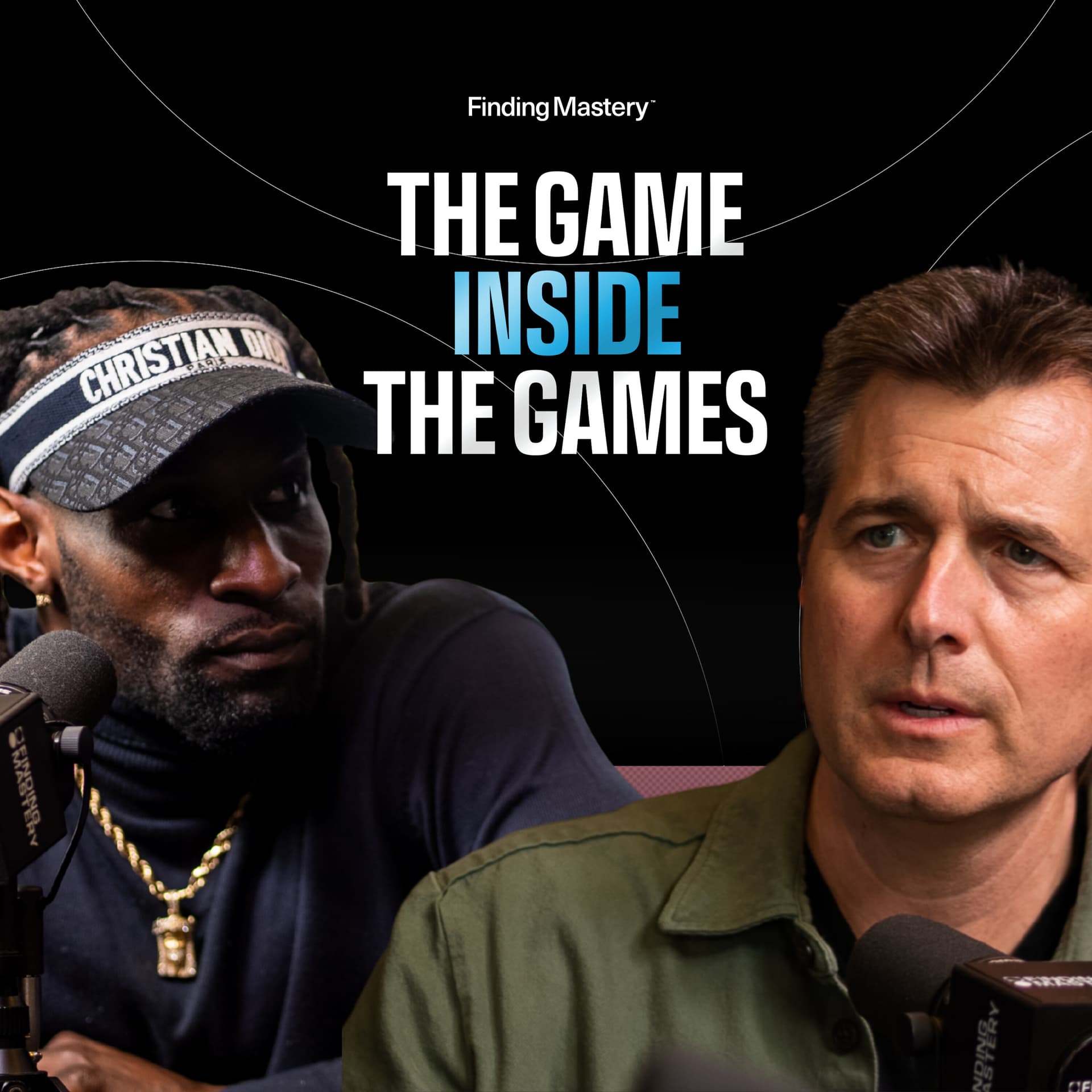
In this episode of The Game Inside the Games, Dr. Michael Gervais reconnects with Ricardo Lockette as returning to the Super Bowl setting brings old emotions back to the surface. The conversation moves beyond the game itself into grief, loss, and the weight of moments that never fully resolve.
Lockette speaks candidly about the Super Bowl heartbreak, the injury that ended his career, and why public grieving can be harder than physical pain. Drawing on their close relationship, Gervais helps him unpack what those experiences still mean—and how resilience is built in the aftermath, not the moment.
This is a raw, human conversation about survival, leadership, and learning how to live with moments that don’t come with clean endings.
_____
💥 Support our sponsors and get exclusive discounts: https://findingmastery.com/sponsors
📬 Sign up for the Finding Mastery newsletter to get weekly insights from Dr. Michael Gervais: https://www.findingmastery.com/newsletter
🧠 Download Dr. Mike’s Morning Mindset Routine: https://www.findingmastery.com/morningmindset
🔔 Like and Subscribe to @findingmastery for weekly insights from top performers
_____
This episode is brought to you by CDW and Microsoft.
AI is revolutionizing how work gets done. CDW and Microsoft can play a vital role in unlocking the transformative potential of Microsoft Copilot. By leveraging this technology, organizations can achieve significant productivity gains, enhance innovation and streamline workflows.
Unlock opportunities to improve both employee and customer experiences when you partner with CDW to deploy your Copilot solutions. Our experts can help maximize the capabilities of Copilot, by building out roadmaps, use cases, and agent experiences that supercharge efficiency for your organization.
Learn more about CDW’s internal Copilot adoption story: CDW rolls out Microsoft 365 Copilot to 10,000 employees, reporting 85% productivity gains | Microsoft Customer Stories
See Privacy Policy at https://art19.com/privacy and California Privacy Notice at https://art19.com/privacy#do-not-sell-my-info.