
In short
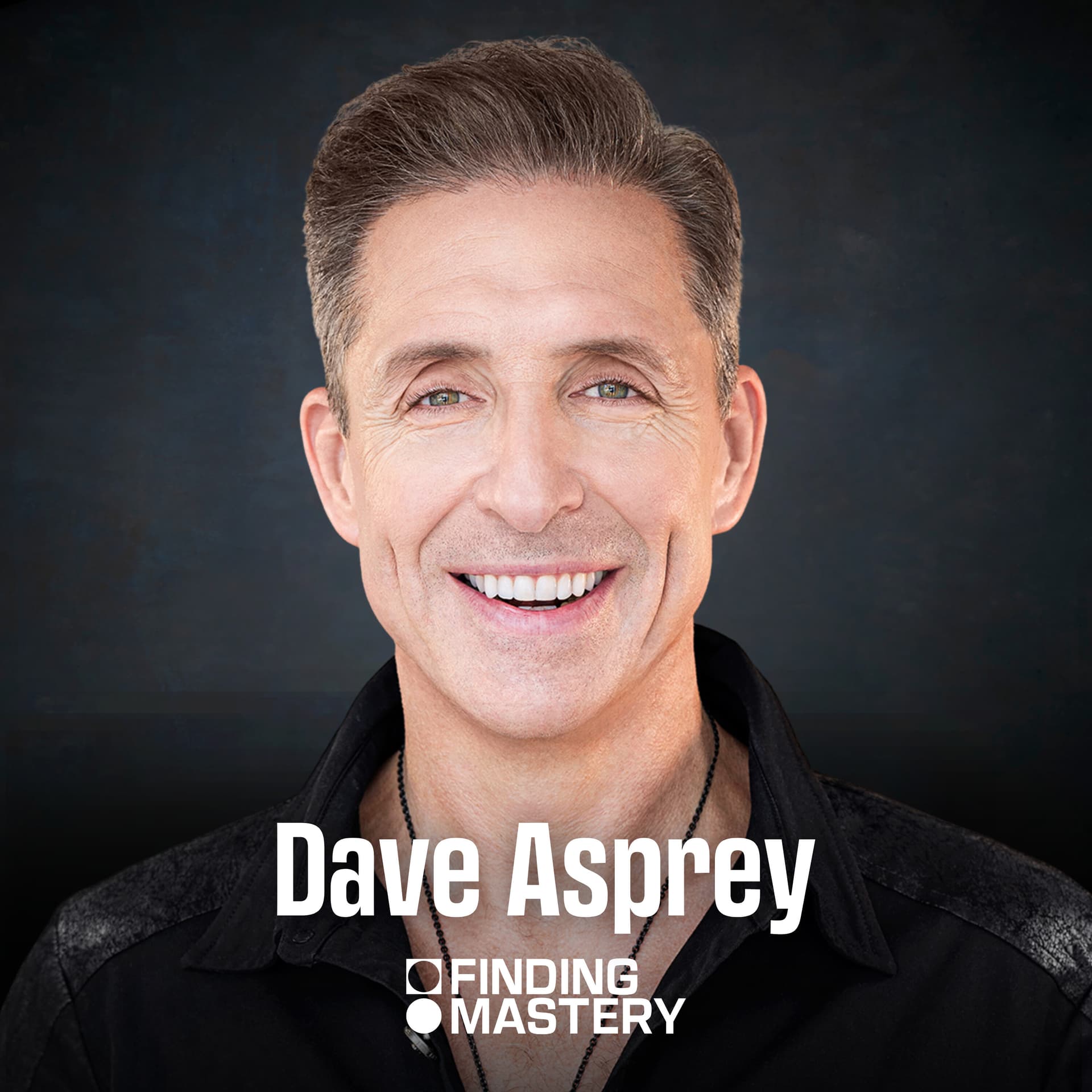
Dave Asprey (biohacker) explains why people feel tired, stressed, and “not healing,” arguing emotions originate in the body (especially mitochondria), and that improving mitochondrial efficiency via training, self-inquiry, and lifestyle changes improves emotional regulation and longevity.
Guest backgrounds
Dave Asprey is an entrepreneur and four-time New York Times bestselling author, described as the father of modern biohacking. He says he was a 300-pound, cognitively foggy, exhausted entrepreneur in his 20s with fibromyalgia and chronic fatigue, despite heavy gym effort. He later developed approaches using measurement (including QEEG/neurofeedback) and consciousness training.
Key claims
Emotions are bodily and lagged (signal before conscious interpretation). Mitochondria are “pre-processors of reality” and frontline sensors. Emotional triggers can be identified and downregulated with QEEG-guided protocols. Longevity and emotional control improve with better mitochondrial function. “Killers” include lead/mercury, bright night light, low sunlight, fluoride/bad water, thyroid suppression, low protein, and seed oils.
Notable examples
His public reputation sabotage (e.g., “liar/con artist” claims tied to Joe Rogan) and a childhood anger memory surfaced via somatic self-inquiry; he also cites a QEEG “SWOT” brain map and a multi-day training protocol. He argues spinach/kale and whole grains are high-oxalate “mitochondrial toxins,” and recommends vitamin D, A, K, E, and minerals plus higher animal protein.
Written by AI. May contain mistakes. Listen to the episode to check what was said.
Chapters
Tap a time to open that second in VOExploring Toxin Awareness
0:03 to 1:40
Understanding the hidden toxins in common plants and their effects.
“One bad hire, it can cost you a lot, way more than time.”
The Obsession with Cholesterol
1:40 to 3:35
Challenging the narrative around cholesterol and longevity.
“And half of people with heart attacks don't have high cholesterol.”
The Journey of Biohacking
3:51 to 5:48
Dave shares his personal journey from exhaustion to empowerment.
“Yeah, so I think people might be like saying, okay, what does Mike and Dave, you know, have in common here?”
Efficiency and Mastery
5:48 to 7:37
Discussing the balance between hard work and smart work in achieving mastery.
“I also had fibromyalgia and chronic fatigue in my mid-20s.”
The Importance of Understanding the Brain
7:37 to 9:30
Exploring how understanding brain functions can enhance personal performance.
“So is that a hack or is it just a better way of training?”
Navigating Personal Challenges
9:30 to 11:33
Dave discusses his personal struggles and the impact of technology on mental health.
“And there are many altered states available to us.”
Coping with Loss and Community
11:33 to 14:01
The importance of community support during challenging times for entrepreneurs.
“Now I just have gratitude for all of it.”
The Loneliness of Leadership
14:01 to 15:47
Explore the challenges faced by CEOs and the importance of community.
“So there was some sort of betrayal, some loneliness.”
The Loneliness of Leadership
17:49 to 18:17
Explore the challenges faced by CEOs and the importance of community.
“Spring and summer, they are powerful seasons of momentum.”
Navigating Emotions
18:17 to 19:08
Understand the emotional hierarchy and processing feelings like loneliness.
“How do you work through when you're feeling embarrassed or betrayed or alone or sad or lonely?”
Show all 26 chapters
Self-Discovery Through Reflection
19:08 to 21:42
Learn how personal experiences shape our emotions and reactions.
“And then you peel away the fear, and then that's what's actually you, which is joy and happiness.”
The Impact of Public Perception
21:42 to 24:08
Discuss the effects of public scrutiny and personal growth from challenges.
“and I reassessed that situation that the current situation would just completely resolve.”
Understanding Consciousness and QEEG
24:08 to 28:01
Explore consciousness through technology and meditation practices.
“which is, you know, I think you're saying it's, I don't think that there's shortcuts.”
The Power of Emotional Congruence
28:01 to 29:40
Explore how emotional congruence impacts trust and authenticity in relationships.
“where we're causing multiple parts of the brain to activate at the same time, but we're using a mathematical equation that's different than you would normally do.”
Emotions and Their Physical Basis
31:24 to 37:44
Discuss the relationship between emotions, the body, and how they influence our actions.
“You've also done a bunch of psychedelics.”
Mitochondria: The Key to Emotional Regulation
37:44 to 42:00
Understand how mitochondrial efficiency relates to emotional regulation and overall health.
“Yeah, so consciousness or not, you are saying that mitochondria is an important structure in the body.”
The Role of Mitochondria in Stress Management
42:00 to 42:35
Explore how functioning mitochondria can help manage stress and emotional responses.
“They can turn off inflammation when they're supposed to.”
Nutritional Insights on Plant-Based Foods
45:19 to 49:31
Understand the impact of certain plants and nutrients on health and performance.
“So hit your take on food for just a minute as a resource.”
The Debate on Animal Proteins
49:32 to 53:07
Discuss the importance of animal proteins versus plant-based proteins for health.
“And what I recommend, especially for high performers, one gram of animal protein per pound of body weight per day.”
Cholesterol Myths and Misinformation
53:08 to 56:00
Examine the misconceptions surrounding cholesterol and its role in health.
“Because I built that regenerative farm with chickens, they're the biggest carnivores ever.”
Understanding Cholesterol and Health Markers
56:00 to 59:00
Learn about cholesterol, its implications, and important health markers.
“was called Nystatin, which is an antifungal.”
Understanding Cholesterol and Health Markers
59:04 to 1:00:06
Learn about cholesterol, its implications, and important health markers.
“Here's a stat that surprised me when I first came across it.”
Understanding Cholesterol and Health Markers
1:01:29 to 1:01:43
Learn about cholesterol, its implications, and important health markers.
“vpn.com slash mastery for 70 % off your two-year plan.”
Exploring Peptides and Health Practices
1:01:44 to 1:10:00
Delve into the world of peptides and discuss various health optimization practices.
“I go through phases where I stab myself every morning and phases where I'm just too busy.”
Best Practices for Health and Longevity
1:10:00 to 1:11:02
Learn about effective health practices including cold exposure and hyperbarics.
“But a lot of people listen to your show, I'm imagining as business people, like if something's good, more is better.”
Appreciating Bold Ideas
1:11:02 to 1:11:42
Discussing the challenges and respect for those who take bold health stands.
Transcript
Automatic transcript. May contain errors.0:00Dr. Michael Gervais:Finding Mastery is brought to you by LinkedIn. We use LinkedIn Hiring Pro here at Finding Mastery because we know one great hire can change everything. One bad hire, it can cost you a lot, way more than time. It can cost you momentum and culture and real dollars. And that's why how you hire matters just as much as who you hire. And it's why I've become a big believer in the power of LinkedIn Hiring Pro. Here's what I appreciate about it. When you're running lean, you don't have hours to sift through a pile of resumes hoping to find the right person somewhere in the stack. Hiring Pro is built exactly for that reality.
0:32Dr. Michael Gervais:You describe the role and it screens candidates for you, surfacing the people who are a best fit so that you can spend your time and conversations with those folks rather than in the weeds of the applications. And the results back it up. Those hiring with LinkedIn are 24 % less likely to need to reopen a role within 12 months compared to the leading competitor. So join 2.7 million small businesses already using LinkedIn to hire. Host your job for free at linkedin.com slash mastery. Terms and conditions apply. Again, that's linkedin.com slash mastery to post your job for free.
1:04Dave Asprey:Every plant contains some toxins. And we've made a practice lately of eating all sorts of weird plants that are higher in toxins. And we ignore the toxins and we talk about the fact that they contain one beneficial thing. Spinach, kale. And we knew all about this until about 1950. And then we just stopped talking about it.
1:22Dr. Michael Gervais:What would change if you stopped trying to push through fatigue? And instead, you learned what your biology is trying to tell you.
1:28Dave Asprey:What's weird is we have this obsession with measuring cholesterol in blood because it was the easiest to measure in the 1930s. The people who live the longest, the super centenarians, they have higher than average cholesterol. That's weird. And half of people with heart attacks don't have high cholesterol.
1:43Dr. Michael Gervais:That's weird. Welcome back, or welcome to the Finding Mastery podcast, where we dive into the minds of the world's greatest thinkers and doers. I am your host, Dr. Michael Gervais, by trade and training, a high-performance psychologist. The idea behind these conversations is simple. It's to sit with the extraordinaries and to learn how they work from the inside out. Today's conversation is with Dave Asprey, entrepreneur, four-time New York Times bestselling author, and widely regarded as the father of the modern biohacking movement. For those of you who have listened or watched for a while, you know that I have an issue with the term biohacking.
2:18Dr. Michael Gervais:Yet, anyone who's able to be disruptive enough to create a category, that's interesting to me.
2:24Dave Asprey:Most people think their emotions are in their brain. They're not. They're in the body. Your mitochondria are pre-processors of reality.
2:31Dr. Michael Gervais:I understand the line of thinking that they can respond to the environment because like the heat, they can move away. I just don't know if I want to call that consciousness.
2:39Dave Asprey:So are fish conscious? I don't know.
2:41Dr. Michael Gervais:Every fish I've interviewed, they don't have much to say. You should interview the right fish. Dave was a 300 pound exhausted, cognitively foggy entrepreneur in his 20s. and he was being told by his doctors that everything was quote-unquote fine. His lived experience said otherwise.
2:57Dave Asprey:I've gone to the gym 90 minutes a day, six days a week for 18 months straight, and I'm still 300 pounds. That's what inspired me to say, I'm only going to do what works. And the results have been profound.
3:09Dr. Michael Gervais:We talk about the origins of biohacking, how Dave pulled himself out of physical and emotional collapse, and the philosophies that guide his approach to health.
3:18Dave Asprey:A study in Japan of 800 people showed that. So if you want to live a long time.
3:25Dr. Michael Gervais:So with that, let's jump into this week's conversation with Dave Asprey.
3:34Dr. Michael Gervais:The views expressed are the guest's own and do not reflect those of Dr. Mike Gervais or Finding Mastery. This conversation is for informational and entertainment purposes only and is not medical advice. Please consult a licensed professional for questions on your own health. Thank you and enjoy the episode. Dave, it's great to see you again. Mike, what a pleasure. Yeah, so I think people might be like saying, okay, what does Mike and Dave, you know, have in common here? Because I talk about there are no hacks to the path of mastery and you are the inventor, the founder, the father of biohacking.
4:11Dr. Michael Gervais:And so welcome to the podcast. I don't know why you'd say something like that, Mike. Yeah, good. I don't know why you would say something like that either. So we're going to start off on the right way here. Yeah, I think that I've been uninterested in shortcuts. And you have been deeply invested in what you would probably call the fastest route to a change.
4:35Dave Asprey:It's so interesting because in business, people who say that they want to work hard, they buy less effective ads so that they can work harder. What does that mean? Well, if you run a business, you're all about efficiency. You spend a dollar, you get the most value you can for it. But you're saying that you prefer to work hard. So you'd rather spend$2 to get the same results as someone who spends$1. Or you like the fastest path. I don't know which one is it.
5:00Dr. Michael Gervais:Yeah, that's good. I like what you're doing. I would not subscribe to that either or, you know, logic step there. I think that what I've come to learn is that you got to put a lot of time on your attention to really know yourself. Yes. Yes. To understand the contours of mastery just takes time. And I think my response is definitely, I get a rash thinking about foot massage at 10 and avocado toast at 9 o 'clock. I know, right? Yeah. But I am not ascribing to the hustle hard mentality. That I think is fundamentally flawed.
5:37Dave Asprey:Very much so.
5:38Dr. Michael Gervais:Oh, you're in agreement there.
5:39Dave Asprey:Oh, yeah.
5:39Dr. Michael Gervais:Yeah. Maybe just start in the back. Start, rewind just a little bit. Why hacking? Why biohacking? Why did you start kind of down this path? What was the thing you were looking for?
5:50Dave Asprey:Well, I used to weigh 300 pounds. I also had fibromyalgia and chronic fatigue in my mid-20s. But I was working in Silicon Valley at the company that built the first data centers. When Google was two guys and two computers, they came to us and we scaled their first round of infrastructure. So career is taking off. Brain is heading south. And my body hurt all the time. I was so tired. I couldn't remember anything to the point that I bought disability insurance when I was 26 years old. I don't know what's wrong. The doctors say I'm fine and maybe I should lose some weight, but I've gone to the gym 90 minutes a day, six days a week for 18 months straight, and I'm still 300 pounds and I still have a 46 inch waist.
6:36Dave Asprey:So this feeling of like being in a car and you press the accelerator all the way to the floor and it's still slowing down, but you can't push any harder. There's no push left. So that's what inspired me to say, I'm only going to do what works. I'm going to measure what works, including for mastery, mastery of my own inner state, mastery of my biological state. And I'm going to do whatever is necessary in order for me to feel the way I want, to show up in the world the way I want. And the results have been profound, but it comes from looking for efficiency. And one of the things that's made the biggest difference for me is hooking a computer up to my brain.
7:17Dave Asprey:So the traditional path is sit in a cave for 20 years or meditate for an hour a day for 40 years and then you'll get there. Well, I can do the brain state that you get after 40 years reliably if you give me five days with you hooked up to my computer systems. So is that a hack or is it just a better way of training? Yeah.
7:41Dr. Michael Gervais:The reason I want to have the conversation with you is because you have spent the last 20 years investigating and understanding best practices when it comes to efficiencies for change.
7:51Dave Asprey:Yeah.
7:51Dr. Michael Gervais:And so the thing that I get nervous about with the biohacking phrase or the industry that you kicked off here, which is a big industry now.
7:59Dave Asprey:$36 billion, according to the analyst.
8:02Dr. Michael Gervais:Yeah. Who never thought, right? So I have a lot of respect for the position that you have, not the position you've taken, but how you've influenced so many people. Thank you. And I have a lot of respect that you've had the shit kicked out of you publicly.
8:18Dave Asprey:Oh, sure.
8:19Dr. Michael Gervais:Yeah. It's part of the game. Well, you know, that's nasty. And I have a lot of respect on anyone that's gone through that.
8:27Dave Asprey:Yeah.
8:28Dr. Michael Gervais:So there's a couple of things I want to learn from you there. Okay, go back to the point, though, is that the idea about studying the brain and figuring out best practices, I think you're on to something really important. You and I have a similarity in that, I think it was probably like 18 years ago, I was a founder of a tech company that was doing mobile QEEG. Cool. Wow. Yeah. That was a long time ago, too. It was a long time ago. We got to a seven sensor mobile headset. But I think the management and the funding, we got the business application wrong. The technology was pretty good. And we're just a little too early.
9:12Dr. Michael Gervais:That was very early.
9:13Dave Asprey:Even now, there's an explosion in companies making sensors for the brain. And I've been doing this actually for 25 years since I bought my first EEG machine. and I'm really excited because it's not just the ability to know what's going on in there it's the ability to learn quickly how to control what's going on in there and some people say well why would you want to control well so that you don't yell at people you love that would be one reason and so that you don't have a mean voice in your head sabotaging you and I've had the chance to do neurofeedback with top athletes and top CEOs and people doing really powerful things in the world.
9:52Dave Asprey:And there are many altered states available to us. We just don't know how to get there. I imagine if you walk in the cockpit of a big jet, there's buttons and knobs and dials and levers and gauges everywhere. And if you're a pilot, you know what they all do. Well, we don't even know where the gauges are in our own consciousness. But with tech or with advanced meditation and a lot of determination and time, you can learn that they're, oh, that's how I do that. That's how I do that. And I just wanted my own consciousness to be fully instrumented so that I could say, oh, I understand why I got triggered by that.
10:34Dave Asprey:I don't want to do that anymore. So how do I turn off that setting? Man, what a difference. I don't think I could have gone through all the things that I've been through in business and in life without having those skills. I think I would have broken I love the feeling that you're sharing this from
10:51Dr. Michael Gervais:because this is not just this intellectual you know like hacking optimization I feel the warmth in what you just said which is you've been through a lot
Read the full transcript
11:01Dave Asprey:oh absolutely I've been through a lot and it's enough that it probably would have broken most people and I think had I not had the benefit of of knowing how to make enough energy in my brain with my mitochondria, how to manage my health, and then how to manage my mental or even consciousness states to be able to say, all right, I have awareness of where I am now instead of believing all the things my nervous system were telling me that maybe weren't accurate. When you were just describing what you've been through,
11:35Dr. Michael Gervais:what was the feeling that I'm feeling?
11:38Dave Asprey:Hmm. Now I just have gratitude for all of it.
11:42Dr. Michael Gervais:But that's not what I felt just 30 seconds ago.
11:44Dave Asprey:The things that I went through, you know, I was likely, I had hundreds of millions of dollars of net worth, right? And I had some investors and board members and things like that where we'll say there was a misalignment there. I think I can say that. So it ended up where what would have been an obvious big win for Bulletproof was not a big win. I had to call friends who invested and backed me and say, you know, we all lost our money on this. And that's not a feeling any entrepreneur ever wants. And so normally that would be like there's shame, there's anger, there's like there's a sense of hopelessness.
12:29Dave Asprey:Like, you know, I did everything right. And in the book that we were just talking about and heavily meditated, my most recent one, And it turns out for adults, some of the hardest traumas to deal with are injustice and betrayal. And I had both of those. So, you know, people who are supposed to be backing you, doing something intentionally to harm you or at least to take away things that you've earned. So to deal with those just in a really raw state, that's the sort of stuff that can make you just kind of sit in a angry, bitter victim thing for the rest of your life. And I know people who are there.
13:04Dave Asprey:and I'm incredibly grateful that one of my companies has the tech that allowed me to literally hook my brain up to a computer when I was really not in a good place and just see what was really going on.
13:18Dr. Michael Gervais:When it got dark how dark did it get for you?
13:20Dave Asprey:It got pretty dark to go from you know I'm set for life to facing possible bankruptcy that's that's a pretty big shift to happen in a year or two especially when you know you're hearing one story and you realize that there's another story going on so yeah i mean that that
13:40Dr. Michael Gervais:can be that can be pretty dark and in that state was it mostly loneliness or was it um sadness they're they're related they're cousins but they're different there's some loneliness because
13:53Dave Asprey:some people who I would have identified as friends who lost money in the deal got really nasty about it. I'm like, really? I lost it all too here. And so that was surprising. So there was some sort of betrayal, some loneliness. And one of the things that matters a lot is community. and I'm super grateful that I spend a lot of time with really successful entrepreneurs. And I do that on purpose because we share information with each other. And it's hard when you're a CEO, especially if you're a founder CEO. It's lonely anyway, because the people on your team, they're trusted. They're your friends, except you can fire them.
14:44Dave Asprey:So they're your friends, but there's always a little edge where you're the one controlling their income and you can fire them and they can't fire you. So there's things you won't tell your team because it wouldn't be good for the team. So then you say, all right, is this somebody you're going to share at home? And depending on the nature of the relationship you have, maybe, maybe not. In my case, the mother of my children and my wife at the time and a really wonderful person, she's not a business person. and to sit down with these really complex things really just created stress for both of us.
15:22Dave Asprey:So having a community of entrepreneurs I could talk with, trusted friends, thinking like Joe Polish from Genius Network and the amazing community that he's built, there were people who've been very successful and had big failures. So to be able to talk with them was really, really helpful. Otherwise, it's lonely because no one understands your experience as a founder.
15:47Dr. Michael Gervais:Finding Mastery is brought to you by Rag & Bone. I've been a big fan of Rag & Bone for a number of years. I just love what they do. It's a go-to for me when I'm choosing clothes. I've been wearing their infused denim for a while now. They've done just a really nice job with this product. For me, I am really intentional about what I invest in. In clothing, it's no different. I want things that are well-made, that stand the test of time, that don't distract me, that support my focus on the things that matter most. And that's exactly why these deliver. And they look sharp, full stop. They've spent 20 years obsessed with getting this product right.
16:17Dr. Michael Gervais:And that kind of long-term commitment to craft, that's something we talk a lot about here at Finding Mastery. Quality compounds. The right inputs may consistently over time show up in everything. And you can feel that the moment you put these on. If you're ready to upgrade your denim with something that's genuinely built to last, it's time to upgrade your denim with rag and bone. For a limited time, our listeners get 20 % off their entire order with the code finding mastery at rag-bone.com. That's 20 % off at rag-bone.com with the promo code finding mastery. And when they ask you where you heard about them, please support our community and this show and let them know that we sent you.
16:56Dr. Michael Gervais:Finding mastery is brought to you by our flagship mindset training course, finding your best. Anytime you feel the pull to reset, to zoom out, to refocus and ask, am I moving toward the person I want to become? It helps to remember this lasting change comes from training. Not resolutions, not short-term sprints, but deliberate practice of the skills that shape how we show up in work, in relationships, and in the moments of great intensity as well. That's what finding your best is all about. It's a science-backed framework for training your mind. And it's the same set of tools that we've taught to Olympic athletes, top executives, elite military teams, and artists at the peak of their craft.
17:30Dr. Michael Gervais:In this course, you'll learn the foundational psychological skills to be your very best, full stop. And the best part is you can start anytime. Right now, we're running a limited time offer on finding your best. Simply head to findingmastery.com slash course and use the code RENEW100 to get$100 off your registration. If you've been waiting for the right moment, this is a good one now to lean into. Spring and summer, they are powerful seasons of momentum. It's a great natural time to step into growth, to refocus, to recommit to who you want to become. And this discount will not be around for long.
18:04Dr. Michael Gervais:So go to finding mastery.com slash course code renew 100 for a hundred dollars off today, because your future is not shaped by what you intend. It's shaped by what you train. Keep the tech at bay for just a moment. How do you work through when you're feeling embarrassed or betrayed or alone or sad or lonely? How do you work through it?
18:31Dave Asprey:I don't think I experience embarrassment anymore. I'm beyond that. People can like what I do or not like what I do. But when you're experiencing one of those things, I teach this emotional hierarchy. Your emotions are like a Russian doll. You know, those things where you open it up, there's another doll inside, another doll inside. So you can be feeling lonely or any of the so-called negative emotions. And when you peel them away, I wasn't angry, even though I felt angry. it was actually sadness. And then you peel away the sadness. Oh, look, there's fear, right? And then you peel away the fear, and then that's what's actually you, which is joy and happiness.
19:16Dave Asprey:And what I've learned through many hours of grappling with this, with the tech, and also they teach the same thing in Buddhist monasteries, where I've spent time as well, is that when you get through all this it's ultimately your ego trying to keep you safe that's what fear is and when you realize it's a lie so now if i'm feeling any of those emotions i know they ultimately are backed by fear and then it's what's the first time that i felt that way and in one of the cases there was a very public attempt to sabotage my reputation that was backed by some financial motivations.
20:00Dr. Michael Gervais:Was this around coffee and Joe Rogan? Yeah, absolutely. The one I'm aware of, yeah.
20:05Dave Asprey:Yeah, and I shared the story and heavily meditated. So that was pretty surprising. So all of a sudden, one day, Dave, thanks for changing my life, to Dave, you're a liar and a con artist. I'm like, wow, what changed? That was very dysregulating for me. So it took me a while to realize I was being reactive. and in fact it was a member of my team who was a convoy commander in uh in iraq so his job was to drive generals past explodey stuff so he's like dave you're kind of acting weird and so i said oh man okay and i sat down and we especially if you're an executive you live in your head a lot of the time right because you think about things but all the things we're talking about are somatic They're in the body.
20:59Dave Asprey:So I sat down and was like, what's the first time my body felt this way? Like, is this in my gut? Is this in my chest? Where is it? What is the nature of the feeling? And this experience from first grade popped into my head. And basically, I tattled on another kid for doing something. And then the teacher says, you know, little Johnny, did you do this? He goes, I didn't do it. Dave did it. And I got sent to the principal's office. and I apparently was really enraged. I'd forgotten this experience entirely until it just popped in my head when I did the process of self-inquiry and I realized, wow, I'm still playing back the anger that I experienced in first grade even though I'm a grown-ass adult and understanding that if I went back and I reassessed that situation that the current situation would just completely resolve.
21:49Dr. Michael Gervais:So you've done a ton of self-discovery work. Oh, yeah. And you did it with somebody or you did it?
21:56Dave Asprey:I've done it with a variety of therapists. I've undergone shamanic training. I've spent time at Buddhist monasteries. I've gone down to the Andes. I've worked with leaders of lineages. And I've worked with a tech. So for me, this is in the realm of transpersonal psychology. A lot of people, if you've done advanced breath work, like holotropic breathing or Wim Hof's work, You feel like, I feel like I just did drugs. Well, neurologically, you kind of did. And sometimes these states are more apparent when you're in these altered states. So for me, once I realized that and I went back and I basically ran a forgiveness process called the reset process in the book.
22:45Yeah.
22:45Dave Asprey:And I just, as soon as I realized, I let that old thing go. Instead of thinking, oh, no, what am I going to do? Joe Rogan's saying I'm a bad man. It was like every time Joe Rogan says I'm a bad man, I sell more coffee. That's the reality of it. But I was completely thrown off for about six months by this. Like, it's not fair. And look, we're adults. Life isn't fair. And if there's some part of you that believes life is fair, and that if you don't get treated fairly, you're going to throw a tantrum, which is ultimately what this is about. Well, maybe you should work on that. And so in my case, I was able to work on it.
23:25Dave Asprey:And I have actually a lot of good things to say about Joe Rogan. I've been to his comedy show. It was really funny. I might have worn a Bulletproof T-shirt because that was funny too.
23:36Dr. Michael Gervais:So you went to his show after you guys had the public?
23:38Dave Asprey:Yeah, we both live in Austin. and so like i don't have any any bad things to say there it was a painful but beneficial
23:45Dr. Michael Gervais:experience ultimately for me yeah i mean most most things that we go through at some time at some point in our lives when we do the work do give us a stronger foundation some things we go through certainly um if somebody's listening right now that is in the throes of it it does not feel safe it does not feel sturdy yeah but you need to go through that work to get to the other side which is, you know, I think you're saying it's, I don't think that there's shortcuts. I'm not sure you're saying there's a shortcut. There are efficient ways. And QEEG tech is a way, go back to the dial of the cockpit.
24:22Dr. Michael Gervais:It's a way to understand like, oh, when I do this thing that I can't quite describe what I'm doing, I can actually down regulate my brain's activity from a high anxious state beta into something that's maybe even alpha theta, you know? And I'm not, you know how to do it. I know how to do it. with time under tension, with the apparatus, I can't describe what I do.
24:44Dave Asprey:That's the biggest problem. And that's why I'm so into the tech for consciousness.
24:49Dr. Michael Gervais:When you say consciousness, it means a lot. I would love for you to say what you mean by consciousness.
24:54Dave Asprey:I want to finish the point though about consciousness, because it goes back to the time I spent at Copan Monastery outside Kathmandu. And this was early in my consciousness journey and I'm sitting there and I'm probably 30 or so. And they're having us sit for two hours and visualize the Buddha for two hours. And you have to really carefully imagine like the seat that he's sitting in and the number of fingers and incredible amounts of boring detail. Like, why am I doing this? And it's because in every lineage, whether you look at ancient Hindu things, traditional Chinese, like ancient meditation practices, you look at the Buddhist stuff, they're all trying to use words to describe felt states.
25:47Dave Asprey:And you look at some of the great writers and you read their works, the ones that are harder to read, and they're all trying to transmit a state that doesn't have words. And my favorite word as an author is ineffable. And that's the word that means there isn't a word for it. And all the things that we're talking about, there aren't words to describe it. But I can say, stick these things on your head and then take some breaths and visualize some stuff. And when you hear a tone, you did it right. It's so much faster to teach that way because the traditional way of teaching, I'm sitting there in the monastery.
26:24Dave Asprey:You know, my legs are folded. They're doing all the things. if I get the state right and there's a really good teacher who can feel my state and good teachers can do that, then they're going to raise their eyebrow. And if I notice they raise their eyebrow, that was my one piece of feedback for the day.
26:39Dr. Michael Gervais:And then you're pulled out of it because you're now focusing on a new stimulus. Yes. Yeah. That's the nice part about QEG. And are, are you using QEG before we go to consciousness? Are you using QEG for a scale motion? Like, So are you using the 256 kind of gel in the hair cap on, or are you using something that is more portable?
27:03Dave Asprey:We use a 20 channel to do our cues. 20, okay. And so when people come to 40 Years' End, we do a cue on the first day, which means we get a map of your brain that we can compare to a normalized database of other maps. And that kind of gives us a SWOT analysis of your brain. Ah, so you have a problem with emotional regulation or you have a problem with attention or socialization. There's various things we know. And then we set that aside and you spend three days doing a form of feedback that's not QEG-based. That's more around meditation where we're enhancing certain mathematical patterns in the brain and teaching you visualization to do while you're doing that.
27:42Dave Asprey:So you're gaining skills. And then once you've done that to drop -
27:46Dr. Michael Gervais:Is it a focus or down regulation protocol?
27:48Dave Asprey:It's upregulation mostly.
27:51Dr. Michael Gervais:Upregulation for focus.
27:54Dave Asprey:Well, yeah, focus is a part of it, but it's also we're teaching you these nuanced states where we're causing multiple parts of the brain to activate at the same time, but we're using a mathematical equation that's different than you would normally do. So it's not coherence. It's something different. and I've found over the course of years that that's what generates the largest transformation in the least amount of time so after three days of going through and removing every trigger that you've ever been able to identify in your life so they just don't affect you anymore instead of what most of us do as someone says something wrong at a board meeting and then everyone kind of knows it got to you but you sort of smile put on your game face and pretend like it didn't but then you've lost congruence.
28:41Dave Asprey:And when someone, when their inner state matches what they're saying, and it matches their outer state, we feel authenticity, and we feel trust, and we know that it's real. But when their outer state says one thing, and they're hiding their inner state, then those of us who have that ability, like there's a little suspicion in there, a little lack of trust. So when people have learned this congruency, because they've got rid of their triggers then we go back on the last two days and we do more training with q around increasing or decreasing functional networks in the brain based on the desired goals of our client so you may say i know i'm really weak here i want to put all my energy into filling up a weakness i'm going to guide you to say don't worry about the weakness hire someone for that um unless it's certain things and then let's focus on the things where you're really strong and let's make you super powered in those.
29:33Dr. Michael Gervais:Yeah. So that's, that would be your tactical approach to helping somebody. Yeah. Yeah. Okay. So that's your, if you will, your coaching philosophy. Sure. Body Mastery is brought to you by Fatty 15. Did you know that Navy dolphins helped unlock a secret to healthy aging? It's a wild story and it's the foundation for a product that I've come to really love. Fatty 15. Fatty 15 is built around C15, the first essential fatty acid discovered in over 90 years. And it was discovered by Dr. Stephanie Van Watson. She's the co-founder of Fatty15 while she was working with the U.S. Navy. And based on over 100 studies, we now know that C15 strengthens our cells and is foundational for healthy aging at the cellular level.
30:17Dr. Michael Gervais:Stephanie's been on the podcast and it was one of my favorite conversations. She's amazing. And what her and her team are building is something I'm really excited about. Head to fatty15.com slash finding mastery and use the code finding mastery for an additional 15 % off your 90-day starter kit. Again, that's fatty, F-A-T-T-Y, 15.com slash findingmastery. And the code is findingmastery. I want to take a second here to tell you about a morning routine that I've been using for years. For me, it's a great way to switch on my mind, to ready myself to take on the day. So before I check my phone, my emails, market updates, or text threads, I choose how to start my morning.
30:56Dr. Michael Gervais:That's always in my control. That's always in your control too. This is the same morning mindset routine that some of the world's top performers across sport, business, and the arts are using. The best part, it only takes about 90 seconds to do. So just head over to findingmastery.com slash morning to download the audio guide for free. Again, head to findingmastery.com slash morning to get your morning mindset routine. okay so in my mind like the three things i wanted to better understand was the kind of how you can teach and share some best practices from an emotional standpoint a performance optimization standpoint and longevity those are kind of the three buckets i wanted to hit with you and when it comes so we're kind of humming around the emotional stuff your traumas your unique experiences, you did a bunch of self-discovery work and you did a bunch of QEEG work to understand how to toggle a little bit differently or to move through states more effectively.
31:56Dr. Michael Gervais:Yeah. Correct? And the self-discovery work. You've also done a bunch of psychedelics. Absolutely. That I want to get to. But just for a moment, move from the... Okay. The reason I want to start with emotions is because emotions run the whole program.
32:08Dave Asprey:They sure do.
32:09Dr. Michael Gervais:They run the show. And then the way we work with our emotions is basically the relationship we have with ourselves, which impacts the relationship with others, mother nature, experience itself, and maybe now machines. So emotions and relationships are foundational. That's why I wanted to start with that. Is there anything else you want to add about emotional regulation, emotional intelligence, emotional working with emotions?
32:34Dave Asprey:Yeah. Most people think their emotions are in their brain. They're not. they're in the body and then it's really funny i heavily meditated it's a book about meditation and related technologies for consciousness but it became the best-selling philosophy book in the country because this idea there especially among buddhist philosophers there's an idea in the book that says your mitochondria are pre-processors of reality and that a lot of emotions are in a distributed system throughout the body and we can actually prove this in multiple ways so that means is your body is reacting to the world in real time and then you get a signal about a third of a second later and then you think about it for the rest of the second so we're living one second in in lag time compared to what's really happening so all these emotions
33:33Dr. Michael Gervais:This is Kahneman's work, low road and high road, if you will.
33:37Dave Asprey:It's related to Kahneman's work, but Kahneman. Daniel Kahneman, sorry. Yeah, yeah. He's been on my show, actually. And what I'm proposing is that it's in the body, in the mitochondria themselves. They're the frontline sensors of the world.
33:54Dr. Michael Gervais:And I read that in your book. I enjoyed the book. Thank you. Thank you for that. I wanted to ask you about this piece on the mitochondria. I think that this is a new idea to the field. I haven't heard it. I don't know if there's any research. I didn't. I was like, oh, that's an idea. And I think maybe you're going to go and kind of enlist some help to see if that's accurate or not. But so I like the idea. That's interesting because my mitochondria are typically the workhorse of energy production.
34:22Dave Asprey:We like to think of them that way. But when you look at Martin Paul's work, it's really incredible because they have their own consciousness. They move around inside the body and all bacteria are conscious in that they are monitoring the environment around them. They don't have a lot of sensors, but they do have some. And then they take action based on what happened in the environment.
34:45Dr. Michael Gervais:I get really confused with this position that small little things have consciousness. I get really confused here. I understand the line of thinking that they can respond to the environment. It's like they feel heat. They can move away. I just don't know if I want to call that consciousness. consciousness there's a i feel like that's something special consciousness so are fish
35:06Dave Asprey:conscious i don't know see every every fish i've interviewed they don't have much to say you should interview the right fish yeah there's uh see this starts to get really shamanic really
35:18Dr. Michael Gervais:quickly yeah and i don't like doing that like i know and you do a nice job of blending both i like that you use the word shamanic which is like another word for woo woo out there something
35:31Dave Asprey:Well, the thing that confuses me, so I'm a computer science guy. I didn't believe any of this stuff. I was an atheist when I was young. And having gone and done a lot of these practices and studied not just in practice, but also you read the college textbooks about shamanic practice. And the weird thing is that shamans in remote parts of Russia have the same structure of shamanic reality as ones in South America. So people who have no connection with each other keep seeing the same things. And then you look at people in the 60s and 70s who started doing their own work also arrived at the same picture of reality as these.
36:12So there's all kinds of woo-woo stuff that I'm like, really?
36:18Dave Asprey:I really don't think I had 500 ,000 past lives with whatever. People will say all sorts of stuff. so that said when i see groups who aren't communicating with each other come up with the same results over and over i'm starting to smell science here and so i know that i see the world through my conscious part of my mind in one way and my body is seeing the world in a very different way there's temperature fluctuations all sorts of stuff that i ignore that it's accounting for which means the very basic definition of consciousness for me would be sensing the world and then making a choice based on that that that seems like that would be the
37:01Dr. Michael Gervais:basic choice is the interesting piece yeah that would be the hinge idea um as opposed to just purely reaction you know responding to the element and that's why i feel like the the choice thing is something that's really unique to i don't know we'll call it fish but let's call it primates and you know mammals and i don't i don't certainly like yeah so let's not let's not travel down that path too much but i do like the idea that um that we're bridging the gap between sensory information and consciousness and i think you're you're you're kind of taking us to from healing emotional kind of wellness and well-being through optimization to longevity is what I want to get to.
37:44Dr. Michael Gervais:There you go. Yeah, so consciousness or not, you are saying that mitochondria is an important structure in the body. And part of this arc that we're talking, or this, it's not an arc. From performance to longevity is not the arc. Part of this through line is to understand how to be efficient with mitochondria.
38:03Dave Asprey:I would argue that if you can make your mitochondria more efficient, you'll live longer and you'll also be better emotionally regulated.
38:12Dr. Michael Gervais:okay run down a list of people that are they do not care about the shaman perspective or this kind of wild world of consciousness but they they're like i get that yep you know what are some this is now i'm putting you right in your strain in your lane like okay here's best practices
38:28Dave Asprey:well your mitochondria they are quantum entangled with each other oh there you go
38:35Dr. Michael Gervais:They, hold on.
38:36Dave Asprey:Dude, that is hardcore PhD biology. No, I'm not arguing with that.
38:41Dr. Michael Gervais:I think you and I need some coffee. I don't drink coffee. I'll do a tea, you do a coffee. And like, we'll go, we should detangle this as much as we possibly can. Totally. People start to get their, their head starts to go, oh, come on. I don't know if I have a second self in a parallel universe, maybe, but I just want to live great with my kids. I want to argue less with my friends and loved ones.
39:04Dave Asprey:All that. Yeah. So the reason I say it's important they're quantum entangled is number one, we can prove that. You prove it with proton spin changing simultaneously throughout the body. Like this is actually how we make energy in our mitochondria is via a quantum tunneling effect. So we've proven that our bodies at a very base level are interacting in a quantum level. And what does that mean? It doesn't matter because we don't sense that in our normal reality. If you take a lot of LSD, maybe that's what you're sensing. Who the heck knows, right? So that said, they're all talking to each other, which is why if you whack a knee or get an infection, you can have really rapid inflammation, and you can have really rapid changes of state.
39:50Dave Asprey:And if something happens in one part of the body, there's a chemical signal to other parts of the body, but there's a more rapid signal. In fact, there's four or five signaling mechanisms inside the body, and chemicals are just one of them. There's magnetism, there's vibration, there's all sorts of things. Light. Light? There you go. Yeah. We make light, I think, once every 20 seconds from our DNA.
40:11Dr. Michael Gervais:It's so bizarre.
40:12Dave Asprey:It's totally crazy. So there's stuff that we're not meant to see with our conscious brains because our conscious brains can't handle the world that we live in. So one of the jobs of the body is to make a user interface on reality that works for us so that we can walk around and not die. Right? Yeah. And what would happen if you had more fidelity, more pixels, or just more power in that system? And that's why mitochondria is so important. And we look at what happens when you have enough mitochondrial function in your prefrontal cortex, the more rational human part of the brain. Well, emotional regulation improves.
40:52Dave Asprey:So people have heard of being hangry or hypoglybitchy, maybe. We've all had times where we yell at people we care about. And then why did I do that? Well, you did that because you didn't have enough energy. You didn't have enough training to inhibit the impulse that you felt. And functioning adults have the ability to say, I'm feeling this, but I'm going to take this action anyway. Well, you're not going to do that if your mitochondria are running at 30 % of what they could be because you just don't have enough horsepower to do it.
41:25Dr. Michael Gervais:Killers of mitochondria are?
41:26Dave Asprey:lead, mercury, bright lights at night, lack of sunlight, bad stuff in your water like fluoride, anything that lowers thyroid function, which is a lot of modern so-called healthy foods, lack of protein, seed oils, which affect the mitochondrial membrane in studies. So bottom line is eat better and expose yourself to a more natural environment that allows your mitochondria to figure out where they are in the time of the day so that they can then put on muscle when they're supposed to. They can turn off inflammation when they're supposed to. They can repair proteins when they're supposed to. And that you still have enough gas in the tank.
42:09Dave Asprey:So at the end of a long day, you've got a lot of meetings, you come home and your kids do something really dumb, which all two-year-olds do, you don't lose your temper. That requires mitochondria that function really well and don't have a lot of inhibitors.
42:23Dr. Michael Gervais:I think a lot of people would say, oh, oh, you're talking about resources. Like if I have the resources to be able to navigate that thing, spilt milk or whatever, then yeah, I want more of that. Okay. Finding Mastery is brought to you by LinkedIn. Earlier, I mentioned LinkedIn Hiring Pro. And I want to come back to something a little more personal. We talk a lot about the people who make extraordinary things possible. And I want to take a moment to acknowledge some of ours. Janelle, Taylor, Alex, Emma, and our newest teammate, Chelsea. Every single one of them. came to us from LinkedIn. And every single one of them has raised the bar of how we operate here at Finding Mastery.
43:01Dr. Michael Gervais:Our relationship with LinkedIn, it also runs a lot deeper than just using their tools. We also work with their teams on the corporate side, helping them build the kind of high-performance culture where great people want to stay, they want to grow. I've been building businesses for over two decades now, and I'll tell you, the right team, that matters so much. It's the difference between grinding and flowing. So this partnership, I believe in from the inside out. When you hire through a platform like LinkedIn Hiring Pro that surfaces people who are genuinely aligned with what you're building, you get a different quality of candidate, not just in skills, but in fit and values, the kind of energy someone brings to a team.
43:39Dr. Michael Gervais:So if you're thinking about your next hire, I want to strongly encourage you to be intentional about where you look. The right person is out there and LinkedIn Hiring Pro helps you find them faster with a lot more confidence. Post your job for free at linkedin.com slash mastery. Terms and conditions apply. Again, that's linkedin.com slash mastery. Finding Mastery is brought to you by Sunlighten. I'm really excited about a new partner of ours. Something that I've come back to again and again is when I invest in recovery with the same intention that I bring to my work, everything gets better. My energy, my focus, my ability to show up fully for the people that I'm with and the work that I care about.
44:22Dr. Michael Gervais:That's why I am so bought in on the Sunlighten M-Pulse Intelligent Sauna. I was first introduced to their team a few months ago and was so impressed by what they've created. This is one of the most advanced infrared saunas that they've built in over 25 years of pioneering this technology. That's right. They've been at this game for 25 years. I had one installed in my home a few months ago, and it's made a real difference. I feel more refreshed, more grounded, more relaxed, and it's become a consistent part of how I recover, how I reset every day. I'm using it to support muscle recovery, for improved oxygen delivery, and for nervous system recovery.
44:58Dr. Michael Gervais:And what I love most, I don't have to leave my home. They're offering the Fining Mastery community up to$2 ,100 off. Simply head to sunlighten.com and use the code mastery for this great discount. Again, that's sunlighten.com and use the code mastery for up to$2 ,100 off. I don't want to let you off the hook on the food piece because I know you have something to say about kale. So hit your take on food for just a minute as a resource. And then I also want to go to best practices, whether it's light therapy, meditation, exercise, da-da-da.
45:33Dave Asprey:You need to have enough minerals. It's one of the most important things. And most plants will steal your minerals, even if they're in the plant. And plants do this to stop overpredation. What?
45:46Dr. Michael Gervais:Say that word?
45:47Dave Asprey:Overpredation. That means if you're an animal and you like to eat a plant, if you eat too many of the plants, then the plant will start to harm you by stealing minerals like zinc and magnesium and calcium. So you can't absorb them. Therefore, you won't be able to have as many babies. Therefore, the plants will be able to grow again. This is how plants and animals stay in balance in all of nature. So every plant contains some toxins. That's just how it is. And some of them are way less toxic than others. And we've made a practice lately of eating all sorts of weird plants that are higher in toxins.
46:21Dave Asprey:And we ignore the toxins and we talk about the fact that they contain one beneficial thing. So what this does over time though is we've been depleted of minerals and your mitochondria and the rest of your body cannot function if you don't have the right minerals. So to me, the foundational supplements you need to get either from food or from supplements are vitamin D, it's vitamin D, A, K, and E, and a broad spectrum mineral supplement. When people do that, that means if you lift, now your body can put on muscle because it can respond. But otherwise, if you lift, your body says, okay, I wanted to put on muscle, but I didn't have enough zinc.
47:01Dave Asprey:I can't. And that actually creates a subtle stress response.
47:05Dr. Michael Gervais:So are you more interested in the mineral part of the conversation or the macronutrients like getting the fats, carbs, proteins?
47:14Dave Asprey:You have to do both. If you get your macros right and you're deficient in minerals, your body simply cannot respond to the inputs you give it from exercise and meditation.
47:22Dr. Michael Gervais:And what are some of the foods that are on your no-go list?
47:24Dave Asprey:Spinach, kale. These are terrible because oxalate is a nasty mitochondrial toxin. It's a whole body toxin. 70 % of kidney stones are caused by oxalate. And we knew all about this until about 1950. And then we just stopped talking about it. So whole grains of any sort, most nuts. Whole grains, like? Like whole wheat. Whole wheat is bad for you. If you're going to eat flour, which isn't really good for you anyway, it should be white flour.
47:56Dr. Michael Gervais:What is sourdough, by the way?
47:58Dave Asprey:Sourdough is the best you could do. If you get non-American wheat, because we destroy our wheat in this country, and then you make sourdough out of it. So many people who cannot eat wheat can eat sourdough. And sadly, you can survive on all kinds of stuff. And I say sadly, except that helps us during famines throughout all of history. But we start to say the stuff that we used to feed to peasants is now healthy. We fed it to peasants because we didn't care about the toxins. So things like oatmeal, brown bread, brown rice, we're giving them the calories that come with all the toxins in the outer layer of the rice
48:38Dr. Michael Gervais:so so soaking rice overnight or 30 minutes before and draining it does not reduce enough of the
48:45Dave Asprey:toxins in your research not if it's brown rice no white rice white rice yeah white rice is the lowest toxin of all the carbohydrate sources what about so if you take on the vegetarian hat for
48:56Dr. Michael Gervais:just a minute um you know and because there's lots of people i just so you know i was a vegan for six years, I think I was really unhealthy.
49:03Dave Asprey:I was a vegan too, and it wrecked my health.
49:05Dr. Michael Gervais:Yeah, I was unhealthy. And sorry for the vegan friends out there. However, I needed something different. I needed a different level of proteins that I was not getting.
49:16Dave Asprey:I think it's fair to say at this point that all vegans are protein deficient, no matter what they do.
49:22Dr. Michael Gervais:Even if you're supplementing with like, I don't know, whatever protein powders.
49:26Dave Asprey:And unfortunately, plant-based proteins are about 30 % as efficient as animal-based proteins. And what I recommend, especially for high performers, one gram of animal protein per pound of body weight per day. And that's ideal body weight. So if you're fat, like I was 300 pounds and I wanted to weigh 200 pounds, I would have eaten 200 grams of protein a day. If you do that, your mental clarity, your amount of energy, your food cravings go down, everything improves in a very meaningful way. And I know that for some people, they hear that and they get angry. And I just have to say, if you're getting angry when someone disagrees with you about the optimal diet, that's a sign that the mitochondria in your prefrontal cortex are not making enough energy, either that you have childhood trauma, and you should work on either one of those, and you probably have both.
50:16Dr. Michael Gervais:You're poking the bear, man. You're poking the bear.
50:18Dave Asprey:Why did I say this even slightly controversial? It's okay to talk to people who disagree with you. Yeah. And the fact that some people have told themselves a story, there's three reasons you'd be vegan. And one of them is I don't want to kill animals. That's the most absurd. Because if you've ever seen a thresher go through a grain field and chop up the baby deer and the turtles and the bunnies and all the animals, the desperate calorie from tofu is way higher than grass-fed beef because I kill one animal per year to eat that cow.
50:47Dr. Michael Gervais:Okay, wait, hold on. You're saying all of the accidental carnage that gets slipped into the vegetarian grain mill, whatever, is a higher death count than...
50:59Dave Asprey:Oh, much higher. Come on. I mean... So I built a farm. I raised animals, right? And I've talked with all kinds of farmers about this. And the guy who taught this to me was in Tibet. And Tibetan Buddhists love to argue. So I'm talking with the lama, the head of one of the monasteries. And they're teaching no killing. And they're vegetarian at low altitude and not vegetarian at high altitude. But I put it at the yak skin on his prayer pole. And I said, no killing, yet you killed a yak. And he goes, one death feeds everyone. And he started laughing at me. And he said, yeah. And I actually don't eat chicken because I don't want to kill a whole chicken just for me to have one meal.
51:41Dave Asprey:It doesn't even make sense. Plus, chicken's not that good for you.
51:44Dr. Michael Gervais:So what chicken versus fish versus bread. I eat beef and lamb. Beef and lamb. Yeah. The reason I'm not eating beef, like, I like to pet cows. I had cows. We lived on a farm. I didn't have any cows, but there was lots of cows around. I liked the way that that creature kind of just chills. And I also like my dog. I don't want to eat my dog, right? I don't want to eat somebody else's dog. I don't want to eat dogs. I like kind of the nature of that animal. I don't really like the nature of chickens.
52:12Dave Asprey:I think they're - Have you ever lived with one?
52:13Dr. Michael Gervais:Yeah. We had like, I grew up on a farm. We had like, I don't know, 20, 30 chickens. Yeah, chickens have personalities.
52:19Dave Asprey:They're kind of fun. They drove me nuts.
52:21Dr. Michael Gervais:But anyway, so I have less kind of affinity or attraction to it. So in my mind, I'm like, oh. But I do think the hormones injected and all that, I'm trying to avoid all of that. Yeah. You're saying just in general, though, if chicken is a less optimal choice than beef.
52:37Dave Asprey:100%.
52:37Dr. Michael Gervais:And that's because?
52:38Dave Asprey:Because the fatty acid ratio in chicken is not good for humans. It's better than starving and it's better than being vegan. but it's a low quality fat. And the protein isn't, the amino acids aren't as good for us. It's lower in minerals. And most chicken today is very poorly treated. It's hard to find a healthy chicken.
53:00Dr. Michael Gervais:Yeah, yeah. The free range stuff is a first choice, but I'm not sure.
53:04Dave Asprey:They feed them flax and all sorts of grains that really chickens don't want to eat. Because I built that regenerative farm with chickens, they're the biggest carnivores ever. They will eat every bug and every scrap of meat, and then they'll peck at the grains that are left over. And when you feed chickens flax in particular, it has so much estrogen in it.
53:24Dr. Michael Gervais:So you would not supplement with flaxseed?
53:26Dave Asprey:Never. I wouldn't touch the stuff. Because of the - Flax is bad for you.
53:30Dr. Michael Gervais:I want to come back on the food thing one more time on chicken, beef, and lamb just for a moment. Let's stay on the saturated fat conversation. conversation because my understanding is that saturated fat is that we should be concerned about is not from animal fat but it's from saturated fat and meat that that is not as dangerous as carbohydrates and sugars right in particular that sugar and cholesterol are more highly linked than animal fat and cholesterol yeah sugar will raise ldl cholesterol
54:03Dave Asprey:and certainly raise triglycerides enormously. And what's weird is we have this obsession with measuring cholesterol in blood because it was the easiest to measure in the 1930s. We learned how to spin blood and we could see a layer of yellow stuff and that must be the problem. And we've been trying to prove it ever since. And unfortunately, the people who live the longest, the super centenarians, they have higher than average cholesterol. That's weird. and half of people with heart attacks don't have high cholesterol. That's weird. So when I'm working with people doing lab work, and again, I'm not a doctor, but I work with doctors to do lab work with people through unlimited life, my concierge longevity practice.
54:48Dave Asprey:So what we find is that markers of inflammation are far more indicative of risk. So when I'm teaching biohackers, I say measure your homocysteine, which is do you have a problem with methylation? If that's high, your risk of heart attack goes up. Measure your C-reactive protein. If that's high, either you worked out before your lab test or you have a chronic infection somewhere in the body and you need to figure out what that is and let's get that down.
55:15Dr. Michael Gervais:Mine's 0.01. Perfect. Do you know where yours is?
55:20Dave Asprey:My C-reactive protein? Yeah. Same place actually.
55:23Dr. Michael Gervais:Yeah, 0.01 to 0.02 is fluctuations.
55:25Dave Asprey:Yeah, very, very low. Yeah, okay. And that's where you want it to be. and a lot of people will come in and i don't know what's going on well there's your active protein can be five or ten or something it'd be really high and then you're like oh you have an infection under one of your teeth or you have an infection in the gut you have dysbiosis like there's something going on and we're going to track down what that is so we can stop it so if you drop your inflammation markers then you can say but but cholesterol because the statin manufacturers have been telling us for years that's the cause. Are you an anti-statin?
55:59Well, the first statin drug
56:01Dave Asprey:was called Nystatin, which is an antifungal. I'm a huge fan of Nystatin. The rest of the statin drugs that inhibit mitochondrial function and deplete coenzyme Q10, the vast, vast majority of the time they're not called for. But for any pharmaceutical, there are some edge cases where there's probably someone who's going to benefit from them. So I would just say that lowering cholesterol, it does not make sense for the vast majority of people to do it by drugs. If you really wanted to lower the thing that makes your testosterone, that makes many structures in the brain and is a foundational element of life, you could.
56:40Dave Asprey:But wouldn't it make more sense to figure out if the cholesterol you have is causing damage to your arteries? And there's a simple blood test that does that. It's called LPPLA2. You can run this. It's an enzyme that's released when there's damage to the lining of your arteries. So if you have high cholesterol, oh no, 220, which wasn't high until they had a big marketing campaign. But you can see if there's actually damage happening.
57:06Dr. Michael Gervais:Are you talking about LP little a?
57:09Dave Asprey:No, it's called LPPLA2.
57:11Dr. Michael Gervais:lp pla2 and this so i i use the boston health as a is this is this on boston health i don't know
57:18Dave Asprey:if it is i don't know if that's on boston health but lp little a is a different marker which is
57:22Dr. Michael Gervais:also a risk factor yeah okay so you're looking at the quality of the lining the quality of the lining yeah this is where um so i had a calcium test yeah and so i did i did a full body scan had a calcium test and my calcium came back not in a zone that i wanted it so at that point it's not good right it's already hardened it's already stuck to the artery wall so i'm trying to sort out
57:46Dave Asprey:best practices there got it so if i had high calcium i would be going on a dose of 8 000 units of natokinase which is an enzyme that's made by fermenting soy and that resolves soft plaque throughout the body. So what's happening with you is you had soft plaque that then got calcified with calcium. So what you do is you resolve the soft plaque by taking on an empty stomach 8 ,000 units of natokinase. You could use lumbrokinase or maybe seropeptase, but natokinase has the most evidence. That'll fix all your soft stuff so you don't get any more calcification. Then you can remove the calcium if you really want to, and you can do that via a process called chelation and that you can do intravenously or you can do it with suppositories.
58:35Dave Asprey:Have you done both? I did a couple of suppositories. I just don't have any calcium in my body. My calcium score is exceptionally low. It was like one or something.
58:44Dr. Michael Gervais:I mean, one of the great killers, the two big killers are heart disease and cancer. So that's why I wanted to talk about cholesterol and where we just went. Thank you for the gem. I'm gonna go look this. Nano, nano kinase? Nato. Nato. N-A-T-T-O, yeah. TTO. Okay. Body Master is brought to you by Momentous Fiber Plus. Here's a stat that surprised me when I first came across it. Nearly 95 % of us are not getting enough fiber. And the thing is, most people think that they are. That used to be me. I eat well, I'm intentional about whole foods, and I still wasn't hitting it consistently. And fiber matters.
59:19Dr. Michael Gervais:It's one of those quiet, unglamorous fundamentals that shapes how the rest of your system runs. Your gut, your energy, how well you absorb, everything else you're putting in. So when Jeff Byers and the team at Momentus reached out about Fiber Plus, I paid attention. I've been using their products for years. And the reason I keep coming back to them, it's pretty simple. They don't chase trends. They go deep on the fundamentals and they build it to a high standard. And the same holds true for Fiber Plus. It's clean, no artificial flavors, no unnecessary additives. The cinnamon flavor uses real cinnamon bark powder and it tastes great.
59:51Dr. Michael Gervais:And I don't usually say that about fiber supplements. I mean, they built this thing right. Like everything they make, Fiber Plus is NSF certified for sport, which is why it's trusted by over 200 professional teams and athletes. That's the Momentus standard. And that's why it's been part of my routine. If you want to upgrade one of the most overlooked foundations of your health, head to livemomentus.com slash finding mastery and use the code finding mastery for up to 35 % off your first order. Again, that's livemomentus.com slash finding mastery. The code is finding mastery for up to 35 % off. Finding Master is brought to you by ProtonVPN.
1:00:29Dr. Michael Gervais:For so many in our community, travel is part of the rhythm of doing meaningful work. Boarding flights, hopping between cities, working out of hotel lobbies and coffee shops, it's all part of what it takes for some of us to lead and build at a high level. And one thing that's easy to overlook in that rhythm is digital security. Because the moment you connect to public Wi-Fi in a hotel or airport or cafe, your activity is suddenly a lot more exposed than most people realize. Logins, emails, financial information, sensitive work, it's all in the open in a way that doesn't match the standards we hold for the rest of our lives.
1:01:02Dr. Michael Gervais:That's where ProtonVPN comes in. ProtonVPN is a secure service designed for people who want to prioritize their digital privacy and security. It lets you access the internet the way it should work, open, secure, and on your own terms. If you take your work seriously, take the conditions you work in seriously too. Right now, ProtonVPN is offering you 70 % off, a two-year plan when you go to protonvpn.com slash mastery. That's proton, P-R-O-T-O-N vpn.com slash mastery for 70 % off your two-year plan. Again, that's protonvpn.com slash mastery. Peptides?
1:01:43Dave Asprey:Yeah, I've been using peptides for 10 years. I kind of cycle through. I go on it. I go through phases where I stab myself every morning and phases where I'm just too busy.
1:01:51Dr. Michael Gervais:What peptides would you suggest our community let's go men and women just just for separation bpc 157 is just so
1:01:58Dave Asprey:incredibly important for healing you can take it orally it helps heal your gut anytime you have body pain and injury this is a really important one tb500 is another broad spectrum longevity one one of my favorites that's a little controversial is called melanotan or msh and you inject this and you go out in the sun and you get a tan in about a half hour and then you have a protective tan like wearing sunscreen all the time but it's a real tan and the side effect is better cognitive function and it also makes you really horny and the controversy around this is it's controversial because people say oh it's not natural and rats who had like hundreds of times the normal dose had an increase in cancer but it appears to lower cancer risk as far as i can tell if you have melanoma it might make moles darker which could be scary okay um a handful of best practices i know you want to live to be 180 at least one status update how you doing i think i'm doing pretty well i i mean i'm feeling great i'm looking great my labs are good so yeah okay
1:03:05Dr. Michael Gervais:a handful of best practices and i want to say in advance thank you for your time of course thank you for you know trying to discern things that are relatively complicated very nuanced and doing it in a way that isn't an absolute this or that, but considerations.
1:03:19Dave Asprey:It's very personalized. That's probably the most important thing to start out with. You are not the same as any other person. And every study we've ever heard, there's a middle of the curve. You're not the middle of the curve. No one is.
1:03:32Dr. Michael Gervais:You're somewhere on a curve on each factor. Right.
1:03:36Dave Asprey:So they're saying for a million people, this is the right level of this. But for your genetics, your level of this might be 10 times higher or 10 times lower. So the personalization is breaking epidemiology because it just doesn't apply to you. So what's happening with that is AI and data driven. And one of my company's upgrade labs makes something called Axo.Health where we'll draw the blood at your house and then help you use AI to figure out the right biohacking practices that are going to work for you. So what I'm saying here, that's a big asterisk that says these are the average practices, but you may need more or less of any of these because none of us is the same as the other.
1:04:18Dr. Michael Gervais:All right. So just a couple of practices that before they go to maybe your platform here, what are some things that you would hope people would do?
1:04:26Dave Asprey:Understand that darkness is a nutrient and so is sunshine. And most of us have a complete lack of darkness in our life. We go to bed with light leaking around curtains in our bedroom and with little LEDs on. and say, it doesn't matter. I still go to sleep. Well, a study in Japan of 800 people showed that the amount of street light that leaks around curtains increases depression by 69%. So you don't see the effect of the light in your conscious brain, but your mitochondria that are very light sensitive, they are seeing it and the quality of your sleep goes down. So if you want going to live a long time, sleep in a room that is dark and turn the lights down when the sun goes down.
1:05:10Dave Asprey:They don't have to be off, but the darker it is at night, the healthier you will be. And the more sunshine you get at the beginning of the day that sets your circadian clock, the healthier you'll be and the longer you'll live. I'm not saying you need to be in the sun all day long. I'm just saying sunshine is a nutrient. If you get no sun, then you're going to have a problem. And this is about setting timing systems so the body will repair when it's supposed to repair. The other thing is practice intermittent fasting. Don't do it every day. You don't need to overfast. Studies of women show that a 12-hour fast three times a week is where the beginning of benefits starts to come in.
1:05:46Dave Asprey:A 12-hour fast is easy. Have dinner, go to sleep, and wait a couple hours to have breakfast. That's 12 hours. You can do it. But ideally, three times a week. Do 14, 16, 18-hour fasts. and maybe once every three or six months, fast for two or three days. You can do a prolon fast or something like that if you don't want to, but this really affects our longevity. It's cheaper to eat nothing than it is to eat. So it doesn't cost anything.
1:06:13Dr. Michael Gervais:Yeah. I've been playing with that for a bit as many people have. And I'm like two, three, more like three, three times a week at 14 to 16 hours. And then those days it feels like I'm playing a different game for protein consumption, So I've got to get protein kind of dialed in. You know, I went through this about five years ago.
1:06:33Dave Asprey:I thought, how am I going to get 200 grams of protein if I only eat two meals a day? So I said, I'm just going to eat 100 grams of protein at each meal. And the science at the time said, you can't absorb it. 40 grams. But that doesn't make any sense. So you'll know if you don't absorb protein because you'll have bodybuilder farts.
1:06:50Dr. Michael Gervais:Yeah.
1:06:51Dave Asprey:So I took my digestive enzymes with it, but I never got bodybuilder farts. And I got way leaner. And then just last year, a study came out that shows, it was a very strong study too. It shows there is no upper limit to the amount of protein you can absorb per meal.
1:07:07Dr. Michael Gervais:Yeah.
1:07:07Dave Asprey:So you can have 100 grams of protein, eat the big steak, take some enzymes if you're not able to digest that, and you'll be fine. So on the days when you're in fasting, two one-pound ribeyes, you'll be fine.
1:07:20Dr. Michael Gervais:I wear just a close full circle here is, uh, I wear masks at night and I've got tape all over the little green lights in my house. And I, the mask is also a cue because, um, when I travel, I've got a cue for sleep, which is great. And then I am working to get about 40 to 50 grams per meal of protein. Um, kick it up to 50 breakfast is like two. I mean, I'm not eating 12 eggs, you know, you know, like that's just, I understand, but it's hard. And so you might
1:07:49Dave Asprey:I need some protein powder in the morning.
1:07:50Dr. Michael Gervais:Yeah.
1:07:51Dave Asprey:It is hard to eat that many eggs.
1:07:52Dr. Michael Gervais:Yeah, you're probably eating a steak in the morning.
1:07:54Dave Asprey:I like to eat steak in the morning, although usually I just wait till lunch. And then if I'm going to do it when I'm on the road, I actually bring protein powder with me.
1:08:02Dr. Michael Gervais:Okay, last little thing. I know you're going to point to sleep. I know you'll point to chronic stress. We talk a lot about those. What about hyperbaric chamber? What about red light therapy? What about sauna?
1:08:11Dave Asprey:The data on saunas is really strong. Infrared saunas are something I prefer because they help you detox way better. and they very likely have the same benefits as the full heat saunas, although no one's done that exact research. So infrared sauna, yes, do that four or five times a week if you can. I do it most mornings, at least when I'm not traveling. Then red light therapy, there's enormous evidence for that.
1:08:34Dr. Michael Gervais:Can you stack those two? Are there saunas that have both? There are saunas.
1:08:38Dave Asprey:Sunlighten makes one that has both. It's not going to be as much as a full-on red panel. I have a little portable panel I travel with and I put it on before I go to bed. yeah right so getting some extra red light is a really good thing especially on days when you travel then we should talk about cold therapy a little bit here yeah i'm kind of underwhelmed with that conversation but yes let's so we'll talk about it briefly yep there is something called bicep brief intentional conscious exposure to pain if you do a cold shower in the morning at the end of the shower for one minute that intentionally exposing yourself to discomfort it changes dopamine signaling throughout the brain which is really good for you yeah so there's a
1:09:17Dr. Michael Gervais:case for it um i love it because i've been doing the whole cold intense movement thing i was like wait hold on i get that i know i get that same effect from like 50 some degree cold shower yeah cold shower all the way cold i get it you know what i get more importantly from that is the walk up my internal dialogue yes i'm gonna go do something hard get it together breathe calm yourself down. This is what makes you. Okay, good. That walk up, that psychological training on the walk up, and then the moment of exposure where I go, get me out, turn it down. And I go, no, hold on, chill out. That psychological training is epic.
1:09:54Dr. Michael Gervais:And so, yeah.
1:09:55Dave Asprey:That's, I think, a big part of it. And there are some cold shock proteins and some other reasons for it. But a lot of people listen to your show, I'm imagining as business people, like if something's good, more is better. And I'll just, you know, have the air conditioning blasting all the time and I'll sit in cold water for 10 minutes. That's actually bad for you. So up to three minutes in a cold plunge. And it doesn't have to be mean-spirited cold either for you to get the benefits. So doing that occasionally I think is good for you. In the cold shower every morning with the walk-up, that's the thing.
1:10:26Then hyperbarics.
1:10:28Dave Asprey:There's great evidence for 41-hour sessions of hyperbaric for longevity. And the studies in Israel that length and telomeres were We're doing 90-minute sessions. And for that, you can buy a chamber. I have a hard-sided chamber at home, but that's expensive. You can also just go to a local place that does it. It's inconvenient, and you need to space them closely. So 40 sessions of hyperbaric can regrow brain injuries even from childhood. It's really important.
1:10:52Dr. Michael Gervais:It's pretty remarkable. Listen, I could go on and on and on. Dave, thank you for your contribution to helping people understand some best practices. Thank you for getting way out on the edge. My pleasure. I don't know what percentage of stuff. i go absolutely like oh shit that that you know but i respect that you're a wild one and i respect that you are working to back up to your you know using science to understand it at a deep level like thank you for that and thank you for um talking about what it's like to have public daggers thrown at you and the kind of the challenge that comes with standing for something and standing you know tall in the mountain so thank you for that you're welcome i i just want
1:11:31Dave Asprey:to do what works and I'm willing to be wrong about anything. I just like how I'm feeling right now. Yeah, that's, yeah. Happy days.
1:11:38Dr. Michael Gervais:Dave, thank you so much. You got it. Next time on Finding Mastery, as we move through this holiday season, we're bringing you something special from the podcast vault. A conversation with Sharon Salzberg, one of the world's leading teachers of mindfulness and loving kindness meditation. Sharon and Mike explore what truly supports us. Connection, compassion, and the choice to meet ourselves and others with a little more kindness. It's a message that feels especially meaningful at this time of year. Join us Wednesday, December 24th at 9am Pacific for this From the Vault episode. And happy holidays from all of us here at Finding Mastery.
1:12:16All right.
1:12:17Dr. Michael Gervais:Thank you so much for diving into another episode of Finding Mastery with us. Our team loves creating this podcast and sharing these conversations with you. We really appreciate you being part of this community. And if you're enjoying the show, the easiest no-cost way to support is to hit the subscribe or follow button wherever you're listening. Also, if you haven't already, please consider dropping us a review on Apple or Spotify. We are incredibly grateful for the support and feedback. If you're looking for even more insights, we have a newsletter we send out every Wednesday. Punch over to findingmastery.com slash newsletter to sign up.
1:12:52Dr. Michael Gervais:The show wouldn't be possible without our sponsors and we take our recommendations seriously. And the team is very thoughtful about making sure we love and endorse every product you hear on the show. If you want to check out any of our sponsor offers you heard about in this episode, you can find those deals at findingmastery.com slash sponsors. And remember, no one does it alone. The door here at Finding Mastery is always open to those looking to explore the edges and the reaches of their potential so that they can help others do the same. So join our community, share your favorite episode with a friend, and let us know how we can continue to show up for you.
1:13:29Dr. Michael Gervais:Lastly, as a quick reminder, information in this podcast and from any material on the Finding Mastery website and social channels is for information purposes only. If you're looking for meaningful support, which we all need, one of the best things you can do is to talk to a licensed professional. So seek assistance from your health care providers. Again, a sincere thank you for listening. Until next episode, be well, think well, keep exploring.
From the publisher
What would change if you stopped trying to push through fatigue — and instead learned what your biology is trying to tell you?
On today’s episode of Finding Mastery, we sit down with entrepreneur, author, and biohacking pioneer Dave Asprey — founder of Bulletproof, Upgrade Labs, and widely regarded as the father of the modern biohacking movement. This is Dave’s second time on the podcast, and it’s a nuanced exploration of what it means to live with vitality and consciousness in a world obsessed with optimization.
In this episode, Dr. Mike and Dave dig into the science and philosophy behind performance, recovery, and emotional regulation — from neurofeedback and cold exposure to trauma, forgiveness, and redefining what “health” actually feels like. Dave opens up about losing his company, being publicly criticized, and the deep internal work required to find strength and gratitude again.
You’ll learn:
- Why “listening to your biology” may be more effective than pushing through fatigue.
- How Dave used neurofeedback and meditation to recover from collapse and betrayal.
- The link between emotional regulation, energy, and mitochondrial health.
- How to think critically about longevity practices — from fasting to peptides.
- Why darkness, stillness, and sunlight are as vital as any supplement.
The conversation bridges biology and self-awareness — asking whether efficiency can coexist with depth, and what mastery really looks like when you align your body, mind, and purpose.
Quick note from the Finding Mastery team: The views expressed are the guest’s own and do not reflect those of Dr. Mike Gervais or Finding Mastery. This conversation is for informational and entertainment purposes only and is not medical advice. Please consult a licensed professional for questions on your own health. Thank you and enjoy the episode.
Links & Resources
Subscribe to our Youtube Channel for more conversations at the intersection of high performance, leadership, and wellbeing: https://www.youtube.com/c/FindingMastery
Get exclusive discounts and support our amazing sponsors!
Go to: https://findingmastery.com/sponsors/
Subscribe to the Finding Mastery newsletter for weekly high performance insights: https://www.findingmastery.com/newsletter
Download Dr. Mike's Morning Mindset Routine: findingmastery.com/morningmindset
Follow on YouTube, Instagram, LinkedIn, and X
See Privacy Policy at https://art19.com/privacy and California Privacy Notice at https://art19.com/privacy#do-not-sell-my-info.