
In short
The episode argues that AI will advance regardless, but humanity must “advance with it” through inner work—spiritual awakening, self-awareness, and emotional honesty—so AI becomes a force for good rather than a loss of human feeling and connection.
Guest
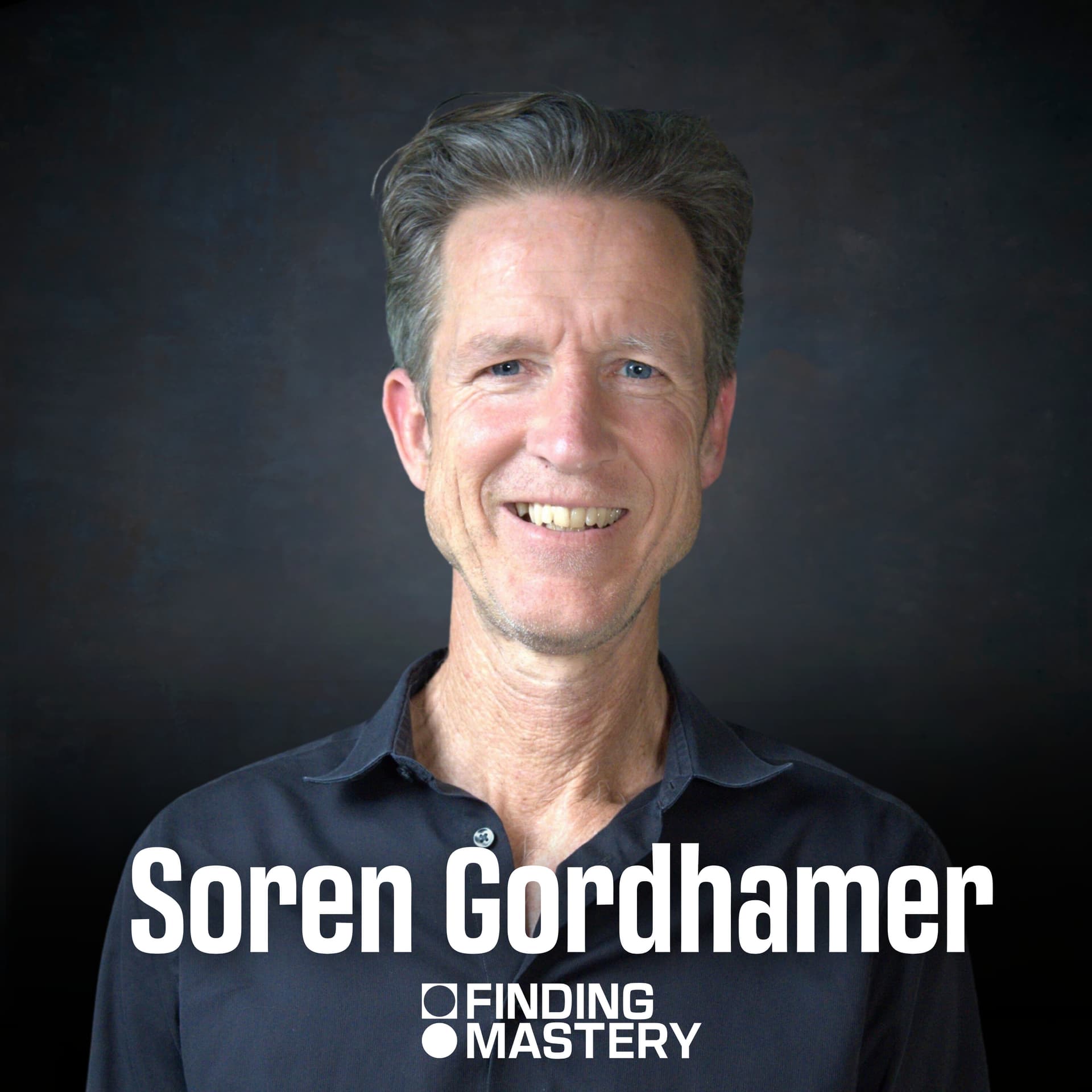
Soren Gordhamer (Soren Bordhammer), founder of Wisdom 2.0, a global event series at the intersection of wisdom and technology. He hosts conferences featuring major wisdom teachers and tech leaders. His book is The Essential: Discovering What Really Matters in an Age of Distraction.
Key claims
People run on unconscious “narratives” built from hurt; awareness of the inner “voice” creates choice and freedom. External success (even massive wealth or fame) doesn’t resolve internal unresolved pain. Growth requires befriending the “younger part” rather than covering it up. Awareness without compassion turns into judgment. AI increases the need for a “renaissance” of spirituality/awakening.
Notable examples
Gordhamer describes his teenage depression and a life strategy of becoming “a success” to cover shame after being ostracized in Lubbock, Texas, and after his mother left. He also discusses two divorces and how narratives about unworthiness and perfection shaped relationships, later worked through with therapy during COVID. He uses elite-athlete practice and a Zen chalkboard line story to illustrate reference points and changing one’s relationship to the challenge.
Written by AI. May contain mistakes. Listen to the episode to check what was said.
Chapters
Tap a time to open that second in VOThe Necessity of Spiritual Awakening Amid AI
0:00 to 0:28
Explore the need for spiritual growth in an age dominated by AI.
“The real question is whether we as humans will advance with it.”
The Journey of Soren Gordhamer
0:58 to 1:51
Discover Soren's journey and insights from his new book, The Essential.
“Soren is the founder of Wisdom 2.0, a global event series at the intersection of wisdom and technology.”
The Transition from Observer to Teacher
1:51 to 4:00
Soren discusses his evolution from an observer of wisdom to a teacher.
“Soren, I am so happy that we're getting this time to be able to do this.”
The Challenge of Vulnerability in Writing
4:00 to 7:22
Soren opens up about the struggle and responsibility of sharing personal stories in his writing.
“You know, I think when we go out to write a book, we don't know exactly what it wants to be.”
The Challenge of Vulnerability in Writing
8:10 to 9:23
Soren opens up about the struggle and responsibility of sharing personal stories in his writing.
“Some of the most important work we do happens in conversation.”
The Challenge of Vulnerability in Writing
9:41 to 10:51
Soren opens up about the struggle and responsibility of sharing personal stories in his writing.
“It's the time that you lose when the fit is off, the momentum that stalls when that fit doesn't work.”
The Power of Presence and Sharing Hurt
10:51 to 14:00
Soren reflects on the importance of presence and sharing personal pain in healing.
“One of the teachers, I think it might be Thich Nhat Hanh, had suggested the greatest gift you can give others is your presence, right?”
Navigating Hurt and Identity
14:00 to 18:19
Explore how personal narratives shaped by hurt influence identity and strategies for success.
“When did you realize that that was the strategy you adopted?”
Reflecting on Personal Relationships
18:20 to 22:00
Discussion on the impact of childhood experiences on adult relationships and the challenge of vulnerability.
“She had five kids, and she just couldn't handle being in this role in this relationship.”
The Role of Judgment in Growth
22:01 to 25:44
Understanding how self-judgment can hinder personal growth and performance.
“So imagine if somebody walked around every day with you and just told you everything you did wrong.”
Show all 28 chapters
Reference Points in Mastery
25:45 to 26:58
The importance of reference points for decision-making and understanding in high-performance environments.
“And she gets a second piece of chalk and she draws a second line next to the first.”
Reference Points in Mastery
27:05 to 28:07
The importance of reference points for decision-making and understanding in high-performance environments.
“Here's a stat that surprised me when I first came across it.”
Reference Points in Mastery
28:32 to 29:34
The importance of reference points for decision-making and understanding in high-performance environments.
“You can do everything right during the day, but if the night consistently falls apart, so does recovery.”
Understanding Our Inner Narratives
29:34 to 31:50
Discover how our internal narratives shape our lives and choices.
“There's a path to actually becoming aware of these unconscious patterns and having more choice.”
The Call for a Spiritual Renaissance
31:50 to 34:06
Examine the need for deeper understanding in a world of AI.
“because the artificial intelligence is going to get so powerful and it can either be used for good or for bad.”
Exploring Our Purpose
34:06 to 38:10
Discuss the concepts of primary and secondary purposes in life.
“Are you pointing to like the concept that there's a soul?”
Embracing the Unpredictable Moment
38:10 to 42:01
Learn the importance of being present and embracing unpredictability.
“And because it's unknown and unpredictable and unfolding, is it scary or is it safe?”
Exploring Spiritual Orientation
42:01 to 47:17
Discussing the importance of being in relationship with the world and the fear of questioning spiritual beliefs.
“And I'm not like people have to have this orientation.”
Inner Power and Teachings from Thich Nhat Hanh
48:35 to 56:00
Insights on inner power, teachings of Thich Nhat Hanh, and the importance of presence and compassion.
“So by the way, this is more for the listener, is that Thich Nhat Hanh is a mentor of mine.”
Lessons from a Zen Teacher
56:00 to 58:08
Explore the teachings of a Zen master and the importance of experiencing life fully.
“and we can get all the teachings that we need.”
Transformative Practices and Personal Reflections
58:08 to 1:01:28
Discussing personal meditation practices and the impact of significant teachings.
“The energy in which you're answering that call is very different having that little moment so I think it lives with me in different ways, but I don't have that as a formal practice right now.”
The Intersection of Wisdom and Expression
1:01:28 to 1:05:46
Offering insights on sharing wisdom and the value of personal experiences in teaching.
“who's been another teacher of mine from a distance and somewhat up close.”
The Intersection of Wisdom and Expression
1:06:01 to 1:06:28
Offering insights on sharing wisdom and the value of personal experiences in teaching.
“For me, it's a great way to switch on my mind, to ready myself to take on the day.”
AI and the Future of Wisdom
1:06:43 to 1:10:00
Examining the balance between AI advancements and the need for human wisdom.
“of wisdom and technology for 20 years, 15 years.”
Practices for Grounding in a Fast-Paced World
1:10:00 to 1:13:23
Learn practical strategies to feel grounded and connected despite technological overwhelm.
“and of accessing knowledge at our fingertips with wisdom?”
The Impact of AI on Human Interaction
1:13:23 to 1:16:33
Explore how AI algorithms affect our social interactions and personal well-being.
“The second one is nature has a way of fueling us that I don't know many other things do.”
Meditation and Personal Connection
1:16:33 to 1:19:34
Discover the different ways to incorporate meditation and personal reflection into daily life.
“A person listening might be, don't you fall back asleep?”
Finding the Master in Everyday Interactions
1:19:34 to 1:21:34
Learn how to recognize and relate to the wisdom in every person you meet.
“I can tell you what my curiosity now is.”
Transcript
Automatic transcript. May contain errors.0:00With AI, artificial intelligence, emerging in our culture right now, there needs to be a similar renaissance of spirituality or of awakening because the artificial intelligence is going to get so powerful that it can either be used for good or for bad.
0:13Dr. Michael Gervais:The question is not if AI will advance. It will. The real question is whether we as humans will advance with it. A world where AI takes over and we lose contact with humanity, we lose contact with our own feelings, that is a more dangerous world. Welcome back or welcome to the Finding Mastery podcast where we dive into the minds of the world's greatest thinkers and doers. I am your host, Dr. Michael Gervais, by trade and training, a high performance psychologist. Now, the idea behind these conversations is really simple to sit with the extraordinaries and learn to really learn about how they work from the inside out.
0:49Dr. Michael Gervais:And in this week, we're joined by someone who is an expert at doing just that. I've known and respected him for a long time. my friend Soren Bordhammer. Soren is the founder of Wisdom 2.0, a global event series at the intersection of wisdom and technology. I meet with a lot of the tech founders and some of them are working their ass off to like build this company, to sell it, to take it public. I see them when they sell it and they always hope, oh, this is the moment that I've been waiting for. Finally, this desire in me gets satiated and they get everything they want and they're absolutely miserable because no shift in the external world can satiate what is unresolved in the internal world.
1:26Dr. Michael Gervais:His new book, The Essential, discovering what really matters in an age of distraction, invites us to stop performing and start beating. Some people see the inherent beauty that they are, but they're not willing to see any of the dark. And some people, all they do is they see the dark and they judge themselves. And so can we hold both of those as truths? With that, let's jump right into this week's conversation with wisdom teacher and my friend, Soren.
1:58Dr. Michael Gervais:Soren, I am so happy that we're getting this time to be able to do this. We've been friends for a long time. This is a great celebration. And before we dive into all the different places that we're going to go, because I know how our conversations go, can you give a flyover about why this book, why now, and really what were you trying to do by introducing this, your writing to us? Well, first, it's wonderful to be here again with you, Mike. The book's called The Essential, Discovering What Really Matters in an Age of Distraction. And it is what it says it is. How do we discover and harness that which is most essential in our lives?
2:36And I think in this day of social media and pings and all the things that we get that distract us, how do we actually come back to what is true and real and we live from that place?
2:45Dr. Michael Gervais:One of the challenges, I think, for us in this conversation is that we've been friends for a long time. And I want to have a conversation that helps me better understand you, but at the same time, have our community really get the wealth of information and wisdom that you come from. So if we started with this hinge idea that when I first met you, you were an observer of teachers. and I'm talking like the heavies of wisdom, you know, call it Thich Nhat Hanh, Jon Kabat-Zinn and, and, and. Okay. And now in this book, I see you as a teacher. So from the observer and the student to a teacher, I do want to understand that arc.
3:37Dr. Michael Gervais:First, I want to start with your book that you just wrote, it's really intimate. It's really clear. It has a deep tone of honesty. And at the same time, I think your teachers, the teachers would say, oh my gosh, it's an unbelievable reveal of wisdom. So you hit the depth on both parts, the depth of wisdom and the depth of intimacy. So well done. Thank you. I'm so happy for you. Thank you. That means a lot. Yeah. That means a lot. You know, I think when we go out to write a book, we don't know exactly what it wants to be. We start out with an idea, and then it tells us how it wants to unfold. And as I started writing, I didn't have a lot of those personal experiences in it, but something felt kind of stale.
4:27I felt like I was repeating other people's words, and I just didn't feel like authentically connected to it. And then I started going back in and going, hold it, where did this insight come from? What was the source of this insight? Oh, the source of that insight was when I was depressed as a 16-year-old. Oh, yeah, what was that experience like? Let me tell that story. Because that story says more than me just talking about depression from an analyst's perspective. It brings people into the actual experience. And so for me, it was like a review of my life and different points of my life. And then trying to really get back to, can I share the experience of that?
5:03So the person who's listening to it actually feels it. Because I actually think words can be kind of dry and pointless in some ways. It's the energy and it's the passion. It's the authenticity behind the words. That's what really matters. And so I feel like I had to go really deep into myself and be like, all right, where was this insight from? And how can I share that as vulnerably and openly as I can for the service of others?
5:29Dr. Michael Gervais:Did you struggle with doing that? Or did it feel like it was something different? like it was your, it was a responsibility to be honest. Like I know that when I wrote the first world of mastery, the first time I submitted it for review, the feedback was like, you're not in it. And I didn't want a book about me. And then, you know, and then when I was writing, I was like, whew, like how much of this do I share? And then as I was going, I was like, oh, this actually feels really healing in some respects and honest in others. So was this hard for you or was this like super eloquently easy? Both.
6:10So, you know, for 17 years, I've been a host. I host a conference, Wisdom 2.0. You've spoken several times. All the big teachers have spoken, big tech leaders. My job as a host is to prop up the person that I'm talking to, right? It's not about me. It's about what is your wisdom that you have to share? And my job is to create as clear an avenue for that person to share what it is he or she has to share. So I try not to bring myself in too much. Well, my opinion about this is, well, I have this lesson too. It's really about that person. So I had 17 years of training about how not to bring myself into a story because I think that was my skill set, is my skill set as a host.
6:48So it's almost like a different muscle. Like I'd been working this muscle. I was like, oh, there's this other muscle over here that needs attention and was kind of screaming at me because it was really comfortable being a host and highlighting other people's wisdom. It's like, it became so easy that my psyche was like, Soren, that's too easy for you. Like, you're not learning in that same way. Like, what do you have to share? Like, what is it that you really feel like if you were on your deathbed and you had something to pass on, like, what would it, what would those insights be? So that muscle was getting over the sense that I had something to share and I was worthy to have something to share.
7:22And once I felt that I really could connect to that sense of worthiness, then the flow of it was really smooth. And like, even now when you talk about vulnerable, I'm like, oh shit, what did I actually say? Because to me, it's just, that's what the book wanted to be. And it's like, tell this story. And so I was like, I was trying to be honest to what the story wanted to be. And my hope is that suffering unites us, right? Pain unites us. We think success unites us. I think it's suffering and pain that unites us. And if we can talk intimately and powerfully about our own suffering and pain in a way that shows a path to be free of that pain, I don't know if there's a greatest service we can do in the world and provide that for people.
8:07Dr. Michael Gervais:Bonnie Master is brought to you by Granola.ai. Some of the most important work we do happens in conversation. It's in the meeting. It's in the one-on-one connection. It's the moment someone shares an idea that could shift the direction of everything. And the greatest gift you can offer in those moments is your full attention. That's exactly why I love Granola. Granola is an AI notepad. You take down the notes that matter to you, and Granola transcribes the entire conversation right beside them. So what does that mean for me? It means that I get to be fully present, to listen deeply, to give real attention to the details and the nuances, the thing behind the thing.
8:43Dr. Michael Gervais:Knowing that Granola is there taking notes from me behind the scenes. And the best part, it works right through your device's audio, which means it integrates seamlessly into your video conferencing tools that you already use. No big setup, no awkward bots. All I do is let folks know that Granola is transcribing in the background. Happy days. We're off and running. I use it every day. And what's remarkable is how it helps turn a conversation into something useful. When we're done, I've got a clear, organized recap of what's said, along with a clean list of action items and clear next steps. Nothing slips through the cracks.
9:14Dr. Michael Gervais:That is the gift of granola. I think you're really going to like what they're doing. If meetings are eating up your day, granola is a no-brainer. You can try it totally free. Just head to granola.ai slash mastery. That's G-R-A-N-O-L-A dot A-I, granola.ai slash mastery to get your time back. Try it for free at granola.ai slash mastery. Body Master is brought to you by LinkedIn Jobs. If you've ever hired for a small business, you know the real cost isn't just the salary. It's the time that you lose when the fit is off, the momentum that stalls when that fit doesn't work. And that's the pressure of having to get it right while you're still running everything else.
9:54Dr. Michael Gervais:That's why I'm paying attention to LinkedIn Hiring Pro. It's built for the reality of hiring when you're operating lean. You describe the role in playing language, and then Hiring Pro helps you draft the job post, surface the right candidates, and then narrow to a short list without turning hiring into another full-time job. And when applications start coming in, it doesn't leave you buried in resumes. It streamlines screening, including AI-powered interviews for initial conversations. How about that? So that you can spend less time searching and then more time connecting with the people who match what you need.
10:24Dr. Michael Gervais:With Hiring Pro, you can hire with confidence knowing you're getting the best talent for your business. In fact, those hiring with LinkedIn are 24 % less likely to need to reopen a role within 12 months when compared to their leading competitor. Join the 2.7 million small businesses using LinkedIn to hire. Get started by posting your job for free at linkedin.com slash mastery. Again, that's linkedin.com slash mastery. Terms and conditions apply. One of the teachers, I think it might be Thich Nhat Hanh, had suggested the greatest gift you can give others is your presence, right? And so when you are present with another person, you see them.
11:02Dr. Michael Gervais:Yeah. And sometimes they see you, but you see all of them. And that includes the suffering. That includes the hurt. That includes the beautiful dreams and the compelling futures that they want to co-create. When it comes to, I'm going to go back to this, when it comes to sharing your hurt that you wrote about in the book, it sounds like you're really okay with it. Can you talk about the work that you did to get to that place to share hurt eloquently and publicly in this case? Yeah. And the publicly experience is still unfolding because it just came out. So how it will be to see a bunch of people who've read the book, that experience hasn't quite happened to me yet because only a handful of people have read the previews of the book.
11:54Dr. Michael Gervais:Okay, do you think anyone's going to say to you, Boy, Soren, maybe you should put this one back. Maybe you should claw this one. Buy all the copies because this is not going to... I don't think so. I don't think so either. Do you think, even if it was a marginal, just marginal... I don't think it's my business what people think of the book in the deepest level. My business is to write the book that I want to write. If 99 % of the people come up and tell me this is not the right book, I'll consider it. But I know in my heart why I wrote the book. and I know in my heart what the book wanted to be.
12:26And I was very, very true to that. And so that is my kind of like ground.
12:31Dr. Michael Gervais:Okay, go back to the question I'm asking. What was the work to get to, before we get to the hurt, what was the work to get to the clarity? I know my role in writing this book. You know, over the years, I've learned to tap into what is the authentic expression of true me and what are my old patterns and neuroses and traumas that I'm playing out in life? And in order to really understand that, I think I have to go back and look at what is the pain and the suffering that I've been through. How did that shape my personality? And how is that personality still longing for something to happen to make him feel whole?
13:10So for me, and I talk about this in the book, I grew up in this small town in Lubbock, Texas. We were one of the few non-Christians. You know, kids would tell us we're going to hell because we weren't going to church. And it was really, really painful. And then my mother left and we lived with my father. And so there was even more shame and more isolation. And as part of that, I thought, I want to get rid of this shame and isolation. How am I going to do it? I'm going to be a fucking success. I'm going to be so worthy and so important and know all these famous people that I will cover up that shame that has been so deep inside me.
13:43and no one will ever see that again because there'll be all these stars around me and all this success around me. Nobody will be able to even glimpse that there's this other part that still has this deep shame and pain. So that became my strategy. And at some point... Was that a conscious strategy or did you... A survival strategy, I think.
14:02Dr. Michael Gervais:When did you realize that that was the strategy you adopted? I would like to say... Last year. Yeah, I would like to say, it was this weird thing. It was like, What if you imagine your entire life was partly inspired by love and beautiful, but it was also partly inspired by an avoidance of a feeling? Well, you have a quote. Our identity often comes from the output of our hurt. Yeah. So when I wrote that down to, we're talking about it now. I don't think it's a what if. I think it's an yes. Yeah. We have, to your point, suffering and hurt. I like that you use hurt as opposed to what traditional teachers would call suffering.
14:47I'm not kind of pushing against suffering, but the word hurt feels more available than like this deep kind of tormented suffering.
14:59Dr. Michael Gervais:But like, so I've got moments where my feelings, my identity have been hurt. and I clearly know because of the work I've done and the people in my life that have held mirrors up for me to say, hey, do you realize? No, no, no, no. So those stories though, this is really great. So my experience, people can have other experiences. My experience is there's some level of hurt and then there's a narrative that we begin to play out, right? That's mainly unconscious. I'm success. I'm strong. I'm smart. I'm whatever. I'm responsible. I'm responsible, right? And those become like a survival strategy. They're not our authentic expression.
15:42And then we go in the world and we actually find ways sometimes to succeed based on that strategy, based on those narratives. But life being the brilliant thing that life is inevitably has us question those narratives. We get to a point, and I see this with founders. I meet with a lot of the tech founders, and some of them are working their ass off to build this company, to sell it, to take it public. I see them when they sell it. I see them when they take it public. And they'd always hoped, oh, this is the moment that I've been waiting for. This is the moment where finally this desire in me gets satiated.
16:15And they get everything they want. And they're absolutely miserable. Because no shift in the external world can satiate what is unresolved in the internal world. But the story running their life was someday I'm going to be a success. And they get everything and they don't feel internally like they feel like a success. And they're like, I know, I just need to make a bigger company. So then they keep on the hamster wheel thinking that there's still something out there that once they get it, it's going to satiate this feeling inside. And the reason that that doesn't satiate is usually, I like to use the phrase younger part.
16:48This is Dick Schwartz's work with Internal Family Systems. Some people know about it. I really appreciate it. He's like, there's just simply a younger part inside you that needs your attention and needs your care and needs your welcoming. And you don't have to cover that part up. you actually kind of need to befriend that part. And that's what I had to do. I had gone through divorce, and this is how, I don't think I actually, I wrote a little bit about in this book, but the more longer version is I'd been through a divorce. I have a son, been through a divorce the first time with his mom. And it was pretty tough because she, not to go too much in detail, she fell in love with somebody else.
17:25And then I'm kind of trying to survive. My son is young. and it's like, I kind of just moved on past that experience, to be honest with you. I was living in New Mexico and I felt it a little bit, but I was just like, shit, we got to keep going, right? Life moves on. Then I got into a second marriage, a second divorce. So these are two divorces. And I was like...
17:44Dr. Michael Gervais:Must be them. For sure them. For sure them. And so I was like, what is going on here? What? There's something that I'm not seeing. Did you... Yeah. Yeah. Did you open up like, so she fell in love with somebody else's like the easy narrative, but it was, you had a part in that. Thank you. Of course. Yeah. So what was your part in that? I think my part in that, let me, maybe my part in all of it was that there was a part of me when, when I, when my mom had something of a nervous breakdown when I was 12, she realized she was not married to the man that she loved. She had five kids, and she just couldn't handle being in this role in this relationship.
18:25So something in her was just like, you got to get the hell out of here. So she left, and then I was raised by my father. And so that instilled a deep pain in me that I'm basically unworthy. Why would your own mother leave you? There must be something wrong with me. That was the narrative that happened, because I couldn't come up with any other narrative at the time. I couldn't think, like, oh, my mom's going through enormous pain and suffering. and that was beyond my capacity. I was about 12.
18:51Dr. Michael Gervais:And that's what a 12-year-old is supposed to do. The world still revolves around the 12-year-olds. Yeah, and you need your parents. You can't think negatively, at least I couldn't think negatively of them and still orient in the world. I had to come up with a different narrative. So I think in a lot of my life, particularly my intimate relationships, that narrative was at play. I have to be a really, really good person and kind of not be true, not express myself, not set boundaries, not like be honest. Because people leave if you're a mess. If you're noisy. Or even just imperfect. Yeah, like I have to be perfect or somebody's going to leave me.
19:25And that pain and hurt was so strong that my system was trying to avoid it. And by trying to avoid it, I played it out in different ways. Not to say there weren't beautiful aspects that also happened in those engagements.
19:39Dr. Michael Gervais:So your first wife, maybe second wife, never really got to know you. And so how can they fall in love with you if they don't really know you They get a version of you that is trying to protect yourself from people leaving. Yeah. And I think that's probably true in almost every relationship, that there's parts that we're not quite willing to show. And there was a pretty big part for me. So I'm not saying I'm through with all of that. But there was a pretty big part for me that I hadn't really understood. And so my friend, a dear friend of mine, we were talking and he said, I have a therapist I want you to work with.
20:14I was like, great. Um, and so he connected me to the therapist. So during the COVID years, I had like a lot of work that I did with this one really helpful therapist who worked with me.
20:25Dr. Michael Gervais:Isn't it amazing work? Like I know I'm biased. It's my training, but to sit with a person who, if you get it right, that they really care about trying to help you unlock to see yourself in an honest way. It is great. It's hard because they, if they do it right, they hold up a mirror and They don't let you move away from it. Yeah, yeah, yeah. I write, there's a sentence I have in the book, which I really appreciate it. And it says, in order for us to kind of be who we came here to be, who we truly are, we have to go everywhere we don't want to go and see everything we don't want to see. And at the same time, know the inherent beauty that we are.
21:04And I think when we lose either of those, we get a little bit off. So some people see the inherent beauty that they are, but they're not willing to see any of the dark. and some people all they do is they see the dark and they judge themselves and criticize themselves and i did this and oh i was being wrong there whatever and so can we hold both of those as truths we are this inherent beauty of life we're like the the big bang was 13.8 billion years ago and we're just expressions of these big bangs we're like these like we're just like these like wonderful amazing creatures each one of us and there's things for us to learn and the amount of compassion that we need for ourselves as we go through this process is one of the biggest things that I see in the journey because people then feel the awareness actually turns into judgment.
Read the full transcript
21:54And that's when I think it's very, very hard for us to allow our hearts to open in deep
21:59Dr. Michael Gervais:So that one was awareness turns into judgment. So imagine if somebody walked around every day with you and just told you everything you did wrong. You could have used that word instead of this word, you walked a little fast, you drank a little quick, whatever, all the judgments, and you start to believe those judgments. And so it's like, there's this shining, this light of awareness that it may actually all be true, but it's not very helpful at all because our system is not really capable of bringing that forth. I love that you bring this up because this is the world that elite athletes live in.
22:28Yeah.
22:28Dr. Michael Gervais:So practice is more intense than game day for some reason in one respect, because in practice, you're you have to get to the edge the messy edge where you make mistakes but you unlock something to grow and you have to do it in front of people that are determining if you get play time or not wow you do it in front of your peers that are trying to take your spot in the roster and everything that you do and don't do is publicly statted and force ranked against every other person in your entire universe of elite athletes as well as your teammates and it's really easy easy to get screwed up. If you have a coach that says a three to one ratio up to a seven to one ratio, Soren, that what you just did is amazing.
23:14Dr. Michael Gervais:Like do that again. Oh, I don't know if you can do that again. That was so good. Soren, like the way you held your hands, like, Oh, Hey, everyone, you see what Soren did to the one, which is like, Soren, move your fucking feet. How many times I Like I tell you, like it's that, you know, like that aggressive three to one, seven to one. And if you get those magical folks in your world, it's awesome. But if you get the ones that are the other direction, it's problematic to thrive. Well, even if you don't have those coaches, effort is directly equatable to self-judgment. The harder you try, the more likely that you're going to judge yourself as inadequate.
23:49Okay. Interesting idea. So if I don't really try very hard, I'm probably not going to judge myself. But if I want to be the absolute best at everything - Yes. But if I want to be the absolute best at something, the judgment has to turn on. Now, the question is, do I can take that judgment not personally, or do I make it about me? And I think that the greatest people I see, they understand that, but they don't have the self-image and the self-reflection. They don't take that personally. And so, therefore, they're able to take on lessons and move through them faster.
24:20Dr. Michael Gervais:What kind of coach are you to yourself? Interesting question. I love challenges and I love to be a little bit on the edge and this is why AI is super interesting to me there's an example that they gave of growth mindset that I've always loved, I think it was Carol DeWick in her book which I know you're very familiar with and there was this kid and there was two kids, one had growth mindset and one didn't and there was this really hard challenge that they were presenting the kid with and I guess he looked up at the teacher and he couldn't figure it out and he looked up at the teacher and said, boy, do I love a good challenge.
25:00And that's the energy that I try to cultivate and I look at what's going on with our country now and people are like, oh, what's AI going to do? What's climate change going to do? What's this new president going to do? Isn't it amazing to have a good challenge? Well, we got one right now. Isn't it awesome? Yeah. It's going to bring out either the best or the worst in us and we have an opportunity for it to bring out the best in us. And let's rise up to that challenge. I've always liked the Zen story. You may know it where a teacher draws a line on the chalkboard. And I always like to say she, I don't know, traditionally it's a guy.
25:32She asks her students, how do you make this line shorter? And so some students say, you erase them at the top. She says no. Erase them at the bottom. She says no. Erase them in the middle. She says no. They're like, how do you make that line shorter? And she gets a second piece of chalk and she draws a second line next to the first. So now there's this line and this line.
25:52Dr. Michael Gervais:First line's short, second line's long. Yeah, and she says, now that first line is shorter by doing nothing to that first line. But you expand your heart and you expand your own ability. Inevitably, that will then change because all of a sudden, you're not changing the thing, you're changing your relationship to the thing. So I think this holds both for mastery, high performance, and wisdom, is that reference points really matter. In the understanding and revealing wisdom, reference points really matter. In mastery and environments of high performance, as many reference points as you have gives you context to be able to make a informed guess on how something could go, right?
26:40Dr. Michael Gervais:In environments of speed and consequence, there's not enough time to really process. And so reference points become - Like race car driving or something. Yeah, right. So as many reference points as we can experience, it provides some sort of anchor for insights and understandings later. So I love that story. Thank you for bringing that forward. Bodymaster is brought to you by Momentous Fiber Plus. Here's a stat that surprised me when I first came across it. Nearly 95 % of us are not getting enough fiber. And the thing is, most people think that they are. That used to be me. I eat well, I'm intentional about whole foods, and I still wasn't hitting it consistently.
27:19Dr. Michael Gervais:And fiber matters. It's one of those quiet, unglamorous fundamentals that shapes how the rest of your system runs. Your gut, your energy, how well you absorb, everything else you're putting in. So when Jeff Byers and the team at Momentus reached out about Fiber Plus, I paid attention. I've been using their products for years, and the reason I keep coming back to them, it's pretty simple. They don't chase trends. They go deep on the fundamentals and they build it to a high standard. And the same holds true for Fiber Plus. It's clean, no artificial flavors, no unnecessary additives. The cinnamon flavor uses real cinnamon bark powder and it tastes great.
27:53Dr. Michael Gervais:And I don't usually say that about fiber supplements. I mean, they built this thing right. Like everything they make, Fiber Plus is NSF certified for sport, which is why it's trusted by over 200 professional teams and athletes. That's the momentous standard. And that's why it's been part of my routine. If you want to upgrade one of the most overlooked foundations of your health, head to livemomentous.com slash finding mastery and use the code finding mastery for up to 35 % off your first order. Again, that's livemomentous.com slash finding mastery. The code is finding mastery for up to 35 % off.
28:28Dr. Michael Gervais:Finding mastery is brought to you by Oslo Sleep Buds. Here's something I come back to with almost every high performer I work with. You can do everything right during the day, but if the night consistently falls apart, so does recovery. That's exactly the problem Oslo set out to solve, and that's why I invested in the company. I love what they're doing. They just launched SleepBuds 2. This is the next generation of the world's smallest earbuds built for one thing, sleep. And once you're out, once you're falling asleep, they switch to built-in sleep sounds on their own. Over time, the app even shows you personalized sleep patterns so you can see what's actually helping you recover.
29:07Dr. Michael Gervais:Sleep is a skill. You can train it. And the right tools make it easier to protect. Protect your sleep. It matters. Do not leave your recovery up to chance. Right now, you can get$20 off with the code FINDINGMASTERY at OsloSleep.com. Again, that's FINDINGMASTERY at OsloSleep.com for$20 off.
29:34Dr. Michael Gervais:what are the key insights from the book if you if you were to be really crisp with them what would be the key insights for you in the writing of this book yeah the the number one piece we we touched on a little bit which is is we have narratives that run our lives we have a voice in the head we all do and if we don't understand that voice in the head it drives us even though we're not accessed to the driving wheel. And so we think we're going to Dallas and we end up in San Francisco because there's these unconscious patterns that are behind the scenes taking us where we think we don't want to go, but then there's these other unconscious patterns.
30:12There's a path to actually becoming aware of these unconscious patterns and having more choice. And when we don't look and inquire inside our own capacity to be aware and own mental world and physical world, We can still compete and play, but we don't have near the superpower that we have when we become curious about that dimension. And we keep thinking that the external world, if I just get the right things in the external world, this internal world will be solved. And I've seen the people that have succeeded beyond wildest dreams in the external world, like$100 billion plus, like their value, not their company's value, or the most famous person you can imagine.
30:49And you have too. It's like, it doesn't mean their internal world shifts at all. So I feel like the biggest teaching is if we take care of the inner world and do the hard work of really seeing what's there to be seen and embracing and befriending all these parts of ourselves, particularly the parts that we don't really like and we want to get rid of, there's a freedom that releases in that expression. And that life then mirrors that energy. It mirrors that frequency. So life kind of naturally gets better, not because we're trying to make it better, but we're trying to kind of make ourselves better.
31:22And to me, that's kind of the biggest insight. If we begin to live from that place, doors open and things shift and life unfolds in a different way, then we're resistance, we're holding, we're kind of in more of this narrative of this is me and this is what I need to have happen. And to me, that's the biggest shift that we need now. And I think with AI, artificial intelligence, emerging in our culture right now, I feel very strongly that there needs to be a similar renaissance of spirituality or of awakening or of whatever you want to name this, because the artificial intelligence is going to get so powerful and it can either be used for good or for bad.
31:57But unlike nuclear weapons, which is just limited to certain countries or certain people, we're all getting the nuclear weapon. We're all getting access to AI. And so it becomes almost imperative that we do the work on ourselves so we know how to use that effectively.
32:11Dr. Michael Gervais:Insight One, we have this inner world. We've built narratives. much of those narratives are um squarely resting on hurt and so we need to examine to really understand that yeah insight number two is that once we become more aware of those non-conscious patterns right then we become internally powerful and the third is we're going to need a resurgence of a deeper dimension of our human experience to combat the purely surgical cognitive right angles of AI. Yeah. And I'd say the last one I would add to that would be, as more we're in that space, that creative space, we're less trapped in our own narratives about how life should be and how we should be and all the things.
33:02There's a creative force that's unleashed that we can apply to whatever we do and to whatever situation that we're in. And I think the work, like me writing a book, the more I freed myself, the more the book just came. And the more I didn't free myself. Did you write this in a flow state? Most of it felt like a flow state to me. There was like a conscious editing that happened afterwards. But I've been inspired by Rick Rubin, and Rick Rubin's work has touched me. And I really like what he said, that you write a book or you do a creative art, it's none of your business, whatever the people think about it.
33:33You do it for you. And so I was very honest to myself. What does this want to happen? What does this want to be? And I have a chapter in there where we talk about what do I want to do? was such an interesting question because I think that's an important question, but maybe the deeper question is, what wants to come through me? And you're harnessing a deeper intelligence and you're realizing your life is not an accident. You actually came here to participate in some kind of karmic unfolding. And when you tap into that, that's where there's like a power, a superpower that we can all harness. And I feel like that's the invitation of our time is to tap into that.
34:07Dr. Michael Gervais:Are you pointing to like the concept that there's a soul? Are you pointing to a collective consciousness that gets bundled in this thing called Soren or bundled in this thing called Mike? I think for me, it's more like there is an intelligence of the universe that we can all tap into at certain times. And when you meet someone, for example, and they say something to you, they have some project they want to do or there's some shift. And you meet that person and you can tell this is not driven by them. This is driven by something much bigger than them. I can feel that resonance like I feel like something is coming through them and like watch out is there in your philosophy is there a god I just think it is like universal intelligence and it's not a human or person or like one entity that has a beard and sits in the clouds and stuff but I do my experience and my sense is there is this kind of innate intelligence that we all are so it's not like we aren't that.
35:09We are that expression, and we all have access to that.
35:13Dr. Michael Gervais:Did that innate intelligence cause the Big Bang or an accident from it? That's a great question, and I don't know. But I know that it is that expression. If you had to know right now, which one? I would say it caused it. Caused it. So you go like an unmoved mover, clockmakers, or watchmakers, watchmaker. Okay. And okay, boom. It happens. Here we are. in this form and this dance. And what are we trying to do? Well, so this is a great question. Is all humanity trying to do something else or is each human have their own karmic assignment that's wanting to play out? And I've always liked Eckhart Tolle's we have looking at this.
35:55He says we have two purposes. We have a primary purpose and a secondary purpose. The primary purpose is to be right here right now because this is the only moment we have. It's hard to argue with that, right? It's hard to argue. The past is a dream. The future is a dream. This is all we know is I'm here with you and consciousness is emerging. Here we are. That's all we know. And then the second...
36:16Dr. Michael Gervais:Wait, before we get to the second, there's a primary purpose. Primary. What is your responsibility? To be as present as possible in this moment. And what are you doing in this moment to be as present as possible? When I notice my mind going, what's going to happen in the future? What happened in the past? What do I say to impress him? What do I say to impress your listeners? is that the narrative that is pulling you from from what? from being present with this moment so for example if I'm thinking are people enjoying this I need to say something really brilliant and wise and like touching I need to be more vulnerable whatever the thing is right versus like oh can I be in the discomfort so is this moment is this moment uncomfortable?
36:57no but I mean being in the not knowing so for example if I I see this a lot So if I'm uncomfortable with silence, I have to constantly create words because I can't be in the silence.
37:08Dr. Michael Gervais:So as part of your responsibility to be a good custodian of your primary purpose is to be here. And to notice what takes me out of here. And there's themes. Yeah. There's tripwires and themes and streams and there's patterns based on the narrative that's oftentimes built from hurt. Yeah. Okay. And one of the ways that we do that is we come in with our record player playing. Let's say you interview me, and I just tell the same stories I've told 50 times. You see these with people who give a talk. It's the same talk, and it's just on record. And I think the opportunity in life is to get out of that record and actually be here.
37:44And what is wanting to emerge between us right now in this moment, unedited and unscripted, and it's just like life is unfolding, and we're just a part of that unfolding. And to me, that's super rich and exciting.
37:55Dr. Michael Gervais:And do you approach the unfolding, unpredictable, unknown moment? Do you approach it, for the most part, let's say, as something to explore or something to perform? In my ideal moments, something to explore. To explore. And because it's unknown and unpredictable and unfolding, is it scary or is it safe? The energy is unknown, right? Because it's emergent. But the form that it takes usually has an expression. so that's the second purpose which is just like what's my the the the the one one purpose never changes it's to be in the timeless dimension right here right now to the best of our possibility and then to listen to what is the form that wants to take for take shape in me is it a project is it a is it a podcast is it a book is it a new job is it a non-profit is it some change of career like there's usually something that's emergent that wants to take shape now if you ever get too focused on the thing and you forget about this moment you lose you lose the flow because now the thing becomes the thing and you lose track with lose track with the expression of what is emergent in the moment i hope that makes sense yeah so concretely you had a book that you were it's a thing that wanted to emerge a secondary purpose if you will but the primary purpose was to be true to the words and the ideas that were coming forward even if they were dangerous yeah and to be in each one of those moments to the best of my ability and to notice oh when I get this book done I'm going to become so there's no filling of a hole inside me like the Buddha said I teach the I offer the teaching that's glorious in the beginning, glorious in the middle and glorious in the end and I think the most creative acts, most beautiful acts there's a love of the art and there's love in the beginning there's love in the middle and there's love at the end and it's hard but you're loving the hard and then when you release it there's no hope for agenda that says if this happens I will be more complete because it's coming from completion it's not coming from lack it's coming from fullness I think that's one of the beautiful dances of life is are we coming from lack are we coming from fullness and if we're coming from lack what is that lack that we're still feeling?
40:24And in my experience, the most successful people can come from incredible lack. They're still trying to get something to happen so that they feel whole. And the journey is, as you know, Mike, is like, can we tap into that internally so that our expressions come from a different place? Hard to do.
40:41Dr. Michael Gervais:Easier to do when you can really study yourself and know yourself. I think psychology is the study of self and the study of others, but it's really the study of self. How does thought one work with thought two? How does thought one and two work with emotion A and feeling B? And like that broth, when you really study it, you can become playful with it. And I wish there was a pill to take. I wish there was a fast track. There might be someday. The only thing I would add to that is, what if the universe, so all that is true, and then what if you have a relationship with this universal intelligence?
41:20you have a relationship. There's something it's trying to do through you. I don't get that. You don't get that?
41:27Dr. Michael Gervais:Okay. Yeah. And I know that, I think I'm unpopular by saying that, okay? Especially in our world. Yeah. In LA, it depends on which world you're in. In Texas, you're not. No, no. Maybe awesome. No, well, like, okay, the gospel belt would say, what do you mean that we call that God? Yeah. And I grew up in West Texas, by the way. So I grew up in the Bible Belt. I know that world too, and I appreciate that world. And people have different languaging for that world. And maybe this is just my own coping mechanism. And it's not so much a belief, but it's more of an orientation. And I'm not like people have to have this orientation.
42:07But my particular orientation is I tend to get more energized when I look at what wants to come through me being I'm in relationship with this whole world of things. And if I am clear about that relationship, I can see what's needed and I can kind of address what's needed. And that's what I try to do.
42:27Dr. Michael Gervais:That I understand. The part about being in a relationship with, and now I get to fill in the blank, with experience, with what is, with mother nature, which by the way, you and I are quote unquote mother nature. It's not the beautiful pond. it's us. So I totally get the synergy that comes from being in harmony, even when it's like, it seems prickly, but like to find that, that's where the word fluid and flow state comes from, to find that slipstream. I totally understand that. Okay, here's a fear I have. As I'm even questioning these things about a spiritual domain, that if the end of the world happens right now, This is my training early in the Christian faith.
43:14Dr. Michael Gervais:Like, if you don't kind of say that there's a Jesus and a God, like, you're not invited to the club after. You better, the fear-based approach is like, I want to revolt against it. This is my kind of counterculture. Like, don't tell me. This is what I grew up with, and I countered too, yeah. But I'm afraid to question it, because if I stay too long in the open question, and the end of the world happens for me, then I'm not invited to the party, the pearly gate party. Yeah. So that scares me a little bit to even question it, but I'm staying true to the actual questioning. I mean, you can always say it just for us.
43:51Just say it for us. Jesus died for your sins or whatever. Put an asterisk next to it. Yeah, right. Yeah. Or we could look at it like, so what's this party that we're, what is this party that we think is gonna happen?
44:03Dr. Michael Gervais:So I love this idea, heaven on earth, hell on earth. I love that idea that you can be tortured here or find, The most beautiful expression of the harmony of things. Okay, I'm totally down with that. And I love this idea. So my wife and, you know, Lisa, we've been together. I love Christianity. I love aspects of Christianity. I think it's some of the most deepest teachings there are. I love it too. I think the Trinity is like my jam. Yeah. And I have a hard time understanding the language and the universality of what God is. Yeah. Okay. Pause the blasphemy for just a moment. I'm going to go back to this idea that will you recognize me in the next form?
44:46Dr. Michael Gervais:Call it the pearly gates of heaven or reincarnation. Will you recognize me? Well, who recognizes you? Exactly. Okay. So like, for example, Lisa and I. Oh, got it. Of course I recognize Lisa in a crowded mall in somewhere. Okay. Okay. But would I recognize the formless human, the formless essence in a different form, whether that is the afterlife or that is the next go around we get? I love that idea. That forces me like, well, I know you, Soren, in the next form if there is one. And for me to do that, I've got to get past the way you look. I got to get past the words that you use. And I've got to understand the essence of who you're working on being.
45:33Dr. Michael Gervais:And you're saying, look, I'm just trying to get this fluid nature of whatever source is behind me. I got to open the aperture and let it flow through. Okay. So anyways. Yeah. What I love about the Christian faith is the dedication to spirit. And the dedication to... The animation of the, quote-unquote, Holy Spirit. Yeah. The animation of Spirit? That there's something bigger... Well, in my view, there's something bigger than us and also us that wants expression. And that part of that is to be service to the whole, right? And to not just look out for ourselves, but to serve the poor and to be tending to this humanity.
46:15To be part of something bigger. We can't reject any of these parts of humanity that are also us. and I think that call it whatever you want to call it but I think there is a movement of energy of life that I like to try to follow and like right now I'm a lot of focused on AI whenever I focus on the AI world my inner world says yes you need to be doing that now is that just me or is that something that's like guiding me that's telling me yes go this way or is that just my own I don't know well if you do the P &L
46:48Dr. Michael Gervais:it probably makes some sense to focus on wisdom and AI, which is your intersection. But it's more of an energy thing. So in my rational mind, this is great, I think, to talk about, there's all these things like, oh, this makes logical sense, but it might not make intuitive or energetic sense at all. And what I've learned is you have to go with the energy because that's all you have. Otherwise, you're just somebody logically doing whatever you think you're supposed to do, but there's no life force in that. Finding Mastery is brought to you by David Protein. Travel a lot at Finding Mastery and sometimes travel makes it tricky to eat well.
47:24Dr. Michael Gervais:Best intentions and then you're at the airport and then suddenly the only options around you are the ones that you'd rarely choose at home. Something I come back to often is that discipline isn't really about willpower in the moment. It's often about choice architecture. Setting up your environment ahead of time so that the easy choice and the good choice are the same one. That's the role David plays for me on the road. The gold bar, it's their flagship high protein density, great texture, flavors that make it easy to stick with. So when I throw a few in the bag before my trip, I've already made the decision.
47:53Dr. Michael Gervais:The hard moment later takes care of itself. And the team here at Finding Mastery, they love the bars as well. They are ripping through them in the Finding Mastery lab. Salted peanut butter and fudge brownie seem to be the fan favorites right now. They have built something with real rigor in a crowded, sometimes ambiguous space like nutrition. That matters when it's something that you reach for again and again. David bars are now available in major retailers like Walmart and Target. And if you'd like to buy them directly and get a special offer for being a Finding Mastery listener, head to davidprotein.com slash finding mastery, where right now, if you buy four packs, you'll get the fifth one for free.
48:28Dr. Michael Gervais:Again, that's davidprotein.com slash finding mastery.
48:34Dr. Michael Gervais:You were clear in your writings and you've hinted at it in this conversation that there's outer power yeah which is all of the outwardly celebrations big car big watch big money big bank nothing wrong with all of it but yeah you're good and then there's inner power yeah how do you articulate inner power i tell the story in there being with technot han at the uh this um mark benioff's house as ceo salesman the the humble brag here is so good you know like technot han and Benny Hoff. Benny Hoff's house. Yeah, in his house. So by the way, this is more for the listener, is that Thich Nhat Hanh is a mentor of mine.
49:11Dr. Michael Gervais:I've never met him. Oh, wow. I've never met him. Oh, he's amazing. Yeah. He passed away as people we all know, but yeah. Yeah, so the fact that you got to spend time with him. He's a walking Buddha Christ on earth. It was so wonderful to have time with him in this life. I've done a few things with him. I know. I'll send you a picture of us. I'm walking, doing walking meditation with him. Stop. And there's like 20 of us. We're in Santa Barbara. I'm supposed to be happy right now for you. No, but I'm like two feet above everybody else. This is like one white guy, like sticking his head out. And it's like a tie and all this.
49:50Vietnamese walking. It's like a funny, it's a funny picture. But he really impacted me too. I can't get enough of him. He knows suffering. He talks about pain. He talks about hurt. He talks about suffering. And he talks about love. And he talks about compassion. And he's seen everything happen in Vietnam. And he lost so many people and the culture. And he found a way to keep his heart open and to talk about the values that we all care about. And there's this phrase. I actually got this from Stephen Levine. But he said, there's no way to know the truth. You can only be the truth. a lot of people who know the truth and they can repeat and tell you all these things but to be the truth, to live the truth like Thich Nhat Hanh walks in a room and you feel it because he lives it, not because he knows it and that's all of us all have that same capacity to really be the truth and what is it to be in that space and so
50:49Dr. Michael Gervais:that's rad, I wish I would have had a chance to meet Thich Nhat Hanh but I know I didn't try hard enough he's still here in his own way his students would call him Ty he would say sometimes he would say when he did his retreats the kids would come up first so there would be like thousands or hundreds of people in the room and all the kids would come up to the front and he'd tell them a story and we would all just sit there for like 30 minutes while he told the children a story but the stories had profound teachings right? But he loved the kids and he wanted to make sure the kids actually were the ones who like got the best teachings and then the adults who get the teachings.
51:30But he used to say, when you woke up this morning, can you enjoy your non-toothache? Did you enjoy your non-toothache? Like, what do you mean? You don't have a toothache. Like, yeah, did you enjoy your non-toothache? Or do you wake up thinking of all the things that you have that are your problems? Are you following your problems? Or can you enjoy your non-toothache? And just that teaching alone, when I wake up in the morning, can I enjoy my non-toothache? If I just did that, that like sense of gratitude and that sense of like awareness of the appreciation of what we have, like can we wake up in the morning and appreciate that our eyes can see?
52:05Can we wake up in the morning and appreciate that we can breathe? And he was tapped into that in such a profound way. And so there was this event at Mark's house that had all the big tech CEOs there. And they all wanted to go. There was a lot of them, 30 or so of the big leaders in tech. And they were there and they were sitting and Ty would go on. He went on for maybe like an hour and a half, two hours. Did you coordinate this? No, but my friend coordinated it. So I got snuck in through my friend. I wasn't one of the tech CEOs. My friend's like, hey, I got an extra spot. Do you want to sneak in?
52:42I was like, sure, happy to. And Benioff is actually a beautiful person in terms of really wanting to support wisdom and compassion. And so I think it was out of the goodness of his heart that he's like, wow, I've found this amazing teacher. I want to share this teacher with other people who might benefit. So it was coming from, I think, a really good-hearted place. And so two things happened. One is I looked around, and I'm like, who has the power in this room? All these people are sitting on the floor while they listen to him on the stage. They have traditional power, but he's got something else, and they've all come to find what that is.
53:19And what is that power that he has that they're coming to find? So that became a really interesting question for me. I was like, oh, there's different kinds of power. Because clearly he has this power, and they know it. And we all have the capacity to have that power. And at one point he looked into the audience of all these tech leaders. He said, if you're not helping people better connect with themselves and help people better connect with nature, you're in the wrong business. And he invited them to explore their life and what they're actually creating. And he was somebody who had that courage and had that power.
53:58And I think that's why we loved him was he found a way to be the truth. And I think that's the gift. He's not being the truth when he shows up to give a talk. He's being the truth when he goes to the bathroom. He's being the truth when he's late for something. Thank you for that image. Whatever he's doing, he's in the zone. So it's not like, oh, I'm playing the game now. I'm going to be in the zone.
54:20Dr. Michael Gervais:Yeah, I'll keep this nameless. But there was a Zen teacher at Wisdom 2.0, and he did this amazing moment on stage. We were both backstage. He came off, and I was getting ready to go on. and we had an exchange and I was like super excited to have a moment to say thank you for your teachings and I was like oh no this is not wait a minute what am I seeing and feeling like it was like a a different energy I mean yeah and I was like oh this this is what's that saying never meet your heroes or whatever like I was like oh this is a bummer and then I and then I thought, wait, maybe this is me too. Like I get tired.
55:05Dr. Michael Gervais:I get cranky. I get like, you know, like, and so it was a, it was a cool moment to remember that, um, sages are people. Yeah. Yeah. And, um, in my mind, Ty was not, he floated, you know? So yeah. I never saw, you know, they, uh, Eckhart or a lot of teachers have this great idea where it's like, you think you're going to spiritual teachings, you're going to go to Bali or something and get massages and meditate every day. But then you get to the airport, your flight's canceled, and it's like, you might learn more about yourself with that flight getting canceled that you'll learn from going into your...
55:39So we have these ideas, oh, spiritual growth looks like this. Or, oh, when I get here, I'm actually going to grow spiritually, or whatever. And what I find is that life delivers us. If we pay attention, life continually delivers us teachings, regardless if we're in the Himalayas or LA traffic or somewhere else. And our job is just to pay attention and listen and we can get all the teachings that we need. And so that Zen teacher experience was like a great teaching, right? It was a good one. It could be like, oh, what a horrible person. Or it could be like, wow, I realize I need to have compassion for everybody because everybody has their moments where they're suffering.
56:17And maybe I can have compassion for myself in those moments.
56:22Dr. Michael Gervais:can you maybe teach us a meditation like pretty concretely that you're using i i want to ask i don't want to be disrespectful to your practices but i do want to ask like one that maybe you learned from tik not han that has been important to you that the listener can be like well what what like what is it that they do meaning tik not han you maybe me it's like as a practice so um One of the things that when the kids would come up in front of him, I remember him asking them once, why do we wash the dishes? And the kids were like, we wash the dishes to clean the dishes. No. No, we wash dishes because our parents tell us to wash the dishes.
57:03No. We wash the dishes in order to wash the dishes. To have the experience of washing the dishes. We wash the dishes to be in the full experience of washing the dishes. Why do we walk? We walk not to get somewhere. we walk to enjoy the experience of walking and I don't know if you meant like lead a meditation but like to me that was one of his deepest practices was like can we be with our experience whatever it is now he is super interesting and I wish he was alive today because it would be so amazing to talk to him about this work is he was much more about cultivating the goodness inside you this is my experience of him right so breathing in I smile breathing in I calm my body breathing out I smile so he'd have these like practices which are on all his books like breathing in I calm my body breathing out I smile different sayings
57:55Dr. Michael Gervais:breathing in I see my eyes breathing out I smile you know and that's where I was hoping you would go is that a practice that you use? I did I don't have that's not active practice for me now but when I was working more with his material those are practices that I did more often and like telephone meditation so there's your cell phone rings breathing in I can't remember the exact phrase but breathing in I calm my body breathing out I smile breathing in I know my words can create suffering or peace I vow to create peace Mike how are you doing? Yeah nice to hear from you. The energy in which you're answering that call is very different having that little moment so I think it lives with me in different ways, but I don't have that as a formal practice right now.
58:48I can say that one of the things I'm super curious about is resistance to experience. And so there's an experience and how are we relating to that experience? And often when I can feel a tension in my body, I notice that there's some resistance to something happening. And I've noticed this when I interview people, like sometimes it's just a moment of silence and I get nervous. I get uncomfortable because I think I'm supposed to be creating content, right? That's the job is to create content. And I'm like, oh, what's that story that's overlying that? Can I just be quiet for a moment and not know and be in the not knowing?
59:25But what are the things that I have a hard time being with? Anger is another one. Anger is something when anger arises, I get really nervous. I get tense around it. And so I've been really working with like, huh, can I just invite anger, the energy of anger, and get to know it better? So one of my practices is to see like, what am I not inviting? And can I be able to invite that more?
59:46Dr. Michael Gervais:You probably don't know this, but you interviewed me at Wisdom 2.0 and you created so much space for me. It was awesome. So whatever you did in that moment, it was years ago, but you opened up the aperture for me to feel really free to talk about ideas that were interesting to me. And you didn't talk over or have too long of space. But after something was said, you let it just sit there for a moment. It was awesome. It was a really nice, I felt like an energetic exchange between the two of us of ideas. And like, so you're really good at that. And thank you for that. The second thing I want to thank you for is that there was a moment, maybe a couple of years after that, that you said something in passing that really helped me.
1:00:35Dr. Michael Gervais:I don't think I've ever told you this. No, no, no. Yeah. So you said something to the effect of, Mike, the way that you're describing the practice of getting to wisdom, the practices and the work is really refreshing. things like Mike, and you said it, because I'll say like, you can train your craft, your body, and your mind, and becoming more aware of your thoughts, words, and actions, these phrases that make sense to me. And you're like, we need some of that. And so, you gave me this permission to say, keep going, you're onto something. And I just want to thank Thank you for opening up that aperture.
1:01:20Dr. Michael Gervais:I've used that phrase like three or four times, but you definitely have done that for me. And so thank you. And also thank you for introducing me to Jon Kabat-Zinn, who's been another teacher of mine from a distance and somewhat up close. I think what I saw in you, so we have like all these wonderful teachers, Jon or Techno Han, but then we have our own expression of it. And they can't do what you do because they don't know athletes. they don't know big for high performers but you know the language that that needs to be shared so that it's digestible to that population and so that's why i was encouraging you it's like you don't need to be a monk like to have wisdom to share yeah and i was seeing that you were bringing it into this area of performance which is so powerful and only you or somebody with your background has the right medicine to do that because you live and breathe that world you understand that world.
1:02:13And so I was always so excited to see that that expression was taking a different form in this place. It was awesome. Thank you. And that's what we all need to do. If you're listening out there, you have your own expression. You have your own teachings. You have your own offerings. You don't need to have special degrees or a million followers on YouTube or whatever it is. We each have our own expression and we can each be that truth. And I think that's the invitation we want to make. I want to make more and more is that that whatever you see in that person that is you if some part of you is
1:02:47Dr. Michael Gervais:that person so let's take that forward is that how in your writings presenting your ideas formally on paper how was that to present your ideas with with other people's in reflection of some of the great teachers yeah uh it's a little nerve-wracking because like you with ticna han and others like i I've had such influence from these teachers who are just like, words don't really do it justice. You know, it's like the Buddha said that the greatest gift you can give is the gift of Dharma, which just means truth or teachings, right? Like I could bestow on you all kinds of material gifts or whatever, and yet the gift of anything that awakens a person, what is there a better gift that allows their heart to be more free, allows their mind to be more free?
1:03:33So the gift of truth is the greatest gift. And so I'm trying to be of service to that gift and saying, okay, Soren, you've had all these unique experiences. So I taught meditation to juvenile hall kids in New York City, which I share stories about that. I walked across all these different countries. I share stories about that.
1:03:51Dr. Michael Gervais:Dumpster dive. Dumpster dive through different countries. Yeah. I've seen a lot of different experiences. And what I loved about writing the book was like there would be one story about a kid in juvenile hall and the wisdom that I learned from this kid, Jamal. The next chapter would be this event with Techno Han or the Dalai Lama where I'd learn something. The next event might be like a tech leader that I learned something from. And what I'd really hope to get across, Mike, is like, it's in every form. Like your children are incredible teachers. Your grandparents, your parents, your friends, like your enemies, like all these are kind of these teachings.
1:04:27And so I think the gift that I tried to present was like, what is my, if we're all offering our wisdom to the world, what is it that I want to share? So I have a story from you with my son where I was, he really wanted to be the best basketball player in the world. And I was trying to help him be the best basketball player in the world. And I was like, Mike, what do I do with this? And I was like, what do you say to athletes before they go out on the court of the field? And you might have changed your mind from this. And you said, so I always say the same thing. I was like, what's that? He said, you have everything you need inside you.
1:05:02And that really shifted my relationship with my son. Because I was like, it's not about winning. It's not about playing great. It's about discovering who you are and living from that. So the beautiful thing I got was I got to take in all these pieces and be able to share what I got from you. There's some things I'm taking on. There's some things from different teachers. But inevitably, there were some chapters that were just me. It's just my story, my experience. And if I have one hope, Mike, is that it lands with people in a way that empowers them. And they feel like, wow, what is the wisdom I have to share?
1:05:38And how do I bring that out? But that that potential is inside each one of us. And the opportunity we have this life is to bring it forth. Because it doesn't matter if I say it or you say it or who cares? What matters is it starts to speak to them and they start to bring it forth in the way that they want to bring it forth.
1:05:57Dr. Michael Gervais:Amazing. I want to take a second here to tell you about a morning routine that I've been using for years. For me, it's a great way to switch on my mind, to ready myself to take on the day. So before I check my phone, my emails, market updates or text threads, I choose how to start my morning. That's always in my control. That's always in your control too. This is the same morning mindset routine that some of the world's top performers across sport, business, and the arts are using. The best part, it only takes about 90 seconds to do. So just head over to findingmastery.com slash morning to download the audio guide for free.
1:06:34Dr. Michael Gervais:Again, head to findingmastery.com slash morning to get your morning mindset routine. Bring us home on, you've been sitting at the intersection of wisdom and technology for 20 years, 15 years. Yeah, we've been doing the conference for 20 years. 20 years. You've been practicing, you've had a wisdom practice for 40 years. Yeah, I started as a teenager through suffering. I don't know if I would have started without suffering. Suffering helped. And now we're in this emergence of AI that is happening in lightning speed. What are the insights or what do you want us to think about or what can you point us to to grok around the intersection of wisdom and AI?
1:07:24Wow, it's such a really important question. I'm just going to tell, I want to answer that. I want to tell briefly how it happened to me. You know, sometimes you're living your life and you're trying to mind your own business and then something enters and you're like, shit, like really? You just know you're called to tend to it. And so I was living my life during my conference. I had heard that I wanted to do something on AI. This was three years ago. I was like hearing that it was going to be a thing, but there was nothing really anyone was using. I'd heard this is a great writer that Sam Altman was doing something, but had no idea what he was doing.
1:07:56But I, through a friend, pinged him, was like, would you come to this conference on wisdom and consciousness and AI and stuff? And he got back instantly. He's like, absolutely, love to. And he was going to be with Jack Kornfield, one of his teachers and mentors.
1:08:07Dr. Michael Gervais:Great teacher. Yeah, wonderful. And then like a month later, they launched ChatGPT. He and OpenAI launched ChatGPT and it kind of takes the world by storm. And then I met him at the conference and got a chance to spend some time with him and Jack. And all of a sudden I started to see the power of what was coming, like how he talked about it and how other people talked about it. I was like, oh, I thought this was a sci-fi thing that was going to happen, you know, in our kids' generation. It's actually happening now and it's happening really fast. And it has enormous, enormous power for good. And it has enormous power for misinformation and for creating illnesses and all kinds of things.
1:08:48And so that moment was a moment when I realized this is what I need to attend to and try to do my part to harness in a positive way. And I think one of the beautiful things about AI, at least so far, is it has all the knowledge in the world. It evens the playing field of knowledge, like we're all brilliant all of a sudden. But wisdom is something different. I think it calls on us to develop our wisdom because wisdom is from intimate depth of experience. And that's really what we need to balance these two worlds out. knowledge is wonderful love it and wisdom is really wisdom and compassion is the glue that keeps the society together and so the invitation of artificial intelligence i believe is to harness our own innate inner intelligence and to bring that forth in the world and the two together can go really really well together a world where ai takes over and we lose contact with humanity we lose contact with our own feelings we lose contact with our own like humanity that i feel like is a more dangerous world.
1:09:48Dr. Michael Gervais:And one of the insights in the book is that you're pretty certain that AI is going to advance. It's going to get better. And then you pose the question, are we? Are we going to advance? Yeah. And so what you're pointing to is, are we going to be able to counterbalance the speed and of accessing knowledge at our fingertips with wisdom? So point us to a couple of practices to help folks that say, you know, I feel a little overstressed, under recovered. I feel a little overwhelmed by the pace and speed of things. I want to be grounded and have an invitation to the unfolding moment in a way that feels welcoming.
1:10:25Dr. Michael Gervais:And I love the challenge as opposed to overwhelmed and like kind of shutting it down and retracting from it. So give us a couple pointers that you I'm going to do that and I'm going to give a quick little context if I can. So part of what's happening now is, you know, it used to be that coders working nine to five, five days a week, were developing the AI. And so it moved at a certain base. Now, increasingly, it's AI that works 24-7, you know, seven days a week, doing the AI. And so the speed at which it's happening is just going to increase significantly over the next year or two because of the advancements in the artificial intelligence themselves being able to guide the next artificial intelligence.
1:11:07and that's just kind of the inevitable path that happens. And so this is being used in a lot of fronts. One of the ways it's been particularly used is in social media. So there is like a supercomputer that they have of each one of us, of everything we've ever liked and everything we've ever commented on. And so it's able to present to us the perfect image, the perfect video, the perfect thing that does what they want it to do, which is to keep us on the platform. So it optimizes.
1:11:36Dr. Michael Gervais:These waves that show up on my Instagram are on like the bottom turns and the top turns that some of these guys are doing. Yeah, and it's beautiful in one aspect. It optimizes for engagement, right? All it says is keep Mike on the platform as long as you can. Give him whatever it is. They don't tell it what to put, but they just say optimize for this. So as that AI gets smarter and smarter and knows you better and better, it can do certain things. but this is partly why like going out and exercising going and spending time with friends going out in nature in some ways is very very hard because the algorithm knows us so well and depending on what the platform's intentions are which is usually to keep us on it's getting better on their screen yeah it's getting better and better at doing that because they can sell that's how they monetize everything through ads and or otherwise yeah so if we stop putting our attention on that it goes kaput like there's no real anything there Our attention is the gasoline that keeps the fuel going.
1:12:36And I'm not saying that's a bad thing. I'm just trying to say that if you notice yourself increasingly mesmerized by what you're seeing, there's probably a reason. And the reason is that the AI is getting better and better at delivering what it wants to deliver. So then coming back to what we can do, friendships, huge. Human contact, huge. and I just encourage people to experiment in a day. Spend a day looking at the computer, don't actually connect with humans and then spend the next day and try to find some human contact that day. Invite a friend for lunch, invite a friend for a walk, call someone and talk to them just out of the blue.
1:13:15Hey, how are you doing? What's going on with your life? Make some genuine human contact and notice your day when that happens and notice your day when that doesn't happen. So I think that's a huge one. The second one is nature has a way of fueling us that I don't know many other things do. So whether that's just walking down your street and looking at a tree and looking at birds and looking at whatever you can see that's just a part of the natural world, there's some way in which our nervous system calms and just like remembers, oh, it's okay. You know, like there's a way that that softens. And exercise is another the way I think that moves energy.
1:13:57And then I know meditation is really hard for people. It's hard for me sometimes too. But to whatever, put on a music tape, put on whatever you can do, that just allows you to tap into your inner world as best you can and get a sense of like, okay, there's this external climate, but there's also an internal climate. And can I just become curious about that internal climate? And you can do a guided meditation if you want, or you can just listen to music and just kind of like close your eyes and have that inquiry but as you get to know that inner world it becomes less scary and it becomes more curious and you're just like oh my goodness there's things for me to learn there so to me that's part of my medicines and I did that this morning I had a 7 o 'clock call I was like alright usually a 7 o 'clock call got up, meditated for 30 minutes because I knew it's so interesting for me it's like I'm going to make less mistakes and I have more quality experience if I tend to the most important thing which is just my own mind and heart versus like oh I got to get this done this done, I'm actually going to get more done in a more powerful way if I tend to my being first, so even though it's hard sometimes, I got so much shit to do the most creative people I know, they're like they tend to their inner world in different ways, but we tend to that.
1:15:20Dr. Michael Gervais:Super practical, very clear. I'm going to go back to Jon Kabat-Zinn real quick, who you introduced me to, who you've included me in a very special three-day retreats that you and he and his son Will have put on, which has been, they're game changers for me and my wife, Lisa. But in passing, Jon had said, like, how's your meditation going, Mike? How's your practice going? Something like that. And I said, ah. And he goes, yeah, I understand. And he goes, you know what I'm doing right now? I'm just doing meditation in bed before I get out of bed. He goes, I'm already really relaxed. This is from the guy who would say, every day, get your ass on the cushion.
1:15:59That's right. Yeah, yeah, yeah. For years.
1:16:01Dr. Michael Gervais:So has he shared the same? Yeah. Like, he's like, I'm just - I don't know how much he shares, but yeah, he does meditation flying down after 50 years. Yeah. He's 80 now. Yeah. To me, this is great. I'm already kind of in a glow. I haven't checked my phone. I haven't tuned into like even the energy of my home. And I'm already in a pretty relaxed, call it a theta brainwave state. Like I'm in a pretty chill zone. And I just go to gratitude as my main practice during that deeply relaxed state. A person listening might be, don't you fall back asleep? No, like I'm actively going through. Like I'm grateful for my eyes.
1:16:41Dr. Michael Gervais:I'm grateful for my non-toothache. I'm grateful for like, it's just, and that has been my game for probably the last two years. Wow. And I'm not sitting on a pillow for 20 minutes. But you found your own expression. There's a place for that. Yeah. And when you and I would do the three days or whatever days meditations that we're doing together, it's so funny to me because I think I've said it to the group each time, like, man, am I the only one with hips that are this tight that can't sit for more than like 45 minutes? Are you kidding me? And so there's all of that kind of noisy critique stuff, which is so great to get through.
1:17:17Dr. Michael Gervais:There's a place for it. And there's also, I found a real place for just lying down, being connected before I tune into the external world, just tune to the internal. So that's been a game changer. He gave me permission to do it. I don't know why I need a permission, but he gave me permission to do it in bed before I get going. I was like, thank you. That's great. I don't have to get up and get on a pillow. That's a great lesson in learning to find your own jam with this. And I think that's the beauty. the form, it's not the form, it's the formless. Are you tapping into the formless? That's right.
1:17:45Because the form is like, it doesn't quite matter what the form is. And we can have holy wars over the forms. You should pray, you should meditate, you should do this.
1:17:52Dr. Michael Gervais:What I will say though, is when there is a form, let's call it my posture for a minute, and I have tight hips. And when I'm in that form and my hips start to get fatigued and tired and achy or shaky, it does give me a different thing to bounce off of. Yeah. I find that like one of the things I love about these days is like people are doing cold plunges or people are realizing like do the hard thing which i think is so amazing because when you meditate you do the cold plunge you can kind of realize sometimes that the external can be really painful and the internal can stay calm even though the external is like really intense and sometimes the internal can be really painful and sometimes the internal but there is a there's a potential and i'm and again this it's a balance because sometimes like i had one time i was sitting in this monastery and way in thailand when i was younger and it's like cement floors and these hard cushions and i have this pain i'm like just sit with it and we're like you know it's like the navy green beret kind of like like meditation places where you do not move like like and um i'm like i'm gonna sit with it because you get whacked you don't get whacked it's just and we were all like had this like bravado of like younger men kind of like who can sit the longest kind of thing.
1:19:07Fucking pain came through my leg and I was injured for like a month. Like I could, yeah, I had nerve pain because I didn't move. And I'm like, wow, I really wished I had moved because my body like had me feel it. And like it stuck with me for a while. So I'm definitely of the nature that like there's a benefit to doing all the hard things. and then there's also benefit to realizing like what is the right form for me and i love it last
1:19:38Dr. Michael Gervais:two questions yeah if you could sit with a true master master of craft master of self whatever like a true master um and you've sat with many who who would that person be where would you sit with them and if you only had one question what is it here we go reductionist 101 there's so many different ways to answer that. I can tell you what my curiosity now is. My curiosity now is, can I relate to every person I meet as that master wherever we meet them? And that could be a waiter, waitress at a restaurant. That could be sitting with you. That could be an Uber driver. I had this great experience.
1:20:16I was going to New York City for my son's graduation recently. And, um, we almost hugged afterward, but it's like conversation with this Uber driver came from Syria and talked about his early childhood and kind of the hurt that he'd experienced and the love for his son who was 10 and how much he cares for his son. And I was talking about my son and he was such a profound teacher for me. And like, I just, I went to my son. He's like, wow, how lucky you are to see your son. Isn't that amazing you've come here? And when I saw my son, I was just in this glow because of this cab driver. and so he you know i that's where i'm at now is that i want that to be the question everybody has and the question i like to ask people is um where are you most alive what's alive for you right now and uh i find that almost everybody has something that's just alive now you can say is that universal consciousness coming through them is that just their own personality i don't know but um that's
1:21:20Dr. Michael Gervais:amazing where is it for you where are you most alive it's a really good question so i'm going to ask myself in this moment so in this moment what i'm most alive for now is um i really appreciated our friendship over the years and i have a little bit regret that i didn't foster it more oh and but also a little bit of an excitement of like wow i've gotten to know mike and how what a what a pleasure it is to have other humans that we have resonance with and it's not like we have the exact same form or path but the heart of it is there and i just really appreciate you thank you brother appreciate my opportunity to be with you that is awesome i feel it and i i know that from our friendship yeah so i love that the world has you in it okay brother I appreciate you congrats on um bringing something to us that is um not only I want to say something pithy but like it's a really good use of somebody's time to read your writings thanks and so thank you for that and thank you for everything that you've done for me um I mean that with like there should just be a period at the end of that thank you for everything you've done for me appreciate it thank you Michael if you enjoyed that conversation then And please make sure you join us again next time on Finding Mastery as Dr.
1:22:41Dr. Michael Gervais:Mike sits down with author, poet and meditation expert, Young Pueblo, whose work on healing, self-awareness and connection has touched millions. In this conversation, he and Dr. Gervais explore what it really means to love better, starting with the relationship you have with yourself. Join us on Wednesday, July 16th for this beautiful conversation.
1:23:05All right.
1:23:06Dr. Michael Gervais:Thank you so much for diving into another episode of Finding Mastery with us. Our team loves creating this podcast and sharing these conversations with you. We really appreciate you being part of this community. And if you're enjoying the show, the easiest no cost way to support is to hit the subscribe or follow button wherever you're listening. Also, if you haven't already, please consider dropping us a review on Apple or Spotify. We are incredibly grateful for the support and feedback. If you're looking for even more insights, we have a newsletter we send out every Wednesday. Punch over to findingmastery.com slash newsletter to sign up.
1:23:41Dr. Michael Gervais:The show wouldn't be possible without our sponsors and we take our recommendations seriously. And the team is very thoughtful about making sure we love and endorse every product you hear on the show. If you want to check out any of our sponsor offers you heard about in this episode, you You can find those deals at finding mastery.com slash sponsors. And remember, no one does it alone. The door here at Finding Mastery is always open to those looking to explore the edges and the reaches of their potential so that they can help others do the same. So join our community, share your favorite episode with a friend, and let us know how we can continue to show up for you.
1:24:17Dr. Michael Gervais:Lastly, as a quick reminder, information in this podcast and from any material on the Finding Mastery website and social channels is for information purposes only. If you're looking for meaningful support, which we all need, one of the best things you can do is to talk to a licensed professional. So seek assistance from your healthcare providers. Again, a sincere thank you for listening. Until next episode, be well, think well, keep exploring.
From the publisher
The question is not if AI will advance. It will. The real question is whether humans will advance with it?
This week on The Finding Mastery Podcast, we sit down with Soren Gordhamer — founder of Wisdom 2.0, a global movement exploring the intersection of mindfulness, purpose, and technology.
Soren’s latest book, The Essential: Discovering What Really Matters in an Age of Distraction, invites us to slow down, turn inward, and reconnect with what truly counts — even as the world speeds up around us.
In this conversation, we explore:
- How suffering and early identity struggles shaped Soren’s life
- Why achievement alone isn’t enough for true fulfillment
- How to stop performing and start being
- Why cultivating inner power is essential in the age of AI
If you’ve ever felt overwhelmed by technology or stuck chasing external success, this episode offers a grounded path forward — toward presence, purpose, and authentic living.
Subscribe to our Youtube Channel for more conversations at the intersection of high performance, leadership, and wellbeing: https://www.youtube.com/c/FindingMastery
Get exclusive discounts and support our amazing sponsors!
Go to: https://findingmastery.com/sponsors/
Subscribe to the Finding Mastery newsletter for weekly high performance insights: https://www.findingmastery.com/newsletter
Download Dr. Mike's Morning Mindset Routine: https://findingmastery.lpages.co/morningmindset!
Follow on YouTube, Instagram, LinkedIn, and X
See Privacy Policy at https://art19.com/privacy and California Privacy Notice at https://art19.com/privacy#do-not-sell-my-info.