
In short
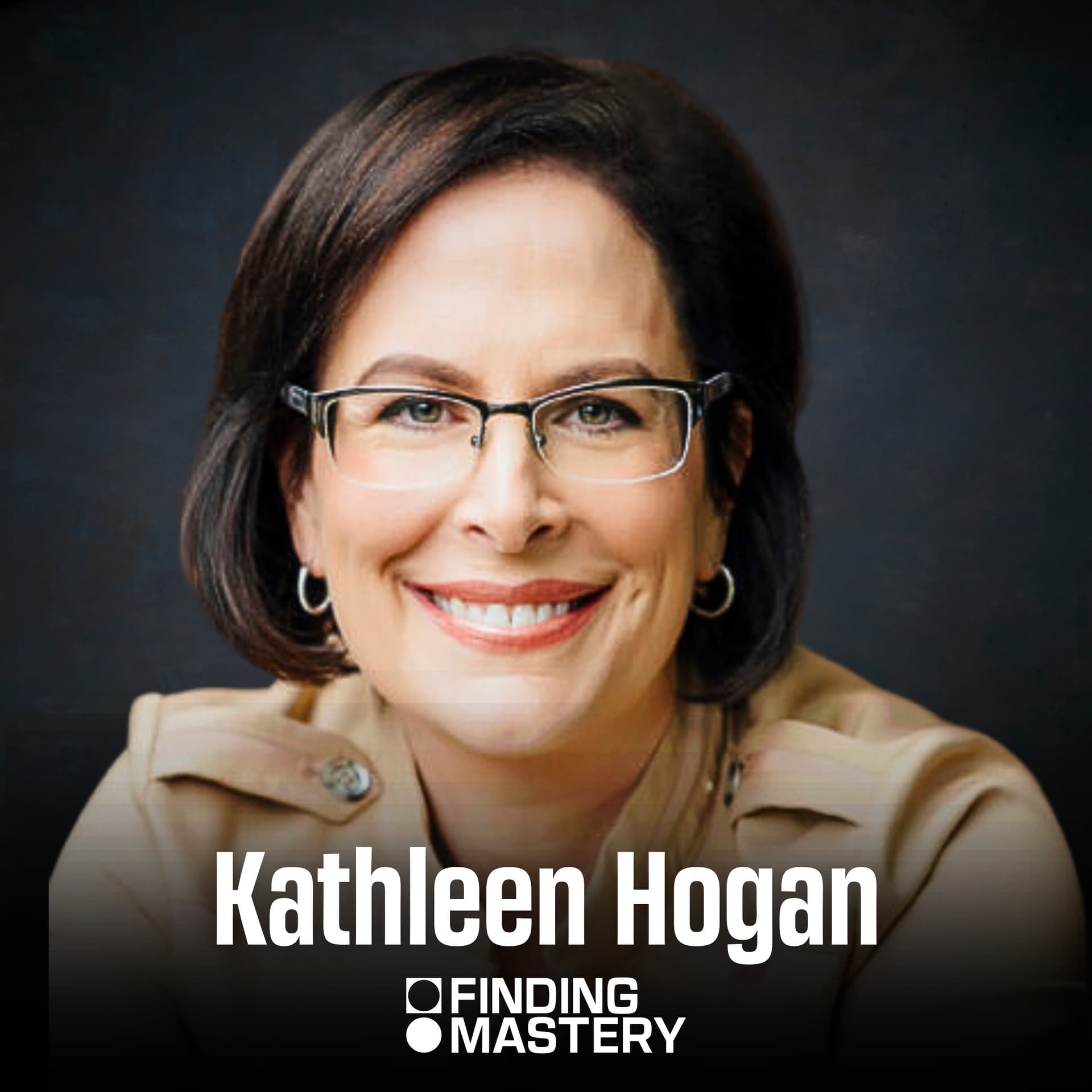
Kathleen Hogan, Microsoft’s Chief Strategy and Transformation Officer, explains how Microsoft’s culture shift under Satya Nadella was built on psychological growth (growth mindset, “how matters,” learning over knowing) and on leaders’ courage to be human under pressure, especially during disruption and AI-driven change.
Guest backgrounds
Hogan describes a family shaped by empathy and gratitude (parents and three sisters; she’s the second child). Key life events include planning a trip to Ireland with her grandfather (he had a stroke and died before it), cancer in 2007 while she led customer support at Microsoft, and her son’s reassurance when she shaved her hair after chemo.
Key claims
Core worth is identity beyond accolades/appearance; fear limits leadership; optimism is trainable; culture is “soil,” not wall slogans; empowerment of others should scale from one-to-one (her son) to organizations and the planet.
Notable examples
Her grandfather’s “no regret” moment; her son saying “mommy, I love you just the way you are”; an early Microsoft leadership offsite where executives shared personal purpose and fear surfaced when a “mind under pressure” exercise was performed (Amy Hood raised her hand). She also cites AI/Copilot as accelerating access and empowerment (including showing her 89-year-old father Copilot).
Written by AI. May contain mistakes. Listen to the episode to check what was said.
Chapters
Tap a time to open that second in VOPersonal Story of Resilience
0:00 to 0:45
Learn about overcoming personal challenges and the importance of family support.
“When I went through cancer and my son was four, I had to shave my hair because I was going through chemo.”
Welcome to the Podcast
0:45 to 2:31
Introduction to the podcast's mission and today's guest, Kathleen Hogan.
“And I remember being told, you're too emotional.”
Cultural Transformation at Microsoft
2:31 to 4:31
Discussion on Kathleen Hogan's role in Microsoft's cultural transformation.
“It was so much fun to hear their stories and hear the why behind what they do.”
Influences and Family Background
4:31 to 6:17
Exploration of Kathleen's family influences and her upbringing.
“And because he had given me, you know, it's not like, oh, dad, here you go.”
Lessons from Loss
6:17 to 8:12
Kathleen shares impactful life lessons learned from losing her grandfather.
“Well, because it feels like it's not sufficient to really acknowledge what I really wrote about my dad.”
A Moment of Decision
8:12 to 13:14
Reflecting on the importance of choices made during critical moments in life.
“and that gave me a really great foundation.”
A Moment of Decision
13:37 to 14:04
Reflecting on the importance of choices made during critical moments in life.
“because we know one great hire can change everything.”
Shaping Values Through Adversity
14:40 to 18:46
Discussing how experiences with her grandfather and cancer influenced Hogan's values and leadership style.
“What led you to be able to capture those moments?”
Transforming Microsoft's Culture
18:47 to 22:43
Kathleen explains her role in transforming Microsoft's culture towards a growth mindset under Satya Nadella's leadership.
“You talk a lot about confidence comes from the inside, as opposed to all these other things that you could get confused that define you or are your identity or matter at the end of the day?”
The Essence of Modern Leadership
22:44 to 28:00
Exploring the importance of personal philosophy and emotional intelligence in leadership.
“I was super excited to be on that journey with him.”
Show all 29 chapters
Exploring Courage and Wisdom
28:00 to 29:09
Discussion on the evolution of courage and wisdom over time.
“The first time I was exposed to something like that, I didn't have the stuff that Amy had.”
Purpose and Empowerment
31:43 to 35:38
A conversation around the importance of purpose and helping others achieve more.
“I think of myself this way, and I want them to think the same of me.”
Empowering Through Technology
35:38 to 42:00
Kathleen shares insights on empowering others using technology and personal stories.
“Empower people with better access to health care.”
Building Trust and Support
42:00 to 43:35
Learn how trust and support can foster growth and collaboration in organizations.
“And you had to execute with credibility against it for a long time.”
Operationalizing Optimism in Culture
43:36 to 45:38
Discover how to cultivate a culture of optimism and recognition within an organization.
“The timing of today's conversation is marked.”
The Importance of Gratitude
45:39 to 46:57
Understand the role of gratitude and optimism in personal and professional life.
“Because we will talk about others who maybe wake up more glass half full, but having somebody, your mother, be optimistic.”
The Importance of Gratitude
47:00 to 47:24
Understand the role of gratitude and optimism in personal and professional life.
“And I want to come back to something a little more personal.”
The Importance of Gratitude
47:25 to 48:24
Understand the role of gratitude and optimism in personal and professional life.
“We also work with their teams on the corporate side, helping them build the kind of high-performance culture where great people want to stay.”
The Importance of Gratitude
48:28 to 49:33
Understand the role of gratitude and optimism in personal and professional life.
“Days are longer, pace picks up, and there's this sense of momentum that comes with the season.”
The Importance of Gratitude
49:36 to 49:52
Understand the role of gratitude and optimism in personal and professional life.
“and a bottle of vitamin D3 plus K2 free in your welcome kit with your first AG1 subscription.”
Influence of Early Experiences
49:53 to 54:02
Explore how early experiences and parental influence shape ambition and identity.
“and she's an emblem for gratitude and optimism.”
Shifting from Performance to Purpose
54:03 to 56:00
Learn about the transition from a performance-based identity to a purpose-driven life.
“My experience is that most people either got to like say, I'm sick and tired of dancing for other people.”
The Five Ps of Purpose and Culture
56:00 to 58:52
Explore the importance of purpose, pride, and people in workplace culture.
“And maybe the irony is people think Microsoft is not the place you go for work-life balance.”
AI: Fear and Opportunity
58:52 to 1:02:50
Discuss the public fear surrounding AI and its potential benefits.
“There is a growing fear amongst folks that this thing is going to take over.”
AI as a Thought Partner
1:03:03 to 1:10:00
Explore how AI can enhance creativity and efficiency in work.
“It is creating more expansion of ideas from myself and the full team at Finding Mastery.”
Empowering Teams through AI Adoption
1:10:00 to 1:11:54
Learn how Microsoft is investing in AI to empower employees and customers alike.
“We're really investing in how we help mix shift talent from one part of the company to the other, if that's necessary.”
Future of Work: Skills for a Changing Landscape
1:11:54 to 1:13:06
Explore the evolving job landscape and the skills needed for future success.
“Thank you for the clarity and thank you for the way that you answer that.”
The Importance of Diversity in Technology
1:13:06 to 1:14:38
Understand how diversity drives innovation and its essential role in technology.
“healthcare, education, climate in ways that we never could have before.”
A Conversation on Leadership and Community
1:14:38 to 1:15:25
Reflect on modern leadership and the importance of building supportive communities.
“And when you have a bold ambition or a bold mission like that, then you better be inclusive of everybody on the planet.”
Transcript
Automatic transcript. May contain errors.0:00When I went through cancer and my son was four, I had to shave my hair because I was going through chemo. And I was sitting there playfully saying to James, do you like mommy with or without hair? And this is probably one of the most profound moments in my life. James looked me straight in the eye, didn't hesitate and said, mommy, I love you just the way you are. And in that moment, it just healed me because my core worth is being his mom, being seen by him. It's been a while and it's shaped who I am.
0:32Dr. Michael Gervais:What if the future of work is not about technology, but about unlocking more humanity in each other? I remember having one meeting with a boss at the time. The essence was I didn't like how we were treating people in a meeting. And I remember being told, you're too emotional. It's just business. I remember going home and thinking, it may be business, but it's not how I want to do business. Welcome back, or welcome to the Finding Mastery podcast, where we dive into the minds of the world's greatest thinkers and doers. I'm your host, Dr. Michael Gervais, by trade and training, a high-performance psychologist.
1:07Dr. Michael Gervais:Now, the idea behind these conversations is simple. It's to sit with the extraordinaries and to learn, to really learn how they work from the inside out. Today's episode is with Kathleen Hogan, Chief Strategy and Transformation Officer at Microsoft, and one of the key architects behind the company's cultural transformation. We together decided to ground our culture in a growth mindset and really create a culture where the how mattered as much as the what. Kathleen traces the early days of working with Microsoft CEO Satya Nadella. If you haven't listened to the Finding Mastery episode with Satya and I, it's episode 120, and I highly recommend it.
1:45Dr. Michael Gervais:He's amazing. I was super excited to be on that journey with him. And very early in the beginning, we brought you in, which was like one of the most consequential meetings of my life, honestly. In this conversation, Kathleen and I talked about the deep psychological footing required to lead through disruption and what she believes the future of human work requires from each of us. I think with AI, we've got lightning in a bottle where our ability to empower others is going to be accelerated. I think there's something for anyone navigating change in this conversation, whether it's personally or organizationally.
2:20Dr. Michael Gervais:So with that, let's jump right into this week's conversation with my friend Kathleen Hogan.
2:30Dr. Michael Gervais:Kathleen, this feels like it was a 10 years in the making conversation. and before we get into like our journey together and and and all of that I want to start in a way that I can better understand who you are and what led you to this incredible incredible body work that you've had over your your professional career so deep breath yeah here it is no you and I were joking about watching the other some of the other podcasts which by the way I've just loved the the breadth of people like Howie Mandel, of course, I've watched him on America's Got Talent, Derek Hough, Dancing with the Stars, Deb Kupp, my own colleague here at Microsoft, who's amazing, Ben, the CEO of Alaska, who I get to work with.
3:17It was so much fun to hear their stories and hear the why behind what they do. But it definitely had me thinking, oh my gosh, I'm going to have to really go back in time and think about what shaped me.
3:31Dr. Michael Gervais:That's exactly it. That's the hope of these conversations is that I'm way more interested in what led you to your brilliant insights and the body of work. I'm way more interested in the way you've navigated those things based on your unique history. So if we thought about it in that way, like people and events help shape us. And I'd love to understand some of the people and some of the events that were material for you to better understand who you are? Definitely my parents and my three sisters and my core family absolutely shaped who I am. What birth order? I'm number two. It's Caroline, Kathleen, Christine, Colleen.
4:09So I'm number two.
4:11Dr. Michael Gervais:Yeah. And how did that influence you growing up with those siblings? It's interesting. I just met with, you know, my dad turned 89. But one of the things I did is I I read to him his eulogy that I wrote for him. Oh, my goodness. When did you do this? Like literally maybe a month ago. What an honor. Yeah. And because he had given me, you know, it's not like, oh, dad, here you go. Like, here's your eulogy. But he had given me everything he wanted to make sure that we knew about what mattered for him to be communicated, right? Including, you know, he wanted to be buried, you know, as a common fisherman, right?
5:05Humble, ready to meet his maker with a plumber shirt on and khaki pants. And, you know, so told me a lot of things. And that was back in February. And that night I went and I wrote the eulogy and everything that he wanted me to capture about his life and his legacy. And so then I was sitting with him like a month ago and he said, do you remember where that blue folder is and all that information? I'm like, dad, yes. I said, not only that, I wrote what I want to say that night. And I said, do you want me to read it to you? And he said, yes, surprisingly. And I said, by the way, I'm reading this to you now.
5:44I plan to read this like maybe in 12 years. Like I want you to get to 100. I don't want you to think that this means anything but that. But the point of me even mentioning that was one of the things I said to him in that is that he and my mom stitched together all these amazing memories with my sisters. And the fact that I have three really, really good friends for life, that we care about each other, that we love each other, that's one of the biggest gifts he's given me, among many other things. Like I don't want to make this about my dad's eulogy.
6:19Dr. Michael Gervais:Why would you maybe not want it? Well, because it feels like it's not sufficient to really acknowledge what I really wrote about my dad. It's a very small piece of a broader tapestry of what I want to convey about my father to really honor his legacy. But that comes to mind as one thing. And so if I go back to like what really shaped me, you know, certainly my parents and the fact that I was so fortunate to have a wonderful family where I really felt loved. I felt supported. I felt like my three sisters were my friends. I remember when my one sister, she tried out for something, didn't make it.
7:00And I cried, you know, because I was so sad for her.
7:04Dr. Michael Gervais:So empathy was a big part of your family ethos. I think so. I figured. I think my mother in particular, you know, I just talked about my dad, but my mother in particular, you know, she would always say there, but for the grace of God, go I. And definitely that ability to put yourself in somebody else's shoes was really, really important to my mother. So, you know, oftentimes we learn so much from our family of origin. And there's also complications that don't go the way that, you know, they planned or you planned. And because of those scars and scar tissue, we come through it and we've learned something.
7:47Dr. Michael Gervais:So this question is really about, like, what were the things that were bumps and bruises along the way in the family of origin that you had to navigate? because from the first blush, it sounds like everything was great. Right, right. Supportive dad, supportive mom, best friends at home. I know nothing's that easy. No. And so what were some of the bumps and bruises along the way? Yeah, but in some level, I do feel like I was very fortunate and that gave me a really great foundation. Certainly one of the big events was when my grandfather died. So my granddad lived, he didn't live with us, but he lived near us our whole life.
8:24every fishing trip, every dance recital, granddad was there. And I have a fun story. It's a sad story, but it's also a fun story because it shaped me on so many different dimensions. So I was home after in my junior year, I was teaching math and I was making a little bit of money. And granddad said, what are you going to do now that you, you know, making some money? I said, I don't know, maybe we should go to Ireland. And I was honestly joking. And my granddad was like, let's do it. And I was like, wow. And then in January, maybe it was February, he's like, I've got to get a birth certificate and I've got to get my birth certificates in the archives in, you know, Charleroi, Pennsylvania or wherever.
9:08And I was like, oh, he's serious. He's like getting a birth certificate to get his passport. He really is serious. And so we planned, And we planned this trip to go to Ireland together my summer after junior year.
9:22Dr. Michael Gervais:Why is this informative to you? One, there are other things that happened that informed me. But one, here's my granddad at 81, still wanting to live, still wanting to have adventure, still wanting to do something, which I just thought was fantastic. And the sad part of the story is in May, he had a stroke. and when I went home to see him, he said, Kathleen, I'm never going to see Ireland. And he knew. And so that was sad, but also that sense of no regret. We were planning something. We were going to do something fun. Do you remember that moment that he said that? Oh, yes, absolutely. What happened inside of you in that moment?
10:09Sadness, for sure. but also this profound sense of he had no regret. And I'll tell you why. Besides the fact that we had been planning this and having a lot of fun, I had gone to my professor. I won't name names, but he's actually famous. And a famous economist. And I went to him because I had one big, huge exam. And I said, I would really love to go home and see my granddad. And he was not particularly supportive of that. in fact, said, well, you know, I don't really know what he said. It wasn't like, we'll see what we can do. It was more, it's more like he didn't believe me. Like he thought, we'll see.
10:52Like, if you really leave and you really, if this is real, we'll see, maybe we could do something. I was like, wow. And I said, well, this is really important. I can't even remember if I talked to him. I just remember he was not supportive. And I was sitting there in that moment thinking, do I risk my grades? Get a choice. Or do I go home and see my granddad? And I kind of wanted to graduate summa cum laude. Did you? No. Okay, good. My thesis was summa cum laude, but my grades, without getting into this particular example, I missed, right? But I went home and I thought in that moment, I'm so glad that I'm here, right?
11:35That I'm present.
11:36Dr. Michael Gervais:Oh, wait, you went home? I did go home. No regrets. I went home and I saw my granddad and he said, I'm never going to see Ireland. And that was the last time I saw him. Oh, my goodness. Yeah, because I went back then. So how did that – okay. I've missed those moments in my life where I didn't go. In particular, it was my best friend growing up. I didn't go to his wedding. I missed it because I made a work decision. and it's still like I wish I would have gone.
12:33Dr. Michael Gervais:your gut, your energy, how well you absorb, everything else you're putting in. So when Jeff Byers and the team at Momentus reached out about Fiber Plus, I paid attention. I've been using their products for years. And the reason I keep coming back to them, it's pretty simple. They don't chase trends. They go deep on the fundamentals and they build it to a high standard. And the same holds true for Fiber Plus. It's clean, no artificial flavors, no unnecessary additives. The cinnamon flavor uses real cinnamon bark powder and it tastes great. And I don't usually say that about fiber supplements. I mean, they built this thing right.
13:04Dr. Michael Gervais:Like everything they make, Fiber Plus is NSF certified for sport, which is why it's trusted by over 200 professional teams and athletes. That's the Momentus standard. And that's why it's been part of my routine. If you want to upgrade one of the most overlooked foundations of your health, head to livemomentus.com slash finding mastery and use the code finding mastery for up to 35 % off your first order. Again, that's livemomentus.com slash finding mastery. The code is Finding Mastery for up to 35 % off. Finding Mastery is brought to you by LinkedIn. We use LinkedIn Hiring Pro here at Finding Mastery because we know one great hire can change everything.
13:42Dr. Michael Gervais:One bad hire, it can cost you a lot, way more than time. It can cost you momentum and culture and real dollars. And that's why how you hire matters just as much as who you hire. And it's why I've become a big believer in the power of LinkedIn Hiring Pro. Here's what I appreciate about it. When you're running lean, you don't have hours to sift through a pile of resumes hoping to find the right person somewhere in the stack. Hiring Pro is built exactly for that reality. You describe the role and it screens candidates for you, surfacing the people who are a best fit so that you can spend your time and conversations with those folks rather than in the weeds of the applications.
14:16Dr. Michael Gervais:And the results back it up. Those hiring with LinkedIn are 24 % less likely to need to reopen a role within 12 months compared to the leading competitor. So join 2.7 million small businesses already using LinkedIn to hire. Post your job for free at linkedin.com slash mastery. Terms and conditions apply. Again, that's linkedin.com slash mastery to post your job for free. What led you to be able to capture those moments? And I'm sure you've missed plenty too, but in that striking, glaring, you know, summa cum laude and undergrad, was that Stanford? Harvard. Harvard. Oh, sorry. Wrong side of the pond.
14:56Dr. Michael Gervais:Okay, good. Did you go to Stanford? I did Stanford Business School. Okay, sorry. Okay, good. We should talk about how you got to Harvard, which is remarkable in and of itself, and Stanford remarkable in itself. But in that moment where you're gunning for a goal and you've got this other more important thing that's taking place, which is the relationship with your grandfather, you made the decision to invest in family. How has that shaped you moving forward? work? I think it's just solidified what really, really matters, right? And at the end of the day, you know, we can jump ahead later to, you know, going through cancer where you really face your own mortality.
15:31But like at the end of the day, what really, really matters and it's family and it's your relationships and it's your faith. And, you know, it's funny to even talk about summa cum laude or magna cum laude because like really who cares, right? Really. Like I would trade everything for that moment with my granddad.
15:52Dr. Michael Gervais:That is awesome. Yeah. And you have, and I feel that in this conversation right now, I'm sure you miss your grandfather. Yeah. But you made a decision that freed you from regret. Right. Yeah. Yeah. And, you know, I know if I fast forward, there's another moment, like we're talking about moments that shape you. Another one is when I went through cancer and my son was four, you know, and they give you an 85 % chance, which is good. The odds are in your favor, but like, it's not one in a million. And I had to shave my hair because I was going through chemo. I decided I would be in control of that, you know, control what you can control.
16:33So I shaved my hair. I came home and I remember thinking, James is going to be like, what's going on, mom? And instead, James had this little bird cage that he, bird, it's not cage, bird feeder, little ceramic thing that he painted. He wanted me to see that. And so like, I'm obsessed looking at that. And I'm like, is he even noticing? Now, granted, I was wearing a scarf. Okay. So I'm thinking he didn't really notice. And so then maybe like a week later,
17:02Dr. Michael Gervais:I'm sitting there. And you're like mid stride in your career at this point. Right. Yeah. You were at Microsoft? I was at Microsoft. I was leading customer support at the time. What year? When was I diagnosed? 2007. Yeah. Okay. First time. I've been diagnosed twice. Right. But first time was 2007. Anyway, the story is I was sitting there playfully saying to James, do you like mommy with or without hair? This is probably one of the most profound moments in my life. James looked me straight in the eye, didn't hesitate, and said, mommy, I love you just the way you are. and in that moment when you've got scars when you're bald when your job you're like what is my identity right I wasn't sure I would still work you know like all of those things are stripped away you know you say well what is your core worth and in that moment I don't know it just healed me because my core worth is none of that right it's being his mom being seen by him without all of that.
18:08I don't know if I'm communicating this.
18:10Dr. Michael Gervais:Oh, I think that this would escape words, but the way that you are putting the words to it, if I was in that, I'm not sure how you're not falling into a thousand pieces right now, reliving that moment. Well, it's been a while and it's shaped who I am. It goes back to this, like, all that stuff at the end of your life is going to go away, right? And you don't take with you accolades. When you go meet your maker, what is it really about? And it's your essence. And I guess that was it. It was James helping me see that at the end of this life, mom, Kathleen, it's the essence of who you are inside.
18:55You talk a lot about confidence comes from the inside, as opposed to all these other things that you could get confused that define you or are your identity or matter at the end of the day?
19:06Dr. Michael Gervais:Yeah, I think this will stay on two pieces here. One is I've really enjoyed knowing you and knowing what you faced and how you lead. And all of that seems like transactional surface until you really understand the context of where the decisions are coming from. You have led one of the largest, most successful companies in the world. You have led a human-first transformation of this organization. The culture was on your shoulders. Now, nobody does it alone, but you are the one. And so – I would say I was not the one. I would say I was one of many. And that's not false humility. That is really true.
19:50That's right. Like Satya was incredible. The leadership team was incredible. Our managers have been incredible. But yes, I also am not having false humility either that I was part of that and it's something I'm very proud of that together, we together decided to ground our culture in a growth mindset and really create a culture where the how mattered as much as the what. That the mission mattered, what we did mattered, but how we did it mattered as much. And that's something I'm really proud of, you know, collective Microsoft for doing that under Satya's leadership.
20:26Dr. Michael Gervais:Yeah. And the idea going from a know-it-all to a learn-it-all, just that simple hinge idea creates great clarity on how. How we're going to go about this. Like you said, the mission to help every organization and person on the planet achieve more. Clear, ambitious, bold, wonderful, great. How are we going to do it? Well, we're going to do it by being great learners. We're going to do it by making sure that we're in tune with ourselves so that we can be, the aperture can be open, we can stay as a great learner, and we're not walking around pretending like we know it all. It's exhausting. It's unproductive.
21:01Dr. Michael Gervais:It's low performance standards. And so. It was so freeing, right? It was so freeing to go from a, gosh, I got to go into this meeting and have memorized the yellow pages effectively and know every answer to, I don't know, but I'll get back to you. And everyone here at Microsoft is really, really, really, really smart. Maybe not everybody. I like to think most. Yeah, it's really a very smart organization. And then to express the humanness inside of the very intelligent beings that are here has been really special. So, like, where do you begin? Because I think, as Satya said, and I think you might have said it plenty of times as well, is like culture is one of the great products.
21:44Dr. Michael Gervais:It's one of the great things here at Microsoft. So how do you begin? How do we begin to transform the culture? Yeah. Oh, boy. That's a long story. and you're part of the origin story. I would say before you even go there, I remember having one meeting with a boss at the time. And the essence was, I didn't like how we were treating people in a meeting. And I remember being told, you're too emotional. It's just business. That was the answer. It's just business. When I said, gosh, do we really need to treat people like this in front of so many people? And I remember going home and thinking, it may be business, but it's not how I want to do business.
Read the full transcript
22:24And so when Satya became the CEO and asked if I would come and help him transform the culture, and oh, by the way, he had that vision from the beginning. I give him all the credit that he had this true north that we need a mission that matters, but we equally need a culture in service to that mission that's going to unlock the potential of our people, that the how mattered. I was super excited to be on that journey with him. And, you know, as you know, very early in the beginning, we brought you in, which was like one of the most consequential meetings of my life, honestly. You know, that's why I'm so grateful to you because we were exploring, as you recall, growth mindset.
23:06We had worked with Dr. Dweck, who was incredible. She was one of our coaches, advisors, learned a ton from her. I could talk a lot about that. But we had also tapped into you, who I think, you know, You should be the one to tell this story, but I think we're focused on the mental aspect of the game, not just the physical aspect of the game. The mindset, your mindset, your attitude. That's the one thing, man's search for meaning. At the end of the day, the one thing you can control in any situation is your attitude, your mindset. And so you really helped us tap into that when we had that infamous first meeting with Sachin and his leadership team where we really went around and talked about our purpose.
23:44Wasn't that amazing? It was amazing.
23:46Dr. Michael Gervais:I'll never forget that meeting where Satya and, I don't know, was there like 17, 16 direct reports? It was a large... I don't think it was that big at the time, actually. 12? Yeah. It felt pretty significant. Not that it matters. No, no. But I remember when we started down the idea of personal philosophy, compelling vision, purpose in life, and we got to that self-discovery piece. And Satya says, well, everybody, I want to know your philosophy for life. I want to know your purpose because we've got a bold ambition and we're going to need to work well together. So we need to know each other. And instantly I said, oh, that's modern leadership.
24:29Dr. Michael Gervais:That's exactly somebody that's investing in the underpinnings of the, it's the soil that allows the plant to be beautiful. And he was investing in that. And I thought, oh, that's real. because so many companies, they say, oh, we need a good culture. Then they come up with the fancy words and they put the words on the wall. And then they're like, we got to remind everybody of what those words are. But in your case, growth mindset, to have a growth mindset, you need to have core psychological skills that you own so that you can be a great learner, so that you can be a great partner to other people to achieve the bold, beautiful ambition.
25:05Dr. Michael Gervais:And you did it. How many employees? 200 and... Well, now it's 220 ,000. And we would say we are still – we're closing the gap between everybody's lived experience and our aspire-to culture, right? And there's not perfection. I think we've closed the gap. But on any given day, does somebody experience a leader, a teammate having a fixed mindset, themselves having a fixed mindset? Absolutely. Are we always customer obsessed, one Microsoft, diverse and inclusive, some of our core principles that go underneath that growth mindset or values of accountability, integrity, and respect? Is there perfection?
25:43No. But what was fun about even listening to Deb Kupp's discussion with you is just because I feel like we've been so consistent for so many years, hearing her talk about the growth mindset, hearing her talk about the mission, having that shared sense of how matters and that the mission matters across the company. I think we've cultivated that over 10 years. I could spend the whole time talking about not one single thing. It's many, many levers over many, many years. One of the things that came out of that meeting that we had, two things, actually many things. One is it was amazing to hear everybody's purpose and that their purpose was very much aligned to the company's purpose.
26:26And when you have that connection, right, you feel like you can achieve your personal purpose at the company. I think that's magic, number one. Two, if you remember, there was that awkward exercise where, bless Amy Hood, she stood up and was brave.
26:40Dr. Michael Gervais:The CFO. Yeah, the CFO was brave to raise her hand. And I reflect on being courageous, being brave, and you pointing that out because that's what it's going to take to drive this transformation, any transformation, and to have that growth mindset. But the last was this researcher, the amazing. Yeah, you've loved that. I know, and that was huge. You operationalized that in a significant way across the organization. And for the folks that are not maybe aware of that, because I don't talk about it much, is the middle part is that there was all the executives in the room were really rolling up our sleeves to understand the right psychology and the psychological skills for them to be their best.
27:26Dr. Michael Gervais:And then I presented a challenge. And it was to see how somebody's mind works under pressure in front of their peers. And the room went silent. all of these smart, ambitious, top tier, frontier pushing executives. And the courageous Amy Hood says, okay, I'll go. I know. Amazing moment for all of us in that room. Amazing moment. And I think we all reflected on, wow, why didn't we? What was getting in the way? And the answer was fear. Do you remember that moment for you? Oh, absolutely. Yeah. Absolutely. The first time I was exposed to something like that, I didn't have the stuff that Amy had. And so I relate just like you did, like, what am I doing with my life?
28:10Dr. Michael Gervais:Why didn't I say I'm courageous? I say I'm bold. I say I'm a risk taker. I say that I have nothing to lose. Like, I'm free. Why didn't I? That model that I was working from was total BS. And it exposed in that moment. I think it probably exposed maybe you and some other folks in a private way. Like, I got work to do. Yeah. Well, and you say, I have nothing to lose. I think that's the hard part. For most people, they do have something to lose, or they at least think they have something to lose. And for me, it gets easier the older I get because I feel I have less to lose or less to prove. I don't know if that's fair or unfair, but if I watch myself back then versus how I feel now, I feel much more like I don't have as much to lose.
28:59Dr. Michael Gervais:That's a function of wisdom. And wisdom and age can be correlated, but don't have to be. Wisdom is getting down to the simple truth of things. Finding Mastery is brought to you by Sunlighten. I'm really excited about a new partner of ours. Something that I've come back to again and again is when I invest in recovery with the same intention that I bring to my work, everything gets better. My energy, my focus, my ability to show up fully for the people that I'm with and the work that I care about. That's why I am so bought in on the Sunlighten M-Pulse Intelligent Sauna. I was first introduced to their team a few months ago and was so impressed by what they've created.
29:37Dr. Michael Gervais:This is one of the most advanced infrared saunas that they've built in over 25 years of pioneering this technology. That's right. They've been at this game for 25 years. I had one installed in my home a few months ago, and it's made a real difference. I feel more refreshed, more grounded, more relaxed, and it's become a consistent part of how I recover, how I reset every day. I'm using it to support muscle recovery, for improved oxygen delivery, and for nervous system recovery. And what I love most, I don't have to leave my home. They're offering the Finding Mastery community up to$2 ,100 off.
30:10Dr. Michael Gervais:Simply head to sunlighten.com and use the code mastery for this great discount. Again, that's sunlighten.com and use the code mastery for up to$2 ,100 off. Finding Mastery is brought to you by our flagship mindset training course, finding your best. Anytime you feel the pull to reset, to zoom out, to refocus and ask, am I moving toward the person I want to become? It helps to remember this. Lasting change comes from training, not resolutions, not short-term sprints, but deliberate practice of the skills that shape how we show up in work and relationships and in the moments of great intensity as well.
30:45Dr. Michael Gervais:That's what finding your best is all about. It's a science-backed framework for training your mind. And it's the same set of tools that we've taught to Olympic athletes, top executives, elite military teams, and artists at the peak of their craft. In this course, you'll learn the foundational psychological skills to be your very best. Full stop. And the best part is you can start anytime. Right now, we're running a limited time offer on finding your best. Simply head to findingmastery.com slash course and use the code RENEW100 to get$100 off your registration. If you've been waiting for the right moment, this is a good one now to lean into.
31:18Dr. Michael Gervais:Spring and summer, they are powerful seasons of momentum. It's a great natural time to step into growth, to refocus, to recommit to who you want to become. And this discount will not be around for long. So go to findingmastery.com slash course code renew100 for$100 off today because your future is not shaped by what you intend. It's shaped by what you train. Let's square this around to an early part of the conversation about identity. That's what we have to lose. How will they think of me? I think of myself this way, and I want them to think the same of me. And if that whole thing is like heavy, then we don't stand up because it's too hard to bring that weight forward.
32:03Dr. Michael Gervais:But if you're light, you're like, I don't care. Look, I'm a learner. I'm trying to figure it out. You stand up and you go for it and you fall on your face and you're like, oh, that's interesting. Like, huh, I wonder why you guys didn't do that. It's more that than it is like, oh my God, they're thinking I don't have what it takes. Right. Or it's going to impact my career or it's going to impact my financial or all these things that people worry about. It was interesting in your Deb Kupp interview when she said, I'm not afraid of being fired. And I think I double clicked on that. You did because you're like, everybody's afraid.
32:37And so, of course, everybody has fear, but it's to what degree and how much do you have that inner sense of, yeah, at the end of the day, this isn't what defines me. and therefore I can take the risks. And if this does go away, or in Deb's case, I do get fired, or I do lose my hair, or I do whatever, that there's that peace knowing that what really matters, what's your core, isn't all that. And then I think that gives you permission to take risks and to be brave and to speak truth to power and all the things that we want for people, but it's so hard.
33:14Dr. Michael Gervais:It's very hard because the truth is other people can fire you. Other people can promote you. Other people can give you social access. Like people have power. Absolutely. It's whether you value that or you value something inside of you more. So let's use this as a - And people can judge you and nobody likes to be judged. You can get better at saying, who really gets to judge me? Whose judgment do I give any energy to? That's it. So what do you stand for? What are the core rocks? What's on the tombstone? When it all comes down to a couple ideas that are super important to you, what do you stand for?
33:56You know, this sounds – it may sound trite given our mission, but it is about empowering others. Our mission is to empower every person, organization on the planet to achieve more. You can say it that way and it sounds like, oh, she's just repeating her mission. But when I went through cancer and I did this program called Living Your Legacy, which I thought was great. And I didn't like the legacy part because it's not about legacy.
34:22Dr. Michael Gervais:I'm glad you brought that up because I get a rash with that word. Yeah. It's not about like what's my legacy. So I didn't like that part. But it was what is your purpose and are you living authentically with your purpose? Are your actions consistent with your purpose? And you had to go through this exercise to really say at the end of my life, what is my purpose? And for me, it is about helping. At the time, the language I used was first and foremost helping my son realize his potential. Like when you're staring at your son at four and you think, am I going to be here? And now he's 23 and he's graduated from college and I'm here.
35:00That was really my core purpose. But then I also said, is it just that? Why keep working? Why not just focus on James because you might not have been here for James? And it was like, well, if I can do that and help other people realize their potential, help empower other people, be in service to other people, then that gives me purpose, whether it's my parents, my sisters, the people that I work with, the world, not to jump ahead to AI. But I think with AI, we've caught lightning in a bottle where our ability to empower others is going to be accelerated in terms of our ability to empower people to educate themselves, Empower people with better access to health care.
35:47Empower people with tools that they never had before. I think about being in college and not having access to a computer versus those who had access to a computer. I still managed to get through. But boy, would that have been nice to have access to a computer.
36:07Dr. Michael Gervais:Why didn't you have access? I didn't own a personal computer at the time. Now I'm really dating myself, but I showed up at college with a typewriter. Did you? I had a typewriter. And other people had personal computers? Not many, but some people did. Some people did, yeah. And if you wanted to use the computer, you had to go to the computer hall and pay for the printer. And that was costly and all those things. So, I mean, I remember freshman year, if you got like an A minus on a paper, you could redo it and get it and improve your grade. but like I'd have a 30-page paper and there'd be like eight comments and I'd retype it, right?
36:45And I think about, gosh, if I had access, you know, that could have empowered me to have achieved more, right? It's a simple story. But now I think with AI and really democratizing access to this superpower, Copilot in your pocket, it's incredible. Like my dad, we talked about my dad, my dad now at 89 is using Copilot. And the funny story that I think I was sharing with somebody yesterday. This is my dad, who I adore, obviously, started there, went home, and dad said, because he went on vacation, he said, I've unplugged my computer. And I'm like, why did you unplug your computer? And he said, because I don't want to get email while we're away.
37:27This is my sweet dad. And I'm like, dad, unfortunately, when you plug it back in, there's this thing called the cloud, and he was just so disappointed to hear that. But my point is, here's my dad, right, who thinks when he unplugs his computer, he can stop the email from coming in. And just like two weeks ago, I was home, set up his computer, his favorite icon so he could read email, read his favorite news outlets on his computer. And then there's this co-pilot. And I showed him how to use it. And now dad can type in and learn and have access to a lot of things that are fun.
38:03Dr. Michael Gervais:Yeah, it's really cool. And so this ability to empower others with technology is very consistent with, I think, my core purpose of just helping other people achieve more. Helping my son first and foremost, my family. But then if you could do that more broadly and scale that impact, that gives me joy. You know what I appreciate is that you didn't stay bold. Like I want wells in this part of the world or I want to feed animals, like this grand ambition, which is fine. It's beautiful. And you have a grand ambition to empower humans across the planet, like huge. And you're in tandem with Microsoft's.
38:43Dr. Michael Gervais:So there's a harmony there that's really nice. But you said, yeah, but you know what? The honest truth is to empower humans. Like one-to-one starts there with my son and then maybe my team and then maybe a room that I inhabit. And so if you think about the intimacy and activation of your purpose, how consistent are you when you enter a room? How consistent are you that that purpose is at the surface? I can't say that I am consciously aware of that. Maybe it's just who I am. That sounds non-humble. But I don't walk into a room thinking, today I'm going to empower others. You know, it's more going into a room, though, and being aware of, you know, the power of other people, right?
39:32The power of connecting or the power of diversity of thought. And if you can unlock other people in the room and if you can make them at ease, especially if you're like the more senior person, that there's power in tapping into that. and the way you behave can impact, whether you draw out criticism, where you draw out ideas, or if you come in as that know-it-all, or you shut people down, or people give you feedback that you don't like. All of how you behave in that moment is going to impact the type of input you're going to get.
40:03Dr. Michael Gervais:How you answered it is that you're aware of you, your internal state, and how your being is impacting other people. And so with that awareness, by the way, we can train awareness. Awareness is something that through mindfulness and journaling and conversations with people, the wisdom that we've talked a lot about, that you become more aware of a human. And so when you're more aware of what's happening inside you, you're more aware of what's happening in others around you, and your primary first principle in life is to open the aperture for other people, that you're doing it, you're living it. It's like the broth of the soup.
40:40Dr. Michael Gervais:It's the water that you're swimming in. So you don't walk down the hallway like, okay, I'm going to empower these people. It's not that. You've tapped into awareness. You've got a guiding force and it's constantly present for you. Does that sound right? That does sound right. Okay. And it gives me joy too. Like when you see somebody that, I mean, I think a lot of people who mentor people or when they see the person they're mentoring or they're helping succeed, it brings you joy too. And so it's not a completely selfless act in the sense that I enjoy seeing other people succeed. Like that gives me great joy, especially if I've been part of it.
41:19The second part of that would be I also, I think, know that I have some of the answers, but I don't have all of the answers. And so my whole life tapping into others, being part of a team has what has allowed me to be successful. Nothing I've done, I've done really because of me. It's because of a team and the people that I've been part of and leveraging others, them leveraging me too. But like if I think about, you know, whether it's soccer and playing soccer and being part of that team or building software when I was at Oracle or, you know, running HR, that was a team sport, a total team sport.
42:00And I was leveraging a lot of people.
42:03Dr. Michael Gervais:Yeah, and they trusted you. and they trusted Satya. And you had to execute with credibility against it for a long time. And it's still, it's a work in progress. So somebody's got to take the reins and drive it. Again, yes, there's lots of people, but I would be remiss to not thank you because your trust in us helped build Finding Masteries as an agency, to help other firms as well. So You were customer zero, pilot number one. We were making it up as we were going. And you and Sati and team were perfectly fine with like, yeah, this feels right. Keep going. And so we wouldn't be able to do what we do without your trust and support.
42:47Dr. Michael Gervais:So I second nobody does it alone. Yeah. So thank you for 10 years ago trusting and still trusting. No, but and the reason why I trusted you is your whole ethos was about empowering others. Right? And I saw the power when you were empowering in that small room with our leadership team, when you then went and scaled to the sales organization. You know, recently I've seen you with exec staff. I mean, in many different environments, your ethos is about unlocking the potential in other people. And that's been really inspiring. So it's been great. It's been so great. It's been so fun. No, seriously.
43:26Dr. Michael Gervais:You know, what's really cool is that as of today, the time of recording, we're launching here across the sales organization, the Purpose Mindset course. So it's funny how things come full. The timing of today's conversation is marked. So that's very cool. Okay, enough of that. That's fun to read this. You also mentioned the researcher of amazing. and I want to open that up because essentially that is challenging other people to go find what's good in their life and report back. You know, go to the frontier, tell us what berries you tasted that were amazing and, you know, like how you went about it and bring it back to the fold and you operationalized it and you put it in a cadence in the business where people started to become researchers of amazing and they would, thereby, they're training optimism across the organization.
44:18Dr. Michael Gervais:Yeah. So why was that an important motion for you to operationalize? Well, and so coming out of that offsite, one of the promises we made is every Friday when we met as a leadership team that we would have somebody come and be the researcher of the amazing. And it's evolved over time. Is it a team? Is it an individual? But the essence was be in search of somebody who is living our culture, the how, in service to our mission. And I think what has been powerful about that is it's helped our culture and our mission not be something on the wall where it's just, you know, this Dilbert cartoon. But, you know, as a leadership team, you know, 10 years later, you know, 52 weeks later, you've got a lot of shared understanding of what we think the culture is, what we think achieving our mission looks like.
45:08It's visceral at that point. I think it signals to the company this is what great looks like. You know, it's symbolic in that way. And it's an opportunity to celebrate excellence, celebrate people who are taking risks, doing things that are changing the world, and say thank you.
45:28Dr. Michael Gervais:And that is a trainable – optimism is a trainable capability. And I haven't met a world's best that isn't fundamentally optimistic. Now, either they earned it or they kind of had a glide path for it. Tell me I'm wrong. You're fundamentally optimistic. I am. Right? And my mother is. My mother is. Okay. So you learned it from mom early on. Absolutely. Because we will talk about others who maybe wake up more glass half full, but having somebody, your mother, be optimistic. How did she cultivate that at a young age for you? I think she just role modeled it. It's like whatever the issue was, she practiced gratitude.
46:07She was always, you know, her ability to zoom out and be grateful for what was happening, even amidst what wasn't happening.
46:15Dr. Michael Gervais:Do you have an example of that? I can't think of something back in my childhood. I would say she practiced it literally two weeks ago when I went home for her 85th birthday. And so she's 85. Dad's turning 89 in October. There are challenges with getting old. She'll keep it real with me. She's like, Kathleen, I want to make sure at the end you don't say, well, why didn't you tell me about some of these things? So she keeps it real in terms of some of the challenges of growing old. But, you know, we had that birthday party and she stood up and she just talked about all the things that she's grateful for.
46:50Dr. Michael Gervais:There you go. And why she's, you know, optimistic about the future. And so it's just who she is. Finding Mastery is brought to you by LinkedIn. Earlier, I mentioned LinkedIn Hiring Pro. And I want to come back to something a little more personal. We talk a lot about the people who make extraordinary things possible. And I want to take a moment to acknowledge some of ours. Janelle, Taylor, Alex, Emma, and our newest teammate, Chelsea. Every single one of them came to us from LinkedIn. And every single one of them has raised the bar of how we operate here at Finding Mastery. Our relationship with LinkedIn, it also runs a lot deeper than just using their tools.
47:27Dr. Michael Gervais:We also work with their teams on the corporate side, helping them build the kind of high-performance culture where great people want to stay. They want to grow. I've been building businesses for over two decades now, and I'll tell you, the right team, that matters so much. It's the difference between grinding and flowing. So this partnership, I believe in from the inside out. When you hire through a platform like LinkedIn Hiring Pro that surfaces people who are genuinely aligned with what you're building, you get a different quality of candidate, not just in skills, but in fit and values, the kind of energy someone brings to a team.
48:01Dr. Michael Gervais:So if you're thinking about your next hire, I want to strongly encourage you to be intentional about where you look. The right person is out there and LinkedIn Hiring Pro helps you find them faster with a lot more confidence. Post your job for free at linkedin.com slash mastery. Terms and conditions apply. Again, that's linkedin.com slash mastery. Finding Mastery is brought to you by AG1. Summer is right around the corner, at least for those of us in the Northern Hemisphere. You can just feel it though. Days are longer, pace picks up, and there's this sense of momentum that comes with the season.
48:38Dr. Michael Gervais:For me, that also means more travel. It's more early mornings, more late nights, and it's just really a schedule that isn't consistent as I'd like it to be. That's exactly when having a simple, reliable, daily foundation, it matters. AG1 has been that foundation for me for over a decade now. One scoop and a glass of cold water in the morning, and I know I'm supporting my gut health, full stop. filling the nutrient gaps that are hard to cover through food alone. And what ends up happening is I'm giving my body what it needs to keep showing up. And that really matters to me. What I love about AG1 is that it doesn't ask a lot of me.
49:15Dr. Michael Gervais:It's one habit, one scoop, and it travels easily. The AG1 travel packs are something I genuinely rely on this time of the year. I throw a few in my bag before a trip and the routine stays intact wherever I am. If you haven't tried AG1 yet, or you've been planning to think about getting back into it, now's a great time to start. Visit drinkag1.com slash finding mastery to get an AG1 flavor sampler and a bottle of vitamin D3 plus K2 free in your welcome kit with your first AG1 subscription. It's a$72 value. Again, that's drinkag1.com slash finding mastery. So keep mom in the conversation here and she's an emblem for gratitude and optimism.
49:59Dr. Michael Gervais:Yes. So she, hundreds, millions of times, she modeled that. You also got into Harvard and then Stanford. Did you end at Stanford? Yes. Okay. You mean, did I go another degree? Yeah. No. Okay. That was so generous of you to even suggest that I might. There's a lot going on for you. No, no. Okay. So how did she hold the standard for your high school experience to prepare you to or to support you on your path to get to Harvard? Top university in the world. Mom is full of gratitude. How did she also hold the standard? You know, it's interesting because my mom did say a lot of people would ask her about that.
50:41My sister Christine, you know, went to Harvard. My other two sisters went to Notre Dame. To the extent parents are looking for their kids to get into schools, they would ask her, what did you do? And she always said, I don't know that I actually did anything. She would say on some level she believes that I was innately ambitious from an early age. I remember in first grade we had this spelling bee where you'd get this little ribbon if you won the spelling bee. And one time – I mean this is going to make me sound terrible, but this was in first grade. One time there was a substitute teacher. And so I didn't get my little ribbon even though I had whatever, won the spelling bee or at least achieved whatever you achieved.
51:30And so I went home and I made my own little ribbon.
51:32Dr. Michael Gervais:Yes, you did. Yes, you did. And I put it – because mom put up on the board the ribbons, right? And so I liked seeing the ribbons up there. And so mom often laughs about that. I look back and I think, oh my gosh, that was ridiculous, Kathleen. Do you have a picture of that? I do. I actually have that somewhere. I want to see that picture. And it's so funny because they all look the same. And then there's like, it was like a cutout car. Can you imagine? This is a first grade teacher with not a lot of budget. So she had made a circle, put a number one, and then put little ribbons on it, right? So I went home and made my equivalent.
52:07But my mom always said, Kathleen, that was like you, right? That wasn't me. But maybe it was her because she put that up on the wall. And she celebrated my success. Maybe that's the thing. She was celebrating my success and therefore I wanted to succeed.
52:24Dr. Michael Gervais:I think that that would have been this jet fuel for you to value the feedback that comes when you do something spectacular when you get an award. And I think it would have been like a beautiful slide trap into becoming what we would call a performance-based identity. that my identity is wrapped around how well I do something next to other people. Right. And so I think that there's this early ambition that you would have learned because you found favor from your caretaker saying, nice job. Look at this. Oh my God, this is amazing. You're so amazing. You're so amazing. Right. And then that quickly turns into, oh, I get love and favor and attention when I perform well.
53:02Dr. Michael Gervais:So, oh, that's an easy formula. Let me just work hard, perform well, and happy days. That, at some point, probably when you were diagnosed with cancer, no longer will work. Is that right? Yeah. Yeah. Yeah. Was it? And in fact, I remember in one of your podcasts, I won't say, but it was one of them where you made that connection and I was watching that and I was like, wow, that's a powerful connection. I think it was the person in yellow, but who was talking about - Jesse Cole from Savannah. Yes, yes, yes. But he was talking about using accomplishment as a way to achieve love. And now that has driven him to really try to show love and belonging in everything that he does.
53:43And I found that really made me think.
53:46Dr. Michael Gervais:I think you've well invested in a performance-based identity. You wore the tread of that tire out. And then you've now developed a purpose-based identity, which is like, no, I'm in service of. And that's how I'm designing my life. that from to sounds like it's an easy thing to happen. My experience is that most people either got to like say, I'm sick and tired of dancing for other people. And sometimes we're given these extraordinary bits of information that whether it's a death or cancer or something, we go, okay, no more, enough is enough. Or we're sick and tired of feeling sick and tired. And so do you remember when you made that moment where you said, that's no longer going to serve me well?
54:32Dr. Michael Gervais:Was there a flashbang moment or did it just evolve over time? I don't know that there was one, but I'll tell you one thing that came, one flash that came to mind when you said that. So it's kind of fun to just see what comes to mind as we have this discussion is I was at McKinsey. I was a partner at McKinsey. I just had my son and you're on this treadmill of, and I love McKinsey. I learned a lot at McKinsey, but it was very challenging to be with a new baby and finding the clients and all of that. And Kevin Johnson, who was one of my clients at Microsoft, sent me a mail and it was, and literally the title was you, Y-O-U, right?
55:14You get that kind of mail and you go, wonder what he's, you know, and he had sent me email saying, do you want to make a transition? Would you be interested in doing something different? And that was sort of that moment where it was like, okay, what am I doing? What do I want to do? Do I want to continue to feel like I'm achieving something here? And I'll be honest, like now again, when I was at business school, everybody, the coveted job was McKinsey or the coveted job was Goldman Sachs. And so you kind of get on that to your, like, are you just on the treadmill versus what do I really want in my life?
55:52And so that was a moment where it's like, I think about that because I moved from California up to Seattle, left the job as a partner at McKinsey, started at Microsoft. And maybe the irony is people think Microsoft is not the place you go for work-life balance. And I didn't join for work-life balance, but I did join to have purpose and to have more control, too, over my life.
56:18Dr. Michael Gervais:Yeah, that goes back to when you're really young and you took control to put your own ribbon up. That's going to stick with me. I don't know if that really is. Yeah. Yeah, I think it's probably threaded in there pretty well. Like, you know, you have high agency. You also have what's called high efficacy, which is agency is like, I can go do that. And efficacy, yeah, I can do that. And I think I can make an impact with that. You have high efficacy. It's like one step larger than agency. It's also about what are you achieving this because somebody else thinks you should achieve this? Or is this what you really want?
56:54And is this what you really love? And tapping into doing what you really love with people that you love, with a purpose that really you think matters, that's magic, right? That doesn't always happen. But I've talked about the five Ps. People want pay. They want good perks, of course. But if you're proud with the company, if you have people and a culture and you have a purpose, when you get that right, that's magical. And so I really thank Kevin because that mail made me reflect on the five Ps, really the three Ps.
57:33Dr. Michael Gervais:At that point. And what do I really want? What do I want to do? Say the five Ps again. Well, the five P's, this is from Maslow's hierarchy from an HR perspective, but we talk about people come, of course you want to get paid well, right? There's a lot of talk about, you know, salaries and tech and stuff. People want to be paid well. They want good benefits. We call that perks. But that may be necessary but not sufficient. You know, we feel that the reason why over the last 10 years people have come to Microsoft and we've been able to attract people like never before, the number of people who are applying, et cetera, is off the charts relative to – I'll just say it's been exponentially growing since Satya's become the CEO.
58:14And I think the secret sauce is, of course, the foundation, but pride in the company, feeling you're part of a company that's ethical, that has values. Also, that's winning. Being part of people who you admire, but also the how they do things matters to them. And it's something you want to be a part of. I think this growth mindset, it speaks to everybody. That's why I love it. And then a purpose, right? At the end of the day, a purpose that ideally your own purpose can align with the purpose of the company. When you can get all of that right, people will come for that and people will stay for that.
58:52Dr. Michael Gervais:Okay, let's shift to AI for a minute. There is a growing fear amongst folks that this thing is going to take over. This thing is going to, maybe there's a doom and gloom that it's going to kind of run humans. There's a less pervasive fear that if you kind of get a little bit more clear and up close to it, which is, wait, is this going to take my job? So there is a growing fear about AI. Of course, you and many millions of others are saying, are you kidding? This is amazing. We've got some of the world's largest problems that we can't solve. Environmental conditions, fill in the blanks. And we're going to need a great thought partner to solve these things.
59:34Dr. Michael Gervais:and thank goodness we caught lightning in a bottle. We doubled down. We were leaders in the industry. Copilot comes out. We need this. And somebody is going to use this tool to solve some of the most intractable, difficult, hard problems in humanity. Okay, so I've created the thing. But can you talk about the fear? Is AI going to replace jobs? I think that, so if I zoom out, change is hard. Like every person that I'm talking to about transforming, changing, in general, it's hard. Most people don't like change, right? And yet, if you really look at the arc of the world, the one constant is change.
1:00:18I remember being a secretary in a law firm, typing, back to my typing, and the computer pool came in. And we weren't particularly happy about that because now the computer pool, you could send everything to the computer pools and they were going to, quote, take our jobs. And I think back on that. And if I had said, well, I'm never going to learn computers and I'm going to insist that I'm always using my typewriter, then probably at some point that would have impacted my job. And I think back as I think about transforming now, it would have been so helpful if in that moment they had said, here is what the computer is.
1:00:59Here's how you all can get trained on that. Here's how you can evolve your skills and participate in this. And I wouldn't have had as much fear. And my colleagues, because I was there for the summer, I knew I was going back. But my colleagues, who that was their full-time job, they had a lot of fear of that. And so I think whenever technology comes in or change comes in, and we talk about the printing press or horse versus cars, people have to adopt and pivot and change and learn and figure out how they're going to add value in the new world. So I think that's not different. And so I think that's true with AI too.
1:01:33I'm not here to say that change will never disrupt anybody's job, right? Because that's been true forever. I think our mission, though, is in general for AI to unlock human capacity and help people achieve more versus displace people. That's our ambition is to help people achieve more in many ways, you know, using the power of this latest technology and try to democratize access to it again. You know, back to my example where I didn't have access and I felt disadvantaged. You know, how can with AI people have way more access to the power of, you know, technology that 10 years ago, 50 years ago, you know, very few people had access.
1:02:20Dr. Michael Gervais:I want to take a second here to tell you about a morning routine that I've been using for years. For me, it's a great way to switch on my mind, to ready myself to take on the day. So before I check my phone, my emails, market updates, or text threads, I choose how to start my morning. That's always in my control. That's always in your control too. This is the same morning mindset routine that some of the world's top performers across sport, business, and the arts are using. The best part, it only takes about 90 seconds to do. So just head over to findingmastery.com slash morning to download the audio guide for free.
1:02:55Dr. Michael Gervais:Again, head to findingmastery.com slash morning to get your morning mindset routine. How is the business model working? I'm confused. You know, I'm a user. Yeah. Be clear. Like, I think it's an amazing tool. It's a thought partner. It is solving things. It is lightening the load. It is creating more expansion of ideas from myself and the full team at Finding Mastery. Yeah. Like I'm totally – Like do you – one of the things we hope is that it's more joy, less toil. It helps you be more creative. Do you find that or – I find that when I'm stuck and I have a conversation and with a tool that, an engineered tool that has some context, that I find that to be valuable.
1:03:50Dr. Michael Gervais:Is it always accurate? No. Is it always something that I just kind of swallow and be like, that's exactly it? No. I've got to work at it. Right, yeah. So it's more of a sparring thought partner. Absolutely. And for me, it's not joy like happy fun. One, it's like, oh, I'm unlocking something. And I find joy in unlocking. That's like the internal driver for me is like when I get a moment of insight and I go, oh, that's it. That's the path. And I like that. That's joyful for me. So, yes, Microsoft from – I don't know who said it. It doesn't matter. But there was a position that Microsoft has the most employees it will ever have because we've got this other tool called AI and agents.
1:04:33Dr. Michael Gervais:And I hear that and I go, ooh, yeah. Let's say you double your revenue and you stay the same in employee base. Okay, that's a different future. So was that meant to be just matter of fact, like get your training right? Or is that an accident that was said? Well, we're going to absolutely grow as a company. The goal is to couple our employees with the power of AI, with the power of process and continuous improvement and the ability to reimagine the way we work to figure out how we can do more with the talent and the capacity we have. I think people are really counting on you guys to show how that can be exemplar.
1:05:15Dr. Michael Gervais:You know, and I'm an outside inside kind of view here that the position that you and team have is really large in this reshaking of how humans work. And there's a lot of responsibility, I think, that rests in it. I mean, yeah, keep pushing on the frontier of what the capabilities of the tech could be and keep investing in showing us how humanity needs to be part of the experience from the foundation, not something you try to shoo in afterwards. And knowing your background, knowing where you come from, I feel safer knowing that you're part of that decision-making process or influence, I should say.
1:05:59Yeah. I do think that just like in the past, there'll be certain jobs that do have to morph. Some jobs will go away. We think many more jobs will be able to scale and have impact like never before. We, like, one research, go back to my days where I was working with my radiologist, and he was trying to help the victim of Sierra Leone, right? And he was trying to get needed equipment. And there's a whole story there where he was using our software, and it helped me make the connection between technology helping him to scale his mission. Again, it gave me that sense of purpose around empowerment, seeing him, what he was using our technology for.
1:06:40But, you know, there were two bottlenecks at the time. One was the ability to get the equipment to do the MRIs, et cetera. The other was the radiologists to actually review and look at the data, and that was the other limiting factor. And now you look at what we can do with AI, and you say, wow, we now can amplify the power of radiologists. And a recent research said radiologists are not going away. They're just our ability to reach more people is exploding. And so that's what we're goal-seeking for. I'm not here to say that no job will ever be disrupted. That's happened throughout our history.
1:07:16But the goal is to use AI coupled with human ingenuity, coupled with process excellence to scale impact in ways that were not possible before.
1:07:29Dr. Michael Gervais:That is exactly what I hope you would say. That's exactly it. That North Star feels like if that's true. That's the companies I want to be part of, and that's the side of the equation I want to make sure does happen. Because I'm not about like, hey, let's go back to typewriters. That would be – no one really wants that. So I'll tell you a fun little story. Just stay on the radiology. One of my friends complaining about a back pain for a year was working soft tissue in Cairo and doing all this stuff. And then finally, somebody's like, hey, this isn't getting any better. You should go have it looked at.
1:08:11Dr. Michael Gervais:Went in, MRI, and as he was leaving, because it takes time to read the MRIs and da-da-da, as he's leaving, the technician calls and says, hey, I sent your something over to our doc. And he quickly looked at it, and he said he wants you back in the office, like, right now, turn around. And he had, he's a good friend, he had chordoma, which is a very rare condition. and survivability is very low. And because of the timing, because of the speed of the technology, because of the speed of the responsiveness of the radiologist, because of all the tech that was sitting underneath of it, I think he survived.
1:08:49Dr. Michael Gervais:And so does he. And so these are real life examples of where speed and accuracy matter. And that's a promise, I think, that we're going to get a little bit better with AI through that. Right. Even if the job doesn't go away of the radiologist or the person who's reviewing your mammogram, but if AI has helped them identify something that they wouldn't have seen themselves or flag something or help them scale across, you know, the huge amount of images that they're having to look at on any given day and improve their accuracy, you know, that's huge value. So again, we're goal seeking toward value.
1:09:27I think it would be inauthentic to not say there is fear. You know, absolutely. Again, change is hard. And if you don't know what this means for you, there is fear. One of the things we're really trying to help our employees with is we may not future-proof your job because your job might evolve. We think most of them will be augmented, but others may not. We don't know where this goes completely, but we can future-proof your career by really helping you gain the skills, be willing to, if your job does evolve to the point where that job isn't needed, you've got the skills to move to another job.
1:10:04We're really investing in how we help mix shift talent from one part of the company to the other, if that's necessary. And then really helping our customers who are dealing with the same thing, recognize that for this to work, it's not just about implementing technology. It's about really change management, bringing people along, being honest with them, but also optimistic. You know, one of the best examples I have is my own team in HR. And I give credit to the team in HR because I said, let's start rolling out this AI. And the team said, let's invite everybody to give us their ideas in HR about how AI could make their life better.
1:10:44And I was like, oh, that's too much, you know, too many people. But I give credit to the team for saying, no, let's try it. And I guess I give myself a little credit to say, okay, let's try it. I think that was magical because it was inviting people in. We got lots of ideas. We invested a lot in training people on, you know, this, what is this co-pilot? What is an agent? HR ended up having the highest usage of our products when they came out. We were very proud of that. And so, you know, bringing people along, showing them how they can be participants in this, I think is really, really key. And so I think that's the antidote to people being fearful of the unknown or fearful that they're going to be irrelevant.
1:11:31I mean, that's a real fear. But we're really investing within Microsoft, but also helping our customers understand how to drive this transformation where you're addressing all three. It's not just about tech. It's about tech. It's about process excellence, but people. And at the end of the day, this is all about humans being more empowered, leveraging a tool called AI, right? It's not the other way around.
1:11:55Dr. Michael Gervais:That is a very satisfying response. Thank you for the clarity and thank you for the way that you answer that. I can tell that you have thought deeply. You and the team have thought deeply about it and what a great concrete example of it. And we are just getting started. We, you know, in the spirit of know-it-all versus learn-it-alls, I don't have all the answers, but we are very much invested in researching this, looking at the future of work, looking at how jobs are changing. With LinkedIn, what an incredible asset, because we can look at how jobs are changing. We're seeing a lot more jobs being more end-to-end.
1:12:29And so if your job's going to require you not to do one thing, but be more of a full stack builder, we talk about that as a developer, or be able to think left to right across a process versus just your piece of the process, then how do we build that skill? How do we help people have that capability so that they can participate in what is going to be the future? Because the future is happening. Our goal is to get as many people able to participate in this new future. And then, as you talked about, a future where we do believe with AI, a tool that humans use to empower themselves to achieve more, we can tackle healthcare, education, climate in ways that we never could have before.
1:13:11That's the opportunity.
1:13:13Dr. Michael Gervais:That's awesome. I mean, great clarity. Shifting gears slightly, how do you think about women in technology? And what would be your hope or what do you see as a compelling future for folks that are not sure if they fit here? I think of it not just about women, men. I think about it of diversity in all of its flavors. But I think that's so essential. So yes, I hope we have women. I hope we have lots of people of all backgrounds helping us build the technology that's going to empower everybody in the future. It's way more interesting to be part of those teams. Well, the data shows too that diversity drives more innovation.
1:13:55Dr. Michael Gervais:I mean - It outperforms. Full stop. Right. And the genesis for us was always about the business case, nothing else. It was always a belief that we were missing markets because we weren't relevant in those markets because we didn't have the right people helping us be relevant in those markets. Or innovating, understanding that market or that group's unmet and unarticulated needs. Empathy is understanding their unmet and unarticulated needs. And how do you have empathy if you don't understand the people that you're building products for? So we always believed that this was existential to innovation and building products that people would love that would empower everybody.
1:14:37It was really important to Sasha that the mission was not just the U.S. It was not just the rich. It was everybody on the planet. And when you have a bold ambition or a bold mission like that, then you better be inclusive of everybody on the planet. So you're building for everybody on the planet. It's kind of as simple as that.
1:14:56Dr. Michael Gervais:Sound logic, human first. You are the emblem of modern leadership in all of its form. And so I know there's great debate about what that might be or what it is and what it isn't, but thank you. Thank you for all that you have provided for us. And I mean, finding mastery in the team, but for like the full community of people that you've built. So what a great conversation for me. And thank you for the friendship and the guidance and the support along the way. Thank you. What an honor to be here, really. Yeah, very cool. Thank you. Next time on Finding Mastery, we're joined by Dave Asprey, founder of Bulletproof and one of the most provocative thinkers in health and performance.
1:15:42Dr. Michael Gervais:In this episode, Dave and Mike get into the unexpected, why he avoids kale, why white rice can sometimes beat brown and the simple science-backed habits he uses to boost energy, clarity, and long-term health. Join us Wednesday, December 17th at 9am Pacific. All right. Thank you so much for diving into another episode of Finding Mastery with us. Our team loves creating this podcast and sharing these conversations with you. We really appreciate you being part of this community. And if you're enjoying the show, the easiest no-cost way to support is to hit the subscribe or follow button wherever you're listening.
1:16:20Dr. Michael Gervais:Also, if you haven't already, please consider dropping us a review on Apple or Spotify. We are incredibly grateful for the support and feedback. If you're looking for even more insights, we have a newsletter we send out every Wednesday. Punch over to findingmastery.com slash newsletter to sign up. The show wouldn't be possible without our sponsors and we take our recommendations seriously. And the team is very thoughtful about making sure we love and endorse every product you hear on the show. If you want to check out any of our sponsor offers you heard about in this episode, you can find those deals at findingmastery.com slash sponsors.
1:16:56Dr. Michael Gervais:And remember, no one does it alone. The door here at Finding Mastery is always open to those looking to explore the edges and the reaches of their potential so that they can help others do the same. So join our community, share your favorite episode with a friend, and let us know how we can continue to show up for you. Lastly, as a quick reminder, information in this podcast and from any material on the Finding Mastery website and social channels is for information purposes only. If you're looking for meaningful support, which we all need, one of the best things you can do is to talk to a licensed professional.
1:17:32Dr. Michael Gervais:So seek assistance from your healthcare providers. Again, a sincere thank you for listening. Until next episode, be well, think well, keep exploring.
From the publisher
What if the future of work isn’t about technology at all — but about unlocking more humanity in each other?
On today’s episode, we sit down with Kathleen Hogan, Chief Strategy and Transformation Officer at Microsoft, and one of the key architects behind the company’s cultural reinvention. Kathleen helped lead Microsoft’s shift from a “know-it-all” to a “learn-it-all” culture — embedding empathy, curiosity, and growth mindset across a global workforce of more than 220,000 people.
In this conversation, Kathleen and Dr. Michael Gervais explore what it really means to lead with humanity. She shares the moments that shaped her leadership — from facing cancer twice, to redefining success through purpose and connection — and the inner work required to help others unlock their potential.
In this conversation, we explore:
- How Kathleen helped Microsoft reimagine its culture from the inside out
- Why purpose and empathy are the foundation of effective leadership
- How to build psychological safety and courage in high-performing teams
- What it means to lead with curiosity instead of certainty
- The role AI can play in empowering — not replacing — human potential
At its heart, this episode is a reminder that leadership isn’t about knowing more — it’s about caring more.
_______________________________________________________
Links & Resources
Subscribe to our Youtube Channel for more conversations at the intersection of high performance, leadership, and wellbeing: https://www.youtube.com/c/FindingMastery
Get exclusive discounts and support our amazing sponsors!
Go to: https://findingmastery.com/sponsors/
Subscribe to the Finding Mastery newsletter for weekly high performance insights: https://www.findingmastery.com/newsletter
Download Dr. Mike's Morning Mindset Routine: findingmastery.com/morningmindset
Follow on YouTube, Instagram, LinkedIn, and X
See Privacy Policy at https://art19.com/privacy and California Privacy Notice at https://art19.com/privacy#do-not-sell-my-info.