
In short
The episode is a behind-the-scenes debrief of Brandie Wilkerson and Melissa Humana-Paredes’ Olympic beach volleyball run for Canada, focusing on why athletes break under pressure and how their team avoided it through radical honesty, emotional courage, trust, and partner safety. It also ties in mindset tools (premortems, “no game plan,” awaken your senses) and emphasizes that extraordinary performance isn’t done alone.
Guests (backgrounds)
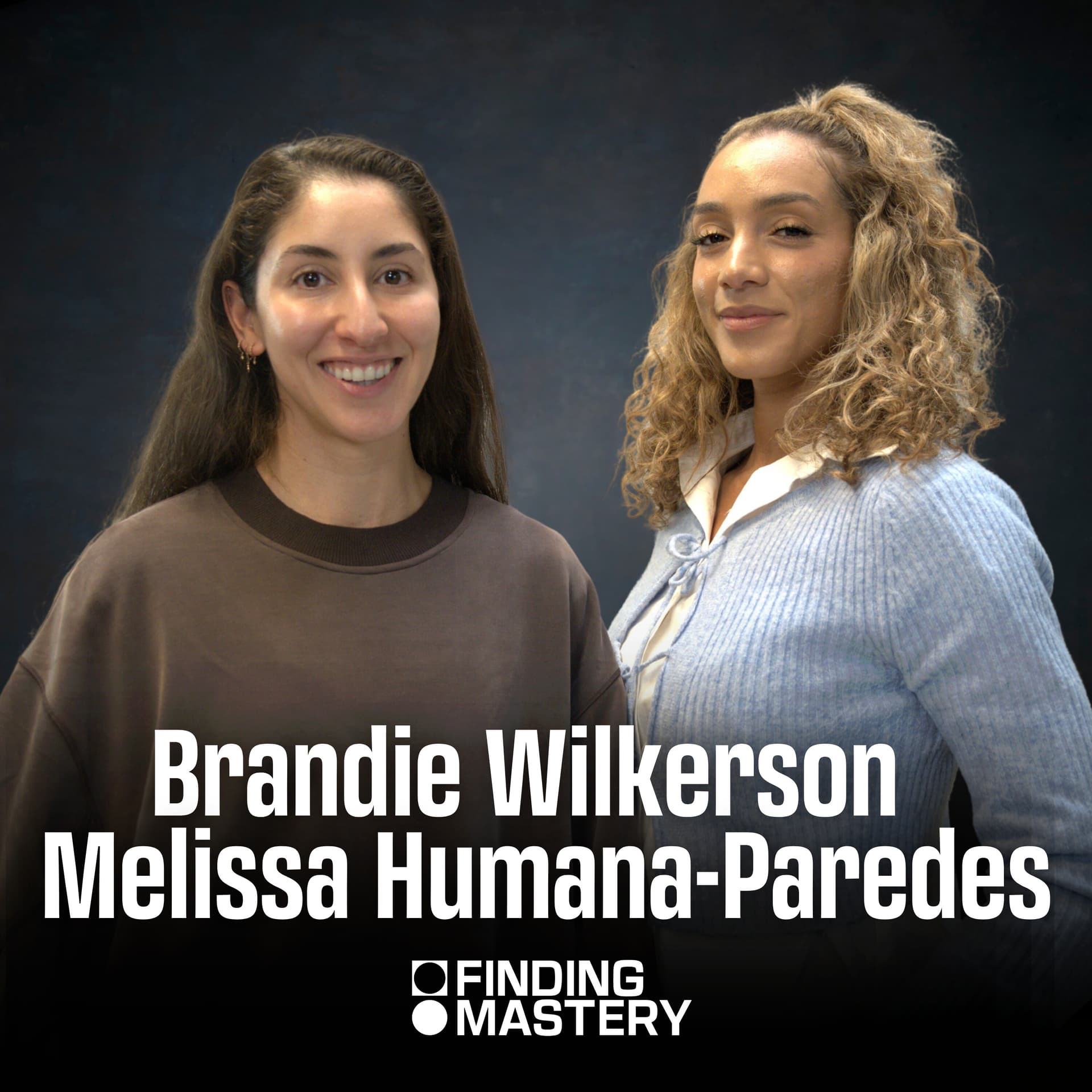
- Brandie Wilkerson: Canadian women’s beach volleyball player; long-term partner with Humana-Paredes; describes being highly emotional and using anger/tears as processing rather than suppression.
- Melissa Humana-Paredes: Canadian women’s beach volleyball player; frames the partnership as authenticity/zero judgment; discusses crying after pool-play shock.
- Marcio Sicoli: legendary American beach volleyball coach advising Team Canada; emphasizes directness and emotional leadership.
- Dr. Michael Gervais: host, high-performance psychologist; co-founder of a performance science institute; guides the conversation with USC professor Dave Belasco.
Key claims
- Athletes break when they hide mistakes, avoid emotions, or enmesh relationships; Wilkerson/Humana-Paredes protected joy via boundaries, honesty, and “safe space.”
- Premortem planning and “no game plan” helped them play freely under extreme stress.
- They survived pool-play elimination risk by staying connected and trusting the process.
Notable examples
- Nearly crashing out in Paris pool play by one point; a forest walk after the Latvia loss triggered Humana-Paredes’ flood of tears.
- Lucky-loser turnaround: Brandy’s furious but partner-safe check-in; Marcio’s “there is no game plan, play free.”
- After beating the U.S. team (Kerri Walsh Jennings/April Ross), they credit relationship trust and scrappy resilience over “numbers.”
Written by AI. May contain mistakes. Listen to the episode to check what was said.
Chapters
Tap a time to open that second in VOThe Olympic Journey of Brandy and Melissa
0:03 to 1:13
Explore the challenging path of Brandy and Melissa as they prepare for the Olympics.
“And one of the things I've learned is to pay close attention when science starts pointing somewhere new.”
The Olympic Journey of Brandy and Melissa
2:25 to 3:39
Explore the challenging path of Brandy and Melissa as they prepare for the Olympics.
“Now, the idea behind these conversations is simple.”
Building Relationships in Sports
3:40 to 5:56
Marcio and Dr. Gervais discuss their relationship and collaboration in coaching.
“And for Melissa and Brandy, I mean, you not only inspired Canada, but the world and following your Olympic run.”
Shared Values and Team Dynamics
5:57 to 10:28
Brandy and Melissa share the values and principles that strengthen their partnership.
“And, and I said, well, what do you mean?”
Embracing Mistakes and Authenticity
10:29 to 13:11
The athletes discuss the importance of honesty and addressing mistakes in their journey.
“And I have so much admiration and respect for your journey.”
Supporting Each Other at the Olympics
14:04 to 14:15
Learn how mutual support among teammates can enhance performance.
“I can't figure out why I'm a half second late or whatever.”
Supporting Each Other at the Olympics
14:19 to 15:22
Learn how mutual support among teammates can enhance performance.
“It's the time that you lose when the fit is off, the momentum that stalls when that fit doesn't work.”
Supporting Each Other at the Olympics
15:32 to 16:34
Learn how mutual support among teammates can enhance performance.
“The performers who sustain excellence over decades, not just for a season, they almost all have one.”
Embracing Big Emotions
16:42 to 20:48
Understand the importance of acknowledging and expressing emotions in high-pressure situations.
“Like, I should probably just talk to her about it.”
Crying at the Olympics
20:54 to 28:01
Hear personal stories about the emotional experiences of athletes during the Games.
“I get emotional watching my friends compete and just think, you know, what her father and mother of us feel like.”
Show all 41 chapters
Exploring Emotions at the Olympics
28:01 to 28:31
Discover the range of emotions felt during the Olympics, from fear to gratitude.
“I would be FaceTiming my boyfriend and I'd be crying.”
Working with Emotions in Sports
31:07 to 31:35
Understand how athletes manage their emotions to achieve greatness.
“This is not about like you have to cry to be great.”
Coping with Loss and Anger
31:35 to 33:48
Learn how athletes navigate feelings of anger and loss during competitions.
“So what skills did you rely on at that time to turn it around?”
Leadership and Emotional Support
33:48 to 36:20
Discover how emotional resilience and support play a role in team dynamics.
“And I remember sitting on that bench before the game because we're so ill prepared.”
Finding Freedom in Competition
36:20 to 37:54
Explore the balance between instinct and strategy in high-pressure situations.
“Like you were able to maintain your boundary and you were able to maintain your boundary.”
Emotional Moments Before the Game
37:54 to 41:21
Reflect on the significance of emotional experiences just before competing.
“It is a testament to the work that when the stakes were the highest and the pressure was the highest, that you felt free.”
Approaching Major Matches
41:21 to 42:00
Learn about mindset and strategy when facing top competitors in critical games.
“So there's probably more relief than joy in that with everybody there.”
The Emotional Landscape of Competition
42:00 to 42:13
Explore the emotional journey of athletes during critical matches.
“other side of the net it seemed like you had a strategy on who to serve and what to do but just take us through the emotions of that game because when that game but then that match you turned a corner and you were gone.”
The Emotional Landscape of Competition
42:37 to 43:26
Explore the emotional journey of athletes during critical matches.
“What that means is it helps to slow biological aging by strengthening your cells, basically protecting them from damage.”
Mental Preparation for Competition
43:26 to 45:30
Understand the importance of mental readiness and self-awareness in sports.
“I think when we first found out who we were playing, I have so much respect for that team and they were playing well, but there was absolutely no way I was losing that game.”
Facing Doubts and Challenges
45:30 to 49:21
Discover how athletes confront their insecurities and doubts during high-pressure games.
“crave it's what i've known my whole life to then something that i invite into my life because of how much goodness has come out of it.”
Team Dynamics and Philosophies
49:21 to 55:46
Examine the different philosophical approaches athletes take towards competition.
“So you relied on your partner to say, look, I got it.”
Navigating Different Emotional Responses
56:01 to 57:28
Learn how differing emotional approaches impacted the Olympic experience.
“But then there's a level of like you didn't even get that.”
Philosophy and Emotions in Competition
57:29 to 59:10
Understand the impact of personal philosophy on performance under pressure.
“I wanted this to feel bigger than I could imagine.”
Coaching Through Philosophy Shifts
59:11 to 1:02:16
Explore the coaching techniques to help athletes navigate changing philosophies.
“So if that's your anchor, and those evolve over time, as we become different people in our lives, you don't expect them to evolve and change at the Olympics with everything on the line.”
Mental Preparation for the Gold Medal Match
1:02:17 to 1:10:00
Dive into the mental strategies and emotions leading up to the final match.
“Kind of like, again, figuring out what that Lego would be if I need to change here, changing there.”
Reflections Before the Big Game
1:10:00 to 1:10:36
The athletes share their thoughts and feelings leading up to a crucial match.
“I think you said, there's no other option but winning.”
The Game Experience: Memories and Blurs
1:10:36 to 1:11:11
They discuss their fragmented memories of the game and how it felt emotionally.
“I haven't watched the game, it's one of the only games in my entire career that I've never rewatched and I probably will watch it at some point but I haven't yet.”
Physical and Mental Challenges
1:11:11 to 1:12:35
They open up about physical struggles and mental barriers faced during the game.
Sharing Burdens and Realizations
1:12:35 to 1:13:48
The athletes express how they shared the burden of the game's outcome.
“And so then I was like, it's fine, fine, shake it off.”
Teammate Support and Recognition
1:13:48 to 1:14:57
They reflect on the importance of supporting one another during the game.
Coaching Perspectives and Team Dynamics
1:14:57 to 1:16:10
The coach shares insights and feelings about the game's progress and outcomes.
Intense Moments and the 'Dragon'
1:16:10 to 1:18:04
They recount intense moments during the match, including a pivotal emotional encounter.
Grounding Forces and Control
1:18:04 to 1:20:26
The discussion focuses on how players maintained composure amidst chaos.
“I think everything was totally fine and then escalating, pushing you back and forth.”
Emotional Aftermath of the Olympics
1:20:26 to 1:23:52
They delve into the mix of feelings experienced after the Olympic final.
“And I was like, both our side of the net is dominant right now in two completely different ways.”
Finding Peace After Defeat
1:24:01 to 1:25:15
Explore how personal connections and teamwork can redefine success after loss.
“I think it took me a while to get there.”
The Emotional Rollercoaster of Competition
1:25:16 to 1:26:34
Understand the complex emotions that come with competing at a high level.
“angst about the result even though I know we talk about we're more than just the result but um I wouldn't change it again if it meant doing it with different people.”
The Struggle with Identity Post-Competition
1:26:35 to 1:27:35
Learn about the challenges of maintaining self-identity after a major loss.
“myself and where I'm going and then follow through with that.”
Navigating Depression and Finding Support
1:27:36 to 1:29:06
Discuss the importance of support systems during tough times and personal challenges.
The Transformative Power of Vulnerability
1:29:07 to 1:30:06
Discover how vulnerability can lead to deeper self-awareness and personal growth.
“And then I think after a month, I literally got depressed for about two weeks.”
The Impact of Family and Community
1:30:07 to 1:30:53
Hear how family and friends amplify the experience of competition and support.
Transcript
Automatic transcript. May contain errors.0:00Dr. Michael Gervais:Finding Master is brought to you by Momentus. I have spent my career studying the mind, how to develop it for high performance, how it can be great in high stress conditions, and what helps it stay sharp over the long arc of life. And one of the things I've learned is to pay close attention when science starts pointing somewhere new. Creatine is one of those places right now. We've known for decades what it does for the body, strength, power, recovery. It's about well studied as any supplement out there. But the work emerging on creatine in the brain is what has my attention. The brain runs on energy, the same currency a working muscle does.
0:34Dr. Michael Gervais:And creatine appears to support brain energy metabolism, helping working memory, easing mental fatigue under exactly the conditions so many of us operate in. Sustained demand, stress, not enough sleep. For something that's been around this long, that's a genuinely interesting frontier. So if I'm going to take something daily, the quality has to be unquestionable. That's why I use Momentus. They searched the globe for the highest quality creatine. Then they built their own specification around it. Signature spec is what they call it. It's made in a pharmaceutical facility, six stages of testing, four independent agencies, and it's NSF certified for sport.
1:09Dr. Michael Gervais:When you take something every day, that level of quality compounds. Go to livemomentous.com slash findingmastery and use the code findingmastery for up to 35 % off your first order. That's livemomentous.com slash findingmastery. with the code FINDINGMASTERY. Picture this. It's late 2022. Spending more time with my family and pouring energy into finding mastery. Then, my phone rings. It's legendary beach volleyball coach, Marcio Sicoli. His voice has that unmistakable spark. He says, Gervais, I've got something interesting for you. You're definitely gonna wanna hear this. Now, when Marcio says something interesting, I know that this is not a casual lunch invite.
1:53Dr. Michael Gervais:A few days later, I'm sitting across the table from him and two Canadian athletes I hadn't yet met as a team. Brandy Wilkerson and Melissa Humana-Paredes were crammed into a beachside coffee shop, mismatched chairs, half-cold cappuccinos, and within minutes, I feel it. This wasn't going to be a casual meeting. This was going to become an adventure. Welcome back, or welcome to the Finding Mastery podcast, where we dive into the minds of the world's greatest thinkers and doers. I am your host, Dr. Michael Gervais, by trade and training a high-performance psychologist. Now, the idea behind these conversations is simple.
2:29Dr. Michael Gervais:It's to sit with the extraordinaries and to learn, to really learn about how they work from the inside out. So fast forward to the summer of 2024. Against all odds, Brandy and Melissa are standing on the sand in Paris, playing for a spot on the Olympic podium. Their path is anything but smooth. They nearly crashed out in pool play, saved by a single point in a last chance lifeline. They fought through doubt, anger, tears, and the weight of never having seen Canada medal in women's Olympic beach volleyball. Yet, they rose, match after match, night after night, until they were facing the number one team in the world.
3:10Dr. Michael Gervais:A few months later, before the adrenaline fully faded, we gathered in Los Angeles at the Mastery Lab. Marcio, Melissa, Brandy, myself, and our friend USC professor Dave Belasco, who guided the conversation. What unfolded was part debrief, part love letter to resilience, and part behind the scenes account of what it really takes to walk into the fire together and come through on top. This is that conversation, never before released. A story as relevant today as it was then. Trust, grit, and the belief that nobody does the extraordinary alone
3:51well it's wonderful to be here with four people that I really admire and am inspired by I know Mike quite well he's been a pillar of my class at USC on mindset for years and he was the co-founder with Pete Carroll and myself on a performance science institute so you've taught thousands and thousands of USC students. So thank you. And for Melissa and Brandy, I mean, you not only inspired Canada, but the world and following your Olympic run. And so to bring all of you together and have this conversation really is a privilege and to go sort of behind the scenes. So let's start with the two less famous people right now, Marcio and Dr.
4:32Mike. This is true. That's correct. This is true. let's talk about your relationship and how a renowned American sports psychologist wound up advising and coaching with team Canada. Can you talk about the relationship with Mike and how you invited him to this team? Wow. Where do I start it? I think here's where I started. I met Mike in previous Olympics and that was just like right away. He is the best in the world.
5:03Dr. Michael Gervais:This is why I wanted you on the phone. That's all we needed. You can go. In terms of like the mindset and in terms of the psychology of the sport. But the most important thing in terms of like the human relationships. So he knows how that works. And then for me, you know, we had a small budget. We had, you know, not the means to do it. And then I just put it out there and I said, Mike, here's the deal. I have two apples and two bananas. Do you want to go on that project with me? And he goes like, maybe it's sports, ball sports again. I'm not sure. But in our first meeting, you know, for some reason, the players were late.
5:49And then we got to catch up a little bit and it just felt right. Just felt right on my end. And I'm just happy. So there's a, I just watched you two go, we were late?
6:00Dr. Michael Gervais:There's a story behind that. yeah so the way that i remember the way this our relationship first was through carrie walsh and misty may and we spent two quads one quad two quads with them supporting them and i loved working with you there was something about the way that you truly support somebody and honestly challenge them and with all of your technical prowess i'm like there's something genius about working with you and i felt it and i watched it and i loved it and then i thought i was kind of done with volleyball when they retired it was uh carrie and april and then carrie kind of retired was in the transition phase and i thought i was pretty much done with volleyball at that point great run amazing and then i got a call from you that said it was two years into the squad he said i've got something interesting and you thought you were done too yep right both of us thought we were done in Olympic volleyball, which is the pinnacle of the sport.
6:58Dr. Michael Gervais:And, and I said, well, what do you mean? And you said, there's these two athletes that are really special. And I said, what do you mean? And he said, I want you to meet them. I said, great. And I trusted you on the physical prowess of them. And so we set up a breakfast and that was so I could like know your character. and then you're 15 minutes late and I was like so right but the way you handled that I think we set them to the wrong place by accident there's two restaurants with the same name two different cities you went to city one we were at city two and but the way that you walked in with a presence with a humility with a grace with an apology but but you didn't give yourself away like like you were a disaster and I felt the presence and I felt the internal power that you walked in with I thought, oh, well, there's something to that.
7:51Dr. Michael Gervais:And then he invited me down to watch you play. And I said, oh, there's something to that. And so it was the combination of physical and character that allowed us to go one more time and see if we could create magic in. And so it was awesome. And I want to talk about the essence of your partnership so everyone gets a sense of who you are. Can you talk about what binds you? Do you have shared values that you talk about? Do you have uncompromising principles that you've set up in your partnership? Because you do seem quite attuned. I know at least one of you has had a partnership that wasn't as healthy, maybe.
8:29And so from the outside, it looks like you play with joy. And you exhibit that and we all feel it. Can you talk about the shared values that brought you together as a team and what you just aren't willing to compromise? The first thing that comes to mind when I think of what we're not willing to compromise, I think it's ourselves, like our values. I think we've both been through life's experiences where boundaries were bent and broken. Things weren't said. Honesty wasn't there. And we suffered from that. We lost ourselves. We lost what was important to us and that joy. So when you are faced with an opportunity to regain that and rebuild that in a very beautiful, amazing way, you're going to protect that.
9:14And I think we respect that of each other. Melissa and I are very different in a lot of ways. We're pretty opposites. And I think that's what binds us together, to be able to show up in different ways and also respect the differences. Melissa provides so much space for me to be who I am. And that's important to me. and I hope I provide something for her that allows her to be who she wants to be. I'm not going to speak for you. I think those things are important. I wouldn't want people to be mistaken to think that you can only work with like-minded people or people who are exactly the same as you because I truly think that's what makes our team successful.
9:54But it's a lot more work and you need a lot more support and a lot more clarity and you need to just know who you are. So if Melissa and I met at any other point in our careers or in our lives, I'm not exactly sure it would have worked. So I know we've known each other for over a decade, but I was like four. I don't even know who that person was when I first met. And I don't think we would have gotten along. So everything needs to happen in its timing. And we're just reaping the benefits of the lessons and the beauty of it. And I think that's why the joy is so natural, because it's like you kind of get to finally be free.
10:34And I have so much admiration and respect for your journey. And I also understand what it takes to put in some hard work. So whenever I see you successful, I'm going to rejoice in that and love it and be present and just be more optimistic on life. And I'm very grateful for everything you represent for me, more than just as a teammate, for sure. Yeah. So much goodness in everything you said. And as you were talking, there were so many things I wanted to say as well. But I think having that history that we had together from going back to when we met first year of college. And so, yeah, who we were back then was like five different versions of who we are now.
11:17And so I think that's been such a beautiful part of our journey is being able to see where we came from, who that person was, who that woman was, who that athlete was, and how we've evolved and grown to who we are now and continue to change. Like even since we got together two years ago, seeing growth even in that time has been so fulfilling. and I think something that really has connected us in a way that maybe we haven't felt in previous partnerships, both on the sand and in real life and just like connections, human connections that we've created in our lives. I think that's kind of what has kept us together through really high highs and really low lows.
11:55I think that has been foundational for us. I think there's always been this kind of like safe space that I've seen in Brandy and I don't really know what I can pinpoint that too. Maybe it's this like she's seen me from when I was like 18 years old and we've been on different sides of the net together. We've been on the same side of the net together. But what I think that we really provided was a safe space. And I think that was also attributable to these two with us who were, they were able to kind of cultivate a culture of authenticity and of like zero judgment. It was like who you are today and who you are tomorrow and who you are the day after what you have to bring in that moment, I think we are accepting of it without judgment.
12:36And I think that was like really radical for me to feel like I could truly be myself and show all my flaws and show every side of me and I'll still be loved. I'll still be respected. I'll still be accepted. And I'm going to be pushed to be even better tomorrow. Even when, even when it's not going well. Yes. Yes.
12:53Dr. Michael Gervais:Even when we all made mistakes at the games. And you didn't make any. I made the most. I'm curious to hear about your mistakes. I'm looking at Marcia. We made a ton of mistakes. Oh, yeah. You know, looking, always looking back, there was one thing. It was like, oh, I wish I would say that. I wish we would have that hour. I wish we would have that. And then it became this like huge mistake. but I felt the way that we did things was never hiding those mistakes and we're actually not explaining those mistakes everybody knew it there was a mistake everybody knew it and then you're like okay we're gonna move forward because tomorrow we do have another opportunity yeah to make it right so in the games we could see your mistakes the world could see your mistakes and for you to try to maybe hide them to the inner team you never did it you're you You didn't try to excuse it away.
13:54Dr. Michael Gervais:You didn't try to like blame it away. You stayed in that honest place. To me, it's evidence of the 24 months before that you were like being honest so that you when you arrived at the games, you could be honest. Like, yeah, I don't know what it is. I can't figure out why I'm a half second late or whatever. And you guys just stayed in it for each other, with each other. That was rad. Finding Master is brought to you by LinkedIn Jobs. If you've ever hired for a small business, you know the real cost isn't just the salary. It's the time that you lose when the fit is off, the momentum that stalls when that fit doesn't work.
14:28Dr. Michael Gervais:And that's the pressure of having to get it right while you're still running everything else. That's why I'm paying attention to LinkedIn Hiring Pro. It's built for the reality of hiring when you're operating lean. You describe the role in playing language, and then Hiring Pro helps you draft the job post, surface the right candidates, and then narrow to a short list without turning hiring into another full-time job. And when applications start coming in, it doesn't leave you buried in resumes. It streamlines screening. including AI-powered interviews for initial conversations. How about that?
14:56Dr. Michael Gervais:So that you can spend less time searching and then more time connecting with the people who match what you need. With Hiring Pro, you can hire with confidence knowing you're getting the best talent for your business. In fact, those hiring with LinkedIn are 24 % less likely to need to reopen a role within 12 months when compared to their leading competitor. Join the 2.7 million small businesses using LinkedIn to hire. Get started by posting your job for free at linkedin.com slash mastery. Again, that's linkedin.com slash mastery. Terms and conditions apply. Finding Mastery is brought to you by Magic Mind.
15:31Dr. Michael Gervais:Something that I come back to often is the power of principled mornings. The performers who sustain excellence over decades, not just for a season, they almost all have one. A set of behaviors that they do not negotiate away because they understand that how you enter the day shapes how you move through it. For a long time, my mornings have been disciplined, but a little incomplete. I do all the practices for stillness and movement. But when I sat down for the first real hours of cognitive work, there was a ceiling that I kept noticing. Clarity that faded faster than I wanted to. And I told myself it was normal.
16:02Dr. Michael Gervais:Magic Mind is part of my mid-morning routine as a way to work with that. It's a daily two-ounce mental performance shot with clinically backed ingredients like lion's mane, ashwagandha, turmeric. Two seconds every morning. It's awesome. And I notice when I skip it. Sharper thinking, steadier focus, better energy through the back half of my day. I'm not wired. I'm just more consistently on. The formula is based over 10 years of research, nano encapsulated for five times better absorption than traditional pills and powders. Go to magicmind.com to get 50 % off your first order. Small routines done consistently are where excellence tends to live.
16:37Dr. Michael Gervais:This one might be worth adding. Yeah. Yeah. Oh, I heard that in your voice just now yeah right that was just because it was so clearly evident from all of the work that was done before from you guys unwavering standard of honesty that we bought into in practice it was like I can remember one of the first conversations of us as a team at practice and I was like coming up to you complaining about some pass set thing and I was just like I don't know I feel like she does this or I don't know if I'm not doing this and then you're like Melissa Brandy thinks that And I'm like, oh, my God. There are no secrets.
17:20Well, shit, he's not wrong. Like, I should probably just talk to her about it. You just, like, in one second was like, no, your name came out her mouth, so you must be talking to her. So I was like, that's the way we're going to do it here. Because I didn't even catch myself. So it's, like, little things like that. And then, obviously, like, countless car rides and hotel rooms and after game. and we've had some crazy talks post bad losses and things like that that were uncomfortable and we were still trying to figure out how to do it like the talk happened right after it it happened like four hours later but we still tried and then so to get to the olympics and truly feel like you can say and do anything was a huge part of why we got the medal yeah two things on that one is
18:06Dr. Michael Gervais:you guys don't use the word let I am I was going to let her be herself which is a uber controlling small little word three-letter word that is like really insidious and you don't use that word you're like I'm going to celebrate her being her and that that is a first principle is really important the second thing that I think is radical and I'm going to look at you Marcio is emotions. So the Olympics are for big emotions. Did you have big emotions? Brandy? I guess. Kind of. Not as big as I wanted them to. Wait, wait, hold on, hold on. I saw some big emotions. There were, but I thought it was going to be like way.
18:49I wanted it. We should get into that. Okay.
18:51Dr. Michael Gervais:But I'll emphatically you had big emotions. Oh, and the whole team knows it. Oh, just because I threw the chair on the wall. So not that one. You broke a chair. That one was fine. I was broken. That's not a problem. That was not the one I was even talking about. I was talking about in our pre-meetings. Oh, the one where I was like... Some of those. I'm not asking to air it out, but there was big emotions. I don't care. And you can air it all out. Yeah. You had big emotions. Massive. Marcio, you had huge emotions. Absolutely. I kissed you. You did. I said don't air it out. That happened too. Yeah.
19:22Dr. Michael Gervais:So how many times did you feel or actually cry during the games? We were there for 21 days. Actually, this place, how many times do you think you cried? Every game? Every game. Oh, yeah. Yeah, like maybe every post-practice too. Maybe every day, yeah. Oh, post-practice? No, I didn't see that one coming. No, I think so. Every game for sure. Not post-practice. Oh, okay. It was a lie. Yeah, every day. This is not to call you out in that way. It's that the Olympics are for big emotions, and you need incredible courage to go to the edges of emotions. and I was on a team where you guys went to the edges of all of the emotions and still held each other in high regard.
20:07Dr. Michael Gervais:Life is for big emotions. If you want a full life, a life of flourishing, one that is radically experienced, you need, we need, I need to know how to go to the edges of all of my emotions you guys are epic reminders of it i got to witness it every day you opened the aperture for me up in in so many ways as well i am so honored to be part of this team i can't tell you and that the whole experience from that point for me was the real olympics the medal was cool but it allows us to tell the story in a in a way that grabs attention it the real story is the aperture that opened up for big emotions and to take care of each other as we did it.
20:54I get emotional watching my friends compete and just think, you know, what her father and mother of us feel like. So I want to know what, what was, what were those emotions that brought tears? Was it pride? Was it admiration? Was it fury? What was it that brings that out in you? Number one, I cry for everything. So I'm like really sensitive on that. If you see someone cry in an airplane watching like a a dad and a kid a movie that's me that that will be me i just feel that when i have those tear eyes and that emotion it is just about the love that we're there we're there and it's for me it's easier and you know easier and then plus have more clarity inside of myself when i let it go and and be okay to say like you know what i'm crying yes it this is this is how I'm gonna handle that but you know I'm here in the next two minutes and then we're all in this together yeah uh there was never this like oh my god I can't cry I'm the strong coach I'm the coach I'm this no we were all a bunch of human beings trying to do something that was impossible you know they don't know that but that was the first time ever and then I'm like not gonna say how old I am but since I'm doing this that like after game one I have to leave the bleachers and find a secret place and vomit because that was how nervous i was and i never did that in my entire life and i came back michael like are you okay i was like yeah i'm good we're good yeah well game two and i knew exactly what was happening you know you had that white look
22:32Dr. Michael Gervais:and but he was like okay i'm good but did you see this before in previous olympics no no no no so this was a new experience this was something different this was i think a different games for all of us yeah totally different yeah yeah and it was set up on meeting one yeah and um it where you also brought forward all of that love and you were like very clear like i'll share first principle of mine that nobody does the extraordinary alone we need each other and this thing was rested on that and you were the anchor for it for all of us and the first meeting you were in full tears like no we're going to do this thing differently we're not going to just go and compete our asses off to get to the podium and then have the thing fray and we're not going to arrive you know competing to the olympics and not like each other like it was totally grounded in you were the anchor for the whole thing yeah i agree yep i have so many thoughts as you're both speaking um one my favorite memory one of my favorite memories of the olympics is i'm so happy someone recorded this but with your reaction the three of you you fiappo and marcio after we won the semi-finals and how you each emoted so differently it took you a minute you were like sitting in the chair mike and fiappo are hugging immediately and then like you're still sitting in the chair and then mike comes to you to be like okay come on and then you just like jump up and like i just to see the emotions that we couldn't see because we're on the court having our own moment and so seeing the behind the scenes i'm i'm honestly so grateful someone recorded that because it adds so much more to our journey and it adds so much more like expansiveness to the emotions we felt knowing how you were reacting on the sides because you're yeah you're such a big part of this and you really guided how we operated as a team and you could see in that video i hope we can show it on the podcast but like how much it meant to you as well because this was like these are people that are behind the scenes that don't really get the attention or the um acknowledgement that you deserve because we're the ones on the sand the cameras are on us but this is like the heart of the team so that moved me so deeply and to hear how emotional it was for you was incredible um but also when I think about myself and like when you asked how many times did you cry um at the Olympic Games there were days before the Olympic Games where I was getting a little emotional but when I got in Paris I didn't really cry as much as I thought I would actually ever until after pool play and you and i went for a walk in the forest um
25:23and we had just lost like basically our pool and we have we had found out we had to play in this
25:29Dr. Michael Gervais:lucky loser match and like everything was the listener probably doesn't know the stakes of what that is okay yeah were we going in in fifth place or fourth place what was the rank you're fourth in the world fourth in the world seated first in the pool and they had never canada has never podiumed correct and beach volleyball yeah never won a medal in beach volleyball women's women's and so so that's the context and then at this moment you're now in last place yeah you've Fallen from fourth to last place. And first in your pool, favored to win your pool. You win your first match against Paraguay.
26:08You lose to the young Swiss team. And then with a lot of stakes on the line, you lose to Latvia. And then you wind up in the lucky loser. By a point. One point. By a point. And what's crazy is a couple weeks before the Olympics, when we were doing our pre-mortem conversations, which basically was airing out all of our, like what's the worst thing that could happen? Like our kind of our fears heading into the Olympics, airing it out on a big whiteboard. We wrote it all down and we kind of troubleshooted. Like what's, okay, how are we gonna prepare for this if this happens? Like what's the worst thing that could happen?
26:41Which I was scared to do in general because I didn't want to give it energy. I didn't want to put my fears out there and like give them power. But I think it was actually so powerful to do that. But one of the things that I said was we don't make it out of pool. That's the worst thing that could happen. at the Olympics for me. That was top of mind. And that almost happened. So like the worst thing for me almost happens. And I was in like a complete state of shock because there was no way that was the reality. I remember saying it out loud in our premortem chat being like, I know this will never happen.
27:11Dr. Michael Gervais:I remember that. But if we don't make it at a pool, like, and I know when I kept qualifying saying, no, it would never happen. Like it's so far from reality for us that we would even be in that position. It would be one of the worst things that could take place yes and here and it almost happened that was a shock that hit my system in a way that i wasn't prepared for um and i remember we were on our forest walk and you looked at me very early on on the walk and you said have you cried yet and i was like taken aback by that question i didn't like that question and i remember getting kind of defensive and i was like no why would i why would i cry like that would make things very final for me like i mean it's where it's not over yet.
Read the full transcript
27:49And I'm crying as I'm saying this. Like just you opened the floodgates for me in that moment. And it felt like a huge release. And it just felt every day after that, I cried. Randomly.
28:01Dr. Michael Gervais:Wow. No idea why. I would wake up in the morning. I would be FaceTiming my boyfriend and I'd be crying. He goes, why are you crying? I said, I don't know. I don't know why I'm crying. I would be journaling and I would be crying on my paper. And they were like happy tears. Some of them were tears of fear. some of them were tears of insecurity some of them were like gratitude tears just everything it just opened up this emotion like moments I had never experienced in my life before I felt at the Olympics very cool and wouldn't have been able to feel that if it wasn't for like the people we were with very cool finding master is brought to you by David protein travel a lot at finding mastery and sometimes travel makes it tricky to eat well best intentions and then you're at the airport and then suddenly the only options around you are the ones that you'd rarely choose at home.
28:48Dr. Michael Gervais:Something I come back to often is that discipline isn't really about willpower in the moment. It's often about choice architecture, setting up your environment ahead of time so that the easy choice and the good choice are the same one. That's the role David plays for me on the road. The gold bar, it's their flagship high protein density, great texture, flavors that make it easy to stick with. So when I throw a few in the bag before my trip, I've already made the decision. The hard moment later takes care of itself. And the team here at Finding Mastery, they love the bars as well. They are ripping through them in the Finding Mastery lab.
29:18Dr. Michael Gervais:Salted peanut butter and fudge brownie seem to be the fan favorites right now. They have built something with real rigor in a crowded, sometimes ambiguous space like nutrition. That matters when it's something that you reach for again and again. David bars are now available in major retailers like Walmart and Target. And if you'd like to buy them directly and get a special offer for being a Finding Mastery listener, head to davidprotein.com slash Finding Mastery, where right now, if you buy four packs, you'll get the fifth one for free. Again, that's davidprotein.com slash finding mastery. Finding Mastery is brought to you by Lisa.
29:52Dr. Michael Gervais:We are serious about recovery. Sleep sits right at the center of that practice. I have been fortunate to work with some of the most extraordinary performers for the last two decades. And sleep and recovery are foundational, full stop. It's where the body and the brain repairs. And that's why finding a mattress that supports your recovery matters so much. A great mattress, it's not something that you stumble into. It is a choice. You find it on purpose, the same way that you'd approach anything that really matters in your life. We've worked with Lisa for a long time now because they get it. They build beautifully crafted mattresses tailored to how you actually sleep.
30:28Dr. Michael Gervais:Your position, your feel, your preferences, all of it. You can take their sleep quiz and find your match in about two minutes. Premium material, serious comfort, full body support, no matter how you rest. One of our teammates here at Finding Mastery picked one up recently. Can't stop talking about it. Says it. They're waking up more rested than they have in years. Right now, go to Lisa.com for 25 % off select mattresses. Plus, you get an extra$50 off when you use the promo code mastery. That's exclusive for our listeners. That's Lisa, L-E-E-S-A.com, promo code mastery for the 25 % off select mattresses, plus the extra$50 off when you use the code mastery.
31:07Dr. Michael Gervais:This is not about like you have to cry to be great. This is about you have to know how to work with emotions to be great. All of the emotions even if you need to break a chair. Or the wall. Or who broke what. No one's supporting violence here but you know. But there was a moment. And so those are the edges. If you can't go to the edges I don't think you'll ever find out what you're capable of. and if you play it tight and safe and small you can get good results in life but never the extraordinary oh yeah Brandy what were you experiencing after the loss to Latvia going into the lucky loser give us your state of mind and what what tools did you rely on maybe that you had practiced with the team and and you're you're a student of mindset and you you do the inner work I've I I follow you enough on Instagram to know that you're on that.
31:58So what skills did you rely on at that time to turn it around? Because Mel was not playing well. You weren't playing well as a team. Whoa, whoa, whoa. I know. That's the truth. I'm joking. I'll take it on the chair. I'm just joking. Okay. I'm sorry. I felt terrible. No, no, no. She sold me that too. I'm joking. I was coaching great. Yeah, no mistake. That was handled. This sport is brutal. You are 100 % dependent upon one person, your partner. You could be playing lights out, and if your partner's not there with you. Now, I'm not saying that's the case, because it wasn't. But what were you experienced there, and what tools did you rely on to turn it around and be ready for the lucky loser match?
32:43Were you mad? Oh, yeah, I was furious. And that's the thing I have allowed myself to practice, is to truly feel all of my emotions fully. And so if anger was the thing that came up, I remember just screaming like, are you fucking kidding me? Just like ripping things apart. I don't know if we talked much. We did a little bit. But it's like I'm not here to like check up on you and do what you're doing. We're here to connect to make sure that we both understand what the next move is. And we're both good. I have full trust in your process as you have in mine. So it was just more of what I felt was more of a check-in.
33:19Like we're still good. I'm pissed. I'm gonna go do this now. That's my emotions. That's where I'm feeling. But I think my entire life I've been so used to working with so little so that if it's just one point that we have that kept us in the game, that was enough for me to be like, we're still going to win this. And so it was just another opportunity to practice making something out of nothing. And it was exciting to me to do that. It was freeing when we finally did get to a calm place. And I remember sitting on that bench before the game because we're so ill prepared. We didn't even have close to change in.
33:56We had no like foresight of being in this position. And you're like, should we do some video? I'm like, no, we're just gonna like go for this. And everyone loved to watch us play that game. They saw us have some fun. And I appreciated Marcio's directness and setting the tone in terms of like, no, I'm not even gonna like talk to you about this. It's so outrageous. Do what you know how to do. And so that was a good reminder of that as well. But I think the thing for me that was most important and the thing I used the entire game was just, I already knew where we were going to end up. So it was just getting there.
34:33And as long as you give me even one little breathing space, I'm going to take it and run. So I think that's what I had to lean on. Yeah, if I can chime in, what I saw in those moments after was like guttural emotions from Brandy, like a whole spectrum. And after both of the games that we lost that we believe truly we shouldn't have lost, I saw her really feel in ways I hadn't really seen before. And it was done in a way that never made it feel like it was pointed at me. It was genuinely her emotions, how she was feeling these and how much it meant to her is what I saw as well. And again, it was done in a way that was so respectful of my experience as well, but also she was going to feel this her way.
35:17And I thought as a partner, that was like a form of leadership and self-awareness that I'd never really seen before. Because yes, like I was, I felt like I was letting the team down. And this was my partner who was standing by my side, regardless, she was going to feel the depths of the disappointment and the anger of what was happening but she was never going to make me feel bad for it. She was going to allow me to move through it and just know that she's still with me and that was something that I think I didn't know I was capable of having in someone and feeling in somebody and so to see this kind of progress and evolve heading into the lucky loser game I felt so much freedom because of that and we were our backs were against the wall like there was no way we should have maybe felt free or like relaxed or jointed like together but we were and that's testament again to these two to us what we've done together um and so like i think very few teams if any would have been able to survive
36:20Dr. Michael Gervais:what we survived and make it out alive i completely agree with that and we've seen some heavy situations i'm looking at marcio both in volleyball and otherwise i completely agree with that i was having a conversation with our producer kevin earlier that i don't think that um i don't think many teams could have done what you've done and yeah it was radical and I think Brandy you led with all of that emotion and you there was a leadership moment in that in so much as you didn't fray the relationship the teammate the bonding there's leadership in that and I'm not sure how you did it because we were not in the room just you two and I think the 24 months that we had done a lot of work, you were able to not get sucked in.
37:04Dr. Michael Gervais:Oh no, it's like I'm belowing it. I'm the reason I'm the, it's me. It's me. I'm now I'm looking at you now. Like you were able to maintain your boundary and you were able to maintain your boundary. There was a nice Venn diagram, but it wasn't an enmeshed relationship. Technically what that means is when one person wobbles, the other one wobbles and you, you did not do the enmeshment thing, which is awesome. and I'll never forget what you just said Brandy I'll never forget how you just said it and what you said that you're used to working with very little that is like not only just powerful it's honest and that's I didn't know how you did it well done oh thanks yeah well that's you yes y 'all that's I didn't have to have very little with y 'all so that's the beauty of it Well, that's interesting.
37:55It is a testament to the work that when the stakes were the highest and the pressure was the highest, that you felt free. Because that's what Dr. Mike and Marcio would want, is that they want you to bring 100 % of your talents to every situation. And you can't do that if you're not playing free.
38:13Dr. Michael Gervais:You know what Marcio did that, and I'll never forget this. This was going into, I can't remember when it was. And you probably say it all the time, but it just hit me differently. My RCO just says, go wake up your senses. Go wake up all of your senses. And you've probably said that a million times. And it just hit me like the simplicity in go out there and be more animalistic, more like you don't need to use your thinking brain because you have, of course we all do, but like just go wake up your senses and let the true information come in and you'll know how to respond. Do you remember him saying that?
38:49Vividly.
38:49Dr. Michael Gervais:Yeah. But I also remember this was heading into the, this was our do or die match, right? The lucky loser game. I remember when we were getting ready for our team meeting to go over the game plan, which we normally do. It's part of our routine all the time. We go over the game plan and then we go warm up. And he comes into the change room and says, there is no game plan. We are just going to play free. We're going to listen to our instincts. We're going to play like we know how to play. You know how to do this. And we're just going to, we're just going to go. And that was both like really terrifying for me, but also really freeing, which was something that I hadn't felt yet at the Olympics, was that like kind of permission to feel free and to just like go with what I'm feeling on the court rather than what I'm thinking.
39:31I'm overthinking this play, I'm overthinking that play, and I'm not living in the moment and like going off of what my gut's telling me on the court. And so when you said there's no game plan, awaken your senses, be in the moment. And we know we've talked about being in the moment before, which we train it. But when you're in those moments sometimes you forget and so that was a reminder that I definitely needed to hear and heading into that warm-up was so different and heading into that game was so different and I actually remember in right before they were going to call us out before that game it was nighttime it was like 10 p.m and that's when they light the Eiffel Tower.
40:03Dr. Michael Gervais:The Eiffel Tower was in full beauty. Oh my god it was gorgeous. Wasn't that like yeah honestly before you finish your story wasn't that like magical it was like indescribable the whole the whole underneath the eiffel tower unbelievable i don't know how any world games can ever compete with what you where you guys got to compete no and where we got to you know coach from like i don't know a world game that can do that like it's hard to talk magic that's historic but i remember in that moment they also play these songs randomly before they call the teams out and there was this one french song i guess that they were playing in that moment and you kind of like took a pause and your senses were like woken up I guess because you're like this is one of my favorite songs and I had never heard the song before it was I don't even know what it was and she's like this is one of my favorite songs and you know normally we're kind of locked in we're talking game plan before we're about to go on the court and here we are like looking at the twinkling lights of the Eiffel Tower we're like holding each other's hands.
41:05I was like getting teary-eyed listening to the song. Yeah, like listening to this song. And it was just so different than how we would ever operate right before a game. It was just so natural and so like emotional. And everything changed, I think, after that moment for us, for the team. So you win the lucky loser match. You survive in advance. So there's probably more relief than joy in that with everybody there. And you get into the round of 16 in the medal tournament. and your reward for that is playing the number two ranked team in the world the americans cloth and nuss who heading into the games probably were the most consistent team on the world tour and so you approach that game and brandy you know just watching from the stand you could see that you wanted to physically dominate the game and take over so tell us about your mindset and approaching that game and maybe what you witnessed the adjustments that you made it certainly on the other side of the net it seemed like you had a strategy on who to serve and what to do but just take us through the emotions of that game because when that game but then that match you turned a corner and you were gone.
42:13Dr. Michael Gervais:Body Mastery is brought to you by Fatty 15. Okay let's talk about longevity. Longevity is much more than simply adding years it's about maintaining health and a zest and a vitality and enhance performance as you age. And that's why I'm excited about Fatty 15. It's an award-winning supplement. It's powered by C15, which is the first essential fatty acid discovered in over 90 years. Okay, so C15, it's a geroprotector. What that means is it helps to slow biological aging by strengthening your cells, basically protecting them from damage. You can think of it like kind of like a 401k for your health, where you're investing in cellular quote unquote resilience.
42:53Dr. Michael Gervais:And I dug into the research on the relationship between C15 and heart health. I love what I saw. Fatty15 is on a mission to optimize your C15 levels to help you live healthier, longer. Get 15 % off your 90-day subscription starter kit by heading to fatty15.com slash findingmastery and use the code findingmastery at checkout. That's fatty, F-A-T-T-Y, 15.com slash finding mastery. Start investing in your long-term health today. I think when we first found out who we were playing, I have so much respect for that team and they were playing well, but there was absolutely no way I was losing that game.
43:36Like, there's no way. We already knew we saw each other. We kind of had a laugh because we're like, of course this would happen. We absolutely deserve that. and we were completely prepared so knowing that we were locked in and that like I don't know what you would have to do to take it away from me but it was not going to happen so it was exciting to
43:55Dr. Michael Gervais:go in with that energy and what is that what does that sound like in your head probably pretty vulgar is it yeah yeah it's aggressive no effing way that yeah right like yeah there's just no it's like I know myself too much I know what I'm about I know what I can do like the nobody has something on. Like I can't even imagine that someone coming in my way. It was just like so not even in the realm of reality. For the listener I know who I am and I know what I'm about. That's the biggest rock to get in the container because once you really know who you are nobody no situation no circumstance can ever take it away and you've got that big rock in the container.
44:36Dr. Michael Gervais:You know who you are you've done that work and it feels like it's almost a throwaway comment but it is it is the comment yeah yeah and then you know what you're capable of right so but it's the first big rock that i listen when i hear you say that i go yep yeah yep and that is there's no easy path to know who you are that's just time under tension you know an honest reflection and and rad that's right yeah okay sorry for the interruption yeah so it's just time to use that it's a circle back it's just time to use that energy those years and years of how it worked plus i didn't have to worry about like mel not being or my team like i have a team i don't even have to worry about either so it's like i i have the freedom to just be everything that i know that i am and have so much like come into that and just have this beautiful photo and challenges is what i crave it's what i've known my whole life to then something that i invite into my life because of how much goodness has come out of it.
45:39Heading into that game, I was not my most confident self at the beginning of the Olympic Games. It was just not going the way that I had foresaw, that I had planned, that we had prepared for. And so I was kind of going through this emotional turmoil and dealing with some of the doubt and some of the insecurities that I had battled for a good chunk of my career, but it was on display at the Olympics. And it would have been really easy for me to pack it in, to be like it's just not my week you know like it's i like i just can't show up the way that i want to show up and it would have been so easy for me to just back down and like give in and if i if we look at the game we actually went down in that game pretty early i think it was like 13 8 was the 39 39 14 9.
46:23Dr. Michael Gervais:yeah 14 9. game one game one and like it could have been so easy for us to just accept that accept the defeat like coming back from that after you know a start to an olympic games, a start to a tournament that we were not feeling our best in, we were not playing our best. And I think very quickly we started to realize, okay, we're not, I'm not playing my best right now. How are we going to troubleshoot this? Like, what are the things we're going to reach for that are going to help us get over this? And it wasn't like the tangible skills. It was the intangible skills. It was like the relationship.
46:56It was the vulnerabilities. It was the honesty. It was the heart and the grit that we're going to get points. They're going to be scrappy points. They're not going to be beautiful volleyball points, but we're going to get this win somehow. And we're going to get these points. We're not going to give up. And I think you really saw that in that game. But before the game started, we were in the change room. It was just us two. We were talking. And for me heading into that game, I anticipated playing this team at some point during the Olympic Games, but like later, semifinals, finals, not the first round of playoffs.
47:26And so in the change room, it was heavy. It was heavy emotions. I think you broke the silence and you were like, okay, how are you doing? Like, really, how are you doing? And I was like, I'm nervous. I am nervous. And I think you opened up that space for me to be honest, because we were done. We were done like, okay, things aren't going well. Like we're accepting that. And you were like, I have played out every possible outcome of this game. We win in two, we win in three, we lose in two, we lose in three, like all the different possible outcomes. I have visualized how this could go. And there's only one outcome that wins for me.
48:00And I remember you said that and I was like, I knew which one it was, but it still took a minute for me to like get on board with that right away because we have played that team like 11 times in our history. And it was like, maybe they, it was like 50-50, maybe they were up 60-40 or something. Like we would go back and forth with the win. So it was really like, I think the last time we played them, they won, right? So it was like, we weren't going in with like the numbers on our side, but if anything that the Olympics taught me was that The numbers don't matter. No amount of history, no amount of rankings, no amount of seedings, no amount of side-out percentages or whatever your numbers are, it didn't matter.
48:36Those were probably the lowest numbers of my entire career, and we still managed to walk away with some hardware. And so I think going into that really, I was going in with a little bit more reservations than I probably should have. But I think what that game taught me and the work that we did together, the work that we did together, our debriefs and our pre-game preparations taught me and instilled more of that belief, that trust in the work that we had done for the last two years, that showed in that game. I think you could see it pretty clearly.
49:09Dr. Michael Gervais:There's another option that we would train for and hoped for, which was, listen, we arrive at the game and we're just completely smooth and i have confidence we train for confidence so i'm listening like yeah i didn't have confidence i doubt and so that's real too and how to work through the prickly sticky kind of hard parts of the experience is what makes people champions in their life whether it's volleyball or business or relationships how do you work through the sticky parts, the parts that are not easy to work through. So you relied on your partner to say, look, I got it. I got you like loosen up or whatever it might be.
49:52Dr. Michael Gervais:But you had to bring that forward. And that's where I think a lot of people struggle is they don't bring it forward. So they're playing this other game. No, I'm good. But inside it feels like a whole different universe. So that's the part that I'm like, very cool. The not bringing it forward part is like huge, not just for yourself and your own experience, but I think as a teammate, like vice versa. But just because we were talking about it, if you're going through that, what you were going through at the beginning of the tournament and you weren't being honest about being nervous about feeling all of these emotions, it would have been extremely hard for me to feel confident and be able to just focus on my game and do my thing.
50:33Because you can't connect. There's a huge disconnect. And whether it's like I see through it or I don't or whatever, it's just like another layer of distraction. And I think I had so much admiration and I was truly inspired by you and why I never felt any doubt about our journey because you were being so honest about it. If you weren't even being honest about it, then I'm like, we can't do anything with this. Like, it doesn't matter if we're last place. It's like we literally can't move on because we're not even in reality right now. And so it was so encouraging to know how difficult that is, how much courage it takes to go through that.
51:13Because I obviously went through that going into the semifinals and having my own moments of doubt. And that's a shit feeling. And I'm like, well, she's not hiding it. I'm not hiding it. That's not our culture. We're not doing that. And we're winners. winners will be honest and will do the hard thing. So that shows again that this collaboration, right? You brought that, you brought something, we brought the path, we brought the environment. I felt every time conversations goes, I felt that we were so prepared. We knew it, everything that was coming to us. We knew it, we had the skills, we had the tool belt.
51:54And there was both of you that decide to use the right tool.
52:01Dr. Michael Gervais:when you heard mel say that she rose to the occasion so my philosophy is people fall to their level of training i think both of you see it differently which is that no we rise to the occasion and i'm not sure how you see it but i'm wondering i i do want to hear how i know how you see it brandy i'm curious how you see it but before we go there coach what do people in your mind rise to an occasion or fall to their level of training? The training that is impossible for a human being match the level of pressure and importance of the Olympic Games. You can try it, I'm gonna do it, I'm gonna do that, I'm gonna get more caffeine, I'm gonna eat more, I'm gonna train more.
52:45That is absolutely impossible. Three Olympic Games right now and then all three of them were totally different, completely different. So raised to that level, one, you're spending too much energy. You're not focused on what matters. It's not going to work. But if you fall to your training, how you do things, how you communicate, what's the planning look like? It's not that you're safe. You're already ahead of everyone because they're trying to be focused on something that doesn't exist. Totally. You know what? I actually do really agree with that, except for, I think, kind of what you mentioned, there's no way to mimic the experience of an Olympic games or like the level of that pressure in training, no matter how hard you try.
53:28And so while I do believe, yes, 90 % of what you train will show up. And that's kind of like the basis. That's how you build trust in the process. And like you trust your body of work a hundred percent, but there are those moments that you, that are untrained that you, you've never experienced before, like at an Olympic games. And you really see what side of you is going to show up and you see sides of you that you haven't seen before because you weren't able to train them in the moments where you were training them. So I think that's what I saw in Brandy, especially when I said those moments where she rose to the occasion.
53:57These were moments we had never found ourselves in before. And these were moments that we were experiencing like this level of like grandeur, of just pressure, of the holistic emotional human experience that I think really pushed us to limits the Olympic Games that we hadn't felt. And so I think there were moments where you just had to like see who was going to show up and who was going to quote unquote rise to the occasion, which is why I said it like that. Yeah.
54:25Dr. Michael Gervais:And I think it's perfect. What's cool is like each person on the team had a different philosophy going to the games. Is it going to be the biggest game ever? Or am I going to treat it like just another game? And we talked about this. And it's the naive approach is we're all going to have the same philosophical approach. Oh, yeah. That's naive. What's complicated is to know yours and embrace yours. And then when you wanted to change yours, be open to that too, right? Which was a bit of a risk. And that's way more complicated. And the full team had a conversation like, wait, you two athletes are seeing the games entirely differently.
55:04Dr. Michael Gervais:And how are we going to manage that as a team? That's my question for you. That's what we've ever done. They have opposite answers. Yeah, right. I know. Yeah. I want to take a second here to tell you about a morning routine that I've been using for years. For me, it's a great way to switch on my mind, to ready myself, to take on the day. So before I check my phone, my emails, market updates, or text threads, I choose how to start my morning. That's always in my control. That's always in your control, too. This is the same morning mindset routine that some of the world's top performers across sport, business, and the arts are using.
55:42Dr. Michael Gervais:The best part, it only takes about 90 seconds to do. So just head over to findingmastery.com slash morning to download the audio guide for free. Again, head to findingmastery.com slash morning to get your morning mindset routine. Okay, there's like naiveness thinking we're all gonna be the same and there's the level of okay, we're different. But then there's a level of like you didn't even get that. What do you mean? I feel like it switched between us. That's right, you guys… And so then it was like managing that. What about that third level? I'm still trying to figure that out. We tested you.
56:23Dr. Michael Gervais:But be concrete to the listeners like what are you actually talking about? Okay. Well, I definitely agree. And I'm glad that we talked about how we were going to approach the games. I think that was a very pivotal conversation. And to not have the naiveness, the thinking we're all here doing the same thing, especially with our different personalities, I think it reflected on you wanted more of a like, every day I show up like this is just a regular day for me. This is what I do. nothing changes nothing crazy here like just playing volleyball the same exactly and I'm like I want this to be like a magic this is a biggest stage like are you the one like the biggest moment huge emotions fireworks every day like but I think we realized halfway through the games that things were kind of switched where you were going through such beautiful like ups and downs and like became very big moments.
57:21And I, and that was the first time I cried at the Olympics, realized that I felt completely numb to the entire experience. And I was crying because I wanted so badly to feel big emotions. I wanted this to feel bigger than I could imagine. And I wanted to feel like unprepared almost because I was like, I want to see something new happen. I want to go into the unknown and everything felt regular degular so i was like oh i'm getting so mad because i'm like are you kidding me i'm in turmoil and you're in turmoil
57:57Dr. Michael Gervais:yeah so the anecdote here like is that is the the higher skill for all of us is to accept the moment as it is and navigate according to whatever it is Yeah, 100%. I think that's the talk you had with both of us. Yeah, I knew myself that if I had more people being like, oh, this is such a big game, oh, this is such a big moment for you, it would overflow, and I would be overwhelmed with that. So I, and I told my team, I was like, we'll just keep it chill. Meanwhile, Brandy was like, I need more. So I don't know how you guys navigated that. But I remember after our pool play where I was like, gosh, I don't think this is serving me because I don't feel like I'm actually allowing myself to experience the magic of this opportunity we have.
58:40and experience the Olympic Games and everything that it means. And it is big. And I think I was suppressing myself and like not allowing myself to live in the moment because of my philosophy. And so I think it was holding me back from like who I could be on the core and who I wanted to be and like what I could offer to my team and just like to myself. And so I think after that, I started to change my philosophy a little bit and be like, no, I'm just going to accept it. The nerves, the butterflies, everything, whatever I feel, I'm just going to let it in because like I think having the wall against it was it was just not going to work.
59:14I love that. Mike I have to ask this of both of you she's saying that in the height of the Olympics she was questioning her philosophy and so much of the work that you do with corporate executives and athletes and students at USC is is how to build and articulate a philosophy a competitive philosophy a personal philosophy. So if that's your anchor, and those evolve over time, as we become different people in our lives, you don't expect them to evolve and change at the Olympics with everything on the line. So how do you coach and advise an athlete who's questioning her philosophy under the most pressure ever?
59:56Dr. Michael Gervais:You can imagine, like, what would you do, you know, if you were my shoes there and it's I don't have a script for it but it is feeling and talking it through and you know it's two adults like okay addressing here's the lego set like you want to take it apart do you think you can put it back together like is it just a couple pieces we're changing and it was it was just a conversation with her about what does she want to do and I was going to back right and I think that's probably the more important piece is that so I come from I'm trained classically as a psychologist with a Carl Rogers approach and he's a humanistic psychology and so Rogerian approach is to have an unconditional positive regard for the person and I'll say those words again an unconditional positive regard for the person so my fundamental belief is that everything she needs is already inside of her and this is her life this she's the one walking across the tape to get into the sand and i'm going to examine and push and pull and and and hold up a mirror but i my fundamental approach is what you need was already inside you and so what you need what you were saying is this isn't working is it is it okay what do you think can i shift this yeah like this is your life and so we talked about like well what are the pros what are the cons it didn't sound like that but like let's examine it and then be a great teammate backer yeah you know that's kind of what it is but it's holding up a mirror because i already i fundamentally believe that each one of us um everything we need is already inside of us that's the aperture idea so when the aperture widens your your your honest true self emerges with all of the skills that you have built over time technical from marcio physical from strength and conditioning psychological from a life experience plus the specific work we did and then that emerges to meet the demands of the moment eloquently and gracefully and when you can do that I don't know that's to me that's a living masterpiece beautifully said but you don't have time for the Freudian approach to let her discover these herself that was a shorthand conversation I don't know how long it was like 20 20 minutes or something yeah but it's resting on two years of like real work and so like special operators Marcia and I can be like look at each other and be like like it's just a look and when you have that look it's there's a shorthand like oh yeah I know where it's coming from.
1:02:39I think interesting, and then bring to the listeners too, you guys have no idea how much debrief Mike and I, Mike Fialpa and I had every single time that we had a practice or every single time that we had a game or interactions or breakfast. Kind of like, again, figuring out what that Lego would be if I need to change here, changing there. And then for a coaching staff, having like that bounce wall was fantastic. Like coming out of practice, like what happened today? Really? One is here, one is here. Like what? But now he's here. Like Mike, what do I do? Do I say something to this? And then like we were kind of going back and forth and trying to find, you know, that unconditional support, but not getting off the reality.
1:03:33Right. So the reality is this. but like we need to find that balance and then again i can say that you guys bought in all the time and then when you felt challenge like you guys like this is a challenge okay got it
1:03:49Dr. Michael Gervais:oh you know i'm glad you brought that up because it's support then challenge yeah and that was a thing that we all agreed on support then unconditional positive regard is the support i got you whatever you're gonna like we're gonna we're gonna we said it you said it day one which was like, look, after the games, we're going to be friends. And there was radical challenge. It happened in our sessions and it happened when you were on the beach. And then during the games, like there was one practice. I was like, damn, he's really giving it to us. And you know, everyone knows when it's happening. And he's like grunting.
1:04:21Dr. Michael Gervais:Yeah. And so like that, that level of challenge, iron sharpens iron. You can say a lot of different things. And I don't know how, I can't remember. Were you guys like, damn, or was it like, okay good we needed that because you were not performing in practice the way that it should be scripted and i loved every part of it every part of it because you did not back down my my what we calibrated was that like you see them as badasses and like wake that dragon up it was it was great so your your your take the way i remember that i remember distinctly this debrief more than anything because you made a point to bring it up and said, what did you think of Marcio's energy?
1:05:04And I remember in the debrief, Marcio, you kind of came at us a little bit and you were kind of like upset with us a little bit in like our kind of our attitudes of how we were experiencing that practice. And I remember in the moment that it was happening, I was frustrated, like in the actual practice. And then in a debrief, when you asked how it was going or how I felt after, I loved it. The athletes give you the signs what they need. It might not what you want to do as a coach. It might be not what the player wants. But they give you the sign. So we'll go to the gold medal match. You're up against the number one team in the world for the past two years, Ana Patricia and Duda.
1:05:49And let's talk about the mental preparation and the match itself, which again each one of these matches is a story in itself the first set you're in control most the way and towards the end in the in the late teens they make a run and they they steal the first set so take us through that match and the emotions you were feeling and then we'll get to that one point where they had to play the beatles to calm the whole crowd down but let's go through
1:06:16Dr. Michael Gervais:the match itself they didn't have to calm the crowd they had to calm one out we're gonna get to the real story we've heard we've heard you know the public explanations but but take us through the mental preparation of coming on the court uh the the the three sets and and then we'll talk about finishing second but i don't want to diminish i don't ever want to diminish what you accomplished because it was truly astounding the story we've spent time talking about it but the arc of the story is is what you know raises the hair on our arms that's why we watch sports so just give us the insider perspective of that match?
1:06:55I felt aligned. I mean, that's where we'd seen ourselves so many times. And I have leaned on my mental fortitude and emotional belief and manifesting the world that I live in. And I've never really subscribed to other people's opinions or realities. So this was just so great to see it all align what's actually happening in real time and what I've believed. I just remembered the energy between Melissa and I is mostly just like, it's time just to take it all. It's just time to get it done. We've gone through so much. We have so many tools and, uh, and we were prepared to do that. I remember waking up the morning of the gold medal match and it felt distinctly different than every other morning.
1:07:49Every other morning felt like heavy. Every other morning felt like I woke up with butterflies immediately in my stomach. The morning of the gold medal match felt a little bit different and you I'm happy you said this because you mentioned free freedom and free and that's kind of like my ideal competitive mindset. That's like my space where I feel my most self on the court when I'm just free and like kind of feel very innate and it's like a free flow and I kind of had that energy that morning and I remember we always did our team activation before and we would sit down at the end and we'd go through um Mike would guide us through like a visualization and a meditation and we'd kind of go around with our team and talk about you know how we're feeling if there's anything we wanted to bring up and I remember I kind of brought it up where I I was worried about how I was feeling kind of like maybe a little bit more calm or like a little bit more free and I was worried that it would breed like complacency and not because we were in the gold medal match which is one of the biggest games I've ever played in my career but that we had reached so many milestones along the way to get there and also if I looked back a week prior to where we were when we were barely making out of pool play and I had so many doubts in my head about who what I was able to accomplish and who I was showing up as to know that I could come from that place and make it all the way to the gold metal match operating that way it gave me actually like a sense of peace that we overcame so many obstacles and here we here we are and so I said it to the team that I I and I was scared to say it because I didn't want them to think that I was like giving up because we already got a medal and it was like wow like we don't need to try any harder because we're here and that we're just to like play super free or whatever like we already have a medal.
1:09:36Dr. Michael Gervais:Meaning if you win you win gold if you lose you take silver. Right. So there was already a medal guarantee. Right. Right exactly. And so yeah I would kind of even myself kind of contemplating like what that feeling meant when I woke up like okay you know we're here I can be free. That was different than how I felt every other game before the Olympics and I was like I don't know how to I don't know how to comprehend this feeling. Everything's too good. Like, what do I do? I feel great on finals, though. Yes, and it's so funny. I think you said, there's no other option but winning. I remember that, and it stuck with me, and it hit me hard as well, because that was also just like the energy I knew where she was at, where her mindset was at, and like what we really believed we could accomplish.
1:10:20And I remember your response to that was like, whatever happened, nothing changes about how I feel about this team about you about what you're capable of regardless of the outcome of this game and i remember that was also very comforting so i had like all these different perspectives coming in that morning of the game and i was like wow this is like a whole experience before 10 a.m yeah right and now we have to go play the biggest game of our life at 10 p.m yeah to sit with all these feelings all day yeah and then honestly the game is a blur for me still There are moments I remember, there are moments that I still don't like thinking about, there are moments where I am proud of myself for.
1:10:59I haven't watched the game, it's one of the only games in my entire career that I've never rewatched and I probably will watch it at some point but I haven't yet. And then maybe it'll bring some clarity or some sort of like closure to that moment but I still haven't watched it and so the game itself I don't really remember a lot of. I remember we had a big lead in the first set, I remember we won by a lot in the second set and then the third set's a blur but um yeah it's a blur for me too yeah yeah I remember I mean going into the game I was not feeling my thousand and ten percent but I was telling myself I was so we're trying but um I remember the first set uh being up and like feeling like this is the sink like that we play at and this is what's going to take us to this gold medal no sense of like oh we're good but it was like the signs are there I'm always looking for signs always and so then I remember the ending of the second set of first set and I still have this very heavy feeling that like I was the reason why we lost that first set I still can't tell you exactly why but I think I have I know and it haunts me I have two distinct points that was the first time I felt my body like disassociated from my mind just because I was struggling with my back so much.
1:12:20And then I really felt it in like two points, like where I couldn't execute what I knew I could, what I envisioned, like right before you do it here, you see all these things, like everything's aligned for the whole Olympic games, two weeks, this point, I don't know what happened, like back gave up, everything felt weird. And I was like, what was that? What the fuck was that? And so then I was like, it's fine, fine, shake it off. It's fine. Like you'll get back into it, do everything you need to do, get into that mindset again. And then it showed up again. And for some reason, I've decided that's why we lost the first set, which is so unreasonable.
1:12:52She decided. I'm taking ownership. Nobody said that.
1:12:57Dr. Michael Gervais:When you hear that, Mel, what do you hear? I've never, it's been three months since the Olympics, and it never once crossed my mind that that was an option. because for three months I have been feeling the weight of that like I and I almost started just crying right now because I that's been weighing on me so heavy for a long time when you said that it almost just like I feel lighter I think we're both even though we experienced we had different roles in that game we both experienced it in a similar way but different we both felt the burden of what that first set meant to us which is crazy and thank you for sharing that because I feel like I can breathe yeah no we've never talked about it I guess I've never told literally anyone so exclusive but I definitely feel like you should know that and I um it was hard for me to just in my own game in my own world to have that happen because it doesn't happen very frequently and then to then sit back the time out and lose that and that set and just be like what and and then the way you showed up the second set I was like front row seats to like this rodeo because it was crazy um it's pretty special it was so special to see you just play honestly the best volleyball you've played like in the year in the season who knows you played great every freaking game but that game was extra special especially from what you've come from and I was more than happy to just like watch this happen and and literally could care less what happened after because of how important I think it was for me as your teammate to see you go from where you started to where you were like the amount of courage and just like that's crazy shit I think people need to know that story and so so great to be like right there with you watching that and so that helped me to get out of myself with everything I was going through so that's why the third set such a blur because I was like I feel like we were back to square one at that point I feel like we won I literally tell people gold sometimes like I literally refuse it was a respectable game I will allow that best game at the olympics oh yeah in all the sports but the two sets i remember for two different reasons and um i'm glad you know that you were badass that set because i know you've said it yourself and you should be saying that screaming it out to rooftops but um i commend you for that journey it was amazing to see thank you for sharing that well both of you can sleep because i thought i was the worst coach in the world so you guys can fire the coach because you guys were up 15 to 8 and we could not score a point all the way to the 21 and then i blame myself on that one if we would score like one or two after the 15 we would be okay so you guys are good you just you know hanging tight it's too funny but uh it was a fierce game i obviously am there to win and i wanted to feel every emotion of it and we were in a tough spot at that point i remember just feeling like oh i can't get anything together and then i get this ace and i'm like yeah no i'm back like and so if that radiates to everyone and she wants to take it personally then it it did um but that's why i'm totally she's totally justified in her reaction for the next point when she stared through the net after an error which is why i was especially because usually i don't pay attention to the other side but like it was like an error and then she cheered through the net and so i was like wait a second first of all you didn't do nothing and then yeah you made them stay this is also like a really long time to be cheering you're staring down i think she was like staring you down or something which don't do that mama bear i got three younger siblings i'm like who are you talking to right now that's my partner um and so then when we got into it um i get if she if she thought i was cheering through that she's allowed to react with that if i think she's cheering through that i'm allowed to react like that and i do wish that um it didn't get calmed down i love the moment for the moment it's fun and um we can manage all the emotions no matter what happens but i would have been very curious to see it continue that way because i have total faith in our team being able to uh control that like i think i would have gotten angrier and i play well when i'm angry melissa you're super like locked in you're already killing it so i don't think you would have been fazed by anything she would have been super locked in i think and patricia also loves that energy so it would have been a great battle but dude I'm like even if it's one percent less like I'll take that like it's the gold medal game that's all you'll get so it's like I don't know with the miss serve right after I was like there's room there's a little like breathing room here like let's jump on it so there was a lot of things going on for sure I did not think that that moment would go as viral as it did that was insanity wasn't a great moment it was hilarious it was you guys it was intense which is not the volleyball spirit it's almost every other sport but not and um and i leaned over to marcio i don't know if you remember this and i said oh she just woke up the dragon and i was like this is where it's going to turn i think we're down by two or something like that right and i was like it's gonna or maybe three i was like it's happening and the game's only in 15.
1:18:28Dr. Michael Gervais:yeah and i was really excited and then there was this beautiful moment for the crowd you already said it where it was a beatle song and they which one was it i forgot now uh was it imagine they put imagine over the yeah yeah how's it go go ahead you're the singer you know imagine there's no hunger imagine imagine all the people living life in peace everybody was like singing it and it was a true olympic magical moment and i was like
1:18:58but i knew the dragon wasn't going away but there was a there was a moment to capture that you
1:19:03Dr. Michael Gervais:created out of like that agitated state that you're in and um it's cool yeah you know it was cool yeah i thought it was fantastic and i and as a coach again uh not big fans of officials and referees i think they overreact today they're like oh yeah the referee came in between them and then um you know i think uh conversations you know through the net already happened before But I blame the officials for what happened. I think everything was totally fine and then escalating, pushing you back and forth. And I was like, wait, let's get the dragon going. The dragon was out. Mike was like, this is it.
1:19:45This is it. You and my family are like, let's go.
1:19:49Dr. Michael Gervais:I think it might get missed what Mel did. Oh, tried to de-escalate. No, Mel, you came over. It was so reflective, intuitive. and you grabbed her hand during the entire thing. So you became in that moment, the grounding force on the court. This one over here, the dragon was coming out, snorting and breathing all the fire you can imagine. They, I don't know them, but they were swept into your moment. Both of them were, John back and forth and you started the whole thing. So you're in control and then you in a different way grounded the whole thing. You became the alpha holding her hand, calming her down or doing whatever you're doing.
1:20:26Dr. Michael Gervais:And I was like, both our side of the net is dominant right now in two completely different ways. And I don't think that like, I hope the listener can go back and just watch your hands and what you did under the net. It was one of the most alpha moves I've seen in a long time. It was really cool. That's so interesting. You say alpha. Oh yeah. That was the alpha moment. You had your alpha in a different way, but they were not in an alpha state. That's what it felt like. Exactly. It felt like we had control of the moment where Brandy was imposing and making a lot of sense in her imposition. And then I feel like I also was coming in in my own kind of softer way, but also letting them know you're not going to step on this.
1:21:09Oh, yeah. You weren't even trying to be like, Brandy, no. You were like, yep.
1:21:14Dr. Michael Gervais:Yeah, it was great. Watch that back. And it'd be fun to just even have a conversation afterwards about what was happening for you. but yeah it was cool it was you guys were definitely in an alpha competitive state and so i've listened to mike say that the toughest finishes at the olympics are are fourth and second and knowing how competitive you are and you were so close um can you just talk about the sweet and the bitter as opposed to the bitter and the sweet because it's just for those who watched and went on the ride it was so sweet but watching you come out you know i think they only gave you like 20 or 30 minutes from the end of the match to the podium and then watching your faces on the podium just take us through that emotion of what it is like to climb that mountain to be so close i honestly think i'm still processing the emotions i don't even know when that will fully be clear for me but again so much of it is a blur like you said everything happened so quickly like the ball dropped i was expecting this massive celebration from the other side i don't even remember how we embraced i don't even i don't even remember a lot on it i remember sitting where i was standing i wasn't even sitting at our benches and then we're getting told all these different instructions we have to go do this media we have to go change and then we have to come back for the put and it was just there was like no room to like settle or to like comprehend what was going on i remember being like pulled by all these different people through this tunnel and then then we have to change and then we're back out there and then and then you're on an Olympic podium and so that span of time there was there were so many things it was like total disappointment and total like sadness a little bit of anger probably lingering from a moment and then also like pride and and And it's hard to describe how you can be all of those things at once.
1:23:11And there's no real word to describe how that feels. And then standing on the podium, again, like very bittersweet, but it was an Olympic podium that we said we were going to be on two years before. And we were on it throughout like incredible highs and lows, just in those two weeks alone, let alone the two years that we went through with incredible highs and lows. But yeah, we weren't hearing our national anthem, but we could hear and see like our team and our family and friends still there and like watching us accomplish a dream of ours. It wasn't the ultimate dream, but accomplish something to be so proud of making history for Canada in like three, four different ways and doing it together.
1:23:52I think that's what I can reflect on now and have it be like, fill me up, you know, like really fill me up. I think it took me a while to get there. I think it is hard, especially when you really believe you can win and that we really could have. Like we definitely, there's no doubt in my mind still. So I think that's the hard part. If it was a blowout, okay, maybe we were a little far from it. But because we were there, we played like lights out. I had one of my better games of that Olympic tournament, and we still lost. So that was hard for me to also like take on the chin and look at myself in the mirror and be like, I played really well, and it still wasn't good enough.
1:24:30Like there are all these kind of emotions that I settle with. But the one thing that Marcio said in our debrief, I think a month after the Olympic Games, that kind of helped me bring things into perspective was, you know, he's been to so many Olympics and he's worked with so many different teams and has gotten a medal, an Olympic medal with each of his teams that he's been to an Olympics with. What he said was, like, I wouldn't trade the silver medal for a gold if it meant doing it with different people, doing it with a different group and to me he was like we are we are the gold medal like this team this is the gold and so I think that for me allowed me to kind of like find peace in our journey and in that moment and like look at my silver medal and be able to be like so proud of this thing because of who I did it with and so yeah there's still like there's still some some angst about the result even though I know we talk about we're more than just the result but um I wouldn't change it again if it meant doing it with different people.
1:25:31Dr. Michael Gervais:Yeah, very cool. I'd agree that the suite is just how much of a human journey it was and how it spoke to so many people beyond them remembering if it was gold or silver. That's incredible. And we set out to create a legacy for our country. We did have a historical result. And I was extremely proud of just being able to make it that far. being authentically and holistically myself, hair, nails, attitude, friends, no friends, what I'm doing. Like I did it the way I said I wanted to do it. And that was a goal I had set out for myself before partnering up with Melissa. So to still have the results also come through and validate that you can be exactly uniquely yourself was amazing.
1:26:18The not so sweet was pretty staggering for me. It's still something that haunts me here and there. I find myself still compartmentalizing to deal with that because I've lived my life just relying on my able to, I guess you say, frame or create a vision for myself and where I'm going and then follow through with that. To have integrity to have like the courage to do it and to take the risks and then to have it follow through like things usually align at some point and I can see that and feel that and feel that and then it's like someone taking this way you see life and the way you see yourself and your your religion and your mantra and just ripping it from you because we didn't win as much as that's what I said and that's what I thought and that's what I worked to and and it was like gut-wrenching to now be brought to my knees like maybe you don't have that skill maybe you aren't that maybe and it's like this questioning of my entire philosophy on life was brought up and that was hard to deal with I think on the core it was just rage just only rage and I remember going up to my family after and I just could not smile I could not look I could not say anything I was just like stone face couldn't even wrap my head around that this was actually over and that we actually didn't do it and I remember my like youngest brother grabbing my face look at where you are right now look at where you are and like kept screaming like look at what you did look at where you are so then I finally kind of like shook out of it and then like was able to kind of receive a lot of love and a lot of like passion and inspiration and be able to see all the pieces that came with it and just have so much deep gratitude for that that we could enjoy the podium moment because there was no other choice like were you gonna be bitter up there like you gotta enjoy that and it was the only time I had to do that um so I tried my best to um show face and it's a it's a lot of like emotions um also just like just the journey of representing Canada for me is also very interesting and I just wanted it to just be so much better than a silver even that sounds crazy to say but this is what I wanted and uh I'm like a little bit stubborn I don't like when I don't get what I want like I'm gonna do what I'm gonna do to get what I want but it was okay I mean there were so many ups and downs for about a month, usually goodness.
1:29:07And then I think after a month, I literally got depressed for about two weeks. That was really hard. I think I almost called you like three times. And then that was hard, but luckily I have so much, so many great support systems and people that I could talk to and really just be like, let it go. And then like nowadays, I'm just like still finding the goodness in it and just believing in the larger purpose of why it happened the way it happened. I had asked to be shown what was going to happen and what truths were going to be told and what path I was going to lead after this. And I knew that that was going to be a life changing moment for me.
1:29:47I was ready to receive that. But I think a part of me still was ready to receive it the way I wanted it instead of just truly ready to receive. so I'm trying to lean back on that and it's been really game-changing though and I have felt so much love and home and safety than I ever have before and for it to come out through the game so it's very special so it's thanks to you guys too there was so much that helped me gain self awareness body awareness and all this practice and learning you guys have taught and I think one of the biggest ones was labeling labeling has helped me so much just to be able to figure out my emotions and then like if you are going to be feeling all sorts of stuff just like understanding what was going on was very helpful and I just find that what makes it worth being so vulnerable is for all the emotions that you can't label and that you can't put into words and that is just so deep deeply deeply fulfilling and worth it for anyone that's debating uh vulnerability or not Yeah.
1:30:53What's risky. Can I just put a fan's perspective on this? Someone who got to go along on the ride. What a gift it was to watch you and your families and your boyfriend, you know, their stake and investment and wanting it for you and how much they love you and made us all feel part of, of, of Brandy's block party and, and, you know, the smiling assassins team. it was something we'll never forget and as Mike's taught our class and you know coaches we've talked to these matches at that level at the elite top of the world they're so hard to win and sometimes the game ends and you're just not in the lead it has nothing to do with who you are what you stand for how you inspire us in fact the story of resilience and how you came back from near elimination is what we'll remember more than the color of your of your medal but as your um friends and fans we are just so enormously proud of you it's been a privilege to to do it to know you and to follow this team it really is a joy to watch them play thank you thank you thank you guys next time on finding mastery we're joined by georgia stsetis a model turned entrepreneur who went from quietly panicking over hair loss in his 20s to building a billion-dollar company helping millions protect and regrow their hair without the side effects.
1:32:21So what actually stops hair loss and what doesn't? Join us to find out on Wednesday, September 24th at 9 a.m. Pacific, only on Finding Mastery.
1:32:33Dr. Michael Gervais:All right, thank you so much for diving into another episode of Finding Mastery with us. Our team loves creating this podcast and sharing these conversations with you. We really appreciate you being part of this community. And if you're enjoying the show, the easiest no-cost way to support is to hit the subscribe or follow button wherever you're listening. Also, if you haven't already, please consider dropping us a review on Apple or Spotify. We are incredibly grateful for the support and feedback. If you're looking for even more insights, we have a newsletter we send out every Wednesday. Punch over to findingmastery.com slash newsletter to sign up.
1:33:09Dr. Michael Gervais:The show wouldn't be possible without our sponsors and we take our recommendations seriously. And the team is very thoughtful about making sure we love and endorse every product you hear on the show. If you want to check out any of our sponsor offers you heard about in this episode, you can find those deals at findingmastery.com slash sponsors. And remember, no one does it alone. The door here at Finding Mastery is always open to those looking to explore the edges and the reaches of their potential so that they can help others do the same. So join our community, share your favorite episode with a friend, and let us know how we can continue to show up for you.
1:33:46Dr. Michael Gervais:Lastly, as a quick reminder, information in this podcast and from any material on the Finding Mastery website and social channels is for information purposes only. If you're looking for meaningful support, which we all need, one of the best things you can do is to talk to a licensed professional. So seek assistance from your health care providers. Again, a sincere thank you for listening. Until next episode, be well, think well, keep exploring.
From the publisher
What does it take to win an Olympic medal—while navigating the mental and emotional rollercoaster of the Games?
On today’s episode, Dr. Gervais sits down with Olympic silver medalists Brandie Wilkerson and Melissa Humana-Paredes, their legendary coach Marcio Sicoli, and moderator David Belasco to go behind the curtain of Team Canada’s incredible 2024 beach volleyball run.
This is more than a sports story, it’s a masterclass in resilience, trust, and unlocking human potential under the world’s brightest spotlight. From navigating emotional turbulence to breaking routines that held them back, this conversation reveals the uncommon mindset and team culture that fueled their breakthrough.
In this conversation, you’ll learn:
- How radical honesty built trust that carried them through pressure
- Why shared values created unshakable team alignment
- The emotional reality of Olympic highs and lows
- How breaking routines unlocked their best performance
- Lessons in leadership, resilience, and culture from the Olympic stage
This rare inside look at Team Canada’s silver medal journey will inspire you to rethink what’s possible when purpose, honesty, and courage collide.
-------------------------------------
Links & Resources
Subscribe to our Youtube Channel for more conversations at the intersection of high performance, leadership, and wellbeing: https://www.youtube.com/c/FindingMastery
Get exclusive discounts and support our amazing sponsors!
Go to: https://findingmastery.com/sponsors/
Subscribe to the Finding Mastery newsletter for weekly high performance insights: https://www.findingmastery.com/newsletter
Download Dr. Mike's Morning Mindset Routine: findingmastery.com/morningmindset!
Follow on YouTube, Instagram, LinkedIn, and X
See Privacy Policy at https://art19.com/privacy and California Privacy Notice at https://art19.com/privacy#do-not-sell-my-info.