
In short
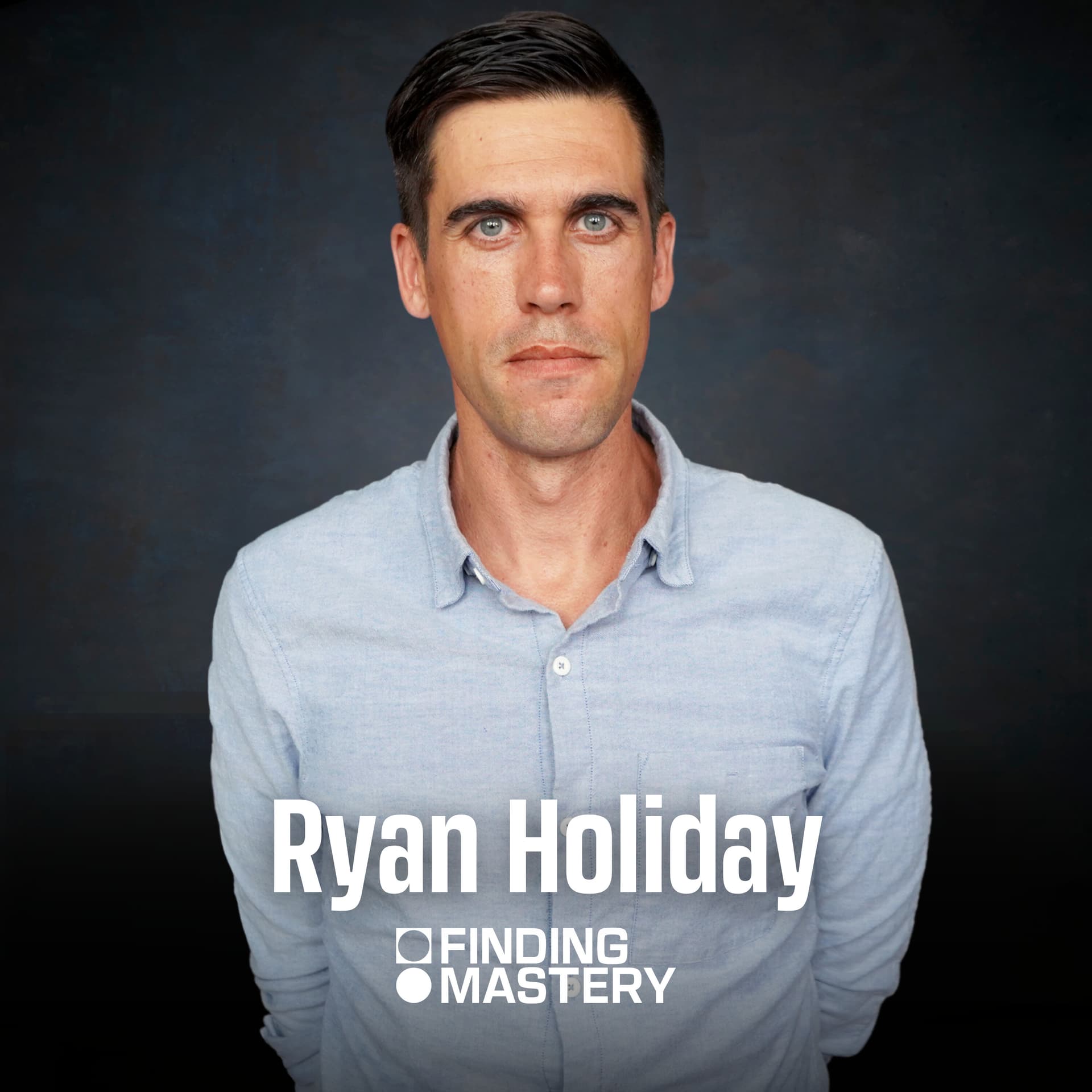
Ryan Holiday discusses why “smart people make bad decisions” through a Stoic lens on wisdom as a practice, not a trait. He argues wisdom is “knowing what’s what” (what matters vs. doesn’t), evolves over time, and requires learning, applying, and reflecting—while avoiding ego, bias, and other traps that can derail even highly intelligent people.
Guest backgrounds
Ryan Holiday is a best-selling author and a modern interpreter of Stoic philosophy. He’s known for writing about the cardinal virtues and treating wisdom as daily practice. Host Dr. Michael Gervais is a high-performance psychologist.
Key claims
- Wisdom isn’t innate; it’s acquired and method-based (“more verb than noun”).
- Intelligence alone doesn’t prevent foolishness; experience without reflection is insufficient.
- Wisdom informs the other virtues (courage, discipline, justice) so they don’t become impractical or dangerous.
- Smart people can be “emotionally 16” despite technical mastery, leading to scams, conspiracies, and petty conflicts.
Notable examples
- Socrates: wisdom as humility (knowing you don’t know).
- John Wheeler: growing “shoreline of ignorance.”
- Russian wrestler analogy: climbing mountains of skill/understanding.
- Neville Chamberlain: “occasionally stumbled over the truth.”
- Stoic origin story: Zeno learning “wisdom comes when you begin to have conversations with the dead” via books.
Written by AI. May contain mistakes. Listen to the episode to check what was said.
Chapters
Tap a time to open that second in VOThe Practice of Wisdom
0:03 to 1:05
Ryan Holiday discusses wisdom as a daily practice rather than an abstract idea.
“One bad hire, it can cost you a lot, way more than time.”
The Practice of Wisdom
2:56 to 4:59
Ryan Holiday discusses wisdom as a daily practice rather than an abstract idea.
“let's jump into this week's conversation with Ryan Holiday.”
Exploring Conversations and Insights
4:59 to 7:49
Dr. Gervais and Ryan discuss their previous conversations and the challenges of deep questioning.
“And you open that up, they've got lots of ways of thinking about it.”
Preparing for Conversations
7:49 to 10:33
Ryan shares his routine and mental preparation for engaging conversations and discussions.
“So when, you know, how they get athletes get ready for performance and most, not all are pretty surgical on a process to be able to switch on their very best to give themselves the best chance.”
Wisdom Takes Work
10:33 to 14:00
Ryan explains the concept of wisdom as a method that requires effort and practice.
“Why go after wisdom, which I think is a noble choice?”
The Nature of Wisdom
14:00 to 14:29
Exploring the humility and mindset needed for wisdom.
“The oracle at Delphi is implying that he knows that he's not the wisest person and therefore possesses some modicum of wisdom.”
The Process of Gaining Wisdom
16:59 to 20:36
Discussing the journey and challenges in acquiring wisdom.
“You know, like some sort of three-sentence pithy, you know, all-encompassing.”
Wisdom vs. Intelligence
20:39 to 28:05
Differentiating between being smart and truly wise.
“who are very smart who are also quite stupid.”
The Complexity of Wisdom
28:05 to 29:59
Explore how wisdom evolves from life experiences and its relation to other virtues.
“brutally, and violently assembled over centuries.”
The Distinction of Wisdom
30:58 to 34:46
Delve into the nuances of wisdom and how it compares with courage and other virtues.
“So they don't quite square, but I like them.”
Show all 33 chapters
Paths to Wisdom
34:46 to 37:30
Understand the different paths to acquiring wisdom and the pitfalls of experience.
“I'm going to take seriously that there is such a thing as wisdom, and I want to get as much of it as I can.”
Learn, Apply, Reflect, Repeat
37:30 to 42:00
Examine the cyclical process of learning and applying wisdom in life.
“And so that's why I was really pleased that you added to the body of work there.”
The Process of Wisdom in Life
42:00 to 42:59
Explore the cyclical learning process in personal and professional growth.
“And in other cases, it's like, hey, the plan was insufficient.”
The Process of Wisdom in Life
43:01 to 44:26
Explore the cyclical learning process in personal and professional growth.
“Earlier, I mentioned LinkedIn Hiring Pro, and I want to come back to something a little more personal.”
The Hardship of Life and Loneliness
45:41 to 47:03
Discussing life's challenges and the innate loneliness of human experience.
“I have a first principle that life is pretty hard.”
Transferring Wisdom Through Time
47:03 to 48:41
Understanding how wisdom is shared across generations.
“and it's harder for some than others, depending on where and when and how and what sort of hand you got dealt.”
Learning from the Great Thinkers
48:41 to 50:09
Exploring the importance of engaging with historical texts for wisdom.
“and the Oracle of Delphi tells him that wisdom comes when you begin to have conversations with the dead.”
Yearning for Simplicity in Modern Times
50:09 to 52:13
Reflecting on the desire for simpler times amidst modern complexities.
“be entertaining, yes, and provocative sometimes, but mostly they were supposed to be like, here's what we figured out.”
Wisdom and Parenting Insights
52:13 to 56:00
Discussing the importance of wisdom in parenting and continuous learning.
“But also, Socrates lives through a great power conflict akin to America being in a 40-year war with China.”
Parenting and Wisdom: Learning from Experience
56:00 to 1:00:00
Explore the complexities of parenting and the importance of continuous learning to improve as a parent.
“I have one son and I think a lot like, oh, if I had a second go, I would be better.”
Parenting and Wisdom: Learning from Experience
1:00:04 to 1:01:05
Explore the complexities of parenting and the importance of continuous learning to improve as a parent.
“Nearly 95 % of us are not getting enough fiber.”
Parenting and Wisdom: Learning from Experience
1:02:28 to 1:02:43
Explore the complexities of parenting and the importance of continuous learning to improve as a parent.
“That's proton, P-R-O-T-O-N-V-P-N.com slash mastery for 70 % off your two-year plan.”
Navigating AI with Wisdom
1:02:44 to 1:10:04
Discuss the implications of AI and the need for wisdom in utilizing technology effectively.
“Like it's the ultimate kind of trickery, you know, like to feel good about myself as I'm leaving home to go travel again.”
The Importance of Discernment
1:10:04 to 1:11:58
Learn how discernment is essential in navigating information and AI.
“determines whether you'll get a good answer or a bad answer.”
Political Navigation and Accountability
1:11:59 to 1:14:45
Explore the challenges of navigating political discussions and accountability.
“socially, run down the list of all the ways society is struggling if people were really good at that.”
Courage and the Nature of Leadership
1:14:46 to 1:17:46
Discuss the characteristics and virtues required for effective leadership.
“Like, the only book he has ever spoken about having read was a book, there was a profile of him in the early 80s where he has like a book of Hitler's speeches on his nightstand.”
The Role of Individual Action
1:17:47 to 1:20:29
Understand the significance of individual actions in societal change.
“So some people, and I know some of them personally, I know some of them personally quite well.”
Maintaining Humanity in Challenging Times
1:20:30 to 1:24:00
Reflect on the challenge of maintaining humanity amidst societal pressures.
“I mean, I would prefer that it didn't, you know, and I do understand that it could.”
The Importance of Individual Choices
1:24:00 to 1:25:11
Explore the necessity of individual virtue and making conscious choices in society.
“And, like, the struggle was to not be part of that.”
Lessons from the Naval Academy
1:25:11 to 1:27:51
Learn about the author's experiences at the Naval Academy and the value of virtue.
“I said we, I come back to it, but you had a talk at Naval Academy that was, I think, canceled.”
The Impact of Censorship on Ideas
1:27:51 to 1:28:51
Understand the implications of book banning and censorship in educational settings.
“And so this is a famous story because he talks about how this is why you can't be afraid of ideas and you have to be engaged with them.”
Standing for Your Principles
1:28:51 to 1:31:31
Discover the importance of standing firm in one's beliefs despite adversity.
“It wasn't like, we'll kill your family if you do this.”
The Mentor's Advice
1:31:31 to 1:32:03
Reflect on the value of standing for something over merely keeping a job.
“and I said, well, I'll lose my job if I do this.”
Transcript
Automatic transcript. May contain errors.0:00Dr. Michael Gervais:Finding Mastery is brought to you by LinkedIn. We use LinkedIn Hiring Pro here at Finding Mastery because we know one great hire can change everything. One bad hire, it can cost you a lot, way more than time. It can cost you momentum and culture and real dollars. And that's why how you hire matters just as much as who you hire. And it's why I've become a big believer in the power of LinkedIn Hiring Pro. Here's what I appreciate about it. When you're running lean, you don't have hours to sift through a pile of resumes hoping to find the right person somewhere in the stack. Hiring Pro is built exactly for that reality.
0:32Dr. Michael Gervais:You describe the role and it screens candidates for you, surfacing the people who are a best fit so that you can spend your time and conversations with those folks rather than in the weeds of the applications. And the results back it up. Those hiring with LinkedIn are 24 % less likely to need to reopen a role within 12 months compared to the leading competitor. So join 2.7 million small businesses already using LinkedIn to hire. Host your job for free at linkedin.com slash mastery. Terms and conditions apply. Again, that's linkedin.com slash mastery to post your job for free.
1:05Ryan Holiday:Wisdom is not one thing, but several things. Obviously, intelligence, insight, it's experience, it's understanding, it's creativity, it's perspective, it's all these things and more, but it is not something you were born with.
1:19Dr. Michael Gervais:What does it mean to live wisely in a loud, distracted, and often reactive world?
1:24Ryan Holiday:To me, what wisdom is, is like knowing what's what. You got to know what is and isn't, what matters, what doesn't matter. The reason I think wisdom matters is that all the other virtues are in some ways born
1:36Dr. Michael Gervais:from it or informed by it. Welcome back or welcome to the Finding Mastery podcast, where we dive into the minds of the world's greatest thinkers and doers. I am your host, Dr. Michael Gervais, by trade and training a high-performance psychologist. The idea behind these conversations is simple. It's to sit with the extraordinaries and to learn, to really learn how they work from the inside out. Today's conversation is with Ryan Holiday, best-selling author and one of the most thoughtful modern interpreters of stoic philosophy. Ryan doesn't treat wisdom as an abstract idea or a badge that you earn.
2:08Dr. Michael Gervais:He treats it as a daily practice.
2:10Ryan Holiday:Life is constantly teaching you and you are constantly being exposed to all sorts of information and ideas and in some cases like real truths about the human experience and what are we doing with the information? Are we actually translating that into some kind of practical understanding and wisdom. That, to me, is what it's all about.
2:28Dr. Michael Gervais:Ryan breaks down the four dimensions of wisdom and why parenting may be the hardest job you'll ever do without a manual.
2:34Ryan Holiday:The idea that you're just like, well, this worked for my parents and I'm not totally screwed up. I hate that sort of uncuriosity or certainty of like, well, it didn't screw me up. It's like, it's a screwed up person about to screw up another person.
2:47Dr. Michael Gervais:As you listen, consider what might change if you treated wisdom not as something that you have, but something that you practice again and again. With that, let's jump into this week's conversation with Ryan Holiday.
3:04Dr. Michael Gervais:I love the chance to be able to sit down with you. And for those that haven't listened to the multiple conversations we've had before, for me, this is like, it's, it's, I'm on a learning curve with you. And I really appreciate the path that you've traveled ahead to bring back some of the sweetest berries and sometimes the sourest berries that you can find to say, Hey, listen, this is what I've been paying attention to. So thank you again for doing the hard work and then come celebrate here with us.
3:32Ryan Holiday:Well, I'm excited. I came prepared to be mentally exhausted, which is what I remember the first time I came down here and saw you, I was like, did I just do like a two and a half hour therapy session like was that an interview or did i or did i just get examined
3:47Dr. Michael Gervais:what was that like i remember we were going yeah like that was our i think maybe our first
3:53Ryan Holiday:conversation it was yeah i think i was still just working out a lot of stuff my you were probably just asking me totally interview questions and i i was like uh like there's a famous mitch headberg joke where he talks about he went to a radio interview and they said so who are you And then he didn't know if he meant, he didn't know if it meant that he came to the wrong studio or if it was an existential question. And it's like, you never know.
4:18Dr. Michael Gervais:Some of the hardest questions I get are, so tell me what you do. I'm like, wow.
4:24Ryan Holiday:Oh, yeah. I can give you like the two liner or like, do you really want to know?
4:28Dr. Michael Gervais:Because this could go, this could unravel quickly. And I.
4:31Ryan Holiday:Or do they just actually, they haven't done one smidge of research and they just want you to go like, I'm a writer, you know? Oh, yeah, that's right.
4:37Dr. Michael Gervais:Okay, right. Yeah. Yeah.
4:38Ryan Holiday:Like, are they just trying to briefly introduce the audience or they want they want to go real deep? That's always the question.
4:44Dr. Michael Gervais:So you've got a great style about you is that you're super matter of fact. And I imagine you might answer like, OK, are we going the short version or have you done your homework?
4:54Ryan Holiday:I think it would just depend on how how like tired I was or how ready I was to to do the thing, you know, like sometimes. and i think you see this in like people who do a lot of you're like you see this in athletes it's they have the thing they know they can say to wrap this thing up and not have to you know it's like we went out there we played our best and uh you know praise god and uh you know next question you know go team yeah exactly there's just and and actually when when the when i've talked to athletes especially when i've worked on books with them actually getting them past that is like a lot of work because there there's this kind of like it's almost like they've gotten used to not having to go further than the cliches that's but there's clearly like a usually most of them are kind of like philosophers of what they do and they've had to think very deeply about it especially if they've been successful at it for a long time um but they're used to just like you
5:56Dr. Michael Gervais:know we did our best yeah there's different venues for that because when you open up you know as somebody who's committed to mastery, right? And you open that up, they've got lots of ways of thinking about it. And they're really, my experience, broad strokes are always dangerous, but they're really good by saying, I don't know. Like I'm confused by this and I'm confused by that, but this definitely works. Like there's an openness to learning that is noted. But the marketing mind stuff is, as soon as the microphones are, they're taught. Say something nice about your competitor. Say something nice about your teammates and take the blame.
6:31Dr. Michael Gervais:if it didn't go well. Never take the glory or the light. Kind of point at others to be able to deflect and praise.
6:41Ryan Holiday:Yeah, and that works for a soundbite, but there's not actually anything there. And it's not really what's going on. And then they're doing a book. And you're like, that can carry you for 20 seconds, but not an hour conversation or 300 pages. There has to be like a real thing there. And then sometimes I think you realize this is something that took, it's like mostly what I do is think about stuff and articulate. That's like, that's my, that's where I perform. That's my thing that I've sought mastery in. And you go, oh, like you, you verbal, you are not verbally expressing this stuff verbally is not what lights you up.
7:28You have a physical gift and a genius, and just like what you're not doing is spending a lot of time thinking about how to explain it.
7:40Dr. Michael Gervais:You're talking about the athlete in that case. Yeah, yeah, just doing it. But for you, in your case, you spend a lot of time on thinking and expressing ideas.
7:47Ryan Holiday:That's literally what I do. That's your job.
7:49Dr. Michael Gervais:So when, you know, how they get athletes get ready for performance and most, not all are pretty surgical on a process to be able to switch on their very best to give themselves the best chance. You know, it's always a work in progress, but how do you ready yourself for a conversation like this?
8:08Ryan Holiday:Oh, for a conversation? Um, like if I'm going to do a talk or I'm going to sit down, I usually.
8:14Dr. Michael Gervais:No, for like a podcast.
8:16Ryan Holiday:Yeah, no, I'm just saying, like, if I'm going to do something, I usually, I'll usually work out first. Like today I was doing a couple. So I was like, I got to get up early. You know, it was raining, it was dark. I was like, if I don't, if I don't run, then I won't be regulated through what will be a fundamentally dysregulating day. So it's usually some kind of physical thing. And then I like to make some kind of contribution to my work. So like I didn't have that much time this morning. So it was like, let's let me there was this thing I had to edit. So I sat down and I edited like a piece that I was working on.
8:57Ryan Holiday:So I was like, OK, I checked off these like two boxes and then I can come to whatever I have to do, both from a place of calm, but also like. not like there's this thing I have to do later. You know? So that's mostly kind of how I think about it.
9:14Dr. Michael Gervais:I used to not mind that feeling. I felt like it would create the right type of internal tension for me to do good work later. But then as I've gotten a bit older, I want to start winding down. And so I would way rather, let's just say, work out in the morning or do deep thinking in the morning as opposed to kind of put it off towards the end of the day. because I'm competing full-time to get my sleep right.
9:38Ryan Holiday:Yeah. There's a Toni Morrison thing where she was saying the most important thing that writers or creatives need to know is when are you at your best? And when do you do your best work? And then you have to sort of design your day around it. The famous story is that she was raising two young kids as a single mother, and she was an editor at Random House during the day. So she was like, I have to do all my writing before I hear the word mom. And so she would get up early and do it. She said there was something about the sun rising and whatever. But like what I have known, found out as I get older, is that I just do shit work after about noon.
10:15Ryan Holiday:So like anything generative, like I'm dead after about noon. And so I have to front load the day with the writing stuff then. So it's like if I'm like, hey, well, I'll do all these things and then I'll get to that later, I might as well just not do it.
10:33Dr. Michael Gervais:So it's a segue. Let's talk about Wisdom Takes Work. Sure. And the simple question is, why wisdom? Why go after wisdom, which I think is a noble choice?
10:47Ryan Holiday:Well, I was doing a series on the cardinal virtues. So I did courage, discipline, justice, wisdom. So I didn't choose the virtues. I chose to write about the virtues, but I didn't choose what they were. Obviously, these are the fundamental principles of Stoic philosophy. So in some sense, I chose wisdom because it was part of this larger swing that I was taking. I'd never done any interrelated projects before. And I was creatively interested just in the idea of like, how do you do in the way that it's like, hey, I wrote a movie and now I'm going to write a multi-season television show. Like, what does that look like as a challenge?
11:23Ryan Holiday:So I was interested in that. And then, you know, there was some discretion about, of course, what order they go in. And I felt like courage made sense to be first and wisdom made sense to be last in that it struck me as the most difficult and the one that is kind of the penultimate of the virtues. So there was that. And then, of course, I obviously have some discretion as to what wisdom is. Like the Stoics tell us that's what they are, and there's not like, you know, one particularly clear passage from any of them where they go, and then let me define terms. So we can only kind of deduce what it means.
Read the full transcript
12:09Ryan Holiday:So obviously that's where sort of creatively and philosophically my challenge was. It's like, what is courage? What is discipline or temperance as it was rendered? it. And, you know, it's interesting, for instance, like many of the ancients, and then their subsequent translators, would call it prudence. That was the word they would use for wisdom. Okay, so right there, we're saying that wisdom is not one thing, but several things, right? And I think that's kind of where I came down is, you know, it's obviously intelligence, it's obviously insight, it's experience, it's understanding, it's creativity, it's perspective, it's prudence, It's all these things and more, right?
12:52Ryan Holiday:There is something fundamentally ineffable about wisdom. And I would say ineffable as well as elusive. Like if you're like, here's my three-sentence definition of wisdom, it's probably not only is it wrong, but it is illustrative of your lack of grasp of wisdom to think that it could be so easily contained. So I think where I ended up coming down is on this idea that wisdom is many things.
13:19Dr. Michael Gervais:Super helpful, by the way.
13:21Ryan Holiday:Yeah, it's many things, but it is not something you are born with.
13:25Dr. Michael Gervais:Yeah.
13:25Ryan Holiday:It is something you acquire, and yet there's an unlimited amount of it to acquire. And so I think the reason I came down with the idea of it takes work is that wisdom is really a method as opposed to a thing that you possess. It's like all the virtues, it's more of a verb than a noun. So in the same way, it's something you're doing as opposed to something you have. It's not a state that you are in. It is a process that you are following. And obviously this goes back to Socrates, right? Why is Socrates considered wise? It's not because of what he knows. The oracle at Delphi is implying that he knows that he's not the wisest person and therefore possesses some modicum of wisdom.
14:14Ryan Holiday:And so it's actually in the humility or in the mindset that one orients themselves towards being able to get wiser as opposed to get wise.
14:29Dr. Michael Gervais:Finding Mastery is brought to you by Rag & Bone. I've been a big fan of Rag & Bone for a number of years. I just love what they do. It's a go-to for me when I'm choosing clothes. I've been wearing their infused denim for a while now. They've done just a really nice job with this product. For me, I am really intentional about what I invest in. In clothing, it's no different. I want things that are well-made, that stand the test of time, that don't distract me, that support my focus on the things that matter most. And that's exactly why these deliver. And they look sharp, full stop. They've spent 20 years obsessed with getting this product right.
14:59Dr. Michael Gervais:And that kind of long-term commitment to craft, that's something we talk a lot about here at Finding Mastery. Quality compounds. The right inputs may consistently over time show up in everything. And you can feel that the moment you put these on. If you're ready to upgrade your denim with something that's genuinely built to last, it's time to upgrade your denim with Rag and Bone. For a limited time, our listeners get 20 % off their entire order with the code FINDINGMASTERY at rag-bone.com. That's 20 % off at rag-bone.com with the promo code FINDINGMASTERY. And when they ask you where you heard about them, please support our community and this show and let them know that we sent you.
15:38Dr. Michael Gervais:Finding Mastery is brought to you by our flagship mindset training course, Finding Your Best. Anytime you feel the pull to reset, to zoom out, to refocus and ask, am I moving toward the person I want to become? It helps to remember this. Lasting change comes from training. Not resolutions, not short-term sprints, but deliberate practice of the skills that shape how we show up. Work, in relationships, and in the moments of great intensity as well. That's what Finding Your Best is all about. It's a science-backed framework for training your mind. And it's the same set of tools that we've taught to Olympic athletes, top executives, elite military teams, and artists at the peak of their craft.
16:12Dr. Michael Gervais:In this course, you'll learn the foundational psychological skills to be your very best. Full stop. And the best part is you can start anytime. Right now, we're running a limited time offer on finding your best. Simply head to findingmastery.com slash course and use the code RENEW100 to get$100 off your registration. If you've been waiting for the right moment, this is a good one now to lean into. Spring and summer, they are powerful seasons of momentum. It's a great natural time to step into growth, to refocus, to recommit to who you want to become. And this discount will not be around for long.
16:46Dr. Michael Gervais:So go to findingmastery.com slash course code renew100 for$100 off today because your future is not shaped by what you intend. It's shaped by what you train. There's all well said. and it was really refreshing when it opened up the first chapter in your book and it was almost the first paragraph and you're like yeah probably not going to define this thing in a satisfying way but I will tell you what it's not yes you know which is cool that's a good counterbalance and I was refreshed that you didn't come up with uh refreshed and at the same time like I was hoping for. Sure, me too. You know, like some sort of three-sentence pithy, you know, all-encompassing.
17:33Dr. Michael Gervais:That being said, there's two variables that I'm really interested in the wisdom process. I do think that people obtain wisdom. I do agree that there's a path towards the deep understanding, if you will, is another kind of phrase. Yes. But I do think at some point, for me, I'd love for you to bounce off this. It's more than just the path to acquire or to understand deeply, because I know wise people. Yeah. Yeah. And when I'm around those people, I'm like, oh, it's different.
18:16Ryan Holiday:But they almost certainly do not consider themselves to be wise people.
18:21Dr. Michael Gervais:No master calls themselves a master. And as soon as they would, the others that are true, like masters of craft or self, they would say, oh, you just exited out of the sanctum.
18:32Ryan Holiday:Because what they are committed to is a mindset or an approach that makes them conducive to expressing or articulating some wise insight or understanding or whatever in the moment. But it's not only not an instate for them, they are themselves not in any kind of instate. It's not an instate.
18:54Dr. Michael Gervais:Yeah.
18:55Ryan Holiday:There's a physicist, John Wheeler, he said, as our island of knowledge grows, so does the shoreline of ignorance. And so what happens is the more you learn, you're bumping into all these things that not only did you not know, but you didn't even know were a part of it. Like, you know, there's level, the famous John McPhee book about levels of the game. You're at a level and then you're not even aware that there's another level until you bump up against, like you play someone who's at that level or you glimpse it for a second. and then you go, oh, not only did I not know how to do that, I did not know that was a thing you could do.
19:35Dr. Michael Gervais:I asked, he was a Russian world-class wrestler, and they've got quite a system that he came through at least. And it looked like physical poetry when he would move. And I asked him, I said, like, what is it like for you? And he said, well, I don't know how to explain it, but it's like I I understand the alphabet and I can put it to use. I think he's talking about his body and his technical craft, and I can put it to use in a lot of different ways. And I said, how do you, how did I put it? It was something about getting better at growing. And he says, oh, that's easy. Like I see a mountain and I climb it and I get to the top of that mountain.
20:17Dr. Michael Gervais:I see another mountain. So I climbed down realizing that I didn't know very much. And then I climbed back up that next one. And when I get to the higher one, I realize there's another one. Yes. And so he's just pointing to your point, the process. Now, I would not call him a wise person. Sure. He was a master of craft, not a master of self.
20:34Ryan Holiday:Well, that's something I did want to talk about in the book, because there are people who are very smart who are also quite stupid. And part one of the book is more or less about the sort of basic, how do you become a student of life, of a craft, of a thing, the sort of methodology for acquiring wisdom. And then the second part of the book is really about how you avoid most of the pitfalls that can destroy you. And in many ways, what happens in the sort of second phase is much of what you picked up in the first phase is now being used against you. So like your sense of what you know is now really dangerous because you think you know something.
21:25Ryan Holiday:And so there are these like sort of traps that you people fall into and it's sort of a story as old as time. But I'm just, I'm interested in like wisdom is on the one hand, the acquisition of knowledge and insight and understanding and experiences. And it's also the removal of flaws and biases and traps and dead ends that historically have destroyed or rendered foolish many brilliant people. Obviously, ego is a huge one, but another one is just like sheer overwork, right? So you kind of just snap under the pressure and stress that you put yourself on, or you're incredibly wise or smart and understanding and experience and whatever, but you have these kind of lingering issues from your childhood.
22:22Ryan Holiday:And so now you're a really smart scientist who's emotionally 16 and you're not subjected to the temptations that a 16-year-old is being subjected to, but you're asked to weigh in on questions of global significance. I think scientists are fascinating because obviously they're way smarter than I am. And you just don't know how their brain can do what they do. And then watching like the petty squabbles and fights that they get into and their desire for credit and attention or, you know, the number of really brilliant scientists who fell for like scams and conspiracy theories and nonsense because, you know, what part of them not only was like traumatized or struggled early on, but like is now being subjected to pressures and environments that require a different kind of intelligence and maybe a savvy to navigate the political situation inside a university or the ability to articulate or, I don't know, operate inside a family unit.
23:34Ryan Holiday:Like all these other skills are now being required. And if you can't cut that, what you get is resentment and bitterness and frustration, all sort of really powerful forces that can...
23:46Dr. Michael Gervais:you bring up all of the kind of modern trappings in this, in the second part. Yeah. When you, when you think about the Stoics, let's go back for one moment before we go too far forward. When you think about why the Stoics chose wisdom, it always confused me. Really? Yeah. Because that it would be a virtue and I'll, I differ a little bit in, in kind of the, Oh, I don't know, maybe the premise, which is... Of the four virtues, you mean, or of wisdom itself? No, just wisdom. Because I think that, let's take the other four virtues, is that they're always readily available. Even at a young age, courage is available.
24:32Dr. Michael Gervais:Sure. And wisdom is not readily available. And there's time under tension required. Usually it happens for people that are older. Not necessarily. You can shorten the curve. But it's not at some point. It becomes available in a small way. And I think we could have fun in saying, wait, maybe the kids are the wisest. You know, it's always, you know, but I don't think that they really, they wouldn't kind of check the boxes in a way that would be satisfying. How would you take that position?
25:06Ryan Holiday:Well, maybe what we're squabbling over here is like, are we saying that wisdom is what a 90-year-old who's seen a lot of things and done a lot of things, and that sort of like lowercase sense of being philosophical, like the big picture, they know what really matters. Like, if that's what we're talking about, wisdom, then sure, you don't have that when you're young. But I think what we're talking about, what does wisdom mean? Philosophy means a love of wisdom. So it doesn't necessarily mean the possession of wisdom, but it means a love or an attraction or interest in exploring it. So to me, what wisdom is, I said I didn't give a definition, but I actually gave a very short definition of the book, which is knowing what's what.
25:54Ryan Holiday:Yeah, it's a fun way of... You gotta know what is and isn't, what matters, what doesn't matter. Now, obviously, your understanding of this is going to evolve over time as you learn and study and experience and experiment and all of that. At the same time, the reason I think wisdom matters as this virtue, and why I said it's the penultimate virtue, is that all the other virtues are in some ways born from it or informed by it. So like, yes, courage is readily available, of course. Discipline, temperance, you know, readily available. But you know, there's that expression like sometimes discretion is the better part of valor.
26:38Ryan Holiday:So like, yes, the courage of the young who's willing to take any risk, bear any burden, do anything, that is a form of courage. But as you get older and you experience more, you understand things on a deeper and a bigger level. And it's not that that should moderate your courage, but it should direct and shape and inform it. I think a great example of this is justice. Is justice just knowing what is right and knowing what should be done? Maybe. But I think wisdom and where the virtues all inform each other is like, okay, but what can you do about it? Where can you bring it in the world? And there is this kind of idealistic, youthful sense of justice that's very black and white.
27:28Ryan Holiday:and then there is the justice and the sense of ethics that it's not that it's situational and that it's always willing to compromise, but it does understand that we are imperfect people in an imperfect world. Like one of my favorite lines, it's an illustrative one in Marx's meditations when you go, this guy's the emperor of Rome. He writes like, remember that you don't live in Plato's Republic. And so philosophically what you know or what you would like to be true is very different than somebody hands you the keys to an empire slowly, painstakingly, brutally, and violently assembled over centuries.
28:10Ryan Holiday:If you think that you can change it like that and magically make it what you want to be, what you're ignoring, your sense of right and wrong could be totally dialed in. But what you're lacking is the wisdom to understand why it is the way that it is, which is to say, what were the compromises and accommodations and painful acceptances that shaped and informed the thing? And so often what you see, some of the most dangerous movements in all of history have been youthful, revolutionary, radical groups that think that humanity just needs some more information and some nudging, and then it will become—do you see what I mean?
28:59Ryan Holiday:What wisdom, I think, is is something that evolves over time, but it has to inform and shape the other virtues because otherwise they are something impractical, entitled, even petulant and dangerous.
29:29Dr. Michael Gervais:15. Fatty 15 is built around C15, the first essential fatty acid discovered in over 90 years. And it was discovered by Dr. Stephanie Van Watson. She's the co-founder of Fatty 15. While she was working with the U.S. Navy and based on over 100 studies, we now know that C15 strengthens our cells and is foundational for healthy aging at the cellular level. Stephanie's been on the podcast and it was one of my favorite conversations. She's amazing. And what her and her team are building is something I'm really excited about. Head to fatty15.com slash finding mastery and use the code finding mastery for an additional 15 % off your 90 day starter kit.
30:06Dr. Michael Gervais:Again, that's fatty, F-A-T-T-Y, 15.com slash finding mastery. And the code is finding mastery. I want to take a second here to tell you about a morning routine that I've been using for years. For me, it's a great way to switch on my mind, to ready myself to take on the day. So before I check my phone, my emails, market updates, or text threads, I choose how to start my morning. That's always in my control. That's always in your control too. This is the same morning mindset routine that some of the world's top performers across sport, business, and the arts are using. The best part, it only takes about 90 seconds to do.
30:43Dr. Michael Gervais:So just head over to findingmastery.com slash morning to download the audio guide for free. Again, head to findingmastery.com slash morning to get your morning mindset routine. yeah i i i think that like at one level i can fully clump them together and be like yeah those are great yeah you know those virtues are wonderful you know i understand why those would be you know at the high table i just think fundamentally that one's just a little bit different than the others yeah and so i i want however when i think through them you know courage justice you know discipline that it's not like you add those up and you get the wisdom.
31:26Dr. Michael Gervais:So it doesn't work that way. And it doesn't mean that if you are somebody who's on the path to acquire or understand or inhabit the complex made simple, the universal kind of insights about how things work, that all of a sudden you're going to have the opposite. You're going to have courage. I think you've got to practice courage. You've got to build it. So they don't quite square, but I like them. I'm not in any way disagreeing, but I just point out, like, I've always had a little bit of a hanging Chad. Like, that one's different. That's a great...
31:59Ryan Holiday:Yes. What's interesting about it is Zeno, the founder of Stoicism 2 ,500 years ago, who first lays down the virtues. You know, Aristotle had a few more. He picks these four. Aristotle had seven. Yeah, and then I think Ben Franklin had 12. Like people are always, but he picks out four and he says they are distinct yet inseparable from each other, which is kind of the perfect way of expressing it. It's not like, as you said, the first three add up to the fourth. And in fact, you can put them in any order, but you really can't remove one without fundamentally altering the others. And you see how one has to inform and shape the others.
32:40Ryan Holiday:I do think they're related in a couple of ways. As I said, they're all born from wisdom. and that wisdom has to explain when and how to apply them. At the same time, you subtract justice from any of them, and you're dealing with some real problems. I'd also say, you know, it takes courage to bring any of the four into reality, right? Like the decision to sit down and pursue wisdom in a superficial, even foolish world takes courage. or to decide to be yourself and do what you think is valuable, you know, takes courage. So they all shape and inform each other. Where would they be without the willpower or the discipline to, you know, execute on them?
33:25Ryan Holiday:It's a nice way to think about it.
33:27Dr. Michael Gervais:Yeah. Which is you're nodding back to, you know, 2 ,500 years ago, the first insight, you know, around it. And I'm not sure if you said it, if you meant to say it, but I want to just highlight it. Were you talking about yourself when you said to sit down and write about courage in a foolish world?
33:42Ryan Holiday:No, no, I meant to sit down and be interested in wisdom in a foolish world.
33:46Dr. Michael Gervais:But are you talking about yourself there or are you talking about one of the Stoics?
33:50Ryan Holiday:Well, I mean, I think I say this in the afterword that this didn't exactly feel like I'm hardly ranking it in the sort of pantheon of courageous acts. But like the decision to sit down and write a book about wisdom, there is something scary about that. You know, like it was scary to me, which is I guess I could say that with certainty. I'm not asking for anyone else to pat me on the back. I'm just saying like I was intimidated by the project and I did it anyway. Why is that? Well, you know, I mean I was intimidated the first time I wrote about stoicism at all. I'm a college dropout who's largely self-taught.
34:27Ryan Holiday:Like, I don't have the security or the confidence of like, oh, I have a degree in this. Like, you should listen to me. Right? So there is anytime you're doing something that's outside your comfort zone, that's what we're talking about when we talk about courage. But I just mean like the idea of like, hey, I'm going to go learn about something. I'm going to take seriously that there is such a thing as wisdom, and I want to get as much of it as I can. I feel like that is a courageous act in a world where most people operate on the surface and don't ask a lot of questions. So I think there is something courageous for anyone who's like, I'm going to go back to school, or I'm going to pick up a book, or I'm going to figure out why things are the way that they are.
35:21Yeah.
35:22Dr. Michael Gervais:Yours difference between school and picking up a book and yours is that yours is wildly popular, like, you know, scrutinized and observed and, you know, even so much that you had a talk that was controversial at an academy. That did happen. Yes. Yes. I do want to come back to that. Okay. Let's stay on wisdom one more turn here, which is you did a deep scrub of one of the most important attributes for me, for a person to be able to walk the walk and talk the walk, is that they need to really understand what's what to use your language and then have the courage to be able to act accordingly. So I love that you went after it.
36:03Dr. Michael Gervais:What do you hope that we understand from the most simple of hopes and desires? What do you hope we'll understand from reading it?
36:12Ryan Holiday:What I felt like my contribution was, was the idea that wisdom isn't... Okay, so we go like, hey, wisdom is a thing that takes a long time, and mostly older people have it. So is it just a function of sticking at this life thing? I mean, absolutely not, because I've met a lot of stupid old people too. That's right, yeah. And so I dislike this idea that wisdom is a natural byproduct of being a sentient human being. It's certainly not.
36:46Dr. Michael Gervais:Somebody had introduced to me, it was in college and I just loved it. There's three paths. I already know that they're a reductionist, but it was a fun statement. There's three paths. The path to be an old fool, a bitter old fool, or a wise person. Yeah. And I heard that early and I was like, wait, what's an old fool? Ah, they just constantly chased all the external pleasures of life.
37:08Ryan Holiday:Yeah.
37:08Dr. Michael Gervais:Bitter old fool, they chased them but didn't get them. And then the wise person is somebody that worked from the inside out, that really wanted to understand how things, people, experiences, like what's sitting underneath of it, make it universally available and take the complexity and make it simple. And I was like, oh, that's the path of joy and happiness, purpose and meaning. That's it. And so that's why I was really pleased that you added to the body of work there.
37:36Ryan Holiday:Well, you know, I think people go, books are inferior or insufficient. You've got to learn by experience, right? And it's true, experience can teach a lot, but it's not a given that experience teaches. I mean, people are having experiences all the time, every day of their life, and wisdom is exceedingly rare. So it is certainly experience can teach. It is necessary but not sufficient. And so there's this great line, Churchill often had the way of just getting to the essence of things. He was talking about Neville Chamberlain, who he didn't know just as this one guy who made this one bad decision at Munich, but like his perpetual political foe.
38:19Ryan Holiday:And I think he said of Chamberlain, this was a man who occasionally stumbled over the truth. And when he did, he picked himself up and dusted himself off and carried on as if nothing had happened. And so I would say that describes a lot of people. Like life is constantly teaching you and you are constantly being exposed to all sorts of information and ideas. and in some cases, like, real truths about the human experience. And then most people don't even observe that anything is happening.
38:55Dr. Michael Gervais:Are we becoming less wise?
38:57Ryan Holiday:I don't look back at history and go, humanity really figured it out back then either, right? Like, if in some cases, I think, collectively, we're getting wiser than we have been before, and then in other cases, we're getting much stupider. I do think there were certainly wiser people of a type that perhaps we don't see so much anymore. But I'm not that interested in whether like the trend lines of wisdom. I'm more interested in like individually, like in our own journeys, are you and I getting wiser? And what are we doing with the information, whether it's from a book or a lecture or, you know, hard-won experience?
39:41Ryan Holiday:are we actually translating that into some kind of practical understanding and wisdom? That, to me, is what it's all about. And I think anyone who's actually done the work, you realize, oh, you read about stuff or somebody tells you something, and then you have experiences, and those experiences are shaped by what you bring to them, and then what you bring to them is also shaped by what you take out of the intersection. And so the subtitle of the book is Learn, Apply, Repeat. It's this kind of infinite loop of you hear about something, you try a thing, and then you come away with a combination of those two things that is unique and special, and then you go learn more.
40:24And that's when we're talking, what is the method?
40:28Ryan Holiday:That's the method. Yeah.
40:30Dr. Michael Gervais:I saw the subtitle and I understood. You also point to the method that I'm more aligned with, which is it's a path of deep concentration. Yeah. So when you deeply concentrate, deep focus, if you will, on a thing, you end up understanding that thing. Yes. I don't think there's another way other than deep concentration. You might hear somebody say something like, I don't know, fill in the blanks, whatever it might be, but it's not yours. It's theirs. Yes. So you have to really grok and deep focus and concentration. And then you start to understand something. and then you get like this insight, like, ah, so concentration to insight.
41:11Dr. Michael Gervais:And then when you cobble a handful of insights together, like, oh, wait, that's how this works. And that's how that over there worked. Wait a minute.
41:18Ryan Holiday:And you have connections between the insights. Oh, wait, yeah. So that's where you reveal wisdom. And then also then you create a theory or a plan and you try to do something with that. And then some of it works and some of it doesn't. And then there is that process of reflection again, the debrief.
41:35Dr. Michael Gervais:that's the repeat you said?
41:37Ryan Holiday:Well, no, I just, I think you, it's learn, apply, reflect, repeat, right? Is probably how I would say that the important thing that people miss, right? It's not just like, hey, I read a lot, so I know a lot. I do a lot, so I know a lot. It's a combination of those two things. But then it's this process of, well, what do I know? What am I feeling? how am i discussing and analyzing and reaching conclusions out of it like you think about right coach has a plan trains the players and everything they they they they practice it then they do it in the game and then what do they do on monday is they or tuesday is they sit down and they break down the film of what happened and they in some cases it's like look you failed because you didn't execute the plan.
42:29Ryan Holiday:And in other cases, it's like, hey, the plan was insufficient. Here's the change we're making. But wisdom is that process. That is the cycle that you're repeating. And so who you were at the beginning of the season should be inferior to who you are at the end of the season. And who you are at the beginning of your career versus who you are at the end of your career should be transformatively different. And you're repeating miniature and macro versions of that in all aspects of your life all the time.
42:59Dr. Michael Gervais:Finding Mastery is brought to you by LinkedIn. Earlier, I mentioned LinkedIn Hiring Pro, and I want to come back to something a little more personal. We talk a lot about the people who make extraordinary things possible, and I want to take a moment to acknowledge some of ours. Janelle, Taylor, Alex, Emma, and our newest teammate, Chelsea. Every single one of them came to us from LinkedIn, and every single one of them has raised the bar of how we operate here at Finding Mastery. Our relationship with LinkedIn, it also runs a lot deeper than just using their tools. We also work with their teams on the corporate side, helping them build the kind of high-performance culture where great people want to stay, they want to grow.
43:36Dr. Michael Gervais:I've been building businesses for over two decades now, and I'll tell you, the right team, that matters so much. It's the difference between grinding and flowing. So this partnership, I believe in from the inside out. When you hire through a platform like LinkedIn, Hiring Pro that surfaces people who are genuinely aligned with what you're building, you get a different quality of candidate, not just in skills, but in fit and values, the kind of energy someone brings to a team. So if you're thinking about your next hire, I want to strongly encourage you to be intentional about where you look. The right person is out there and LinkedIn Hiring Pro helps you find them faster with a lot more confidence.
44:16Dr. Michael Gervais:Post your job for free at linkedin.com slash mastery. Terms and conditions apply. Again, that's LinkedIn.com slash mastery. Finding mastery is brought to you by Sunlighten. I'm really excited about a new partner of ours. Something that I've come back to again and again is when I invest in recovery with the same intention that I bring to my work, everything gets better. My energy, my focus, my ability to show up fully for the people that I'm with and the work that I care about. That's why I am so bought in on the Sunlighten M-Pulse Intelligent Sauna. I was first introduced to their team a few months ago and was so impressed by what they've created.
44:54Dr. Michael Gervais:This is one of the most advanced infrared saunas that they've built in over 25 years of pioneering this technology. That's right. They've been at this game for 25 years. I had one installed in my home a few months ago and it's made a real difference. I feel more refreshed, more grounded, more relaxed, and it's become a consistent part of how I recover, how I reset every day. I'm using it to support muscle recovery, for improved oxygen delivery, and for nervous system recovery. And what I love most, I don't have to leave my home. They're offering the Fonny Mastery community up to$2 ,100 off. Simply head to sunlighten.com and use the code mastery for this great discount.
45:32Dr. Michael Gervais:Again, that's sunlighten.com and use the code mastery for up to$2 ,100 off. I have a first principle that life is pretty hard. Sure. Yeah. It's thorny. There's lots of trap doors. It's not designed for our happiness, our joy. It's not even designed for our survival. No, right. Our brain is optimized for it because it's dangerous out there. And I think most people have a pretty lonely experience. And I'm not talking about the loneliness of despair and the loneliness of depression. I'm not talking about that, but there's a uniqueness to your experience and my experience that is nearly impossible for me to express my fullness of my experience in life.
46:22Dr. Michael Gervais:So it's contained or trapped inside of me. And if I don't really examine that and have a way to express it externally, it is hard to connect with other people. Okay. And I'm not talking about depression or despair, just to be clear. So with that kind of assumption, if you will, how do you think about life in general when it comes to the path of wisdom, the dearth of wisdom, the state that we're in, you know, based on what you've studied from the Stoics and kind of the modern contemporary understandings that you're...
47:00Ryan Holiday:Well, I would agree life is extremely hard, and it's harder for some than others, depending on where and when and how and what sort of hand you got dealt. But wisdom isn't just this thing that you acquire from your own lived experience. That would mean we're figuring everything out for the first time every time. What's it called?
47:25Dr. Michael Gervais:52 dates? Yeah.
47:27Ryan Holiday:Seneca said, you know, the whole point of philosophy is that it allows you to annex into your life all of the wisdom and ideas of the past. And so it seems silly that you, like, obviously you come out of the womb knowing nothing and having access to nothing. You're just like this, you might as well be the first person ever born as far as you understand it. But then very clearly and quickly you realize, oh, there's other people. They went through the same thing. They know a bit more than me because they're further along the path. And then you realize, oh, there's some people who've really got this life thing figured out.
48:03Ryan Holiday:I want to learn from them. Maybe that's your parents. Maybe it's not. And then you go, oh, but also every person who has ever lived, what did they learn? And what collectively as society, as a species, have we figured out? And you realize that's where the transference of wisdom comes in. And Stoicism is founded around this very idea. Zeno, the founder, he is this merchant. He's traveling around the Mediterranean, and he stops at the Temple of Apollo in Delphi, which I was just at. And you come in from the sea, and you wind your way up to the top of this very tall mountain, and you wash your hands at the sacred spring and you make your way up the sacred way through these shining temples that every Greek city-state had put up in honor of a victory or the gods.
48:57Ryan Holiday:You make your way to the Temple of Apollo and you would light this incense and then the oracle would come out probably high off these vapors that came from the ground and give you this kind of mysterious enigma or riddle that you were supposed to sort of use to answer your question. and the Oracle of Delphi tells him that wisdom comes when you begin to have conversations with the dead. And he doesn't know what this means. And so he takes it back with him. And it's not until he washes up Pennilus in Athens in the Agora, which again, you can walk through to this day, and he hears a bookseller reading out loud a scroll of a story from Socrates.
49:40Ryan Holiday:And it's in this moment that he realizes that that is talking with the dead, that books are a way to talk with the dead. And indeed, we sometimes call the great texts of the ancient world like the great conversation, because you're talking to Plato and Socrates and Aristotle and Zeno and Mark Sturulus and Seneca and Homer and all the great thinkers of the past, that it's a conversation. But mostly what it is, is it's a transference of wisdom. Like these stories were supposed to be entertaining, yes, and provocative sometimes, but mostly they were supposed to be like, here's what we figured out.
50:17Ryan Holiday:We learned this or that. What about this? Here's a question. And that's what wisdom is. It is starting from everything up until now and then adding to it. And it's this kind of perpetual journey that we're on. It's cool.
50:36Dr. Michael Gervais:It's the ultimate passing the baton. Yes.
50:39Ryan Holiday:And the idea is that you should leave it a little bit better than you found it. What are you adding to the store of knowledge?
50:46Dr. Michael Gervais:In our modern world, to me, my account is that wisdom is at an all-time, in my life, low. It feels like... Probably. And there's a bias here. Listen, I've only lived half a decade. Sure. I have not lived 250 ,000, 300 ,000 years of whatever. So that being said, why do I say that? The bias is that there was a much simpler time before cell phones. And there was a bit of a, I thought about this when I was reading your book about like, what are you yearning for? Because when I read the ancients or anyone before me that has helped, that I think will or has held up for the ages, there is just this feeling and there's this kind of thing that washes over me like god it's so wonderful to like to really learn what they learned and to be a student of that to try to understand the context of what they're dispelling their information from and it it pulls me back to a much simpler time which was like before the cell phone for me was this demarcation and And I know that, you know, we're going to, of course, there's a question of AI in here somewhere, but what is it that you're yearning for?
52:08Dr. Michael Gervais:Because that's what happens to me when I go back and read, you know, the ancients.
52:12Ryan Holiday:Well, I mean, look, you can tend to think of the time of Socrates as this golden age where people walked around in togas and just talked about ideas. But also, Socrates lives through a great power conflict akin to America being in a 40-year war with China. And he fights in the war. His city loses the war. you know and then Athens is ruled not by a tyrant but for a time known as the 30 tyrants and then he's put to death by his fellow countrymen so for like asking too many questions basically right so like humans have always been humans and always done things like this and it is kind of not refreshing because it's it's a little sad but like some of the oldest bits of culture we have, like there's this stone from like 4 ,000 years ago or something, and it's like complaining about kids these days.
53:12Ryan Holiday:You know, like every generation is worried about the previous generation and worried about the current state of things. I mean, is there something kind of anti-wisdom about social media and our phones? Yes, I think so. Um, it's not the most conducive to consideration and empathy and patience and big picture and collaborate. Like, it's, it's bad. I would, I would certainly stipulate that. It is, is there something I'm yearning for going, going, uh, back towards no? And I, I, to answer your question, and I think it brings it together, there's a great line from Blaise Pascal. He says, you know, all of humanity's problems stem from our inability to sit quietly in a room alone.
53:58Ryan Holiday:And so I would say I would like to do that. You know, am I really able to do that? No, not even close. Is that partly because of my phone? Sure. But is that because that was a problem 500 years ago also? And it's a fundamentally human thing. And I think it's fundamentally a youthful thing that you tend to find as like, one of the things I admire about the older people that I know is their ability to just sit there. You know, they're just operating. at a slower pace. And it's not because they're physically not capable of a faster pace so much or mentally not. They just realize how silly some of the rushing is.
54:41Dr. Michael Gervais:One of the wisdom teachers that I'm fond of, I asked her what she's working on, and she said, returning to innocence. I said, what do you mean? And she says, well, I just want to return to that innocent part of me that I've lost.
54:56Ryan Holiday:I love that because one, and I talked about this in the Justice books, one of my least favorite expressions is this one that is, if you're not liberal when you're young, you have no heart. And if you're not conservative when you're older, you have no brain. Again, this is lowercase l and lowercase c, not exactly one party or another. But I hate the implication that you're supposed to become more cynical and hard-hearted as you get older. Right, yeah. that you're supposed to be less interested in other people and trying to fix things. What I really admire, and I can think of a few people specifically, but I really, really admire the old people that I know that are still very social justice oriented and very empathetic and kind.
55:45Ryan Holiday:They're not worried about protecting their thing. they're worried about they're like i'm already good i'm worried about young people not and again not like the young people suck but like they're they're worried about the sake of younger people
56:02Dr. Michael Gervais:speaking of younger people parenting yeah is you know i know that you're one and i'm one and so many of our community are it's a it's a tough one it's the hardest thing you'll you've ever done
56:14Ryan Holiday:and you've never done it before and you're only going to do it a few times. A few times, right.
56:20Dr. Michael Gervais:Yeah. I have one son and I think a lot like, oh, if I had a second go, I would be better. But anyways, what would you point parents to understand a little bit better based on your research on wisdom? Well, first off, that it's something
56:40Ryan Holiday:you should try to learn about and get better at. Like, just like, oh, I, the idea that you, look, I do, I do understand at some level, this is like a biological thing and your instincts are pretty good. But the idea that you're just like, well, this worked for my parents and I'm not totally screwed up. I hate that sort of uncuriosity or certainty of like, well, it didn't screw me up. It's like, that's a screwed up person about to screw up another person, you know? That's right. So like having a curiosity and an openness and in fact feel a compulsion to try to break various cycles, to do it differently, to do it better.
57:23Ryan Holiday:That isn't to say you turn it into a second job that you're trying to win at because it's not something you win at. But it is how are you treating this as similarly to how you would treat anything that you are trying, which is like you're trying to do it well because the stakes are high.
57:41Dr. Michael Gervais:Yeah, that's right.
57:42Ryan Holiday:And that there is a lot of – I mean this is the thing we've been doing the longest and we have a lot of lessons about what works and a lot of lessons about what really profoundly doesn't work and how to think about that. Like one of the reasons I wrote The Daily Dad is like I thought it's weird that you're supposed to like when you your spouse or you get pregnant and they're like, read these books. And then and then they're like, like you're supposed to you're supposed to do like nine months of reading. And then you're just like, good, you know. And I really hated that even when I was reading those books, it's like it's like telling me about how I'm supposed to do something 15 years from now.
58:23Ryan Holiday:Like I'm going to remember any of it. In fact, it has to be this kind of ongoing conversation in the way that you might belong to a professional group or an association or you might attend a conference. Like how many parents would ever go to a conference about parenting or would even, yeah, like are actively looking for and trying to acquire wisdom to make them better at this thing that they're doing?
58:51Dr. Michael Gervais:Not many. Yeah. And that's really sad. It is sad. Yeah. But we go to professional conferences all the time.
58:57Ryan Holiday:Yeah. Yeah. And yet you go, but I do it all for my family, you know, or like they're my number one priority. And it's like, is that what your calendar says? Is that what, if I could, if I could look at like a breakdown of your thoughts, is that where most of your thinking was? Or is most of your thinking at like, how do I make more money? How do I get this person to like me? You know, I even think about is something I struggle with, even with stoicism. It's like, look, I'm pretty good at not being rude to people in line. I'm pretty patient with the people that work for me. I try to just be a good person in the world.
59:35Ryan Holiday:And then I get home and I'm like, I'm out. How many of us are saving and actively working? How many of us are our best self at home or our best behaved self at home? right? Because you, you, you tend to give the leftovers to your family and then you pat yourself on the back and go, I do it all for them. They're my number one thing. That's my most important job.
1:00:00Dr. Michael Gervais:Bodymaster is brought to you by Momentous Fiber Plus. Here's a stat that surprised me when I first came across it. Nearly 95 % of us are not getting enough fiber. And the thing is, most people think that they are. That used to be me. I eat well, I'm intentional about whole foods, and I still wasn't hitting it consistently. And fiber matters. It's one of those quiet, unglamorous fundamentals that shapes how the rest of your system runs. Your gut, your energy, how well you absorb, everything else you're putting in. So when Jeff Byers and the team at Momentus reached out about Fiber Plus, I paid attention.
1:00:32Dr. Michael Gervais:I've been using their products for years. And the reason I keep coming back to them, it's pretty simple. They don't chase trends. They go deep on the fundamentals and they build it to a high standard. And the same holds true for Fiber Plus. It's clean, no artificial flavors, no unnecessary additives. The cinnamon flavor uses real cinnamon bark powder, and it tastes great. And I don't usually say that about fiber supplements. I mean, they built this thing right. Like everything they make, Fiber Plus is NSF certified for sport, which is why it's trusted by over 200 professional teams and athletes.
1:01:02Dr. Michael Gervais:That's the Momentus standard, and that's why it's been part of my routine. If you want to upgrade one of the most overlooked foundations of your health, head to livemomentus.com slash finding mastery. and use the code FINDINGMASTERY for up to 35 % off your first order. Again, that's livemomentous.com slash FINDINGMASTERY. The code is FINDINGMASTERY for up to 35 % off. FINDINGMASTERY is brought to you by ProtonVPN. For so many in our community, travel is part of the rhythm of doing meaningful work. Boarding flights, hopping between cities, working out of hotel lobbies and coffee shops, it's all part of what it takes for some of us to lead and build at a high level.
1:01:41Dr. Michael Gervais:And one thing that's easy to overlook in that rhythm is digital security. Because the moment you connect to public Wi-Fi in a hotel or airport or cafe, your activity is suddenly a lot more exposed than most people realize. Logins, emails, financial information, sensitive work, it's all in the open. In a way that doesn't match the standards we hold for the rest of our lives. That's where ProtonVPN comes in. ProtonVPN is a secure service designed for people who want to prioritize their digital privacy and security. It lets you access the internet the way it should work, open, secure, and on your own terms.
1:02:15Dr. Michael Gervais:If you take your work seriously, take the conditions you work in seriously too. Right now, ProtonVPN is offering you 70 % off a two-year plan when you go to protonvpn.com slash mastery. That's proton, P-R-O-T-O-N-V-P-N.com slash mastery for 70 % off your two-year plan. Again, that's ProtonVPN.com slash mastery. Yeah, as you say it, I see myself in that. Like it's the ultimate kind of trickery, you know, like to feel good about myself as I'm leaving home to go travel again.
1:02:55Ryan Holiday:Yeah.
1:02:56Dr. Michael Gervais:You know, and I say, oh, you know, it's the strike while the iron's hot is something you'll hear me say, which is, I believe that. Yeah, sure, of course. Yeah, why not? Not, you know, family's number one, but I'm away so much. Totally. And, you know, I do think it requires an excellent partner in somebody who knows how to take care of the things that you're not able to take care of. Yes. But it does need to go both ways. I need to take care of the things that my wife can't take care of or, you know, doesn't want to and vice versa. And then I feel like you got a little bit of a team. Call it a family.
1:03:33Dr. Michael Gervais:But what are some basic practices that you think would be important?
1:03:37Ryan Holiday:Obviously, sort of always be learning. And then how are you in the same way that if you were on a football team or you just had a sales meeting, you would do your best, you'd try to do the thing, and then afterwards you'd be like, all right, well, why did that go horribly? Or like, why did that go well? And I think those moments before bed, you're both exhausted. And like, are you watching TV or are you going... And so why was that so rough? Or what did you need? Or what, you know, like the conversations of like, how are we getting better at this? And then how are you getting feedback from like the person that really matters, which is them, the kid, you know, like, and usually your kid, you know, your kids aren't giving you progress reports, but they are saying things, you know, from time to time that really tell you a lot.
1:04:35Dr. Michael Gervais:Well, you had a great insight. Your kids are not going to do what you tell them. I'm paraphrasing. They're not going to do what you say, but they're watching you and behaving accordingly. Yeah.
1:04:45Ryan Holiday:Or like, look, this is a way it's real practice. You want your kids to love learning, right? You want them to take school seriously and to learn. Whatever have they seen you learning? Or would they define adulthood as a person who does not have to go to school anymore?
1:05:03Dr. Michael Gervais:you know i think the framing i have often for my son is that i think it helps me a lot is when he watches me is he thinking adulthood is awesome yeah parenting is great being in a relationship is the thing you know is he like yeah like i i'm looking forward to that phase too sure or is he going forget it i'm not doing it that way you know right probably both yeah but i just
1:05:30Ryan Holiday:It's like, are they seeing you do the things that you want them to do? And wisdom is a great, like, what are they seeing you struggle with? What are they seeing you trying to learn? Who are they seeing you being taught by? How is curiosity and learning and a lifelong commitment to those things something you actively model? Which again goes to the point of wisdom is a verb and not a noun. Yeah, it's very cool.
1:05:56Dr. Michael Gervais:So when we think about AI, kind of a new thing that humans are trying to sort out, and it's the timing of wisdom meets AI is awesome. And how, meaning the launching of your book with kind of the beginnings of the throes of AI. Who knows what it's going to look like in five years. How are you thinking about AI?
1:06:18Ryan Holiday:I can't imagine a technology that would require more wisdom than this, right? I think people think it's this replacement. It's this, look, it's the sum total of human knowledge. It can solve these complex problems. It can answer anything, sort of. But without a broad liberal arts education or a sense of how things work, what bullshit is or isn't, what separates a good answer from a bad answer, what matters, what doesn't matter, this thing's going to eat you alive, man.
1:06:53Dr. Michael Gervais:I would, I'm terrified. Like I know a few things about psychology. And so I'm playing with it and I'm asking questions and I'm like, well, that's wrong. Or that's - Confidently wrong. Like, yeah, confidently wrong. Or, well, that's really incomplete. Yes. You know? So my guidance to folks is like, do not give too much credence to what is coming back because from somebody who spent their whole professional life understanding the science and the applied science of psychology, it's not good. No, look, it is a commercial product.
1:07:33Ryan Holiday:So it wants to make you happy in the way that it wants. But it is not going to say, I don't know, that's beyond my capacities, I'm bad at that. It might say, oh, I can't do this thing because I'm limited by copyright. But it's never going to say, that's a complex thing that a computer is bad at being able to give a good answer to, and therefore I'm not going to try. Or therefore, any attempt to answer would cause more confusion than it would reduce, blah, blah, blah, blah. And so the number of times I get confidently incorrect answers or just laughably bad answers. But again, how do I know that?
1:08:17Ryan Holiday:It's because I know how this question that I'm answering... I might not know the answer to the question that I'm asking, but I know how the answer should be found, or I know the ballpark in which it should exist. And that is the result of my experience and understanding and insights. Like AI can help you find a quote, but if you don't know what the quote is that you are looking for or what it's about or what it's supposed to be expressing, you might as well just be spinning a roulette wheel. Like you have to have this, I can have it help me break down something or locate something or add a little color to something, but it really can't do the main work of thinking of being a person.
1:09:03Ryan Holiday:In fact, that's a more important skill than ever. Yeah.
1:09:07Dr. Michael Gervais:And I'm not anti-AI. I think that there's a great utility in it. We have to figure out what it is and how to use it. Yes. And until then, the Dunning-Kruger effect is actually running the show.
1:09:18Ryan Holiday:Well, and I've spent a lot of time with my kids, like sort of teaching them how to use it, because... How old are your kids? Nine and six. Okay, cool. So like, you know, like, let's come, you want to color? Let's have it create something cool to color. Or, oh, you want to know more about something like this? Well, let's ask it this question. My son's obsessed with the Odyssey. And so he asked me this question that I didn't know the answer to. So I was like, well, well, let's ask ChatGPT and it's answering. And then we're discussing whether that's right or not or whether we agree with that answer or not.
1:09:55Ryan Holiday:But what they call prompt engineering, it requires no small amount of intelligence and wisdom. A good question versus a bad question determines whether you'll get a good answer or a bad answer. And understanding how to do that is going to be a skill. So I see it as a tool like any other. And if you're instinctively rejecting a tool, that's anti-wisdom. And if you think the tool can replace having to do the thing, also anti-wisdom. Tools can make you better at what you do, but you have to understand how to use the tool.
1:10:40Dr. Michael Gervais:There's five sources of power in the Buddhist approach, one of them discernment. Yes. And it feels like a superpower to have the kind of wherewithal to discern, does this make sense? Does it not make sense? And the only way to really have discernment is to have lots of reference points and to have some sort of internal reference point as well. Does this feel, seem right to all of this interesting life experiences, external reference points that I've had. And it's AI, one of the things that's robbing is some discernment. So I'm saying we need to flex, and I think you would too, we need to flex even more into the building of discernment.
1:11:24Ryan Holiday:You need to have the discernment to be able to effectively use the tool and also to effectively protect yourself against the tool. We're going to enter a world of AI slop, just endless amounts of nonsense and equivocation and personalized sort of information designed to make you think this or that. And if you don't have the ability to know a good argument from a bad argument, I think you're going to get in at it. And look, people were already—we wouldn't be in the mess we're in currently, politically, socially, run down the list of all the ways society is struggling if people were really good at that.
1:12:04Ryan Holiday:Like, people are really bad at knowing the difference between The Onion and a real news website, to say nothing of a bad faith news website and a journalistic outlet. I mean, look, something like 15 or 20 percent of the American population thinks that chocolate milk comes from brown cows. Not true. That is a rough starting point to then deal with technology that wants to tell you what you want to hear, or that requires discernment and intelligence to be able to tap into the considerable knowledge that it – if you think chocolate milk comes from brown cows, you're going to have trouble turning on your computer.
1:12:55Ryan Holiday:and then you're also going to have trouble you know um you know making sense of what it's telling
1:13:00Dr. Michael Gervais:it so on on the kind of combination of a couple virtues certainly courage and wisdom how are you navigating the political your your your ideas on the political spectrum uh if you say something sure you're on the you're on the cancel culture from 50 and you say something else you're on the cancel culture for the other 50 i'm being provocative here for a little bit but like How are you navigating the political world when—
1:13:26Ryan Holiday:I feel like the job of each of us is to call a spade a spade and to say what is— I say this in the afterword of the book. I'm not saying I'm the wisest person in the world, but I'm proud of the fact that I've fallen for the biggest con of our time. I don't think—it's obvious to me that Donald Trump is what Donald Trump is. and he is your classic demagogue, con man sales artist, con artist salesman. And that isn't to say that some of the things, like this is what con people do, con men do. Like sometimes what they're selling is good. Sometimes it's not good. Sometimes it's a mix of all of those things, right?
1:14:16Ryan Holiday:So like what a demagogue does is speak to real grievances. They just sell unworkable, manipulative solutions to those grievances. And so, you know, like sometimes your first reaction to things is about as spot on as they get. And when the host of The Apprentice runs for president of the United States, a person who has literally never read a book, like once in a... Try to find an example of a book that Donald Trump has read. Like, the only book he has ever spoken about having read was a book, there was a profile of him in the early 80s where he has like a book of Hitler's speeches on his nightstand.
1:15:01Ryan Holiday:Oh, my goodness. So, like, this is a dark, I think this is a dark story that like some smart people I know have managed to fool themselves about. And then some not so smart people have found themselves, you know, manipulated by, which is a story as old as time. So, like, I don't dance around it. I don't know exactly where we are on the timeline, but it's not a good timeline. And I think it's imperative on each of us to say that, you know, and to not sort of hedge our bets. Do I make everything that I do about this? No. But like if you were to describe this to someone and remove the identifying features, they'd be like...
1:15:48Ryan Holiday:Like if you were saying this is happening in another country, or you're just to describe the sort of characteristics of that person, you'd be like that. I think about, there's a story about Kennedy. So again, this is not a partisan thing. There's a story about Kennedy. Kennedy's on all these crazy medications when he's president because he has Addison's disease. And then back in the 60s, they'd just be like, here's an upper, here's a downer. He was on these like crazy drugs. And a doctor finds, one of his doctors finds out all the things he's taking. He's on this antipsychotic, I think, at one point.
1:16:17Ryan Holiday:And he goes, no person with their finger on the button should be taking anything like that. And so you go, what characteristics, what background, what kind of temperament do you want in the person who controls the largest nuclear arsenal in the world, who holds in their hands not just the life and death of billions of people, but also the potential flourishing or suffering of billions of people? You would want the opposite of what we're currently having. And I don't think that's a political argument. I think this is an argument about just sort of what it requires to do the thing.
1:17:00Dr. Michael Gervais:When you look at the virtues that you've studied and written about, do you think he has... What is your assessment of those virtues?
1:17:11Ryan Holiday:If you get nearly assassinated and you get up and you say, fight, fight, fight, is there a modicum of courage in that or even a lot of courage in that? Sure. But the virtues can't be separated from each other. And so to just be physically brave in one instance, after, by the way, essentially a lifetime of no such courage, I'm not that impressed. You know what I mean? Like that, it's not that, let's just say it's, it's, it doesn't substantially change the equation. And you have to ask yourself, what role do you want to play in that? So some people, and I know some of them personally, I know some of them personally quite well.
1:17:55Ryan Holiday:People have said, well, you know, I think I can get something out of this, or I think this will be good for me in this one targeted area. or, hey, you know, I've always really, really wanted to be the director of the CIA. So I'm not going to lift, you know, this is what I got to do to be the director of the CIA. And that's just a random example I picked. I don't actually know the director of the CIA. But I mean, I know people in equivalent positions and I know what they actually think. And so I know the tradeoff that they made to get the thing they say they wanted.
1:18:26Dr. Michael Gervais:I've got lots of folks that have said to me, you know, I kind of thought I knew what I was voting for. Yeah. But I didn't think it was going to be like this.
1:18:35Ryan Holiday:Which is hilarious because he said it would be like this. And so this goes to our point even about ChatGPT is like, if you lack the ability to hear what is being said explicitly or implicitly, you're going to have a rough go of life. and so you know our endless capacity for self-deception is one of the most incredible and terrifying things about the human condition right like i'm saying the words out loud but you're not hearing the words because you want to hear x y or z or you're you know i think about all the ways that we make ourselves stupid and and i mean that like when you have a grievance or you have a resentment or you have a singular thing you're focused on, it can be very hard for you not to see the other things pertaining to that.
1:19:25Ryan Holiday:And that's kind of what's happening or what has happened. And so, look, none of this is particularly new. And there is an analog figure in almost every era of history. Collectively, I think the wisdom of the founders designed a number of checks and balances that were designed to prevent a thing like this from happening. But it failed in this instance. And it didn't fail, but we failed it. And now here we are. And where is it going to go? I don't know. But I'll say it certainly tests my stoicism to navigate that day to day. And I think the good news is the stoics were tested in that way too. I mean, Seneca lives in the time of Nero.
1:20:09Ryan Holiday:Cato saw the rise of Caesar. You know, like, as I said, the Athens of Socrates was not a wonderful place, or he would have lived a little bit longer.
1:20:20Dr. Michael Gervais:Yeah, and when you think about the clarity in which you're sharing your ideas, you are not concerned about alienating people that would see it differently.
1:20:31Ryan Holiday:I mean, I would prefer that it didn't, you know, and I do understand that it could. But I think, like, what is the job? What is my job? Like, my job is to say what I think. Yeah, that's right. And my job is not to preserve my audience for the sake of having an audience. And this is, I mean, this obviously gets into some of the ideas in the Courage book. But like, when you live in a world where everyone is preserving their options for a future date, you have what's called a collective action problem. And we are in the midst of a large collective action failure, which is at every point we could have done something about this and we didn't.
1:21:17Ryan Holiday:And in fact, we plunged deeper and deeper into it. And it's going to cause and has caused untold suffering. there's a reason we had like the highest death rate of any of the developed countries in a pandemic it wasn't preventable but it could have gone differently you know there'll be other things like that and there have been other things like that and like like i'll i'll be pretty fine you'll be pretty fine probably i mean we could all die in a horrendous you know nuclear incident but like chances are um you know that poem about like first they came for first they came for like we're pretty high on the list like or low on the list depending on which order you're coming from but like for the most part the it's it's not uh people like you and me that are the most susceptible to the kind of agenda that's on the table yeah i mean the most the the most vulnerable
1:22:17Dr. Michael Gervais:are probably the next generation. As of today's recording, our coral reef has now hit the tipping point as of today, meaning that we're on the downhill slope of one of Mother Nature's great checks and balances.
1:22:35Ryan Holiday:No, I mean, just the nature of worrying about climate change is almost a quaint concern when you have five other five alarm fires happening right in front of you. And that says something about the pretty dramatic shift that we've had. But anyways, I guess I feel like my job is to say what I think is obviously true. And there's a line Stefan Zweig had about the thinker Montaigne, who's a character in the Wisdom Book, and he said, And Montaigne shows us that our key job is to remain human in human times. I think to not become an asshole, to not be degraded by or part of the sort of mob or the viciousness or the cruelty, that is the primary struggle.
1:23:29Ryan Holiday:Because if you lose that, then you lose most of the other things.
1:23:33Dr. Michael Gervais:Was it Montaigne in your book that you, I think it was him, but it might have been somebody else, that you illustrated this story about his dad being a great teacher? Yeah. Meaning like there was, I don't know, let's go learn this together. Yeah. Right? Was it his dad?
1:23:49Ryan Holiday:Yeah, he had this incredible, like very special education. But like, you know, he lived in the time of the religious wars of the 15th and 16th century. And it was a horrible, violent, like, awful place. And, like, the struggle was to not be part of that. Like, the first thing is just not, like, when the mob is stoning someone to just not pick up the stone. And then, obviously, the next part is, like, how do you save that person or how do you participate in creating a society that doesn't do stuff like that anymore? But, like, if just everyone individually didn't pick up their stone, that also solves the problem.
1:24:27Ryan Holiday:And so like it starts there. And so like virtue is especially justice. Like justice isn't this thing that you get. It's a thing that you give. It's a thing that you live by. And it's taking your, like most of us are not president. Most of us are not senators. Most of us are not. But like each of us does have a certain amount of discretion or influence or some individual decision has come down to you. And how is. How are you going to act? How are you going to act? What are you going to do?
1:24:58Dr. Michael Gervais:Ryan, this is awesome. Thank you for a discourse that is serious. It's complicated. It's thoughtful. And you navigate the nuances really well. So thank you for that. And I have one question. I said we, I come back to it, but you had a talk at Naval Academy that was, I think, canceled.
1:25:19Ryan Holiday:So I suppose I had been doing a series on the Cardinal Virtues to each incoming class at the Naval Academy, which has been, by the way, one of the honors of my life. These are like, if there's anything that gives me hope, it's you meet that class and you're like, these are the, none of these kids have to be here. Like these are the best and brightest young men and women from all over the country. Getting in is really hard. It's extraordinarily hard, but because it's so hard, they could also be at Harvard or Yale and looking at, you know, an unlimited Wall Street, you know, career afterwards. And they chose to be here.
1:25:53Ryan Holiday:And by the way, this is only the beginning of a multi-year commitment that they have to make. And so I've been doing this series on the cardinal virtue. So I did courage, I did discipline, I did justice last year. Mostly I talked about Jimmy Carter, who was one of the most famous graduates in the Naval Academy. And so this year I was going to talk about Admiral James Stockdale, who was also in Carter's class as an example of wisdom. And one of the stories I've been planning to tell was about Stockdale's time at Stanford, which he went to in the middle of his career. He's a great fighter pilot in the Navy, sends him to get a master's degree.
1:26:27Ryan Holiday:And he takes a course on Marxist thought, comparative Marxist thought, where they only read— Karl Marx. They read the Marxists, not like thinkers about Marxism, but Lenin and Marx in the original. And so he is like in the early days of the Cold War, the middle of the Cold War, he is being taught like the most controversial, you know, dangerous ideas of the literal enemy in this college environment. So you might go, what does a fighter pilot possibly need to learn this stuff from? Well, when he gets shot down over Hanoi or over North Vietnam and gets sent to what's called the Hanoi Hilton, one of the worst prison camps in maybe the 20th century, we're talking like Auschwitz bad level of torture and just one of the worst things that humans have subjected other humans to.
1:27:23Ryan Holiday:And there in a North Vietnamese Marxist prison camp, suddenly the ideas that he was taught actually operate as a sort of a line of defense because he's able to debate and argue with his captors about what he's being subjected to. And it's not just a prison camp, but it's a re-education camp. But he already knows the stuff. And so this is a famous story because he talks about how this is why you can't be afraid of ideas and you have to be engaged with them. So anyways, I was planning on talking about this regardless. And then I found out a few weeks before that the Naval Academy at orders of the president and the secretary of defense had removed about 300 books from the library on campus because they were like too woke or DEI focused or something.
1:28:15Ryan Holiday:It was just, it's your classic sort of authoritarian playbook of like, we tell you what you can see, and we're going to make a show of certain ideas being accessible. And so anyways, I was going to talk about that. I own a bookstore, for Christ's sake. I don't think book banning is good. So I was going to mention that. And in fact, actually, the window of my bookstore is a quote from Rage Against the Machine that says, they don't got to burn the books. They just remove them. Right? We tend to think of it as like, oh, the bonfire of the vanities. But no, they just make it a little harder to get.
1:28:45Ryan Holiday:so I felt I couldn't not talk about this and then um you know they canceled the talk about an hour before I was supposed to go I flew to Maryland I was prepped I was about to walk over there hey you know the the powers that be we'd love to have you talk but you got to remove this section and I said you know you know I can't do that and they were like okay well then you can't step on campus and and that and I was supposed to talk to the football team later that day I was supposed to give another lecture later in the year. It wasn't like, we'll kill your family if you do this. But it was the choice between access.
1:29:20Ryan Holiday:Like I could have removed it and no one would know. And I could have continued my access. I could have all, but that's not, that's not what this is about. And certainly not what wisdom is about. And so like, that's what I mean. We all have our individual choices and then you got to make the right choice, the part of the choice that's up to you when it comes your way.
1:29:38Dr. Michael Gervais:I love that. I'm so happy that you get to tell that story in a way where, you know, you stood for something.
1:29:45Ryan Holiday:Well, thank you. I mean, I did try to tell them like, hey, you understand this will get more attention than if you just let me. A thousand people will hear me say this. Millions of people will hear me if you don't let me say it. But, And I think quite reasonably, nobody wants to be the person that ultimately the wrath of the president comes down to. And those people had to choose between, like, this guy's supposed to throw away his pension that he earned for 40 years.
1:30:18Dr. Michael Gervais:You let Ryan Holiday say what? Exactly. You let him, like, challenge the administration on the books?
1:30:24Ryan Holiday:You let them embarrass the president at the, or the secretary of defense on stage in the Naval Academy? I get that. I mean, that's not the choice they should make. It's also not a choice they should have to make. The person I'm most disappointed with is not the president or the secretary of defense, but the three-star admiral who is in charge of the Naval Academy, whose job it is to teach these kids how to make hard right decisions, who just threw out all credibility when they allowed those books to be removed from the... That is an order that you say, sure, but it's accompanied by my resignation.
1:31:07Ryan Holiday:Yeah, right. Right? And the irony, and I think the ultimate lesson in all this is like, do you know what happened to her? They fired her anyway afterwards because she's a female admiral running the Naval Academy, and that was always going to happen. And so often you think... And I've made this mistake in my own life, and it's most of the embarrassing moments in my career, the things I wish I could get back are anytime I made the expedient choice and I said, well, I'll lose my job if I do this. You shouldn't want to keep a job that you could lose by doing the right thing. That doesn't make the decision easier and it doesn't make it any more or less fair.
1:31:47But like anytime I've done that
1:31:50Ryan Holiday:or I've got, well, they're paying me a lot, you know, or like, oh, I don't want to have to tell them that I think what they're doing is bad or whatever. Those are the ones you wish you could get back.
1:32:01Dr. Michael Gervais:Well done. I called my mentor after I got my first job in pro sport. I was excited. And he said, you sound excited. And I said, yeah. I was trying to play it a little cool because he's been around a long time. He said, call me this excited when you've been fired three times because you stood for something. Yeah, that's great. It was a great gem that he passed on to me.
1:32:22Ryan Holiday:No, what a gift that like, hey, your job is to stand for something. Your job is not to keep your job. That's right.
1:32:27Dr. Michael Gervais:Yeah. Stand for something. Very cool, man. Thank you. Brother, I appreciate you. Thank you for adding good to the world. Thanks for having me. Yeah. Open invitation, of course, always. I will take you up on it. Yeah. Awesome. Thank you so much, Ryan. Sweet. Next time on Finding Mastery, we're bringing back the game inside the games. A special series recorded live from Radio Row at the Super Bowl. This series goes beyond the scoreboard to explore the inner game of human performance, how elite performers prepare, how they think, and the psychological skills they rely on when the world is watching.
1:33:02Dr. Michael Gervais:Each day, those lessons are translated from sport into leadership, teamwork, and decision-making far beyond the field. So join us every day across five days for The Game Inside the Games, starting Wednesday, February 4th, 9 a.m. Pacific, only on Finding Mastery. All right. Thank you so much for diving into another episode of Finding Mastery with us. Our team loves creating this podcast and sharing these conversations with you. We really appreciate you being part of this community. And if you're enjoying the show, the easiest no-cost way to support is to hit the subscribe or follow button wherever you're listening.
1:33:38Dr. Michael Gervais:Also, if you haven't already, please consider dropping us a review on Apple or Spotify. We are incredibly grateful for the support and feedback. If you're looking for even more insights, we have a newsletter we send out every Wednesday. Punch over to findingmastery.com slash newsletter to sign up. The show wouldn't be possible without our sponsors and we take our recommendations seriously. And the team is very thoughtful about making sure we love and endorse every product you hear on the show. If you want to check out any of our sponsor offers you heard about in this episode, you can find those deals at findingmastery.com slash sponsors.
1:34:14Dr. Michael Gervais:And remember, no one does it alone. The door here at Finding Mastery is always open to those looking to explore the edges and the reaches of their potential so that they can help others do the same. So join our community, share your favorite episode with a friend, and let us know how we can continue to show up for you. Lastly, as a quick reminder, information in this podcast and from any material on the Finding Mastery website and social channels is for information purposes only. If you're looking for meaningful support, which we all need, one of the best things you can do is to talk to a licensed professional.
1:34:50Dr. Michael Gervais:So seek assistance from your health care providers. Again, a sincere thank you for listening. Until next episode, be well, think well, keep exploring.
From the publisher
What does it mean to live wisely in a loud, distracted, and often reactive world?
Ryan Holiday—bestselling author and modern Stoic philosopher—returns to explore how wisdom actually works… not as a theory or a prize of age, but as a daily practice of reflection, humility, and courage.
Ryan breaks down why wisdom takes work, how Stoic philosophy applies to modern parenting and leadership, and why the ability to think deeply and act deliberately might be the rarest skill in today’s world. This conversation goes beyond ideas — it’s about living wisely when life feels anything but quiet.
You’ll learn:
- How to treat wisdom as a practice, not an identity
- Why wisdom demands both courage and humility
- The key to raising thoughtful kids in a noisy world
- How to find calm and clarity in times of distraction and division
- Why discernment is the superpower for the age of AI and misinformation
__________________________________________________
Links & Resources
Subscribe to our Youtube Channel for more conversations at the intersection of high performance, leadership, and wellbeing: https://www.youtube.com/c/FindingMastery
Get exclusive discounts and support our amazing sponsors!
Go to: https://findingmastery.com/sponsors/
Subscribe to the Finding Mastery newsletter for weekly high performance insights: https://www.findingmastery.com/newsletter
Download Dr. Mike's Morning Mindset Routine: findingmastery.com/morningmindset
Follow on YouTube, Instagram, LinkedIn, and X
See Privacy Policy at https://art19.com/privacy and California Privacy Notice at https://art19.com/privacy#do-not-sell-my-info.