
In short
Why young people’s mental health has worsened since ~2010 (rising anxiety, depression, loneliness, despair; more self-harm hospitalizations and suicide attempts) and what parents can do—especially countering “junk light” (screens) and “supernormal stimuli” (ultra-processed food) with “more nature” and “real food.”
Guests
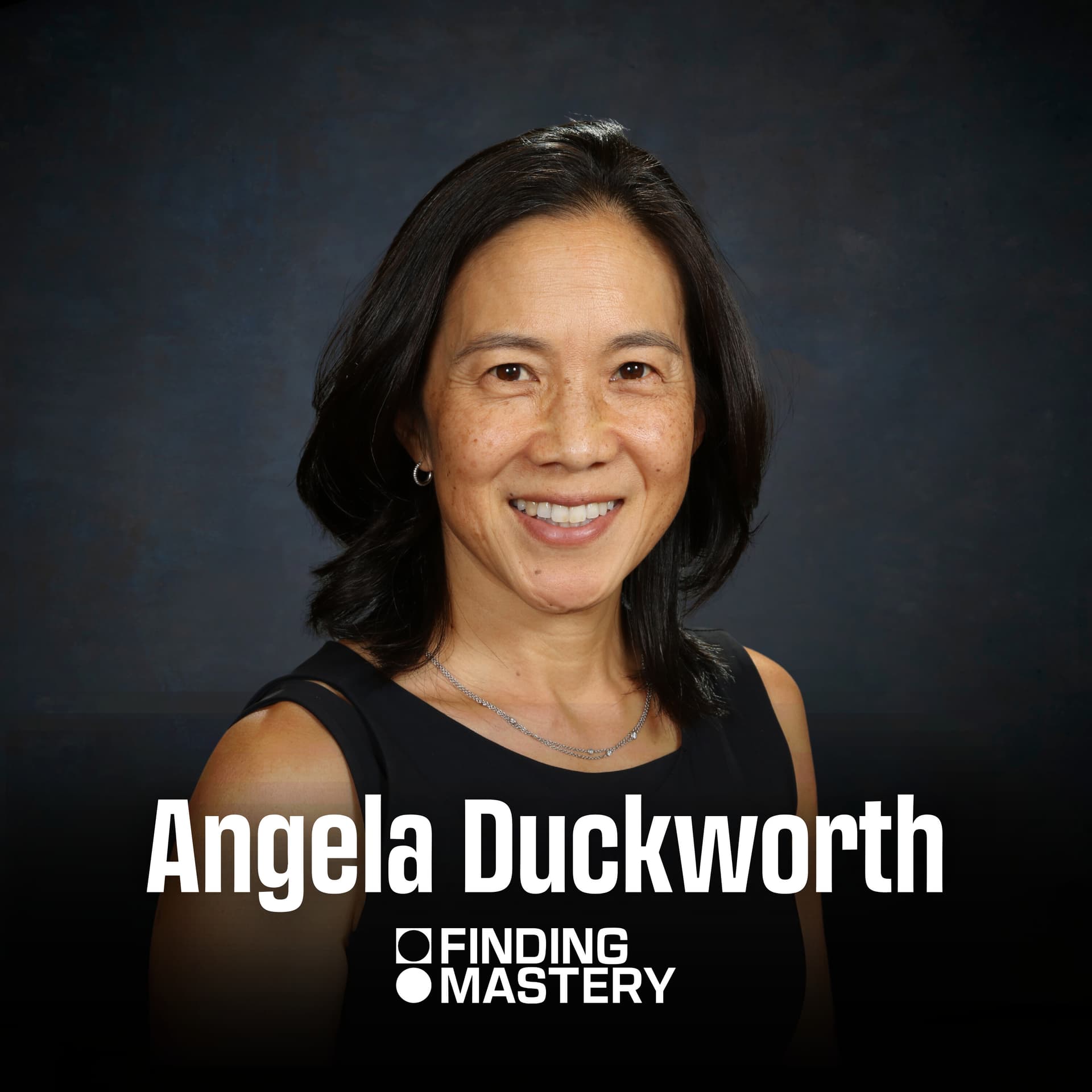
Dr. Angela Duckworth, professor of psychology at the University of Pennsylvania; best-selling author known for grit, self-control, and psychological science for thriving.
Key claims
Excellence comes from hours of high-quality practice, not “magic” talent; passion is an abiding interest/domain that can be developed. Young people are unhappy not because they’re unsafe, but possibly due to reduced real connection and time outdoors plus increased screen/social-media displacement. Ultra-processed foods and highly engineered stimuli can be more rewarding than natural experiences.
Notable examples
Duckworth’s “Discovery Project” class for undergraduates (scavenger-hunt steps like shadowing and curiosity conversations) to build direction/passion; her mother’s story of delaying a painting dream for decades, then painting again late in life; “Phones in Focus” school cell-phone policy research; nature/blue-sky “horizon gazing” as a nervous-system cue.
Written by AI. May contain mistakes. Listen to the episode to check what was said.
Chapters
Tap a time to open that second in VOUnderstanding Grit and Its Importance
0:03 to 1:05
Discussion on the concept of grit and its role in personal excellence.
“Mastery because we know one great hire can change everything.”
Understanding Grit and Its Importance
3:00 to 5:20
Discussion on the concept of grit and its role in personal excellence.
“Angela, this is like a highlight for me to be able to carve out an hour for us to just celebrate, you know, what you've been doing, who you are, how you're thinking about helping people be their best.”
The Journey of Learning and Excellence
5:20 to 8:05
Angela Duckworth shares insights on how to nurture passion and perseverance.
“And when we see people who are amazing at what they do, I think we don't see the hours and hours of effort that got them there.”
Navigating Vocational vs. Avocational Passions
8:05 to 10:45
Exploration of the balance between career paths and personal interests.
“It used to be called the Passion Project.”
The Role of Passion in Daily Life
10:45 to 12:30
Discussion on how passion can be a skill applied across various aspects of life.
“where, you know, they're not single-mindedly focusing on, you know, their professional identity.”
Objective Reality vs. Subjective Experience
12:30 to 14:00
Conversation about the distinction between objective circumstances and personal experience.
“Like, for example, if you were in, and now I'll speak for myself, but I'll try to channel my inner Mike Gervais.”
Subjective Experience and Choice
14:00 to 16:02
Explore how subjective experiences shape our choices and passions.
“You want to experience things and you want to be in control of how you experience them that's not at the mercy of, say, objective circumstance, right?”
Passion and Life Choices
18:32 to 23:03
Discussion of passion through personal stories and the implications of life choices.
“I had the author David Epstein join our class, and he has written about a lot of the same topics that I have.”
Trade-Offs and Personal Reflection
23:03 to 28:00
Reflection on trade-offs in life and their impact on personal and family dynamics.
“And some of those trade-offs, I don't consider them sacrifices.”
The Nature of Buoyancy in Life
28:00 to 29:52
Exploring what it means to be buoyant and engaged in life amidst challenges.
“about being a great support and challenge mechanism for other people to really be a great teammate or to be a great partner or a friend or coworker?”
Show all 23 chapters
Addressing Young People's Mental Health Crisis
29:52 to 33:02
Discussion on the alarming rise of mental health issues among young people.
“And necessarily, that means we're just like drawing attention away from other really important things.”
The Role of Nature in Mental Well-Being
36:35 to 42:00
Examining how lack of nature contributes to the unhappiness of younger generations.
“because they will say, you know, look, what happened in like around 2010 is like the advent of real social media, like really taking off.”
Exploring Youth Discontent
42:00 to 43:50
Angela Duckworth discusses the reasons behind the malaise among young people.
“Like I wouldn't even be able to tell you what time it is except for looking at some clock because I have none of the cues.”
The Impact of Diet on Mental Health
43:50 to 45:50
The conversation shifts to the effects of ultra-processed food on well-being.
“It just takes you like a hundred and some years to like collect all the data and, you know, pre-register hypotheses and do all the statistics.”
Screen Time and Collective Action
45:50 to 48:30
Duckworth highlights the importance of collective action in managing screen time.
“If I had grandchildren today, that's exactly how I would raise them.”
The Influence of Environment on Adolescents
48:30 to 50:30
The discussion focuses on the impact of school and community on teenage behavior.
“But honestly, I would choose my daughter's school based in part on their cell phone policy.”
Parenting Decisions in a Digital Age
50:30 to 52:30
Gervais shares his personal story about parenting and managing cell phone use.
“And like, you know, they'll be who they are.”
Parenting Decisions in a Digital Age
52:49 to 54:09
Gervais shares his personal story about parenting and managing cell phone use.
“pro and I want to come back to something a little more personal.”
Navigating Parenting Pressures
55:28 to 56:00
Duckworth and Gervais discuss the pressures of parenting in a tech-centric world.
“But also, you hear them and you know they're not making it up, right?”
Cell Phone Policy at Elite Schools
56:00 to 57:50
Discussing the impact of cell phone policies at schools like Andover on student behavior.
“And I was like, OK, right to the Apple store.”
Countercultural Parenting Approaches
57:50 to 1:00:18
Exploring unconventional parenting strategies regarding technology and social media.
“Oh, I love all of this as, like, be connected to the groundswell as opposed to, like, always pushing against the current.”
Shifting Perspectives on Personal Goals
1:00:18 to 1:02:44
Encouraging a shift from self-blame to situational change when facing challenges.
“So I, you know, we talked, we've covered a lot of ground.”
Creating Possibility Through Perspective
1:02:44 to 1:03:22
Angela discusses reframing problems to view potential solutions.
“It's a small shift, but I think it has huge benefits.”
Transcript
Automatic transcript. May contain errors.0:00Dr. Michael Gervais:Finding Mastery is brought to you by LinkedIn. We use LinkedIn Hiring Pro here at Finding Mastery because we know one great hire can change everything. One bad hire, it can cost you a lot, way more than time. It can cost you momentum and culture and real dollars. And that's why how you hire matters just as much as who you hire. And it's why I've become a big believer in the power of LinkedIn Hiring Pro. Here's what I appreciate about it. When you're running lean, you don't have hours to sift through a pile of resumes hoping to find the right person somewhere in the stack. Hiring Pro is built exactly for that reality.
0:32Dr. Michael Gervais:You describe the role and it screens candidates for you, surfacing the people who are a best fit so that you can spend your time and conversations with those folks rather than in the weeds of the applications. And the results back it up. Those hiring with LinkedIn are 24 % less likely to need to reopen a role within 12 months compared to the leading competitor. So join 2.7 million small businesses already using LinkedIn to hire. Host your job for free at linkedin.com slash mastery. Terms and conditions apply. Again, that's linkedin.com slash mastery to post your job for free.
1:05Angela Duckworth:Traditionally, the younger you are, the happy you are. But since about 2010, the data look very different. The young people are incredibly unhappy. They are at historical levels of anxiety, depression, loneliness, and despair. Hospital admissions for self-harm are up. Suicide attempts are up. And so I have been thinking about what the heck is going on.
1:27Dr. Michael Gervais:Welcome back. or welcome to the Finding Mastery podcast, where we dive into the minds of the world's greatest thinkers and doers. I am your host, Dr. Michael Gervais.
1:36Angela Duckworth:A high-performance psychologist named Michael Gervais.
1:39Dr. Michael Gervais:Who Pete Carroll brought in to work with the Seahawks. Famous for his work with Felix Baumgartner when he jumped out of space in the Stratos Project.
1:46Angela Duckworth:Olympic athletes depend on something more than just training and talent. They have to stay mentally tough.
1:52Dr. Michael Gervais:Now, the idea behind these conversations is simple. It's to sit with the extraordinaries, to learn, to really learn how they work from the inside out. Today's conversation is with colleague and friend, Dr. Angela Duckworth, professor of psychology at the University of Pennsylvania, best-selling author, and one of the world's leading voices on grit, self-control, and the psychological science to help people thrive.
2:15Angela Duckworth:The gist of grit was people become excellent, not through magic, not through natural talent, but through hours and hours of high quality practice, we tend to look at the highlight reel, which gives us a false impression of what that journey really looks like.
2:34Dr. Michael Gervais:We also dig into some powerful and very practical parenting insights.
2:38Angela Duckworth:The whole job of parenting is to create situations in which kids can thrive. And I think good parenting is intentional. You have to think, what zip code have I decided to live in? And where do I send my kid to school? Because guess what? those are the environments that will shape your kid. And maybe they're not listening to you, but they're sure as heck listening to their peers.
2:56Dr. Michael Gervais:With that, let's jump into this week's conversation with Dr. Angela Duckworth.
3:05Dr. Michael Gervais:Angela, this is like a highlight for me to be able to carve out an hour for us to just celebrate, you know, what you've been doing, who you are, how you're thinking about helping people be their best. And so thank you again in advance for the conversation.
3:22Angela Duckworth:Mike, it has been too long. I don't know how long it's been, but it's been too long. I'm looking forward to it.
3:26Dr. Michael Gervais:So it's also been 10 years since you wrote the book, Grit. And so much has changed in the world and you influenced so many people. Quick question, just to kind of get us started. What do you see differently right now about your work that, you know, someone will work on grit.
3:45Angela Duckworth:I'm going to start by saying that I agree with everything I said 10 years ago. I have read grit relatively recently because I teach this undergraduate course to students really from all different majors. It's one of these classes at a university that has like all different majors, but my class doesn't count, I don't think, for any of them. So you have to really just really want to develop yourself as a person. And I assign parts of my book as required reading. And of course, I have to do the same homework assignments as my students. So I've read grit recently. And I stand by what I said. I mean, the gist of grit was that people become excellent, not through magic, not through natural talent, but through hours and hours of high quality practice.
4:36Angela Duckworth:They wake up and they, you know, do it again and they do it at the edge of their abilities. And, you know, the reason I didn't just say like, oh, I study perseverance, like why have a new word that, you know, you think is special to high performers? Because it's this perseverance and it's also passion. I mean, they wake up every day, they do it again, and they love what they do. I am sure, Mike, that you think about your work when you don't have to. I think about my work in the shower. I think about it when I'm brushing my teeth. I think about it when I'm dreaming. I think about it when I'm in line for coffee.
5:08Angela Duckworth:So really, 10 years on, I feel like that fundamental principle that going the distance is really a journey and it is one step at a time. And when we see people who are amazing at what they do, I think we don't see the hours and hours of effort that got them there. We tend to look at the highlight reel, which gives us a false impression of what that journey really looks like.
5:37Dr. Michael Gervais:I think people resonate. And then there's been this almost making a verb of the description of grit, like, oh, this person's gritty. And it's a placeholder for they work hard, they do hard things, which is not exactly passion and perseverance. It's like a thin slice of the way grit looks when somebody is doing something difficult. That's an oversimplification of a simple snapshot to say that this person is gritty. And I want to hold that idea for a minute because I want you to first bounce off of the person who hasn't identified a way to live with passion. And so can you square the idea about grit for work, grit for life?
6:19Dr. Michael Gervais:Can you open that up for folks that are like, Listen, my nine to five, this conversation certainly is not for me.
6:25Angela Duckworth:I think that the reason I study excellence is not because I'm especially interested in professional achievement. I mean, ask my husband, Jason, or anybody who knows me well. I actually, despite being a professor at a business school, don't have any interest in money or revenue or profit or hedge funds or market share. I married a guy who does. I mean, he's in business. So it's not that I think that capitalism is bad. But the reason I study excellence and the pursuit thereof is probably the same reason that you, also a psychologist who studies that, we have such a short time on this planet. You know, we're like flowers.
7:07Angela Duckworth:We get a very brief moment where we get to bloom on this fair earth. And, you know, we have one shot, as they say, in Hamilton. And I feel like to glimpse what you can do, you know, like what can you do? How can you become excellent at something that you care about? That to me is often something that, you know, like for me, it is my professional work. But for others, it is an avocation. I'm going to give you a really specific example, a story from the class that I just mentioned, Grit Lab. So when I figured out that many Ivy League undergraduates, despite having perfect GPAs in high school and extracurricular activities like their resume as long as my arm.
7:49Angela Duckworth:Right. But they're really, in many cases, completely clueless about what interests them. They are really, you know, mostly struggling with direction, not with determination. They struggle with passion, not with perseverance. So when I figured this out, I decided that the cornerstone of this class would be what we call Discovery Project. That's slightly rebranded. It used to be called the Passion Project. But then like I got terrified undergraduates in my office hours every week because they were like, oh, my gosh, I don't have a passion. And I was like, OK, I'm just going to rename this the Discovery Project.
8:21Angela Duckworth:And maybe that will like take some of the pressure off. But you have this checklist, this kind of like scavenger hunt checklist. And, you know, it starts off with really easy things like, you know, something that you want to watch on TED or YouTube. too, just like watch it like, OK, that's easy. Have a conversation with your favorite AI chatbot about something that might interest you. But then as you get deeper into the checklist, as you have to, as part of the assignment, you have to do things like have a curiosity conversation with somebody who works in that domain. Shadow somebody IRL in real life.
8:52Angela Duckworth:Find a passion buddy, a discovery project buddy who will, as a fellow classmate, like be on this journey with you. And what I have learned after doing this class for now eight semesters consecutively is that every year I would say to my students, like, please do a vocational project, right? Because I know you're going to struggle with some kind of like career existential crisis. And I would like to be your mentor and have you struggle within the safe space of this class and give you a little structure to that struggle. And every year students, you know, object and they say, I want to do something avocational.
9:26Angela Duckworth:I want to learn how to cook. I want to play the oboe. I want to like, you know, figure out like if being a DJ on the weekends is my thing. And then I always say to them, yeah, but are you really going to cook for life? Are you going to be a DJ for your job? Are you going to play in a symphony or I guess an orchestra? Music is not my strength, Mike. And I will tell you that what happened just a few weeks ago is we ended the class, actually just a few days ago, and a student raised their hand when I said, do you have any advice from me for the next class of students. And the student raised their hand.
9:59Angela Duckworth:They said, Dr. Duckworth, with respect, I think you were wrong to encourage us so vigorously to do vocational projects because some of us went against your advice and we pursued our avocational passions and interests. And we're so glad we did. And it's because of what you said, Mike, excellence comes in your profession, I hope, but it also comes in life. I mean, if I think about my real estate developer husband, who is a very good real estate developer, his number one priority in life is being a family man, is being a father to two daughters and a husband to me. So I think the same principles apply.
10:35Angela Duckworth:I think you can and should pursue excellence in the domain that you choose. And if you're lucky, you get it, you know, both professionally and then outside of work. But I really honor those people who say that they have structured their life in a way where, you know, they're not single-mindedly focusing on, you know, their professional identity.
10:58Dr. Michael Gervais:Cool. Do you know what? You and I like argued. Like there's something, I don't really argue, but like you and I, you and I think we had a differing way into this part of the conversation in our last conversation, which was you're pointing to passion as a thing, like passionate about a vocation, ad vocation, passionate about playing the guitar, being a parent, or passionate about like where you spend your quote unquote nine to five. There's no nine to five really more. And I think that passion is more of a through line through everything you do. So I think passion is actually a skill, not a directional aim.
11:34Angela Duckworth:It's not an interest. I'm thinking about, well, I'm just, you know, words are words, right? And grant passion, intrinsic motivation, mindset, love, you know, I think they're all words and I'm not saying that words don't have meaning, but I think the meaning is given to it, right? So I think it's just our responsibility to define how we're using the word in this conversation. You're right. I am using the word passion to refer to an abiding interest, a commitment, a domain. So, you know, I have a passion for cooking. I have a passion for writing, et cetera. But to define it as a skill, I think, is also defensible.
12:08Angela Duckworth:But I don't think there is a right or wrong or total alignment there.
12:11Dr. Michael Gervais:I like thinking, though, that I think this is you. I think this is me, too. But I like thinking that I'll speak for me, not for you here. I feel like when I enter any environment that I have the ability, call it the skill, to tap into a way of being with passion as opposed to like needing to pick up a guitar or pick up a surfboard and like, oh, finally, I'm with passion.
12:37Angela Duckworth:Like, for example, if you were in, and now I'll speak for myself, but I'll try to channel my inner Mike Gervais. Like, if you were in a boring faculty meeting or, like, at the DMV, you know, like, waiting to get your meal ID, or two personal recent examples, you might actually have the skill of approaching those circumstances with passion. passion like to be able to like learn something you know have an engagement that's positive like are you are you describing it as a skill that you could apply and maybe would want to apply
13:14Dr. Michael Gervais:to every domain of your life yeah so think about like i don't know the french lover or like there's just like this kind of like passionate way that they use words that they engage in conversations
13:25Angela Duckworth:Yeah, like a joie de vivre that is like, you know, that like, yeah.
13:30Dr. Michael Gervais:Yeah. So that kind of way of living as opposed to, and I'll tell you the first principle I'm working from, which is I don't want, and I've observed in extraordinary people this kind of positioning. I don't want the external world to dictate my internal experience. So I don't want to be at the whip's end of what's ever happening around me. I want to kind of reverse that order, which is, no, I determine. It's based on the way that information goes through my filter.
14:01Angela Duckworth:You want to experience things and you want to be in control of how you experience them that's not at the mercy of, say, objective circumstance, right? Like you want to be able to have, like, for example, a good day, you know, even if, you know, objectively speaking, you know, things are not.
14:17Dr. Michael Gervais:Really tricky things happen. Yeah.
14:19Angela Duckworth:I, yeah, I mean, I'm curious about that. Like, I, I, I of course agree the circumstances of your life, the situations of your life are objective, but your experience, and it's hard to remember this, I think, I think this is where you're coming from. Like, your experiences are entirely subjective, right? They are mental representations. And I think where we probably violently agree is that when you are experiencing, you know, that it's cold outside or you feel hungry or like that person who just went through a red light is a total jerk. Like you can only experience it. The feeling is like it's just real.
14:56Angela Duckworth:It's just right. But you don't experience the facts. I mean, you know, like the parable of the, you know, shadows on the cave wall in Plato. Like we can only experience our subjective reality. I mean, that's where I agree with you. You know, there's a but coming. I mean, when people have to make choices about their first job, I think we would agree that flipping a coin is probably not what you would want to do. You're not going to be like, I'll just take the next job that, you know, gets sent to me or like, you know, cover my eyes and like throw a dart. Right. I think what I believe to be true is that not that passion or interest is fixed.
Read the full transcript
15:39Angela Duckworth:I actually think on the contrary, and there's good scientific evidence that they're developed. Also, like, what would that even mean that like you somehow got born with like the tattooed interest that you were going to be a commodities trader or something like that? What would that mean to have interest like at birth? So obviously they're developed. But I think, you know, recently, again, I guess my students are on my mind.
16:02Dr. Michael Gervais:Finding Mastery is brought to you by Rag & Bone. I've been a big fan of Rag & Bone for a number of years. I just love what they do. It's a go-to for me when I'm choosing clothes. I've been wearing their infused denim for a while now. They've done just a really nice job with this product. For me, I am really intentional about what I invest in. In clothing, it's no different. I want things that are well-made, that stand the test of time, that don't distract me, that support my focus on the things that matter most. And that's exactly why these deliver. And they look sharp, full stop. They've spent 20 years obsessed with getting this product right.
16:32Dr. Michael Gervais:And that kind of long-term commitment to craft, that's something we talk a lot about here at Finding Mastery. Quality compounds. The right inputs may consistently over time show up in everything. And you can feel that the moment you put these on. If you're ready to upgrade your denim with something that's genuinely built to last, it's time to upgrade your denim with rag and bone. For a limited time, our listeners get 20 % off their entire order with the code findingmastery at rag-bone.com. That's 20 % off at rag-bone.com with the promo code Finding Mastery. And when they ask you where you heard about them, please support our community and this show and let them know that we sent you.
17:11Dr. Michael Gervais:Finding Mastery is brought to you by our flagship mindset training course, Finding Your Best. Anytime you feel the pull to reset, to zoom out, to refocus and ask, am I moving toward the person I want to become? It helps to remember this. Lasting change comes from training. Not resolutions, not short-term sprints, but deliberate practice of the skills that shape how we show up. In work, in relationships, and in the moments of great intensity as well. That's what finding your best is all about. It's a science-backed framework for training your mind. And it's the same set of tools that we've taught to Olympic athletes, top executives, elite military teams, and artists at the peak of their craft.
17:46Dr. Michael Gervais:In this course, you'll learn the foundational psychological skills to be your very best. Full stop. And the best part is, you can start anytime. Right now, we're running a limited time offer on finding your best. Simply head to findingmastery.com slash course and use the code RENEW100 to get$100 off your registration. If you've been waiting for the right moment, this is a good one now to lean into. Spring and summer, they are powerful seasons of momentum. It's a great natural time to step into growth, to refocus, to recommit to who you want to become. And this discount will not be around for long.
18:20Dr. Michael Gervais:So go to findingmastery.com slash course code renew100 for$100 off today because your future is not shaped by what you intend. It's shaped by what you train.
18:32Angela Duckworth:I had the author David Epstein join our class, and he has written about a lot of the same topics that I have. And in his remarks to my students, I mean, he was really kind, like take the train up from Washington, D.C. My students had been assigned his TED Talk on range. and then I was like, I'll just text David and see if he wants to actually come and like talk about it. And so he did. And he said, you know, a lot of times what looks like grit is really fit. In other words, if you are doing something where you feel really interested in it, you can look like somebody who has a lot of grit because you're voluntarily wondering about it.
19:13Angela Duckworth:Like when nobody asks you to, you're showing up early, you're staying late, your eyes are like saucers. And I agree with you, Mike, I know what you mean. There are people for whom, for example, like when you were describing your idea of passion as a skill, I was thinking about, you know, those people who like whatever they're eating, like it looks like the most delicious thing because like the way they approach their food is like, you know, they really are savoring it, right? Like I've, I have a few vivid examples of people where, oh, right, like you could give them a whole range of things. And it's all delicious because it's what they bring to that experience.
19:49Angela Duckworth:You can tell by the way they chew and swallow. You know, you're like the way they cut their fruit. I'm like, wow, I wish I could eat like that because then basically it'd be like being roommates with Julia Child. So I understand what you're saying, but I also think people have to make choices. And I think about my mom, for example, who she grew up in China and she really did, you know, fall in love with painting. And she immigrated to this country. She was the first in her family to immigrate here. She didn't speak English. She was very poor. And she just had this dream of becoming a painter. And she heard stories of these museums in the United States and classes where even women could become painters.
20:28Angela Duckworth:And so she, you know, was studying here and she did coursework at, you know, Ivy League schools and was very encouraged. And then what happened is that she married my dad, who was a great man, but not a lover of art and not a feminist, I'll say. And instead of becoming a painter, my dad had the idea that my mom should open a needlepoint. Like, you know, I don't even know if people know what needlepoint is, but these canvases and like you stitch them and you make pillows and things like that. So my dad had this idea that my mom, instead of painting her true passion should operate a wholesale needlepoint.
21:05Angela Duckworth:I would say company, but it was quite small. So anyway, like a whole wholesale needlepoint concern. And that's what she did for like 40 years. And, you know, I guess you could say that she brought passion to that. I mean, she did as good a job as she could as a little CEO of a little company in Pensacola, New Jersey that made needlepoint canvases and shipped them across the country to retailers. But it was only when my dad got sick. He's now passed. He had Parkinson's and he had a few falls. And there was a time toward the end of his life where my mom, because my dad was like immobile and he slept a lot, like my mom had her freedom again.
21:41Angela Duckworth:I mean, it was like 50 years since she had come to this country to pursue her dream. And she was finally able to paint again. And on the very last day of class, my mom was the guest speaker. And the very end of her interview where she told her life story. The last question was, what advice do you have for these young people who are at the beginning, not the end of their lives? My mom's now 90. And, you know, first she hemmed and she said, like, you know, I don't have any advice. Like, you know, don't listen to me. And she sort of made a self-deprecating joke. But then we pushed her and we were like, no, really, what would you say to somebody who's 20 years old, 70 years younger than you.
22:22And she said, follow your passion.
22:25Angela Duckworth:Do something that you want to do. When I paint, the hours fly by. All I want to do is paint. So I think we mostly agree, these are two different ways of using the word. They're both true. But I personally think that if you can develop a passion that is what you really want to do, then so much of life becomes easier for you. And I think also the path to excellence almost invariably includes that.
22:57Dr. Michael Gervais:Thank you for sharing your mom's story because it actually hits a really personal note. I am really afraid that my way of living like your dad's my framework my thinking my way that i've organized my life would be something that could potentially pull my loved ones away from what they want to do and so i do think about that all the time like what do you mean i get to do a lot in my life. And that means that I'm making choices. And some of those trade-offs, I don't consider them sacrifices. I do consider them trade-offs. Some of those trade-offs maybe are not the best thing for my family.
23:43Angela Duckworth:For the people that you care about in your life.
23:46Dr. Michael Gervais:Yeah. So this is like the part that haunts me. Yeah. when i'm done here and let's say that i you know my hopefully my son or my wife survives and me and like they're like yeah he was a good man and then it kind of stops you know like
24:06Angela Duckworth:i mean if you ask my mom if she could rewind time if she would make different choices well i've asked her that she wouldn't make different choices i think she does mourn the decades of her life when she was doing what she didn't want to do. But she would not go back and make different choices. In other words, those trade-offs also confronted her. And we could say like, oh, it's too bad that she was a woman, that she had a certain place in a family. Okay, that may be true. But there were trade-offs for her too. If she pursued her art and had huge fights with my father and took time away from the children in order to pursue her passion, traveled, you know, regardless of our school schedules and so forth.
24:50Angela Duckworth:I mean, I think those choices that you're talking about are real and just, you know, in a spirit of confession. So when my daughters were young, so now they are out of the house, they're 24 and 22. And I remember getting a Christmas card and they would like, you know, they're like their grandmother, actually both grandmothers, they like to draw. And so I get this, you know, card and it's like a picture of like all the different people. It's like a comic strip and, you know, like all the different people in the family. And there's, you know, dad and he's like raking the leaves or doing something family man like.
25:23Angela Duckworth:And then, you know, whatever the girls are doing, you know, dancing or reading books. And then there's me and you can't even see me because my laptop is in front of my face. And you could just see like the top inch of my head. And then it says like, you know, comic book style, like tap, tap, tap, tap, tap, tap, tap, tap. And I remember looking at this portrait of me and thinking like, okay, like, you know, tradeoffs, right? Because it's true. When my kids were young, I was working all the time. I mean, I guess that's probably true now and was true when they were older too. And, you know, I just want to acknowledge, like, you're right, Mike, there are these costs on the other side of the ledger.
26:01Angela Duckworth:And I think that's a very important perspective. But if you then consider that, you know, assuming that you're going to have a paid job, which many people want to have and many people need to have, I just want to say that when you make these choices, if you have freedom to make choices, you know, to choose something where you're like, I think it's interesting. I think people's interests are not evenly distributed. Like, can you imagine how many people have tried to explain private equity to me? I'm like at Wharton. It's like, OK, Angela, I explain private equity to you one more time and how it's different from hedge funds.
26:38Angela Duckworth:And I'm like, OK, I have a coffee and a pen and a notepad and I can understand this. And like mid-sentence, like their first sentence, I have just wandered off and my brain is not thinking. And that's because I have negative five interest. in private equity and hedge funds. I can't even believe that I remembered those phrases to utter them. So if you ask me about like psychology, I mean, there are articles, Mike, that I read and I'm like, oh, yeah, I think that was like on page 78. There was like a paragraph on the top right hand and there was this graph. You know why? Because I'm interested. I'm goddamn interested in psychology.
27:14Angela Duckworth:And so I just want to encourage everyone, I guess I think about young people a lot to to sort of you know gravitate to recognize have some awareness of where their where their attention goes and to honor that because I think there's so much external pressure and you know so much social influence about like what you should do I don't know I don't know what I would
27:39Dr. Michael Gervais:be if I weren't doing something that interested me well I think that that's where one hook back to the passion intersection that we're talking about is like passion about what you do and then passionate about who you are. I think the more bedrock of the approach is something to do with like, what about being passionate about becoming your best? What about being passionate about being a great support and challenge mechanism for other people to really be a great teammate or to be a great partner or a friend or coworker? You got to have your stuff together. You know, you have to be able to be buoyant in the topsy-turvy world that we're in.
28:16Dr. Michael Gervais:And it doesn't mean that you don't get kind of pulled down by, again, sometimes external circumstances or internal framing. But that idea about being passionate. What does that look like then?
28:26Angela Duckworth:I know you want to ask me, but I want to ask you. So I'm just going to ask you, like, so what would that look like? So if I were a young undergraduate in your class, right, so what would you be advising me to think, to do, to say? Where does that take me? This idea of buoyancy and in this topsy-turvy world, which I could not agree more with you about.
28:52Dr. Michael Gervais:Okay, so what would that look like? I think the kind of the first framing I would have is that we don't know how long you're going to be in this world. Back to your point, this flower is a good analogy. And there's a moment under the sun that we're going to have together. More concretely, how do you want to do life? And most people say, well, I want to do guitar or I want to do teaching or something. No, no, no. How do you want to engage in all the things that you do? How do you want to be versus what do you want to do? I think is more fundamental.
29:17Angela Duckworth:How do you want to be what you want to do? Yeah. Okay. That, that, I think that's a very meaningful distinction. And I would say, you know, that my, my undergraduate course and a lot of my work is more about like what you do than how you, you know, how you are, right. Because we are human beings, not human doings. And I think that's actually very important. But you know, one of the things like being in the business that we are, right, which is like, we study the nature of human nature, we advise on how to like, carry out your next day and you know, how to have a relationship and so forth. I think it's always incomplete.
29:48Angela Duckworth:I feel like there's always some thing that we're trying to draw people's attention to. And necessarily, that means we're just like drawing attention away from other really important things. So I want to agree with you. There is a kind of like life philosophy to borrow some terminology from our good friend, Pete Carroll. Like there is a kind of philosophy and approach to how you want to be. And I think that is important. But it's not that I don't think it's important, but I want to acknowledge that like, you know, it's not something I teach a lot about or have studied as a researcher.
30:17Dr. Michael Gervais:Yeah, no, no, that's right. Yeah. And then I think the next part of that, when you ask the question is like, to do that, once you get clear on that way of being, and that's a wide open idea, like you're going to need a whole handful of mental and psychological skills to be that buoyant person.
30:37Angela Duckworth:And I completely agree that like using the terms, well, like that is the right word for it, right? Because it's not like you have it or you don't, or it's a disposition or it's a choice or like, it's like, no, it's like, you know, it's a learnable set of techniques that you, that you get better at. I think that's not obvious. Like, cause sometimes people are just sort of like, oh, I love that person. Like, I love the way they move through life. I love the way they show up, but you're like, I can't be like that. or, you know, that's the way they are. But, you know, it is a skill, you know, a set of skills, like you said.
31:10Dr. Michael Gervais:Yeah. Let's take this as to think about the skill building and then stitch it to your idea of or our idea of being parents. What have you come to understand about how to raise kids and to do it in this world? And if you could speak to the parents in this community about the things you hope they would really understand or start doing or stop doing, I would love to tap into that part of you.
31:35Angela Duckworth:I am, you know, by no means an oracle, but I have lately been thinking about the mental health of young people, partly because I have a wonderful new graduate student named Abby. And she said to me, you know, Gen Z, my generation, is really struggling. And I said, oh, yeah, I think I, you know, read an article here or there. She was like, no, like really struggling. So I've been thinking about young adults. I've been thinking about teenagers. Just the bare facts are startling, Mike. So if you look at historical data on, for example, things like how lonely do you feel? How anxious do you feel? How depressed are you?
32:17Angela Duckworth:Do you feel like you experience, you know, a lot of despair? So these are measures of ill being or, you know, say the opposite is, you know, the absence of them is well-being. You could also ask people how happy they are, how connected, etc. Well, social science has been asking people of all different ages those same questions for decades. And that means we have a movie. We have a movie of how people feel at different ages, 18, 28, 58, 78. But we also have a movie of like how that has changed, for example, since like 1995 to like 2005 and then 2015 and so forth. And here's what the movie tells you.
32:53Angela Duckworth:Traditionally, the happiest time in life, at least in adulthood, because these surveys usually start at age 18, is in your younger years. So like the younger you are, the happy you are. And there's this kind of famous U shape where as you approach middle age, like my age, you know, I'm 55. So like I should be the unhappiest on average. Right. So so, you know, why would that be? You know, people have said, well, you know, their parents are dying. True. Or parents are getting sick. Yes. For a lot of people, they're having professional crises. You know, they're kind of reckoning with some of the limitations of what they've been able to accomplish.
33:29Angela Duckworth:Many people are going through divorce or other relationship problems. For some, you know, little kids, little problems, bigger kids, bigger problems. So there was a lot of ink spilled on the midlife crisis and, you know, why it is that in our 50s, we're less happy than when we're like, you know, in our early 20s. But I mean, it makes sense to people, right? Right. Then, by the way, as you progress through the 60s and even to like, for example, like early 70s or so, like people do generally get happier. And maybe that's because they have perspective and maybe because some of these problems go away.
33:58Angela Duckworth:But that's not what the movie tells you about what's been happening in recent years. So since about 2010, the data looked very different and the middle aged people look the same and the old people look the same. But what's different is that the young people are incredibly unhappy. They are at historical levels of anxiety, depression, loneliness, and despair. And so I have been thinking about what the heck is going on. And I don't think it's, you know, it's for Angela Duckworth to give you a complete answer. I don't think, honestly, anybody really has a complete answer. But I do, first of all, want to just acknowledge that, you know, sometimes CEOs ask me, they're like, well, you know, I've heard about this mental health crisis and the young and I'm like, oh, it's real.
34:43Angela Duckworth:Like hospital admissions for self-harm are up. Suicide attempts are up. All the survey data around the world, actually, it's not just the United States, are painting the same grim picture.
34:55Dr. Michael Gervais:Body Mastery is brought to you by Fatty15. Did you know that Navy dolphins helped unlock a secret to healthy aging? It's a wild story. And it's the foundation for a product that I've come to really love, Fatty15. Fatty15 is built around C15, the first essential fatty acid discovered in over 90 years. And it was discovered by Dr. Stephanie Van Watson. She's the co-founder of Fatty15. While she was working with the U.S. Navy and based on over 100 studies, we now know that C15 strengthens our cells and is foundational for healthy aging at the cellular level. Stephanie has been on the podcast and it was one of my favorite conversations.
35:32Dr. Michael Gervais:She's amazing. And what her and her team are building is something I'm really excited about. Head to fatty15.com slash finding mastery and use the code finding mastery for an additional 15 % off your 90 day starter kit. Again, that's fatty15.com slash finding mastery and the code is finding mastery. I want to take a second here to tell you about a morning routine that I've been using for years. For me, it's a great way to switch on my mind, to ready myself to take on the day. So before I check my phone, my emails, market updates, or text threads, I choose how to start my morning. That's always in my control.
36:09Dr. Michael Gervais:That's always in your control too. This is the same morning mindset routine that some of the world's top performers across sport, business, and the arts are using. The best part? It only takes about 90 seconds to do. So just head over to FindingMastery.com slash morning to download the audio guide for free. Again, head to FindingMastery.com slash morning to get your morning mindset routine.
36:35Angela Duckworth:In terms of like, you know, a conversation that I would love to ask you, Mike, what you think, I do think that technology, which has been the primary suspect, you know, if you ask like the social scientists like John Haidt or David Blanchflower, like what's going on, they will point to screens. because they will say, you know, look, what happened in like around 2010 is like the advent of real social media, like really taking off. I'm sure that is a huge part of it. But what I wonder about is whether screens have contributed to a general erosion in social connection that isn't just about like going on Facebook, seeing how pretty everybody is and feeling terrible about yourself.
37:12Angela Duckworth:I wonder about the displacement of genuine conversation, hanging out. It's very slow. It happens in 1x, not in 2x. It's not edited. There's no soundtrack. Sometimes it's boring. It can be awkward. People smell. Like there are all these things about like actual human interaction, which, you know, is also on a striking decline. So these trends are not just that happiness is down, but also the percentage of time that people spend in real life with another person, looking at them, talking with them, is on a downward ski slope. So I worry a lot about, you know, these as a parent. And I don't have, you know, great answers.
37:54Angela Duckworth:But I do think bucking the trend, like knowing that the trends are not in the favor of the young people you care about, and just at least recognizing that if you just go with the default settings of the modern world, you know, things are not great. And so something has to be done that's countercultural. it's not terrible by the way like these are things that i had my vague periphery vision i'm like oh yeah people aren't happy but then i always like saw these graphs i was like i mean just google david blancheflower like google david blancheflower dot dartmouth and you'll be like oh my god yeah
38:25Dr. Michael Gervais:now we'll put that resource uh in the show notes as well what do you think by the way like you think
38:30Angela Duckworth:about um these topics at least as much as i do yeah i mean i think there's a couple things to
38:36Dr. Michael Gervais:call out. I'm nodding my head to everything you're saying. And there's a couple of things that I think about, which is, so you and I are the same age and, you know, generation Z that we're talking about are, you know, I don't know, they're like 13 to 25 year olds, somewhere in that range.
38:48Angela Duckworth:13 to 28. Yeah.
38:50Dr. Michael Gervais:28. Those are kids that our generation raised.
38:53Angela Duckworth:Yeah.
38:53Dr. Michael Gervais:I don't know. I barely knew what was up at age 18 and 21. And so I think about if I would, if my parents were doing the things that we did to the Gen Z kids, I feel like there's a custodian issue here of thriving. And so I, okay, that's one that I just want to introduce. Like we raised them.
39:14Angela Duckworth:I had not, I had not thought about that. Right.
39:16Dr. Michael Gervais:Yeah. We raised them. You know, my, my parents left me to drink water from the hose if I got thirsty and we would never do that now, you know, like it's gotta be like ultra triple filtered water. Okay. Yeah. You know, but like, there's something about like just a little bit of that roughness that allows for some scrappiness, call it grid but like there's something here that we have done and then the second order and i do want to get to like some practical things that you're thinking are important for parents but the other thing is like you and i and i think everybody it's a big word that's listening would not want our kids to eat junk food but we feed them junk light you know so we're not feeding junk food anymore we're feeding junk light and tolerating junk light and allowing that junk food to be part of it.
40:03Dr. Michael Gervais:Yeah.
40:03Angela Duckworth:Like just elaborate on what you mean by that.
40:06Dr. Michael Gervais:So I think the new, the new kind of health is going to be sunlight and not that we need to see people having a tan. I'm not saying that, but like the effervescent aliveness that comes when we're with nature is nearly in refutable for most people. It doesn't mean you need to be kind of deep in the wild and like have dirt all over you, but just like, you know, like seeing a tree and having a blue sky.
40:28Angela Duckworth:Yeah. Yeah.
40:29Dr. Michael Gervais:There's something about that, that tickles the ancient part of our brains. It says, All right. Yeah, good. Horizon gazing is a parasympathetic nervous system activator, meaning that it helps the rest and digest system turn on. And you can't have that peripheral kind of gaze when you're zoomed in on a handheld device or a computer or in a room even. So, okay, so junk food to healthy food, that's an arc that has been taking place over the last number of years, let's say, as an emphasis. And junk light to healthy light. So I'm just thinking about it more primarily.
41:04Angela Duckworth:Yeah, you really literally mean L-I-T-M-T. Yeah, yeah.
41:07Dr. Michael Gervais:Right. I want my son, I've got a 17-year-old son, I want him to have more sunlight. Yeah.
41:12Angela Duckworth:You know, there have been, as you know, like lots of research on, you know, the effect of parks on well-being and green space and walkability. And, you know, there are some random sign of experiments on nature. But I just think that the profound shift, I mean, I looked this up once. I mean, let's assume that there was a time where people spent quite literally 100 percent of their time outdoors. it's not that far in our evolutionary history right because it's like there were no buildings to be and so you're outside you know again most of the time maybe there was like you built a shelter or something right and so when you were sleeping you know you slept in this makeshift shelter but now i think by some estimates you know people will only spend like minutes like outside like really outside you know like under the great blue canopy and and what the heck is the effect of that profound shift from our evolutionary origins to this like bizarre artificial illumination.
42:04Angela Duckworth:Like you don't know what time it is. Like I wouldn't even be able to tell you what time it is except for looking at some clock because I have none of the cues. And I remember actually having a conversation with a pediatrician who I will not identify only because I asked her, I was like, you're a pediatrician. So I don't have a permission. So I'll just say, I was like, what do you think's going on with this like general ennui and malaise of this younger generation because, you know, some social scientists point out that it is, at least statistically, the safest historical era in history. You know, you don't walk down the street and get murdered in general.
42:34Angela Duckworth:You know, you're not going to get pickpocketed. Why is everybody so unhappy? And she said, you know, I wonder if it's lack of nature, not the presence of something bad, but the absence of something good. And William James and Henry David Thoreau, and, you know, many great thinkers have wondered about the curative effects of being in nature. So I think, Mike, like when we when we think about this phenomenon of declining mental health in the young, I mean, I, again, don't have all the answers. But I do think that, you know, spending hours and hours staring into a blue rectangle in the palm of your hand with like like not real life.
43:09Angela Duckworth:It's all curated. It's it's all, you know, designed to make you like look at it again and then not just experiencing actual life, nature, everything else that we've been talking about. I have to believe that's got a lot to do with what's going on.
43:25Dr. Michael Gervais:Okay. We're like super alignment. And I think a best practice, and by the way, you bring up William James. We have so much to learn still from, let's call like one of the first like applied psychologists for what could be, you know, like.
43:42Angela Duckworth:Yeah. Energies of N. I mean, there's a joke in my tribe of, you know, academic psychologists, which is like, there's nothing anybody could study that William James didn't already figure out. It just takes you like a hundred and some years to like collect all the data and, you know, pre-register hypotheses and do all the statistics. But like basically, William James wrote it all down, you know, habit, interest, boredom, self-control, you know, relations, spirituality. I mean, yeah, he pretty much.
44:12Dr. Michael Gervais:Yeah. I mean, he was a great first mover to this, like. He was. He would have been a great set-up. Yeah, that's for sure. Okay, so we're saying get outside. Give a handful of other things we can do as parents.
44:27Angela Duckworth:So, yeah, I definitely think getting outside. Right. You know, you mentioned food. I absolutely you know, you are what you eat. It's true. And the fact that over 50 percent of calories in the typical American's diet is coming from ultra processed food, meaning like it's manufactured, it's fractionated in tiny components. it's resurrected in ratios that don't exist in nature. Nature does not have high-carb, high-fat food. There are no foods in nature that are simultaneously high-carb and high-fat. And when you get that, your brain is just like, oh my God. It doesn't know what to do. It's just so rewarding.
45:01Angela Duckworth:So I would call these supernormal stimuli. That's what Nico Tinbergen, the Nobel Laureate ethologist, called these stimuli that were exaggerations of naturally occurring stimuli that elicit exaggerated responses. And I think we're living in a world of ultra-processed food and ultra-processed stimuli that are super normal. They are outside the range of experience. And so, like, yeah, like, of course your kid wants to keep eating chicken fingers with ketchup because, like, it's so delicious. And that's not even the most ultra-processed, right? Let's take Doritos. So I think rule number one you said is, like, more nature.
45:35Angela Duckworth:Number two is, like, real food. I mean, I think being, like, completely crazy and being like, We pretty much only allow real food into our kitchen. And yes, there'll be the occasional party. But we're going to be that family that is crazy about eating healthy. Sign me up. If I had grandchildren today, that's exactly how I would raise them.
45:56Dr. Michael Gervais:So no, like, just to interrupt on it, like, I don't know, no Trader Joe's pizza. No kind of organic chicken fingers.
46:05Angela Duckworth:Yeah, that's a very – I think the definitions of ultra-processed food are various. But one of the definitions that I find to be useful is like you literally couldn't make it at home. And why is that important? Because in the processing, there has been like a kind of a combination, like a recombining of things that is like so outside of human experience that like, you know, the range of – So I would allow Trader Joe's – I also love Trader Joe's. If you are what you eat, then I am Trader Joe's. But like I think that it's not like you shouldn't have tomato sauce because it's like, oh, that was – It's like, but you can make tomato sauce.
46:37Angela Duckworth:And guess what? Like I could make a pizza.
46:38Dr. Michael Gervais:I like it. That framing is actually super simple.
46:41Angela Duckworth:Like impossible to make, impossibly delicious, impossible in terms of the ratios of fat and sugar, coloring, flavoring and marketing. Right. Just like I would I would say like, you know, what was it? Mark Bittman, like eat food, not a lot, mostly leaves. I mean, the advice on nutrition is really boring at this point. But right, like I would avoid highly processed, impossible and impossibly delicious food or impossibly addictive food or whatever. On screens, I will say I'm doing the largest cell phone policy study that's ever been done with a chorus of like top economists. So we are surveying every school in the country about what their school cell phone policy is.
47:21Angela Duckworth:It's called Phones in Focus. And it's bipartisan, by the way, Mike. It might be the last bipartisan issue there is. So there are red states, there are blue states. It's endorsed by the National Governors Association. And what we're finding is, first of all, that educators who answer the survey at Phones in Focus, they are like screaming through the survey that kids need our help in limiting their screen time. They're saying that like the schools need to take collective action. And one of the things that you should know about screens is that it is what economists call collective action problem.
47:52If you are the only kid who is not on Instagram, that's actually very hard for you for all the obvious reasons.
48:00Angela Duckworth:But if all of the kids were not on Instagram, for example, if in a school the policy was that you cannot be on your phone from the first bell to the last bell, you have solved a problem collectively because nobody's on the phone. You don't have to worry about what you're missing out at one in the afternoon because nobody else in your entire ecosystem is on their phone. So I think that one of the things I would say as a parent is not only should you do common sense things like limit your screen time, like don't let them charge their phone in their room, you know, make up a set of rules that you maybe discuss together so that there's an understanding of why those rules exist.
48:36Angela Duckworth:But honestly, I would choose my daughter's school based in part on their cell phone policy. I think if the school principal said, you know what, I really believe that every teacher needs to figure this out on their own. And like I would be like, oh, I'm not sending my daughter to the school. So I would say that choosing your school in general is one of the big decisions that parents make. As a psychologist, you know, we said, OK, nature that goes across the board. If you're 2 or 12 or 22, get out in nature. What about ultra processed food? If you're 2, 12, or 22, eat less ultra-processed food, eat more real food.
49:09Angela Duckworth:Three, you know, solve the screens problem in collective ways, like put yourself in situations where, you know, everyone has decided not to be on their screens. But I will also just add this about adolescence. When children enter puberty, the influence that parents have on their behavior, on their attitudes, on how they talk, how they dress, it goes down by a lot. And you don't need scientific research, although there's a lot to back that up. But, you know, any parent who's like had a teenager is like, oh, yeah, that's when they stop listening to you. And that's developmentally normal. But when you enter that phase of parenting, you have to think, what zip code have I decided to live in?
49:46Angela Duckworth:And where do I send my kid to school? Because guess what? Those are the environments that will shape your kid. And maybe they're not listening to you, but they're sure as heck listening to their classmates and their peers. and by choosing the school or the zip code, you know, or the sports team or the music teacher, right? Like you are still exerting some benevolent influence. You know, I shouldn't ramble on, but I do think the whole job of parenting is to create situations in which kids can thrive. And I think there is a difference of opinion here. Some people have a more of a sort of laissez-faire attitude towards parenting.
50:20Angela Duckworth:I'm not saying that kids need to be coddled or that we have to hang out with them all the time, but I do believe that good parenting is intentional. And if you just sort of like, yeah, well, they'll figure it out. And like, you know, they'll be who they are. And like, you know, when we raised our daughters, we'd be like, I know they do that that way. But you are Duckworth. And a Duckworth family, we write thank you notes. You know, like in the Duckworth family, we sit down to dinner together and we don't have our friends. In the Duckworth family, like we don't eat at different times. Like you're Duckworth.
50:48Angela Duckworth:We're going to do it the Duckworth way.
50:49Dr. Michael Gervais:okay so this is awesome i want to tell you a quick story which is this is my i'll work backwards my son's school does not for the last two years has not allowed cell phones so there were early
51:00Angela Duckworth:adopters to that and what a gift that's a great word for it like when my son came home it was
51:04Dr. Michael Gervais:amazing i said so what do you think and he says dad i think we all know it's good he goes it'll be harder for some people you know but it's cool it's fine and i was like great you know i love that we all know i think we all know that you know and so if we work back though he was like nine and so he went through he goes to a small school so there's a group of friends and parents uh i think he was like nine or ten years old and all the parents got together and like hey listen let's let's do something really special let's like do no cell phones in their hands until they're 15 like what do you wait really so you were part of this group yeah and so this is this was i guess like 10 years ago or something and or less and all the parents are like yeah yep for sure let's do it okay cool you know and everybody was pretty sport-minded outdoor you know influenced and it was awesome and then uh my son got to be like 13 and he says hey guys I just want to let you know that um such and such you know not only did he get a cell phone but I saw him like he was on Instagram and so my son was kind of hinting like you know maybe maybe the seal is broken a little bit like oh that's too bad that they didn't kind of adhere that's a bummer and then like the following year almost everybody except him and one other friend out of a group of like say seven had cell phones and social media and so we talked to the parents like what are you doing you know we did a all for one one for all like what are you doing they're like oh well the pressure and this and i was like that is whack you know like are they saying that like all the
52:34Angela Duckworth:pressure on these kids that we need to get the phone all the social pressure oh okay and i guess they were maybe pointing to the collective action problem.
52:42Dr. Michael Gervais:You know, that's exactly right.
52:43Angela Duckworth:Yeah. Yeah.
52:46Dr. Michael Gervais:Finding Mastery is brought to you by LinkedIn. Earlier, I mentioned LinkedIn hiring pro and I want to come back to something a little more personal. We talk a lot about the people who make extraordinary things possible. And I want to take a moment to acknowledge some of ours, Janelle, Taylor, Alex, Emma, and our newest teammate, Chelsea. Every single one of them came to us from LinkedIn, and every single one of them has raised the bar of how we operate here at Finding Mastery. Our relationship with LinkedIn, it also runs a lot deeper than just using their tools. We also work with their teams on the corporate side, helping them build the kind of high-performance culture where great people want to stay, they want to grow.
53:23Dr. Michael Gervais:I've been building businesses for over two decades now, and I'll tell you, the right team, that matters so much. It's the difference between grinding and flowing. So this partnership, I believe in from the inside out. When you hire through a platform like LinkedIn Hiring Pro that surfaces people who are genuinely aligned with what you're building, you get a different quality of candidate, not just in skills, but in fit and values, the kind of energy someone brings to a team. So if you're thinking about your next hire, I want to strongly encourage you to be intentional about where you look. The right person is out there and LinkedIn Hiring Pro helps you find them faster with a lot more confidence.
54:03Dr. Michael Gervais:Post your job for free at linkedin.com slash mastery. Terms and conditions apply. Again, that's linkedin.com slash mastery. Finding Mastery is brought to you by Sunlighten. I'm really excited about a new partner of ours. Something that I've come back to again and again is when I invest in recovery with the same intention that I bring to my work, everything gets better. My energy, my focus, my ability to show up fully for the people that I'm with and the work that I care about. That's why I am so bought in on the Sunlighten M-Pulse Intelligent Sauna. I was first introduced to their team a few months ago and was so impressed by what they've created.
54:42Dr. Michael Gervais:This is one of the most advanced infrared saunas that they've built in over 25 years of pioneering this technology. That's right. They've been at this game for 25 years. I had one installed in my home a few months ago and it's made a real difference. I feel more refreshed, more grounded, more relaxed, and it's become a consistent part of how I recover, how I reset every day. I'm using it to support muscle recovery, for improved oxygen delivery, and for nervous system recovery. And what I love most, I don't have to leave my home. They're offering the Fonny Mastery community up to$2 ,100 off. Simply head to sunlighten.com and use the code mastery for this great discount.
55:19Dr. Michael Gervais:Again, that's sunlighten.com and use the code mastery for up to$2 ,100 off. It's whack, whack. And so - Totally whack.
55:30Angela Duckworth:I'm still with you. But also, you hear them and you know they're not making it up, right? The pressure is enormous. And by the way, I am not holding myself out as a model parent. I gave my daughters phones, and I say I because I really take the blame for this. When we moved to the city, so we still live in the suburbs of Philadelphia. Now we live in downtown. And my daughters were in fifth and sixth grade, respectively. Right. And it was just that very beginning of that school year that they said and, you know, fifth and sixth grade, that's what, like 10 and 11. Right. They were like, Mom, you know, we need a phone so that we can like, I don't know, call if there's an emergency.
56:03Angela Duckworth:And I was like, OK, right to the Apple store. And so that was not a great parishing decision. But but at the same time, the pressure is enormous. I mean, here's an example that is hard to generalize. I get it. But Andover. OK. Andover is not every school. Andover is also, you know, largely a boarding school. There are some day school students, but mostly these are boarders and it's an elite private school. But recently somebody forwarded me the letter that the headmaster of Andover sent out and it was on their cell phone policy. And it was very thoughtful and it's Andover, so it was extremely well written.
56:35Angela Duckworth:and they basically have a heads up policy, meaning that the head would like watch these kids walk around like this with their head down like we all do. Right. Practically walk into a tree if you, you know, don't like look up at the right time. And so the policy this year is it's heads up. It's like you can't just like have a phone that's out and like, you know, that you're staring into while you're supposed to be interacting. And there are times that you're allowed to go on your phone, but there are also, you know, many times during the day that you're not. And I only bring that up because it is a collective action problem.
57:09Angela Duckworth:I think it's very hard for even a small group of parents within a school. Because when I say like, you know, being countercultural, it is like swimming against the ocean current. So, you know, anybody like you who spent a lot of time in the ocean is like, guess what? The mighty ocean usually wins. Right. So you got to like maybe find a place where the tide is going in the direction that you want. And that might mean, you know, the school that you send your kid or if you have a sports team that your kid joins and the coach says, like, we have rules and everybody's going to eat a certain way and everybody's going to, like, gather here.
57:42Angela Duckworth:And when we gather, we're going to be looking at each other because phones are in our lockers. Like, that is, I think, your only prayer once your kids come of a certain age.
57:50Dr. Michael Gervais:Oh, I love all of this as, like, be connected to the groundswell as opposed to, like, always pushing against the current. and and then i'll add one more piece to it which is you said like in the duckworth family this is you know we do this and i go oh yeah because i use that all the time as a gervais i say and so i look for those moments to be counterculture i look for the moments we call it being oh i love
58:17Angela Duckworth:this it's like almost like it's a teachable moment it's a great thing right to like yeah it's like
58:22Dr. Michael Gervais:leaned into those moments yeah and so i really like it like and so you just call it what it is like, look, everyone's going over there. We're going to zag on this one. And as Gervais, we look for those moments, you know? And so, and I really like that framing. He's 17. He has a phone. He does not have Instagram. We have an Instagram account for him. It's on my wife's phone. This sounds uber controlling, but it's like this really nice little moment where he's like, Hey mom, can I get on Instagram real quick and just kind of check in? And it's probably like, I don't know, he's really pretty got a full schedule.
58:53Dr. Michael Gervais:It's like, I don't know, two, three days a week. You know, he
58:55Angela Duckworth:checks in for like i don't know 15 minutes yeah and kind of i think he's like cool with it he's like that's fine i don't that is awesome yeah he's like he's totally cool with it yeah so ed
59:05Dr. Michael Gervais:sheeran doesn't have a phone oh i'm on it okay yeah like here's amongst us you know google ed
59:11Angela Duckworth:sheeran phone it's like thank you lord i like i didn't think i could like ed sheeran anymore but
59:16Dr. Michael Gervais:like i do he's a true master of craft so i have these undergraduates just a couple years older
59:20Angela Duckworth:than your son. And the ones that, you know, like, well, they come down and talk to me about like their own cell phone histories. And, you know, the ones who had the parents who were like, you know what, we do it this way. And like, no social media, like, you know, we're sending you to this school. They are so grateful. And some of the most impassioned advocates of, you know, of focused phone free life are these Gen Zers, like, like my daughters. They are like evangelists. They're like, you know, young people like, mom, you have to work on this because like these kids really like they're not going to grow up right if they.
59:56Angela Duckworth:And then when you ask them, this is like my final discussion question in my class. I said, should you choose to have a family? What will your tech policy be? And oh, my gosh, like the din in that room listening to these kids like talk about what they were going to do differently with their own children, having learned the hard way about how, you know, these devices, which are magical, are really eroding life. So I, you know, we talked, we've covered a lot of ground. I will just say that like the modern world, something is not right. I mean, it's just like, you know, so if you just sort of like go with the flow with most trends, like, you know, I love that you're having this podcast and you continue to have these conversations because I think some intentionality about the way you really want to be is required because the default settings are not great.
1:00:40Angela Duckworth:I just add some urgency to the whole thing, you know?
1:00:43Dr. Michael Gervais:Yes. Okay. Right now it's like first quarter into 2026. And I feel bad for the people that set resolutions because we know that they're falling apart right now. But you know, the idea that there's a new year, new leaf, new approach to kind of some things you want to get better at, like, how do you think about, do you want to stay to parents? Do you want to stay to like, maybe just open it up in general?
1:01:05Angela Duckworth:I think my one piece of advice, right, for like, you know, you're at the beginning of, you know, maybe a little disappointed with like, you know, how you didn't follow through on a resolution or a goal. I think that what's helped me is to not ask, as I have for so much of my life, what's wrong with me? When I fail, I immediately think like, oh, what's wrong with me? And then, you know, usually in a sort of despairing, self-recriminatory tone. And I instead think, like, just like, what's wrong with my situation? And I know that may sound to some people like cowardly. And you're like, oh, you know, you said you don't want to be a victim of your circumstances.
1:01:38Angela Duckworth:You want to be able to live in your circumstances, you know, regardless of what they are. But I think like, you know what, like what can I change in this situation? I think is an agentic positive statement. Like, you know what, I don't like how I'm like not getting enough sleep. All right. Well, maybe I'll stop charging my phone in my bedroom. You know, I don't like how I'm eating. You know what? I'm going to like open up my refrigerator and literally throw out everything in this refrigerator that I don't want in my body. Right. Like, I'm going to go to Trader Joe's and buy some pre-washed spinach.
1:02:10Angela Duckworth:Like, maybe instead of using willpower to create this life that you want and always blame yourself, like, what's wrong with me and I can't do it? It's like, how can I change the situation around me to help me make the hard things that I want to do easier? And that, to me, has been a huge change in my life, Mike. Like, you know, when I ask, like, you know what, this problem is too hard. Like, who could I ask for help? Like, this thing I can't find. Like, I'll ask my husband to look for it for me. I mean, just not always what's wrong with me, but sometimes, like, what's missing in my situation that I can change?
1:02:44Angela Duckworth:It's a small shift, but I think it has huge benefits.
1:02:47Dr. Michael Gervais:Angela, you are a bright light. And the way that you're just framing really hard problems for people, you create an aperture opening experience where it's like, oh, I can kind of settle into this and see possibility. And I feel like, oh, yeah, there's some real choices. And you don't make it like reductionist that it loses its texture of the tension between, you know, route A or route B. And thank you for the way that you show up and the way that you continually inspire me, both in writing and in the way you just think about stuff. So I appreciate you.
1:03:21Angela Duckworth:Mike, that's too high praise. And, you know, I respect you as a psychologist, as a writer and as a teacher. So from you, I will take that as, you know, my highlight for the day. And, yeah, I look forward to our next conversation.
1:03:33Dr. Michael Gervais:Let's do it. OK, I look forward to seeing you soon. Thanks, Angela.
1:03:36Angela Duckworth:Awesome. Awesome. Next time on Finding Mastery, we're joined by Morgan Housel, bestselling author and one of today's most thoughtful voices on money and human behavior. In this conversation, Morgan and Mike explore why financial decisions are rarely about math and almost always about psychology, how comparison quietly shapes our spending, why defining enough matters more than chasing more, and what it really means to use money as a tool rather than a scorecard. Join us Wednesday, February 25th at 9am Pacific only on Finding Mastery.
1:04:34Dr. Michael Gervais:We are incredibly grateful for the support and feedback. If you're looking for even more insights, we have a newsletter we send out every Wednesday. Punch over to findingmastery.com slash newsletter to sign up. The show wouldn't be possible without our sponsors and we take our recommendations seriously. And the team is very thoughtful about making sure we love and endorse every product you hear on the show. If you want to check out any of our sponsor offers you heard about in this episode, you can find those deals at finding mastery.com slash sponsors. And remember, no one does it alone. The door here at Finding Mastery is always open to those looking to explore the edges and the reaches of their potential so that they can help others do the same.
1:05:17Dr. Michael Gervais:So join our community, share your favorite episode with a friend, and let us know how we can continue to show up for you. Lastly, as a quick reminder, information in this podcast and from any material on the Finding Mastery website and social channels is for information purposes only. If you're looking for meaningful support, which we all need, one of the best things you can do is to talk to a licensed professional. So seek assistance from your healthcare providers. Again, a sincere thank you for listening. Until next episode, be well, think well, keep exploring.
From the publisher
Why are young people today reporting the highest levels of anxiety, depression, loneliness, and despair in modern history?
Dr. Angela Duckworth is a professor of psychology at the University of Pennsylvania and one of the world’s leading voices on grit, self-control, and the science of thriving. In this conversation with Dr. Michael Gervais, Angela reflects on how her thinking about grit has evolved, where it’s often misunderstood, and why perseverance without purpose can become harmful instead of helpful.
They explore what excellence really looks like behind the scenes. Not the highlight reel, but the long stretch of deliberate practice and repeated effort that most people never see. Angela also reframes passion as something that develops over time, and offers a practical lens for staying committed when enthusiasm fades and outcomes take longer than expected.
The conversation expands beyond performance into family life and parenting. They examine the cultural forces shaping today’s youth: the rise of social media, the erosion of in-person connection, the displacement of nature, and the unintended consequences of modern parenting. Angela shares what the data actually shows about the mental health crisis, and what we as parents, educators, and leaders can do about it.
In this episode, you’ll learn:
- What grit really is, and what it isn’t
- Why excellence comes from high-quality practice over time
- How passion develops slowly, and why it can be treated like a skill
- How to stay committed when motivation fades
- Why environments shape kids more than pressure does
- Why young people’s happiness has sharply declined since 2010
- What the research says about anxiety, depression, and loneliness in Gen Z
- How screens and social disconnection may be reshaping well-being
- Practical ways parents can create environments where kids can truly thrive
________________________________________________________
Links & Resources
Subscribe to our Youtube Channel for more conversations at the intersection of high performance, leadership, and wellbeing: https://www.youtube.com/c/FindingMastery
Get exclusive discounts and support our amazing sponsors!
Go to: https://findingmastery.com/sponsors/
Subscribe to the Finding Mastery newsletter for weekly high performance insights: https://www.findingmastery.com/newsletter
Download Dr. Mike's Morning Mindset Routine: findingmastery.com/morningmindset
Follow on YouTube, Instagram, LinkedIn, and X
David Blanchflower Article: Blanchflower DG, Bryson A, Xu X (2025) “The declining mental health of the young and the global disappearance of the unhappiness hump shape in age.” https://journals.plos.org/plosone/article?id=10.1371/journal.pone.0327858
See Privacy Policy at https://art19.com/privacy and California Privacy Notice at https://art19.com/privacy#do-not-sell-my-info.