
In short
Dr. Gabrielle Lyon argues that people “age faster” mainly because they become metabolically weak by losing or failing to build skeletal muscle. She frames muscle as the organ of longevity and the root driver behind obesity, Alzheimer’s, cardiovascular disease, and diabetes, and criticizes “chasing weight” (BMI) instead of building muscle through training and nutrition. She also addresses GLP-1 drugs (Ozempic) as effective for appetite/weight loss but not a “free pass,” warning about trading one epidemic for another if used as a silver bullet.
Guest background
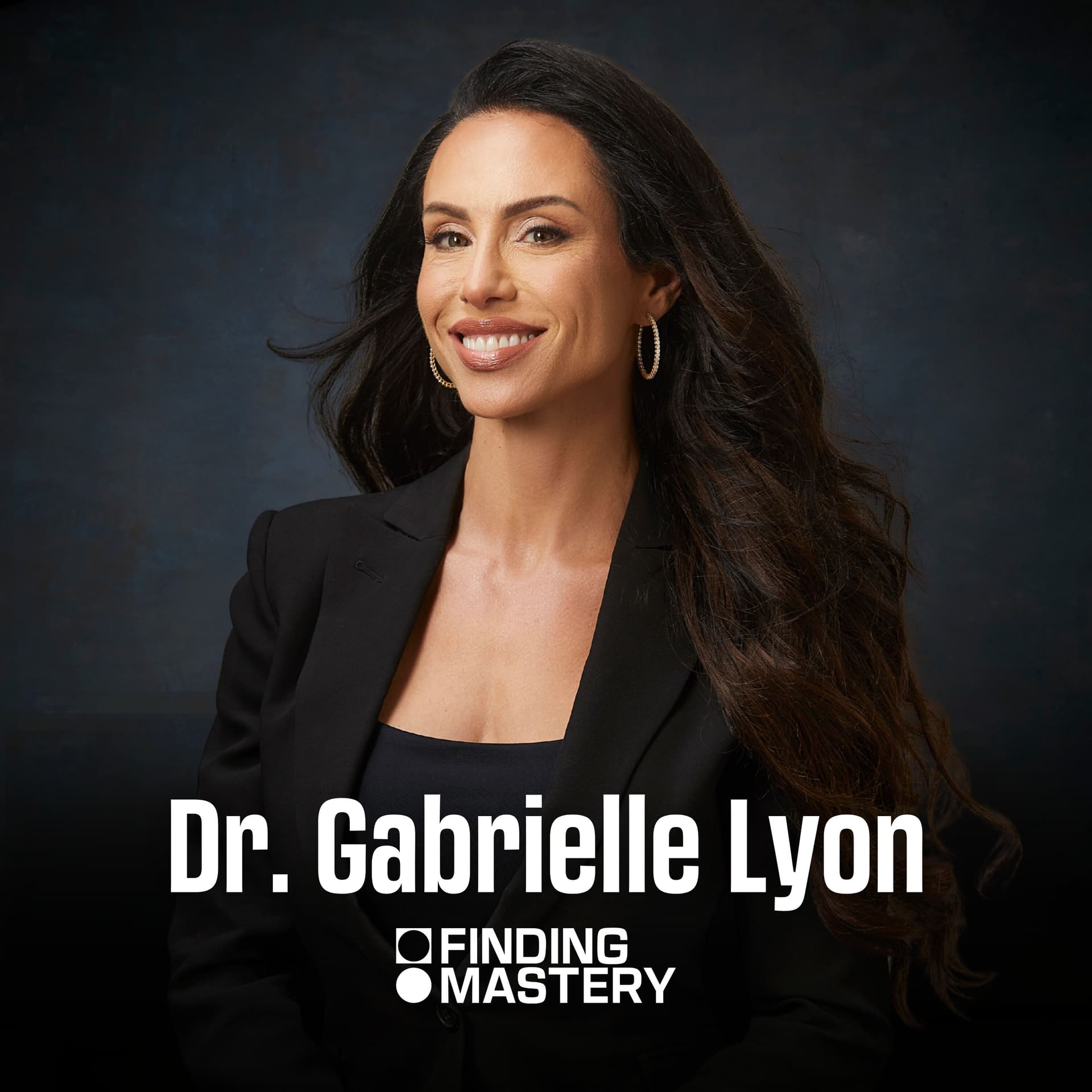
Dr. Gabrielle Lyon is a physician, researcher, and longevity/health researcher. She studied nutritional sciences and chemistry, then earned an MD, completed psychiatry and family medicine training, and did a nutritional sciences and geriatrics fellowship at Washington University in St. Louis. She has practiced medicine since graduating medical school in 2006 and runs a full practice (about one day/week mentioned).
Key claims
Strong midlife predicts survival (2.5x chance of living to 100). Resistance training reduces morbidity/mortality by 25%. Unhealthy muscle is causally linked to major chronic diseases (not just correlated). Muscle is the primary site for carbohydrate disposal and glucose control; losing muscle is more dangerous than gaining fat. Women should lift weights (Pilates can help but isn’t a substitute for hypertrophy-focused resistance).
Notable examples
A mid-50s woman whose MRI brain looked like early Alzheimer’s despite exercising and eating less—attributed to yo-yo dieting destroying muscle. A “suitcase” metaphor for muscle as a carbohydrate “storage” organ when trained. A mental example where intense sprinting/disrupting rumination is easier than trying to “breathe/meditate” out of negative loops.
Written by AI. May contain mistakes. Listen to the episode to check what was said.
Chapters
Tap a time to open that second in VOThe Importance of Muscle Health
0:03 to 1:05
Learn how muscle health is central to longevity and reducing disease risk.
“One bad hire, it can cost you a lot, way more than time.”
The Importance of Muscle Health
3:05 to 5:30
Learn how muscle health is central to longevity and reducing disease risk.
“Let's jump right into this week's conversation with Dr.”
A Different Perspective on Obesity
5:30 to 7:40
Explore the misconception surrounding obesity and the focus on muscle health.
“And we as a culture can be stronger and more resilient.”
Causation of Diseases Linked to Muscle
7:40 to 10:20
Understand the connection between muscle health and chronic diseases.
“And then I did two years of psychiatry training, three years of family medicine, and then I did a fellowship in nutritional sciences and geriatrics.”
Agency in Health: Focus on Muscle
10:20 to 13:00
Discover how to take control of your health by focusing on muscle rather than weight.
“And we know this now that the heavier someone is, there's a potential to have lower brain volume.”
Skeletal Muscle's Role in Longevity
13:00 to 14:00
Learn about skeletal muscle as the organ of longevity and its vital functions.
“So you've also said that muscles are the organ of longevity.”
The Importance of Muscle Health
14:00 to 18:40
Discover why maintaining muscle mass is crucial for overall health and longevity.
“You're saying you can't directly control these other functions, but you can directly control a muscle's time under tension.”
Reorienting Training and Mentality
21:08 to 28:00
Understand how to approach resistance training and its psychological impact.
“What do you say to women who are early to training, maybe played some sport growing up?”
The Importance of Physical Movement for Mental Control
28:00 to 37:40
Learn how physical movement can disrupt negative thought patterns and enhance mental clarity.
“So it doesn't mean, though, after the sprint and after the intense physical expression or muscle contraction, to your point, that we don't go back to the problems.”
Resistance and Cardiovascular Training Essentials
39:21 to 42:00
Understand the types of muscle fibers and how to structure a training program for optimal health.
“So in our playbook, I have high-intensity interval training.”
Show all 27 chapters
Raising Adults: The Role of Parents in Health
42:00 to 43:29
Learn how parental behavior influences children's health and fitness.
“When you are young, you are priming your body.”
The Fun of Physical Activity
43:29 to 44:29
Discover how to integrate fun into physical fitness routines.
“I don't think the two are mutually exclusive.”
Strategies for Professional Sitters
44:29 to 45:52
Understand actionable steps for people who sit professionally to increase physical activity.
“What do you do for like the pull muscles that without an apparatus?”
Nutritional Guidance: The Importance of Protein
45:52 to 47:38
Explore the significance of protein and amino acids for health and longevity.
“You're making a case for longevity, overall health and vibrance in life by making sure you're investing in muscular health.”
Quality of Protein Sources and Their Impact
47:38 to 50:30
Learn about the difference between high-quality and low-quality protein sources.
“pick up any protein bar or any food and you will see at the back of that label it says protein.”
Meeting Protein Requirements: Practical Insights
50:30 to 52:51
Understand how to meet daily protein requirements effectively.
“Again, we are eating for these essential amino acids.”
Understanding Protein Needs
56:00 to 56:22
Learn about the basic protein requirements for maintaining body weight.
“If you are 100 pounds and you want to be 100 pounds, then you need 100 grams of protein.”
Understanding Protein Needs
56:25 to 57:50
Learn about the basic protein requirements for maintaining body weight.
“and I want to come back to something a little more personal.”
Understanding Protein Needs
58:54 to 59:05
Learn about the basic protein requirements for maintaining body weight.
“Again, that's sunlighten.com and use the code mastery for up to$2 ,100 off.”
Protein Distribution and Aging
59:05 to 1:00:08
Understand how protein distribution affects muscle efficiency as we age.
“Now, if you believe what I'm saying, that muscle health is everything and that as you age, skeletal muscle becomes less efficient at quote, recognizing protein.”
Fasting and Autophagy
1:00:08 to 1:03:23
Examine the effects of fasting on muscle health and cellular cleaning processes.
“again there's a lot of controversy out there on this believe it or not people will say doesn't matter as long as you're getting that 24-hour protein and i will say i don't know the early studies, Arnel et al.”
GLP-1 and Muscle Health
1:03:23 to 1:07:16
Learn how GLP-1 medications impact weight loss and muscle preservation.
“I love the idea of like cleaning out junk cells.”
Skeletal Muscle and Metabolic Health
1:07:16 to 1:10:00
Explore the importance of skeletal muscle for metabolic health and disease prevention.
“and obesity, that if we go through cycles of dieting and we lose muscle mass in an already sedentary population, we are going to see an epidemic of sarcopenic obesity that nobody is prepared for ever.”
The Role of Muscle Health in Cardiovascular Disease
1:10:00 to 1:14:08
Learn about the critical link between muscle health and cardiovascular issues.
“because it's the health of their skeletal muscle.”
The Role of Muscle Health in Cardiovascular Disease
1:14:12 to 1:15:16
Learn about the critical link between muscle health and cardiovascular issues.
“Nearly 95 % of us are not getting enough fiber.”
The Role of Muscle Health in Cardiovascular Disease
1:15:37 to 1:16:52
Learn about the critical link between muscle health and cardiovascular issues.
“Boarding flights, hopping between cities, working out of hotel lobbies and coffee shops.”
Dr. Lyon's Insights on Nutrition and Health
1:16:52 to 1:18:49
Explore Dr. Lyon's views on nutrition, exercise, and her impactful work.
“Lyon, thank you so much for sharing obvious passion you have for health through nutrition and training through muscular health as a way to make an impact for the well-being for all of us.”
Transcript
Automatic transcript. May contain errors.0:00Dr. Michael Gervais:Finding Mastery is brought to you by LinkedIn. We use LinkedIn Hiring Pro here at Finding Mastery because we know one great hire can change everything. One bad hire, it can cost you a lot, way more than time. It can cost you momentum and culture and real dollars. And that's why how you hire matters just as much as who you hire. And it's why I've become a big believer in the power of LinkedIn Hiring Pro. Here's what I appreciate about it. When you're running lean, you don't have hours to sift through a pile of resumes hoping to find the right person somewhere in the stack. Hiring Pro is built exactly for that reality.
0:32Dr. Michael Gervais:You describe the role and it screens candidates for you, surfacing the people who are a best fit so that you can spend your time and conversations with those folks rather than in the weeds of the applications. And the results back it up. Those hiring with LinkedIn are 24 % less likely to need to reopen a role within 12 months compared to the leading competitor. So join 2.7 million small businesses already using LinkedIn to hire. Host your job for free at linkedin.com slash mastery. Terms and conditions apply. Again, that's linkedin.com slash mastery to post your job for free. If you are weak, you are more likely to die.
1:07Dr. Michael Gervais:What if the real risk to our health isn't aging, but becoming metabolically weak?
1:12Dr. Gabrielle Lyon:There is nothing more important than skeletal muscle or overall survivability. That's it.
1:19Dr. Michael Gervais:Welcome back or welcome to the Finding Mastery podcast, where we dive into the minds of the world's greatest thinkers and doers. I am your host, Dr. Michael Gervais, by trade and trading, a high-performance psychologist. The idea behind these conversations is simple. It's to sit with the extraordinaries, to learn, to really learn how they work from the inside out. Today's conversation is with Dr. Gabrielle Lyon, physician, researcher, and one of the leading voices challenging how we think about health, longevity, and aging.
1:47Dr. Gabrielle Lyon:If you are strong in midlife, you have a two and a half times greater chance of living to 100. If you are engaging in some type of resistance training, you are decreasing your overall morbidity and mortality by 25%.
2:00Dr. Michael Gervais:Dr. Gabrielle makes a clear and often uncomfortable case. Health is not something you manage later with prescriptions. Her position is it's something you build early, you maintain deliberately. And for her, muscle sits right at the center of the equation.
2:15Dr. Gabrielle Lyon:The consequences of unhealthy muscle are Alzheimer's, cardiovascular disease, diabetes, and obesity. These are not diseases externally.
2:25Dr. Michael Gervais:In this conversation, we talk about what it actually takes to build and protect muscle through training and nutrition. And we have an honest discussion about the rise of GLP-1 drugs like Ozempic.
2:36Dr. Gabrielle Lyon:GLP-1s tell the brain that you are full. They are incredible to the use in weight loss. Now, is it a free pass? No, if we utilize them as a silver bullet, we are going to trade one epidemic for another.
2:52Dr. Michael Gervais:So as you listen, consider are your daily choices helping you build capacity for the life that you want to live? Or are they quietly trading strength today for fragility tomorrow with that? Let's jump right into this week's conversation with Dr. Gabrielle Lyon.
3:14Dr. Michael Gervais:Gabriela, it is great to have you back. And for the first time live, it's been three years since our last conversation. And it's amazing how fast time flies. Thank you for coming back.
3:26Dr. Gabrielle Lyon:I'm so excited to be here and live and in person in this incredible studio with an incredible team. This is fun, isn't it?
3:32Dr. Michael Gervais:Yeah, thank you. Congrats on the new book. I want to get into that. Before we start there, can you level set your own story? in the most simple of language, what you do and how you spend your time?
3:44Dr. Gabrielle Lyon:That's kind of setting the stage for a lot of different things. First of all, I'm a mom of two very little children. And if I were to say, how do I set the stage for what I do? I think that in one quick sentence, it would be the best example I can in both mind, body, and spirit. and yeah, for everything that I do.
4:08Dr. Michael Gervais:For everything. So you put your kids first in that respect, but you're wanting to be the best version, if you will, of you, the best example of you for just them or for others? For everybody. Yeah.
4:21Dr. Gabrielle Lyon:Because a lot of people, and I would say a lot of doctors, think and exist in a silo. For example, let's say someone has cardiovascular disease and we treat the cardiovascular disease or we treat the diabetes. But at the end of the day, what we really are hoping to build, and I think a different level of thinking about medicine, is stronger, more resilient humans. And the only way to experience that is if we are practicing that for a bigger, greater cause. And that starts with me, right?
4:54Dr. Michael Gervais:100%. So when somebody understands their purpose, they become really difficult to move around. Meaning that a cut of an eye or a smirk or a bad joke at your expense or even really rugged, hostile conditions that are seemingly impossible to operate well in, people with a purpose do really well in those environments because they don't get pushed around by the external circumstances or conditions. When you think about your purpose, do you go back to to be the best example for others?
5:25Dr. Gabrielle Lyon:I actually believe that we can build a stronger, more resilient future. And we as a culture can be stronger and more resilient. And I know that I was put on this earth to help make the world better, stronger and more resilient. And I have never wavered from that. And I know that medicine is the modality that I use. But the mission is clear and the same.
5:50Dr. Michael Gervais:But you've been on a noticeable investment in sharing best practices and ideas with people. And you were disruptive at the same time with making sure that people understood the value of muscles and muscle health and the best practices to make sure to support muscle health. Can you start with that kind of grand idea? Yeah. And just to kind of get us all on the same page of what's most important to you.
6:13Dr. Gabrielle Lyon:Well, I want to just lay a little bit of the foundation as to where it came from. I graduated early in high school and then I moved to Kauai and I watched my godmother, who is a PhD in nutritional science, take care of people. I knew nutrition was the foundation. I was watching her treat people with cancer and a lot of chronic conditions with lifestyle interventions, non-medications. I mean, I'm sure they had doctors, but I was witnessing something firsthand that was inspiring. I made the decision to go into nutritional sciences. We all have these moments or these mentors. We don't just happen to stumble into things.
6:55Dr. Gabrielle Lyon:And my mentor, after I decided I was going to study nutrition, happened to be, and still is 20 years later, one of the world-leading protein metabolism experts. He still mentored me. So between my godmother as a nutritional scientist and happened to fall into the class of one of the world-leading protein experts, I became very interested in both protein and muscle at that time.
7:23Dr. Michael Gervais:What was your training? So undergrad was in what? Nutritional sciences and chemistry. And chemistry. Then did you go master's or straight to PhD?
7:32Dr. Gabrielle Lyon:Then I did nutritional sciences. Then I went to medical school. Oh, MD, not PhD. That's right. Or DO, but MD, DO are the same. And then I did two years of psychiatry training, three years of family medicine, and then I did a fellowship in nutritional sciences and geriatrics. So it's a combined research and nutritional science fellowship at WashU in St. Louis.
7:52Dr. Michael Gervais:And how long did you practice, like with a full practice?
7:57Dr. Gabrielle Lyon:Roughly 17 years of education, and I'm still practicing. I graduated medical school in 2006, and I'm still practicing. Is it a full practice? Yeah. Oh, it is. With everything else you're doing? meaning i put well i'm in practice one day a week but i'm yeah fully licensed fully practicing yeah so if somebody wanted to be my patient yeah like you're so you're so okay yes all right and we have a great team i have very high standards and our practice the look tells it all i mean i just don't i yeah you know you you mentioned being disruptive and i would say that I am because I will not settle for what I do not believe to be true and I do not believe to be accurate and what are best practices.
8:41Dr. Gabrielle Lyon:And there's a lot of misinformation and a lot of ways in which I see medicine done that I know do not support the best overall health.
8:50Dr. Michael Gervais:Can you give me a couple things that absolutely make you so irritated, wild, crazy, pissed off that like, why is this still being spewed? What are some of the things that come forward for you? These will be general things that people probably hear a lot of.
9:04Dr. Gabrielle Lyon:I will share. Okay. So the biggest one is this obesity epidemic. Okay. I can appreciate the fact that we have an obesity epidemic. Roughly 70 % of adults are either overweight or obese. And I was in my follow-up. 70? It's a little bit higher. Yeah.
9:23Dr. Michael Gervais:70 % of adults in the U.S. are either overweight or obese. And overweight is measured by BMI. And BMI does not account for muscle.
9:33Dr. Gabrielle Lyon:We are overweight and we are sick and we are metabolically dysfunctional. I was in my fellowship and I actually did nutritional sciences and geriatrics. The deal was, and the study that I was working on was looking at body composition and brain function. And we were imaging participants' brains. We were looking at, there were multiple arms of this study. And one of the study arms was looking at their brain under an MRI. We're doing tests while they're thinking and etc. This one woman, she was in her mid-50s. I just adored her. She was a mom of three kids. And I imaged her brain and her brain looked like the beginning of an Alzheimer's brain.
10:12Dr. Gabrielle Lyon:and I thought we failed her. She had done everything right. She had exercised more and she had ate less. And over the years of yo-yo dieting, she destroyed her muscle. She had damaged her brain. And I'm not talking about brain damage. I'm talking about overall volume. And we know this now that the heavier someone is, there's a potential to have lower brain volume. But I felt so deeply responsible because, again, no one was saying, hey, we need to focus on your muscle. We need to protect your metabolism. The consequences of unhealthy muscle are the following. Obesity is a symptom in part of unhealthy muscle.
11:02Dr. Gabrielle Lyon:Alzheimer's is a symptom in part of unhealthy muscle, cardiovascular disease, diabetes, and obesity. These are not diseases externally. When we look at what the root cause of these chronic diseases are, the majority of them begin in skeletal muscle first.
11:27Dr. Michael Gervais:So you're saying causation, not correlation? That's right. You're saying that the causality of serious medical diseases are because the origin is that the, I don't know, the people don't have enough muscle?
11:43Dr. Gabrielle Lyon:Or they have unhealthy muscle or they are eating out of balance to be able to manage muscle health. So think about it. This feels like a big statement to me. It is a big statement. We're still chasing this obesity epidemic. 50 years later, we're trying to lose weight. 50 years later, we're chasing them all.
11:58Dr. Michael Gervais:And you're saying it's the wrong chase. You're saying focus on feeding your body the right stuff to build muscle. When you do that, you upgrade metabolism. You upgrade other health functions that I hope you're going to teach. And so when that takes place, you become a healthier organism.
12:15Dr. Gabrielle Lyon:Yes.
12:16Dr. Michael Gervais:So it's probably not more complicated than that, but you're saying we're chasing weight as opposed to ratio?
12:24Dr. Gabrielle Lyon:Well, also.
12:25Dr. Michael Gervais:Like muscle to fat ratio. Yes.
Read the full transcript
12:28Dr. Gabrielle Lyon:Yes. And it's even one layer deeper than that. Obesity, if we focus on what we have to lose, we have no control. I cannot control if I lose one pound a week or two pounds a week. There is zero agency in the actual outcome. And if we spend decades chasing weight loss, we do things like restriction or crash dieting or chasing novelty. however if we recognize that as an organ system skeletal muscle is the largest organ system in the body it's an organ system makes up more than 40 percent or so of our body weight we have voluntary control this is the only organ system that we have voluntary control over i cannot tell my thyroid to make more thyroid hormone i cannot tell my heart to pump at 51 beats per minute i can tell my botryceps to lunge and contract.
13:29Dr. Michael Gervais:So you've also said that muscles are the organ of longevity. Yes. Do I have that right? Yeah. And so you're saying just like breathing, I can control my breathing if I'm skilled at it. And if I focus on my breathing, I can actually manipulate within a range heart rate. And so I can't get to zero. I can't get to zero and I can't like, but it is a volitional thing that I can do. I can focus on my breathing to upregulate or downregulate activation, arousal regulation. And you're saying that in a similar way. You're saying you can't directly control these other functions, but you can directly control a muscle's time under tension.
14:08Dr. Gabrielle Lyon:And the loss of skeletal muscle mass is more detrimental than the gain of body fat.
14:13Dr. Michael Gervais:Say it again.
14:14Dr. Gabrielle Lyon:The loss of skeletal muscle is more detrimental than the gain of body fat.
14:20Dr. Michael Gervais:Okay. So if somebody's putting on weight, you're saying, okay, not great. Okay. But if you're losing muscle, we're in trouble.
14:27Dr. Gabrielle Lyon:We're in trouble. Because if I were to frame up and orient you to what muscle does, you know this better than anyone. Muscle is for power and for force generation and mobility and athletic performance and physicality. This is how we recognize skeletal muscle. But that is only one small aspect of what this organ system is responsible for. Teach on it. Yes. Skeletal muscle is the primary site for carbohydrate disposal, meaning when you eat carbs, your muscle system is like a suitcase. And I'm going to explain it in a metaphor. If you open up a suitcase and let's say you're bringing a carry-on. I travel all time.
15:09Dr. Gabrielle Lyon:I'm a very heavy packer. I open up my small suitcase and instead of packing for my four-day trip, I pack for 14 days in my tiny little carry-ons. I've got five pairs of shoes and I have 17 outfits, even though I'm only going for 14 days. I try to close the suitcase. There is no way that sucker is closing. I'm jumping on it. There's clothes spilling out. It's just not happening. Muscle is the same. If you are exercising, you are emptying that suitcase. you're opening that suitcase, that suitcase is ready to receive carbohydrates, i.e. clothes, you should only be packing, quote, eating enough for four days.
15:50Dr. Gabrielle Lyon:And as you're packing into that suitcase, you close the suitcase, and then you exercise again, and you empty the suitcase. If over 50 % of Americans or so are not exercising, they are sedentary. They're not doing 150 minutes, and it's more than 50%, 150 minutes of cardiovascular activity. Per week? Yeah. Plus two days a week of resistance training. People are not doing that. What percentage are? 23 % of women are doing resistance training, by the way.
16:21Dr. Michael Gervais:And women, you're saying above the age of?
16:24Dr. Gabrielle Lyon:35. 35 in that range? I don't know if it's exactly, I'd have to look at this statistic. Say it again, the percentage, 23 %? Roughly 23 % of women are doing resistance training. Is Pilates resistance training? It is in part resistance training.
16:36Dr. Michael Gervais:Yeah. So if you're putting great place to start. I love Pilates. My wife, you know, built a Pilates studio and I really understand. But I always wonder. And she's like, no, it is. And I'm like, are you sure? And she's like, yeah, it definitely is.
16:47Dr. Gabrielle Lyon:But let's talk about there still has to be enough stimulus, meaning how much volume are you using? How much weight? You know, there's progressive stimulus. It's not progressive overload, meaning the weights have to be heavier. There are a multitude of ways of stimulating that tissue. But I want to say something that people might get upset about. I'm sorry. Is Pilates resistance training? Yes. Is Pilates ideal for muscle mass and hypertrophy? Then all the football players would stop going to the weight room and do Pilates. Our Navy SEALs, our tier one operators, would no longer go to the weight room and go to Pilates.
17:24Dr. Gabrielle Lyon:And people would say, and I am not discouraging people from doing Pilates.
17:27Dr. Michael Gervais:Pilates twice a week for a woman 30 to 60 or 30 to whatever age, I don't know if it matters that much. Would that check the box for you to say, yeah, okay, you're on the right path? It is. What about four days a week?
17:40Dr. Gabrielle Lyon:This is my personal opinion. I think Pilates can be great. I think that women are very afraid of the weight room.
17:47Dr. Michael Gervais:That's right.
17:47Dr. Gabrielle Lyon:And they say, I've never done resistance training. I've never lifted weights. And I say, you know what? That's totally untrue. How much does your toddler weigh? Your toddler weighs 40 pounds. You have no trouble looking at that toddler and picking up that toddler. And maybe you're carrying that toddler, you're carrying a bag, and you're carrying something else. But in the guise of a kettlebell, you don't look at that 40-pound kettlebell and go, yeah, I got that girl. So Pilates is great, but I really want to encourage women to reorient themselves to lifting weights. It doesn't have to be heavy.
18:18Dr. Gabrielle Lyon:It also shouldn't necessarily be light. I cover this in the playbook, and I put together a program that people can do at home if they want with simply dumbbells. And it is important to start where you are. I recognize that. I also want to challenge people to create a little bit of friction and to strive for something more.
18:41Dr. Michael Gervais:Finding Mastery is brought to you by Rag & Bone. I've been a big fan of Rag & Bone for a number of years. I just love what they do. It's a go-to for me when I'm choosing clothes. I've been wearing their infused denim for a while now. They've done just a really nice job with this product. For me, I am really intentional about what I invest in. And clothing, it's no different. I want things that are well-made, that stand the test of time, that don't distract me, that support my focus on the things that matter most. And that's exactly why these deliver. And they look sharp, full stop. They've spent 20 years obsessed with getting this product right.
19:10Dr. Michael Gervais:And that kind of long-term commitment to craft, that's something we talk a lot about here at Finding Mastery. Quality compounds. The right inputs made consistently over time show up in everything. And you can feel that the moment you put these on. If you're ready to upgrade your denim with something that's genuinely built to last, it's time to upgrade your denim with rag and bone. For a limited time, our listeners get 20 % off their entire order with the code finding mastery at rag-bone.com. That's 20 % off at rag-bone.com with the promo code finding mastery. And when they ask you where you heard about them, please support our community and this show and let them know that we sent you.
19:49Dr. Michael Gervais:Finding Mastery is brought to you by our flagship mindset training course, Finding Your Best. Anytime you feel the pull to reset, to zoom out, to refocus and ask, am I moving toward the person I want to become? It helps to remember this. Lasting change comes from training. Not resolutions, not short-term sprints, but deliberate practice of the skills that shape how we show up. Work and relationships and in the moments of great intensity as well. That's what finding your best is all about. It's a science-backed framework for training your mind. And it's the same set of tools that we've taught to Olympic athletes, top executives, elite military teams, and artists at the peak of their craft.
20:24Dr. Michael Gervais:In this course, you'll learn the foundational psychological skills to be your very best. Full stop. And the best part is you can start anytime. Right now, we're running a limited time offer on finding your best. Simply head to findingmastery.com slash course and use the code RENEW100 to get$100 off your registration. If you've been waiting for the right moment, this is a good one now to lean into. Spring and summer, they are powerful seasons of momentum. It's a great natural time to step into growth, to refocus, to recommit to who you want to become. And this discount will not be around for long.
20:58Dr. Michael Gervais:So go to findingmastery.com slash course code renew100 for$100 off today because your future is not shaped by what you intend. It's shaped by what you train. Let's start in the basic place. Like super easy. What do you say to women who are early to training, maybe played some sport growing up? Let's just kind of create this scenario. And they've kind of lost their way a little bit. Men or women, I don't know if there's that much difference, but we can stay with the woman analogy here. Is there a big difference? For what? The training? No. The training. Yeah. Yeah. Okay. Is there a difference on the metabolic system?
21:33Dr. Gabrielle Lyon:No. Both men and women have equal potential, and I've seen this in studies, to build muscle and relative strength. Hmm.
21:42Dr. Michael Gervais:Okay. So let's say that there's some movement in their young age. There's some sort of sport that they played. They kind of know their body and they've lost way of it because of the rhythm of life. And they're hearing you for the first time. They're going, wait a minute, hold on. I got to get back to that because it's one of the most significant levers for longevity and health. And I'm losing my way there. So what do I do? Where do I start?
22:06Dr. Gabrielle Lyon:Yeah. I mean, first you have to get really anchored in that why, because you're not going going to want to do it and you do not wait for motivation, you have to commit and you have to expect that you're going to have resistance. And then you have to have a game plan before that happens to know that you are going to set a standard for yourself that you are going to execute. Because I can give you the perfect diet plan and the perfect training plan, but if you do not have a mental framework in place, none of that matters.
22:32Dr. Michael Gervais:Yeah, you hit this strongly in your new book. And so I definitely appreciated the way you framed, you know, the first mover or the biggest lever is making sure you understand your psychology.
22:43Dr. Gabrielle Lyon:Yeah. And then the next thing is, if we were to tiptoe, is to say, do you understand why it is so critical for your health? It is your metabolic driver. Not only does it matter to be strong, if you are strong in midlife, you have a two and a half times greater chance of living to 100. If you are engaging in some type of resistance training, you are decreasing your overall morbidity and mortality by 25%. If you are weak, if you are in the weakest quartile, you are more likely to die. There is nothing more important than skeletal muscle or overall survivability. That's it. If someone, God forbid, gets cancer, do you know what kills people in cancer, depending on the type of cancer, tachexia, wasting, muscle wasting.
23:37Dr. Gabrielle Lyon:So in order to take the next important step, which I'm going to cover, nutrition and exercise, but we have to orient ourselves to the why. We are not just talking about being buff, jacked in town. Like we are not there. We are talking about this is the organ of longevity that will allow you to survive, not if, but when the storm hits because it is coming, my friend. It is coming for everybody. It is like the five remembrances. So you must prepare. You have to.
24:11Dr. Michael Gervais:And that storm is falling?
24:14Dr. Gabrielle Lyon:We do not know.
24:15Dr. Michael Gervais:There's some sort of medical thing that's coming. And if you don't have the right health of the muscular organ, it's a harder go.
24:23Dr. Gabrielle Lyon:Everything will be more difficult. And also, it's not just a fall. Let's say someone gets the flu and is in bed for a week. If you are older and you are untrained, you might lose three pounds of muscle in a week. The ability to recover that muscle as you get older is more challenging. We are humans. We are of the nature to get sick. We are of the nature to get challenges. It is just the way that it is. I do not care if you're the healthiest person ever. We have to understand that there is an ability to take action for what is coming, the inevitable. And maybe it never comes. but I will tell you what I've been a doctor since 2006.
25:04Dr. Gabrielle Lyon:Everybody gets sick. I mean at some point doesn't mean that they're deathly ill. It doesn't mean any of those things. The more muscle mass you have the greater your ability to recover because muscle is your primary site for glucose disposal and carbohydrates. Fatty acid oxidation. You're worried about cholesterol. All these things at rest muscle burns fat. Your fatty acids but also it's your amino acid reservoir. It is your body armor. When you get sick, when you need something, it pulls from the banks of your muscle. And also, especially for, you know, mastery and mentality, when you contract skeletal muscle, depending on the intensity and duration, it releases myokines.
25:48Dr. Gabrielle Lyon:Myokines are peptide hormones that affect neurogenesis and brain function and bone health. Skeletal muscle creates an inter-organ crosstalk. And I say all this because my goal is how do we move beyond thinking of muscle as being jacked and tan in Venice Beach? It is so much more than that. And one more layer to that. There's a bidirectional relationship between physical strength and mental strength. You pull one to get the other. And there is just this deep interconnection about how we build stronger, more resilient humans. And you can't think your way there. You have to act your way there. And that comes from muscle.
26:33Dr. Michael Gervais:What do you mean that comes from muscle? I was tracking until the last bit. What does that mean?
26:36Dr. Gabrielle Lyon:So let's say you need to, I'll give you an example. An athlete of yours or a client of yours, you coach many of these top businesses. Humans are predictable. They have predictable human weaknesses. And one of those weaknesses, people get very hooked into a thought. We are much more likely to have loss aversion and we will register something painful 10 times more than we register something good. Okay. We get fixated on this loss or this failure or this thing. Negativity bias. Yes. Hooked into that. Can you breathe your way out of that? No. I'm sorry. I'm not skilled enough. I cannot. I don't know if you can.
27:17Dr. Gabrielle Lyon:I cannot meditate my way out of there. I cannot breathe my way out of there. But you know what I can do? Is you give me 20 seconds and you put me in an all-out sprint. It could be on the bike. It could be on the road. It could be on the airdyne. It could be on any of those things. And in those 20 seconds, by the time those 20 seconds are done, I don't know, I totally forgot why I was upset. You cannot think of anything else. You pull the lever of muscle and it creates this bidirectional relationship of mental control.
27:46Dr. Michael Gervais:When we are running from a wildebeest, it was not a genetic gift that our ancestors had passed down that we should also be figuring out and solving life's problems. Just give me a second. I have to ruminate about that? Yeah. It's not going to happen. Yeah, rumination is a problem for survival. So it doesn't mean, though, after the sprint and after the intense physical expression or muscle contraction, to your point, that we don't go back to the problems. Then do it again.
28:12Dr. Gabrielle Lyon:Then do it again.
28:14Dr. Michael Gervais:Yeah, I think that you're on to something important. And I'd also say there's a balanced approach between those two because I got some problems. I can't be at the gym eight hours a day.
28:28Dr. Gabrielle Lyon:Or is it one horizon at a time? And so I've really thought a lot about this in the way that rumination and this way of thinking about it is it does not solve the problem. And people do not gain control of their mentality. It takes them for a ride. And as soon as, again, and this might be different for you, but as soon as you can insert a stop gap for that, then you can have freedom to have discernment. So the next step is discern. Is this thought relevant or is it not? And then you can take the next right action. It's very difficult to get to a discerning moment if you are hooked in.
29:08Dr. Michael Gervais:Yeah, I think what you're pointing to is a disruption. There's a kind of a classic theory about the importance of disrupting the loop that one is in. And if you can figure out a well-timed joke, you know, like there's lots of ways to disrupt. And you're saying physicality is a mechanism.
29:25Dr. Gabrielle Lyon:I've just never seen anything more. I mean, again, I did psychiatry for two years and then I did found medicine. And my practice is full of tier one operators and people that are really operating at the highest level. I've never found anything more successful and immediately getting in and disrupting with pulling the lever of physical movement.
29:45Dr. Michael Gervais:Okay.
29:45Dr. Gabrielle Lyon:And it could be going a cold plunge. Could be anything tactile. But there is something very in our DNA that we respond to these physical stressors.
29:59Dr. Michael Gervais:So go back to the practical note of three days a week, four days a week, five days a week. What are you suggesting for resistance training?
30:06Dr. Gabrielle Lyon:Start with four days a week. It could be three days a week.
30:09Dr. Michael Gervais:Three days a week.
30:09Dr. Gabrielle Lyon:But I love a four-day-a-week program. I actually put this in my playbook. There are illustrations, by the way. Yeah. Very proud of this. Four days a week. And it's a dumbbell program, but it could be anything. But you cannot be distracted by all these things. So the goal is four days a week, full body training, a baseline of cardiovascular activity. It doesn't need to be slow, steady state. And if I were to take a step back, why resistance training and why cardiovascular activity? Because the reasons for why are different. Overall muscle health, I think about in three buckets. Number one, strength and mass.
30:48Dr. Gabrielle Lyon:Muscle mass matters. Because you can be sarcopenic obese or, quote, skinny fat, and you're still thin, but you're pre-diabetic. You're going to get Alzheimer's. They're going to get cardiovascular disease because your metabolism is a wreck. Right? Muscle mass matters. And ladies, I've been trying to get bulky for the last 30 years. It's impossible. It's hard. It's a hard thing to do. It's not going to happen. Yeah. It's just not going to happen. so
31:16Dr. Michael Gervais:you're saying bulky meaning like like another 20 pounds of muscle
31:21Dr. Gabrielle Lyon:I am trying to come in and and inadvertently bust a myth for women that they don't want to lift weights because therefore they're going to get bulky
31:30Dr. Michael Gervais:I do understand that yeah it's a you're saying it's impossible I'm saying it's hard but I think you're right it's probably I mean so when you see folks that look really bulky really big are you suggesting most of them are not doing it honestly? I'm thinking about in athletics, but they're using steroids or they're using some sort of...
31:53Dr. Gabrielle Lyon:Who knows? But if they're training, they're going to have healthy muscle regardless of their size, which is really important. So number one, there's strength and there's mass, both of which matter. The second bucket, why you need muscle, and again, you're training different systems, your metabolism, your metabolic currency is muscle. Glucose disposal, fatty acid disposal. You don't need a statin. I mean, some of you might, but fatty acids are burned at rest by muscle. Really important. And then the third thing is plumbing, having good vasculature. And for anyone listening, that is endothelial function.
32:32Dr. Gabrielle Lyon:That's, you know, your arteries, your sexual health, cardiovascular health. Having good blood flow is critical. and you train these in different ways.
32:42Dr. Michael Gervais:So, okay. So then start with like, where would you want somebody to begin? Is this on resistance training or cardiovascular? The answer is probably yes to both.
32:54Dr. Gabrielle Lyon:If I just had to pick one, I want your resistance training.
32:56Dr. Michael Gervais:Yeah.
32:57Dr. Gabrielle Lyon:You cannot, you can maintain type one. So there's two types of main fibers, muscle fibers. There's, and I used to do these muscle biopsies at four in the morning. I will never forget. Oh my goodness. I was sweating. It was like four in the morning. I was doing fat and muscle biopsies. You were on yourself? No. Oh, I was going to say. On these other people. I was just, oh my gosh. I mean, I did, you know, what's interesting is that it's not common that a physician is also doing clinical research, but I was. And shocker. I was sweating. I was so nervous. You're doing fat biopsies, fat, and then muscle biopsies.
33:30Dr. Gabrielle Lyon:It was just, it was a whole thing. Anyway. So in my fellowship, part of my job, again, this is major. I would wake up at four in the morning and go to the clinical research lab. It was called the CRU. So it's an inpatient clinical research unit, which is wild. And I was doing fat and muscle biopsies. And I say this because fat is very homogeneous. Typically, it just looks like fat. There's not different types of fat. It's, I mean, fat can have a little difference, but it's very homogeneous. Whereas muscle is dependent on the movement that you do. There's two main fiber types. There's type 1 and type 2.
34:10Dr. Gabrielle Lyon:You could have a totally different percentage of type 1, type 2 than me, right? And that's unusual. It's not homogeneous. There is interpersonal variation. And I say that because type 1 muscle fibers are the fiber types that you see when people do endurance type activity. These are marathon runners. It burns primarily fat. And then there's the type 2 muscle fibers, power and force, the big and bulky fibers. Those fibers must be trained with resistance training. When someone does not do resistance training or exercise, you will see them get thinner and smaller, right? Sarcopenia, it will favor type 1 muscle fibers.
34:54Dr. Gabrielle Lyon:Therefore, from a mass and health standpoint, I recommend people start with resistance training. if you want to start with Pilates, that's fine. Resistance training is moving against a force. It could be body weight. It could be bands. It could be weights. It could be Pilates. What about rucking? Wonderful. We do that on a Sunday, 10 miles.
35:17Dr. Michael Gervais:What do you do? What do you put in your pack while you're rucking? Oh, we use a go-ruck. And is that, I don't, can you vary your pounds on a go-ruck?
35:24Dr. Gabrielle Lyon:Yeah, I mean, we have a whole bunch. This is before I had kids, but I used to do it every Sunday and it was 10 miles. it was hours and it was 50 pounds oh my god it's terrible rocking 10 miles at 50 pounds yes yeah i mean i started at 20 yeah i started at 20 oh yeah 20 yeah i mean 10 is a good place
35:45Dr. Michael Gervais:for most people to start oh it's terrible yeah and then you slowly increase yeah but anyway it's really important to be under load and because sorry on the on the rocking just one more thing Are you staying in a zone two for rucking? I'm just moving. I mean, it's terrible.
36:01Dr. Gabrielle Lyon:It's an embrace the suck moment. Can you have a conversation when you're rucking? Yeah, but you don't want to because you're so miserable. So you're up into life. It's called a crucible experience every week.
36:11Dr. Michael Gervais:So are you breathing out of your mouth?
36:12Dr. Gabrielle Lyon:Probably.
36:13Dr. Michael Gervais:Yeah, okay. I never paid attention. So like if in the gears that there's a breathing. It's slow.
36:18Dr. Gabrielle Lyon:It's slow.
36:19Dr. Michael Gervais:It's slow. Yeah, okay. Okay, good. Slow and it sucks. It's just a nice, I mean, if you're walking, you add 10 pounds or six pounds or even.
36:26Dr. Gabrielle Lyon:And, you know, I recommend people start with 20. You know, it took me a few years by the time I'm rocking that heavy. And, you know, 20, 30 pounds primarily would be my favorite weight. But yes, and the goal of that exercise was not weight, was not anything other than suffering.
36:46Dr. Michael Gervais:I'm just being honest. Yeah. Okay. So that was not for cardiovascular or resistance training. That's right.
36:52Dr. Gabrielle Lyon:But it does both of those. It does.
36:54Dr. Michael Gervais:Yeah.
36:54Dr. Gabrielle Lyon:So when we think about designing a program, under load is important, some kind of resistance for those type 2 muscle fibers. Type 1 fibers, good for mitochondria. We want to really think about, again, doing some kind of cardiovascular activity. Of course, you want movement for blood flow as well.
37:11Dr. Michael Gervais:So how important is a max VO2 type of expression, like 80 % to 90 % per week or at all? Are you interested in the full expression of cardio? Unfortunately, yes. You are. Yeah.
37:24Dr. Gabrielle Lyon:It's a hard thing to do. The way that I do it is with high-intensity interval training. Okay. I don't think that you have to do slow, steady state. And again, people may agree, disagree, but it's ultimately like, how much time do you have? And what are you going to do with the time that you have?
37:40Dr. Michael Gervais:Body Mastery is brought to you by Fatty 15. Did you know that Navy dolphins helped unlock a secret to healthy aging? It's a wild story. And it's the foundation for a product that I've come to really love. Fatty 15. Fatty 15 is built around C15, the first essential fatty acid discovered in over 90 years. And it was discovered by Dr. Stephanie Van Watson. She's the co-founder of Fatty 15. While she was working with the U.S. Navy. And based on over 100 studies, we now know that C15 strengthens our cells and is foundational for healthy aging at the cellular level. Stephanie's been on the podcast, and it was one of my favorite conversations.
38:17Dr. Michael Gervais:She's amazing. And what her and her team are building is something I'm really excited about. Head to fatty15.com slash finding mastery and use the code finding mastery for an additional 15 % off your 90-day starter kit. Again, that's fatty, F-A-T-T-Y, 15.com slash finding mastery. And the code is finding mastery. I want to take a second here to tell you about a morning routine that I've been using for years. For me, it's a great way to switch on my mind, to ready myself to take on the day. So before I check my phone, my emails, market updates, or text threads, I choose how to start my morning.
38:53Dr. Michael Gervais:That's always in my control. That's always in your control too. This is the same morning mindset routine that some of the world's top performers across sport, business, and the arts are using. The best part? It only takes about 90 seconds to do. So just head over to findingmastery.com slash morning to download the audio guide for free. Again, head to findingmastery.com slash morning to get your morning mindset routine.
39:21Dr. Gabrielle Lyon:So in our playbook, I have high-intensity interval training. There's high intensity interval training, which is 85 % of VO2 max. And there's a way to test what your VO2 max is. It's whatever, how fast you run in a mile. It's a little formula. And then there's sprint interval training, which is 90 % or more. And that effort is only a couple seconds. And then there's full recovery. I don't recommend people start there or do it more than once a week, ever.
39:48Dr. Michael Gervais:For your HIIT training, for the viewer and listener, it's like...
39:51Dr. Gabrielle Lyon:No one wants to come to my house now. We have a good time. Yeah.
39:54Dr. Michael Gervais:Yeah. Hello, no bird. Come to Houston. No, it's like 30 seconds on, 60 seconds. Yeah. 30 seconds on, 45 seconds off. Or eat one-to-one, like a 30 second on, 30 second off. Or 10 seconds on, 10 seconds off. That's right. So there's lots of variations. So, okay. Start with resistant training. You're waving both hands. Get the resistance in. Then you're saying you also got to do something for the type 1 fibers, for the cardiovascular system as well. and there's some sort of walking, running, and you're saying, but at the same time, once a week, get your heart rate up into kind of the 80 % plus, right?
40:31Dr. Gabrielle Lyon:Yeah.
40:31Dr. Michael Gervais:Okay.
40:32Dr. Gabrielle Lyon:But I would be happy if they don't want to do any of those things and they just want to start with resistance training.
40:37Dr. Michael Gervais:More than twice a week. Twice a week or more. Yes, yes.
40:40Dr. Gabrielle Lyon:But let's just, they have to do that. It is. And then how much time are we talking about? Like 20 minutes, 10 minutes? The more untrained you are, the more of an effect you're going to get based on your activity level. If you are highly trained, you need more of a stimulus and more volume than say someone who is untrained. And I want to have them not focus on the time, but to focus on the effort. I mean, you could be on your phone in the gym for 60 minutes, or you can be training for 30 minutes, following a program and getting it done. Do you use rate of perceived exertion as a... Reps in reserve.
41:23Dr. Gabrielle Lyon:Reps in reserve. How many reps? And we like to leave one to two in the tank.
41:27Dr. Michael Gervais:Okay. So you're not using rate of perceived exertion. It's too subjective. You're saying how many more reps could you have done? Yes. And if you can do two to three more reps, then you're probably in the right.
41:37Dr. Gabrielle Lyon:Yeah, maybe go a little bit. You know, I like to see one to two, but I don't want it to be technical failure. I mean, I want you to maintain your form. Because weightlifting is a skill. So the first adaptation is going to be neuromuscular, so it's going to be a neural brain adaptation. And then afterwards, you'll get a strength adaptation, and then eventually you get a mass.
41:59Dr. Michael Gervais:When somebody's put in, let's call it relatively new, they did some sport or some fitness when they were in high school, go back to that model, and they put in a good three months of work, what do you imagine takes place for folks?
42:14Dr. Gabrielle Lyon:When you are young, you are priming your body. And we know that the more fit you are when you are young, the greater your chances of having better cardiometabolic function, the less likelihood you're going to have any kind of cardiometabolic disease. Which makes sense.
42:30Dr. Michael Gervais:What do you say to parents that have high schoolers?
42:33Dr. Gabrielle Lyon:You are not raising children. You are raising adults. What does that mean? That means that you must embody the actions that you would be telling your children to do. Parents may or may not like to hear that, but it's their responsibility. And we talk about this. If a child is obese, whose responsibility is that? And this might be a hot button, but it is the parent's responsibility. We all know how to eye spot. I mean, if a child is struggling to walk because they are so overweight, because they're sitting on the couch playing video games and eating Cheetos, that is absolutely your responsibility.
43:07Dr. Gabrielle Lyon:And it's a tough one because we're not raising children. We are raising adults. But I would never expect a child to listen to an adult who doesn't embody those characteristics. characteristics.
43:18Dr. Michael Gervais:And so are you more interested in like a zest and a vibrance for your life, or are you more interested in longevity and, you know, the long play for health?
43:29Dr. Gabrielle Lyon:I don't think the two are mutually exclusive.
43:31Dr. Michael Gervais:No, I don't think, I think you're, yes, I agree with you, but I'm wondering where you're more interested. Are you interested in the long game, like get moving because the storm is coming? No, no, it's fun.
43:42Dr. Gabrielle Lyon:But again, I might not be able to provide a quote normal answer because for us a good time is doing push-ups and cold plunging oh yeah of course this is what we that's fun for us we do 100 push-ups a day in my house you do 100 yeah you do 100 push-ups a day it's not that it's 10 sets of 10 okay we go spread out over one session i might do 30 at one time and then 30 at another we're doing them all day long friend you are okay
44:08Dr. Michael Gervais:It's fun. Yeah, it is good. I mean, I was not doing it now. Like 50 push-ups a day was a thing that when I couldn't kind of find the right rhythm to train, I knew I could get 50 push-ups and 50 squats in my living room. You know, so it was kind of an easy thing to do. What do you do in that? So you can do squats. My dad does push-ups. Hysterical. What do you do for like the pull muscles that without an apparatus? So back. Yeah. Back muscles.
44:37Dr. Gabrielle Lyon:I mean, so for us, I travel with bands hysterically. There's bands in my bag right now. I'm not joking. In between interviews, I'm doing the, I am telling you the truth. So you don't go to a hotel gym? I do.
44:51Dr. Michael Gervais:You do? Okay. So, but when you don't have a gym, you're saying a band is the only.
44:54Dr. Gabrielle Lyon:I do both. You know, we are physical beings. It's not just that 45 minutes in the morning. Because that's not enough. We were designed to move.
45:04Dr. Michael Gervais:How do you recommend people who are professional sitters? They're the knowledge workers. What do you recommend for them?
45:12Dr. Gabrielle Lyon:Start small because I really want it to be something that becomes doable so that they are locked in. And, you know, people, in order for them to make real change, their capacity has to be pushed, but not too much where they backtrack and it's just too intense. But you do have to slowly push capacity. If they are professional sitters, they need to become professional standers. And if they are professional standers, then they need to become professional walkers.
45:42Dr. Michael Gervais:That's really nice.
45:43Dr. Gabrielle Lyon:And so it's a progression where you are pushing someone's capacity without pushing them over the edge so they do nothing.
45:52Dr. Michael Gervais:You're making a case for longevity, overall health and vibrance in life by making sure you're investing in muscular health. We need to answer two things. One is nutrition. Since our last conversation, I love one of the simple little recommendations you gave me, which was about amino acids. Like, I'm fatigued by protein shakes. I'm fatigued by, you know, having to try to get protein. I'm trying to get 30 grams-ish per meal of protein.
46:18Dr. Gabrielle Lyon:First and last meal, how about that?
46:20Dr. Michael Gervais:I'm trying to get 150, 180 grams a day of protein. It's not that easy. It's your part-time job. I'm just kidding. It feels hilarious, yeah. But amino acids is a great solution. And so can you talk about aminos and can you also talk about just overall nutritional guidance? And I also want to hit on the Ozempic thing that's taking place, GLP-1. So can you start with nutrition and or some of the proteins required or the amino acids as part of that?
46:48Dr. Gabrielle Lyon:Protein is by far and away the most controversial macronutrient in the nutrition family. Oh, yes. It is the black sheep of the macronutrient family. Macronutrients are carbohydrates, fats, proteins. And then, you know, like there's alcohol. But dietary protein... You don't put that as a carb?
47:11Dr. Michael Gervais:Put that as a separate alcohol?
47:12Dr. Gabrielle Lyon:It can be because it has seven grams per, you know, like one gram of alcohol as opposed to carbs or four. Yeah. Okay.
47:21Dr. Michael Gervais:All right. So it's a different carb structure, you're saying? Yes. It is a carbohydrate, but it's different than a complex or simple.
47:27Dr. Gabrielle Lyon:Yes, it is. Protein is the most essential macronutrient for humans. There are 20 different amino acids, nine which are essential. Yet, in the landscape of nutrition, everybody listening or everybody watching, pick up any protein bar or any food and you will see at the back of that label it says protein. But I just told you there are 20 different amino acids. It doesn't make sense that it just says protein. versus when you look at carbohydrates, it will say fiber, sugar. And I say this because not all proteins are equal. We're not even eating for protein. We're actually eating for those amino acids.
48:08Dr. Gabrielle Lyon:And animal-based sources of amino acids have the most similar ratios to what we need as humans because we are the most similar. So muscle of an animal has a similar amino acid ratio to a muscle of a human. And we need those. We cannot make them. We must get them from our diet.
48:32Dr. Michael Gervais:Must get what? The amino acids because they're considered essential. How many are essential? 11? There are nine essential. Nine essential, 20 total? Do I have that right? So the nine essential, you can't make them. You've got to go get them. You have to get them. And you're saying a great way to get them is through muscle protein.
48:49Dr. Gabrielle Lyon:Any kind of animal product.
48:51Dr. Michael Gervais:Okay. So speak to the vegans for just a minute. Are you saying the vegans are in trouble or are you saying make sure you're getting your essential amino acids somewhere else?
49:00Dr. Gabrielle Lyon:Yeah. I mean, so are vegans in trouble? Well, the survey data shows that vegans eat around 50 grams of protein a day.
49:08Dr. Michael Gervais:Wait, wait. Let me pause there. So I was a vegan for conscious eating for like seven to six years. I can't remember. It's my college years. I was terrible at it. I was also vegan, by the way. Yeah, I studied, I studied, I studied. This was before there was a Whole Foods, before Trader Joe's, before there was like thoughtful foods that you could go buy. So you had to put, I had to put everything together. I was not healthier from it. And I know that I was not getting a protein. So I was supplementing. Remember Metrix? It was the, like the only kind of supplement bad. And what was the other one?
49:42Dr. Michael Gervais:It's Metrix and Myoplex. Totally. Oh my gosh.
49:45Dr. Gabrielle Lyon:Whatever happened to that?
49:46Dr. Michael Gervais:Yeah. I think they're around in some version, but so it was terrible. It was probably terrible for gut health, terrible for a lot of reasons. The taste was terrible. So I wasn't right, but you just said 50 grams of protein. That's the average of a protein. That's what they eat. You got to work really hard because the target is about one, somewhere around one gram.
50:04Dr. Gabrielle Lyon:But no less than a hundred grams a day.
50:06Dr. Michael Gervais:No less than a hundred. And, but a target would be, is it one gram of protein per ideal body weight?
50:12Dr. Gabrielle Lyon:Per target body weight, but I would say no less than 100 grams of protein a day.
50:17Dr. Michael Gervais:The floor is 100.
50:18Dr. Gabrielle Lyon:Yeah.
50:19Dr. Michael Gervais:And a chicken breast has between 25 and 35.
50:21Dr. Gabrielle Lyon:Depending on the ounces. And I'll share with how I think about this is that plant proteins will have the amino acids necessary, but in different amounts. Again, we are eating for these essential amino acids. And as we age, muscle is triggered by an amino acid called leucine, and it's the trigger for muscle protein synthesis. It's the trigger for muscle health. That requirement is around three grams. Three grams of leucine per day?
50:52Dr. Michael Gervais:Per meal. Per meal. Mm-hmm. Oh, boy.
50:56Dr. Gabrielle Lyon:Exactly. Okay. The RDA, which is set at the minimum, says it's around three grams per day. But if you take a step back and you recognize that the recommended dietary allowance is set at the absolute floor for prevention of deficiency, not for optimal health. Yeah, I mean, it's a different paradigm that is offered. Yeah, it is. So when we think about protein and these amino acids, there's two main groups. There's high quality and low quality. Low quality what? Proteins.
51:28Dr. Michael Gervais:Wait, you're saying there's such a thing as a low quality protein. Yes. So protein's not a protein.
51:33Dr. Gabrielle Lyon:No, but it's called protein, but it's all these different amino acids.
51:37Dr. Michael Gervais:What's a low-quality protein? Wheat. I don't even think wheat is a protein, but there's protein in grapes, right? There's protein in everything.
51:46Dr. Gabrielle Lyon:If it is coming from the plant kingdom, it is considered a low-quality protein. And by the way, I... Wait, why? Because the amino acid profile is different. For example, high-quality proteins are very similar in ratios to the human need. For example, you need three ounces of a chicken breast or four ounces of a chicken breast for every one gram of protein. For every one ounce, there's seven grams of protein. So let's say you have a four ounce chicken breast. You're at almost 30 grams. That's right. To get those same. Which is about, it'll sit in the palm of a hand. To get that same amino acid profile, you would need six cups of quinoa or two cups of rice and beans or 420 almonds.
52:34Dr. Gabrielle Lyon:How many eggs? That's what we're doing. Six eggs. Or soy protein. You might need 35 grams of soy protein. So that could be whatever the tofu block is.
52:46Dr. Michael Gervais:Yeah. Okay. Point taken. That's a lot to consume. And you're missing a lot of other things while you're consuming those calories.
52:54Dr. Gabrielle Lyon:It's not to say that you can't do it.
52:56Dr. Michael Gervais:Yeah. But you have to understand that right now, 30 % of our calories come from animal foods.
53:03Dr. Gabrielle Lyon:Only 30 % in the U.S. diet. Over 65, roughly 65 % of our nutrients come from this 30%. So our calcium, our vitamin D, our bioavailable iron, our selenium, they come from high quality foods. I do not care if someone eats animals or plants. The best of both worlds is both. You eat plants for fiber and phytonutrients. You don't eat it for protein. And right now we have a very, I said that protein was the black sheep of the macronutrient family because people are fighting over it. You want to be plant-based or you want to be animal-based. it doesn't have to be so extreme. The reality is humans chase novelty, but we have foundational principles that are critical for muscle health.
53:50Dr. Gabrielle Lyon:And that simply said is 0.7 to one gram per pound of target body weight. If you eat high quality proteins, you can go and skew to the lower end. If you eat low quality proteins, you need more.
54:06Dr. Michael Gervais:So to be for concreteness, if you wanted to be 100 pounds or 200 pounds, let's just say with 100 for math, you're saying targeting around 70 to 100 grams of protein per day. And if memory serves me right, I think this has changed recently, that the amount of protein that we can process in a three-hour period is 35 to 45. I have it wrong.
54:28Dr. Gabrielle Lyon:That is something that people will say.
54:31Dr. Michael Gervais:So I know there was some recent disruption in what I would consider would be old information. So So as a ballpark, it's not like 30 grams, 35 grams per three hours of processing or four hours.
54:44Dr. Gabrielle Lyon:You process all the protein that you ingest. If you eat 100 grams of protein, you will process 100 grams. What happens to the other 70? Yes. Upwards of around 50 grams is used for muscle protein synthesis. So muscle protein synthesis is triggered by leucine. And that is a minimum of 30 grams. and you probably max out this machinery at 50.
55:09Dr. Michael Gervais:Okay. The rest - For your body and my body? Yeah. Even though we're - It's not size dependent. It's not size dependent. Oh, so like, wait, you're consuming 30 to 50 grams of protein per meal? And are you at one gram or 1.2 grams?
55:24Dr. Gabrielle Lyon:I am closer to one gram. One gram. The first and the last meal are the most important.
55:28Dr. Michael Gervais:Yeah, breakfast.
55:29Dr. Gabrielle Lyon:It's about 50, so right there I have 100. That's my floor.
55:33Dr. Michael Gervais:Yeah, okay. So your floor is coming in those two meals and then you're using snacking or whatever.
55:38Dr. Gabrielle Lyon:But here's why, and this is really important for your audience to understand, is that there's a lot of misconception out there in terms of protein metabolism. For whatever reason, it just is. The reality is, if you were to think about a protein hierarchy, the first thing that you think about is how much protein overall in a 24-hour period. If you are 100 pounds and you want to be 100 pounds, then you need 100 grams of protein. Perfect. Now, do you need, you know, we can overcomplicate it, but I don't think we should. That is the floor that is how much protein you're having in a 24-hour period.
56:16Dr. Gabrielle Lyon:The next decision you make is how you are going to distribute that protein.
56:22Dr. Michael Gervais:Finding Mastery is brought to you by LinkedIn. Earlier, I mentioned LinkedIn Hiring Pro, and I want to come back to something a little more personal. We talk a lot about the people who make extraordinary things possible, And I want to take a moment to acknowledge some of ours. Janelle, Taylor, Alex, Emma, and our newest teammate, Chelsea. Every single one of them came to us from LinkedIn. And every single one of them has raised the bar of how we operate here at Finding Mastery. Our relationship with LinkedIn, it also runs a lot deeper than just using their tools. We also work with their teams on the corporate side, helping them build the kind of high-performance culture where great people want to stay.
56:59Dr. Michael Gervais:They want to grow. I've been building businesses for over two decades now. And I'll tell you, the right team, that matters so much. It's the difference between grinding and flowing. So this partnership, I believe in from the inside out. When you hire through a platform like LinkedIn Hiring Pro that surfaces people who are genuinely aligned with what you're building, you get a different quality of candidate, not just in skills, but in fit and values, the kind of energy someone brings to a team. So if you're thinking about your next hire, I want to strongly encourage you to be intentional about where you look.
57:33Dr. Michael Gervais:The right person is out there and LinkedIn Hiring Pro helps you find them faster with a lot more confidence. Post your job for free at linkedin.com slash mastery. Terms and conditions apply. Again, that's linkedin.com slash mastery. Finding Mastery is brought to you by Sunlighten. I'm really excited about a new partner of ours. Something that I've come back to again and again is when I invest in recovery with the same intention that I bring to my work, everything gets better. My energy, my focus, my ability to show up fully for the people that I'm with and the work that I care about. That's why I am so bought in on the Sunlighten M-Pulse Intelligent Sauna.
58:13Dr. Michael Gervais:I was first introduced to their team a few months ago and was so impressed by what they've created. This is one of the most advanced infrared saunas that they've built in over 25 years of pioneering this technology. That's right. They've been at this game for 25 years. I had one installed in my home a few months ago and it's made a real difference. I feel more refreshed, more grounded, more relaxed, and it's become a consistent part of how I recover, how I reset every day. I'm using it to support muscle recovery, for improved oxygen delivery, and for nervous system recovery. And what I love most, I don't have to leave my home.
58:48Dr. Michael Gervais:They're offering the Fonny Mastery community up to$2 ,100 off. Simply head to sunlighten.com and use the code mastery for this great discount. Again, that's sunlighten.com and use the code mastery for up to$2 ,100 off.
59:05Dr. Gabrielle Lyon:Now, if you believe what I'm saying, that muscle health is everything and that as you age, skeletal muscle becomes less efficient at quote, recognizing protein. Meaning when you're young, my kid's super anabolic. You remember you're in high school, you're probably eating Cheetos and Twinkies and your muscle was just fine. Still putting on, yeah. Yeah, no judgment here. But something happens when you're 35 and you're like, what's happening? We have to become much more strategic as to how we position our food. And we recognize that over time, skeletal muscle ages like the rest of our body. However, we can bring up that youthful efficiency by distributing protein appropriately.
59:49Dr. Gabrielle Lyon:So you're with me. You buy that muscle is everything. And now, you know, 24-hour period, the more protein you eat the less you have to worry about it the older you are and potentially the less active you are just in general we we do need to pay attention to how we distribute it again there's a lot of controversy out there on this believe it or not people will say doesn't matter as long as you're getting that 24-hour protein and i will say i don't know the early studies, Arnel et al. It's a French group. They did this. So they looked at women that were more mature. I think they were, I say more mature.
1:00:30Dr. Gabrielle Lyon:I mean, they were definitely over 50. I think they were over 60, but they looked at a pulse feeding pattern. What does that mean? That means they both had 64 grams of protein. So they both had lower protein. It wasn't a ton.
1:00:43Dr. Michael Gervais:But per day, per day.
1:00:45Dr. Gabrielle Lyon:And one group had a bunch of small meals, like five grams. I don't know. It sounds like a nightmare. They were eating a whole bunch of small meals a day.
1:00:52Dr. Michael Gervais:Grazing.
1:00:53Dr. Gabrielle Lyon:The other group did one meal that had at least 50 grams of protein, and then the other were divided into the two, right? So it was whatever, 20 more grams, 10 in 10. What they found was those individuals that had that bolus of protein one time a day versus the spread pattern were able to maintain lean body mass versus the other one. And again, you know, this is just one study, but what we know over time is that as we age, we do have to account for aging. And the average American has 80 grams of protein a day. So we can design a study to have a multitude of meanings, but we do have to look at the reality of what people are actually doing.
1:01:38Dr. Michael Gervais:I think if I have this correctly, that you are saying, listen, the time-restricted eating is not an ideal thing. Like, you don't want to be past 12 hours of fasting. Is that your take for a ballpark for most people?
1:01:51Dr. Gabrielle Lyon:I think that eating in a time-restricted window, which is eating in an 8-9-hour window, is fine. I think that when we're going over...
1:01:58Dr. Michael Gervais:So if you fast for 16 hours, you're saying it might be too much?
1:02:02Dr. Gabrielle Lyon:Anything over that. Yeah. I mean, unless you are...
1:02:05Dr. Michael Gervais:14. Do you fast?
1:02:06Dr. Gabrielle Lyon:It depends on my training schedule, but I would say I eat in an eight to nine hour window.
1:02:11Dr. Michael Gervais:Yeah, I'm about 14 hours of fasting.
1:02:13Dr. Gabrielle Lyon:Okay.
1:02:14Dr. Michael Gervais:So sometimes longer, but somewhere in that range.
1:02:17Dr. Gabrielle Lyon:And then, you know, as you get more mature, when I said it nicely, more mature. Don't you like how I say that? Yeah, it's good. I learned my lesson, right? Instead of saying older, I just say more mature, including myself. Fasting, I'm not a fan. You know, my dad's in his 70s and he's like, oh, I'm on my three-day, 24-hour. I'm like, dad, I can barely hold that muscle. You know, my dad has no quit in him. He is just, when he comes to visit, he trains hard. It makes my heart drop because I'm watching him jumping on boxes. Anyway, anything over 24 hours, you do not need to be fasting because muscle is turning over.
1:02:56Dr. Gabrielle Lyon:You turn over around 250 grams of protein a day.
1:02:59Dr. Michael Gervais:Wait, what about the autophageal process?
1:03:01Dr. Gabrielle Lyon:There's a million different ways to get it.
1:03:03Dr. Michael Gervais:So explain autophagy.
1:03:04Dr. Gabrielle Lyon:Autophagy is the cleaning out of old cells.
1:03:06Dr. Michael Gervais:It's the kind of blowing out of the cells. And I thought that that only started like around 24 hours of fasting.
1:03:11Dr. Gabrielle Lyon:We do not know. And also, it's probably not fasting. It could be also calorie restriction.
1:03:22Dr. Michael Gervais:Oh, that's interesting. I love the idea of like cleaning out junk cells. I love that.
1:03:27Dr. Gabrielle Lyon:Then go in the sauna and go in the cold plunge and then make sure that you're not overeating.
1:03:31Dr. Michael Gervais:Hot sauna, traditional sauna or red light sauna?
1:03:34Dr. Gabrielle Lyon:Either or.
1:03:35Dr. Michael Gervais:You're not particular about either one?
1:03:37Dr. Gabrielle Lyon:I have protocols for both. Some people cannot tolerate that high heat.
1:03:42Dr. Michael Gervais:Yeah, okay. It's harder to find in the US, you know, the traditional saunas, you know, and so there's a lot more available.
1:03:49Dr. Gabrielle Lyon:And there's good data for traditional saunas. There's data that lowers HSCRP, which is an inflammatory protein released from the liver. They've been using it in other countries for a very long time. It is somewhat of an exercise mimetic. It mimics exercise. And I mean, it's hot and your heart rate is up, but there is some evidence that it can lower cardiovascular risk factors.
1:04:11Dr. Michael Gervais:Okay, so let's close the loop on protein and get to GLP-1 for just a minute. So a floor is 100 grams. Target is one gram per target body weight.
1:04:21Dr. Gabrielle Lyon:Or 0.7. Or 0.7, someone in that range.
1:04:24Dr. Michael Gervais:Okay, and breakfast and dinner are kind of the big ones. You're saying up to 50 grams is seemingly an interesting number that you're paying attention to.
1:04:34Dr. Gabrielle Lyon:You can go higher.
1:04:34Dr. Michael Gervais:You can go higher.
1:04:35Dr. Gabrielle Lyon:But please make sure that your first meal has at least 35 grams. And there's a number of reasons. Protein is not just for muscle. When you have a meal of at least 30 grams, it triggers GLP-1. It triggers these hormones that initiate the sense of satiation. You are much less likely to have the donuts by the water cooler. Okay.
1:05:01Dr. Michael Gervais:So it's a nice segue over to GLP-1. To donuts? Yeah. I've eaten too many donuts when I was a kid.
1:05:08Dr. Gabrielle Lyon:Sign me up. Anyone have voodoo donuts in here? You guys said you know whatever I need. Yeah, right. I'll do some push-ups. Push-ups for donuts. Oh, God. Okay, so. Don't tempt me.
1:05:18Dr. Michael Gervais:GLP-1 is, I'd be hard-pressed if somebody didn't know what OZEMPIC or GLP-1 represents. So can you quickly talk about like your take on that and what your position is right now?
1:05:31Dr. Gabrielle Lyon:The GLP-1s are in the incretin family and these are hormones. And what they do is they can affect the brain and tell the brain that you are full. It affects this food noise. You're not constantly going after food. Also slows gastric emptying. They have been around for easily 20 years in the treatment of diabetes. They are not new drugs. It's not something novel. We've been using them in our practice for 10 years now. They're not new. They are new when it comes to the use in weight loss and the treatment of obesity. We have never had anything nearly as effective. Bariatric surgery might lose 14%.
1:06:15Dr. Gabrielle Lyon:A second generation, a terzapatide, you might lose 16 % or more of body weight. They are incredible at what they do. Now, is it a free pass? No. Do I use them all the time still? Yes. But we have to recognize that it is a treatment for obesity. And if we utilize them to the degree at which we are using them as a silver bullet, we are going to trade one epidemic for another. We are going to trade obesity for sarcopenia at alarming rates. And I told you that the loss of muscle mass is more important than the gain of body fat. So, if muscle at its core is the primary disease prevention and metabolic regulator for diseases of chronic aging and metabolic dysfunction, like cardiovascular disease, diabetes, Alzheimer's, and obesity, that if we go through cycles of dieting and we lose muscle mass in an already sedentary population, we are going to see an epidemic of sarcopenic obesity that nobody is prepared for ever.
1:07:36Dr. Michael Gervais:I think what I'm hearing you say is that when somebody is taking Ozempic as a label for GLP-1, is somebody's taking one of those choices that they're losing, there's a compromise to muscle mass?
1:07:48Dr. Gabrielle Lyon:Not necessarily. Okay. If they are losing weight slowly and they're doing resistance training and they're eating a higher protein diet, there's a protein muscle sparing effect. But it cannot be done just with protein. You have to do resistance training.
1:08:04Dr. Michael Gervais:And if somebody's not doing proper protein and proper resistance, you will accelerate muscle loss. Okay. And if they are 20 pounds overweight, they're not like obese. What do you think about that? I think that we should have personal choice.
1:08:19Dr. Gabrielle Lyon:And I believe in body autonomy. And the other thing that we didn't really talk about. That's a cool statement, how you just answered that. Yeah. I mean, I believe that we should have a choice. And I also believe that obesity really isn't the total problem. And it's the health of skeletal muscle. And these GLP-1s also affect, I'm going to throw a whole runt in this, What I believe to be an even more important biomarker that is going to be on the cusp and you're going to be hearing more about is intermuscular adipose tissue. It's the fat that is actually in the muscle, in between the muscle fibers.
1:08:50Dr. Gabrielle Lyon:Yes. And that is what is really at the root of this metabolic derangement in part. And where GLP-1s work is it helps reduce that intermuscular adipose tissue.
1:09:02Dr. Michael Gervais:Oh, interesting. So wait, you're saying that you want to have more fat or less fat? In the intermuscle.
1:09:09Dr. Gabrielle Lyon:And you're probably thinking the athlete's paradox. We're not talking about triglycerides that are stored near mitochondria that athletes are using for endurance sports. We're not talking about that. We're talking about cross-sectional area of the thigh. Good healthy muscle looks like a filet. Unhealthy muscle looks like a Wagyu steak. GLP-1s can help transition that Wagyu steak to a filet mignon. Oh, there you go.
1:09:32Dr. Michael Gervais:Very cool. Okay. Okay. So...
1:09:37Dr. Gabrielle Lyon:I mean, these are big. These are, again, this is a way of thinking about it very differently. And I think that it's the intermuscular out of position, which is why your athletes can be 40 % body fat and they're metabolically fine. Why can someone be 40 % body fat, these linemen? And they're exercising and you look at their blood work. They've got great glucose control and they've got great insulin and great triglycerides because it's the health of their skeletal muscle. It's not body fat. Body fat is the obvious biomarker. And yes, if someone has high body fat, it cannot be a problem. Yeah, but we have no idea what that intramuscular adipose tissue looks like.
1:10:17Dr. Michael Gervais:What about cardiovascular disease and muscularity or muscle health? What's the link there that you're interested in?
1:10:24Dr. Gabrielle Lyon:Well, one of the big killers.
1:10:26Dr. Michael Gervais:Yeah. Yeah. Cardiovascular disease.
1:10:28Dr. Gabrielle Lyon:There is a metabolic component there. And then there's also a blood flow, blood health component. And of course, there's a genetic component. But if you believe that triglycerides and fats are burned at rest from muscle, then perhaps statin use and all of these other things might be reduced if we had more healthy muscle.
1:10:50Dr. Michael Gervais:What about folks that have hyperglycemia or familiar hyperglycemia? What am I saying? Familial hypercholesterolemia. Cholesterolemia. They should be treated with medication. Yeah. Period. So, okay. So if you've got a family kind of whatever. Yeah. So it's like early onset.
1:11:08Dr. Gabrielle Lyon:People don't know because they don't really test. Yeah. But I do believe that, you know, hyperlipidemia should be treated. It's foolish to think that it can just be diet and exercise because some stuff can't. And I've been a doctor for a while now. I've got really good Botox, but still. just waiting for those jokes um but realistically we again we have this divisive way of thinking that it's all diet and exercise or we go the medication route and dietary cholesterol you know people say don't eat right meat because it's bad for your cholesterol don't eat that it's bad for your cholesterol dietary cholesterol recommendations were taken out of the guidelines in 2015.
1:11:50Dr. Gabrielle Lyon:Dietary cholesterol has almost no impact on blood level cholesterol.
1:11:54Dr. Michael Gervais:I know it's changed. I don't know about red meat. I didn't know that. But I do know that the myth was busted around egg yolk, that that's not the issue. I think the issue is most people are concerned about when it comes to cardiovascular is carbohydrates. Yes. Sugars and whatnot, like as the real culprit.
1:12:12Dr. Gabrielle Lyon:Yes.
1:12:12Dr. Michael Gervais:Yeah.
1:12:13Dr. Gabrielle Lyon:And also when you reduce carbohydrates lower than to around 120, you will see a decrease in triglycerides. And we saw that. So the average American eats 130 grams of carbohydrates. We didn't really touch on carbs. Carbs are not the enemy. Eating carbohydrates mismatched for muscle health is the enemy.
1:12:33Dr. Michael Gervais:So if muscle health is out of whack, because you're not doing resistance training, not kind of - And you're packing your suitcase. Yeah, feeding it correctly. So you're not emptying your calories properly. That then when you're adding carbohydrates on that mix, you've got a real disaster.
1:12:47Dr. Gabrielle Lyon:Anything over 50 grams of carbohydrates will begin to derange metabolism.
1:12:54Dr. Michael Gervais:Derange? You used the word derange metabolism. Yeah, well, this is the truth. So what is a, I don't know, a medium frozen yogurt that people would have maybe after dessert?
1:13:03Dr. Gabrielle Lyon:No idea.
1:13:03Dr. Michael Gervais:Yeah. But if you have one, I would love to try it. Yeah, I mean, are we talking about 50 grams of sugar?
1:13:10Dr. Gabrielle Lyon:It's like sugar.
1:13:10Dr. Michael Gervais:It's not high-fibrous food. I have no idea what, like an ice cream. Okay, so think of a bagel. Yeah.
1:13:16Dr. Gabrielle Lyon:That bagel has probably 50 grams of carbs. Who? A bagel? Probably has more. But if we, you know, we think about... A bagel? Yeah. Okay. Do you eat bread? Ooh, someone had a bagel for breakfast. No, I didn't. I haven't had a bagel for a long time.
1:13:31Dr. Michael Gervais:Do you eat bread?
1:13:32Dr. Gabrielle Lyon:I do. No. Do I eat bread? Yeah. Yeah, sourdough. Sourdough. Time me up.
1:13:36Dr. Michael Gervais:Yeah, me too. What about Ezekiel bread?
1:13:37Dr. Gabrielle Lyon:I do. But I earn my carbs through exercise. Yeah. Anything over 130, you earn through exercise.
1:13:44Dr. Michael Gervais:130 grams. Wait a minute. So if you have over 130 grams of carbohydrates, you're saying you've got to do something for those. Yeah, you have to earn it. You have to earn the right to eat over 130 grams. Yes. To be healthy. And it's not even, you know, this, because I emotionally think that, what are you going
1:13:59Dr. Gabrielle Lyon:to do with those carbs? Your muscle is full. You have to empty that tank. First meal of the day should be 35. Grams of carbs are less unless you're training.
1:14:08Dr. Michael Gervais:Body Master is brought to you by Momentous Fiber Plus. Here's a stat that surprised me when I first came across it. Nearly 95 % of us are not getting enough fiber. And the thing is, most people think that they are. That used to be me. I eat well, I'm intentional about whole foods, and I still wasn't hitting it consistently. And fiber matters. It's one of those quiet, unglamorous fundamentals that shapes how the rest of your system runs. Your gut, your energy, how well you absorb, everything else you're putting in. So when Jeff Byers and the team at Momentus reached out about Fiber Plus, I paid attention.
1:14:40Dr. Michael Gervais:I've been using their products for years. And the reason I keep coming back to them, it's pretty simple. They don't chase trends. They go deep on the fundamentals and they build it to a high standard. And the same holds true for Fiber Plus. It's clean, no artificial flavors, no unnecessary additives. The cinnamon flavor uses real cinnamon bark powder and it tastes great. And I don't usually say that about Fiber supplements. I mean, they built this thing right. Like everything they make, Fiber Plus is NSF certified for sport, which is why it's trusted by over 200 professional teams and athletes.
1:15:11Dr. Michael Gervais:That's the Momentus standard. And that's why it's been part of my routine. If you want to upgrade one of the most overlooked foundations of your health, head to livemomentus.com slash finding mastery and use the code finding mastery for up to 35 % off your first order. Again, that's livemomentus.com slash finding mastery. The code is finding mastery for up to 35 % off. Finding Master is brought to you by ProtonVPN. For so many in our community, travel is part of the rhythm of doing meaningful work. Boarding flights, hopping between cities, working out of hotel lobbies and coffee shops. It's all part of what it takes for some of us to lead and build at a high level.
1:15:50Dr. Michael Gervais:And one thing that's easy to overlook in that rhythm is digital security. Because the moment you connect to public Wi-Fi in a hotel or airport or cafe, your activity is suddenly a lot more exposed than most people realize. Logins, emails, financial information, sensitive work, it's all in the open in a way that doesn't match the standards we hold for the rest of our lives. That's where ProtonVPN comes in. ProtonVPN is a secure service designed for people who want to prioritize their digital privacy and security. It lets you access the internet the way it should work. Open, secure, and on your own terms.
1:16:24Dr. Michael Gervais:If you take your work seriously, take the conditions you work in seriously too. Right now, ProtonVPN is offering you 70 % off a two-year plan when you go to ProtonVPN.com slash mastery. That's Proton, P-R-O-T-O-N-V-P-N.com slash mastery for 70 % off your two-year plan. Again, that's ProtonVPN.com slash mastery. Dr. Lyon, thank you so much for sharing obvious passion you have for health through nutrition and training through muscular health as a way to make an impact for the well-being for all of us. Thank you for bringing that to the surface, being well studied and researched on it. And I want to support people to go get your books.
1:17:12Dr. Michael Gervais:In particular, I really enjoyed this, the Forever Strong Playbook. Before the mics turned on, you said you wrote it for yourself. when I read it I was like this is really practical and the recipes it's not a recipe book but you've got great recipes and workouts yeah you've got you've got something that is like a almost like
1:17:29Dr. Gabrielle Lyon:a one-stop and I wanted to have it be very discerning and distilled down yeah with all of the noise it's a playbook it's not a workbook and it's not a novel it's hey you want to win
1:17:40Dr. Michael Gervais:you want to feel better I got it where can people follow them they can go to my Instagram
1:17:45Dr. Gabrielle Lyon:dr gabrielle lyon or my website l y o n that's right uh we still see patients and they can find all that information we have a podcast a youtube and a free newsletter you name it we have it when
1:17:57Dr. Michael Gervais:are you gonna have like the go get fit with you know dr lyon like when will you get to train with you like it's like a oh it's coming oh good and also i had a summit last year which was epic
1:18:10Dr. Gabrielle Lyon:in person you did yeah i'm probably never gonna do that again i did it i said that and then i did it again. I bet it was fun though. It was, it was very cool.
1:18:18Dr. Michael Gervais:Yeah. Very cool. Thank you. Thank you. Thank you. Thank you. And I hope people do go follow your guidance. So thank you. Thank you so much.
1:18:28Dr. Gabrielle Lyon:Next time on Finding Mastery, we're joined by Ryan Holiday, bestselling author and one of today's most thoughtful voices on stoic philosophy. Ryan and Mike explore what it means to live wisely in a loud and reactive world. Why wisdom is a daily practice, how ego quietly shapes our decisions and what it takes to lead and parent with intention. So join us Wednesday, January 28th at 9 a.m. Pacific. All right.
1:18:55Dr. Michael Gervais:Thank you so much for diving into another episode of Finding Mastery with us. Our team loves creating this podcast and sharing these conversations with you. We really appreciate you being part of this community. And if you're enjoying the show, the easiest no-cost way to support is to hit the subscribe or follow button wherever you're listening. Also, if you haven't already, please consider dropping us a review on Apple or Spotify. We are incredibly grateful for the support and feedback. If you're looking for even more insights, we have a newsletter we send out every Wednesday. Punch over to findingmastery.com slash newsletter to sign up.
1:19:30Dr. Michael Gervais:The show wouldn't be possible without our sponsors, and we take our recommendations seriously. and the team is very thoughtful about making sure we love and endorse every product you hear on the show. If you want to check out any of our sponsor offers you heard about in this episode, you can find those deals at findingmastery.com slash sponsors. And remember, no one does it alone. The door here at Finding Mastery is always open to those looking to explore the edges and the reaches of their potential so that they can help others do the same. So join our community, Share your favorite episode with a friend and let us know how we can continue to show up for you.
1:20:07Dr. Michael Gervais:Lastly, as a quick reminder, information in this podcast and from any material on the Finding Mastery website and social channels is for information purposes only. If you're looking for meaningful support, which we all need, one of the best things you can do is to talk to a licensed professional. So seek assistance from your health care providers. Again, a sincere thank you for listening. Until next episode, be well, think well, keep exploring.
From the publisher
What if the real risk to our health isn’t aging itself, but becoming metabolically weak?
Dr. Gabrielle Lyon — physician, researcher, and one of the leading voices redefining how we think about health and longevity — shares why muscle sits at the center of lasting strength, energy, and vitality. In this wide-ranging conversation with Dr. Michael Gervais, she explores why health isn’t something to manage later with prescriptions, but something to build deliberately through strength and daily discipline.
Dr. Lyon’s muscle-centric approach reframes aging and performance: real longevity is not about doing less, but building the capacity to do more — with purpose, clarity, and resilience. From the science of protein and training to the psychology of sustainable health, this conversation offers a roadmap to living strong, not just long.
You’ll learn:
- Why muscle is the organ of longevity
- How to build metabolic health through training and nutrition
- The key to balancing strength, performance, and recovery
- How to approach GLP-1 drugs (like Ozempic) with nuance and caution
- Why physical strength fuels mental resilience and purpose
_______________________________________________________
Links & Resources
Subscribe to our Youtube Channel for more conversations at the intersection of high performance, leadership, and wellbeing: https://www.youtube.com/c/FindingMastery
Get exclusive discounts and support our amazing sponsors!
Go to: https://findingmastery.com/sponsors/
Subscribe to the Finding Mastery newsletter for weekly high performance insights: https://www.findingmastery.com/newsletter
Download Dr. Mike's Morning Mindset Routine: findingmastery.com/morningmindset
Follow on YouTube, Instagram, LinkedIn, and X
Pre-order The Forever Strong PLAYBOOK and receive exclusive bonuses - https://drgabriellelyon.com/playbook/
See Privacy Policy at https://art19.com/privacy and California Privacy Notice at https://art19.com/privacy#do-not-sell-my-info.