
In short
Friendship as essential for survival and happiness; how to “feel” connection instead of following metrics; recalibration in a digital/AI world; why accumulated human effort and intuition matter more than machine-generated results.
Guest backgrounds
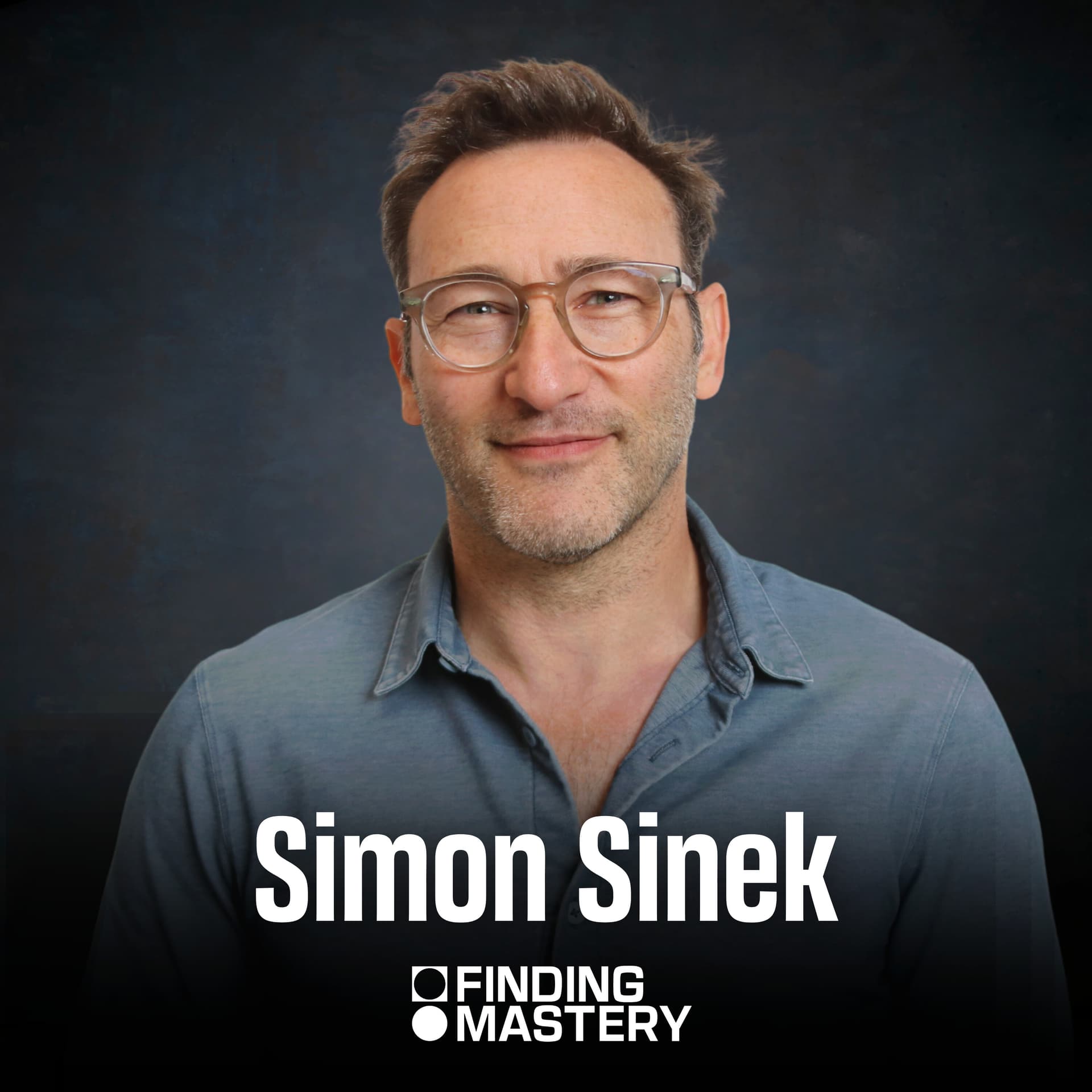
Simon Sinek is a leadership storyteller and author known for explaining human motivation and organizational purpose. He speaks from personal experience about relationships, stress, and using technology (e.g., an Oura ring) while warning against over-reliance on data.
Key claims
- Humans are social animals; you can’t achieve fulfillment alone.
- Most people think they’re good friends, but often fail at core “friending” skills like listening, holding space, and reading the room.
- Metrics and “check-the-box” practices (gratitude diaries, timed hugs) can corrupt genuine emotional connection.
- Digital life and technology can decouple people from both other humans and their own internal signals; only partial “data points” should guide you.
- AI is useful, but it can reduce learning because it replaces the work that hones intuition and accumulated wisdom.
Notable examples
- He realized he was a “bad listener” with loved ones despite being good with people he wouldn’t see again.
- A couple hugged for 16 seconds to trigger oxytocin; he told them to stop counting and feel connection instead.
- Longevity summit: his glycan age was 22 years younger; he argues friendship reduces stress compared with stacking health metrics.
- Firefighters story: intuition from experience can save lives; ignoring it can be fatal.
Written by AI. May contain mistakes. Listen to the episode to check what was said.
Chapters
Tap a time to open that second in VOThe Burden of Relationship Expectations
0:00 to 0:34
Exploration of societal pressures regarding relationships and marriage.
“I've gone on dates where literally the person I'm on a date with, they're like, have you ever been married?”
The Importance of Friendship
1:30 to 2:14
Discussion on how friendship is vital for survival and happiness.
“Most people think they are good friends.”
Challenges in Being a Good Friend
2:14 to 4:39
Simon Sinek shares insights on the difficulties of maintaining friendships.
“where it's like there's something brilliant that you're about to reshape the way I think.”
Lessons Learned in Friendships
4:39 to 7:03
Sinek reflects on his personal experiences and growth regarding friendship.
“Let's talk about, I mean, I'll tell you, me.”
Lessons Learned in Friendships
7:07 to 8:08
Sinek reflects on his personal experiences and growth regarding friendship.
“And sometimes travel makes it tricky to eat well.”
Embodied Gratitude and Connection
9:25 to 14:00
Exploration of the importance of feeling gratitude and making genuine connections.
“What was just happening inside of you during that recall of how valuable your friends are?”
The Metrics Obsession and Connection
14:00 to 18:44
Explores how metrics distract us from true emotional connections and happiness.
“You and I will both know when we've connected.”
The Cost of Obsession with Longevity
18:44 to 19:11
Discusses how stress from health metrics can be detrimental to our well-being.
“And they told me that the people who are obsessed with the metrics and the longevity have the worst glycan ages, the worst.”
Recalibrating Our Understanding of Health
19:11 to 22:44
Examines how our relationship with technology influences our health perceptions.
“My stress is lower because if I work really hard for a week, I'll take a day off because I earned it, you know, which is stress.”
Recalibrating Our Understanding of Health
26:39 to 27:42
Examines how our relationship with technology influences our health perceptions.
“Days are longer, pace picks up, and there's this sense of momentum that comes with the season.”
Show all 40 chapters
The Importance of Partnership in Relationships
28:00 to 29:10
Learn how mutual support in relationships can enhance well-being.
“If you're decalibrating based on the technology, we're not in the right way.”
Understanding Metrics in Finite vs. Infinite Games
29:10 to 30:30
Explore how metrics differ in finite and infinite contexts, and their implications.
“A finite game is always a beginning, middle and end where the metrics absolutely are the score and the end of the game.”
Intuition vs. Data in Decision Making
30:30 to 33:05
Discover the balance between intuition and data in making informed decisions.
“And I think we just have to contextualize the value or what the metric means relative to what we're measuring.”
The Value of Accumulated Wisdom and Experience
33:05 to 36:35
Understand the significance of accumulated wisdom in personal growth and learning.
“But because you don't know how to write an article, you can read it and say that was good.”
The Future of Human Value in an AI World
36:35 to 38:45
Examine how the rise of AI may elevate the value of human creativity and effort.
“Do we just rely on the machine for everything?”
Storytelling as a Learning Tool
38:45 to 42:01
Learn how storytelling can enhance understanding and memory retention.
“You know, like we have, I don't think we're at that chasm yet.”
The Power of Storytelling in Understanding
42:01 to 47:40
Learn how storytelling enhances memory and understanding.
“Like, my brain just doesn't work that way.”
The Power of Storytelling in Understanding
47:41 to 48:08
Learn how storytelling enhances memory and understanding.
“For me, it's a great way to switch on my mind, to ready myself to take on the day.”
The Power of Storytelling in Understanding
48:25 to 49:35
Learn how storytelling enhances memory and understanding.
“great and high stress conditions and what helps it stay sharp over the long arc of life.”
Navigating the Era of New Technologies
49:49 to 53:38
Explore the challenges and adaptations to new technological advancements.
“Some people see the art of life like a jigsaw.”
Reflections on Relationships and Societal Pressures
53:39 to 55:43
Examine societal expectations surrounding relationships and personal narratives.
“It was more organic than that, but I'm fully aware that it, that it, that it, uh, I get a twofer.”
The Value of Friendship Over Romance
55:44 to 56:01
Discuss the often-overlooked importance of friendships in personal happiness.
“insights that have challenged my own narrative about myself.”
The Value of Friendship in Relationships
56:01 to 1:00:14
Explore the importance of friendships in sustaining happiness and relationships.
“Because there's something flawed in you if you can't figure out how to do it.”
Shifting Perspectives on Love and Society
1:00:15 to 1:02:39
Discuss a personal shift in understanding relationships and societal pressures.
“What was the departure from the narrative that you swallowed and embedded, which is I'm a failure in the eyes of society on how I do my love life, my friendships, my relationships, to what cracked that open?”
Shifting Perspectives on Love and Society
1:02:58 to 1:03:47
Discuss a personal shift in understanding relationships and societal pressures.
“which is the first essential fatty acid discovered in over 90 years.”
Active Listening and Presence
1:03:48 to 1:10:01
Understand the importance of active listening and being present in relationships.
“That hinge that my wife and I use on a regular basis, like something comes up and let's say she calls me and I know like I need direction.”
The Importance of Curiosity in Conversations
1:10:01 to 1:11:41
Explore how being curious can enhance our understanding of others.
“and I've learned to be curious and make them feel seen and heard and understood, I will have my turn later.”
Finding Grace in Imperfection
1:11:41 to 1:13:21
Learn how giving yourself grace can reduce self-criticism and stress.
“And then I'd feel guilty that I couldn't stick with it.”
Understanding Loneliness and Connection
1:13:21 to 1:15:01
Discuss the balance between solitude and needing others for fulfillment.
“I would even say that that comes in fits and starts.”
Character vs. Behavior: A New Perspective
1:15:01 to 1:16:41
Recognize the importance of distinguishing between character and behavior in self-judgment.
“Hoberg is, I think he's like the best of us.”
The Role of Kindness in Human Interaction
1:16:41 to 1:18:21
Explore how kindness and cooperation are essential in high-stress environments like space.
“what's the single most important characteristic in a human being you look for when you decide someone should be in the astronaut corps?”
Survival of the Friendliest: A New Take on Evolution
1:18:21 to 1:20:01
Discuss the idea that friendliness and social skills are key to survival, not just strength.
“Because it doesn't matter how strong you are.”
The Complexity of Being Human
1:20:01 to 1:21:41
Understand the paradox of being an individual while also being part of a community.
“but we need each other in this ecosystem.”
Navigating Personal Growth and Authenticity
1:21:41 to 1:23:21
Learn about the struggle of being fully oneself while interacting with others.
“The part of me I'm yearning to have more evident?”
Changing the Rules in Conflict
1:23:21 to 1:24:00
Discover the importance of adaptability and communication in resolving conflicts.
“And sometimes we're confronted with big or small decisions which one of those things has to be sacrificed or subordinate to the other, if not sacrificed.”
Understanding Human Struggles and Empathy
1:24:00 to 1:26:20
Explore the universal struggles humans face and the importance of empathy in resolving conflicts.
“they'd say, oh, humans are really, I'm watching Simon, and, like, he's trying his best to be himself.”
The Balance of Optimism and Empathy
1:26:20 to 1:27:33
Learn how optimism and empathy work together and the importance of both in fostering connection.
“Empathy is a thing you learn, a thing you do.”
Practicing Optimism During Challenges
1:27:33 to 1:28:59
Discover practical insights on how to maintain optimism in difficult times and its relation to agency.
“I know it's a loaded question and we're kind of rounding through the base here.”
Courage Through Responsibility
1:28:59 to 1:30:04
Understand how responsibility to others can help cultivate personal courage and optimism.
“but I can be optimistic for someone else.”
Appreciation for Vulnerability
1:30:04 to 1:30:20
Recognize the value of sharing personal insights and vulnerability in discussions.
“And so thank you for the way that you've shared who you are, more importantly than your insights.”
Transcript
Automatic transcript. May contain errors.0:00Simon Sinek:I've gone on dates where literally the person I'm on a date with, they're like, have you ever been married? And they say to me, what's wrong with you? Why haven't you been married? And the stress that I've carried for decades for being a failure and I'm bad at relationships.
0:14Dr. Michael Gervais:What if our deepest human needs for connection and belonging hold the real answers for navigating a world that's racing ahead with technology?
0:22Simon Sinek:I have a friend who was in a 16-year unhealthy relationship. She admits freely that she should have been in it for one year. Society looks at her and says, she did it right. I did it wrong.
0:33Dr. Michael Gervais:Welcome back. Or welcome to the Finding Mastery podcast, where we dive into the minds of the world's greatest thinkers and doers. I am your host, Dr. Michael Gervais, by trade and training a high-performance psychologist. Now, the idea behind these conversations is simple. It's to sit with the extraordinaries, to learn, to really learn about how they work from the inside out. Today's guest is the brilliant and engaging Simon Sinek. He's back for a second time on the podcast. Now in this conversation, we discuss the deep value of friendship, why it's not just a nice-to-have, but it's essential for survival and happiness.
1:07Simon Sinek:None of us can achieve happiness, success, any kind of satisfaction with this very difficult thing called life alone. We're not great white sharks. We don't roam the seas by ourselves, but in groups we're absolutely remarkable. and we take for granted that friends are more than a nice to have. They're essential for survival and the ability to thrive. But are we good at friending? Most people think they are good friends. And then you peel the onion just one layer and you discover that most people are pretty bad friends. Plus we dig into AI, not as a dystopian threat,
1:42Dr. Michael Gervais:but as a mirror forcing us to re-examine what's real.
1:46Simon Sinek:The value of human is now going to go up because the value of machine is low. Your Pottery Barn mug, it is perfect in every way. But a Japanese ceramic mug made by hand with its imperfect sides and the wonky glaze, it is more beautiful because it is human, because it is imperfect.
2:04Dr. Michael Gervais:With that, let's jump right into this week's conversation, Simon Sinek.
2:13Dr. Michael Gervais:Simon, every time I get to sit with you, you keep me on pins and needles like I'm on my toes where it's like there's something brilliant that you're about to reshape the way I think.
2:24Simon Sinek:Oh my goodness.
2:25Dr. Michael Gervais:Yeah, standards are high now.
2:27Simon Sinek:Yeah.
2:27Dr. Michael Gervais:So one, this is me saying thank you for...
2:30Simon Sinek:Well, I'm here to disappoint, so...
2:32Dr. Michael Gervais:Let's not do that. But I have such an appreciation for how you think the discernment you go through to get to clarity of ideas, the way you tell stories, the way you understand the experience that people are going through right now. And so I'm stoked to sit with you again.
2:49Simon Sinek:Oh, thanks. Thanks for having me. I always like talking to you.
2:52Dr. Michael Gervais:Yeah, it's fun. It's really fun. I feel like we have inhabited different worlds, but have similar ideas. And so before we started, I was just generally asking, what are you most interested in right now? And you reminded me the importance of friendships, that that's where you're spending a lot of time. Friendships, relationships. So in general, where does that come from for you?
3:13Simon Sinek:None of us can achieve happiness, success, however you want to define success. Like it doesn't matter to me. Any kind of satisfaction, fulfillment, or ability to cope with this very difficult thing called life alone. Human beings are not supposed to, we're not great white sharks. We don't roam the seas by ourselves. We are social animals. We are pack animals. We are very weak as individuals. We're not very smart as individuals. But in groups, we're absolutely remarkable. We can solve any problem. We can overcome, we can fight animals much stronger than us when we're in groups. You know, we hunt together.
3:53Simon Sinek:You know, we're kind of remarkable. We take for granted that friends are more than a nice-to-have. They're essential for survival and the ability to thrive. And there's a frustration with that, right? Which is, we actually have to work at being friends. The great frustration is it's actually not very natural. Like, yes, we could all make friends, kind of, sort of, you know, but are we good friends? Are we good at friending? And I'd say on that standard, the answer is pretty abysmal. I talk to people and you say, are you a good friend? And most people think they are good friends. And then you peel the onion, just one layer, and you discover that most people are pretty bad friends.
4:37Dr. Michael Gervais:Open that up a bit.
4:38Simon Sinek:I mean, I'll give you a perfect example. Let's talk about, I mean, I'll tell you, me. My friends for years would accuse me of being a bad listener. And I would say, you know what I do for a living, right? Like, I'm a really good listener.
4:52Dr. Michael Gervais:Yeah, you are.
4:53Simon Sinek:And then I took a listening class. And that's when I discovered I am an exceptionally good listener with people who I will never see again for the rest of my life. But the people who I loved, terrible. Absolutely terrible. The skills that I had, I never applied at home. And so I like literally called my friends one by one and said, oh, my God, I'm a bad listener. And they're like, what took you so long? You know, we are not very good at asking for help. We are not very good at holding space when our friends need help. I called a friend. I was in a bad way. And I called a friend and I said, I just need to talk to you for a few minutes.
5:23Simon Sinek:And they went, yeah, of course. I started just letting it all out. And I think I got interrupted a couple of times. I think they interrupted me. You know, I didn't even got my thought out. and they well-intentioned trying to tell me what I should do and I would just oh I just wanted to hang up the phone that's not good friending you know I've been that person on the on the other end of the phone as well when that somebody called me and all I did was go into fix mode that's not good friending the inability to read the room inability to understand what somebody needs and when we are bad friends what ends up happening is we leave people feeling unseen unheard, misunderstood, alone.
6:07Simon Sinek:And that is bad for anyone's mental health. That's bad for anyone's inability to cope with stress. But that's also bad for anyone's ability to think through problems and seize opportunities. It's not just difficult things. It's the positive things as well. And so when I look at my own life and my own career, I am so grateful that my friends have been patient with me through all of my stupidity and idiocy and selfishness and self-involvement. I'm so grateful that they pushed me when I didn't want to push myself, that they held me when I wanted to be alone, and I wouldn't be where I am, and I wouldn't be able to call myself happy if it weren't for these remarkable human beings around me.
6:49Simon Sinek:And so to take what I've learned about friendship, some of them hard-learned lessons, and share those lessons with as many people as I can, I think I have to.
7:03Dr. Michael Gervais:Finding Mastery is brought to you by David Protein. Travel a lot at Finding Mastery. And sometimes travel makes it tricky to eat well. Best intentions, and then you're at the airport. And then suddenly, the only options around you are the ones that you'd rarely choose at home. Something I come back to often is that discipline isn't really about willpower in the moment. It's often about choice architecture. Setting up your environment ahead of time so that the easy choice and the good choice are the same one. That's the role David plays for me on the road. The Gold Bar, it's their flagship high protein density, great texture, flavors that make it easy to stick with.
7:36Dr. Michael Gervais:So when I throw a few in the bag before my trip, I've already made the decision. The hard moment later takes care of itself. And the team here at Finding Mastery, they love the bars as well. They are ripping through them in the Finding Mastery lab. Salted peanut butter and fudge brownie seem to be the fan favorites right now. They have built something with real rigor in a crowded, sometimes ambiguous space like nutrition. That matters when it's something that you reach for again and again. David bars are now available in major retailers like Walmart and Target. And if you'd like to buy them directly and get a special offer for being a Finding Mastery listener, head to davidprotein.com slash findingmastery, where right now, if you buy four packs, you'll get the fifth one for free.
8:14Dr. Michael Gervais:Again, that's davidprotein.com slash findingmastery. Finding Mastery is brought to you by Magic Mind. A question that I often come back to and I hear from people I work with isn't, how do I perform well today? It's how do I protect my capacity to perform well over my entire career? That's a different question. And it changes what you invest in. At some point, I started applying that same thinking to my own brain. Not just what helps me get through a heavy week, but what am I actually building over time? Because there is a difference between burning through your cognitive resources to meet the demands of the day and investing in the long-term health of your brain.
8:49Dr. Michael Gervais:That's one of the reasons I enjoy using Magic Mind. It's a daily two-ounce mental performance shot with clinically backed ingredients like ashwagandha, turmeric, and lion's mane. When I drink it, I know that I'm investing in better focused, sustained energy. And what I value just as much is what's happening underneath. These ingredients support stress adaptation and long-term brain health in ways that seem to compound over time. That's the long game. The formula is based on over 10 years of research and nano-encapsulated for five times better absorption than traditional pills and powders. Go to magicmind.com and get 50 % off your first order.
9:24Dr. Michael Gervais:The best performers I know make investments today that their future self-thanks them for. This is one of them. What was just happening inside of you during that recall of how valuable your friends are?
9:39Simon Sinek:I mean, I said it.
9:41Dr. Michael Gervais:I have immense gratitude. You embodied it. You didn't just say it. You fully embodied it. I could hear it and I could feel it. And I watched you change. as you were saying it. I don't know if you're completely tuned or aware to it, but it's striking when you're on the other side of it, when you see somebody fully embody the words that they chose. And so can you just stay here for a minute? Like, what did you just do?
10:07Simon Sinek:I honestly don't know.
10:10Dr. Michael Gervais:Does it sound like what I'm saying is completely foreign to you? Or did you say, or are you internally, privately going, wait, what, what is he saying? Or yeah, I did feel it, but I didn't quite notice it at the time. But now that we're talking about it, yeah, I do feel what I say.
10:27Simon Sinek:I think I always feel what I say. I don't, it's a little bit of a, I'm a little bit, like I don't know how to respond, to be honest. I don't know what you saw.
10:36Dr. Michael Gervais:I saw your, something happened in your eyes, your micro expression around your eyes changed and your voice inflection shifted. And when you're really into it, you look down. you were like in your own world feeling the gratitude for your other people you weren't kind of musing up like this you weren't making these kind of kind of wild eye contact like it's too much you're you're just in your world experiencing gratitude and it's worth pausing because all of your insights are always crisp they're really good every insight that you share I go, yeah, that's good. Oh, that's good. Oh, that's good. Yeah.
11:15Dr. Michael Gervais:Friendship. Okay, good. There's a difference between people who practice gratitude and people who check the box of what they're grateful for. You were just practicing gratitude. And if we're going to set somebody up to train themselves to be more tuned to their emotional state, especially the, I don't know, the more like aperture opening emotions like gratitude, you don't want them just to write it down and check the box. You want them to fully feel it, which is what you just naturally did. So that's why I just wanted to pause and ask, like, what was that like for you?
11:49Simon Sinek:I'm relaxed. Let's keep going. Look, we have a problem. And again, it goes back to good intentions, misplaced or misused. And you and I are part of the problem, right? Which is we dispense perspective, points of view, advice, ideas again, that we believe will help somebody live a better life, a higher performing life, whatever it is they're trying to achieve and the problem is advice is followed very literally the number of times you and I have told people things and they've done it and we're like, that's not what I meant, gratitude being a good one checking the box of gratitude, doing your gratitude diary and those people who've made a whole cottage industries out of selling us gratitude diaries and the like.
12:44Simon Sinek:I'll give you a really funny example of this, of the danger of these things that are not embodied but practiced. I met this wonderful couple, madly in love with each other, and they were telling me how it's really important that they have oxytocin when they hug each other because they want that real connection. And they read an article that it takes about 16 seconds for oxytocin to start flowing when they hug. So they always make sure to hug for at least 16 seconds. Of course, what I'm thinking is, you've got to be kidding me. The woman later on that day, or the next morning, I can't remember, and she said, you want to hug?
Read the full transcript
13:28Simon Sinek:I said, I'd love a hug. And we start hugging. Beautiful, beautiful, warm embrace. and I stop. I interrupt. I go, are you counting? She goes, yeah. I'm like, I can feel it. I said, stop. Please stop. I'm like, the human body knows. The means to an end. It knows. Totally, yeah. Some scientist plugged some frickin' electrodes in somebody and said, can you hug please, and counted however many seconds for it to flow. Good for them. You don't need that number. Your body knows. Stop counting and feel. You and I will both know when we've connected. So let's try again, okay? Just be with me. And we hug again.
14:19Simon Sinek:Sure enough, however, I don't know how many seconds, some short period of time later, we felt really good and it felt really warm and connected. And I held it a little longer than that. and then I stopped and pulled away and said, do you feel that? That's oxytocin. Stop counting, start feeling. And I think we've become so metrics obsessed. And again, you and I are partially to blame, right? We've become so metrics obsessed that we've actually missed the point of it. That some scientist was able to discern how many seconds you're supposed to do this or how many times you're supposed to express gratitude or people who become close friends spend at least 50 hours a week, blah, blah.
15:03Simon Sinek:It doesn't matter. They're averages and they're largely irrelevant. Like, you know, like there's no metric for how in love you are. There's no metric for like a parent's love. There's no metric for trust or belief, but we all know when it's there and we all know when it's not. And in our metrics obsessed world, I know people are going to mock me because I'm wearing an aura ring right it hasn't been charged in over two years I had it it it fulfilled its utility I thought it was hilarious like it told me I had a bad night's sleep which I knew because I've been up since three o 'clock in the morning and I'm incredibly grumpy today you know but it was given to me as a gift and I got used to wearing it I haven't charged it in two years right but it was fun it was fun and you know this better than I do, that there's now data to show that being obsessed with the metrics is worse for you.
16:02Simon Sinek:Like there's data that shows the stress you experience from eating chocolate cake, the cortisol that's released from eating chocolate, like, oh my God, I shouldn't eat it. Oh my God, I can't, is worse for you than the chocolate cake. Correct. The obsession with the sleep metrics and the gratitude metrics is worse for you than just missing a couple of days or having a bad night's sleep or having an unhealthy meal. Chronic stress versus acute stress. So I've become so interested in, dare I call it, feeling your, like feeling, being feeling in friendship, feeling in friendship. I don't even have a word for it.
16:42Simon Sinek:So I went to this longevity summit recently. I was dragged to it. It wasn't by choice. Longevity is not something you're interested in? Not the way that it's practiced. Like, sure, I want to live a long and happy and healthy life. Absolutely. But obsessing about my longevity is not something I'm interested in. But I went to the conference, right?
17:03Dr. Michael Gervais:To be a good friend.
17:04Simon Sinek:To be a good friend. I'd like to say I went with open mind, but I'd be lying. And, you know, I took a test where they scanned me, and they were doing it for everybody. I had to hold some electrodes and spun some cameras around me and who knows what it did. And it's a data point. I think these things are interesting. I don't think they're false, but I don't think that it's gospel either. But I like data, you know, as a marker. And I eat well, but not the best. I exercise, you know, now and then, but I'm not obsessive. You know, the one thing I'm obsessive about is my friendships. You know, that's pretty much it.
17:45Simon Sinek:and I got the fifth best score in the room, in a room filled with longevity, health-obsessed, supplement-taking.
17:53Dr. Michael Gervais:Your bio-age versus your actual chronological age. So that was a different story. So that was a different one I did. Okay, so that's not what this was. That wasn't this. This was some, I can't remember. What was the best score based on? Quote-unquote best score.
18:03Simon Sinek:I don't know. All I knew is I got the fifth best score. They're like, you got the fifth best score. That should be not right. I should have the worst score in the room. Yeah, because you are not hyper-focused. Because I'm not them. Not hyper-focused, not taking any supplements. you know so I did the other thing I did the blood test yeah same thing I did my my glycan age which actually that's actually pretty good science you know they took my blood test and same thing they asked me to fill out the survey to so they can compare my results to my lifestyle you know they said anything better than eight years if you're eight years lower than your actual age you're doing really well.
18:38Simon Sinek:My glycan age was 22 years younger than my chronological age. 22 years younger. And they told me that the people who are obsessed with the metrics and the longevity have the worst glycan ages, the worst. And they all poo-poo the science because they're not getting good numbers, right? And what they were telling me is it's because of stress, that because I do all of these things, but I'm not obsessed with all these things, my stress levels are lower because I care about my friendships and being around people and companionship. It helps me manage my stress. My stress is lower because if I work really hard for a week, I'll take a day off because I earned it, you know, which is stress.
19:19Simon Sinek:And the longevity obsessed people, it's okay to do some of it, but they're doing all of it. So when you do intermittent fasting, you're adding stress to your body. When you do a really hard workout, you're adding stress to your body. When you do a cold plunge every morning, you're adding stress to your body. And any one of those things is good and healthy, that sort of artificial stress. But when you stack all of them every day, it's too much stress on the body and not spending time and focusing on friends. Because one thing that I've discovered when I started talking to a lot of these people who are health obsessed is a lot of them aren't that happy.
20:01Simon Sinek:They're not that happy. And so the question is, you're living a long time, why? And when you ask me, am I not obsessed with my longevity? I want to live a long, happy life. Of course I want to live a long, happy life. But the word happy is in there, inextricably linked with long.
20:16Dr. Michael Gervais:That's right, a long, miserable life.
20:18Simon Sinek:A long, miserable life. I don't want to live a long, miserable life. I want a long, happy life. My point is, I think we need to go back to human. And it's no one's fault. We live in a digital world. Digital has overwhelmed us. We know it. This is not news. There's already some rebellion against some social media and some rebellion against smartphones. Like, it's not news. We all know about dopamine now. You know, when you and I were talking about it, you know, 15 years ago, dopa what, you know? Like, it's a thing now. Everybody knows that our devices addict us. We all know the science. It's all pretty basic now.
20:58Simon Sinek:And what we're asking is we're asking the machine We're asking the counter. We're asking the ticker to tell us how to be human again. And the body knows. And this goes back to trust and gut and all of this stuff. Entrepreneurs, we always say, the most successful entrepreneurs, what's your secret? I trusted my gut. So if we allow an entrepreneur to trust their gut and kind of know what decision to make, and this is what we try and teach people, why do we not allow, why do we not trust ourselves to know like when we're doing well in friendship or not we're we're not properly calibrated yeah
21:36Dr. Michael Gervais:i want to hit three things i want to hit stress i want to hit calibration and then uh the gut bit so on the calibration let's go back 200 000 years ago it's an easy story because we're outside a lot that we were calibrated to the rhythms of the world sun sun up sundown you know and And you got to kind of get it all done before sunup and sundown. OK, so there's a calibration.
21:59Simon Sinek:And not get eaten in between.
22:00Dr. Michael Gervais:Basically. So there's an easy calibration story that we can grok to there. And then if you fast forward, we are looking at our devices more than we are looking at humans. So we're decalibrated from other humans. OK, so now we've got Mother Nature. Now we've got decalibration from other humans. And then when we think about what makes us really pretty special is our ability to name our emotions. To feel them and to be aware of those feelings and put words to them. What kind of grade do you give on interpersonal connection or intrapersonal connection, meaning your connection with yourself? I think it's pretty decalibrated as well.
22:37Dr. Michael Gervais:I don't think we're well calibrated to what's happening inside of us. So much so that I think the number is like 36 % of people can accurately name the emotion that they're experiencing. That's pretty bad. You know, like three out of four out of 10 are good at the thing that is really remarkable to be human. The upside is we've got a lot of room to grow. And if you're checking in, if you're muting, oh, not even to mention alcohol, drugs and other numbing devices from kind of the feeling experiences. So if you're all dopamine related, all dopamine, if you're dysregulated there, if you're more tuned to technology and you're disconnected from Mother Nature, It is reflexively easy when you have an Oura Ring, which I think it's a really good product, up until you start to overcalibrate to the technology.
23:26Dr. Michael Gervais:Exactly. Which is why I stopped charging. That's right.
23:28Simon Sinek:Because I realized I was looking at it too much.
23:30Dr. Michael Gervais:Yeah. So then what?
23:31Simon Sinek:It was a me issue, not an Oura Ring issue.
23:34Dr. Michael Gervais:It is you. Yes. It's an us issue.
23:36Simon Sinek:It's me too. And I should stress that.
23:39Dr. Michael Gervais:Yeah. Yeah. So what I do with athletes, so if somebody is listening right now, you might find this to be a normal experience is you wake up in the morning and you flip over and open your phone or whatever device to see the number that you got. And there's something really satisfying about getting something back. Okay. Everybody likes to be a winner. I got a 91. I won sleep. I won sleep. The problem, though, is that you're relying on the second order data abstraction to tell you about yourself. So what I ask athletes to do is look at the numbers for a while. A couple of weeks, you're looking at the numbers, cool.
24:15Dr. Michael Gervais:And then play this other little game, which is when you wake up in the morning, where am I? Red, yellow, green. And then flip open the device and say, oh, I was right, green for green. Cool. Then, fast forward a couple more days, I think I'm green and I think I'm low green. Flip it over. Oh, look, score's 92, right on. So now you're actually calibrating to this other thing. That's a proxy between self-calibration and technology. The one that I always struggled with was great sleep score,
24:49Simon Sinek:but I'm tired all day.
24:50Dr. Michael Gervais:Yeah, right. Or terrible sleep score, functioned just great all day, totally fine.
24:56Simon Sinek:Yeah. So at some point - These are not perfect measures. But at some point, I'm obviously recognizing that these are just data points, and I like data points. Correct. It's when I found myself, to your point, which is waking up every single morning and not being able to start my day without looking at that score. And even having a competition with my girlfriend, it's kind of lost its meaning, which is why I stopped charging it. Because it lost its utility.
25:35Dr. Michael Gervais:that fit doesn't work. And that's the pressure of having to get it right while you're still running everything else. That's why I'm paying attention to LinkedIn Hiring Pro. It's built for the reality of hiring when you're operating lean. You describe the role in playing language, and then Hiring Pro helps you draft the job post, surface the right candidates, and then narrow to a short list without turning hiring into another full-time job. And when applications start coming in, it doesn't leave you buried in resumes. It streamlines screening, including AI-powered interviews for initial conversations.
26:03Dr. Michael Gervais:How about that? so that you can spend less time searching and then more time connecting with the people who match what you need. With Hiring Pro, you can hire with confidence knowing you're getting the best talent for your business. In fact, those hiring with LinkedIn are 24 % less likely to need to reopen a role within 12 months when compared to their leading competitor. Join the 2.7 million small businesses using LinkedIn to hire. Get started by posting your job for free at linkedin.com slash mastery. Again, that's linkedin.com slash mastery. Terms and conditions apply. Finding Mastery is brought to you by AG1.
26:38Dr. Michael Gervais:Summer is here, at least for those of us in the Northern Hemisphere. You can just feel it, though. Days are longer, pace picks up, and there's this sense of momentum that comes with the season. For me, that also means more travel. It's more early mornings, more late nights, and it's just really a schedule that isn't consistent as I'd like it to be. That's exactly when having a simple, reliable, daily foundation, it matters. AG1 has been that foundation for me for over a decade now. One scoop and a glass of cold water in the morning, and I know I'm supporting my gut health, full stop. Filling the nutrient gaps that are hard to cover through food alone.
27:15Dr. Michael Gervais:And what ends up happening is I'm giving my body what it needs to keep showing up. And that really matters to me. What I love about AG1 is that it doesn't ask a lot of me. It's one habit, one scoop, and it travels easily. The AG1 travel packs are something I genuinely rely on this time of the year. I throw a few in my bag before a trip and the routine stays intact wherever I am. If you haven't tried AG1 yet or you've been planning to think about getting back into it, now's a great time to start. Visit drinkag1.com slash finding mastery to get an AG1 flavor sampler and a bottle of vitamin D3 plus K2 free in your welcome kit with your first AG1 subscription.
27:53Dr. Michael Gervais:It's a$72 value. Again, that's drinkag1.com slash finding mastery. If you're decalibrating based on the technology, we're not in the right way. But if you're using it to be the tuning fork.
28:09Simon Sinek:That's very good.
28:09Dr. Michael Gervais:You're the tuning fork first. And then you look over there. And I do ask my wife, like after I've tuned and she's done her job hopefully to tune, how'd you do? And it's not like right away. But it's a way that I can go and say she says, tough one. I got a 72. How do you feel? She'll ask me, but how is it? Actually, I'm cool. She goes, yeah, I feel it. Then I know that, okay, I'm on dish duty. I'm on trash duty. I'm on doing the things that I just want to carry extra water, if you will. yeah and that helps me in some respect and i realize as i'm saying even like why am i not doing that all the time you know i think yeah there's a there's a partnership in there where if she's like oh you're tired i'm gonna carry your bags for you and if i look over her and she's tired and i'm like let me carry the bags for you there's something cool about that yeah
29:07Simon Sinek:you know so anyways i think the thing that we forget and we've definitely forgotten this in business you know we become obsessed with metrics and business and quarterly results and again we think of business in terms of winning and losing, we've talked about finite and infinite games before, you know, that we forget that metrics, unless it's a finite game, unless there's a score and
29:28Dr. Michael Gervais:there's a beginning, a middle and end, which is the characteristics of a finite game, which is a
29:32Simon Sinek:finite game. A finite game is always a beginning, middle and end where the metrics absolutely are the score and the end of the game. The score actually matters for an infinite game. Like nobody's going to win sleep, right? Nobody wins business. But we have metrics in sleep and business. And the problem is that we have to remember that those are just markers. They're indicators of speed and distance. How fast am I going? How far have I gone, right? That's all they are. They're not absolutes. And this is one of the problems with putting metrics on feelings, on sleep, on all of these infinite components.
30:06Simon Sinek:We treat them with a finite mindset. And that's where the problems are. That's why we're having stress because we think we're losing. Or we're smug and we think we're winning when we're actually unhappy, right? But they are simply indicators of speed and distance. How far have I gone? How fast am I going? And so going back to your sleep metrics, which is I am doing better. I am moving faster. Like I'm recalibrating, to use your language, which I really like. And I think we just have to contextualize the value or what the metric means relative to what we're measuring. Is it a finite thing or an infinite thing?
30:41Dr. Michael Gervais:Yeah, that's cool. The relative is like that's what I'm using with my wife. Like who cares what our actual scores are? Who cares what the actual scores are, exactly. But the point is like let's say that I'm at 100 and she's at like a 92. Happy days. Like you both had a good night's sleep. There's no variation. She's at 100. I'm at a 85. Happy days. Yeah, you both had a good night's sleep. Yeah, but when one of us has a Delta, then it's like, oh, let me, okay, good, let me use that. She likely or I would likely tell her throughout the day, whoa, even if we didn't have this technology, man, last night was rough.
31:14Dr. Michael Gervais:Right. And then I would go, oh, yeah, okay. So note to self, let me help out. And I think that this is just an excuse. You know how like, I don't know, some psychological assessments are kind of excuses to start a conversation. Which is fine. Yeah, they're not actually going to diagnose with great clarity. Some are actually commercial grade and some are medical grade. But many of them are conversation starters to really understand what's happening. And in some respects, technology can do that for us as well. But again, what you're offering is context.
31:49Simon Sinek:Context. And that's what matters here.
31:52Dr. Michael Gervais:Yeah.
31:52Simon Sinek:Which is, I'm fine with all these metrics, right? I don't actually have a problem unless it's a bait and switch. I don't actually have a problem with any of them, but they are points. So two other bits here.
32:05Dr. Michael Gervais:One is when it corrupts intuition, we're both going to have a problem with that. And I saw it. I still feel it. I saw it early and I still feel it in elite sport when old school coaches that value the hardened, the tested, the tried, the true principles that have led to mental toughness and mental agility and like bonding between people and doing hard things. And there's a gut feel that these coaches have tuned over time. And then you've got folks that are in the science world that say, hey, but listen, there's a lot of data that you're missing out on. And the early tension, and still there's tension now, is coaches don't want to have data corrupt their intuition.
32:52Dr. Michael Gervais:And vice versa, you wouldn't want data. I'm sorry, you wouldn't want to lose the intuition to the data. So both points of view are valuable. are right valuable yeah it's figuring out the intersection between the two um that is pretty
33:07Simon Sinek:complex and both are right you know like and this is this is i mean we can't help but go into the ai conversation from this because you know the value of doing the work you accumulate wisdom the value of doing the work is what makes you smarter and hone the machine if we just ask ai to do all the stuff for us the results will be incredible that article you wrote was amazing by the way thanks because AI did it for me. But because you don't know how to write an article, you can read it and say that was good. But because you don't know how to write it, you're actually not getting smarter, better, faster, any of those things.
33:40Simon Sinek:In other words, your intuition isn't honing. And so the obsession with metrics, the obsession with, I wouldn't even call it metrics, the obsession with the result means you're not doing the work, which means you're hurting yourself and you're not honing the intuition. And the example, I'll give a comment which book it was. there were these firemen who were fighting a forest fire, a fire in a field, and the wind kicked up and the fire started chasing them. And these guys are running for their lives. They're just running like crazy, right? And the fire is coming. And they will be able to outrun it, except for the fact that there's a hill.
34:16Simon Sinek:And the old timer screams, get down, get down, get down. And if the young kids ignore him because the fire's coming, he jumps down puts you know his hand his hands over his head and what had what his intuition knew from years of fighting fires which was never taught is he knew the fire was burning so fast and it was burning through the grass really quickly that it would just burn it would just fly over him and so he hunkered down the flames went right over him caught up with the kids who got caught up on the hill and they all died right you gotta you gotta fight a lot of fires to have that instinct to just know.
34:58Simon Sinek:And eventually that knowledge can then be passed down and be taught in a lesson. But the lessons have to come from somewhere. We can't teach something we don't know. And somebody has to either succeed or, like, I'll give you a really, really, really funny one, which I just realized the other day. And I don't even know if this is biologically or anthropologically true. I just really like it. And again, this is because human beings are smart. Have you ever noticed that when somebody throws up, the sound, the visual, the smell, the only thing you want to do is join in? You just want to throw up too.
35:35And there's no other bodily function that if somebody does it, you want to join in. Right?
35:40Dr. Michael Gervais:Yeah, good framing so far. Right?
35:41Simon Sinek:There's none, just that. But now go back. We're trying to figure out what we can eat to stay alive. and somebody in the group tries a berry and we've all just been trying the berries and they lose it. Instinctively, the rest of us are being like, if Kenny lost it, probably safer we all lose it because I don't want to find out. And so we all just heave home because Kenny got vomited from the berries. Why? To keep us alive. Accumulate it. And then somebody goes, don't eat that berry now. Like we learned the lesson. And thankfully nobody died because we all threw up. Don't eat that. The point is now you can pass down that accumulated wisdom.
36:26Simon Sinek:And now it's a lesson. And that's the same for everything. But if we have the machine do all the work, what happens to accumulated intelligence? What happens to accumulated wisdom? What happens to discovery? Do we just rely on the machine for everything? And look, I think AI is an amazing tool. I am not an anti-Aist.
36:52But it's the difference between somebody who wants to have surgery to have big muscles,
36:59Simon Sinek:but they'll still be weak if they don't work out. Like we can put all the implants in and your body will look amazing, but you're weak. Right? Which is it will look amazing. The press release is amazing. That article is amazing. That drawing is amazing. But you're weak. And I choose to write my own books. I choose to write my own blogs. Not because I think they're better. I definitely know it's slower. I'll have the AI fix my grammar because that's annoying, you know? Because I want to be stronger. I want to be smarter. I want to solve logical intellectual problems by having to go through the difficult thought process of making it work on a page.
37:42Simon Sinek:That's my choice for my body and my mind. and and we're I think what's going to start to happen is it's probably already happening which is the value of human is now going to go up because the value of machine is low right so like things that come off an assembly line are perfect and not special your pottery barn mug it is perfect in every way but a Japanese ceramic mug made by hand with its imperfect sides and the wonky glaze is more beautiful. It is more beautiful because it is human, because it is imperfect. And I think we're going to start to want imperfect and we're going to want handmade and hand-drawn and hand-conceived and hand-written because we want effort.
38:41Simon Sinek:Effort has value.
38:43Dr. Michael Gervais:Very cool. I know we're going to want quickly to discern if it was real or not, and likely because we want to make sure that we're not being duped by something that's not real until AI becomes real. You know, like we have, I don't think we're at that chasm yet. This idea, though, about intuition. Very philosophical conversation. It is. I enjoy it. I really did want to get to how you're thinking about AI. but before we take this any further, I do want to understand how you do storytelling and insight. You are, the mechanics of storytelling are not complicated. You know, Joseph Campbell kind of laid the blueprint.
39:23Dr. Michael Gervais:You obviously understand the beats that you're walking through. I'm wondering if it's rehearsed or you are working the beats as you're going, or there's some other way. You're great at storytelling. You're really good at it. But then you have a clever, and I don't use that despairingly, you have a wonderful insight from the story to go take action on or to see something differently. So can you just help me understand how you ready yourself to tell the stories and how you draw the insight in your unique Mr. Cynic way?
40:02Simon Sinek:You're going to hate my answer.
40:03Dr. Michael Gervais:I'll be the judge of that.
40:05Simon Sinek:I have insatiable curiosity. I don't like reading things in my own category. Don't read leadership books because I'll either just nod and agree or be annoyed and disagree. Or I'm sure there's something I can learn always, but it's a lot of effort for very little gain if there's a couple of insights in there. Or there's a turn of phrase that I'll really like, but did I have to read the whole book for that turn of phrase? I'm an oral learner, so reading to learn doesn't help me. I have to talk and listen. And I love to learn things of which I know very little about. And some of my curiosities I don't understand.
40:48Simon Sinek:I don't want to learn something about everything. I want to learn things about things that I find interesting. And my interests, like everybody, go in and out of fashion. Sometimes I see a movie and there's a character or a time period that I like. And then I go down a rabbit hole. And then I discover something. I go deeper and deeper and deeper. And then I start connecting that stuff to everything else. And because I'm an oral learner, because I don't read textbooks, like anybody, I remember things. I remember stories. That's how I learn. That's not unique to me. That's why we do mnemonic devices, because the stories, the rhymes, they help us remember things.
41:27Simon Sinek:My ADHD, which makes it very difficult for me to read, and I've carried a lot of shame for that for many years because as an author, people would say, what books are you reading? What's on your nightstand? I buy books like they're going out of fashion. I do not read them. And it always sounds like a joke every time I say it, but it is the God's honest truth. I have written more books than I've read. And where I used to carry shame, I now realize it's an absolute superpower. The only way for me to remember something is if I remember the story. And so I pursue stories. So when somebody's explaining something to me, I genuinely don't understand it.
42:05Simon Sinek:Like, my brain just doesn't work that way. And so I'll always say, can you tell me a story to help me understand what you're trying to explain to me? Not unique to me. They tell me a story, now I remember. And now I kind of get the gist. And so it's very easy, you know, people think I have this amazing memory. Talk to my friends, how often I forget birthdays or plans. Or somebody asked me to do something, I say yes. And if I didn't write it down, it's not getting done. My brain will disappear. And to the point where people think I don't care. My brain just doesn't work that way. And I feel very guilty every time.
42:40Simon Sinek:Tell me a story? I'm golden.
42:43Dr. Michael Gervais:That's okay. So it's easy for me to recall the stories.
42:46Simon Sinek:People think I have this amazing memory. I have amazing memory for one kind of thing. Stories.
42:50Dr. Michael Gervais:Stories. And you have tuned your ability to retell a story with all the right suspense, with all the right, oh no, uh oh, oh, I get it. So you have the right kind of beats on a story that is...
43:07Simon Sinek:Well, it's because I'm enjoying myself.
43:08Dr. Michael Gervais:As you're telling the story.
43:09Simon Sinek:I'm telling the story to myself. And are you seeing it in color? I see it visually. I don't see it in color. You see it visually.
43:16Dr. Michael Gervais:Do you see it as pictures or do you see it as a movie?
43:18Simon Sinek:That's a great question. So here's what popped in my mind as you asked me that. The way I would play as a kid, right? I had these little toy plastic soldiers. and where a lot of kids would be like, they'd hold the soldiers up and be like, that's not what I did, right? I would have a scene, a vast scene in my head, a story, and I would come down to the basement and I would set up my soldiers to capture one photograph, one snapshot of the story that was going on in my mind. I'd spend hours setting it up, that one photograph, And then I'd go for another day or two upstairs and I'd play and be a kid.
44:00Simon Sinek:And then, you know, some time to go down back to the basement. And the story had progressed in my imagination. And so I would move all the soldiers just slightly because it was the next scene. And so whatever that is probably persists today, that it's always moving in my head. But then I'll capture a piece of it. Yeah, it's like a storyboard, it sounds like. And so that's why I think I can tell, I can stand up on a stage and tell all these disparate stories that all go together. Because I'm telling you, I know the movie in my head. And I'm picking and choosing stories from all over the place to help me communicate the scene that I'm at in this moment.
44:40Simon Sinek:So you're moving along with me. So I can tell a story of Martin Luther King or a story from the military or a completely fictional account of something or some hypothetical, you know, done with beautiful local color. And I can. But what I'm doing is advancing my macro story with all these little micro scenes that seem to come out of nowhere.
44:58Dr. Michael Gervais:It's very cool. Thank you for the way you said that. I've never thought about it. Yeah, that's awesome. And then so you're scaffolding the stories around your core ideas or the stories disrupting the core ideas to make new ideas.
45:09Simon Sinek:I treat everything like a jigsaw puzzle. Yeah. Which is, think about a jigsaw puzzle. All jigsaw puzzles start the same way, right? You have all of the pieces scattered. You flip them over. You flip them over, right? And the first thing you do is you lean the box against the wall. Right. Right? So you know what you're building. Look, you're doing it again.
45:32Dr. Michael Gervais:You know you're doing it again, though. What? You're telling a story.
45:36Simon Sinek:I'm painting a picture.
45:37Dr. Michael Gervais:So you're so good at this. I understand that you're practiced, you're well-practiced and it's organic to you because of the way you learn. But just, you just invited me in, in the clever way that you started the story, which is it all starts the same way. In other words, for you and me, for all of us. And then you had two commonalities, which is like all the jig puzzles. And I go, yep, that's me. And then leaning it up, I added the stupid little flip them over, whatever. But, and then the thing, You lean it up. I can't wait to see where you take this next. You lean it up. I go, yeah, me too. So there's a thing that you're using stories to bind or bond me with you in that arc.
46:16Simon Sinek:What I'm doing is you don't know where I'm going, right? That's right. And that's the point of the story, which is I know where I'm going because I'm the one building the jigsaw puzzle. That's right. So the analogy is first you lean the box against the wall, and now you know the picture that you're about to build. And then you sort of create a little system. I'm going to do the blue pieces over here. I'm going to put the red pieces over here. And you start building the puzzle, right? And it doesn't really matter the order. And you can do the same puzzle five different times, and you'll do it differently every single time.
46:46Simon Sinek:But there's a system, and here's the best part, which is you don't have to finish the puzzle for somebody else to come, let's say you move the box away. You don't have to finish the puzzle that somebody can come over and be like, kittens, right? So I am fully aware that I don't even have to be complete in my explanations for you to understand what I'm trying to say. I can be completely incomplete. That's how I treat all of what I'm doing, which is I know the thing I want to get to. I know the picture on the box. And then I call upon all of these little thoughts and stories that I have. I've got some blue ones that I know this story is good for this, this, and this.
47:23Simon Sinek:This story that's good for this, this. And it's not that prescriptive. It's organic. And I'm filling in the pieces. And eventually you'll see what I'm trying to tell you, even if I don't get it all out and it's incomplete. It's always a jigsaw puzzle.
47:39Dr. Michael Gervais:I want to take a second here to tell you about a morning routine that I've been using for years. For me, it's a great way to switch on my mind, to ready myself to take on the day. So before I check my phone, my emails, market updates, or text threads, I choose how to start my morning. That's always in my control. That's always in your control too. This is the same morning mindset routine that some of the world's top performers across sport, business, and the arts are using. The best part, it only takes about 90 seconds to do. So just head over to findingmastery.com slash morning to download the audio guide for free.
48:14Dr. Michael Gervais:Again, head to findingmastery.com slash morning to get your morning mindset routine. Finding Mastery is brought to you by Momentus. I have spent my career studying the mind, how to develop it for high performance, how it can be great and high stress conditions and what helps it stay sharp over the long arc of life. And one of the things I've learned is to pay close attention when science starts pointing somewhere new. Creatine is one of those places right now. We've known for decades what it does for the body, strength, power, recovery. It's about well studied as any supplement out there. But the work emerging on creatine in the brain is what has my attention.
48:52Dr. Michael Gervais:The brain runs on energy, the same currency a working muscle does. And creatine appears to support brain energy metabolism, helping working memory, easing mental fatigue under exactly the conditions so many of us operate in. Sustained demand. Stress. Not enough sleep. For something that's been around this long, that's a genuinely interesting frontier. So if I'm going to take something daily, the quality has to be unquestionable. That's why I use Momentus. They searched the globe for the highest quality creatine. Then they built their own specification around it. Signature spec is what they call it.
49:24Dr. Michael Gervais:It's made in a pharmaceutical facility, six stages of testing, four independent agencies, and it's NSF certified for sport. When you take something every day, that level of quality compounds. Go to livemomentous.com slash finding mastery and use the code finding mastery for up to 35 % off your first order. That's live, L-I-V-E, momentous.com slash finding mastery with the code Finding Mastery. Some people see the art of life like a jigsaw. Others see it as a tapestry.
49:59Simon Sinek:Well, this is the explanation. You're asking me how I communicate. The way I communicate is jigsaw puzzle.
50:04Dr. Michael Gervais:Jigsaw puzzle. So tapestry. So this is a communication story process that you're pointing to right now.
50:11Simon Sinek:It's how my brain works. It's very cool. And so the stories that accumulate are the pieces. and sometimes my puzzles can get more expansive. Sometimes I'll swap stories out. Sometimes I have my favorites.
50:22Dr. Michael Gervais:Okay, back to AI. Because AI can tell stories too. Okay. How are you readying yourself for the next wave that's taking place? Both in the readying yourself, but then I'm also as equally as interested how you're helping ready other people for what's coming.
50:41Simon Sinek:This is the magical period, magical in quotes, of the introduction of new technology and we don't know what to do yet.
50:53Simon Sinek:And when Edison introduced the electric light bulb, people were afraid to use them because they thought it would make you sick or disturb the sadness of sleep. Serious? and they would put signs over electric light switches that says this is an Edison electric light bulb. It is totally safe. Don't worry. You can use it. But there was a learning curve. It took a lot of years before everybody was like, I love this electricity thing. There's always fear and uncertainty of new stuff and we don't quite know how much to use it or how little to use it. And you look at all the inflection points, whether it's the printing press or the telephone and the telegraph and the internet, all of these things, that there's always a period of complete madness where you have zealots on one side.
51:42Simon Sinek:I remember the early days of internet shopping and the zealots would be like, it's the death of bricks and mortar. Didn't happen, but sure, we'll go with that. And then there's the other side, which are the protectionists and the theorists. Like, oh my God, this is the worst thing in the world. The sky is falling. Are you kidding? We're all going to die. Let's be Luddites and dig into the old is what we know. and the truth is somewhere in the middle. And that's the period we're in now. We're in the period of complete madness, complete uncertainty, the zealots, the detractors, you know, and I think for any kind of new technology like this one, to reject it is stupid.
52:20Simon Sinek:Don't need to be overly zealous because you're probably over-guessing its utility and you're also forgetting that human beings are on the using side of it and you won't know how we choose to use it. the crowd will source that one we'll figure out all the new ways to use things that you buffins haven't figured out yet so I embrace it, I find it fascinating I don't think it's going to be all consuming of our lives things will show up because we demand it we will reject certain things because we demand it and I don't think anybody who's making any predictions really knows and so we'll wait and see and we'll find out and anybody who lived through the internet we saw it happen we we did it we went through it and it's only and like now it's kind of like settled and we all kind of get it but i remember the insanity when the internet showed up so you're
53:11Dr. Michael Gervais:not you're not pointing to friendship and relationships as a counter rotation to digital not not toxicity it's not a it's not a it's not a pendulum it's not a reaction to yeah i recognize
53:24Simon Sinek:that me sort of going deep and talking about relationships and friendships now absolutely absolutely addresses a lot of the ills that have been caused by excessive digital, an excessive digital life. I'm fully aware of that, but it's not like I woke up one morning, be like, we've gone too digital. I need to go friendship. It wasn't a reaction. It was more organic than that, but I'm fully aware that it, that it, that it, uh, I get a twofer. And that, yeah,
53:52Dr. Michael Gervais:Yeah, you definitely. And that came from usually, I don't know, life shifting insights or set of practices or ways of living come from some sort of suffering or pain. And I know it sounds a bit brutalist and harsh, but that's been my experience. And I think research holds it up. Like, why do people change? Because of pain. I'm wondering, are you clear or able to share what happened that led you to wanting to over-index in your life or reinvest in your life on a relationship?
54:24Simon Sinek:So my work is all semi-autobiographical. It's my journey. So when you ask me, is it a reaction to digital world? I'm like, no, it's a reaction to my world. That's right. And it just so happens that it's an antidote to the digital world. Like I said, twofer, right? So yeah, I can tell you where it comes from for sure. my social life my romantic life I've never been married I've had a couple of long-term relationships but not many and I've gone on dates where literally the person I'm on a date with like have you ever been married I'm like no they're like well what's your longest relationship I'm like about three years and they said to me what's wrong with you like why why why haven't you been married and the stress that i've carried for decades for being and i believe my own narrative that i am a failure and i am bad at relationships and people like you have commitment issues like they all diagnosed me you know and it didn't sound right because i don't think i do maybe i do it's stressful and you can't you carry that weight that i'm bad at relationships and i'm don't know how to make people happy and I let people down.
55:39Dr. Michael Gervais:It's a light word.
55:40Simon Sinek:You know, it's a
55:41Dr. Michael Gervais:little heavier than stressful.
55:42Simon Sinek:And just over the past few years, I've had some experiences and insights that have challenged my own narrative about myself. So I have a friend who was in a 16 year unhealthy relationship. She admits freely that she should have been in it for one year. Society looks at her and says, she did it right. I did it wrong. That's what society would say. That's right. She got it right. And I got it wrong. There's something wrong with me. There's nothing wrong with her. Because there's something flawed in you if you can't figure out how to do it. But staying in a 16-year relationship that you should have only been in for one that was unhealthy and unhappy and just not a good thing.
56:17Simon Sinek:From the surface. From the surface. That's right. But that's the point. And I realize I'm a very happy person despite my lack of relationships because I have great friends. And why is it the society overvalues the romantic relationship and undervalues the friendship. Why do you think that is? I don't know. Judeo-Christian values? I couldn't tell you. I don't know. You know? But this is the world we live in where there's an excessive amount of pressure to get married, white picket fence, 1.3 children, or whatever the statistic is, 2.1, I don't know. Right? And entire economies, entire economies on how to find it, nurse it, get it, make it, right?
57:07Simon Sinek:And yet there's so little on friendship. And if you're not in a relationship, you still have friends. And when you are in a relationship, you still have friends. And in fact, if you are in a relationship and you abandon your friends, you're a bad friend. I would say you've got some... And I'd say you've got some issues. Yeah, that's right. In fact, if you want to have successful relationships, You better have friends to hold space for you when you're struggling in your relationship. And last I checked, every single successful, happy relationship, when you talk to the people in that relationship and you say, what's your secret?
57:44Simon Sinek:They all say the same thing. It's hard work and we do the work. Well, if it's such hard work, who's supporting you in that hard work? I bet it's your friends. So basically what you're telling me is the secret to successful relationships is in part friends. And so I just came to the realization and the conclusion that I have great friends and I have a very happy life. And it turns out you can make out with some of your friends now and then, by the way. So it's like I'm missing out on nothing. I'm a happy person because of my friends. And so I have... Do you have friends with benefits, as it's called?
58:22Simon Sinek:I have had friends with benefits. Does it work? Sure. After the sex, what happens? You have breakfast. I mean, does it work? Sure. I mean, sometimes it lasts, sometimes it doesn't. Sometimes the friendship can sustain it and sometimes it can't. Like, it's a stupid question because it doesn't matter, right? As long as it's two consenting adults who are kind of like, you're single, I'm single, you want to do this? Sure. And sometimes it's mundane. Sometimes it's companionship. It's just sleepovers without it. It's just nice to have a warm body to wake up next to. Like, it doesn't matter. as long as it's two people who want the same thing and the friendship allows for that to happen, then those are the parameters of the friendship.
59:03My point is I made myself unhappy
59:07Simon Sinek:because I thought I was missing something and all the time I was neglecting that I had more than everybody else. I had amazing people in my life, amazing friends who offered me the love, the comfort, the companionship that I could get from a relationship but I just wasn't getting from a relationship. and what has happened in my dating life which is now when i date i used to date i'd be like oh hope this works i hope this works so the pressure i'm putting myself the pressure i'm putting them it's unfair in everybody it's destined for failure just because of the pressure whereas now i meet somebody and i tell them out of the gate i'm like listen i don't know if i'm going to date you or not what i can tell you is i would like to become your friend because i like you.
59:50Simon Sinek:And maybe there's a friendship here. And if the friendship, if there's enough here that we can become friends, we've already won. And if we discover from that friendship that there's more, then I'm open to it.
1:00:04Dr. Michael Gervais:Sounds like the aperture is wide open. You're really free with this. I'm most interested.
1:00:09Simon Sinek:And if I don't have another long-term relationship, I'm cool.
1:00:12Dr. Michael Gervais:Because you've got. Because I've got my friends. Your friends.
1:00:14Simon Sinek:And I'm happy.
1:00:15Dr. Michael Gervais:What was the departure from the narrative that you swallowed and embedded, which is I'm a failure in the eyes of society on how I do my love life, my friendships, my relationships, to what cracked that open?
1:00:27Simon Sinek:I saw it in a friend, a different friend of mine who's divorced, hasn't really dated since her marriage ended 10 years ago. And her friends give her a hard time and she gives herself a hard time. And she goes on a date here and there and she's like, what the hell am I doing? you know? And she would complain to me. And I had the benefit of objectivity by being the outsider. Looking at a person who's got an amazing family, who's got amazing friends, of which I count myself amongst them, who, if she just lets go of this relationship thing, like, she's got no complaints. And I would be like, just look at your life.
1:01:10Simon Sinek:Who cares? Like you get everything you want. You have everything you want. And I was giving her the advice I needed to hear.
1:01:18Dr. Michael Gervais:Yeah. So you learn from others as much as you learn from your own introspection. Yeah.
1:01:24Simon Sinek:It's all part of the puzzle. Yeah.
1:01:26Dr. Michael Gervais:I got some blue pieces and I got some red pieces. It's a cat. Is that what you said before? Kitten? All right. Look, so I think you're pointing to one, we know from research, the Harvard study and lots of other studies on well-being that connections and relationships are foundational.
1:01:42Simon Sinek:It's embarrassing we have to talk about it. Yeah. Like everybody knows this. Like the fact that Harvard has a 75-year study to say that friends matter, like, yeah.
1:01:53Dr. Michael Gervais:So what do you think goes wrong?
1:01:54Simon Sinek:We don't do the work. Yeah. Like we know we have to do the work in our romantic relationships. We just said it. That's the secret. We know that if you're a leader in an office, in a company, you got to do the work. Like in every kind of relationship dynamic, we know you got to do the work. Yet for some reason, we allow friendships to be organic and underinvested. So how do you do the work? I learn how to hold space when a friend calls to vent to me. I learn to suppress my desire to fix. If I don't know what to do, I learn to ask. Do you need me to offer some advice or do you want me to just hold space for you?
1:02:39Dr. Michael Gervais:Body Mastery is brought to you by Fatty 15. Okay, let's talk about longevity. Longevity is much more than simply adding years. It's about maintaining health and a zest and a vitality and enhanced performance as you age. And that's why I'm excited about Fatty 15. It's an award-winning supplement. It's powered by C15, which is the first essential fatty acid discovered in over 90 years. Okay, so C15, it's a geroprotector. What that means is it helps to slow biological aging by strengthening your cells, basically protecting them from damage. You can think of it like kind of like a 401k for your health where you're investing in cellular quote unquote resilience.
1:03:19Dr. Michael Gervais:And I dug into the research on the relationship between C15 and heart health. I love what I saw. Fatty 15 is on a mission to optimize your C15 levels to help you live healthier longer. Get 15 % off your 90-day subscription starter kit by heading to fatty15.com slash findingmastery and use the code findingmastery at checkout. That's fatty, F-A-T-T-Y, 15.com slash findingmastery. Start investing in your long-term health today.
1:03:53Dr. Michael Gervais:That hinge that my wife and I use on a regular basis, like something comes up and let's say she calls me and I know like I need direction. Sometimes I miss, hey, how do you want me to show up for you on this one? And she's like, look, I just need you to listen. I'm like, great. People know. Yeah. 100 % of the time. I actually, I'm jammed. I need to hear your thoughts on this. Yeah. Like I'm looking for a way through this. Great. Got it.
1:04:20Simon Sinek:And when somebody gets it wrong, just interrupt them. Be like, I don't need you to fix it right now. Here's what I need right now.
1:04:28Dr. Michael Gervais:Yeah.
1:04:28Simon Sinek:Like, either ask or interrupt. Yeah, right. Just give somebody guidance. I read this thing that I thought was one of the most brilliant insights for marriages, work relationships, friendships, which is we all live with the fantasy that our partner can read our mind. And we're bad at it. We all live with the fantasy that our friends can read our mind. We all live with the fantasy that our employees or our bosses can read our minds. Or we can ask or tell. So I've learned to ask and tell. I have learned how to listen actively. Really hard to do. If you do it well, you'll be exhausted at the end of it.
1:05:05Simon Sinek:It takes effort. What does listening hard require of you? Here's the analogy. I went to this meeting. It's funny because now I'm hyper aware since the conversation. I'm playing the story in my head. You are playing it. I'm playing the story in my head. I can see it happening. And so the reason I'm a good storyteller is because I'm telling you what I'm looking at. It's as if I'm describing a movie to somebody who's blind sitting next to me or somebody who's not in the room.
1:05:30Dr. Michael Gervais:Brilliant. Is it faster? Did you see the whole thing? Or are you doing it scene by scene with me?
1:05:35Simon Sinek:I know the whole thing. Yeah. And I'm now going back and replaying it. Brilliant. In slow-mo. Thank you. And pulling out the bits that I need for you to. So I'm in this meeting and there's a woman sitting next to me who apparently is a famous yoga instructor. And the whole meeting, she's on her phone underneath the table. I can see I'm sitting next to her. And it's not like she's got a family member in the hospital and she's getting updates. I can see she's on social media. I'm looking, right? And at some point, you know, she's looking down. At some point, the conversation at the table turns to being present.
1:06:13Simon Sinek:and her head pops up and she says, that's why I love yoga because it helps me be present. And I'm thinking, I think you're an idiot, you know? But that's when I realized that we in the West have missed, we've lost the plot of what all of these practices, these Eastern practices are supposed to be and what they're meant for, all of them. So let's take meditation, right? We know meditation has all these benefits to ourselves. We know that. We've done the science. We put the brain scans. We tell everybody you've got to meditate because it's good for you, right? And anybody who practices meditation, they will know that what you do is you're supposed to sit still.
1:06:53Simon Sinek:You can't clear your mind. It doesn't exist. But you can focus on one thing, your mantra, your breath, a dot on the wall, sound. It doesn't matter. The point is you learn to focus on one thing. And if you're distracted, if you have a thought that pops in your head, you learn to say that's a thought. you label it a thought, I'll put it out of my mind and I will deal with it later. I'm going back to focusing on one thing. And you learn this practice and you're bad at it at the beginning. You can do it for two minutes if you're lucky, then five minutes, then 10 minutes, then 20 minutes, then an hour, focused on one thing, fully present.
1:07:25And at the end you are, ah, nirvana, you feel
1:07:29Simon Sinek:amazing. You have a great day. All the brainwaves, the science, all the electrodes tell you you're great. Here's the thing we've missed. We are social animals and we live in paradox every day of our lives. Every day of our lives, we are both individuals and a member of a group. And every single day, we have to deal with both of those things. Do I put myself first at the expense of the group, or do I put the group first at the expense of myself? The answer is yes, it's a paradox, right? And so, yes, meditation has benefits for you, but you're missing the pro-social component. You are not present until someone else says you are.
1:08:02Simon Sinek:So when you're sitting with a friend, and they're telling you about their amazing day or their terrible day, You are not waiting for your turn to speak. You have learned to focus on one thing and one thing only, what your friend is telling you. And when there's a bang over there or a conversation in the other direction, you ignore them. You are not interested. And when you have your own thoughts, you label it a thought and you put it out of your mind, you say, I'll deal with that later. Right now I'm focusing on what my friend is telling me. And at the end of the conversation, you know that all of that meditation that you've been doing has now successfully been applied for your friend.
1:08:35Simon Sinek:You will know that you are present because your friend will say to you at the end, thank you for listening. I feel heard. My goodness, I feel whole. Thank you for being present for me. Congratulations, all the meditation was worth it. That's active listening. It's hard work to put aside the thing you want to say when you really want to say it. It's hard work. I've had to learn this. So like somebody who's telling me a story, I'm getting to know somebody and they tell me a story of how they went to Hong Kong. And the first thing I say is, I went to Hong Kong too because I want them to know I can share and understand their experience.
1:09:17Simon Sinek:Wrong. Wrong.
1:09:19Dr. Michael Gervais:Somebody tells you they got in a car crash.
1:09:21Simon Sinek:Don't tell them you got in a car crash.
1:09:22Dr. Michael Gervais:And they were traumatized by it. You go, oh, yeah, when I was 12, I hit a bumper. And yeah, it's scary sounds. Totally missing the point.
1:09:31Simon Sinek:Missing the point. And what I've had to learn to do is, though my desire is to match their experience to show that I can relate, that's my intention. What I end up doing is interrupting them, not making them feel heard, downplaying their experience simply because I'm talking about me. And so I've learned to put all of that away and say, oh, my God, that sounds awful. Tell me more about it. How was your vacation? How was Hong Kong? What was your favorite thing about it? and I've learned to be curious and make them feel seen and heard and understood, I will have my turn later. Now, I'm not perfect.
1:10:10Simon Sinek:I still screw it up all the time. But I'm way better than I used to be. That's actually listening.
1:10:16Dr. Michael Gervais:Yeah, the space of it is great that you provide yourself. Are you more curious about their thoughts, their feelings, their behaviors, or tripwires? All of the above is a good stack. But where do you naturally fall to? Depends on the person. Yeah. Yeah. So if you think they need a little bit or would benefit from a little bit of the feeling side, you'll ask more about that? Or is it more?
1:10:37Simon Sinek:I don't know if it's that. I don't know if I think about it that much, to be honest. I think if I like somebody and I want to know more about their experience, if I had a good night's sleep, I'm full of questions.
1:10:51Dr. Michael Gervais:Do you sleep well? Yeah, I do. You do sleep well?
1:10:53Simon Sinek:Yeah.
1:10:54Dr. Michael Gervais:Yeah. How do you like? ADHD helps. Meaning that you're just like... A lot of deep sleep. Yeah, and you're buzzing throughout the day. So by the time you get to pillow time, it's like...
1:11:03Simon Sinek:But I think it's a known thing that people with ADHD sleep hard, sleep deep. I sleep deep. It takes me a while to fall asleep, but once I'm out, sayonara.
1:11:12Dr. Michael Gervais:What are some of the best practices you have? Because you live a pretty vibrant life. I could drop the word pretty. You live a vibrant life. What are your practices? Relational, we got it. value sleep it sounds like you got it what else are you doing moderate exercise i think you would say i think the thing that i've learned over time is grace just to give myself grace and
1:11:39Simon Sinek:recognize that what works for one person doesn't work for everybody and my goal isn't to learn what works for somebody else my goal is to learn what works for me so i'm chronically disorganized right so i've tried a system to keep me organized or downloaded some app and it was great for a week week or two and then I abandoned it. And then I'd feel guilty that I couldn't stick with it. Or I'm messy. So I get to the point where I'm like, I'm so annoyed and I like organize, I like rip out everything out of the shelves and put it all back. And I'm like, I'm going to keep it this way because it's so good.
1:12:08Simon Sinek:It never, ever happens. And I used to like beat myself. I was like, why can't I stay organized? Like, and then like, or why won't this system work for me? I'm going to find a system that works for me. And then I just allowed myself grace, which is the system worked great for two weeks. And then I'll find another system. And it's just made me less stressed about like I have periods of disorganization and periods of hyper organization. I have periods of stress and periods of total disconnect. I have periods of productivity and periods of complete no productivity. And it's all fine. So I'm always trying to get better, but it's all fine.
1:12:46Dr. Michael Gervais:Grace is the anecdote to self-criticalness. It sounds like you were...
1:12:51Simon Sinek:It doesn't mean resignation. It doesn't mean whatever, just this is how it's going to be. I'm always trying to be better. I'm always tweaking the system. But if it doesn't work for me, then it doesn't work for me. And that doesn't mean that there's anything wrong with the system because if it works for somebody else, then that's great. But it doesn't work for me. or it only worked for me for a short period of time. And so when you talk about the vibrancy of life, I would even say that that comes in fits and starts. I think my life is moments of unbelievable vibrancy and unbelievable whatever the noun is for mundane, mundanity.
1:13:38Do you slip into melancholy, depression,
1:13:42Dr. Michael Gervais:or are you more on the anxious side?
1:13:45Simon Sinek:I think I used to get lonelier than I do now. I used to feel like I needed somebody around me all the time. And even that, I've given myself grace. My friend Rick, who's like a monk, he's not is a monk, he's like a monk. I asked him, I'm like, do you ever get lonely? And he said, no, I'm always with myself. And I fell in love with that.
1:14:11Dr. Michael Gervais:I like the company I keep.
1:14:12Simon Sinek:I like the company I keep.
1:14:14Dr. Michael Gervais:Do you like yourself? I do. It's important. It sounds cheeky. I don't like aspects of myself. It's an important question to wrestle with.
1:14:22Simon Sinek:But I think we have to give ourselves the same grace that we're supposed to give other people, right? Which is you never label the person. You label the behavior, right? You don't label the character. You label the behavior. So you wouldn't say to somebody, you're a liar. You say, you told a lie. we can you know you don't attack someone's character you attack someone's behavior or you criticize the behavior we're supposed to learn that that's correct well we should apply that logic to ourselves there are behaviors i don't like that i've done or that i do there are things that i don't like about me but as a character as a thing yeah i'm pretty it's good
1:15:03Dr. Michael Gervais:There's a Woody Hoberg. Dr. Hoberg is, I think he's like the best of us. He's a friend. He was on the podcast. He, MIT, PhD, NASA, NASA astronaut, got up to the ISS, International Space Station, and then was nominated for the spacewalk. And he is phenomenal. But he's a nice guy too. He's his character. Oh, so annoying. Yeah. I mean, he is the, literally the best of us. I think the thing that I asked him this question, when you think of living your best life, how do you think about going about that? He paused. He says, yeah, I think it's like just making, if I have a thousand choices throughout the day, I'm just trying to, at each one, make the right choice for me at that time.
1:15:54Dr. Michael Gervais:And it's backed up against the value proposition and it's backed up against or in its counterbalance to the vision he holds of what could be. And I don't think it's that more complicated. It's a really simple thing. Now, where it gets tricky is when you make when you zig, when you know that zagging was the right choice and you zig and you know that you made the easy, sloppy, wrong, expedient, whatever decision. Right. How do you work with yourself when that takes place?
1:16:26Simon Sinek:Can I just take a quick sidebar there? So I got to meet the head of the human space program, the person in charge of like the astronauts at NASA. And the question I asked was, what's the single most important characteristic in a human being you look for when you decide someone should be in the astronaut corps? and the answer I got was they have to be nice
1:16:54Dr. Michael Gervais:I think somewhere in the DNA of their job is to be ambassadors for human potential
1:17:02Simon Sinek:I don't think that's it I think it's simpler than that which is we're going to put you on a space station for six months with other astronauts and there's going to be six of you living in close quarters
1:17:12Dr. Michael Gervais:you better get along
1:17:14Simon Sinek:and what they know is is that if you're nice and you get along it also means you're better at asking for help, you're better at problem solving, you're better at teamwork. And so they don't care how smart you are and how good an engineer you are and how good a pilot you are. Yeah, sure, that stuff's important, second. But if you're a good person, you make a good astronaut because fundamentally it's a very, very dangerous job with an incredible amount of stress and very, very dangerous conditions and you can only solve problems as a team. and so you better get along with other people otherwise it's not going to work
1:17:49Dr. Michael Gervais:but the point is it's pro-social
1:17:51Simon Sinek:that we're taking the most austere the most dangerous, the most difficult conditions of which the whole outside world is trying to kill you at every moment and you better get along and by the way there's a whole book about this that I didn't read called Survival of the Friendliest which makes the case that for human beings we've misunderstood understood Darwin, that when we talk about survival of the fittest, it's actually not strength and brawn. We got it wrong. It's how pro-social you are. It's how friendly you are. Because it doesn't matter how strong you are. If you don't get along, it's not going to work out.
1:18:30Simon Sinek:And I saw this happen at the Marine Corps. When I visited boot camp, 13 weeks at Paris Island, the adrenaline instructors were telling me that for the first two weeks, everybody's trying to prove that they're good enough to be Marines. They're all trying to show off how strong and how great they are. But the Marines, what they start to do after a couple of weeks is they put them in situations where they cannot succeed in the task by themselves. They're going to have to rely on each other. And they say something remarkable happens. And they're just observing. They're not paying attention to the anthropology.
1:19:03Simon Sinek:Something remarkable happens. The group will organically eject the weak ones who refuse to ask for help or refuse to try and, you know, and the group will organically reject the very strong ones who think they don't need the group. And the group organically rejects them until they both learn to ask and accept help. And you better help the group because it's not just about you, big guy. And they have to learn to ingratiate themselves back into the group. And this is proof that survival of the fittest is the ability to put yourself second and put your strength and your brawn and how smart you are and how you want to show off and show how great you are and say no no no i'm going to be a valuable member of the team and then it works we are much more like a coral reef than just about any other analogy i can think about we need each
1:19:54Dr. Michael Gervais:other to survive well and you know there are sharks that swing swim amongst the coral reef that are dangerous and they're predatorial and there are you know all the different fittings that but we need each other in this ecosystem. So if an alien were to drop down and say they just got to observe you and you're the N of one to recognize who humans are, okay, so you're going to say he's smart. You're going to say, oh, he's great at storytelling. Oh, yeah, he really values relationships. He's a little disorganized. He knows it, though. So humans are disorganized. They're good friends. fill in the blank, fill in the blank.
1:20:38Dr. Michael Gervais:What do you want them to see or to know about you that you're not there yet? It's not totally apparent to the alien that drops into space or from space.
1:20:53Simon Sinek:I think it's a flawed question because I'm not there for everything yet.
1:20:58Dr. Michael Gervais:Everything is a pursuit. Okay, but that's the answer. That would be your answer. So the question still is, I'll spar with you on this. The question is to invite, where is the unfinished business for you? And your response is, it's everything.
1:21:13Simon Sinek:I mean, it depends on the week. You know, sometimes I'm focused on work, and so I'm trying to be a better leader. And then some weeks everything's running automatic, and I'm good, and the team's fine. They don't need me. And I'm focusing somewhere else.
1:21:29Dr. Michael Gervais:So, I mean, it's all. Let me double-click one more time.
1:21:32Simon Sinek:I don't mean to be evasive, but it's like...
1:21:35Dr. Michael Gervais:No, I don't think evasive. Let me see if I can drill it down one more niche, though, which is what is the part of you that you're yearning to have more evident? The part of me I'm yearning to have more evident?
1:21:47Simon Sinek:Closer to the surface. I think my grapple is the same as everybody else's grapple. I think it's a journey that some of us are further ahead and some of us are further behind, which is to be fully myself all the time everywhere. you know like when do I edit myself when do I hold back and when do I allow reckless abandon to just you know so I don't think that's unique to me and I think that's everybody's struggle which is to be fully yourself all the time and have it not be performative either like people who like they're sort of annoying and sort of in your face about things and you're like you want to settle down a little bit like just being myself I'm like really is that the self you want to be yeah i think that's i think we're in this i think people forget that being yourself includes i interact with other people and that's part of this that's the struggle which is you don't want to be so much yourself that you just end up offending and pissing everybody off even though you're just being authentic quote unquote but at the same time you want to be so restrained and such a pleaser that you've you've hidden who you are as well and so it's it's a it's a very difficult question it goes back to what I was saying before, which is being human is to live in paradox, which is I am me, but I'm also a member of a team, a member of a family, a member of a church, a member of a community, a member of whatever.
1:23:10Simon Sinek:We're members of groups every single day. At the same time, I am me and I am an individual. Every single day I'm trying to be me, but every single day I'm also trying to be a good member of the group. And it doesn't always line up well. And sometimes we're confronted with big or small decisions which one of those things has to be sacrificed or subordinate to the other, if not sacrificed. And it's unresolvable. I really appreciate the nuance that you and the tribe,
1:23:44Dr. Michael Gervais:we are trying our very best to be our very best, to be ourselves. And there's a paradox embedded in that. And there's the likability piece and the authenticity piece that is interplay that's really complicated. So is it fair to say, like, if the alien was to watch, they'd say, oh, humans are really, I'm watching Simon, and, like, he's trying his best to be himself. And I think that humans are really trying to get free to be themselves.
1:24:11Simon Sinek:I'll tell you a story that I think captures what I hope the aliens think about us. My girlfriend and I were having a fight. It went something like this. here's what I did right, here's what you did wrong. The response was, well, here's what I did right and here's what you did wrong. I don't understand what you're saying. I've never had this argument. And you can see how this goes. Well, here's two things I did right and four things you did wrong, right? How can you say that? And it's getting more and more heated. And I had enough wherewithal to recognize this was going nowhere fast. And so I literally interrupted.
1:24:50Simon Sinek:I literally interrupted the fight and said, this isn't working. I'm changing the rules for this fight. Here there's the new rules for the fight. I literally said this. These are the new rules for our fight. I'm going to tell you what I did wrong and I'm going to tell you what you did right and then you're going to take a turn. Okay I'll go first. Here's what I got wrong and here's what you got right. And she goes yeah well here's what I got wrong and here's what you got right. I went yeah well here's something I got wrong that you freaking nailed. And within 20 seconds we both realized we were trying.
1:25:19Simon Sinek:And even though we were idiots and making a mess of it we were trying. And I think that if you pull back at a macro level, whether you want to look at politics or the world order, everybody's doing their best. They're trying to provide for their families. They're trying to provide for themselves. They're trying to solve all their own problems, deal with their ambitions and their insecurities. We just want our kids to grow up kind of happy, kind of healthy. we all want to be safe going to work and going to school and then coming back at the end of the day and not have to worry about our safety.
1:25:58Simon Sinek:And we want to be able to make a living and feel proud for the work that we do and feel like our work matters and that we matter. It's pretty much it for the whole entire planet. Now, we debate the right way to do that or how we should do that, and that's the messy part. But everybody's trying.
1:26:19Simon Sinek:and if we have the empathy to see that and change the rules and say let me tell you what my party did wrong and what your party did right let me tell you what my nation did wrong and what your nation did right you know and if we can just flip the script and recognize that there's accountability in this in this thing for everybody i wonder everybody's trying i wonder if you took a
1:26:45Dr. Michael Gervais:second pass at naming your company the optimist company would you just demonstrated brilliant optimism in the framing if you would if you would name it the empathy company because it no optimism is the the first principle optimism no empathy is a soft important yeah what you just you just anchored both of them and so optimism and empathy together feels like a superpower but you were saying that...
1:27:14Simon Sinek:Empathy to me is a mechanism. Empathy is a thing you learn, a thing you do. It's a lever you pull and it's necessary for all the things. It's one of the skills. Yeah, it's foundational for connection. Optimism is the outcome.
1:27:30Dr. Michael Gervais:Yeah, so you...
1:27:31Simon Sinek:Optimism is the direction. It's the vector.
1:27:33Dr. Michael Gervais:How do you practice? I know it's a loaded question and we're kind of rounding through the base here. How do I practice optimism? Yeah. How do you suggest people practice optimism?
1:27:40Simon Sinek:Optimism, I think, optimism is not blind positivity. It's not like, everything's great. You know, that kind of positivity can be quite toxic in dark times or difficult times that some leader, well-intentioned, bounces in and goes, this is great, guys. Like, we have each other. This is amazing. Like, everything's good. Like, look at the bright side. Like, you want to punch that person, right? It's dangerous. It's dangerous. That's not optimism. That's toxic positivity. Optimism is the undying belief that the future is bright. And optimism can exist in darkness. In fact, it thrives in darkness. You know, this is the darkest time we've ever been in.
1:28:18Simon Sinek:I don't remember a time this difficult. I don't know what to do. It's going to take a lot of effort and there's going to be a lot of pain. But there's one thing that I know, which is if we stick together and we help each other out, I guarantee you we will come through this stronger, better, and brighter than we went in.
1:28:39Dr. Michael Gervais:And that to me is optimism. Does your capture of optimism embed a sense of agency? Agency meaning this felt sense that I'm powerful, we're powerful?
1:28:51Simon Sinek:I think it embeds a sense of responsibility to the other. Yeah. Which is I cannot be optimistic by myself. I don't have that kind of strength. but I can be optimistic for someone else. Oh, interesting. Right? Because that's my responsibility. So, I mean, this is a trick for people who are afraid of flying. I don't know if you know this trick. For people who are afraid of flying, if you're on a plane and the plane starts to bounce and you grip the seat and you freak out, they'll tell you if a little child was sitting next to you who was having the fear you're having, what would you tell them? it's easy to find courage when you're looking after somebody younger and more fragile than you and we're all fragile and so I find it much easier to be optimistic when I have responsibility to a team or to a friend or to a loved one but if you leave me by myself in a dark place no I'm not I'll
1:29:47Dr. Michael Gervais:go I'll spiral like anybody else in this conversation you've been you've demonstrated a sensitivity to yourself, to others, to like the hopes and dreams that you have. And you've allowed it to come right to the surface, which I really, really, really appreciate. And so thank you for the way that you've shared who you are, more importantly than your insights. Your insights are always brilliant and clever and smart and actionable. But I've appreciated how you've showed up and the way you've done it today. So I just want to say thank you again. Simon, appreciate you. Thank you very much for having me, always.
1:30:22Simon Sinek:next time on finding mastery you might think you know what makes a great leader or partner but chances are you're getting one thing wrong tune in as dr travis bradbury joins dr javet to reveal why emotional intelligence is the real game changer how to know if you're lacking it and the simple practices you need to build it join us wednesday september 10th 9 a.m pacific here on Finding Mastery.
1:31:15Dr. Michael Gervais:for even more insights, we have a newsletter we send out every Wednesday. Punch over to findingmastery.com slash newsletter to sign up. The show wouldn't be possible without our sponsors and we take our recommendations seriously. And the team is very thoughtful about making sure we love and endorse every product you hear on the show. If you want to check out any of our sponsor offers you heard about in this episode, you can find those deals at findingmastery.com slash sponsors. And remember, no one does it alone. The door here at Finding Mastery is always open to those looking to explore the edges and the reaches of their potential so that they can help others do the same.
1:31:54Dr. Michael Gervais:So join our community, share your favorite episode with a friend, and let us know how we can continue to show up for you. Lastly, as a quick reminder, information in this podcast and from any material on the Finding Mastery website and social channels is for information purposes only. If you're looking for meaningful support, which we all need, one of the best things you can do is to talk to a licensed professional. So seek assistance from your health care providers. Again, a sincere thank you for listening. Until next episode, be well, think well, keep exploring.
From the publisher
What if our deepest human needs, for connection and belonging, hold the real answers for navigating a world racing ahead with technology?
On today’s episode, we sit down with Simon Sinek, globally renowned thinker, bestselling author, and long-time friend of the show.
Back for a second conversation with us, Simon brings his trademark clarity and storytelling to the questions that matter most: What does it mean to be human in an age of measurement, data, and artificial intelligence? Why do friendships not only enrich our lives but help us survive? And how can we reorient toward what’s real, irreplaceable, and deeply fulfilling?
In this conversation, you’ll learn:
- Why friendship isn’t just “nice to have,” but essential for health, happiness, and survival.
- The hidden costs of measuring everything, and how it can pull us away from our humanity.
- How to think about AI not as dystopia, but as a reflection of what makes us uniquely human.
- The practices Simon uses to deepen belonging and strengthen relationships.
- How to reframe success in a way that aligns with values and meaning, not just metrics.
This conversation cuts to the core of modern life. Simon challenges us to rethink the dangers of over-indexing on performance metrics, from sleep scores to step counts, while reminding us of the profound grounding power of authentic friendship. He also invites us to view AI not as a looming threat, but as a mirror, forcing us to ask bigger questions about meaning, aliveness, and connection.
Simon’s insights remind us that mastery isn’t about optimization, it’s about being more deeply, fully human. Tune in to reimagine connection, technology, and the art of living well.
Links & Resources:
Subscribe to our Youtube Channel for more conversations at the intersection of high performance, leadership, and wellbeing: https://www.youtube.com/c/FindingMastery
Get exclusive discounts and support our amazing sponsors!
Go to: https://findingmastery.com/sponsors/
Subscribe to the Finding Mastery newsletter for weekly high performance insights: https://www.findingmastery.com/newsletter
Download Dr. Mike's Morning Mindset Routine: findingmastery.com/morningmindset!
Follow on YouTube, Instagram, LinkedIn, and X
See Privacy Policy at https://art19.com/privacy and California Privacy Notice at https://art19.com/privacy#do-not-sell-my-info.