Ask ChatGPT

 Fintech Insider Podcast by 11:FS
5 Oct 2026 · 56m · 15 chapters

Fintech news roundup plus discussion of payments, challenger-bank M&A, agentic commerce, and China travel payments.
Rory O’Neill (Chief Marketing Officer, Checkout.com; London-based digital payments provider processing for ASOS, eBay, Spotify, etc.). Sam Moore (Head of Business Development, Move; US money orchestration company). Irina Cuchkina (Fintech go-to-market advisor; previously ~20 years at Visa and Grab; now a free-agent advisor with advisory roles in stablecoin and digital banking communities).
Nubank said it’s not pursuing a Monzo takeover after reports of a potential £10B deal; shareholders reacted negatively. Complementary logic cited: Nubank cash and lending engine vs Monzo deposit base, but execution/strategy timing and shareholder math didn’t work. Checkout.com reported $750M annualized net revenue (+28% YoY), expects ~$150M adjusted EBITDA for 2026, and highlighted US growth and agentic payments investment. Tencent launched TenPayGo for foreign visitors to pay with international cards/wallets and access other services; positioned against Alipay.
Spotify/Uber/eBay acceptance-performance problem; Instinct WhatsApp assistant example for conversational UI; Ramp “Bill Pay the Musical” starring Billy Porter, Billy Zane, Jessica Vosk.
Written by AI. May contain mistakes.
Introduction of the hosts and guests, outlining their backgrounds.
“This is a job for Indeed Sponsored Jobs.”
Introduction of the hosts and guests, outlining their backgrounds.
“to build the next generation of financial services.”
Discussion on Nubank's consideration and subsequent decision against acquiring Monzo.
“So this story first broke on Sunday when Sky News reported that NewBank was in talks with Monzo.”
Panelists share their thoughts on potential synergies and market reactions related to Nubank and Monzo.
“The low-cost sort of asset-light structure, product-led experiences are phenomenal.”
Discussion on the competitive landscape between Nubank and Revolut, and potential future strategies.
“So, you know, they're making a big splash.”
Exploration of the impact of the acquisition news on Monzo and its future.
“You have to manage your resources and be very careful about it.”
A discussion on Monzo's strong brand presence and customer loyalty in the neobank sector.
“Advent and Stripe taking part of PayPal.”
Exploring Checkout.com's impressive financial results and growth strategies.
“So that$750 million in annualized net revenue is up 28 % year on year.”
Analyzing the unique challenges of the US payment landscape and Checkout's strategies.
“like, you know, and we know that, you know, when consumers have a failed payment on a website, 65 % of them or more will never go back to that website.”
A deep dive into agentic commerce and its impact on payments and financial services.
“So you've got the profitability, you can invest a bit more aggressively.”
Discussing the future of agentic payments and the importance of consumer trust.
“There's opportunities here for multiple further podcast episodes, some of which we have already had.”
Analyzing Tencent's new app for foreign visitors and its implications for the market.
“Our final main story this week is that Tencent has launched TenPayGo payment app for foreign visitors to China.”
Explore how cultural factors shape the success of super apps in different regions.
“outcome of the business structure in those countries?”
Discuss the integration of Experian with Google Gemini and its implications for users.
“This is a job for Indeed Sponsored Jobs.”
Delve into Ramp's innovative marketing strategy through a Broadway musical.
“Personally, I would have done an opera, but it's a matter of taste indeed.”

Get the gist, explore an idea or ask about something said.
 Claude
On Fintech Insider Podcast by 11:FS, what are the key points of this episode?
Searching your listeningAutomatic transcript. May contain errors.
0:04This is Fintech Insider News. This week, Nubank considers buying Monzo, Checkout.com publishes record revenues, and Ramp made a musical. But was it any good? We'll be tackling all of this and more on today's news show.
0:22When you need to build up your team to handle the growing chaos at work, use Indeed Sponsored Jobs. It gives your job post the boost it needs to be seen and helps reach people with the right skills, certifications and more. Spend less time searching and more time actually interviewing candidates who check all your boxes. Listeners of this show will get a$75 sponsored job credit at Indeed.com slash podcast. That's Indeed.com slash podcast. Terms and conditions apply. Need a hiring hero? This is a job for Indeed Sponsored Jobs.
1:01Hello and welcome to episode 1104 of FinTech Insider News, brought to you by 11FS, the six-time consultancy of the year that works with financial providers, big and small, to build the next generation of financial services. I'm Benjamin Ensort, Director of Research and Strategy at 11FS. Now, to help me unpack the biggest and most interesting stories from fintech and financial services this week, I'm joined by a brilliant panel of three guests. First of all, we have a big welcome back to the podcast for Rory O 'Neill, Chief Marketing Officer at Checkout.com. Welcome back to the show, Rory. You've got some big news that we'll be getting to shortly, but in the meantime, could you remind our listeners a little bit about you and a little bit about Checkout.com?
1:45Hi, Benjamin. Yeah, delighted to be back on the show. Thank you for having me. I'm the Chief Marketing Officer at Checkout. We're a digital payments business, very proudly headquartered here in London, but operating around the world. And we process payments for some of the world's biggest digital brands, whether that be ASOS, eBay, Spotify, and the like. But delighted to be back on the show. Thank you for having us. Welcome back. And we also have a big welcome back to the show for Sam Moore, very well known to some of our longer standing listeners, head of business development at Move. It's always great to chat to you, Sam.
2:21Can you remind our newer listeners or let our newer listeners know a little bit about you and a little bit about Move? I'm old. I'm very tired. Move is not old or very tired. Again, a money orchestration company based in the US. We love checkout.com, by the way. And it is always good to be back on the podcast. Miss y 'all. We do too. And we are delighted to have Irina Cuchkina, Fintech Go-To-Market Advisor, GTM Advisor. Welcome back to the podcast. You've got a new role since you were last on the podcast. Can you tell our listeners a little bit about what you're up to? Yes, of course. And thank you, Benjamin.
3:00It's amazing to be back. So yes, after about 20 years within the industry, in Asia and Europe, with companies such as Visa and Grab, I'm now a free agent, a GTM Advisor. So it doesn't mean that I'm just sitting around doing nothing. I have a few jobs. I have a portfolio of advisory roles within stablecoin company community, as well as a digital banking community. So I spend a lot of time with the investor community as well. So this is, I guess, my new current title before I commit back to doing something full-time. Fantastic. Well, welcome. Okay, well, let's jump into the news. So this story first broke on Sunday when Sky News reported that NewBank was in talks with Monzo.
3:47But by the time we're recording, NewBank has come out to say it's not pursuing a Monzo takeover after all, after its shares plunged. So a few days after reports came out that NewBank was in talks to buy Monzo for as much as£10 billion, which sent fintech social media into a bit of a frenzy, NewBank has now come out and said it is not pursuing a transaction with the UK digital bank after all. The Brazilian group said in a statement that it regularly looks at partnerships, investments and acquisitions, but remains focused on Brazil, Mexico and Colombia, as well as building its presence in the US.
4:22Meanwhile, Revolut has just received approval to acquire Banco Setelem in Argentina, giving it a foothold in one of Latin America's biggest markets. So while Newbank has ruled out a move for Monzo, the world's largest digital banks are increasingly pushing into each other's regions. So there's a lot to unpack here. I think there's a super interesting story. Irina, maybe I'll come to you first. Were you surprised when you heard that Newbank might be thinking about buying Monzo? I mean, excited, but were you surprised? What did you think of it? Well, first of all, we're all here in the 11FS community very excited about the challenger banks coming together and hopefully creating synergies and looking for synergies.
5:08As I was excited about the potential exit for Monzo. Again, a fascinating story. But it looks like whatever made sense perhaps to us in terms of the synergies and the expansion and the overlap of the consumer base, it doesn't look like it made sense to the shareholders. So the shareholders reacted very quickly. They voted, the new news shares went down quite a bit. So it looks like the mathematics didn't work. From my perspective, the things that actually made the story very plausible were three things. So first of all, from the capital perspective, New actually does have the funds, the cash. It held about 14 billion of cash in March.
5:50The two things and the two companies have really complementary balance sheets. So Monzo is deposit rich, but lending light. NewBank has an amazing lending and credit engine. So if you put the two of them together, that credit machine could work really well for the Monzo's customer base. The brands are amazing. Both enjoy very much of that customer loyalty and love. The low-cost sort of asset-light structure, product-led experiences are phenomenal. So it's a very easy complementary story to tell. But yeah, it looks like some of the pragmatic elements perhaps were not making that much sense. I agree.
6:32It's a shame that it isn't happening because there is some sort of logic to it, at least superficially. I'm not a shareholder in Nubank, so I have no vote on this. Rory what did you what did you make of the announcement? I think again like I agree with Arena I think it's like it's a very interesting time to be a digital bank for sure right because I think they're looking at you know accelerated growth in customers in markets outside of where they were domiciled first and where they grew first. New Bank Revolut you know looking looking to grow fast in markets that aren't their home markets basically and then I think look I mean it's just super interesting I think that you know these banks were differentiated by their technology first and what their technology did from a service perspective and they disrupted traditional banking in the same way that every fintech tries to disrupt the traditional incumbents because of how their tech worked and a huge part of how that tech worked is they build their tech stacks inside from the ground up so they are fully integrated and work completely together.
7:43And look, in the payments world that we live in, you know, Checkout has been a fully integrated tech stack for the longest time ever since it started. And I would hate to try and imagine to do what we do across a diverse tech stack. And arguably sometimes that does give us a speed advantage. So I think there are brand questions, there are tech questions here that, you know, kind of obviously need to be answered. And I think that whilst there might be synergies in the idea, I think that, you know, there are obviously practicalities in the execution of that idea that put some shareholders off. Let's put it that way.
8:17Definitely. Sam, NewBank sort of come out and said, you know, not only is it not pursuing the Monzo deal, but it's very much focused on Brazil, Mexico, Colombia, and of course, the United States. And I think, you know, a lot of us in the industry are sort of sitting and thinking, well, let's watch this competition between Revolut and NewBank in the States. And, you know, that's an exciting competition. I think maybe what made this story exciting was suddenly there was the prospect of more competition between Revolute and NewBank. What's your take on this? Yeah, man, what a fast story, right? It came out on Saturday and by Wednesday it was, you know, no, not going to happen.
8:55When I heard it, I was kind of like, yeah, I don't see it happening because New Bank has done such a loud push into the U.S. I mean, I live in Florida. You go down to Miami, you see the New Bank purple everywhere, everywhere. I was in New York a couple weeks ago, purple everywhere. I was in San Francisco before that, purple everywhere. So, you know, they're making a big splash. They've got a lot of talent here. And it's one of the first times that I've looked at one of the neobanks from outside the U.S. coming here and going, yeah, it's going to work. Because, you know, I'm old enough to remember N26, Monzo, you know, coming.
9:37Monzo's come twice, right, Benjamin? Have I made a mistake? Yeah, but you don't have to be that old to remember that. I mean, it's not that long ago. In fintech speak, yeah. If you've been around for five years, you're old. Sorry, Rory. Sorry, Irina. but yeah I mean we've seen this move before right where you know for example Mazel came in and a lot of us knew us were like why I don't see it now Revolut yeah I don't bet against them and I don't bet against NewBank but you know a little bit different right NewBank focuses on lending whereas Revolut's focusing on FX so I was kind of surprised when the story came out because I I didn't see it as a necessary strategic move for Nubank.
10:20You know, U.S. is a lot of work. Generally speaking, just, you know, overall, we're a lot. And I apologize to our European listeners, we're a lot. So, you know, you're biting off a massive bite coming here, and I think that it deserves a lot of focus for Nubank. And I would agree with that. Can I just jump in here and just maybe cover a little bit of the sort of the go-to-market perspective that I spend a lot of time, again, on the international expansion strategies and plans. Expansion is expensive. And New has just recently claimed and announced its evolution from a Latin American leader to a global leader.
10:57They've just announced, well, as we just discussed, the U.S. launch, which is a really big and expensive exercise. They've introduced New Global, which is a new multi-currency digital account. And I'm not sure if you guys have seen or heard, New Mexico has just started operating in August, so their hands are quite full. And going across the pond and developing a Europe strategy at this moment would be almost like too fast, too soon, too expensive with the resources that they would have. I would not advise any global business, no matter how rich and successful they are, to do all of these things at once.
11:35It's just too soon. You have to pace yourself. You have to manage your resources and be very careful about it. So maybe there's a logic to a move by New Bank in Europe, just the timing wasn't right. Maybe, you know, maybe news just leaked to the conversation that was never meant to leak. I mean, potentially, it was an elaborate way of testing the market reaction, potentially, just the news one wasn't meant to leak. Rory, do you think we might see new coming back at some point, maybe looking at a different European digital bank? I mean, Monzo's got to be one of the most expensive of the European digital banks.
12:08And if the logic here was probably the license, would a slightly smaller digital bank make sense? Do you think we'll see this story again in a couple of years' time when new banks maybe had a huge success in North America as predicted by Sam? I think Nubank's done an amazing job of having an exceptional net promoter score and exceptional customer service. I mean, I think if you believe their reports, their NPS is up around the 90 range, which is about 15 points higher than the iPhone. Just saying. So it's incredible. Now, I think that when you have that level of service and you have that level of capability, you know, do you really need to buy 15 million accounts and then try and have the headache of moving that account onto a platform that you want to run and consolidate over time?
12:56Like, it's just, it just, it's a, that's just really difficult. And, you know, like, I think their market entry, so I, so many of this, I think it would be inevitable you see Nubak in Europe, for sure. I wonder if like you know a lot of other LATAM expansions they go in via Spain and some of the rest of southern Europe obviously that's for them to decide but I think that they will focus on delivering an incredible service and they will enter Europe at some point in time just not sure that the M &A approach is the right approach for them but you know they'll be the ultimate decision makers in that one I'm afraid So what do we think it means for Monzo?
13:34Again I don't know whether it does Monzo any good that this news came out because it sort of leaves them a little bit like this sort of jilted bride at the altar. Maybe that's a bad analogy. Apologies. But does this harm Monzo? Or was it never really maybe a particularly realistic strategic option? I don't think so. I don't know how many consumers would actually follow this story that closely, if I'm really honest. I think we in the fintech world will, of course, and those in the M &A world will be as excited about this as they were. Advent and Stripe taking part of PayPal. that there's another short-lived acquisition, right?
14:09So I think that the reality is, is the consumers don't see this. What they do see is great service provided by their neobank versus their traditional banks. And that's why they have great loyalty, Benjamin. So I don't worry for Monzo. I think they've got some incredible customer bases. I think they've got great service themselves. And let's be honest, they've got some great brand assets here in the UK too. And not to mention a Coral card that keeps us all wildly entertained in some gray December months. You know, just to announce their sonic branding that they're working on there, I think their ad campaign is as good as they've got in the banking sector, in the neobank as well.
14:40So I think they're around for a while and I think they've got, you know, it's a big market and there's plenty of disruption to be had. And a bit like Salmon Arena, you've both been saying about New having its hands full expanding into the States. Of course, Monza is busy trying to expand into Spain and various other European countries as well. I think Spain makes all the sense in the world because, correct me if I'm wrong, but Barcelona Stadium is already called New Camp. This is perfect. I mean, the branding is like one letter. I mean, come on. We love it. Yeah. And I guess if you, you know, merge Barcelona's team colors, maybe you can almost get to purple as well.
15:16Anyway, let's move on to our next story, which is that checkout.com says its annualized net revenue has hit$750 million. So that$750 million in annualized net revenue is up 28 % year on year. and Checkout.com expects to deliver around$150 million in adjusted EBITDA for 2026. The company expects to process$480 billion in payment volume this year, with the United States now its fastest growing region and accounting for around a fifth of volumes. Checkout says sustained profitability is giving it more room to invest, including in payouts, issuing, platforms, and its AI strategy around agentic commerce and agentic payments.
15:59So Rory, I've got to start with you on this one. Obviously, there's a lot to unpack. Congratulations on the results. $750 million in annualized net revenue and$150 million in expected EBITDA is impressive. What are you most sort of pleased about where Checkout has now got to? Well, I think, look, I think this is the results of, you know, some very deliberate focus of the company on particular market segments. And, you know, when our founder, Guillaume, started the business, he was solving a very particular pain point about how digital payment performance dipped versus in-payment performance. When you use the same card for the same merchant for the same goods online, you can get acceptance rates below 80%.
16:45When you use that same card for the same merchant in a store, it can give you 99.9 % acceptance. And for our customers like Spotify and Uber and eBay that we've talked about already, that can be hundreds of millions of dollars when that doesn't go right. So that specific problem and that focus, I think, is what's driven these results. And look, I think that, you know, many ways, you know, payments providers have been in AI and LLMs for a long period of time, right? We started in machine learning, we started in processing huge amounts of data, we were, you know, solving complex algorithms of how issuers want payment packets sent around the world.
17:19And that data science, if you like, is what allows us to, you know, to focus every R &D dollar, every resource at checkout is focused on that digital solution right now. And it's proving to be a good proposition for those enterprise merchants that we're serving around the world. So you're a private company, correct? I mean, private companies don't always disclose that much. Are you choosing to sort of disclose more results than you have to here? Well, I think, look, it's a natural moment for us to update the market and actually, you know, the various audiences we serve. And actually, it's important for the merchants we serve, first and foremost that when we get to milestone figures, they know they're working with a company at scale because, let's be honest, we're still moving billions of dollars around the world on behalf of some of the world's biggest brats.
18:06So, you know, Benjamin, trust matters. And, you know, like, you know, and we know that, you know, when consumers have a failed payment on a website, 65 % of them or more will never go back to that website. So payments isn't about revenue protection for our customers. It's about brand trust and loyalty as well. So I think that, you know, that's super, super important that, you know, there's trust in the market about what checkout does. And it's, you know, I'm sure that when we reach, you know, future milestone marks around a billion dollars or more, then it's important to see, even though you're private, that you still have scale and you have trust in the market that you serve.
18:40Irina, does that make sense? A hundred percent. I concur with everything that Rory said. But look, even if you're not a public company yet, for that financial performance is sending a very important signal to the whole market. And whether it's your enterprise customers, or in fact regulators, distribution partners, media, investor community, employees really, all of them are the audience. And for all of them, it's a critical sign of that stability. So as you grow the brand and business and build that market leadership, the market leadership is impossible without that clarity and transparency and the financial performance is a key element of that.
19:21So it's one of the key assets of the company. The trust and reputation is really informed by that financial performance. So the checkout team, I think it's incredibly, it's a very powerful move. I'm celebrating with you. I'm really looking forward to the 1 billion mark. And I think it's an amazing, amazing milestone for, it's going to be an amazing milestone for the European fintech community as well because of the payments industry. So well done. We are all big fans. So kudos to you. Indeed. Sam, a few minutes ago, we were sort of touching on the difficulties some companies had in trying to expand into the States, you know, some sort of other fintechs like Monzo.
20:04As you say, it's a big, tough market. But checkout.com is saying, well, the US is a big part of the growth story. Do you think that's because the name just kind of sounds American, checkout.com? Because it's got the dot com in it. It kind of like, maybe people don't realize it's not an American company. Actually, to be honest, I don't think Americans sit there and think, is this company American or not, before they do business with it. But what do you think is going on here? Yeah, no, I think, you know, we were talking about Nubank and their strategy and the markets they go into. And I think if you'll get checkout and how they have, I want to use the word conquered, that'll make Rory feel good.
20:40What a great job they've done in the U.S. Again, I work at Move, right? We're in the same space, but we look at a checkout as a North Star, right? Because they're outstanding what they've done. The U.S. is a mess, man. I mean, in a great way, by the way. I love being in payments here. But I mean, it is very unique as compared to Europe, for example, right? I mean, 4 ,500 banks, another 4 ,000 credit unions, 50 states, MTLs. You've got to get, you know, ACH, FedNow, RTP. Take your pick over here. It's a, I like a mess because I think it's fun. And I think checkout has done an outstanding job in getting through and actually the business that they've built.
21:26And they've done it the right way because you basically got to be plugged in. You have to be plugged in. to the networks. You've got to pretty much own that stack. And that's why I think Checkout did such a great job. Because Rory, you made the point, right? Payments are supposed to be invisible until something goes wrong and then it's not. And then you damn well better address it. It better be one of the best experiences that customer ever had or they're not coming back. And Checkout's done a fantastic job with that. I have kissed ass so much with Checkout just now. You're welcome, Rory. You are welcome.
21:59That's my new best friend, son.
22:04So, Rory, what comes next? So you've got the profitability, you can invest a bit more aggressively. I'm sure you can't share your entire strategy with us on a podcast, but what are some of the opportunities that you're excited about? Well, I think we're really fortunate in that I think that compared to other areas of my career, I think there are more ways to grow checkout than a lot of other companies I've been with, which is actually really cool, Benjamin, to be honest. So, you know, we can think about new segments, we can think about new channels, we can think about new markets. Then, you know, like, I think one of the greatest achievements of the team in the last 12 months is, you know, having our own, you know, Mount B license in the US from Georgia, which will give us greater control and greater flexibility for customers in the US.
22:50But then I think like, you know, we can think about, you know, multiple product lines that then sit alongside or augment enterprise core acquiring, whether that be, you know, building specific, specific platform solutions for ISVs or SaaS businesses and marketplaces, particularly in the U.S. I mean, what Sam, like way over 60 % of all e-commerce in the U.S. is on a marketplace these days, and it will only continue to grow, right? So there's, you know, there's areas that we can, we can get into. I think we're all still waiting for the impact of, you know, various, you know, agentic payments. I think we've definitely in a world of agentic discovery for consumers.
23:24but you know Irina and I were debating this over dinner last week right like in terms of the difference between those two things but I think there's you know the industry will clearly be leveraged or leverage payments in that way so yeah look I think that we've got a lot of ways that we can grow and look I think that you know despite all Sam's wonderful compliments we stay very humble we are going to continue to stay very focused on the core proposition and what we do and make sensible product lines that help us grow as a multi-product company. And look, I think the best thing here is if we focus on solving problems that merchants have, that will continue to be the way we grow.
24:02Definitely can't afford to be complacent in a market as big as the States. There's always a lot of competitors out there, aren't there? I'm wishing I'd been at that dinner with you talking about agentic commerce. It sounds pretty interesting. Irina, tell us a little bit about your thoughts on agentic commerce and what you were, if you don't mind, what you were saying to Rory about the opportunities there? Look, well, it looks like we're all a little bit, you know, payment nerds here, so we must all have our convictions. I'm going to share mine and then I'm actually quite curious to hear what Rory is and think about it.
24:35I think agentic is one of the biggest transformations that since maybe the mass rollout adoption of the internet in the 90s. And the incremental impact on the payments ecosystem as well as the broader financial services industry is going to be fundamental, really. It's a tectonic shift that we're seeing. The first thing, I'm going to just sort of peel that onion, really, and maybe try to cover four different layers. The first layer that is agentic is changing from the consumer interface perspective is the UI, the interface, the way we interact. So we used to be working on and interacting with mobile apps and tapping on buttons and having the menu.
25:24So it's a very kind of a visual interface with, again, like the wireframes and apps and websites and menus. Now we're moving to conversational. I'm not sure if you guys are, well, I imagine actually quite, you must be like hearing or exploring Muse and Instinct. I have been on Instinct for the last week or so. It's an immense change. Like, I don't know. Okay, let me maybe take a step back and just explain what Instinct is. Instinct is a piece of software that lives within my WhatsApp chats. And it's basically my executive assistant now. It reads my emails. It sends me briefs. It informs my husband on when my flight lands and reminds me of appointments and schedules and other things.
26:02So the way I interact with it is via chat, via WhatsApp. So I don't have a separate app anymore. It's part of my existing app. So agentic commerce, the interface for that is going to be increasingly conversational. The second layer and the second impact is the commerce itself is now disappearing. So the agents discover, compare, make decisions and make transactions. Complete transactions autonomously, potentially autonomously within certain parameters, but that checkout experience, sorry for the pun there, may be disappearing from you, right? Like you, I would be confirming by saying, okay, whatever, lend that child or maybe something else.
26:41Like basically that checkout experience might be changing as well. The third impact of the agentic is, you know, the impact and influence on the organizations themselves. So the way we run businesses now, the way we develop products, the way we run customer operations is already changing. So we see a huge impact on compliance, for instance. You know, there's everything from frauds, financial crime prevention agents are now, you know, becoming a really big part of the financial operations or payments company. and that has a fundamental impact on the service model, on the cost structure, on the operating model of the entire company, right?
27:20Like it can, there is a big shift coming in what the next generation of the payments businesses is going to look like. How many people will be working there? What they will be, what their roles will be? Will they be building things or will they be supervising agents? So it's a very different and very interesting thing that we're like a new generation of companies that we will see. Now, the final bit of the impact is the actual rails and what impact the agents will have on the rails and the orchestration and the financial infrastructure. And it could be that the superintelligence will indeed come up with new forms of money, new financial instruments.
27:55But even if that doesn't happen, you know, just the treasury management, the managing risks and liquidity and settlements, all of that may potentially look very differently one or two years from now. So it's a huge shift that we've seen. I'm excited about it. I think there is a lot of really great opportunities, but we have to be indeed very kind of adaptable and flexible and open-minded about what and how do we explore the benefits of this technology as well as the risks as well. There's opportunities here for multiple further podcast episodes, some of which we have already had. Indeed, I've had conversations with Rory on precisely this.
28:35Rory, I loved your comment on just listening to what your merchants want. I guess that is a great basis for your strategy. Presumably the leading ones are already asking you lots of questions around sort of agentic. Yeah, more than 70 % of our merchants are exploring the impact of agentic discovery or agentic payments. And they're definitely spending more time on agentic discovery, right? Like, you know, getting websites ready, getting mobile apps ready to be discovered by LLMs, to be discovered by agents in terms of how they're set up by consumers. Like, that's what they're going to have to get to first.
29:10I think that many of them are thinking what impact that has to their business models. And, you know, let's be honest. I mean, you know, this will behave a lot like traditional e-com, right? You know, Chanel's e-commerce strategy was completely different to IKEA's business, you know, e-com strategy. and it's highly likely that enterprise customers that we work with will have very distinct and deliberate agentic commerce strategy. And we're seeing that in many subscription providers on e-com, going headlong into subscription services to lock customers in and then deploy multi-service agents or try to deploy multi-service agents.
29:44So I think these sort of fundamental business things will have to happen first, but it will be definitely much more on the discovery side. I think the consumer aspect of setting agents up to make the payments, I actually think that's going to come a bit later. I do agree that I think it is highly disruptive and I think we will do it. But I think a couple of parameters around this. I think the first thing is, unless you solve a trust question, you know, more than 60 % of the consumers we survey still worry about price controls, still worry about what happens when something needs a refund or what happens when something goes wrong.
30:21And, you know, whilst the AI industry itself does a great job of, you know, promoting adoption of the tools slash human, you know, the destruction of the human species in the same breath, I think that there will be a lot of fear around what Asians can and can't do, to be perfectly honest. So I think that, you know, again, we've got to address that And we've got to make sure that, you know, before consumer agents are widely adopted, there has to be an enormous amount of trust in the system that is currently not there. And I think that, you know, that is clearly the natural barrier. I wonder if actually that we'll see, ironically, I wonder if we'll start seeing businesses buying from each other with agents first.
31:03And actually, if you think about businesses buying, you know, small micro amounts of money, like even like buying ad fees or buying search fees, right, from various places. I wonder if you'll see agents deployed to do that first rather than widespread consumer adoption. Maybe that will bring some of the trust systems that then consumers can actually look at. But, you know, without doubt, it's an incredible technology. I think that there's lots of questions on, you know, trust will have to be there for widespread consumer adoption for sure. Fantastic. Well, we need to move on, much as I'd love to talk about this all day.
31:39So congratulations to you and your team on the achievements at checkout.com so far. Okay, we will take a quick pause here and we will be back very shortly.
32:25Okay, before we get back to the news, we wanted to tell you about our latest insights show. American banking customers have more choice than ever, but does more choice mean better banking? I spoke to Joe Colchester, head of product at 11FS Pulse, and Olivia Fasic, product manager and benchmark lead at 11FS Pulse to unpack the findings from their latest US mobile app benchmarking research. You can listen to the podcast episode right now. Just head to their podcast below this one in your feed. Okay, back to the news. Our final main story this week is that Tencent has launched TenPayGo payment app for foreign visitors to China.
33:03Using the app, travelers can pay across Tencent's merchant network using international cards and wallets, including Visa, Mastercard, and Apple Pay, without needing a Chinese bank account or local payment method. But it goes beyond payments. People can also order food, book rides, and use tools like menu translation and object recognition, giving visitors access to more of the digital services that underpin everyday life in China. The timing is interesting too. Inbound travel to China is rising, with foreign nationals making 23 million trips in the first half of this year, up 20 % on the same time last year.
33:39The launch puts Tencent more directly up against Alipay in serving international visitors at a time when the market is growing. Irina, I'd love to start with you because of your time at Grab, but just for listeners, in case it's not obvious, Visa and MasterCard are not widely accepted in China, outside the sort of airports and the big hotels. So there is a logic to all of this. So Irina, this does actually feel as though it's solving a real problem for travelers to China. Oh, 100%. And unfortunately, I haven't been to China. I've been to Hong Kong. But I would, just putting myself into the shoes of a traveler, I would be completely disoriented.
34:17In fact, in many, many new countries, I would love to have an app like that. So you need that, especially in a market with such a complex, nuanced, exotic sort of, you know, patterns, ecosystem like China. It has a few things that don't work in Europe and vice versa. So I would be careful calling this like a true super app, though. It's a temporary, very specific, very relevant and very multifunctional use case with a very relatively short lifespan. So you would really need it for a week, but then you delete it, right? So it has its own isolated use case, a scenario where you would be building it.
34:58But in that week, a product like that would solve a lot of really painful problems, like, I don't know, everything from navigating around the city to making payments, helping. Basically, if I imagine myself as a visitor landing in Shenzhen on Beijing, My job is getting to the hotel, finding food, help me read the menu and make the order, make the payment. If someone solves that and helps me with the payments to accept my Visa and MasterCard, I would be super happy. What do you think, Sam? I mean, it's perhaps a bit of an eye-opener having one app that does a whole bunch of things. You know, for people from sort of Western countries who are used to having, I don't know, half a dozen different apps that we're juggling on our phones, one app that does everything, it sounds quite compelling right it's been the it's been the dream of every tech company in the world in the u.s and just not gonna happen over here over here i love love love watching the chinese market i think it's fascinating with arena on this one you know because they were able to leapfrog so much from a payment standpoint you know um so it's fascinating to me you get in the us man this stuff is our muscle memory for plastic is you know been doing this for ever in a day and the idea of a super app you know about the closest we got is maybe the apple wallet um notice i didn't say the google wallet and yes amex google and i would love that people would use it because i could use a share price to go up but still i would say apple pay probably in the us is somewhat close to that um what about in europe what are you guys actually seeing anything along those lines, or is this just unique to China?
36:41I'd say that Revolut is, in some ways, is a super app, a financial super app. It has the most variety of the financial services from crypto and investments. So it has almost like Robinhood embedded into it, as well as all of the payments and remitting services. I think, so banking and money, I really do consider Revolut a super app. In travel, I think bookings.com is becoming almost like a super app where I can now, I've booked transfers there in one of my most recent trips and we consistently do car rentals as well as explore flights too. So again, like it can be considered a super app. And to be honest, I think Amazon could also, would have been a beautiful super app if Amazon Prime, the streaming service, was also inside the same shopping app, right?
37:27Like I think there are actually a few examples where a couple of things are now merging into a single portfolio. Yeah, I do take that back. JPMC. See? All right, there you go. There you go. Yeah, go on. What's just short of super? You know, really quite good apps?
37:47Not specialist. I think the answer to your question is like, it's not an app that is just a one-trick pony. It's an app that can do two tricks, three tricks maybe. Rory, just coming back to the payments piece for a moment. I mean, Sam just made that point about the sort of muscle memory of plastic cards. And of course, that is the surprise when you go to China in particular, that the cards that you're used to working remarkably well all around the world suddenly don't work. Is that what's actually quite clever about what Tencent's doing here is it's making it easy for foreigners to pay in the way they normally do, but just with this app sort of as a system?
38:23Yeah, I think that's the insight, right? I think that, you know, as the guys have said, I think that like, what was it, five, maybe seven, even ten years ago, China was using QR codes to pay on the side of the street directly from a mobile phone, which we all looked at and go, well, that's way ahead of where we are. And then COVID happened and we saw them on every restaurant table, you know, in that sort of sense. So I think that, you know, it's definitely true that you can see a lot of the potential future of tech if you watch China and watch China very closely. I think that, you know, it comes from a customer experience, so it just has to be super simple.
38:57And again, the nirvana for any app is repeat use and how you get repeat use. because there's enough disposable apps out there that fix probably very good problems, but it's how they generate repeat use. And I think the ecosystems of Apple and the ecosystems of Google are very good at having point app solutions that are pushed in front of people that they use again and again and again and again. And that's kind of the driver here. But I do think that the Tencent platform, the WeChat platform, and I think that Alibaba's Alipay, they're just sensational, right? I mean, they take the point on Revolut and take the point on booking in Amazon, and potentially and all these others, but like there's nothing as broad as those apps.
39:38They're just absolutely, you know, right the way across from social media through the payments and commerce and so broad. So I'm not surprised that they've tried this use case. I think it's driven on great insight and I'm sure it will be used. I just, I have a question on the repeat use and whether it will be widely adopted for that reason. But maybe that's the point, isn't it? Because you're right, you want repeat use and visitors almost by definition are not going to be repeat customers. You know, how many times in your lifetime can you go to Vietnam, to China, to, you know, pick any country outside your home country?
40:11But is it actually that because Tencent's got the underlying assets and the underlying ecosystem, building this, while I'm sure it was a lot of work, is not maybe as hard for them as it might be for an Amazon or a booking.com or someone trying to do something similar for the States or for North America. I mean, maybe is that the insight that actually, because they've already hooked it up, they can do a visitor app that maybe doesn't, wouldn't make economic sense for any other type of business? I think that they have every intention of marketing to those visitors for other types of financial services or other types of use case of their app platform in the future.
40:49You know, I have WeChat on my phone. I'm sure I'm not alone. I've been to China a couple of times and I've used WeChat Pay and I will continue to use the app and to connect with people in China. So if they find point solutions to get more international visitors on their platform, I'm sure that's part of the plan. And the more we become familiar with using Chinese apps and Chinese brands, I think that that helps them grow in other parts of the world. So I think there's a super smart strategy that might not be direct repeat of use of this app, but you are more familiar and have more familiarity and preference with these great Chinese tech brands and you'll use their services as they invent more.
41:26Yeah. Yeah. Irina, do you think the emergence and adoption of the super apps in Asia is a cultural thing or do you think it's partly just a market power thing that there just happened to be some particularly strong companies in China, but also in other countries like Indonesia and so on that were just able to pull together ecosystems of services? I always question the term super app strategy because I'm not sure anyone set out to build a super app. They just kept finding more things they could do for customers. Do you think it's cultural or do you think it was a sort of outcome of the business structure in those countries?
42:04I don't know if there's one answer, a single answer. Part of it is culture. Part of it is culture in the sense of consumer behavior, the way people interact with technology, as well as potential, well, tech culture, product culture too. So the super apps that I've seen emerge in Asia have one of two sort of pillars that they sit on. One was the Messenger. So again, an example would be WeChat. The other one that I can probably speak of behalf of in a way was Grab, which was built on the right hailing. Again, a daily use case, something that has very high stickiness, very strong utility, and then you build things into it on top of it.
42:47You start building food delivery, adjacent service. You start building a mobile wallet, which is, again, like enhancing the rest of the proposition. And then you start building all of the other, you know, again, like mobile experiences on top of it. I think part of what helped it was the fact that it was a zero to one experience. There was no champion or like an existing strong competition for a lot of the services that were provided. Like, for instance, at some stage we were doing telemedicine or exploring telemedicine and there wasn't really a strong competition or like the mobile wallet adoption was coming because there was nothing in the market that was already available.
43:31So it was much faster and quicker for people to adopt this new service via the convenient and familiar interface because it was solving a real problem and there was a void in the market. If you already have like 12 financial services apps and you have the choice and the density and the competition and, you know, a lot of a variety of the different options to choose from, then you probably wouldn't be as open minded if someone would suddenly start offering you remitting service or mobile, I don't know, whatever, like any financial service. So I think the fact that there was no legacy and the density of the competition wasn't as high was really helping in establishing these new verticals and the new kind of legs of the super app proposition.
44:17But there is another aspect of the cultural experiences, perhaps again, like they have slightly simpler interfaces and people absolutely fine trying things that may not necessarily be perfect in the way they were designed and produced. So I think it's a combination of a lot of different factors. And collection and use of data, their own data, and the privacy of that data is obviously fundamentally different, particularly to a European model.
44:48The rules are indeed a bit different, aren't they? Or I say rules.
44:55Okay, well, on that note, we'll take another quick pause and we will be back very shortly.
45:03When you need to build up your team to handle the growing chaos at work, use Indeed Sponsored Jobs. It gives your job post the boost it needs to be seen and helps reach people with the right skills, certifications and more. Spend less time searching and more time actually interviewing candidates who check all your boxes. Listeners of this show will get a$75 sponsored job credit at Indeed.com slash podcast. That's Indeed.com slash podcast. Terms and conditions apply. Need a hiring hero? This is a job for Indeed Sponsored Jobs. Okay, now for a quick look at a story we don't have time to cover in full, which is that Experian is integrating with Google Gemini.
45:41So Experian has integrated its personal finance service into Google Gemini, allowing American consumers to connect their Experian account and ask questions about their credit using conversational AI. Users can access their FICO rating and understand the factors affecting their credit score by tagging Experian inside Gemini. with the connection explicitly authorized by the customer. Experian says the partnership will eventually go beyond credit insights with plans to add tools, including subscription cancellation. This is an interesting story. It's completely logical for Experian to go where the customer goes.
46:19It's hard to imagine Experian managing to build a sort of conversational interface of its own that customers would come to. So going to other interfaces where customers are is completely logical. I think for customers, though, the question is going to be, well, what happens to my data? What are the safeguards around this? Is it okay if Google sees my experience score, my credit score, what does that mean for me? So I think really interesting. It'll be interesting to see how Experian manages that and reassures customers about what happens to their data. and finally ramp has brought bill pay to broadway so u.s fintech ramp has taken fintech marketing somewhere we don't usually see it broadway the company staged a one-night only production called bill pay the musical at the broadhurst theater in new york starring a number of bills including billy porter and billy zane as well as jessica vosk the show was built around ramps bill pay product with original music, comedy, and plenty of jokes about the drama of paying invoices.
47:29Ramp says the idea was inspired by the old traditional of industrial musicals, big theatrical productions companies used to create to sell products and motivate employees, reimagined for the AI era. And Ramp chief executive Eric Gleiman ended the night with the line, AI is for finance, not fine art. Would anyone like to hear a clip? Here's Tony Award winner Billy Porter in Bill Pay And so, Lisa Bloopy decided to use Bill Pay for her booming small business And suddenly had time back on her hands Time to go outside Time to learn something new Time to travel And yes, even time to party Yay! Because there's nothing more precious on Earth than time.
48:27It's the one currency that is non-negotiable. Wow. It's non-transmittable. And it's definitely not refundable. So choose bill pay and get out of work early to do the things you dream of doing. Any musicals fans on the panel? You know what this reminds me of? remember when google got the rights to uh start me up by the rolling stones and the whole board was up there just going nuts and sweating and dancing and please never do this again please i don't think lin-manuel miranda is going to be quaking in his boots um at the quality of this of this musical is this just is this just a sort of corporate vanity i mean is this just an expensive corporate party or is there a is there an interesting marketing strategy behind this um rory arena what are your thoughts gun arena you go first sure well look uh i always uh welcome love and support creative approaches and out-of-box thinking and fintech marketing actually needs more much more of it ramp has actually made a few really interesting bets and experiments.
49:40One of them, their Super Bowl ad, has been phenomenally well executed. So this one, from my perspective, I'll just, you know, my personal read is that it is indeed an expensive hospitality event with a little bit of that media sort of stunt that generates a little bit of that additional PR value. I don't know whether the value of the PR is positive, but it's, you know, let's not penalize them for the attempts, actually. I think we should all try new things. And why not the musical? Personally, I would have done an opera, but it's a matter of taste indeed. I think one needs an amount of theatre in any campaign these days, Benjamin, to be perfectly honest.
50:21This one's definitely taking theatre quite far from that perspective. But I think that it probably asks a bigger question. I think the ramp launch in the UK was exceptional, right? I think that an apology from the CEO on social media to say that they apologized for taking seven years to get to the UK. And sorry that people in the UK had to process their expenses manually until RAMP had arrived. So I think that that's a really strong theater piece. And taking a full page ad in the FT to say we apologize, I think it's good for them. I think there's theater around it and drama around it. And I think that the trick is communicating the expertise of what you do around that theater.
51:02I think that is something. And look, I think there's a big debate in the creative world about whether brands should become more content publishers than they currently are, which has huge implications for some of the ways that brands work. And we know that social media has changed in its way of reaching people. It's pure awareness, and you get seconds to say something. So getting a decent proposition across of what you're doing and reaching the consumers or the audiences you need to reach is harder and harder. So good for them for trying something new. But maybe like Sam, I'm not sure it's going to go on my vinyl record player, but we'll see.
51:45Yeah, I mean, there's a long history, isn't there, of brands and media. It goes back to the original soap operas sponsored by the detergent manufacturers. But yeah, Sam, last thoughts to you on this. Do you think there is a good musical that could come out of FinTech? Or do you think just FinTech and musicals just shouldn't mix? I love Ramp as a user. I think it's a fantastic product. If there wasn't a musical and if we're going to do a play, I definitely think the Starling founding story would be fantastic. It made a great book. Thank you, Ian. That would kind of like a King Lear, very Shakespearean.
52:27I don't know if it'd be a musical. I think it'd be a better drama. Benjamin, we're desperate to tell the world that payments should be completely invisible and you should never even see us if we're really good at what we do. We shouldn't even see anything at checkout. So I'm not sure an invisible theater is going to work for us, but we'd love to give it a go. Might be a bit dull. Wonderful. It's been an absolute pleasure talking to the three of you today. Thank you so, so much for joining me. Where can people find out a little bit more about each of you and your companies. Irina, where can people find out a little bit more about you?
53:05I think the best place currently is on LinkedIn. So add me on LinkedIn. I'm always happy to talk to founders, fintech operators, payment nerds, and yeah, other people. Rory, where can people find out more about you and more about checkout.com? We're really simple on this one, Benjamin. It's simplycheckout.com. It was kind of in the name, wasn't it? and Sam where can people find out more about you and more about move move m-o-o-v dot io and unfortunately linkedin because that seems to be the only channel now that exists so there you go and I too benjamin am on linkedin so that wraps up our episode today thank you so much for listening to today's show uh if you liked what you heard please do follow us on your favorite podcast platform and do recommend us to your friends and colleagues.
53:56If you want to join the conversation, you can find us on social media. Just search for 11FS or Fintech Insider, or you can email us at podcasts at 11fs.com. And we are also now on Substack. You'll find a link to subscribe to us in the show description below. So thank you so much again to my three guests and goodbye.
54:22Harvest Menu is back with seasonal favorites dressed to impress and made to be devoured. Warm roasted sweet potatoes, crisp apples, maple glazed Brussels, and crave-worthy flavors in the Autumn Harvest Bowl, maple glazed salmon plate, and roasted bacon Brussels side. The season's most desirable menu has returned to Sweetgreen, featuring fall's best dressed. Make your move, order on the Sweetgreen app.
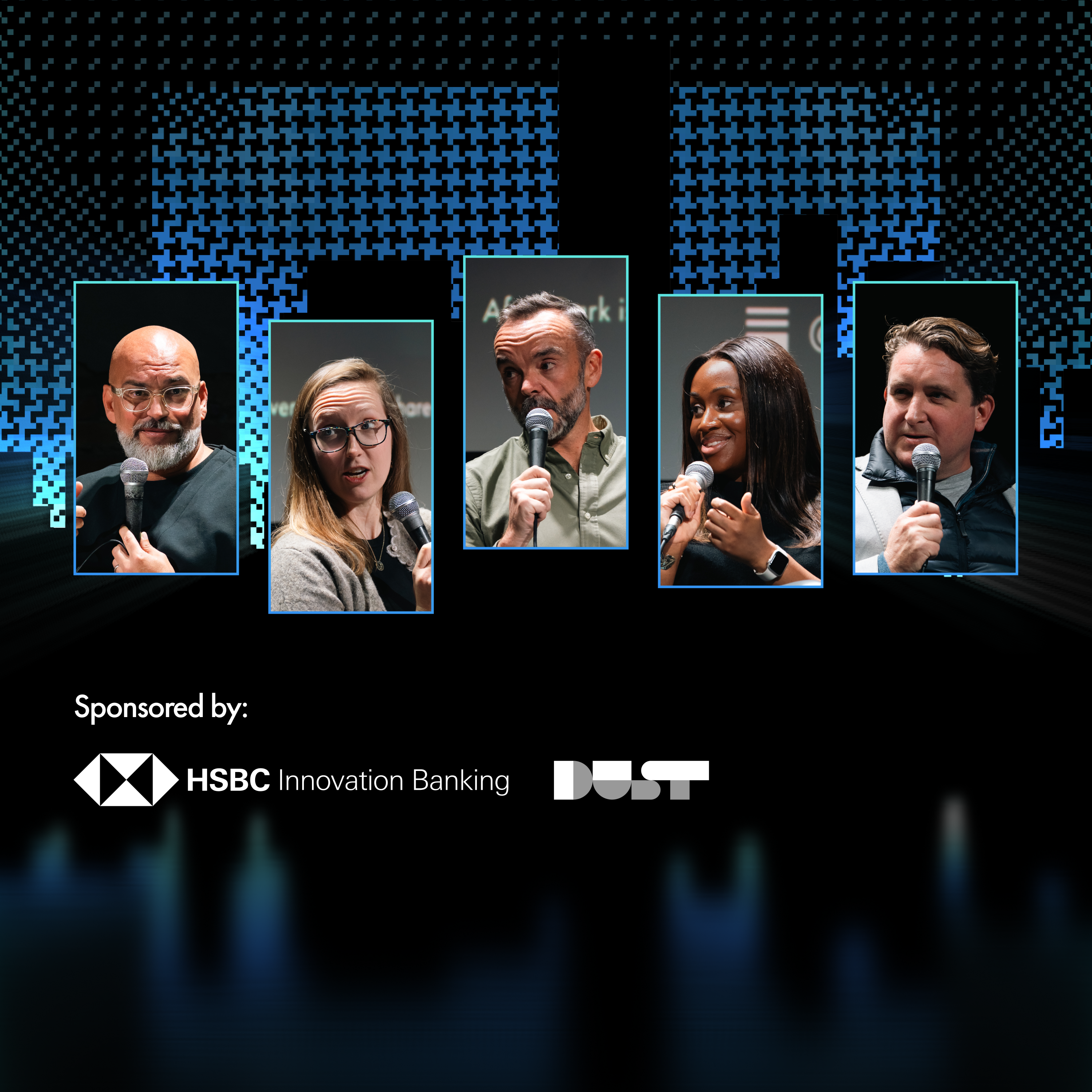
Welcome to this week’s Fintech Insider News podcast, where host Benjamin Ensor is joined by expert guests to unpack the biggest fintech and financial services stories of the week - and, for this week only, a little bit of theatre, darlings.
This week's guests:
Rory O'Neill - Chief Marketing Officer at Checkout.com
Sam Maule - Head of Business Development at Moov
Irina Chuchkina - Fintech GTM Advisor
Stories/timestamps:
Intro - (00:01)
Nubank says it is not pursuing Monzo takeover after shares plunge - (03:09)
Checkout.com says annualised net revenue hits $750m - (14:48)
Tencent launches TenPayGo payment app for foreign visitors to China - (31:54)
Experian integrates with Google Gemini - (44:04)
Ramp brings Bill Pay to Broadway - (45:24.09)
Links to check out:
Join us at London's Village Underground on Thursday 12th November for a live recording of Fintech Insider News.
https://www.11fs.com/services/media/after-dark
We're on Substack! Subscribe for bonus content from the podcast, exclusive episodes, early access to events, and our weekly newsletter, Bitesized.
https://substack.com/@11fsfintechinsider
Join our WhatsApp community, where you can get the inside track on all all things 11:FS, as well as having your say on the things we should be paying attention to.
https://chat.whatsapp.com/KpA4gFbbWDlLFm7kx39raf
About Fintech Insider:
Fintech Insider by 11:FS is a bi-weekly podcast that covers everything from finance and banking to technology and the latest trends in financial services.
Our expert hosts, with hands-on industry experience, are joined by key decision-makers, VCs, and top reporters from across the financial landscape, including guests from companies like Stripe, Revolut, Plaid, PayPal, and Monzo. Together, they break down the biggest news and innovations shaping the space.
Our weekly news show drops every Monday, covering major stories like mergers, new product launches, regulatory shifts, and emerging tech trends. On Thursdays, our Insights show goes deeper into the hottest topics driving the future of finance, including AI in banking, decentralised finance, and the evolving landscape of embedded finance.
Whether you're already in the fintech game or just starting to explore, this is the #1 podcast for you.
If you enjoyed this episode, don’t forget to subscribe and leave a review!
Got a question for us? Email [email protected]!
Learn more about your ad choices. Visit megaphone.fm/adchoices