

 Fintech Insider Podcast by 11:FS
8 Oct 2026 · 46m


 Add vo to ChatGPT or Claude to ask about everything you hear
vo listened to this episode to put together the overview and transcript, so there may be the odd mistake.
Who owns the “banking relationship” in the AI era as general-purpose LLMs (e.g., ChatGPT) connect to financial accounts and provide personalized spending insights and recommendations, potentially shifting primacy from banks to AI assistants.
0:14Welcome to Fintech Insider Insights. I'm Kate Moody, Customer Strategy Director at 11FS. This episode is brought to you in partnership with Personetics, the AI cognitive banking platform. For years, banks have competed to become the primary place customers manage their financial lives. But AI could fundamentally change what primary means. Consumers are increasingly turning to general purpose AI for information, recommendations and decision making. And financial services are becoming part of that relationship too. ChatGPT now allows US users to connect financial accounts and ask questions grounded in their financial data.
0:48While both OpenAI and Anthropic are moving deeper into financial services with dedicated offerings for the industry. So if I increasingly turn to an AI assistant to understand my spending, plan a purchase, or decide what to do with my money, who actually owns that financial relationship? The bank might still hold my account and move my money, but another platform could increasingly become the place where I understand it and make decisions about it. Banks potentially have an advantage, years of financial behavior and customer context combined with trust and the regulated ability to act. The question is whether they can turn that advantage into something customers genuinely experience.
1:22So on today's FinTech Insider Insights, we're asking, who owns the banking relationship in the AI era? To help us unpack it, I'm joined by a brilliant panel. First up, we've joined by Udi Ziv, CEO of Personetics. Udi, massive welcome to the show. Again, if you wouldn't mind introducing yourself to our listeners, maybe a bit about Personetics as well, please. That'd be great. Absolutely. And thank you for having me. So we deserve 35 years of tech executive career from co-founding my own company, selling it successfully to having large organizations within larger tech. In the last 11 years, I guess, I enjoy working with financial services, and the last three of which, lucky to be a CEO of Personetics, and maybe a bit about Personetics, were the AI cognitive banking platform, which basically means the ability to have customer data, transactional data, and behavioral data converted into meaningful contextual interactions.
2:27consistently across all channels, driving significant business value across four dimensions for the banks. Business growth, retention and primacy, operational efficiency and customer engagement. At the end of the day, what the platform does is it orchestrates a relationship, which in our view is the most important thing. Awesome. We're absolutely looking forward to hearing your perspectives as we move through the show. So thanks very much for joining us. Also joining us, we have a return to the show for Megan Kaywood, CEO of Kaywood. Megan, always great to have you back. Again, maybe if anyone's not listened for a little while or is new to the show, would you mind introducing yourself and Kay Wood, please?
3:05Yeah, of course. So, yeah, my background is all in fintech and banking. I moved over to the UK about a decade ago to help start Starling Bank as their chief platform officer. Then was at Barclays as their chief product officer for about half a decade. And now have an agentic AI firm that creates B2B agentic offerings for banks and have really turned my focus within financial technology to the Agentekei side. So this conversation is everything I love talking about. So it's great to be back with you again. Fantastic. Yeah, thanks for taking the time. Also looking forward to picking your brain as well.
3:35And last but absolutely not least is a warm welcome again to the show to Ron Shevlin, Chief Research Officer at Cornerstone Advisors. Ron, always great to have you on the show. Again, maybe for any listeners who haven't come across you, I'm not sure how, but if they haven't come across you, wouldn't mind introducing yourself and your work at Cornerstone, please. Of course, and thanks for having me back, Kate. Great to be here. Ron Sheldon, Chief Research Officer at Cornerstone Advisors. I've been in the tech analyst space for nearly 30 years with Forrester IT Group and now Cornerstone Advisors.
4:03And I write the FinTech Snart Tank blog, which is now on Substack. Awesome. Well, yeah, a fantastic panel. Let's dive in. Okay, so I'm sure lots of ground for us to cover today. Maybe let's start with the relationship itself. So for a long time, banks have talked about becoming their customers primary financial relationship. But if customers increasingly go somewhere else to understand their money and make financial decisions, we probably need to have a think again about what primary actually means. Ron, maybe I'll throw it to you first. What do you think it actually means for a bank to own the customer relationship today?
4:36Kate, I hate to start off on a confrontational note, but I think I have a problem right off the bat with the question. Okay, I can take it. You use the term the primary relationship because I just don't think there is a primary relationship anymore. There are multiple relationships. I think most consumers under a certain age, and I don't know, let's say 50, just don't think about their having a single primary relationship. They have primary product relationships. There's a primary checking account, a primary credit card, a primary debit card, a primary investment account. It just goes down the list.
5:17The idea that one relationship stands out as the overall primary, I just think cuts across the way consumers think these days. Yeah, no, I think that's fair. Yeah, I can add to that. I think you're absolutely right. I think what banks are trying to do is increase privacy, meaning get more of primacy, I guess, or more of the share of the business. I think everyone acknowledges that the days of a single bank are gone. And within the multiple banks that each one of us have, the banks are trying to get us to use more of their products, more of their services, which is what they call privacy. Yeah, absolutely.
5:59I mean, Megan, maybe, can you bring you in as well? What's your take on this question? Yeah, I think it's a good question. Historically, that phrase, owning the customer relationship, manifested when banks were both regulated, but a customer would have a primary relationship with one bank to run in Udu's points. But the reality is that customers do have a number of different relationships, and regulators in different parts of the world have very much invested in accelerating that. So, for example, in the UK, we had the Competition Markets Authority that did a year-long analysis and found that they felt like the banks weren't serving customers as well as they could.
6:34They wanted more on innovation competition. That's part of what led to open banking mandating that they create these secure APIs to share their data securely with other fintechs who are now offering different services so customers would have more choice. Because what you saw is that what used to happen is banks would incentivize a customer to join with some sort of loss-making introductory offer, like cash back on spending or cash lump sum. But then the way they predominantly made money was upselling higher profit financial products like credit cards, mortgages, and loans so they can make the net interest margin.
7:04And they would talk about owning the customer because they were regulated, and that conferred a set of regulatory obligations to them and a certain set of rights for the customer. And so when open banking came along and it said, you no longer own the customer's data, they own their data, and you have to help them share that securely when they want to. There was a lot of questions of like, who owns the customer relationship. And the reality is, is that it's just shifted. Different financial products have different regulatory responsibilities, and the way that you integrate changes what responsibilities and ownership you have.
7:35So at Starling, when we integrated a third-party partner, if you started in Starling, but then went into Wealthify, we would own your current account relationship, but Wealthify would still have that wealth management relationship with you. If we deeply embedded them in our app and it was white-labeled, then all of a sudden we would own more of the customer relationship. But ownership is very much about where customers find and access your products. If you fall under consumer duty regulation or you don't, what products and services they're adding on at any given period of time. And that relationship is just evolving a lot because since digital, there's so many fintechs that are mobile only and brilliant user experiences and low cost and people have lots of options.
8:13So increasingly, banks don't own as much of of relationship as they used to because people use more financial products and services than they used to effectively. Yeah, no, I think that's a really good way of sort of setting the scene for it. I mean, Udi, as Megan's really sort of articulately explained, I suppose we already had this massive disruption with the arrival of fintechs, the rise of digital challenges that was making that model of ownership, whether it was considered primary or not, sort of more complicated. How has the arrival, the exceptionally rapid arrival of AI further fragmented this space?
8:45You know, AI created a whole new challenge and different stats that are out there are saying that, you know, globally over 50 percent of the population is now using AI to advise them on financial matters. And just in the U.S. in the last year, the group from 10 percent to over 55 percent. And I'm sure that that survey was in April. I'm sure now it's way above that. So it's a very significant change for the industry when people are, instead of going to the bank, are going into the LLMs. And this is prior to Plaid, by the way, a good partner of ours, partnering with ChatGPT and allowing customers to have now personal financial advice, which is way different than the generic, you know, I got$20 ,000, what should I invest in?
9:35Which is a generic question, still a problem for the banks. But when now ChatGPT can have in the U.S., for now at least, all my accounts, all of a sudden it becomes much more personal and relevant. And that's a real threat because, you know, regardless of whether there is one or multiple banks, obviously there are multiple banks, having a relationship with the customers so that banks can influence the customers' decisions is a significant part of the existence of banks. for hundreds of years. Now it started in the branch, it went digital and some human, but losing that and becoming, you know, just a destination that, you know, a chat GPT would basically point me to where I want to go or need to be in terms of financial products.
10:27And just executing that as a transaction within the bank is by definition, creating an invisible utility or a dumb pipe. And, you know, those of us who had the pleasure of working with the telecommunication industry, we know what happened when they, from being the most important entities for us as consumers, they became completely irrelevant when they have missed the fact that the engagement or the relationship is what matters. And to make my point, if the relationship now moves to the LLNs and just the execution happens at the bank, that's a major threat. And I think the biggest one ever in terms of relationship threat to the banking industry.
11:17Yeah. Ron, how big a threat do you think this is from where you're standing? I'm totally on board with Udi, and I think he made a really good point I want to highlight. talked about the engagement aspect of it, which I think is really the important piece. Engagement is what drives the relationship. When you've got a lot of positive engagement with a provider, then you're satisfied with them and you feel a connection to them. But here's the, and I haven't really thought this one through, see if you guys buy into this or not. At least from a U.S. perspective, because of the regulatory environment here, I can't help but wonder if it's the fintechs who are more challenged than the banks because what ultimately – play the tape forward.
12:00What ultimately happens if engagement moves to the LLMs? Then Anthropic, OpenAI all want to become the product provider as well, but they can't. They still have to rely on a bank. So the bank makes its money. And yes, the partner bank model here is under threat as well as fintechs are buying up the getting their licenses. But, you know, I think we still have to go back to understanding what's the quality of the relationship. I mean, it's great that the LLM, you know, can can access the accounts directly through Plaid. But remember, the advice is still built on some model. And I'm not actually that convinced that the models have access to real-world results.
12:45And I think that's what drives – it sounds great, but what is really the quality of the advice that they're providing when the model is not validated against real-world results? And that's always been a challenge from the bank perspective. So, I don't know. You guys, tell me where I'm going wrong on this one. You won't offend me on that. Trust me. From our perspective, it's the ability to influence. So, yes, banks, I mean, as you say, if they handle a transaction, they still would make money. Well, maybe. But if the advice that the LLMs give is going in a direction that is less favorable to the bank, we as consumers are still going to make that decision because the LLM told us to.
13:28And the bank is now making less money. And there are studies that show this can be extremely significant. So, in effect, I agree the engagement is key. But engagement is there to build trust and to influence. And if you lose the ability to influence, you're basically at the hands of someone else and become, again, an invisible utility. And so the way I would add to that is the place that we were in post-financial crisis that led to the regulator wanting to create new rules and regulations to enable competition was it was very difficult to compare banks. It was very difficult to switch banks. So therefore, one bank would have a relationship with you.
14:12You would tend to stay with them for a very long time, and you would often trust them, and they would upsell you other products. And that made a lot of sense for the banks. But the CMA and other regulators effectively found that it wasn't really great for consumers. And particularly, they'd post the iPhone launch and all these amazing Tintechs coming out that were cloud-based, mobile-only, really low-cost-based, really low fees, but brilliant user interface. They wanted people to be aware of those and be able to access them and share banking data with them and all of that. So effectively, what's been happening from a build perspective, a competition perspective, and regulatory perspective is trying to break that relationship so customers aren't so locked into one bank.
14:48So that's already been happening as a foundation layer. Then we have all these fintechs coming to market who are competing. Then now, effectively, we have different frontier models and AI assistants who are interacting with people, chat, GPT, doing integrations. they're providing an information layer. They're helping you understand based off of your context, your finances, and your needs, here are your options. So now what we have is a place where the banks were still getting a little bit of momentum off the fact that there was still friction to understand what fintechs were the best option. A lot of people don't have a huge amount of financial acumen to understand all of the different products and all of the different services and what might best fit their needs and how to build a really nice diversified portfolio and et cetera, et cetera.
15:32So that's where LLMs can bring that intelligence to the table. And what that means is that that kind of inertia that exists from people not knowing what to do is going down even further because now you have LLMs providing that quite quickly to individuals. I actually don't think it gives the banks any advantage over fintechs because fintechs tend to be more competitive on price and user experience. And when the interface no longer matters as much because increasingly the AI will recommend it and execute it. The banks, if they're really competitive with the fintechs, will have equal footing. But hypothetically, the LLMs will be recommending.
16:10And hypothetically, they'll be recommending based off of who's the best fit, not based on customer loyalty. So I think it's shifting the relationship that people have because people aren't super tied to any one provider, as we've been saying. And now they have this other intelligence layer to help them understand what their options are. Kate, if I can jump in on two, points on this too. So we're assuming that the LLM is going to make a recommendation that is best for the user. And historically, that's never happened. Look at Mint. You know, Schwab paid a lot of money. They always got the recommendation.
16:46The other thing that I think is happening that's going to impact this is, and Kate, you kind of alluded to this at the very beginning, that the Anthropics and OpenAIs are actually creating products and services directly for the financial institutions. I can easily foresee the day when Jamie Dimon is sitting down in a private conversation with the CEO of Anthropic and says to him, you know, we're spending$30 million a year for your products and services and you're recommending Bank of America. Keep doing that and I'm pulling the contract from you. There's a lot of conflict of interest that the big labs are creating for themselves by selling services to the institutions and then potentially recommending their competitors.
17:34Yeah, I think that's a really important point to raise. I was just going to say right now, the thing that is important to point out as well, though, is that the Frontier Labs don't offer financial products. They enable these integrations and they're informational, but they're not actually offering a banking services. It was seen for a period of time. No, but they're offering fraud and risk management products and services. And, you know, now coming to the table with cloud. I mean, it's infrastructure. It's not the competing product. But the point is, if the threat is going to recommend somebody else, then they've got channel conflict they've got to deal with.
18:11Yeah, I see. I just think that if Anthropic or OpenAI starts recommending one model based off of a deal, one, there's a regulatory element to that. But then two, customers can kind of, I think customer trust is going to be predicated on Ellen actually having their best financial interests at heart and not just upselling the one product that the frontier model has a relationship with. And if the frontier models end up doing that, I would guess that a third-party fintech will do it better by plugging in Gemini, Cloud, and GPT and having a multi-model platform that then can provide unbiased advice because that's not particularly complex to build.
18:48So I think having that kind of a sway where you can buy customers I think is going to be reduced quite drastically. And I think trust will be based off of partially getting objective advice. But where I think you're right, Ron, is it's frontier reasoning. and the models have their own perspectives on what to recommend. And I think it's a fair point to say, are they just going to recommend the one with the best price? Is that the best way to say it? There might be other trust scores. There might be better handling of fraud. There might be a number of different criteria that means best for one particular customer, but best for another.
19:21But ultimately the LLM will have to exercise reasoning to determine based off of you what is best. And I think that will be a very subjective evaluation per LLM and per customer based off of the customer and LLM's perspective and experience. And it won't be a deterministic, simple algorithmic output. So everyone will have a different recommendation is my suspicion. You know, Ron, I totally agree with what you're saying. I don't think the, you know, open AI will be objective or provide the best advice for me. I think that's missing the point. I think the question is, it doesn't matter if it does or doesn't.
19:57What does matter is that I'm not going to go to the bank to get the advice. And I think that, to me, is the biggest threat to the bank. When now I do go to the bank app and I do look at things from a bank's perspective, if that goes away, regardless of whether the advice I will be getting is objective or not, and maybe it will point to me, but it wasn't me helping the customer with what is me, the bank, helping the customer get to what is important to me, whether it's to increase deposits or whatever. it would be. And I think that is the threat, not having the ability to influence. And to me, that's, at least the conversation I'm having globally with banks, that's a major threat to them.
20:42And by the way, I'm actually optimistic. I think there is plenty that the banks can do. I think they have significant advantages, which we can talk about, but they need to do it right. And that's the point. They cannot ignore this because, again, look back at telecommunication who did ignore it. They didn't think it's going to happen. And, you know, fast forward, they're completely irrelevant. Yeah. I mean, I find that from my experience of speaking to customers and interviewing customers, I suppose the thing that, and I have actually, just by coincidence, my job prior to 11th Fest was in the telecom space as well.
21:14So it feels like a kind of perfect point of comparison, as you say. The thing that is fundamentally different about financial services, which I think is maybe not been so much of an issue so far, because so much of the innovation has been around chatbots, queries on spending. But when you start to get into the big grown-up stuff, like where does my life savings go? Am I going to be able to afford to send my kids to college? Am I going to be able to retire? I think those big questions, which only obviously maybe exist in health as well, but are fairly unique to financial services in terms of the scale of the impact.
21:47I think this trust dynamic is front and centre. And trust both in terms of do I think this is a platform, a brand, which, you know, to the point, Ron, you're making, is it going to be making, giving me advice that's in my best interest? But also, you know, if something goes wrong, is there going to be recourse? Is there going to be somewhere that I can turn if I think that I've been given advice that wasn't in my interest? And I think this is certainly, you know, I've already seen this playing out in precisely the kind of fractured market dynamics that you're talking about, Ron. Like lots of people have distributed financial systems but I've seen from my personal experience that a lot of people still have kept large chunks of their funds in a sort of reliable trustworthy traditional bank because they know that if they feel at least that if something goes wrong they can get in their car drive down the road go to a branch which probably isn't going to be open and complain and I think this is the dynamic that we still will need to see play out within the space of AI that But yes, the potential is there.
22:50Yes, there are always amazing kind of advisory services that are starting to emerge. But actually, when it comes to making big money moves, what are people going to do and where are they going to place their trust? But we've hit time for this section, so we're going to take a quick pause. After the break, we're asking what banks actually need to do with those advantages, the type of things we've touched on so far, and what an intelligent banking relationship looks like when AI moves beyond the chatbot. It's all coming up after this quick break, so don't go anywhere.
23:45Thank you. To keep the momentum going, head to paymentology.com. Welcome back to Mentech Insider. We've talked about the threat to the traditional banking relationship. Now let's look at what banks can actually do about it. Udi, maybe let's start with you first. It sounds like you're obviously having lots of these conversations with banks. You mentioned you feel optimistic. What do you think it's going to mean to build an intelligent bank rather than simply adding in AI? What can these banks do to counter this threat? Yeah, from my perspective, banks have quite a few significant notes that, if played right, can actually maintain the customer relationship.
24:27And they won't make the LLMs go away, but make the bank important enough for its customers to maintain the relationship. And I'll just cover a few of these notes. First of all, data, breadth, and depth. Yes, LLMs do get transactional data via open banking, but banks have so much more data around these transactions, the metadata around transaction, behavioral data, the loan officer notes, rejections of applications, and much more of the data that LLMs would ever have because the banks don't have to give that data as part of the regulatory open banking requirement. So that's one. The other that is extremely significant is LLMs are one-dimensional.
25:13We all love the interface, but it's one-dimensional. And we touched upon that point. So banks have digital, of course. They have multiple human channels, right? I mean, the relationship manager, the call center, the branch. and for significantly important financial decisions, people still want to have a person somewhere that they can either speak to or when the need comes, they could drive, as you said, to the branch. And banks have agentic interfaces or channels as well. So while the LLMs are one-dimensional from a channel perspective, banks have multiple dimensions, which is very significant for the customers.
25:52Then it goes to the ability to close the loop, to take action. LLMs can give advice, and you have an advice, and you have to go somewhere else to take action. We believe the fact that the bank can close the loop and actually take the action for you is significant. And last but not least, I would say trust. Yes, absolutely. You know, their surveys say 79 % of people trust their banks with financial decisions. One would think, why not? Not 100%, but 79 % is not bad. LLMs, it goes roughly to between 30 % and 40%. So definitely they have a trust advantage. Now, the point is, what do banks do with that?
26:31Because some of the banks I've seen have taken almost like a knee-jerk reaction. Oh, I will create a chatbot. And many of the banks I speak to basically have launched an initiative of creating a new channel, which is a chatbot. Some of it is actually fairly intelligent. But the problem is that it's disconnected from the rest of the experience. And now, instead of making everything coherent, making all of the channels basically consistent in terms of customer experience, in our terms, basically orchestrating the relationship, they created another silo, which is, in a sense, is wrong in two ways.
27:14One, they're never going to be as good as the LLMs chat. So basically, they're just highlighting how better the LLMs are from a chat perspective, from a chatbot or agentic perspective. And then it gives inconsistent experience. So if I go to the app and look at one thing, and then the agent is giving me something very different, I'm basically losing trust with the bank. So that's the wrong approach. And from our perspective, we think there needs to be a coherent intelligence platform that sits across all the data that I've mentioned, which banks have to leverage. But then across all of the different channels, including the ability to take action across all of them.
27:56That's how you start leveraging the modes and create an experience that customers will want to come back to and maintain the relationship, maintain the ability to influence. Megan, keen to get your perspective. obviously kind of you've seen firsthand from working in these organizations. We've talked a lot on this show about how challenging some of the technical underworrying of historical bank systems made even just a transition to digital, to kind of mobile banking. Do you kind of feel that the majority of banks are going to be able to take the sorts of steps that Udi set out? So there's a lot of advancements in AI today.
28:32They're the frontier models and assistants that exist that people interact with. And they think of this as a chat conversation. And the first manifestations of AI in finance from a consumer perspective are often chat, so either customer support or an app. So Starling has their Starling assistant with Gemini. Lloyd's has one as well. I forget with which frontier model. It might also be Gemini. But they tend to be a bit incremental. You're asking questions about your finances and understanding things a bit better. And it's interesting, but that's not the power of AI in finance. So I'm writing this book on agentic AI in finance, and I have a really interesting leader from one of the frontier labs who's written a contribution to a chapter on the maturity model for finance.
29:11And he articulates it so well, which he calls it the capability overhang, which is a lot of banks will buy licenses to frontier models, and they'll have access to enormous capability, but they only take advantage of a fraction of it. And one of the problems is that they will effectively incrementally improve an existing workflow with AI. And so an example would be an underwriter who used to process 20 submissions in a certain period of time now does 25. That's interesting, but it's a rounding error, when instead you could do 200. But you need to rethink the workflow from the roundup. You need to think of how AI would do it differently.
29:44You think of how you delegate to an agent. You give it a mandate. You give it persistent tool access. You give it certain rights and permissions. You think about which actions they shouldn't take and ensure you have an action boundary manifested in code as well so you have governance around it. And then that changes it. because AI and finance is two parts. One, it's AI internally, how you have agents doing financial work inside of the banks, and then how it manifests externally. And part of why with KWID, we focus on the B2B side is there's so much, so much opportunity there. And it's actually, if you look at Anthropic, financial services is their fastest growing industry behind software engineering.
30:19It plots about a year behind on that growth trajectory curve, which is phenomenal because coding with LLM is incredibly powerful. And they're seeing something similar with financial services. So if you look at an example like BNY, right? So BNY has a platform they've built internally called Eliza that plugs in Gemini, Chad, Gbt, and Claude. They have, I think it's 200 digital employees who manifest in the employee directory. They have names, they have emails. You can talk with them and collaborate with them. They have very specific jobs. They get performance reviews on the same cycles as their human colleagues.
30:48And that is very innovative. And when you take that agency of these individuals who are doing particular autonomous work, and then you manifest it for a customer, It's not just analyze my finances or give me some insights to my spending. It's then that agentic part that will be really interesting where they actually execute for you. So interfaces will matter less. Like the customer relationship will change because already with digital, people aren't interacting with humans usually in a bank anyways. And people don't typically have high trust for banks. They have high trust for the regulator who regulates the banks.
31:21So that is quite distinct. And then you have this new frontier models and these AIs who are actually highly emotionally intelligent. They build very nuanced relationships. They're available 24-7. They can remember everything about you. Whatever data they don't have and context they don't have, you could arguably get from a very easily built API or just sharing statements or data in. And then they have complete context as well. And they can help you make incredible decisions that you wouldn't have been able to make before because they can take a lot of complexity and simplify it really fast. So that's why I think there's huge opportunity for AI and finance, both internally as well as externally.
31:56But what we see right now is interesting, but it's evidence of the capability overhang. It is a small increment to improve existing processes. It's not the art of the possible. I think it's great that we're doing it. I think they're learning and they're integrating and it's great to see stuff. But I don't think this is going to be like the big innovation of AI and banking. Is the chatbot assistant available in the app or reducing operation costs? You know, all that kind of fun stuff. Yeah. Yeah. Ron, keen to bring you in. From what you're seeing, what are the banks that are best placed to survive this massive shift?
32:28What are they doing that's going to set them up to survive this disruption? A couple of things. I think there's an external facing and an internal. The internal is everything Megan just said about changing execution from an AI, agentic AI perspective. I think right now, and maybe very different over there where you guys are, but on this side of the pond, it's a whole lot more talk than it is action. And it's not surprising because you need an infrastructure in place to enable a lot of that. A lot of it comes from what I'm going to call data actionability. It's not data access. There's plenty of the data, But it's not actionable in terms of reach, authority, other kind of attributes.
33:15So that's what's holding things back. But I totally agree with Megan about that's the opportunity. But the funny thing is, Megan, that that's the argument for why the LLMs aren't going to be pushing people into other products. Because all they can look at is pricing and fees. You can't look at what that experience is. And who's going to want to deal with a bank that's operating on 1983 technology instead of 2027 technology? And that's not going to be part of what the LLMs can assess. But what they can assess are the rates and fees. But then the other piece I want to bring into this is product.
33:57Ultimately, it's about the product. And listen, we've gone through 25, close to 30 years now of focus on the online banking platform and then the mobile banking platform, looking at it's a features race. And that's got to stop. That's not where you gain any advantage. The advantage is in designing products that fit the needs of various segments of the market. You know, here we've got a lot of gig workers, side hustlers, creators who all have very unique financial needs, mostly being unmet by the traditional financial products that are out there. And so the way you beat the LLM is by not having necessarily better fees, lower rates, all that kind of stuff.
34:41It's by having a differentiated product that meets the unique needs of a particular segment. That doesn't address the stuff Megan was talking about, though, in terms of execution. So the bank's big challenge these days is they really got to be playing a couple different games at the same time. You got to protect the existing base of customers and everything, but you've got to be, you know, redoing the processes and rethinking the products. Yeah, I want to pick up on two things, Rodney, you were saying, which I think are excellent. And I fully agree that, you know, at the end of the day, it is about products.
35:20The question is, are they going to have the storefront or the ability to engage with customers to actually position these products and help influence the customer's decision towards these products? But I want to go back to the comment you made about having this platform. You know, AI is obviously here to stay and AI will be or needs to be dramatically used. And I agree with me again in banking, but AI cannot be looked at as a silo. It's not a separate thing within the bank. And many of the banks, some of the largest banks, actually are spending billions of dollars on siloed AI initiatives. And it all goes back to, do you have the right platform?
36:04and you know obviously not going to mention the name but the president of one of the largest banks in the US basically said look I'm stuck because I'm completely siloed from an organizational perspective and from a system perspective I can't do what you're asking and you know here's where we come in and say don't do anything with your systems you can't replace them it's too complicated too long too expensive put a layer on top that is this intelligence layer that does look at the breadth of data and makes it actionable. We call this transaction intelligence. And you can't silo it per channel. It has to be consistent within the channel.
36:44You have to, I mean, the asset at the end of the day is the relationship. And if the relationship is the asset orchestrated across your moat, which is the multi-channel and the multi-channel experience. And if you do that, and from our experience, it's months of project, not more, you all of a sudden can jump from being a phylo disorganization, maybe competing with an NLM to providing a very different experience. And then, you're right, then I can offer my new products that are innovative, that are different, that are fitting to the new world or the new economy. But you have to have that platform.
37:25And if you don't have a common layer of data access or actionability, if you don't have from the grounds up AI governance built into that platform. I'm speaking to banks, and I'm sure you guys too, that have gazillion models. They're just floating somewhere and they can't be used because the bank can trust them. So it has to be built from ground up with an AI governance layer that's part of this platform. And then this intelligence layer takes all the data, including the Gen.AI data, across all the channels, across all the models, and making it accessible to all of the different channels. Now, it's not difficult.
38:13Just need to realize that it's not a race for, and going back, I fully agree, it's not a race for the chatbot. It's a race for the relationship orchestration. And if they do it right, I think they can still win. Yeah, no, that makes sense. Okay, I mean, rather, I don't even know how this has happened, but I think we're coming towards the end of the show already. I'm sure there's like a gazillion things we probably should have discussed that we haven't got to. But I mean, I suppose to wrap us up, I mean, I assume really the aspiration here is that AI ultimately makes banking relationships more personal, more dynamic.
38:47Ron, what do you think is kind of the main thing that needs to happen to enable that as an outcome? strategy on the part of the banks where strategy is based on understanding the segments you're going after, the product needs, and delivering on that. I think in banking, it's just bankers have bought into the idea that their products are commodities. I don't buy into that at all. They've got to have the focus and commitment. This is going to take a, I don't care how fast, look, the technology is moving fast. The industry's ability to keep up with it is lagging and will always lag. So it's going to take commitment on the part of the financial institutions to make bets and invest in this.
39:28It sounds very generic as I say that, but I'll let Megan say something really smart. No, I agree with you. I think when it comes to AI and banking, when we look at implementing the next wave, I think some of the points that resonated with me were that banks typically go through this build by partner analysis when it comes to new technology, and they tend to like to partner with other companies rather than building internally. Not always, obviously, in my experience, but oftentimes they do. And I think in this example, it actually works really well because what we've seen is companies, Microsoft and Uber being too in the news that have spent a huge amount on their AI budgets.
40:06Like Uber, I think, blew through their AI budget in like Q1 and then had to cancel its licenses. And then even Microsoft had to cancel Claude Claude licenses. It's not they weren't getting value out of it. They're just very expensive. And I think what's happening, what we're seeing, the failure mode is whenever they allocate these big budgets, but then they just incentivize employees like use AI as much as possible, build as many agents as possible, but they're not really clear on the outcomes. To Udi's point, they don't have orchestrated systems. So that's where I actually think partnerships and integrations can work really, really well, because to build it well internally and externally takes an understanding of how to set up the agents internally, how to do model orchestration.
40:42So not everything needs frontier reasoning in Fable or Astra, even that alone in terms of token costs and expense is hugely important, knowing how to orchestrate across the models for any given task and particular agent and role that you have. The capability overhang that exists where the banks have access to powerful models but aren't fully taking advantage of them, part of that can be mitigated through working with third parties who've built the agents and can also help to navigate the consumer offering as well. So I think it's a really big opportunity. partnerships and collaborations can work really well in this space there's a huge capability overhang but but yeah yeah i think it's an exciting time to be working in the space and a lot of fun things to see on the horizon yeah and ud final word for you i suppose when we started off this conversation with a discussion about you know what does it mean to own a banking relationship in the ai era i guess reflecting on everything we've discussed today what's kind of the the main kind of key thing you'd like to leave leave listeners to reflect on yeah so two things Maybe quickly.
41:42First, banks have to invest in this coherent intelligence layer, whatever it is. Otherwise, they lose their amount or they don't leverage it. I think the first step that they need to take is actually taking transaction intelligence, the real-time happening of their customers into the RM world. And again, there's a lot of AI that is involved there on how to get the relationship manager to know who to prioritize, why they need to reach out to a person and with what. I think that's a major gap that basically creates completely broken experiences for people. And it's an easy first step for them to exercise this consistency across channel, sharing intelligence between the mostly digital and the human channel.
42:33And I think they will see the result of that and the customer satisfaction that comes with that and the business growth, which will give them a good step forward. And it's not difficult to do. It's always nice to end on an optimistic note. Okay, that wraps up today's discussion. A big thank you to our panel for breaking down this really important topic for us today. Thank you so much for joining me. Where can people connect and find out more about you, Udi? Our website, I'm very active on LinkedIn. Send me a note, happy to interact and engage. It's fun. Awesome. Megan? Yep, predominantly at LinkedIn at Megan Kaywood.
43:09Yeah, that's the best channel these days. Awesome. And what about you, Ron? On LinkedIn, of course, and ronshevlin.substack.com for the fintech snark tank. Awesome. Would highly recommend. And you can find me also, sadly, boringly on LinkedIn, or you can drop me an email at kateellenfest.com. Thanks for listening. If you like what you've heard, follow our podcast, and don't forget to leave us a review. It helps us to make the show better and helps others to find the show as well. As always, if you want to join the conversation, find us on social media, just search for LNFS or fintechinsider, or email podcast at 11FS.com.
43:39Thanks very much. Bye. four four
About this episode:
As AI becomes another interface between customers and their money, could banks lose their place at the centre of the financial relationship?
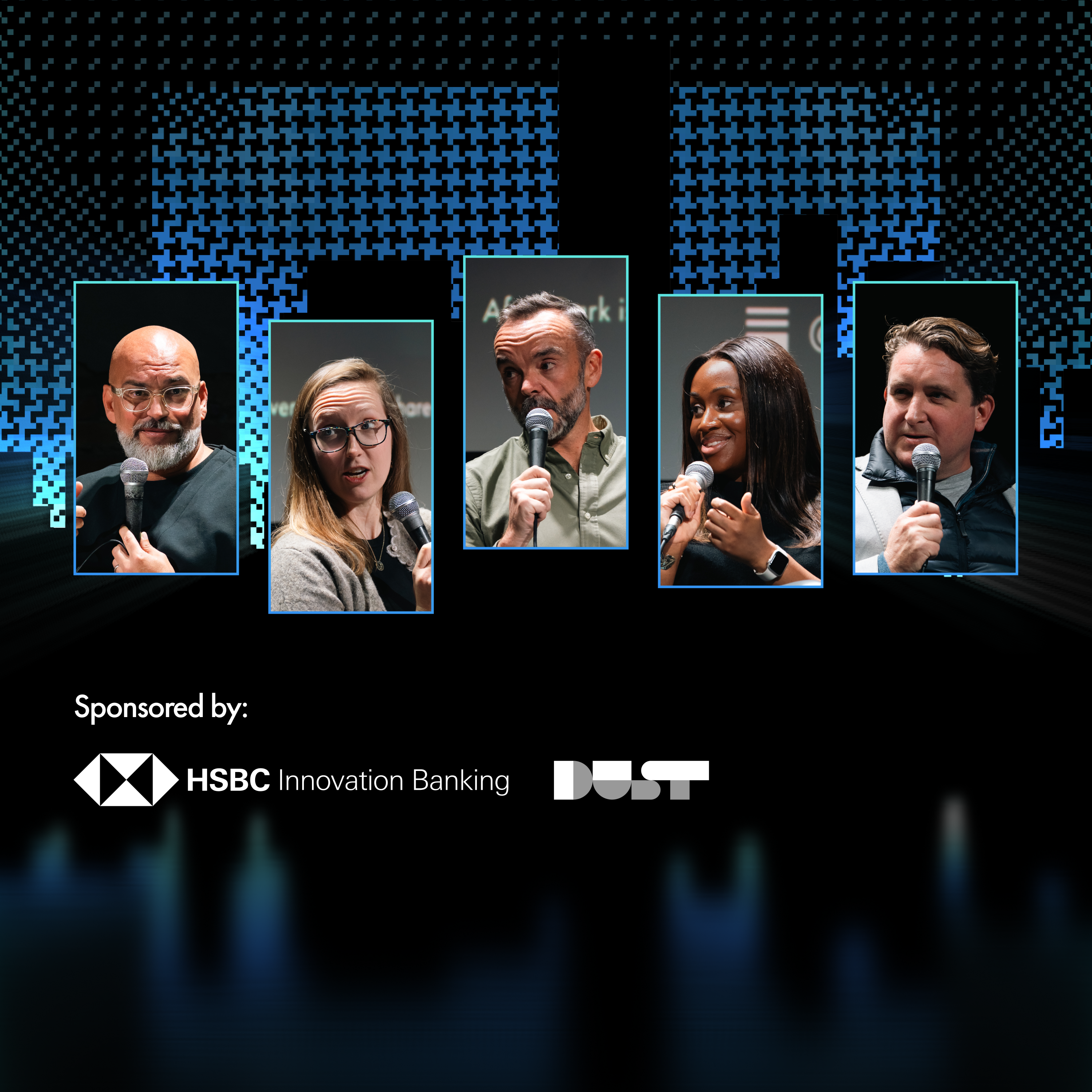
Host Kate Moody is joined by Udi Ziv, CEO of Personetics, Megan Caywood, CEO of Caywood, and Ron Shevlin, Chief Research Officer at Cornerstone Advisors, to explore who owns the banking relationship in the AI era. They discuss whether banks’ data and trust still give them an advantage, what happens when AI moves from answering questions to taking action, and whether AI could ultimately make banking more personal rather than less.
This episode is produced in partnership with Personetics.
This week's guests:
Udi Ziv - CEO of Personetics
Megan Caywood - CEO of Caywood
Ron Shevlin - Chief research officer of Cornerstone Advisors
Links to check out:
We're on Substack! Subscribe for bonus content from the podcast, exclusive episodes, early access to events, and our weekly newsletter, Bitesized.
https://substack.com/@11fsfintechinsider
Join our WhatsApp community, where you can get the inside track on all all things 11:FS, as well as having your say on the things we should be paying attention to.
https://chat.whatsapp.com/KpA4gFbbWDlLFm7kx39raf
About Fintech Insider:
Fintech Insider by 11:FS is a bi-weekly podcast that covers everything from finance and banking to technology and the latest trends in financial services.
Our expert hosts, with hands-on industry experience, are joined by key decision-makers, VCs, and top reporters from across the financial landscape, including guests from companies like Stripe, Revolut, Plaid, PayPal, and Monzo. Together, they break down the biggest news and innovations shaping the space.
Our weekly news show drops every Monday, covering major stories like mergers, new product launches, regulatory shifts, and emerging tech trends. On Thursdays, our Insights show goes deeper into the hottest topics driving the future of finance, including AI in banking, decentralised finance, and the evolving landscape of embedded finance.
Whether you're already in the fintech game or just starting to explore, this is the #1 podcast for you.
If you enjoyed this episode, don’t forget to subscribe and leave a review!
Got a question for us? Email podcasts@11fs.com!
Learn more about your ad choices. Visit megaphone.fm/adchoices


Scan the code with your iPhone camera
Listen in the app.