

 Fintech Insider Podcast by 11:FS
12 Oct 2026 · 1h 4m


 Add vo to ChatGPT or Claude to ask about everything you hear
vo listened to this episode to put together the overview and transcript, so there may be the odd mistake.
Episode 1106 of FinTech Insider News covers three fintech stories and a discussion on credit access, tokenization, and onboarding unbanked users.
0:04Ross Gallagher: This is Fintech Insider News. This week, community finance and open banking could help the UK's credit invisibles. Lloyd's survey shows that 71 % of UK financial institutions back tokenization and NG Cash raises$15 million to widen credit access in Brazil. We will be tackling all of this and more on today's new show, so please don't go anywhere.
0:31This episode is brought to you by Google Chrome. You think you know a browser, but Gemini and Chrome? That's new. It can help you with practically anything on the web, like restoring a vintage motorcycle from a 50-page restoration block, or finally break down that long article you've had open for weeks. Gemini and Chrome is here for it. Ready to make anything online make sense? There's no place like Chrome. Check responses set up required. Compatibility and availability varies 18+.
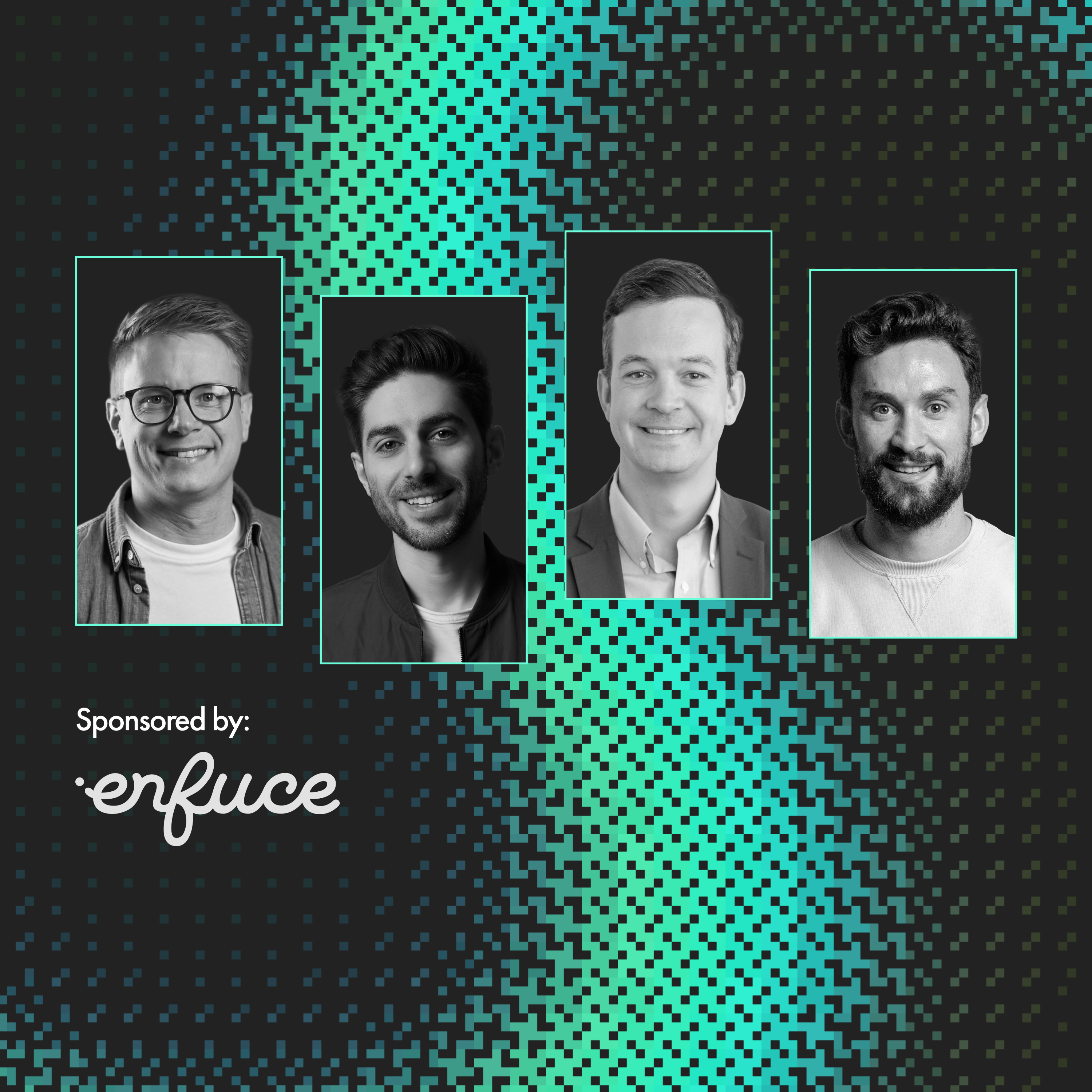
1:06Ross Gallagher: Hello and welcome to episode 1106 of FinTech Insider News brought to you by 11FS, the six-time consultancy of the year that works with financial providers big and small to build the next generation of financial services. I'm Ross Gallagher, the head of consulting here at 11FS, and to help me unpack the biggest and most interesting shows from fintech and financial services from the past week, I'm joined by a really brilliant panel of guests. First up, we have a welcome back to the show for Alex Marsh, the CEO of Salad Group. Alex, it's always a pleasure. Welcome back to the show. Maybe you can just do a quick reintroduction, both of yourself and Salad Group, just for our listeners.
1:47Yeah, sure. So yeah, great to be back. I think this It's my fourth time. So I'm literally probably an eight-year period, so fab to be back, Ross. Yeah, so I'm Alex, lead the Seller Group. Our mission at the Seller Group, we're a UK fintech, is to use technology and data to unlock access to fair and affordable credit for consumers who are typically locked out of mainstream financial services. So a real financial inclusion play. I'm really happy to talk about that today.
2:15Ross Gallagher: Yeah, excellent. And we'll be getting into it, I know, in a little bit more detail as well, Alex. So thank you for coming on and telling us all about it. We also have a very warm welcome back to the show for Veronica Glab, fractional go-to-market consultant. Veronica, it's always a pleasure. How are things going? And again, maybe you can just do a quick reintroduction, not that it's necessarily needed, but maybe for our newer listeners. Yeah, of course. It's been a little bit crazy lately because I literally just got out of FinTech Meetup Europe about an hour ago. So we'll jump in from one nerdy conversation straight into another, which is always a good day.
2:58But yeah, Veronica Glab. So I work with early stage startups on their go-to market and partnership strategy. Currently also head of partnerships at Juice Ventures and SME Lender in the UK. And just really looking forward to being back.
3:13Ross Gallagher: Excellent. And Veronica will always have you in our nerdy conversation. So thank you. Thank you for jumping in. And certainly last but not least, we have another welcome back to the show for Alex Glikarski from Matterlabs, the CEO. So Alex, great to see you. Welcome back. Again, maybe you wouldn't mind just giving a quick reintroduction for our listeners. Thank you, Ross. Excited to be here. I'm the founder and CEO of Matterlabs, which you might know is a company that created the ZK Sync protocol for scaling Ethereum with zero knowledge proofs. And for the last two years, we've had been focusing heavily on the institutional space, building the platform called Previdio, which is a fully integrated platform for financial institutions to manage their digital assets with full stack.
4:03Happy to unpack the topics.
4:06Ross Gallagher: Excellent. And looking ahead to some of our stories, Alex, I think we'll be leaning on your expertise quite heavily. So yeah, really glad that you're here and sharing some of your perspectives. Why would I promise you a brilliant panel? I certainly don't think that disappoints. So let's get going. And we are starting with a huge story this week. This one comes from Finectra with a headline. Community finance and open banking could help the UK's credit invisibles. Around 10 % of UK consumers have little or no credit history, leaving millions of people potentially credit-invisible and struggling to access mainstream financial products.
4:45Ross Gallagher: Salad Finance, a CDFI that uses open banking data rather than relying solely on traditional credit histories to assess whether customers can afford to repay a loan. Customers consent to sharing between 3 and 18 months of transaction data, allowing Salad to assess factors including income, expenditure, and existing financial commitments. Salad says it has analyzed more than 9 billion bank transactions and can make lending decisions in around 30 seconds. The company says around 70 % of its customers are renters, while only 30 % are on the electoral roll, factors which can make it harder to build a traditional credit profile.
5:23Ross Gallagher: Alex, maybe worth starting with the fundamentals here. How well does the traditional credit scoring system actually tell us whether someone can afford to repay, for example, a loan? Yeah, so I have a lot of respect, actually, for the credit, you know, Bureau Credit Reference Agency system that we have in the UK, actually, you know, when you compare that to, you know, countries, you know, markets around the world, actually, that kind of the richness of the information held there, you know, almost unparalleled. I think the reality, though, from a lender perspective, having been in sort of consumer lending, I've spent, you know, a number of years leading, you know, the UK business in Klarna, and prior to that, UK bank, the reality is that credit scores and credit files work really well for particularly super prime, prime, near prime consumers.
6:14So, people with higher incomes, with stable, consistent employment with one employer, utilizing multiple credit products. So, you've got a mortgage, maybe you've got a car on some kind of finance or loan agreement, you're regularly using your credit card, maybe for points and paying off. And the system works really well then it films like a really rich picture of your life and you know ultimately can give really valuable insights to lenders to then utilize that in their own kind of decisioning models to you know form a view both on affordability you know your level of indebtedness and ultimately you know the likelihood of you repaying i think where that model starts to you know fall down is when you do get to consumers who have typically lower incomes consumers who are living their lives through debit and cash rather than on credit rails where level of kind of reporting data just isn't going through into the bureaus.
7:04You have consumers, for example, where, you know, they access a current, you know, current account by account, they don't get an overdraft. You know, they're, you know, maybe they're, you know, younger out of, you know, college or something new to work. They have an overdraft. There's no reporting to the bureaus. They're living on debit and cash. They might pay as you go for lots of kind of services that we might take for granted in terms of all they're having to pay in one lump sum rather than monthly payments. so frankly don't build up the credit footprint and at the point they seek to you know maybe it's apply for a loan for a car or personal loan so it happens in their life the information that a lender will have on that consumer you know can't form a picture so what you tend to find happens in those situations is those consumers are locked out of mainstream financial services and then the lenders who are using credit reference agency data only to decide whether to lend to them see them as a risk because they can't get the kind of bankers.
7:57And so what do you do? You price for it. And suddenly they're paying 300 % APR, 1 ,200 % APR, or worse, not getting access to any lender, regulated lender, and forced to illegal money lenders. And, you know, family and friends lending can sound great until it goes wrong. And then obviously, you know, the really awful side of illegal money lending and the consequences that can happen there, you know, for non-payment and, you know, lack of any kind of protections. So, you know, like I say, it's a model that works and then it falls off and that's the approach that we've taken within Salad has been, we use open banking data so we can form a really rich view of the consumer circumstances now through their current account data to see actually, look, you might be living on debit and cash, but you are living within your means, you're managing your money well, you might have multiple sources of income, side hustles, receiving benefits, but we can see all of that.
8:46So we get a good view on affordability, a good view on your propensity or likelihood to repay and can offer you then a loan at a fair and reasonable price.
8:57Ross Gallagher: And I suppose what's quite powerful, Alex, as well as that information, I suppose, is much more real time. And the other thing that sort of sticks out for me in the explanation that you gave, which is really interesting, and I suppose goes to the heart of why we're using that term credit invisibles, is that the risk that you mentioned isn't necessarily anything to do with their financial habits or behaviors. It's just in the fact that there isn't enough of a picture for the financial provider to be able to offer them something necessarily with confidence. Yeah, I mean, one of the really exciting things about the way the team have built our solid finance personalized product is that whilst we're using open banking to underwrite those consumers, we are also reporting their repayments back into the credit reference agency.
9:44So, you know, absolutely our goal is to support consumers who are struggling and are locked out of mainstream credit, but ultimately to build up their credit footprint, build up, you know, their credit score in time so that they can, for example, access, you know, a loan within their, you know, from their current account provider, you know, using the very data that we're using to underwrite, but they can access that, you know, within their home bank. So that really is the goal. I think the reality is, though, that there's such a sort of a lag effect in terms of the time to build credit footprints.
10:15And through, you know, an individual person, only 12, 18 months, you know, what we are finding is that consumers are repaying us. But then they are coming back to us, for example, six months later, because they still are locked out of mainstream financial services. So that really is an area that we're really pushing out, like what additional products, whether it's in sort of a new business or what additional tools we can wrap around to really help them build up that footprint, build up that credit score so that, you know, other lenders, when they're consuming that as part of their decisioning, you know, they can provide consumers with, you know, the lowest cost possible, you know, loan product, for example, for that individual.
10:51So, yeah, that really is our goal. It's kind of support. We have a role, but ultimately pass them on into mainstream financial services.
11:01Ross Gallagher: Veronica, I'm keen to get your reaction to this one. I mean, certainly Alex describes a customer segment that has been all but excluded from sort of formal financial services. It feels like this offers a really good alternative and safer way into the market for them. Yeah, I think it's really great. And I completely agree with what Alex was saying before, because the credit invisibles are the people who just don't show up on a particular piece of paperwork. You know, when you think about it, credit scoring, it was someone in a boardroom at some point said, you know, here are some data points that should go on this monthly snapshot, a bank statement, that is really valid for what our industry is going to measure for when it comes to risk, right?
11:49And I think where the regulatory environment in the UK and Europe is actually now going, especially with open banking, is it's saying, well, actually, you know, a bank statement, a credit score, it is just a monthly report. And those data points are no longer necessarily relevant when you can look at much richer data. So that can be, you know, it's the things that show someone as being not necessarily risky. So if they've just not done that paperwork of having a credit card, being on the electoral, staying at one address, you're already excluding people who have been immigrants at some point, maybe have gone freelance at different points in their careers.
12:28And you're looking at monthly statements instead of their annual actual returns. And, you know, when you have that richer data set, then the industry gets to involve with it. So I think we are actually at that inflection point now. Yeah, it is.
12:43Ross Gallagher: It's so interesting. And I think one of the other big challenges with certainly credit scores, I think that Alex sort of alluded to was that they're really, you know, they're a black box in themselves, but then they're also only really one data point that banks consider when it comes to their own credit decisioning model. so it's all relatively opaque. Alex, what was your sort of reaction to this story? And I'm keen to get a sense of whether you think that, to Veronica's point, are we sort of reaching a bit of a tipping point here where actually the transactional data and all of that sort of stuff that you can get that can be richer, that can be real-time, are we going to see more of a shift in that direction?
13:24Look, I think this Catch-22 situation, it's not unique to the UK market. If you look at the broader world, this is what's happening everywhere at very different levels of financial products. and financial services. I think that's the one area that crypto was originally called into existence on a mission to make the financial services more available and more accessible to people. And it's very interestingly coming with this challenge that all of the existing crypto services are completely open. So in this case, if the credit data is being analyzed based on like some close data that people are opting in to share of the last three months.
14:08I was like, as I was listening to this, I thought to myself, if I were to share my three months of financial data, I would probably be fine, but it still feels a little uncomfortable. Like, why do these people need to know this? And then you look at all of the recent hacks that are accelerated by the advancement in AI and all of the cyber capabilities of the agents. And you just assume that all of this data eventually with non-negligible probability can end up in the hands of very undecent people. So I think we're seeing kind of like the story gets bigger as we zoom in into it. And I think ultimately, I would personally like to see the world where privacy and openness comes hand in hand.
15:03And we kind of like open, we're lowering the barrier of entry for everyone into the financial system while giving them the protections at the technological level rather than just like promises contractually.
15:15Ross Gallagher: Yeah, Alex, I guess it does raise an interesting question around the, I suppose, some of the trade-offs, some of the considerations about sharing what is quite sensitive financial data. So keen to get your thoughts on that. But equally, it feels like there's a compelling enough value exchange that makes that sort of worthwhile from the consumer's perspective. Yeah, I mean, actually, I do see it as a trade off. So I think it's back to that route. And I think back to my time when we were at Klarna, we did credit reference agency underwriting. So we were doing that prior to regulation, which is why you've not seen the kind of the fall off in terms of access to, say, Klarna post-regulation that you have done with some of the other providers.
15:56but the model we use there would start with CRA and then you go to marginal declines. You would say to them, if you're willing to share additional data or open banking data, we could get you back to an XSET. There's a transfer of value. Similarly, as we've seen at Salad now, these are consumers where, unfortunately, they're going on their banking app to their current account provider and they're not getting pushed out with, sign up for a credit card or here's a personal loan offer because the profiling that their own bank would be doing is not enabling that. They're then going to comparison sites.
16:23They're not seeing a multitude of loan offers there, primarily because, you know, either, you know, they're non-prime either through damage to their file in the past, you know, adverse markers, or they haven't used credit. And so, ultimately, then they're seeing there is an opportunity here to go through an eligibility assessment, et cetera, by sharing their open banking data. And it becomes, you know, a trade-off of value that they can get access to credit and it will form a real-time view. Now, it does come with a responsibility. You have insights into information in that data that you wouldn't see within both positive in terms of we can see other sources of income.
16:58We can form a much more real-time view. It's not dragged down by a county court judgment for a missed parking ticket four years ago, which is just insane. But then the counter side is we might be able to see crypto trading to Alex's earlier point, or you might see day trading or that they've got a use of gambling or they're purchasing porn in the middle of the night. and the judgment calls then that have to be made as to how do you interpret that. And I do genuinely think that is to some extent why you haven't seen more mainstream adoption of open banking utilization and underwriting by the larger banks, for instance, is to a certain extent the model, particularly for prime, near prime, super prime, it's working for them without having to have an insight into some of that information.
17:45Awesome.
17:45Ross Gallagher: And Alex, before we move on, which I'm quite sad we actually have to quite soon. One thing that I really did want to get a little bit more detail on is this thing that you talk about around helping these customers eventually sort of graduate back into mainstream financial services. I mean, that feels like a really good outcome because obviously you help building their credit profile to a point where they can do that. But maybe we could just, if you could just share a little bit more on that as well, it'd be really helpful. Yeah. And just briefly before the graduation part, I think often the implications of having a non-prime credit footprint is assumed to be only impacting their access to credit.
18:28It's impacting their access to insurance. So insurers will be looking at that as an indicator too. So often they struggle to get insurance or they don't get the option of spreading the cost of insurance or insurance becomes prohibitively expensive because suddenly it becomes a one-off payment for your car of£800 that many people couldn't necessarily afford or have the savings for in one lump sum rather than a monthly cost. So then that drives not being able to have insurance, not being able to then have a car, for example. It also flows into things we take for granted like accessing a mobile phone and we just think, oh yeah, look, I can get this great contract with an iPhone 17 or 18, lovely.
19:04They're not getting that option. So then suddenly they're on pay-as-you-go contracts. So the implications, you know, similar to utilities and your ability to spread the cost of utilities can vary depending on your credit footprint. So the implications are massive. I think that route to graduation, so to bring to life within our style of finance personal loans business, we're using open banking to underwrite. But the exciting part there is we are reporting those repayments back into the credit reference agency. So I'm not averse in any way. I think the bureaus play a really important role. But enabling them to build that footprint.
19:34So you've offered them a fair, affordable loan. You've also used open banking cleverly to look ahead and forward look to see where they might reach crunch points. You can be proactive in maybe forbearance or payment holidays. So again, you miss or you avoid, sorry, miss payments. You avoid the things that could really damage their footprint. So I think all these various applications of, you know, of open banking data that you can, you know, utilize to support a consumer to build a footprint. Then in time, they have got that score. That means they meet the thresholds. Maybe when they log into their home current account, there is an offer or a personal loan there or you know an unsecured credit card for example so that is really it's both sort of building the footprint but also protecting from the adverse actions that could damage the footprint i think that's something it's sad we're really looking at we're looking at a new venture that will be um announcing very soon that is particularly targeted towards credit invisibles and based supporting on that access but also that progression and ultimately graduation through to other products so more to come on that in the coming weeks
20:32Ross Gallagher: safely amazing um i think what you've done so well there as well is um kind of bring to life the the everyday those sort of like compounding implications it's really easy just to think of this as kind of like finance and feel a little bit detached from it but actually this is kind of like everyday lifestyle and actually um it kind of i suppose affects everyday your life i think it's a great story um i'm really grateful that you've come on to share your uh all of all of the background and everything. And yeah, we'll definitely keep an eye out on what's still to come. So thank you for that, Alex.
21:06Ross Gallagher: Our next story also comes from Fonextra with the headline, Lloyd survey 71 % of UK financial institutions back tokenization. So 71 % of senior leaders at UK financial institutions expect tokenization to transform how money and assets move through the financial system. That's according to Lloyd's latest financial institution sentiment survey. Now that's up 41 % in 2025, while 64 % of respondents now plan to increase capital expenditure over the next 12 months. Faster payments and settlement was identified as the biggest opportunity from tokenization by 60 % of respondents, followed by collateral and liquidity management at 41%.
21:49Ross Gallagher: Now before we start to discuss, maybe it would be better to clarify what tokenization actually means. It allows traditional assets, including cash bonds and funds, to be represented digitally and transferred using blockchain-based infrastructure. Alex, I'm keen just to get your overall reaction to this and also maybe specifically around that jump from 41 % to 71 % and maybe what's happened in the last 12 months to drive that. That sounds very plausible to me. this is actually what reflects our experiences talking to our customers and prospective customers. There is indeed this move to broader acceptance of the fact that the digital assets are the future of all of finance and eventually everyone will have to embrace it and the institutions are moving forward.
22:48I think there's a combinational factor that led to this, where they're all reinforcing each other. So there was a very beneficiary, regular climate, primarily in the US, but it then translates to all the other countries, which made the institutions more confident that they can explore this new technology and new possibilities, new products, which led to investment in the pilots and exploratory projects where they gained more confidence technologically and business-wise on the process side. They understood that those are things that they can control. They're not going to give up control. They're not going to give up.
23:29It's not going to threaten their position. They're not going to be immediately disrupted. They understand what roles these new instruments play in their institutions and their businesses. and they also moved to understand the practicalities of deployment. And I would say that what blocks us today from getting to 100 % is this operational complexity that still remains. So now they have a high-level picture and kind of idea of like, here's what we want to build, but they also understand that to get there, they would need to assemble components from 10 different vendors and make them work together.
24:09And they would have to re-reapplicate all of their core internal processes on these components in a way that, you know, fully following all of their compliance procedures, privacy of the user funds. And then eventually they would have to connect to other partners for doing the same from their side. It's like building a bridge from two sides of the river, which have to meet in the middle. um uh so all that just takes time those institutions are very conservative by their nature like usually projects take you know they are measured by months and years not weeks which is a little feeling a little slow to us in the in the crypto world it is what it is and and uh we have to deal with this and uh meet uh them where they are and obviously you could position that as
25:04Ross Gallagher: That sort of interoperability piece is a major barrier, but it's something that you're seeing that's actively happening. But as you say, and as we've come to expect, particularly within financial services, I guess it just takes time and a long time. Absolutely. But I think the great thing that is happening that we observe is kind of this forced standardization. Before crypto, everyone would have to agree on standards. you would have to come up and see, okay, what is everyone else going to agree on? And there would be endless debates and some APIs would be proposed. Other parties would oppose a lot of politics, etc., etc.
25:46With crypto, we have certain standards that have already won, and it's very clear that they have won. For example, EVM as the virtual machine, or token standards, or data standards. and they are just being rolled out with stable coins and with crypto native products with defy and and there are very clear established royal roads which you can just just use and travel in and they just keep getting more and more network effects as they go uh and it becomes a very easy shelling point for the institutions to say okay we're going to pick that standard because obviously it's EVA. And, you know, they can still deviate.
26:28It's not going to be like winner takes all completely for every niche. But those shilling points exist and they accelerate it. They make it a lot easier to agree, this is what we're going to do. And so we're seeing building this slowly, gradually, layer by layer, but rebuilding of the financial internet on this new open rails, which I think is absolutely fantastic for the world.
26:54Ross Gallagher: Veronica, it's really interesting, isn't it? Because all of the standardization and infrastructure that Alex just mentioned and then combining that with what we're seeing in the sentiment survey, where it seems to be pointing towards a really strong direction of travel. Yeah, I also completely agree. I mean, you know, I think it's sort of Occam's razor is whoever innovates a little bit faster is going to be leading that conversation. And this is where that first mover advantage is going to be really important because if you fill it if you develop a solution that really fills the gap in the market or you're moving the needle on a particular area that needs to be progressed on you're going to have a much larger louder voice to to the regulator or maybe you might even be a few steps ahead of the regulator so i'm really keen to see kind of how that conversation evolves yeah i couldn't agree more alex uh and what was your reaction to this one?
27:53I tried to put on like a consumer hat as to this one. I asked my mother as well what she thought tokenization was. She had absolutely no idea. And I kind of came to the view that for like 99 % of people, it probably is totally irrelevant. I think what's excited us over the last 10 years has been what we see in the sort of the front end experience of our lives. So whether that's like the functionality and ease of use of online banking, the other services, the fact that we can move between different markets and territories, we can transfer funds quickly and easily. I remember living in Australia, moving to Australia 15 years ago from London, so excited, needed a bank account, went into HSBC, who I bank with in London.
28:32I was like, I'm one of your customers. Can we just get my account set up this afternoon? They're like, that's a two-week process. We're basically a different bank. We might have the same logo. And it was easier to set up an account with one of the Australian banks, a big Commonwealth bank than it was with HSBC. And I think a lot of these infrastructure plays are like, probably have lagged behind that sort of front-end experience everything that's beautiful and easy and then in reality you're transferring funds like abroad or overseas and it's like a two-day process of reconciliations with 10 different parties and then in reality that's why you are paying 35 pounds transfer some money overseas which again just seems insane doesn't it so i've genuinely am really excited about like practical applications of tokenization where it can drive better outcomes to consumers faster cheaper payments i think can only be a good thing that ability for people to move uh around the world uh and their financial services follow them seamlessly is super exciting the other part that sort of democratization of financial services where tokenization is exciting is that because of many of these costs lots of kind of products whether that's sort of investments you know you wanted to invest in commercial property or minimum investment of a hundred thousand pounds well that immediately cuts down that as a sort of investment option to a very small proportion of society, tokenization where that asset can be essentially tokenized and you could buy a hundred pound unit in a commercial property.
29:54I think it's super exciting that you get the diversification of options to a broad spectrum population that in reality, their only options is like, oh, here's an ISA or here's some kind of equity ISA or equivalent because they're locked out of those products. So I genuinely think like translate it into the consumer impact, it's incredibly exciting and it's really good news to see that leads to these types of organizations are backing this as a practical technology and not trying to sort of limit its application to protect the sort of roles of incumbents who are benefiting from the inefficiency of the current system.
30:29The interesting part is with these types of innovations, you know, to Alex's point is these systems have to sort of meet in the middle or work and And you have to hope that there aren't going to be malign parts, any sort of malign interests that try and make sure they don't meet in the middle and the seamlessness doesn't work. So I think we've got to, again, take hope from the results of that survey that there's really good intent that this is going to work and that the benefits can be realized for both business, but also then by his very nature, it will end up with a benefit to consumers.
31:06Ross Gallagher: Alex G, I think what Alex M, I think he's absolutely right to sort of focus it on outcomes for customers. And I think it's interesting. One thing I was struck by is, you know, this survey of financial institutions and they're still kind of talking about faster payments and settlements, which is great. And we understand that those are sort of the near-term use cases, but actually there's so many more use cases that are so much more ambitious that I think, you know, maybe further down the track, we can start to get excited about. the use cases that we are dealing with initially are the traditional like they're very simple they're not like super exciting they're rather boring it's just making what works during the normal business hours work 24 7 to do the collateral management over the weekend to make the payments arrive in in seconds uh if to the end consumers you will probably not notice much of a difference when you're in europe we have in europe us uk uh many banks are connected into this instant payment systems where you send the payment and it arrives seconds later on the other side of the uh you know on the recipient side uh but in many cases the payment is actually not arriving immediately then it's not being settled by the banks it's just being reconciled later and and the banks kind of like subsidized but like um provide liquidity uh only half of each other to facilitate these transactions and that's why it only works up to a certain limit of the transaction and if you want to move 10 million dollars to meet your collateral uh margin call over the weekend it's not the same you actually need to move money because you're going to exceed those limits so what i think is going to be really exciting what i am personally really excited is a very abstract thing, but it appeals to me.
33:07The traditional financial system is moving quadrillions of dollars, and probably more than quadrillions, I just don't know what's the name of it for the next year. If we make it just a little bit more efficient, just one basis point more efficient, that's going to be saving trillions of dollars for the for the world that will be flowing back into the economy and will be powering the growth of the economy rather than just being lost in the friction of these transactions. You know, it's not even a zero-sum game. It's not that someone is losing this money, so someone must be winning. It's just a pure loss because of inefficiencies, because transactions cannot happen or because somebody got stuck and cannot be used and cannot bring interest and cannot be put to productive use or is being lost on various other kinds of inefficiencies.
33:59That's the promise of crypto. To just elevate, like make the entire world tick a little bit faster, a little more efficiently, a little safer also. Again, I want to bring back the example of the cyber attacks. You know, they affect privacy, like in the recent Revolut hack where people's transactions were open to the hackers. but they also affect the banks themselves and they lead to losses and they lead to a lot of problems and increased investment need into these security systems, which again lowers the efficiency of operations. What crypto can do, what crypto has proven to be really good at is very fast response to the threats.
34:44And crypto is actually arguably better positioned to counter the novel AI threats than the traditional systems. Or at least the combination of crypto and traditional system world is the best positioning. because when you have a bank system that is based on service security and you have many layers of defense which you think uh is very hard to hug because you need to break through all of them and you break one then you have to start looking okay what's my next hole you find the next hole you find the third hole by that time the first hole is being closed but that's the old world hole. In today's world, the agents get into the first hole, immediately get to work, and then in like 30 seconds, they find the second one.
35:32Right? So you really need something that is independent from the security of obscurity of the traditional information security systems. And this is what we bring with crypto, which stands for cryptography. We have open cryptographic protocols, we have open systems with open source. Sure, there are bugs in them and they being found but they're being found in the open so the moment a vulnerability is found it's immediately fixed for everyone and if you have made multiple layers of these defenses you're a much better position than if you only rely on your closed systems so all of that is kind of leading to more prosperity for all on aggregate um which i believe is a noble goal for us to pursue
36:17Ross Gallagher: yeah I can agree more and it doesn't have to be glamorous as you say but you know safer more efficient more prosperous you know those are those are excellent outcomes I think it's nice to have a story as well where we can start to get excited about the future it doesn't seem it feels like they're a little bit few and far between at the moment so we love that right on that note we are just going to take a quick pause here and we'll be back with you very shortly
36:46Launching innovative payment products is only the beginning. Real progress comes from what happens next. Paymentology fuels continuous compounding momentum as a cloud-native issuer processor, helping banks and fintechs grow beyond go live with global reach, local know-how, and the power of its Loom platform. Powered by more than 500 paymentologists across 68 countries, they make card programs work naturally across markets. Want to keep the momentum going? head to paymentology.com. This episode is brought to you by Google Chrome. You think you know a browser, but Gemini and Chrome, that's new. It can help you with practically anything on the web, like restoring a vintage motorcycle from a 50-page restoration block, or finally break down that long article you've had open for weeks.
37:34Gemini and Chrome is here for it. Ready to make anything online make sense? There's no place like Chrome. Check responses set up required, compatibility and availability varies 18 plus.
37:47Ross Gallagher: Now, before we get back to the news, we wanted to tell you about our next After Dark event, which is only four weeks away now. It's taking place at the Village Underground in London on Thursday the 12th of November, and tickets are available now at 11fs.com forward slash After Dark. There's also a link in the show notes below. If you want to be a part of this event, don't miss out. Now, back to the news, and our final main story this week comes from Fintech Global, with the headline, NG Cash raises$15 million to widen credit access in Brazil. So Brazilian fintech NG Cash has raised$15 million in new funding, led by blockchain capital, bringing its total investment to$65 million.
38:31Ross Gallagher: Founded in 2021, the company says it now serves more than 10 million users, with over 80 % having never held a bank account before. NG Cash holds two licenses from Brazil's central bank, allowing it to expand into products, including credit. The company also allows customers to buy, sell, and hold Bitcoin and Ether, with plans to introduce stablecoin accounts, transfers, and trading in additional tokens. The funding will support NG Cash's push to build a broader financial platform, aimed particularly at younger and previously unbanked Brazilians. Veronica, more than 80 % of NG Cash's users had apparently never had a bank account before.
39:14Ross Gallagher: It feels like maybe they've understood something about younger consumers that maybe the traditional financial players, the incumbents, had missed. Yeah, this is such an interesting story because when we speak about Brazil as well, it's the home to PIX, right? Which was and continues to be such a revolutionary tool, not just in payments, but in actually democratizing access to financial services in Brazil. So, yeah, I just find that quite interesting. So I almost want to push back a little on this just being an issue of accessibility because there are plenty of products out there that are accessible and they still don't get used.
39:57So I think what NG Cash got really right is distribution and trust. When 80 % of your users do not have an account, they don't need the persuading to leave their old bank and like get some cute little incentive on like if you switch current accounts, you get a free microwave or like 200 AIs in your bank account. What these customers need is actually someone that they already trust to make that first step actually feel safe. And starting with an existing audience that gave them that for free, ng cash is something that a bank cannot buy with just a clever marketing campaign
40:36Ross Gallagher: um i i really like what you said about this isn't just like um a basic account and like some sort of perk and kind of like hey come and bank with us and of course we all know we've seen it as soon as that's your hook that's your acquisition strategy then as soon as someone comes along with a slightly better perk then you're going to lose all your customers um and And I couldn't agree more. It really feels like they've understood something about their consumers that's made them feel safe and has generated that trust and that confidence to sort of, yeah, to jump into the financial system where they hadn't previously.
41:14Yeah, I think it's actually quite simple. When you think about someone's first account, it's have a simple first product, a trusted channel, and then you can earn the right to offer more a little bit later, which just sounds like exactly what they're doing.
41:28Ross Gallagher: Alex I mean being explicit you know so the ng cash grew out of a teenager's youtube channel and it speaks maybe to something about the importance of kind of community and and cultural relevance yeah absolutely I mean for all of it it's like you're reading my mind when you were sort of the sort of distribution and trust I was like literally was what I'd written down and I think there's lots of um you know I had sort of personal learnings of this in my time at Klarna So I sold a business from quite a traditional bank in the UK into Klarna. And that was part, you know, in 2018, that was part of their building, that kind of footprint in the UK and their sort of stepping stone out and spent quite a bit of time, you know, as part of that sort of sale process, getting to know Klarna.
42:10They weren't well known in the UK then, but went over to, you know, Stockholm and sort of the HQ there. And, you know, Klarna had started in 2005 in Stockholm. And you went there and you were like, you were living in this Klarna bubble, like every shop, you know, there's Klarna in it, you know, like you saw Visa and Mastercard, like, you know, sort of back in the day, it was like every shop, every retailer. It was sort of a absolute part of their lives. And when we started to then really like kind of push in the UK and some of the relationships we have with the likes of ASOS and, you know, H &M and JD Sports and various others, suddenly you realize this community that sort of was growing and building.
42:51We were seeing like, we were thinking with our marketing like we were just taking us stuff the tweet like you know when twitter was big but like we were seeing the tweets were like doing the job for us like they were they were going on retailer like tagging them in twitter saying like hashtag i want clana like and they were like our that was our community they were doing the work for us they would bring into life the benefits of the product now when that sort of transitions then to this sort of equivalent model where you've got that community. The entry route there for us was paying 30 days, paying three.
43:24But you've built suddenly this community of 15, 80 million consumers regularly within the app. And suddenly you are. They've built that level of trust. We're saying, look, Klarna now has like e-money license process for a UK banking license. And suddenly it sort of feels very organic to make that transition through. And we'd seen that that had been proven in, you could almost trap Klarna markets on a sort of time horizon, where if you rebase them, you could be like, you know, we're at 2009, you know, relative to, you know, when Klarna launched in 2005 in Sweden, we're at year four or we're at, you know, the US is at year two, we're at year six, because then it's, you know, they'd launched the bank account from the community and it worked and people moved across, they'd launched savings products, shopping products, but it was, it was built around sort of trust, but also having built up that sort of distribution network where you can test products quickly, see what works, what doesn't work, test them in other markets, be confident they work, bring them to existing markets.
44:20So yeah, I think I just love this story. The thing, you know, one part to it I love, like looking at the sort of the branding though and the sort of style, like it just feels completely different to traditional financial services. And I think Brazil's been such, you know, to Veronica's point, such a fascinating market in the sense of, you know, vast population, historically some very traditional banks that, you know, and credit products that were poor value, grabbed hold of utilization and support technology like PICS through the central, you know, Brazilian central bank to then have these just incredible companies that, you know, fintechs, et cetera, just doing just amazing things and not feeling like they're tied to the sort of traditional rules of financial services.
44:55So yeah, I really enjoyed reading this story.
44:59Ross Gallagher: Yeah, I couldn't agree more. And Alex G, one of the things, obviously, that I think stands out is, you know, crypto is a core part of the offering, a core part of the proposition, obviously. buy sell and hold Bitcoin and ether now but with a clear roadmap to sort of introduce stable coins and other tokens um so that in itself is quite exciting uh definitely and as we speak about the er regeneration I think uh we want to empower more uh opportunities to to grow and build personal wealth and and you know do investments of different kinds uh invest in crypto invest in stocks uh make uh different things available let people play around let people learn their lessons maybe like lose sometimes uh uh but they get the freedom to to learn and grow and then build the financial knowledge and uh uh become uh financially resilient and independent uh that's the exciting part in in this start for me yeah absolutely and um veronica i'm keen to sort of um pick your kind of go-to-market brain.
46:11Ross Gallagher: I mean, they're sort of moving into crypto, as we said, moving into credit. I suppose it's a fairly well-trodden path, but is becoming that sort of broader financial platform the natural path for fintechs that initially win that specific demographic? I wouldn't necessarily say it's the natural path for any and all fintechs, but I think in this case, it is a really clever move. And it is specifically because younger customers tend to be very financially savvy. I think something like 85 % of Gen Z have taken some financial advice from social media, which comes with its own risks. But these are also often peer-to-peer networks.
46:54So that means that younger customers, they do trust each other, actually. They're not each other's regulated financial advisors. And at the same time, if you take it a little more macro, trust in financial institutions, particularly in hyperinflationary markets like Brazil or even like Argentina, Venezuela, you will see this a lot as well, that trust in traditional financial or even political institutions is eroding. So when you combine a generation that has not grown up with a branch manager at their local bank, they have a high level of trust in each other, a high level of trust in the content they consume, and decreasing trust in some of the institutions that they have witnessed fail their parents, their societies, even their peers.
47:43An asset that sits outside of that traditional system is not a strange add-on at all, actually. It actually matches how younger generations already think about money, how they've started to self-educate. And for a customer base like that, crypto or even just being online and engaging with their own community, that is a reason to trust you. It's not a distraction from your product. I do think it's something that any fintech that gets into this particular space, working with Gen Z and younger, has to keep testing and testing and testing whether you deepen that relationship, what products you offer, and start by listening to the community of your customers first.
48:22Because they're going to dictate what products they really need.
48:24Ross Gallagher: I love that. I really do. And it is specifically what you said about the peer-to-peer angle and like they trust each other and sort of lean on that and continue to build it out from a community perspective. Alex, I was going to ask, you know, because everything that you mentioned about the experience with sort of growing and scaling Klarna and new markets and the momentum and all of that sort of stuff. Are there, I suppose, because there's enormous tailwinds, but are there specifically sort of headwinds as well when you start solving for a very specific problem for a relatively niche segment and then trying to expand out from that?
49:02Yeah, I think one of the sort of the real benefits when you get that sense of community and sort of product development, I think you can see it in the ng-cash example is that they've got loyalty through that customer base that they can probably take more risks and chances in sort of developing and deploying products. And, you know, you've got a customer base who, you know, willing and will be, you know, early, you know, super users who are willing to be kind of, you know, early, you know, essentially the sort of beta testers or testers of sort of beta versions of products. And we had that very much at Klarna.
49:32We had super users who come in and they were desperate to be the first one to get hold of the Klarna card or, and they would have, you know, greater willingness, you know, for the fact that you might not get it right first time and you could learn and iterate. And so I think there are many benefits to that. I think one of the challenges, and I think for NG Cash, you're really worth thinking about, is there are products like credit products, and obviously they've talked about going to that, where if you get that wrong as a provider, it can go very wrong very quickly. So I think really applying sort of the diligence that can feel quite different sort of current account, e-money accounts, lower value transactions to suddenly the loss that they can face through you know getting the sort of underwriting wrong you know we would really think about that carefully and take that on probably a bit more of an iterative journey than sort of mass market immediately that's very much the approach that we used to take at Klan with those types of products.
50:25Ross Gallagher: On that note we're just going to take a quick pause here and we'll be back with you very shortly.
50:33Launching innovative payment products is only the beginning. Real progress comes from what happens next. Paymentology fuels continuous compounding momentum as a cloud-native issuer processor, helping banks and fintechs grow beyond go live with global reach, local know-how, and the power of its Loom platform. Powered by more than 500 paymentologists across 68 countries, they make card programs work naturally across markets. Want to keep the momentum going? Head to paymentology.com.
51:09Ross Gallagher: Okay, welcome back. Now for a quick look at the story we didn't have time to cover in full. This one comes from the BBC with the headline, ASOS investigates cyber incident after customers receive hacker notification. ASOS is investigating a cyber incident after customers received an unauthorized push notification through the retailer's own app claiming the company had been hacked. The message threatened to leak company data unless ASOS engaged with the attackers. ASOS say name and contact details may have been accessed, but it does not currently believe payment card information or passwords were compromised.
51:43Ross Gallagher: The UK's National Cyber Security Centre has advised ASOS customers to be alert to suspicious messages following the incident. That breach also raises a wider question for financial services around trusted digital channels. Banks often encourage customers to rely on official apps and communications to avoid scams, but incidents like this show these channels themselves can potentially be compromised. I think this is obviously part of a very worrying trend. I think you only need to look at the likes of M &S and several other brands that have been in effect taken down by similar cybersecurity threats and scams.
52:20Ross Gallagher: Of course, it's also an incredibly worrying time for consumers. It also feels to be part of a wider trend whereby scammers are just going public and sharing everything. Of course, consumers and the brands themselves will be really worried. I think there's been some speculation off the back of this story as well. Perhaps there was more information that was accessed than originally thought. You know, I think we've alluded in the stories that we've talked about earlier on in the show several times to these types of threats. But of course, it's just a really worrying time for the brands themselves, the consumers, and one that we hope obviously gets resolved.
53:02Ross Gallagher: All right. Now, our and finally story this week comes from The Guardian with the headline, UK urged to act as Polymarket takes bets on whether HSBC and Lloyds will fail. So Polymarket users have been betting on whether some of the world's largest banks, including HSBC and Lloyds, will fall before the end of 2026. More than$77 ,000 has been wagered across markets covering banks, including JP Morgan and BNP Paribas. UK users are prohibited from using Polymarket's offshore platform, but the markets are available to users across roughly 150 countries. The FCA says it has been speaking to international regulators about prediction markets amid concerns around market integrity, insider trading, and manipulation.
53:50Ross Gallagher: Polymarket argues prediction markets make information previously available through institutional markets more accessible to the public. Alex, Gilles, come to you first on this one. Keen, to get your perspective. I think it's fair to say that there's been a lot of noise around these prediction markets, but yeah, it's safe to say that they're dividing opinion. Yeah, so my reaction to this is obviously prediction markets are showing signs of strength and power. And so when you have something that is powerful, it can be used either way. It can have unintended consequences. But it also can be very beneficial for actually helping people with navigated decisions around important events.
54:42So the one thing about prediction markets on chain and crypto specifically is that they can actually increase the transparency because all of the data is public and you can see and openly verify what's happening. And, you know, when we deal with questions of manipulation or any other forms of influence, at least you have this auditability, which you can investigate. And it's a lot better than having some closed systems where you have absolutely no idea what's going on there, whether they just show you some data that is not backed by real bets, by real money and so on. So they raise the bar in my opinion.
55:31Ross Gallagher: Yeah.
55:35Ross Gallagher: Alex, is the concern here that if you start to see a heap of money piling in on these banks failing, that that actually then starts to precipitate a bank run and it becomes quite self-fulfilling? Yeah, I mean, that is my worry. So I think you go back to, I remember I just sort of started my working career when you had the sort of the run on Northern Rock, the bank in the UK, where, you know, all that really took was a photo of, you know, a handful of customers queuing outside a branch. And before you know it, a handful has become massive queues outside every branch and the bank's gone within days.
56:12And so there is that sort of feedback loop that can play out where it becomes a self-fulfilling prophecy. And it doesn't actually take, you know, we need to put this in context. I think it's like£58 ,000 worth of bets on these. So it's like, you know, ultimately. But it's that sort of feedback loop that someone suddenly lobs in that£58 ,000. It's suddenly there's£50 million bets on there. And then suddenly you've got that, you know, customer of that bank going, oh, God, I feel nervous. I'm moving. and then it just becomes this, you know, ripple, ripple, ripple, gets bigger and bigger and bigger.
56:43So, you know, we saw it similarly in the UK with SVB. When that event happened, it just about got stopped in time for the point where, you know, everyone I knew who had funds there was, you know, jittery about whether they were going to get their cash out and, you know, HSBC Innovation Bank stepped in and it sort of sold for it or HSBC stepped in and sold for it. So it does make me nervous. And we've seen it in politics, like in various, you know, there are indicators elsewhere that these things can become very quickly self-fulfilling. They, you know, they create the very thing that they're predicting.
57:15So, you know, catalyze the very thing they're predicting. So it does make me, you know, then that sort of malign interest. You could see, you know, organizations jumping in or individuals jumping in to try and, you know, drive instability in other organizations that could be harmful for them. So it does drive a nerve. I'm not normally nervous about many things, but this one drives a level of nervousness in me. But then there is also a capitalist reaction to this would be if there is a problem or you see risks, others can see an opportunity in this. And we've seen that after this would be neobanks betting specifically or positioning themselves specifically as stable, anti-fragile banks such as Erebor and Augustus recently have emerged where they make specific claims about their fractional reserve that they're not going to lend out more than 50 % of the supply.
58:11So maybe it indicates to us that the traditional banking system just got a little bit out of control with the rates of fractional reserves that have been run there for way too long without any checks and maybe it's actually a good thing to to give some uh demand pressure to stabilize things a little bit naturally not artificially not just like keep a completely fragile house of cards and just say like oh please nobody run around because the cards might fall no like you actually want to build something stable here right such a good point um veronica
58:47Ross Gallagher: So final word to you on this one, what are your reflections? Yeah, so one thing I actually really want to point out is like, actually how Polymarket and some of the other prediction markets run their social media. Because when we talk about a bank run and how some of the way that we talk about this can actually catalyze those bank runs, especially in the age of social media and instant payments and trading. If you actually look at Polymarket's social media, it's really fascinating. because the way that they present a Polymarket and their like affiliate accounts on, especially on Twitter, but also on other platforms, they will publish a stat like X event has Y chance of happening, but they publish it as all caps, breaking or news as if it was a headline.
59:33So they present this as absolute fact when actually it's just a bet on their platform. And some of these headlines, they headlines in quotes, They will actually use that with old bets as well and slightly stale information. So when I opened up this original article, I was like, oh my God, Lloyd's Bank has this chance of crashing or whatever, right? And then I was like, oh, 5%. Oh, right? And there's so many times, literally every time I've opened up Polymarkets X account, you will go no more than three or four posts and you will see something like that. And that is actually where I think we are at a little bit of a tipping point.
1:00:17And we have to be really considerate and really discerning about the media they consume because they are building an ecosystem where they're a prediction market. But are they also now a causation market? Could they ever be that? they're a media brand there's no fact checking here they're just publishing their own stuff and presenting it as fact so there's a it's a new brand I think of media literacy that we have to have as consumers and I kind of wish The Guardian had covered that a little bit more to be honest
1:00:49Ross Gallagher: yeah I'm with you 100 % I think that's such an important point I did say final word it does wrap our episode thank you so much to today's guests maybe you can just tell us a little bit about where we can find out a bit more about you and your companies. Alex M, let's start with you. So you'll find me on mainly social channels on LinkedIn. So Alex D.G. Marsh, as I said before, there is a adult actor called Alex Marsh. So not to be mistaken with him, he also has red hair, but we're not the same person. But then in a work environment, saladgroup.com, you can find out more about everything we're doing in terms of building financial inclusion differently.
1:01:34Excellent.
1:01:34Ross Gallagher: Thank you, Alex. Veronica, how about you? All right. So you can find me on LinkedIn at Veronica Maria Glab or on Substack at FinTech at the end of the world. Amazing. Thank you, Veronica. And Alex G, how about you? The best way to follow me is on x.com under GLUK64 and follow our brand ZK Sync for more news about the institutional products. Thank you, Alex. And as for me, as ever, you can find me on LinkedIn. Now that does wrap up today's episode. Thank you so much for listening to today's show. If you like what you've heard, please make sure to follow us on your favorite podcast platform of choice.
1:02:14Ross Gallagher: And if you really liked what you heard, why not share the podcast with a colleague or a friend? As always, if you want to join the conversation, find us on social media, search for 11FS or FinTech Insider or email podcast at 11fs.com. And we are also now on Substack. You'll find a link to subscribe to us in the show description below. Thank you very much again and goodbye.
About this episode:
Host Ross Gallagher- Head of Consulting at 11:FS - is joined by some great guests to discuss the biggest stories from the world of financial services over the past week.
This week's guests:
Alex Marsh - CEO of Salad Group
Veronica Glab - Factional consultant
Alex Gluchowski - CEO of Matter Labs
Stories/timestamps:
Community finance and open banking could help the UK's ‘credit invisibles’ - (04:00)
Lloyds survey: 71% of UK financial institutions back tokenisation - (20:40)
NG.CASH raises $15m to widen credit access in Brazil - (36:44)
ASOS investigates cyber incident after customers receive hacker notification - (49:11)
UK urged to act as Polymarket takes bets on whether HSBC and Lloyds will fail - (51:06)
Links to check out:
Join us at London's Village Underground on Thursday 12th November for a live recording of Fintech Insider News.
https://www.11fs.com/services/media/after-dark
We're on Substack! Subscribe for bonus content from the podcast, exclusive episodes, early access to events, and our weekly newsletter, Bitesized.
https://substack.com/@11fsfintechinsider
Join our WhatsApp community, where you can get the inside track on all all things 11:FS, as well as having your say on the things we should be paying attention to.
https://chat.whatsapp.com/KpA4gFbbWDlLFm7kx39raf
About Fintech Insider:
Fintech Insider by 11:FS is a bi-weekly podcast that covers everything from finance and banking to technology and the latest trends in financial services.
Our expert hosts, with hands-on industry experience, are joined by key decision-makers, VCs, and top reporters from across the financial landscape, including guests from companies like Stripe, Revolut, Plaid, PayPal, and Monzo. Together, they break down the biggest news and innovations shaping the space.
Our weekly news show drops every Monday, covering major stories like mergers, new product launches, regulatory shifts, and emerging tech trends. On Thursdays, our Insights show goes deeper into the hottest topics driving the future of finance, including AI in banking, decentralised finance, and the evolving landscape of embedded finance.
Whether you're already in the fintech game or just starting to explore, this is the #1 podcast for you.
If you enjoyed this episode, don’t forget to subscribe and leave a review!
Got a question for us? Email podcasts@11fs.com!
Learn more about your ad choices. Visit megaphone.fm/adchoices
Learn more about your ad choices. Visit megaphone.fm/adchoices

Scan the code with your iPhone camera
Listen in the app.