

 Fintech Insider Podcast by 11:FS
19 Oct 2026 · 53m


 Add vo to ChatGPT or Claude to ask about everything you hear
vo listened to this episode to put together the overview and transcript, so there may be the odd mistake.
Episode 1108 of FinTech Insider News covers three major fintech stories plus a couple of shorter items. Topic: Ramp’s reported $60B valuation after a $1.85B funding round; UK venture capital’s record Q3 fundraising; and record AML fines for Bank of America and Amex, plus a quick look at US mobile banking rankings and Revolut’s planned “signature scent.”
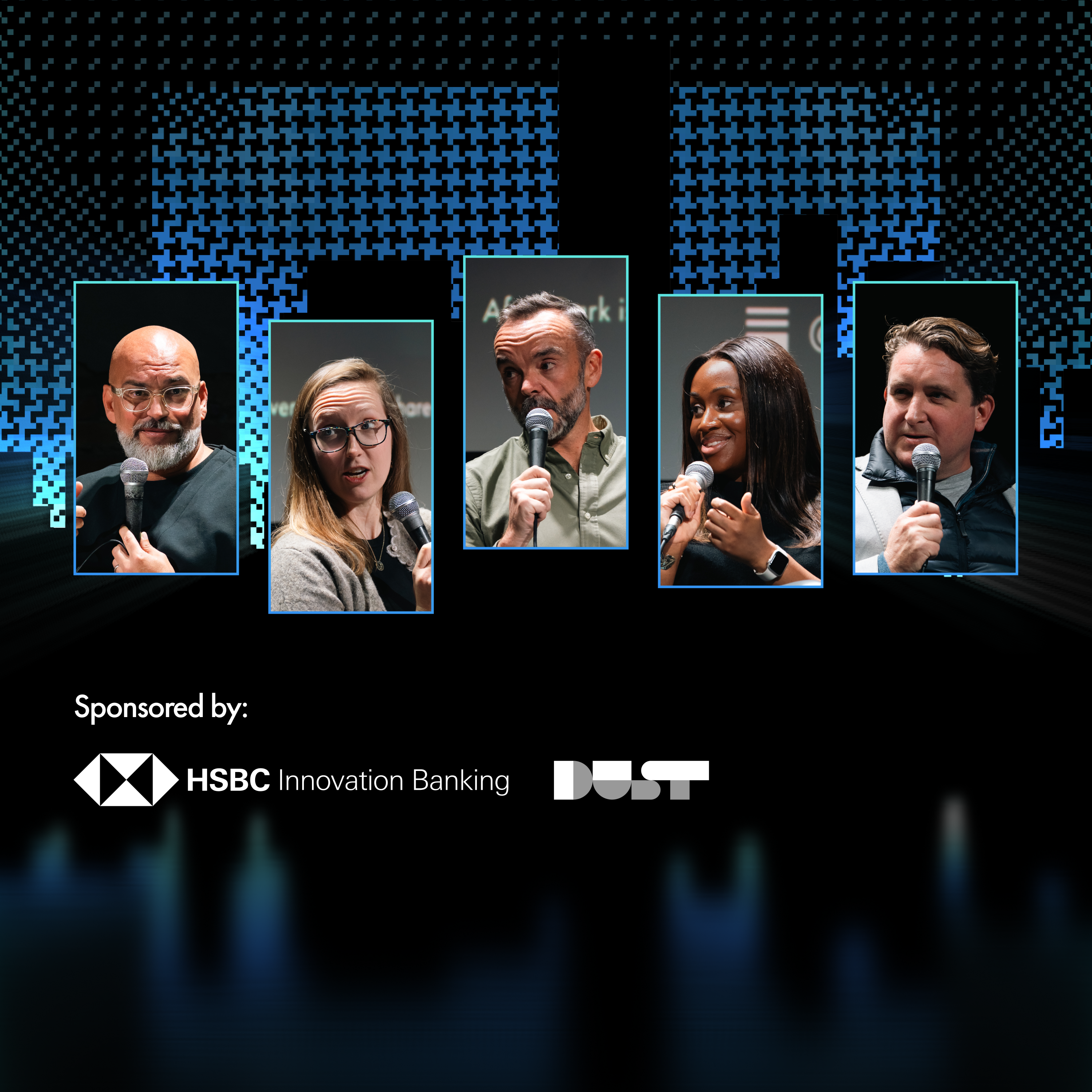
Joe Parkin (managing partner/advisor at FG Partners; advises fintechs including Hayes Mack, Barriya CTFs, Salad Money, Instinct Digital); Kemi Odasan (head of growth at Spectre; former investment banker across PE/VC; builds an AI-enabled platform for regulated onboarding/monitoring/investigations); Marit Rodaband (CEO/co-founder of Stryze; Norwegian tech firm using network analysis for KYB/KYC/AML automation; Oslo and London offices).
Ramp’s valuation reflects an AI-native “core finance operating system” beyond corporate cards; UK VC strength is real but concentrated in a few mega-funds and late-stage skew; AML failures stem from fragmented legacy systems, misaligned incentives, and ineffective transaction monitoring despite spending.
Ramp serves 70,000+ businesses; UK VC raised $6.9B across 31 funds in Q3 (Index Ventures $3.5B); Bank of America fined $1.2B (including $750M OCC record) for missing suspicious activity; Amex fined $350M for failing to report ~$13B trade-based money laundering; US Bank tops 11FS mobile banking rankings (94/100); Revolut seeks a scent agency for Barcelona store/airport lounges.
0:03Ross Gallagher: This is Fintech Insider News. This week, Ramp reportedly hits$60 billion valuation in$1.85 billion funding round. UK Venture Capital reports largest fundraising quarter on record in Q3. And Bank of America and Amex hit with combined$1.55 billion in AML fines. We'll be tackling all of this and more on today's news. So please don't go anywhere.
0:33Ross Gallagher: Your vehicle doesn't just get you from here to there. It's a bridge to the people and places that matter most. It's how you show up for your family, your community, and everyone else that depends on you. That's why for 125 years, Firestone has been building tires with one thing in mind. To deliver products that are as reliable as you are. Firestone. Always dependable. Since 1900.
1:11Ross Gallagher: Hello and welcome to episode 1108 of FinTech Insider News, brought to you by 11FS, the six-time consultancy of the year that works with financial providers, big and small, to build the next generation of financial services. I'm Ross Gallagher, the head of consulting here at 11FS. Now, to help me unpack the biggest and most interesting stories from fintech and financial services from the past week, I'm joined by a brilliant panel of guests. First up, we have a welcome back to the podcast for Joe Parkin, the managing partner of FG Partners. Joe, welcome back to the show. Maybe you wouldn't mind just reintroducing both yourself and FG G partners to our listeners.
1:49Hey, it's nice to be back. Thanks, Ross. Yeah, so my name's Joe Parkin. I am an advisor to a number of businesses in the fintech space. Hayes Mack, a UK accounting advisory business, Barreya CTFs, a thematic ETF business, Salad Money, consumer lending business, and Instinct Digital Data Reporting business. So I spend my time working with the management teams of those businesses in order to grow them.
2:13Ross Gallagher: Nice. We had Alex on from Salad Money last week. Yeah, exactly. It's a nice continuity. I love it. Cool. All right. Well, great to have you, Joe. Thanks for joining us to share your perspectives on the stories. We also have a welcome to the show for Kemi Odasan, the head of growth at Spectre. Kemi, welcome. It's lovely to have you. Again, maybe you wouldn't mind just introducing yourself and telling us a little bit about your role at Spectre. Hey, Ross. It's great to be joining for the first time. As Ross said, head of growth at Spectre. I actually started out my career as an investment banker and worked across both PE and VC.
2:47At Spectre, we like to describe ourselves as mission control for regulated growth. So that means bringing onboarding, monitoring, investigations together under one platform, allowing compliance teams to set the rules, product teams to build freely, and operations teams to run everything at scale with AI doing a lot of the heavy work.
3:07Ross Gallagher: Excellent. We'll definitely be picking that kind of like compliance brain then as we go through some of these stories. I think they're quite relevant, Kemi, so it's lovely to have you. And last but not least, another warm welcome to the show for Marit Rodaband, the CEO and co-founder of Stryze. Marit, welcome to the show. It's lovely to have you. Again, maybe you wouldn't mind just introducing yourself and also telling us a little bit about Stryze. Yeah, my name is Marit. I'm co-founder and CEO of Stripes. We're a Norwegian technology business with offices in Oslo and London. And we also build for banks and we work with network analysis so that banks can understand who they do business with.
3:47So automating a lot of that KYB, KYC, onboarding, AML, all that fun stuff. Yeah, and you said in your intro that you had over 1 ,100 episodes, and we have a podcast that's right called The Laundry, and I just felt suddenly very small with 180 episodes. So, you know, now I know I have to do a lot of catching up to get to your level.
4:10Ross Gallagher: Well, Marit, if it makes you feel any better, it's taken the best part of a decade to get this far. So it sounds like you're already well on the way. Yeah, but no, motivational. I'll also get to the 1 ,100 number. Exactly. Well, you'll have to come back on when you do and tell us all about it. All right. Well, look, that is our wonderful panel. So let's get going. We are starting with a very significant story this week. This one comes from FinTech Futures with a headline, Ramp reportedly hits$60 billion valuation in$1.85 billion funding round. So the U.S. corporate spend management FinTech Ramp has reportedly raised$1.85 billion in a funding round led by Thrive Capital and Dragoneer.
4:53Ross Gallagher: valuing the company at approximately$60 billion. According to Bloomberg, Founders Fund also participated. The funding and valuation have yet to be confirmed by Ramp. Ramp's valuation has risen from$32 billion in November 2025 to$44 billion in June 2026, and now reportedly$60 billion. Founded in 2019, Ramp serves more than 70 ,000 businesses with corporate cards, expense management, and bill payment tools. So, Joe, I'll come to you first on this, Keane, to get your perspectives. The growth in valuation, that sort of$32 billion number around about this time last year, now up to sort of an estimated $60 billion in less than a year, it's quite the leap, isn't it?
5:39Ross Gallagher: I mean, it's absolutely extraordinary. And I think it just goes to show, you know, how people are crying out for these solutions, right? I mean, every single business, almost universally, right from the biggest to the smallest, need these type of solutions. And I think, you know, where kind of financial services technology has gone over the last few years, actually now there are solutions out there that can pull together all this and seamlessly allow finance teams to kind of operate against, you know, huge organizations. So I think these guys have got 80 ,000, you know, firms already on their books, which just shows kind of the opportunity sets that's there if you can deliver the right, the right solution.
6:15And I do think this is part of the kind of the next chapter of fintech, right? We're seeing kind of, you know, the next wave of, of these sort of core platforms where you can run a very, very significant amount of your business. You know, I spent a lot of time in the wealth management space and we see the kind of disaggregation almost of the wealth management sort of, um, technology and the re-aggregation, um, you know, with different players and runners and riders and that sort of stuff. Um, and there's absolutely no reason why this isn't happening in the, um, in the thing. I think this is a huge market, um, and something that's been crying out.
6:46It's a lot of manual processes that go on in this space, you know, and a lot of data that's being passed around and suddenly, you know, getting that data right. And then, you know, the ability to use AI over the top of it and making sure connecting different parts of the business, I think is absolutely massive.
6:58Ross Gallagher: It's interesting, isn't it? Because I think we're probably coming off the back of a couple of years where there's been much speculation about the demise in fintech valuations. And I think we've got a couple of stories today that kind of point to maybe we were getting ahead of ourselves a little bit with some of that narrative, as you say. But I'm interested, Joe, as well, just to sort of get your perspective on how we should interpret this valuation. Because as you say, when you look at the existing numbers of clients that Ramp's already serving and the impact that they're having for those clients, it's quite significant.
7:33Ross Gallagher: But how much do you think this is based on what Ramp is doing today versus the sort of potential going forward? I mean, it's absolutely pretty okay to learn about the potential going forward, right? And obviously, you know, it's been a dramatic ramp. pumping customers and also the amount of payments going through their platform. But really, you've got to think it's only just the beginning, right? And, you know, if they've picked up, you know, I mean, often it's very difficult sometimes to go from that, like, I have a great idea, you know, to scale it and then to really turn it into a global powerhouse.
8:00And these guys seem to have done that seamlessly very, very quickly. So, you know, absolutely, definitely a view on the future, you know, and a big valuation that they are obviously going to have to grow into. But, you know, when I started looking at this in the numbers, there's no reason why they couldn't do this. This doesn't feel sort of a, you know, a kind of a throthy trade at the top of the market. This feels like a business that, you know, we'll be looking back on in five years time as a household name of, you know, kind of every or many, many services in the world. Many, many firms in the world are using this as their core finance kind of infrastructure, putting together a number of different, you know, elements that firms, you know, absolutely have to rather than having these sort of, you know, corporate cards, financial services systems, compliance systems, you know, kind of brings all of those things together.
8:43right you know seamlessly um and those have all been separate entities that people have been
8:47Ross Gallagher: you know moving around so yeah it's i mean it's a it's an incredible growth trajectory joe as you say but um you know one one i quite agree with you where they're solving for those underserved client needs in a sort of a new and meaningful way and adding a ton of value for those end clients and it's not every fintech or disruptor that sort of goes from challenging in the space to, as you say, becoming sort of part of the furniture because of the services that they're providing. Marit, I'm keen to bring you in and get your perspectives on this. Do you agree with Joe that as a segment, this one is particularly interesting?
9:25Ross Gallagher: I know when we, there's been quite another significant deal in this space in recent history with Brex being acquired by Capital One, slightly lower valuation at$5.15 billion, but it feels like there's some real sort of movement and momentum in this space? Of course, I haven't seen the exact metrics and what multiples they're priced on, etc. But it just looks like two different categories, these two companies, and they're priced as two different categories. So, you know, it's about positioning. Maybe Breck's positioned around credit and payment volume and more of those traditional fintech products, and then it gets traditional fintech multiples.
10:03But Ramp is more priced as a future AI-native software giant taking over the entire finance function. And you don't pay 60 billion for a corporate card, you pay that for like a core operating system where AI will come in and automate all these core jobs. And yeah, I think that's the essence of it.
10:25Ross Gallagher: It's an interesting point that you make about that high valuation. And then I suppose what that naturally leads on to in terms of investor expectations. Do you think this puts ramp under a significant amount of pressure to sort of become that operating system that you mentioned? Of course, but I mean, the Americans, they're always up for that. I was in San Francisco just a couple of weeks ago, and I hadn't been in four years to, you know, America. And it's just so crazy. You walk around the city and like every coffee shop you go into, it's just people, everyone has clawed up. Everyone is talking about fundraising for their startup.
11:04Every conversation you overhear is just some like a VC or a tech founder or someone who is going for an interview at the tech company. It's just you're in that atmosphere all the time. So I think that is the mentality there is just everywhere. So I think someone summarizes pretty well, like if you are in Norway, let's say in Oslo, and you're in you run a tech business you got to recreate that atmosphere and that ambition and those expectations yourself in the office with the people you're with but in san francisco you're just in that wherever you go it's created externally that atmosphere and expectations and ambition you're just it's easier to kind of live it right yeah so i think they're up for it i couldn't agree more
11:52Ross Gallagher: and that belief as well right um which i think is obviously just so important i think sorry the The other thing just is going to be really interesting is there are some big, big firms in this space, right? So when you think about finance automation platforms, you've got some of the largest firms in the world, SAP, Oracle, Workday. Then you think about the banking and kind of fintech infrastructure around treasury services. You've got some of the very, very large banks doing this. You know, and even businesses we consider to be fintech businesses, you know, two or three years ago, right? You know, the kind of likes of Amex and that sort of stuff.
12:22So it's going to be really interesting to see how quickly these guys can evolve their propositions so that these guys don't continue essentially eating their lunch on a huge scale. And I think that's the real battle we're facing at the moment in many, many areas of fintech is actually the speed at which people can get to market, the speed at which people are evolving their proposition, developing their proposition. like can the incumbents react quickly enough you know we always just have this conversation about the challenger banks and the established banks but this is happening in like weeks not just like years which kind of it took that to happen right so i mean it's a it's a fascinating battle this
13:00Ross Gallagher: it is and it's like everybody's kind of shooting at a moving target joe as you say like none of this stands still um and i think that's absolutely right kemi i'm i'm really keen to uh bring you in and get your perspectives i mean i think joe's really brought to life there this sort of competitive landscape and how that's evolving. What do people need to win in that space? Do you think it is kind of like, as Marit was saying, sort of growing beyond just the sort of basic proposition, the corporate cards, the expense management, and actually sort of becoming that operating system? Yeah, I think definitely as everyone's established that Ramp has far gone beyond corporate cards.
13:36And this is a valuation that represents a potential of something much, much broader hot take is that i wonder if we're also witnessing an ai story here recently earlier this month ramp released their kind of internal ai operating system called glass for waitlist and i wonder if what the 60 billion represents is not just the fintech story but this idea that ramp has become more and more famous for not just building really cool things but building in a really cool way is also going to enable other businesses to do the same thing. $60 billion, as Joe and you correctly established, is a huge valuation and may be indicative that there's a bit of an AI play here as well.
14:24Ross Gallagher: Yeah, Joe, I mean, look back to your point when you talk about the speed at which the market is evolving. Well, AI is only going to feed into that, right? Yeah, absolutely. And you've got to get your data right, right? It's all about getting the data foundations correct in that space. And listen, as I've just said, you've almost got Ramp going across some really, really big markets, and they're doing it across four or five of them to bring together that whole piece. So suddenly it's in one place, the data's in one place, and they can then deliver some pretty incredible insights, but also just develop off the top of it.
14:58So Speed, at which you can use AI to develop your fintech capabilities is also incredible, right?
15:05Ross Gallagher: Yeah, and Marit, sort of final question to you, but I want to come back to what you said about culturally those differences in particularly Silicon Valley and how that becomes an accelerant, an enabler. We have seen Ramp sort of, I suppose, enter the UK market kind of by proxy following its acquisition of Juno and Billhop. But I guess there's going to be some differences, and I suppose by extension some challenges in terms of getting to grips with the UK versus what you described about the US. Yeah, maybe. Well, of course, they have made a good move about acquiring their way in so you can have a customer base and an employee base who gets the local environment.
15:46But of course, I'm not British as well, but of course the Brits are a bit more skeptical maybe than the Americans who are just always like, hell yeah, let's go. So there might be some challenges in there, but I am positive that they will figure it out. And also another point with this BrexRamp thing, I don't know. I don't know the founders. I don't know the businesses at all. But it does take a lot of effort and a lot of determination and willpower to go from where they are and transform into this AI native company and being positioned in that way. And maybe the Brex founder along the way or Brex founders along the way, they decided, you know what, we don't want to go on that journey.
16:29So it's a good time to sell our business. Whereas maybe the other guys were like, no, we have the energy for that new chapter and that strategic pivot and building further into that space. But yeah, you asked about the UK. There will be some challenges, but I think with the acquisitions, that's a good move at least.
16:49Ross Gallagher: Yeah, it's a great story. I think it's one we love to see. It's definitely one we'll be keeping our eye on. But I am going to move us on to our next story. This one comes from FF News with the headline, UK Venture Capital reports largest fundraising quarter on record in Q3. So UK Venture Capital firms raised a record$6.9 billion across 31 new funds in Q3 2026, according to HSBC, Innovation Banking, UK and Dealroom. That is more than four times the quarterly average of the previous two years. Index Ventures led the fundraising with$3.5 billion across three funds, while Highland Europe raised$1.1 billion.
17:29Ross Gallagher: UK startups and scale-ups attracted$6.1 billion in investment during the quarter, with 58 % going to late-stage businesses. FinTech remained a major sector, recording 51 funding rounds in Q3. The UK accounted for 35 % of European VC investment for the first nine months of 2026. that's more than double the amount invested in either France or Germany. Reads a little bit competitive that doesn't it? Kemi I'll come to you first on this one. I mean it's quite an impressive quarter for those UK venture funds as we mentioned and I suppose building on some of the discussion points in the previous story how much do you think that tells us about the health of the UK startup ecosystem?
18:15Yeah, I think so definitely some highs and some maybe a bit more of a mixed or measured way to brew the data. On the mixed and measured way, we do have to remember that funds have cycles and they raise every so often. And so index will raise a fund every two or three years, etc, etc. So hence why some of the data won't be baked into previous quarters. But in general, it's fantastic news for the UK ecosystem. I remember when I started out in venture at a US VC fund, Boudinier, we would basically be kind of alone with a bunch of other US VC funds investing into the UK ecosystem or the European ecosystem.
18:56In many ways, often US funds would come over to Europe and try and convince European founders to go and move to the US because it was the only way to scale. So headline is, this is fantastic. It's concentrated in just a few funds and firms. So in terms of how that's distributed across the ecosystem, we're yet to see. But it's great having UK funds, being able to invest in UK companies. And we've also seen the government kind of relax some of the terms of pension funds, being able to invest into VC funds, etc, etc. etc. So overall, great. I'm sure there are kind of the have nots of this story as well, who won't necessarily feel the kind of trickle down of the broader billion dollar fundraise stories.
19:40Ross Gallagher: I think that point about it being cyclical is a really important nuance. I'm keen to sort of, I've got two questions for you off the back of that. I think the first is, on that basis, do you think we can actually read anything into investor confidence in the UK compared with other markets, maybe compared with previous quarters, previous years. And then the other one is that point that you made about relaxing some of the rules around pension funds. Do you think it's still too early to sort of look at that as a key driver here? But how do you think that plays out? Yeah, so on the first question, I do think it is positive in that a lot of, I think when you pair it with the data of also the record quarter in just VC the activity within the UK and Europe more broadly, it is super positive because it shows that not only are we able to raise VC funds, but we're also able to raise money for startups in this ecosystem.
20:36So overall positive. But yes, reading between the lines, these are big funds. I don't even know if Index really counts as a UK fund anymore. I kind of think about it as probably European. They kind of do a lot of US stuff, but fine. It is great, but they're here. And on the secondary point about pensions, some of that stuff happened two years ago. Some of that stuff actually literally happened in July of this year. And so we do have to wait and we do have to see before we understand how much money is actually going into UK funds. I think you'd actually probably want to see the tail effects. So like the tail end of smaller managers, what are they able to raise from UK LPs versus just the big mega funds that raise billions?
21:21Yeah, nice.
21:22Ross Gallagher: Joe, one of the things I think that certainly stood out for me when I was reading this one was that you've got sort of over half of the money being invested going to late stage businesses. What does that tell us, I suppose, about where investors are seeing opportunities, but I suppose we've also seen a lot of businesses that may have IPO'd by now that because of market conditions haven't. And is it fair to kind of assume that a lot of the funding that in a better market might be going to sort of early stage funders is still kind of all just gummed up in the system? Yeah. So, I mean, listen, I think this is incredible news.
22:03Bear in mind, I think I was on five weeks ago talking about the worst quarter for or the worst half for UK fintech funding. But, you know, hey, I think, listen, the fact that the funds are based in the UK, I take, you know, the fact that, you know, Index probably has a quarter of their investing assets probably in the UK. They're a global business or, you know, European business. I do take that. But, you know, we've got to start somewhere. And I think that, you know, the fact that this is a record quarter, the fact there's a load of funds based there, despite its concentration, I think has to be a good thing.
22:36In terms of the growth stage assets, I think that this would be probably quite a natural sort of 58 % of the money kind of late stage businesses. and it just shows the maturity that the market's kind of getting into as well as the fact this is probably more institutional capital than anything else you know the numbers we're talking about here are starting to you know that's not a group of angels you know trying to put money into early state businesses right i also believe that all the work that kind of everyone's done i mean so many people have been involved with over the last five to seven years to really create you know whether it's from fintech or other areas to create this really sort of like early stage like innovation economy hopefully this is a really a clear indication that it's starting to work and do you know what i think that like the pension fund stuff is starting to happen it's been through three and a half four years since mansion house now i definitely see those guys starting to move the government pension funds are also starting to invest in this sort of stuff you know as well and those government pension funds such as border to coast are becoming pretty significant sort of investors into, you know, the UK private markets industry.
23:44What I hope this actually does is it kind of triggers into firms starting to IPO kind of in the UK, because I think that's the next challenge. But listen, everything's, you know, I'm sitting here right now and I'm, you know, kind of, I'm really, really positive. Those, you know, those businesses are here, the investors are here, the money's here, and we now just need to turn that into companies that list on the UK market.
24:07Ross Gallagher: Yeah, I'm with you 100%. I think that's absolutely the next challenge. I suppose, not to undermine your positivity, but, you know, obviously, you mentioned you were on a few weeks ago, and we were talking about fintech in a slightly different light. Does if you start to scratch beneath the headline, are there more sort of bad news stories? Or would you just naturally expect that there would be winners and losers in terms of like, where those investments are going? So, you know, I think the UK is coming out of quite a bad place. And I think, you know, these are things outside of the industry's control, right?
24:38Like Brexit, for example, or, you know, the political landscape that has existed, where I think people are really struggling to put kind of money or lock up money in the UK, you know, for a period of time, which is ultimately what you're doing. So I think some of those have eased, you know, there has been some good news stories over the last month or so. But it's always been the case, I think that there's been some brilliant companies in the UK, and perhaps it was just a case of time. Now, I'm hoping the next figures that come out from KPMG in early next year show that FinTech's rebounded and you're looking at a particular point in time.
25:11And by the way, to Kemi's point, this is highly concentrated. I mean, more than half of this is in three funds, right? And those three funds won't be able to raise. So we'll need one of the other big players to start to rise. So it will be Citadel. But at the end of the day, I think you have to take the positive. We're so bad in this country about, you know, not taking the positive and always pushing ourselves down, right? And so, you know, when you've got good news stories, let's try and be optimistic. And when it's sort of cyclical, you've got to believe that we're on the right course, everything we've done to improve that, you know, innovative economy, the funding, the pension funds, the mansion house, the, you know, that's all got to be, you know, it's a long journey, right?
25:54it's not going to happen overnight. And I think it's, you know, hopefully this is just another, um, another success story along that, along that point in time.
26:00Ross Gallagher: I do love that point about like, come on, like, let's take the win, right? Let's not try and like deconstruct it and undermine it. Um, we're so bad at that in the UK and, you know, marriage has talked about it, which is like, you go to America and it's, it's like excitement and everyone's going to, you know, invest into this. And, and that's, you know, I, I still think, um, you know, one of the things we really, really need to work on in the UK is like kind of that risk appetite around kind of innovation and businesses coming to market. And that's where the US I think is still kind of, you know, way, way ahead.
26:33Um, it's slightly structured in the UK with some of the fund structures we have and that sort of stuff. But as more and more founders like exit and then reinvest their money, they have that risk appetite. As I said, the pension funds are starting to get that risk appetite, you know, and we now need the, you know the asset managers and and some of the others to really sort of push into to to uk equities and and also like that's the other thing uk equities have historically been you know quite stable and income playing and that sort of stuff because they've been so heavily skewed towards pension funds but you know as the more exciting businesses start to ipo you know then i think people get more and more excited about the uk as a as a place to invest and so assets will start to come back and so hopefully it's a self-repetuating you know kind
27:16Ross Gallagher: circle yeah it builds that virtuous cycle for sure um marit you mentioned obviously in your intro that you sort of based out of um oslo and london do you see the uk as a good market for attracting venture capital yeah and also just speaking as someone who just moved to camden and i have like a rat for a neighbor and none of the door handles in my apartment match i like i wouldn't have done that and moved away from the safe haven of the Nordics if I didn't think UK had something important to offer when you're scaling an AI company, which we are. So I think, of course, what works in the UK, looking at it from my Nordic lens, is the scale, just how much bigger London is and UK, and the proximity to people.
28:04So the banks, the regulators, the investors, the people who already built and sold a fintech, it's all very close, right? Our offices are in shortage. So it's just like a quick bike ride down to the Ned where you meet everyone. And you just don't have that same, that doesn't exist here in Norway. If we talk about how the US is a step ahead in terms of culture, in terms of risk appetite and all these things, then I feel the UK somewhere in the middle between Norway and the US. So I take the Northern line down to Old Street every day. And, you know, that is a little piece of San Francisco almost because when you walk through Old Street, there's always just posters of tech companies.
28:49And that was the vibe in San Francisco as well. There's only posters and billboards of AI company. I didn't see a single food and beverage poster in SF for like six days. and you can kind of get that a little bit around shortage too. So I think it has, yeah, UK has something. And also just UK brand names are more global. So getting a client in the UK that everybody has heard of holds more weight international than we have some of the largest banks in the Nordics, but it's not that familiar on a global scene, right? So yeah.
29:24Ross Gallagher: You'll grow to love that other stuff as well. It's all part of the charm. All right. On that note, we are just going to take a very quick pause here and we'll be back with you very shortly.
29:59paymentologists across 68 countries, they make card programs work naturally across markets. Want to keep the momentum going? Head to paymentology.com.
30:11Ross Gallagher: Now, before we get back to the news, we wanted to tell you about our next After Dark event. It's now only three weeks away. It's taking place at the Village Underground in London on Thursday, the 12th of November, and tickets are available now at 11fs.com forward slash After Dark. There's also a link in the show notes below. If you would like to be part of the event, do not miss out. Now, back to the news. And our final main story this week comes from Finextra with the headline, Bank of America and Amex hit with combined$1.55 billion in AML fines. So two of America's biggest financial institutions have been hit with a combined$1.55 billion in penalties.
30:50Ross Gallagher: That's over anti-money laundering or AML compliance failures. Bank of America has been fined$1.2 billion, including a record$750 million penalty from the Office of the Comptroller of the Currency. Regulators found that BOA failed to monitor trillions of dollars in transactions, including activity linked to potential Chinese money laundering and illicit finance connected to the US southern border. The OCC said that Bank of America had failed to adequately address long-standing compliance deficiencies, despite committing to improvements all the way back in 2024. Now, just days earlier, American Express National Bank was fined$350 million for inadequate controls, staffing, and risk assessments.
31:35Ross Gallagher: Amex also failed to identify, evaluate, and sufficiently report approximately$13 billion in suspected trade-based money laundering activity in a timely manner over the past decade. Kemi, keen to sort of come to you first on this one. I don't know about you, but sort of reading that numbers started to kind of lose all meaning for me. It's a lot of big numbers and doing a lot of things wrong. What's your reaction to that one? Yeah, I mean, I think a$1.2 billion fine is particularly egregious, but I think we probably, in this group, we've all just got used to seeing banks being fined hundreds of millions, if not now billions of dollars for not following the rules or not doing things they're supposed to do and these fines are supposed to act as like market incentives to do the right thing and like internally we've been thinking is there something else that's wrong in terms of if these fines become the cost of doing business essentially in these industries do we have to think about what incentive culture exists within these organizations that mean that these things are happening and they often think about it or at least the way that we think about it is that you have different teams inside these companies trying to do different things with different incentives i keep using the word incentives but it's important um and often compliance or being compliance is seen as the blocker to everything like uh the person that's kind of holding the rule book and telling you what to do um and i think that's something that fundamentally as an an industry is regulated companies we do need to change like there shouldn't be this trade-off between doing really good things and making money and building things and launching markets and being compliant and the more that that internal kind of incentive discrepancy exists I think we'll see these more and more throughout the industry billions are spent or within the century in terms of compliance software and doing more things and having offshore teams that are supposed to look through things and there are fines and still something's not quite working.
33:44And I think there's kind of probably a come to Jesus moment for the industry in terms of understanding what's quite wrong.
33:50Ross Gallagher: It's such an interesting perspective because everything that you mentioned around like, let's platform this, let's outsource this, what it does obviously is it pushes the compliance teams and the business teams kind of further away. And so you can't get that alignment and that collaboration, right? A hundred percent. Like we often speak to different the owners across the business whether it's the people whose um main incentive is that like we want to onboard more customers in new markets and launch new markets or the people that are the c suite of these businesses who want to reduce costs across the board or even your kind of like the operational teams that have to absorb all these slas and actually do the work um and the kind of lowest rung on a lot of these ladders are the people kind of shouting about hey guys it's pretty important for us to follow the rules um and we probably made it a bit too complex as an industry to follow the rules um yeah um but that's just my take mary i like the way cammy described it as like a come to jesus moment but it's definitely like a not a great reflection of uh sort of financial crime compliant to some of the the world's biggest banks of the minute right no it I think the Bank of America order, I read it, and it definitely tells us that having a compliance program and having a compliance program that works is two different things.
35:13So they had systems, they had transaction monitoring, they had thousands of people, they had billions spent, but one third of their investigations started by another bank or law enforcement calling them. so not because their own system flagged anything so imagine this billion dollar machinery running and it wasn't really doing much it wasn't catching anything so that's also an uncomfortable truth for banks like you can spend all this money but you're just flying blind just like the picture of having this like super expensive machine running there but not doing anything joe that is i think that
35:53Ross Gallagher: is one of the sort of the standout takeaways from this is exactly to Marit's point. You know, they've invested all of this money. And to Kemi's point, they've platformed this and they've outsourced this. Why isn't it working? Well, I think we just have to be slightly cognizant of the size of these organizations, right? And they are processing trillions of dollars across multiple geographies, products, and legacy platforms that they've pulled together over a large period of time. And so while they're spending billions of dollars, they're spending billions of dollars often just to keep the lights on with these, you know, particular organizations.
36:27So I do feel, you know, for these guys, but I do think, you know, the bigger challenge and I think, you know, to the point around the first topic we talked about, I think there is that sea change moment where, you know, kind of people, the kind of new technology wasn't like that much different to what you were spending billions of dollars on those legacy platforms, right? So there wasn't that much of an incremental change and you were going to have to do a lot of work to upset the existing systems and how they mesh together. Whereas now I think you can update that technology. So, you know, the bigger challenge for me for those banks is the outdated technology and the fragmented data.
37:06And so if we take, you know, I do now think there are people coming along that can solve for some of those challenges and pull together the data as well. So I do have some sympathy for these guys. I don't think they were, you know, they were kind of asleep at the wheel in any sense of the word. I just think they're dealing with, you know, archaic systems that have been pulled together over a period of time. I agree. I totally agree. I mean, yeah, the scale of it is big. But then it's quite interesting when you then start to look under the hood of like what actually went wrong when you're piecing together all these legacy systems and the trillions of dollars you're kind of processing.
37:44For instance, Amex, who was fine as well, they had built their risk assessment around its small deposit business when cards is most of it's where money moves. So, you know, the risk assessment and the product and the usage is like off. So, of course, then how are you going to overlay and catch anything? And the Bank of America, they turned its monitoring to make alerts efficient instead of like making sure it caught the risk. And their own testing showed that they were missing suspicious activity, but the thresholds kind of stayed where they are. Probably super complex to change, right? legacy enterprise software where it's just so hard to make any actual changes to it as well.
38:27And then there was also like customer due diligence. One of the customers had been with the bank since 1995. And then compliance was like, I think we should shut down this client because, you know, now the relationship and this client is just wildly different than in 1995. So can you imagine all those years of data and systems and yeah, to the point Joe made. It's like hard. It is very hard. But I think it's just the wider problem is more if you zoom out is trying to continuously measure risk and like overlay your risk policy where the actual risk is because these things can drift apart quite quickly.
39:07Yeah. Yeah. I mean, I agree. And without sounding too controversial, have sympathy with Bank of America and Amex and a lot of these big banks. But it's not like it's the first time that they've been told that they need to improve these systems. And as Joe mentioned, I think there have been, especially more recently, a lot of improvements in the tooling and the visibility enabled for these larger institutions. And so what do you do if you're told in 2024 you need to make an improvement and that improvement is still lacking? And how do the regulators then deal with it? Because yes, it is difficult.
39:43These are huge systems and it's really hard to manage, But how do we have safe and controlled financial systems? So it's a question for us all to answer. Yeah, no, it's also about, you know, when you suddenly start changing these systems and try to fix the problem as well. Because when Bank of America finally lowered its alert threshold, it expected like 16 ,000 more investigation per month. So it needed like hundreds of extra staff and people and consultants just to kind of keep up when they made this change to their system. And of course, that is very costly. And then, of course, they didn't want to do that right away.
40:24And the order actually says outright that the bank saved money by not hiring the staff needed. And the business also pushed back on existing high risk clients. So, yeah, they kind of saw maybe compliance as a cost to minimize. And then, of course, you will always be one step ahead if you view it through that. And also they had kind of saved up for the fine almost, Amex. You can kind of look at it that way when you look through some of their reports that they had put aside because they kind of expected this to come as well. But they made a lot of money and they make a lot of money. And even though the fine is big, it's much smaller than their profit.
41:05So, yeah, it's maybe just like a tax of doing business. Yeah. I mean, I spend a lot of time with Instinct Digital in the data space with very large financial institutions. And I mean, it's more bent towards the asset management industry and the wealth management industry. but the need for data quality and integrity is the starting point and the foundations of every good modern business. Because if you don't have that, and you don't understand where your data is right or wrong, then you can spend billions on top of that. But ultimately, it's just not going to play through. You can spend billions on AL, but it's not going to play through.
41:45So I think more and more you'll start to see that real urgency around data quality and integrity as a kind of foundation of every modern day financial services company.
41:54Ross Gallagher: But I think the thing that I take away as well from just listening to you guys is like, there's like compliance isn't just compliance. Like there are complex sort of business trade-offs that factor into the design and all of that sort of stuff. And Kemi, I think bringing it back to your point at the top about how do you get everybody as close together as possible in terms of all of those stakeholders? is how do you get them collaborating as effectively as possible? And how do you align all of their incentives so that we're making sure that, you know, we're getting to the best possible outcome?
42:23Ross Gallagher: That to me feels like, I suppose, the takeaway on this one. I have also absolutely loved the sort of the energy on that story and how you guys were sort of deconstructed it. The energy of our compliance. It's shocking, right? People get excited about that. I know, we all love compliance. Let's go. All right, on that note, we are just going to take a very quick pause here and we will be back with you very shortly. Launching innovative payment products is only the beginning. Real progress comes from what happens next. Paymentology fuels continuous compounding momentum as a cloud-native issuer processor, helping banks and fintechs grow beyond go live with global reach, local know-how, and the power of its Loom platform.
43:07Powered by more than 500 paymentologists across 68 countries, they make card programs work naturally across markets. Want to keep the momentum going? Head to paymentology.com.
43:22Ross Gallagher: Okay, welcome back to the show. Now for a quick look at the story we didn't have time to cover this week in full. This one comes from FF News with a headline, US Bank Tops 11FS Mobile Banking Rankings. We are the news. The 11FS Pulse team has analyzed, scored and ranked 24 of America's biggest mobile banking apps, examining how well their features meet customers' everyday financial needs. US Bank has topped the inaugural 11FS Pulse ranking of 24 US mobile banking apps, scoring a quite staggering 94 out of 100 for how well its features meet customers' everyday financial needs. SoFi came second with an equally impressive 92, followed by Bank of America at 90, Chase at 89 and Navy Federal at 86.
44:10Ross Gallagher: The research also revealed a gap in financial planning tools. Spending tracking features averaged 60 out of 100 compared with just 40 out of 100 for tools supporting future financial stability, investing and wealth management. Now, we recently explored these findings with the Pulse team on FinTech Insider Insights. And here's just a little reminder of that conversation. Well, it was really interesting to see this because we only just got the results in. And it was the first time that I think anyone's done this, especially with the jobs to be done approach, where they've mixed together branch-based, digital first, credit unions, fintechs.
44:48And we really didn't know what to expect. And some of the results which I'll go into now were quite surprising. So right there at the top, we've got U.S. Bank scoring a real surprise, but scoring very high on features on their pulse feature score. which is an aggregated score of all the features that best serve those important jobs to be done that we had identified. And their UX score wasn't too bad either. It was by no means leading, but not so bad. But they really do have a lot of those features that customers are looking for. And in many ways, some of them are delivered quite well.
45:25Ross Gallagher: Well done to US Bank. As I say, that's quite an impressive score. I think my favorite thing in that soundbite was my co-host Benjamin Ensor's very surprised reaction. I love that. All right, and then moving to our and finally story, which as ever this week is a little bit of a curveball, maybe a little bit unexpected. This one comes from Finextra with the headline, Revolut to create its own scent. Revolut is looking for a scent branding agency to create a signature fragrance that's quote, unexpected, memorable, and unmistakably ours. Gareth Morgan, Revolut, head of global brand design, put out the call on LinkedIn, attracting more than 300 comments in a day.
46:10Ross Gallagher: Other financial institutions have experimented with sensory branding. That includes JP Morgan's signature office fragrance and MasterCard's sonic branding. The move comes as Revolut expands into physical spaces with plans for its first store in Barcelona and branded airport lounges across Europe. Joe, what was your reaction to this one? I thought it was a joke, but no, I mean, it's interesting, right? I mean, you know, you've had clothing stores and department stores. I remember always going into American Eagle in New York and there was always this really sort of strong smell and loud music, which was always very unique from that perspective.
46:51So, you know, who knows? I'm not sure that I'll be buying into it. But perhaps, you know, some of these modern sort of wealth tech providers might want a kind of mahogany smell to, you know, as they move into an app, they want to replace those sort of old fashioned sort of, you know, kind of wealth management offices for the next generation to make them feel at home.
47:11Ross Gallagher: I like that you went sort of down the American Eagle route. My mind instantly went to Subway. That was the first thing I could think of. We all know that. We all know the Subway smell. But it's interesting, isn't it? Because that was my first reaction. But then equally, it almost feels like everything that Revolut touches at the minute kind of turns to golf. So it's kind of like, why not go a bit left field, test the theory. Kemi, what was your reaction to this slightly unusual story? I think it is a success that we're even talking about it. I think we talked about Ramp earlier this episode and they're kind of infamous for just extraordinary marketing.
47:47And I think Revolut's having a good go as well why not have a revolute scent um yeah i'm a fan again i don't know it depends on where we end up if it's more musky it could be more my vibe um but let's see
48:02Ross Gallagher: i'm a fan of it i love that take though right like no no news is bad news um and as you say we're talking about it uh so i guess it's uh it's working marit what was your uh final word to you on this one? What was your take, your reaction? I thought that sent in financial crime prevention could be helpful. I mean, we don't use banknotes anymore, but what about scented banknotes? So you could exactly know whose money was involved in like shifty deals. Like, okay, you find a brown envelope full of money for the corrupt politician and it's like, this is from HSBC or, you know, you can find the source of funds.
48:38But yeah, that was my idea. But we don't use banknotes anymore. So yeah, a bit hard.
48:46Ross Gallagher: I'm all for it. It's like you've taken this and merged it with our previous story and kind of gone, right, this is a fix for money laundering and compliance issues. Look, I mean, yeah, Kemi, I agree with you 100%. I think the fact that we're talking about it means that it's probably worked. and look, I'm here for, as I say, you know, we kind of talk about the Revolut effect. It feels like everything that, even when they don't do things, it feels like we're talking about Revolut. So it's, I'm interested to see how it plays out. Look, it could be a roaring success and who'd bet against them. All right, I'm going to leave that there.
49:25Ross Gallagher: Thank you so much to today's wonderful guests. Maybe you can just tell us just where people can find out a little bit more about you and your companies. Joe, let's start with you. Yeah, Joe Parkin on LinkedIn. And as I said, I'm sort of working for and representing a number of different, really interesting fintech businesses. So go and check them out on LinkedIn. Love that, Joe. Thank you. How about you, Kemi? Also on LinkedIn. And if you want to find out a bit more about Spectre, you can find us on spectre.com. We're also hiring across practically every role. So if you're interested in working in compliance, I promise it's as exciting as we talked about today, then please hit us up.
50:03Ross Gallagher: I think we've done some good PR work on the show today for compliance. You've made compliance sexy again, I think. Yeah, I think so. Awesome. All right. And how about you, Marit? Yeah, on LinkedIn and then also Streis.ai. And then also, if you are very interested in deep diving into the world of compliance, check out The Laundry, our podcast on Spotify and Apple Podcast and YouTube and wherever you listen to your podcast. Amazing. Thank you, Marit. And as for me, likewise on LinkedIn as ever. Now that does wrap up today's episode. Thank you so much for listening to today's show. If you like what you heard, please do make sure to follow us on your favorite podcast platform of choice.
50:47Ross Gallagher: If you really like what you've heard, why not share the podcast with a colleague or friend? As always, if you'd like to join the conversation, find us on social media, just search for 11FS or FinTech Insider or email podcasts at 11FS.com. And we're also now on Substack, so you'll find a link to subscribe to us in the show description below. Thank you very much again, and goodbye.
51:32simply safe ahead of crime in real time outdoor deterrence plans start at$49.99 a month visit simply safe.com slash licenses for alarm license information hey ryan reynolds here from mint mobile now i don't know if you've heard but mint's premium wireless is$15 a month but i'd like to offer one other perk we have no stores that means no small talk crazy weather we're having no it's not it's just weather it is an introvert's dream give it a try at mintmobile.com slash switch upfront payment of 45 dollars for three-month plan 15 per month equivalent required new customer offer first three months only then full price plan options available taxes and fees extra see mintmobile.com
About this episode:
Host Ross Gallagher- Head of Consulting at 11:FS - is joined by some great guests to discuss the biggest stories from the world of financial services over the past week.
This week's guests:
Joe Parkin - Managing Partner, FG Partners
Kemi Odusan - Head of Growth, spektr
Marit Rødevand - CEO and co-founder, Strise
Stories/timestamps:
Ramp reportedly hits $60bn valuation in $1.85bn funding round - (04:02)
UK venture capital reports largest fundraising quarter on record in Q3 - (16:27)
Bank of America and Amex hit with combined $1.55bn in AML fines - (29:07)
US Bank tops 11:FS mobile banking rankings - (41:48)
Revolut to create its own scent - (44:05)
Links to check out:
Join us at London's Village Underground on Thursday 12th November for a live recording of Fintech Insider News.
https://www.11fs.com/services/media/after-dark
We're on Substack! Subscribe for bonus content from the podcast, exclusive episodes, early access to events, and our weekly newsletter, Bitesized.
https://substack.com/@11fsfintechinsider
Join our WhatsApp community, where you can get the inside track on all all things 11:FS, as well as having your say on the things we should be paying attention to.
https://chat.whatsapp.com/KpA4gFbbWDlLFm7kx39raf
About Fintech Insider:
Fintech Insider by 11:FS is a bi-weekly podcast that covers everything from finance and banking to technology and the latest trends in financial services.
Our expert hosts, with hands-on industry experience, are joined by key decision-makers, VCs, and top reporters from across the financial landscape, including guests from companies like Stripe, Revolut, Plaid, PayPal, and Monzo. Together, they break down the biggest news and innovations shaping the space.
Our weekly news show drops every Monday, covering major stories like mergers, new product launches, regulatory shifts, and emerging tech trends. On Thursdays, our Insights show goes deeper into the hottest topics driving the future of finance, including AI in banking, decentralised finance, and the evolving landscape of embedded finance.
Whether you're already in the fintech game or just starting to explore, this is the #1 podcast for you.
If you enjoyed this episode, don’t forget to subscribe and leave a review!
Got a question for us? Email podcasts@11fs.com!
Learn more about your ad choices. Visit megaphone.fm/adchoices
Learn more about your ad choices. Visit megaphone.fm/adchoices


Scan the code with your iPhone camera
Listen in the app.