Ask ChatGPT

 Fintech Insider Podcast by 11:FS
22 Oct 2026 · 57m · 14 chapters
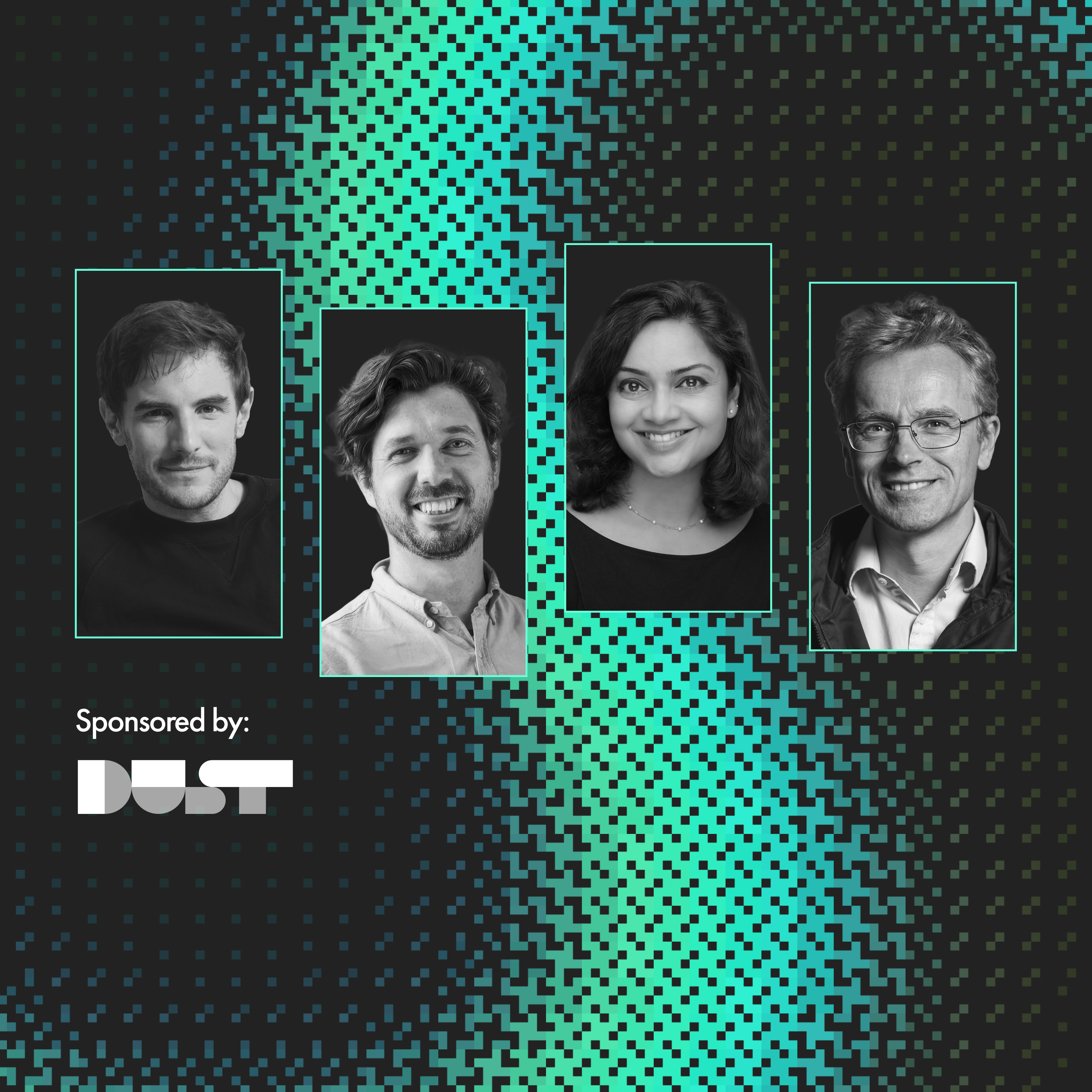
How AI agents move from personal productivity tools to “colleagues” that access company systems and perform work, and what governance, autonomy limits, and accountability are needed in financial services.
Gabriel Huber, CEO and co-founder of Dust; builds an enterprise agent platform emphasizing “AI sovereignty,” multi-model, and governance/observability for secure agent deployment. Tom Harris, CTO/Chief Product and Technology Officer at Oak North; mid-market UK lending bank with US expansion, focused on “proven entrepreneurs.” Aditi Subarao, Enterprise Sales Financial Services at Snowflake; works on Snowflake’s AI data cloud for governed, secure, scalable data activation.
Agents enable a “third wave” of productivity via cross-team context and collaboration, not just faster individual tasks. Deployment should use centralized governance (access controls, kill switches, auditability) with “citizen builders” creating agents within guardrails. Autonomy should scale based on reversibility, reputation impact, and regulatory risk; humans remain responsible for high-stakes decisions.
Dust customer example: sales call transcripts analyzed by agents to attach verbatim customer quotes to product roadmaps. Agents connecting HR/workday, salary timing, and policy-based maternity expectations.
Written by AI. May contain mistakes.
Discussion on how AI agents are transforming workplace dynamics.
“So over the past few years, workplace AI has often been about individual productivity.”
Introduction of panelists and insights into their organizations and roles.
“agents that are taking part directly in how work gets done.”
Discussion on the capabilities and use cases of AI agents in business.
“that we would have done a year ago if it weren't for AI.”
Explore how AI agents facilitate collaboration across diverse teams and systems.
“doing what what is the meaning of the questions you're asking it and therefore how do the output influence outcomes more there's this whole thread around costs which kind of ties into that efficiency angle.”
Learn how AI agents reshape workflows by reducing inefficiencies and enhancing productivity.
“And it's sometimes the actual governance, the actual deciding that really unblocks at a much faster pace these use cases.”
Understand the role of citizen builders in creating AI agents within organizations.
“Is there a way that you think about how agents get sort of built and deployed?”
Discover how AI agents change job roles and responsibilities within teams.
“But I expect that is how we would expect most AI setups to evolve.”
Explore how AI agents are integrated into organizational processes and the responsibilities that come with it.
“but they're actually being made responsible for the quality and the output of the humans and the agents that represent the value of their team to the rest of the business.”
Discuss the balance of autonomy and required human oversight for AI agents in financial services.
“So before the break, we talked about agents becoming part of the workforce.”
Examine the factors influencing the level of autonomy granted to AI in decision-making.
“Tom, what's your answer to the piece of string question?”
Identify strategies for companies to handle mistakes made by AI agents and their implications.
“So I think development in that context layer and capabilities around like semantic layers and knowledge graphs, etc., are going to make the agents more capable and push out that string even longer.”
Explore the complexities of technology use and governance in workplaces.
“with technology that doesn't have to be AI.”
Learn how proper governance can accelerate or hinder AI deployment in companies.
“Tom, I'd love to sort of move on a little bit And here are your thoughts on sort of governance and how to govern and manage a workforce that combines both people and agents.”
Discuss what decisions should remain human-led in an AI-driven world.
“that are then deploying much more use cases in production, many more agents in production, much more quickly versus those that think, oh, I have FOMO, I just need to get this up and running quickly.”

Get the gist, explore an idea or ask about something said.
 Claude
On Fintech Insider Podcast by 11:FS, what are the key points of this episode?
Searching your listeningAutomatic transcript. May contain errors.
0:14Welcome to FinTech Insider Insights. I'm Benjamin Ensor, Director of Research and Strategy at 11FS. This episode is brought to you in partnership with Dust, the enterprise AI platform for building and deploying AI agents. So over the past few years, workplace AI has often been about individual productivity. We've used AI to summarize documents, research information, write code, draft emails, and generally help us get things done faster. But we're now moving into a different phase, where AI agents are being connected to company knowledge, internal systems and workflows, enabling them to do much more than just answer questions.
0:54They can start doing actual work. And that raises a big set of questions for financial services companies. What happens when AI moves from being a tool that an employee uses to something that effectively works alongside them? Who decides what an agent can access? How much autonomy should it have? Who is responsible when something is wrong? And how do you manage all of that when you're deploying hundreds or potentially thousands of agents across an organization. So today's conversation is about when AI agents become your colleagues, who keeps them in check? So to help us unpack it, I am joined by a brilliant panel.
1:36First of all, we have Gabriel Huber, Chief Executive and Co-Founder of Dust. Welcome to the show. Please, can you introduce yourself and tell our listeners a little bit more about Dust? Benjamin, thank you ever so much for having me. And Dust is a platform that is designed to help companies design, deploy, and maintain over time the agents and skills that are really transforming the way we work. With a strong belief on the fact that companies need to retain sovereignty over the actual providers that they use. We call this AI sovereignty. The fact that one model provider may not be forever the best model provider for every single use case.
2:19And so it's multi-model at the core. It's also multiplayer. I guess we'll get to spend a little more time talking about that in that we really believe that the next frontier of productivity comes from embedding human-aging collaboration at the core of every workflow in companies. And finally, it's really focused on the type of organizational governance that is required to manage the increasing scope that this type of software has and the observability, auditability, controls, and security companies are expecting when exposing sensitive, sometimes very sensitive data to these agents for increased productivity.
2:57And we're fortunate to work with customers in FinTech, you know, in the UK, a Paddle or a Trulayer, but also more broadly fast-moving ambitious companies, Datadog, Vantur, or even a Clay, which may be a name that some companies that are looking to turn to AI increasingly are familiar with. Fabulous. Thank you for joining us. And I'm also delighted to welcome Tom Harris, Chief Product and Technology Officer at Oak North. Welcome to the show, Tom. I imagine many of our listeners do know Oak North, but a few won't. So would you mind introducing yourself and Oak North to us? And by the way, Chief Product and Technology Officer, that's a big job.
3:38um um yep hi i'm tom harris as you as you alluded to um cpto or ctpo depending on uh the day it is a big job fundamentally part of that is related to ai and i guess we can touch on that as we go forwards but yeah oak north bank uh we are a mid-market uh lending company We currently offer loans in the UK to businesses on a scallop journey. We kind of focus on what we call a proven entrepreneur. And we also have rep offices in the US and expansion in the US underway. As part of being a lending company, we also have deposits on. And as part of that, many of your listeners hopefully have seen us on the rate tables for deposits and for their cash ices.
4:33And most recently, we released a new dry set. So hopefully they're getting their children onto their early financial journeys too. Yes, that's good advice. I like the way you refer to a bank as a lending company with a deposit arm. It sounds like you're trying to avoid the word. Maybe. And I'm also delighted to welcome Aditi Subarao, Enterprise Sales Financial Services for Snowflake. Aditi, it's great to have you back with us. Would you also tell our listeners a little bit about you and a little bit about Snowflake? Absolutely. Thank you so much for having me again, Benjamin. So I work in Snowflake's financial services team.
5:12Snowflake is an AI data cloud where organizations can bring together all of their data, whether that's structured, semi-structured or unstructured, from across different clouds and regions to get a unified visibility and then enable both technical and business teams to activate that data. So that means to analyze it, to process it, to search across it, and more importantly, to bring the AI to that data, which can then empower customer outcomes, but in a very governed, secure, and scalable manner. So it's been fascinating to spend the last year or so at Snowflake, where the conversations that I'm having with customers have essentially centered around what both Tom and Gabriel alluded to, i.e., how do we take this really rapidly evolving technology of AI, but turn that into genuine value for colleagues and customers, both in a safe and scalable way.
6:15So I'm sure we'll talk about some more examples as we go along, but looking forward to the conversation. Wonderful. Thank you. Okay, well, let's get started. And let's start by thinking about what's changed. So we've spent lots of time on this podcast, just as everyone in business around the world has, about thinking about how AI makes individual employees more productive. But we're now in a phase where businesses are not just experimenting, but deploying agents that are taking part directly in how work gets done. And that's a big shift. Yeah. Gabriel, what changes when companies move from employees using AI tools individually to agents becoming part of how an organization works?
7:04I've been very fortunate to have a career in a few companies that really shone by the ability team members had to get a lot more done because of the way they were connected to the rest of the company. Stripe is an example where I think Stripe's velocity in the market and its ability to increase its market share came from the speed at which it was able to execute. In those cases, communicating between teams and between departments was really a third pocket of productivity. If you think about productivity, I really believe it falls in broadly three buckets. Do the thing that you were doing faster, and everybody has concrete examples of that.
7:47It took a few hours to prepare a memo and you might be able to do it in just 10 minutes or so with the help of AI. Do the thing that you were doing better. And a concrete example there might be customer service. Small teams are now able to reply in foreign languages to their customers because they have the support of AI to deliver a better experience to those customers. And the third bucket is do things that weren't being done at all or not being done very effectively, getting context from across the company. And so I think it's really this third wave of productivity that is enabled and powered by true multiplayer AI.
8:23The opportunity is that the marketing team doesn't need to set up a meeting with finance or with data to get the information that it needs. It can interface with finance and data through agents that give the answers to the questions that are blocking. But of course, in order to unlock that opportunity, you need it to work. And for it to work, It needs to be governed, secure, observable, understandable. It just needs to be usable in a way that allows the teams to fundamentally trust the results. And so I think that the unlock is to have a company working at the speed of the most empowered employees that are within its ranks.
9:04But the necessary conditions are to have the guardrails and the actual pipes of communication for these teams and the agents that help them to get more work done better together. In passing, you're raising a really interesting point there about whether it's the technology that's advancing or companies' ability to sort of use it safely with guardrails that's advancing. But Tom, maybe I can sort of bring you in on that. I mean, what are agents able to do inside businesses today that maybe they couldn't do a year or two ago? And is that actually a technological change or as much governance or some other change?
9:44Yeah, I think fundamentally it's all three. It's technology advancements, obviously the biggest of them. And I think the idea of measuring that in years is actually quite hard. And it's more like weeks now when new models are coming out every week that change the direction and the capabilities that you have, be it a decision API or GEV or Opus 5.5 in the latest. These are making massive differences in the capabilities that we were previously unlocking. And then when it comes to the governance, there's definitely here is, this is the bit of the game changer between different businesses, I think, their interpretation, their willingness to experiment.
10:33There is loads of guidance out there about how to operate. And I think it depends on how strong your existing controls are and how that feeds into how fast you can adopt that. And fundamentally, it's about how well your staff are engaging with this and learning how to leverage the tools. Because I really do think it starts at everyone within the company. it's very hard for the technology team independently to drive AI adoption across the business. It requires everyone to take part in that. So I think that's like fundamentally like this is the thing that's shifting the speed, but we can unlock a lot more today than we previously haven't been able to at significant faster speeds from like the product development we're doing here at Oak North is just significantly different that we would have done a year ago if it weren't for AI.
11:32So, yeah, hopefully that. Thank you. Really interesting. Aditi, where are you seeing some of the sort of use cases? I mean, we just heard from Gabriel about some of the opportunities for sort of productivity. Where are you seeing some really interesting use cases emerging? So, before we jump into use cases, Benjamin, And there's an interesting evolution which I've seen over the last year or so in the conversations and the discussions around AI agents that we're having with customers. And I kind of have a little framework about it. So if you look back to, say, about a year ago, most of the conversation hinged on three things.
12:12One is capability, which we spoke about in terms of what is it that the agent is actually capable of doing. And that obviously comes in with technological prowess and the models getting better and so on. The second piece was around confidence, i.e. can I actually trust the output that the agent is giving me? Which is, again, how good is the model? How good is the understanding? Is it accurate? Is it hallucinating? All of that has gotten significantly better with time. And then the third piece was connectivity. And this is something which leans into the use cases. Until now, most of the agentic use cases were essentially glorified chatbots.
12:50They had one set of information they could work on. They had a certain set of tasks that they were doing. And all that they were doing was adding a conversation layer on top of it. So it was capability, confidence. And then the third piece, which we came on to, was that connectivity angle, where rather than focusing on that one vertical use case or capability, they started connecting into other internal systems. So for example, exactly like Gabriel described, you might have an agent that is supposed to be an HR agent, but it can then connect into a workday. It can perhaps connect into your bank account to tell you when your salary payment happened.
13:25It could then connect into company policies to tell you how much maternity payment you would expect to get and so on. So that was the landscape that we were dealing with until a few months ago. I think the big change that has started happening in those conversations is that these days it focuses a lot more on context, i.e. what is the meaning of the underlying data that those agents are processing and therefore how do we make the outputs of those agents a lot more connected to what your business is actually doing what what is the meaning of the questions you're asking it and therefore how do the output influence outcomes more there's this whole thread around costs which kind of ties into that efficiency angle.
14:13But the other interesting thing, and this is where I expect to see a lot more use cases spawn, is around collaboration. And we see this all the time at Snowflake, like the focus historically has been on that underlying data layer. But increasingly, we're seeing our customers work across multiple different systems and providers, which also requires multiple different technologies, multiple different stakeholders, whether that's consultants, whether that's engineers, whether that's system integrators, whether that's hyperscalers all coming together to build out those sorts of multi-agent architectures that Tom was also alluding to.
14:50So I think from a use case perspective, we're definitely seeing the dial turned up on complexity, but there's also a lot of connectivity across different systems, which then brings a much more richer context to what the agents can perform. Really interesting. Thank you. Gabriel, Dust is a horizontal platform sort of used by lots of people, not just software engineers. To that point, how much value comes from teams being able to tap into other teams' work? The use cases that Dust focuses on for its customers are mostly around internal workflows. I think Tom would speak to the organization of an entire company in some of the ways.
15:37There's generally two sets of roadmaps that companies are having to roll out when it comes to AI adoption and truly realizing the potential of this technology. How does your product change? How does the value that you're bringing to your customers change? And how do you change the way you operate as a company? It's very much on this second pillar that Dust is focused. So what we're seeing is that ultimately one of the last frontiers that hadn't really been taken on by the previous waves of software was the ability for humans to work at the speed of thought in complex team setups. And I think the very concrete example of that was just the number of meetings people felt they had to go through to get a complex multi-day or multi-week project from A to Z.
16:27So in that context, of course, it's not just the technical teams that are going to be augmented and accelerated by the ability to have agents take on some of the work, as Aditi was saying, to bring in the right amount of context and then to push the project forward. It really is enabling these sort of hub-and-spoke collaboration examples where you might need multiple teams to chip in, whether they're actually sitting on the same floor in the same building or halfway across the world, to bring in that unblocking piece of context or decision. And it's sometimes the actual governance, the actual deciding that really unblocks at a much faster pace these use cases.
17:04By being horizontal, Dust is able to be a unified platform for the orchestration of these complex use cases. And I think what we've seen over the last eight to 10 months is a true acceleration on coding and software development. But in many ways, software developers enjoy a way of working that very few people in the workplace have. They have the ability to take on a project and work in relatively isolated context with other technical teams for the majority of the project. If you work on a marketing event or if you work on an HR initiative, that's very rarely the case. Legal is going to come in, finance is going to come in, the go-to-market teams are going to want to say.
17:44And so that sort of series of interruptions means that the collaboration was being impeded by the many human-to-human touch points that required context to be passed from one team to another, from one brain to another. And so it's really the ability to leverage the other team's work at the press of a button, at the type of the keyboard that is accelerating the work that we're seeing cross-functionally. I'll give a concrete example in one of our customers. Every single sales call is recorded and transcribed with the authorization of the sales prospect in question. And a team of agents will then analyze each and every one of these calls to attach verbatim quotes of these customers or prospects to the product roadmap that the engineering and product team is working on.
18:32So instead of just seeing, you know, one call processed by one agent in the very classic AI note-taker use case that people are seeing, or even imagining sales agents that are going to provide coaching tips to the AE or the sales manager that's been involved in the call, we're seeing this ability for agents to come and take a specific piece of context to increase the value of another team's work at the other end of the company because they have been staffed with that goal and because they have the ability to reach out to that part of the company. And I think that's really the shape of the future of work that everybody's excited to see happen because it would have taken maybe days or weeks of coordinating and asking people to write on specific documents if they had the time of the day to do that.
19:17And instead, we're seeing the agents be able to come in and just take the piece of context they have to run around the company and augment the value of the work that's being done. Those are really lovely examples. Tom, I'd love to bring you back in. Who then should be sort of building and deploying agents inside an organization? Is there a right answer to that? Is there a way that you think about how agents get sort of built and deployed? So we're a big fan of citizen builders here at Okunov. we've built our own infrastructure called Bloom, which enables people to take their ideas and turn them into reality.
20:04So I think that decentralization of technology is a massive win for us as we go forward into the future. But there are caveats to that and there needs to be guardrails, there needs to be controls around that. And actually like this, the path that we're on enables us to actually better manage that because that governance part is built into the infrastructure that we built much like the dust platform, no doubt. like we've built the governance infrastructure in there. So when people spin up software or spin up agents, it will be following the right access controls. It will be following the right resiliency controls.
20:52We have processes that it goes through to ensure that people aren't creating tools which can do negative activities. So I think, but I'm a true believer that citizen builders in our organization are the way forwards for unlocking the success of AI. Nice. I just want to quickly add something. You know, when Gabriel was describing the agents as almost the connective layer across multidisciplinary projects and teams, the visual it sparked up in my head was of the Baker Street boys, effectively. So for those of you who are fans of Sherlock Holmes, I don't know if you know, but he had this entire network of little children, like boys, like shoeshine boys and newspaper boys, etc., running all around London.
21:41And they used to be the sources of his intel, which he then used to solve the most complex cases which baffled the police. And it is very much like that because that missing piece of information, which perhaps you need to solve a product gap, might actually sit in some sales call that happened with a completely low stakes prospect. And being able to put together is the strength. But coming back to the point that Tom made, I think one of the things we're seeing emerging as a pattern across a number of not just financial services organizations, but most organizations working at a relatively large scale, especially in regulated industries.
22:24So whether that's finance, whether that's insurance, whether that's perhaps some healthcare, etc. organizations, I think the perspective here is centralized core technology, centralized data and centralized infrastructure, federate the business outcomes. And the thought process behind that is ideally all of your enterprise data should be together because obviously that just compounds the value and the impact that any agent can bring. If it has a 360 view, it has to be a genuine 360 view. It can't be a 90 degree view or a 360 degree view of one business line. So that's the data which needs to come together.
23:03The capability is something which is more from an efficiency point of view. So, for example, you can have agents that perform horizontal capabilities that will be used by multiple use cases or multiple business lines. So things like document processing and extraction or things like reconciliation, monitoring, observability, which blend across capability and infrastructure. and then most importantly that governance layer needs to be centralized exactly like tom described access control um kill switches etc have to be at a fundamental level and in a way your infrastructure has to be such that any agent which actually goes into production has to pass through that there's no other way of bypassing it but the people who understand the problem to be solved best are the people who are doing that job so whether they are functional stakeholders whether there are specific business lines, whether there are customer facing people, they are the ones who can actually solve for that specific workflow or that specific outcome.
24:06And therefore, they need to be the citizen developers, like Tom said, that need to be empowered to build their own agents, which then pass through this filtration layer. So that is, it's kind of the emerging architecture, which is gaining the most traction and obviously also being endorsed by people like McKinsey and Deloitte and so on. But I expect that is how we would expect most AI setups to evolve. So, Gabriel, how do people's jobs change when agents become part of the team? And I love what you were talking about earlier about effectively, you know, the whole organization becomes more productive because people are not waiting, needing to wait for other colleagues who've maybe got different priorities and so on.
24:44And the organization as a whole can move faster. And that's great. The whole organization is more productive. But presumably the work that people do also changes, right? I mean, do the citizen developers just become managers of agents? I mean, how does what people do within organizations start to change? I think in some ways the work is very different if you were to have a sort of bird's eye view on some of the individual tasks. But taking a step back, I believe that the actual work that is being completed from a point of view of the value to the business isn't changing as much. Let me explain what I mean by that.
25:26People's days have been spent in many ways incredibly inefficiently because of the limitations of the tools around them and the ways they had to deploy them in order to complete the task at hand. And nobody wakes up in the morning super excited to go search for documents across their internal database. That's not anybody's sort of goal for the day. But it was a blocker on so many people's daily experience. In order to get the work done, I have to find the latest version of this document. And I can't for the life of me understand if the version that I have in front of me is the latest one or if it's been superseded by another one.
26:02So that task of finding the truth inside the company on a specific topic didn't actually bring any business value, but was a necessary step in order to deliver the business value, which might have been, you know, I'm on the customer service team, I'm asked to respond to a customer on a complicated use case, which is really at an edge case of the product, and I have to find the product documentation to match that. So agents in that scenario are going to help accelerate that part of the work. And if a business team and somebody on that business team is tasked with the configuration of that agent and the management and the continuous improvement of that agent, they're serving the same part of the business.
26:41Their work is not changing in that they're trying to get the value to the customer as quickly and as predictably as possible. But the way in which they're going to do that is to try and increasingly encode in the agent that they're collaborating with some of the business practices, the best practices, the standard operating practices that they wish everybody on the team had. And I think what we're seeing on the DUS platform with our customers is this amazing mix of decentralizing enough to be able to discover what the best practices are across a team, and then allowing the propagation of that best practice at the speed of light to all the members of the team that are faced with the same problem.
27:20You know, somebody on the sales team may have found a very effective way to respond to a specific objection that some prospects have. And in most companies, traditionally, you have a weekly lunch and learn where the salespeople will get together and talk about what they found or discovered that's really effective. Just imagine if having an agent be updated by one member of the team allowed everybody on the team to immediately benefit from that improved performance, that new tip, that new operating procedure. That's what I think is being delivered. What we're seeing in teams that adopt and really embrace this change in the opportunity at hand is that the responsibilities are made clearer and clearer.
27:59Managers of teams are no longer just responsible for the output of the humans on their team, but they're actually being made responsible for the quality and the output of the humans and the agents that represent the value of their team to the rest of the business. A very concrete example of that is data teams. I'm sure, Aditi, you have a lot to say about this. Data teams are traditionally completely overwhelmed by requests from other members of the company, whether it's business stakeholders or a team that's asking for this one-off analysis, this ad hoc report on a specific part of the business.
28:34And what they're able to do with agents is to essentially enshrine and encapsulate some of the expertise that they have. Of course, not everybody can be expected to master SQL queries and to understand exactly how we talk about different parts of our business or different segments of our customer base. But to enshrine and encapsulate that in an agent or a skill that's going to be made available to anybody that needs that in a self-serve way. And I think it befalls on the data team to then be responsible for the quality and the performance of that agent that may then be used across the company in different use cases.
29:07So at Dust internally, but it's been learned from some of the customers that we saw do that effectively, all the leaders of teams and functions are now officially responsible for the performance of the agents, the skills, and the humans that represent their business function. This is really fascinating. Okay, so we've talked about what happens when AI moves from being a personal productivity tool to agents becoming part of how the organization works and what that means. As those agents become more useful, they need more access, more autonomy potentially. And in financial services, of course, that's where things really start to get interesting and challenging because letting an agent summarize a document is one thing, letting it access sensitive information, interact with internal systems or take actions on someone's behalf is something different.
29:59So after the break, we're going to ask, how do you give AI agents enough freedom to be useful without taking too much risk or losing control? So that's all going to come after the quick break. Don't go away and we'll be back in just a moment. launching innovative payment products is only the beginning real progress comes from what happens next paymentology fuels continuous compounding momentum as a cloud native issuer processor helping banks and fintechs grow beyond go live with global reach local know-how and the power of its loom platform powered by more than 500 paymentologists across 68 countries they make card programs work naturally across markets.
30:45Want to keep the momentum going? Head to paymentology.com. So before the break, we talked about agents becoming part of the workforce. But once agents start doing real work, businesses, particularly in financial services, need to decide what they're comfortable allowing agents to do. So I'm not sure which one of you to ask this because I think all three of you will have really interesting answers. But maybe let's start with you, Gabriel. Where is the sort of line between an agent assisting an employee and acting independently? And where do you start to see human approval being sort of necessary or required?
31:31Where is that line? Well, unfortunately or unfortunately, that's a bit of how long is a piece of string question, the policies, rules, and regulations that a company is subjected to will have to remain the sort of governing corpus for the implementation of that decision. It's the result of a business's legal and regulatory constraints and the business decisions that it takes on the amount of risk that it is willing to bear in the face of the potential upside that it sees there. We do see companies proceeding with what I think is a healthy amount of caution because of the potential backlash to going too far too quickly.
32:19And so I think there's a deep asymmetry to the potential gains and potential losses of allocating too much responsibility and autonomy to agents' decisions. Let's give a few examples in the financial sector, issuing refunds or making money movements across accounts on behalf of a customer, we see as a very easy one that companies have decided and deemed high stakes, where an interruption of the process is automatic and a human is asked to review the account. That doesn't mean that we can't already see amazing gains in the preparation of the context that is going to allow the human agent to review the operation at hand and make the final call.
33:03But it does really connect the agentic process with a certain number of touch points that make ultimately auditability and control and trust a lot more accessible. In other companies, we're actually seeing more risk-taking approaches to internal processes than they are with customer-facing processes. And I think that's a trend that we're actually seeing across broad segments of our customer base, where the ability to catch errors of decision that an agent can make have a lower cost when they are in the context of internal workflows. It's essentially deemed that the value of having an autonomous agent go all the way to maybe a pull request or maybe an intermediary report is sort of compensated by the fact that there's going to be a human review at some point in the process in the form of a final meeting or a final improvement of a business decision.
34:05I think that it's actually that part of the infrastructure, which is not in code, but really in policy and in a deep, shared, decentralized understanding of the risk function that the company is willing to take, that there's a lot of value to be built for companies. Because this has nothing to do with how far along you are in your AI adoption journey. It's ultimately how well you have educated your teams to make local, consistent decisions in the service of the business and its customers that are going to allow it to move faster without putting too much of the company at risk. Thank you. Tom, what's your answer to the piece of string question?
34:45Has your piece of string got any longer over the past year? Yeah, look, I think if we start at the beginning of the year, fundamentally our decision was that we won't make decision, like decision processes are left to humans and this is an efficiency and a helper. I definitely think as we go into 2027, like we face a new challenge and that is the sum of the AI is at decision-making levels and part of the challenge is like we just talked about software engineering just for a minute because we talked about pull request there for a second. The volume of code change is like it's becoming to a point where the reviews are hard to maintain.
35:35Like there's a lot of people making lots of change to systems. So fundamentally, there becomes a need for there to be agents on this task and helping review and make decisions. But if I look broader into our estate and into our products, like yes, moving customers' money, making final credit decisions on multi-million pound loans, we probably are going to remain with a human in the loop there and let them make that final decision. But speed two decision, like that should be something that we're seeing rapidly improve and is something that we've been seeing improve. Really interesting. NTT? I want to look at this from two lenses.
36:23One is kind of a rough heuristic of how you look at it now. And the second is, what do we need to do to effectively change that boundary line or slide the scale further along in the future? Lengthen the piece of string. Lengthen the piece of string. Exactly. So the first part, given the string that I have at the moment, how do I uncoil it, right? Consider sort of three axes. One is reversibility, i.e. any action or any decision that the agent is going to take, how reversible is it? So for example, to Gabriel's point, if there is, say, like an internal lunch and learn event and the agent sends an invite for 3 p.m.
37:07versus 4 p.m., big deal. Who cares? You can always reverse that. Whereas to Tom's point, if the agent is going to turn around and refuse to lend on a mortgage where it should have, that has an impact. So reversibility is one axis. The second one, which is kind of linked, is reputation. and again it doesn't matter whether this is a multi-million pound loan but if I refuse to give like a hundred dollar payday loan to a small business run by a single mom who is just starting off that is going to have as much of a impact on my organization's reputation and frankly like my conscience when I sleep at night for an agent to get it wrong so I think that reputation which then ties into organizational policies, ethics, etc.
37:52is sort of the second angle. And the third one is regulatory. I mean, the EUAI Act has come into force. Some of the high-risk clauses have been pushed forward until a 2027 deadline, but it still remains that some of these core functions that agents are now trying to automate and make autonomous all fall within that high-risk category. and getting that wrong is going to have game-changing financial implications. So depending on where your point lies across those three axes, you should either have the agent completely autonomous or a human review or entirely human involvement and oversight into that.
38:34So that's how I would look at the framework as of today. Going forward, though, obviously, the objective is to reduce the time, effort, and resources it takes and generate better outcomes with limited capacity. And I think the single biggest impact on that is through context. The more context you can provide your agents, the more your data becomes meaningful to those agents, that has an exponential effect on how strong your guardrails also function. So again, your policies, your regulations, your checks and balances, your compliance requirements all become part of those guardrails, which then get fed in with the context onto the agent.
39:24And then you can start trusting the agent more and more and more and start moving your sliders and stretching out your string even more. So I think development in that context layer and capabilities around like semantic layers and knowledge graphs, etc., are going to make the agents more capable and push out that string even longer. Really interesting. There's one thing I don't mind deciding this one thing is I think something that people often miss with AI, like we often talk about AI as in leveraging it for the super intelligence that exists there. But actually the reality is what it's extremely good at is writing deterministic code, which can be written for many, many permutations than you would have ever imagined if you had done it through manually writing that code and through that you can create controls which aren't following an AI pattern but are enabling the business to go faster and make quicker decision making.
40:25And I think this is the subtle thing that gets lost in the blended conversation of AI, like the deterministic outcomes that it can help you generate are real and that's where actually a lot of our time goes on. That is actually a really, really interesting and non-obvious point. Thank you. Not that the other points weren't so interesting, but that is a really insightful point. Gabriel, NTC was talking about it a little bit, but what happens when an agent gets something wrong, right? I mean, you know, hopefully it doesn't happen, but, you know, a customer gets an enormous refund that they shouldn't have got.
41:04A customer gets turned down for something that they should have got. What are you seeing in the ways that companies are trying to sort of manage that and think about what happens should an agent actually get something wrong? Well, there are a number of considerations for a company to have to face that scenario. Obviously, if a refund was issued that should not have been issued, there's the question of the reaction of the customer and the reputation that the business is at stake of losing in that case. The internal responsibility and the external responsibility are to a certain degree sometimes completely orthogonal.
41:47And I think that the legal frameworks that are already in place distinguish quite clearly what is the responsibility of a company or an individual operating within or not within the bounds of their role and responsibilities within that company. with technology that doesn't have to be AI. It can be software technology or hardware technology. There are people at worksites operating heavy machinery that have time and time again had to stress the edge cases that come from a human operating technology that does or does not function according to specs. So I don't know that there's that much that is necessarily brand new and under the sun.
42:28It's the velocity and the relative lack of anticipation that companies are faced with, which is really calling into question their foresight, their preparation, their anticipation, and their ability to educate, train, and prepare their teams and their customers to the potential range of outcomes. we're always trading off value and risk. We're always asking ourselves and trying to ask our customers, would it be worth doing this if what we were in exchange getting was a small probability of X happening? And I think that we take the world that we have today as working perfectly well or working perfectly deterministically are operating with perfect performance all the time.
43:19That's simply not the case. People call customer service and get incorrect answers all the time today with or without AI being involved. So I don't know that we necessarily need to look to setting new rules or new principles here in that we really have already looked at these use cases. On the extreme end of autonomy, I think we are going to have to question with the potential blast radius of effects where this comes to a bit of a grind. People are talking about the elusive single-person billion-dollar company where one employee is going to be able to play all the parts and agents are going to do the rest.
43:59And you can imagine that the scope of responsibility of that company, if some of the agents end up doing things that were incorrect, is troubling and an issue because there just simply aren't that many people to point the blame on, and yet the deed may have done, the damage may have been done. And so I do think we'll have to ask all parties in society, customers, companies, and the legal frameworks that we all have to abide by, to anticipate these use cases because we're looking at potential wrongdoing at a scale and at a velocity that is in some cases quite new. Thank you. Tom, I'd love to sort of move on a little bit And here are your thoughts on sort of governance and how to govern and manage a workforce that combines both people and agents.
44:56And are there ways that governance can sort of accelerate deployment or does it necessarily slow down employment? I mean, how do you get the sort of right balance in a regulated industry of, you know, what level of governance is appropriate or effective? Yeah, so I think first and foremost, when we come on to the governance point, it really relies on you already having good governance in place. So if you don't have high quality role space access controls or you don't have good procedures and documented procedures in place and quality controls, etc. Then agents will exacerbate that and will make that a bigger problem for you.
45:50I think so when it comes to having how important it is, what I think is extremely important that you have that baseline of controls and processes in place. when it comes to the more specific parts on AI and we touched on this a minute ago, I believe is kind of introducing some things which kind of benchmark your AI and make sure it's working within the guard routes that you've set having these eval sets, having these golden data sets that help you confirm that the agents are working as expected is I think one of the the the newest and uh maybe the most hard hardest part of the challenge like right now in in this industry like as people are rolling this out like um and and establishing what good looks like um is is hard because as as Gabriel has uh discussed there like not we're not always uh the perfect version of ourselves.
47:01So trying to get that benchmark in the right place is probably the hardest point. But I think the last bit I would just add on this is I think establishing a deployment strategy, a go-to like a rollout approach for this, like you would any new feature going to customers for internal process or not, and having that like reducing that blast radius, making the rollback process easier, having like gated stages for success of an agent, making sure like all the non-functionals, like even its costs and its ROI are captured, that they're the governance parts, which I think, again, the same as what technology has always had to deal with.
47:50It's just like we're doing it in a slightly different ecosystem now. So the way I think about this, raise your hands if you've learned to roller skate at a relatively older stage of life. So not when you were five or six, but later. Have you? Okay, maybe go try doing that. And the reason I say that is, and I did, okay, I tried to roller skate while my son was learning and not skate rather, that's easier, but roller blade when my son was learning to rollerblade. The reason I mention that is if I were to do the school drop off, just walking would be the quickest way to do it. Because I know how to do it.
48:33That's how I've always done it before I can quickly get to school. When I learn how to rollerblade, the initial part is going to be a lot harder. I'm going to fall off, I'm going to slide, I'm going to be very, I'm going to be nervous. But once I get over that hump, everything else I do after that, every single kilometer I traverse is going to be much faster. And that is a pattern which we're seeing so much in AI adoption determined by governance. The companies that are spending that initial time and effort and taking the pain of establishing that underlying governance layer in the beginning, which then leads to processes of getting new use cases approved, checking them, making sure that infrastructure is there to do the observability and agent monitoring and explainability, making sure that the rules-based access, et cetera, is all in place, are the ones that are then deploying much more use cases in production, many more agents in production, much more quickly versus those that think, oh, I have FOMO, I just need to get this up and running quickly.
49:36They try to bypass that essential organizational process and therefore then struggle in reinventing the wheel every time they're trying to do that. So in my opinion, governance is both a brake and an accelerator at different phases. But the ethos that we operate on at Snowflake is very much that get your underlying foundation governed and in place. In fact, like we believe that the governance has to sit on the data itself. Once your data is secure and governed, that governance and that security can be translated, inherited by any AI that you adopt. So take the pain up front, and then that will speed you up eventually.
50:15Thank you. Gabriel, last question to you then. What should remain fundamentally human? Are there any decisions or interactions that just shouldn't be delegated to agents, even if technically they're perfectly capable of doing so? I'll give a couple of answers there. I think that there's a risk of being a little too biased by what our current understanding of the technology's capabilities is, and to set answers that may not really stand the test of time. We're facing a technology, the advances of which lead us to feel quite comfortable that we can look at human level or in many cases, super human level performance in the near term.
51:03So in terms of pure performance, I don't think that it's going to age well to say this is something a human will always be able to do better than software. Now, what technology can do is not necessarily what technology should do. And I think a number of the rules that we have to consider are not really about performance. If you take a step back, what we're really talking about is the actual utility function of what we're trying to optimize and who are the parties to that utility function. Even for a company to think about what should be automated in the face of what can be automated is not trivial.
51:39Because I think one of the biggest challenges for companies over the decade to come is going to be to remain incredibly attractive to the empowered and talented humans that they still want to hire. And that is the result of how they picture the jobs and opportunities and exciting career development paths that these humans will be able to have in that company. Some companies have rolled out AI quite mindlessly across teams, leading those empowered individuals to feel like they were essentially sawing the branch that they were sat on by adopting and automating more of their tasks day to day. And so I think that if a company is looking to be competitive, not just for the months to come, but really for the decades to come, they have to ask themselves, okay, what is going to stay true, exciting, and valuable for the people working at my company?
52:28And then of course, there are all the societal questions with respect to major decisions that I think might be possible to automate and that we might decide to not automate because we're really, you know, we just believe, and I think it's the realm of a belief system rather than anything else, that it should be left to humans to ultimately participate in those decisions. You know, I don't think that we'd be willing to give up on democracy just because a piece of software is able to build the best results. Wonderful. Cool. Well, that wraps up today's fascinating discussion. A big thank you to all three of you.
53:03You've been absolutely brilliant. It's been fascinating. Can you tell our listeners a little bit about where people can connect and find out more about you? Gabriel, where can people find out more about you and about Dust? Well, to find out more about Dust, there's nowhere better than dust.com and I trust everybody will be able to spell dust but that's d-u-s-t dot com. As for me, I tend to be quite active on LinkedIn. I've found a lot of really interesting conversations there so just Gabriel Hubert on LinkedIn and excited to continue the conversation with anybody interested to do so over there.
53:40And Tom? On okanoff.co.uk you can find out about our products and offerings and including our personal savings, business banking and lending products. And for myself, you can reach out to me on Tom Harris on LinkedIn. Thank you. And Aditi, where can people find out more about you and more about Snowflake? Absolutely. So please go to www.snowflake.com to find out more about all the cool stuff happening at Snowflake. And please connect with me on LinkedIn. I'd love to chat more. Thank you. And you can find me, Benjamin Ensor, on LinkedIn. Thank you all so much for listening. If you enjoyed what you've heard, please do follow our podcast.
54:25Do leave us a review or recommend us to friends and colleagues. If you want to join the conversation, look for us on social media. Just search for 11FS or Fintech Insider, or you can email us at podcasts at 11fs.com. Thank you so much again to my three guests, and thank you for listening, and goodbye.
54:46Thank you.
About this episode:
AI agents are moving beyond helping employees work faster. They're increasingly being connected to company knowledge, internal systems and workflows, allowing them to take action and become part of how organisations operate.
But as AI agents become more capable, how much autonomy should we give them? Who decides what they can access, who's accountable when something goes wrong, and how can financial institutions maintain control as adoption scales?
In this episode of Fintech Insider Insights, in partnership with Dust, host Benjamin Ensor, Director of Research and Strategy at 11:FS, is joined by expert guests to explore what happens when AI agents become part of the workforce.
Guests:
Gabriel Hubert - CEO & Co-Founder, Dust
Tom Harris - Chief Product and Technology Officer at Oaknorth
Aditi Subbarao - Enterprise Sales Financial Services at Snowflake
Links to check out:
Join us at London's Village Underground on Thursday 12th November for a live recording of Fintech Insider News.
https://www.11fs.com/services/media/after-dark
We're on Substack! Subscribe for bonus content from the podcast, exclusive episodes, early access to events, and our weekly newsletter, Bitesized.
https://substack.com/@11fsfintechinsider
Join our WhatsApp community, where you can get the inside track on all all things 11:FS, as well as having your say on the things we should be paying attention to.
https://chat.whatsapp.com/KpA4gFbbWDlLFm7kx39raf
About Fintech Insider:
Fintech Insider by 11:FS is a bi-weekly podcast that covers everything from finance and banking to technology and the latest trends in financial services.
Our expert hosts, with hands-on industry experience, are joined by key decision-makers, VCs, and top reporters from across the financial landscape, including guests from companies like Stripe, Revolut, Plaid, PayPal, and Monzo. Together, they break down the biggest news and innovations shaping the space.
Our weekly news show drops every Monday, covering major stories like mergers, new product launches, regulatory shifts, and emerging tech trends. On Thursdays, our Insights show goes deeper into the hottest topics driving the future of finance, including AI in banking, decentralised finance, and the evolving landscape of embedded finance.
Whether you're already in the fintech game or just starting to explore, this is the #1 podcast for you.
If you enjoyed this episode, don’t forget to subscribe and leave a review!
Got a question for us? Email [email protected]!
Learn more about your ad choices. Visit megaphone.fm/adchoices