
 Fintech Insider Podcast by 11:FS
26 Oct 2026 · 56m

 Add vo to ChatGPT or Claude to ask about everything you hear
vo listened to this episode to put together the overview and transcript, so there may be the odd mistake.
Fintech Insider News episode covering three major deals/products: Confide’s launch of an “agentic governance” platform for governance, risk, and compliance; Huntington Bank’s partnership with Google Cloud to create an AI “operating system” for small businesses (1866 Studio); and Acorns’ acquisition of Gen Z social finance app Fritch. It also briefly discusses a UK Google Cloud outage affecting banks/websites and the Bank of England’s wildlife banknote redesign.
0:04Laura Watkins: This is Fintech Insider News. This week, Confide launches a Gentic governance platform, Acorns buys Gen Z social finance app Fritch, and Huntington Bank partners with Google Cloud. And we'll be tackling all of this and more on today's new show, so don't go anywhere.
0:25Laura Watkins: This episode is brought to you by Indeed. You're ready to level up your business, but the pressure to find the right person to make that happen is intense. Indeed Sponsored Jobs can help carry the load. It boosts your job post to help it reach quality talent fast. Cut through the chaos with Indeed Sponsored Jobs. Get a$75 sponsored job credit at indeed.com slash podcast. Terms and conditions apply. Hiring now? then this is a job for Indeed Sponsor Jobs.
1:03Laura Watkins: Hello and welcome to episode 1110 of Fintech Insider News, brought to you by 11FS, the six-time consultancy of the year that works with financial providers, big and small, to build the next generation of financial services. I'm Laura Watkins, Director of Media and Marketing here at 11FS. And to help me unpack the biggest and most interesting stories from fintech and financial services from the past week, I'm joined by a brilliant panel of guests. First up, I'm joined by Pav Gill, founder and CEO at Confide. Welcome to the show, Pav. Thank you so much for joining us. How has your week been? There's exciting news that we will be getting into very shortly, but just if you could reintroduce yourself to our listeners so they know a little more about you.
1:46Sure. Thanks, everyone. Nice to be here. So my name is Pav Gill, better known as the Wirecard Whistleblower, for good or bad reasons. And yeah, it's good to be back my second time on 11FS talking about Confide, which is the company that I founded two and a half years ago, following my, you know, whistleblowing experience and my life as a lawyer.
2:06Laura Watkins: Wonderful. And can you tell us a little bit more about Confide? So Confide began as a end-to-end whistleblowing software, as you can imagine when we first founded it. And now we've totally evolved into a full agentic governance, risk and compliance platform, trying to achieve what I call singularity in GRC, in governance, risk and compliance, which I think is how and where the world's moving towards. Fantastic. And we will be digging into that in a little bit more detail very shortly. But thank you so much for joining us. Next up, I'm joined by Vijay Kunduru, Head of Business Innovation and AI Products at Huntington National Bank.
2:43Laura Watkins: Thank you so much for joining me this morning for you, this afternoon for me. How are you? Welcome to the show. Can you tell us a little bit more about yourself and Huntington, please? Hi, Laura. Thank you so much. It's fantastic to be here with this panel and with you. So I lead innovation and AI products at Huntington National Bank. This is a new role that I stepped into. Prior to this, I was the Chief Marketing Officer for Huntington Bank. We are a super regional bank in the United States with a physical footprint that extends across 21 states, primarily in the Midwest and in the South. Many of our products and solutions and verticals are actually national.
3:23So in addition to the branch footprint, we do service a lot of different markets and customers nationally as well. And this week's been particularly exciting for us because we've had a major, major announcement.
3:38Laura Watkins: Foreshadowing. Absolutely. We will talk about that in due course as well. Thank you so much. And last but not least, it's a welcome return to Maya Bittner, this time with a shiny new job title, Chief Product Officer at Imprint. Welcome back. Can you tell us a little bit more about your new role? Thanks, Laura. Absolutely. I know also big week for me personally. So I'm working at Imprint. Imprint does payments and loyalty so that brands can deepen their customer relationships. I'm really, really excited about it. you know, my background. I was a consumer fintech founder. I worked at Chime for a long time and became a real expert in credit cards specifically.
4:18And imprint is, you know, really using credit cards and payments to help like the biggest brands, you know, build better relationship with their customers. So it's really fun. It's very exciting imprint. This is literally my first week. So I'm brand new to everything. But just yesterday, we launched a deal with Albertsons, which is one of the biggest grocers in the United States. So it's really fun to be able to create new financial products for these brands' customers.
4:47Laura Watkins: Amazing. Well, congrats. Sounds like you joined at just the right time. And thank you so much for joining us on your first week. So now we have our panel. Let's get started with the news. Our first story this week has already been kind of announced. Confide launches a Gentic governance platform. This story on FF News and other places. Confide has launched a new agentic governance platform designed to bring governance, risk and compliance, GRC, into a single system. The platform connects case management, policies, risk and audits, replacing fragmented tools with a unified record of corporate decisions and incidents.
5:23Laura Watkins: It is designed to oversee both human employees and AI agents, allowing businesses to define where AI can operate autonomously and where human approval is required. Every action taken by a human or AI agent is recorded in an audit trail, helping organizations demonstrate how decisions were made and concerns were handled. Confide says the platform is model agnostic and already serves users across more than 150 countries. Pav, obviously coming to you first on this, huge congratulations on the launch. Hopefully I represented that accurately for you there. But maybe you can tell us a little bit more about it and sort of how this came to be and the problems you're trying to solve.
6:03Yeah, sure. So agentic governance as a concept, I think, is still fairly new. What is not going to be new for long is the fact that billions of agents are going to be running companies alongside humans. Now, how do you govern both of them, right? So traditionally in the pre-AI state, it was all about, okay, pre-AI legacy software, mostly point solutions. There's a new regulation that came out. Let's just get that point solution that fixes it. Or we just built one ourselves. Whereas with the way that the world's moving towards that, I don't think any of those point solutions that existed before today's world would be ready enough to fix a lot of these upcoming problems and state of events.
6:46So that's what Confide is trying to fix, not just how we govern agents and people, but also using agents to do a lot of the operational compliance work with the human in the loop.
7:00Laura Watkins: And sort of where do you think sort of the traditional tools fall short at the moment and the sort of, I guess, but also future-proofing, as you say, as so many organizations are likely to be run in association with, if not run by, AI going forward. I see like a lot of, I mean, given my background, you know, having lived through a massive failure at Wirecard, I think one of the biggest enablers of governance failures is data fragmentation. And that's compounded in a few ways, right? You have departments that are kind of like built around the software that they use. And then you have people in different departments that are cross-functionally working together, but not necessarily communicating.
7:41and then you have all these different solutions that they're using that are also not speaking to one another so i think that problem is just going to get worse and that's why we're trying to bring everything in-house the other bigger problem is the connecting the dots isn't there it's very manual right you still have very very advanced or big companies relying on jira and slack on excel spreadsheets just to do investigations for example right this shouldn't be the way we are working in 2026 going on 2027. I think if you can have a place which can connect the dots, you can see what's going on between events, cases, people, subsidiaries, brands, everything.
8:24I think that's just a more intelligent way of doing it. You could literally speak, for example, today to confide and ask it like how many bribery cases you had in the last 10 months, how you dealt with them, or you know, what your audit universe looks like. And it just turns it out in seconds right but imagine if a regulator asked you that question you would be scrambling through people meeting notes um i don't know like it's just a big mess and so i think that's a very clear and obvious problem and we are really trying to solve it wonderful yeah and just sort of
8:56Laura Watkins: putting everything in one house and say that all the you know metaphorical scraps of paper aren't just lost uh in the ether and just i know that's horribly simplifying what you've built but essentially that is solving an enormous problem just in and of itself, like the organizational piece. Maya, you were kind of nodding along as Pav was kind of explaining the sort of problems facing organizations, obviously working in product yourself, sort of what's your take on this and how sort of needed something like this can be? Yes, I think the opportunity is huge for compliance systems. I think the risk is also obviously really obvious, right?
9:34We know that AI systems can hallucinate. That could be very dangerous in a governance context. We know those risks, but for a really purpose-built tool, I think that it can mitigate those risks and bring so much value. So just, I know, I was nodding along because the investigations, there's so much manual work that AI is really well-suited for, right? It is not to make the big strategic risk trade-off decisions, but automating all of that manual work, it's really, really good at things like that. And I think sometimes when people have designed old systems, they'll say things like, oh, well, we should have an audit trail of everything that everyone does.
10:15That sounds great. It'll be right. Audit trail. Wonderful. But then when it's time to actually conduct an investigation and you are trying to dig through records of everything that everyone has ever done. It's really hard to make heads or tails of it. But AI is so good at turning it like through all of that data, finding what's important, finding those patterns, pulling out the dot piece. I think it could really speed up some investigations in particular.
10:41Laura Watkins: And Vijay, you know, as a sort of head of business innovation yourself was sort of, you know, how is the use of AI in businesses changing the way that you're thinking about governance as you set up your business and your business expands and grows? One of the most important things is, like, I believe that agentic AI sits at a very interesting knife's edge or at a really interesting paradoxical situation. Like Maya mentioned, the promise of what AI can deliver is enormous. And that's why we as a bank are investing so much in AI and agentic-driven innovation. But by very nature, the models that these agents are built on are non-deterministic and probabilistic systems, right?
11:28And that intrinsically introduces some kind of variability. The way we're thinking about this whole growing ecosystem is really threefold. The first one is to engineer whatever products we build for trust with the right robustness, with the right orchestration, guardrails, and evaluation frameworks, and appropriate risk management built in. The second is to make sure that not every agentic workflow or process, whether it's for a consumer or for another business or even for an enterprise, has to lead towards full autonomous execution, right? The use case determines where and when autonomy plays a big role.
12:20And then the third big principle is we believe that given the state of AI and agape AI, the human in the loop is absolutely critical, right? And the human's got to be more in the loop from validating the outcomes and outputs of these models and approving actions and so on as the consequences get more critical and as the workflows themselves get more complex. And that's what I believe we really have to do to manage agentic AI, at least for now. And it's really a better use of humans to be in those really high stakes, validating that all of that type of work rather than doing the real grunt work of information gathering.
13:06Absolutely.
13:07Laura Watkins: Pav, would you like to kind of comment on that and that sort of potentially the automation piece helping organizations identify misconduct almost in advance or like, you know, before it gets to sort of more dire situations down the road? Yeah, so, you know, it's not always going to be a reactionary kind of approach to things going wrong, but a proactive one as well. And I think that's also where AI gets able to just highlight and kind of like give warning signals, right? Before we relaunched into this whole agentic space, I think it was really a matter of just sitting down and getting fundamentals, like asking yourself the basic question, what happens in companies?
13:53So everything needs to start somewhere, right? There needs to be a trigger. There needs to be a request, whether it's a whistleblowing case or it's a marketing approval request. Something needs to start or vendor screening has been hit with something. so that could be in a software it could be a person initiating it could be an email it could be whatever and then the company the relevant person needs to manage that and then at the end it needs to be resolved now if we could find a system which is what we're trying to do at confide that just brings all of these in one place it just makes things so much easier because if anything goes wrong you have one place where you can go to see how something started who dealt with it and what happened at the end.
14:33So I think that's just going to be the modern way of working. I think the human in the loop bit is a bit complicated because I was just having this conversation a couple of hours ago where I was saying that, yes, there's this fear that jobs might decrease because a lot of the manual basic, I would say like junior type work can be automated. But then on the flip side, the risk will increase for those that remain, right? Because now they have to be the accountable ones. and will be will they be the ones that then in a very tempting way down the line or predictable way say it wasn't me it was the ai right and that also led me to question whether will insurance companies now have like an ai risk policy a premium uh you know the same way professional indemnity is right so i think that's that's really like the bigger risks like people that are actually in jobs who are using these tools would have to think and be a whole lot more accountable than in the traditional sense.
15:30Laura Watkins: Fantastic. And then just to like maybe round this piece off, obviously you've spoken about your background with Wirecard and whistleblowing there. What has changed in this space since that was your experience? Are employees more willing to report misconduct? We're sort of seeing renewed attention on whistleblowing in the news, incentives for reporting fraud in the US, etc. What's your take on how this space has changed more broadly? I think people are just speaking up more in general, whether that's on X or it's on forums. There's a big generational shift, which companies might be slow to appreciate.
16:10But, you know, the Gen Zs and the younger ones, they would say what they feel and they would stand up for what they believe in. And what makes it more powerful is the fact that their peers would bandy around them, right? They'll band around them in their support groups. It's no longer the case of just keeping your head down and stuff and taking your salary and going home. Should an old school executive try to use that line, they'll probably just be recorded with the phone and put on TikTok looking pretty foolish. So I think, you know, there is a generational shift. I think people are just increasingly tired of corporate misconduct.
16:46And I think there is a big realization that it is also in the company's best interest, even if you are a bad company, to find out your problems first and deal with them before they go outside.
16:57Laura Watkins: Oh yeah, 100%. Well, thank you so much for everything you've done in this space, for sure. And yeah, all the work that you're doing on Confide. This is really, really exciting. And we would definitely love to hear more about it as you kind of roll everything out. But I'm going to move us on to our next story now. which is that Huntington Bank has partnered with Google Cloud. This story on Fonextra. Huntington National Bank has partnered with Google Cloud to launch 1866 Studio, an AI-powered operating system for small businesses built on Gemini Enterprise. The platform brings together business guidance, financial intelligence, digital tools, and human support to help entrepreneurs start, manage, and grow their businesses.
17:42Laura Watkins: Its AI agents can guide business owners through tasks including company registration, licensing, operational setup, and creating personalized business plans. The platform will help businesses assess their readiness for financing, identify potential gaps, and understand what lenders are looking for. Well, congratulations, VDA, and thank you so much for joining us. Can you tell us a little bit more about the 1866 studio and the sort of challenges that business owners are facing that sort of inspired this new partnership? Thank you, Laura. So when you think about small business owners, and I'm going to stick to America, even though I know you're based in the UK, they do go through a lot of challenges, especially right now.
18:27Like I'll throw some stats out at you guys. So we have 36 billion registered small businesses in America. Around 82 % of them do not have a payroll or have any paid employees. Now, what that means is to get all of the functions that a business needs to run to operate, they either have to go and pay for outside services and accumulate all of those services, figure out how to make them all come together, etc. Or worse, they got to figure out all the answers themselves, which means that small business owners have to wear many, many hats sometimes even during the course of one day, right? Before the doors to their business opens, they might be playing the role of marketer or a social media strategist.
19:18During the day when their business is open, they're running the operations of the business. After the doors to their business close in the evening, they might actually get back to reconciling invoices and playing the role of an accountant or getting ready for tax season, etc. So what this means is business owners are having to, one, figure out all of the expertise for themselves, and they have to put in a lot of invisible work and time that's not obviously apparent to everybody else. So to help with alleviating all of these challenges that small business owners have, we are launching the 1866 Studio.
20:00It's an AI-powered operating system that will help small business owners with all of the critical jobs to be done. It brings together agentic workflows and other smart products and features into one connected experience to help small business owners start their business, run their business, grow their business, and potentially even exit or transition out of their business. And we're really, really excited about what this product can do for small business in America. The product is scheduled to launch in a few weeks. We do have a wait list for early access set up right now.
20:41Laura Watkins: Well, congratulations. Yeah, the numbers that you were throwing out there are not insignificant. So yeah, this obviously has identified a real pain point. Obviously, Maya, you know, your experience to date working with businesses as they expand and grow and sort of bringing a lot of things under the umbrella. How much does AI and bringing AI agents together change what a bank can actually offer its customers, particularly in the SMB space? Well, I think if they're offering, you know, help incorporating, help with payroll, all of that stuff is really valuable. There's a whole bunch of companies that will help you incorporate or Stripe Atlas has a feature.
21:27Clerky has a feature. A lot of companies do this. But, you know, to Vijay's point, it's a standalone service that you have to pay for. You have to learn about. You have to sign up for. You have to maintain an account for and pay for. And there's a whole separate universe. And then you're left finding yet another service for your payroll and yet another service for your banking. And they all have referral deals with each other because they know that when someone's starting a business, they need all of this stuff at once. But if you just had it in one platform, that does seem interesting to me. Even better if somehow Huntington Bank's, you know, unit economics or customer acquisition fees can help make it more affordable to give these people these features right at the start.
22:09But it seems like a cool growth play. it is very painful for consumers to change their bank account. Very, very difficult to get them to do so, even more so for businesses and SMB. So I see this as Huntington trying to get in early to that process. And even before the bank account decision, when they're doing that early work of setting up a business and setting up payroll and trying to be there right at the start, because it's much more high leverage since it's so, so, so difficult to get people to switch.
22:42Laura Watkins: And Pav, bringing you in, as banks are moving beyond traditional financial products and sort of more partnering with their customers on business decisions, how does that change their responsibility towards their end customers? I think they just would need to be more aware in terms of responsibility and exposure because customers may have different, say, licensing requirements or setup requirements. And if there's a decision that needs to be or advice that needs to be challenged, I think there needs to be an easy way for the customer to reach out to a human. So that's just something which I as a user would like.
23:19I mean, it's kind of weird. Like I still missed the good old days. I can't believe I was missing them, but I would rather press a phone like a thousand buttons to speak to a human than negotiate with a chatbot, for example, right, for the privilege of doing so. So I think you also need to balance that level of access. But I think on the flip side, it's super easy. So as a startup founder myself, a lot of times KYC relies on bank information and all kinds of other things. I mean, even getting a bank set up, it's a whole KYC process. So that kind of assurance is huge. If the bank's also involved in helping you structure and get a lot of these things in place.
24:05I think from a vendor risk standpoint, it makes contracting so much easier, potentially. One of the things to call out is that someone like Pav or Maya being in the industry, etc., are super tech savvy. They know what to get done. And it's so not encouraging, but it's eye-opening to hear about even their challenges, right, potentially with doing a startup and so on and so forth. we got to remember that most of the small businesses, especially the ones in America that we're talking about, do not have a tech stack. They are not tech savvy, right? So we are hoping to kind of help them cut through all the noise that they're being exposed to, help them, again, aggregate all of their decision-making in one system.
24:54If I could take some time, I'd love to talk about the archetype or the use case that really set the vision for what this product could become in the future. So we have this archetype called Sarah. She is a bakery owner in Columbus, Ohio. Columbus is a Midwestern city. And think about this product at steady state where it says, hey, our special kind of smart news is highlighting that tariffs are going to change the price of some of the ingredients you have in your menu. Oh, by the way, there's construction near your bakery that might reduce foot traffic. So do you want me to go ahead and adjust your inventory orders to account for the slower foot traffic?
25:47or you have a catering order coming in, but you don't have enough liquid cash in your bank account. So it provides advice on whether Sarah should accept that catering order or not. So that's the kind of use case and vision that really set this product vision into motion. And we believe that by combining all of these different kind of outcomes into one place, Sarah, the bakery owner, can just make better decisions and manage her business in a much more seamless manner.
26:23Laura Watkins: And then sort of how do you decide within that, like which tasks kind of to perhaps point around talking to like humans versus AI? Like how do you decide that? Like which one is sort of integrated and which one where the human needs to still play a role? Yeah. One of the things we are very clear about at Huntington, especially as we start to integrate AI into more experiences and more products, is that AI or agentic AI will not replace access to human experts. We will always enable our customers to reach out to our humans, whether on the phone or within a digital chat environment or walk into the branches if they live within the proximity of one.
27:04And we are very, very confident that that's going to be what we always offer.
27:11Laura Watkins: Wonderful. So kind of keeping both in balance as much as the customer's need is. Maya, you were going to add? Well, I actually, so I have a different take. I mean, he said he wants to talk to someone on a phone rather than a chatbot. I think that there's so much nuance in this. and there's actually many situations when I personally prefer to talk to the chatbot. And here's why. I think when we think of talking to someone on a phone, I think about calling Laura, and Laura picks up and is friendly and eager to help and has lots of tools at her disposal to help me. But quite frequently, when I talk to customer support agents on the phone, they are not like Laura, right?
27:56We do not share the same native language. They do not seem that friendly. They do not seem to have very many tools able to help me. They seem to be stuck on a script, and it is not a good experience. And chatbots, I've had a lot of bad experiences with chatbots, and they can be very rigid. But with the pace of AI acceleration and how quickly the technology is improving, I have actually had some really great experiences with chatbots where they are faster, they're more clear, they're easier to work with. And I have seen actually like thousands of examples of customers who are delighted with a chatbot experience because the chatbot does not have KPIs around how quickly they resolve the customer's issue, how fast they can get them off the phone, how like they just want to hang up and not give you money.
28:49while an AI chatbot is happy to patiently walk you through every single step. They will say, okay, they'll say, go to this tab in your app. And the customer says, what? And the chatbot says, let's back up. Do you have our app installed on your phone? And the customer says, no, what are you talking about? And they say, okay, great, let's back up. Do you have an Android or an iPhone? They will very carefully, slowly, patiently walk someone through. And customers are so appreciative. They said, you never made me feel dumb. You waited for every step. You explained every step that I needed to do. And they're so, so, so appreciative.
29:28And so I think in a world where we have really amazing people answering the phone, that's better than AI. But many businesses cannot afford to provide that kind of experience. And so given the alternatives, I actually think AI is a superior experience today, even today, and that it's just going to keep getting better as the technology improves.
29:50Laura Watkins: Well, that is a different take. Maybe a video where it was almost out of time here, but do you want to just maybe round us off and kind of respond to that? Yeah, as far as what Maya talked about, there are definitely situations or uses where customers might want to interact with an AI chatbot, for example, more than they want to call in, like Pav was talking about. I do believe that there's a very important role that access to humans and human expertise will continue to play. like for example let's say a customer has gone through a fraud event right they want to be able to walk into a branch they want to experience that empathy from a real human expert that can help them even though the ai might help them resolve that situation in an equally effective manner so i still think the role of the human in customer servicing, in customer experience, is very, very critical.
30:59Laura Watkins: Yeah, for sure. And, you know, you're offering both so people can choose the course that they want to take, which is the most important thing that customers have the choice. And that's what they value the most. So on that note, we're going to take a quick pause here back very shortly. Launching innovative payment products is only the beginning. Real progress comes from what happens next. Paymentology fuels continuous compounding momentum as a cloud-native issuer processor, helping banks and fintechs grow beyond go live with global reach, local know-how, and the power of its Loom platform. Powered by more than 500 paymentologists across 68 countries, they make card programs work naturally across markets.
31:45Laura Watkins: Want to keep the momentum going? Head to paymentology.com. Before we get back to the news, we wanted to tell you about our next After Dark event, which is only two weeks away now. It is taking place at the Village Underground in London on Thursday, the 12th of November, where we'll be recording a live FinTech Insider news show, followed by drinks and networking with the FinTech community. Tickets are available now at 11fs.com forward slash After Dark, all one word, and there is also a link in the show notes below. So don't miss out. And back to the news. And our final main story this week is Acorns buys Gen Z social finance app Fritch.
32:27Laura Watkins: The story in Finnextra, US savings and investment at Acorns has acquired Fritch, a social finance platform aimed at Gen Z. Financial terms of the deal were not disclosed, but founded in 2021, Fritch has built a community of 1.6 million young adults who learn about money through peer conversations, group chats, and creator content. The platform also allows users to compare their financial habits with those of their peers. The deal follows Acorn's acquisitions of children's money management app GoHenry in 2023 and family wealth platform Early Bird in 2025. And earlier this year, Acorn's actually sold GoHenry's UK business to Barclays, signaling a greater focus on their US operations, while GoHenry US was rebranded and absorbed into Acorns family offerings as Acorns Early.
33:17Laura Watkins: So Maya, maybe coming to you first as our sort of product person on the call. Acorns has acquired a platform where young people learn about money through their friends, through online communities. What does this tell us about how Gen Z and probably the generations coming out behind them want to engage with financial services and what it kind of means for Acorns to acquire this company in this way. How cool. I mean, I view this very similar to our Huntington story, which is that this is a growth and customer acquisition play, specifically by moving earlier. And everyone knows that the hardest part of fintech is frequently customer acquisition.
33:57And so they're trying to get new investing customers before they're investing and early on. I think the community and education angle is really cool. I think that has been one of the advantages of the internet for a long time is that you can be connected with people like you when those people might not go to your school or live in your town or be accessible. Otherwise, you can sit in your bedroom and calibrate with people who are like you. I think with money specifically, it's actually really, really valuable. There's another tool called Status Money that was doing something really similar where it lets you benchmark, okay, for people like me, how much are they paying in student loans?
34:42How much is their car payment? How frequently do they get raises at work? And it really helps people sort of ground themselves and understand, am I doing okay? Do I have like too fancy of a car given how much money I make? Should I be trying to save money on going out to drinks with my friends or am I doing this a normal amount? You know, I think those are very, very normal questions for people to have about their finances. The finance influencers also always give people that kind of benchmarking. They will say you should only spend up to 25 or 30 percent of your income on housing. You should only spend up to this amount of money on discretionary spending.
35:25And so, you know, I think people are really hungry for that. Acorns has actually done quite a lot of acquisitions. I think they've done almost nine. And so they must have a playbook. Like, this is working well for them, right? They have a playbook. They are shutting down the French platform. And so I think it's less about keeping that community going and more about how can they bring that community into the Acorns platform? How can they add education and community to Acorns and sell the existing Acorns product suite to that group of millions that Fringe has collected?
36:02Laura Watkins: Wow, thank you. Yeah, I mean, there's a lot to unpack in here, but that kind of peer-to-peer kind of comparison of financial habits is certainly interesting. Pav, what's your take on that? Does that sort of encourage better financial behavior? Does it introduce risks if, like, you know, the loudest voice is actually the most wrong? And, like, what do you think of that approach? I mean, I think it's a very savvy acquisition. You have basically acquired 1.6 million potential customers. Is that community size? And if it's run in a responsible way, you know, with the right moderators and the right parameters, then of course, it's a great idea.
36:48I think it goes back to the point that I was saying earlier, which is Gen ZFO, which is primarily this market. They do support each other. They do listen to trends, follow them. We've seen crazy trends from before, which were very positive on TikTok. But I think this one could be made very positive. My bigger question would be, I think the risks cannot be avoided. I'm not trying to be always like the doom and gloom guy as a lawyer. But the risks are definitely there, right? Because from my perspective, it's an Instagram generation. So there is naturally that flaunt aspect to this. And because of that, there's a need for validation as well.
37:33And the risks would be how are people comparing? Because someone who's just had, say,$10 ,000 as earnings could have$20 ,000 in debt, which is undisclosed. So how is it being positioned? What are the guardrails? Is it going to create competition in an unhealthy manner? Or is it going to be a gamified experience? I don't know. Is it just purely like a very chill? Yeah, you know, I invested in this, I did this, I saved this amount. If anyone wants to know, they can DM me for further info. Because the risk with all these things is it then becomes some kind of like investment fraud, right? Which one of these guys is trying to like whip up.
38:12so that's just where I'm coming from but of course like as a business acquisition I think it's
38:17Laura Watkins: extremely savvy yeah absolutely I mean and yeah and to your point on the the sort of what is and isn't disclosed like you know in the UK this year we've had the sort of crackdown on quote unquote finfluencers promoting financial products illegally so there's definitely a sort of a risk factor in here and a kind of security concern for for those sort of maybe oversharing some of their financial situations as well. But there's, yeah, there's definitely something to be said for Acorns making an acquisition of this kind and sort of immediately just taking on 1.6 million customers that they didn't have before at a young age that will hopefully mature within the rest of what Acorns has to offer.
39:03Laura Watkins: I mean, Vijay, you mentioned in your previous role you were a CMO. Like, with that hat or hunt, like, what do you think of an acquisition like this? I think it's definitely very interesting, right? Social engagement, even through influencers, has been shown to work out for different businesses at scale. Again, we've got a couple of massive fintechs in America that have grown to that scale because of their inclusion of social media campaigns and influencer campaigns into their marketing playbooks. So definitely useful. from the 1866 studio perspective, at least from the onset, the approach that we're taking with that community and social engagement is by having exclusive content within the platform that's available to the users of the product, but then having a part of the content actually be about sharing business owners' stories.
40:04So that way, we're trying to make sure that the situation that Pav talked about, which is the, hey, like status and flaunting, et cetera, does not really play out within our value chain. But that business owners can maybe through those stories and content, see themselves or the context that's playing out for them and get some valuable insights on what to do. So that's how we are thinking about social engagement and community and content, at least within the context of the product when we launch it.
40:36Laura Watkins: Wow, that's, yeah, that's really interesting. like kind of combating the kind of unnecessary flaunting and telling like the real truth I think is really interesting. Maya we sort of talked about like the kind of generational play that the Acorns is making obviously there's the acquisition of GoHenry they've got the sort of early product for the very very younger users this sort of sits maybe somewhere in the middle and then they have the kind of quote-unquote normal savings and investment product. What do you think is their like kind of game here around conversations around money when through the generations as their customer base sort of ages and grows with them I guess?
41:18Yeah I think you know and I'm optimistic for them supporting these conversations around money you know one of the there's a lot of Reddit subreddits about money that I think due to good moderation are actually incredibly valuable assets. I really like the FIRE subreddit, which stands for Financial Independence Retire Early. And so it does have this sort of status component where people are flaunting, but what they're flaunting is how little they're spending so that they can have financial independence and retire early. So that's what's high status in that community, which I think is cool. And that's what people are sharing hacks for how to save money and how to live on less and how to save more, which I just think is really, really wholesome and really fun to see.
42:17They do recommend specific financial products sometimes, but it's usually like large ETFs or Vanguard index funds. That is the trend in that community. And I don't think they're, you know, getting kickbacks or anything from those referrals. And so it's kind of not, it's not on the Finfluence or fraud side. With Acorns, I haven't seen, have they moved into the direction thereof when people do retire. And I think they're really focused on young people. Isn't that right? And I do think when people retire, they have specific financial needs. And I'm curious to see if Acorns is always going to stay for young people and supporting them with the community side and with young children and supporting families, or if they're going to move in the other direction of life as well and support people who are entering retirement and trying to balance their social security payments and being vulnerable to fraud and scams that target the elderly.
43:27Because I think that's an interesting space as well.
43:29Laura Watkins: Yeah, I think that's such a great point. They've been focusing on their acquisitions to date on the, or, you know, the ones we've mentioned in reference to this story. Anyway, on the younger generations, it'll be interesting to see if they either buy something or develop their own platform in that direction. Pav? I think just as we were all discussing this, it just kind of struck me what the bigger play might be, which could be obvious, I don't know, which is as a US saving and investing business, I think if you're trying to innovate and study trends and build products to be fit for those trends, right, and service them, I think 1.6 million users is the best kind of data set you can get in order to develop your products and innovate.
44:17So I think that would be probably, if I were to make a wild guess, the underlying purpose of the acquisition. So using AI potentially, since we're on that topic, to analyze what's happening, what people are discussing, what their habits are, and then using those analytics to develop or innovate products that would be suitable or apt to service that kind of base.
44:42Laura Watkins: That's so interesting. Like a 1.6 million person focus group almost. Yeah. Maya, you look excited by that prospect. What do you think? I mean, yes, it's very interesting. I do also think from Fringe's perspective, I think they've built something that has created a ton of value, But unfortunately for them, that specific shape of business where you've built education and community is often really, really difficult to monetize effectively. There's only so many opportunities to either charge people directly. But again, your customer is people who are young and trying to improve their finances. So there's probably a cap on how much you could charge them directly or doing referrals out to financial products, which gets hairy.
45:27And so I wonder if one of the most valuable things about them is not just their customers, but as Pav was saying, their data and that this is really a partnership that makes a lot of sense for both companies.
45:39Laura Watkins: Well, we will see. But yeah, I think there's definitely value and congrats to Acorns on this acquisition because it seems very, very savvy from what we've discussed this afternoon. On that note, we're just going to take another quick pause back very shortly. launching innovative payment products is only the beginning real progress comes from what happens next paymentology fuels continuous compounding momentum as a cloud native issuer processor helping banks and fintechs grow beyond go live with global reach local know-how and the power of its loom platform powered by more than 500 paymentologists across 68 countries they make card programs work naturally across markets.
46:24Laura Watkins: Want to keep the momentum going? Head to paymentology.com. Okay, now for a quick look at the story we didn't have time to cover in full today, and that is that Google resolves cloud outage affecting UK banks and websites. This was on BBC and many other places. Google has resolved a major outage at its London data center complex which disrupted banking services, businesses and public services across the UK on Tuesday. The disruption was linked to a power-related incident in Google Cloud's Europe West 2 region. Revolut, Lloyds and HSBC were among the bank's reporting service disruptions with customers experiencing problems accessing accounts and making payments.
47:07Laura Watkins: Other affected services included Royal Mail, DPD and the platform used for remote court hearings. The incident comes exactly one year after a major AWS outage, raising questions about the financial sector's reliance on a handful of cloud providers. This one is really interesting. Firstly, because the first time I heard about this one is because headlines initially went out purely about Revolut having an outage. Before it was announced, it was a much wider Google Cloud issue. But for me as a marketer, it's quite interesting as the brands affected carried more weight and responsibility of being down before anyone isolated the bigger issue with their host.
47:42Laura Watkins: And secondly, this is a result of what Jaz Shah called on LinkedIn, the inevitable consequence of major banking apps moving to the cloud. Connectivity and uptime is great, but shit happens, which is completely true. And brands just can't afford to be on two cloud platforms at once just in case. So there is a possibility we might see a little bit more of this as brands continue to lean on single sources of failure, such as Google Cloud and AWS. And obviously, there's something in the water in this particular week in October if the same happened to AWS exactly last year. but looking forward a the public might be slightly less spooked the next time and b perhaps brands can get better at managing their own comms around it revolute's own messaging drew particular scrutiny for being vague and unhelpful which is a surefire way for customers to think the issue is worse than it is and for trust in that brand to erode so let's see what learnings are taken forward from this one and now i'm going to move us into our and finally section for today the wildlife winners set to appear on the UK banknotes have been revealed.
48:41Laura Watkins: This story on the BBC. Bank of England has revealed the four animals set to feature on its redesigned banknotes. The winners are the Atlantic Puffin, the Barnout, the Buff-tailed Bumblebee and the European Hedgehog. Yeah, this is a very British story. Apologies. But more than 2.5 million votes were cast by nearly 480 ,000 people, with the bumblebee emerging as the most popular choice, and the people were voting of which animals will replace historical figures on our banknotes, and the figures currently are Winston Churchill, Jane Austen, JMW Turner, and Alan Turing. The bank says the redesign is primarily about improving banknote security, with the new notes expected to take several years to develop and roll out.
49:25Laura Watkins: And it's not yet been decided which animal will appear on each of the denominations of currency, 5, 10, 20 and 50 pound notes. So we've got four British animals heading onto our banknotes. But before we decide which one deserves the 50 pounds, I want to test how well all of you understand British money. So I'm going to give you a few British slang terms for money and you have to guess how much they're worth. Are you guys up for that? All right, here we go. So if I offered you a pony, how much money is that? Anyone want to hazard a guess? 25 pounds. Any other guesses? 50 pence. 50. Pop is correct.
50:04Laura Watkins: 25 is correct. 25 pounds is a pony. Pop, how did you know? How did you know? My mom's side of the family, mostly from the UK. Ah, see? He's got a secret edge. Okay, keep going. Give us another question. Okay. How much is a school? $20, 20 pounds. Right, I guess 20. 20 is correct, yeah. See, you don't know, but we know this because four score and... Exactly. Seven years ago or whatever. Everyone knows that score means 20. Yeah. Even though we use it in no other context. If I was to give you a monkey, how much money would you have? Am I allowed to say it? None, because the monkey would take it all.
50:45Very negative.
50:48Laura Watkins: Five pounds? You've gone five, Maya. 100. Pav? 500. Correct. A monkey is a lot more valuable than a pony. I don't really know how this system works.
51:00Laura Watkins: And finally, how much is a grand? A thousand pounds. Yeah, a grand is a thousand pounds. Okay, there is your crash course in British slang terms for money. Well done. What do you guys think of putting wildlife on banknotes? Any preferences of which one gets the highest accolade of 50 pounds? Can we pick our own animal? Yes, please. It doesn't have to be a British animal either. What animal would you put? So my two kids, Omi and Vera, recently showed me this really cute amphibian called the axolotl, but that's not what I'm going with. Okay. We are a big axolotl household as well. Yes, for my kids.
51:41Yes, Halloween. I'd like to make a nod back to the 1866 studio and go with the octopus because much like an octopus, a small business owner has to have tentacles in every different parts of their business and juggle different hats. So octopus.
51:59Laura Watkins: Yeah, I see what you did there. Very good. Thank you. Maya, what would you go with? Are you sticking with the axolotl or would you add something else? I, you know, I would probably stick with the axolotl. And I also wonder, you know, you ask which animal deserves the highest honor of the 50 pound note. I wonder if the five pound note is actually a higher honor because there's so many more of them and it's much more frequently seen in circulation. So I want to vote axolotl, five pounds. Okay. I see your logic, although I would argue that the 10 or the 20 is the more in circulation because a lot of cash machines don't give you five pounds anymore.
52:39Laura Watkins: But I like the thesis for sure. Pav, what would you say? I'm from Singapore, which is Lion City. So I'll probably chuck a lion on the notes. Nice. Yeah. A lion's a good choice, actually. Like in a previous iteration, we had the composer Elgar on the£20 note. And the reason he was chosen is because he had particularly bushy moustache. And the idea was that it was quite hard to counterfeit because it was so intricate. So like a lion with a big mane is sort of a similar vibe, I feel. So yeah, I think that's a good choice. And on that note, I might wrap the show there. I think we've covered a lot this afternoon.
53:20Laura Watkins: Thank you so much to today's guests. Where can people find out a little bit more about you and your companies and how to contact you? Pav, let's start with you. You can find me on LinkedIn, which sadly is my main social media platform these days. And Confide is available at confide.ai. Fantastic. And Vijay? Again, I'm on LinkedIn and fairly active on there. and please do visit www.huntington.com we have information about the 1866 studio sign up for the wait list really excited about just increasing eyes on this product brilliant thank you Maya in your new role yes you can find more about imprint at imprint.co is really the best place to learn more about imprint you can look me up on LinkedIn or Twitter to, yeah, hear more about axolotls.
54:17Excellent.
54:18Laura Watkins: Thank you. And as for me, I would say Laura Watkins on LinkedIn or otherwise, alumnafest.com or this podcast. So that wraps today's episode. Thank you so much for listening. If you like what you've heard, please make sure to follow us on your favorite podcast platform of choice and feel free to pass the podcast around, share it with colleagues and friends. And as always, if you want to join the conversation, find us on social media, Just search for 11FS or FinTech Insider or email podcasts at 11FS.com. And we are also now on sub-step. You'll find a link to subscribe to us in the show description below.
54:54Laura Watkins: So please go do that and we'll see you there. Thanks again and goodbye.
About this episode:
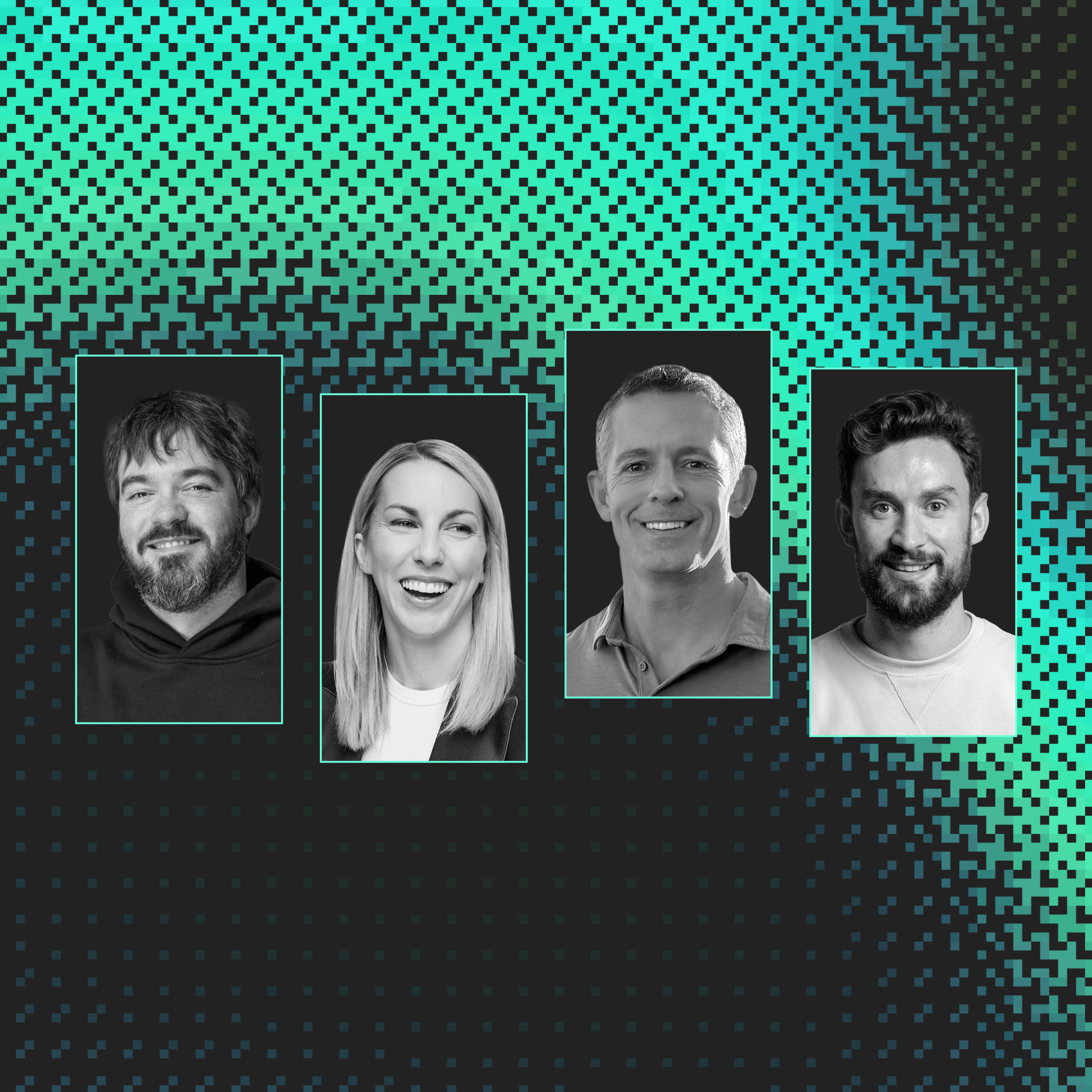
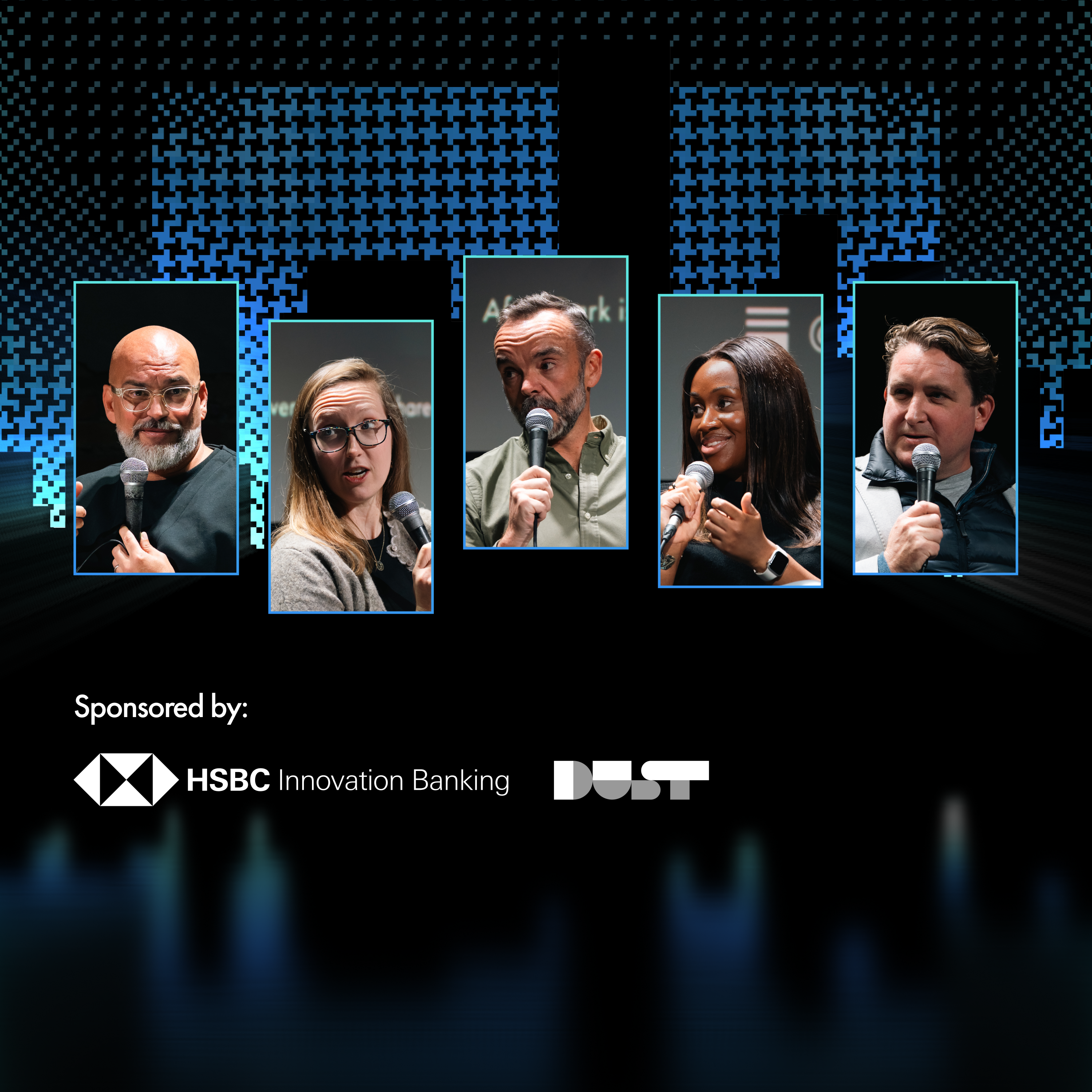
Host Laura Watkins - Director of Media and Marketing at 11:FS - is joined by some great guests to discuss the biggest stories from the world of financial services over the past week.
This week's guests:
Pav Gill - Founder and CEO at Confide
Vijay Konduru - Head of Business Innovation & AI Products at Huntington National Bank
Maia Bittner - Chief Product Officer at Imprint
Stories/timestamps:
Confide Launches Agentic Governance Platform - (04:27)
Huntington Bank partners Google Cloud - (16:46)
Acorns buys Gen Z social finance app Frich - (31:16)
Google resolves cloud outage affecting UK banks and websites - (44:56)
The wildlife winners set to appear on UK banknotes revealed - (46:57)
Links to check out:
Join us at London's Village Underground on Thursday 12th November for a live recording of Fintech Insider News.
https://www.11fs.com/services/media/after-dark
We're on Substack! Subscribe for bonus content from the podcast, exclusive episodes, early access to events, and our weekly newsletter, Bitesized.
https://substack.com/@11fsfintechinsider
Join our WhatsApp community, where you can get the inside track on all all things 11:FS, as well as having your say on the things we should be paying attention to.
https://chat.whatsapp.com/KpA4gFbbWDlLFm7kx39raf
About Fintech Insider:
Fintech Insider by 11:FS is a bi-weekly podcast that covers everything from finance and banking to technology and the latest trends in financial services.
Our expert hosts, with hands-on industry experience, are joined by key decision-makers, VCs, and top reporters from across the financial landscape, including guests from companies like Stripe, Revolut, Plaid, PayPal, and Monzo. Together, they break down the biggest news and innovations shaping the space.
Our weekly news show drops every Monday, covering major stories like mergers, new product launches, regulatory shifts, and emerging tech trends. On Thursdays, our Insights show goes deeper into the hottest topics driving the future of finance, including AI in banking, decentralised finance, and the evolving landscape of embedded finance.
Whether you're already in the fintech game or just starting to explore, this is the #1 podcast for you.
If you enjoyed this episode, don’t forget to subscribe and leave a review!
Got a question for us? Email podcasts@11fs.com!
Learn more about your ad choices. Visit megaphone.fm/adchoices

Scan the code with your iPhone camera
Listen in the app.