Ask ChatGPT

 Fintech Insider Podcast by 11:FS
29 Oct 2026 · 45m · 10 chapters

Fintech Insider Insights episode 1111 (“Make a wish”) where FCA scaling specialist Sarah Kocianski asks three 11FS leaders what they’d change in financial services, and what it would take to make it happen. Wishes cover: (1) rewarding banks for helping customers build better financial futures by aligning incentives with outcomes; (2) making money easier to talk about by improving support and communication for complex decisions; (3) ensuring AI benefits customers more than it harms, while addressing scams and regulatory gaps.
Written by AI. May contain mistakes.
Discussion on the wishes for financial services and the format of the episode.
“and I'm here to find out what they'd wish for if they could change anything about financial services.”
Ross discusses the wish for banks to be incentivized to help customers build better financial futures.
“I mean, again, we've got our wishes to run through, right?”
Exploration of how the financial services industry can align its business models with customer needs.
“pushing the envelope on our ambition and what we're really willing to do there.”
Kate expresses the wish for money to be less awkward to discuss and explores the cultural barriers.
“So, your wish is that money was less awkward to talk about.”
Kate discusses potential strategies for financial institutions to facilitate better conversations around money.
“this is just definitely something I really wish was fixable.”
Discussing the difficulties in talking about finances and the industry's role in this issue.
“to a doctor and all they gave me back was some guidance about how I could operate on myself, I probably wouldn't be enormously thrilled.”
Exploring how AI could transform customer experiences in financial services.
“But of course, we're celebrating 11.11, and I've still got a few wishes left to grant.”
Discussing the implications of AI in personal finance management and regulation.
“And now they're talking about these self-governing coalitions.”
Exploring barriers preventing better banking incentives and customer engagement.
“I tell you what, there's other things that would be higher on my list first.”
Guests share their final wishes for improvements in financial services.
“What do you think is the biggest barrier to ensuring AI benefits customers?”

Get the gist, explore an idea or ask about something said.
 Claude
On Fintech Insider Podcast by 11:FS, what are the key points of this episode?
Searching your listeningAutomatic transcript. May contain errors.
0:14Welcome to a very special edition of Fintech Insider Insights. I'm Sarah Kocianski, Scaling and Growth Specialist at the FCA, but today I'm stepping into a slightly different role, your Fintech fairy godmother. Why? Well, we've reached episode 1111, or that's 1111, I believe. If you've ever made a wish when the clock strikes 1111, you'll know exactly where you're going with this. To celebrate, we're turning the tables on our usual FinTech Insider hosts. They're normally the ones asking the questions, but today they are in the hot seat, and I'm here to find out what they'd wish for if they could change anything about financial services.
0:50We're not asking them to predict what might happen next year. We're giving them the chance to imagine what they'd actually like to see happen. But there's a catch. Even fairy godmothers can't fix financial services with a wave of a wand. So for every wish, we'll also be asking what it would actually take to make it happen. And joining me with their fintech wishlists are three very familiar voices. First up, Ross Gallagher, head of consulting at 11FS. Ross, how does it feel to be back that side of the microphone? It feels great. I feel very comfortable, Sarah, in your very capable hosting hands.
1:22And I'm really enjoying the nostalgia, I must say. Yeah, it's been a while. Let's see how we go. Let's hope I can keep up with appearances. Also joining us is Kate Moody, Customer Strategy Director at 11FS. Kate, I hear you've got quite a few wishes on your list. Are you going to make my job difficult today? I am like a bottomless pit of wishes. I could keep us here all day, but I suspect the producers won't let us. So yeah, I've tried to shorten it slightly, but we'll see how we go. Perfect. I look forward to hearing them. And last, but certainly not least, Benjamin Ensor, Director of Research and Strategy at 11FS.
1:56So Benjamin, you've also hosted plenty of these conversations yourself. How confident are you at being on the other end? I'm fairly confident I'll say something fairly stupid that I subsequently regret, but I'm looking forward to it. I'm sure that would be the case. Never the case. Right, before we get into the big industry changing wishes, let's start with something a little more personal. Kate, I understand that one of your wishes was that your husband spent less money on online shopping. What sort of online shopping? Like groceries or just generally? Everything. It's not limited to a singular category.
2:28So, yeah. That doesn't sound like something a FinTech fairy godmother could fix. I don't know. I mean, again, we've got our wishes to run through, right? But I do personally hold the certain flex product of a certain digital challenger bank responsible for enabling and perhaps even encouraging quite a lot of this shopping. So, yeah, definitely I think FinTech overlaps with shopping for good and for bad purposes, right? Okay, I look forward to hearing more about that later on. Right, let's see what we can wish for. Wish number one, Ross. What if banks were rewarded for helping customers build better financial futures?
3:06If I could grant that wish tomorrow, what would actually change? It's such a good question. And look, you know, I'm conscious that I'm starting us off with quite like a lofty position. I think so much has changed over the last sort of decade, decade and a half of innovation and disruption in fintech. I want to be clear, I'm not coming in and saying, oh, well, you know, how much has really changed? We've kind of got this nice new shiny front end and everything else is the same. I mean, that's not the case at all. I think things have improved materially for customers. I think we've lowered barriers to entry.
3:40I think we've given customers much more effective, much more intuitive tools for managing their finances. I think culturally, pretty much across the board, I think we're all talking now about customers and customer outcomes rather than products. And I think that's become quite pervasive. But I think where I'm sort of coming at this one from is I think in most cases, you know, the underlying business models have been much slower to evolve, right? And I think in certain instances, those are quite inherently, I would say, misaligned with good customer outcomes. And I think that's the thinking. Can we be a little bit more ambitious?
4:20Can we challenge ourselves a little bit more to align what we're doing as an industry and industry players to aligning what we would consider good outcomes with good outcomes for customers? And what do you think is the biggest thing standing in the way of that at the moment? Oh, it's such an interesting one because I think it kind of like comes from lots of different directions, right? So I think if you think about the incentives for a financial institution that come from customers, say, building up and revolving expensive credit versus, you know, maybe building up savings pots and emergency funds and all of those sorts of things.
4:57You know, I think when you think about the zero risk approach that as an industry, I think we've taken to certain regulations. So, for example, the advice guidance boundary, I think we've taken quite a zero risk approach to that. And I think what it's meant is we're not then in a position to be to play a meaningful role in helping customers sort of build the futures that they want. I think likewise when it comes to helping customers understand and how to engage with some more complex financial products. So investments, pensions, for example. Again, I don't think we've been hands-on enough in the role that those types of products can play in building better financial futures.
5:41I think really as an industry, over a great many years, I think we've quite lazily allowed investments, for example, to sort of build up this kind of negative perception or sort of brand. I think when it's come to things like pensions, I think we've kind of just operated on this, again, quite lazy assumption that, oh, well, customers just don't understand pensions. So what's the point, right? But I think again, you know, until we need to take a much more hands-on holistic view around how do we help customers get those outcomes that they're looking for? How do we become a much more hands-on partner?
6:20How do we help them co-create those outcomes? I think it's things like taking a much longer term view around customer value. I think it's things like pushing decisions around, you know, how we're engaging with those customers to teams that are much closer to the customer on a day-to-day basis. I think it's a lot of stuff that we're already doing. I mentioned that I think culturally we're much more, we're sort of operating much more in that sphere already. But I suppose it's just pushing the envelope on our ambition and what we're really willing to do there. I mean, Kate, Benjamin, if Ross got his wish, you know, if banks were better incentivized to help customers build stronger financial futures, what difference do you think that would make to customers?
7:03I mean, I think hopefully the benefit for customers would be that, yeah, they would achieve better financial futures. Obviously, what that actually looks like is going to be different for different people. I think, you know, we've done quite a lot of pieces of research work with different companies across financial services, but we've looked to precisely this problem. Like, how can you actually map out what financial future somebody wants to move towards about it being just massively generic? You know, one size fits no one. So, yeah, I guess I think the point Ross was making around the underlying business models is also really important.
7:34You know, I think actually really if we were able to restructure financial services in this way. Probably what we would also see is, yes, customers achieving better outcomes, but probably also customers having to pay for financial services in a slightly more transparent way. I can't remember who to attribute it to properly, but that phrase, if you're not paying for the product, you are the product. And I think that is maybe the shift that if you follow this wish all the way through, you might need to shift across the industry as a whole that people have a better understanding of financial service providers are helping them to accomplish financial outcomes.
8:05But to do that, you know, that is a service that you as a customer need to pay for either directly or indirectly. So I think, you know, there's a benefit as well, but there'd probably also be, people probably also feel a difference in terms of financial services becoming less something that just exists in the background where you're being charged about even really realizing it to something that you have to make conscious decisions about, you know, what kind of help and support am I willing to pay for? I think there are plenty of companies and millions of individuals in the financial services industry who are trying to build better financial futures for customers, but it's hard to do.
8:37And the problem comes down sometimes to alignment. And there are products and sectors where it's much easier to get alignment between the customer and the firm and products and sectors where it's much harder. So a good example is investment funds, right? In theory, if we invest in investment funds and the value of those goes up and we're paying a sort of fee based on the value of those investments, then in theory, our interests are largely aligned with the provider of those funds. That doesn't always work, but it broadly works. But then there are some other products, perhaps like the one that Kate's husband enjoys, where he's borrowing.
9:10Any kind of credit product, sometimes there's an incentive for the firm to encourage customers to borrow maybe more than they need because the firm makes a profit. Or stockbroking is another classic example, stock trading, where actually sometimes your best customers, the ones who trade most off, the best customers for the firm are the ones are sort of doing the most harm for their financial future. So I think to crack this wish, you've got to, as Kate was saying, think about the incentives, think about the alignment, think about how the financial services industry is rewarded, have more transparency about some of the outcomes.
9:43We have this thing where people in many countries don't want to pay for financial advice because they think, well, why should I pay for financial advice? Financial advice should be free, maybe missing the fact that$100 spent when you're 20 or 30 might actually be worth many, many hundreds of times that later in your life because you took some better decisions when you were a bit younger. So I think people, would people notice because they'd never have experienced another life. But I think there's a huge opportunity to give people better advice if we can just find good ways of aligning the interests of financial services firms with those of their customers, which mutually owned firms are generally a bit better at doing.
10:21Yeah, there's plenty of food for thought there. I think there's plenty of things to dig into, I'm sure, on a later episode of this very podcast. For now, let's move on to Kate. So, your wish is that money was less awkward to talk about. So, why do you think we're still so uncomfortable discussing something that affects almost every part of our lives? I'm going to put it out there that I don't think anybody on this podcast is uncomfortable talking about money, but I suspect that there are many people listening who are. Yeah, I see this firsthand in the primary research we do and the consulting side of our business when we're interviewing people trying to really map out those systems that they use and the jobs that they have.
10:58Even after doing this for eight years, I'm still amazed how at the end of most interviews, especially when you're speaking to people in the retail space or maybe even small business owners, people quite often sort of look quite relieved. like they've had almost like a sort of quasi therapy session and so many people say like oh did I did I say things that were helpful did I you know does everyone else make the same types of decisions or mistakes that I make so yeah I suppose I see it in a research capacity that it feels like it's a much more unique environment for people to find themselves in than I think it than I think it should be and you know you can completely understand why you how much you earn or how much you spend, the kind of decisions you're making about how you prioritise your money as well, are reflective not just of your choice as an individual, but, you know, your perceived worth, I guess, in terms of the work that you're doing and how you're being paid and all that sort of stuff.
11:50And there's all sorts of really established cultural norms about surrounding money and talking about money that hold people back. But, you know, the fact that we don't talk about money also helps sustain lots of negative things, like pay discrepancy and gaps in achieving outcomes across different communities. So, yeah, I mean, I've genuinely no idea fundamentally how we solve this. I mean, you can treat everyone else's perspectives, but given the whole remit of the show is just throw wishes out into the ether, this is just definitely something I really wish was fixable. It's partly as well because it would make your job so much easier if people were more willing to talk to you about their money.
12:28Well, I mean, I've got quite chubby cheeks, so I tend to find that those help to break down. people's breakdown people's anxieties but um yeah i mean i think it's i think it's something that there probably is a solution for and maybe just not smart enough to have found it just yet well i mean i think um i think potentially what do you think financial institutions could do like it doesn't have to be you who finds the answer so what do you think financial institutions across the board could do to make subjects you know like certainly some of the more complex financial services products as well more relevant and and therefore easier for people to talk about I suppose.
13:04It feels to me like we've ended up in this sort of situation where people, like there's so many parts of managing money, making financial decisions that are just objectively hard and difficult. And I think we've ended up in a scenario where people don't feel, the vast majority of people don't feel like they can get help and support in an easy way. And so people have kind of got used to either just trying to work things out by themselves and failing and so quite often repressing or delaying a decision. And kind of when you've flipped to other industries and obviously we know that financial services is very unique but you know obviously there are lots of other heavily regulated industries where they have maybe overlapping issues and if you took the health industry for example like if you had a medical problem and you went to go you'd go to see a doctor because you would believe you would understand and know that a doctor's job is to help you understand and solve that problem um and obviously we've got we've had historically lots of financial guidance but again if you extended that metaphor if i went to a doctor and all they gave me back was some guidance about how I could operate on myself, I probably wouldn't be enormously thrilled.
14:10So again, I think the industry probably needs to try and find ways, which are obviously very difficult, to move more towards a model where when people do have to make fundamentally difficult or complex decisions, there is somewhere where they can go to talk about something, to explain their situation and to receive help and support that is that is going to help them make a decision that is right for them um and obviously we've seen movements towards that we with the fc and the uk kind of introducing total support you know whether that goes far enough i guess i'm sure isn't probably right for us to discuss in this podcast but people across the industry acknowledge that there is a gap here um and i think if people had a sense that they could take the hard parts of money somewhere maybe it would open up more of a conversation around it yeah i mean ross there's obviously a cultural point here that Kate's touched on.
15:00And I think perhaps the British are particularly bad at feeling comfortable about talking about their personal finances, whether that's what they earn, what they spend, etc. But do you think the financial services industry has contributed to that in some way on top of kind of the underlying Britishness of things? Yeah, I do. I think there is inherent complexity. I think if I tie it back to sort of my wish, actually, I think it links neatly in with Kate's sort of hospital or sort of surgery comparison. I think, again, what we do as an industry far too often is we talk about products and the complexities of the products rather than talking about specific customer outcomes and that the products are a tool or a mix of tools that sort of get you to an outcome.
15:49And I think, you know yeah i i agree that there's there's definitely cultural factors that play into this but i think we all have a deep-seated insecurity when it comes to dealing with things that we don't fully understand i think we all bury our heads um a little bit and procrastinate on the things that we can't quite figure out and sure we know that they're important but actually you know when it comes to oh gosh i've got to sit down i've got to figure this out by myself and oh my gosh what if I'm wrong, I think that's intimidating. And I think it puts people off. And so, yeah, I think when we're talking about the complexities of products, and I think if I go back to what I was saying on the previous section about particularly some of the more complex products around investments, I think some of the language, particularly some of the sort of small print language that we've always sort of positioned quite prominently when it's come to advertisements about things like investments.
16:49The value of your investment may go down as well as up, you could lose all of your investment, blah, blah, blah. You know, I think it's almost positioned them as much more speculative than they are, almost positioning them alongside things like gambling, things like crypto. I think we're backpedaling a little bit on that, certainly in the UK. I think we recognize now that as part of a blend of financial products, I think investments are a very useful tool in terms of saving and building for your future. But I think likewise with pensions, as I say, I think we've just accepted this narrative that, oh, well, customers aren't really interested in pensions.
17:23They don't really understand them. So we'll just let them be this passive product in the background instead of actively trying to engage customers in the benefits and to Benjamin's point, the benefits of investing in pensions very early on and how that compounds over the course of a career, et cetera, et cetera. So yeah, I think to your question, Sarah, you know, how we go about stripping back some of that complexity and again, tying it back to customer outcomes as an industry, I think there's probably a way to go. That makes sense. And to follow up on that with you, Benjamin, perhaps, do you think there is something that needs to change about how financial services communicate information to their customers to help ease this problem, to help ease people's unwillingness or uncertainty around talking about money.
18:11Yeah, I think the interesting thing here is I think what Kate's sort of driving at is people feel maybe uncomfortable talking about money to their friends and maybe even certain family members because there's this sort of sense of judgment because money is in some ways a metric for success, just as various other things in life are. And that maybe makes people feel uncomfortable. But the issue is being able to find someone else that you can talk to, being able to find a professional, being able to find that doctor. And I think financial advice has often been a bit unavailable for various reasons.
18:43And so you end up with this kind of one-size-fits-all type solutions, if anything. And so the real issue is how do you provide tailored, relevant sort of financial advice and guidance? And I think if you think about the world 20 years ago before social media, it was much, much harder to find any kind of financial advice and guidance. Basically, there were some good money magazines and newspapers, maybe this 30 years ago, right? But yeah, there's an awful lot of actually very, very good guidance available on social media. Unfortunately, there's also a lot of dross and a lot of people who are trying to give you bad advice that's in their interests.
19:18But I do think the industry can learn from, you know, some of the amazing content creators who are creating really good accessible content, you know, with visuals and words. Because some of these concepts, you know, Ross, you were just talking about sort of compound returns or leverage. Some of these concepts are a bit complex, particularly if maths wasn't really your thing at school. If you can visualize that for people and talk it through with them and give them something they can trust to talk it through, I think there's a huge opportunity. But it's difficult. It is difficult to scale without AI.
19:47And I suppose the two points are linked. If historically you were more comfortable talking to your parents or your partner, if you're less comfortable talking to your parents and your partner, what is the option? And especially if your parents don't necessarily understand crypto or leverage, etc. either. So I suppose there's both sides of this need to come together to make sure that everybody feels more comfortable talking about money with whoever they feel comfortable doing so with. Right, that's two wishes down, but my duties aren't over yet. After the break, we're turning our attention to AI and what else would change about the financial services industry if we had a magic wand.
20:21Don't go anywhere. Launching innovative payment products is only the beginning. Real progress comes from what happens next. Paymentology fuels continuous compounding momentum as a cloud-native issuer processor, helping banks and fintechs grow beyond go live with global reach, local know-how, and the power of its Loom platform. Powered by more than 500 paymentologists across 68 countries, they make card programs work naturally across markets. Want to keep the momentum going? head to paymentology.com. Welcome back to FinTech Insider's most magical episode. But of course, we're celebrating 11.11, and I've still got a few wishes left to grant.
21:07So let's turn our attention to what could come next. Benjamin, you touched on it at the end of the last segment, but your wish is that AI does customers more good than harm. If I could guarantee that wish came true tomorrow, what would financial services look like? So I always think that artificial intelligence, particularly generative artificial intelligence, is a little bit like nuclear fission. It's an incredibly powerful technology that has immense power to do good, but also immense power to do great harm. We're in the place now where generative artificial intelligence, particularly combined with sort of conversational AI, is going to be able to solve the last big remaining problem in retail financial services, which is that many mainstream consumers don't get the financial advice that they need, which is pretty much bang on what Ross and Kate were talking about.
21:58So there's this enormous potential for this technology to really, really help millions of people take better decisions, you know, manage their investments more carefully, manage their spending more carefully, avoid bad decisions and so on. And, you know, it's not going to fix the cost of living crisis. It's not going to transform economies, but it can help individuals and families make better decisions. The tax systems in many countries are horribly complicated and it's really easy for people to make mistakes that cost them or cost their families because they simply don't understand, you know, certain tax traps or certain tax tricks and so on.
22:34So there's this huge potential to do good. And yet at the same time, we are seeing bad actors, mostly organized crime, but in the future it could be foreign state actors and things as well, taking advantage of AI to trick and fool people out of their money, to propose all sorts of scams on a scale and with a speed that is just mind-boggling. I was reading just today about people who themselves have been trying to use AI through a VPN. And there are 8 million people who were using a VPN through a broker, and that broker was intercepting every single thing they were putting into their AI and selling it on.
23:16And so there's this enormous potential for harm as organized crime takes advantage of AI to create more and more scams and frauds, you know, with unbelievably convincing video and, you know, starting to hack into our personal information so that, you know, there's a lot of social engineering in some of these attacks now, right? Bespoke, socially engineered attacks. And so that creates this enormous possibility for harm that actually millions of people around the world will get scammed, will get hacked. You know, we're seeing large companies, large banks, you know, getting tricked out of millions of euros because somebody is impersonating somebody else.
23:59And we simply don't have the systems and the processes to spot and stop some of that. I mean, I guess there's kind of, we talked there quite a lot about the potential harms, but where is the greatest potential for AI to improve customers' financial lives, individual customers' financial lives? I think each person is going to be different. I mean, we talked about compound investing. Compound investing is so strong that, you know, persuading people to start investing, start saving in their 20s, if they can, would probably make, might make the single biggest difference. But there's all sorts of things, you know, where people are missing out on allowances that they might get, where people are making bad decisions around sort of mortgages or credit or borrowing.
24:41So without having done a study of it, I can't tell you exactly where the biggest benefit might be, but I suspect you would probably be investing just because in terms of compounding over your lifetime, that's probably the thing that's going to make the biggest long-term decision. Maybe Kate's husband's spending, you know, maybe that could be better reinvested. Who knows? He's going to be so cross when he finds out that I've spent most of this episode just berating his shopping. But there we I suppose the way to sum both of those up is under the heading that we've talked about for an awful long time in financial services, which is personalization.
25:14So AI can personalize your services to whatever best suit your circumstances. And maybe this is the golden bullet that we've been waiting for for all these years. We've talked about the P word. Bingo. Bingo. Kate, Ross, do you think the industry is currently paying enough attention to the potential downsides for AI? Too much attention to the potential downsides? which way do you see the industry as going at the moment, like as a whole, as an industry perspective? I mean, certainly the stuff that I see, maybe I'm in a bubble of caution, but I certainly am seeing lots of the big banks, big fintechs talking very cautiously about, yes, I understand the opportunity, but absolutely wanting to think through how they apply this.
25:55Obviously, the regulator is playing a very important role in multiple different markets across the world and sort of tempering the speed at which some companies can move. So yeah, I definitely think the downsides, I mean, maybe the downsides are clear within the industry, whether the downsides have been, potential downsides have been made clear enough to customers yet, I guess is something to, is maybe probably more the point. Certainly from what we've seen, it sounds like there is ever increasing adoption of AI by individual retail or sort of business consumers to ask financial questions, receive sort of quasi-financial advice, I don't really know if the downsides for those customers are being made clear enough, like whether they are actually fully understanding the likelihood we covered on our live after dark show one study that was sort of showing a very significant proportion of those recommendations not being fully correct, whether that is being surfaced to customers, whether customers are aware of that, that if they take action on this conversation, where will the fallback be if something goes wrong, if they don't achieve the outcomes they were hoping for.
27:02That's probably where the biggest downside probably still exists. So I don't think it's probably being surfaced clearly enough. That's interesting. And Ross, how about you? Do you think we're in a finance bubble? I mean, I think there is, I don't think anybody could doubt that there is, there's almost no regulation whatsoever around AI at the moment more generally. I think again, ultimately where we get to on this in terms of Benjamin's dilemma around is this going to do more harm than good? again I think comes back to incentives right um I think in the early days of deep mind they really tried to prioritize AI safety that being very much at the forefront of how these models got developed they set up an AI safety coalition to try and bring all of the active players in this space together in a line behind prioritizing AI safety um it never really got off the ground because of course, the incentives were around, well, who's going to win this AI race?
27:59We've all heard Donald Trump say, whoever wins AI wins. And now they're talking about these self-governing coalitions. I mean, you know, think what you will about the idea of self-governing. But I think, look, you know, the more nuanced view on that, or maybe the more practical view is, you know, if people are going to be using some of these general purpose frontier models for how they manage their personal finances, there's so many questions, I think, that needs to be answered. And I think one of the the most important questions is, you know, whose behalf is the agent acting on? You know, whose outcomes are the agents prioritizing?
28:34Are they prioritizing delivering good outcomes for the consumers? Are they prioritizing delivering the best possible outcome for the AI companies? You know, there's so many questions here, I think, that need to be addressed before we can start to get under the hood of, does this get us to a place that's better off or worse off, but boy, does it have the potential. I think the fundamental challenge here is 20, 30 years ago, financial advice and financial guidance is always all quite tightly regulated in every country. And the only other people who really ever talked about financial decisions were a small number of financial journalists, right?
29:07Magazines, newspapers, and so on. Now, everyone is a publisher, right? Everyone can publish whatever they like on the internet. And that's wonderful. And there's all sorts of weird wonderful things that everyone publishes. However, it creates this path for scammers and all sorts of bad actors. And the problem is there's no regulation of that. So the regulators have taken this sort of relatively straightforward view of, okay, we need to regulate financial services firms. Well, unfortunately, no, that's not good enough. And so there's a massive issue, not so much for regulators, but actually for legislatures and political leaders of how do we regulate AI and media more widely?
29:46Because is it okay for individuals to be going out and giving advice to people on, you know, whatever pyramid investment scheme or whatever they've come up with? And it'll be very sophisticated, very slick advice, but it completely unregulated and outside the remit of the regulator because it's not a financial services firm doing it. And so I think that's actually the biggest problem is the legislators need to really grapple with this of how are you going to tackle this? Oh, and just to make it more complicated, let's throw in extraterritoriality, as you just alluded to. You know, if these AI models are coming out of China or the United States, and you're in Canada or Ghana or Australia or wherever, well, can your regulator really do very much to prevent the actions being done by an AI company in a completely different country on the other side of the world.
30:38So that's one heck of a big issue. And that's why I see this as having potential for huge harm, because the regulators don't necessarily have the tools they need to prevent harm to people in their countries from bad actors in other countries. It's certainly a very big topic and not one that's, you know, unique to any particular country, region or otherwise, as you suggest. So I'm sure that we're going to be hearing a lot more about that over the coming months and years. You can just wave your magic wand though, right? You can just fix it right now. I tell you what, there's other things that would be higher on my list first.
31:16Right. We've heard about three very different wishes today, but making them come true, as we've discussed, is not going to be quite so simple. So let's talk a little bit about what's actually standing in the way. So we've alluded to some of these areas already, but we've talked about better incentives of banks. We've talked about making money easier to talk about and we've talked about ensuring AI benefits customers. So what do you think is the biggest thing getting in the way? And we've touched on lots of different areas and potential, you know, barriers for these things happening. But if I asked you for each of your wishes, what is the biggest of the barriers?
31:54What would you say? I'll come back to you first, Kate, because you just started. Oh, you've just picked on me because I was pulling visibly confused faces I think so yeah gosh it's a really tough question to answer I suppose I try to think back to where have we seen some of the biggest initiatives and the biggest changes happening in the last few years and financial services and certainly again you know Benjamin Ross might have different opinions but I think where we've seen some biggest positive initiatives it seems to have come from you as Benjamin was alluding to this kind of really synced up for you between financial regulators but also government other kind of different organizations you know things like the rollout of open banking in the UK, PICS in Brazil, other payment initiatives kind of at national scales, which have fundamentally challenged systemic issues in how those processes were working, where the fees were being charged, etc.
32:44So I do think maybe that is, as Benjamin was alluding to, that actually that's probably where one of the biggest challenges has been for other areas is that they haven't necessarily had, these are big issues that require really joined up responses. And yes, that's happened in a few areas, but we haven't seen that happen across the whole spectrum of financial services yet. And it's very difficult for even for very well-intentioned individuals within individual organizations that we see on here all the time in our work. It's quite difficult to make the case to be like the only bank or the only fintech that is stepping forth and doing something which fundamentally challenges existing industry norms, product norms, customer norms.
33:24sometimes these steps have to happen at a sort of more overall national international level for them to be successful that's fair the i think it would be fair to say that the whole industry every different part of the industry and every different aspect of the ecosystem has a part to play it's just not quite clear yet whose role is which i suppose would be the fair thing to say at this point ross what about you what do you think is the biggest barrier to banks being better incentivized to help customers build stronger financial futures? I think it's really interesting, Sarah, because I think there's kind of like probably the answer for right now.
34:00And then that answer is probably fundamentally different in a couple of years time with the advent of AI. I think if you're looking at it right now, I think it's taking that longer term horizon in terms of how we think about the value we realize from relationships with our customers. you know i think when you're constantly thinking about in-year return and p &l and all of that sort of stuff i think that fundamentally skews how we engage with customers i think it fundamentally skews what we think about that relationship and i think it fundamentally skews some of the decisions we make etc i think if you start to zoom out and start to think about value differently and you start to factor in things like engagement, start to factor in things like loyalty.
34:48And I think you start to think about, okay, well, fundamentally, how does that then transform the outcomes we can deliver for customers over a longer time horizon? I think you can start to build up a better picture holistically of their financial lives. It becomes a lot less fragmented. And then I think over time, actually there's more value that you can realize by having that holistic picture i think that's the answer for right now what does that look like in two or five years time if people are just using you know sort of whatever their own chatbot agent is and they're not necessarily actually engaging with your digital channels for example directly and they're doing it all through the agent i think that's a uh that's a fundamentally different picture are apps even going to be relevant in five years' time in terms of any one financial institution's app like TBD.
35:45Maybe that's a different show, though. I think we have given the producers ideas for many, many different shows throughout the course of this episode. So I don't know whether they will be praising us or cursing us. Benjamin, how about you? What do you think is the biggest barrier to ensuring AI benefits customers? I think the biggest barrier is, I mean, the biggest problem is the bad actors. The reason the bad actors can get at customers and cause harm is because currently there's no regulation that I'm aware of preventing non-financial firms from using AI to provide financial advice, right? So let's take Meta as an example.
36:30Meta is a big company and have big AI engines, but it's not regulated as a financial intermediary. And yet Meta's muse is allowed to provide financial advice and guidance. So it's riding a coach and horses through the regulatory infrastructure that's developed in countries all around the world. So I think the first thing you've got to do is you've got to say, well, if you're providing financial advice or guidance through AI, you need to be regulated. If you're not regulated, that is illegal. But that requires action by legislatures all around the world. But that would be my wish. Perfect. Okay.
37:03I think we've covered an awful lot today. I just want to check if anybody has any final thoughts, any final wishes you didn't get a chance to tell us about today. basically I'm just giving the producers the next episodes talking points so anybody get any final wishes oh gosh I mean are we allowed to just go into them in detail or just at high level you've got two minutes so do with what that what you can well yeah I mean if we had a unlimited amount of time I'm sure there's all sorts of things we could cover I feel like when we were like bouncing ideas before the show I think a couple of us talked about trying to make pensions less boring so I feel like that's that feels like it's something that again we probably probably could and probably haven't passed spent a lot more time talking about.
37:44But yeah, that would be, I mean, wish number one, obviously, reduce housing spending. Wish number two, make it easy to talk about money. Wish number three, pensions, less boring. Ross, any others on your top three that had to be culled for the sake of time? Well, actually, going off the strength, Sarah, of your performance, my wish is going to be that we bring you back into the hosting seat on an ongoing and permanent basis because I've thoroughly enjoyed this. Well, that's very kind of you. thank you very much Ross I think what people who listen to this podcast or watch panels fail to appreciate is actually really quite hard to host so I very much appreciate your kind words Benjamin how about you any final wishes well this is going to be quite a nerdy one but I've had a number of people in on the B2B side of financial services just saying I've got a wish ISO 20022 was universally adopted which I know is one for kind of finding of the geeks but something like that would actually make quite a big difference to an awful lot of companies this would save an awful lot of time.
38:40So better adoption of API standards and data standards would save an awful lot of people and awful lot of work. So it's boring, plumbing, but important. Well, thank you very much, all of you, for being such gracious guests. I think we've given the FinTech Fairy Godmother quite a lot of work to do. Thankfully, it will not be me next time around. We've talked about changing the incentives behind banking, making money easier to talk about, using technology to tackle longstanding problems and rethinking some of the rules of financial services. Before I hang out my magic wand, I have one final question for all three of you.
39:20If we came back to these three wishes at episode 1200, which one do you think would actually be closest to achieving? I'm going to say Ross is one. I think getting the banks and the financial services industry more widely rewarded for helping customers build better financial futures is hard. but not as hard as preventing harm from AI or getting uptight British people to talk about money. Hey, my wish was global. It's not just about the British. It's global. That's my fault. I brought the British into this. I'm inclined to agree with Benjamin. And I think I go back to that point about, I think, pretty much across the board, whether it's, you know, fintechs, challengers, the big incumbents, I think culturally the mindset has shifted significantly in the way of thinking about the best outcomes we can possibly deliver for customers and I think that is you know culture is always half the battle and so it feels like we've already made some real progress there and hopefully we can continue to build on that momentum.
40:23Well I'm going to disagree in a way like I'm just trying to do the maths now episode 1200 is not that far away right really in the grand scheme of things, it's not that far away. And so which of these initiatives is showing the most aggressive pace of change? It probably is AI. I don't know. Okay. It's taken us a decade to get to 1111. It's only like an extra 900 episodes. Anyway, we're not doing live maths. This isn't going to reflect well on any of us. But basically... No, true, actually, you're right. No, I've done terrible maths. The non-mathematical point I wanted to make was, I think we're seeing, for better or worse, we're seeing the fastest pace of change in the AI space.
40:56So in terms of whether we'll actually have resolved it or not you know i think benjamin's wish around ai we've got to face into really really quickly um so yeah i i think the other things actually in many ways are connected to the outcomes of this debate around ai as well it's going to feed into the types of products and services that companies can offer to help people with their financial futures it's probably going to actually provide new ways for people to talk about their finances that maybe are less intimidating and are easier to embrace. So yeah, I think it's probably going to be Benjamin's.
41:29All right. Well, you'll have to tune in for episode 1200 to see which one's made the most progress. But on that note, that's all we've got time for today. A huge thank you to Ross, Kate and Benjamin for joining me and for being such good sports. Where can people find out more about you, Ross? As ever, Ross Gallagher on LinkedIn. Kate? Yeah, also LinkedIn, Kate Moody. And Benjamin. I'm Benjamin Ensor, also on LinkedIn. and you can find out more about the team as a whole at 11fs.com. Perfect. And you can find me on LinkedIn also. Thank you to everyone who's been listening to Fintech Insider over the years and helped us reach episode 1111.
42:05If you like what you've heard, follow our podcast and don't forget to leave us a review. It helps us to make it better and helps others to find the show. As always, if you want to join the conversation on social media, just search for 11FS or Fintech Insider or email podcasts at 11fs.com. Here's to the next 1111 episodes and hopefully a few wishes coming true along the way. Thank you very much for listening. Goodbye.
About this episode:
It's episode 1111 of Fintech Insider, and we're making a wish!
To celebrate this milestone, we're turning the tables on our usual hosts and asking a simple question: If you could change anything about financial services, what would you wish for?
Stepping in as our Fintech Fairy Godmother, Sarah Kocianski, Scaling & Growth Specialist at the FCA, is joined by three familiar voices from Fintech Insider.
From helping customers build better financial futures to making money less awkward to talk about and ensuring AI does more good than harm, they share their biggest wishes for the industry.
But there's a catch: even a fairy godmother can't fix financial services with a wave of her wand. So what would it actually take to turn these wishes into reality?
This week's guests:
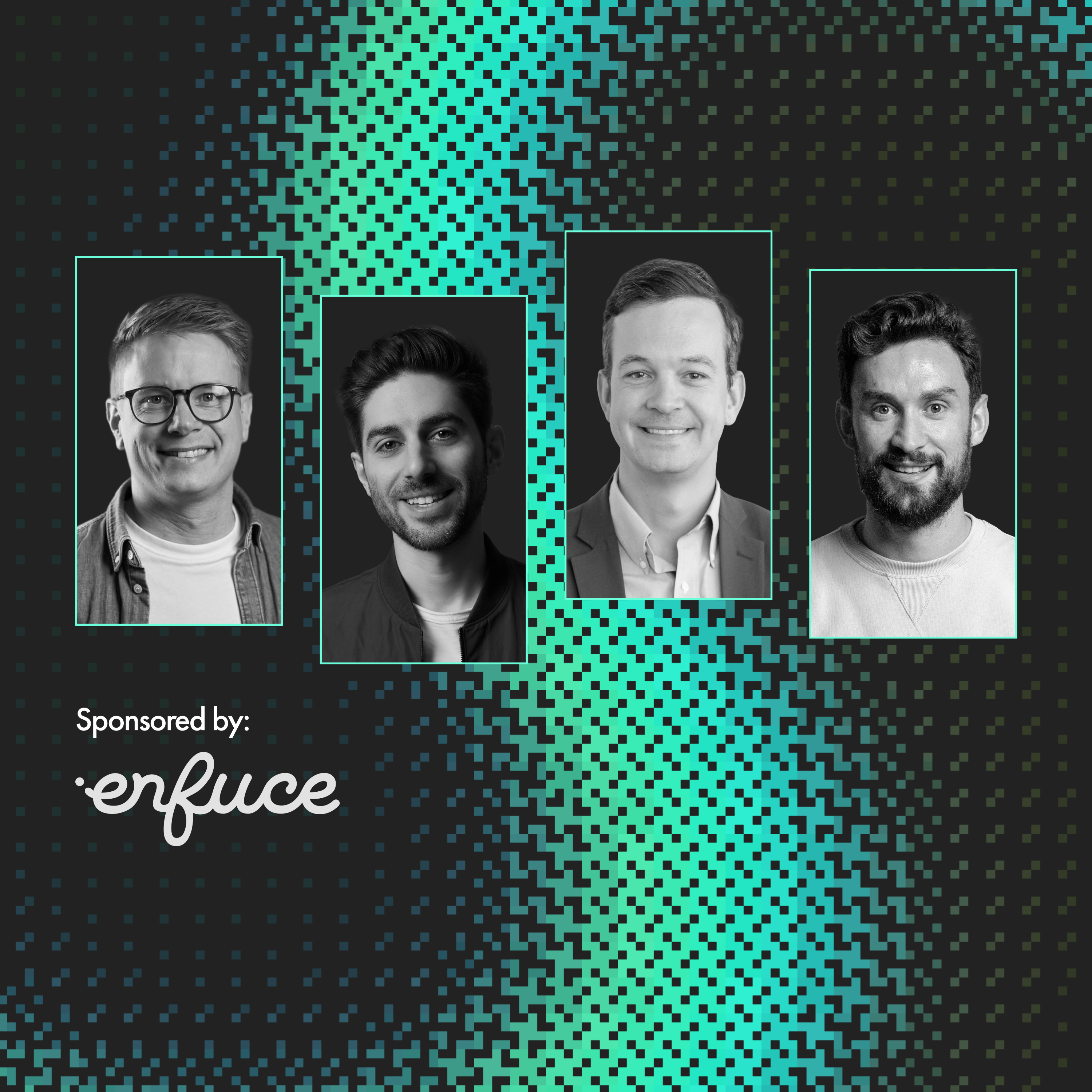
Ross Gallagher - Head of Consulting at 11:FS
Kate Moody – Customer Strategy Director at 11:FS
Benjamin Ensor - Director of Research and Strategy at 11:FS
Links to check out:
Join us at London's Village Underground on Thursday 12th November for a live recording of Fintech Insider News.
https://www.11fs.com/services/media/after-dark
We're on Substack! Subscribe for bonus content from the podcast, exclusive episodes, early access to events, and our weekly newsletter, Bitesized.
https://substack.com/@11fsfintechinsider
Join our WhatsApp community, where you can get the inside track on all all things 11:FS, as well as having your say on the things we should be paying attention to.
https://chat.whatsapp.com/KpA4gFbbWDlLFm7kx39raf
About Fintech Insider:
Fintech Insider by 11:FS is a bi-weekly podcast that covers everything from finance and banking to technology and the latest trends in financial services.
Our expert hosts, with hands-on industry experience, are joined by key decision-makers, VCs, and top reporters from across the financial landscape, including guests from companies like Stripe, Revolut, Plaid, PayPal, and Monzo. Together, they break down the biggest news and innovations shaping the space.
Our weekly news show drops every Monday, covering major stories like mergers, new product launches, regulatory shifts, and emerging tech trends. On Thursdays, our Insights show goes deeper into the hottest topics driving the future of finance, including AI in banking, decentralised finance, and the evolving landscape of embedded finance.
Whether you're already in the fintech game or just starting to explore, this is the #1 podcast for you.
If you enjoyed this episode, don’t forget to subscribe and leave a review!
Got a question for us? Email [email protected]!
Learn more about your ad choices. Visit megaphone.fm/adchoices
Learn more about your ad choices. Visit megaphone.fm/adchoices