Ask ChatGPT

 Fintech Insider Podcast by 11:FS
2 Nov 2026 · 54m · 23 chapters

Fintech Insider News episode 1112 covers three main stories: Plum’s FCA-approved “targeted support” for UK customers, Chargebacks 911’s indemnification for AI-agent purchases, and MasterCard’s creator-economy push via a MrBeast partnership.
Daniel Wills (Senior Financial Advisor at Plum), Matthew Goldman (Founder/Managing Member at Tatavi), Brad Wiskirchen (Chief Commercial Officer at Chargebacks 9-1-1 and CEFI 9-1-1).
Plum’s targeted support bridges generic guidance and full advice, using an updated Plum AI assistant (already used by 270,000+ customers) to provide ready-made, circumstance-based savings/investment suggestions; it’s positioned as a “ladder/staircase” with human oversight growing as decisions get complex. Brad says Chargebacks 911 uses AI and dispute data to identify agent-initiated transactions and indemnify merchants for qualifying chargebacks without checkout changes. Matthew argues agentic commerce needs clearer liability, using self-driving/robot analogies. MasterCard and Beast Industries will launch co-branded card programs, tools, education, and loyalty/experiences for creators; Step (MrBeast’s acquired teen fintech) may be integrated.
FCA mentions Plum alongside Barclays and Aviva; Chargebacks 911 cites 2.5M merchants/banks; Halloween segment notes UK businesses earning more from Halloween than Christmas.
Written by AI. May contain mistakes.
Introduction of the hosts and guests, setting the stage for discussions.
“I'm Kate Moody, Customer Strategy Director at 11FS.”
Discussion on Plum receiving FCA approval for targeted financial support.
“Our first story comes from the Financial Times and that is Smart Money at Plum secures FCA approval for targeted support.”
Exploration of how targeted support works and its implications for customers.
“I mean, congratulations on getting the approval.”
Insights on how Plum uses AI to enhance targeted support for customers.
“I think how it differs is filling a really big gap.”
Comparative analysis of the financial advisory landscape in the US versus the UK.
“Again, I suppose it would be good to understand a bit more about that.”
Discussion on the importance of balancing AI solutions with human input in finance.
“And then very expensive financial planning.”
Exploration of Plum's strategy in providing financial guidance across multiple accounts.
“I guess the other thing I was keen to get your take on, Dan, is I think Plum's in a really interesting position because you are an intelligence layer that sits on top of mostly other people's accounts, right?”
Learn how cash protects against short-term volatility but may erode value over time.
“So cash obviously protects you from the short-term ups and downs, but over longer periods with rising prices, obviously that can erode cash's value in real time.”
Explore the importance of personalizing financial advice for retirement planning.
“So giving people, you know, support through this new targeted support is how we feel, you know, it's a massive opportunity and we consider it a really important responsibility to deliver good outcomes for our customers.”
Get insights into Plum's new initiative aimed at enhancing customer support.
“US-based dispute management company Chargebacks 911 has launched a new service designed to protect merchants against qualifying chargebacks arising from purchases made by AI agents on behalf of consumers.”
Discover Chargebacks911's new service to protect merchants from AI purchase disputes.
“We're certainly the first to leverage artificial intelligence in the dispute resolution process.”
Discuss the implications of AI agents in commerce and the liability issues they raise.
“But if a consumer is engaging in a transaction, leveraging an AI agent, then they certainly know it.”
Examine how agentic commerce changes the dynamics of consumer transactions.
“And we're all figuring it out in real time.”
Understand the importance of security and consumer confidence in AI-driven services.
“and we're continuing that here, leveraging an extensive portfolio of AI-native businesses and products.”
Details about an upcoming live podcast event and networking opportunity.
“It's taking place at Village Underground in London on Thursday the 12th of November where we've been recording a live FinTech Insider News show followed by drinks and networking with the FinTech community.”
Discussion on MasterCard's collaboration with MrBeast and its implications for the creator economy.
“Okay, back to the news and our final main story this week is taken from Finnextro and it is MasterCard targets creators via MrBeast partnership.”
Analysis of the financial challenges faced by content creators and how MrBeast's initiatives could provide solutions.
“That's not going to necessarily resonate with this particular group, although it resonated with me back in the day.”
Overview of Revolut's entry into the personal loan market in the UK.
“Okay, well, as we've all said, we'll need to watch and see how this unfolds.”
Explore how Paymentology supports banks and fintechs with its cloud-native platform.
“Paymentology fuels continuous compounding momentum as a cloud-native issuer processor, helping banks and fintechs grow beyond go-live with global reach, local know-how, and the power of its Loom platform.”
Discuss Revolut's launch of personal loans and its expansion plans.
“Okay, now for a quick look at the story that we didn't have time to cover in full but still deserves a shout out.”
Examine how Halloween has surpassed Christmas in revenue for some businesses.
“And this is two coming out at the same time.”
Delve into the cultural changes surrounding Halloween celebrations in the UK.
“And all the amusement parks kind of transform themselves in the U.S.”
Discuss the most significant concerns in the fintech industry today.
“But yeah, perhaps that's my scare as a financial planner.”

Get the gist, explore an idea or ask about something said.
 Claude
On Fintech Insider Podcast by 11:FS, what are the key points of this episode?
Searching your listeningAutomatic transcript. May contain errors.
0:05This is Fintech Insider News. This week, Smart Money at Plum secures FCA approval for targeted support. Chargebacks 911 launches indemnification for AI agent purchases. And MasterCard targets creators via MrBeast partnership. We'll be tackling all of this and more on today's news show. So don't go anywhere.
0:27This episode is brought to you by Indeed. You're ready to level up your business, but the pressure to find the right person to make that happen is intense. Indeed Sponsored Jobs can help carry the load. It boosts your job post to help it reach quality talent fast. Cut through the chaos with Indeed Sponsored Jobs. Get a$75 sponsored job credit at indeed.com slash podcast. Terms and conditions apply. Hiring now? then this is a job for Indeed Sponsored Jobs.
1:07Hello, and welcome to episode 1112, we have to say the 1100 part just because we're 11FS, of FinTech Insider News brought to you by 11FS, the six-time consultancy of the year that works with financial providers, big and small, to build the next generation of financial services. I'm Kate Moody, Customer Strategy Director at 11FS. To help me unpack the biggest and most interesting stories from fintech and financial services from the past week, I'm joined by a brilliant panel of guests. Daniel Wills, Senior Financial Advisor at Plum, Matthew Goldman, Founder and Managing Member at Tatavi, and Brad Wiskirchen, Chief Commercial Officer at Chargebacks 9-1-1 and CEFI 9-1-1.
1:44So we have a fantastic panel and we're going to dive straight in. Our first story comes from the Financial Times and that is Smart Money at Plum secures FCA approval for targeted support. UK Smart Money at Plum has received approval from the UK's Financial Conduct Authority or FCA to offer targeted support through its investment entity Saveable Limited. Targeted support is a new regulatory regime designed to bridge the gap between general financial guidance and fully personalized financial advice. Plum plans to be among the first firms to deliver targeted support using AI through an updated version of its AI assistant, which has already been used by more than 270 ,000 customers.
2:23The first use cases will focus on helping customers holding relatively large amounts of cash consider whether investing could help them build long-term wealth. Dan, probably makes sense to come to you first. I mean, congratulations on getting the approval. I'm sure it's been kind of quite a lot of work behind the scenes. We do have a very international listener base. Maybe we could just start off by giving them a quick explanation, I suppose, of what targets for what actually means and looks like for customers. Absolutely. Thank you, Kate. It's obviously a massive moment for us, a plum, and I think an important moment for financial services in the UK more broadly.
3:02We have, of course, been authorised by the Financial Conduct Authority to offer that targeted support, which makes us one of the first in the industry to receive it alongside names like Barclays and Aviva. For international listeners, in the UK for a long time, people have really had one of two options. On one side, there's general guidance. That's relatively basic information about your options, but it stops short of saying what someone in your position might actually do. And on the other side, there's been full detailed financial advice where an advisor will look through your whole situation and make a personal recommendation just for you.
3:42So advice is incredibly valuable, but of course it takes time and it costs money. So most people never really think about getting it. Targeted support sits in between those two ends of the spectrum. It means we can now provide ready-made savings and investment suggestions to groups of customers who share similar circumstances. That helps them consider whether investing could be right for them and take steps towards building wealth over the long term. It isn't a personal recommendation as such, and we're clear about that, but it's far more useful than just generic information. Yeah, I think it's been such an interesting one to see how all the different people rolling out are approaching it.
4:22I mean, I guess from a Plum specific perspective, how has this changed what you're doing with your customers versus what you're able to do before, you know, with the financial guidance you're offering before? Of course. I think how it differs is filling a really big gap. The Financial Conduct Authority estimates around 23 million people in the UK are underserved by the financial advice market. And that's, of course, a huge number of people making important money decisions, largely doing that on their own. And it's a confidence gap as much as a cost gap, right? So picture someone with£23 ,000, for example, sitting in a current account, they know they should probably do something with it.
5:04But general guidance leaves them with a lot of homework to do themselves. So comparing various rates and various providers, researching, working out for themselves. And of course, paying for full advice can feel like a big step for that amount. So in turn, making that relatively intimidating. So what usually happens is they end up doing nothing, right? Sometimes for years on end. So what the regulator is trying to do here, I guess, is help people get the right level of support and doing that at an affordable price. And that's obviously where Plum Fill, we can offer a decent level of support at the same time, I suppose, with a lot of consumers facing large household budgets and bills, and they're under real pressure.
5:48So I think this kind of help really matters more than ever. Yeah, and you've emphasized a lot, I suppose, in your releases around this, how this is going to integrate with the AI functionality that you're building into the app. Again, I suppose it would be good to understand a bit more about that. How have you used AI with targeted support and how are you kind of bringing that into the proposition? Absolutely. I think the easiest way to picture it is as a ladder. So today our Plum AI assistant has really been used many, many times, as you say, more than 270 ,000 customers. We've helped with their finances.
6:27So through that Plum AI assistant, people can set those financial goals and get step-by-step plans to help achieve those goals. But that's guidance. So I think what really is the big difference here for us is we're going to start helping people more specifically through this targeted support, which is how we see it the next run up. So rather than just laying out the options and leaving the decision entirely with the consumer, we can offer that ready-made suggestion for people in that situation based on their circumstances and similar circumstances to other people in their group. So customers can get more help, practical steps, and can put them in a much better position.
7:07Okay. No, no, it makes sense. Matthew Keene, to bring you in, obviously, Targeted Support is a UK regulatory initiative. What does it look like to you on your side of the pond? Are you seeing sort of similar problems in the US and kind of how are companies approaching it on your side of the pond? I think absolutely the problem still exists. The currency may be different, but the aspect of consumers have money, need advice, but don't maybe have millions of dollars to pay a financial advisor is very much the same challenge. And I think with AI, everyone's just doing this for themselves, right? They're asking their chatbot of choice.
7:50And in the US, we've seen all of them, all, you know, chat GPT, Claude, perplexity, investing in things like, you know, open banking links so that they can bring in that data and provide it to you. But what we don't know is if it's any good, right? Or if they're misleading consumers. We know that AI can do that with other aspects like medicine and mental health, and we've seen the downsides of that. I have not seen any indication that there's the kind of regulatory innovation here of this middle ground, and I think right now we're still stuck. And officially, there's all these sites that give you financial advice and then have a disclaimer that says, but this is not advice because they don't want to get sued or fined or whatever.
8:31And then very expensive financial planning. And some of the big firms have tried something in between where you get a financial plan for hundreds of dollars, but those are actually quite poorly done, right? They're very generic. So I'm really excited. I was really excited to learn about this from the UK because I think a similar thing would be very helpful here. People want that advice, but they also don't want to make mistakes. And an interesting kind of last point is I started to see the marketing from large financial firms echo this. Like there's a new Fidelity Investments campaign, which is basically like, I wanted help from a person along with AI.
9:08So it's kind of talking in the same language. and the message is I can use Fidelity's great web tools, but I can also still talk to a person and I think that's still where a lot of consumers want to go. Yeah, absolutely. Brad, what was your take on this? Can you take your perspective? You know, I think you hit it head on. First of all, explainable AI is difficult with LLMs and neural nets in general. And that's because LLMs aren't necessarily deterministic. They give different answers. Different answers ask the same question. So, you know, one of the big questions is how do you ensure AI generated solutions that are reliable, explainable, and based on appropriate customer information?
9:49But Dan, I'd ask you, how are you approaching the balance that was just referenced between automation and human oversight as Plum develops a service? And then what happens when the AI system produces a recommendation that isn't appropriate for a particular customer? Yeah, absolutely. I think the way we're looking at it is like a staircase. So I guess on the bottom steps are the everyday questions. So how much did I spend eating out last month or how much should I put aside for the holiday? I think the technology can handle those sorts of questions brilliantly. I guess as you climb the stairs and the decisions get bigger and more personal, I guess the human element would start to creep in to those conversations.
10:35A big part of my role, I guess, is reviewing our AI assistant the way I'd review a nearly qualified financial advisor. So what we're focusing on here at Plum is making sure that our assistant is just as good, if not better, as a human in terms of how we're interacting with our customers, right? So there was a study done by the Journal of the American Medical Association whereby people had a conversation with a human being in terms of their medical issues and then a chatbot. And then those answers were assessed and actually came back that the bot was more empathetic, was more understanding, provided better quality answers than the human.
11:23So something that we need to focus on, especially when it comes to finance, where particularly in the UK, there's almost a stigma attached to talking about money. So for our customers, this is the very first time that they've had any sort of conversation around money, let alone kind of financial guidance or targeted support. So we want to make sure that we're testing it as much as possible. We're doing the checks, getting those in place ahead of time to kind of preempt and prevent any misadvice, wrong advice going out. But of course, if it does happen, then taking accountability, I guess, is the most important thing to be doing, not just for ourselves, but across the financial industry.
12:11So, yeah, for me, I guess the technology gives us the reach and there's massive opportunity here. But people behind it will give it the judgment and then the human role grows, I guess, as the states rise in terms of complexity. Yeah, no, absolutely. I guess the other thing I was keen to get your take on, Dan, is I think Plum's in a really interesting position because you are an intelligence layer that sits on top of mostly other people's accounts, right? Whereas some of the other players that you mentioned who've already moved into the targeted support space, Aviva, Barclays, I'm assuming are mostly kind of focusing sort of inward on their own sort of product suite.
12:48Has that shifted how you've thought about the potential of targeted support? Obviously, you are looking into other people's accounts, potentially. We know that customers have, in many cases, in multiple parts of the world, quite fragmented financial lives where their money is in multiple different places across different accounts. So, yeah, I suppose I'm intrigued whether potentially Plum has a bigger opportunity with targeted support because you're not just looking into your own universe and trying to make it better within the bounds of your own bank or investment platform. Yeah, absolutely, Kate.
13:21I think when we do that, what we find is a lot of our customers, what they like to do is save money in cash, right? And I think that feeling of safety deserves a lot of respect. Wanting the security of cash, it's not an irrational feeling, especially when, you know, today's news, not just today, but ongoing is full of uncertainty. We just had the budget here in the UK and household budgets are stretched and that's part of what our autumn budget was focusing on. So I think the approach is to show the way, not push our customers down a particular direction. So we want to be honest about the trade-off.
14:02So cash obviously protects you from the short-term ups and downs, but over longer periods with rising prices, obviously that can erode cash's value in real time. So investing has historically offered a lot of potential for growth, but the value can obviously go up and down as well. So you need to be comfortable wearing that level of risk. But it is something that we want to talk to our customers about through the bot if we feel like it's the right thing for our customers. I think it's just as important for the bot to say it's not right at this present time. But we want to make that experience as personal as possible.
14:40And we feel we're already doing that, particularly when it comes, for example, to retirement. We can show someone the age they'd like to retire based on a conversation where they've selected that age and what they're currently on track for. And obviously giving them that opportunity ahead of time to bridge that gap rather than getting to retirement and not being able to retire on your own terms. So giving people, you know, support through this new targeted support is how we feel, you know, it's a massive opportunity and we consider it a really important responsibility to deliver good outcomes for our customers.
15:16Yeah, as I think we've alluded to throughout this conversation so far, obviously it's a new initiative. We're still kind of seeing how it's playing out with multiple different players in the market. So kudos to the team at Plum for getting the approval and getting it live. And yeah, we'll be excited to keep an eye on this to see how it plays out in the customer experience and how customers interact with it as well. Okay, on to our next story. And this has been taken from the papers. And that is Chargebacks 911 launches indemnification for AI agent purchases. US-based dispute management company Chargebacks 911 has launched a new service designed to protect merchants against qualifying chargebacks arising from purchases made by AI agents on behalf of consumers.
15:55As AI agents increasingly search, compare, and purchase products for consumers, questions are emerging around authorization, liability, and who bears the cost when a transaction is disputed. The service uses AI technology, behavioral intelligence, and dispute data to identify agent-initiated transactions, assess their risk, and determine which qualify for indemnification. It operates alongside merchants' existing fraud prevention and payment infrastructure without requiring changes to their checkout systems. Brad, I'm obviously going to come to you first on this one. Congratulations on the launch.
16:29Obviously, we've touched a little bit on AI already in discussion of Plum's story. And obviously, I'm guessing it's a massive focus for you guys as well. Could you maybe talk our listeners through kind of how you've got to this offering? Again, we'll have a mixture of levels of understanding of AI and its complexity amongst our base. So we're good to understand a bit more about you. What made you decide to introduce this service? You know, at ChargeVax 901, we've been resolving disputes for a decade and a half. Initially, it started with credit card transactions, but we evolved rather quickly and far before anyone else to cover all sorts of transactions, be it ACH, be it alternative payments, etc.
17:12We've always been at the forefront. We're certainly the first to leverage artificial intelligence in the dispute resolution process. And so trying to always stay one step ahead of challenges for merchants, fintechs, and banks alike, we recognize that although it's a very small percentage of overall transactions right now, transactions initiated by AI agents are the future. It's going to happen more regularly, it's going to happen more aggressively, and it will become ubiquitous. So it behooved us to take the vast amounts of data that we collect and create from the 2.5 million merchants and banks that we represent globally, in basically every country in which we are authorized to do business by the U.S.
18:02government, and take that data and apply it to artificial intelligence in order to help us with this solution. So effectively, what we're doing now is taking what is nascent but will become huge, and we're providing merchants, banks, and fintechs with certainty so they can engage in digital commerce with the AI agents. And we're doing that through an indemnification product whereby they can accept the transactions with certainty and truly not worry about whether the transaction ultimately ends up in a dispute or not because they've got the certainty that we'll take care of it if it does. Yeah, I'm sure I probably butchered the explanation in our intro.
18:51I'm sure there's a huge amount of complexity behind the scenes. From the perspective of an ordinary consumer, as you say, we're probably expecting the number of consumers using these types of agents to make payments, pay purchases to increase. What is it going to look like if you're an ordinary consumer using an AI agent? Will you see this experience? Or is this something that just happens completely behind the scenes? How does it work? The consumer wants to see our experience. We're actually more on the merchant side or the service provider side, etc. But if a consumer is engaging in a transaction, leveraging an AI agent, then they certainly know it.
19:30Because they've authorized the agent, they've created the agent, they've made it possible for the agent to engage in commerce on their behalf. So it's just when those transactions that are initiated by the consumer's agent end up in a dispute with the penultimate provider of the good or service that we get engaged on behalf of the penultimate provider of the good or service, be it an online retailer, etc. So we're there to help that online retailer or any of their upstream service providers from a payment perspective deal with the inevitable disputes that will arise from this new form of commerce.
20:12Matthew, keen to bring you and kind of get your take on this. From what you're seeing, does this feel like a move in the right direction? Do you think there's a real need for this kind of service? I do think there's a need for it. I mean, we're in such early days of agentic commerce. And I wrote about this in my newsletter, Cards for the Win, this week about what are the use cases people are using it for and how are they getting access to it? And what I think the dispute part is a big, big part of it. I think there's some examples from other places where robots are taking over, right? Like you think about self-driving.
20:47There's been this conversation when a self-driving car gets into an accident, who's at fault? And I think it's a very good analogy here because like chargebacks are never as simple as the merchant wins or the user wins. Sometimes the merchant wins and the bank loses and the user still wins because the bank decides to make the consumer whole, right? And that's a thing that like higher end brands or companies like American Express have long done. And I think the agentic layers are going to have to own some of the risk themselves as well. If I tell an agent to buy me dog food or whatever, and it goes and buys me cat food, that's not the merchant's fault.
21:25And it's not my fault, it's the agent's fault. And the merchant certainly shouldn't have to bear that risk. So I think it's very interesting to think about, you know, the chain has a new player in it now. It's no longer consumer merchant, it's consumer agent merchant. How do you tell your agent what it's allowed to do? And if the agent breaks its rules, who's liable for that? Versus there will still be regular disputes. I can also order dog food, my agent can order dog food, and the merchant can send me cat food. And now it's the merchant's fault. So I've always been a fan of services like Brad's because I think disputes are very expensive and having intelligence layers and indemnifications and kind of the insurance that a regular merchant doesn't want to deal with this is a super valuable component.
22:12And it's just going to get more complicated and also move at lightning speed. I think the most amazing part about objective commerce is never has anything new in payments ever happened so fast. And we're all figuring it out in real time. Yeah, and I think that's a great point. And I think having been involved in the payment sector now for two decades in my career, what I've seen time and time again is new tools, new processes are implemented is the merchants end up getting a little skittish. And so they can either deal with it or just cut it off entirely. And by cutting it off entirely, so if I was a merchant and said, now I'm nervous about it, engaging in commerce with AI agents, then my propensity historically has been, I just won't do it.
23:01I just won't accept those transactions, perhaps. What we're doing is providing a way for those merchants to enter competently into transactions in a new space. And we're not just doing it for merchants. I mean, obviously we have CB911, Chargeback 911 has a sister company, Epine 911, which I run. And we provide services to fintechs, banks, you name it, both on the acquiring side of the equation and the issuing side of the equation. We help them by automating onboarding processes, risk management, risk maintenance. We provide compliance services, basically everything you need to engage in commerce.
23:41And we do it so they can provide those services to their merchant customers. It's adjacent sales. It's helping them complete the swing. It's helping them provide a holistic solution to their services. So we're enabling not just merchants to engage in commerce with Agentec AI, but also these larger players in the fintech and banking spaces to do it as well. And it's just that security, that confidence that matters. And we recognize that with institutions like that, you have to make the solution stupid simple because they have finite IT resources. So we've done it in a way where it's just a pixel on a checkout page.
24:20Super, super simple integration. So, yeah, my son used to say that I make it safer to do business online, and we're continuing that here, leveraging an extensive portfolio of AI-native businesses and products. So we're excited. I always tend to find that kids do the best job at summarizing otherwise complex businesses and job titles and things like that. So it's always my go-to with my kids as well. So Dan, came to get your perspective when you sort of read this story, kind of what were the kind of key things that you're interested in or wanted to find out more about? Yeah, absolutely. I think Matthew's analogy of the self-driving cars is really, really fitting here.
25:08Also for a more extreme analogy, thinking of going to the moon or going into space, there's a cohort of people that will really, really want to do this and really, really want to use it. There'll be the opposite cohort who won't want to go anywhere near it. And then there'll be those people in the middle. I think those people in the middle who are open to it but want to know a bit more about it, what the terms are, will probably need a relatively large amount of control and transparency, which I think is completely reasonable given it's, you know, Matthew said, you know, this technology is moving so quickly.
25:40We call it new, but I expect next week we'll be calling it old. It moves so quickly. I guess if they know on what terms the agentic spending is within then they'll be reasonably happy to proceed as long as they know you know if someone's going into your house you're probably okay with it if they're going to sit your dog and you're away you're probably okay with it if you know what rooms it's going into if you know what it's doing if something goes wrong it's going to flag it for you so you know if there's limits set by the consumers if there's explanations for why the agentic spending is doing what it's doing, and, you know, if there's consumer confidence that if something does go wrong, it's put right relatively easily, then I guess, yeah, it's a good example of how you can build trust with this technology as well, which obviously is going to benefit hopefully all businesses going forward.
26:33Yeah. I mean, Brad, keen to give you the final word on this story. I suppose obviously it's really great to see initiatives like this come to market. What do you think is next? What are the next steps that need to happen in the agentic payment space to kind of help? As Mappy was saying, this is just an incredibly rapidly evolving field, so it might be really hard to answer. But what's the next thing on the radar that you think needs to be fixed to help kind of this roll out as safely as possible? For agentic AI generally, not necessarily disputes, I think it is just making people feel comfortable that the appropriate guardrails are in place.
27:06I mean, you're not going to get my mom to use agentic AI unless she feels like that there's some sense of security that the agent isn't going to be going off on its own and doing things that she doesn't want it to do. So the providers of the services need to make sure that the end consumer feels comfortable with that. And I mean, there's too many stories even perpetuated by the LLMs right now that AI is doing what it wants. the last thing you want is to have your bank account depleted by a rogue agent. I don't think that's necessarily going to happen, but it behooves the people who provide the agentic AI services to instill certainty and confidence within the end consumer, just like we're trying to do with the merchants and the people and the players in the intake and banking sectors.
27:57Yeah, no, absolutely. Okay, on that note, we're just going to take a very quick pause. We'll be back shortly. launching innovative payment products is only the beginning real progress comes from what happens next paymentology fuels continuous compounding momentum as a cloud native issuer processor helping banks and fintechs grow beyond go live with global reach local know-how and the power of its loom platform powered by more than 500 paymentologists across 68 countries they make card programs work naturally across markets. Want to keep the momentum going? Head to paymentology.com. This episode is brought to you by Indeed.
28:41You're ready to level up your business, but the pressure to find the right person to make that happen is intense. Indeed Sponsored Jobs can help carry the load. It boosts your job post to help it reach quality talent fast. Cut through the chaos with Indeed Sponsored Jobs. Get a$75 sponsored job credit at indeed.com slash podcast. terms and conditions apply. Hiring now? Then this is a job for Indeed Sponsored Jobs.
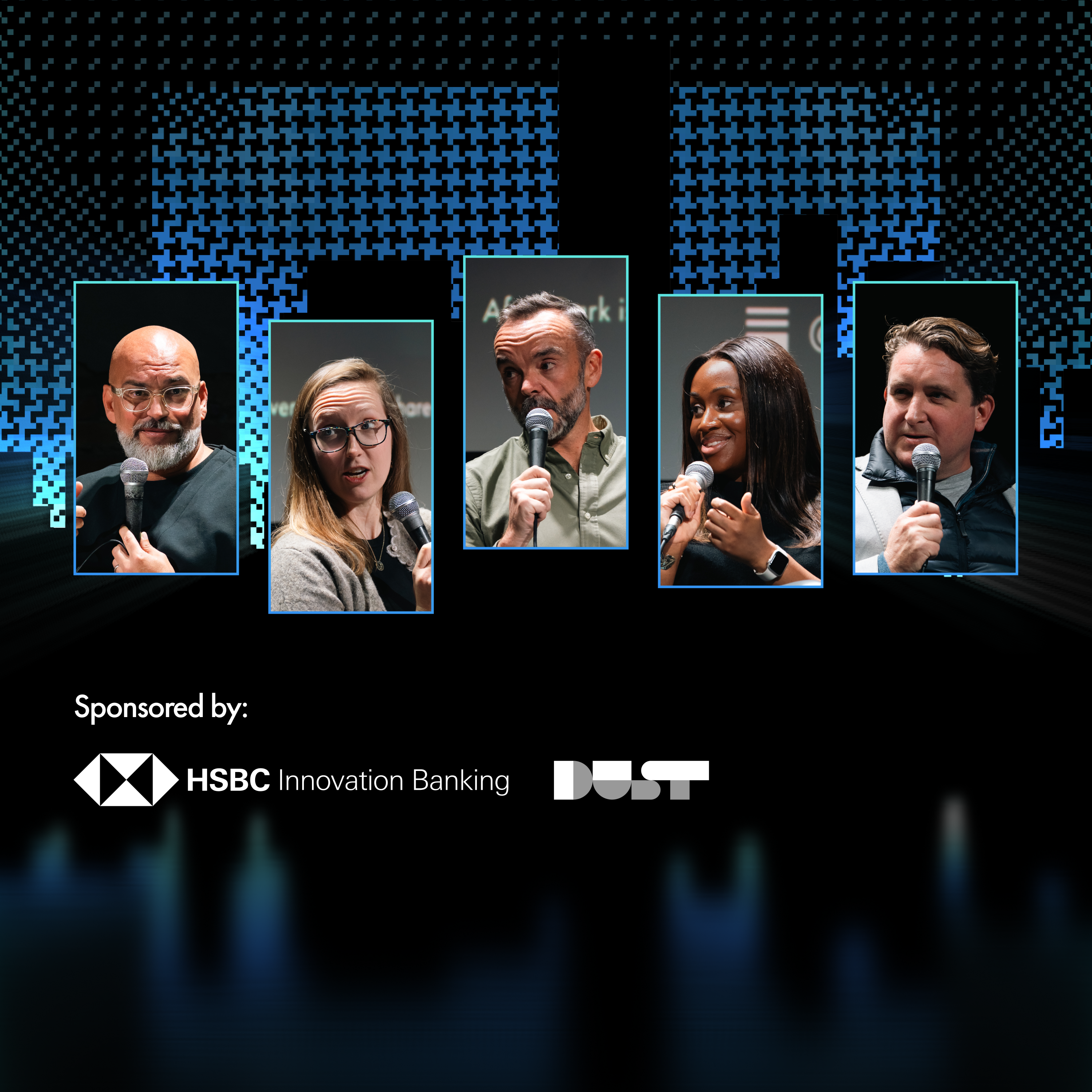
29:12Before we get back to the news, we wanted to tell you about our next After Dark event, which is crazily only a week away now. Fintech Insider host David Breer and me, Kate Moody, will be joined live on stage by Tom Eastby from HSBC Innovation Banking and Valerie Contour from Black in Fintech to record this very podcast and break down the biggest news stories of the week. It's taking place at Village Underground in London on Thursday the 12th of November where we've been recording a live FinTech Insider News show followed by drinks and networking with the FinTech community. Tickets are available now at learnfest.com slash afterdark and there's also a link in the show notes below as well.
29:46Don't miss out. Okay, back to the news and our final main story this week is taken from Finnextro and it is MasterCard targets creators via MrBeast partnership. MasterCard has announced a partnership with Beast Industries, the company founded by YouTube star MrBeast, to expand its presence in the creator economy. The partnership will include consumer and creator co-branded card programs, MasterCard prices, experiences, and financial tools and education designed to help creators build and grow their businesses. The company's aimed to combine MasterCard's payments network, digital capabilities, and loyalty expertise with Beast Industries' creator ecosystem.
30:23The deal follows MrBeast's acquisition of Teen Focus Fintech Step earlier this year, marking another move into financial services. Matthew, come to you first on this one. It's pretty cool for MasterCard, right? It's a partnership with one of the world's biggest content creators to reach new consumers. What's your take on it? Yeah, I think we've all been waiting to see what will happen. We know that MrBeast trademarked MrBeast Financial Services earlier in this year. And I've always thought that MrBeast is actually a product of financial services advertising. He made a lot of money from Honey in the early days, and Honey made a lot of users from Mr.
31:04Beast. And while Honey went on to be acquired by PayPal, and it was maybe thought of as shopping, it was really a financial services tool. So I think there's always been this alignment, even if it seemed to be kind of underneath maybe what the average consumer could see. What I think is interesting here is a couple of key things. that one, you know, this is not just another celebrity card. There was an era of, you know, Kim Kardashian on the front of a prepaid visa, and, you know, the product wasn't interesting. But we know that's not what will happen here. This is a much bigger deal. We know that Mr.
31:39Beast has done very innovative things, whether it's the game shows or the videos or all these things, you know, the huge empire, they'll do something different. And, of course, Mr. Beast owns Step, which was a team-focused visa product. So I'm also very curious to see what will happen to Step. It will presumably move to MasterCard. And Mr. Beast has brought appeal. This is about his fans. They're not all 17. Some of them are probably 27 or 37. And there could be a lot of opportunity here because there's one thing I've learned in working on credit and debit products for 20 years is that every brand wants their own card.
32:17It's a really fun thing, especially here in the United States where we have just an enormous selection of co-brand credit cards. Everyone wants that. And so this is, I think, going to be something very different. I can't wait to see what it is. It's not just going to be three points per dollar on gasoline or whatever have you. Yeah, I realized in trying to find out more about this story that I'm just not the audience it's aimed at at all in this sense. So you do like a standard Google search. It's just really hard to find anything on the old fuddy-duddy websites. that I use. Obviously, it's just existing in a totally different universe that I can't see.
32:55So, yeah, it's really intriguing to see kind of how this shapes up. I mean, Brad, obviously, you've been in payments a long time as well. What was your take on this? Well, I think it's... I don't disagree with anything that was said by Matthew. I mean, this is... Mr. Muse is nothing if not innovative. And I think MasterCard is nothing if not innovative. So you put the two of them together. And I think you've got a recipe for exciting things. It's almost getting hard to figure out what Mr. Beast isn't involved with now. He buys chocolate bars. He used to deliver hamburgers. He covers everything, has a good giant following.
33:35With that comes an opportunity to change consumer behavior amongst a group that probably doesn't include me either. But it certainly includes my son. so it'll be interesting to see what they do Yeah, I mean I had the same initial thought that Matthew obviously you had in terms of the Visa versus MasterCard dynamic, you know what do you think this tells us Matthew about how MasterCard and Visa are approaching this creator economy because obviously this isn't the first announcement we've seen about the creator economy generally but it is quite a significant partnership so how do you think that tells us about how MasterCard and Visa are playing out in this space?
34:16Yeah, I think it's very interesting because there have been other companies. One that I have to use as an example is Carrot Financial with a K. That's a creator economy kind of focused business card. And we've seen others that have not survived. There have been a number of startups in this space. What was announced or hinted at, right, there is no product yet. There is no launch date. There's no definition. This is a partnership is really broad. I think it could be around both consumer and kind of commercial cards. I think as Brad said, like MatchaCard, you know, they try to be very innovative.
34:49They are the number two network. Those are just the facts. And so they're always going to push harder and I think be more willing to try new things. And there's a new generation of consumers always, right? There's always new people coming up and we know we need to market to them in new ways, right? We don't acquire a cardholder today the way we did 30 years ago. And so I think it's really clever to try to learn from what the creator economy can do here and how employers operate. There is the corresponding concern. I mean, it's funny, Brad mentioned the hamburgers and like that went really poorly.
35:25I think the hamburger company, Mr. Beast, are suing each other now over like bad quality hamburgers. So don't quote me on that. But, you know, basically, like financial services is really serious. And Mr. Beast is taking a huge risk here. And I like that he bought Step, which was a well run company, I think. And he's not kind of like necessarily going to figure it all out from scratch. But there is some element of risk of what if these cards don't work, if things don't go well. So I think MasterCard is willing to take that risk to buy brand awareness in a segment of consumers that are still migrating into their core business of credit cards.
36:02You know, the creator, I used to run a company as CEO in the creator economy in the early days of that economy. And it's a lot bigger than people realize. This is a material percentage of the consumers in the United States that are going to be impacted here. And so I think it's a really smart move by both Mr. Beast and MasterCard because the ability to market to that particular group and to influence that particular group is different than anything else anybody else. else has done. You look back on the days where Jerry Seinfeld was still in his gas tank on behalf of MasterCard on TV. That's not going to necessarily resonate with this particular group, although it resonated with me back in the day.
36:46Great commercials. But I think there's a really smart move to attack a large and growing sector of not just the U.S., but the global economy. Yeah. Dan, obviously, I think one of the you consistently talked about challenges that creators face is they you know we don't have a sort of typical financial life compared to kind of a usual individual or business you know often they have income streams coming from multiple different platforms um you know their success is being measured by metrics that maybe traditional financial services products haven't been used to adapting to um i'm kind of interested here from your perspective kind of where you see kind of the main problems or issues in this space that maybe someone like Mr Beast could help?
37:35Yeah, I think in many ways, content creators look like any other self-employed individual, I think probably more so. As you say, Kate, I think income can be fantastic. One month and then perhaps not so great or very quiet. The next, there's no employer paying them a consistent income, neither are they paying a pension for them. So on top of that, tax doesn't come out automatically. It arrives in big lumps through self-assessment and payments are due in January and July, and that can catch people out if they haven't put money aside. I guess you put that together with the irregular income and things like getting a mortgage can be harder to come by and you can't evidence that level of income.
38:21So Mr. Beast is very shrewd. I think we've all mentioned that and there's obviously a massive opportunity here for him. I just hope he does it responsibly, not only for the creators, but also potentially for his audience who are, as Brad says, of perhaps a younger generation to educate them as much as possible. It's something I'm hugely passionate about individually and Plum in general, we want to educate the next generation on the proper steps and staircasing in terms of financial planning. So making sure that, particularly if you're self-employed, you've got that safety net in place, you're thinking about those steps like various insurances, not taking out debt, that kind of stuff.
39:07I think if he does it responsibly, it's, yeah, it will be fantastic. Yeah, I know, Dan, I agree with you. I think adding friction in any transaction is never popular because it obviously reduces conversions. But with this particular audience, I think it's really important to make sure they know what they're getting into. And I think it'll pay dividends in the long term if MrBeast and Code do. Yeah. Matthew, I'm keen to give you the final word on this one. As you mentioned, in terms of the actual specifics of this, as you rightly said, there's not a huge amount of detail. I guess, you know, if you could have one thing that you kind of wish this could change for people in this space, what would you like this partnership to unlock for creators?
39:56What do you think is the main problem to solve? Yeah, I think creators, as kind of Dan touched on, there's some challenges that we've seen in the past with underwriting them and helping them build a regular financial life and plan. And I think between both AI-driven tooling and the most successful creator, perhaps, in all the world, giving them advice, there's opportunity here. There are some really interesting startups that I've seen. Like an example would be Beefbread here in the U.S. that does underwriting of kind of cash loans for like Spotify artists, right, based on streams and what they know Spotify will pay.
40:31And so how can we bring in some, you know, non-traditional underwriting to a space that suffers from that without a classic traditional, you know, paycheck from an employer to really expand access, right? That would be much more interesting than just it's a credit card with a Mr. Beast logo on it. It's like not really that interesting. I call that the slap a logo on it and call it a day approach. And like, I think what we'd want to see as a product that, you know, uniquely speaks to the needs of the creators and also if there is a consumer card product to the particular users there like STEP has in terms of trying to help educate teens.
41:06And just to put an extra point on Dan's mention of they have to do it right. And I think there's been a lot of concerns. We've seen politicians in the U.S. kind of be very concerned about STEP and this acquisition and, you know, making sure that we're not just driving folks into bad behaviors because we need to set up good habits up front. But I think there's opportunity to really make a positive difference here because whether they should or not, people are actually more likely to listen to someone on YouTube about financial advice than perhaps someone who has formal training. That's just the world we live in.
41:42Too true. Okay, well, as we've all said, we'll need to watch and see how this unfolds. But a really, really intriguing one to keep your eye on. Okay, on that note, we're going to take a quick pause here. We'll be back shortly. Launching innovative payment products is only the beginning. Real progress comes from what happens next. Paymentology fuels continuous compounding momentum as a cloud-native issuer processor, helping banks and fintechs grow beyond go-live with global reach, local know-how, and the power of its Loom platform. Powered by more than 500 paymentologists across 68 countries, they make card programs work naturally across markets.
42:24Want to keep the momentum going? head to paymentology.com.
42:31Okay, now for a quick look at the story that we didn't have time to cover in full but still deserves a shout out. We took this one from Reuters and that is Revolut launches personal loans in the UK as Bank of England orders review. Revolut has launched unsecured personal loans in the UK taking on major lenders including Lloyds, Barclays, NetWest and HSBC. Loans will range from£2 ,000 to£25 ,000 with interest rates between 6.9 % and 20%. 29.3%. The initial rollout will target selected customers before expanding more widely. Revolut UK CEO Francesco Carlisi says the ambition is to move beyond being an everyday spending app and become customers' primary bank.
43:08The fintech is also planning to introduce credit cards and eventually mortgages as it looks to increase revenue per customer and expand its lending business. Unlike traditional banks, Revolut has less historical lending data and is supplementing its credit assessments with information from external providers. Meanwhile, the Financial Times reported on Tuesday that the Bank of England's Prudential Regulation Authority has ordered an independent review of Revolut's product approval processes, examining whether its internal controls can keep pace with its rapid expansion. Feels like not a week goes by without some sort of Revolut story.
43:41And this is two coming out at the same time. So I think lots to break down here that I can't possibly do justice to. I think probably not a surprise to anyone that lending has come to the table. It was obviously kind of the main thing that Revolute were chasing that UK banking license for. Definitely going to be keen to sort of see, you know, do you have a Revolute account? So we'll be keen to kind of see if I kind of get nudges or things like that within the interface. I think the main difference will be in terms of how these loans are actually introduced to customers. And then if people choose to take them on, how those are managed, kind of what the options are for customers to stay on top of payments, make repayments early and how that's done.
44:18so yeah it'll be really interesting to see how that plays out and also kind of what the result of the of the pra's investigation is obviously lots of people are are very keen for people to pick holes and revolute product approval process because they do move at such pace i think there's probably a lot of a lot of people wanting there to be an issue there so i guess it'll be interesting to see if the regulator finds find something that needs more scrutiny okay And finally, story. Halloween, bigger than Christmas, say businesses. This one was taken from the beloved BBC. Halloween has become such a major commercial event in the UK that some businesses are now generating more revenue from the spooky season than Christmas.
44:58At Avon Valley Adventure Park near Bath, Halloween activities generate around a third of annual revenue. Wow. With two million pounds in turnover from October events. A Bristol fancy dress shop says half its annual turnover comes in October, for a third generated during Halloween week alone. Customers spend an average of£40 on costumes and accessories. According to research by IGD, 36 % of UK shoppers plan to celebrate Halloween this year, up from 27 % in 2025. Pumpkin patches, haunted mazes, and immersive scare experiences have become big business, with some farms transforming Halloween into a major source of income.
45:35Matthew, Brad, I'm conscious given you we've got two US people on the panel. This is probably like, I mean, catch up, guys. We've been here for ages. But to us in the UK, this feels like quite a big cultural change. How does it work? What's going on? I've been fascinated by the global expansion of Halloween. I really thought for a long time it was very American, but it is everywhere. And it continues to grow here. I think there is so much more intensity around it than there was when I was growing up, certainly. So it's kind of wild to see, but I guess people love a good scare. I mean, how far does it go?
46:10What's the end game here? Like, what should I be anticipating? I mean, we're at pumpkin patches at the moment. What's the next step of Halloween mania? Do you have any haunted hay rides? That's really big here. And all the amusement parks kind of transform themselves in the U.S. Disneyland. Knott's Berry Farm originated. It's called Knott's Scary Farm for the month of October. and you go and they have people who creep up behind you and try to scare you and they redecorate. So there is quite a ways to go, Kate. Prepare yourself. Oh, yeah. There's old prisons that are converted and they turn them over to people for haunted houses that you go through.
46:54And there's an old hospital that I've been through that was the scariest thing ever where they've turned it into a haunted house. It's like people taking over large buildings and with an eye just to scaring the living heck out of you. I'm really confused, Brad, because across the rest of this recording, you've said many intelligent things. You've exuded a lot of authority and gravitas. But why did you choose to go to a hospital, a deserted hospital that was designed to scare the crap out of you? What's going on? Why is this a thing? I was in college and it was the thought of going through with a date produced the highest likelihood of getting to hold hands and hug.
47:41So that was the logic behind it. Okay, it makes more sense. So Dan, from a fellow Brit perspective, have you got on board the Halloween train or what's your stance? I think we're definitely not at Haunted Scare Hospitals yet in the UK. but I can see your strategy Brad there very clever I think it works by the way I think having got young children we're definitely a Halloween household I've seen it come on over the last decade also definitely when I was young perhaps similar age to Brad when he was in his haunted hospital I just remember dressing up relatively straightforward forward outfits and now it seems the dog's got an outfit as well these days so who knows uh what's what's going to come up next but from my very um sensible boring financial planning perspective i guess this uh this growth uh of the industry just puts i guess a little bit more pressure on on households generally to put a downer on things so um if people can concentrate over the course of the year to put a little bit away each month, then October, November, December is not going to seem like such a stretch because it's such an expensive part of the year.
49:03So my little bit of advice there for people, I guess, is to put a little bit away every month to make these months a little bit easier. But yeah, perhaps that's my scare as a financial planner. Well, yeah, I mean, I think I'm being encouraged to try and find some sort of fintech financial services angle to this. So I suppose, yeah, to close out, I mean, you've kind of given in your financial angle. I mean, Brad, Matthew, if we're kind of going away from ghosts and zombies and sort of just scary things in fintech and financial services, what's the thing that scares you most within fintech and financial services, Brad?
49:38Oh, scariest thing in fintech and financial services. I'm not big into scary costumes, so I'd probably just go as a dongle, a payments dongle, and it's stupid simply because it's square. So, I can't think of anything scary that I'd go as. No. Matthew? I thought Brad was going to go as an unindemnified dispute.
50:06Yeah, that is actually scary. Yeah, I'd go as a dispute that's not protected by chargebacks 911. There you go. I think, I don't know how to make this into a costume, but definitely like a decline, like an outage. I mean, I think as somebody who helps people build card programs, if people cannot access their money when they need to, you have totally failed them. And that is terrifying. And it's, you know, behind that is disaster recovery plans and business continuity plans and data centers and clouds. But like that, that is terrible. And I've unfortunately worked at companies like that. And my number two is a hack.
50:44I mean, I've also, unfortunately, you know, big account takeovers and things. And like, that is terrifying. That'll keep you up at night for weeks on end. Yeah. I think mine would have to be my children getting hold of my contactless card and running off of it and just tap, tap, tapping away. I think that's the thing that terrifies me. At the moment, my daughter just runs around the house a bit. Every time she finds it, she just picks it up and runs and shoves it down the side of the sofa and things like that. I would just like to see how you two convert those concepts into a costume. But when you do, send me a picture.
51:19Okay, on that note, that sadly marks the end of today's show. Thank you so much to today's guests for joining us. Where can people find out a bit more about you and your companies, Dan? Thanks for having me, Kate. I've really enjoyed it. You can find Plum on the App Store and Google Play or at withplum.com. And I'm on LinkedIn as Daniel Wills. So do come say hi. Awesome. Matthew? Yeah, it's been a pleasure to be on. You can find my company at totavi, T-O-T-A-V-I.com, and my newsletter at cardsftw.com. Awesome. Go check it out. And Brad, what about you? You can find our companies at chargebacks, with an S, 911.com, or S-I-9-1-1.com.
52:01And you can find me on LinkedIn under Bradley Wiskirchen, W-I-S-K-I-R-T-H-E-N. Or in a haunted hospital, one of the two. Yeah, well, yeah. And as for me, you can also find me on LinkedIn, Kate Meady, or drop me an email, kateatlenfest.com. That wraps up today's episode. Thank you so much for listening to today's show. If you like what you heard, please make sure to follow us on your favorite podcast platform of choice. And if you really like what you've heard, why not share the podcast with a colleague or a friend? As always, if you want to join the conversation, find us on social media, just search for 11FS or FinTech Insider or email podcast at 11FS.com.
52:37And we're also now on Substack. you'll find a link to subscribe to us in the show description below. Thanks again and goodbye.
About this episode:
Host Kate Moody – Customer Strategy Director at 11:FS - is joined by some great guests to discuss the biggest stories from the world of financial services over the past week.
This week's guests:
Daniel Wills- Senior Financial Advisor at Plum
Matthew Goldman - Founder and Managing Member at Totavi
Brad Wiskirchen - Chief Commercial Officer at Chargebacks911 and CEO at Fi911
Stories/timestamps:
Smart money app Plum secures FCA approval for targeted support - (01:19)
Chargebacks911 launches indemnification for AI agent purchases - (15:05)
Mastercard targets creators via MrBeast partnership - (28:15)
Revolut launches personal loans in the UK as Bank of England orders review - (40:26)
Halloween 'bigger than Christmas', say businesses - (42:36)
Links to check out:
Join us at London's Village Underground on Thursday 12th November for a live recording of Fintech Insider News.
https://www.11fs.com/services/media/after-dark
We're on Substack! Subscribe for bonus content from the podcast, exclusive episodes, early access to events, and our weekly newsletter, Bitesized.
https://substack.com/@11fsfintechinsider
Join our WhatsApp community, where you can get the inside track on all things 11:FS, as well as having your say on the things we should be paying attention to.
https://chat.whatsapp.com/KpA4gFbbWDlLFm7kx39raf
About Fintech Insider:
Fintech Insider by 11:FS is a bi-weekly podcast that covers everything from finance and banking to technology and the latest trends in financial services.
Our expert hosts, with hands-on industry experience, are joined by key decision-makers, VCs, and top reporters from across the financial landscape, including guests from companies like Stripe, Revolut, Plaid, PayPal, and Monzo. Together, they break down the biggest news and innovations shaping the space.
Our weekly news show drops every Monday, covering major stories like mergers, new product launches, regulatory shifts, and emerging tech trends. On Thursdays, our Insights show goes deeper into the hottest topics driving the future of finance, including AI in banking, decentralised finance, and the evolving landscape of embedded finance.
Whether you're already in the fintech game or just starting to explore, this is the #1 podcast for you.
If you enjoyed this episode, don’t forget to subscribe and leave a review!
Got a question for us? Email [email protected]!
Learn more about your ad choices. Visit megaphone.fm/adchoices