Ask ChatGPT

 Fintech Insider Podcast by 11:FS
19 Jun 2025 · 42m · 16 chapters

A live panel moderated by David Breer at Switzerland’s Point Zero Forum (Zurich) on how countries can maintain global competitiveness in an AI-driven world, with a focus on AI infrastructure, talent, and risk-based regulation in financial services.
Microsoft Copilot rollout to 50,000 employees; AI used for chip design/optimization at NVIDIA; “LLM as a judge” for safer AI; Switzerland Innovation accelerators; hackathons where most teams chose AI projects; Swisscom regional AI factory; on-prem AI for banks using exclusive data.
Written by AI. May contain mistakes.
David Breer introduces the panelists and sets the stage for the discussion.
“It gives your job post the boost it needs to be seen and helps reach people with the right skills, certifications, and more.”
David Breer introduces the panelists and sets the stage for the discussion.
“Who everybody is and what they're doing.”
The panel discusses what innovation leadership looks like and who excels at it.
“What does innovation leadership look like to you guys right now?”
Panelists discuss the importance of entrepreneurs and ecosystems in driving innovation.
“I have great admiration for those people, you know, have an idea, who are inspired by that idea and absolutely want to bring this forward and not primarily for monetary reasons.”
The panel shares insights on how Switzerland maintains its competitive edge in innovation.
“for all of the things that we've discussed, people, talent, technology, capital coming into the system.”
Discussion on how AI is reshaping industries and the importance of accessibility.
“we had technology and regulation and capital and all within the M25.”
Explore how the accessibility of technology drives innovation and regulatory changes.
“and creates that innovation because there's the fast-moving companies that are really innovative, that are really at the forefront of inventing new things and solving difficult problems.”
Discuss the complexities organizations face in navigating regulations while innovating.
“You've got regulators wanting more change.”
Learn about the strategies for attracting and educating talent in a competitive landscape.
“nothing else but very well educated people and the more the better so um it's always difficult to ask yourself how how do you start but how do you keep it going and we certainly have uh have learned to do that.”
Examine how AI is reshaping industry standards and driving competitive advantages.
“So they are just desperate to be involved and to learn, and all you need to do is to be there to help with that.”
Understand the importance of aligning technology application with business needs.
“And there are even some banks that we see now that build their own on-premise environments, so really running AI factories in their own data centers, connecting to data, because that makes them really unique.”
Exploring how AI can reshape financial services and improve customer experience.
“how do we control it, how do we set up the architecture to do it right and so on.”
Discussing the potential for hyper-personalized banking solutions through AI.
“That was another really big question, wasn't it?”
Examining the challenges of integrating AI into customer service and banking.
“but really business problems being solved through the technology.”
Discussing the readiness of countries and regulators for AI advancements in finance.
“And again, I think that sort of comes as possible with the scale that AI provides.”
The need for responsible AI development and its implications for the future.
“seeing out there now, both for financial services, but as you say, other industries who are maybe a little bit ahead of that curve.”

Get the gist, explore an idea or ask about something said.
 Claude
On Fintech Insider Podcast by 11:FS, what are the key points of this episode?
Searching your listeningAutomatic transcript. May contain errors.
0:28This episode is brought to you by Google Chrome. at work? Use Indeed Sponsored Jobs. It gives your job post the boost it needs to be seen and helps reach people with the right skills, certifications, and more. Spend less time searching and more time actually interviewing candidates who check all your boxes. Listeners of this show will get a$75 sponsored job credit at Indeed.com slash podcast. That's Indeed.com slash podcast. Terms and conditions apply. Need a hiring hero? This is a job for Indeed Sponsored Jobs.
1:11Hello and welcome to Fintech Insider. I'm David Breer, CEO here at 11FS, and on this week's show we're going to be bringing you something a little bit different. Back in May, I headed to Zurich for the annual Point Zero Forum, where I had the chance to moderate a couple of incredible panels on innovation across different industries. One of those panels was focused on AI innovation and what it takes for countries to stay competitive in this space. I was joined by experts from NVIDIA, UBS, Microsoft, and Switzerland's State Secretariat for International Finance. It was a brilliant discussion and I came away with a lot, so I thought you might do as well.
1:48Huge thank you to the PZF team for letting us share it. Hope you enjoy the episode. Who everybody is and what they're doing. So first up, we've got Katrin Hinkle, who is the Chief Executive Officer of Microsoft Switzerland. We have Daniela Stoffel, who is the State Secretary for State Secretant for International Finance. Dr. Yoshin Papenbrock, who is the Head of Financial Technology, Amir for NVIDIA. And we've got Dr. Christopher Purvis, who is the Global Co-Head of UBS Group Emerging Technology. I've got the CEO of one big technology company and I understand three doctors as well, which is quite impressive.
2:27So a great panel to get us going. We're going to be talking about what exactly was discussed. How do countries like Switzerland and Singapore keep their edge in a world that is ever-changing when it comes to innovation? In fact, if you guys in the audience want to get involved as well, there will be some mics going around. So at some point, stick your hand up. We'll ask you for your input. But if somebody says something alarming that you don't agree with, feel free to stick your hand up as well. We'll get you involved straight away. Maybe to get us going, because the momentum is always a good one.
3:01What does innovation leadership look like to you guys right now? And who's doing it well? And don't just say your companies are doing it well. Let's pick on other ones. But let's start with you. What does innovation leadership look like? Yeah, it clearly involves a strategy and it also involves a plan to execute. And also, since I'm working at an AI infrastructure company, it's important to think about AI infrastructure, how to leverage AI factories, for example, to implement what you have in mind in terms of AI implementations. And who do you think is doing it well globally at the moment? It's doing okay, yeah.
3:41And actually, we really use a lot of AI also internally. to accelerate our processes. You may have seen that our product cycles have increased and we are now at one year and we get a new chip out. We reviewed our entire roadmap for a couple of years recently at GTC and we use a lot of AI internally. Our engineers, they use AI for chip design, for example, and also for optimizing the chip. So wherever you can, we use sort of AI internally and this really accelerated and boosted our own innovation process. So your sort of speed of change iterations, that makes sense for innovation. What do you think?
4:19What's a driving factor for innovation globally? Who's doing it well? Thank you. I think my first hat I take off, it goes to the entrepreneurs themselves. I have great admiration for those people, you know, have an idea, who are inspired by that idea and absolutely want to bring this forward and not primarily for monetary reasons. So the true spirit of an entrepreneur. and what we're trying to achieve, I have to speak on behalf of Switzerland, being a country that has no resources except for water. That's pretty cool, by the way, being able to speak on behalf of the whole country. And maybe only natural beauty and nothing else.
4:58We were, from the very start, forced to think hard about how we are going to run this country. And what we do is we strive to provide stability and I think these days that's a huge plus and very important as a marketplace, stability and reliability and trustworthiness. And all the ingredients are there to not only cover that side of things, but also, and this is, if I was an entrepreneur, I would put first is you need skills, you need people and you need to have access to peoples and markets. And that's the mixture we are trying to uphold in Switzerland. Yeah, I mean, it's an interesting point.
5:34It's such a people, if you're willing to quit a really sort of probably stable job to go and be an entrepreneur and build something, takes a lot of guts, doesn't it? That's almost the seed that gets everything going. But what do you think? Who's doing innovation well or what does it take to make it successful? Yeah, so a few points have been already said, but at Microsoft, of course, we produce technology and technology is an important ingredient to innovation, but it needs to be put at work for it to be innovation. So we really build on our customers or the companies that we work with that actually use the technology to then create innovation.
6:11And the way to do that is nowadays not just based on technologies. You need a real ecosystem around it. You need startups, innovators, entrepreneurs. Even if you're a big company, you need to bring that ecosystem together to then create something that's new and that's solving some of our biggest problems. 100%, yeah. All of those ingredients are needed, aren't they? but it always sucks to be asked last, doesn't it? You've got to come up with something nobody's said before. But what do you think? I think it's something different. I would probably look at someone like a deep mind. I think they're doing some incredible things with AI.
6:47And I think they're also trying to solve some of humanity's biggest problems, which I think is tremendously exciting. If you're going to have a new technology, ideally you can actually put it to use and do something that's never been done before. So obvious things like cure for cancer or whatever it happens to be. But I think people working in that space, it's tremendously exciting. I think for universities, for researchers, those new models that are coming along now. Again, amazing if I'd have had something like that when I was doing research all those years ago. You can only imagine what you could have done.
7:14So I think for me, that's probably the most exciting area. It's a difficult one, isn't it? Because obviously academic research in a nice contained environment, obviously financial services, we're dealing with people's money, aren't we? So it's a difficult balance there, isn't it? what does really being innovative in financial services mean? That's a big question, isn't it? I'll just drop that one on you. Yeah, it's a big question. I think, honestly, the first thing I think of is doing things safely. And I think also just remembering that we have a ton of experience in this space, right? Using AI is not new.
7:51We've been doing that for decades now, frankly. And so we do know how to use it. It's ultimately a technology, and we do know how to use these technologies safely. So, I mean, I have a lot of confidence, actually, in the financial system that they can take these new models, apply them sensibly, you know, where it makes sense. I mean, I'm actually, you know, relatively confident it can be done well, actually. Yeah. And I guess, you know, within the regulatory frameworks, you know, because obviously when it comes to geographies, and you can speak on behalf of the country again here, but it's a hard thing to create differentiation in, and it's an even more difficult one to create a position of leadership in because obviously all of these things are, for all of the things that we've discussed, people, talent, technology, capital coming into the system.
8:41How have you guys done it? Because when it comes to a leadership table, you're always top two, top three, depending on what sort of measure is guided on. So how did you get to that position in the first place? And then how are you still getting up at 6 a.m. to put in the effort to make it happen? Yeah, indeed. And you just mentioned the conundrum, you know, how are you going to be conducive and helpful and also compatible? If you're a small country, you can't just, you know, reinvent the world and expect everybody else just to, you know, go along with it. So the answer has always been, and this is also due to the tradition and the past of Switzerland, it's very liberal.
9:19The state sort of always takes a step back if it's not necessary. And it also goes about in a principles-based way. So we do assess risks. And then we try to really refrain from just regulating a single case. But look at what are we dealing with here? Do we already have categories that exist? Can we subsume whatever is new under what we already have? And only once we come to the conclusion that we really need to specify something, we will do it. And it has worked well. So it allows us to be compatible globally, basically. But you also give to... This is really a fine line. you're walking between risk-based analysis and taking too much risk.
9:59But so far, as you said, it takes constant dialogue and constant re-evaluation. That's what we do. Yeah. I'd say, you know, you sort of created the distinction between strategy and execution earlier on. I'd say every country on the planet probably has that strategy, but how have you executed so well against it? Is that, you know, like, you can have the lovely PowerPoint, but the reality is the challenge, isn't it? Absolutely. And here I really have to say, all of Switzerland is sort of included in putting legislation forward. The procedure by which we elaborate our regulation is so intricate and it involves basically everybody.
10:38It involves the regulator, which is in our case the finance ministry. Then it goes to a consultation among other departments in the state. And then it goes public. so everybody can sort of contribute before you even put it to parliament. So virtually everybody has a voice and it's the intelligence of the majority or the swarm if you want. But it's mutual reinforcing. You need the people that participate in that procedure and then you have to give back. So it's a circle. If I can add to that because I think Switzerland is really unique in that and all of the other ingredients that come together here.
11:18So a super strong ecosystem of startups, a very strong mid-market base, great academia that really play that role of developing new technologies, working with companies like ours to be at the forefront. And then the accelerators that you've built as well. Switzerland Innovation, to mention just one of them. I think those are really important to bring everything together. So Switzerland really has a unique combination of all of these elements that I think contribute a lot to what you're saying and to Switzerland's primary position, including the regulation approach. Yeah, it's an interesting challenge.
12:09I mean, we used to say in the UK, we had technology and regulation and capital and all within the M25. Is it by nature innovation as a country level easier if you were a smaller country than a gigantic country, do you think? I wouldn't disagree. You know, you really need to have a tight, as you said, a tight network. You need to be able to speak to each other and you have to be accessible. And ideally, this is not geographically sort of within reach, but also as a conversation, as a society. And I've thought a lot about that and I would agree that you do have advantages if you're not too big. Yeah, the voting bit of it sounds terrifying to me given the signs we've seen in democracy of people voting for various different things over the last couple of years, but it seems actually as a trajectory, everybody therefore is then bought into the strategy and bought into the direction.
13:03I mean, on this stage, we've talked a lot about technology over the course of this morning as well. I mean, there are amazing advancements we're seeing in tech to facilitate changes, but also to continually pushing those borders. AI has been talked about a lot already. What do you think? Is that a major driver for change within this space and something that countries need to be really taking advantage of? Yeah, I mean, AI, as you said before, AI as such has been around for a long time. I think what really creates the difference is the accessibility of AI through large language models and it's really become a general purpose technology.
13:39while before it was a little bit more for experts. And I think that is a huge driver. That also creates a democratization of technology so more people can access it. And for Switzerland specifically, I think this is a huge boost and enabler for the mid-market segment, which is huge and creates that innovation because there's the fast-moving companies that are really innovative, that are really at the forefront of inventing new things and solving difficult problems. So I think that is the real difference that we're experiencing today, the accessibility of technology. And it's also a driver. So if you want to continue to be at the forefront of this development, democratization of that knowledge, building those skills is absolutely key for a country as well as for a company.
14:34Yeah, I completely agree. I think, like you say, it's gone from back office, you know, managing risk models to the customer experience at the front of that. I mean, that has the potential to change how regulators regulate much more broadly as well, right? Because, you know, it wasn't long ago a regulator would want to see every screen in order to feel comfortable. But when actually the interface is so organic, then that's going to pose some really interesting questions, right? Regulation has to change as well. And that's why an approach where we go deep, observe, look at how benefits are created and where the risks are is so important.
15:14And it happens at several levels. So it's not just one entity that can do it. Here is similarly important that different entities come together. Because there's risks that a state sees. There's risks that a company sees. There's risks that we see as provider of the technology. And we need to bring that together to be able to come up with the right approach of managing those risks. So I think a risk-based approach is very, very important. And I think we're all, in a way, leaders of this new era. And that comes with opportunity, but also responsibility. Absolutely. I was going to say, I think you also have to be aware of the speed.
15:57I think there's a lot of talk about ledger, I'm sure, happening at this conference. and what you realize with Ledger is that everyone has to do that at the same time. Like everyone has to agree and everyone has to go together. It's no point someone going on their own with Ledger. You have to agree. Whereas I think with AI, you can go on your own and therefore you can do it at home, you can do it at work and therefore it's going to go a lot quicker. And that's, I think, what people are seeing and they will continue to see that is this will keep on moving really, really, really fast and adoption will be really, really fast and you'll have to be quick to react, I think.
16:28Unlike Ledger where you can take years to think about it because it just is moving. so slowly. Yeah, it's a difficult one, isn't it? We said just a second ago backstage, but there's a lot of talk about the sort of bleeding edge of the technology changes. But actually, for organizations like yourself, you're sort of stuck a little bit in between. You've got regulators wanting more change. You've got technology companies, but doing it safely, securely. You've got technology providers going, here's this latest, greatest, new thing. But actually, you've got a gigantic organization built on. I mean, I can't guess how many different core systems you guys have got, but it's going to be a lot.
17:04So managing those different horizons for innovation is a real challenge when you're in the middle of a highly regulated industry and a huge organization like yours. How do you do that? That's hard, right? It is hard. I think also like when you've got employees using this at home, and they're using all these amazing tools at home. And then if you don't provide that at work, it's actually problematic and the last thing you want them doing is taking stuff home and doing it at home right so you kind of you have no choice but to move and that that means many things absolutely you have to bring your employees with you and that means training and teaching and educating and I don't remember any time so I've been doing this almost 30 years now that we've had to be educating and teaching so much about something so quickly and it's exciting and people want to learn.
17:51We have a data scientist course we started only about a year ago. I think we've had 3 ,000 people go through that. So people are desperate to learn, they're excited to learn. I think it's the one thing I say to everyone is that don't get left behind. Learn about this stuff. It's really important. It's not going away. So don't be the person that puts their head in the sand. Yeah. I guess sticking with that, I mean, it doesn't matter whether it's NVIDIA or Microsoft and it'd be like every company here is a people business. So talent is the major driver of all of these changes. You guys have done a great job of being a giant magnet for talented people to come to the region.
18:27How have you done that? Like is there an amazing visa process that I don't know about or is there a tax thing? I don't know what it is, but what's the secret there? That's a very good question. there is certainly no secret visa trick. A huge boost to Switzerland was certainly the free movement of persons agreement with the EU, which unifies the labour market in the entire area of the EU as well as Switzerland. But it is a constant discussion, you know, because as you said, the government might be, you know, reticent, might be holding back also with regulation. There is also a danger in doing too much, stopping things.
19:08So the constant discussion, how much immigration do we have, do we want, how much can the country take? We are a country that is very open. I mean, I don't know any person who doesn't have a very international family. So it's a welcoming atmosphere or environment in Switzerland. It is easy to have your credentials being verified so you can work in Switzerland. and it is a nation or a labor market where if you come and you fit in you belong so um but how it started it started with our universities it started as i said in the beginning we had no choice we have nothing else but very well educated people and the more the better so um it's always difficult to ask yourself how how do you start but how do you keep it going and we certainly have uh have learned to do that.
20:04Yeah. I guess for all of you as well, I mean, technology, talent, and, you know, all across the piece, I mean, how do you guys attract talent in that way in order to keep that leadership from an innovation perspective? First of all, I think you're right, attracting talent or the availability of that talent is an absolute key to success in this space. And I think there's more to just attracting talent because we need to make sure that talent is available for everyone. So there's a lot of thought going into how do we build talent? How do we educate people? And how do we work? I mean, the academia in Switzerland is fantastic.
20:49So there's a great base there. But then it's around skilling people either at their workplace where we put a lot of effort in but also outside of the workplace in schools and when they're between jobs and so on. So we work with multiple institutions and we have, as I know others have, quite significant investments into the country to actually help build that talent because talent scarcity is everywhere. We cannot rely on just importing from outside of Switzerland because talent shortage is in Europe as well a huge problem. So it is really about how do we build talent in the country? How do we educate?
21:32How do we together invest? So we're working with state institutions, with different institutions also on investing into the right areas to actually build talent. Yeah, and I guess that education touches not just on the people you work with within organizations, but the general population as well. It's a general approach. So we have a dedicated investment that does not go to customers. We have investment that goes to customers, but we have an additional investment that goes beyond just to build the talent base in the country. Yeah, and I guess we touched on this and I've heard it a few times on the stage already this morning, but I guess back to that, the environment is getting more educated.
22:11You touched on this with your employees are doing this in their spare time, they're engaging with these tools, these capabilities. Staying at that edge and staying where your employees are is a challenge from a talent perspective as well, right? It is, but when the employees are excited, it makes it quite easy. So they are just desperate to be involved and to learn, and all you need to do is to be there to help with that. We had a hackathon. We had, I think, 400 teams of tech engineers, and they pick a project that no one's solved yet, and they try and solve it. I think 399 of the 400 involved AI.
22:52So they don't need to be told to kind of get on with it. they are excited and they're engaged and you just have to provide the materials and off they go. And I think that applies to every employee. We rolled out actually Microsoft Copilot to 50 ,000 employees and there was no one that said they didn't want it. I mean there were a lot of people who said they did but people were clamoring for it. So again I just don't I think people are just excited and they want to learn and they use it at home and they want to use it at work. and I think it's quite a nice time to be involved in this. For sure.
23:26I'll kind of come back, for two seconds, come back to your point on that because you started at the beginning of this by basically saying your rhythm, your speed of change within your organization. I always say the most innovative companies are the ones who ship code quickest. Like that's it, that's your, I mean you can do chips and hardware and all different types of things with that but fundamentally what we're talking about is a change in the industry of speed of change. As in, customers expect your services in financial services to evolve so much quicker than they did before. It's not just, you know, I download an app and it stays like that forever.
24:05So do you think speed of change is the sort of most element of competitive advantage in that space? It's crucial, I believe, because this AI or agentic AI is a train. It's just one train coming and either you are on it or not, right? And there's no such thing as fast following on this one. So you need to make sure to catch that bandwagon. And talking about talent, I think it's important to also think what kind of talent we need going forward. People that are able to build these agentic systems, that are able to operate an infrastructure, optimize processes, and make sure that human employees and digital employees are collaboratively working on things.
24:53So this talent is important, this know-how. And as a nation, I believe it's also important to have people that know how to run AI factories. Because we are in the age of AI factories, the input is data and electricity, and the output is tokens or intelligence. And the better as a nation you are able to manage this, the more you will be ahead of the curve. And this is also strongly linked to accessibility of these factories. Obviously, you can approach those factories, which is sort of a software agentic framework and the acceleration chips combined. That is an AI factory. You can approach them in clouds like Azure.
25:39But you can also approach them, for example, in Switzerland through Swisscom, where we help them build a regional AI factory. So being able or having the choice between doing innovation in the public cloud or in the private cloud in your country is crucial, I believe, and is linked to doing innovation in a safe, secure environment. And there are even some banks that we see now that build their own on-premise environments, so really running AI factories in their own data centers, connecting to data, because that makes them really unique. Access to exclusive data makes the change, right? So I believe talent that is able to run such AI factories, be it on-prem, regional cloud, public cloud, plus optimizing these agentic systems in a bank, we talked about this before, is super crucial.
26:35And how to optimize models, for example, how to gain knowledge on open source models, how to validate them, how to monitor them, how to also use AI to control other AI in a guardrailed fashion. LLM as a judge is the keyword. And at our technology conference, UBS gave a wonderful presentation on LLM as a judge. So using technology also to make things safer is actually a nice approach. So you need talent that is able to do this. Okay. You had a point. Yeah, just adding to the talent point, I think one important accelerator is the fact that this is no longer just an IT question. So the innovation or the access to the technology is on the business side, and that creates the innovation.
27:23So what you have done is really provided not just IT employees, but a broader field of people, the technology, because it's not about the technology as such, it's about how do we apply the technology to the most pressing business problems. and that's where it starts. It starts with, when I go to customers, I ask the question, what is the biggest problem you want to solve that you potentially can solve with technology? And that's where we start and then we think about how technology adds to it and then behind that, we think through how do we regulate it, how do we control it, how do we set up the architecture to do it right and so on.
28:06But it's really about that business access. 100%, yeah, I totally agree with that. I mean, if you look at the last, you know, the conversations for the last decade on blockchain or artificial intelligence, it's all technology looking for opportunity rather than the other way around, right? Is there a risk with a lot of this that actually it goes the same way? Because, I mean, if you look at, I was in a big bank when 2008, when the transformation program kicked off, nobody really was thinking about customer experience. You know, it was about taking people, it was taking paper, it was taking existing processes and digitizing them.
28:42There's a lot of conversation around agentic and replicating that type of experience, but fundamentally is that the type of financial services that customers want? For me, I always say like, we're weird. We've traveled here to talk about this stuff. Normal people don't care. They want financial services stuff to be done for them rather than just a slightly better interface. So do you think we're at risk of just evolving the horses a little bit further with technology that can do so much more? That was another really big question, wasn't it? No, but I really think it's the other way around with AI and the way we apply it.
29:22We are able to apply it at this point in time. I think AI will have a huge impact in four big areas. One is going to be around employee experience. and that in some areas will solve scarcity of talent and know-how. It will have a huge impact in the area of customer service, improving, being more really to the benefit of the customer, being more precise, being more clear, being faster and so on. The third one will be around improving business process, a little bit broader, but faster, more efficient, better quality information. And then the fourth one is big innovation in terms of finding medication in areas where we haven't, finding innovations around battery life cycles.
30:22There's so many big problems that we need to solve for us to go into a good future. and AI will help there. And I'm seeing, you know, right now, so this is happening now. It's not, we're not waiting for it. You can see the innovation. You can see the change happening. So that's what makes me confident that this really is not technology looking for application, but really business problems being solved through the technology. Yeah. I guess within the context of a big banking organization, all of what was just said makes sense. doesn't it? Because those horizons are quite different. Your narrative has been a little bit about your employees, but what do you think from a customer's perspective?
31:08Is there a, we saw on stage people talk about, you know, bad habits of people still wanting to use cash or still want, you know, but there's a lot of people who smoke and that's a bad habit, right? It doesn't mean we need to accept it. We should help them evolve those things. So do you think there's an opportunity as was discussed to serve customers in a very different way? Yeah, I was a little bit sad there when you weren't excited by finance your bank account. I think that's actually quite a big point is because none of that stuff today is hyper-personalized. None of it's really designed for you.
31:40And I think with AI, you finally can reach the kind of scale and sort of manage the data in the sort of timeframe you need to, to actually deliver you something that is exciting for you. And that would be amazing. And I think delighting customers is obviously the number one thing that we try and do. But I think finally with technology like this, you can actually think about that. And you could have every single person can have their own completely bespoke bank account, bespoke share products, whatever it happens to be. And again, actually, especially along with things like Ledger, it's arriving at just the right time because that also provides for incredible scale.
32:14So putting the two things together actually is a very, well, I would say very exciting future, I think, for personal finance. It weirdly feels like a sort of return to traditional values, doesn't it? So like, you know, the ability to do exactly what you, it's the tailored suit, you know, the ability to have that tailored suit for you is kind of what we've moved away from in the last 10 years implementing digital capabilities, really. It's gone from a, you know, a very engaging human in a branch that listens and is empathetic and, you know, doesn't talk in jargon to, you know, an app maybe, you know, whereas all those things, I would, sign me up, I would have that straight away.
32:52And Harvey, I mean, I, you know, not to pick on anyone, but I had trouble booking in at Swiss Air to get my flight here. And I was like, I need to talk to someone there's no one to talk to. But it feels like in maybe 12 months' time, there actually will be an agent that is really smart enough to understand what's gone wrong, why has it gone wrong, and actually fix it. I totally accept it's far too expensive to have thousands of humans being sort of sat there waiting for my thing to go wrong. But wouldn't it be amazing, actually, if you could have an experience just like that? And again, I think that sort of comes as possible with the scale that AI provides.
33:23so again so I guess with all the things that we've talked about again not putting you on the spot to talk for a whole country here but technology is moving quicker than ever the challenge for talent is you know getting higher and higher how do you stay at the forefront of this how do you continue to have that leadership position and pull all of these things together to create these types of experiences first let me start by saying I would really love to have somebody at the other end of a phone line if you have flight trouble I would really love that And I don't know if the goal in itself is to stay ahead of things.
33:58I think you asked me several times, you know, how are you doing this? I think we do what we do best and it has worked so far. And also looking at AI, I was quite intrigued when you said you need an AI to run the AI or you need an AI to support humans running the AI. We have to be, and this is what I'm very confident is in existence in Switzerland, we need to be open for this. We're currently looking into AI and financial services, and we will come to the conclusion there is no extra regulation needed. There are, of course, huge questions to be answered, but they're not specific to the financial services area.
34:34So keeping an open mind, accepting risk, accepting that life is not always entirely 100 % sure and certain and foreseeable has always helped us. And I have no other recipe, but this is how we function. And we have to take it one step after the other. We might not always be the fastest, as I described our regulatory procedures, but once we're there, we're really there. And the way we get there is maybe the most conducive one you can get currently. Very good. That's a pretty bold view of the future. I mean, show of hands, do people think countries are ready or regulators are ready for this type of change?
35:13Stick your hands up if you think they are. You're cheating. You're doing it on stage. Okay, I mean, there's some positivity, and it's hard because I think, as you say, because the future is so unknown, I think the best thing, as you described, really is this is happening. This isn't a future gazing exercise of what will happen in the next 50 years when, you know, we're all doing something else. Then this is the reality of the world that we're seeing out there now, both for financial services, but as you say, other industries who are maybe a little bit ahead of that curve. Any final thoughts from anybody?
35:46I mean, we've touched on talent, we've touched on tech, we've touched on the regulatory side of things. Capital we haven't touched on that, you know, money always makes things happen, but any final thoughts? I think about the process, how things work, AI will also help us to build software and that's happening right now. So our completely new process, we have a new process on building software and in the production industry, we see those digital twins that are aware of physics AI or they can use physics AI. So they know these are sort of physics informed neural networks. So you can train robots and autonomous cars, for example, in the computer simulating everything.
36:25So this is like a time machine. It will accelerate how we build software, will accelerate how we build products, industrial or services. And looking into banks, I think there will be more than one AI model that's dedicated to a specific customer. Maybe the customer has 10 or 20 specific models that know exactly how to interact. And also the employees in the bank would use their own AIs to develop software services. So we will see huge acceleration here in the next month, I believe. So in that example, your AI would have talked to the airline's AI in order to solve the problem. Yeah, but it's a challenge, isn't it?
37:03Because I think we've all been burnt by early uses of technology. You know, I mean, I felt very silly for a couple of years on the train using Siri, you know, like, and then you get burned by not wanting to engage with it. But the technology is moving so far advanced that what you're saying does sound slightly like the plot of Terminator 3, but actually is the reality of what's happening now, isn't it? Computers engaging with the computers and code being built by software itself. That's a pretty amazing future. I mean, the talent bit I come back to, though, is what is the place of people in that type of agenda?
37:38It feels like we're going to end in quite a serious one here, I have an answer. You said we're fishing in the dark or in the grey, you know, what's going to be ahead of us. But if you fish back and if you read two pieces of literature, one is Brave New World, and the other one is one I only recently came about, is E.M. Foster, When the Machine Stops. Read that, and I think you have an answer. Yeah, sounds good. Sounds like we've all got a bit of homework to do off the back of this one. All right, well, I'm going to go on. Just adding to that, I think there's a topic that we need to touch on that's around responsibility.
38:16And I think we have, you know, one is, where does machines say, I fully agree on that, and I've read the book, there is a responsibility that we humans have to create the world, including AI, in the way we want and need it to happen. And that's where responsible AI also comes in. And Responsible AI is happening on so many different levels. It happens when the software is produced. But it also, so we have Responsible AI's principles that we build into the technology that we ship to customers. But then it goes to the application. So in any institute, in any company where AI is applied, there's, and we have a unique leadership position, to be honest.
39:00And I think that's, again, it's an opportunity, but also as a responsibility because things like that are not invented every couple of years. I mean, this, I think, goes on the same level as electricity, printing press, internet, and now we have AI. And that means huge opportunity but huge responsibility for all of us to contribute in their respective leadership functions to making sure that this is being used and applied in a way that we wanted to enhance our lives. And that, I think, is a really strong argument for why do we, you know, this will not take away from humans. We need to make sure that this collaboration between AI and humans leads to the right result.
39:52And that's our responsibility. And I guess to stick on that point, your responsibility, like you say, that's not one organization. That's all of your organizations. It's everyone. one even you know it starts in the application so you mentioned co-pilot it's a co-pilot it's not a pilot the pilots is the human is well well named so final final decision on whether that email goes out is with the human and then it goes all the way you know through the company ranks leadership government leadership you know all of all of those to you know have those that responsibility So in many ways, it feels like an evolutionary step, but a lot of what was talked about there is it's a bit of a revolution, isn't it?
40:33This is a revolution of the back all the way through to the front office experiences. So I'm going to have to close out now. We could probably go for another couple of hours on this topic, but I really appreciate all your time. Great panel. Thank you very much, everybody. Give them a round of applause.
40:49That's it for this special episode of FinTech Insider Insights. A huge thank you to the Point Zero Forum team for having me and letting us share this conversation with you all as well. And of course, thanks to our incredible panelists for such a thoughtful and insightful discussion. Thank you so much for listening to this week's episode of FinTech Insider. If you like what you've heard, please make sure to follow us on your favorite podcast platform. And if you really like what we've heard, why not share it with somebody else, a colleague, a friend, anybody really. As always, if you want to join the conversation, you can find us on social media, Just search for 11FS or Fintech Insider or email us on podcasts at 11FS.com.
41:56This week, it pays extra to be a Milo's Rewards member. Through October 14, members get$10 Milo's money when you spend$200 or more on an eligible purchase during Milo's Money Days. Also using your Milo's Rewards credit card? Even better. That's an additional$20 Milo's money. Use it to save on your next Lowe's haul. Exclusions, restrictions, and more terms apply. See lowes.com slash Milo's Money Days for details. Milo's Money expires 30 days after issuance. Subject to change. Credit offers subject to credit approval.
At 11:FS, we don’t just talk digital - we make it happen. We're building truly digital financial services by partnering with bold teams to take them from market insights to real-world products. Whether you're an incumbent innovating or a startup breaking new ground, we bring the strategy, research, design, and delivery to make it real. Less talk, more impact.Proud winners of the British Bank Award for Consultancy of the Year - five times and counting.
👉 Learn more at 11fs.com/ventures
--
On this week’s Fintech Insider Insights, we’re bringing you something a little bit different!
Our CEO, David M. Brear, recently headed to the Point Zero Forum in Zurich, where he moderated a panel all about AI innovation - and what it takes for countries to stay competitive in this space.
It was a super insightful conversation, and the brilliant team at PZF were kind enough to let us share it with you all.
Hope you enjoy it!
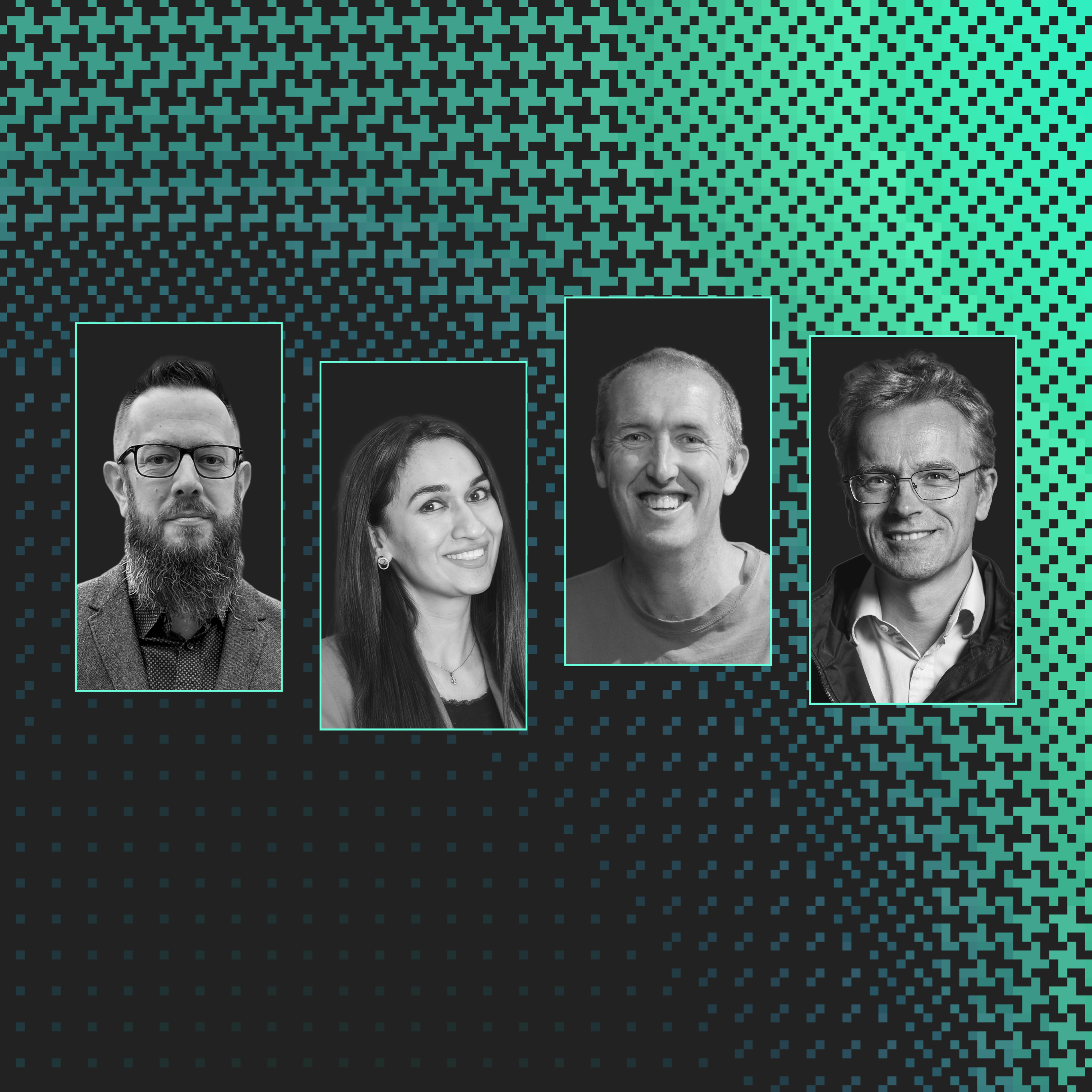
This week's guests:
Catrin Hinkel, Chief Executive Officer, Microsoft Switzerland, Microsoft
Daniela Stoffel, State Secretary, State Secretariat for International Finance (SIF)
Dr. Jochen Papenbrock, Head of Financial Technology - EMEA, NVIDIA
Dr. Christopher Purves, Global Co-Head UBS Group Emerging Technology, UBS
Links to check out:
Join our WhatsApp community, where you can get the inside track on all all things 11:FS, as well as having your say on the things we should be paying attention to.
https://chat.whatsapp.com/KpA4gFbbWDlLFm7kx39raf
Support our charity partner School-Home Support
Support our sponsors:
If you're running an early-stage business with Seed or Series A funding, Tide’s new savings account offers rates up to 4.48% (AER), with instant access to your money. Plus, get the best rates for free for 12 months at tide.co/insider.
About Fintech Insider:
Fintech Insider by 11:FS is a bi-weekly podcast that covers everything from finance and banking to technology and the latest trends in financial services.
Our expert hosts, with hands-on industry experience, are joined by key decision-makers, VCs, and top reporters from across the financial landscape, including guests from companies like Stripe, Revolut, Plaid, PayPal, and Monzo. Together, they break down the biggest news and innovations shaping the space.
Our weekly news show drops every Monday, covering major stories like mergers, new product launches, regulatory shifts, and emerging tech trends. On Thursdays, our Insights show goes deeper into the hottest topics driving the future of finance, including AI in banking, decentralised finance, and the evolving landscape of embedded finance.
Whether you're already in the fintech game or just starting to explore, this is the #1 podcast for you.
If you enjoyed this episode, don’t forget to subscribe and leave a review!
Got a question for us? Email [email protected]!
Learn more about your ad choices. Visit megaphone.fm/adchoices