
 Fintech Insider Podcast by 11:FS
26 Jun 2025 · 46m

 Add vo to ChatGPT or Claude to ask about everything you hear
vo listened to this episode to put together the overview and transcript, so there may be the odd mistake.
Digital identity in financial services—how to verify “who you are” amid deepfakes, synthetic identities, AI-driven attacks, and first-party fraud, while balancing security, regulation, and low-friction customer experience.
0:00When you need to build up your team to handle the growing chaos at work, use Indeed Sponsor jobs. It gives your job post the boost it needs to be seen and helps reach people with the right skills, certifications, and more. Spend less time searching and more time actually interviewing candidates who check all your boxes. Listeners of this show will get a$75 sponsored job credit at Indeed.com slash podcast. That's Indeed.com slash podcast. Terms and conditions apply. Need a hiring hero? This is a job for Indeed sponsored jobs. Fall has never looked or tasted this good. Sweet Green's fall harvest menu is back with seasonal favorites dressed to impress and made to be devoured.
0:41Warm roasted sweet potatoes, crisp apples, maple glazed Brussels and crave worthy flavors in the autumn harvest bowl, maple glazed salmon plate and roasted bacon Brussels side. The season's most desirable menu has returned to Sweet Green featuring fall's best dressed. Make your move. Order on the Sweet Green app.
1:15Welcome to Fintech Insider Insights, this week in partnership with LexisNexis Risk Solutions. I'm Benjamin Ensor from 11FS. On this week's episode, we're going to be talking about digital identity. Every time someone opens an account or logs into a service, one crucial question needs answering. Is this person who they say they are? Fraudsters are getting more and more sophisticated, using deepfakes, synthetic identities, and AI-powered attacks to fool even quite advanced systems. According to LexisNexis, one in 11 new accounts is fraudulent, and mobile browsers are five times riskier than apps.
1:55So how can businesses balance security, regulation and trust without adding too much friction to the customer experience? And can the same technologies that are causing some of the problems help to solve them? To unpack all of this, I'm joined by a fantastic panel of three guests. First of all, we have a very warm welcome to the show to Lorraine Salmon, Head of Identity Strategy UK and Ireland at LexisNexis Risk Solutions. Welcome to the show, Lorraine. Please tell our listeners a little bit about LexisNexis and your role there. Thank you, Benjamin. And it's a real pleasure to be here today. As you said, I'm Lorraine and I head up at the UK Strategy for Identity for LexisNexis Risk Solutions.
2:41I work within a team called UK Market Planning and I'm responsible for forming and driving our business strategy for identity verification and authentication. And ultimately, this is contributing towards our overall aim to make it easier for society to interact safely, inclusively and transparently. Just a little bit about LexisNexis Risk Solutions. So we enable many of the world's most trusted brands to make fast and accurate risk decisions. And we specialize in areas such as identity verification and fraud prevention. And the way we do this is by leveraging vast sets of data, vast data sets and using advanced analytics.
3:30So I would say kind of the problems that we're solving for customers in the identity verification space, if you boil it down, are helping businesses efficiently identify genuine good customers and help spot the bad ones and call out the risky ones. helping our customers run efficient and compliant business operations and have great consumer journeys, help prevent and detect and investigate fraud, and I guess ultimately helping protecting citizens' identities, so stopping their accounts being taken over and their identities being stolen. Fantastic. Welcome. I'm also delighted to welcome Azi Shojin, Group Chief Compliance and risk officer and money laundering reporting officer at Pocket and Manese.
4:20It's great to have you join us, Azzy. Please, would you tell our listeners a little bit about you and your role at Pocket and Manese? Of course. Thanks for having me on board. Pleasure to be here. As you said, I head up the risk and compliance function for Pocket at Manese. We provide inclusive financial services to individuals overlooked or excluded, usually by the traditional financial system. In October 2024, Pocket acquired Moniz, creating a combined company with over 3 million customers across the UK and Europe. Both firms are regulated by the FCA. And my role primarily focuses on managing regulatory risk, ensuring robust fraud prevention and protecting our customers from threats like AVP frauds and identity abuse.
5:09Fantastic. Welcome. And we're also delighted to have a welcome back to Fintech Insider for Katrina Dow, Chief Executive and Founder of MECO. It's really great to have you back with us, Katrina. Can you tell our listeners a little bit about you and a little bit about MECO, please? Thank you. It's lovely to be back. So what I'm hoping is that what we do at MECO makes Lorraine and Azzy's life a little easier, and that is we're focusing on providing the enterprise tools to enable organizations, particularly regulated organizations, to give their customers the ability to access, control, and exchange their identity, create, issue, and verify through verified credentials.
5:54But more importantly, to cryptographically sign either that data or those credentials so that it can be verified with a much higher level of trust. So our focus is how do we create the opportunity for any digital interaction to be more trustworthy by enabling customers to bring their identity into a digital journey. And that may be something that's been issued by an organization they trust. It may be their bank, it may be their government, it might be their telco, it could be their employer. But how do we start to build more of that trust layer into the information that's presented so that when it is verified, it can be trusted and it can be trusted much faster.
6:49Wonderful. Thank you. Well, welcome to all three of you. So let's dive in by starting to think about what is it that sort of undermining trust or potentially undermining trust in identity verification. Lorraine, perhaps I can get you to start us off by just sort of giving a little bit of an overview of what are some of the challenges that firms are now facing in sort of verifying the identity of customers? Yeah, sure. I would like to pause and just talk about what we mean by an identity, because I think it might be helpful for the following conversation, because there's lots of different meanings in terms of really what an identity is.
7:32it's a combination of attributes or characteristics that belong to a person. And these can be physical attributes, your name, your date of birth, your address, or digital attributes, so kind of centering around your online activity, such as your email, your telephone, your IP address, or biometric data. And then there's also behavioral attributes, which are looking at kind of how you interact potentially with a device, etc. etc so and I guess the fix is that a single attribute on its own so if you've just got a name or a date of birth or an email address it's not enough to distinguish one person from another however a combination of attributes might be so I guess when we talk about verifying someone's identity we're we're ultimately looking to confirm and be assured that they are who they say they are And this is fundamentally done by verifying that the attributes being presented are valid, that they're accurate, and then also that they legitimately belong to that person.
8:37So obviously, the more attributes that you have and that you can verify, then there's a higher confidence that you're interacting with the right person. And then I guess kind of beyond confirming the identity, you really need to then evaluate whether that identity presents any risks, again, to your business. And again, these risks can be physical risks, digital risks, behavioral risks and checks. So you can do things like checking whether the email address that the individual is using has been linked to any fraud, whether any of their identity documents appear on any kind of lost or stolen registers.
9:20and then there's other red flags that could could show a risk around an identity so for instance how recently was the email address or how recently was their bank account set up for that identity for instance you know people move house more often than they change email addresses I think I've moved house twice but I still got the same email address and there's a hotmail address which might determine my age as well. But, you know, the newness of an email address or a bank account can be, you know, a risk indicator for that identity. Then in terms of looking at the other risk factors as well, in some of the behavioral ones and the digital insights as well.
10:03So, is the mobile device or the device being used located in the right country? So, you've got a, you know, a person applying for something in the UK, but the device is showing that it's a different altitude in another country. So that again is a risk factor. And other risk factors in terms of, you know, checking the identity against PEPs and sanctions, databases, etc. For obviously, you've got to, in certain cases, conduct enhanced due diligence checks as required by different regulations. So I guess in terms of, you know, why do we bother checking identity? So it's required and it's used when people are applying for products and services, opening your bank account, buying a house, renting a vehicle or accessing restricted goods and content.
10:57And there's obviously regulations mandating the need for such checks. And obviously we're doing these checks to make sure that that individual is who they say they are and they have the real and legitimate customer and are able to use and continue to use the service. So there's kind of lots of layers to identity, which I think is the reason why there's so many layers to check and so many different points in the customer journey that they need to be checked. But I guess the other fix is you've got to be able to do all of that robustly, effectively, quickly, and at the same time have a good consumer user experience when that's happening.
11:45You're obviously right. And there's a lot of regulations that drive companies to verify company, you know, customer identities. But surely one of the basic things, I mean, maybe I'll throw this to you, Azzy, one of the basic things is actually just to protect businesses and their customers from fraud. I mean, if a customer isn't who they say they are, I mean, that opens all sorts of problems up for companies, right? Correct. So think about being able to have access to a bank account. That on its own then enables you to do so many other things. The banker statement you get from your bank, which carries a name, again, enables you to do other things.
12:26if you are borrowing from your bank and that identity is not true, the bank has no right of recourse to recover the funds that have spent then and that there could also be fraud against other consumers. So this is where the whole regime around authorised push payment fraud in the UK first was a conversation and now a legislation from October of last year where the size of the problem was big enough for the government to take action and make it mandatory to reimburse consumers who fall victim of fraud. And, you know, the reason behind it is when you look at the statistics of how easy it is for consumers to fall victim of fraud and how people are trusting of social media and online platforms to buy and sell and attract.
13:14You know, even like romance or scam is one of our kind of highest problematic areas. You know, you're not buying sales of goods, you're trying to get into a relationship and then you end up being scammed. When you put all of this together, so the birthplace of food is outside our ecosystem, but we are the one who pick up the pieces because then the money movement, which is a regulated side of the activities through our rails, and all of it has started from a place where the consumer is protected, the fraudster is protected in their own eyes because it's not their own name. It's not their details.
13:49it's not even their address there's no recourse or consequence for them to do what they do because the police will turn up to somebody else's house should they want to pursue the matter and this is where it becomes really attractive so the source of funds is always not legitimate not clean funds either it's laundered funds or unfortunately or you know um de-affordered another consumer and in order for you to do that and not face any consequences you then need somebody else's identity to get away with that crime. And this is where the whole scheme becomes quite attractive. Having said that, what I've also started seeing, and this is so different to how fraught life overall was in the last 20 odd years that I've been in financial services, some identities are true identities and they're actually being intentionally recruited to act as mules.
14:42And that is another planet of problems that you need to solve because actually the proof of ID you have received and the authentication you've taken your customer through is all correct. No one has breached any contracts. But the intention of usage of accounts is purely to facilitate somebody else's, you know, laundered funds and earned through, you know, other criminal acts, your systems and controls is being utilised to facilitate the movement of funds, which is of course something against what you're meant to be allowing to happen on your ecosystem. And then the end game, again, is the same thing, but then to draw identities with ill intention of using the account.
15:30Katrina, we've always had identity theft, I mean, for centuries, but certainly for throughout sort of the digital. How much worse is artificial intelligence potentially making things? Because we've seen sort of remarkable, remarkable developments in AI in the past year. How much of a challenge is that creating around identity verification? I mean, I take Lorraine's point about, you know, you need to take multidimensional approaches to sort of thinking about some of this. But are you starting to see AI changing the nature of the problem beyond what, you know, Lorraine and Azzy have already discussed?
16:10I think, unfortunately, yes, and probably increasing either the threat vectors or the bad actors. we have a visual that we often use in our presentation, you know, the three monkeys with hear no evil, see no evil, speak no evil, exactly. And we use that because we say it's not possible anymore to believe anything, you know, you see or hear or even witness without there being some form of verification to sit behind that. And I think one of the challenges that we've only just started to see is we kind of move into more of the agentic era where people will actually have agents working on their behalf.
17:09It won't be just about being able to be confident about the individual or entity that you're dealing with, but it'll be about can we trust? So it'll be an extension of trusting the device. You know, can we trust this refrigerator and this credit card is really linked either with a natural person or an entity that can be trusted. And so there are so many more opportunities for either fraud and or for an identity to be weaponized really quickly across not just kind of the everyday things that humans do online, but many of the things that can be possible with AI. And I think the other challenge, and this really carries on from both what Lorraine and Asia said, is that bad actors are also using these tools.
18:06So whilst AI can be used increasingly on the detection side and maybe to speed up the time to trust whether or not it's a verified credential or it's a document or it's a device, at the same time, there are very, very sophisticated, organized crime rings that are adopting AI very, very, very quickly. because it's so efficient at being able to manufacture a very convincing, fraudulent identity very fast. And then it's very easy to kill that off and create another. And so I think we're right on the verge of seeing some amazing things that we will be able to do with the help of agents. And at the same time, I think in the short to medium term, we're going to see many, many additional attack vectors that will rise much, much faster.
19:07And I think if there's one customer cohort that worries me the most, it's particularly an aging population that are already uncomfortable with digital tools and the ability often to be very quickly taken in through AI scams, thinking they've heard the voice of their granddaughter asking for money or something where they just can't imagine that that couldn't be real. And so I think whilst we have younger people that are more digitally savvy who we're trying to adopt and make customer experience better and better, at the same time, we have the opposite end of the customer experience where we really have an obligation to be protecting people that are maybe not as digitally literate.
19:54So there are challenges in terms of that digital experience on both ends. lorraine um you know listening to uh listening to katrina and just thinking about you know the rapid advance of ai it always feels like it's there's an arms race around sort of identity verification and at times it feels as though the bad actors the organized crime groups that that katrina was talking about these the state actors that we know are sort of increasingly playing a role in in certain types of cyber crime and so on that actually that the the the sort of criminals are almost better armed than the good people. Are we heading, are we sort of skedaddling towards a dystopian future where it becomes very hard to sort of trust anything and the default has to be that you don't trust until you know you can trust?
20:42I mean, Lorraine, give us some hope. Ah, yes. And to pick up on Katrin's points there around, you know, AI-enabled fraud and fake identities, they're much more sophisticated than ever now. So fraudsters are using AI-generated content, so faces, voices, identity documents to full verification systems. And this is kind of cheap, accessible technology now and it's being really industrialized. But I think to the point in terms of what, as you said, around kind of romance scans and things like that, But when the AI and the AI generated content is paired up with social engineering, is paired up with stolen credentials, it becomes really powerful.
21:34So, yeah, you can't stand still in this world. You have to be constantly innovating to keep up with the fraudsters. But, you know, AI is actually helping that as well. So in terms of being able to spot and predict fraud as well. So it's interesting that we had a recent report talking, explaining that the amount of automated bot attacks has rose by 18 % year on year in financial services. So it's got up to a volume of 21 billion now. So AI, you know, is helping the forces innovate, but it's also fueling the prevention tool. So machine learning tools being deployed to detect deep freights and synthetic IDs and the patterns of synthetic IDs at scale is really helping to combat that as well.
22:30And I think also the rise in synthetic identity. So just as a kind of an explainer, because this is a type of fraud that's really growing as well. This is a synthetic ideas where a fictitious identity is created by combining real and fake information. but I guess what makes it much more difficult is there's no actual real identity behind that individual so you know one of these fake synthetic identities taking out a loan the fraud is committed they run off with the money but then that identity is then shut down so it makes it really almost near impossible to trace the actual perpetrator as who do you chase because the identity didn't even exist.
23:17And the other thing is, with a synthetic identity, is that when the fraudsters are creating them, and there's farms, there's synthetic identity farms around the world, farming and growing these identities over time so that they have a history, getting them ready to be deployed. And when they create those synthetic identities, they're going to make them look like good identities. So they're going to have a great credit history. They're not going to have any CCJs, So they're going to look like a perfect customer. So, you know, you need to be able to have the technology and the data to be able to detect whether an identity looks like it could be a synthetic identity.
23:59And obviously that and be able to flag that up to you in real time so that you can deal with that head on. That feels like a good place to pause. We'll be back right after these quick messages.
24:14When you need to build up your team to handle the growing chaos at work, use Indeed Sponsored Jobs. It gives your job post the boost it needs to be seen and helps reach people with the right skills, certifications and more. Spend less time searching and more time actually interviewing candidates who check all your boxes. Listeners of this show will get a$75 sponsored job credit at Indeed.com slash podcast. That's Indeed.com slash podcast. Terms and conditions apply. Need a hiring hero? This is a job for Indeed Sponsored Jobs. Fall has never looked or tasted this good. Sweetgreen's fall harvest menu is back with seasonal favorites dressed to impress and made to be devoured.
24:55Warm roasted sweet potatoes, crisp apples, maple glazed Brussels and crave worthy flavors in the autumn harvest bowl, maple glazed salmon plate and roasted bacon Brussels side. The season's most desirable menu has returned to Sweetgreen featuring fall's best dressed. Make your move. Order on the Sweetgreen app.
25:17Welcome back to Fintech Insider Insights, where we're talking about digital identity. In the first half of the show, we spoke about how the rise of technology such as deep fakes and synthetic identities are eroding trust in identities and in financial services. Now we're going to take a look at how companies and regulators stay ahead and start using technology to restore trust in digital identity. um azia i'd love to bring you in on on how we think about sort of tackling some of these problems i mean we've already talked a little bit um how does the industry go about sort of trying to restore trust and addressing some of these challenges like synthetic identity fraud um in my experience i think as this space evolves uh and as we were saying in a previous session and Lauren touched on that it's on the go and on the growth at all times.
26:14Combating financial crime then has to be of the same nature.
26:22I've been doing this job for a very long time and the dynamic of my role has changed quite rapidly in the last five, six years compared to what fraud and money laundering was before in banking in the UK. what we end up having to do today is continuously and constantly looking at internal systems and controls and looking at the next best possible technology that we can get from external funds to combine the two plus having teams of people who are vigilant and aware and mindful into current and emerging risks that come to our space. And the combination of the three facilitates some level of comfort that you don't feel all the time.
27:13You're on the back foot and you're not just reacting, but you're proactively trying to prevent fraud. Before the APP legislation went live, POFIT did something quite innovative. I can use it as an example here, where the whole chain of events for authorized push payment fraud is that there's a sender, there's a receiver. the two banks then become responsible should the sender find themselves to be a victim of fraud. And majority of kind of the fintech PSPs found themselves in the receive side, having a problem of receiving lots of fraudulent funds rather than their customers being victim of fraud.
27:52But then I am the one with the data of the receiver being a fraudulent account. And unless you connect the A to B, your whole system and control is going to be defective because the sending bank is going to do some checks around the payment going out based on your transactional behavior, right, of you as their customer. Then somebody like Pocket has got all the information on the receiver. And this receiver has been a good customer so far, whether it's a new or existing customer. But only after looking at, you know, patterns of fraud that seeing what actually happens, what sort of customers on what sort of timeframe end up, you know, acting fordermen, you then are able to then make a meaningful difference.
28:34And what Pocket did, we built a system where we sent two one-pence payments back to the sender, which is not our customer, it's somebody else's customers, right? In those two 1P payments, we try to authenticate the payment we have received that we believe the probabilities of Ford are very high. So you've sent me 500 pounds. The customer you intend to deposit to in our ecosystem looks worrying, right? We quarantine this payment. We contact the sender. We send them two 1P payments. One carries an OTP. One carries a message. We also follow this up with an email that we've collected an email address from the receiver.
29:13And then we tell the customer, we believe you're being victim of fraud. Would you like your money back? And if you don't, and you would like to authenticate the payment, we will send you a 60-digit PIN that only comes to your bank account. So if the fraudster has intended to give us a false email address, a friend of theirs, rather than the actual sender, this code will never be at their disposal, right? So the system cannot be intermented. And then when the sender chooses to approve the payment, they display the code to us, we release the payment to the sender. And I had a team meeting this morning, and I was looking at the stats with my team.
29:52I think in the month of May, just under 500 payments got caught into this system that I just described. And then we received about 30 scam reports at the back of them. 500 that could have all been a scam report down to 30, right? And this is where it gets effective. Because unless you talk, the two firms talk, and there's joint type approach, and there's joint exchange of information between sender and receiving bank, you cannot tackle this problem. and we had to take it up on ourselves to go and find a solution, to build something that we can actually communicate with the center and send money back so they don't fall victim of fraud.
30:33And look, I mean, pocket in size, we have run plus money. Now we are about three, four million customers. This is a very small proportion of clients compared to UK entire, obviously bankable population, right? And innovations like this are not taking center stage. which, you know, their legislative partners, such as, you know, the PSR and Pay.UK, were promising some sort of collaboration between the banks by a tool that they were talking about, enhanced food overlayer. It hasn't come to fruition. But my point here is, in summary of everything I said, is that the firms are having to take it up and up themselves to either be innovative internally or find innovation externally and bring it in-house, added to their own existing system, and controls and really intend to tackle the problem.
31:25Thank you. Fascinating example. Katrina, do you agree with this? I mean, sometimes it does seem as if there's lots of individual companies trying to sort of solve identity verification alone and sort of struggling. Do we need more industry collaboration? And if so, sort of how do the good people get smarter at working together to fight the bad people? So I think absolutely in terms of the industry collaboration, I think as she was explaining that use case and the idea of this bridge between both actors and acting to show that you have the best interest of the customer at heart. I think it is going to be a combination of technologies.
32:12And I think if we step back at some of the things that are happening in and around the UK, Europe, the aim for governments and financial institutions to become more active in providing, first of all, citizens. So we know in the EU, the EU digital identity wallet is aimed at making sure every citizen and resident across the European Union by 2027 will have access to a government issued identity, a trust anchor identity that they will be able to use. Now, the question is, is what ecosystems will grow around there so that we start to see a fusion of this technology where you may find that for financial services, payments over a certain amount, establishing a new payment pattern, that it's not unreasonable to be able to pair together something like a credential or something that needs to be initiated alongside the financial transaction until that identity can become trusted.
33:34And I think we're only going to see those ecosystems grow. oh, we're only going to see those capabilities come to the fore where there is collaboration. And again, back to Aziz's point about romance scams, I don't know how many times I've spoken to banks to say that so often, and it's not always women, but it is mostly women, if you just knew the person that you were chatting to actually had a verified bank account, If that was all you knew, there's no guarantee that you'll be lucky in love or that everything will work out. But if you just knew that from the first time you accepted a message, you were not actually talking to a bot, but actually a bank was able to say it.
34:25The other side, the person you're chatting to actually has an established bank account. That is an example where that kind of collaboration would make a massive difference. not just to financial scams, but the heartache, the identity theft that goes with that. And it's a really simple thing. I've connected with someone. Do they have a bank account? Is there some trusted credential that doesn't need to tell me who the person is or give me any more information? There's just some trust anchor in society. And so some of these social issues and these challenges, we won't be able to solve without some collaboration and sometimes an unusual collaboration.
35:17You know, each time we've spoken to a bank about dating sites, it's like, oh, no, that's not our business. But, you know, it could actually be a partner that could make the most difference in actually combating something which is actually growing. It's not decreasing. It's increasing. And sadly, the amount of funds involved with those kinds of things is also increasing. So I don't think, and back to Lorraine's point about identity is this composition of so many different things. It's not a single thing. It's not a single attribute. We're not going to solve those things without a fusion of new tools and capabilities, relying on governments and financial institutions to play a part in protecting citizens and customers and helping to contribute to that trust anchor that will actually start to assist that first layer of trust.
36:20It doesn't mean it will solve everything, but it starts to give a foundation on which to start looking at other things and get to that trust score very quickly. Thank you. And I think, sorry to follow on from your point, Katrina, in terms of businesses and organizations need to be checking the identity at many different stages within the customer journey. When a customer is initially onboarding, when they're returning as a customer, when they're making a payment and doing another kind of action or changing some of their profile details, etc. Those are all kind of key points. but I guess kind of getting it right at the the onboarding stage is super important because obviously that's the kind of the the initial door into letting the bad actors in and it's interesting so we recently published a a recent global cyber crime report so this is where we looked at 104 billion transactions we analyzed those and um it was quite key some of the insights that came out of it.
37:25So what we have seen is that kind of after years and years of escalation, attack rates do seem to be stabilizing, but the attackers are actually getting smarter. And one other key insight is that actually one in 11 new accounts created are typically fraudulent. So in terms of getting it right at the stable door is key. The other important insight is actually that just under 36 % of the fraud is now first-party fraud, which is quite key because obviously the identity is valid and it's been verified, but it's actually first-party fraud that's committing the crime there. So I think that's kind of a new highlight from that report.
38:09But to your point, Katrin, you have to be doing the checks at each point of the customer journey. So in the romance scam example, in terms of checking that the bank account is valid when sending a payment, it's, you know, you could have a dating website where their proposition is that it's only verified identities that are on the platform in the first place, which would be, of course, I would say that I'm in the world of identity verification, but that could be, you could see that as a proposition. It would be a good value proposition, I think. So, unfortunately, we're running out of time. So, as we come to a close, could I get a summary from all three of you about sort of what businesses need to do to sort of act now.
38:53What are the sort of top things they should be doing? Azzy, let's start with you. What do you think are the most important things that sort of businesses need to do to sort of act right now? As I said before, I think it's always going to have to be a combination of human and machine together, them, both from a decision-making group of concepts, testing, understanding what this technology does for me, rather than thinking this is what everybody else is using in terms of risk associated to my own business, to, you know, having humans that interact with the machine and the tool that you have now acquired, either internally as your proprietary tool or externally to ensure that you are on a, you know, continuously updating your AI learning models in-house, your systems, your transaction monitoring tools.
39:48However, it is that you are trying to combat financial crime, those days are gone that you have looked at your systems once a year. It needs continuous, constant updates to, you know, in line with the trends of what's happening out there. And if it was down to me and I had more powers of doing what I do for one firm, you know, I would be very keen on bringing further collaboration between financial services firms. And that's where the data sits. And that's where you can definitely try to have a more successful way of achieving and combating financial crime. Thank you. Katrina, what do you think are the most important things that companies need to do?
40:30I think the three key things when we think of the fact that everything we do, almost everything is digital, and we think of the rise of AI, I think the first thing is that those trust anchor organizations, whether it is our bank, our financial institution, or our government, there needs to be more of a realization that providing credentials increasingly to customers so that they can be able to do. they can start to establish that trusted base is critical. The second thing is then the obligation on an institution to make sure that data is protected because the reality is a lot of fraud happens as a result of hacking.
41:17Unfortunately, I'm joining the call from Australia and the major hacks that we've had down here in the last couple of years has, I think it's as much as 50 % of the population where the core attributes that would enable you to set up a fairly good fraudulent identity have been compromised. And so I think there's a real obligation in terms of once that identity has been provisioned, protecting. And then a third thing is realising that everything we do is digital. and increasingly that is going to spread out from us to our things, our cars, our refrigerators, our coffee pods, that we'll be able to act on our behalf to order things online, pay for things and therefore the challenges around how that composite identity is made up is only going to be exponential, it's going to increase and therefore starting to think of that customer experience beyond the individual and really their entire digital life is going to be critical for designing both the customer experience and the customer protection.
42:37Thank you. And Lorraine, what are your thoughts on the most important things that companies need to do now? Yes, no, I think given everything we said and there isn't ever going to be one silver bullet for doing an identity check you have to be checking across all the different layers and and throughout all the different points of the customer journey as well um with the knowledge you know with the backdrop about fraud being dynamic and constantly evolving and ai making it easier um frauds to fraudsters will really seek out the weakest point so i think the trick is for business is to be able to orchestrate all the identity treks across all the different layers and all the different points across the customer journey, which is complex, and at the same time, deliver the most optimum customer experience as well.
43:30So I think it's orchestration of all the different layers is what they should be maintaining. Fantastic. Thank you. Well, that wraps up today's discussion. Thank you so much to the three of you for joining me. This has been amazing. Where can people find out more about you and about the companies you work for? So, Azzy, where can people find out more about you? Pocket and Moniz both are on App Store, so the apps can be downloaded and the bank accounts are obviously offered to all UK and EU members. And for myself, I'm on LinkedIn and very happy to connect the two people there as well. Wonderful.
44:06Lorraine, where can people find out more about you and about LexisNexis Risk Solutions? Yes, LexisNexis Risk Solutions website and we can follow up with those details. And yes, I'm also available on LinkedIn and more than happy to connect. And Katrina, where can people find out more about you and Miko? So miko.me, M-E-E-C-O dot me is our website and also on LinkedIn. You can find Miko on LinkedIn or you can find me on LinkedIn. So I'd be very happy to connect. And you can find me, Benjamin Ensor, on LinkedIn as well. Thank you all so much for listening. If you like what you've heard, please do follow our podcast and don't forget to leave us a review.
44:47Let us know what you'd like us to do differently on the show. If you want to join the conversation, please seek us out on social media. Just search for 11FS or Fintech Insider, or you can email us at podcasts at 11FS.com. Thank you all so much, and goodbye.
45:06Fall has never looked or tasted this good. Sweetgreen's fall harvest menu is back with seasonal favorites dressed to impress and made to be devoured. warm roasted sweet potatoes, crisp apples, maple glazed Brussels, and crave-worthy flavors in the autumn harvest bowl, maple glazed salmon plate, and roasted bacon Brussels side. The season's most desirable menu has returned to Sweetgreen, featuring fall's best dressed. Make your move, order on the Sweetgreen app.
At 11:FS, we don’t just talk digital - we make it happen. We're building truly digital financial services by partnering with bold teams to take them from market insights to real-world products. Whether you're an incumbent innovating or a startup breaking new ground, we bring the strategy, research, design, and delivery to make it real. Less talk, more impact.Proud winners of the British Bank Award for Consultancy of the Year - five times and counting.
👉 Learn more at 11fs.com/ventures
--
About this episode:
On this week’s Fintech Insider Insights, in partnership with LexisNexis Risk Solutions, we’re diving into one of the most pressing challenges in financial services: digital identity.
Every time someone opens an account or logs into a service, one big question needs answering: is this person really who they say they are?
Fraudsters are getting smarter - using deepfakes, synthetic identities, and AI-driven attacks to fool even the most advanced systems. In fact, according to LexisNexis Risk Solutions, 1 in 11 new accounts is now fraudulent.
So, how do businesses balance fraud prevention, regulatory pressure, and customer experience - without adding friction? And could the very tech that’s fuelling the problem also be part of the solution?
To unpack all this, our host Benjamin Ensor is joined by a fantastic panel of guests.
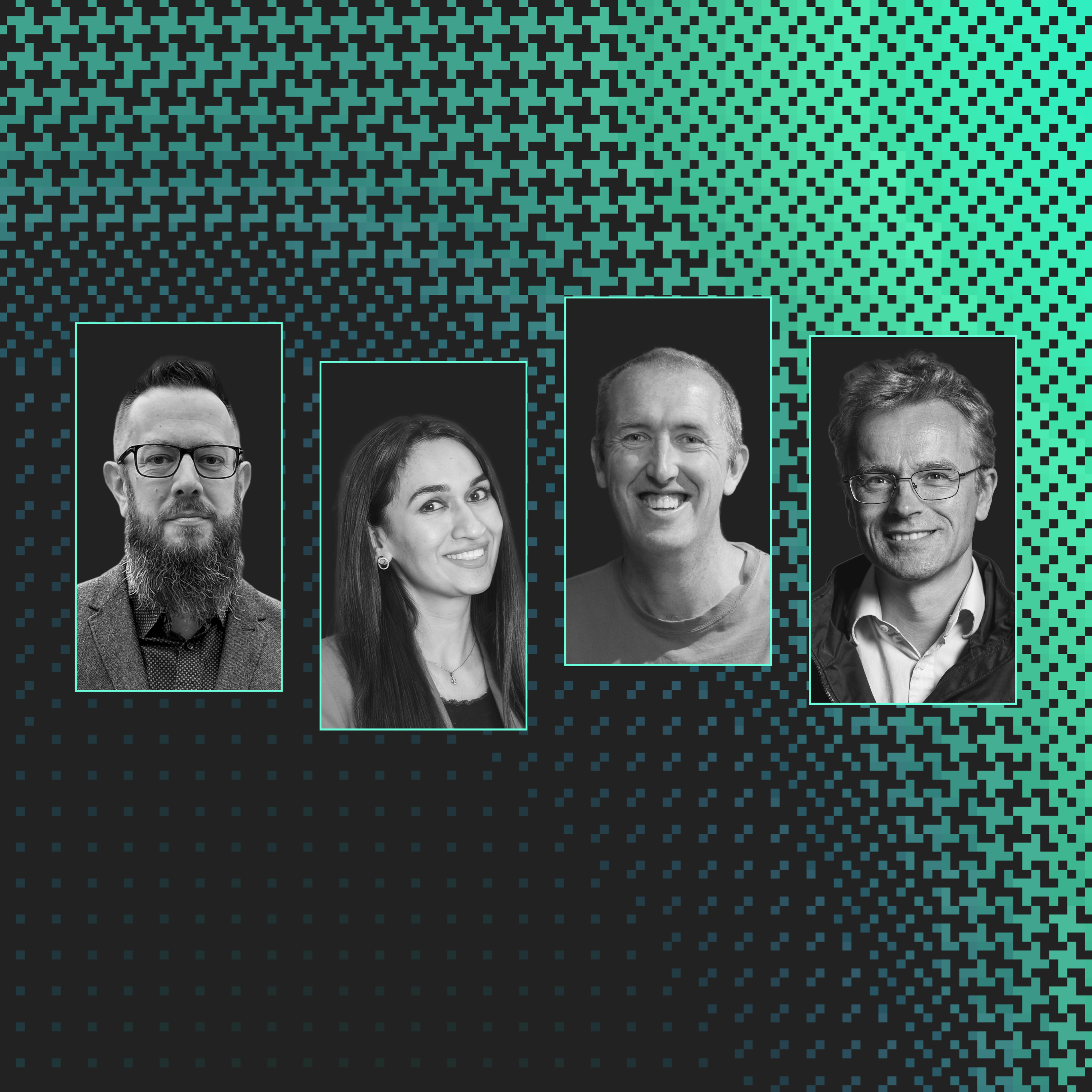
This week's guests:
Lorraine Salmond - Head of Identity Strategy, UK and Ireland at LexisNexis Risk Solutions
Katryna Dow - CEO and Founder of Meeco
Azy Shojaeian - Group Chief Compliance & Risk Officer & MLRO at Pockit & Monese
To explore the insights Lorraine Salmond from LexisNexis Risk Solutions shares in this week’s episode, you can download the latest Global Cybercrime Report for free
--
Links to check out:
Join our WhatsApp community, where you can get the inside track on all all things 11:FS, as well as having your say on the things we should be paying attention to.
https://chat.whatsapp.com/KpA4gFbbWDlLFm7kx39raf
Support our charity partner School-Home Support
--
Support our sponsors:
If you're running an early-stage business with Seed or Series A funding, Tide’s new savings account offers rates up to 4.48% (AER), with instant access to your money. Plus, get the best rates for free for 12 months at tide.co/insider.
About Fintech Insider:
Fintech Insider by 11:FS is a bi-weekly podcast that covers everything from finance and banking to technology and the latest trends in financial services.
Our expert hosts, with hands-on industry experience, are joined by key decision-makers, VCs, and top reporters from across the financial landscape, including guests from companies like Stripe, Revolut, Plaid, PayPal, and Monzo. Together, they break down the biggest news and innovations shaping the space.
Our weekly news show drops every Monday, covering major stories like mergers, new product launches, regulatory shifts, and emerging tech trends. On Thursdays, our Insights show goes deeper into the hottest topics driving the future of finance, including AI in banking, decentralised finance, and the evolving landscape of embedded finance.
Whether you're already in the fintech game or just starting to explore, this is the #1 podcast for you.
If you enjoyed this episode, don’t forget to subscribe and leave a review!
Got a question for us? Email podcasts@11fs.com!
Learn more about your ad choices. Visit megaphone.fm/adchoices
Scan the code with your iPhone camera
Listen in the app.