

 Fintech Insider Podcast by 11:FS
30 Jun 2025 · 48m


 Add vo to ChatGPT or Claude to ask about everything you hear
vo listened to this episode to put together the overview and transcript, so there may be the odd mistake.
Fintech Insider News episode 975 covers: Zopa’s launch of “Biscuit,” a UK current account; Coinbase’s launch of a stablecoin payments stack for merchants using USDC; Finom’s €115m Series C for its SMB banking/invoicing platform; plus funding for TBC Bank Uzbekistan to expand women-led lending, and Bank of Ireland’s kids account.
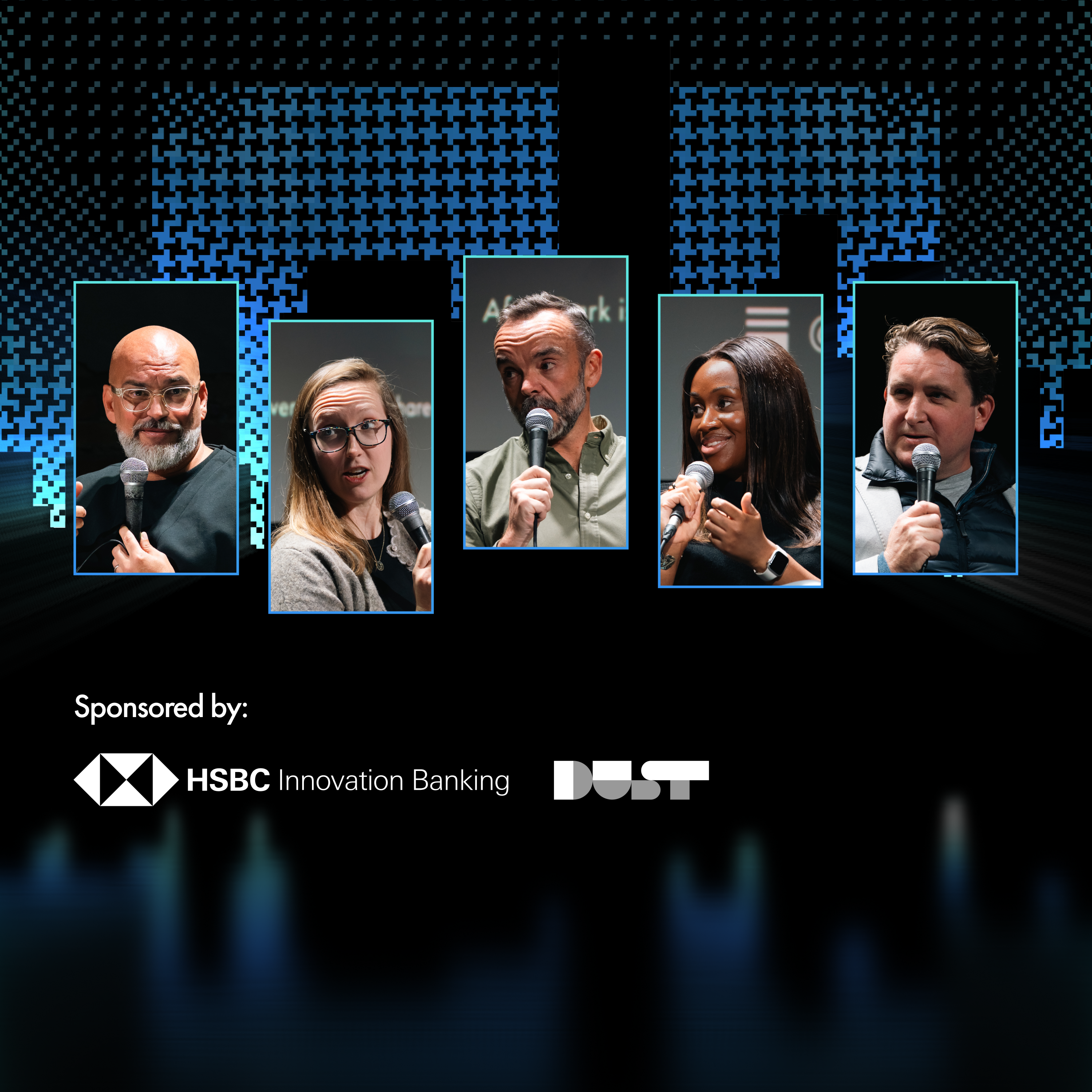
Merv Ferreiro (Chief Strategy Officer, Zopa; joined 10 years ago; leads corporate strategy and products incl. current accounts/savings/payments; Zopa has 1.5m UK customers). Conrad Ford (Chief Product and Strategy Officer, Alica Bank; SME-focused; founded Funding Options, now owned by Tide; covers product marketing/strategy/ESG). Valentina Christensen (Corporate Affairs Director, Oak North; returns to discuss SME lending and inclusion).
Zopa differentiates via “great value + effortless” economics enabled by its lending engine and profitability. Stablecoins may matter more for infrastructure/tokenization and settlement than for UK SMEs today; emerging markets may adopt sooner. Finom targets microbusinesses with AI accounting, but monetization and churn are hard; medium-sized SMEs are the “prize” due to balances and debt capacity.
0:04This is Fintech Insider News. This week, Zopa has entered the UK current accounts market with its new flagship current account, Biscuit. And Coinbase launches Stablecoin service. And SMB-focused Finom closes a 115 million Euro Series C equity round as European fintech heats up. We'll be discussing all of this and more on today's new show, so don't go anywhere.
0:31When you need to build up your team to handle the growing chaos at work, use Indeed Sponsored Jobs. It gives your job post the boost it needs to be seen and helps reach people with the right skills, certifications, and more. Spend less time searching and more time actually interviewing candidates who check all your boxes. Listeners of this show will get a$75 sponsored job credit at Indeed.com slash podcast. That's Indeed.com slash podcast. Terms and conditions apply. Need a hiring hero? This is a job for Indeed Sponsored Jobs. Brussels clean up nicely at Sweetgreen. Maple glazed, roasted, and edges perfectly caramelized.
1:09Sweetgreen's fall harvest is back on the menu, and the season's most overlooked little green vegetable is dressed to be devoured. You know what to do. Order on the Sweetgreen app.
1:31David Barton Grimley Hello and welcome to episode 975 of FinTech Insider. My name is David Barton Grimley, FinTech Strategy Director right here at 11FS. And as we speak, thousands of revelers have taken to the fields of Somerset for the 55th Glastonbury Festival, taking in the sights and sounds of some of the biggest headliners in music, art and culture. But not us, and definitely not two of us who are stuck in a podcast studio in a basement. So we might not be doing exactly that, but we're here to bring you some very different headliners. The biggest ones from here in the world of fintech, and joining me to unpack them are three people who are not going to Glastonbury.
2:07Let's meet them. First up, we have a fintech insider debut for Merv Ferreiro, Chief Strategy Officer at Zopa Bank. Welcome to the show, Merv. You have some headliner-worthy news that we're going to get to shortly, but first, please tell our listeners a little bit about yourself and Zopa. Thanks, David, and thank you so much for inviting me. I do feel sad about not being in Glastonbury, but not to correct you but my name is Marve Ferreiro I am the Chief Strategy Officer at Zopa I've joined Zopa 10 years ago and I look after corporate strategy as well as some products including current accounts, savings, payments In terms of Zopa we are a digital bank in the UK serving UK consumers We have 1.5 million customers today Amazing, welcome to the pod And next up, joining me live in the studio we have another FinTech Insider debut for Conrad Ford, Chief Product and Strategy Officer at Alica Bank.
3:00It's great to have you on the show, Conrad. Can you tell us a little bit more about yourself and your role at Alica? Conrad Ford Ford Hi, everyone. So for those who don't know Alica Bank, we're a bank focused on larger or more established SMEs. Our claim to fame, we're the fastest-growing fintech ever in the UK, officially according to his Lloyds. So it's been an exciting five years or so. I'm on the leadership team of Alica. I cover quite a wide range of things, but core of my responsibilities would be product marketing, strategy, and ESG. And previous, I'm always considered a bit of a fintech veteran.
3:31I founded a business called Funding Options, one of the earlier fintechs in London, which is now owned by Tide. Awesome. Welcome on board, Conrad. And last but not least, we have a warm welcome back to the show for Valentina Christensen, Corporate Affairs Director at Oak North. Thanks so much for joining us, Val. How are you doing? I'm good. I'm good. Thanks for having me on. It's great to be back. Awesome. Yeah, always a pleasure to have you. All right. So we have a panel now onto the news. And this first one is from Finextra. Zopa has entered the UK current accounts market with its new flagship current account, Biscuit.
4:02Zopa's Biscuit offers top market value with an average customer earning£256 annually through cashback and interest. That's quite a lot. The account offers 2 % AER interest on balances, as well as 2 % cashback on bill payments. It also offers up to 7.1 % AER on a regular saver pot, and there are no foreign transaction fees. So, Merve, it makes sense to come to you first on this. Tell us a little bit about the account and also the name. We definitely have to talk about the name. Where does that come from? Let's start with the name if you want to. Go for it. So, it was a big debate in our company, but basically, isn't that like biscuit?
4:41Isn't that one thing that is good value, it's accessible, it's simple, but it's so tasty, and it's also so British? There's nothing more British than a biscuit, in my opinion. So it is a metaphor for the everyday value and ease the account provides to customers. So honestly, when I first about it, I thought the concept was genius. And this is despite the fact that I actually do not eat biscuit that often, but I just love the name. Amazing. What do our panelists think about it? Well, the only thing more British than a biscuit is a bowler hat, which is our logo. I like it. I think it's designed to cut through.
5:18I suspect it targets a certain demographic, but we're going to hear from the expert on that one. But it's a fairly busy market. You need to stand out. And I'm a great believer that brands need to be fun. Certainly in B2B, the number one definer of success of the brand is its likability empirically. So I think it's a good bet. Yeah, I agree. I think the name's very cute and very fintech. Lots of fintechs like to name their products or their brands after food. You've got cabbage, plum, lemonade, raisin, toast. So I think you're in good company. That's awesome, man. And what our listeners won't be able to see is that Conrad has bought in a bright orange bowler hat.
6:04So speaking of British... Always be selling. Always be selling. We've got a very, very British-themed podcast today. Merve, I want to come back to you on the features of the product. I mean, it's very, very cool, right? I mean, a 7.1 % regular saver interest rate. Kind of incredible. Tell us a little bit about the kind of rationale behind the product and how it works. Yes, definitely. I mean, we launched this product to close a huge gap in the market. We believe there's no one place that offers great value with zero hassle. So we hope to be that place that gives consistent value with effortless experiences and for all financial needs.
6:45So that's why we launched Biscuit. That's how we designed it. And that is actually how we design every single product at Zopa. Two underlying principles is it has to be great value. It has to be on a consistent basis and effortless. That's awesome. And how does the current account, would you say, work with the overall kind of ecosystem of Zopa and all the other products that you offer as well? Why is it so important to you? Yeah, so Zopa Bank was founded in 2020. We launched it back then. And we started, unlike some of the other new banks, We started with borrowings and savings. We focused those needs of our customers first because we thought that is where we could make the biggest impact.
7:22However, after our big success on those two big markets, we realized that if we could actually bring an account that brings the whole ecosystem together, it would make our customers' lives so much easier because they could do much more with us than they're able to today. So that was the rationale behind it. And the reason why it's so important to us today is that when you think about borrowings and savings needs, it's quite like one-off or even if it is engaging or even if it is like monthly, it is, again, quite transactional. Whereas when you go into current accounts, you start to get customers' everyday banking needs.
8:00You start getting actually understanding all their money needs, all their financial well-being. and what we get as a result is that data. And with that data, we can give them much more personalized experiences as well as offers. So that's why it's really important for us to give the accounts, to make it more seamless for the customer and then make it more valuable for the customer in the end. Go for it, Val. Yeah, I mean, I think, I suppose, you know, playing devil's advocate, there's obviously a lot of competition in the consumer current account space, and obviously the likes of Monzo, Revolut, Starling.
8:41They all offer current accounts for consumers. So interested to hear sort of where the differentiation will be and how you guys are hoping to kind of get that cut through. Yeah, and I love the challenge. Thanks for that. I think if you look around today, one thing you will see is the value that David was just mentioning, the amount of that value that we give can be unmatched today. And there's a fundamental reason behind that. It is going back to like us starting from borrowing and saving. The one thing that we've done, our business model is like build something that is sustainable. So we are, this is our second year for profitability.
9:22We are one of the fastest that reached profitability. And the reason for that is we build a business model that wins with the customer. and as a result of the economics that we can generate, we can actually give that value back to the customer, not only as a one-time promotion, but on a consistent basis. So that's why when I say ease and value in one place, what I mean is that, yes, you can get, yes, there are current accounts in the market that gives those digital experiences and yes, there are providers out there that gives that value for one product, but what you don't see is that digital experiences of a newer bank and actually the reliability that a high street bank gives, but fairer and more valuable than both is what Zopa does.
10:09Yeah. Yeah, I must say, when I was thinking about this, I mean, the question I was asking myself is how can Zopa be so generous, right? And actually, when you look at Chase, for example, they weren't generous forever. And actually, I thought about it and I kind of, I think I see it. so if you're building a bank you've got to have both sides of the balance sheet so the lending and the borrowing and the liability side in banking terms and a good bank is one where both biceps are similarly sized yeah and i think a fair critique of a lot of the neobanks in the consumer segment is they've not developed the lending side in some cases they've really not developed it at all you know so what the sort of the current account and bicep is like arnold Schwarzenegger, and the lending one is like mine.
10:57So Zopa because their heritage, I mean, they were the OG fintech lender, they were the fintech lender before fintech was a word, right? So that bicep is very well developed. And I think my guess was pretty much what you just said, actually, my guess was basically that high conviction that you can monetize because you have the lending engine, it's very well proven lending engine as well. So that was my thought as well, actually. And I can see how that plays out. The big question is how do you cut through in a busy market. I think that's going to be the question rather than underlying strategic one for me.
11:28I see it as actually the success that we achieved in a saving similar to similar to that strategy. What I believe is like if you can actually give the value, like there are a lot of us out there trying to chase the value that we deserve and we don't find that easily, right? Like, so open your app today. If I open your app today, which I won't, obviously, but like I would see five or six different financial probably apps there. Like I'm sure you have one by Street Bank. I'm sure you're using either Revolut or Monzo, potentially styling. And I know you probably have an Amex and I can continue listing these.
12:00It is because you want value and it is because you want experience since you like the experience of some of them. Where I was going with this is that I think if you are chasing this value and if you see what we're offering, you would come. But I do believe that if we are fundamentally giving you a good product and not only for current accounts, but all the surrounding products as well, That is when you stay. And what I've done, I've launched the savings products at Zopa as well. And when we first launched it, we were offering almost like top market. We haven't done top market offers for the last, I would say, two, three years.
12:35But despite that, the customers are with us. And when I do the customer research, what I see is they say they come for the rates, but they stayed for the products. So I expect the strategy to work for Curtis Agand as well. In fact, we already have 80 ,000 customers that are giving us that. But obviously, I need more scale before I can confidently say it is it. It's so cool. I love what you're doing. It's just, as you say, it's a reverse approach. You know, the others have gone from a, you know, UX first. You're going for a product first with amazing UX. So it's kind of interesting to see how all of this plays out.
13:09Thanks, everyone, for your thoughts. Right, we're going to move on to the next one. And this one is from Finextra. Coinbase launches Stablecoin service. Now, we're going to have the Stablecoin conversation, definitely. Coinbase has launched a stablecoin payment stack to make it easier for online merchants around the world to accept USDC. It is already live on Shopify and it features a wallet native checkout supporting Coinbase wallet, MetaMask, Phantom and more. It also has an API layer for merchants and payment service providers to handle transactions, refunds, subscriptions and key management.
13:41The launch aligns with the US Senate passing the Genius Act, a regulatory framework for stablecoins ensuring full reserve backing and compliance. So, I mean, stablecoin seems to be the new almost agentic AI. I feel like when we were doing these podcasts a few months ago, you know, we would have the agentic AI conversation and now we're having the stablecoin conversation. Conrad, I'm going to come to you first on the kind of SME picture. How attractive are stablecoins to SME? How are you seeing it or thinking about it being adopted? Conrad Yeah, I mean, I'm going to start by saying I think that stablecoins are quite profound for our industry, but then I'm going to say the specific use case I don't really buy at this point.
14:16So let me start with the kind of macro point. So I think we are entering the third wave of fintech. I call wave one lipstick on a pig. So basically we got some amazing new digital experiences, amazing new apps, etc. But basically they were built on fairly broken infrastructure. Anyone who's kind of unpicked what happens in a payment, in most payments, will understand that the infrastructure is really quite rotten and broken and fragmented, too many mouths to feed, et cetera. Wave two was opening up data. So we began to see more API based things. We saw open banking that introduced more choice, multi banking capabilities, but fundamentally we still had the poor rotten infrastructure.
15:03I think we're entering the third, much more important phase now where the infrastructure gets rebuilt. And I think the thing that will do that is, I think stable coins actually the wrong word. It's kind of a tokenization and some of the technologies that came about from DeFi. The key thing about stablecoin is because they pegged it to a thing that has value, they stopped the crypto bro speculating. If you make something tied to the value of the dollar or another fiat currency, then basically you can't speculate on it. Therefore, it must have a real-world use case or it can't exist. That's the only thing that matters about stablecoins as a concept.
15:35It's the underlying technology is what matters. So I think this is really, really profound and a much bigger wave than any of the preceding waves, much, much bigger. But I think at the moment, using the kind of the innovator's dilemma, the technology isn't particularly mature at this point in time. Therefore, it's only really going to be taking off in areas where its unique characteristics are profoundly important. So we're seeing, I personally think, you know, you think about this being a touch paper that changes everything. We've got two corners being lit. The first one, I think, is international payments between remote currencies, where there aren't really good rails.
16:11And the second one, I think, is actually more institutional money. So there's, anyone who works in investment banking, there's tons of people just sitting there doing paper-based reconciliations. Something that's a mutable, instant smart contract utterly changes that. I don't really see demand for it in the SME customer base at the moment. So I think this is interesting what's happening here, but I think this isn't the center of stable coins. I think This is probably a few years ahead of its time. So interesting. Val? Yeah, I mean, I think, you know, the thing with stablecoin, and I guess, you know, Conrad, you sort of said, like, obviously it's got this reputation, which is inherently aligned with crypto and with other, you know, the Terra Luna issues.
16:51There's a bit of, like, reputational rehabilitation that needs to happen when it comes to stablecoins. And, you know, obviously partnerships like Coinbase and Shopify will help with that. Obviously, partnering with mainstream wallets and operating within a regulatory sandbox, getting that sort of regulatory reform through things like Genius will help to build up some of that trust. But at the same time, the user experience is very, very clunky. You need to have a pretty good understanding of how these things work if you're going to be using them. and I don't think that most SMEs do. That being said, you know, there could be a use case in, you know, certain emerging markets where they might be more cash-based, you know, smaller SMEs are more on the sort of the micro scale.
17:44I'm sort of thinking in places like Lagos and Lahore where, you know, you could settle instantly with, you know, in US dollars without needing a US bank account or an FX broker or a sort of an intermediary payments platform. So that could be potentially quite interesting. I guess we'll see about the use cases and whether they actually come through. But yeah, I think the infrastructure is still pretty clunky. As I say, if you want to use USDC, you need a wallet like MetaMask or Phantom, and that's not a great user experience. It's still a bit clunky. And that does create a bottleneck, I think, in terms of uptake.
18:25Yeah. Merve? To fully echo what Weil just said, like I do, and also Conrad, like I do think that technology is very new and a lot is up in the air. I definitely hear Weil's point around emerging markets. I think one is the use cases and technology, but the second thing is the need for this. I feel like that's why maybe Conrad's point around like a few years too early, whereas like, for example, in emerging markets, the need is there and it's here today. So there's much more desire to make it work despite the technology being where it is. Whereas in the UK, I think we're fortunate. Yeah, I just add to that, by the way, this is actually quite analogous for me to mobile banking took off really early in certain parts of Africa because that and actually by the way, mobile took off quicker as well because they didn't have the landline infrastructure.
19:15In the case of banking, they didn't have the networks and infrastructure we had. So you know, you began to do things literally by text, I think in the early days. So, I think that's analogous to what we're seeing here. It's where, as I said, it's where the technological, where people are willing to overlook the limitations. And by the way, I think I genuinely think it's time to ditch the word stablecoin. It's such a geeky phrase. My vote's scoring. Shorten it to scoring. Job done. So, you hear the head first. It's another catchy phrase. Yeah. But I think this isn't a very interesting use case.
19:49I think it's going to be used by a few crypto bros buying stuff on Shopify. But fundamentally, this shouldn't distract from the fact I think something really profound is happening. And that's why I get to use my crap check now. Go on then. If you don't get on board with stable coins, the horse will have already bolted.
20:06Yeah. We were talking before the podcast about jokes associated with stable coins and also biscuits. So, Conrad, that is moment of fame. Listen, I agree with you all. I think it really does come down to corridors. And I think to all of your points, the, you know, original growth in stable coins were some of the, you know, currency pair corridors that are really, really poor liquidity. If you're an SME in Lagos and whatnot, yes, you may be accepting, you know, a stable coin. Why would, why, why, why would you do that in the UK? It kind of doesn't, it kind of doesn't make any sense, but these countries, these regions are growing massively.
20:41And I guess this is, this is where the value lies. And, you know, with regulation, like, like I said, at the beginning, the US Senate passing the Genius Act. You've got something similar in the EU as well. It's becoming more regulated and people are betting that this is going to grow. So, I mean, you're just going to throw some statistics at you all listening in. So the stablecoin market cap hit an all-time high in June this year, hitting 228 billion. Now, when it comes to the global payments, I don't have the exact figure to hand, but I think global amount of payments being settled every single day.
21:14I mean, that's probably still a drop in the ocean. But it is growing at quite the clip. And research from Citi suggested that this could reach something like 1.6 trillion to 3.7 trillion by 2030. There's also a really cool report that Standard Charts Bank did predicting that they reckon that stablecoins is going to be something, or SCOIN, is going to be something like 10 % of all global payments. And I think I agree with you, Conrad. I think a lot of that is the institutional side. You know, as a business, why would you even see it? It can just do that forex transaction for you. And you almost don't need to see it.
21:49This is why we need to stop talking about stablecoin. That's an accident of history where they detach from the speculation. The most important thing is the smart contract aspect. One of the reasons so many people do these crappy operational jobs in investment banks, for example, reconciling is because settlement timelines take too long. And there's lots of ambiguity about whether the contracts being fulfilled, whether the money's in transit, where the money is disappearing into black holes. All of these things can be dealt with by smart contracts that are immutable and 24 seven instantaneous. So that's why I think it happens first in institutional and corporate.
22:23Yeah. I mean, the flip side of that is if it's too transparent, then you know, you don't have the security and the protections in there as well. And that might be some of maybe some of the structural issues with the blockchain and the way the blockchain works that might not be so. I think that's no different to the cloud infrastructure, for example. In the early days, you have a lot of stuff yourself. These days, there's a tool for everything, right? So I think, again, it's a maturity of technology point. Smart contracts will one day have an infinite number of contracts. Yeah. Val? I mean, sometimes with things like this, it's just about wanting to demonstrate that you're the first mover.
22:56Even if there's not a huge number of use cases, even if you don't expect that it's going to be something that loads of customers are going to be using, it's part of it is just being, you know, I guess demonstrating that you're continuing to innovate in the space. And, you know, for a business like Coinbase, they do need to demonstrate that, you know, for SCOIN, they're, you know, they're at the forefront that they're with the right partners. And I guess if they don't do it, then somebody else might. So, you know, it's part of a way of sort of just, I guess, being seen to be innovating and doing new things, even if there's not necessarily a huge amount of conviction internally that it's going to be, you know, groundbreaking in terms of in terms of new business.
23:35Yeah. And, you know, Coinbase have actually been doing quite a lot recently. There's this other thing that I've been following called X402, which is this new attempt to bake, bake coins. We're going to make this happen, by the way, we're going to make this happen into the HTTP protocol of the internet. So 402 is a, you know, all the way back from the 90s, it is an error code error payment required. So if you just carry a stable coin into that, then it can actually then use that message as a way of requesting payment for things like content and stuff like that. So you're right, Val. It's all about launching stuff.
24:07And also coins, sorry, Circle's share price, they IPO'd earlier this month and their share price has just taken off. It's going to the moon, as they would say in the crypto industry. You're not allowed to slow that with stable coins. No, you can't. Yeah, which is why it's here. We all know what happened with Terra Luna. And we won't go there. This has been a really, really interesting conversation. I'm sure we could go on and on about Stablecoin. But on that note, we're just going to take a quick pause here back shortly.
24:58at indeed.com slash podcast. That's indeed.com slash podcast. Terms and conditions apply. Need a hiring hero? This is a job for Indeed Sponsored Jobs. Fall has never looked or tasted this good. Sweet Greens Fall Harvest Menu is back with seasonal favorites dressed to impress and made to be devoured. Warm roasted sweet potatoes, crisp apples, maple glazed Brussels, and crave worthy flavors in the autumn harvest bowl, maple glazed salmon plate, and roasted bacon Brussels side. The season's most desirable menu has returned to Sweetgreen, featuring fall's best dressed. Make your move. Order on the Sweetgreen app.
25:40Welcome back. Before we dive back into the news, we want to share our latest insights episode with you. Every time someone opens an account or logs into a service, there's one crucial question. Is this person who they say they are? Fraudsters are becoming increasingly sophisticated using deepfakes, synthetic identities, in AI-powered attacks or to trick or even the most advanced systems. So how do businesses strike the right balance between security, regulation, and trust without adding frustrating friction to users? So we were joined by LexisNexis and a panel of industry experts to find out. The episode is out now.
26:13Just head to the podcast below this one. And now back to the news. Our next story is from TechCrunch. SMB-focused Finom closes a 115 million euro Series C equity round as European fintech heats up. Finom, an Amsterdam-based fintech serving SMBs, raised 150 million euros, that's approximately 133 million US dollars, in a Series C round. This follows a recent 105 million growth-only investment from General Catalyst's Customer Value Fund. Finom now serves roughly 125 ,000 small business customers across Europe, so that's Netherlands, Germany, France, Italy, and Spain, aiming to reach something like a million customers by the end of 2026, so quite ambitious.
26:55Phenom's business model centers on providing European SMBs with a financial platform that combines banking, invoicing, and a growing number of features and services, including things like AI-enabled accounting. So, Conrad and Val, it makes the most sense to come to the both of you on this. I mean, who wants to jump in first? What do you make of this story? The first thing I'd say is that when you talk about the SMB market in banking terms, Obviously, there's many ways you can change SMEs, sectors, etc. But in banking terms, I think there's really two fundamental segments. So one is the micro business segment, which is kind of a mass market.
27:32So in the UK, that would be about 5 million businesses. And they are individually extremely small and very consumer-like in their needs and behaviors in financial services. So fun fact, the most popular form of finance for micro business is a personal credit card. They don't do a formal bank application. 1.5 million just use a personal credit card. It makes sense, right? You're buying a few grand of stock. So, this story is very much in that segment. And it's a very popular thesis that basically why does that very small business, why do they need to have formal accounting software and various tools?
28:05Their finance needs are quite simple. They send the odd invoice if they're a freelancer. And I really like the thesis. We've got other examples. There's Qwanto is successful on the continent. Here in the UK, you've got Tide, which technically isn't a bank, but works with Clearbank. like styling have similar capabilities. It's a very popular thesis. One of the nice things about that segment is that there's a constant flow of new customers. So if the challenge is how do you get switches, if people don't like switching banks, well, you know, here in the UK is half a million startup businesses every year.
28:35And Tide, for example, they've got company formation capability now. So they're getting the customer, you know, even before they exist. So I think it's interesting, what's the challenge of this segment? The challenge is, can you make enough money? So interchange is pretty limited from this customer segment, particularly in Europe where it's capped and funding is limited because they're using personal credit cards. The question is, can you make enough margin? But it's certainly attractive in terms of getting into the market and clearly they must be doing well if they raise that kind of money. Yeah, absolutely.
29:04I mean, I don't know. I think like, again, okay, you know, more competition is always good, but I mean, there are already players in the European market that are offering these products, right? like Wise and Revolut and in Revolut's case, they have a European banking license, so, and they're on the cusp of getting a British one or UK one. So, then the customers have the added kind of peace of mind of those protections that come with obviously working with a bank and knowing that it's ticking, I guess, the regulatory boxes that it needs to. So, I suppose a little bit of it with me is like, is this really needed?
29:40I suppose they've got to 125 ,000 customers then, There's clearly demand. And I guess, you know, to your point, Conrad, the fact that there's so many new micro-businesses coming to market, they're picking fairly low-hanging fruit from several European markets and therefore, you know, potentially getting to a million customers by the end of 2026 isn't that crazy. But I suppose it's what do they, what are they saying counts as a customer? I mean, is it account opens? Is it active users? Is it minimum deposit amount? Is it card usage? Like, I mean, all those things, you know, because I'm sure they can get a million businesses to open an account, but are they actually going to be using them?
30:19And then, as you say, that's where they're going to be making the money. I mean, they're saying that sort of the big feature here is the sort of the AI and the insights that it creates in terms of cash flow forecasting and so on. Obviously, Revolut announced last week that it plans to launch AI Assistant for consumers' financial decision making. So the next logical step would be for them to offer this to their business banking customers as well. So I sort of feel like the competition will only sort of heat up, and it's whether they can make that traction before the likes of Revolut and others kind of come in.
30:50What would be the thesis for making more money out of bundling some of these features? Because I guess one way of looking at it is that margins are very compressed. We're going to launch all of these really interesting business management features, and then hey-ho, we can charge for it. I mean, my personal view is it feels like that's more and more commoditized and kind of 101 as well. So can you extract revenue out of that? How do all of you feel about bundling? Val, I mean, okay. I don't know. I mean, everybody, like, again, I think the fact is, and we offer business bank accounts at Oak North, very much focused on, you know, I guess more of the M of the SME or lower mid market.
31:29So businesses with a million to a hundred million turnover. So definitely not in this segment. But, you know, most of our customers are saying, okay, well, you know, we want to have the peace of mind of an additional account. You know, we might use Barclays or Lloyds or one of the, you know, the clearing banks as our kind of main bank account. But then in case something goes wrong there, you know, we want to be with you guys. I mean, average deposits are hundreds of thousands of pounds, so they're pretty high. So I think in this case, you know, with bundling, it's sort of like, I think because they're acting almost like consumers, you know, to Conrad's point, the most popular product is, you know, a credit card.
32:05Then I just think they're going to go for different providers for different things. They're going to go for the credit card that offers, you know, the cashback or the best rewards. Maybe it's Avios points if they're doing lots of international travel as a business. They're going to pick a different one for maybe their business savings because that's offering a better rate. They're going to offer, they're going to, you know, pick a different provider for their current account. And maybe this one is one. But also, they might be using other tools, you know, most of the, you know, the zeros, you know, and Sage and whatever other AI, whatever integration that you might have for your accountancy, they can do most of those things and you might be quite used to using those systems.
32:45So it's not just them switching your current account, you'd actually be switching a lot of other products too. I mean, Zopa doesn't offer SMB products, but it's a market that I have been following very closely. And I agree that the microbusiness side is very difficult to monetize. I think one of the challenges in addition to that is actually the churn rate is really high. So the SMBs bank with you, but not most of them survived their first year, unfortunately. So that is really difficult to make it work as well. So what I see is like Monzo Revolut, who very recently get into this, or Tide, in fact, as well, they're trying to move to more where Alika and Oak North is.
33:26And it's not that easy to move there because when you look at the needs of the small businesses, small to medium businesses, you see that they actually want exactly what Wells said, is that like holistic serving of all their needs. And it's very difficult to achieve that. And to be able to monetize it, I do think similar to consumer in a way, you do need the lending side because when you look at the fundamentals of banking, you do need lending to be able to make money. Like with subscription, you can only go so far, especially if internet change is capped. Yeah. Yeah, just that, I mean, clearly, we voted through our actions about where we think the revenue pool is next to me as of Oak North.
34:06What's kind of misunderstood, and there's a lot of tourist capital that's come into fintech, you can literally download this from the Bank of England or the ONS website, and this is true in most countries. Although the medium-sized with the M &SME is only a tenth of the number, the medium-sized businesses, they're a tenth of the number, but they represent a third of the economy. Micro-businesses are about 10 % of the economy. It's a tiny, tiny part of the economy collectively, because they are very micro. And when you look at financial services, it's even more acute because only the medium-sized businesses can sustain serious debts or as Vanti said, they also have significant balances.
34:41In fact, the average medium-sized business is cash rich, not boring and poor. So that's where we see the prize. But you can't really make that pivot from micro to medium-sized because the customers are fundamentally more complex. And we are unashamedly a relationship bank. Our customers want a relationship manager. So we are what's fashionably called high-tech, high-touch. So what if we bring back the bank manager, but on an e-scooter with an iPad, that's our competitive strategy. And Val and Oak North, they actually deal with larger customers than us, but quite similar in terms of that feedback about where the opportunity is.
35:12Those needs are very different across the different segments, right? Super interesting discussion. Thanks, everyone. Right. We're going to go into our next news story, and this one is from FinTech News. And if we've been talking about SMBs and SMEs in a kind of, you know, UK context, for example, this one is more a little bit about unbanked or underbanked representation. So it's very interesting. TBC Bank Uzbekistan secures$12.5 million in funding from TripleJump. So TBC Bank Uzbekistan has secured a$12.5 million loan from the Global Gender Smart Fund, facilitated by Dutch Impact Investor TripleJump.
35:48The financing aims to boost financial inclusion by specifically extending loads to women and women-led businesses in Uzbekistan. GGSF's mission is to narrow the$1.7 trillion global gender finance gap, especially in emerging markets. So this$12.5 million loan is part of a large$105 million wholesale funding effort in 2024, which included contributions from FMO, Responsibility, Blue Orchard, and EBRD. So, I mean, just opening it up to the panel really, I mean, why should we be taking notice of this news in this partnership, Val? Val Cain Yeah, I mean, I think it's, you know, I can't say that I've got a huge amount of market knowledge on Uzbekistan.
36:29But I think what it does demonstrate is it's creating a bit of a template for emerging markets and frontier economies globally, you know, that you can attract sophisticated capital, and that you can align with, you know, broader sort of UN SDGs or global development goals, which in this case is around sort of creating more equality and more opportunity for women and female-led businesses. And I think you are seeing, you know, definitely obviously more of that focus on, you know, obviously competing on tech, competing on products, but actually also competing on values and inclusion and purpose and sort of ESG alignment.
37:06people are being much more mindful about who they choose to bank with and who they choose to use financial services products from. We get questions very often about what is our lending used for, what kind of businesses do we lend to, how are our deposits used. Since day one, we've never lent to mining, oil and gas, defense and so on. So there's a few sectors that we've sort of said we don't touch, But I think it does show, especially in somewhere like Uzbekistan, where you have an incredibly youthful population, right? You know, average age of, I think, 29 in terms of those who are digitally fluent.
37:45So they're going to be much more mindful of those kinds of things where they want to align with their own kind of personal values. Yeah, that's interesting. Go on, Merve. Yeah, I was just going to say, like, I mean, this is, I love Central Asia. I traveled quite a bit there. And I know that like Uzbekistan, government actually has been really trying hard for the last couple of years to get like, to almost get the digital innovation going and they have a very strong commitment. So seeing government actually making such high commitments and then following that through is really encouraging and especially markets like that.
38:24What you see is like, it's not only fintech commitment, but it's also like commitment to equality. Like I am the NI sponsor at Zopa at the leadership level. And actually like in markets like this, seeing that like encouraging women and backing only women-backed businesses means so much more than maybe like what you're used to seeing here because like they are so underbanged and they get so little chance to contribute. So I thought it was really encouraging to see that. Yeah, one of the more interesting things I've lived in my career When I was working at Barclays many years ago, I was sent down to Johannesburg because we were buying a bank there.
39:02And I went really deep on microfinance as a category because at that point in South Africa, there was a very large underbanked population. It's an absolutely fascinating topic and there is tons and tons of data suggesting that early stage underrepresented microfinance, small ticket lending in particular towards entrepreneurs, entrepreneurs, early stage entrepreneurs is a really, really powerful force multiplier. So it's interesting to see. And actually when I read it, it kind of made me think that when I was there, digital was not a thing, right? It was that long ago. And actually it's quite fascinating how could you reinvent that very, very powerful instrument is something I'm actually going to spend a bit of time reading up on actually.
39:47Yeah, it's super interesting. And by the way, just to throw some stats at you, I mean, in In Uzbekistan, women in wage employment earn on average between 25 % to 35 % less than men, a disparity that exceeds the global average of 20%. And I'm sure you see that repeated in countries of all sorts around the world. I mean, I just did some work in sub-Saharan Africa. I went to Tanzania to try to put together an SME lending product, which is extremely difficult, really, really, really difficult. And one of the problems that we came across was actually with the sustainability codes, because the funding was coming in from, you know, helping farmers, you know, gain, you know, more access to economic development and whatnot.
40:31And our product was more about providing access to motorbikes for people living in an urban environment. So they could go and, you know, take fruit from the farm to the, you know. And to exactly to your point, Conrad, all of the data that we had about just how much of a massive impact this loan could potentially have to the economy, we couldn't get funding for it because it didn't fit the sustainability code. And I just found that so interesting. I mean, it was very... I can just make an observation on why it's so impactful, by the way. It's because in developed, you know, modern developed economies, finance is really commoditized.
41:07So in other words, it's just kind of a given that you can get finances really bad price and features competition now. But the margins on some of the microlending were extremely high. But the key point is basically the business opportunities also had very high margins. So somebody would be renting a car for a month to do a taxi service, they would be paying like 35 % interest in a month, right? So think about the APR on that. But the point is basically they would like make their three or four times their money. So you didn't need to see things or an APR frame. But it was that impactful. The margins were very high because the impact was very high.
41:42Yeah, it's fascinating. All right. And now we're going to take a quick look at one more newsworthy story this week that we don't have time to cover in full, but we think you will find just as interesting. And this one is from Finextra. Bank of Ireland launches a kids account. Bank of Ireland launches a new Smart Start account for children aged 7 to 15, a first of its kind in Ireland. Parents or legal guardians must open and manage the account. It's free to set up. Children get access to a Visa debit card in their own mobile banking app. It also features parental controls such as spending limits, real-time alerts, and ability to freeze or unfreeze the card instantly.
42:18Its aim is to teach kids money skills while keeping parents in control. The launch responds to a high parental concern about youth fraud. So something like 69 % are worried, according to a survey that was carried out. So we've seen a lot of banks refresh their children's accounts recently. In the UK, I think probably the most high profile one, I would say, is NatWest. They acquired Rooster, which was a fintech startup. And we've seen other fintechs as well, you know, try to do their own pure play. So GoHenry is probably the more well known of those. I suppose one of the question marks about a pure play fintech model is, can it be profitable?
42:58if you're, you know, just launching a card for kids, how are you going to make money out of that? Maybe you charge subscriptions, not entirely sure. But when an incumbent bank really refreshes their children's offering, it can actually have a pretty big effect of retaining the kid. So, you know, when the kid turns 18, for example, or, you know, I don't know, whatever the threshold is, they can then convert to a, you know, a full normal bank account. So it could be a very positive retention point, particularly in a highly competitive marketplace. Cool. And finally, we're going to move on to the final part of the show, where we're going to take a look at a story that might be a little bit more unusual.
43:39So in keeping with the delicious content on this week's show from Zopa Bank, we've been discussing something very important here at 11FS this week. And what we've been discussing is what biscuits make the ultimate office biscuit tin. This is very, very controversial. All cookie jar for our US friends. So we decided to put this question to our wonderful community on the FinTech Insider WhatsApp channel. So we've got some real data here, everybody. And people had some very strong opinions. So Dave Young rates a mint club. I don't actually know what that is. Alicia King thinks that you can't go wrong with a classic chocolate digestive.
44:11Milk or dark, though. I don't know. Chantal from The Herd is a huge advocate of the bourbon, both in taste and price. previous FI guest Edithi Subarao agrees with Chantel but informs us that they're made with a darker and much nicer chocolate in India Paul Anderson has gone left field and suggested that the best biscuit is actually a sugar donut and JD thinks the office biscuit tins are very 1980s I mean who even has an office biscuit tin these days who here has an office biscuit tin you too Merve we do we do I mean definitely do and do you know how much debate we had about what type of biscuit that was going to make it to the biscuit logo.
44:55Yeah, people were very heated about what type of biscuit it should be. I'm a Scottish shortbread kind of girl. So basically, it's like a stick of butter. It's not really much for biscuit. But yeah, that one goes down very well. I bought it for chocolate chip, but they didn't make it. We have a cranberry one. Well, the biscuit on your website, Merve, looks like a... What is that? That's like a jammy dodger. it? That's the jammy dodger, right? That is jammy dodger. There you go. I don't actually think we have a biscuit till at 11FS. I don't think we have one either. My choice is very controversial, by the way.
45:31So I think there was actually a legal case that went to the Supreme Court for land in the UK around this for tax reasons. So my favourite is a Jaffa cake. And I think we had a legal case as to whether it was a cake or a biscuit. So if it turns out Jaffa cake is legally a cake, I apologise. But my of course, biscuits and jaffa cake. There's only biscuits. Biscuit cake, a cakey biscuit. I don't know. And amazing. On that note, thank you so much to today's guests. Tell us all where people can find out a bit more about you and your companies. Merve? Well, zopa.com to get information, but zopa app to have access to everything.
46:08Awesome. Conrad? Aleka.bank. And I'm quite active on LinkedIn, Conrad Ford, Ford as in the car. But if you send me a message, if I don't get back to you for six weeks. Eventually, I get around to them. It's my Sunday evening activity when I have time. And Val? Yeah, if you want to find out more about Oak North, it's oaknorth.com. And if you want to connect with me personally, it's Valentina Christensen on LinkedIn. Awesome. And as for me, you can find me on LinkedIn at DavidBG. And also, there's probably about a six-week wait as well on DM responses. Use case for AI, thinking about it. Yeah, well, I mean, there's a lot of that on LinkedIn, that's for sure.
46:45Thank you so much for listening today's Vintech Insider. If you like what you've heard, please make sure to follow us on your favorite podcast platform of choice. And if you really like what you've heard, why not share the podcast with a colleague or a friend? As always, if you want to join the conversation, find us on social media. Just search for 11FS or Fintech Insider or email podcast at 11FS.com. Thanks again and goodbye.
47:17made to be devoured. Warm roasted sweet potatoes, crisp apples, maple glazed Brussels, and crave worthy flavors in the autumn harvest bowl, maple glazed salmon plate, and roasted bacon Brussels side. The season's most desirable menu has returned to Sweetgreen, featuring fall's best dressed. Make your move. Order on the Sweetgreen app. I'm not giving up. I am selling the building. The final season of FX is the bear. The restaurant is flooded. Everything's either gonna be okay. No, stop. Or not. We are outgunned and we are outmanned. We have each other. FX is the bear, the final season. All episodes now streaming on Disney+.
At 11:FS, we don’t just talk digital - we make it happen. We're building truly digital financial services by partnering with bold teams to take them from market insights to real-world products. Whether you're an incumbent innovating or a startup breaking new ground, we bring the strategy, research, design, and delivery to make it real. Less talk, more impact.Proud winners of the British Bank Award for Consultancy of the Year - five times and counting.
👉 Learn more at 11fs.com/ventures
--
About this episode:
Join David Barton-Grimley of 11:FS and a lineup of expert guests as they explore the biggest fintech and financial services headlines of the week.
Stories covered on the podcast:
Zopa launches a current account offering 2% AER interest on balances, along with 2% cashback on bill payments. Coinbase has introduced a stablecoin payments stack to make it easier for online merchants worldwide to accept USDC. Finom, an Amsterdam-based fintech serving SMBs, has raised €115 million (approximately $133 million) in a Series C round. TBC Bank Uzbekistan has secured a $12.5 million loan to boost financial inclusion. Meanwhile, Bank of Ireland has launched a new “Smart Start” account for children aged 7 to 15 - a first of its kind in Ireland.
We also talk about our favourite biscuits.
This week's guests:
Timestamps/stories:
Intro - (00:00)
Zopa has entered the UK current accounts market with its new flagship current account, “Biscuit” - (05:01)
Coinbase launches stablecoin service - (14:22)
SMB-focused Finom closes €115 million Series C equity round as European fintech heats up - (28:24)
TBC Bank Uzbekistan Secures $12.5M from Triple Jump - (37:27)
Bank of Ireland launches a Kids account - (43:53)
And finally - fintech's favourite biscuits - (45:40)
--
Support our sponsors:
If you're running an early-stage business with Seed or Series A funding, Tide’s new savings account offers rates up to 4.48% (AER), with instant access to your money. Plus, get the best rates for free for 12 months at tide.co/insider.
--
Links to check out:
Join our WhatsApp community, where you can get the inside track on all all things 11:FS, as well as having your say on the things we should be paying attention to.
Support our charity partner School-Home Support
--
About Fintech Insider:
Fintech Insider by 11:FS is a bi-weekly podcast that covers everything from finance and banking to technology and the latest trends in financial services.
Our expert hosts, with hands-on industry experience, are joined by key decision-makers, VCs, and top reporters from across the financial landscape, including guests from companies like Stripe, Revolut, Plaid, PayPal, and Monzo. Together, they break down the biggest news and innovations shaping the space.
Our weekly news show drops every Monday, covering major stories like mergers, new product launches, regulatory shifts, and emerging tech trends. On Thursdays, our Insights show goes deeper into the hottest topics driving the future of finance, including AI in banking, decentralised finance, and the evolving landscape of embedded finance.
Whether you're already in the fintech game or just starting to explore, this is the #1 podcast for you.
If you enjoyed this episode, don’t forget to subscribe and leave a review!
Got a question for us? Email podcasts@11fs.com!
Learn more about your ad choices. Visit megaphone.fm/adchoices


Scan the code with your iPhone camera
Listen in the app.