In short
Brompton’s growth strategy—how a 50-year-old London-made folding bike brand sells 1.2M units, builds a global community, and prepares for electric bikes and AI-driven marketing.
Guest backgrounds
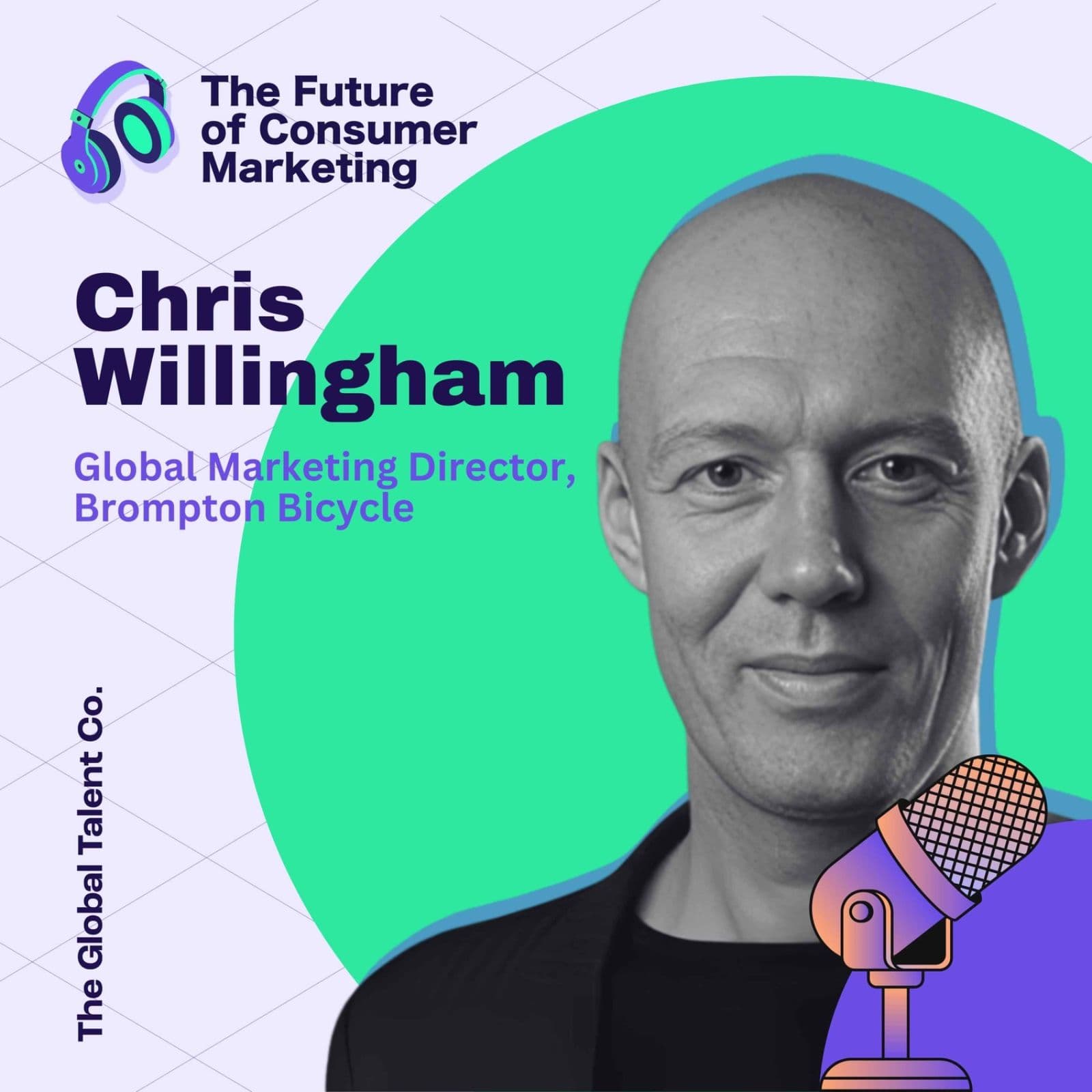
Chris Willingham, Global Marketing Director at Brompton Bicycle (joined ~1 year ago); previously worked across countries and at leading agencies (also references experience with PlayStation and Nike).
Key claims
Brompton’s success comes from “beautifully simple” engineering and aesthetics; in China it functions as a lifestyle/status accessory. Brand positioning is “Life Unfolded,” centered on the emotional moment of unfolding and riding. Customer journey can take up to 2.5 years; marketing must be benefit-led and consistent globally. Electric is ~20% of sales now, rising fast (e.g., Germany ~60%); Brompton is countering China copycats by doubling down on heritage/quality.
Notable examples
G-Line all-terrain electric demand “crazy”; Brompton World Championship events in London and China; 10 owned stores, 35 licensed, ~1500 dealers; focus on improving unboxing and in-store consistency.
Guests
Chris Willingham (main guest). Roman is the host/interviewer.
Written by AI. May contain mistakes. Listen to the episode to check what was said.
Chapters
Tap a time to open that second in VOOverview of Brompton Bicycle
0:45 to 1:50
Discover the unique features and history of Brompton Bicycle.
“Well, Bromson is a 50-year-old British business.”
Brompton's Global Success and Market Strategy
1:50 to 4:33
Explore the factors contributing to Brompton's global market success.
“So, I mean, the interesting thing is it is a global business.”
Transitioning to Electric Models
4:33 to 7:07
Understand Brompton's shift towards electric bicycles and its implications.
“weighing up, you know, what to bring from the past and reimagine for the future.”
Identifying Customer Segments
7:07 to 8:31
Learn about the different customer segments Brompton targets worldwide.
“So walk me through your customer segments.”
Impact of Urban Cycling Infrastructure
8:31 to 10:00
Discover how cycling infrastructure affects bicycle uptake, especially among women.
“mindful middle who perhaps are less into cycling versus the first two, but are still, I mean, they are the largest segment for us.”
Marketing Strategy and Customer Journey
10:00 to 14:00
Examine how Brompton tailors its marketing strategy to customer journeys.
“But I think line bikes and, you know, the electric higher phenomenon that's hit most cities has also been, you know, in some ways, it's a competitor to us, so I can't pretend it's otherwise.”
Understanding Customer Journeys
14:00 to 16:42
Learn how Brompton analyzes customer feedback to enhance their marketing strategy.
“Is there a moment where you could be potentially embarrassed on the street?”
Insights from Agency to Brand
16:42 to 19:18
Explore the transition from agency work to brand management and its benefits.
“the incremental gains that we're making month on month on month as we roll it out and get better.”
Priorities for Brand Coherence
19:18 to 21:52
Discover the key priorities for creating a consistent brand story at Brompton.
“I mean, what are some of the things now that you've been with for a year and you have seen and done and changed?”
Trends in Marketing Technology
21:52 to 25:05
Discuss the impact of AI and real-life experiences on marketing strategies.
“I think getting ahead of that, understanding that, and starting to sort of shape your organization and your tech setup for that inevitable wave, which is coming probably within the next 12 months.”
Show all 11 chapters
Advice for Future Marketers
25:05 to 26:08
Hear valuable advice on building confidence and sharing ideas in marketing.
“Bronx and World Championship in more cities to bring more communities together.”
Transcript
Automatic transcript. May contain errors.0:00This show is brought to you by the Global Talent Co, a marketing leader's best friend in these times of budget cuts and efficient growth. We help marketing leaders find, hire, vet and manage amazing marketing talent for 50 to 70 percent less than their U.S. and European counterparts. To book a free consultation, visit globaltalent.co. Hi, everyone, and thanks for listening into the Future of Consumer Marketing Podcast today with Chris Willingham, Global Marketing Director at Brompton Bicycle. Chris, it's a pleasure to have you. Roman, it's an absolute pleasure to be on the podcast. Chris, I mean, you've done so many things in your career, and now obviously you're the Global Marketing Director at Brompton Bicycle.
0:42Let's maybe start with telling and sharing with our audience what Brompton Bicycle is actually doing. Sure. Well, Bromson is a 50-year-old British business. We make all of our bicycles in London, where we've made them throughout that 50 years. It's a very high-quality product. It's made by hand. We have a wonderful and very simple engineering hack that our founder came up with in 1975 to create a very simple folding mechanism. So you can take your bicycle on planes, trains, You can stick it in the trunk of your car. You can store it under a desk. You can store it under a table at a restaurant.
1:20So it allows you to literally go anywhere and always sort of hack the congestion within a city. And it's proved very popular. We've sold 1.2 million bikes so far. And China is our biggest market, recently became our biggest market. The UK is our second biggest. Germany, Japan, and Korea are the other three in the top five. So we're a global business available in 47 markets around the world now and looking to grow in a pretty ambitious way over the next five years. Amazing. So, I mean, the interesting thing is it is a global business. How do you explain the success of Prompt? Like what makes it so special, so unique from your point of view?
1:59I think that there are a couple of things, really. The first one is just the simplicity of it. And it's beautifully simple. It's a very, very well-crafted product, and it's aesthetically very attractive, I think. A lot of people around the world, particularly in the East, buy it for the way it looks, not just the way that it functions. So in China, for instance, it's a lifestyle accessory. It's something that people like to show off, and they don't ride it to work like perhaps they do in London and other European cities. It's more something you ride at the weekends. Is it a status symbol? I think it probably is, yeah.
2:37I mean, that's certainly how it's seen in China and Korea and Japan, and increasingly in other markets as well, because there are now so many bikes in that space. The Brompton is the original, it's the best, and it's a statement that, you know, you've got taste. You're a discerning individual when you purchase a Brompton. Interesting. I mean, you've been with the company now for a year. I always find it extremely impressive. I would say legacy players reinvented themselves, you know, always challenged, you know, the product, but also the customer segments that they go for. So would you be able to share a bit how that process worked with Brompton?
3:16Yeah, sure. I mean, I think every successful brand should have one foot in the past and one foot in the future. And, you know, we're constantly drawing from our heritage, from the DNA of the business as it was set up by Andrew Ritchie in 1975. So it's got an element of his personality stamped across it. So his engineering genius, his incredible attention to detail, his slight eccentricity, which gives us a very interesting personality as a brand. So there's that. But also, you know, we're very focused on what next. And the world is moving fast and mobility solutions are moving fast. and you've seen the advent of electric vehicles, scooters, bikes.
4:04So the Brompton lens is now very much on the next evolution of our electric product and creating a really beautifully simple electric bike that folds very seamlessly, that is lightweight and that can be portable in the way that the non-electric version is. So very soon we'll be launching our next iteration of Brompton electric with more very exciting plans in the pipeline over the next couple of years. So it's weighing up, you know, what to bring from the past and reimagine for the future. So there are still the values of the business. There's still some aesthetics that will never change the shape of the bike frame and the way that we show up as a brand in all of our touch points, you know, with color, with flair, with a bit of eccentricity, but also looking at the future and learning and trying to get ahead of the competition, be ahead of the game.
4:57And yeah, that's it in a short nutshell. How difficult was that shift to electric, both from a brand, but also just from an operational perspective? Because I mean, it's probably easier than for the automotive industry, but you know, how tricky was that? How much of your business is now electric? It's about 20 % currently, so not much, but it's growing like weekly. We launched a new product called the G-Line last year, which is an all-terrain bike, so much more versatile than the traditional Brompton. So it's one that you can take on gravel paths and, you know, out in the countryside as well as right in the city.
5:32And the electric version of that has just gone crazy. I mean, we are selling that at a rate that we never anticipated, which is wonderful. And I think just shows the demand is there. And so now that electric system is being pulled through into our other lines. So the C line, the P line, and the very lightweight titanium T line. And that's very exciting. So demand is there, particularly in Europe. So in Germany, I think the electric is now 60 % of the market. Fast catching up in France and the UK as well. In the East, it's a bit different. China and Japan and Korea have not quite embraced electric in the same way.
6:10There are some issues around safety. And I think - Which is interesting because in the automotive, they're basically leading when it comes to electric, right? Yeah. Oh, it's crazy. It hasn't happened in bicycles banks. I think it's just about to happen. It's about to tip. It's been amazing for me traveling to China every few years just to see how fast things move there. And, you know, you don't see many Teslas on the road now. All the cars in China are home brand electric vehicles. And we've got to be very wary of that as Brompton. You know, we are the preeminent folding bike in China. But there's a lot of copycats, a lot of bona fide competitors coming through, which are homegrown.
6:49And we are very conscious of what's going on in the car market and very focused on not allowing that to happen to us in China. So we're doubling down on our heritage, our expertise and our quality as a means to keep front and center for discerning Chinese purchases. Interesting. So walk me through your customer segments. like who are your ideal customers and is that the same around or do you have you know different type of customer segments depending on the geographies it does vary and it's a bit stereotypical in some ways i mean i think the key segment for us we call the go-getters who are a group that are very tech focused want to be at the front end of new trends are very brand focused and they want things early.
7:35They are the early adopters. But things, they like quality. They don't want second best. They really want the thing that is defining a category. And that is a very strong cohort in China, especially. So about 40 % of that segment globally is Chinese. And I think we see good numbers in UK, Germany, but it's really China that's a key segment there. The next one is a group of people who are very focused on research. So we call them the strategists. They spend a lot of time looking at reviews. They spend a lot of time assessing competitive landscape, looking at all the brands, probably taking test rides before they reach a decision.
8:17So their customer journey is much longer to purchase. And they tend to be more European focused. So the UK, Germany, France have greater numbers there. So those are our two key segments. And then the sort of the mindful middle who perhaps are less into cycling versus the first two, but are still, I mean, they are the largest segment for us. They're pretty consistent across the world. There's a second sort of element to this, which is also attracting more female riders. We're more male, And that's traditionally, Brompton has been a male bastion in the UK. But that's changing now, which is great, particularly in China and the other Asian markets.
8:58And we're really trying to accelerate that change in Europe and the US as well and bring more female customers into our brand. And I think it's fair to say into cycling more generally. I think women do have more safety concerns than men. And we're lobbying local governments, federal governments, to try and change the infrastructure and make it safer for everyone, but especially for women who perhaps don't want to venture out on a bike in the same way that men do. That's an interesting conversation. Do you see generally the uptake of bicycles, but also female uptake increasing in cities where there's way more bicycle-only roads, where traffic is safer, so to say?
9:39Because I think there's been big changes in Paris and Netherlands, some cities in the UK and Germany. So is that something where you see direct causality? We do, and long may it continue. It's brilliant to see. I mean, Paris has been perhaps the leading edge in terms of the very dramatic changes it's made, but it's happening across most of the European cities. But I think line bikes and, you know, the electric higher phenomenon that's hit most cities has also been, you know, in some ways, it's a competitor to us, so I can't pretend it's otherwise. But it's also opened up cycling to a new cohort of people who understand that it is a better way to travel around a city than jumping on a subway or on a bus.
10:21You know, it's a much, it's, you're free. You can move more easily. You're in control of your movement. And for us, it's opened up the market and therefore we see it as beneficial because a proportion of those individuals will come through and buy Bromptons over the course of time. Okay, interesting. I mean, you briefly talked about the different customer segments that you're catering to, and obviously your messaging and probably also marketing charts are very different. How do those big, you know, also customer journeys and decision-making journeys inform your overall marketing strategy, your growth strategy, your communications strategy?
10:59Well, I mean, there's two layers to it. I mean, the top layer, which we've just been spending a lot of time on is finding a single long-term brand positioning that can resonate around the world. And that's been a real challenge because the use case in the East and the West is very different. Use case in the West has been very much functional, getting from A to B. In the East, as we've discussed, it's much more of a sort of lifestyle accessory. So to bring some glue across the world, some strategic glue and also visual and tonal glue has been a challenge. And we found, I think, a really good solution and we're telling the story at the moment of living a life unfolded which is obviously talking to the bike and there's product truth in that you know the moment of magic happens when you unfold the bike and the final click of the product into place that's when the smile comes on the face that's when people really appreciate the Brompton is you know when you get on it and you begin that ride and you're looking forward to it and the you know the stresses you, it's very good for your physical health, and you free yourself up when you're unfolded.
12:04You're more open. And that's a human truth that resonates everywhere, whether you're in Shanghai or Stuttgart, that lands. The research was overwhelmingly positive around that concept. So that's our brand positioning, and it's very benefit-led, which for an engineering business that's been very focused on products and features for a very long time, is a bit of a shift for Brompton. So that's how we're setting ourselves up at the top end. But then we have obviously been looking very much at sort of segment centric strategies that will resonate with those smaller groups, but they do ladder back up to life unfolded.
12:44So it's all benefit led and it's much more sort of micro focused in terms of, you know, our customer journey is a long journey. we've understood from research that it can be as long as two and a half years from a person first understanding what a Brompton is to actually buying one. So going through that process of mapping the customer journey, which hadn't really been done to any degree of detail before I arrived, has also been a real eye-opener. So just understanding not just the sort of more functional side of the journey, but the emotional side of the journey, understanding what that happiness curve looks like at each stage of the journey from, you know, the first understanding of what Brompton is.
13:29Usually that's from seeing it on the street or talking to a friend who's a Brompton owner, going through the research phase, then going to a dealer, perhaps booking a test ride, understanding what the financial implications are, looking at the various ways that you can acquire Brompton. We also have a hire package, a subscription package, you know, you can buy through various payment channels. So it's, you know, going through that journey, and then, you know, the wait for the product to arrive, the unboxing experience, the first ride, is the fold going to be difficult? Is there a moment where you could be potentially embarrassed on the street?
14:08Understanding all of these moments, and then, you know, taking a messaging matrix and applying it across each journey for each segment is how you feel about that. And were there any specific insights where you said, wow, we didn't have that in mind, and that's why we changed our marketing strategy in certain ways? Yeah, I mean, quite a lot, I think. I mean, we're a brand that's really learning a lot about ourselves, about our customers all the time. So we're constantly in the market talking. We've got a very large community of Brompton fans who give us feedback unsolicited, which is wonderful.
14:45So we're listening a lot and we're tweaking as far as we can the journey and just seeking to improve the overall experience. I mean, we have this world-class product, but to be quite honest, some of the experience around the product isn't as good as it could be. So, for instance, the unboxing moment, we're really, I think, focused on improving that. This is a product that is of high quality, high craftsmanship, but the way it arrives is, you know, in a pretty uninspiring box. And the experience of unboxing it is not as elevated as it should be. So that's an area of focus. That first moment of, should be a moment of celebration and excitement, and it's not there yet.
15:28So, you know, moments like that we're seeking to really dive into and dramatically improve as we sort of map out the journey. I think in-store as well, you know, we've got 10 of our own stores in key cities around the world. We've got 35 licensed stores and then about 1500 dealers. That varies enormously from one place to the next. So trying to bring some consistency in how we introduce people to the brand, how we tell the story of Brompton, which is a very seductive story. That's also been a big focal point, just helping us, our teams and our dealer partners tell a more consistent story about why Brompton is such a special brand.
16:09why it's worth justifying that price point, which is a high price point, but understanding of it is a product that's so well made, it will last you forever, which is not well understood. We have Brompsons on the road, which are 50 years old, and they're still functioning perfectly well. So there's so much rich storytelling that we need to find precisely the right moment to sort of sprinkle into that customer journey, into that messaging matrix, and optimize. So we're going through that process. It's a long process. We're not a big team, so we're biting it off in chunks at the moment, but it's really rewarding to see the team respond to it so positively and to see the incremental gains that we're making month on month on month as we roll it out and get better.
16:53Yeah, absolutely. I mean, you have a very interesting and remarkable career before Brom. You just started a year ago. You've been in so many different countries. You worked there for quite some time and with some of the leading agencies, right? What are some of the things that you feel you were able to take from the agency side into kind of the operational execution side now running marketing? And in hindsight, would you, you know, have wished to move to the brand side earlier or are you happy the way it turned out? It's a really good question. I think if I had my time again, I would have done it earlier.
17:28I think agency life is wonderful. got harder over the past few years as agencies have become less relevant perhaps. But I think there's a lot that you learn in agency world in terms of being reductive, simplifying and sharpening and getting down to one absolute nugget of information that you present to the customer in a way that I don't think brand organizations quite understand. So that strategic rigor and And the understanding that every customer's not thinking about your brand, you know, they've got a million other things going on in their life. You're very lucky if they notice your brand, let alone think about it.
18:12That realization that you've got to work really hard just to get on their radar, just to be noticed. Because if you're not noticed, everything else is irrelevant, totally irrelevant. Just that. And I think that's something that agency life really drums into you quite early. and bringing that over to the brand side has been quite beneficial. But what I love about being on the brand side is, you know, agency people get to see the superficial level of the brand. They get to see the surface. They don't get to see what happens deeper under the surface. And now I have a role which enables me to see right the way across the business from, you know, from product development, very early innovations and being involved in that development.
18:55And it takes years for a new Brunson to be developed. So that's tremendously exciting through the production process, through the testing process, through taking it to market, through retailer relationships, all of the wonderful stuff that agency people tend not to be exposed to. That full sort of view of how a brand plays a role in lives, both internally and externally, is just incredible and very rewarding. Okay. Interesting insights. I mean, what are some of the things now that you've been with for a year and you have seen and done and changed? I mean, it's always hard to get into a company that's been around for a long time and say, you know what, I want to switch things around.
19:39So I guess there's been also maybe some internal resistance, but you can talk about that as well. But what are some of the, you know, accents and some of the, you know, points that you you want to double down on in terms of, you know, marketing mix in terms of growth strategy that you're very passionate about? I think the thing that's been, well, there were three things coming in, I think, were my priorities. One was to create this very coherent and consistent brand story, which is what Life Unfolded is. And that is something that will last for many years and that we can really, you know, reinterpret in so many ways.
20:15So it's very exciting. The second thing was, I think Brompton's a very ambitious company, and it's occasionally fallen into the trap of trying to do too much with too few resources. So one thing I talk about quite a lot is fewer, bigger, better. So let's just focus in on the things that really matter and make those things fantastic. There are other things that occupy too much of our time and our attention and our energy that we need to put to one side, either put them on the shelf or just kill them in order to focus on what really matters, both to develop the brand and also to drive commercial success.
20:56So I think that's been really important going in point. And I think that's something that's resonated throughout the organization. Everyone's saying, I think we're on the same page. Let's try and reshape how we go to market. And then the third thing is, yeah, I think we were quite good at some things. We didn't have necessarily the systems, the expertise, the technology to really deliver like a fantastic CRM program to really deliver on an ambitious media strategy. We weren't quite geared. We were doing okay. So just getting in and being able to sharpen those things up without having to spend much money as well, because we don't have a great deal of money to spend.
21:40Bringing the customer journey thinking to the table, getting people on board with going much deeper into that customer journey. Those are the things I think I feel happiest about in my first year okay interesting talking about kind of more general trends in the marketing space what are you thinking are kind of some of the more undervalued bigger trends when it comes to marketing technology that most brands are not seeing on their radar that should be well i mean we can't really have a conversation without talking about ai can we and yes that is something i'm trying to grapple with and trying to understand how best to step into when we use AI in a less than systematic way at Brompton, but just hearing from some individuals about how the next iteration with the advent of agents, both for brands and for the individual consumer, are going to completely change the landscape.
22:39I think getting ahead of that, understanding that, and starting to sort of shape your organization and your tech setup for that inevitable wave, which is coming probably within the next 12 months. I think that's front and center. That's one of the things that I'm very focused on. The other one that I'm really focused on, which is at the opposite end of that, is developing more of an in-real-life strand to our marketing plan. We're an in-real-life brand, or a bicycle. And we need to be, we're best experienced, you know, in the streets and on the gravel parts of the world. And we have one thing at the moment called the Brompton World Championship, which is a fantastic moment when people from all over the world come together.
23:26Actually, we have two events, one in London, one in China, and it's a race and everyone dresses up. It's a bit eccentric and it's a bit nuts, but it attracts people. They fly in from all over the world. And it's the community of Brompton that comes together. And then you realize when I first went my first one. It's only then that the penny dropped. There are super fans out there who love this brand more than any other brand I've ever seen. And I've worked with PlayStation. I've worked with Nike. I've worked with companies. So I've seen brand love and harnessing that love and that passion for the brand is something I'm really focused on and not taking those people for granted, making sure they feel like they have a role in how the brand evolves without stepping too heavily on them because they've already created their own communities.
24:15So it's a fragile thing. What you don't want to be is too overbearing as a brand. You need to just help where help is needed. But helping to nurture those communities, give them more connection, give them more experiences that they will value and it will bring more people in. I think that's another focal point for me. If the world is going to change dramatically with the advent of AI agents and how they show up and how they change the way that we interact with brands, the way that we buy, where we basically pass on the responsibility to a bot, there has to be another side to that, which is the brand experience side, where people can still connect with brands in a real life way.
25:00And that's, I think, something I'm really focused on, creating more events like the Bronx and World Championship in more cities to bring more communities together. I think that's going to be a big focus. Amazing. Last question. If you could give one piece of advice to younger, ambitious marketing self, you know, aspiring CMO, what would that be? What would you have done? Oh, I think there are a couple of things, if I may. The first one is I think I came in through a very unusual route. I wasn't a university student. I got a role at Saatchi and Saatchi in London in the production department doing a very menial job.
25:39And I think for several years, I didn't think that I was as good as the guys who come in from the top universities. And there was, I would stay silent in meetings, even though I was having ideas. And I wish I had been more vocal and I wish I'd shared my ideas more in that period of my career and be more confident in the ideas that were flowing through my brain. But I wasn't confident enough to share. And I felt like, you know, I left some good stuff on the table there that never saw the light of day because I just didn't have that confidence within me. So building that confidence and being, you know, there are no wrong ideas.
26:15don't ever feel like you can't share something no matter what company you're in whether you're with really senior execs and you're the most junior person at the table but good idea is a good idea wherever it comes from be confident and share it and give it the best shot you know because it might be the winning thing amazing great piece of it yeah yeah chris thanks so much for coming on to the show it's been a big pleasure oh and actually you and brunton all the best thank you roman Great to be on. Thank you for the invitation.
From the publisher
In this episode of The Future of Consumer Marketing, host Roman Kirsch interviews Chris Willingham, Global Marketing Director at Brompton Bicycle. Brompton is a 50-year-old British folding bicycle company that has evolved from a functional transportation solution into a global lifestyle brand and status symbol. With 1.2 million bikes sold across 47 markets, Brompton demonstrates how legacy brands can reinvent themselves while staying true to their core DNA. Chris shares how they're navigating the shift to electric, creating unified global messaging across diverse market use cases, and building authentic community experiences that foster unprecedented brand loyalty.
Topics Discussed:- Building global brand consistency when use cases vary dramatically by geography
- Transitioning from product-feature marketing to benefit-led positioning
- Mapping complex customer journeys that span up to 2.5 years from awareness to purchase
- Balancing heritage authenticity with future innovation in electric mobility
- Creating premium unboxing experiences that match product quality
- Developing community-driven events that generate genuine superfan engagement
- Strategic focus through "fewer, bigger, better" resource allocation