In short
Get Nourished’s approach to building products that evolve with customers, driven by 3D-printed personalized gummy vitamins and a retention-focused subscription model.
Guest
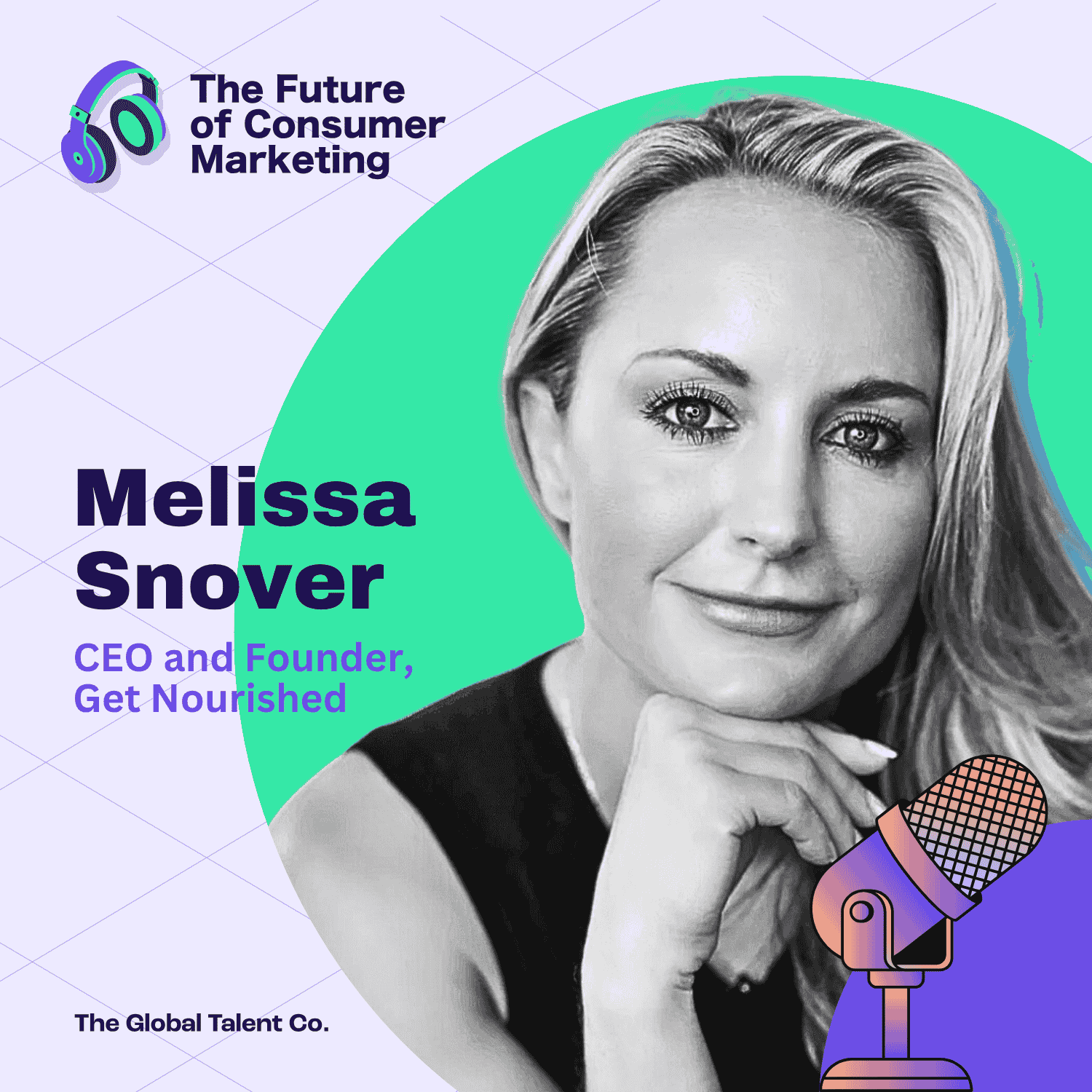
Melissa Snover, founder and CEO of Get Nourished. Serial entrepreneur; previously built Goody Good Stuff (gelatin-free gummy candy), grew to ~35,000 stores in under three years, and sold to Cloetta in 2015. Later founded Remedy Health (2019), transferring IP and building FDA/FSA-compliant 3D food printing.
Key claims
Traditional supplement manufacturing has long lead times (2–3 years) and high minimum orders (40-foot trucks per flavor), slowing innovation. Get Nourished uses a recommendation engine trained on 10,000+ clinical trials (now 100,000+) to dose seven nutrients. They report 90%+ annual customer retention because gummies are “delicious,” sugar-free, allergen-free, and only include clinically validated therapeutic doses; stacks are updated every ~3 months as needs/goals change.
Notable examples
UK launch via media-rich “show and tell” videos; AI built in-house before mainstream AI; retail expansion through 20,000+ pharmacy chains in Europe (Boots, Holland & Barrett, Ocado, TJX). New “NVR” printer: 352 nozzles, ~500,000 gummies/day. Planned personalized pet treats based on customer surveys (about 70% want functional personalized dog treats).
Written by AI. May contain mistakes. Listen to the episode to check what was said.
Chapters
Tap a time to open that second in VOIntroducing Melissa Snover
0:08 to 1:15
Andres introduces Melissa Snover, founder of Get Nourished, and her innovative company.
“We connect companies with world-class professionals who bring skill, reliability, and global perspective to every role.”
Melissa's Journey and Background
1:15 to 4:55
Melissa shares her entrepreneurial journey and the creation of her first company.
“I can start with a little bit of background about myself.”
Challenges in Traditional Manufacturing
4:55 to 8:00
Melissa discusses the limitations of traditional gummy manufacturing and the need for innovation.
“This printer originally made confectionery because I was very confectionery focused at that time and was very successful in doing that all over the world.”
The Birth of 3D Food Printing
8:00 to 9:30
Melissa explains the development of her 3D food printer and its initial applications.
“And now we have over 100 ,000 clinical trials that power that recommendation.”
Personalization in Supplements
9:30 to 12:30
Discussion on how Nourished offers personalized supplements and the reaction from consumers.
“And then so you're offering convenience.”
Navigating Market and Regulations
12:30 to 14:00
Melissa addresses market competition and regulatory challenges in international sales.
“While I have thought maybe we can just get an AI agent to submit all of these forms on our behalf, I do not think that the regulator would really look kindly on us submitting 60 billion registration requests in one day.”
Evolution of Get Nourished
14:00 to 17:08
Learn about the growth and strategic decisions behind Get Nourished.
“Because I know you probably started this pretty much by yourself, but now it feels like it's becoming something so much bigger.”
Effective Marketing Channels
17:08 to 19:46
Discover the marketing strategies that work best for Get Nourished.
“And that way you can always get the renewed talent that you're mentioning.”
Agility as a Competitive Advantage
19:46 to 21:45
Understand how agility helps startups compete against larger brands.
“our number one referral to conversion is our existing customer base wow that is okay so it's marketing within the same consumers you have.”
Future Technology and Innovations
21:45 to 24:20
Explore the ambitious technology and innovations planned for Get Nourished.
“What is your number one priority and what is like the main goal of what's to come?”
Show all 13 chapters
Personalized Pet Treats Concept
24:20 to 27:08
Learn about the plans to create personalized treats for pets.
“innovation is so fast, it's almost risk-free.”
How to Learn About Get Nourished
27:08 to 28:04
Find out how to explore and order products from Get Nourished.
“And that is what I feel is allowing you to do so much so fast and at such a big scale because you're talking to me about machines that are nowhere else in the world and trying out products that are so crazy.”
Exploring Get Nourished: How to Access Their Products
28:04 to 28:42
Learn how to find and order products from Get Nourished online.
“in some other countries, but how could they go about learning about Get Nourished?”
Transcript
Automatic transcript. May contain errors.0:00Hey everybody, and thank you for tuning in. My name is Andres Figueira, and I'm going to be your host for the day. This show is brought to you by The Global Talent Company. We're helping fast-growing teams hire exceptional remote talent from Argentina, South Africa, and beyond. We connect companies with world-class professionals who bring skill, reliability, and global perspective to every role. So if your team's looking to grow with proven remote talent, head on over to theglobaltalent.co and see how we can help. And today with me here, I have Melissa Snover, founder and CEO of Get Nourished, a company that uses innovative 3D printed technology to create personalized nutrient gummy stacks to revitalize your mind and body.
0:40So, Melissa, how's it going? It's a pleasure to have you here. I'm doing really well. Thank you so much for having me. I've been looking forward to it. For sure. Now, we really are looking forward to this episode as well, because when I was looking at what Get Nourished is, Melissa, it really sounds like a very out-of-the-box concept. And I had not seen anything in terms of 3D printing that does something like you guys. So I was honestly very interested in what you are doing and the whole story behind Get Nourished. So in order to give the audience a bit more context, could you tell us how everything started?
1:15Sure, absolutely. I can start with a little bit of background about myself. I'm a serial entrepreneur, certainly didn't plan it to be that way, but I started my first company when I was in university and have never been employed since. So I think my last employed role was when I was in my teens as a waitress. My previous consumer business was called Goody Good Stuff. Being a vegetarian, way before there was a whole aisle for free from and vegan food, I really struggled finding gummy candy that was gelatin-free. And that was something that was really one of the only things I missed when I went vegetarian.
1:51And so I decided that I would try and create a recipe on my own. I was successful in doing that. And then I had to go knocking on the doors of very large manufacturers in the confectionery world and was lucky to get one of the largest, if not the largest gummy manufacturers in the world to accept our product as a project. And I got to learn how to make gummy from some of the world's leading experts in gummy manufacturing. I then grew that brand to about 35 ,000 stores in under three years. It was one of the fastest growing products in the market and was touted by several very large competitors and actually ended up selling the business to Cloetta in Sweden in 2015.
2:35When I came out of that process, that was that you could do a whole podcast on selling your business, so I won't go into that. When I came out of that process, I had learned a humongous amount, but one of the biggest things that I had as a hangover and a niggling frustration that just would not stop in my mind was the lack of agility and flexibility in mainstream manufacturing. So these machines that we were making my products on, they were the best in the world, best money could buy. They were incredible at volume. They're incredible at speed and quality. But if you wanted to change anything, if you wanted to make a special flavor for a unique market, or if you wanted to do a different color because you had a different set of regulations in a different country, or you just wanted to create something different for excitement and innovation, the lead time to make a new item was around two to three years.
3:25and the minimum order quantities were 40-foot trucks of each flavor. So imagine four lorry loads of gummy candy per flavor that you had to make in order to turn the line on. So you can imagine that those restrictions and that time drag on new product development can be really damning for innovation. It means that when you start a new product development project, it's a really good idea. It's trending. In three years' time, it will no longer be trending. You're bringing the product to market way too late. And that level of volume you have to hit in order to turn these traditional manufacturing systems on is really prohibitive, of course, for challenger brands.
4:06But even for the big guys, you will notice in all markets now when you see seasonal products, they're not usually new products. They're just the same product you normally buy with a different packaging on the outside. So you'll get like Halloween packaging, but it's still the same Snickers. It's still the same Hattie Bow. it's still the same product on the inside. And that's for that reason. And so at that stage, I had never, ever used a 3D printer in my life. I decided that I wanted to see whether this technology would be possible to modify and optimize and get it to make food products. And so I bought 3D printers off the internet, took them apart, put them back together, taught myself G-code.
4:47And in about six months, I had designed, built, and patented the world's first FDA FSA compliant 3D food printer. This printer originally made confectionery because I was very confectionery focused at that time and was very successful in doing that all over the world. Dubai Mall, Hong Kong Duty Free, Universal Studios, Warner Brothers World, Dylan's Candy Bar. It was really fun. But I realized that actually this level of personalization and the power that this technology had would be able to be much more impactful and beneficial to mankind if we pointed it at health. And so that was when I decided to start Remedy Health in 2019.
5:30I transferred my IP from the previous business into the new co, raised the highest ever female founder seed round in UK history, and built our first factory to go live with Nourished, the world's first and only authentically manufactured personalized gummy vitamin in 2020. wow, Melissa, that's an amazing story. It's just so cool. And how it all started to what it pivoted and now to what it actually is. I really love how it started from like a passion if you wanted to get into the confection of all these different things. But it's the root of the problem is what I feel was very interesting because it really is a big commitment needing 40 foot trucks need just to have one flavor and try it out.
6:13A question I do have is once you started Nourished and you already had this idea that you wanted to make a bit more of a customized formulas with nutrients and things that people may need, did you have to gain their trust in your way of making this? Were people skeptical about 3D printing the products that you guys make? Or was it something that was more of a given and very well received due to the new technology being applied in different ways? Yeah, I think you always get early adopters are usually pro tech, right? So early adopters are the people that are like, I want new, they love tech, they're super excited about it.
6:53They are not scared. They're actually fascinated and more interested. But then you will always have other parts of the market and the consumer set that are a little weirded out by it. So it's all about, in my experience, it's all about show and tell. So when we first launched, we did a ton of really media-rich, video-rich content to show the products being made with 3D printers. And it's quite mesmerizing. It's very beautiful. They're rainbow-colored stacks. And that allowed us to really win over the customers in the first market in the UK. I think people were way more skeptical around our recommendation engine.
7:31So in addition to building the 3D printers, we also developed our own AI recommendation engine where we took 10 ,000 clinical trials, manually tagged them. I had to read almost half of them and manually tagged them to be able to create a weighting matrix that would produce the recommendation of the seven nutrients at the correct dosages that were best for the consumer. Today, we use agents to increase the breadth of knowledge within the data lake for the AI machine learning tool. And now we have over 100 ,000 clinical trials that power that recommendation. You have to remember in 2020, AI was still a very obscure concept.
8:10People in the mainstream market didn't understand it. Now people are like, oh, that's so great. Are you building on ChachiBT? No, we actually built it ourselves way before that was possible. But yeah, now people are like, yay, AI, I love it. I want everything I do to have AI sprinkled in it. So now that it's trending, they want it. But at the beginning, it was a bit weird. I get that. And Melissa, in terms of competing for attention of your consumers in a market that I feel could be mind-crowded with supplements, do you have a different proposition other than the fact that you can make these supplements tailored to whatever the consumer needs with the customizations?
8:46But is there anything else that you've had to cut through in order to gain people's attention? Yeah, I think we try and develop products that are better in every way than the current market offering. And I think that is what Nourish Jays. So, you know, what was the alternative prior? It was buying, you know, five to seven individual bottles of pills, choking them down in the morning, getting subpar absorption rates from pills if you don't take them with food, it not being convenient, it being quite annoying that you have to constantly try and reorder them. Some come in 60 days, some come in 30.
9:20And then, of course, the cost. So if you buy seven of our individual nutrients at the same quality and dosage level, you will spend around three to five times more than the Nourish concept. And then so you're offering convenience. You're offering personalization. But then I think the thing that makes people stay and we have a over 90 percent annual retention rate on our customer base, which is absolutely off the charts. Good is that the products are delicious. They are really enjoyable. They are sugar free. They are all natural. They are free from allergens. They have only therapeutic efficacious dosages.
9:53So we do not include ingredients unless we can include the therapeutic clinically validated dose. And they look forward to their nourish stack. And I think the other thing that we've been able to do, which very few brands can do, is we follow a customer through not only this month, but we follow them through the year. So we encourage our customers to change their stack or at least check back in. every three months as seasons change, your exercise habits, your eating habits, your exposure to sunlight changes. And so actually a lot of differences in your nutrient requirement can happen. Also your goals change.
10:30You might start training for a marathon. You might have gained a little of extra weight, whatever it is we need to know so that we can keep updating your stack. And then several of our, not several, many of our customers have been with us for multiple years. And as they're getting older, we can change their stack in order to follow them through different phases of their life from an aging process standpoint as well. So I think in many cases, you have a product when you are a certain age and you grow out of that product and then you go to something else. The Nourish concept is really one of the only concepts that allows the customer to stay with us and we can actually just continually change their product for them as they grow.
11:09Exactly. It's like a life companion. You'll never stop needing the customizations because you'll always be needing something different. That is so cool. And Melissa, do you guys only cater to the UK market or are you able to ship internationally? Because being a health supplement, I imagine there must be certain regulations if you want to sell this somewhere else, right? Yeah, absolutely. So the UK is obviously our home market. So that was always first, but we also sell it in the United States, Japan, and we are currently working on opening up Germany and the Middle East. There are tons of regulations on our industry.
11:43We are an FDA-audited GMP FSSC 22 ,000 certified facility, which are all the highest level certifications that you can get. So we have the same level of certification and in some cases better than people like Procter & Gamble, Unilever, any of them. We invested the time, the energy and the people to ensure that we have the ability to trade in all these different markets. But there are still certain places, for example, France, where we currently sell products in retail, but not online. Because in France and many countries in Europe, you have to actually register each individual combination. And that's not that big of a deal if you have a range of 12 products, 13 products, whatever.
12:29But we can make 60 billion, six zero billion combinations. While I have thought maybe we can just get an AI agent to submit all of these forms on our behalf, I do not think that the regulator would really look kindly on us submitting 60 billion registration requests in one day. Because AI makes it possible we could do it. But I'm thinking that is not the first impression that we should make with the regulator. I think that they would be quite pissed off. Yeah, so I think we are currently in the process of developing and launching a new concept, which I can't go into fully because it's under embargo.
13:04But this concept would allow us to bridge the gap for those countries with a very curated, personalized, guided experience. but a set of products around 55 different items that would then be available for them to purchase both in retail and online and could be registered with local authorities in countries where the personalization, the full customization is not really possible with the regulatory framework that stands today. Okay, so there is a workaround. There is a workaround because when I'm hearing you speak, I'm just imagining and thinking, oh my goodness, when would this arrive to Argentina since it's so nice.
13:39I know my girlfriend will love this because she would totally go in and get something customized and then just start using your products because that really is a super helpful way to get all the supplements that you need without having to have a headache and being able to change it. It's just so crazy. And also, Melissa, I would love to know as well, how's your team looking with Get Nourished? Because I know you probably started this pretty much by yourself, but now it feels like it's becoming something so much bigger. So how big is Get Nourished and with how many people do you count with? So, yes, you're absolutely right.
14:12So currently we started, I started on my own, of course. As soon as I had a proof of concept, I hired four people. Three of those four still work with me and are now my C-suite. Some of my C-suite. The business has started in a one-man office in a shared office complex. We now have three of our own buildings, two factories and one commercial business. and warehousing logistics and so on. We have 119 people today. And so, yeah, the business has grown quite a lot. We're based in Birmingham in the Midlands of the United Kingdom. And it was a really strategic decision to put the business here. We have eight universities within 10 miles of our Alpha site, which is where I am today, which offer graduate degree programs.
14:59So post-grad programs, master's, PhD level programs in advanced and additive manufacturing. Eight. Super unique in the world. Eight universities within 10. Yeah, because honestly, that was my biggest concern was I was like, additive manufacturing, it's cool and I love it, but it's not something that is like basic curriculum for university. And so I really wanted to make sure that I put us in a place where we would have a renewing cow and pool of people and also for people listening that are not aware or familiar with, the Midlands is really the manufacturing heartland of the United Kingdom. We have JLR's headquarters, Jaguar Land Rover headquarters, Cadbury's headquarters is literally three miles down the road from us.
15:46So we also have a really rich talent pool of people in manufacturing and food, which means that we have access to local people in a really strong, diverse set of different qualities, experience levels, and of course, education. So that has worked out really well for us. I do not think we would have had the same rate of success with building our team if we had put the business in a different location. And certainly, everyone always says, why are you in London? First of all, you should never, ever do manufacturing in London. That's absolutely insane. We have a 50 ,000 square foot factory. Can you imagine the cost of that in London?
16:27It would be astronomical. We would have run out of runway several years ago. And yeah, so I just think that's crazy. Nobody should do that. But more importantly to that, the quality of life, the cost of living in this area is just so much less. It's like a third less than London. So you just have people who are, there's a lot more green space. And although I love London and I have lived there for several years, I think for the balance that we want our team to be able to have in their life, this is a really great place. I love that you thought about everything and it's a super savvy financial decision doing that in Birmingham.
17:02But also I love how the fact that you chose being in the midst of so many universities. It's like a cradle for knowledge and innovation. And that way you can always get the renewed talent that you're mentioning. and the talent also gets experience in a company of doing something they like. And it's like a win-win situation for everybody. And that's just so cool because you're also helping out the people from there. And that's nice. And also, Melissa, in terms of the marketing you do with Get Nourished, what are the channels that are working best for you guys right now? Like, where is the place where you get the most conversions or that you feel is working best?
17:37Yeah, we've gone through a whole cycle of different marketing mixes throughout the business's journey, I think. And you have to do that because when you are brand spanking new, you have to assume that no one knows who you are. They're not searching for you. They do not know to search for you, especially if you're doing something really different. If you're doing something that's a me too, me too, but better, then you could potentially do it in a different way. But that has not been our journey. I think when we first started, we had to do humongous amounts of out of home, actually, because online alone would have been astronomically expensive.
18:13So we did tons of advertising on the tube in London, on all the public transport throughout the UK, billboards. Our strongest pillar has always been PR, always. We get PR is about 400x more impactful for conversion than a PPC ad. So when someone reads about us in an editorial piece in Forbes, Fast Company, Health for Women, Health for Men, Refinery29, whatever. The number of people that come to site and purchase on first visit is so much more efficient and optimized. Now, obviously, it's not easy to get PR. You have to earn it. And certainly, editorial PR has to be newsworthy. But obviously, so many things in our business are very innovative, very interesting so that really helps us when we and then as soon as we got out in the market and we did our first PR blast we did do PPC and for the first two years PPC was a humongous amount of our spend on all the social platforms and on search but now we do not do any PPC zero zero dollars I've spent zero dollars on PPC for the last 20 months and we do now yeah you can't everyone's are you serious yeah i'm really serious now we focus on partnerships we focus on creator content we focus on organic social which is not the same as ppc and we built up a decent following both myself and the brand on all of the major platforms and and then the pr is still key but our number one referral to conversion is our existing customer base wow that is okay so it's marketing within the same consumers you have.
20:00Yeah. And we have this thing, we have a loyalty program. So if someone recommends Nourish to their friend, they get a discount and their friend gets a discount on their first box, right? So if you're an ongoing subscriber and you recommend a friend, they get to say, were you recommended by someone? And then you say yes. And they put their name in. They get it. I think it's right now it's a tenor off your box and the person signing up gets a tenor off their first box. And so, yeah, it's highly encouraging to them. Oh my goodness. No, it really is. And if you're going to get a cheaper product for what you already like, and your friend's going to do it as well, it's like, why not recommend them and why not try it out?
20:36And that once they do it, they're hooked because I just feel this business is, I forgot the word for it. It's like, it's protected on all sides. I don't see a weak angle here because it feels like it's been so well prepared that you've thought of everything, Melissa. Certainly not everything at the beginning, but we are very agile. And that's your biggest kind of competitive advantage as a startup is you're going to compete against people with way more money than you, way more awareness than you, more resources than you times a hundred, but they are slow to change, right? And you can be extremely quick and you can see something happening and you can make a decision and it will be implemented immediately.
21:21And you do not need to wait and think about it. And in this day and age, that fast agility, pivoting, ability to pivot, to take data and take action on that data immediately is going to be a humongous leveler against these heritage brands. And in pretty much every industry, hardware is a little trickier because to build hardware is not so simple. But especially for digital things, it is key that you just respond, don't way. That's true. That's true. And Melissa, and I know you're going to tell us as much as you possibly can and maybe just keep some things that you can't say to yourself, but what is the plan for Get Nourished looking like in the next 12 months, like for next year?
22:01What is your number one priority and what is like the main goal of what's to come? Over the last, let's see, at the end of 2023, we started building a really ambitious new technology called the NVR. This technology is the world's first high-speed personalization line. It's, I think, also the largest 3D food printer in the world. It has 352 depositing nozzles, and it makes a half a million gummies a day. And we have been using this, so that's a lot. So that's, it's unbelievable. So our current, the previous printers, which we still use them, but they are different for sure, they make around 28 gummies every three minutes.
22:43So can you imagine the difference is astronomical? How much does the new technology make? 500 million? Half a million, 500 ,000 a day. And we built this with our bare hands. This kind of technology doesn't exist anywhere else other than in this factory. And we've been using that technology thus far to be able to expand into and execute on an omni-channel strategy, which I set as soon as I saw online became quite difficult with the diminishment of cookies. It's still possible, but it is a lot harder and it's very different. And I said, we need to find a way to reach customers in other ways. And the best way and the most profitable way to do that is if we can actually get paid to raise awareness.
23:24So if you can sell in a retailer, you are getting seen and you are getting paid. That's great. So we're trying to do that. So we have launched now in over 20 ,000 independent pharmacy chains across Europe. This year in the UK, we've launched with Boots, Hone & Barrett, Ocado, TJX, and I'm forgetting one, but that is some of them. And in 2026, we will continue to expand into more retail locations in those regions, but we will also launch in earnest in India. And we are hopeful that we will launch in the United States in retail as well by the end of the year. I'm currently in talks with multiple retailers about that and those discussions are going well.
24:11But that's, yeah, so those are going to be big things. On the product side, we are constantly developing new items. You can imagine that with the setup that we've created, innovation is so fast, it's almost risk-free. So let's just throw a bunch of stuff there and see what happens. You can just watch trends and you can be like, oh, longevity, it's super important. Okay, let's look at the ingredients we currently validated. Let's look at anything new that we want. Let's check all the clinical research. Okay, these are the three ideas. Within one week, we can have our product out. It's actually unbelievable.
24:42It's so fast. It's so crazy. So that's really fun because we have no limitation in the amount of innovation that we can get to market. We can test with customers and get feedback on. But actually, we also survey our customers on a quarterly basis. And they are very responsive to us, which is lovely. And we are very grateful. and the biggest thing they want us to do, and they have been so loud about this, they want personalized pet treats with functional ingredients, specifically dogs. And honestly, about 70 % of last survey's answers said we want personalized pet treats with functional ingredients.
25:18And I said, okay, well, that's what we're going to do. So I can't wait to do it. I have a dog. I'm like, this is going to be so fun. We actually have started to do beta testing with dogs that we have within our family, like within the team's family. So we had a day where all the dogs came and we had them testing products together. The video content is unreal. It's so TikTokable. It's so good. But yeah, so we have a little bit more work to do on finalizing that. But yeah, the funniest part is that the dogs, you have to test the flavor with dogs like three times because the first time when they see it, they're just so excited to get a treat that they just run and they just grab the first thing that they reach.
25:58They don't care what it smells like or tastes. So you have to let them do it more than once to see if they choose the same one again or if they actually. So it is actually really interesting because dog moms and dads think we know what our dog's like, but we have actually no idea because we don't really give them that many choices. And yeah, so the first pack we want to send for people who order this product is going to be like a set of ingredients that are all human grade ingredients. in five or six flavors. So they can literally do the same thing. They can put them out on the ground and let the dog decide.
26:32And then they can send us an email saying, or there'll be an online web app and they'll just say, my dog wants chicken, I don't know, banana pancakes, and I'm just making these up and whatever, and peanut butter. Okay, fine. So then the next month we will send them a full month, which is one third one per dose flavors. You know, I just love the fact that not only people are getting nourished, but even your own pets will also be able to get the nourishment that they need because that is an excellent way to remain in the same and quote unquote, like the same health supplement industry, but like catering to pets, it really opens up the market a lot.
Read the full transcript
27:09So that is amazing, Melissa. And I love also how from all the process that I'm hearing you tell me about and this whole story, it really feels like you've been able to create this in which you have everything ready and set up for you to experiment, go to market, and just try out new things without needing to lose time or efficiency. And that is what I feel is allowing you to do so much so fast and at such a big scale because you're talking to me about machines that are nowhere else in the world and trying out products that are so crazy. I really am genuinely impressed with everything that I'm hearing because this is the first time I'm hearing of a concept of a company in this way.
27:53Honestly, congratulations. My most humble congratulations to you because it is so cool. And Melissa, I know we're almost at time, but I did want to give you the chance before we finalize the episode to let anybody who's hearing us know, and I know they need to be in the UK and in some other countries, but how could they go about learning about Get Nourished? How could they go to your website? How could they order something or try it out? Sure. So depending on where you are in the world, there'll be lots of different options for you, but you can find all of the information regardless of where you're located.
28:25If you go to getnourished.com or just type nourished into any search bar and it will come up first and you can click on it. You can learn more about the history, the breadth of products that we offer, and also where we sell products either in retail or via the D2C model in your region. Amazing, amazing. Thank you so much, Melissa. Then I will now let you go, but I really wanted to say thanks for popping on this episode. It has been so interesting and I really appreciate it. It's been a pleasure talking with you. Thanks so much for having me again. No problem at all. Likewise, and to everybody who has been hearing this, thank you so much for tuning in once more.
29:02And I hope that you return to listen to the other personalities that we talk to and all the different industries that we're learning about.
From the publisher
In this episode of The Future of Marketing, host Andres Figueira interviews Melissa Snover, CEO and Founder of Get Nourished. After selling her vegetarian gummy candy company Goody Good Stuff to Cloetta in 2015, Melissa confronted a critical problem: traditional manufacturing's inability to innovate quickly. Minimum orders of 40-foot trucks per flavor and 2-3 year lead times for new products were killing innovation across the industry. Her solution? Teaching herself to build the world's first FDA/FSA compliant 3D food printer. What started as confectionery innovation for Universal Studios and Dubai Mall evolved into a health revolution when she realized the technology's true potential lay in personalization. Get Nourished now produces 60 billion possible nutrient combinations through proprietary 3D printing technology, powered by an AI recommendation engine analyzing over 100,000 clinical trials.
Topics Discussed:
- Building proprietary manufacturing technology to eliminate traditional production constraints
- Transitioning from confectionery innovation to health and wellness applications
- Developing AI-powered personalization engines before mainstream AI adoption
- Creating retention through dynamic product adaptation across customer lifecycles
- Executing omnichannel expansion strategies in heavily regulated markets
- Leveraging customer feedback to drive product innovation and category expansion
- Strategic location decisions for accessing specialized talent pools in advanced manufacturing