In short
H Street Digital’s 90-day sprint method for scaling DTC brands via paid digital advertising, with a performance guarantee and a “theory of constraints” audit to find the biggest bottleneck.
Guest backgrounds
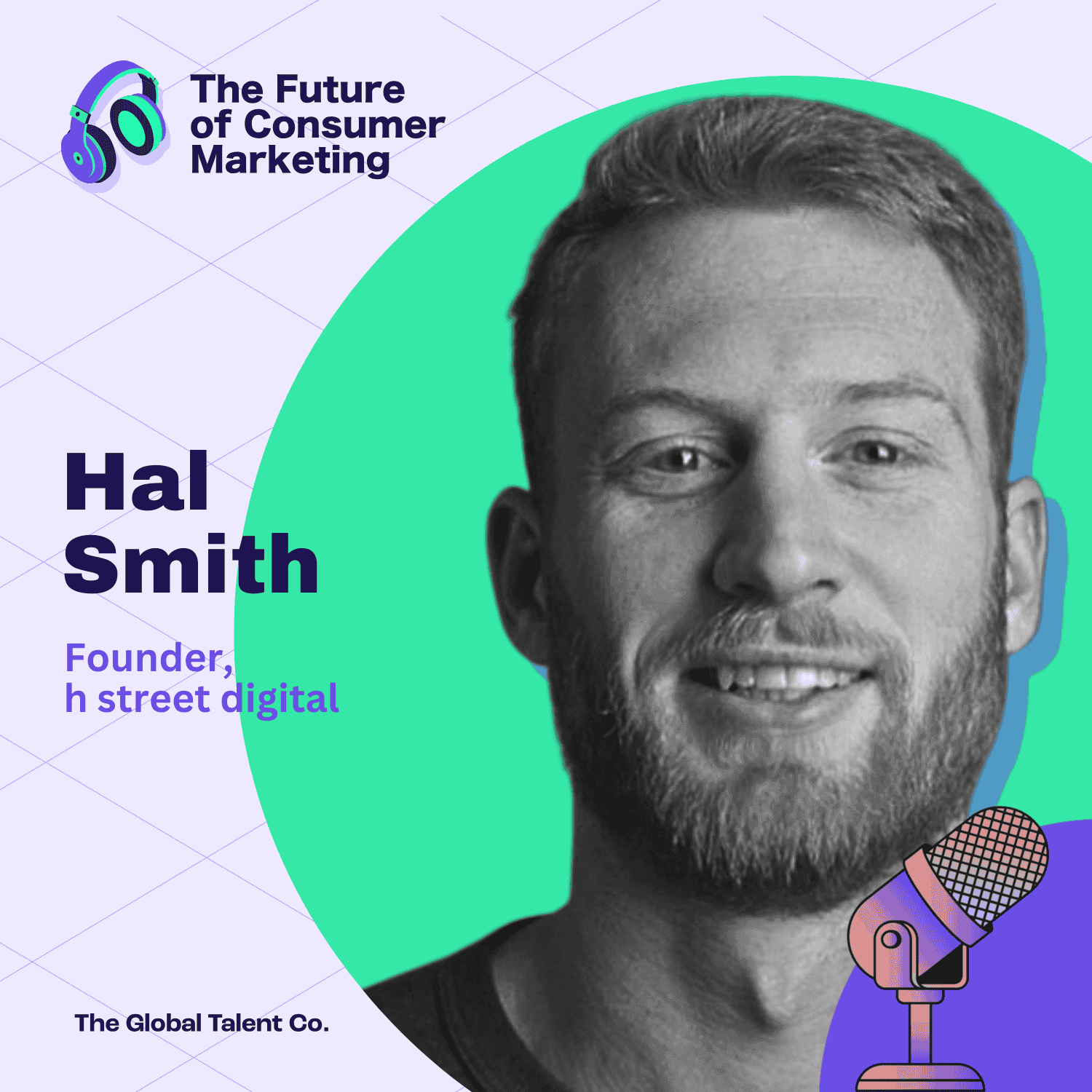
Hal Smith, founder of H Street Digital (performance marketing agency started in 2021). 10 years in performance marketing; previously performance media buyer and helped start/scale three agencies. Fully remote team (18 people) across the U.S. and Argentina.
Key claims
Promise is to 2x revenue generated from digital advertising in 90 days (not total company revenue), with a full refund of first-90-days fees if missed. Requires an audit with thousands of data points. Scaling depends on five levers: new-customer offer, creative strategy, media buying, landing page/CRO, attribution reporting, plus theory-of-constraints prioritization. Biggest misconception: chasing tactics instead of fixing the system’s constraint.
Notable examples
A new POS device brand (coffee-shop/food-truck use cases) had no known target customers; they mapped retailer pain points to product benefits, launched on Meta, and narrowed success to coffee shops and food trucks. AI example: using LLMs to condense Reddit/brand mentions into micro-persona insights faster.
Written by AI. May contain mistakes. Listen to the episode to check what was said.
Chapters
Tap a time to open that second in VOIntroduction to H Street
0:00 to 0:58
Learn about the early beginnings of H Street, a performance marketing agency.
“In 2021, I decided to go off on my own and start H Street, which is a performance marketing agency, but a specific focus on direct-to-consumer brands that are doing about 10 million or more on Shopify.”
Getting to Know Hal Smith
1:31 to 2:26
Hal shares his background and experience in performance marketing.
“It's a pleasure to have you on the show.”
Motivation Behind Starting H Street
2:26 to 4:25
Hal discusses the motivations for founding H Street Digital and his journey.
“And then really in 2021, I decided to go off on my own and start H Street, which is effectively a performance marketing agency, but a specific focus on direct-to-consumer brands.”
The Early Days of H Street
4:25 to 5:32
Hal recounts his initial challenges and how he started H Street Digital.
“I thought I was pretty good at what I did and I could start a company around it.”
Scaling H Street Digital
5:32 to 7:45
Learn how Hal scaled his company from freelancing to 18 full-time employees.
“And is it a, what's called, a remote first company or do you guys just work in a headquarter?”
Marketing Philosophy and Guarantees
7:45 to 9:32
Hal explains the marketing philosophy at H Street and their performance guarantee.
“And I found out through this process that to scale these brands, especially direct-to-consumer e-commerce, it really comes down to five core things.”
The Role of AI in Marketing
9:32 to 11:46
Discover how Hal’s agency leverages AI to enhance marketing efficiency.
“And we just kind of constantly cycle through these different areas.”
Case Study: Creative Strategy Success
11:46 to 12:27
Hal shares a success story about improving a client's creative strategy.
“And it's like a mundane task that you would put somebody on your workforce to actually do.”
Conclusion and Insights
12:27 to 14:01
Hal provides insights on identifying target customers and pain points for brands.
“Um, and it wasn't even in our wheelhouse.”
Identifying Pain Points for Success
14:01 to 15:40
Learn how understanding customer pain points helped a brand thrive.
“And for coffee shops, it was an issue with their order management because typically coffee shops just have one barista.”
Show all 15 chapters
Misconceptions in Scaling Through Advertising
15:40 to 18:11
Explore common misconceptions consumer brands have about paid advertising.
“And Hal, just to keep on picking your brain a little bit, what do you think is like the biggest misconception consumer brands could have about scaling through paid advertising?”
Accountability and Strategy in Marketing
18:11 to 23:50
Understand the importance of accountability and strategic thinking in marketing.
“and we have a couple ways of speaking about it.”
Navigating Future Challenges for DTC Brands
23:50 to 28:02
Discuss how DTC brands can thrive amid market disruptions and AI advancements.
“of how DTC brands will survive and thrive like in the next few years?”
Building In-House Capabilities with AI
28:02 to 28:32
Learn about the development of in-house data warehouses for better analysis and reporting using AI.
Reflecting on Strategic Insights
28:32 to 29:17
Discussion on the strategic foresight in adopting AI and the insights shared during the episode.
“And I don't see a single flaw in what you have already imagined what's to come, because I do believe that is the direction in which things are going.”
Transcript
Automatic transcript. May contain errors.0:00In 2021, I decided to go off on my own and start H Street, which is a performance marketing agency, but a specific focus on direct-to-consumer brands that are doing about 10 million or more on Shopify. So how are you guys able to do and achieve what you're promising the companies in your slogan? One is your offer, specifically your new customer offer. Second is your creative and creative strategy. Third is your media buying strategy. Fourth one, landing page and website conversion rate optimization. And then the last piece just being what I call a theory of constraints to identify where they're lacking the most and where they have the biggest constraint.
0:36What do you think is like the biggest misconception consumer brands could have about scaling through paid advertising? Everyone's very tactical. You really have to think about your business as a system and think about all these interconnected parts and really try to figure out where you're struggling the most and focus all your attention on that.
0:58Hey, everybody. Thank you so much for tuning in. My name is Andres Figueira, and I'm going to be your host for the day. This show is brought to you by The Global Talent Company. We're helping fast-growing teams hire exceptional remote talent from Argentina, South Africa, and beyond. We connect companies with world-class professionals who bring skill, reliability, and a global perspective to every role. And just for our listeners, we're offering an exclusive 10 % discount on your first hire. All you need to do is visit theglobaltalent.co, click start hiring, and mention the podcast listener discount when we get in touch.
1:31And today, with me here, I am speaking with Hal Smith, founder of H Street Digital, the only agency that promises eight-figure brands that they will 2x digital advertising revenue in 90 days without raising acquisition costs. So Hal, how's it going, man? It's a pleasure to have you on the show. It's going well. Thanks for having me. And Hal, just so that we can start getting the audience a bit more in context and to understand better who you are, would you be able to give us a bit more of your background and how everything with H Street Digital started? Yeah, for sure. Yeah. So I've been doing performance marketing for 10 years now.
2:07I was a performance media buyer at a couple of different agencies. And also throughout those 10 years, I guess I'd helped start and scale, I guess, three different performance marketing agencies. So I was an early employee at each of them and helped spin up teams around that. And then really in 2021, I decided to go off on my own and start H Street, which is effectively a performance marketing agency, but a specific focus on direct-to-consumer brands. And within that, it's basically brands that are doing about 10 million or more on Shopify. fly. So in terms of you branching out and deciding to do this for yourself, was it because you felt that you had the enough experience to just take on this endeavor alone?
2:53Or was it more of like, I just want more freedom? It's such an amazing question. I think every founder should be asked this when they start and then like five years into it and then probably 10 years into it, because I think it changes. And so, yeah, why I started the agency, one is I thought I, and I was intentional about joining agencies as an early employee because I wanted to learn all the skills at the very beginning, right? I wanted to learn, I wanted to throw myself in there and quickly have to just figure things out. And being an early employee at agencies, I think creates that opportunity.
3:31And I did that with the intentionality of, hey, I'm gonna go learn all these things from these people, do all this work. So I will have the skillset to go and start my own agency. So it's definitely a part of my goals. The second thing was, I think, was just financial freedom. I realized working in this space that you're not really going to have the financial outcomes you want if you continue to work at agencies. There's just a hard limit to the salary you're going to make after a certain point. And I think the third thing was this classic misconception that founders have, which is I'm so good at this thing.
4:09I'm so much better than my boss. I know this better than everyone else. I can go start a company around it. And then only until you kind of realize that being really good at the thing doesn't mean you can go build a company. Those are two different skills, right? So, but yeah, those are the three things. I thought I was pretty good at what I did and I could start a company around it. Two, I wanted the financial freedom. And then three, I just, I wanted to start a company. That was a goal of mine. So how you started then you decided, okay, I'll be the founder for H Street Digital. Did you start by yourself, just like freelancing with different jobs and different companies who took a chance with you?
4:42Or did you get a set up a team that helped you be a bit more efficient and effective during the beginning? Yeah, for sure. Nope, it was just myself, really. I started off and it was freelancing. Luckily, from my previous work experience in the other agencies, I had built some good relationships with people who immediately after starting the agency, I was able to get a couple clients. But yeah, frankly, it was just freelancing. And I did that for about a year. I did start taking on a couple contractors to help me. But really, the first year was just me and a laptop, basically. And now, after a while, Hal, how many people do you have within your agency and working with you in order to get all these things you guys do done?
5:29Yeah, so we have 18 people now and they're all full time. Okay. And is it a, what's called, a remote first company or do you guys just work in a headquarter? Yeah, we're fully remote. I'm based in Austin, Texas, but I have team members all over the U.S. And then I have team members actually in Argentina as well as some other countries. So, oh, very nice. Very nice. OK, OK, OK. And now in terms of I believe now I've understood a bit more of how H Street Digital started. But then I want to pick your brain into how you guys like in your into your marketing philosophy. And you guys saying that you promised eight figure brands that they'll be able to 2x digital advertising.
6:11So how are you guys able to actually do and achieve what you're promising the companies in your slogan? So I will say that one key thing to note here, it's revenue generated from digital advertising. It's not we're going to double their business in 90 days. It's whatever revenue that digital advertising is generating. So I definitely want to be clear about that. And I would say there's a second caveat. So we offer this as a guarantee. And if we don't do it in 90 days, we'll completely refund everything over those first 90 days. So we stand by that. And it's 100 % something that we're committed to.
6:49However, we also require a audit first. And so what we want to do is look under the hood of the business. And we have a ton of different checklists. It's thousands of different data points that we're effectively looking at to really understand this business and their potential to scale at this rate through digital ads. So I would say those are the two kind of big caveats to that. However, we've been very successful. And the reason for that is through my experience as a performance media buyer, I've worked across almost, I believe, every single type of digital advertising campaign. I've done it for presidential campaigns.
7:29I've done it for, you know, Fortune 100 banks, you know, global, you know, corporations. I've done it for, I've launched multiple different direct-to-consumer e-commerce brands and scaled it to, you know, a million dollars in revenue in the first year. And I've worked, you know, obviously through the agency, we've worked with a lot of eight-figure brands. And I found out through this process that to scale these brands, especially direct-to-consumer e-commerce, it really comes down to five core things. One is your offer, specifically your new customer offer. Second is your creative and creative strategy and the system that supports that.
8:06Third is your media buying strategy and a lot of the kind of underlying tactics on, you know, meta, Google, whatever platforms that support that. Third is your landing page and website conversion rate optimization. And then the fourth one, sorry, offers, creative, media buying, CRO. Yeah, fourth one being the attribution reporting side. Okay. And then the last piece just being what I call like a theory of constraints approach to optimization. organization. And so what we do in our audit is we really try to understand where that business is in terms of their sophistication around their offer strategy, as well as their media buying, creative, et cetera.
8:49Once we map that out and kind of figure out where they sit on that level, we are able through theory of constraints to identify where they're lacking the most and where they have the biggest constraint. Typically it falls into their creative strategy. And then with that, we have a pretty clear idea of how to get them, let's say from a scale one to 10, from like a three to an eight, right? And if we can solve for that, we unlock that constraint and it makes a significant impact on the business, right? And so all we're doing really is going throughout those different kind of what we call performance levers, identifying where they're lacking the most sophistication, the most rigor.
9:28And then we just solve for that very quickly and then get them to a much better spot. And we just kind of constantly cycle through these different areas. And then we do that through these 90 day sprints. And typically that first 90 days is where we uncover the biggest, most thorny problems. And if we can go slow for those problems, all of a sudden everything kind of, you know, unlocks and then they get a ton of growth in those first 90 days. And that's why we have that guarantee. Wow, that is so cool, man. Like the way that you just framed it and how you explained it makes me feel like you guys really do have a very nice standard operation procedure for analyzing and auditing these companies.
10:02And in terms of when you're looking at those performance levers, I believe is what you called them. Yes. When you're looking at those, are you guys leveraging AI in any certain way that is unique or a bit different to what we already know is the norm? But just wondering how you're getting help with that trend as well. Yeah. So we are trying to leverage AI more and more every week. The most immediate impact that we've seen is it allows for the research side of things on Crave to be much faster. And so an example there is if we go look at a brand, historically, we would have to go through their ad library, we'd have to go through competitors, you know, look at all the types of ads they were doing, we'd go through Reddit reviews, we'd go on to their customer review, you know, plugin software, you know, Akendo, for example, we go read those reviews.
10:58Um, we would do some like market research, et cetera. And that took a ton of time and, you know, it would, you know, be hours and hours of work. Well, now, you know, you have plugins where you can just get an LLM to go pull export all of Reddit that mentions his brand or topic, and then just get all that information condensed in one place. And then you can go just chat with it and try to figure out, Hey, like who are these kinds of micro personas that we should be targeting? What are their key pain points? What are the constant themes that keep being mentioned in Reddit? But that is so much faster now.
11:31And it allows for our creative research to just be significantly more efficient. And so that's like one good example where it just really sped up the amount of time. Because before that, we'd just be clicking through Reddit threads, right? And it's just very time consuming, right? Yeah. And it's like a mundane task that you would put somebody on your workforce to actually do. but they could be spending so much more time doing something more efficient that now an AI can just look at all that and just tell you, hey, this is something you need to check out or maybe review. But OK, totally get that.
12:03And Hal, in terms of you mentioned that one of the biggest constraints that you've seen that companies have is the fact, or maybe brands, is the fact that they don't have a very good creative strategy. um if and would you be able to give us an example of a company you you worked with that you noticed that their creative strategy wasn't right and something that you guys created to help them out um like a success campaign example we have a brand that um they had spun this this this company out effectively and they had asked us to go to help it with its go-to-market strategy so it had no knowledge of who it's like target customers were.
12:42Um, and it wasn't even in our wheelhouse. It was a, it's a, it's a point of sale device. So effectively it's, you know, the thing that you see at a coffee shop where, you know, you'll swipe your credit card, put in, you know, whatever, and then they'll flip it around. It's like the same thing that device are usually Clover is a big one in the U S but it was same thing. And it was just kind of interesting. They asked us to do it and we weren't super excited about it, but we're like, okay, we'll take this on and see what we can do. Because my big challenge with taking on brands of that size when you're just launching is you don't know product market fit whatsoever.
13:15And it's super risky to be spending money on paid digital ads to try to learn where that product market fit is if there is one. But I love this example because it turned out really well for them. And so what we did was this. We talked to was like, Hey, who's this for? And they're like any type of like retail location where there's high repeat customers. And so we're like, okay, like, let's just list out all the possible options. And it was like coffee shops, it was food trucks. Um, it was like hair salons. Like we, we, we basically found 10 and then we're like, okay, so with these 10 different types of retailers, um, you know, what are their key like problems?
13:58And so for, you know, like auto mechanics, for example, is like leaving positive Google reviews, right? And for coffee shops, it was an issue with their order management because typically coffee shops just have one barista. And so they have to take the orders and then make the coffee. And that just, you know, it takes a lot of time. So we found, you know, with, and then we went and talked to the brand about all the features of their product. And so what we figured out was, was effectively this matrix where we had these 10 different retailers. And then we had like the three to five key pain points they were experiencing.
14:31And then we're able to tie that to the main benefits of this product. And then we just launched this framework on Meta, right? And we just allowed Meta to figure out like what type of retailers were like resonating best with this product. And we're able to actually narrow it down to coffee shops and food trucks. And the reason for that is because there was a feature on this POS device that allowed people to basically submit their orders without needing to talk to like that barista or the person that was like running the food truck. And so they could just make the orders the entire time and just have people ordering from the device.
15:09Um, and so we just scaled into coffee shops and food trucks and it became really successful in that market. Um, but we like our strategy in this framework of just figuring out the who, like the what specific pain point they're dealing with and then the benefits that we can provide or they offer was just a really good empirical approach that allowed us to quickly learn where they fit in the market and then scale the brand. And that was from absolute nothing. Like we had no clue who their customers were. They never had a single customer before launching. So. Due to your research, you were able to come back to that client to tell them the pain points that their product was having and they changed it a little bit in order to make it fit those markets better so coffee shops and food trucks started using it because what you're mentioning i've seen i've seen it here in argentina it's not very many places but a few you're able to look at the menu order from your cell phone and then just go pick your your food up instead of just having to get up pay and then wait okay okay i totally understand that man that is so cool and are those is that company still a client for you right now yeah yeah okay we scaled them up like really well So they're pretty happy with this.
16:22Amazing. Amazing. And Hal, just to keep on picking your brain a little bit, what do you think is like the biggest misconception consumer brands could have about scaling through paid advertising? Yeah, so I think the biggest misconception I see consistently, and this is fueled by a lot of what you see on Twitter and LinkedIn, is everyone's very tactical. people are always just throwing out these little tactics on you know let's say LinkedIn or Twitter where it's like hey use whitelisting or you know for meta you know do this very specific type of big caps etc and so the issue here is like if you go as a brand and try out all these different tactics the actual impact of those tactics is pretty small okay and this is where we go you know like one of our kind of key thesis here is like theory of constraints is you really have to think about your business as a system and think about all these interconnected parts and really try to figure out where you're struggling the most and focus all your attention on that.
17:23Like really think like systematically. Right. And so that requires like strategy and like higher level thinking. And so the challenge I have is I go on to Twitter and LinkedIn and I see people like throwing around these tactics. And then all of a sudden our clients will hop on a call and be like, let's go try this thing out. And it's always like chasing shiny objects. But the reality is, is you have to figure out like, where's your biggest constraint? And is this like a high variance area where if you solve for that constraint, you'll really unlock things for you. And so like a good example would be typically a big unlock for clients is just really improving their offer.
18:08Generally, like a lot of people like, hey, we're just selling this product and we have a couple ways of speaking about it. They don't really think like, is this really valuable to my customer? And how do I speak about it in a way that gets them really excited and wanting to buy today? Right. And are there other things we can kind of add on to this product that, you know, would make the customer really, would help you really differentiate against other like competitors or other brands, but no one really thinks about their offer. And I think if people really focus on their offer, they could cut their customer acquisition costs in half.
18:39Right. Um, but you know, most people, uh, you know, want to be like, Hey, let's go tweak this thing on, on Tik TOK or go try this other little thing on, on Instagram. And I think there's, those tactics that you see all the time that are flying around after you're super low impact. It's like, you have to really take a step back and figure out like, what are the key things that are problematic for the business today? And then how do we obsess over that and really unlock that, uh, constraint? I see the logic behind it as well. And once more, I mentioned it. I really like how you're able to detail the process in such a step-by-step way because I feel it's been really studied by you and everybody at H Street Digital.
19:18But that also makes me wonder, Hal, do you believe that other agencies are doing something that is wrong compared to how you guys are taking the direction, how you're solving these brands' issues and helping them out? Not to speak ill of other agencies, but just want to know what you feel is what differentiates you from the rest. Yeah, it's funny that you say that too. Like I have trouble now speaking ill of other agencies because I feel like all agency owners I've met have the best intentions in mind. And they're smart people that work at all these agencies. And typically the issue with most agencies is they've just had some type of growth problem, right?
19:58You know, maybe they hired too fast or they haven't built good enough systems. And then unfortunately the clients experienced that. And then they're like, oh, these guys are bad, but truly they're not bad. Like they're just like every agency is trying to get better and trying to do the best they can. It's just they've hit some type of inflection point that causes issues. But to your question, I think, you know, kind of. We focus all of our work on these 90 day sprints and in these sprints, we commit to certain outcomes. And so our idea is this. When we do an audit, for example, when we first start working with the client and we identify a certain area that we believe to be a big constraint.
20:37we quantify the impact of if we had done this thing, how much is it going to improve performance, right? And then we figure out how long it's going to take to realize that impact. So for example, it's like, hey, we're going to test this new persona on creative. We're going to test it over the next 60 days. In 60 days, we expect this to improve our CACs by 10%. And then we commit to that. We put that up. We have this full 90 day plan on and we work across it with the client and we basically hold ourselves responsible to those outcomes and those KPIs. I don't know of a single agency that does that.
21:13Um, and I think for us, like one of our core values is on the outcome. So we're constantly setting these goals where we're setting some type of measurable KPI assigned to these goals. And then we're figuring out the timeframe when we're going to reach it and we commit to it. Right. And it, it's really hard. and it honestly like freaks people out. It freaks, when I interview people to like, you know, be a growth strategist for the team, it scares a lot of people because they don't want to be held accountable in that, you know, extreme level. But I think if you have that level of accountability and focus and you follow these 90 day sprints, you make a real impact on these brands.
21:52And then, you know, we can keep, you know, scaling these brands and everyone's happy, but it requires a ton of accountability and ownership. it's really stressful. No, I can totally imagine. And as you were telling me like what you felt differentiated, you guys, the only word I had in my mind was accountability as well. I was like, okay, these guys are being, are being accountable for what they're promising. And that is something that generates a lot of trust. And from the way you're framing it as well, I feel that when you do these 90 day sprints, then your team is a bit spread out in making sure everything works for that brand or company in those 90 days.
22:26Do you have like a limit of customers you take on at a time? or do you just um a free-for-all and help out everybody as much as you can no we have a limit like effectively we take on a i mean we try to do about like three clients a quarter is our is our amount so we're actually you know we have 16 clients right now um and yeah our goal is just kind of limit to about three clients a quarter so basically like one a month is what we'll take on um and you know sometimes too it's like you know we have really low churn rate as well um so the reality is is we're not actually looking to take on a ton of new business we're just trying to find the right partners where we really believe we can you know scale them we're going to work well with them we can build a high degree of trust because okay um our biggest challenge too is uh you know we want to work with people who truly want to scale at the same rate that we believe we can scale them.
23:24And a big challenge we have right now, I believe is, and this is kind of a macro thing, but people are, there's a lot of constraints right now in this DTC market and it's a little challenging, but yeah, we, we limit it pretty seriously. And we also, uh, we turn away most brands we talk to on the discovery side. Um, but I think it's like, it allows the team to be healthy and allows us to do really, really good work. So, and do you have like any, any theory or prediction of how DTC brands will survive and thrive like in the next few years? Yeah, I think one is, you know, brands that are lean and really focused on profit, I think are obviously going to do well over the next couple of years.
24:04I think ones that hold, they keep their headcount really low and are obsessed about that. Like they just try to build as much leverage within the brand. They also potentially, you know, use vendors like us that they can plus up or down. I think another thing is, is brands that really do, they care about their brand and they really try to like walk the walk in terms of whatever they're presenting on their brand. I think building brand equity and then really backing that up is super important. I think there was a time where it's really easy to spin up a dropshipping company and effectively and then like a brand that looked good, but it was all kind of just BS.
24:45um you know consumers have figured that all out at this point and i think it's really important for people to really think about the kind of um yeah the quality of brand their ability and how they're really engaging with their customers because that creates good repeat customers it creates good word-of-mouth marketing and there's that kind of organic flywheel that starts to happen uh i think that's super important especially in today's landscape with like compressed margins and issues with tariffs etc like you really need all that quote-unquote free marketing that you can get. The paid side is really hard for DTC brands today.
25:19Even with like consumer goods from DTC brands, like, I don't know, TikTok shop, you can find so many things that are super cheap, but aren't any, they don't have any value. The brand promises they're great. They're very bad quality. And it's like, I feel I'm getting scammed. And from many companies that I've talked to, that I've talked with in this podcast, one of the things I've noticed most is the importance of the organic marketing they achieved by staying true to their mission, to what they're promising and how just literally word of mouth got them to be a lot bigger. It's amazing. But I do agree with that.
25:54In terms of H Street Digital, what are your priorities for the company or the agency in the next year? Like for 2026, what are the main things that you guys want to accomplish as a team? I think number one thing is we want to really get ahead of this disruption around AI. It's happening in a lot of different ways, but I would say there are three big things that I think people really need to be aware about in D2C e-com. One is agentic commerce. So this concept that you're going to have these, you know, agents, AI agents that are representing both brands and the consumer and potentially talking to each other and avoiding this whole ecosystem that we work in.
Read the full transcript
26:33Right. And so, you know, it's the idea. It's like someone goes into an LLM. It's like, hey, I'm, you know, moving and I need X, Y, and Z. And the agent's like, I got you and go and figures it all out for you and makes those purchases. And, you know, you don't have to optimize the landing page or do any of these other things. So I really want to figure that out and understand like, how soon is that coming and how important is it, et cetera? Is it, is it truly viable? Is it, is it a real thing? The second thing is just workflows within the agency. How do we really improve them and make them more efficient with AI?
27:04And then the third thing is the generative AI side. with that. It's just how do we reduce the cost around, you know, creative and how do we make that significantly more faster and more efficient? So AI is a big thing for me. The second thing is for us is we've been largely referral and word of mouth based in terms of our growth. It's been great for us, but I would like to grow faster. So actually going back to your question around, you know, these, how many new clients we take on? I hope to expand that capacity pretty quickly because I want to build out like a true dedicated sales motion and basically do a better job in terms of outbound for us.
27:46And then the third thing I think is big for us right now is
27:54we're really trying to do a lot better job on the kind of reporting, data collection, analytics side for the agency and building out a lot more capabilities in-house. so with that is like we're building out this data warehouse uh where we're aggregating a lot of our client data to to kind of understand better macro trends um i think that's going to be super powerful especially if we put an ai agent on that and we're able to you know kind of chat with it to do better analysis and reporting um so for us you know those are the big things we're thinking about right now um and you know i'm super excited about it so no it really it sounds exciting man And I've said it several times in the episode, but I really feel that you have your shit together and you got all these steps lined up perfectly planned.
28:40And I don't see a single flaw in what you have already imagined what's to come, because I do believe that is the direction in which things are going. So it's best that you're ahead of the curve and make sure you're like everything that has to do with AI, that you're already doing that before it even comes out. But that is super cool. and Hal, I just noticed that we're almost at time so just wanted to say thank you so much for hopping on the episode, man for providing such good and technical insights about everything so I believe the audience is really going to get a kick out of this show so yeah, I really appreciate your time, man Awesome, yeah, I appreciate you having me on it's been great chatting with you I felt like it's just super natural, just conversation I'm glad, that is what I was aspiring for so I'm very happy that it was able to be translated during the show so yeah without further ado how thank you so much man have a good one awesome thanks for having me
From the publisher
In this episode of The Future of Consumer Marketing, host Andres Figueira interviews Hal Smith, Founder of H Street Digital, a performance marketing agency that guarantees to 2x digital advertising revenue for eight-figure DTC brands in 90 days. After a decade of scaling multiple performance marketing agencies and working across presidential campaigns, Fortune 100 banks, and DTC brands, Smith identified the systematic bottlenecks that prevent most brands from scaling efficiently. His agency's approach differs radically from the typical agency model: they audit brands across five core performance levers, identify the single biggest constraint using theory of constraints methodology, and commit to specific, measurable outcomes through 90-day sprints with full refund guarantees if they don't deliver.
Topics Discussed:- Applying theory of constraints to identify the biggest growth bottleneck in DTC brands - Building a performance marketing audit framework across thousands of data points Using 90-day outcome-based sprints with measurable KPIs and refund guarantees - Leveraging AI for creative research and customer insight extraction Testing product-market fit through systematic persona and pain point matrices - The five core performance levers: offer strategy, creative systems, media buying, CRO, and attribution - Why tactical advice on social media often delivers low-impact results Building a lean, profitable agency model focused on accountability over growth - Preparing for agentic commerce and AI disruption in the DTC ecosystem